A Work Project, presented as a part of the requirements for the Award of a Master Degree in Management from the NOVA – School of Business and Economics
OPERATIONS MANAGEMENT – PROCESS (RE) DESIGN IN COMMERCIAL BANKING
A PRATICAL EXAMPLE
APPENDIX
Cristiana Arnaut Godinho Antunes
2414
A project carried out on the Master in Management Program, under the supervision of Professor José Crespo de Carvalho
INDEX
Table I –Customers’ Segmentation ... 3
Flowchart I - Branch M General Process ... 4
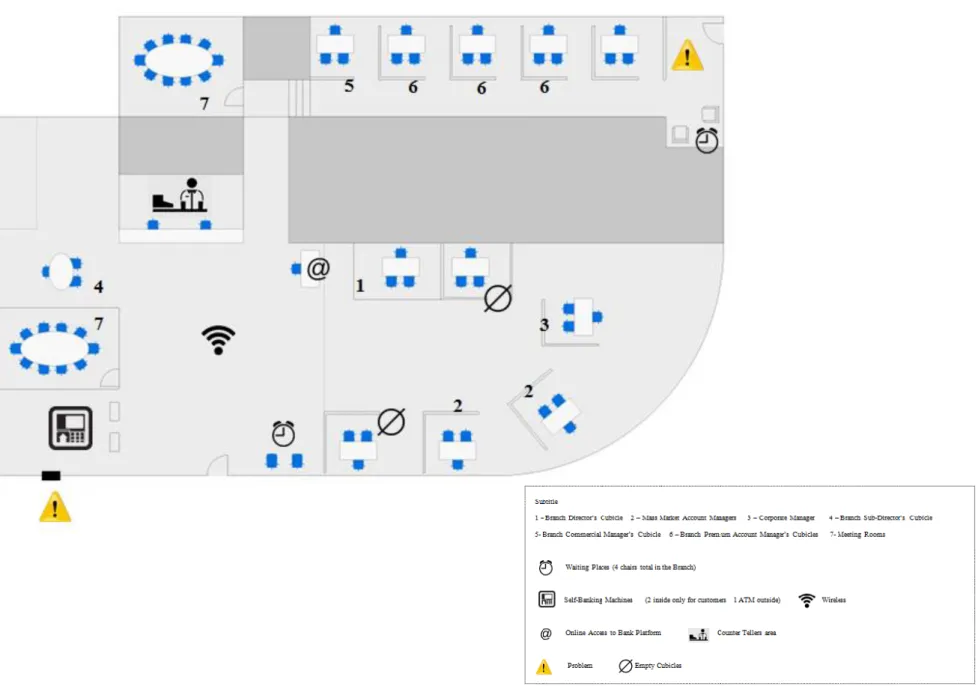
Figure I. - Branch M layout – AS IT IS ... 13
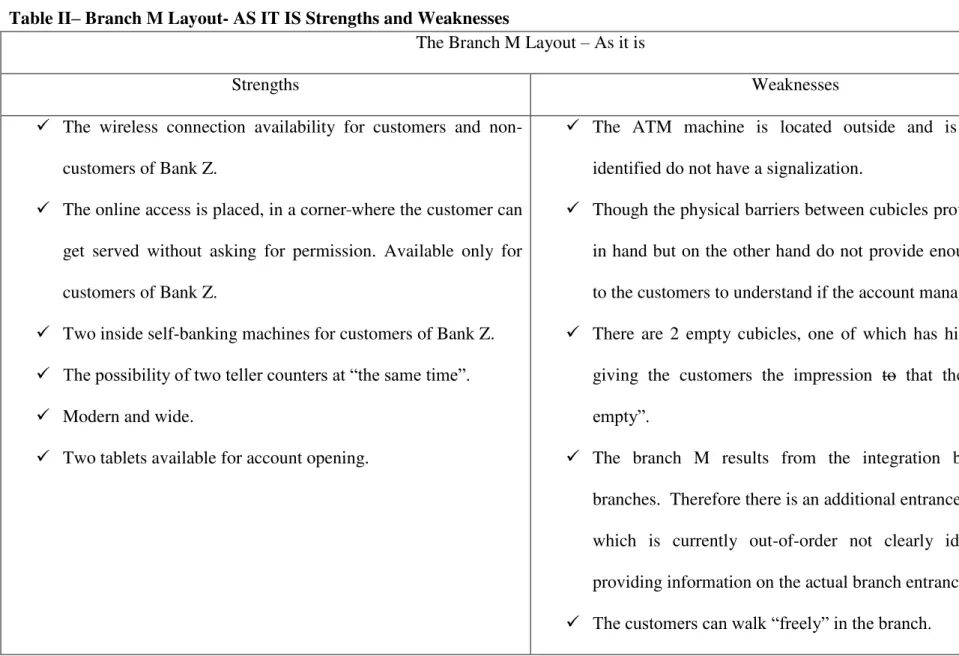
Table II– Branch M Layout- AS IT IS Strengths and Weaknesses ... 14
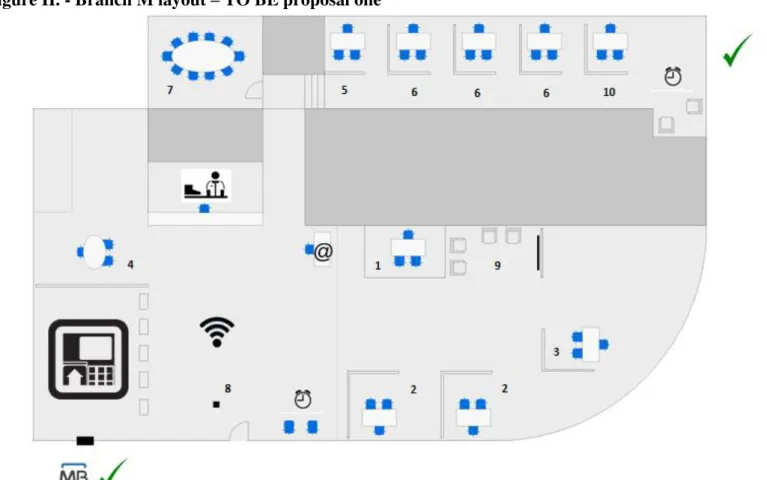
Figure II. - Branch M layout – TO BE proposal one ... 15
Figure III. - Branch M Layout – TO BE Proposal Two ... 16
Circular Charts I. – Percentage of customer per function May, June, July and August ... 17
Chart I. – Total Customer per half hour (May, June, July and August) ... 19
Charts II – Total Customer per half hour per month ... 20
Chart III – Total of Customers to teller counter per month ... 21
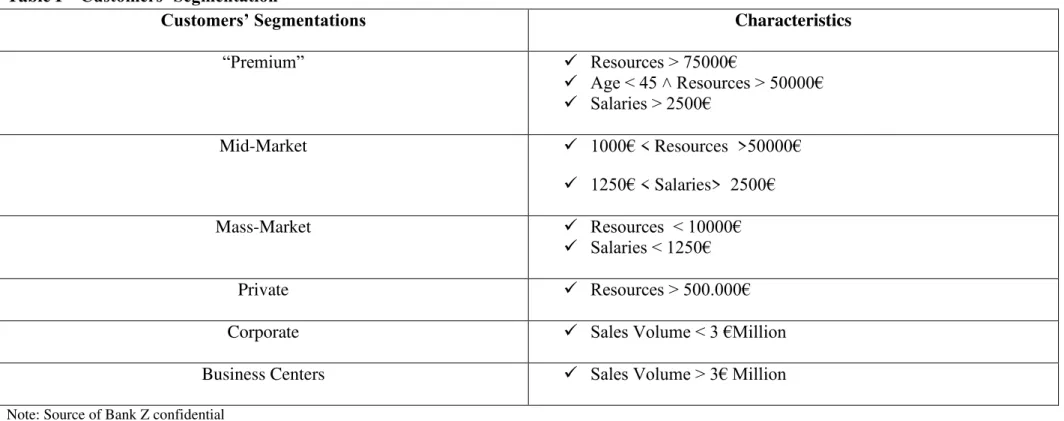
Table I –Customers’ Segmentation
Customers’ Segmentations Characteristics
“Premium” Resources > 75000€
Age < 45 ˄ Resources > 50000€
Salaries > 2500€
Mid-Market 1000€ < Resources >50000€
1250€ < Salaries> 2500€
Mass-Market Resources < 10000€
Salaries < 1250€
Private Resources > 500.000€
Corporate Sales Volume < 3 €Million
Business Centers Sales Volume > 3€ Million
Flowchart I - Branch M General Process
START Customer walks in
Is it for the AM?
Customer goes directly to self-banking machines Customer goes
directly to a desktop station
Customer goes directly to counter teller line
Customer is served Is it for the counter
teller?
Is it for self-banking machines? Is it for online
acess?
Any other services
required? END
Customer has queries
Customer is not able to use the machines
Customer goes to teller counter to ask
Customer fills in the relevant form Send the customer to
the cubicle
Back office sends the form to Central
Services Check via phone/
internal messenger the AM availability
Customer gets in touch with
the “bank” later
Customer is served Are all queries
solved?
Is an AM available? Does the customer has
an appointment?
Is the customer willing to wait?
END Check via phone/
internal messenger who is available
Central Services Feedback Back office receives
the form
Back office proceeds 1
Can the issue be resolved within the
branch?
Back office communicates the
solution to AM AM informs the
customer Yes Yes No No No
Customer waits for the 1st
Customer has a query
The customer answers the email
back Customer sends
Customer is served Is the customer
sending an email?
END 2
3
Customer is using the online tools
Is the customer using the branch email?
Is the customer calling?
The employee receives and answers
the email
Is the answer satisfactory? Customer sends an email to a specific branch employee Yes
Yes
The branch Director forwards the email
to an employee Yes
Does the customer need to go to the
branch? No
Yes No
Support line provides guidance
An employee answers the call Customer calls the
branch Customer is served
Does the AM solve the problem?
END 3
Customer still has queries Is the customer calling
to the bank support line?
The AM answers the call The customer calls
the AM mobile number
Does the support line solve the problem?
Is the customer calling to the branch telephone
number?
WALKING IN THE BRANCH - COUNTER TELLER SITUATIONS Weaknesses
- Waiting time to get served.
- Asking for the ATM machine inside the branch (even non-customers of the Bank Z).
- Interrupting a customer that is being served in other service.
- An employee has to manage situations: more than one customer at a time.
COUNTER TELLER
- Hypothesis 1 – When customer walks in the branch there is no queue, customer get served.
- Hypothesis 2 – When customer walks in the branch there are already some customers in the queue Additionally, due to the fact that are
two cubicles available for this function, when one is empty makes the perception on customers that there would always be second counter
teller that could start working any time there is a queue The previously described could result, not only in waiting time but eventually customer’s loudness, creating an uncomfortable environment. On the other hand, there is only one money verification machine and one
SELF-BANKING MACHINES/ ONLINE SERVICE
Hypothesis 1 – Customers walk in the branch and are served.
Hypothesis 2 – Customers are not able manage a situation on the online platform or in the self-banking and go to the counter teller asking for
guidance. The online/self-banking customer interrupts the teller counter procedures even if there is another customer being served at the branch
Counter teller asks for customer to wait until the online/self-banking customer is served.
WALKING INTO THE BRANCH –MEETINGS AVAILABLITY Weaknesses
- Waiting time to get served.
- The problem is not solved immediately or at the branch.
- Walking in without an appointment.
- Waiting time between branch and central services communication
- Interruption of ongoing appointments.
- Counter Teller has to manage the walk in customer the account managers: by telephone or internal messenger.
Hypothesis 1 – The customer has an appointment, the account manager is available so the customer gets served or is served by procedures performed by the branch back office.
Hypothesis 2 – The customer does not have an appointment but the account manager is available.
Hypothesis 3 – The customer does not have an account manager associated which means checking who is available.
Hypothesis 4 – The customer walks in without talking to and goes directly to an account manager’s cubicle because customer has already
developed a relationship with the account manager and knows how the branch is organized.
NOTE: There are some procedures that are performed by the back office employee. However there are other procedures that needs to be sent to
specific departments in the central services There is an answer time defined for the central services, that is in D+3 maximum,. However, due to
constrains, sometimes is not possible to comply with the answering time and therefore answer in that time, the role of the manager is to manage
the customer expectations who are not always able to understand and raise a complaint.
EMAILING THE “BANK” SITUATIONS
Weaknesses Points Waiting time for the on customer to get an the answer/problem solved.
Hypothesis 1 - The answer is simple and immediate and as a result customer gets served.
Hypothesis 2 - The answer involves the account manager or an employee asks for additional information to a specific department of central
services.
If the hypothesis 1 occurs the process ends and customer is served. On the contrary, if hypothesis 2 occurs it could lead to an eventual problem,
as the customer starts begins to call to the account managers or the Branch telephone. The Bank has the obligation to always answer the
customers. However, sometimes the needed time to get the situation clarified is greater than the time the customer is willing to wait and he walks
in the branch expressing some anxiety and back feedback on the service provided. These situation results on an eventual weakness point as the
customer requires clear information. Or want more clarifications on the issues.
CALLING THE “BANK”
Weaknesses:
- Waiting time to get served.
- Waiting time to get the call answered.
- The problem is not solved by the support line.
- Account Manager’s Availability.
Hypothesis 1 – The support line/account manager/a specific answering call can solve the customer query and resolve the problem
Hypothesis 2 -When the support line cannot solve the customer’s query, it must forward the customer to the branch for further clarifications. It is important to outline that not all queries are possible to be closed over the phone by the support line.
Once the customer enters the branch, his behavior may be conditioned by the telephone experience, where he feels the need of having access to
Table II– Branch M Layout- AS IT IS Strengths and Weaknesses
The Branch M Layout – As it is
Strengths Weaknesses
The wireless connection availability for customers and
non-customers of Bank Z.
The online access is placed, in a corner where the customer can
get served without asking for permission. Available only for
customers of Bank Z.
Two inside self-banking machines for customers of Bank Z.
The possibility of two teller counters at “the same time”.
Modern and wide.
Two tablets available for account opening.
The ATM machine is located outside and is not clearly
identified do not have a signalization.
Though the physical barriers between cubicles provide privacy
in hand but on the other hand do not provide enough visibility
to the customers to understand if the account managers are in
There are 2 empty cubicles, one of which has high visibility,
giving the customers the impression to that the “branch is
empty”.
The branch M results from the integration between two
branches. Therefore there is an additional entrance branch door
which is currently out-of-order not clearly identified and
providing information on the actual branch entrance.
Circular Charts I. – Percentage of customer per function May, June, July and August
33%
67%
% of customers per function May
% clients account manager % clients teller counters
73% 27%
% of customers per function June
12%
88%
% of customers per function July
% clients account manager % clients teller counters
18%
82%
% of customer per function August
Chart I. – Total Customer per half hour (May, June, July and August)
0 50 100 150 200 250 300
TOTAL CUSTOMERS (M+J+J+A)
Charts II – Total Customer per half hour per month
0 10 20 30 40 50 60 70 80 90 100
Num
ber
o
f
cus
to
m
er
s
Half Hours
Total customers Half Hour per month
MAY
JUNE
JULY
Chart III – Total of Customers to teller counter per month
0 10 20 30 40 50 60 70 80 90 100
1 2 3 4 5 6 7 8 9 10 11 12 13 14 15 16 17 18 19 20 21 22 23 24 25 26 27 28 29 30 31
Num
ber
o
f
cus
to
m
er
s
Total of customers to teller counters per month
May
June
July
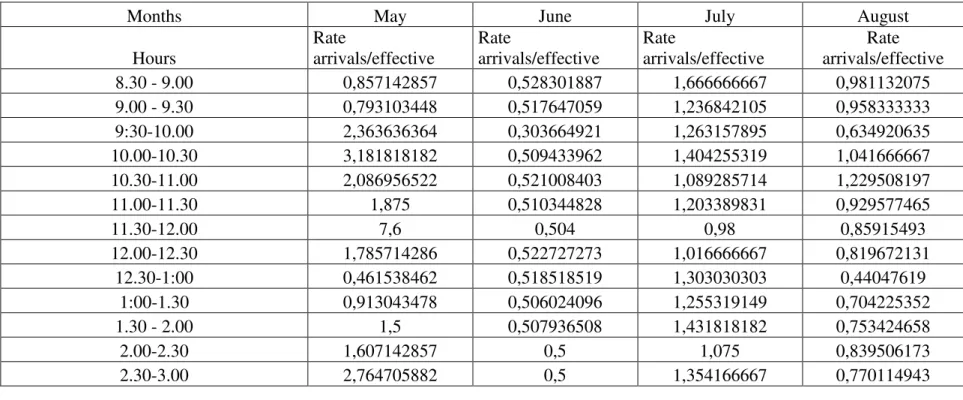
Table III. – Percentage of customer arrivals versus effective customer per month
Months May June July August
Hours
Rate
arrivals/effective
Rate
arrivals/effective
Rate
arrivals/effective
Rate arrivals/effective
8.30 - 9.00 0,857142857 0,528301887 1,666666667 0,981132075
9.00 - 9.30 0,793103448 0,517647059 1,236842105 0,958333333
9:30-10.00 2,363636364 0,303664921 1,263157895 0,634920635
10.00-10.30 3,181818182 0,509433962 1,404255319 1,041666667
10.30-11.00 2,086956522 0,521008403 1,089285714 1,229508197
11.00-11.30 1,875 0,510344828 1,203389831 0,929577465
11.30-12.00 7,6 0,504 0,98 0,85915493
12.00-12.30 1,785714286 0,522727273 1,016666667 0,819672131
12.30-1:00 0,461538462 0,518518519 1,303030303 0,44047619
1:00-1.30 0,913043478 0,506024096 1,255319149 0,704225352
1.30 - 2.00 1,5 0,507936508 1,431818182 0,753424658
2.00-2.30 1,607142857 0,5 1,075 0,839506173
2.30-3.00 2,764705882 0,5 1,354166667 0,770114943
Months May June July August
Average customers effetive 25,57142857 27,55 30 41,52380952