(1) Federal University of Santa Maria (UFSM), Santa Maria, RS, Brazil.
(2) Department of Speech Pathology, Federal University of Santa Maria - UFSM, Santa Maria, RS, Brazil.
(3) Department of Statistics, Federal University of Santa Maria, Santa Maria, RS, Brazil.
Conlict of interest: non-existent
terms of psychodynamic understanding, childbirth represents the disruption of the physical baby-mother symbiosis, which can trigger depressive and psychotic experiences in the mother, resumed by conlicts and losses poorly addressed in childhood6, added to the duality between the loss, pregnancy, and the gain, the baby, common in the postpartum period7.
The effects of maternal depression are not limited to delayed development in the irst phases of life and may cause changes in the mother-infant interaction during early childhood and long-term damages to the language, cognitive and behavioral development8, which can be minimized by early detection of risks in child development. Clinical Risk Indicators (CRIs) in Child Development9 constitute an instrument with predictive capability for problems in child development, either speciically related to language or the psychic dimension. To this end, they have operational concepts that accomplish the task of organizing and guiding the selection and application of psychic and development risk indicators, comprising four theoretical fundamentals:
INTRODUCTION
Maternal postpartum depression may have important consequences for many areas of child development, affecting the mother-infant dyad bonding1 and the neurological, linguistic, cognitive2 and socio-emotional3 development of the child. Studies on postpartum emotional disorders have identiied several characteristics of mothers’ behavior and emotional condition in the puerperal phase such as posttraumatic stress, postpartum depression and puerperal psychoses4. The occurrence of such emotional conlicts is associated with physiological and emotional factors and the woman’s life condi -tions, such as marriage problems, little support from the family or an unplanned pregnancy5. In
MATERNAL DEPRESSION AND CLINICAL RISK INDICATORS
IN CHILD DEVELOPMENT
Análise da relação entre depressão materna e indicadores clínicos
de risco para o desenvolvimento infantil
Janaína Pereira Pretto Carlesso (1); Ana Paula Ramos de Souza (2);Anaelena Bragança de Moraes (3)
ABSTRACT
Purpose: to analyze the possible correlation between changes in levels of risk to infant development baby’s linguistic and psychological and maternal depression in a sample of mothers of babies born in medium-sized city and around the central region of Rio Grande do Sul. Methods: the survey was conducted with 165 mother-infant dyads in University Hospital in which the children were newborn hearing screening in the period from March to May 2010. The data collection used a structured interview on socioeconomic, demographic, obstetric and psychosocial factors, application of the Beck Depression Inventory and Clinical Indicators of Risk for Child Development. Results: when assessed values of the mother depression ranges between children with and without development risk, there was statistically signiicant difference, as most mothers did not show signs of depression and the babies had no risk for the development. Conclusions: the analysis showed that a higher proportion of babies with development risk altered when levels of maternal depression are elevated in the postpartum period.
points. It was also considered the number of infants who undergo neonatal hearing screening (NHS) in the University Hospital per year to estimate the sample size in 165 mothers-babies.
The survey was conducted at a University Hospital in the central region of Rio Grande do Sul. Data was collected from March to May 2010 at the Audiology Center, where the neonatal hearing screening of newborns from the city and region is performed. The sample was selected based on the following criteria: all preterm, term and postterm infants of both sexes, aged 1 to 4 months, who passed the newborn hearing screening and their mothers. As exclusion criteria for participation in the study were the babies who failed the newborn hearing screening and had congenital malforma-tions, genetic syndromes, or congenital infection detected in the neonatal period, before the beginning of the study, because these alone would represent risk factors for their development. These criteria were established because, in addition to postpartum depression, the Risk Indicators in Child Development (RICDs) in mother-infant dyads were studied. In the present study, however, the results from the Beck Depression Inventory 12 (BDI) and the results of RICDs will be discussed.
The BDI was used because it is an instrument designed to trace depression and, therefore, it does not have a diagnosis purpose; it is an instrument easy to administer, which aims to measure behav-ioral depressive symptoms in the week prior to the administration. The BDI is a scale of self-reported symptoms, comprised of 21 questions with multiple choices regarding how the subject has felt recently, corresponding to different degrees of severity of depression. The sum of the scores of the individual items provides a total score, constituting a dimen-sional score of the depression intensity, which can be rated in the following levels: minimum (0 to 11 scores), mild (12 to 19), moderate (20 to 35) and severe (36 to 63). The Portuguese version of the Beck Depression Inventory resulted from a consensual formulation of the translation of the English original, with the collaboration of four clinical psychologists, four psychiatrists and one translator, and was tested along with the English version in 32 bilingual individuals, with an interval of three days and varying the order of presentation of the two idioms to the two halves of the cohort13.
The Clinical Risk Indicators for Child Development (RICDs) were used for having the predictive capability of indicating problems of early childhood development, speciically psychological expressions of autism and psychosis and cases of supposition of the subject (SS), demand
estab-lishment (DE), alternating presence/absence (PA), and paternal function (PF). All these principles were constructed based on the readings of the psycho-analytical clinic proposed by J. Lacan, F. Dolto and D.Winnicott, predominantly. The instrument was irst designed to allow an approximate clinical evalu-ation of the child’s subjective position and an initial assessment of the effectiveness of the indicators for the early detection of development problems in early childhood.
The CRIs were validated by the Multicenter Research of Risk Indicators in child development10, in a nationwide study conducted from 2000 to 2009, funded by t São Paulo Research Foundation (FAPESP) and by the Ministry of Health, with centralized coordination in charge of the psychoan-alyst Maria Cristina Machado Kupfer of the Institute of Psychology of the University of São Paulo (USP). A group of Brazilian university researchers put into practice such theoretical fundamentals and developed a protocol with 31 Clinical Indicators of Risk or observable or inferable problems in child development in the irst 18 months of the child’s life, which could be used to indicate the likelihood of occurrence of subsequent psychic disorders. In the Risk Indicators in Child Development (RICD) the emphasis was put on the articulation between development and psychic subject. The results showed a high correlation between the RICDs and risks to child development and with less signiicance the presence of psychic risk.
Considering the effectiveness of RICDs to predict risks in development, this study aimed to investigate possible correlations between changes in risk indicators in child development and maternal depression in a cohort of mothers of babies born in a medium-sized city and surroundings in the central region of Rio Grande do Sul.
METHODS
This quantitative cohort study was approved by the Committee of Ethics in Research of the University and Hospital, in all its ethical and method-ological aspects, in accordance with the Guidelines established in Resolution 196/96 and amendments of the National Health Council, under no. CAEE n. 0284.0.243.000-09.
and administration of the BDI. In the second stage, the mother-baby interactions were ilmed for further analysis of the RICDs.
First, the mothers were invited to participate in the study by the person responsible for the survey, who explained in details the objectives of the study. Then, the mothers voluntarily signed the Free and Informed Consent Form and another one for the creation of an image database in two copies. These documents aimed to briely inform the participants about the purposes of the research, personal data of the researchers, and also to ensure the coniden -tiality of the mothers and their children’s identities. The responsible researcher and her collaborators declared themselves committed to ensuring the rights of the subjects, speciically the privacy and conidentiality of their personal data, the right to continuing information on the study and referral to medical care when necessary.
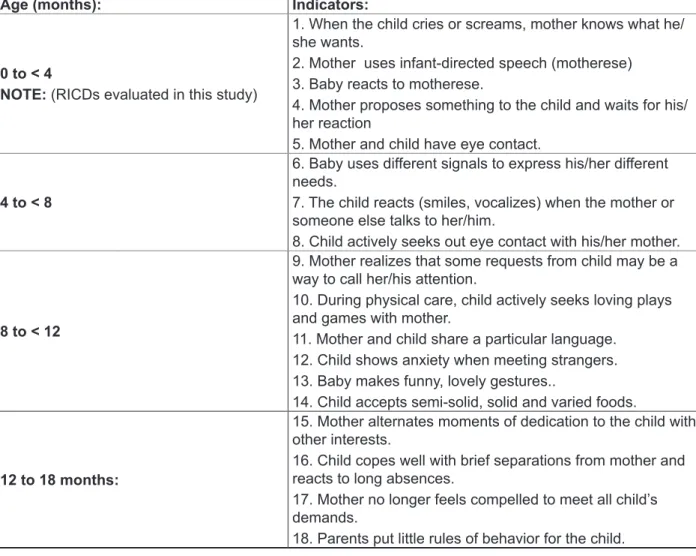
Figure 1 describes the Clinical Risk Indicators for Child Development (RICDs) in its validated and inal version, which was used in this study.
Taking into account that all infants of this study were evaluated in the irst age group (0 to 4 months), these were the RICDs considered in the analyses herein presented.
This study aimed to evaluate only the irst ive RICDs to detect and act preventively in the irst relationships of the mother with her baby, because this early period is important and must be followed due to the fact that it is more prone to the incidence of postpartum depression, which can impact negatively the child development. The babies continued to be studied until aged 24 months, but this study focus only on the irst development phase of the babies and their mothers.
Data collection was performed in two stages. The irst consisted of an interview with the mothers
Age (months): Indicators:
0 to < 4
NOTE: (RICDs evaluated in this study)
1. When the child cries or screams, mother knows what he/ she wants.
2. Mother uses infant-directed speech (motherese) 3. Baby reacts to motherese.
4. Mother proposes something to the child and waits for his/ her reaction
5. Mother and child have eye contact.
4 to < 8
6. Baby uses different signals to express his/her different needs.
7. The child reacts (smiles, vocalizes) when the mother or someone else talks to her/him.
8. Child actively seeks out eye contact with his/her mother.
8 to < 12
9. Mother realizes that some requests from child may be a way to call her/his attention.
10. During physical care, child actively seeks loving plays and games with mother.
11. Mother and child share a particular language. 12. Child shows anxiety when meeting strangers. 13. Baby makes funny, lovely gestures..
14. Child accepts semi-solid, solid and varied foods.
12 to 18 months:
15. Mother alternates moments of dedication to the child with other interests.
16. Child copes well with brief separations from mother and reacts to long absences.
17. Mother no longer feels compelled to meet all child’s demands.
18. Parents put little rules of behavior for the child.
of evaluating the RICDs. Interaction was ilmed for ive minutes by a survey collaborator, while the researcher observed the interaction of the mother-baby dyad and evaluated the RICDs. Then, after having been collected, the RICDs were checked by the supervisor of this survey. In case of doubts relating to the RICDs scoring, the dyad was retested in a period of one week.
The responses obtained from the administration of the BDI were rated according to the degrees of severity of depression: minimum, mild, moderate and severe. The RICD were classiied in scales: (1) RICD present, when the babies did not present risk in their development, because all ive RICDs evaluated were present. The scale (2) of risk in the child development corresponded to the babies who did not show the ive RICDs present, with two or more RICDs absent, but in this case the babies were classiied in the subcategory, from 1 to 5 RICDs absent.
To evaluate the relationship between postpartum depression and the BDI and RICDs results, the nonparametric U tests of Mann-Whitney and Kruskal-Wallis were used. The Gamma Statistics was also used to measure the correlation between two ordinal variables. It was assumed 0.05 signii -cance level. The BDI levels were assessed as a function of the RICDs scales.
The population proportions of occurrence in the BDI and RICD levels were estimated, consid-ering a conidence interval of 95%. The statistical analysis was performed using the STATISTICA 9.0 application.
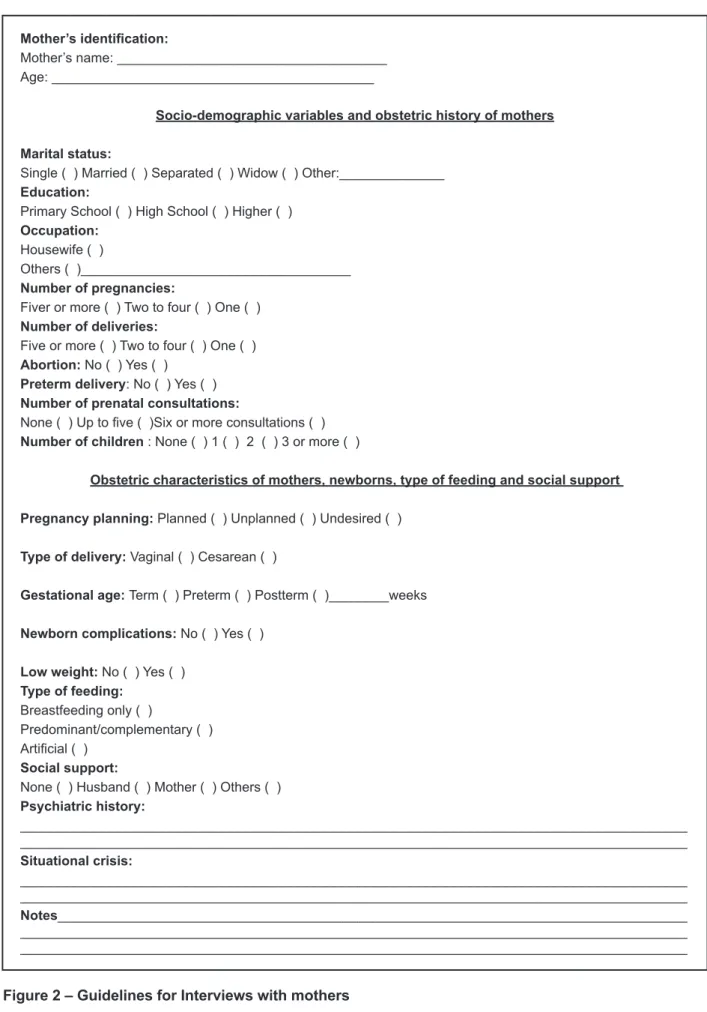
The mothers were interviewed in a single session, in a room especially prepared for this purpose, with a duration of approximately 20 minutes. For such interview, it was used the guidelines illustrated in Figure 2, which had the purpose of identifying the socioeconomic, demographic, obstetric and psychosocial conditions of the mother-baby dyad, once these aspects are considered risk factors in the postpartum period and may be associated with the onset of depression. Two open questions were also included in this survey to investigate the situa-tional crisis and the psychiatric background, with the purpose of understanding the mother’s clinical history.
The data investigated in the interview were not included with the purpose of contributing signii -cantly to the results of this study, but helped in the diagnosis of maternal depression, along with the BDI results. These guidelines were based on the Interview about the Maternity Experience, an instrument used in the research project of the insti-tution’s Psychology Institute.
After the interview, the mothers were invited to complete the BDI, aiming to investigate the risk of maternal depression in the postpartum period. Because the participants carried their babies in their arms, the researcher took note of the answers from the interview and also the depression evaluation scale.
The mothers who showed depression based on the analysis of the interview and the BDI evaluation were invited to attend therapeutic groups and also individual psychological counseling.
Mother’s identiication:
Mother’s name: ____________________________________ Age: ___________________________________________
Socio-demographic variables and obstetric history of mothers
Marital status:
Single ( ) Married ( ) Separated ( ) Widow ( ) Other:______________ Education:
Primary School ( ) High School ( ) Higher ( )
Occupation:
Housewife ( )
Others ( )____________________________________ Number of pregnancies:
Fiver or more ( ) Two to four ( ) One ( )
Number of deliveries:
Five or more ( ) Two to four ( ) One ( )
Abortion: No ( ) Yes ( )
Preterm delivery: No ( ) Yes ( )
Number of prenatal consultations:
None ( ) Up to ive ( )Six or more consultations ( )
Number of children : None ( ) 1 ( ) 2 ( ) 3 or more ( )
Obstetric characteristics of mothers, newborns, type of feeding and social support
Pregnancy planning: Planned ( ) Unplanned ( ) Undesired ( )
Type of delivery: Vaginal ( ) Cesarean ( )
Gestational age: Term ( ) Preterm ( ) Postterm ( )________weeks
Newborn complications: No ( ) Yes ( )
Low weight: No ( ) Yes ( )
Type of feeding:
Breastfeeding only ( )
Predominant/complementary ( )
Artiicial ( ) Social support:
None ( ) Husband ( ) Mother ( ) Others ( )
Psychiatric history:
_________________________________________________________________________________________ _________________________________________________________________________________________ Situational crisis:
_________________________________________________________________________________________ _________________________________________________________________________________________
Notes____________________________________________________________________________________
_________________________________________________________________________________________ _________________________________________________________________________________________
In Table 3 it can be observed that mothers with maternal depression (mild, moderate and severe) had RICD 1 absent (when the child cries or screams, the mother knows what he/she wants); RICD 2 (mother uses infant-directed speech, or motherese, with the babies; and RCDI 5 (there is eye contact between the child and mother) in the analysis of mother-baby interaction. This results shows the mothers’ dificulties in identifying babies demands (RICD 1), in supposing a subject (RCDI 2, 5), and in When the BDI values were compared with the
values of the RICDs for the babies aging 0 to 4 months, a signiicant difference (p=0.002) was observed, i.e., the mother’s BDI levels are signii -cantly higher in the presence of absent RICDs.
Gamma coeficient was G = 0.54; p < 0.05, i.e., there was a signiicant correlation between the BDI levels and the presence of risk in child development. Thus, the higher the degree of maternal depression
Table 1 – Point estimate and conidence interval for the BDIs and RICDs’ population proportions
BDI p (%) CI 95%
Minimum 66.7 59.5% a 73.9 %
Mild 18.2 12.3% a 24.1 %
Moderate 12.1 7.1% a 17.1 %
Severe 3.0 0.4% a 5.7 %
RICDs p (%) CI 95%
RICD present 88.5 83.6 % a 93.4%
RICD absent 1 to 5 11.5 4.6% a 18.5%
*p = proportion in the sample; CI= conidence interval; BDI= Beck Depression Inventory; RICDs= Clinical Risk Indicators in Child
Development.
Table 2 – Indicators of postpartum maternal depression (BDI) in a cohort of mothers of infants born with RICDs present, in a medium-size city and surroundings in a central region of Rio Grande do Sul (RS), 2010.
Depression (BDI) Total of mothers
(n)
Infants with RICDs present - (%)
Minimum 110 103 (93.6)
Mild 30 25(83.3)
Moderate 20 14 (70.0)
Severe 5 4 (80.0)
Total 165 146
*BDI = Beck Depression Inventory; IRDIs = Clinical Risk Indicators in Child Development.
RESULTS
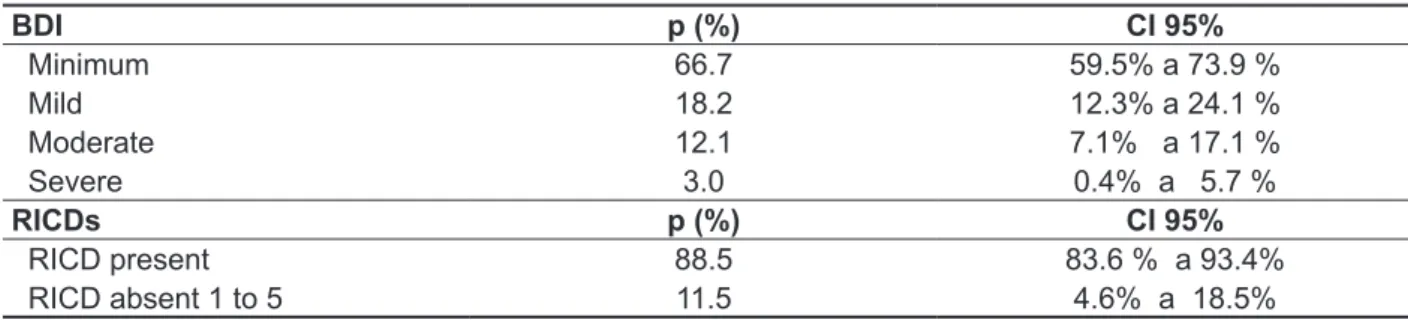
The population of this study consisted of 165 mother-baby dyads, babies born in the period of March to May 2010, whose mothers sought the service of neonatal hearing screening (NHS) at the University Hospital. Table 1 shows the results of estimated BDI and RICDs rates.
According to Table 1, the proportion of mothers with minimum depression is estimated between 59.5 to 73.9 percent, thus showing a prevalence of postpartum depression of approximately 30 percent.
Table 3 – Indicators of postpartum maternal depression (BDI) in a cohort of mothers (n= 165) of infants born with absent RICDs in a medium-size city and surroundings in a central region of Rio Grande do Sul (RS), 2010.
Depression (BDI) Total of mothers (n) RICDs Infants at risk (%)
Absent RICDs
1 2 3 4 5
Minimum 110 7 (6.4) 4 2 1 1 3
Mild 30 5 (16.7) 2 2 1 4 3
Moderate 20 6 (30.0) 4 2 1 1 1
Severe 5 1 (20.0) 1 0 0 0 0
Total 165 19
*BDI = Beck Depression Inventory; RICDs = Clinical Risk Indicators for Child Development
Table 4 – Indicators of postpartum maternal depression (BDI) and frequency of social support in a cohort of mothers (n= 165) of infants born in a medium-size city and surroundings in the central region of Rio Grande do Sul (RS), 2010.
Social Support BDI (%)
Minimum Mild Moderate Severe
None 16 10 4 0
Husband 30 6 5 1
Mother 17 6 4 0
Other 12 3 2 2
+ than one caregiver 35 5 5 2
Total 110 30 20 5
**BDI = Beck Depression Inventory. Kruskal-Wallis test. Table 3 also shows that there are non-depressed mothers, but the RICDs assessment also indicates alterations, similar to those found in the cases of mild to severe depression. However, it is worth noting that the RCDIs also assess the babies’ condi -tions, not only the mothers’, and that depression is not the only risk factor to the mother-baby bonding.
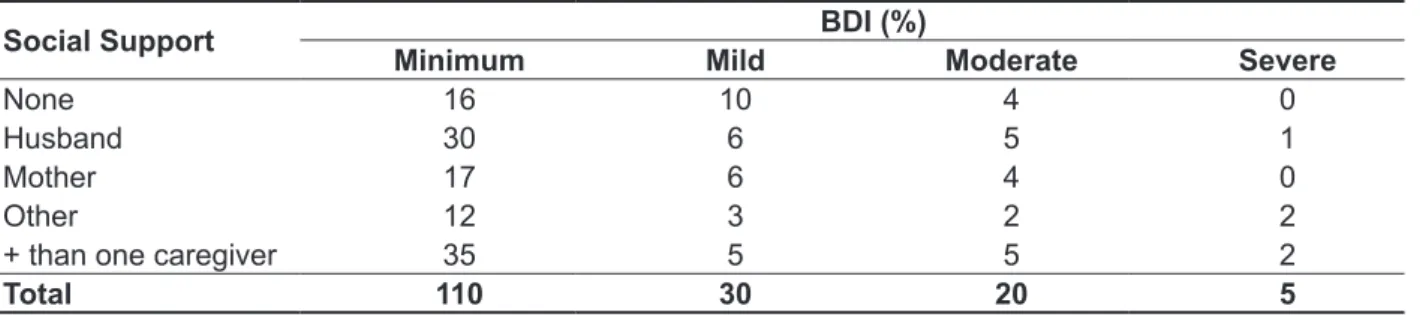
Table 4 shows the evaluated BDI degrees among the categories of the social support variable, and no signiicant result was found (p=0.570), i.e., there is
no signiicant difference in the degree of maternal depression between the different types of social support. Although there is no signiicant relation in the statistical analysis, the majority of the mothers did not present signs of depression. This may be explained by the fact that the studied sample (110 mothers) of a total of 165 had an important social support network, which may have inluenced positively the mothers’ emotional condition.
DISCUSSION
Maternal postpartum depression is one of the key aspects to be considered as possible interference in the exercise of the maternal function during the irst year of the baby’s life. It may have major conse -quences on children’s development, especially in language, which is structured by the mother-baby interaction14. Thus the importance of monitoring the
maternal emotional conditions right before childbirth and afterwards. This fact was found in this study in the positive association between the presence of risks in child development in the occurrence of maternal depression.
mothers interpret negatively the maternal attitudes, affecting the baby’s ability to respond in the dyad’s interaction23.
According to a qualitative analysis, mothers suffering from maternal depression (mild, moderate and severe), and with RICD 2 absent (mother uses baby talk) show dificulty in supposing a subject. It involves an anticipation produced by the maternal agent, once the infant is not yet constituted as a subject. Such constitution depends precisely on that the baby is irst supposed or anticipated by the mother (or caregiver).
Depressed mothers typically express disheartened or apathetic affection and stimulate less their babies for they have a predominantly depressive or anxious behavior, less imitative behaviors of the baby’s facial expressions, play less with their children and have more punitive and controlling attitudes in the care of their children. In addition, depressed mothers also tend to report more dificulties in the care of their children and express more dissatisfaction associated with their children than non-depressed mothers24.
Maternal depression would disrupt the mutual regulatory process, once the mother is the external component of the baby’s regulatory system and would stop regulating his/her physiological and emotional conditions. This would constitute a break in inter-subjectivity, caused by the effect of depression on maternal affections and responsiveness, causing mothers to have less contingency capability and capacity to establish physical contact25.
Decreased maternal sensitivity is directly related with her interaction with the baby, which is often characterized by intrusiveness or apathy25, which would hinder the occurrence of speech especially addressed and attuned to the child. Such lack of rapport may relect on dificulties for the baby to develop language, in view of interactionist perspec-tives in this process.
Mothers suffering from maternal depression (mild, moderate and severe), having RICD 5 absent (eye contact between mother and infant) in the analysis of the mother-infant interaction may be experiencing dificulties in alternating presence/ absence and also in supposing a subject, and this means that mother (or caregiver) not only respond to the baby with presence or absence, but produces an alternant, not only physical, but mainly symbolic. It is expected that between the child’s demand and the satisfaction provided by the mother there is an interval in which the child’s response will arise.
In experiments conducted in the Children’s Medical Center in Boston26, mothers of babies aged three to four months were asked to show studies on the relevance of such maternal condition
in establishing a bond and interaction between mother and baby15-18.
The mothers in this study who were suffering from maternal depression (mild, moderate or severe) and in the evaluation of RICDs presented RICD 1 absent (when the baby cries or screams the mother knows what she/he wants) showed dificulties in establishing their babies demands. It is well known that the irst involuntary reactions of a newborn, such as crying, are recognized by the mother as a request from the child to her, which the mother feels compelled to respond, that is, they are an interpretation when the mother uses language, “translates” into words the child’s actions and “trans-lates” into actions their own words.
The communication of the mother-child dyad appears in the pre-verbal phase by means of the discharges that the newborn does to release her/ his tensions, such as, for example, hunger. Such emotional discharges are expressed by screams, innervation of blood vessels, diffuse muscle activity and others. According to the author, babies can realize the mother’s mood and her conscious and unconscious desires and its themselves according to such desires as they start to realize them. This communication channel also happens from mother to child in a two-way relationship19. Much of the mother-baby relationship, therefore, occurs unconsciously and by affection through this kind of communication, because mother develops in this period, if she so interacts with the child, some telepathic or coenesthesic ability to understand her baby15. Such communication not only shapes the baby’s psyche as it operates on affections, either pleasant or unpleasant.
For the mother to achieve such effective commu-nication and special empathy with the baby, it is necessary for her to be in the threshold of herself so that she is able to understand the signals from her child19. It is also necessary that the mother is “connected” with her inner self thanks to an identii -cation that puts her, through all layers of her psyche, in touch with the child that she herself was 20.
If the mother is depressed, she will not be able to notice the signals that her baby sends, she will not be able to exercise the primary maternal preoc -cupation referred by Winnicott 21,22. Such mother will either be distractive or angry and often will not even be able to ind out when the baby’s crying is a sign of pain, hunger or sleep. In this case, communication between both will be broken and, consequently, interaction may be damaged.
participate in everything that happens around, giving them sense. A suficiently good environment is the one provided by mothers, through their care, helping her child experience new realities, develop an individualized personal ego, control instincts and cope with the dificulties of life. An environment that is not good enough may impair the child development28.
It is worth noting, in this study, that the good social support that the mothers had possibly neutralized the effects of depression in the relationship with their babies. This can explain the low frequency of risk indices29.
CONCLUSION
The analysis of this study showed that there is a higher proportion of infants with absent RCDIs when the levels of maternal depression are high in the postpartum period, and may have negative implications in the interaction of the mother-infant dyad and ultimately result on a risk factor for the child development.
Most of the babies studied did not present absent risk indices, as well as most mothers were not affected by postpartum depression, but it could be observed that the cohort of mothers studied had important social support, resulting positively in the emotional condition of the mothers in the puerperal period and, consequently, in the infants development.
their children. This would be followed by a drastic change in the babies’ appearances. In the irst or second minute he/she smiles, lails arms and legs, and makes efforts to get a response from their mothers. After many unsuccessful efforts, they become discouraged and often start to salivate. After three to four minutes, all their bodies sink into despair. These experiments were brief and followed by loving hugs, but it is easy to see that mother’s depression and her lack of responses may harm the child development. According to Brazelton and Cramer27, depressed mothers often fail in meeting her babies’ expectations, because sometimes they cannot interact normally, but then they withdraw due to their own needs, leaving the child in a state of depression and hopelessness. Frequent repetition of this pattern may be responsible for the production of classic symptoms of avoidance of eye contact. Such eye avoidance occurs because it is painful for the child let the expectation happen again. Such experiences show in practice what many other authors described as risk factors for the infant’s health: sharp changes of the mother’s mood, and frequent repetition of this behavior. The child does not understand what happens, may withdraw and the dyad rapport may be compromised.
The emotional development in childhood is closely linked to the emotional status of the family, more precisely the mother or who plays the maternal role (good enough mother28). Infants depend on adults available to care for them and include them in the world, showing, teaching, and making them
RESUMO
Objetivo: analisar as possíveis correlações entre alterações nos índices de risco ao desenvolvimento linguístico e psicológico do bebê e presença de depressão materna, em uma amostra de mães de bebês nascidos em cidade de porte médio e arredores da região central do Rio Grande do Sul. Métodos: a pesquisa foi realizada com 165 díades mães- bebê em Hospital Escola no qual as crian-ças realizavam triagem auditiva neonatal, no período de março a maio de 2010. Na coleta de dados foram utilizados um roteiro de entrevista sobre informações socioeconômicas, demográicas, obsté -tricas e psicossociais, a aplicação do Inventário de Depressão de Beck e dos Indicadores Clínicos de Risco para o Desenvolvimento Infantil. Resultados: quando se avaliou os valores do inventário de depressão na primeira faixa de índice de risco analisada, comparando-se bebês com e sem risco ao desenvolvimento, houve diferença estatisticamente signiicante, pois mães com maiores escores de depressão apresentaram mais risco ao desenvolvimento de seus ilhos. Conclusões: a análise realizada apontou que há maior proporção de bebês com risco ao desenvolvimento, quando os níveis de depressão materna são elevados no período pós-parto.
12.Beck AT, Steer RA. Beck Depression Inventory.Manual. San Antonio: Psychological Corporation.1993.
13. Cunha JA. Manual da versão em português da Escala Beck. São Paulo: Casa do Psicólogo, 2001. 14. De Lemos CTG. Los procesos metafóricos y metonímicos como mecanismos de cambio. Substratum I-1; 1992.p.121-35.
15. Alfaya C, Lopes RCS. Repercussões do comportamento interativo de mães com depressão no desenvolvimento do comportamento exploratório do bebê. Rev. Bras. Crescimento Desenvolv. Hum. 2005;15:(2):69-81.
16. Frizzo GB, Piccinini CA. Interação mãe-bebê em contexto de depressão materna: aspectos teóricos e empíricos. Psicol Estud. 2005;10:47-55.
17. Furst MCG, Schrroeder AT, Valle VH, Golbert MB, Escosteguy N. Depressão pós-parto e suas repercussões na interação precoce mãe-bebê. Acta méd. 2007;28:496-506.
18. Moehler E, Kagan J, Parzer P, Brunner R, Reck C, Wiebel A, et al. Childhood behavioral inhibition and maternal symptoms of depression. Psychopathology. 2007;40(6):446-52.
19. Spitz RA. O primeiro ano de vida. São Paulo: Martins Fontes. 2000.
20. Golse B. Insistir – Existir. Do Ser à pessoa. Lisboa: Climepsi. 2001.
21. Winnicott DW. Textos selecionados: Da pediatria à psicanálise. Rio de Janeiro: Francisco Alves. 3. ed. 1988.
22. Winnicott DW. Os bebês e suas mães. São Paulo: Martins Fontes. 2002.
23. Stein A, Arteche A, Lehtonem A, Craske M, Harvey, A, Counsell N, et al. Interpretation of infant facial expression in the context of maternal postnatal depression. Infant Behav Dev. 2010;33(3):273-8. 24. Murray L, Cooper P, Creswell C, Schoield E, Scak C. The effects of maternal social phobia on mother-infant interactions and infant social responsiveness. Journal of Child Psychology and Psychiatry and Allied Disciplines. 2007;48:45–52. 25.Rechia, IC, Souza, APR. Dialogia e função materna em casos de limitações práxicas verbais. Psicol. estud. 2010;15(2):315-23.
26. Field T. Postpartum depression effects on early interactions, parenting, and safety practices: a review.Infant Behav Dev. 2010;33(1):1-6.
27. Brazelton BT, Cramer BG. As primeiras relações. 2ºed. São Paulo: Martins Fontes. 2002.
28. Winnicott DW. Da pediatria à psicanálise. Rio de Janeiro: Imago. 2000.
29. Fonseca VRJRM, Silva GA, Otta E. Relação entre depressão pós-parto e disponibilidade emocional
REFERENCES
1. Surkan PJ, Kawachi I, Ryan LM, Berkman LF, Carvalho VLM, Peterson KE. Maternal depressive symptoms, parenting self-eficacy, and child growth. Am J Public Health. 2008;98:125-32.
2. Motta M, Lucion A, Manfro G. Efeitos da depressão materna no desenvolvimento neurobiológico e psicológico da criança. Rev. Psiquiatr clín. 2005;27(2):165-76.
3. Murray L, Halligan SL, Adams G, Patterson P, Goodyer IM. Socio emotional development in adolescents at risk for depression. The role of maternal depression and attachment style. Dev Psychopathol. 2006;18(2):489-516.
4. Santos JHPO, Silveira MFA, Gualda DMR. Depressão pós-parto: um problema latente. Rev Gaúcha Enferm. 2009;30(3):516-24.
5. Felix GMA, Gomes APR, França PS. Depressão no ciclo gravídico-puerperal. Comun. ciênc. Saúde. 2008;19(1):51-60.
6. Borsa JB, Dias ACG. considerações acerca da relação mãe – bebê da gestação ao puerpério. Rev. Contemporânea – Psicanálise e Transdisciplinariedade. 2007;(2):310-21.
7. Alt MS, Benetti SPC. Maternidade e depressão: impacto na trajetória de desenvolvimento. Psicol. Estud. 2008;13(2):389-94.
8. Adewuya AO, Ola BO, Aloba OO, Mapayi BM, Okeniyi JA. Impact of postnatal depression on infants’ growth in Nigeria. J Affect Disord. 2008;108:191-3. 9. Kupfer MC, Jerusalinsky, A, Wanderley, D, Infante, D, Salles, L, Bernardino, L et al. Pesquisa multicêntrica de indicadores clínicos para a detecção precoce de riscos no desenvolvimento infantil. Rev. Latinoam. de Psicopatol Fundam. 2003;6:(2):7-25.
10. Kupfer MCM, Jerusalinsky A, L Bernardino, Wanderley D, Rocha PSB, Molina SE, et al. Predictive value of clinical risk indicators in child development: inal results of a study based on psychoanalytic theory. Rev. latinoam. psicopatol. fundam. 2010;13:(1):31-52.
11. OMS. Salude mental: nuevos conecimientos, nuevas esperanzas. Informe sobre la salud en el mundo. Ginebra: 2001.
Received on: August 23, 2012 Accepted on: December 12, 2012
Mailing address:
Janaína Pereira Pretto Carlesso Rua General Neto, 675 apto 401. Santa Maria - RS