SYNTHESIS, CHARACTERIZATION AND
REACTIVITY OF NEW COBALT,
PALLADIUM AND NICKEL COMPLEXES
BEARING
α
-DIIMINES AND P,O LIGANDS
Vitor João Salgueiro Rosa
SYNTHESIS, CHARACTERIZATION AND
REACTIVITY OF NEW COBALT,
PALLADIUM AND NICKEL COMPLEXES
BEARING
α
-DIIMINES AND P,O LIGANDS
Dissertação apresentada para a obtenção do Grau de Doutor em Química,
Especialidade Química Inorgânica Pela Universidade Nova de Lisboa, Faculdade de Ciências e Tecnologia
Lisboa
“Posso ser tão mau como os piores mas, graças a Deus, também posso ser tão bom como os melhores” Walt Whitman American poet (1819-1892)
ACKNOWLEDGEMENTS
To Prof. Teresa Avilés, the supervisor of this thesis, for all her help and guidance through this work, and her truly friendship. For providing motivation and help to allow me to overcome the frustration that usually strikes synthetic chemists. I would like to thank her also for the help and criticism during the making of this thesis.
To Dr. Carlos Lodeiro, for his always useful advices and support, and for his input in absorption studies.
To Prof. Richard Welter, for all the help in the determination of single crystals X-ray structures, his patience and friendship.
To Prof. Teixeira Gomes to helping me at the beginning of this journey that was this thesis, for the polymerization of ethylene tests and for the pleasant collaboration we had and hoping that it continues.
To Berta Covelo for X-ray studies, Prof. Carlos Brondino for the EPR studies, Prof. Gabriel Aullón for the theoretical studies and Pierre Braunstein for his useful chemical insights and collaboration.
To “Fundação para a Ciência e a Tecnologia”, for financial support through the PRAXIS XXI program, with the grant SFRH/BD/13777/2003.
To the New University of Lisbon and in particular the Chemistry Department of the Faculty of Science and Technology, for giving me the possibility to access and use the technical, material and human resources, in particular the assistance of Dr. Maria do Rosário Caras Altas in recording the NMR data.
To Christophe, Jean-Thomas and Samuel and Magno for their friendship and all the help they provided me at Strasbourg.
To all my laboratory colleagues, in particular Bruno, Betty and Tiago for their kindness, and to all my friends, in particular Jorge for his help in the revision of this thesis and his constant support.
ABSTRACT
This work describes the synthesis and characterization of a series of new α-diimine and P,O, β-keto and acetamide phosphines ligands, and their complexation to Ni(II), Co(II), Co(III) and Pd(II) to obtain a series of new compounds aiming to study their structural characteristics and to test their catalytic activity. All the compounds synthesized were characterized by the usual spectroscopic and spectrometric techniques: Elemental Analysis, MALDI-TOF-MS spectrometry, IR, UV-vis, 1H, 13C and 31P NMR spectroscopies. Some of the paramagnetic compounds were also characterized by EPR. For the majority of the compounds it was possible to solve their solid state structure by single crystal X-ray diffraction. Tests for olefin polymerization were performed in order to determine the catalytic activity of the Co(II) complexes.
Chapter I presents a brief introduction to homogenous catalysis, highlighting the reactions catalyzed by the type of compounds described in this thesis, namely olefin polymerization and oligomerization and reactions catalyzed by the complexes bearing α -diimines and P,O type ligands.
Chapter II is dedicated to the description of the synthesis of new α-diimines cobalt (II) complexes, of general formula [CoX2(α-diimine)], where X = Cl or I and the α-diimines
are bis(aryl)acenaphthenequinonediimine) (Ar-BIAN) and 1,4-diaryl-2,3-dimethyl-1,4-diaza-1,3-butadiene (Ar-DAB). Structures solved by single crystal X-ray diffraction were obtained for all the described complexes. For some of the compounds, X-band EPR measurements were performed on polycrystalline samples, showing a high-spin Co(II) (S = 3/2) ion, in a distorted axial environment. EPR single crystal experiments on two of the compounds allowed us to determine the g tensor orientation in the molecular structure.
In Chapter III we continue with the synthesis and characterization of more cobalt (II)
complexes bearing α-diimines of general formula [CoX2(α-diimine)], with X = Cl or I and α
all the compounds described is presented. Ethylene polymerization tests were done to determine the catalytic activity of several of the Co(II) complexes described in Chapter II and III and their results are shown.
In Chapter IV a new rigid bidentate ligand, bis(1-naphthylimino)acenaphthene, and its complexes with Zn(II) and Pd(II), were synthesized. Both the ligand and its complexes show syn and anti isomers. Structures of the ligand and the anti isomer of the Pd(II) complex were solved by single crystal X-ray diffraction. All the compounds were characterized by elemental analysis, MALDI-TOF-MS spectrometry, and by IR, UV-vis, 1H, 13C, 1H-1H COSY, 1H-13C HSQC, 1H-13C HSQC-TOCSY and 1H-1H NOESY NMR when necessary.
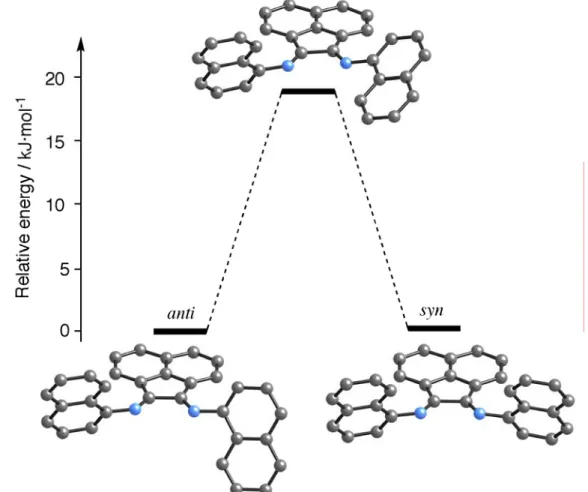
DFT studies showed that both conformers of [PdCl2(BIAN)] are isoenergetics and can
be obtain experimentally. However, we can predict that the isomerization process is not available in square-planar complex, but is possible for the free ligand. The molecular geometry is very similar in both isomers, and only different orientations for naphthyl groups can be expected.
Chapter V describes the synthesis of new P, O type ligands, β-keto phosphine, R2PCH2C(O)Ph, and acetamide phosphine R2PNHC(O)Me, as well as a series of new cobalt
(III) complexes namely [(η5-C5H5)CoI2{Ph2PCH2C(O)Ph}], and [(η5
-C5H5)CoI2{Ph2PNHC(O)Me}]. Treating these Co(III) compounds with an excess of Et3N,
resulted in complexes η2-phosphinoenolate [(η5-C5H5)CoI{Ph2PCH…C(…O)Ph}] and η2
-acetamide phosphine [(η5-C5H5)CoI{Ph2PN…C(…O)Me}]. Nickel (II) complexes were also
obtained: cis-[Ni(Ph2PN…C(…O)Me)2] and cis-[Ni((i-Pr)2PN…C(…O)Me)2]. Their geometry
and isomerism were discussed. Seven structures of the compounds described in this chapter were determined by single crystal X-ray diffraction.
RESUMO
Neste trabalho descreve-se a síntese e caracterização de uma série de novos ligandos, do tipo α-diimina e do tipo P,O, β-keto e acetamido fosfina, e a sua complexação a Ni(II), Co(II), Co (III) e Pd(II) obtendo-se séries de novos compostos com o objectivo de estudar as suas características estruturais e testar a sua actividade catalítica. Todos os compostos sintetizados foram caracterizados pelos métodos espectroscópicos e espectrométricos usuais: análise elementar, espectrometria MALDI-TOF-MS, e espectroscopias de IV, UV-vis, 1H, 13C e 31P RMN. No caso de alguns dos compostos paramagnéticos foi também utilizada RPE. Na maioria dos compostos foi possível determinar as estruturas no estado sólido por difracção de raios-X. Foram efectuados testes de catálise de polimerização de etileno para determinar a actividade de vários dos complexos de Co(II).
No Capítulo I é feita uma breve introdução á catálise homogénea, salientando as reacções catalizadas pelo tipo de compostos descritos nesta tese, nomeadamente a polimerização e oligomerização de olefinas e reacções catalizadas pelos complexos contendo ligandos α-diiminicos e do tipo P,O.
O CapítuloII está dedicado à descrição da síntese de novos complexos de cobalto (II) com ligandos α-diiminas, de formula geral [CoX2(α-diimina)], nos quais X = Cl ou I e as α -diiminas são a bis(arilo)acenaftenoquinonadiimina) (Ar-BIAN) e a
1,4-diaril-2,3-dimetil-1,4-diaza-1,3-butadieno (Ar-DAB). Foi possível obter estruturas através da difracção de raios-X
de todos os complexos descritos. Medidas de RPE banda X com amostras policristalinas foram feitas nalguns dos compostos descritos mostrando um spin-alto do ião Co(II) (S = 3/2) num ambiente axialmente distorcido. Experiências de RPE de mono cristal, de dois dos compostos, permitiram-nos determinar a orientação do tensor g dentro da estrutura molecular.
No Capítulo III continua-se a descrição da síntese de complexos de cobalto (II) com
α-diiminas de formula geral [CoX2(α-diimina)], nos quais X = Cl ou I e as α-diiminas são a bis(arilo)acenaftenoquinonadiimina) (Ar-BIAN) e a
1,4-diaril-2,3-dimetil-1,4-diaza-1,3-butadieno (Ar-DAB). Além da determinação das estruturas por difracção de raios-X de mono
dos compostos descritos. Foram efectuados testes de catálise de polimerização de etileno para determinar a actividade de vários dos complexos de Co(II) descritos no Capitulo II e III, e os resultados apresentados.
No Capítulo IV um novo ligando rígido bidentado, o bis(1-naftilolimino)acenafteno, e os respectivos complexos de Zn(II) e Pd(II), foram sintetizados. Tanto o ligando como os seus complexos apresentam isómeros syn e anti. As estruturas de estado sólido do ligando e do isómero anti do composto de Pd(II) foram determinadas por difracção raios-X de cristal único. Todos os compostos foram caracterizados por analise elementar, espectrometria MALDI-TOF-MS, e por espectroscopias de IV, UV-vis, 1H, 13C, 1H-1H COSY, 1H-13C HSQC, 1H-13C HSQC-TOCSY e 1H-1H NOESY RMN quando necessário.
Estudos de DFT mostraram que os confórmeros do [PdCl2(BIAN)] são isoenergéticos
e podem ser ambos obtidos experimentalmente. No entanto, pode-se deduzir que o processo de isomerização não é possível num complexo quadrangular planar, mas é possível para o ligando livre. A geometria molecular é muito semelhante para ambos os isómeros, sendo unicamente esperado observar diferentes orientações dos grupos naftilo.
No Capítulo V descreve-se a síntese de novos ligandos do tipo P,O, β-keto fosfina, R2PCH2C(O)Ph, e acetamido fosfina R2PNHC(O)Me, assim como a de uma série de novos
complexos de cobalto (III) [(η5-C5H5)CoI2{Ph2PCH2C(O)Ph}], [(η5
-C5H5)CoI2{Ph2PNHC(O)Me}]. Por tratamento destes compostos com um excesso de Et3N,
sintetizou-se o complexo η2-fosfinoenolato [(η5-C5H5)CoI{Ph2PCH…C(…O)Ph}] e o
complexo η2-acetamidofosfina [(η5-C5H5)CoI{Ph2PN…C(…O)Me}]. Complexos de níquel (II)
também foram obtidos: o cis-[Ni(Ph2PN…C(…O)Me)2] e o cis-[Ni((i-Pr)2PN…C(…O)Me)2]. As
suas geometrias e isomeria foram discutidas. Foram determinadas as estruturas moleculares de sete dos compostos descritos neste capítulo, através de difracção de raios-X.
ABBREVIATIONS
Ac Acetyl
Ar Aryl
Atm Atmosphere
BIAN bis(aryl)acenaftenoquinonediimine
Bn Benzyl
Bu Butyl
t-Bu tert-Butyl
CDV Calorimetria diferencial de varrimento
13
C NMR Carbon Nuclear Magnetic Resonance
Conc. Concentration
d Duplet
DAB 1,4-diaryl-2,3-dimethyl-1,4-diaza-1,3-butadiene
dba dibenzylideneacetone
DFT Density functional theory
dmba ortometalateddemethylbenzylamine DSC differential scanning calorimetry
EI Electronic Impact Ionization EPR Electronic Paramagnetic Resonance
eq. Equivalent
Et Ethyl h Hour
1
H NMR Proton Nuclear Magnetic Resonance HPLC High performance liquid chromatography HSQC Heteronuclear single quantum. Correlation
Hz Hertz
i
Pr Isopropyl
IR Infra Red spectrometry
IV Espectrometria infravermelha
J Coupling constant
m Multiplet
MAO Methylaluminoxane
Me Methyl
min. Minute
MS Mass Spectrometry
NOESY Nuclear Overhauser effect spectroscopy NMR Nuclear Magnetic Resonance
PE Polyethylene
Ph Phenyl
s Singlet t Triplet T (ºC) Temperature Celsius
t.a. Temperature ambient
THF Tetrehydrofuran
TOCSY Total Correlation Spectroscopy
TOF-MS-EI Time-of-Fly Mass Spectrometry Electron Impact TOF-MS-FD Time-of-Fly Mass Spectrometry Field Desorption
δ Chemical Shifting
λ Wave length
TABLE OF CONTENTS
Acknowledgements ...iii
Abstract... v
Resumo ...vii
Abbreviations ...ix
Table of contents ...xi
Index of Figures... xv
Index of schemes ...xxi
Index of Tables ...xxiii
Index of compounds ...xxiv
Chapter I ... 1
I.1 Catalysis: General definition... 4
I.2 Ethylene oligomerisation and polymerization. ... 5
I.3 Catalysts bearing α-diimine ligands... 10
I.4 Catalysts bearing P,O type ligands... 17
I.5 References ... 20
Chapter II ... 27
II.1 Resumo... 30
II.2 Abstract ... 31
II.3 Introduction ... 32
II.4 Results and Discussion... 33
II.4.1 General characterization of the compounds ... 33
II.4.2 Crystal structures description. ... 35
II.4.2.1 Complex 1a. ... 35
II.4.2.2 Complex 1b. ... 35
II.4.2.3 Complex 1c. ... 36
II.4.2.4 Complex 2'b... 37
II.4.3 EPR measurements... 38
II.6 Experimental Section... 46
II.6.1 General Procedures and Materials ... 46
II.6.2 Physical Methods... 46
II.6.3 Synthesis of Complexes... 47
II.6.3.1 Synthesis of [CoCl2(o,o’,p-Me3C6H2-DAB)], 1b... 47
II.6.3.2 Synthesis of [CoI2(o,o’,p-Me3C6H2-BIAN)], 2’b... 48
II.6.4 Crystallography ... 48
II.7 Acknowledgements... 49
II.8 References... 50
Chapter III ... 53
III.1 Resumo ... 56
III.2 Abstract... 57
III.3 Introduction ... 58
III.4 Results and Discussion ... 59
III.4.1 Synthesis and characterization of compounds... 59
III.4.2 Ethylene polymerisation tests ... 63
III.5 Conclusions ... 65
III.6 Experimental... 66
III.6.1 General... 66
III.6.2 Synthesis of Complexes... 67
III.6.2.1 Synthesis of [CoI2(o,o’,p-Me3C6H2-DAB)] (1) ... 67
III.6.2.2 Synthesis of [CoI2(o,o’-iPr2C6H3-DAB)] (2) ... 68
III.6.2.3 Synthesis of [CoCl2(o,o’,p-Me3C6H2-BIAN)] (3) ... 68
III.6.2.4 Synthesis of [CoCl2(o,o’-iPr2C6H3-BIAN)] (4) ... 69
III.6.2.5 Synthesis of [CoI2(o,o’-iPr2C6H3-BIAN)] (5)... 69
III.6.3 Crystallographic details ... 69
III.6.4 Polymerisation details... 72
III.7 Acknowledgements... 72
III.8 References... 73
III.9 Supplementary material ... 75
Chapter IV ... 79
IV.3 Introduction ... 84
IV.4 Experimental Section ... 85
IV.4.1 General Procedures and Materials... 85
IV.4.2 X-ray crystal structure determinations ... 85
IV.4.3 Spectrophotometric measurements ... 86
IV.4.4 Mass spectrometry ... 86
IV.4.5 Computational details... 87
IV.4.5.1 Mono(1-naphthylimino)acenaphthene (L)... 87
IV.4.5.2 Bis(1-naphthylimino)acenaphthene zinc dichloride (1)... 88
IV.4.5.3 Bis(1-naphthylimino)acenaphthene (L1) ... 88
IV.4.5.4 Bis (1-naphthylimino)acenaphthene palladium dichloride (2): Method A ... 89
IV.4.5.5 Bis (1-naphthylimino)acenaphthene palladium dichloride (2): Method B ... 90
IV.5 Results and Discussion... 91
IV.5.1 Synthesis and characterization ... 91
IV.5.2 Crystal structures description ... 94
IV.5.3 Spectrophotometric studies ... 98
IV.5.4 Mass Spectrometry studies... 100
IV.5.5 Theoretical study ... 101
IV.6 Conclusions ... 108
IV.7 Acknowledgements ... 109
IV.8 References ... 110
IV.9 Supplementary Material ... 114
Chapter V... 151
V.1 Resumo... 154
V.2 Abstract ... 155
V.3 Introduction ... 156
V.4 Results and Discussion... 157
V.4.1 Synthesis and characterization of the ligands ... 157
V.4.2 Cobalt Complexes ... 161
V.4.3 Nickel Complexes ... 166
V.5 Conclusion... 174
V.6 Experimental section ... 174
V.6.1 Preparation and spectroscopic data for HL1... 175
V.6.3 Preparation and spectroscopic data for 3... 176 V.6.4 Preparation and spectroscopic data for 4... 176 V.6.5 Preparation and spectroscopic data for 5... 177 V.6.6 Preparation and spectroscopic data for 6... 177 V.6.7 Preparation and spectroscopic data for 10... 177 V.6.8 Preparation and spectroscopic data for 11... 178 V.7 Crystal structure determinations ... 178
V.8 Acknowledgements... 179 V.9 References... 180
INDEX OF FIGURES
Figure I.1 Schematic representation of the energetics in a catalytic cycle. The uncatalyzed reaction (a) has a higher Gibbs energy of activation ∆‡G than any step in the catalyzed reaction (b). The Gibbs energy of reaction, ∆rGө, for the overall reaction is unchanged from (a) to (b). 4
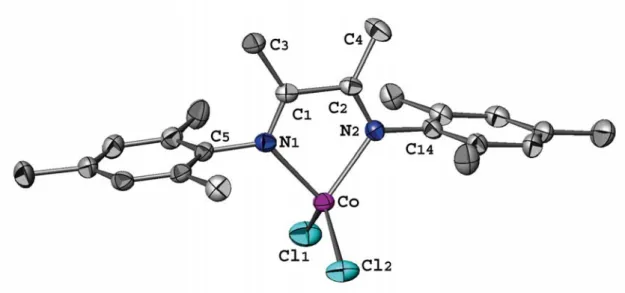
Figure II.1 Molecular structure of complex 1a (ATOMS view) with partial labelling scheme. The hydrogen atoms are omitted for clarity. The thermal ellipsoids enclose 50% of the electronic density. 35 Figure II.2 Molecular structure of complex 1b (ATOMS view) with partial
labelling scheme. The hydrogen atoms and the solvent molecules (CH2Cl2) are omitted for clarity. The thermal ellipsoids enclose 50%
of the electronic density. 36
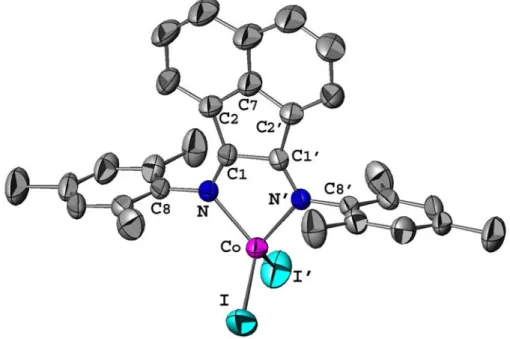
Figure II.3 Molecular structure of complex 1c (ATOMS view) with partial labelling scheme. The hydrogen atoms are omitted for clarity. The thermal ellipsoids enclose 50% of the electronic density. Operators for generating equivalent atoms: x, y, -z+3/2. 37 Figure II.4 Molecular structure of complex 2'b (ATOMS view) with partial
labelling scheme. The hydrogen atoms and the solvent molecules (kkk) are omitted for clarity. The thermal ellipsoids enclose 50% of the electronic density. Operators for generating equivalent atoms: -x,
y, -z+1/2. 38
Figure II.5 EPR spectra of powdered samples of compounds 1b, 1c, and 2´b together with simulations. The EPR parameters obtained from simulation are given in Table II.3. For compound 1c, the peak at ∼ 3300 Gauss correspond to Cu(II) impurities whereas the peak at ∼ 500
Gauss to cavity background. 39
Figure II.6 (a) Projection along a of the four Co(II) ions and their ligands in the unit cell for compound 1b. (b) Projection along b of the four Co(II) ions and their ligands in the unit cell for compound 1c. 41 Figure II.7 Angular variation of the g factor obtained from oriented single crystal
K. The solid lines in both plots were calculated with the components
of the g2 tensor given in Table II.3. 42
Figure II.8 Orientation of the principal axes of the g-tensor for the Co(II) site in
compound 1c. 44
Figure III.1 ORTEP view of the complex 2. The ellipsoids enclose 50% of the electronic density. Hydrogen atoms are omitted for clarity. 61 Figure III.2 ORTEP view of the complex 3. The ellipsoids enclose 50% of the
electronic density. Hydrogen atoms are omitted for clarity. 62 Figure III.3 ORTEP view of the complex 4 (molecule A). The ellipsoids enclose
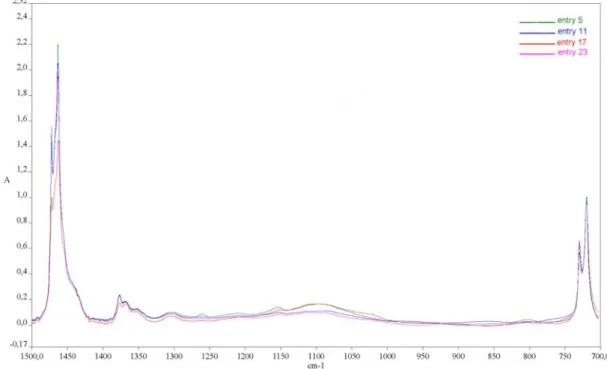
50% of the electronic density. Hydrogen atoms are omitted for clarity. 62 Figure SM III.1 FT-IR spectra of selected polyethylene samples. 77 Figure SM III.2 DSC thermograms of selected polyethylene samples. 77 Figure IV.1 Displacement ellipsoid representations at the 30% probability level of
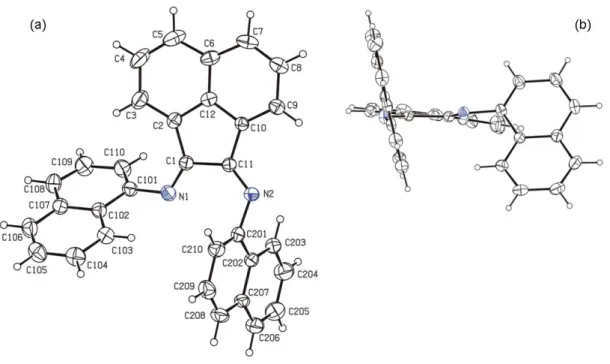
L1 (a) perpendicular and (b) parallel to the bis(imino)acenaphthene
unit. 95 Figure IV.2 Displacement ellipsoid representation at the 30% probability level of 2
(c) perpendicular and (d) parallel to the bis(imino)acenaphthene unit. Selected bond lengths (Å) and angles (º) for 2: Pd-N1 2.040(6); Pd-N2 2.050(6); Pd-Cl2 2.273(2); Pd-Cl1 2.278(2); Pd-N2 81.4(2); N1-Pd-Cl2 174.59(18); N1-Pd-Cl2 93.30(19); N1-Pd-Cl1 93.51(18);
N2-Pd-Cl1 174.60(19); Cl2-N2-Pd-Cl1 91.75(9). 95
Figure IV.3 (a) Fragment of the infinite 3D network formed through C-H···π interactions among L1 molecules, showing the packing in the ab plane. (b) Fragment of the infinite 1D ladder-like chain formed along of a axis through π···π interactions among molecules of 2. 97 Figure IV.4 Energetic profile for free BIAN ligand. Atomic coordinates are
available from Table SM IV.2. 103
Figure IV.5 Energy as a function of τ angle in both isomers of compound [PdCl2(BIAN)]. Zero values for each conformer are taken arbitrary to
the minimum. 104
Figure SM IV.1 a) 1H NMR spectrum of L b) 13C NMR spectrum of L measured at 400
MHz in CD2Cl2. 114
Figure SM IV.2 1H,1H COSY NMR spectrum of L measured at 400 MHz in CD2Cl2. 115
Figure SM IV.3 a) 1H NMR spectrum of L1 b) 13C NMR spectrum of L1 measured at
400 MHz in CD2Cl2. 116
Figure SM IV.4 1H,1H-COSY NMR spectrum of L1 measured at 400 MHz in CD2Cl2. 117
Figure SM IV.5 a) 1H NMR spectrum of 1 b) 13C NMR spectrum of 1 measured at 400
MHz in CD2Cl2. 118
Figure SM IV.6 a) 1H NMR spectrum of 2 (method A). b) 13C NMR spectrum of 2
(method A) measured at 400 MHz in CD2Cl2. 119
Figure SM IV.7 1H,1H COSY NMR spectrum of 2 (method A) measured at 400 MHz
in CD2Cl2. 120
Figure SM IV.8 1H NMR spectrum of 2 (method B) measured at 400 MHz in CD2Cl2. 121
Figure SM IV.9 1H NMR spectrum of 2 (method B). b) 13C NMR spectrum of 2
(method B) measured at 600 MHz in CD2Cl2. 122
Figure SM IV.10 1H,1H COSY NMR spectrum of 2 (method B) measured at 600 MHz
in CD2Cl2. 123
Figure SM IV.11 1H, 13C HSQC-TOCSY NMR spectrum of 2 (method B) measured at
600 MHz in CD2Cl2. 124
Figure SM IV.12 1H, 1H NOESY NMR spectrum of 2 (method B) measured at 600
MHz in CD2Cl2. 125
Figure SM IV.13 a) Variable temperature 1H NMR spectrum of L1 measured at 400 MHz in CD2Cl2 b) and c) amplified selected regions. 126
Figure SM IV.14 1H-NMR spectra of L1, 1, 2 (method A) and 2 (method B) measured at 400 MHz in CD2Cl2,for comparison purposes. 127
Figure SM IV.15 Amplified region (7.5-6ppm) of 1H-NMR spectra of compound 1 (A) and 2 (B, C) obtained by the two methods. 128 Figure SM IV.16 Absorption spectra of L1 (A) and complex 2 (B) in freshly prepared
dichloromethane solution ([L1] and [2] = 1.0E-6 to 1.0E-4 M). 129 Figure SM IV.17 Absorption spectra of precursors 1-naphthylamine,
acenaphthenquinone and L, and Absorption spectra of ligand L1 for comparative purpose in freshly prepared dichloromethane solution ([L]
Figure SM IV.18 Absorption spectra of ligand L1 in freshly prepared dichloromethane solution in the presence of increased amount of Pd(II) ([L1] = 1.0E-5 M). In the inset is represented the absorption at 300 nm. 131 Figure SM IV.19 Fragmentation observed by TOF-MS-FD+ spectroscopy for the metal
complex 2. 132
Figure SM IV.20 Fragmentation observed by MALDI-TOF-MS spectroscopy for the
metal complex 2. 133
Figure SM IV.21 Isotopic fragmentation observed by TOF-MS-FD+ spectroscopy for the peak at 610.00 m/z (down) assigned to the metal complex 2 with
the isotopic theoretical model (top). 134
Figure SM IV.22 Fragmentation observed by TOF-MS-EI+ spectroscopy for the
precursor L. 135
Figure SM IV.23 Fragmentation observed by MALDI-TOF-MS ligand L1. 136 Figure SM IV.24 Fragmentation observed by MALDI-TOF-MS spectroscopy for the
metal complex 1. A dimer structure is observed in the spectra. 137 Figure SM IV.25Experimental τ values in crystal structures retrieved from Cambridge
Structural Database. Only complexes having square-planar
coordination for transition metal are represented (19 data, which 15
have Pd). 138
Figure SM IV.26 a) Relation between both τ angles in partial optimized structures of [PdCl2(BIAN)] when only one, τ, is fixed. b) Differences between
both τ values in experimental structures retrieved from Cambridge Structural Database. 139
Figure V.1 ORTEP view of ligand HL3 (hydrogen atoms have been omitted for clarity, except the H1 one on the nitrogen atom founded by Fourier differences). Displacement ellipsoids are drawn at 50% probability
level. 160 Figure V.2 Crystal packing diagram of ligand HL3 showing the N-H···O hydrogen
bonding. Symmetry code for equivalent positions: x, -y+1/2, z-1/2. Dashed lines indicate the hydrogen bonds. 160 Figure V.3 ORTEP view of complex 3 (the hydrogen atoms have been omitted for
1.21(1) Å; P1-Co1-I2, 88.9(1)°; C1-P1-Co1, 114.4(1)°, C9-P1-C15,
105.6(1)°. 162 Figure V.4 ORTEP view of pseudo dimer of the complexes 5 (the hydrogen atoms
have been omitted for clarity). Displacement ellipsoids are drawn at 50% probability level. Symmetry operator * for equivalent positions: 2-x, -1-y, 1-z. Selected distances and angles: I1-Co1, 2.596(1) Å; I2-Co1, 2.577(1) Å, Co1-P1, 2.198(2) Å; P1-N1, 1.71(1) Å; N1-C1, 1.35(1) Å; O1-C1, 1.23(1) Å; I1-Co1-I2, 93.4(1)°; N1-P1-Co1,
109.8(2)°, C9-P1-C3, 105.9(3)°. 163
Figure V.5 ORTEP view of complex 6 (the hydrogen atoms have been omitted for clarity). Displacement ellipsoids are drawn at 50% probability level. Selected distances and angles: I1-Co1, 2.572(1) Å; O1-Co1, 1.924(2) Å, Co1-P1, 2.190(1) Å; P1-N1, 1.676(2) Å; N1-C1, 1.32(1) Å; O1-C1, 1.29(1) Å; O1-Co1-P1, 82.6(1)°; I1-Co1-P1, 94.45(2)°; N1-P1-Co1,
102.2(1)°, C9-P1-C3, 102.1(2)°. 165
Figure V.6 ORTEP view of complex trans-9 (the hydrogen atoms have been omitted for clarity). Displacement ellipsoids are drawn at 50% probability level. Symmetry code for equivalent positions *: x, 2y, -z. Selected distances and angles: Ni1-O1, 1.850(1) Å; Ni1-P1, 2.199(1) Å, P1-C3, 1.769(2) Å; C3-C2, 1.354(3) Å; C2-O1, 1.32(1) Å; C2-C1, 1.49(1) Å; P1-C5, 1.841(2) Å; P1-C4, 1.836(2) Å; O1-Ni1-P1, 87.0(1)°; O1-Ni1-O1*, 180.0(1)°; C3-P1-Ni1, 97.9(1)°; C2-O1-Ni1,
119.4(2)°; O1-C2-C3, 123.0(2)°. 168
Figure V.7 ORTEP view of complex 10 (the hydrogen atoms have been omitted for clarity). Displacement ellipsoids are drawn at 50% probability level. Symmetry code for equivalent positions *: 1-x, y, 1/2-z. Selected distances and angles: Ni1-O1, 1.891(1) Å; Ni1-P1, 2.153(1) Å, P1-C3, 1.816(2) Å; P1-C9, 1.805(2) Å; P1-N1 1.686(2) Å; O1-C2, 1.299(2) Å; C2-C1, 1.497(3) Å; C2-N1, 1.313(3) Å; P1-Ni1-P1* 105.2(1)°; O1-Ni1-O1*, 87.8(1)°; P1-Ni1-O1, 171.3(1)°; C2-O1-Ni1,
118.0(1)°; O1-C2-C1, 125.0(2)°. 170
Å, P1-C3, 1.831(2) Å; P1-C6, 1.841(2) Å; P1-N1 1.690(2) Å; O1-C1, 1.291(2) Å; C2-C1, 1.502(3) Å; C1-N1, 1.302(3) Å; P1-Ni1-P1* 109.4(1)°; O1-Ni1-O1*, 85.2(1)°; P1-Ni1-O1, 166.2(1)°; C1-O1-Ni1,
INDEX OF SCHEMES
Scheme I.1 Group 4 metallocenes (A) and constrained geometry catalysts
(half-sandwich) (B) (X = Halide. M = Zr, Cr). 6
Scheme I.2 Alpha-diimine Ni(II) and Pd(II) catalyst precursors. 7 Scheme I.3 Salicylaldiminato nickel(II) catalysts for ethylene homo- and
copolymerization. 8
Scheme I.4 α-iminocarboxamide 8
Scheme I.5 General structure of the 2,6-bis(imino)pyridyl Fe(II) or Co(II) dihalides used by Brookhart and Gibson for ethylene polymerization/oligomerization on activation with MAO. 9 Scheme I.6 DAB = 1,4-diaza-1,3-butadienes and R-BIAN =
bis(aryl)acenaphthenequinonediimine 10
Scheme I.7 Reaction of α-diimines ligands with late transition metals. 12
Scheme I.8 Template method 12
Scheme I.9 Aziridination and Cyclopropanation of Styrene with Cu+. 13
Scheme I.10 Alkene–CO copolymerization. 13
Scheme I.11 Alkyne coupling in the presence of halogens or organic halides and tin
compounds. 14 Scheme I.12 Selective hydrogenation of alkynes to alkenes. 14
Scheme I.13 Alkyne coupling in the presence of tin compounds. 15 Scheme I.14 1) Allylic aminations of olefins by nitroarenes in the presence of CO.
2) The synthesis of pyrroles and oxazines from dienes, nitroarenes and
CO. 15 Scheme I.15 The reduction of nitroarenes to anilines by CO/ H2O. 16
Scheme I.16 The Suzuki–Miyaura cross coupling. 16
Scheme I.17 The synthesis of 4-quinolones and 2,3-dihydroquinolones from 2′
-nitrochalcones and CO. 16
Scheme I.18 Heck arylation of olefins. 16
Scheme I.22 Amide derived ligands Ph2PN(R)C(O)Me (R = H, CH3) and
Ph2PN(H)C(O)R (R = Ph, NH2, and 3-pyridyl). 19
Scheme II.1 Synthesised complexes 33
Scheme III.1 α-diimine Co(II) halide complexes. 59
Scheme IV.1 Synthesis of ligand L and L1. i) Ethanol/Formic acid, ii) 1-ZnCl2/Acetic acid, 2-Potassium oxalate. 91
Scheme IV.2 NMR numbering of the compounds, R = O or N-Naphthyl. 93
Scheme IV.3 Definition of parameter τ to describe the relative orientation between
acenaphthylene and naphthyl groups. 102
Scheme IV.4 Molecular diagram for some complexes [MLn(BIAN)] discussed in the text: (a) anti-[CuCl(BIAN)]; (b) anti-[MCl2(BIAN)] (M = Zn, Co, Ni);
and, (c) syn-[NiCl2(BIAN)]. 107
Scheme V.1 Synthesis of ligands HL1 and HL2. 158
Scheme V.2 Synthesis of ligands HL3 and HL4. 159
Scheme V.3 Synthesis of complexes 3 and 4. 161
Scheme V.4 Synthesis of complexes 5 and 6. 162
Scheme V.5 Synthesis of complexes 7 and 8. 166
Scheme V.6 Synthesis of complex and solution equilibrium of complex 9. 167
Scheme V.7 Synthesis of complex 10. 169
INDEX OF TABLES
Table II.1 Analytical Data. 34
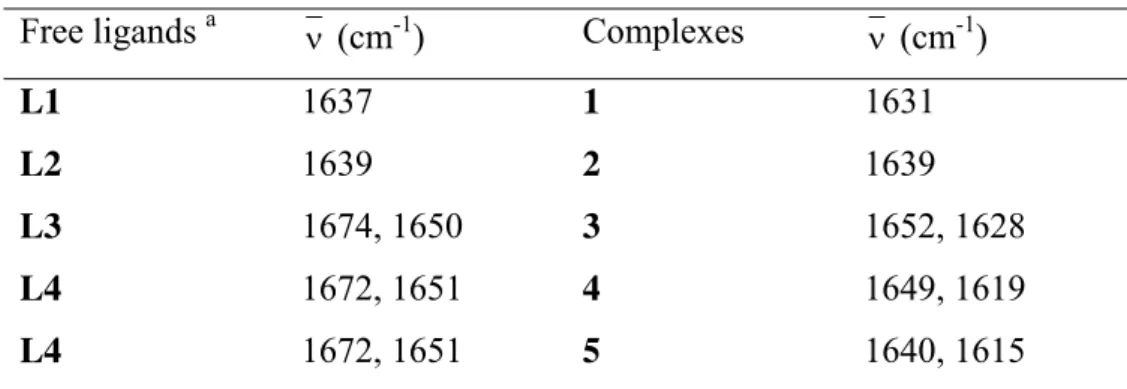
Table II.2 Selected IR data in Nujol mulls (values of ν given in cm-1) 34 Table II.3 EPR parameters obtained from powder and single crystal samples for
1b, 1c and 2´b. Linewidths (∆B) are in Gauss. The components of the
crystal g tensors are expressed in the abc* (c* = a×b) and abc coordinates system for compound 1b and 1c, respectively. They were obtained by least-squares analyses of the single crystal data. 40 Table III.1 Selected bond distances (Å) and angles (º) for complexes 2-4. 61 Table III.2 Ethylene polymerization catalyzed by 1a, 2a, 3 and 4/MAO systems a 64 Table III.3 Number of branches per 1000 C and thermal analyses of selected
polyethylene samples. 65
Table III.4 Crystal data and structure refinement for compounds 2-4. 71
Table SM III.1 Analytical data for compounds 1-5. 76
Table SM III.2 Selected FT-IR data in Nujol mulls. 76 Table IV.1 Crystal and structure refinement data for L1 and 2. 98 Table IV.2 Optical Data for L, L1 and its Zn(II) and Pd(II) complexes in freshly
prepared dichloromethane solution at room temperature. 99 Table IV.3 Selected structural parameters for optimized complexes having BIAN
ligand in both conformations. Distance are in Å, angles in degrees and
energies kJ·mol-1. 106
Table SM IV.1 Atomic coordinates of optimized structures for [PdCl2(BIAN)]
complex. 140 Table SM IV.2 Atomic coordinates of optimized structures for free ligand BIAN. 144 Table V.1 Selected IR and NMR data for the ligands and complexes. 158 Table V.2 Crystal data and X-ray refinement details for HL3, complex 3 and
complex 5,CHCl3,1/2(CH2Cl2). 164
INDEX OF COMPOUNDS
Chapter II
Structure Nº Name or molecular formula C.
N
N Co
Cl
Cl 1a [Co(Ph-DAB)Cl2] II
N
N Co
Cl
Cl 1b [Co(o,o’,p-Me3C6H2DAB)Cl2] II
N
N Co
Cl Cl
1c [Co(o,o’-iPr2C6H3-DAB)Cl2] II
N N
Co I
I 2’b [Co(o,o’,p-Me3C6H2-BIAN)I2] II
Chapter III
Structure Nº Name C.
N NCo
I
N
N Co
I I
2 [CoI2(o,o’-iPr2C6H3-DAB)] III
N N
CoCl
Cl 3 [CoCl2(o,o’,p-Me3C6H2-BIAN)] III
N N
CoCl Cl
4 [CoCl2(o,o’-iPr2C6H3-BIAN)] III
N N
CoI I
5 [CoI2(o,o’-iPr2C6H3-BIAN)] III
Chapter IV
Structure Nº Name C.
N O
L Mono
(1-naphthylimino)acenaphthene
IV
N N
ZnCl
Cl
1 Bis(1-naphthylimino)acenaphthene zinc dichloride
N N
L1 Bis(1-naphthylimino)acenaphthene IV
N N
PdCl
Cl
2 Bis (1-naphthylimino)acenaphthene palladium dichloride
IV
Chapter V
Structure Nº Name C.
O
Me P
HL1 [(iPr)2PCH2C(O)Ph] V
O
Me P
HL2 [Ph2PCH2C(O)Ph] V
O
N H
Me P
HL3 [(iPr)2PNHC(O)Me] V
O
N H
Me P
HL4 [Ph2PNHC(O)Me] V
Co I
I Ph2P
Ph O
Ph Co
O I Ph2P
4 [(η5-C5H5)CoI{Ph2PCH…C(…O)Ph}] V
Co I I Ph2P
NH
Me O
5 [(η5-C5H5)CoI2{Ph2PNHC(O)Me}] V
Me Co
O I Ph2P
N
6 [(η5-C5H5)CoI{Ph2PN…C(…O)Me}] V
N O Ni Ph2 P O N Ph2 P Me Me
10 cis-[Ni(Ph2PN…C(…O)Me)2] V
N O
Ni
i-Pr2
P
O N
i-Pr2
P
Me Me
Chapter I
Index
I.1 Catalysis: General definition ... 4 I.2 Ethylene oligomerisation and polymerization... 5
I.1
Catalysis: General definition
Catalysis is the process by which the rate of a chemical reaction (or biological process) is increased by means of the addition of a species known as a catalyst to the reaction. What makes a catalyst different from a chemical reagent is that whilst it participates in the reaction, is not consumed in it. That is, the catalysts may undergo several chemical transformations during the reaction, but at the conclusion of the process, the catalyst is regenerated to its initial form. As a catalyst is regenerated in a reaction, often only a very small amount is needed to increase the rate of the reaction. A catalyst works by providing an alternative reaction pathway to the reaction product. The rate of the reaction is increased as this alternative route has lower activation energy than the reaction route not mediated by the catalyst. The lower the activation energy, the faster is the rate of the reaction.
Figure I.1 Schematic representation of the energetics in a catalytic cycle. The
Catalysis allows the production in mild conditions, in terms of pressure and temperature, of new and interesting materials.
Catalysts are classified as homogeneous if they are present in the same phase as the reagents. This normally means that they are present as solutes in a liquid reaction mixture. Catalysts are heterogeneous if they are present in a different phase from that of the reactants. Both types of catalysis are fundamentally similar. Of the two, heterogeneous catalysis has a much greater economic impact.
The importance of catalysis in industry is growing exponentially over the last decades of the 20th century.
I.2
Ethylene oligomerisation and polymerization.
The first transition metals catalysts for the polymerization of ethylene were developed by Ziegler and Natta. They were based on early transition metals such as titanium, zirconium, vanadium or chromium. These catalysts came 20 years after the discovery of ethylene polymerization. The waxy solid had been formed, by accident, by the heating of a mixture of ethylene and benzaldehyde at 170°C, during high-pressure experiments conducted in 1933 by ICI scientists Reginald Gibson and Eric Fawcett.
The commercial production of polyolefins from ethylene and propylene suffered an enormous development from the use of the Ziegler-Natta type catalysts (TiCl4/AlEt3).1-3 Their
ability to polymerize ethylene at relatively low temperatures and pressure is one of their most interesting qualities.
Efforts were made just after their discovery to obtain homogeneous models of the heterogeneous catalysts to perform mechanistic studies easily. These efforts were rewarded in 1957 when Natta and Breslow, in different research groups, showed that Et3Al and Et2AlCl
could activate TiCl2(Cp)2 for olefin polymerization. On the other hand these homogeneous
catalysts presented lower activities to ethylene polymerization than the heterogeneous ones.4,5 In the early 1980s, this field was remarkably renewed thanks to the work of Sinn and Kaminsky. They reported that catalysts based on group 4 metallocenes (biscyclopentadienyl derivatives), activated by partly hydrolyzed AlMe3, were suited for the polymerization of both
polypropylene and in some cases the improvement of the catalytic system properties. The “metallocene revolution” was part of a rapid advance in the catalysis of olefin polymerization. These new metallocene based catalysts were very different in various aspects, compared to early ones, mainly their homogenous characteristics. The increasing importance in MAO and group 4 metallocenes, followed by the development of constrained geometry catalysts such as half sandwich amide complexes, resulted in their common use in industrial processes (scheme I.1).8, 9
Scheme I.1 Group 4 metallocenes (A) and constrained geometry catalysts (half-sandwich) (B) (X = Halide. M = Zr, Cr).
M
M X
X
N Me2Si
X
X
A B
Since that finding, several advances have been made in which variation of the zirconocene symmetry was found to strongly influence the resulting polyolefin microstructure.10-14
The extraordinary potential of these zirconocenes is not without certain limitations, they have limited temperature stability and the tendency to produce lower molecular weight materials under convenient commercial operating conditions. To solve these problems commercial and academic laboratories are developing efforts to produce more suitable coordination compounds, in which replacement of the cyclopentadienyl ligand fragment and/or the metal center is anticipated to yield increased selectivity and/or productivity.
Reports on late transition metal complexes able to successfully catalyze polymerization of ethylene and alpha-olefins were scarce until twenty years ago. Even though some earlier work on nickel catalyst systems of the type employed in the Shell Higher Olefin Process (SHOP) had revealed the potential for late transition metals to polymerize ethylene, compared to early metal catalysts, late metal complexes systems had a higher rate of chain transfer. The SHOP type catalysts will be discussed later on this introduction.15-18
In the mid-1990s, a new type of catalysts was discovered, based on late transition metals and quite simple ligands, leading to novel polymer microstructures.19-22 The interest in developing a new generation of “non-metallocene” catalysts was to exploit the potential of other metals in ethylene polymerization. Brookhart’s Ni(II) and Pd(II) complexes, stabilized by bulky α-diimines ligands, produced grades of branched polyethylene, varying in concentration and individual branch length, starting exclusively from ethylene and accommodating even polar monomers (Scheme I.2).20, 23-36
In the case of the methyl precursors there is no need to use an activator, such as MAO, and the complexes can be used directly in ethylene homopolymerization. However the bis-halide derivates need a co-catalyst in order to activate them.
SchemeI.2 Alpha-diimine Ni(II) and Pd(II) catalyst precursors.
R R
R1
R1 R1
R1
M L
Me Y M = Ni, PD
R = Me, H, 0.5 naphthalene-1,8 diyl R1= Me,iPr
L = OEt2 Y-= BAr
4-, SbF6
-The discovery of new ligand systems and activators has contributed to overcome this gap and make late transition metal catalysts as efficient as metallocenes and even more versatile.
of incorporation, or to provide a low temperature/pressure route to existing materials such as ethylene-vinyl acetate (EVA) copolymer.
In 1998 a new class of neutral Ni(II) complexes stabilized by salicylaldiminato ligands was independently reported by Johnson37 and Grubbs(Scheme I.3).38-41
The properties of these precursors can be tuned by varying the nature and size of their substituents, allowing for a wide range of polyethylene types, from moderately branched to linear. These systems are usually activated by Lewis-acid co-catalysts such as B(C6F5)3 or
B(PPh)3.
Scheme I.3 Salicylaldiminato nickel(II) catalysts for ethylene homo- and copolymerization.
O N
R1
R2
Ni R L
O N
R1 R2
Ni
MeOOC
Iminocarboxamides allow for the production of high molecular weights polymers with a narrow molecular weight distribution (scheme I.4).42, 43
Scheme I.4 α-iminocarboxamide
N N O
In the same year, Brookhart, Bennett and Gibson independently discovered that five-coordinate 2,6-bis(arylimino)pyridyl Fe(II) and Co(II) dihalides, activated by MAO, are effective catalysts for the conversion of ethylene either to high-density polyethylene or to alpha-olefins with Schulz–Flory44-46 distribution (scheme I.5). These new types of catalysts showed an activity as high as the most efficient metallocenes.47-52
Scheme I.5 General structure of the 2,6-bis(imino)pyridyl Fe(II) or Co(II) dihalides
used by Brookhart and Gibson for ethylene polymerization/oligomerization on activation with MAO.
N
N N
R
R R R
R
R M
X X
M = Co, Fe X = Cl, Br
R = alkyl, aryl groups
There is considerable current academic and industrial interest in catalytic ethylene oligomerization, in particular for the production of linear a-olefins in the C4–C10 range whose demand is growing fast. The need for identifying and fine-tuning the parameters which influence the activity and selectivity of metal catalysts is generating much effort at the interface between ligand design, coordination/organometallic chemistry and homogeneous catalysis.
Developments similar to that of ethylene polymerisation catalysts have been experienced for the alpha-olefins catalysts. Originally linear alpha-olefins were produced by the Ziegler (Alfen) process which consists of a controlled oligomerisation of ethylene in the presence of AlEt3 at 90–120 ◦C at a monomer pressure of 100 bar.53-55
I.3
Catalysts bearing
α
-diimine ligands
Metal complexes active in polymerization, must have suitable ligands in order to accomplish four important roles:
1) Control over the metal coordination number. 2) Control over the metal coordination geometry. 3) Control over the formal oxidation state of the metal.
4) Steric protection of the active site and influence over (stereo) selectivity.
A large variety of ligands has been used in catalytic reactions. Changing the nature and characteristics of the ligands allows tuning of the catalysts proprieties. One of the most employed ligands are the sterically demanding α-diimines63.
α-diimines can be divided on two main groups: firstly the R-DAB (DAB =
1,4-diaza-1,3-butadienes) and secondly R-BIAN (R-BIAN = bis(aryl)acenaphthenequinonediimine)
having an acenaphthene backbone (Scheme I.6). R can be a wide variety of organic
substituents, mostly substituted aryl.
Scheme I.6 DAB = 1,4-diaza-1,3-butadienes and R-BIAN =
bis(aryl)acenaphthenequinonediimine
N N R
R N
N R
R
R-DAB R-BIAN
The first reports of R-DAB metal complexes were done by Krumholz back in 1953.
He described the synthesis of some ferrous complexes of general formula [Fe(Me-DAB)3]I2.
their metal complexes. In particular, extensive chemistry has been carried out with
2,2’-bipyridine and phenanthroline, which are both known to coordinate to metal centers in the
chelate bonding mode.
The coordination chemistry of the most simple representative of this class of
compounds: the 1,4-diaza-1,3-butadienes, RN=CR’-CR’’=NR, has been extensively studied.
These compounds are particularly fascinating since they have a flexible N=C-C=N skeleton,
they appear to have unusual electron donor and acceptor properties as compared to the above
mentioned bidentate nitrogen donors, and they can potentially act in a variety of coordination
modes.
R-DAB species are very versatile ligands, due to the fact that these ligands are strong
sigma-donor and pi-acceptor and the possibility to change the R substituents allows the
modification of both the electronic and the steric properties in a sensible way.
In comparison to most diimine ligands, BIAN derivates are more rigid. This rigidity
imposes both the correct geometry for coordination and most of all imparts a high chemical
stability with respect to hydrolysis and rupture of the C-C central bond. The latter is a
common problem with most diimine ligands and prevents their use for many catalytic systems
when long catalyst life times are a requisite, as is always the case for industrial applications.
It is possible to easily change the backbone and N-substituents of both R-DAB and R- BIAN ligands, allowing for the control of the steric and electronic effects at the metal centre.
α-diimines are well known to form stable complexes with transition metal and a large
number of late transition metal complexes bearing α-diimine63 ligands have been extensively
studied in the commercial production of polyolefin from ethene and propene.20-22, 64-72
Recently some results in the insertion polymerization of ethylene have been reported using
tetrahedral Co(II) complexes with related ligands.58, 73, 74
Scheme I.7 Reaction of α-diimines ligands with late transition metals.
MCl2 + R-DAB or R-BIAN N N
N N R R M M X X X X or R R
M = Cu, Co, Zn, Pd, Ni etc... R = Ar, naphthyl
X = Cl, I, Br
Some R-DAB and R-BIAN ligands are either not know as free molecules or have only a very limited stability. For the R-BIAN ligands the synthesis of complexes by an in situ preparation is a well known approach also known as the “template method” (scheme I.8).
Scheme I.8 Template method
O O
+ NH2R + MCl2
N N M X X R R Glacial AcOH Reflux
This method is now used to prepare asymmetric alpha-diimines ligands since the demetallation of the complex is simple to perform.
Given the high importance that bidentate chelating nitrogen ligands have shown in
homogeneous catalysis,75-78 they have been the subject of different studies regarding the
relative binding strengths,79-81 as well as their reactivity with main group metals.82, 83 The effect of steric hindrance on the most stable complex has been examined for some R-DAB
complexes,63, 84-86 but electronic effects were not investigated.
bis(aryl)-the general attention only in recent years by Elsevier and his group.89 Since then, they have
found widespread use as ligands especially for palladium, ruthenium and nickel and the
corresponding complexes have been employed as catalysts for a wide variety of reactions,
such as alkene hydrogenation,90 polymerization,20, 33, 91 aziridination, and cyclopropanation
(Scheme I.9),92 alkene–CO copolymerization (Scheme I.10),93 alkyne coupling in the
presence of halogens or organic halides and tin compounds94, 95 (Scheme I.11) or just tin
compounds (Scheme I.13),96 selective hydrogenation of alkynes to alkenes (Scheme I.12),97 allylic aminations of olefins by nitroarenes in the presence of CO (Scheme I.14),98-100 the
synthesis of pyrroles and oxazines from dienes, nitroarenes and CO (Scheme I.14),100 the
reduction of nitroarenes to anilines by CO/ H2O (Scheme I.15),101, 102 the cross-coupling
reaction between organic halides and organomagnesium, -zinc, and -tin reagents,103-105 the
Suzuki–Miyaura cross coupling (Scheme I.16),106 the synthesis of 4-quinolones and
2,3-dihydroquinolones from 2′-nitrochalcones and CO (Scheme I.17),107-109 the synthesis of
indoles from o-nitrostyrenes and CO (Scheme I.19),110 and the Heck arylation of olefins
(Scheme I.18).111 For some of these syntheses, the use of the Ar,Ar-BIAN ligands was instrumental in achieving high performance of the catalytic system.
Scheme I.9 Aziridination and Cyclopropanation of Styrene with Cu+.
+ PhINTs or N2C(H)CO2Et 1-3 % Cu
+cat N N Ar Ar 1-3 % A Ph
Scheme I.10 Alkene–CO copolymerization.
N Pd N
Cl R
Ar Ar
N Pd N
Cl
Ar Ar
O
R
N Pd N
O
Ar Ar
R
CH2Cl2 20 ºC CO
CH2Cl2 20 ºC
+
Cl
-R = Me, Et,i-Pr, Ph
R
Scheme I.11 Alkyne coupling in the presence of halogens or organic halides and tin compounds. N N Ar Ar N N Pd Ar Ar
Pd(dba)2 E E
E E + + N N Pd Ar Ar E E E E Acetone 20 ºC E E N N Pd Ar Ar E E E E N N Pd Ar Ar E R E E E R X X RX CH2Cl2
E = CO2CH3
RX = C6H5CH2Br, CH3I, C6H5I
Cl E
E
E E
R
Scheme I.12 Selective hydrogenation of alkynes to alkenes.
Pd E E R2 R1 H2 R2 R1 R'
R E = CO2Me
a: R = R' = 4-OCH3 b: R = 4-OCH3; R' = 4-CH3 c: R = R' = 4-CH3
Scheme I.13 Alkyne coupling in the presence of tin compounds.
R1OCOC CR2 + R3-SnBu 3
R1O 2C
CO2R1
R2
R3
R2
SnBu3
R2
CO2R1
CO2R1
R3
R2
SnBu3
R3
CO2R1 R2 SnBu3 + + Pd Cat. Toluene 50 ºC
Pd cat. = [PdCl(h3-C
3H5)]2/ligand
(5 mol %of Pd, Pd/ligand = 1)
a: R1= Et; R2= H
b: R1= Me; R2= CO2Me Ligands N N Ar Ar N N Ph Ph PPh2 N Ph
Scheme I.14 1) Allylic aminations of olefins by nitroarenes in the presence of CO. 2)
The synthesis of pyrroles and oxazines from dienes, nitroarenes and CO.
Ar'NO2 + 2CO +
Ru3(CO)12 Ar-BIAN
NHAr'
+ 2CO
Ar' = 3,4-Cl2C6H3; 4-FC6H4;
Ph; 4-MeC6H4; 4-MeOC6H4. Ar'NO2 +
Ru3(CO)12 Ar-BIAN
Scheme I.15 The reduction of nitroarenes to anilines by CO/ H2O.
Ru3(CO)12 Ar-BIAN
CO/H2O
NO2 NH2
+ PhN(O)=NPh
Scheme I.16 The Suzuki–Miyaura cross coupling.
Me
Br
Me
B(OH)2 +
3%Pd(OAc)2/ Ar-BIAN Cs2CO3(2 equiv.) dioxane, 80 ºC, 3 hr
Scheme I.17 The synthesis of 4-quinolones and 2,3-dihydroquinolones from 2′
-nitrochalcones and CO.
R NO2 O
Ru3(CO)12/Tol-BIAN
CO, EtOH/H2O, 170 ºC N
O R H N O R H +
Scheme I.18 Heck arylation of olefins.
+ 3%Pd(OAc)2/ BIAN-cy or DAB-cy
Cs2CO3,N,N-dimethylacetamide, 100 ºC
Br COOBun
Scheme I.19 The synthesis of indoles from o-nitrostyrenes and CO.
O
NO
2
R1
R2
R3
+ 2CO
Ru cat./Ar-BIAN
EtOH/H2O
N
H O
N
R1 R2
R3
R1
R2
R3
+ 2CO2 +
I.4
Catalysts bearing P,O type ligands
The use of late transitionmetal complexes as singlesite ethyleneoligomerisation and -polymerisation catalysts, by Keim in the early 70’s, in a process known as SHOP (Shell Higher Olefins Process), was one of the most important achievements in homogeneous catalysis.15-18 The catalyst was obtained through oxidative-addition of ketophosphorus ylides of type 1 to Ni(0) complexes such as [Ni(COD)2], in the presence of a two-electron donor
phosphine ligand, which leads to the migration of a phenyl group from phosphorus to nickel (Scheme I.20).112, 113
Scheme I.20 Synthetic route to SHOP type catalysts.
the importance of P, O chelating ligands in obtaining efficient catalyst for the oligomerisation and polymerization of ethylene.114, 115
There are different synthetic roots to the P,O phosphanylenolato chelating ligands, some of them rely in the synthesis of functional phosphines, by this we mean phosphine ligands which contain an additional functional group, capable of coordinating to a metal centre (Scheme I.21).
Scheme I.21 Example of one synthetic way to functional phosphines.
O
Ph
O
Ph PR2 + PR2Cl
Li+
+ LiCl THF, -78 ºC
A great effort has been made throughout the years, in the synthesis of P, O ligands and their complexation to different transition metals, in order to understand the structural properties and the mechanisms for the catalytic reactions. In the case of the ligand (diphenylphosphino)acetophenone, Ph2PCH2COPh, Pd(II) complexes were obtained in which
the ligand can behave as monodentate through the P atom or chelate through P atom and the keto group.116 Some complexes with these P,O type of ligands and Co(II) and Co(III) were synthesized,117, 118 as well as with Ni(II) and Pd(II).119
P, O chelating ligands can be modified by substituting the chelate backbone, which can be done by introducing electron withdrawing substituents in the phosphanylenolates120 or by changing the phosphorous substituents, examples of good catalyst for the polymerization and oligomerization of ethylene are Ni(II) and Pd(II) complexes containing the bidentate phenacyldiarylphosphine ligands.121
In the chelate backbone of the P,O ligand we can substitute a C atom in the 5 member cycle by a N atom, in this case we obtain amide derived ligands Ph2PN(R)C(O)Me (R = H,
Scheme I.22 Amide derived ligands Ph2PN(R)C(O)Me (R = H, CH3) and
Ph2PN(H)C(O)R (R = Ph, NH2, and 3-pyridyl).
O
N H Me
O
N H
Me PR2
+ PR2Cl
Tol, 75 ºC SiMe3
-Me3SiCl
Acetamido derived ligands Ph2PNHC(O)Me acting as dissymmetric P,O chelate when
complexated to palladium(II) gave stepwise ethene and/or methylacrilate/CO insertion into the Pd-C bond of Pd(II) cationic complexes.125 Several structural studies of the Ph2PNHC(O)Me ligand and some of its complexes with Pd(II) have been performed.126
The synthesis of molybdenum arene complexes containing amide-derived heterodifuntional P,O ligands was investigated and the first example of a structurally
characterized phosphinoiminolate complex was reported Mo(η3-C3H5)(η6
-C6H6){Ph2PNHC(O)CH3-κ2 P,O}][PF6].127 Complexes of rhodium(I) containing the P,O
ligand PPh2NHC(O)Me or its anion [PPh2N-C(-O)Me]- were synthesized and structurally
characterized in which mono or bidentate modes of the P,O ligand were found.128 Monocyclopentadienyl complexes of Nb, Ta and W containing the P,O ligands Ph2PCH2C(O)Ph and Ph2PCH2C(O)NPh2 have been obtained and structurally
characterized.129 The bis-chelated palladium phosphino-iminolate complex [Pd(dmba)-{κ2 P,O-PPh2N-C-(-O)CH3}] (dmba = ortometalateddemethylbenzylamine) has shown to behave
I.5
References
1. K. Ziegler, E. Holzkamp, H. Martin and H. Breil, angew. Chem., 1955, 67, 541. 2. K. Ziegler, E. Holzkamp, H. Breil and H. Martin, Angew. Chem., 1955, 67, 426. 3. G. Natta, Angew. Chem., 1956, 68, 393.
4. G. Natta, P. Pino, G. Mazzanti and U. Giannini, J. Am. Chem. Soc., 1957, 79, 2975. 5. D. S. Breslow and N. R. Newburg, J. Am. Chem. Soc., 1957, 79, 507.
6. W. Kaminsky, M. Miri, H. Sinn and R. Woldt, Macromol. Rapid. Commun., 1983, 4, 417.
7. in Metalorganic Catalysts for Synthesis and Polymerization, ed. W. Kaminsky, Springer Verlag, Heidelberg, Editon edn., 1999.
8. W. Kaminsky, Macromol. Chem. Phys., 1996, 197, 3907.
9. H. H. Brintzinger, D. Fischer, R. Mulhaupt, B. Rieger and R. Waymouth, Angew. Chem., 1995, 34, 1143.
10. A. L. McKnight and R. M. Waymouth, Chem. Rev., 1998, 98, 2587-2598. 11. J. A. Ewen, Journal of the American Chemical Society, 1984, 106, 6355-6364.
12. W. Kaminsky, K. Kulper, H. H. Brintzinger and F. R. W. P. Wild, Angewandte Chemie-International Edition in English, 1985, 24, 507-508.
13. J. A. Ewen, M. J. Elder, R. L. Jones, L. Haspeslagh, J. L. Atwood, S. G. Bott and K. Robinson, Makromolekulare Chemie-Macromolecular Symposia, 1991, 48-9, 253-295.
14. G. W. Coates and R. M. Waymouth, Science, 1995, 267, 217-219.
15. R. Bauer, H. Chung, K. W. Barnett, P. W. Glockner and W. Keim, Shell Oil Company, 1972, US 3 686 159.
16. R. Bauer, H. Chung, P. W. Glockner and W. Keim, 1972, (Shell Oil Co.) US-3635937. 17. D. M. Singleton, P. W. Glockner and W. Keim, 1974, (Shell Int. Res.) GB-1364870. 18. W. Keim, F. H. Kowaldt, R. Goddard and C. Krüger, Angew. Chem. Int. Ed., 1978, 17,
466-467.
19. Late Transition Metal Polymerization Catalysis, Wiley-VCH, Weinheim, 2003. 20. S. D. Ittel, L. K. Johnson and M. Brookhart, Chem. Rev., 2000, 100, 1169-1203.
23. L. K. Johnson, C. M. Killian and M. Brookhart, J. Am. Chem. Soc., 1995, 117, 6414-6415.
24. L. K. Johnson, S. Mecking and M. Brookhart, J. Am. Chem. Soc., 1996, 118, 267-268. 25. C. M. Killian, D. J. Tempel, L. K. Johnson and M. Brookhart, J. Am. Chem. Soc., 1996,
118, 11664-11665.
26. C. M. Killian, L. K. Johnson and M. Brookhart, Organometallics, 1997, 16, 2005-2007. 27. S. Mecking, L. K. Johnson, L. Wang and M. Brookhart, J. Am. Chem. Soc., 1998, 120,
888-899.
28. S. A. Svejda, L. K. Johnson and M. Brookhart, J. Am. Chem. Soc., 1999, 121, 10634-10635.
29. L. H. Shultz and M. Brookhart, Organometallics, 2001, 20, 3975-3982.
30. D. Leatherman Mark, A. Svejda Steven, K. Johnson Lynda and M. Brookhart, J. Am. Chem. Soc., 2003, 125, 3068-3081.
31. A. C. Gottfried and M. Brookhart, Macromolecules, 2003, 36, 3085-3100.
32. D. P. Gates, S. K. Svejda, E. Onate, C. M. Killian, L. K. Johnson, P. S. White and M. Brookhart, Macromolecules, 2000, 33, 2320-2334.
33. D. J. Tempel, L. K. Johnson, R. L. Huff, P. S. White and M. Brookhart, Journal of the American Chemical Society, 2000, 122, 6686-6700.
34. L. H. Shultz, D. J. Tempel and M. Brookhart, Journal of the American Chemical Society, 2001, 123, 11539-11555.
35. A. C. Gottfried and M. Brookhart, Macromolecules, 2001, 34, 1140-1142.
36. L. K. Johnson, C. M. Killian, S. D. Arthur, J. Feldman, E. McCord, S. J. McLain, K. A. Kreutzer, A. M. A. Bennett, E. B. Coughlin, S. D. Ittel, A. Parthasarathy, D. J. Tempel and M. Brookhart, 1996, DuPont WO patent 96/23010.
37. L. K. Johnson, A. M. A. Bennett, S. D. Ittel, L. Wang, A. Parthasarathy, E. Hauptman, R. D. Simpson, J. Feldman and E. B. Coughlin, 1998, World patent to DuPont WO 9830609.
38. C. Wang, S. Friedrich, T. R. Younkin, R. T. Li, R. H. Grubbs, D. A. Bansleben and M. W. Day, Organometallics, 1998, 17, 3149-3151.
39. T. R. Younkin, E. F. Connor, J. I. Henderson, S. K. Friedrich, R. H. Grubbs and D. A. Bansleben, Science, 2000, 287, 460-462.
40. D. Meinhard, M. Wegner, G. Kipiani, A. Hearley, P. Reuter, S. Fischer, O. Marti and B. Rieger, J. Am. Chem. Soc., 2007, 129, 9182-9191.
42. B. Y. Lee, G. C. Bazan, J. Vela, Z. J. A. Komon and X. Bu, J. Am. Chem. Soc., 2001, 123, 5352-5353.
43. S. J. Diamanti, P. Ghosh, F. Shimizu and G. C. Bazan, Macromolecules, 2003, 36, 9731-9735.
44. G. V. Z. Schulz, Phys. Chem., Abt. B, 1935, 30, 379-398. 45. G. V. Z. Schulz, Phys. Chem., Abt. B, 1939, 43, 25-46. 46. P. J. Flory, J. Am. Chem. Soc., 1940, 62, 1561-1565.
47. B. L. Small, M. Brookhart and A. M. A. Bennett, J. Am. Chem. Soc., 1998, 120, 4049-4050.
48. B. L. Small and M. Brookhart, J. Am. Chem. Soc., 1998, 120, 7143-7144.
49. G. J. P. Britovsek, V. C. Gibson, B. S. Kimberley, P. J. Maddox, S. J. McTavish, G. A. Solan, A. J. P. White and D. J. Williams, Chem. Commun., 1998, 849-850.
50. G. J. P. Britovsek, M. Bruce, V. C. Gibson, B. S. Kimberley, P. J. Maddox, S. Mastroianni, S. J. McTavish, C. Redshaw, G. A. Solan, S. Strömberg, A. J. P. White and D. J. Williams, J. Am. Chem. Soc., 1999, 121, 8728-8740.
51. G. J. P. Britovsek, S. Mastroianni, G. A. Solan, S. P. D. Baugh, C. Redshaw, V. C. Gibson, A. J. P. White, D. J. Williams and M. R. J. Elsegood, Chem. Eur. J., 2000, 6, 2221-2231.
52. A. M. A. Bennett, 1998, (DuPont) WO Patent 98/27124. 53. J. Skupinska, Chem. Rev., 1991, 91, 613-648.
54. D. Vogt, Applied Homogeneous Catalysis with Organometallic Compounds, VHC, New York, 1996.
55. G. V. Parshall and S. D. Ittel, Homogeneous Catalysis: The Applications and Chemistry of Catalysis by Soluble Transition Metal Complexes, John Wiley and Sons, New York,
1992.
56. P. Braunstein, Y. Chauvin, S. Mercier, L. Saussine, A. DeCian and J. Fischer, Chem. Commun., 1994, 2203-2204.
57. W. Keim, Angew. Chem., Int. Ed., 1990, 29, 235-244.
58. C. Bianchini, G. Mantovani, A. Meli, F. Migliacci and F. Laschi, Organometallics, 2003, 22, 2545-2547.
59. C. Bianchini, G. Giambastiani, G. Mantovani, A. Meli and D. Mimeau, J. Organomet. Chem., 2004, 689, 1356-1361.
61. C. Bianchini, M. Frediani, G. Giambastiani, W. Kaminsky, A. Meli and E. Passaglia, Macromolecular Rapid Communications, 2005, 26, 1218-1223.
62. S. Park, Y. Han, S. K. Kim, J. Lee, H. K. Kim and Y. Do, Journal of Organometallic Chemistry, 2004, 689, 4263-4276.
63. G. Vankoten and K. Vrieze, Advances in Organometallic Chemistry, 1982, 21, 151-239. 64. U. El-Ayaan and A. A. M. Abdel-Aziz, European Journal of Medicinal Chemistry, 2005,
40, 1214-1221.
65. M. Sieger, K. Hubler, T. Scheiring, T. Sixt, S. Zalis and W. Kaim, Zeitschrift Fur Anorganische Und Allgemeine Chemie, 2002, 628, 2360-2364.
66. M. Sieger, M. Wanner, W. G. Kaim, D. J. Stufkens, T. L. Snoeck and S. Zalis, Inorganic Chemistry, 2003, 42, 3340-3346.
67. T. V. Laine, M. Klinga, A. Maaninen, E. Aitola and M. Leskela, Acta Chemica Scandinavica, 1999, 53, 968-973.
68. M. J. Camazon, A. Alvarezvaldes, J. R. Masaguer and M. C. Navarroranninger, Transition Metal Chemistry, 1986, 11, 334-336.
69. M. C. Barral, E. Delgado, E. Gutierrezpuebla, R. Jimenezaparicio, A. Monge, C. Delpino and A. Santos, Inorganica Chimica Acta-Articles, 1983, 74, 101-107.
70. H. T. Dieck and M. Haarich, Journal of Organometallic Chemistry, 1985, 291, 71-87. 71. B. Rieger, L. S. Baugh, S. Kacker and S. Striegler, Late Transition Metal Polymerization
Catalysis, Weinheim, Wiley-VCH, 2003.
72. Y. Doi and T. Fujita, 1997, JP Patent 10298225 (Mitsui Chemicals Inc., Japan).
73. T. V. Laine, K. Lappalainen, J. Liimatta, E. Aitola, B. Löfgren and M. Leskelä, Macromol. Rapid. Commun., 1999, 20, 487-491.
74. M. X. Qian, M. Wang, B. Zhou and R. He, Applied Catalysis a-General, 2001, 209, 11-15.
75. A. Togni and L. M. Venanzi, Angewandte Chemie-International Edition in English, 1994, 33, 497-526.
76. F. Fache, E. Schulz, M. L. Tommasino and M. Lemaire, Chemical Reviews, 2000, 100, 2159-2231.
77. A. K. Ghosh, M. Packiarajan and J. Cappiello, Tetrahedron-Asymmetry, 1998, 9, 1-45. 78. F. Fache, B. Dunjic, P. Gamez and M. Lemaire, Topics in Catalysis, 1997, 4, 201-209. 79. M. Gasperini and F. Ragaini, Organometallics, 2004, 23, 995-1001.
80. M. Gasperini, F. Ragaini and S. Cenini, Organometallics, 2002, 21, 2950-2957.
82. I. L. Fedushkin, N. M. Khvoinova, A. Y. Baurin, G. K. Fukin, V. K. Cherkasov and M. P. Bubnov, Inorganic Chemistry, 2004, 43, 7807-7815.
83. I. L. Fedushkin, V. A. Chudakova, A. A. Skatova, N. M. Khvoinova, Y. A. Kurskii, T. A. Glukhova, G. K. Fukin, S. Dechert, M. Hummert and H. Schumann, Zeitschrift Fur Anorganische Und Allgemeine Chemie, 2004, 630, 501-507.
84. H. Vanderpoel, G. Vankoten and K. Vrieze, Inorganica Chimica Acta-Articles, 1981, 51, 241-252.
85. H. Vanderpoel, G. Vankoten and K. Vrieze, Inorganica Chimica Acta-Articles, 1981, 51, 253-262.
86. H. Vanderpoel, G. Vankoten, M. Kokkes and C. H. Stam, Inorganic Chemistry, 1981, 20, 2941-2950.
87. Dvolaitz.M, Comptes Rendus Hebdomadaires Des Seances De L Academie Des Sciences Serie C, 1969, 268, 1811-&.
88. I. Matei and T. Lixandru, Bul. Ist. Politeh. Iasi, 1967, 13, 245.
89. R. Vanasselt, C. J. Elsevier, W. J. J. Smeets, A. L. Spek and R. Benedix, Recueil Des Travaux Chimiques Des Pays-Bas-Journal of the Royal Netherlands Chemical Society, 1994, 113, 88-98.
90. R. Vanasselt and C. J. Elsevier, Journal of Molecular Catalysis, 1991, 65, L13-L19. 91. S. A. Svejda and M. Brookhart, Organometallics, 1999, 18, 65-74.
92. D. B. Llewellyn, D. Adamson and B. A. Arndtsen, Organic Letters, 2000, 2, 4165-4168. 93. J. H. Groen, J. G. P. Delis, P. W. N. M. van Leeuwen and K. Vrieze, Organometallics,
1997, 16, 68-77.
94. R. vanBelzen, H. Hoffmann and C. J. Elsevier, Angewandte Chemie-International Edition in English, 1997, 36, 1743-1745.
95. R. van Belzen, R. A. Klein, H. Kooijman, N. Veldman, A. L. Spek and C. J. Elsevier, Organometallics, 1998, 17, 1812-1825.
96. E. Shirakawa, H. Yoshida, Y. Nakao and T. Hiyama, Journal of the American Chemical Society, 1999, 121, 4290-4291.
97. M. W. van Laren and C. J. Elsevier, Angewandte Chemie-International Edition, 1999, 38, 3715-3717.
98. S. Cenini, F. Ragaini, S. Tollari and D. Paone, Journal of the American Chemical Society, 1996, 118, 11964-11965.