Cop
yright
© ABE&M t
odos os dir
eit
os r
eser
vados
.
Cop
yright
© ABE&M t
odos os dir
eit
os r
eser
vados
.
Bone disease after transplantation:
osteoporosis and fractures risk
Doença óssea pós-transplante: risco de osteoporose e fraturas
Carolina A. M. Kulak1,2, Victoria Z. C. Borba1,2, Jaime Kulak Júnior3, Melani Ribeiro Custódio4
ABSTRACT
Organ transplantation is the gold standard therapy for several end-stage diseases. Bone loss is a common complication that occurs in transplant recipients. Osteoporosis and fragility fractu-res are serious complication, mainly in the irst year post transplantation. Many factors contri-bute to the pathogenesis of bone disease following organ transplantation. This review address the mechanisms of bone loss including the contribution of the immunosuppressive agents as well as the speciic features to bone loss after kidney, lung, liver, cardiac and bone marrow transplantation. Prevention and management of bone loss in the transplant recipient should be included in their post transplant follow-up in order to prevent fractures. Arq Bras Endocrinol Metab. 2014;58(5):484-92
Keywords
Transplantation; bone loss; osteoporosis; fractures; immunosuppressive agents
RESUMO
Transplantes de órgão é terapia padrão-ouro para várias doenças em estágio terminal. Perda óssea é uma complicação comum que ocorre em pacientes transplantados. Osteoporose e fra-turas por fragilidade são complicações sérias, principalmente no primeiro ano pós-transplante. Muitos fatores podem contribuir para patogênese da doença óssea nesses pacientes. Esta revi-são aborda os mecanismos de perda óssea incluindo o papel dos agentes imunossupressores, bem como os fatores especíicos da perda óssea após rim, pulmão, fígado, coração e transplan-te de medula óssea. A prevenção e o tratamento da perda óssea nos pacientransplan-tes transplantados devem ser realizados para evitar fraturas. Arq Bras Endocrinol Metab. 2014;58(5):484-92
Descritores
Transplante; perda óssea; osteoporose; fraturas; agentes imunossupressores
1 Endocrine Division (SEMPR),
Hospital de Clinicas,Universidade Federal do Paraná (UFPR), Curitiba, PR, Brazil
2 Department of Internal Medicine,
UFPR, Curitiba, PR, Brazil
3 Department of Obstetrics
and Gynecology, UFPR, Curitiba, PR, Brazil
4 Department of Internal
Medicine, Nephrology Division, Universidade de São Paulo (USP), São Paulo, SP, Brazil
Correspondence to: Carolina A. M. Kulak Serviço de Endocrinologia e Metabologia, Hospital das Clínicas, Universidade Federal do Paraná Av. Agostinho Leão Júnior, 285 80030-013 – Curitiba, PR, Brazil [email protected]
Received on Mar/9/2014 Accepted on May/28/2014
DOI: 10.1590/0004-2730000003343
INTRODUCTION
O
rgan transplantation is the gold standard treat-ment for several end-stage diseases. As advances in immunosuppression therapy and transplant techniques over the last decades have improved allograft and patient survival, new challenges have emerged in the manage-ment of long-term complications. Post-transplantation bone disease is a major complication present in most of patients, where low bone mineral density (BMD) in-creases the risk of fractures and consequently, reduces quality of life and increases mortality (1,2).In this review, the mechanism of bone loss after the organ transplantation, the therapeutic recommendations
and the speciic features relevant to each organ such as kid-ney, lung, liver, heart and bone marrow, will be addressed.
Bone disease and transplant
Cop
yright
© ABE&M t
odos os dir
eit
os r
eser
vados
.
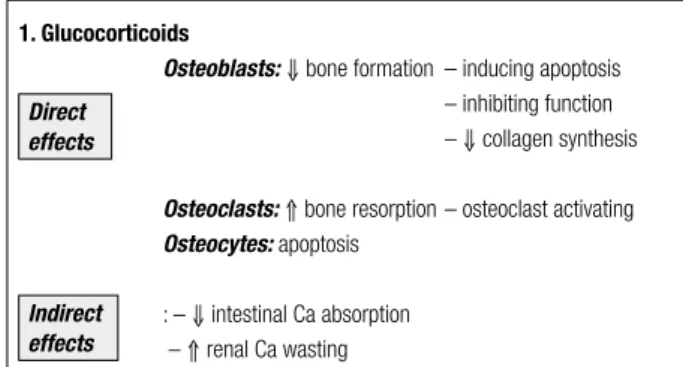
1. Glucocorticoids
Osteoblasts:⇓ bone formation – inducing apoptosis – inhibiting function
– ⇓ collagen synthesis
Osteoclasts: ⇑ bone resorption – osteoclast activating Osteocytes: apoptosis
: – ⇓ intestinal Ca absorption – ⇑ renal Ca wasting
2. Calcineurin inhibitors: Cyclosporine and Tacrolimus– ⇑ bone resorption
3. Sirolimus:↓ bone resorption: – inhibit osteoclasts differentiation disease and the presence of concomitant risk factors for
osteoporosis (2).
MECHANISM OF BONE LOSS: THE ROLE OF
IMMUNOSUPPRESSIVE DRUGS
Glucocorticoids (GCs)
The role of GCs is well known and they are used in most immunosuppressive regimens after transplanta-tion. In the early phase, high doses (½ mg/kg/day during the irst month, gradually reducing the dose up to 5 mg/day for 4-6 months) are commonly used and a rapid bone loss occurs mainly in cancellous bone. The physiopathology of GCs induced bone disorder is multi-factorial. Prolonged use of GCs is associated with decreased bone formation, increased resorption and osteonecrosis, through direct and indirect effects on the activity and viability of bone effector cells, os-teoblasts and osteoclasts, and osteocytes (3). GCs in-duce osteoblast and osteocyte apoptosis and promote osteoclastogenesis by increasing levels of RANK-L system (4). Other indirect effects of GCs also play a role in the mechanisms of bone loss such as reduced intestinal calcium absorption and renal calcium wasting and both may lead to a secondary hyperparathyroi dism. Furthermore, GCs may induce a muscle weakness, which additionally delays post-transplant mobilization with subsequent worsening of bone loss. Later, during the post-transplant period, with the use of low doses of GCs, there is a recovery of osteoblast function and consequently, an increase in bone formation and recou-pling of bone remodeling activity.
Calcineurin inhibitors: cyclosporine A and tacrolimus
Calcineurin inhibitors including cyclosporine A (CsA) and tacrolimus have been linked to osteoporosis (5,6), however, their effects on the skeleton are not well de-ined. CsA may cause bone loss through direct effects on osteoclast leading high bone turnover. In the rat, cyclosporine causes bone loss that is associated with in-creased bone resorption and formation; however, other studies have failed to demonstrate this same effect in renal transplant recipients (6). It should be considered, however, that the role of cyclosporine in transplant pa-tients has been dificult to evaluate because its effects on bone turnover may be masked by GCs. In fact, one study evaluating patients after renal transplantation who
received CsA in a GC-free regimen did not show any bone loss (7). Tacrolimus (FK506), other calcineurin inhibitor, was demonstrated to cause bone loss in ex-perimental animals, however, in contrast, in liver trans-plant recipients, tacrolimus has been associated with a signiicant higher femoral neck BMD as compared with cyclosporine, after two years of transplantation (6).
Sirolimus
Sirolimus, known as rapamycin, it is particularly useful after kidney transplant since it does not cause nephro-toxicity. In bone tissue, unlike calcineurin, sirolimus may inhibits osteoclasts differentiation and thus may be con-sidered a bone-sparing immunosuppressive agent (8).
Others immunosuppressive agents such as my-cofenolate mofetil and azathioprine, seem not to have effects in bone tissue. (9,10). Figure 1 shows the action of immunosuppressive drugs in bone cells.
Direct effects
Indirect effects
Figure 1. Immunosuppressive effects on bone.
BONE DISEASE IN DIFFERENT ORGANS
TRANSPLANTATION
KIDNEY transplantation
Successful transplantation is capable of reversing many complications of the end-stage kidney disease, howe-ver, disturbances of bone and mineral metabolism, also referred to as “mineral and bone disorders” (MBD), may persist (11).
Progression of biochemical abnormalities after kidney transplant
Cop
yright
© ABE&M t
odos os dir
eit
os r
eser
vados
.
Calcium
Serum calcium levels show a steady increase and reach a plateau at month 3 to 6. However, hypercalcemia (deined as total serum calcium > 2.62 mmol/l or 10.5 mg/dL) was reported in 30% and 12% of kidney transplant reci-pients, 1 and 5 years after transplantation, respective-ly (11). There are some factors that may precipitate or worsen hypercalcemia: persistently elevated serum PTH, correction of hyperphosphatemia and improved 1,25 dihydroxyvitamin D3 production from the allograft.
Phosphorus
Hypophosphatemia is observed temporarily in up 90% of the patients in the early post transplant period, main-ly mediated by serum levels of ibroblast growth factor 23 (FGF23), with serum phosphate level between > 1.5 and ≤ 2.3 mg/d. In the late phase hypophosphatemia, PTH seems to be the unique mediator (11).
25-hidroxyvitamin D (25OHD)
Hypovitaminosis D, deined by serum levels of 25OHD less than 30 ng/Ml (12), is common among patients referred for kidney transplantation. It occurs mainly dur-ing the irst months after transplantation and may be re-lated to limited sunlight exposure and sun blockers use, hepatic dysfunction and use of GCs, which may increases catabolism of 25-OHD (13). Recent study demonstrat-ed that vitamin D deiciency prdemonstrat-edictdemonstrat-ed a rapid decline in renal function in kidney recipient patients (14).
Calcitriol (1, 25 dihydroxyvitamin D)
The recovery of renal function goes along with increase of serum calcitriol levels, however, it is common that the levels remain low during the irst few months, probably due to the effect of GCs on the 1 alpha hydroxylase ac-tivity, increasing their catabolic enzyme synthesis (15).
FGF23
Serum levels of FGF23 are extremely high in dialysis patients and show a great decrease (by > 95%) in the immediate post transplant period, normalizing after 1 year (15).
PTH
PTH levels show a rapid decrease during the irst 3-6 months (approximately 50%), attributed to a reduction of parathyroid functional mass, however, after this ini-tial period, the reduction of PTH is more gradual (16).
However, persistently elevated levels of serum PTH, despite normalization of kidney function have been re-ported in up to 25% of KTRs 1 year after transplanta-tion (11). These so-called tertiary hyperparathyroidism
or persistenthyperparathyroidism, usually deined as
ele-vated parathyroid hormone (PTH) levels and hypercemia, may cause serious problems such as soft tissue cal-ciication, hypophosphatemia and hypercalciuria (17).
Mineral and bone disorders after kidney transplantation
The progression of bone disease after kidney transplan-tation is not well deined. Virtually, all patients who receive a kidney allograft suffer from some degree of preexisting bone disorders and, even after a successful kidney transplant, it seems that only few patients nor-malize their bone tissue (18).
Patient and allograft survival
“MBD” is associated with increased morbidity and mortality in KTRs and also associated with accelerated progression of kidney disease in these patients (19). Nephrocalcinosis, a potential clinical implication of persistent HPT, may be the major cause of disordered mineral metabolism that impaired graft survival (20).
Fractures
According to estimates, approximately 10% to 25% of all KTRs will suffer one or more fractures over their lifetime, mainly at appendicular sites such as hip, ankle and feet (15).
Although fractures rates are clearly increased in the-se patients, they frequently occur in the non osteoporo-tic by BMD criteria, questioning the use of bone den-sitometry by DXA to stratify fracture risk in transplant patients. However, a serial BMD measurement is useful in the evaluation of bone loss and fracture risk (15). Currently, the micro-computed tomography (μCT) of the distal tibia and radius seems to be useful tool for assessing bone micro architecture and fracture risk after renal transplantation (21).
Chronic allograft nephropathy
Gradually failing allografts lead to post-transplantation CKD stage 3-5 leading to increased risk of worsening
or de novo development of hyperparathyroidism with
Cop
yright
© ABE&M t
odos os dir
eit
os r
eser
vados
.
Management of persistent hyperparathyroidism
Whereas the persistence of HPT contributes to rapid bone loss and increased risk of fractures, the suppres-sion of serum PTH is the primary goal. However, a severe hypercalcemia requires adjuvant interventions including the use of bisphosphonates and sometimes, in a emergency situation, calcitonin is required. Persis-tent HPT can be treated through surgical parathyroid-ectomy, or clinical treatment using cinacalcet.
Cinacalcet
In the last years, cinacalcet has been for treatment of persistent hyperparathyroidism and data from several studies indicate that it is effective. Cinacalcet successful-ly corrects elevate serum calcium and PTH levels with no negative effect on kidney function and apparently safe in KTRs (23). The mechanism of calcium reduction is a decreased PTH mediated calcium release from the bone, and an increased renal calcium loss due to a direct stimulation of the tubular calcium receptor (CaR).
Parathyroidectomy (PTx)
Persistent HPT required PTx in 5% of KTRs, however, when the cinacalcet is available, the indication is signii-cantly reduced. In both treatment, hungry bone syn-drome may occur by the decrease of PTH and some pa-tients may have a slight increase in creatinine, especially after surgical treatment, usually reversible (24,25).
LUNG transplantation
Osteoporosis is very common in patients referred for lung transplantation, especially among chronic obs-tructive pulmonary disease (COPD) candidates. Ste-roid consumption is the main risk factor (26). How-ever, we recently demonstrated that low bone mass and microarchitecture deterioration happen in COPD patients without GCs use (27,28). In a study of New Zealand, the authors found 36% and 31% of osteope-nia and osteoporosis for lung candidates. Besides that, pre-transplant BMD was the major predictor for devel-oping osteopenia or osteoporosis after transplantation (29). A cohort of 64 patients with COPD, candidates for lung transplantation, showed a 84,4% of low bone mass, with lower exercise capacity (P 0 .023) and a higher BODE index (P 0 .002) compared to patients without low bone mass.
Pre-transplantation lower BMD and longer prior glucocorticoid therapy were correlated to the incidence
of fractures. Spira and cols. evaluated BMD in 28 pa-tients prior and 6 to 12 months post lung transplanta-tion. There was a 5% reduction in BMD of both lumbar spine and femoral neck, which was associated with cu-mulative steroid dose after transplantation. In addition, 18% sustained osteoporotic fractures, despite vitamin D and calcium supplementation (30). Prospective stu-dies have also demonstrated changes in bone mass and fractures incidence in patients who have received a lung transplant (29). Rates of bone loss at the lumbar spine and femoral neck range from 2% to 5% in the irst year after lung transplantation, respectively. In addition, frac-ture rates also are high, ranging from 18% to 37% during the irst year, even in those patients who received an-tireabsorptive therapy. Osteoporosis screening prior to lung transplantation should be performed to identify high-risk subjects for fracture and allow for intervention.
CARDIAC transplantation
The most rapid rate of bone loss after cardiac transplan-tation also occurs during the irst year. The hallmarks of osteoporosis after cardiac transplantation are the high rate of bone loss. BMD decreases 3 to 10% at the lum-bar spine and 6 to 11% at the femoral neck, then seems to stabilize during the second year and may even incre-ase after the third year (1). BMD however, has been shown not to be eficient to identify bone fragility after heart transplantation. In a study with 157 patients after 10 years of cardiac transplantation with BMD and spine X rays, the authors observed vertebral fractures by spine x--ray in 40% of subjects, while osteoporosis by DXA was present only in 13% of the spine and in 25% of hip scans. This inding suggests that BMD or at least the standard densitometric criteria, is unreliable to identify bone fragility after cardiac transplantation (31).
Vertebral fractures have been reported to occur from 14 to 36% during the irst post transplantation year and 22 to 35% of long-term cardiac transplant re-cipients (32).
Cop
yright
© ABE&M t
odos os dir
eit
os r
eser
vados
.
of lumbar spine bone density changes during the irst 6 months post-transplantation (33). A new concern exist regarding the interference of bone loss at bone acquisi-tion in kids after heart transplantaacquisi-tion (34). In a his-tomorphometric study of nineteen children after solid organ transplantation (kidney, liver and heart) showed low trabecular bone volume in 32% and decreased tra-becular thickness in 74%, high bone turnover was pre-sent in 37% and low turnover in 32%. The authors ob-served a great heterogeneity in the histological indings between groups, with the abnormal turnover rate and the thin trabeculae explaining the increased fracture risk in the pediatric solid organ transplant recipients (35).
One study observed that after 10 to 20 years follow-ing heart transplantation, patients present similar physi-cal health to various chronic illnesses. However, there is a concern on the side effects of medications, renal insuficiency, osteoporosis-associated pain, cortisone-induced myopathy and risk for tumors, besides that, they have an increase in emotional well-being (36).
LIVER transplantation
A rate from 12 % to 55% of patients may have osteoporo-sis before liver transplantation as a result of their under-lying chronic hepatic disease (37). It has been demons-trated that the bone health before transplantation may be a predictive factor of bone loss and fracture after the liver is transplanted (38). In fact, prospective stu-dies show that the risk of post-transplantation bone loss and fractures were related to age, pre-transplantation BMD and previous vertebral fracture as well as meno-pause status (39,40). Bone turnover has been reported to be low in many patients with liver failure; however, there is conversion to a high turnover state after liver transplantation that persists afterward. The increase in bone turnover may result from resolution of cholestasis or hypogonadism, increased PTH secretion, or CsA or FK506 administration. Signiicant increase in osteopro-tegerin and RANK-L levels demonstrated during the irst 2 weeks after liver transplantation provide further evidence of high bone turnover state. Osteoporosis re-mains a potential complication of liver transplantation, although its incidence may be signiicantly reduced by the use of lower doses of GCs. The progression of bone loss seen after liver transplantation is similar to that following lung and cardiac transplantation, being more severe in the irst 6 months. One bone histomor-phometry study showed that bone loss stops around
6 month, followed by a gain of bone mass, mainly at cancellous bone, in the irst 2 years after the liver trans-plantation (39). This increase in BMD is signiicant higher among premenopausal than perimenopausal and postmenopausal women, probably due the protec-tive estrogen effect to the skeleton (40). The fractures occur mainly in the 6-12 months following the trans-plantation, with rates ranging from 24-65%; the ribs and vertebrae are the most common sites. Treatment with bisphosphonate along with calcium and vitamin D before the transplant has been demonstrated to prevent the bone loss and the high rates of fractures following liver transplantation. In this regards, one study docu-mented a decrease in the incidence of clinical fractures during the period 1998-2008, probably due to the use of bisphosphonates to high-risk patients and also due the use of lower doses of immunosuppressors (41).
Bone marrow transplantation
Bone marrow transplant (BMT) recipients have many known risk factors for bone loss after transplantation. The bone disease following BMT differs from other forms of post-transplantation osteoporosis mainly be-cause the recipients are usually younger and therefore the underlying hematologic disease as well as the che-motherapeutic drugs have an impact on bone accrual growth and gonadal function (42). In addition, other features such as nutritional status and vitamin D may contribute to bone loss in these patients. In regard to vitamin D, A marked decline in the serum levels of 1,25-dihydroxyvitamin D3 and 25-hydroxyvitamin D3 in the course of allogeneic BMT was observed. The pattern of bone loss after BMT is characteristic because the bone loss is greatest at the proximal femur than the lumbar spine. During the irst year, the rate of bone loss may occur from 3 to 5,9% at the lumbar spine and 8,5 to 12% at the femoral neck (43). Increased osteoclast activity due an increase in the ratio of receptor activator of the nuclear factor-kβ ligand (RANKL) to osteopro-tegerin and the presence of high levels of bone marrow interleukin-6 has been proposed to be related to this expressive rate of bone loss. In this regard, bone resorp-tion markers were shown to increase over the irst 6 months after BMT in pediatric patients (44). However, bone formation is decreased characterizing an uncou-pling of bone remodeling.
Cop
yright
© ABE&M t
odos os dir
eit
os r
eser
vados
.
doses of GC, which contributes to bone loss in BMT recipients. In general, the bone loss tend to stop after 12 months following transplantation and may occur a recover of lumbar spine BMD lumbar spine within 48 months, however this recover is not seen at the femur since the bone loss is greater at this site. In addition, low BMD was associated with insulin resistance (45).
Randomized trials have been conducted to assess the effectiveness of intravenous bisphosphonate in prevent-ing bone loss after BMT (46,47). In a study with 116 patients, pamidronate along with calcium and calcitriol markedly reduced bone loss, but did not completely prevent it (46). Further, the effects of pamidronate at the bone were seen mainly at those patients receiving higher doses of immunosuppressive. In addition, after stopping pamidronate, most BMD beneits were lost. A short- term zoledronic acid treatment, three monthly doses of 4 mg intravenous, improved both lumbar spine and femur neck BMD in transplanted patients mainly in those who presented at high risk for rapid bone loss.
PREVENTION AND MANAGEMENT OF
TRANSPLANTATION BONE DISEASE
Pre-transplantation evaluation
An assessment of BMD and some parameters of bone and mineral metabolism should be performed prior to the organ transplantation. This pre-transplant evalua-tion is helpful to select patients who would beneit from immediate therapy and conditions such as hypogona-dism, vitamin D deiciency and secondary hyperpara-thyroidism should be corrected. The therapy, when in-dicated, is similar to the treatment of post menopausal osteoporosis, except to the renal failure patients where the treatment is still controversial and a previous bone biopsy is recommended (48) (Table 1). Furthermore, patients must be encouraged to modify lifestyle factors with adverse effects on the skeleton, such as immobili-zation, smoking and alcohol abuse.
After transplantation evaluation
Since the loss of bone mass and fracture risk is highest soon after transplant, therapeutic and preventive mea-sures should be adopted early, and perhaps the most important is the use of low-dose of GCs in a shortest possible period.
Vitamin D
Hypovitaminosis D, both insuficiency and deiciency, affect 59% to 91% of transplant patients and may per-sist during years after transplantation and vitamin D supplementation with colecalciferol is indicated aim-ing to normalize 25OH vitamin D levels. In addition, administration of calcitriol in some cases of secondary hyperparathyroidism is also recommended (33).
Antiresorptive agents
Bisphosphonates
Bisphosphonates decrease bone reabsorption and im-prove BMD at lumbar spine and femoral neck in GCs patients. However, no date exist to support bisphos-phonate treatment to reduce fracture risk in this popu-lation.
Studies using both intravenous and oral bisphos-phonates have shown they are effective to prevent bone loss after transplantation (47,49,50). Similarly, studies demonstrated the eficacy of intravenous ibandronate, zolendronic acid and of pamidronate in the prevention of bone loss after renal, heart, lung, liver and bone mar-row transplant recipients, independently of the time following the transplantation (47,49). A randomized trial comparing alendronate and calcitriol in patients directly after cardiac transplantation found that both regimens prevent bone loss at the LS and hip when compared with reference subjects who received only calcium and vitamin D (51).
Palmer and cols. have revealed that vitamin D an-alogues and bisphosphonates improve BMD loss in KTRs. Recently, a study showed that the combination therapy with vitamin D and bisphosphonates was the most effective regimen to improve BMD of these pa-tients. The bisphosphonates prescription in KTRs has some particularity: patients with normal renal func-tion and presumed increased bone resorpfunc-tion, based on serum PTH and alkaline phosphatase levels, the use of bisphosphonates is recommended for a short time. However, in patients with presumed low bone
turn-Table 1. Indications for bone biopsy
1. Symptoms of bone pain, muscular weakness without correlations to laboratorial indings
2. Fragility fractures
3. For diagnose of osteomalacia
Cop
yright
© ABE&M t
odos os dir
eit
os r
eser
vados
.
over, bisphosphonates are contraindicated (8). Often makes dificult to decision due the lack of validation of bone densitometry (DXA) in chronic kidney dis-ease, as DXA cannot differentiate between calcium ac-cumulation in the bone and that surrounding soft tis-sue. Maybe a safe therapeutic approach for KTRs with fractures, unexplained hypercalcemia or bone pain, is the performance of a bone biopsy. The post transplant bone biopsy indication is showed in table 1.
Antibody to the receptor activator of nuclear factor-kB ligand
Denosumab is a fully human monoclonal antibody to RANKL that blocks its binding to RANK, inhibiting the development and activity of osteoclasts. Of inte rest, denosumab is effective at reducing fracture risk and is not associated with an increased in adverse events among patients with impaired kidney function (52).
Bone anabolics
Teriparatide
Teriparatide (recombinant human parathyroid hor-mone 1-34) exerts anabolic effects on the skeleton when given intermittently. The use in osteoporosis pos-transplantation is restricted. One double-blind randomized trial, treated 26 kidney transplant reci-pients treated with teriparatide (PTH 1-34) or placebo demonstrated that teriparatide does not improve BMD early after kidney transplantation (53). Furthermore, neither histological analysis nor bone markers provide evidence of improved bone turnover or mineralization.
Hormone replacement therapy
Few studies have approached the replacement of hor-mone replacement therapy for transplant recipients, most of them showed a protective effect on the skeleton (54,55). It is appropriate to delay HRT initiation until the patient has successfully engrafted, is clinically stable and using reduced dose of most medications (typically 3-6 months post-transplant). Options for hormone re-placement therapy include oral and transdermal with the inclusion of either cyclic or continuous progester-one. Mainly in patients with impaired liver function, transdermal route should be advised. Important to note that in younger patients with ovarian insuficiency due to chemotherapy, estrogen replacement also improves menopausal symptoms and improves quality of life.
CONCLUSIONS
Mineral and bone disorders following organ transplan-tation are common and characterized by loss of bone volume and mineralization abnormalities leading to os-teoporosis and fractures, increased risk of mortality and decreased quality of life. The exposure to high doses of GCs and calcineurin inhibitors is associated with rapid bone loss immediately after transplantation and high fracture incidence. Effective therapies should incorpo-rate either pre-transplant period to treat pre-existing bone diseases and also prevention of bone loss during the irst six to 12 months transplantation.
It seems that combination therapy with vitamin D and bisphosphonates was the most effective regimen to improve BMD of these patients. More studies are nee-ded to examine the effects of different therapeutic inter-ventions on bone disorders after organ transplantation.
Disclosure: Dr. Carolina A. M. Kulak is speaker of Eli-Lilly and GSK. Dr. Melani Custódio is speaker and consultant of AbbVie and Amgen. Dr. Victoria Z. C. Borba is speaker of Sanoi-Aven-tis, GSK and Eli-Lilly.
REFERENCES
1. Stein E, Ebeling P, Shane E. Post-transplantation osteoporosis. Endocrinol Metab Clin North Am. 2007;36(4):937-63;viii.
2. Kulak CA, Borba VZ, Kulak Júnior J, Campos DJ, Shane E. Post-transplantation osteoporosis. Arq Bras Endocrinol Metabol. 2010;54(2):143-9.
3. Canalis E, Delany AM. Mechanisms of glucocorticoid action in bone. Ann N Y Acad Sci. 2002;966:73-81.
4. Kogianni G, Mann V, Ebetino F, Nuttall M, Nijweide P, Simpson H, et al. Fas/CD95 is associated with glucocorticoid-induced osteo-cyte apoptosis. Life Sci. 2004;75(24):2879-95.
5. Marcén R, Caballero C, Pascual J, Teruel JL, Tenorio M, Ocaña J, et al. Lumbar bone mineral density in renal transplant patients on neoral and tacrolimus: a four-year prospective study. Transplanta-tion. 2006;81(6):826-31.
6. Monegal A, Navasa M, Guañabens N, Peris P, Pons F, Martínez de Osaba MJ, et al. Bone mass and mineral metabolism in liver transplant patients treated with FK506 or cyclosporine A. Calcif Tissue Int. 2001;68(2):83-6.
7. McIntyre HD, Menzies B, Rigby R, Perry-Keene DA, Hawley CM, Hardie IR, et al. Long-term bone loss after renal transplantation: comparison of immunosuppressive regimens. Clin Transplant. 1995;9(1):20-4.
8. Malluche HH, Monier-Faugere MC, Herberth J. Bone disease after renal transplantation. Nat Rev Nephrol. 2010;6(1):32-40.
9. Dissanayake IR, Goodman GR, Bowman AR, Ma Y, Pun S, Jee WS, et al. Mycophenolate mofetil: a promising new immunosuppres-sant that does not cause bone loss in the rat. Transplantation. 1998;65(2):275-8.
Cop
yright
© ABE&M t
odos os dir
eit
os r
eser
vados
.
11. Evenepoel P, Claes K, Kuypers D, Maes B, Bammens B, Vanrenter-ghem Y, et al. Natural history of parathyroid function and calcium metabolism after kidney transplantation: a single-centre study. Nephrol Dial Transplant. 2004;19(5):1281-7.
12. Abboud O, Becker G, Bellorin-Font E, Field M, Johnson R, Li PK, et al. KDIGO clinical practice guidelines on hepatitis C in chronic kidney disease acknowledged by ISN. Nat Clin Pract Nephrol. 2008;4(12):648-9.
13. Reichrath J. Dermatologic management, sun avoidance and vita-min D status in organ transplant recipients (OTR). J Photochem Photobiol B. 2010;101(2):150-9.
14. Obi Y, Hamano T, Ichimaru N, Tomida K, Matsui I, Fujii N, et al. Vi-tamin D deiciency predicts decline in kidney allograft function: a prospective cohort study. J Clin Endocrinol Metab. 2014;99(2):527-35.
15. Evenepoel P. Recovery versus persistence of disordered min-eral metabolism in kidney transplant recipients. Semin Nephrol. 2013;33(2):191-203.
16. Bonarek H, Merville P, Bonarek M, Moreau K, Morel D, Aparicio M, et al. Reduced parathyroid functional mass after successful kidney transplantation. Kidney Int. 1999;56(2):642-9.
17. Reynolds JL, Joannides AJ, Skepper JN, McNair R, Schurgers LJ, Proudfoot D, et al. Human vascular smooth muscle cells undergo vesicle-mediated calciication in response to changes in extracel-lular calcium and phosphate concentrations: a potential mecha-nism for accelerated vascular calciication in ESRD. J Am Soc Nephrol. 2004;15(11):2857-67.
18. Neves CL, dos Reis LM, Batista DG, Custodio MR, Graciolli FG, Martin Rde C, et al. Persistence of bone and mineral disorders 2 years after successful kidney transplantation. Transplantation. 2013;96(3):290-6.
19. Wolf M, Molnar MZ, Amaral AP, Czira ME, Rudas A, Ujszaszi A, et al. Elevated ibroblast growth factor 23 is a risk factor for kidney transplant loss and mortality. J Am Soc Nephrol. 2011;22(5):956-66. 20. Evenepoel P, Lerut E, Naesens M, Bammens B, Claes K, Kuypers
D, et al. Localization, etiology and impact of calcium phosphate deposits in renal allografts. Am J Transplant. 2009; 9(11):2470-8. 21. Effendy NM, Khamis MF, Shuid AN. Micro-CT assessments
of potential anti-osteoporotic agents. Curr Drug Targets. 2013;14(13):1542-51.
22. Isakova T, Wahl P, Vargas GS, Gutiérrez OM, Scialla J, Xie H, et al. Fibroblast growth factor 23 is elevated before parathyroid hormone and phosphate in chronic kidney disease. Kidney Int. 2011;79(12):1370-8.
23. Pinho LR, Ribeiro Santos MJ, Pestana Vasconcelos M. Cinacalcet in the treatment of persistent hyperparathyroidism after kidney transplantation. Clin Nephrol. 2011;75(3):263-8.
24. Mahajan A, Narayanan M, Jaffers G, Concepcion L. Hypoparathy-roidism associated with severe mineral bone disease postrenal transplantation, treated successfully with recombinant PTH. He-modial Int. 2009;13(4):547-50.
25. Lazar ES, Stankus N. Cinacalcet-induced hungry bone syndrome. Semin Dial. 2007;20(1):83-5.
26. Jastrzebski D, Lutogniewska W, Ochman M, Margas A, Kowal-ski K, Wyrwol J, et al. Osteoporosis in patients referred for lung transplantation. Eur J Med Res. 2010;15 Suppl 2:68-71.
27. Franco CB, Paz-Filho G, Gomes PE, Nascimento VB, Kulak CA, Boguszewski CL, et al. Chronic obstructive pulmonary disease is associated with osteoporosis and low levels of vitamin D. Osteo-poros Int. 2009;20(11):1881-7.
28. Kulak CA, Borba VC, Jorgetti V, Dos Reis LM, Liu XS, Kimmel DB, et al. Skeletal microstructural abnormalities in postmenopausal women with chronic obstructive pulmonary disease. J Bone Min-er Res. 2010;9(25):1931-40.
29. Wang TK, O’Sullivan S, Gamble GD, Ruygrok PN. Bone density in heart or lung transplant recipients--a longitudinal study. Trans-plant Proc. 2013;45(6):2357-65.
30. Spira A, Gutierrez C, Chaparro C, Hutcheon MA, Chan CK. Os-teoporosis and lung transplantation: a prospective study. Chest. 2000;117(2):476-81.
31. Dalle Carbonare L, Zanatta M, Braga V, Sella S, Vilei MT, Feltrin G, et al. Densitometric threshold and vertebral fractures in heart transplant patients. Transplantation. 2011;92(1):106-11.
32. Shane E, Rivas M, Staron RB, Silverberg SJ, Seibel MJ, Kuiper J, et al. Fracture after cardiac transplantation: a prospective longitu-dinal study. J Clin Endocrinol Metab. 1996;81(5):1740-6.
33. Stein EM, Cohen A, Freeby M, Rogers H, Kokolus S, Scott V, et al. Severe vitamin D deiciency among heart and liver transplant recipients. Clin Transplant. 2009;23(6):861-5.
34. Sachdeva R, Soora R, Bryant JC, Seibert JJ, Blaszak RT, Frazier EA, et al. Bone mineral status in pediatric heart transplant recipi-ents: a retrospective observational study of an “at risk” cohort. Pediatr Transplant. 2010;14(3):383-7.
35. Tamminen IS, Valta H, Jalanko H, Salminen S, Mäyränpää MK, Isaksson H, et al. Pediatric solid organ transplantation and os-teoporosis: a descriptive study on bone histomorphometric ind-ings. Pediatr Nephrol. 2014 Feb 23. [Epub ahead of print]. 36. Hetzer R, Delmo Walter EM. Trends and outcomes in heart
trans-plantation: the Berlin experience. HSR Proc Intensive Care Car-diovasc Anesth. 2013;5(2):76-80.
37. Ninkovic M, Love SA, Tom B, Alexander GJ, Compston JE, et al. High prevalence of osteoporosis in patients with chronic liver disease prior to liver transplantation. Calcif Tissue Int. 2001;69(6):321-6.
38. Guichelaar MM, Kendall R, Malinchoc M, Hay JE. Bone mineral density before and after OLT: long-term follow-up and predictive factors. Liver Transpl. 2006;12(9):1390-402.
39. Monegal A, Navasa M, Guañabens N, Peris P, Pons F, Martinez de Osaba MJ, et al. Bone disease after liver transplantation: a long-term prospective study of bone mass changes, hormonal status and histomorphometric characteristics. Osteoporos Int. 2001;12(6):484-92.
40. Baccaro LF, Boin IF, Pedro AO, Costa-Paiva L, Leal AL, Ramos CD, et al. Decrease in bone mass in women after liver transplantation: associated factors. Transplant Proc. 2011;43(4):1351-6.
41. Premaor MO, Das TK, Debiram I, Parker RA, Ninkovic M, Alexan-der GT, et al. Fracture incidence after liver transplantation: results of a 10-year audit. QJM. 2011;104(7):599-606.
42. McClune BL, Polgreen LE, Burmeister LA, Blaes AH, Mulrooney DA, Burns LJ, et al. Screening, prevention and management of osteoporosis and bone loss in adult and pediatric hematopoietic cell transplant recipients. Bone Marrow Transplant. 2011;46(1):1-9. 43. Ebeling PR, Thomas DM, Erbas B, Hopper JL, Szer J, Grigg AP,
et al. Mechanisms of bone loss following allogeneic and autolo-gous hemopoietic stem cell transplantation. J Bone Miner Res. 1999;14(3):342-50.
44. Polgreen LE, Rudser K, Deyo M, Smith A, Baker KS, Petryk A, et al. Changes in biomarkers of bone resorption over the irst six months after pediatric hematopoietic cell transplantation. Pediatr Transplant. 2012;16(8):852-7.
45. Faulhaber GA, Premaor MO, Moser Filho HL, Silla LM, Furlanetto TW. Low bone mineral density is associated with insulin resis-tance in bone marrow transplant subjects. Bone Marrow Trans-plant. 2009;43(12):953-7.
Cop
yright
© ABE&M t
odos os dir
eit
os r
eser
vados
.
47. D’Souza AB, Grigg AP, Szer J, Ebeling PR. Zoledronic acid pre-vents bone loss after allogeneic haemopoietic stem cell trans-plantation. Intern Med J. 2006;36(9):600-3.
48. Miller PD. Diagnosis and treatment of osteoporosis in chronic re-nal disease. Semin Nephrol. 2009;29(2):144-55.
49. Crawford BA, Kam C, Pavlovic J, Byth K, Handelsman DJ, Angus PW, et al. Zoledronic acid prevents bone loss after liver transplan-tation: a randomized, double-blind, placebo-controlled trial. Ann Intern Med. 2006;144(4):239-48.
50. Giannini S, D’Angelo A, Carraro G, Nobile M, Rigotti P, Bonfante L, et al. Alendronate prevents further bone loss in renal transplant recipients. J Bone Miner Res. 2001;16(11):2111-7.
51. Shane E, Addesso V, Namerow PB, McMahon DJ, Lo SH, Staron RB, et al. Alendronate versus calcitriol for the prevention of bone loss after cardiac transplantation. N Engl J Med. 2004;350(8):767-76.
52. Jamal SA, Ljunggren O, Stehman-Breen C, Cummings SR, Mc-Clung MR, Goemaere S, et al. Effects of denosumab on fracture and bone mineral density by level of kidney function. J Bone Miner Res. 2011;26(8):1829-35.
53. Cejka D, Benesch T, Krestan C, Roschger P, Klaushofer K, Pi-etschmann P, et al. Effect of teriparatide on early bone loss after kidney transplantation. Am J Transplant. 2008;8(9):1864-70. 54. Isoniemi H, Appelberg J, Nilsson CG, Mäkelä P, Risteli J,
Höcker-stedt K. Transdermal oestrogen therapy protects postmenopausal liver transplant women from osteoporosis. A 2-year follow-up study. J Hepatol. 2001;34(2):299-305.