Cop
yright
© ABE&M t
odos os dir
eit
os r
eser
vados
.
Cop
yright
© ABE&M t
odos os dir
eit
os r
eser
vados
.
1 Academic Geriatric Medicine,
School of Medicine, University of Southampton, Southampton, UK
2 MRC Lifecourse Epidemiology
Unit, University of Southampton, Southampton, UK
Correspondence to: Richard Dodds
MRC Lifecourse Epidemiology Unit Southampton General Hospital SO16 6YD – Southampton, United Kingdom [email protected]
Received on Mar/10/2014 Accepted on Apr/22/2014
DOI: 10.1590/0004-2730000003345
Sarcopenia
Sarcopenia
Richard Dodds1,2, Avan Aihie Sayer1,2
ABSTRACT
Sarcopenia, the loss of muscle mass and function with age, is highly relevant to clinical practice as it has been associated with a wide range of ageing outcomes including disability and shorter survival times. As such it is now a major focus for research and drug discovery. There has been recent progress in the development of consensus deinitions for the diagnosis of sarcopenia, taking the form of measurements of muscle mass and strength or physical performance. These deinitions form potential inclusion criteria for use in trials, although the optimum choice of outcome measures is less clear. Prevalence estimates using these new deinitions vary, althou-gh they suggest that sarcopenia is a common (approximately 13% from one study) clinical problem in older people. A range of lifestyle factors have been investigated in regard to the development of this condition, and progressive resistance training is the most well-established intervention so far. There is also marked research interest in the role of diet, although so far the value of supplementation is less clear. Other potential treatments for sarcopenia include the angiotensin-converting enzyme inhibitors, with some evidence that they can improve physical performance in older people. Future research directions include an increased understanding of the molecular and cellular mechanisms of sarcopenia and the use of a life course approach to explore the possibility of earlier intervention and prevention. Arq Bras Endocrinol Metab. 2014;58(5):464-9
Keywords
Sarcopenia; muscle mass; physical performance; aging
ReSumo
A sarcopenia, deinida como a perda de função e massa muscular que ocorrem com a idade, é altamente relevante para a prática clínica, pois está associada a vários desfechos negativos, incluindo diminuição da funcionalidade e da sobrevida. Houve recente progresso no desenvol-vimento de deinições para o diagnóstico da sarcopenia, e estas atualmente se compõem tanto de medidas de massa e força muscular quanto do desempenho físico. Essas deinições são potencialmente úteis como critérios de inclusão em pesquisas cientíicas, todavia a escolha de desfechos é menos clara. As estimativas de prevalência utilizando essas novas deinições va-riam, mas elas sugerem que a sarcopenia é um problema clínico comum (cerca de 13% a partir de um estudo) em pessoas idosas. Uma série de fatores de estilo de vida foi investigada em relação ao desenvolvimento dessa condição, e o treinamento de resistência progressiva é a in-tervenção mais bem estabelecida até o momento. A inin-tervenção dietética também foi aventada como um fator modiicável, embora menos clara que a anterior. Outros tratamentos potenciais para sarcopenia incluem os inibidores da enzima conversora de angiotensina, com alguma evidência de que eles podem melhorar o desempenho físico em idosos. Pesquisas futuras que abordem uma maior compreensão dos mecanismos moleculares e celulares da sarcopenia, além de abordagens precoces que possam vir a modiicar o surgimento da sarcopenia, são necessárias. Arq Bras Endocrinol Metab. 2014;58(5):464-9
Descritores
Cop
yright
© ABE&M t
odos os dir
eit
os r
eser
vados
.
INTRoDuCTIoN
T
he term sarcopenia, from the Greek meaning loss of lesh, was irst suggested by Rosenberg in 1989 (1), with more recent deinitions incorporating the loss of muscle function as well as the loss of muscle mass that occurs with ageing (2). It is a common and increasingly important condition as populations grow older, associ-ated with subsequent disability, morbidity and frailty; indeed muscle tissue is recognised to have a wide range of functions in both health and disease (3). Sarcope-nia is also associated with substantial inancial cost: the healthcare costs of sarcopenia in the USA in 2000 were estimated to be $18.5 billion (4). However perhaps the most striking indication of the importance of sarcopenia comes from the evidence linking poor muscle function, in particular weak grip strength, to increased all-cause mortality rates in middle-aged and older people (5). The aim of this review is to summarise current approaches to the diagnosis and treatment of sarcopenia, as well as future directions for research in this important area.DIAGNoSIS
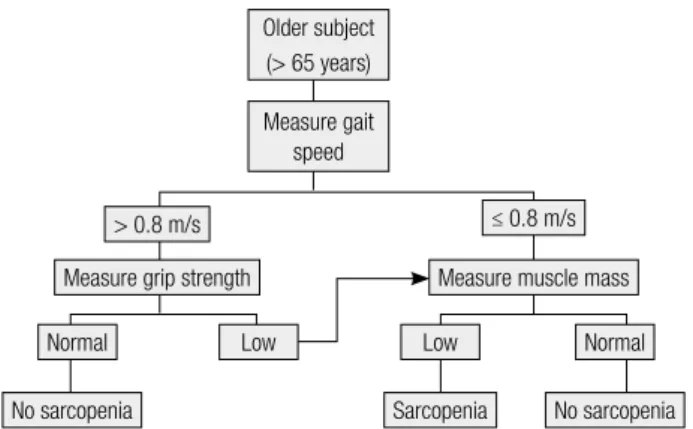
Diagnostic criteria are clearly essential for the recognition of sarcopenia in clinical practice and for use in clinical trials. There has been considerable recent progress in this area, with the publication of several similar (although not iden-tical) consensus statements on the measures to use for di-agnosis. The algorithm published by the European Wor-king Group on Sarcopenia in Older People (EWGSOP) in 2010, requires the presence of either low gait speed or low muscle strength to then test for low muscle mass as shown in igure 1 (2). The approach recommended by the International Working Group on Sarcopenia in 2011 is similar, with low gait speed or evidence of impaired physical function (those who are bedridden or unable to independently rise from a chair) being an indication to measure muscle mass (6). The components of these algo-rithms fall into three broad groups: physical performance (such as gait speed), muscle strength and muscle mass. This section now briely reviews the measurement tech-niques for each of these three categories, along with their associations with major ageing outcomes.
Components of recent deinitions of sarcopenia
Physical performance
Older people with slow gait speed have been found to be at an increased risk of subsequent disability, falls,
cognitive decline, institutionalisation and mortality (7-9). Gait speed is readily assessed in the clinical setting by measuring the time taken to walk a set distance, such as 4 m, at usual pace. Although there appears to be a con-tinuous relationship between gait speed and outcomes such as mortality (9), for clinical purposes a range of cut-points have been proposed such as 0.8 m/s, as used in the EWGSOP deinition for sarcopenia (2). Other measures of which have been studied in older people including standing balance and chair rise times, and in both poorer performance has been linked to increased mortality rates (5). The combination of these measures and gait speed has been used in epidemiological stud-ies in the form of the Short Physical Performance Bat-tery, the results of which are graded on a 12-point scale which is predictive of ageing outcomes (10,11). There is evidence that gait speed alone may have similar pre-dictive power to the complete battery of tests (12).
muscle strength
Several measures exist for the measurement of muscle strength. Grip strength has been recommended as the most practical method of measuring muscle strength in the clinical setting (2) and has been found to corre-late physical performance measures in the lower limbs (13). The Jamar dynamometer being the most com-monly described device (14). In a systematic review, seven out of 10 studies of older people found that weak grip predicted either incident disability or worsening of existing disability (8). There is strong evidence linking grip strength with mortality rates, with a meta-analysis of 14 studies showing a graded relationship between weaker grip and increased risk of death (5); the hazard ratio comparing the lowest to the highest quarters of
Older subject (> 65 years)
Measure gait speed
> 0.8 m/s
Measure grip strength
Normal
No sarcopenia Sarcopenia No sarcopenia
Normal
Low Low
Measure muscle mass ≤ 0.8 m/s
Cop
yright
© ABE&M t
odos os dir
eit
os r
eser
vados
.
grip strength was 1.67 (95% CI: 1.45, 1.93). Whereas associations between measures of physical performance and mortality have been assessed mainly in older popu-lations, four of the studies included in the grip strength meta-analysis had an average age at baseline of below 60 years, and the indings here were similar. Norma-tive data are available for grip (15,16) and cut-points have been proposed, such as 30 kg in men and 19 kg in women (17).
muscle mass
Possible techniques for measuring muscle mass in the clinical setting include anthropometry, bioelectrical im-pedance (BIA) and dual energy x-ray absorptiometry (DXA). Anthropometric measures are prone to error and are not considered to be suitable for assessing mus-cle mass in older people (2). Bioelectrical impedance (BIA), which produces estimates of total fat mass and lean mass, has the advantage over DXA that the equip-ment used is portable. However a recent review ques-tioned to what extent BIA provides additional informa-tion beyond that from anthropometric measurements (weight and height) alone (18). The third technique, DXA, can accurately estimate the proportion of lean tissue, fat tissue and bone, although access to scanning equipment may be a limiting factor. Baumgartner and cols. (19) proposed an index of relative skeletal muscle mass, in the form of appendicular skeletal muscle mass (kg) from DXA divided by height (m) squared. They also suggested cut-offs for sarcopenia in the form of two standard deviations below the gender-speciic young adult mean: 7.26 kg/m2 for men and 5.45 kg/m2 for
women.
As described above, more recent deinitions of sar-copenia have used measures of physical performance and muscle strength to screen for the need to perform tests of muscle mass. Interestingly there is evidence that strength may be more predictive of the risk of subse-quent disability (20) and mortality (21) than muscle mass. There is also debate around the feasibility of measuring muscle mass in the potentially large num-bers of older people who may fall below thresholds pro-posed for physical performance and strength (22).
Recent applications of a sarcopenia algorithm
Several studies have applied the framework for the di-agnosis of sarcopenia proposed by the EWGSOP. Patel and cols. (23) examined the prevalence of sarcopenia
in a cohort based in the United Kingdom at mean age 67 years, with 4.6 and 7.9% of men and women, re-spectively, meeting criteria based on gait speed, grip strength and lean mass. Akune and cols. (24) used an older Japanese cohort (mean age 75 years) and found an overall prevalence of sarcopenia of 13.8% in men and 12.4% in women, as well as a clear tendency for the prevalence to increase with age. As we move on to con-sidering treatments for sarcopenia, it is worth noting that a further application of the EWGSOP algorithm is as the inclusion criteria for intervention studies. The question of what outcome measures should be used in such studies is less clear, however (25).
TReATmeNT
There are a range of potential treatments for sarcope-nia, such as the established role of exercise programmes, along with the potential to modify diet and also drug treatments. There exists marked variation between older individuals in terms of strength and performance, sug-gesting that factors such as lifestyle may contribute to the development of sarcopenia (26). As described in the following sections, observational studies are helpful in this regard by identifying possible areas for intervention.
exercise
Progressive resistance training (PRT), where partici-pants exercise against an increasing load, is the most studied form of exercise intervention. The 2009 Cochrane review (27) included studies with an average age of at least 60, the majority of which were high-intensity programmes performed twice or three times per week in gym or clinic-based settings. The outcomes used in different studies varied but there was evidence of a moderate-to-large beneicial effect of PRT on strength in the lower limb, as well as a moderate ef-fect on gait speed. Other types of exercise intervention include aerobic exercise, balance and lexibility training and functional training. These have been less studied in regard to outcomes related to sarcopenia; perhaps unsurprisingly, interventions such as aerobic exercise do not show the consistent effects seen from PRT (28).
Cop
yright
© ABE&M t
odos os dir
eit
os r
eser
vados
.
example, there is evidence that being more physically active in middle age is beneicial for strength in early old age (29,30). This may be through attenuating the typical age-related decline in strength. This life course approach to sarcopenia (31) is considered further in the section on future research.
Diet
Less is known about dietary interventions than the es-tablished role of resistance training. There is consider-able recent literature which suggests that several aspects of diet may be important in the development of sar-copenia (32). Food intake falls by approximately 25% from 40 to 70 years of age, and particularly if combined with a tendency towards a monotonic diet, may lead to inadequate nutrient intake. Three key areas have been considered with respect to diet in sarcopenia: protein, vitamin D and antioxidants.
Protein provides the amino acids required for mus-cle synthesis. There is also evidence that the amino acid leucine may activate the signalling pathways leading to protein synthesis (33). A trial in relatively young (mean age 71) and healthy men failed to show on effect on muscle mass or strength, however, perhaps because the group studied tended to have diets already replete in leucine (34). There is also a general concern that the muscle synthesis in older people following a protein load may be blunted (35), leading to the suggestion that recommended overall protein intakes for older people should be increased. Observational evidence shows a clear association between protein intake and amount of lean mass (36). However a Cochrane review (37) found no consistent effect of supplements on functional meas-ures relevant to sarcopenia. The quantity and composi-tion of dietary protein for the prevencomposi-tion and treatment of sarcopenia therefore remains unclear.
The current widespread interest in diseases po-tentially related to vitamin D deiciency (38) includes sarcopenia. Evidence supporting a role for vitamin D includes the fact that polymorphisms in vitamin D have been linked to muscle strength (39); also frailty (a con-dition which has some overlap with sarcopenia) has been shown to be associated with vitamin D deiciency (40). As with protein supplementation, intervention trials of the effect of vitamin D on strength and physical performance have shown mixed results, however (41). Given that vitamin D deiciency is prevalent in older people, further trials to clarify its role in sarcopenia are therefore warranted.
The accumulation of reactive oxygen species (ROS) in older age is recognised to have a role in muscle wast-ing, although the precise forms of ROS responsible and their interactions are not fully understood (42). This in turn makes it dificult to know which speciic antioxi-dants are likely to be of beneit as supplements and there have been few trials. There is evidence from observa-tional studies that those with higher overall antioxidant status have better physical function as well as attenuated decline in measures such as walking speed (43).
In summary, a common inding across the three types of dietary intervention is a mismatch between the indings from observational and intervention studies. One possible explanation for this is the tendency for intake of dietary components to be highly correlated with one another (44); hence the association between one marker of a healthy diet and physical function may be confounded by other components. Indeed there is some evidence linking ‘healthy’ diets, containing wholemeal cereals and greater amounts of fruit and vegetables, to greater muscle strength in older people (32). An important area for further research is there-fore the potential of whole-diet interventions, which attempt to change dietary patterns rather than focus-sing on speciic nutrients in isolation.
medication
Cop
yright
© ABE&M t
odos os dir
eit
os r
eser
vados
.
a trial of spironolactone (50), and neither has either of these drugs yet shown a beneit in terms of outcomes more traditionally related to sarcopenia.
FuTuRe DIReCTIoNS FoR ReSeARCH AND
CoNCLuSIoNS
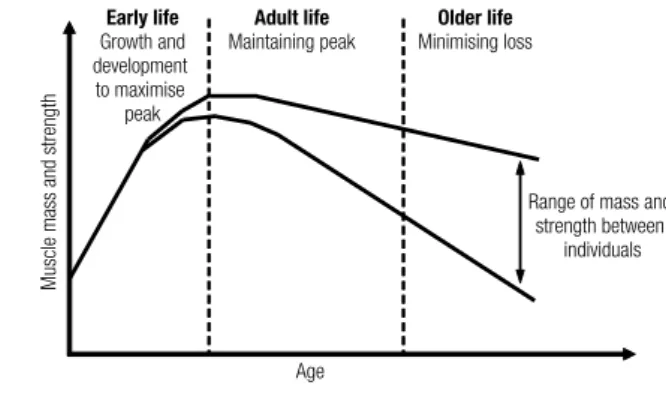
There are multiple areas of research which should in-crease our understanding of sarcopenia and its manage-ment. These include an increased understanding of the molecular and cellular mechanisms which underlie this condition, drawing from both human (51) and animal studies (52). Such studies have the potential to identify novel therapeutic targets as well as monitor and pre-dict responses to treatment. There is also the life course approach as shown in igure 2, which recognises that function in older age is the product of a peak in early adult life and subsequent decline, both inluenced by a range of factors operating across the whole of life in-cluding early inluences (53,54). Finally there is further potential to explore whether nutritional supplementa-tion and resistance training might be combined to pro-duce synergistic effects (55).
In conclusion, this review has covered recent devel-opments in the diagnosis and treatment of sarcopenia, a syndrome comprising loss of muscle mass and function. The development of consensus deinitions for sarcope-nia has helped to inform clinical assessment of patients as well as recruitment into trials. At present, progressive resistance training is the most well studied intervention for sarcopenia. Research into this condition is expand-ing exponentially and will hopefully deliver beneits for older people with established sarcopenia, as well as con-sidering how we might be able to intervene earlier in the life course to prevent its occurrence.
early life
Growth and development to maximise
peak
Adult life
Maintaining peak
older life
Minimising loss
Range of mass and strength between
individuals
Age
Muscle mass and strength
Figure 2. A life course approach to sarcopenia (31).
Acknowledgements: none.
Funding statement and competing interests: Richard Dodds is supported by a Wellcome Trust Fellowship (Grant number WT099055AIA).
Disclosure: no potential conlict of interest relevant to this article was reported.
ReFeReNCeS
1. Rosenberg I. Summary comments. Am J Clin Nutr. 1989;(50):1231-3. 2. Cruz-Jentoft AJ, Baeyens JP, Bauer JM, Boirie Y, Cederholm T,
Landi F, et al. Sarcopenia: European consensus on deinition and diagnosis: Report of the European Working Group on Sarcopenia in Older People. Age Ageing. 2010;39(4):412-23.
3. Wolfe RR. The underappreciated role of muscle in health and di-sease. Am J Clin Nutr. 2006;84(3):475-82.
4. Janssen I, Shepard DS, Katzmarzyk PT, Roubenoff R. The health-care costs of sarcopenia in the United States. J Am Geriatr Soc. 2004;52(1):80-5.
5. Cooper R, Kuh D, Hardy R; Mortality Review Group; FALCon and HALCyon Study Teams. Objectively measured physical capability levels and mortality: systematic review and meta-analysis. BMJ. 2010;341:c4467.
6. Fielding RA, Vellas B, Evans WJ, Bhasin S, Morley JE, Newman AB, et al. Sarcopenia: an undiagnosed condition in older adults. Current consensus deinition: prevalence, etiology, and conse-quences. International working group on sarcopenia. J Am Med Dir Assoc. 2011;12(4):249-56.
7. Abellan van Kan G, Rolland Y, Andrieu S, Bauer J, Beauchet O, Bonnefoy M, et al. Gait speed at usual pace as a predictor of ad-verse outcomes in community-dwelling older people an Interna-tional Academy on Nutrition and Aging (IANA) Task Force. J Nutr Health Aging. 2009;13(10):881-9.
8. Vermeulen J, Neyens JCL, van Rossum E, Spreeuwenberg MD, de Witte LP. Predicting ADL disability in community-dwelling elderly people using physical frailty indicators: a systematic re-view. BMC Geriatr. 2011;11(1):33.
9. Studenski S1, Perera S, Patel K, Rosano C, Faulkner K, Inzi-tari M, et al. Gait speed and survival in older adults. JAMA. 2011;305(1):50-8.
10. Guralnik JM, Simonsick EM, Ferrucci L, Glynn RJ, Berkman LF, Blazer DG, et al. A short physical performance battery assessing lower extremity function: association with self-reported disability and prediction of mortality and nursing home admission. J Ge-rontol. 1994;49(2):M85-94.
11. National Institue on Aging. Assessing Physical Performance in the Older Patient. 2013. Available at: http://www.grc.nia.nih.gov/ branches/leps/sppb/.
12. Guralnik JM, Ferrucci L, Pieper CF, Leveille SG, Markides KS, Os-tir GV, et al. Lower extremity function and subsequent disability: consistency across studies, predictive models, and value of gait speed alone compared with the short physical performance bat-tery. J Gerontol A Biol Sci Med Sci. 2000;55(4):M221-31. 13. Visser M, Deeg DJ, Lips P, Harris TB, Bouter LM. Skeletal
mus-cle mass and musmus-cle strength in relation to lower-extremity performance in older men and women. J Am Geriatr Soc. 2000;48(4):381-6.
14. Roberts HC, Denison HJ, Martin HJ, Patel HP, Syddall H, Cooper C, et al. A review of the measurement of grip strength in clinical and epidemiological studies: towards a standardised approach. Age Ageing. 2011;40(4):423-9.
Cop
yright
© ABE&M t
odos os dir
eit
os r
eser
vados
.
16. Kenny RA, Coen RF, Frewen J, Donoghue OA, Cronin H, Savva GM. Normative values of cognitive and physical function in older adults: indings from the Irish Longitudinal Study on Ageing. J Am Geriatr Soc. 2013;61 Suppl 2:S279-90.
17. Lauretani F, Russo CR, Bandinelli S, Bartali B, Cavazzini C, Di Io-rio A, et al. Age-associated changes in skeletal muscles and their effect on mobility: an operational diagnosis of sarcopenia. J Appl Physiol. 2003;95(5):1851-60.
18. Elia M. Body composition by whole-body bioelectrical impedan-ce and prediction of clinically relevant outcomes: overvalued or underused? Eur J Clin Nutr. 2013;67 Suppl 1:S60-70.
19. Baumgartner RN, Koehler KM, Gallagher D, Romero L, Heyms-ield SB, Ross RR, et al. Epidemiology of sarcopenia among the elderly in New Mexico. Am J Epidemiol. 1998;147(8):755-63. 20. Manini TM, Clark BC. Dynapenia and aging: an update. J Gerontol
A Biol Sci Med Sci. 2012;67(1):28-40.
21. Newman AB, Kupelian V, Visser M, Simonsick EM, Goodpaster BH, Kritchevsky SB, et al. Strength, but not muscle mass, is asso-ciated with mortality in the health, aging and body composition study cohort. J Gerontol A Biol Sci Med Sci. 2006;61(1):72-7. 22. Keevil VL, Hayat S, Dalzell N, Moore S, Bhaniani A, Luben R, et
al. The physical capability of community-based men and women from a British cohort: the European Prospective Investigation into Cancer (EPIC)-Norfolk study. BMC Geriatr. 2013;13:93.
23. Patel HP, Syddall HE, Jameson K, Robinson S, Denison H, Roberts HC, et al. Prevalence of sarcopenia in community-dwelling older people in the UK using the European Working Group on Sarco-penia in Older People (EWGSOP) deinition: indings from the Hertfordshire Cohort Study (HCS). Age Ageing. 2013;42(3):378-84. 24. Akune T, Muraki S, Oka H, Tanaka S, Kawaguchi H, Nakamura K,
et al. Exercise habits during middle age are associated with lo-wer prevalence of sarcopenia: the ROAD study. Osteoporos Int. 2013;25(3):1081-8.
25. Cooper C, Fielding R, Visser M, van Loon LJ, Rolland Y, Orwoll E, et al. Tools in the Assessment of Sarcopenia. Calcif Tissue Int. 2013;93(3):201-10.
26. Syddall H, Evandrou M, Cooper C, Sayer AA. Social inequalities in grip strength, physical function, and falls among community dwelling older men and women: indings from the Hertfordshire Cohort Study. J Aging Health. 2009;21(6):913-39.
27. Liu C, Latham N. Progressive resistance strength training for improving physical function in older adults. Cochrane Database Syst Rev. 2009;(3):CD002759.
28. Denison HJ, Syddall HE, Dodds R, Martin HJ, Finucane FM, Grifin SJ, et al. Effects of aerobic exercise on muscle strength and phy-sical performance in community-dwelling older people from the Hertfordshire cohort study: a randomized controlled trial. J Am Geriatr Soc. 2013;61(6):1034-6.
29. Stenholm S, Tiainen K, Rantanen T, Sainio P, Heliövaara M, Impi-vaara O, et al. Long-term determinants of muscle strength decli-ne: prospective evidence from the 22-year mini-Finland follow-up survey. J Am Geriatr Soc. 2012;60(1):77-85.
30. Dodds R, Kuh D, Aihie Sayer A, Cooper R. Physical activity levels across adult life and grip strength in early old age: updating in-dings from a British birth cohort. Age Ageing. 2013;42(6):794-8. 31. Sayer AA, Syddall H, Martin H, Patel H, Baylis D, Cooper C.
The developmental origins of sarcopenia. J Nutr Health Aging. 2008;12(7):427-32.
32. Robinson S, Cooper C, Aihie Sayer A. Nutrition and sarcopenia: a review of the evidence and implications for preventive strategies. J Aging Res. 2012;2012:510801.
33. Casperson SL, Shefield-Moore M, Hewlings SJ, Paddon-Jones D. Leucine supplementation chronically improves muscle protein synthesis in older adults consuming the RDA for protein. Clin Nutr. 2012;31(4):512-9.
34. Verhoeven S, Vanschoonbeek K, Verdijk LB, Koopman R, Wodzig WK, Dendale P, et al. Long-term leucine supplementation does not increase muscle mass or strength in healthy elderly men. Am J Clin Nutr. 2009;89(5):1468-75.
35. Rattan SI. Synthesis, modiication and turnover of proteins du-ring aging. Adv Exp Med Biol. 2010;694:1-13.
36. Houston DK, Nicklas BJ, Ding J, Harris TB, Tylavsky FA, Newman AB, et al. Dietary protein intake is associated with lean mass change in older, community-dwelling adults: the Health, Aging, and Body Composition (Health ABC) Study. Am J Clin Nutr. 2008;87(1):150-5.
37. Milne AC, Potter J, Vivanti A, Avenell A. Protein and energy sup-plementation in elderly people at risk from malnutrition. Cochra-ne Database Syst Rev. 2009;15(2):CD003288.
38. Harvey NC, Cooper C. Vitamin D: some perspective please. BMJ. 2012;345:e4695.
39. Hamilton B. Vitamin D and human skeletal muscle. Scand J Med Sci Sports. 2010;20(2):182-90.
40. Wilhelm-Leen ER, Hall YN, Deboer IH, Chertow GM. Vita-min D deiciency and frailty in older Americans. J Intern Med. 2010;268(2):171-80.
41. Annweiler C, Schott AM, Berrut G, Fantino B, Beauchet O. Vitamin D-related changes in physical performance: a systematic review. J Nutr Health Aging. 2009;13(10):893-8.
42. Arthur PG, Grounds MD, Shavlakadze T. Oxidative stress as a the-rapeutic target during muscle wasting: considering the complex interactions. Curr Opin Clin Nutr Metab Care. 2008;11:408-16. 43. Kaiser M, Bandinelli S, Lunenfeld B. Frailty and the role of
nutri-tion in older people. A review of the current literature. Acta Bio-med. 2010;81 Suppl 1:37-45.
44. Robinson S, Syddall H, Jameson K, Batelaan S, Martin H, Den-nison EM, et al. Current patterns of diet in community-dwelling older men and women: results from the Hertfordshire Cohort Stu-dy. Age Ageing. 2009;38(5):594-9.
45. Giannoulis MG, Martin FC, Nair KS, Umpleby AM, Sonksen P. Hormone replacement therapy and physical function in healthy older men. Time to talk hormones? Endocr Rev. 2012;33(3):314-77. 46. Xu L, Freeman G, Cowling BJ, Schooling CM. Testosterone thera-py and cardiovascular events among men: a systematic review and meta-analysis of placebo-controlled randomized trials. BMC Med. 2013;11:108.
47. Onder G, Penninx BW, Balkrishnan R, Fried LP, Chaves PH, William-son J, et al. Relation between use of angiotensin-converting enzy-me inhibitors and muscle strength and physical function in older women: an observational study. Lancet. 2002;359(9310):926-30. 48. Sumukadas D, Witham MD, Struthers AD, McMurdo ME. Effect
of perindopril on physical function in elderly people with functional impairment: a randomized controlled trial. CMAJ. 2007;177(8):867-74.
49. Witham MD, Sumukadas D, McMurdo ME. ACE inhibitors for sarcopenia--as good as exercise training? Age Ageing. 2008;37(4):363-5.
50. Burton LA, Sumukadas D, Witham MD, Struthers AD, McMur-do ME. Effect of spironolactone on physical performance in older people with self-reported physical disability. Am J Med. 2013;126(7):590-7.
51. Patel HP, Syddall HE, Martin HJ, Stewart CE, Cooper C, Sayer A. Hertfordshire sarcopenia study: design and methods. BMC Ge-riatr. 2010;10:43.
52. Shavlakadze T, Grounds M. Of bears, frogs, meat, mice and men: complexity of factors affecting skeletal muscle mass and fat. Bio-essays. 2006;28(10):994-1009.
53. Dodds R, Denison HJ, Ntani G, Cooper R, Cooper C, Sayer AA, et al. Birth weight and muscle strength: a systematic review and meta-analysis. J Nutr Health Aging. 2012;16(7):609-15.
54. Robinson SM, Simmonds SJ, Jameson KA, Syddall HE, Denni-son EM, Cooper C, et al. Muscle strength in older community--dwelling men is related to type of milk feeding in infancy. J Ge-rontol A Biol Sci Med Sci. 2012;67(9):990-6.