• Nenhum resultado encontrado

International Symposium on Synthesis & Catalysis (ISySyCat) 2017

N/A
N/A
Protected

Academic year: 2021

Share "International Symposium on Synthesis & Catalysis (ISySyCat) 2017"

Copied!
378
0
0

Texto

(1)

Welcome………..

2

Organization ………...

3

Acknowledgments and Sponsors ………

5

General Information ………...

9

Social Programme ……….

13

Scientific Programme ………....

16

Plenary Lectures ………

45

Oral Communications ………

77

Flash Communications ……….

129

Poster Communications ………

175

Author Index ………

343

Participant Index ………....

353

(2)

Welcome

On behalf of the Organizing Committee I am very pleased to welcome you to the

second edition of the International Symposium on Synthesis and Catalysis

(ISySyCat2017) at the historic University of Évora. The inaugural edition of this

conference that took place in September 2015 (ISySyCat2015) was an enormous

success and we wish to build on this success, and make this a regular biannual

event, which we can be proud of.

The conference focuses on various aspects of organic, organometallic and

inorganic synthesis, as well as all areas of catalysis, including metal based

catalysis, organocatalysis and biocatalysis. Issues of current major interest will

be discussed, which include the sustainable production of important bulk,

high-added value and biologically active compounds, from both academic and

industrial perspectives.

We are proud to have a delightful mixture of both academic and industrial

chemists from all corners of the globe, making this yet again a very international

event. This is also reflected in the fine line-up of speakers, which includes

well-known chemists and up and coming “rising” stars. There is also a very nice

line-up of short “flash” talk speakers, who in the main are junior researchers with some

very exciting research to discuss. Besides, there will be a smorgasbord of poster

presentations, covering all aspects of these pivotal areas. Prizes will be awarded

(to be announced before the closing ceremony) for the best “flash” talks and

poster presentations.

This conference should be the ideal venue to be updated on current

developments and advances in these areas, for net-working, making new

acquaintances, and at the same time allowing one to relax, soak up and enjoy

the special surroundings, along with the unique food, drink and hospitality

provided by this special region.

We are very grateful to the Portuguese Chemical Society (Sociedade Portuguesa

de Química), the University of Évora, and all our generous sponsors and

supporters, without their valuable support this special event would not be

possible.

Last, but not least, we would like to thank all the participants at ISySyCat2017 for

coming!

We hope that your participation will be rewarding, fulfilling and of course very

enjoyable.

So, make the most of it and enjoy!

Anthony J. Burke

(Conference Chair)

(3)

Organization

Scientific Committee

Anthony Burke, University of Évora, Portugal

Paul Wender, University of Stanford, USA

Artur Silva, University of Aveiro, Portugal

Lurdes Cristiano, University of the Algarve, Portugal

Narcisso Garrido, University of Salamanca, Spain

Declan Gilheany, University College Dublin, Ireland

Kai Rossen, Sanofi-Aventis, Germany

Martin Ernst, BASF, Germany

Maurizio Benaglia, University of Milan, Italy

Organizing Committee

Anthony Burke, University of Évora, Portugal

António Teixeira, University of Évora, Portugal

Paulo Mendes, University of Évora, Portugal

José Eduardo Castanheiro, University of Évora, Portugal

Elisabete Carreiro, University of Évora, Portugal

Carolina Marques, University of Évora, Portugal

Olívia Furtado, LNEG, Lisbon, Portugal

Luís Fernandes, University of Évora, Portugal

Local Organizing Committee (Students from University of Évora)

Sílvia Fernandes

Luís Alves

Patrícia Bacalhau

Arona Pires

Marina Costa

3

(4)

Pedro Brandão

Catarina Amorim

Luís Galvão

Mamidala Srikanth

Portuguese Chemical Society (SPQ) Staff

Leonardo Mendes, conference secretary

Cristina Campos, conference secretary

Abstract Book Editors

Carolina S. Marques

Elisabete P. Carreiro

Anthony J. Burke

(5)

Acknowledgments and Sponsors

The Organizing Committee is very grateful to the following companies and

organizations for their kind sponsorship and support of ISySyCat 2017.

Platinum (Catalyst) Sponsor

Gold (Catalyst) Sponsor

Silver (Catalyst) Sponsor

(6)
(7)

7

(8)

Media Partner

Molecules has kindly offered to sponsor a feature paper slot to publish free of charge for the best flash presentation.

Catalysts has kindly offered a prize of 500 CHF for the best poster presentation in the area of catalysis.

ChemCatChem will publish a special edition in 2018 that will cover both ISySyCat2015 and ISySyCat2017 and the work of various Portuguese groups active in the area of catalysis.

(9)

General Information

Meeting Venue

The meeting will take place at the auditory of Colégio Espírito Santo (CES)

located in University of Évora, Largo dos Colegiais, number 2, 7004-516 Évora,

Portugal.

CES

(10)

Ground -1

Inside the CES building, the main conference room (the Auditorium), the

speaker’s preview room, poster session venue, exhibition and coffee break areas

will be appropriately signposted, as illustrated in the map below.

Jardim

do Granito

Auditorium

1

st

Ground

Ground 0

Room 129 – Lunches (1

st

Floor)

Bar

Poster Sessions

Coffee Breaks

Flash Presentations parallel Room

(11)

Lunches

Lunches on Tuesday 5, Wednesday 6 and Thursday 7 of September will be

served at the room 129 of CES, and are included in the registration fee. We kindly

ask all the participants to present their lunch tickets to the staff.

Internet Access

A temporary login for the wireless Academic Network (eduroam) for the University

of Évora has been created (valid from 3 to 10 of September). Please use the

following credentials:

Guest User Name: ISySyCat2017

Password: ISySyCat2017

Scientific Information

Presentation Preview Room

Speakers are kindly asked to contact the organizing committee at the preview

room 24 h before their presentation. Those speakers scheduled to speak in the

morning of the 5

th

of September are kindly asked to provide the organizers with

a copy of their talk during the registration in order to make sure that there are no

problems with the presentation of their material. This is especially advised for

those who have prepared their talk on an Apple® Macintosh computer.

Flash Sessions

On the 5

th

, 6

th

and 7

th

of September three parallel Flash session presentations

will take place in the main Auditorium and in Room 124. The talks will have a

maximum time of 8 minutes each.

Posters Sessions

Posters will be displayed in the selected halls of CES. Authors are requested to

display their posters on the post panels during the first coffee break on 5

th

of

September. Material to attach posters will be made available by the organizing

committee at the front desks. Posters should be on display from Tuesday morning

and left for the entire duration of the Conference. Authors are requested to stay

near their posters during both sessions so they will be available to answer any

questions from the participants and by the evaluation panel, who will select the

posters for the Poster Prize awards.

(12)

Awards and Prizes

In ISySyCat 2017, a number of exciting Awards will be given, for both the best

Poster presentations and the best Flash presentations.

Both Wiley-VCH Verlag GmbH & Co. KGaA – A company of John Wiley & Sons,

Inc. and Molecules have very kindly agreed to award a textbook (Catalytic

Asymmetric Methods: From the Academic Lab to Industrial Processes, Burke and

Marques) and a feature paper slot as the prizes for the best flash presentations.

Catalysts will provide a prize of 500 CHF for the best poster presentation in the

catalysis category.

Thieme (SynFacts) which is also sponsoring the plenary lecture of Professor

Kilian Muñiz as the 2016 winner of the SYNTHESIS Best Paper Award, will

provide a one-year personal subscription to SYNFACTS for the best poster in the

category, Synthetic Methodology.

Organic & Biomolecular Chemistry (OBC) of the Royal Society of Chemistry, will

kindly provide a one-year free e-subscription to the journal for the winner and

runner-up for the best posters in the category: Total/Target based synthesis. They

will also provide a one-year free e-subscription to the journal for the runner-up

best poster in the Synthetic Methodology category.

Language

English is the official language of ISySyCat 2017.

Useful information

Time Zone: The time zone in Portugal is GMT.

Water: Tap water in Portugal is drinking water.

Electricity: In Portugal, the line voltage is 220 V and the connection is made by a

two-pin plug. Travelers from the USA will require a voltage converter. Travelers

from the UK will require a plug adapter and this is best bought in the UK as they

are hard to find in Lisbon (can try at the Lisbon airport).

Currency, Banks and Post Offices: The national currency in Portugal is Euro.

Banks are open from Monday to Friday between 8.30 am and 3 pm. Post offices

are usually open between 8.30 am and 6 pm. Exchange houses operate everyday

between 9 am and 1 pm and from 2 pm to 7 pm.

Going out in Évora: With your conference material, you will find a city map and a

brochure of Évora with lots of necessary information.

(13)

Climate: In early September, the temperature in Évora is on average 30ºC (the

nights are hot). Rain is very unlikely.

Social Programme

Reception Party (included in the registration fee):

The reception party will be in the garden in front of the Cloisters of CES on

Tuesday the 5

th

of September at 19:45h. It will include appetizers, drinks and a

live DJ.

Banquet Dinner (included in the registration fee):

On Thursday the 7

th

of September at 20h, the

conference banquet will take place in the

spectacular location of the Cinco Quinas

restaurant, within the confines of the historic

Palácio Cadaval, dating back over 600 years.

This space has been opened to the public for

several functions/events and claims of an excellent cuisine, with a fine selection

of local regional dishes and wines.

“With more than six centuries of history, a unique venue to celebrate life, an unmistakable destination in the Alentejo, an invitation to embark on a journey and to dream.” Diana, Duchess of Cadaval

Excursions on the 8

th

of September:

On the afternoon of the 8

th

of September, conference participants are invited to

part-take in a delightful social program. One includes a coach trip to the famous

Carmim Winery followed by a visit to the historic unique mediaeval village of

Monsaraz overlooking the beautiful artificial lake known as Alqueva, and the other

which is kindly provided by the Évora Town Council, will be a walking guided tour

to the most exciting historic sites around the city of Évora. Full details will be given

during the conference.

-

Carmin Reguengos Winery (not included in

the registration fee):

This well-known winery was founded in 1970 and

is located in the historical town of Reguengos, which is close to the mediaeval

village of Monsaraz (which will also be visited) and overlooks the spectacular

artificial lake and tourist attraction, Alqueva (which you will also see). Carmim is

the largest winery in the Alentejo region, which boasts of being one of the largest

in the country and in terms of wine production and bottling, one of the most

technologically advanced wineries in the whole Iberian Peninsula. It is a

well-respected brand in Portugal.

(14)

After a delightful lunch at the renowned

Carmim Reguengos winery restaurant

(see below for further information), it will be

given a ninety-minute tour of the whole

winery and a unique view of the whole wine

production process.

This will be the ideal time to visit the

winery, as it overlaps with the heart of the

harvest season, and you will see for

yourself the whole process in action, from

the delivery of the grapes to the factory,

right to the bottling and storage of the wine.

This tour will end with a wine-tasting opportunity, of two classy wines - a red

variety (tinto) and a white variety (branco) - chosen specifically for your palate by

experts from the Carmim winery. This session will be accompanied by one of the

experienced wine tasters from this winery, to give you an appreciation of the

hidden secrets of these remarkable wines.

Lunch

After a welcome drink served with Espumante Monsaraz, lunch will be served

and consist of the following tasty dishes:

Starters (Pâté, olives and a selection of ham and cheese from the region)

accompanied by Monsaraz Rosé wine;

First dish (Baked Codfish in the oven) accompanied by exclusive Régia Colheita

white wine;

Second dish (Baked Pork Cheeks) accompanied by Monsaraz Reserva Tinto red

wine;

Desert, accompanied by Vinho Licoroso Carmim, liquor.

(15)

Important Note: Persons with dietary restrictions should indicate this on the

registration form (preferentially) or in the registration desk during the conference

so that an alternative can be arranged.

MONSARAZ

After the visit to the Carmim winery, you will be taken

by coach to visit the historically unique medieval village

of Monsaraz, which is one of the oldest villages in

Portugal. This amazing place, with a very strong sense

of medieval days gone by, dates back more than a

thousand years. Some of the highlights to be visited,

include the parish church which stands accompanied by an unusual 18

th

century

pillory topped by a sphere of the universe, and a church interior containing gilded

altars and painted pillars), as well as the granite castle with impressive

battlements for eagle-eye views of the houses within the village walls and for the

breath-taking landscape of the surrounding countryside. Within its confines, it

houses an unusual bullfight arena that is the host to various bull-fight events

several times a year. In fact, it is expected that your visit to Monsaraz will coincide

with its yearly summer festival, which is expected to be in full swing (so you never

know what to expect…). You will also encounter many other small treats along

the way.

- Walking Guide tour to Évora (included in the registration

fee):

The participants who are interested in this tour should contact

the staff on the first day of the conference to book their place.

It will be in the 8

th

of September at 14h. The meeting point will

be in the Tourist Office in Geraldo’s square and the

participants should present the corresponding badge of the conference.

(16)

Scientific Programme

Conference Time Schedule:

Time

5

th

Sept

6

th

Sept

7

th

Sept

8

th

Sept

Time 8

th

Sept

9.00-9.45

Registration and

Opening

Ceremony

(PL 5) David

Milstein

(PL 9)

Masakatsu

Shibasaki

(PL 13) Lutz

Ackermann

9.45-10.05

(OC 7) Luisa

Maia

(OC 16) Moshe

Portnoy

(OC 25)

Mariette

Pereira

10:05-10:25

(PL 1) Scott

Denmark

(OC 8) José

Pérez Sestelo

(OC 17)

Alessandra

Lattanzi

(PL 14) Ian

Baxendale

10.25-10.50

(OC 9) Sérgio

Rossi

(OC 18)

Lawrence Wolf

Coffee Break

11.20-12.05

(PL 2) Chris

Senanayake

(PL 6) Polly

Arnold

(PL 10) Carlos

Mateos

(PL 15) Ana

Cruz

11.20-12.15

12.05-12:25

(OC 1) Kengo

Hyodo

(OC 10)

Hans-Jürgen Federsel

(OC 19) Ivan

Shuklov

Awards and

Closing

Ceremony

12:15-12.40

12:25-12:45

(OC 2) Adrian

Tlaheuxt-Aca

(OC 11) Mário

Simões

(OC 20) Isidro

Pastor

Lunch

Social

Program

14.05-14:50

(PL 3) Janine

Cossy

(PL 7) Armando

Pombeiro

(PL 11) Stefan

Mix

14:50-15:10

(OC 3) Carlos

Palo-Nieto

(OC 12) Pavel

Mykhailiuk

(OC 21) Beatriz

Royo

15:10-15:30

(OC 4)

Konstantin

Luzyanin

(OC 13) Talia

Pettigrew

(OC 22) Alex

Szpilman

15:30-15:50

(OC 5) Hans

Nedden

(OC 14)

Shaoguang

Zhang

(OC 23) David

Jenkins

Coffee Break

16:30-17:15

(PL 4) Manfred

Reetz

(PL 8) Thomas

Schaub

(PL 12) Kilian

Muniz

17:15-17:35

(OC 6) Maria M.

Marques

(OC 15) Arkaitz

Correa

(OC 24)

Fernando

López-Ortiz

17:35-18:45

Flash Talks

(parallel)

Flash Talks

(parallel)

CAS SciFinder

Work-Shop

Flash Talks

(parallel)

18:45-19:40 Poster session

Poster session

19:45-23:00 Reception Party

Banquet

(20h-23:30h)

(17)

Detailed Scientific Programme:

Tuesday, the 5

th

of September of 2017

9:00

Registration

9:45

Opening Ceremony, which includes the Rector of the

University of Évora, Professor Ana Costa Freitas (or

representative), the director of the Institute for Research and

Advanced Studies of the University of Évora, Professor Collares

Pereira, the director of the School of Science and Technology of

the University of Évora, Professor Mourad Bezzeghoud, the

director of the Chemistry Center of the University of Évora,

Professor Peter Carrott, the general secretary of the Portuguese

Chemical Society (SPQ), Professor Adelino Galvão and the

conference Chairman, Professor Anthony Burke.

Chairman: Anthony Burke

10:05

PL 1

Transmetalation in the Suzuki-Miyaura

Cross-Coupling Reaction: Mechanistic Insights and

Preparative Implications

Scott E. Denmark

10:50

Coffee Break

Chairman: Martin Ernst

11:20

PL 2

Important Asymmetric and Catalytic

Transformations for Drug Development

Chris Senanayake

12:05

OC 1

Brønsted Acid Catalyzed Nitrile Synthesis

from Aldehydes via Transoximation under

Mild Conditions

Kengo Hyodo

12:25

OC 2

Alkyne and Alkene Functionalization by

Visible-Light-Mediated Photoredox Catalysis

Adrian Tlahuext-Aca

12:45

Lunch

Chairman: Adelino Galvão

14:05

PL 3

Transition Metal Catalysts - Construction and

Functionalization of Heterocycles

Janine Cossy

(18)

14:50

OC 3

Catalysed Stereoselective Synthesis of

Deoxyglycosides

Carlos Palo-Nieto

15:10

OC 4

Orthogonal Substrate-Selective C-H

Functionalisation of Organosulphur

Compounds Originating from Crude Oil

Konstantin V. Luzyanin

15:30

OC 5

Catalytic Processes that are Suitable for the

Large Scale Reduction of Aldehydes and

Ketones

Hans Günter Nedden

15:50

Coffee Break

Chairman: Isabella Rimoldi

16:30

PL 4

Directed Evolution of Stereoselective

Enzymes: A Prolific Source of Catalysts for

Asymmetric Reactions

Manfred T. Reetz

17:15

OC 6

A Metal-Catalyzed Journey to New Azaindole

Synthesis

Maria Manuel B. Marques

17:35

Flash Talks

Catalysis

Synthetic Methodology

Main Auditorium

Chairman: Maurizio Benaglia

and Narciso Garrido

Room 124

Chairman: Anthony Burke

and Martin Ernst

17:35 F 1 Caroline M. Zinser

F 7 Zsófia E. Blastik

17:45 F 2 Anastassia Matviitsuk

F 8 Soyeong Kang

17:55 F 3 Ana Cristina Fernandes

F 9 Aleksandra J. Wierzba

18:05 F 4 Tamal Roy

F 10 Maria H. T. Kwan

18:15 F 5 Selwyn F. Mapolie

F 11 Michal Urban

18:25 F 6 Marilé Landman

F 12 Vasco F. Batista

18:45

Poster Session

19:45

Reception Party

(19)

Wednesday, the 6

th

of September of 2017

Chairman: David Diéz

9:00

PL 5

Design and Applications of Sustainable

Metal-Catalyzed Reactions

David Milstein

9:45

OC 7

Reduction of Carbon Dioxide by Formate

Dehydrogenase: Aiming to Develop a

Catalyst for Carbon Dioxide Utilization

Luisa Maia

10:05

OC 8

Indium(III)-Catalyzed Intramolecular

Cycloisomerization Reactions of Alkynes:

Synthesis of 2H-Chromenes, Benzo[b]furans

and Derivatives

José Pérez Sestelo

10:25

OC 9

Continuous-flow Stereoselective Catalytic

Synthesis of Active Pharmaceutical

Ingredients in Micro- and (3D-printed)

Meso-Reactors

Sergio Rossi

10:50

Coffee Break

Chairman: Alex Szpilman

11:20

PL 6

F-Block Organometallics for the Activation

and Transformation of the Carbon

Oxygenates CO, CO

2

, and Esters

Polly L. Arnold

12:05

OC 10

Enzyme Immobilization as an Enabler for

Biocatalysis in Flow

Hans-Jürgen Federsel

12:25

OC 11

The Influence of the Porphyrins’ Macrocycle

and its Metal on the Type, Efficiency and

Selectivity of Catalysis

Mário M. Q. Simões

12:45

Lunch

Chairman: Mariette Pereira

14:05

PL 7

Functionalization of Alkanes: a Challenge in

Catalysis towards Organic Synthesis

Armando J. L. Pombeiro

(20)

14:50

OC 12

Rapid Access to Novel Multifunctional

Spirocyclic Cores for Drug Discovery

Pavel K. Mykhailiuk

15:10

OC 13

Designed Aplyronine Warheads for

Next-Generation Antibody-Drug Conjugates

Talia Pettigrew

15:30

OC 14

Synthesis and Structures of Bimetallic

Complexes Supported by Flexible

Di(imino)pyridine-based Macrocycles

Shaoguang Zhang

15:50

Coffee Break

Chairman: Sabine Fenner

16:30

PL 8

CaRLa – Basic Research for Industrial

Applications

Thomas Schaub

17:15

OC 15

Pd-Catalyzed C-H Functionalization Events

Directed by 1,2,3-Triazoles

Arkaitz Correa

17:35

Flash Talks

Catalysis

Synthetic Methodology

Main Auditorium

Chairman: Maurizio Benaglia

and Narciso Garrido

Room 124

Chairman: Anthony Burke

and Martin Ernst

17:35 F 13 Dmytro S. Nesterov

F 19 Alejandro Manchado

17:45 F 14 Silvia Cabrera

F 20 Bohdan Biletskyl

17:55 F 15

Cynthia Cuevas-Chávez

F 21 Andrea Guerrero

18:05 F 16 Sándor Nagy

F 22 James N. Sanderson

18:15 F 17 Mohamad R. Khodadadi

F 23

Bedřich Formánek

18:25 F 18 Sara Realista

F 24 Santiago Cañellas

18:45

Poster Session

(21)

Thursday, the 7

th

of September of 2017

Chairman: Maurizio Benaglia

9:00

PL 9

Recent Progress in Cooperative Asymmetric

Catalysis

Masakatsu Shibasaki

9:45

OC 16

Used of Branched and Dendritic Scaffolds for

Controlling Selectivity in Organocatalysis

Moshe Portnoy

10:05

OC 17

Organocatalysed Asymmetric Synthesis of

Sulfur-Containing Heterocycles: from

Tetrahydrothiophenes to

1,5-Benzothiazepines

Alessandra Lattanzi

10:25

OC 18

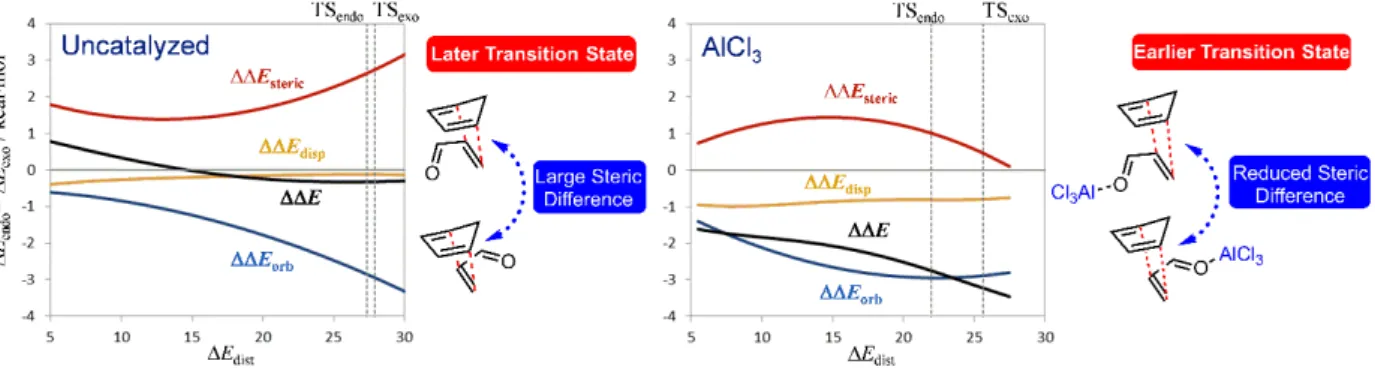
Origin of Lewis Acid Induced endo/exo

Selectivity Enhancement in the Diels-Alder

Reaction: Reduced Steric Penalty for endo

Lawrence M. Wolf

10:50

Coffee Break

Chairman: Petrus van Rooyen

11:20

PL 10

Continuous Flow Chemistry: A Powerful Tool

to Enable Chemistries and Scale-up

Processes

Carlos Mateos

12:05

OC 19

Bio- and Chemo-Catalysis in the Chemistry

of Lactic Acid and PLLA

Ivan A. Shuklov

12:25

OC 20

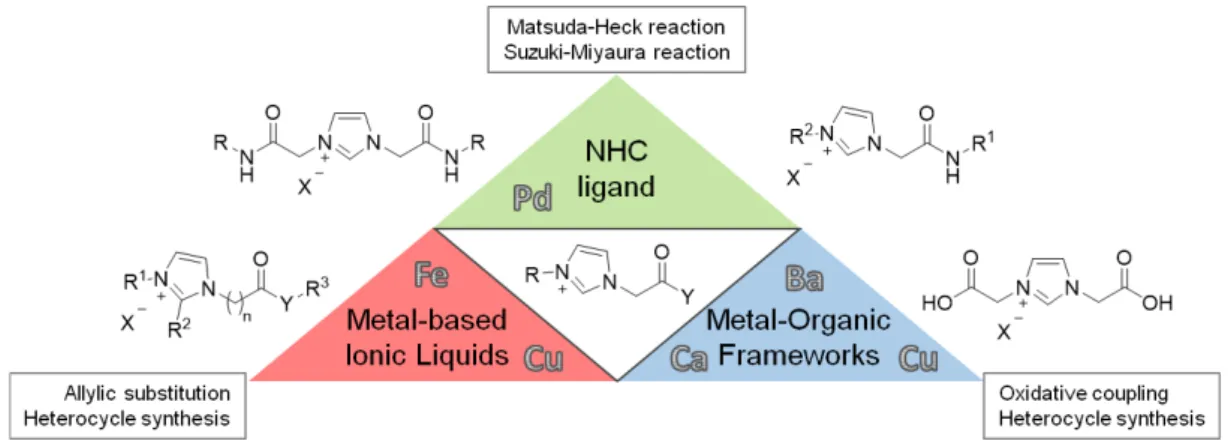
Sustainable Catalytic Systems based on

Acyl-Functionalized Imidazoles

Isidro M. Pastor

12:45

Lunch

Chairman: Silvia Cabrera

14:05

PL 11

Shortening the Path –

Biocatalysis

Applications in the Pharmaceutical Industry

Stefan Mix

14:50

OC 21

Catalytic Reductions with Manganese

N-Heterocyclic Carbenes

Beatriz Royo

(22)

15:10

OC 22

Powerful New Umpolung C-C and C-N Bond

Forming Reactions via Enolonium Species

Alex M. Szpilman

15:30

OC 23

Synthesis of Next Generation Catalysts for

C

2

+ N

1

Aziridinations from Organic Azides

and Alkenes

David M. Jenkins

15:50

Coffee Break

Chairman: Ana Maria Philips

16:30

PL 12

C-H Amination within the Halide Redox

Manifold

Kilian Muñiz

17:15

OC 24

In situ Generation of Gold(I) Nanoparticles as

Catalyst of Solventless A

3

Coupling

Synthesis of Propargylamines

Fernando López-Ortiz

17:35

CAS SciFinder Work-Shop

17:55

Flash Talks

Main Auditorium

Chairman: Maurizio Benaglia

and Narciso Garrido

Room 124

Chairman: Anthony Burke

and Martin Ernst

17:55 F 25 Louis Monsigny

F 34 Vasco Corti

18:05 F 26 Rui M. B. Carrilho

F 35

Eva Bednářová

18:15 F 27 Indrek Kalvet

F 36 Jan Lorkowski

18:25 F 28 Sébastien Coufourier

F 37 Yulia Dudkina

18:35 F 29 Bruno G. M. Rocha

F 38 Stefano Gazzotti

18:45 F 30 Kashif Tanveer

F 39 Romain Membrat

18:55 F 31 André D. S. Barbosa

F 40 Jamie H. Docherty

19:05 F 32 Elif Okutan

F 41 Alexis Lator

19:15 F 33 Sofia Strekalova

F 42 Imane Idris

19:25

F 43 Pawel Wityk

20:00

Banquet Dinner

(23)

Friday, the 8

th

of September of 2017

Chairman: Narcisso Garrido

9:00

PL 13

Selectivity Control in C-H Activation

Lutz Ackermann

9:45

OC 25

Bio-inspired Catalysts for Activation of Small

Molecules

Mariette M. Pereira

10:05

PL 14

Flow Processes for the Synthesis of

‘Challenging’ Molecules

Ian R. Baxendale

10:50

Coffee Break

Chairman: Anthony Burke

11:20

PL 15

Palladium Coupling Reactions Optimization

as Part of the Development of an API

Synthesis

Ana Cruz

12:15

Awards

Closing Ceremony, which includes the representative from the

Rectory of the University of Évora and the Conference

Chairman, Professor Anthony Burke.

Social Program

(24)

Plenary Lectures

PL 1

Transmetalation in the Suzuki-Miyaura Cross-Coupling

Reaction: Mechanistic Insights and Preparative Implications

Scott E. Denmark

PL 2

Important Asymmetric and Catalytic Transformations for Drug

Development

Chris Senanayake

PL 3

Transition Metal Catalysts - Construction and Functionalization

of Heterocycles

Janine Cossy

PL 4

Directed Evolution of Stereoselective Enzymes: A Prolific

Source of Catalysts for Asymmetric Reactions

Manfred T. Reetz

PL 5

Design and Applications of Sustainable Metal-Catalyzed

Reactions

David Milstein

PL 6

F-Block Organometallics for the Activation and Transformation

of the Carbon Oxygenates CO, CO

2

, and Esters

Polly L. Arnold

PL 7

Functionalization of Alkanes: a Challenge in Catalysis towards

Organic Synthesis

Armando J. L. Pombeiro

PL 8

CaRLa – Basic Research for Industrial Applications

Thomas Schaub

PL 9

Recent Progress in Cooperative Asymmetric Catalysis

Masakatsu Shibasaki

PL 10

Continuous Flow Chemistry: A Powerful Tool to Enable

Chemistries and Scale-up Processes

Carlos Mateos

PL 11

Shortening the Path – Biocatalysis Applications in the

Pharmaceutical Industry

Stefan Mix

PL 12

C-H Amination within the Halide Redox Manifold

Kilian Muñiz

PL 13

Selectivity Control in C-H Activation

Lutz Ackermann

(25)

PL 14

Flow Processes for the Synthesis of ‘Challenging’ Molecules

Ian R. Baxendale

PL 15

Palladium Coupling Reactions Optimization as Part of the

Development of an API Synthesis

Ana Cruz

Oral Communications

OC 1

Brønsted Acid Catalyzed Nitrile Synthesis from Aldehydes via

Transoximation under Mild Conditions

Kengo Hyodo

OC 2

Alkyne and Alkene Functionalization by Visible-Light-Mediated

Photoredox Catalysis

Adrian Tlahuext-Aca

OC 3

Catalysed Stereoselective Synthesis of Deoxyglycosides

Carlos Palo-Nieto

OC 4

Orthogonal Substrate-Selective C-H Functionalisation of

Organosulphur Compounds Originating from Crude Oil

Konstantin V. Luzyanin

OC 5

Catalytic Processes that are Suitable for the Large Scale

Reduction of Aldehydes and Ketones

Hans Günter Nedden

OC 6

A Metal-Catalyzed Journey to New Azaindole Synthesis

Maria Manuel B. Marques

OC 7

Reduction of Carbon Dioxide by Formate Dehydrogenase:

Aiming to Develop a Catalyst for Carbon Dioxide Utilization

Luisa Maia

OC 8

Indium(III)-Catalyzed Intramolecular Cycloisomerization

Reactions of Alkynes: Synthesis of 2H-Chromenes,

Benzo[b]furans and Derivatives

José Pérez Sestelo

OC 9

Continuous-flow Stereoselective Catalytic Synthesis of Active

Pharmaceutical Ingredients in Micro- and (3D-printed)

Meso-Reactors

Sergio Rossi

OC 10

Enzyme Immobilization as an Enabler for Biocatalysis in Flow

Hans-Jürgen Federsel

(26)

OC 11

The Influence of the Porphyrins’ Macrocycle and its Metal on the

Type, Efficiency and Selectivity of Catalysis

Mário M. Q. Simões

OC 12

Rapid Access to Novel Multifunctional Spirocyclic Cores for

Drug Discovery

Pavel K. Mykhailiuk

OC 13

Designed Aplyronine Warheads for Next-Generation

Antibody-Drug Conjugates

Talia Pettigrew

OC 14 Synthesis and Structures of Bimetallic Complexes Supported by

Flexible Di(imino)pyridine-based Macrocycles

Shaoguang Zhang

OC 15

Pd-Catalyzed C-H Functionalization Events Directed by

1,2,3-Triazoles

Arkaitz Correa

OC 16

Used of Branched and Dendritic Scaffolds for Controlling

Selectivity in Organocatalysis

Moshe Portnoy

OC 17

Organocatalysed Asymmetric Synthesis of Sulfur-Containing

Heterocycles: from Tetrahydrothiophenes to

1,5-Benzothiazepines

Alessandra Lattanzi

OC 18

Origin of Lewis Acid Induced endo/exo Selectivity Enhancement

in the Diels-Alder Reaction: Reduced Steric Penalty for endo

Lawrence M. Wolf

OC 19

Bio- and Chemo-Catalysis in the Chemistry of Lactic Acid and

PLLA

Ivan A. Shuklov

OC 20

Sustainable Catalytic Systems based on Acyl-Functionalized

Imidazoles

Isidro M. Pastor

OC 21

Catalytic Reductions with Manganese N-Heterocyclic Carbenes

Beatriz Royo

OC 22

Powerful New Umpolung C-C and C-N Bond Forming Reactions

via Enolonium Species

Alex M. Szpilman

(27)

OC 23

Synthesis of Next Generation Catalysts for C

2

+ N

1

Aziridinations

from Organic Azides and Alkenes

David M. Jenkins

OC 24

In situ Generation of Gold(I) Nanoparticles as Catalyst of

Solventless A

3

Coupling Synthesis of Propargylamines

Fernando López-Ortiz

OC 25

Bio-inspired Catalysts for Activation of Small Molecules

Mariette M. Pereira

Flash Communications

1

st

Session

Catalysis – Main Auditorium

F 1

A Simple Synthetic Entryway into Palladium Cross-Coupling

Catalysis

Caroline M. Zinser

F 2

Aryloxide-Facilitated Catalyst Turnover in

Enantioselective

α,β-Unsaturated Acyl Ammonium Catalysis

Anastassia Matviitsuk

F 3

Oxo-molybdenum and Oxo-rhenium Complexes as Efficient

Catalysts for the Deoxygenation of Carbonyl Compounds

Ana Cristina Fernandes

F 4

Selective Synthesis of Spirooxindoles by an Intramolecular

Heck-Mizoroki Reaction

Tamal Roy

F 5

Hydroformylation of Olefins Employing Low Generation

Metallodendrimers of Rh and Ru as Catalyst Precursors

Selwyn F. Mapolie

F 6

CpM(NHC) (M = Cr, Ni) Complexes: Synthesis, Electrochemistry,

DFT Studies and C-C and C-O Catalytic Applications

Marilé Landman

Synthetic Methodology – Room 124

F 7

Azidoperfluoroalkanes: Synthesis and Application

Zsófia E. Blastik

(28)

F 8

Pd-Catalyzed Asymmetric Addition of N-Heterocycles to

Alkoxyallene

Soyeong Kang

F 9

Vitamin B12 as a drug delivery agent – a chemical point of view

Aleksandra J. Wierzba

F 10

Overcoming the Limitations of Diastereomeric Resolution

Maria H. T. Kwan

F 11

Enantioselective Fluoroalkylation Reactions to Ketimines

Michal Urban

F12

Overview on Green Methods towards Quinoline Synthesis

Vasco F. Batista

2

nd

Session:

Catalysis - Main Auditorium

F 13

Stereospecific Hydroxylation of C(sp

3

)–H bonds: New

Mechanistic Features of the m-CPBA Oxidant

Dmytro S. Nesterov

F 14

Pt(II) Coordination Complexes as Visible Light Photocatalysts

Silvia Cabrera

F 15

Platinum and Iridium Complexes supported by the "PSi

2

"

Pincer-type Ligand: Synthesis, Characterization, Reactivity and

Catalytic studies

Cynthia Cuevas-Chávez

F 16

Synthesis, Applications of Cinchona-based Organocatalysts in

Aza-Markovnikov Reaction and their Recycling using Organic

Solvent Nanofiltration

Sándor Nagy

F 17

First Aziridination using Magnetically Recoverable Cu-loaded

Nanoparticles

Mohamad R. Khodadadi

F 18

A Binuclear Cu(II) Cryptate for O

2

Activation: Potential Water

Oxidation Catalyst

Sara Realista

(29)

Synthetic Methodology – Room 124

F 19

Molecular Docking Study of the Complex Between Novel

β-Amino Acid Tripeptides Based Ligands and µ-Opioid Receptor

Alejandro Manchado

F 20

Cobalt-Catalyzed Addition of Alkynes to Vinylaziridines

Bohdan Biletskyi

F 21

Highly Enantioselective Addition to Nitroalkenes via a Robust

Activation of α-Iminoesters

Andrea Guerrero

F 22

Iron-Catalysed Cross-Coupling of Aryl and Heteroaryl Halides

with Secondary-Alkyl Grignard Reagents

James N. Sanderson

F 23

Access to Spirocyclic Benzothiophenones with Multiple

Stereocenters via Organocatalytic Cascade Reaction

Bedřich Formánek

F 24

Asymmetric Robinson Annulations in Continuous Flow:

Synthesis of Key Building Blocks in Organic Synthesis

Santiago Cañellas

3

rd

Session:

Main Auditorium

F 25

Reductive Depolymerization of Waste Plastics and Lignin using

Molecular Catalysts

Louis Monsigny

F 26

From Simple Olefins to High-Value Carbonates: Sequential

Epoxidation/CO

2

Addition Reactions Catalyzed by

Metalloporphyrins

Rui M. B. Carrilho

F 27

Combining Computation and Experiment in Organometallic

Catalysis: From Insight to Application

Indrek Kalvet

F 28

Valorization of Carbonic Derivatives by Hydrogenation: a

Challenge for the Development of Eco-compatible Processes

Sébastien Coufourier

(30)

F 29

Organocatalyzed Oxidation of Benzyl Alcohols by a

Tetrazole-Amino-Saccharinate: A Combined Experimental and Theoretical

(DFT) Study

Bruno G. M. Rocha

F 30

Organoboron Catalyzed Transformations of Epoxy Alcohols

Kashif Tanveer

F 31

Novel POM@MOF Materials: Improved Catalytic Performance

for the Ring Opening Reaction of Styrene Oxide

André D. S. Barbosa

F 32

BODIPY- Fullerene Dyads as Heavy Atom Free Singlet Oxygen

Generators

Elif Okutan

F 33

Various Approaches to Phosphorylation of Aromatic

Compounds

Sofia Strekalova

Room 124

F 34

Multistep Organocatalytic Processes towards Stereodivergent

Synthesis

Vasco Corti

F 35

Catalytic Cyclotrimerization of Halodiynes with Nitriles

– Synthesis of 2- and 3-Halopyridines

Eva Bednářová

F 36

Catalytic Activity of Dimeric Palladium Complexes bearing NHC

Ligands in Suzuki-Miyaura Cross-Coupling Reaction

Jan Lorkowski

F 37

Redox Trends in Cyclometalated Palladium(II) Complexes and

their Application in Ligand Directed Functionalization of

Aromatic C-H Bonds

Yulia Dudkina

F 38

Monomers Containing Naturally Occurring Antimicrobials:

Synthesis and Polymerization Studies for the Preparation of

Highly Functional PLA-based Materials

Stefano Gazzotti

F 39

Secondary Phosphine Oxides as Efficient Preligands for the

Generation of Active [Pd

II

]-H: Application in Anaerobic Alcohol

Oxidations

Romain Membrat

(31)

F 40

Earth-Abundant Metal Catalysis Made Easy

Jamie H. Docherty

F 41

Iron-

Catalyzed Chemoselective Hydrogenation of

α,β-Unsaturated Carbonyl Compounds

Alexis Lator

F 42

Palladium-Catalyzed

Regioselective Direct Arylation of

Benzofurazans at C4 Position

Imane Idris

F 43

Synthesis of 5-Bromo-4-Thio-2’-Deoxyuridine-5’- Triphosphate

Pawel Wityk

Poster Communications

P 1

Experimental and DFT Studies on the Pd-Catalyzed Synthesis of

4-Allyl- isochromen-1-imines from 2-Alkynylbenzamides

Jose M. Aurrecoechea

P 2

Synthetic Aproaches to 8-Deoxyheronamide C

C. Martínez

P 3

Synthesis of Dehydrotryptophans by Methal Catalyzed

Cyclization-Heck Cascade Reactions

B. Vaz

P 4

In Sılıco Analysıs of Inhıbıtıon Effect of Protoporphyrın IX

Derıvatıves on Quorum Sensıng System of Pseudomonas

Aerugınosa

Suzan Abdurrahmanoglu

P 5

Solvothermal Alcoholysis Routes for Recycling Polylactide

Waste as Lactic Acid Esters

Rafał Petrus

P 6

Electrochemical Behavior of Consumable Graphite Electrodes

for the Production of Hydrogen and Synthetic Fuels

O. R. Furtado

P 7

Selective Stripping of C-Supported Metal Catalysts from

Aqueous to Organic Phases by Supercritical (sc-)CO

2

A. Bellè

P 8

Ruthenium – Catalyzed, Phthalimide Directed C(sp2)-H bond

Alkenylation by Alkynes

Prateep Singh Sagara

(32)

P 9

Palladium Nanoparticles on Temperature Responsive Microgels

for Hydrogenation

Marta Fernandes

P 10

De novo Synthesis of Rare Pyranosugars Based on Sequential

Metal Catalysis

Mijin Kim

P 11

Kinetic Study of Friedel-Crafts Acylation Reaction over

Hierarchical Y Zeolite prepared through Surfactant Mediated

Technology

N. Nunes

P 12

Transition Metal Free α-Arylation of Ketones Via Enolonium

Species

Shimon Maksymenko

P 13

Synthesis and Toxicological Evaluation of Cocaine Analogues

Yaiza Hernández

P 14

Synthesis and Antitumor Activity of Alkyl Ether Phospholipids

Analogs of Edelfosine

Alejandro M. Roncero

P 15

From C-H Activation to Fuel Cells: a Ruthenium Story

L. Piola

P 16

Straightforward Asymmetric Syntheses of Orthogonally

Protected Aspartic Acid by Oxidation of

β-amino Acids

Montaña J. García

P 17

Synthesis of Chiral Bis-(1,2,3-Triazol-1,4-Disubstituted)

Compounds using Enabling Technologies

Catarina Amorim

P 18

Enantioselective Fluoroalkylation Reactions to Ketimines

Michal Urban

P 19

Titanium Salan Complexes: Synthesis and Reactivity

Joana Hipólito

P 20

Synthesis of New Oxidative Stress Protective Agents

D. Díez

P 21

Oxidation of Cyclohexane Catalyzed by Copper(II) Complexes of

Arylhydrazone in Ionic Liquids

Tiago A. O. Gonçalo

(33)

P 22

Iron-(Amino-Acid) Complexes in the Oxidative Coupling of

2-Naphthol

C. Teixeira

P 23

Preparation and Catalytic Application of Molybdenum(II)

Organometallic Phenanthroline Complexes

Jiawei Wang

P 24

Asymmetric Synthesis of 2,3,6-trisubstituted Piperidines via

Methyl Acrylate and p-Benzyloxybenzaldehyde

Mateo M. Salgado

P 25

Asymmetric Synthesis of 3-Alkyl-PDA via Domino/Tandem

Reaction

Mateo M. Salgado

P 26

Access to Spirocyclic Benzothiophenones with Multiple

Stereocenters via Organocatalytic Cascade Reaction

Bedřich Formánek

P 27

Polylactide/Cellulose Nanocrystals: the in situ Polymerization

Approach to Improved Nanocomposites

Stefano Gazzotti

P 28

Sequential Multicomponent Approach for the Synthesis of

Densely Functionalised Spirooxindole-fused Thiazolidines

Giulia Rainoldi

P 29

Stereoselective Synthesis of Chiral Spirooxindole-Based

4-Methyleneazetidines via Formal [2+2] Annulation Reaction

Giulia Rainoldi

P 30

Lilly Open Innovation Drug Discovery Program (OIDD): for

Scientists, by Scientists

Carlos Mateos

P 31

Iridium(I) Catalyzed C(sp

2

)-H Activation and Intramolecular

Hydroarylation and Hydroalkenylation of Alkenes and Alkynes

Catarina A. B. Rodrigues

P 32

Toward New Catalysts – CycloAminoAryloCarbenes (CAArCs)

as Ligands for Transition Metal Complexes

Jan Lorkowski

P 33

A Comparative Study of the Preparation Method of CuMgAl

Mixed Oxides on the Catalytic Activity of SCR of NO with

Ammonia

Neila Najai Labidi

(34)

P 34

Heterolytic Cleavage of H

2

by Molybdenum Diphosphine

Complexes Bearing Pendant Amines: Thermodynamic and

Kinetic Study

Shaoguang Zhang

P 35

Biocatalytic Synthesis of 1,2-naphtoquinones Derivatives

Mediated by Cota-laccase

Ana Catarina Sousa

P 36

Synthesis of Alpha-Glucosidases and Cholinesterases Inhibitors

L. Fernandes

P 37

Antioxidant Activity of Carvone and Derivatives Against

Superoxide Ion

Sofia Pombal

P 38

Engineered MAO-N for the Enantioselective Synthesis of

Bioactive Tetrahydroisoquinolines

Vasco F. Batista

P 39

Vitamin B

12

as a Drug Delivery Agent – a Chemical Point of View

Aleksandra J. Wierzba

P 40

The Photophysicochemical Properties of Pyridone Derivatives

Phthalocyanines

S. Abdurrahmanoglu

P 41

Synthesis of P-stereogenic Analogues of Isoindolin-1-ones

M. J. Iglesias

P 42

NHC-ligands for Silver-free Gold(III) Catalysis

Otto Seppänen

P 43

Immobilization of Cinchonidine-9-picolinamide Organocatalyst

on a Polystyrene Support: Heterogeneous Ketimine

Hydrosilylations

Marina Costa

P 44

Synthesis of α-Amido Ketones from 1,2-Azido Acetates

Jin Yong Park

P 45

Synthesis of Aryl Nitrile and Anilines by the Redox Reaction of

N-H Imines with Aryl Azides

Yongjin Kim

P 46

Development of Synthetic Method for

Isomerization-Free-N-Acylimines

Yearang Kwon

(35)

P 47

Reductive N-methylation Amines and Amino Acids using

Nanoscale Co

3

O

4

-based Catalysts

Thirusangumurugan Senthamarai

P 48

Graphitic Shell Encapsulated Nanoscale Cobalt-Catalyzed

Reductive Amination Reactions for the Synthesis of Advanced

Amines

Kathiravan Murugesan

P 49

Copper-Porphyrin-MOFs as Oxidative Heterogeneous Catalysts

Mário M.Q. Simões

P 50

Transition Metal-Catalyzed Dehydroperoxidation of Alkyl

Hydroperoxides

J. N. Hamann

P 51

Computational Study of the Metal Catalyzed Decomposition of

Alkyl Hydroperoxides to Ketones

Marko Hermsen

P 52

D

-Penicillamine and

L

-Cysteine Based 2-Arylthiazolidine Ligands

in the Enantioselective Alkylation of Benzaldehyde:

Structure-Enantioselectivity Relationship

Nélia C. T. Tavares

P 53

Transfer Hydrogenation using Fe-NHC Based Catalysts

R. Lopes

P 54

Folded Biomimetic Oligomers as Asymmetric Catalysts for

Michael Addition in Water

Darapaneni Chandra Mohan

P 55

A Metallopeptoid as an Efficient Catalyst for the Aerobic

Oxidative Synthesis of Imines from Alcohols and Amines

Darapaneni Chandra Mohan

P 56

Dynamic Kinetic Resolution of Diarylmethanols with a Highly

Active Lipoprotein Lipase Preparation

Kyungwoo Kim

P 57

Activation of Lipoprotein Lipase as the Catalyst for Dynamic

Kinetic Resolution

Inyeol Yun

P 58

Cerium Oxide (IV) Hollow Nanospheres and their Performance in

the Adsorption of 4-Nitrophenol

Mario Guzmán

(36)

P 59

Synthesis of Au NPs encapsulated in Cerium Hydroxide (III) or

Iron Oxyhydroxide (III) and their Performance in the reduction of

4-Nitrophenol

Mario Guzmán

P 60

Synthesis and Biological Activity of 2-Substituted

Vinylidene-1,1-Bisphosphonates Against Plasmodium falciparum and

Trypanosoma brucei

Simelane S. B.

P 61

Synthesis of Substituted 1,2-Epoxy Ethylgembisphosphonate

Esters Using a Green and Facile Method

Simelane S. B.

P 62

Stainless Steel Foam as Catalyst for Bleed Air Contamination

Sadaf Aftab

P 63

Acetalization of Glycerol with Butanal over Heteropolyacids

Supported on Silica

José E. Castanheiro

P 64

Understanding Enantioselectivity in Indium-Catalyzed Reactions

Nadia Nasser Petersen

P 65

Atmospheric Oxidation of 1,3-Dithianes and Acyclic

Dithioacetals Anions

João R. Vale

P 66

Towards the Total Synthesis of the Cystobactamids

T. Planke

P 67

The Effect of Water on the Aromatic Claisen Rearrangement

under High Pressure and High Temperature Conditions under

Flow Conditions

M. Oltmanns

P 68

Enzymatic Stereoselective Alcoholysis of rac-Lactide.

Shuklov I. A.

P 69

Towards the Synthesis of Unnatural Biomolecules via Novel

Asymmetric Conjugate Additions

Laura Bryant

P 70

Vancomycin/D-Ala-D-Ala Interaction: a New Strategy to Obtain

Artificial Imine Reductases

Giorgio Facchetti

P 71

Dynamic Kinetic Resolution of Calchones by Chemo- and

Bio-Catalytic Approach

Isabella Rimoldi

(37)

P 72

A Novel Organocatalytic Synthesis of

Ɣ-Amino Acid Precursors

R. Fanelli

P 73

Regioselective Thiocarbonylation of Vinyl Arenes

Paul H. Gehrtz

P 74

Conversion of Biomass Catalyzed by Oxo-molybdenum and

Oxo-rhenium Complexes

A. C. Fernandes

P 75

f-Block Complexes Supported by a Chelating Bis(aryloxide)

Ligand: Synthesis and Reactivity with Nitrogenous Bases

Leonor Maria

P 76

Poly(methacrylate)s with POSS Moieties – Synthesis and

Characterization

A. Franczyk

P 77

Nanometer-Sized Alkenyl-SilsesQuioxanes and Spherosilicates

– Synthesis and Characterization

A. Franczyk

P 78

Aerobic Oxidation of Lignin Model Compound Catalyzed by a

VO(acac)

2

/Triazole System

Esther Domínguez

P 79

Amine Exchange Reactions for the Synthesis of N-Substituted

4-Quinolones

Esther Domínguez

P 80

Application of an Enzymatic Extract Obtained from Brassica

rapa L. as Catalyst in Transformation of Aromatic Compounds

Ana M. L. Seca

P 81

Polyhydroxy Chalcones and Flavanones: Synthesis and

Evaluation of their

Potential as Antioxidant and

Anticholinesterasic Agents

Ana M. L. Seca

P 82

Visible Light-Promoted Activation of Unactivated C(sp

3

)–H

Bonds and its Selective Trifluoromethylthiolation

Satobhisha Mukherjee

P 83

Synthesis of a Novel Macrocyclic Compound

Toms Kalnins

(38)

P 84

An Attempt to Access 5-Methyldibenzodiazepines: Further

Extension of the Buchwald-Hartwig C-N Coupling Method?

Xaiza Aniban

P 85

Synthesis of 4′-Alkoxy-4-(ω-Cinnamoylalkoxy)azobenzenes and

their Thermal Properties

Abdullah Al-Hemyari

P 86

Frist-row-transition-metal EDTA Functionalized Magnetic

Nanocatalysts for Oxidative Mild Reactions

Nuno M. R. Martins

P 87

EDTA@Cu(II) Functionalizated Supermagnetic Reusable

Nanocatalysts Towards Solvent-free MW-assisted Direct

Knoevenagel Condensation from Benzyl Alcohol

Nuno M. R. Martins

P 88

One-Pot Synthesis of Substituted Alkylhydazines from Protected

Carbonyl Compounds

A. Mastitski

P 89

Synthesis of P-Chiral Phosphine Ligands Containing

Carbohydrate Unit

Ji-Cheng Shi

P 90

When Gold Meets Isothioureas: Synthesis and Catalytic Activity

of Au(I)- and Au(III)-Isothiourea Complexes

Danila Gasperini

P 91

Artificial Hydrogenases for Asymmetric Reduction of Polarized

C=X Bonds

Alexis Lator

P 92

Synthesis and Biological Activity of Novel Acylhydrazide

Derivatives of 2,3-Dichloro-1,4-naphthoquinone

J. Elaridi

P 93

Synthesis of Spirocyclohexadienones through Radical Cascade

Reactions featuring 3-fold Carbon-Carbon-Bond Formation

Nina Hegmann

P 94

Construction of All-Carbon Quaternary Centres using Tandem

Cyclisation/Suzuki Cross-coupling and Halocarbocyclisation

P. Jansa

P 95

Cobalt-

Catalyzed Direct α-Arylation of α-Amino Ester

Compounds with Indoles

Itziar Guerrero

(39)

P 96

Cobalt-Catalyzed CDC Reactions of Amino Ester and Peptide

Derivatives with Cyclic Ethers

Marcos San Segundo

P 97

New Organocatalysts for Light Activated Asymmetric Catalysis

João Cascão

P 98

Organocatalytic Synthesis of δ-Lactones Bearing a

Cyclohexenone Scaffold

Dorota Kowalczyk

P 99

Decarboxylative Aminocatalytic Cascade in the Synthesis of

Xanthone and Chromanone

Anna Albrecht

P 100

Aerobic Oxidation of Lignin Model Compound Catalyzed by a

VO(acac)

2

/Triazole System

Raul SanMartin

P 101

Electrochemical Oxidation of Dithenylphosphine Oxide and

Acetylenes Catalyzed by Ag Salts

V. Khrizanforova

P 102

Brønsted Acid Catalyzed Nitrile Synthesis from Aldehydes via

Transoximation under Mild Conditions

Kengo Hyodo

P 103

Small Molecule Transmembrane Anion Transporters

Israel Carreira-Barral

P 104

Adducts of SbCl

5

with Aromatic Nitrogen Bases as a Model

System for the Description of Various Non-covalent Interactions

Petr Švec

P 105

Structural Features and Catalytic Application of

Enaminone/Carborane Zinc complexes

Roman Olejník

P 106

Non Noble Metal Catalyzed Hydrogen Borrowing Reactions

Saravanakumar Elangovan

P 107

Chiral Aminoaziridine Ligands in Asymmetric Addition

of Arylzinc Reagents to Aldehydes

Szymon Jarzyński

P 108

Catalytic Transoximation to Aldehyde and Ketone

Genna Hasegawa

Imagem

Figure 1: Iodine(I/III)-catalysed Hofmann-Löffler reaction.
Figure 2. Brønsted acid catalyzed nitrile synthesis via transoximation.
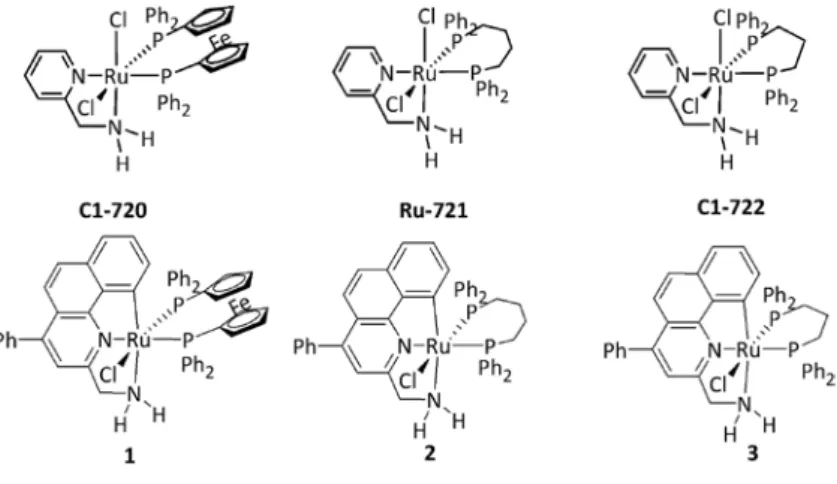
Figure 1: Baratta’s catalyst structures
Figure 1: The hydride transfer mechanism proposed for the formate dehydrogenases reaction - FDH-catalysed formate  oxidation (red arrows) and carbon dioxide reduction (green arrows)
+7

Referências

Documentos relacionados

social assistance. The protection of jobs within some enterprises, cooperatives, forms of economical associations, constitute an efficient social policy, totally different from

Abstract: As in ancient architecture of Greece and Rome there was an interconnection between picturesque and monumental forms of arts, in antique period in the architecture

The present symposium is largely devoted to human iron metabolism: the body's requirements for iron, its absorption from food, the turnover of iron compounds and

As part of an ongoing research program on the synthesis of new nucleoside compounds 15 and on the basis of our experience in the field of the use of a-diazocarbonyl compounds 16

N -halo reagents are widely used in organic synthesis and as a continuation of our interest in the application of N -halo compounds in organic synthesis, dibromo

As a continuation of our studies on the synthesis and biological activity of fused thieno[3,2- d ]pyrimidine derivatives, the goal of this paper is the synthesis and study of

The probability of attending school four our group of interest in this region increased by 6.5 percentage points after the expansion of the Bolsa Família program in 2007 and

Outra grande vantagem da fisioterapia é o facto desta resultar num evidente fortalecimento muscular para os animais. Devido às lesões que apresentam é normal apresentarem-se com