Article
Printed in Brazil - ©2012 Sociedade Brasileira de Química0103 - 5053 $6.00+0.00
A
*e-mail: [email protected], [email protected]
Preparation of Ordered Sulfonated Mesoporous Polymer (OMP-TsOH) from
p
-Toluenesulfonic Acid and Application in Esterification Reaction of Fatty Acids
Arash Shokrolahi,* Abbas Zali, Hamid Reza Pouretedal and Ali Mousaviazar
Chemistry Department, Malek-ashtar University of Technology, Shahin-shahr, P.O. Box 83145-115, I. R. Iran
Polímero sulfonado mesoporoso ordenado foi preparado pela comistura de p-formaldeído, ácido p-toluenosulfônico (p-TsOH) e ácido sulfúrico. Sílicas mesoporosas SBA-15 e/ou MCM-48 foram utilizadas como moldes. Elevadas área superficial específica e densidade ácida dos novos ácidos sólidos foram obtidas no intervalo 900-1400 m2 g-1 e 4,9 mmol g-1, respectivamente. Catalisadores preparados com o molde SBA-15 apresentaram maiores diâmetros de poros, e o uso do molde MCM-48 é devido a maior área superficial específica. As atividades catalíticas dos sólidos ácidos foram estudadas na reação de esterificação do ácido oleico. As taxas iniciais dos ácidos sólidos com os moldes SBA-15 e MCM-48 foram 80-93 e 62-80 µmol min-1, respectivamente. Catalisador com maior diâmetro de poro apresentou maior taxa inicial da reação de esterificação e maior eficiência de conversão do ácido oleico. Consequentemente, o diâmetro de poro exerceu um papel crucial na atividade catalítica.
Sulfonated ordered mesoporous polymer was simply prepared by co-mixing p-formaldehyde,
p-toluenesulfonic acid (p-TsOH) and sulfuric acid. SBA-15 and/or MCM-48 mesoporous silicas were used as templates. High specific surface area and acid density of the novel solid acids were obtained in the range 900-1400 m2 g-1 and of 4.9 mmol g-1, respectively. Catalysts prepared with SBA-15 template presented higher pore diameter, and the use of the MCM-48 template is due to higher specific surface area. The catalytic activities of the solid acids were studied in oleic acid esterification reaction. The initial rates of the solid acids with templates of SBA-15 and MCM-48 were 80-93 and 62-80 µmol min-1, respectively. Catalyst with higher pore diameter showed the higher initial rate of esterification reaction and higher conversion efficiency of oleic acid. Consequently, the pore diameter played a crucial role in catalytic activity.
Keywords: mesoporous polymer, esterification, p-toluenesulfonic acid, SBA-15, MCM-48, solid acid
Introduction
Acids are widely used as catalyst in process of production of more than 1 × 10⁸ mt per year of chemical
materials. The mineral acids such as HF, H2SO4, HClO4 and
HCl are commonly used in the most of process. Although these acids are inexpensive and highly active, their use is wasteful and energy-inefficient, requiring separation, recycling and treatment of waste acid. The solid acids as substituent show many advantages such as simplicity in handling, decrease of reactor and plant, decrease of corrosion effects and environmentally safe disposal.1-4
Although solid acid catalysts present very important roles, there are still drawbacks. For instance, the
specific surface areas of oxides and resins are quite low (< 100 m2 g-1). The specific surface area of zeolites are
larger (> 400 m2 g-1) compared with oxides and resins, but
the facts that micropores in zeolites are relatively small and the major type strongly influence on the mass transfer and conversion of bulky molecules in catalysis.5-7
conditions or prepared by covalent attachment of sulfonic acid-containing aryl radical in a second step.8-29
The porous silicas or zeolites are used for the synthesis of ordered meso- and microporous materials.30-38 The
infiltration of the inorganic template with an appropriate carbon source, the carbonization of precursor and the subsequent removal of inorganic template with HF solutions are used to prepare ordered meso- and microporous carbons.
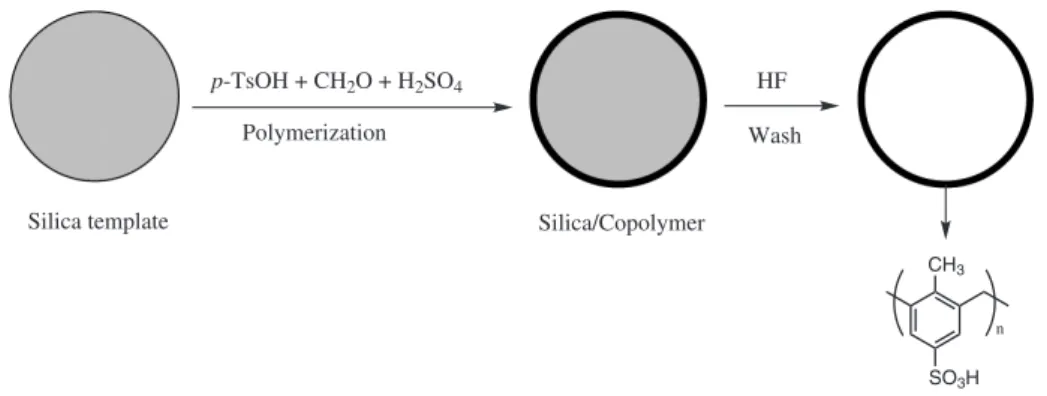
Herein, it is reported a facile and low-danger method to synthesize sulfonic acid-functionalized ordered mesoporous
polymer catalysts by co-mixing p-formaldehyde,
p-toluenesulfonic acid (p-TsOH) and mesoporous silica SBA-15 and/or MCM-48 as a template in a sealed vessel under thermal treatment at 120 °C (Scheme 1). The resulting material was examined as solid acid catalyst in the oleic acid esterification with methanol, and its catalytic performance was compared with other commercial acidic catalysts. The effects of specific surface area and pore size on the catalytic reactivity and the successful reuse of catalysts are demonstrated in this report.
Experimental
General experimental information
Chemical reactants were purchased from Fluka, Merck and Aldrich. Two types of mesoporous silica (MCM-48 and SBA-15) were synthesized according to procedures already described in the literature.39-42 Fourier transform
infrared spectra (FTIR) were recorded on a Nicolet Impact 400D spectrophotometer. Thermogravimetric analyses (TG) were carried out in a Metter TG 50. X-ray diffraction patterns (XRD) were obtained on a Bruker D8 ADVANCE instrument. Scanning electron microscopy (SEM) images were taken on a Philips XL30 and Seron Technology AIS-2100 instruments. Specific surface area and mean pore diameter (dp) were calculated from adsorption isotherms of nitrogen at 77 K using the standard
Brunauer-Emmett-Teller (BET) equation using a NOVA 2200 Multi-Station High Speed Gas Sorption Analyzer version 7.11, Quantachrome Corporation. Elemental analysis was obtained on a Vario EL III instrument.
Synthesis of the catalysts
In a typical synthesis, 0.8 g of p-TsOH, 0.36 g
p-formaldehyde and 0.8 ml sulfuric acid were added to dehydrated mesoporous silica (SBA-15 or MCM-48) in a 30 mL Teflon-sealed vessel, stirred at 80 °C for 24 h and then maintained at 120 °C for 24 h. The product was washed
with boiling distilled water until impurities such as sulfate ions were no longer detected in the wash water. To obtain the polymeric material from the silica/copolymer composite, the silica was removed using aqueous HF solution. 30 mL of 10% aqueous HF solution were added to 1.0 g of the silica/ copolymer composite in a Teflon beaker, and the mixture was allowed to stand for 24 h at room temperature. The supernatant solution containing silica was removed, and the black precipitate was repeatedly washed with distilled water until F−
was no longer detected in the wash water to get a pure material of ordered sulfonated mesoporous polymer. The ordered sulfonated mesoporous polymer samples were designated as OMP-TsOH-x, where x indicates the batch number (Table 1). The structural properties of the samples are summarized in Tables 2 and 3.
Table 1. Copolymer/silica composite conditions
Sample Weight ratio of copolymer to
mesoporous silica / % (m/m) Support
OMP-TsOH-1 14.9 SBA-15
OMP-TsOH-2 20.3 SBA-15
OMP-TsOH-3 30.1 SBA-15
OMP-TsOH-4 41.0 SBA-15
OMP-TsOH-5 15.1 MCM-48
OMP-TsOH-6 20.1 MCM-48
OMP-TsOH-7 31.0 MCM-48
OMP-TsOH-8 41.2 MCM-48
p-TsOH + CH2O + H2SO4
Polymerization
HF
Wash
Silica template
CH3
SO3H
Silica/Copolymer
n
Acid-catalyzed reaction
Catalytic esterification of oleic acid (C17H33COOH,
0.025 mol) with methanol (0.25 mol) was performed under N2 atmosphere at 80 °C. Prior to reaction, tested catalysts
except sulfuric acid evacuated at 100 °C for 1 h to remove
adsorbed water. The amount of acid catalyst in reaction was always 1 mmol H+. The liquid phase was analyzed by a gas
chromatograph-mass spectrometer (Agilent, 5975C) during reaction.
The reactions were carried out in a 50 mL three-neck round bottom glass flask with a reflux condenser to minimize methanol losses. The flask submerged in an oil bath was placed on a temperature-controlled magnetic stirring hotplate. The reaction temperature was monitored by thermocouple as well as mercury thermometer, and held within ± 1 °C.
Results and Discussion
The density of prepared acid (OMP-TsOH-x) was
determined using 0.01 mol L-1 NaOH as titrant in an
acid-base potentiometric titration and the result obtained
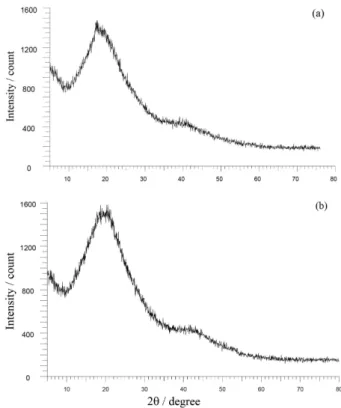
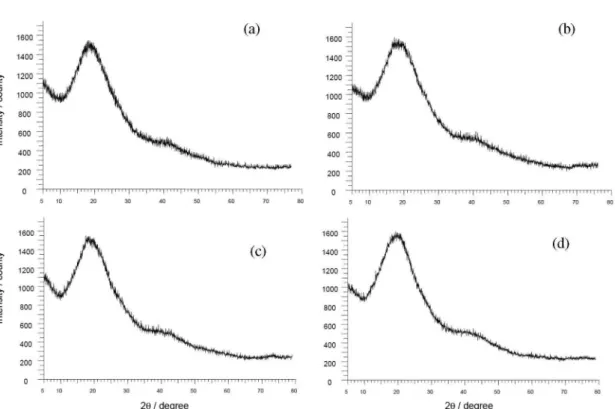
was 4.9 mmol g-1. The X-ray diffraction data for
OMP-TsOH-3 and OMP-TsOH-7 exhibited two broad and weak peaks at 2θ / 10-30° and 35-45° that were attributed
to the amorphous structure (Figures 1a and 1b).
Figure 2 shows the SEM images of SBA-15, OMP-TsOH-3, MCM-48, OMP-TsOH-7. There is no
significant difference between the surface morphology of mesoporous silica (SBA-15 or MCM-48) and OMP-TsOH-3 and/or OMP-TsOH-7.
The IR spectra of OMP-TsOH-3 and p-TsOH are
compared in Figures 3a and 3b. The results show that the differences between them are not obvious.
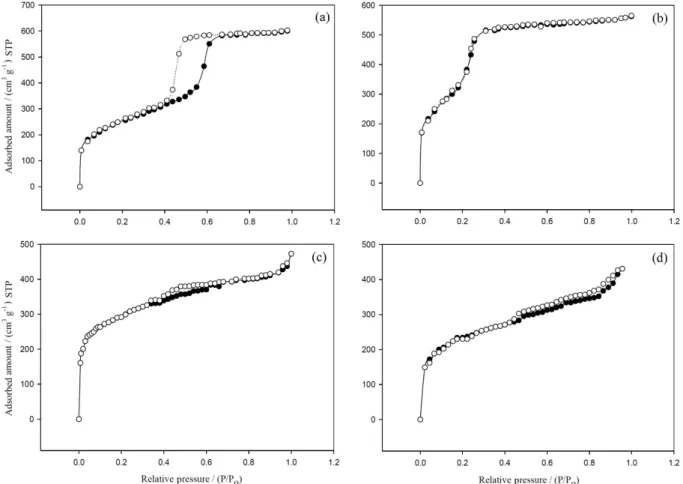
Figure 4 shows the nitrogen adsorption-desorption isotherms of SBA-15, MCM-48, OMP-TsOH-3 and OMP-TsOH-7. The isotherms of OMP-TsOH-3 and OMP-TsOH-7 are of type IV according to the IUPAC classification and exhibit a H1 hysteresis loop.
The thermal stabilities of OMP-TsOH-3 and OMP-TsOH-7 were examined by thermogravimetric analysis (Figure 5). After an initial weight loss due to evaporation of absorbed water, the decomposition reaction started at around 200 °C. An approximate similar decomposition process was observed for all other samples.
Evaluation of OMP-TsOH-x
The catalytic performance of OMP-TsOH-x was
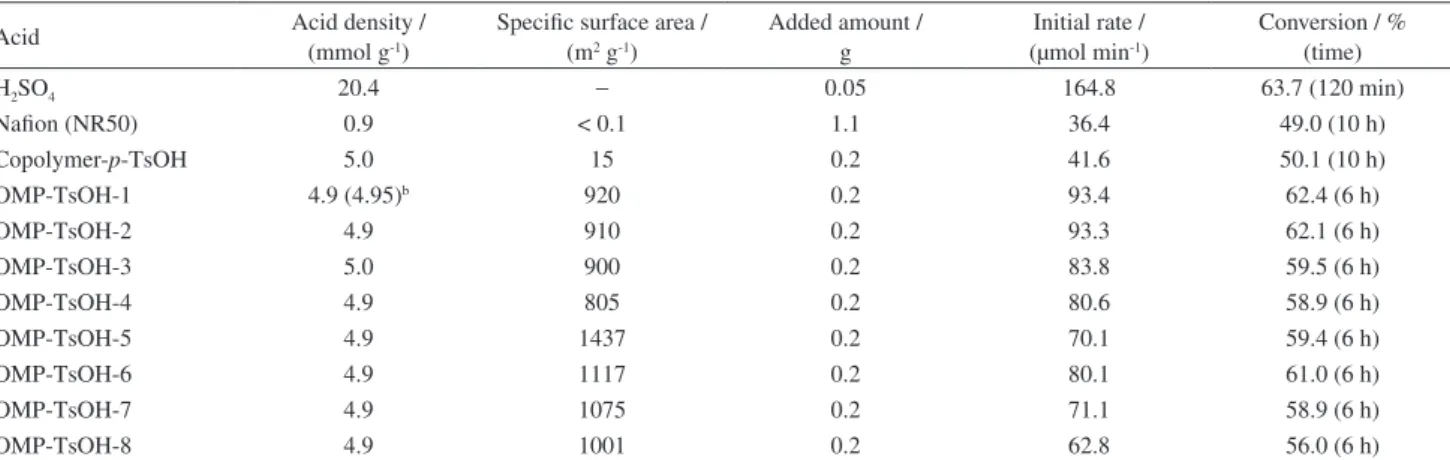
demonstrated through the oleic acid esterification with methanol. The efficiency of oleic acid esterification was measured at 80 °C over OMP-TsOH-x, protonated Nafion (NR50), copolymer p-TsOH43 and concentrated sulfuric
acid. In the absence of acid catalyst, the conversion of oleic acid was only 5.15% in 10 h. The specific surface areas, acid densities, added amount of catalyst Table 2. Structural characteristics of the ordered sulfonated mesoporous
polymer obtained by silica removal from copolymer/SBA-15 composites
Sample Specific surface area / (m2 g-1)
Pore-volume / (cm3 g-1)
Pore diameter / nm
SBA-15 935 1.2 8.3
OMP-TsOH-1 920 0.8 8.1
OMP-TsOH-2 910 0.7 8.1
OMP-TsOH-3 900 0.7 7.2
OMP-TsOH-4 805 0.6 6.9
Table 3. Structural characteristics of the ordered sulfonated mesoporous polymer obtained by silica removal from copolymer/MCM-48 composite
Sample Specific surface area / (m2 g-1)
Pore volume / (cm3 g-1)
Pore diameter / nm
MCM-48 1465 1.0 2.6
OMP-TsOH-5 1437 0.6 1.9
OMP-TsOH-6 1117 0.5 2.5
OMP-TsOH-7 1075 0.3 2.2
OMP-TsOH-8 1001 0.3 1.9
Figure 3. The IR spectra of (a) OMP-TsOH-3 and (b) p-TsOH.
Figure 2. SEM images of (a) SBA15, (b) OMP-TsOH-3, (c) MCM-48 and (d) OMP-TsOH-7.
(H+ = 1 mmol), initial rate of methyl oleate formation are
summarized in Table 4.
It is evident from Table 4 that the H2SO4 homogeneous
catalyst shows the highest activity with a conversion of more than 60% in less than 120 min and initial rate of 164.8 µmol min-1. Among heterogeneous catalysts, the
prepared sulfonated mesoporous polymer (OMP-TsOH-x) with initial rate of 62.75-93.4 µmol min-1 presented a higher
catalytic activity in methyl oleate formation reaction. The higher catalytic activity of OMP-TsOH-x is due to the high specific surface area, high acid site density, high density of pores (which provide good access to the SO3H groups on
the surface) and hydrophobicity.
OMP-TsOH-x (x = 1-4) with mean initial rate value of 87.8 µmol min-1 of the esterification reaction presented
the higher activity in comparison with OMP-TsOH-x (x = 5-8, mean initial rate of 71.0 µmol min-1). The
calculated average pore diameters of OMP-TsOH-x with
x = 1-4 and OMP-TsOH-x with x = 5-8 were 7.6 and 2.1 nm, respectively.
The pore diameter increase of the OMP-TsOH-x
Figure 4. The nitrogen adsorption-desorption isotherms of (a) SBA-15, (b) MCM-48, (c) OMP-TsOH-3 and (d) OMP-TsOH-7.
Figure 5. Thermogravimetric curves of OMP-TsOH-3 and OMP-TsOH-7.
fundamental characteristic in the oleic acid conversion rate. The increase of catalytic activity is due to the large pore size, aiding the swift diffusion of large organic molecules to the active sites.5-7
These results are confirmed by comparing the data of OMP-TsOH-x (x = 5-8) (Tables 3 and 4). OMP-TsOH-6 with the highest pore diameter (2.5 nm) presented the highest initial rate of 80.1 µmol min-1 among the catalysts
with MCM-48 template. The calculated pore diameter
of OMP-TsOH-5 and OMP-TsOH-8 was 1.9 nm, but OMP-TsOH-5 with higher specific surface area showed higher initial rate (70.1 vs. 62.8 µmol min-1). Thus, the
specific surface area of the template plays as second role in the determining of the initial rate and conversion yield.
However, in the case of OMP-TsOH-x (x = 1-4)
catalysts, the initial rate and conversion yield decreased with the reduction of the specific surface area and pore diameter. The obtained results are summarized in Figures 6 and 7. As observed, OMP-TsOH-x (x = 1-4) catalysts with the higher pore diameter but lower specific surface areas showed higher initial rate in comparison with OMP-TsOH-x (x = 5-8) catalysts. With equal pore diameter, a higher specific surface area produced a higher initial rate.
To check the reusability and recyclability of the catalyst (OMP-TsOH-1), it was carried out the oleic acid esterification under similar reaction conditions. The catalyst was separated by filtration after completion of the reaction. It was also dried and used for subsequent experiments after adding fresh substrate under similar reaction conditions. For three catalytic cycles, the initial rate values of methyl oleate formation were 92.8, 90.6 and 92.0 µmol min-1.
Figure 6. The dependence of the initial rate to the specific surface area and pore diameter of SBA-15 support.
Figure 7. The dependence of initial rate to specific surface area and pore diameter of MCM-48 support.
Table 4. The specific surface areas, acid densities, added amount of catalyst, initial rate of methyl oleate formation catalyzed by different acidsa
Acid Acid density /
(mmol g-1)
Specific surface area / (m2 g-1)
Added amount / g
Initial rate / (µmol min-1)
Conversion / % (time)
H2SO4 20.4 − 0.05 164.8 63.7 (120 min)
Nafion (NR50) 0.9 < 0.1 1.1 36.4 49.0 (10 h)
Copolymer-p-TsOH 5.0 15 0.2 41.6 50.1 (10 h)
OMP-TsOH-1 4.9 (4.95)b 920 0.2 93.4 62.4 (6 h)
OMP-TsOH-2 4.9 910 0.2 93.3 62.1 (6 h)
OMP-TsOH-3 5.0 900 0.2 83.8 59.5 (6 h)
OMP-TsOH-4 4.9 805 0.2 80.6 58.9 (6 h)
OMP-TsOH-5 4.9 1437 0.2 70.1 59.4 (6 h)
OMP-TsOH-6 4.9 1117 0.2 80.1 61.0 (6 h)
OMP-TsOH-7 4.9 1075 0.2 71.1 58.9 (6 h)
OMP-TsOH-8 4.9 1001 0.2 62.8 56.0 (6 h)
aReaction condition: acid-catalyzed (H+ = 1 mmol) oleic acid esterification (25 mmol) with methanol (250 mmol) at 353 K; bthe density of SO
3H group of
OMP-TsOH-1was determined on the base of elemental analysis (CH1.13O0.34S0.11).
comparable yields of the methyl oleate in subsequent recycle experiments.
Conclusions
A simple procedure was introduced to prepare of sulfonic acid-functionalized ordered mesoporous polymer catalysts. The specific surface area and pore diameter parameters of the mesoporous polymer catalysts determined the catalytic activity. The pore diameter of the templates showed more importance in the determination of catalytic activity. Moreover, the pore size also showed to be an important parameter for a porous material in a catalytic application to esterification of fatty acids because this process involves large organic molecules.
Supplementary Information
Supplementary data are available free of charge at http://jbcs.sbq.org.br as PDF file.
References
1. Corma, A.; Chem. Rev.1995, 95, 559.
2. Corma, A.; Curr. Opin. Solid State Mater. Sci. 1997, 2, 63.
3. Corma, A.; Garcia, H.; Catal. Today1997, 38, 257. 4. Okuhara, T.; Chem. Rev.2002, 102, 3641.
5. Corma, A.; Chem. Rev.1997, 97, 2373.
6. Tao, Y.; Kanoh, H.; Abrams, L.; Kaneko, K.; Chem. Rev.2006,
106, 896.
7. Davis, M. E.; Nature2002, 417, 813.
8. Johnson, S. A.; Ollivier, P. J.; Mallouk, T. E.; Science1999,
283, 963.
9. Wainer, M.; Marcoux, L.; Kleitz, F.; J. Mater. Sci.2009, 44, 6538.
10. Liu, Y.; J. Porous Mater.2011, 18, 597.
11. Kim, J. Y.; Yoon, S. B.; Koolib, F.;Yu, J.-S.; J. Mater. Chem. 2001, 11, 2912.
12. Jang, J.; Bae, J.; Chem. Commun.2005, 1200.
14. Marsh, H.; Rodriguez-Reinoso, F.; Activated Carbon; Elsevier Science & Technology Books, 2006.
15. Sun, R. Q.; Sun, L. B.; Chun, Y.; Xu, Q. H.; Carbon2008, 46, 1757.
16. Miller, T. C.; Holcombe, J. A.; Anal. Chim. Acta2002, 455, 233.
17. Thomas, K. M.; Catal. Today2007, 120, 389.
18. Nakagawa, Y.; Molina-Sabio, M.; Rodriguez-Reinoso, F.;
Microp. Mesop. Mater. 2007, 103, 29.
19. Caiazzo, A.; Dalili, S.; Picard, C.; Sasaki, M.; Siu, T.; Yudin, A. K.; Pure Appl. Chem.2004, 76, 603.
20. Blanco, J.; Petre, A. L.; Yates, M.; Martin, M. P.; Suarez, S.; Martin, J. A.; Adv. Mater.2006, 18, 1162.
21. Xu, C.; Liu, Y.; Yuan, D.; Int. J. Electrochem. Sci.2007, 2, 674. 22. Kudo, S.; Maki, T.; Miura, K.; Mae, K.; Carbon2010, 48, 1186. 23. Shen, W.; Li, Z.; Liu, Y.; Recent Pat. Chem. Eng.2008, 1, 27. 24. Machnikowski, J.; Grzyb, B.; Machnikowska, H.; Weber, J. V.;
Microp. Mesop. Mater.2005, 82, 113.
25. Olivares-Marín, M.; Fernández-González, G. C.; Macías-García A.; Gómez-Serrano, V.; Appl. Surf. Sci.2006, 252, 5967. 26. Kitano, M.; Arai, K.; Kodama, A.; Kousaka, T.; Nakajima, K.;
Hayashi, S.; Hara, M.; Catal. Lett.2009, 131, 242.
27. Lee, J. B.; Park, Y. K.; Yang, O.; Kanga, Y.; Jun, K.; Lee, Y. J.; Kima, H. Y.; Lee K. H.; Choi, W. C.; J. Power Sources2006,
158, 1251.
28. Shu, Q.; Gao, J.; Nawaz, Z.; Liao, Y.; Wang, D.; Wang, J.; Appl. Energy2010, 87, 2589.
29. Mirza-Aghayan, M.; Boukherroub, R.; Bolourtchian, M.; Hosseini, M.; Tetrahedron Lett.2003, 44, 4579.
30. Lee, J. S.; Joo, S. H.; Ryoo, R.; J. Am. Chem. Soc.2002, 124, 1156.
31. Jun, S.; Joo, S. H.; Ryoo, R.; Kruk, M.; Jaroniec, M.; Liu, Z.; Ohsuna, T.; Terasaki, O.; J. Am. Chem. Soc.2000, 122, 10712. 32. Kiotani, T.; Nagai, T.; Inoue, S.; Tomita, A.; Chem. Mater.1997,
9, 609.
33. Barata-Rodrigues, P. M.; Mays, T. J.; Moggridge, G. D.; Carbon 2003, 41, 2231.
34. Darmstadt, H.; Roy, C.; Kaliaguine, S.; Choi, S. J.; Ryoo, R.;
Carbon2002, 40, 2673.
35. Joo, S. H.; Jun, S.; Ryoo, R.; Microp. Mesop. Mater. 2001,
44-45, 153.
36. Kim, J.; Lee J.; Hyeon, T.; Carbon2004, 42, 2711. 37. Fuertes, A. B.; Alvarez, S.; Carbon2004, 42, 3049.
38. Fuertes, A. B.; Nevskaia, D. M.; Microp. Mesop. Mater.2003,
62, 177.
39. Bandyopadhyay, M.; Gies, H. C. R.; Chimie2005, 8, 621. 40. Gies, H.; Grabowski, S.; Bandyopadhyay, M.; Tkachenko, O.
P.; Klementiev, K.; Grünert, W.; Birkner, A.; Microp. Mesop. Mater.2003, 60, 31.
41. Zhao, D.; Feng, J.; Huo, Q.; Melosh, N.; Fredrickson, H. G.; Chmelka, B. F.; Stucky, G. D.; Science1998, 279, 548. 42. Zhao, D.; Huo, Q.; Freng, J.; Chmelka, B. F.; Stucky, G. D.;
J. Am. Chem. Soc.1998, 120, 6024.
43. Liang, X.; Gao, S.; Gong, G.; Wang, Y.; Yang, J. G.; Catal. Lett. 2008, 124, 352.
Submitted: March 14, 2012
Supplementary Information
Printed in Brazil - ©2012 Sociedade Brasileira de Química0103 - 5053 $6.00+0.00S
I
*e-mail: [email protected], [email protected]
Preparation of Ordered Sulfonated Mesoporous Polymer (OMP-TsOH) from
p
-Toluenesulfonic Acid and Application in Esterification Reaction of Fatty Acids
Arash Shokrolahi,* Abbas Zali, Hamid Reza Pouretedal and Ali Mousaviazar
Chemistry Department, Malek-ashtar University of Technology, Shahin-shahr, P.O. Box 83145-115, I. R. Iran
Figure S4. Thermogravimetric curves of (a) OMP-TsOH-1, (b) OMP-TsOH-2, (c) OMP-TsOH-4, (d) OMP-TsOH-5, (e) OMP-TsOH-6 and (f) OMP-TsOH-8.