BABIES’ PORTAL WEBSITE – HEARING AID SECTION:
HEARING IMPAIRED CHILDREN PARENTS’ ASSESSMENT
Portal dos bebês – seção aparelho auditivo: avaliação por pais
de crianças deicientes auditivas
Bárbara Guimarães Bastos (1), Deborah Viviane Ferrari (2)
(1) Speech-Language Pathology and Audiology Program, School of Dentistry, University of Sao Paulo – FOB/USP, Bauru, SP, Brazil.
(2) Department of Speech-Language Pathology and Audio-logy, Bauru School of Dentistry, University of Sao Paulo, Bauru/SP, Brazil.
Study carried on the Department of Speech-Language Patho-logy and AudioPatho-logy, School of Dentistry of Bauru, University of São Paulo.
Source: FAPESP (process number: 2008/07963-0) Conlict of interest: non-existent
effective use of hearing aids by the child, not to perform the daily HA care and do not take precau-tions in case of malfunction 1.
The dificulty of retaining or no understanding of the information is the result, among other factors, of the technical speech employed by many profes-sionals 2 and the emotional reactions of parents facing the diagnosis of hearing loss and hearing aid itting 3. During the period covered by the audiological diagnosis and early itting of HA, parents need time to assimilate information and react emotionally to them. If too much technical information is offered at this time, most parents will not be able to process it 2.
For parents or caregivers understand the infor-mation offered is necessary that such inforinfor-mation is clear, easy to access and provided in a systematic form 4,5. Verbal information must be supplemented with educational materials, elaborated in a simple and accessible language, which should be provided for parents to access it after appointments, thus respecting the time to assimilate the content 6.
INTRODUCTION
The responsibility for decisions about the use and care during daily routine and resolution of problems in the functioning of the hearing aid (HA) in infants and children is, ultimately, within the family. Thus, these individuals must be properly oriented to ensure proper use of HA.
Professionals often report that parents do not remember or did not properly understand the daily guidelines offered and, consequently, do not ensure
ABSTRACT
Purpose: to verify the self-assessment of knowledge of parents of hearing impaired children regarding hearing aids (HA) and earmolds and how the content of the “Babies´Portal – Hearing Section” website supported the understanding of such information. Methods: 22 parents (six men and 16 women, mean age 32,6 years) completed an anonymous online form available on the website with 36 questions about demographics, internet use and the guidance provided at the time of HA itting. Also answered questions about the quality of website content. Results: on the itting of hearing aids informational materials were provided only for 52,4% of parents, however, they were satisied with the orientation. On average the helped provided by the website content was 86%. The score for satisfaction with the content and the website was related to the child’s age, duration of use of hearing aids and prior knowledge of parents about the topics on the hearing aid and ear mold. Conclusion: preliminary results indicate that the “Babies’ Portal” is an instrument that can help parents of hearing impaired children in the understanding of the guidance given at the time of HA itting. The continuity of the study with a larger number of participants is required.
Loss, Parents, Friends and Users of Cochlear Implant of Bauru (ADAP) also sent a mail with the brochure to publicize “Babies’ Portal” for their members.
The invitation contained an explanation of the study’s purpose and the address to access and browse the website, as well as the link to “Rate this website”. In this link the Consent Form (CF) and the online evaluation form were included.
During the data collection period, 39 parents accessed the link “Rate this site” from “Babies’ Portal”. Out of these, 17 subjects were excluded due to not fulilling the information in the evaluation questionnaire. After accepted the CF, 22 subjects (six men and 16 women) aged from 17 to 62 years (mean=32.6 years), parents of children with unilateral sensorineural hearing loss (n=1; 4.5%) and bilateral sensorineural hearing loss (n = 21; 95.5%), with mild (n=1;4.5%), moderate (n= 5;22.7%), severe (n=1;4 5%) and profound (n=15;68.2%) degree.
With regard to education, the participants had completed elementary school (n=3;13.6%) and incomplete (n=1;4.6%), completed high school (n=5;22.7%), university graduates (n=5;22.7%) and incomplete (n=7;31.8%) and master’s (n=1;4.6%).
Regarding the participants region of residence, they were divided into: Southeast (n=15;68.2%), South (n=3;13.6%), North (n=2;9.1%), Northeast (n=1;4.5%) and Midwest (n=1;4.5%). For data analysis, the participants of the North, Northeast and Midwest regions were grouped, forming the region NNC (n=4;18.2%). Twelve participants (54.5%) underwent the treatment of children in Bauru/Sao Paulo, six (27.3%) in Sorocaba/Sao Paulo and four (18.2%) in other cities (Campinas, Alfenas, Sao Mateus and Sao Paulo).
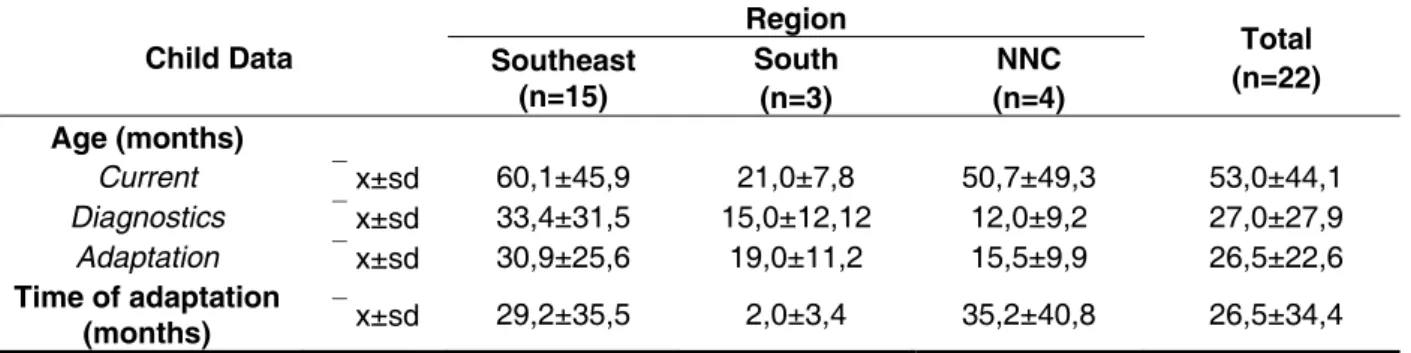
Table 1 shows the data of child’s age at the time of data collection, the age at audiological diagnosis and adaptation of hearing aids.
The “Hearing Aid” section on the “Babies’ Portal” website (http://portaldosbebes.fob.usp.br) was created to provide parents and caregivers of hearing impaired children who are zero to three years old, convenient access and daily guidelines regarding the use and care of hearing aids (HA) and earmold, as well as the resolution of main problems encoun-tered during the use of hearing aids. This website can be used as a tool to assist parents counseling.
The aim of this work was to verify the self-assessment of knowledge of parents of hearing impaired children about Hearing Aids and earmolds and how the “Babies’ Portal – Hearing Aid Section” assists them to understanding those information.
METHODS
Sectional study, carried on the Speech Pathology and Audiology Department of Bauru’s Dentistry Faculty, São Paulo University, after review and approval of institution’s Research Ethics Committee (Process number 009/2009).
According to Brazilian Regulation SAS 587 7 children below three years of age are cared for in hearing health services of high complexity. A survey conducted in May 2010 indicated the existence of 79 services of this nature accredited by Health Ministry 8. Such services were contacted in order to inform the purpose of the study and obtain authorization for sending the invitation by post. Professionals and responsible technicians were asked to distribute these invitations to parents of hearing impaired children.
Part 4 (questions 23 to 30)
Questions about the content of “Babies’ Portal”. Initially (question 23) parents performed the self-assessment of their knowledge of HA before accessing the “Babies’ Portal”, through a ive-point Likert scale ranging from “very poor” to “very good”.
Example: “Before visiting the website “Babies’ Portal – Hearing Aid Section”, how would you rate your general knowledge:
( ) Very poor ( ) poor ( ) satisfactory ( ) good ( ) very good”
Questions 24 to 30 consisted of evaluation of parents or caregivers about how the website helped in relation to their prior knowledge, improving under-standing of a particular content on HA. The covered subjects were: general knowledge about hearing aid, hearing aid functioning, what is hearing aid, different types and technologies, HA and earmolds use and care, HA troubleshooting, and how to create an user routine of hearing aids.
Example: “Comparing to your prior knowledge, how the website helped you for understanding the functionality of the hearing aid?
( ) Did not help ( ) helped somewhat ( ) helped ( ) helped a lot
( ) not accessed this part”
In questions 24 to 30 the scores were assigned to each response option, ranging from an one point (“not helpful”) to four points (“helped a lot”). The “not accessed this part” was not scored or included in the analysis. For this part of the form, total score was calculated based on total points obtained by the parents and total of possible points. The possible score was equal to the number of Participants were asked to access and navigate
the “Babies’ Portal” website – “Hearing Aid” section and afterwards anonymously ill out an online evalu -ation form, composed of ive parts, detailed below.
Part 1 (Question 1)
Consisted of information regarding the question-naire and the consent form, with two response options: “I do not want to participate” (the user was directed to a thank you page, without access to the evaluation form) and “I want to participate” (the individual was directed to the evaluation questionnaire).
Part 2 (Questions 2 to 18)
Questions related to data such as demographics (age, sex, region of residence), the internet use and information about childs’ age and hearing loss. Six questions were opened, four were half closed and two were closed.
Part 3 (Questions 19 to 22)
Questions about the information offered on the day that the HA was adapted in children. Question 22 was open and allowed the identiication of materials received at the time of hearing aid itting, if this had occurred.
Example: “Considering the day that the child received the hearing aid, how do you judge your satisfaction with the amount of time used by the professional for you to pass the guidelines for use and care of the HA? ( ) Very unhappy ( ) Dissatisied
( ) neither satisied nor dissatisied (neutral) ( ) happy ( ) very satisied”
Child Data
Region
Total (n=22) Southeast
(n=15)
South (n=3)
NNC (n=4) Age (months)
Current x±sd 60,1±45,9 21,0±7,8 50,7±49,3 53,0±44,1
Diagnostics x±sd 33,4±31,5 15,0±12,12 12,0±9,2 27,0±27,9
Adaptation x±sd 30,9±25,6 19,0±11,2 15,5±9,9 26,5±22,6
Time of adaptation
(months) x±sd 29,2±35,5 2,0±3,4 35,2±40,8 26,5±34,4
Table 1 – Age of the child at the time of data collection (current), at the time of audiological diagnosis and adaptation session of hearing aids and time of adaptation of the devices, by country region (n=22)
Question 35, participants were asked if they would indicate the “Babies’ Portal” to other parents of hearing impaired children, being able to select “yes” or “no”.
At the end of the form, it was provided a space for participants to make comments or suggestions they deemed relevant.
The responses regarding satisfaction with the guidance received at the time of itting of HA were analyzed using descriptive statistics.
The nonparametric Mann-Whitney test was used to verify the difference between self-assessment of prior knowledge about hearing aids among those receiving materials at the time of counseling and those who did not.
The correlation (Spearman) between the evalu-ation of the content and satisfaction with the website with prior knowledge about the HA was veriied.
The Friedman test was used to analyze differ-ences in evaluations of participants on how the website helped them to improve understanding of a particular content about hearing aids and/or earmold.
In all cases, the signiicance level was 5%.
RESULTS
The time for completing the evaluation form varied from 12 minutes to 1 hour and 56 minutes (average=47.1 minutes; SD ± 35.5). Data regarding the frequency of internet use, location of access and internet speed were obtained (Table 2 and 3). questions answered multiplied by four points. Thus,
total possible score was also given to a particular questionnaire completion.
Final score was given by total points obtained divided by total possible score. In order to obtain a percentage this result was multiplied by 100.
Total Obtained Score
x 100 = Final Percentage Total Possible Score
For example: 24
x 100 = 85.7% 28
Part 5 (Questions 31 to 35)
Questions 31 and 32 were multiple choices and the participant asked to choose a response within ive alternatives. Question 31 was about how the tips provided on the website would increase the use of hearing aids by the child and the alternatives ranged from “not at all” (one point) to “very much” (ive points). Question 32 concerned the overall satisfaction with the website and the response options ranged from “very dissatisied” (one point) to “very satisied” (ive points).
Question 33 was open and asked parents to pointed three main dificulties they encountered with hearing aids for their children before accessing the website. Question 34 (multiple choice) asked participants to choose among four alternatives ranging from “not at all” (one point) to “very helpful” (four points), how the website helped clarify the difi -culties listed in question 33.
Regions
Frequency of internet use Local of internet use
Often (several times a day)
Occasionally and usually (several times,
or once or twice a week)
Almost never (less than
once a month)
Home Work Other
n(%) n(%) n(%) n(%) n(%) n(%)
Southeas t (n=15)
6(40%) 3(20%) 6(40%) 7(46,6%) 4(26,7%) 4(26,7%)
South
(n=3) 1(33,3%) 1(33,3%) 1(33,3%) 1(33,3%) 0 2(66,4%)
NNC
(n=4) 2(50%) 1(25%) 1(25%) 4(100%) 0 0
Total
(n=22) 9(40,9%) 5(22,7%) 8(36,4%) 12(54,5%) 4(18,2%) 6(27,3%)
Table 2 – Frequency and local of internet access used by parents and caregivers, by country region (n=22)
the professional on the itting session of hearing aids for their children. All participants reported feeling comfortable to ask questions of the professional on the day of the hearing aid itting.
It is noteworthy that a participant did not answer questions 24 to 36 of the form, so some analysis showed a total of 21 participants. Table 4 shows the perception of parents regarding the time available for guidance and clarity of information provided by
Regions Broadband Internet Velocity Dial-up internet Not inform Not access
n % n % n % n %
Southeast
(n=15) 9 60 1 6,7 4 26,6 1 6,7
South
(n=3) 2 66,7 0 0 1 33,3 0 0
NNC
(n=4) 1 25 1 25 2 50 0 0
Total
(n=22) 12 54,5 2 9,1 7 31,8 1 4,5
Table 3 – Internet velocity used by parents and caregivers, by country region (n=22)
Legend: NNC: North, Northeast and Midwest
Table 4 – Assessment of participant satisfaction (0 to 5) with respect to the time available for guidance
and clarity of the information provided at the time of hearing aid itting, according to the region (n=21)
Region
Satisfaction attendance
Time Available Clarity of the information
x sd min max md x dp min max md
Southeast
(n=14) 4,1 1,26 1 5 4,5 4,1 1,26 1 5 4,5
South
(n=3) 4,3 0,57 4 5 4 3,3 2,08 1 5 4
NNC
(n=4) 4,5 0,57 4 5 4,5 4,5 0,57 4 5 4,5
Total
(n=21) 4,1 1,07 1 5 4 4,0 1,28 1 5 4
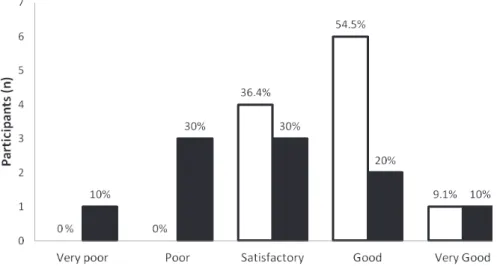
this device. Figure 1 shows the self-assessment of parents on the prior knowledge related to hearing aid topics, considering the receipt or not informative material (question 23).
Only eleven participants (52.4%) received infor-mational materials on the itting session of hearing aids, which are HA manufacturers’ manuals and booklets containing information on use and care of
Figure 1 – Distribution of participants who received and did not receive information material, as the self-assessment of prior knowledge about the hearing aids (n = 21)
The Mann-Whitney test revealed statistically signiicant differences between groups (z=2.60 and p=0.00*) who received and did not receive informational materials on the itting session for self-assessment of prior knowledge about HA.
Table 5 shows the scores given by the partici-pants on how the website helped in improving the understanding of different topics on a hearing aid. A maximum of four points can be obtained for each item.
Table 5 – Descriptive analysis of the scores on how the website helped in improving the understanding of different topics on hearing aids
Content All participants
Group for statics analyses (n=15)
x sd x sd
HA Functioning (n=20) 3,4 0,59 3,5 0,51
General Knowledge about HA (n=19) 3,3 0,68 3,4 0,51
HA technologies (n=19) 3,5 0,61 3,5 0,63
Different types of HA (n=18) 3,5 0,51 3,5 0,51 HA and earmolds care (n=19) 3,2 0,85 3,4 0,63
HA troubleshooting (n=20) 3,1 0,58 3,2 0,59
How to create a use routine of HA (n=18) 3,4 0,70 3,6 0,50
Total % (n=21) 84,0 12,11 86,9 10,42
There was a negative signiicant correlation (Spearman) (rho=-0.55, p=0.01*) between prior knowledge about the hearing aids with the total score given to the content of the website. No corre-lation was found between previous knowledge about the topics on hearing aids and satisfaction with the website (rho=-0.14, p=0.52).
Table 6 shows the main dificulties pointed out by the parents regarding the use of hearing aids in children.
For the statistical analysis with the Friedman test included, only 15 participants who accessed and rated all seven contents indicated on the assessment form. The mean scores of the items were compared with no signiicant differences found between them (χ2=6.70; p=0.34).
Regarding to satisfaction with the website, parents reported being very satisied (n=11; 52.4%), satisied (n=5; 23.8 %), neutral (n=1; 4.8%), dissatisied (n=1; 4.8%) and very dissatisied (n=3; 14.2%).
Difficulties %
Habituation of the child with the use of HA 21,4
Use and care of HA 14,3
Limitation use of HA in some activities (e.g. swimming) 14,3
Fixation of HA on ears 14.3
Time daily use of HA 14.3
Stigma of HA 10.7
Earmolds confection 7.1
Acceptance of hearing loss 3.6
Table 6 – Major problems listed by parents regarding the use of hearing aids in children (n=21)
Out of the 19 respondents to the question on the recommendation of access to the website, 100% reported that would indicate the website for other parents of hearing impaired children using hearing aid.
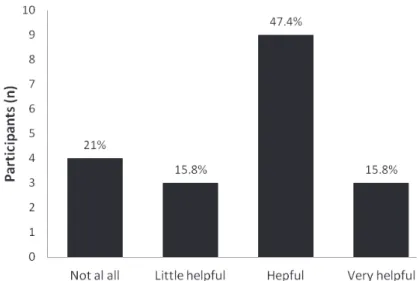
Figure 2 shows the opinion of parents as the website has helped to clarify the dificulties listed in Table 6.
Eleven participants (50%) submitted comments, of which four were excluded as they dealt with matters unrelated to website purposes. The other seven comments were grouped into categories (Figure 3).
Figure 2 – Parents’ opinions of how the website helped them to remedy the dificulties regarding the
Content
"I would like to receive information on technological advances and also on forms of therapies related to age and level of understanding of my son" "Adding tips for children on the stage of adolescence dealing with questions (...)."
Structure "The link to parents and caregivers assess the portal is misconfigured, appearing only ‘pa’ in the end of the page."
Public
"Need for more information regarding the type of treatment for physicians." "At the moment the site has not contributed much because I already have a great experience with the devices in the routine, the child uses for 6 years. I believe that the site helps those just starting this process; it is a tool to help solving the problems that arise. "
"The site has a greater outreach to help mothers who have just discovered that the child does not listen, because the beginning of treatment is more difficult."
Relevance "I can only thank all information on the site that served as a great help both for me and for my son."
Figure 3 – Parents and caregivers comments
DISCUSSION
Firstly it is necessary to clarify that, considering the universe of children attended, especially in Brazilian Health System, it was expected that approximately 100 parents or caregivers participate in the study. However, despite the efforts of disclosure, there was a low uptake of this population, which limits the discussion of the results of this study.
The literature 9 reports adherence rates of 25% of respondents in online surveys and questionnaires applied via email. Another factor affecting adherence in online surveys is the length of the questionnaire to be answered, very long questionnaires lead to lack of interest by the potential participant 10. The form used for parents contained 36 questions and this may also have contributed to poor adherence parental participation in research.
Some professionals who worked in the hearing care services of high complexity contacted the researcher reporting that although parents and caregivers have accessed the website, they did not answer the questionnaire due to the lack of time and limited internet access. In other cases, these professionals reported that the current treatment of the child (for example, children who were reviewed for indication of cochlear implant) impacted the emotional state of parents who, therefore, were not motivated to participate.
The participants felt comfortable to ask questions of the professional at the time of hearing aid itting in children and were satisied with the time available and clarity of the information provided (Table 4). Regarding to the clarity of information, participants in the Southern region were less satisied than those in other regions, however this analysis becomes
limited in the number of patients in this group. Also due to the number of participants, it was not possible to apply these inductive statistical data. Made the exception in relation to sample size, the results of this study were more favorable than those reported in the literature 4,5, 11-13.
Only eleven participants (52.4%) received infor-mation material at the time of HA itting. Although the quality of structure, design, layout and compre-hensiveness of content may vary, all manufacturers of hearing aids provide a manual that come with the device. Thus, most likely the unavailability of material is not the factor that led to these results. This inding is of concern given the low rates of information’s retention reported for adults 14 and for parents of hearing impaired children 15. Parents and caregivers need the provision of written materials for later review, 5,12 having access to information more conveniently and how often they need 11.
Parents who received informational materials on the HA itting session self rated their knowledge about these devices, prior access to “Babies’ Portal” more favorably than those who received no material (Figure 1). This may have occurred because of the informative materials, even as simple as a brochure or folder, increase the retention rate of information, facilitating learning 16.
already had a good or very good prior knowledge of the subject, the tendency was that the website would provide less help.
As mentioned earlier, the main dificulties (50%) listed by parents about the hearing aids in children (Table 6) concerned the establishment of a routine of use. Then the use and care of the hearing aid device (14.3%) and the limitations that imposes HA to perform some activities (14.3%) such as bathing, playing in the sand and go to the pool were cited. It was noted that the website helped or helped a lot twelve participants (63.2%) listed in resolving these dificulties. It´s necessary to update the contents of the “Babies’ Portal” with information on communi-cation strategies that may be used when the child is not using hearing aids (e.g., bath time).
Finally, it was found that approximately 76% of parents are satisied or very satisied with the website. However, it should be noted that four participants (19%) were dissatisied or very dissat -isied with it. These participants did not submitt comments on the reasons that led to dissatisfaction. All participants reported that indicate the website for other parents of hearing impaired children.
The comments of the participants (Figure 3) revealed that they request the inclusion of contents on aspects of therapy and ways to deal with the loss of hearing in case of older children. This review can be justiied by current age of children (mean, 53 months) on which respondents referred to, when illing out the questionnaire.
CONCLUSION
The vast majority of parents participating in this study considered their knowledge of hearing aids as being good or very good, because they already have experience with their use in children. This experience inluenced the scores provided to the website as well as satisfaction with it. However, parents have attributed quite favorable scores for the submitted content, and 76.2% were satisied or very satisied with the “Babies’ Portal”.
The website proved useful in complementing the guidance provided to parents of hearing impaired children users of hearing aids. Further studies with a larger number of participants parents are required. Preliminary results indicate that “Babies’ Portal” is a tool that can help parents of hearing impaired children in understanding the guidance provided at the time of hearing aid itting. The continuation of the study with a larger number of participants is required.
aid and earmold “pre” and “post” navigation on the website, since without registration, it would not be possible to compare the responses of a participant, at two different times.
Thus parents and caregivers were asked to browse “Hearing Aids” website section and perform a self-critical about their knowledge of these contents prior to access the website. Participants were then asked about how much the “Babies’ Portal” supported the understanding of particular content compared to their prior knowledge. It should be emphasized that there is subjectivity in this analysis, being a limitation of the study.
It was observed that most parents and caregivers (n = 10, 45.5%) judged their prior knowledge about the hearing aids as being good or very good. This may have occurred because of the experience they’ve had with the use of hearing aids for their children, since, on average, the time of hearing aid itting was 26.5 months (Table 1).
When considering all participants who rated at least one item of content on the questionnaire (Table 5), it revealed that scores ranged from 3.1 (“check HA/troubleshooting”) to 3.5 (“technology of hearing aids” and “types of hearing aids”). This result is very favorable considering the maximum score (corre -sponding to “helped a lot”) for each item was equal to four. A high total score was also obtained.
No statistically signiicant differences between content reviews were found. However, it was found that the item “check HA/troubleshooting” received the lowest score. This may have taken place because this content consists only of text and explanatory table. The combination of audio, text and video creates a mixture of multiple senses allowing better understanding of the contents 17. Thus it is suggested reformulation of this content in order to prioritize more use of animations and demo videos.
The highest score awarded for the item “how to create a routine using HA” probably occurred because this item approached aspects that were listed as major problems of parents regarding the use of hearing aids for children. When considered together, aspects of ixation of hearing aids, daily use of hearing aids and habituation of the child with the use of hearing aids (Table 6), they corre-sponded to 50% of the dificulties pointed out by the participants.
9. Vieira HC, Castro AE, Júnior Schuch VF. O uso de questionários via e-mail em pesquisas acadêmicas sob a ótica dos respondentes. XIII SEMEAD Seminários em administração. 2010. Disponível em: http://www.ead.fea.usp.br/semead/13semead/ resultado/trabalhosPDF/612.pdf.
10. Fan W, Yan Z. Factors affecting response rates of the web survey: A systematic review. Comput Human Behav. 2010;26(2):132-9.
11. Mikkelsen UJ, Nielsen P, Rasmussen S. Support services in Denmark for parents of children who are deaf or hard of hearing - a national survey. Scand Audiol Suppl. 2001;53:116-9.
12. Roush J, Harrison M. Age of suspicion, identiication and intervention for young children with hearing loss. In: Bess FH. Children with hearing impairment: contemporary trends. Nashville: Vanderbilt Bill Wilkerson Center Press, 1998. p. 25-32.
13. Ingber S, Dromi E. Actual versus desired family - centered practice in early intervention for children with hearing loss. J Deaf Stud Deaf Educ. 2010;15(1):59-71.
14. Kessels RPC. Patients’ memory for medical information. J R Soc Med. 2003;96(5):219-22.
15. Ferrari DV, Tomé T, Bastos BG. Internet based hearing aid orientation. British Academy of Audiology Convention, Liverpool, 2008.
REFERENCES
1. Elfeibein JL, Bentler RA, Davis JM, Niebuhr DP. Status of school children’s hearing aids relative to monitoring practices. Ear Hear. 1988;9(4):212-7. 2. Robbins AM. Empowering parents to help their newly diagnosed child gain communication skills. Hear J. 2002;55(11):55-9.
3. Jackson CW, Wegner JR, Turnbull AP. Family quality of life following early identiication of deafness. Lang Speech Hear Serv Sch. 2010;41(2):194-205. 4. Fitzpatrick E, Graham ID, Durieux-Smith A, Angus D, Coyle D. Parents’ perspectives on the impact of the early diagnosis of childhood hearing loss. Int J Audiol. 2007;46(2):97-106.
5. Fitzpatrick E, Angus D, Durieux-Smith A, Graham ID, Coyle D. Parents’ needs following identiication of childhood hearing loss. Am J Audiol. 2008;17(1):38-49.
6. Strömberg A. The crucial role of patient education in heart failure. Eur J Heart Fail. 2005;7(3):363-9. 7. Ministério da Saúde. Portaria SAS 587 de 07 de outubro de 2004, Anexo IV. Diretrizes para o fornecimento de aparelhos de ampliicação sonora individual (AASI). Disponível em: http:// dtr2001.saude.gov.br/sas/PORTARIAS/Port2004/ PT-587%20Anexo%20IV.htm.
8. Ministério da Saúde - Sistema de Informações Ambulatoriais do SUS (SIA/SUS). Acesso em: jan 2010. Disponível em: http://tabnet.datasus.gov.br/ cgi/tabcgi.exe?sia/cnv/pauf.def.
RESUMO
Objetivo: veriicar a auto-avaliação do conhecimento dos pais de crianças deicientes auditivas sobre o Aparelho de Ampliicação Sonora Individual (AASI) e molde auricular e como o conteúdo do web-site “Portal dos Bebês – Seção Aparelhos Auditivos” auxiliou no entendimento de tais informações.
Métodos: 22 pais (seis homens e 16 mulheres, idade média 32,6 anos) preencheram anonimamente um formulário online com 36 questões abrangendo dados demográicos, uso da internet, orienta -ção fornecida no momento da adapta-ção do AASI e auxílio fornecido pelo conteúdo do website. Resultados: no dia da adaptação do AASI materiais informativos foram oferecidos apenas para 52,4% dos pais, no entanto, estes estavam satisfeitos com as orientações recebidas. Em média o auxílio fornecido pelo conteúdo do website foi de 86%. A pontuação atribuída ao conteúdo e a satisfação com o website foi relacionada à idade da criança, tempo de uso do AASI e conhecimento prévio dos pais a respeito dos tópicos sobre o AASI e molde. Conclusões: o “Portal dos Bebês“ é um instrumento que pode auxiliar pais de crianças deicientes auditivas na compreensão das orientações fornecidas no momento da adaptação do AASI. A continuidade do estudo com maior número de par-ticipantes é necessária.
17. Murphy KR. Computer-based patient education. Otolaryngol Clin North Am. 1998;31(2):309-17. 16. Wilson EAH, Park DC, Curtis LM, Cameron KA,
Clayman ML, Makoul G et al. Media and memory: The eficacy of video and print materials for promoting patient education about asthma. Patient Educ Couns. 2010;80(3):393-8.
Received on: June 02, 2012 Accepted on: October 21, 2012
Mailing address:
Bárbara Guimarães Bastos
Rua M.M.D.C, no 539, apto 143 – Butantã São Paulo – SP
CEP: 05510-021