Faculdade de Medicina da Universidade de Lisboa
Clínica Universitária de Cirurgia Cardiotorácica
Ischemic Mitral Regurgitation
Review of a unique pathophysiology and the problem of treatment.
Francisco Mil-Homens Luz Lopes
Orientador: Dr. Ricardo Arruda Pereira
Director: Prof. Dr. Ângelo Manuel Lucas Pereira Nobre
1
Table of Contents
Introduction ... 5
The Mitral Valve Apparatus – Anatomy and Function ... 7
Left Atrial Wall ... 7
Annulus... 8
Chordae Tendinae and Papillary Muscles – The Subvalvular Apparatus ... 9
Left Ventricular Wall ... 10
Ischemic Mitral Regurgitation ... 11
Definition ... 11
Acute Mitral Regurgitation complicating Acute Myocardial Infarction – Acute IMR ... 12
Chronic Mitral Regurgitation complicating Ischemic Heart Disease – Chronic IMR ... 14
Ischemic Mitral Regurgitation – Treatment ... 17
Medical Therapy and Cardiac Resynchronization Therapy (CRT) ... 17
Surgical Treatment Options ... 17
Mitral Valve Surgery: Repair vs Replacement ... 21
Peri-operative mortality ... 21
Late mortality ... 21
Regurgitation recurrence ... 23
Mitral valve re-operations... 24
Ecocardiographic dimensions... 24
Quality of life ... 25
Potential Treatment Modalities ... 27
Improved Mitral Valve Repair ... 27
Percutaneous Coronary Intervention (PCI) ... 28
Percutaneous Valve Procedures ... 29
Conclusions ... 31
Acknowledgements ... 33
3
Abstract
Ischemic mitral regurgitation (IMR) is a frequent and serious complication of coronary artery disease, associated with considerable increases in mortality and morbidity for the patient. While the benefits of simultaneous revascularization and mitral valve surgery are uncontested in moderate to severe cases, the ideal surgical approach to the valve is yet to be established.
Mitral valve repair (MVr) has shown benefits over replacement (MVR) in nonischemic primary mitral regurgitation, but its superiority in the treatment of IMR has not been replicated. New randomized trials suggest it may be in fact non-superior, due to significantly greater reoperation rates amidst similar mortality in the long run.
Such discrepant outcomes likely stem from the distinct pathophysiology of IMR. Unlike its etiologically degenerative counterparts, IMR does not derive from direct damage to the valve leaflets, but rather from dysfunction of its sub-valvular apparatus and the left ventricular wall, in the context of acute or chronic ischaemia. Echocardiographic data points to remodelling of the left ventricle, with subsequent papillary muscle displacement, increased leaflet tethering and inefficient coaptation, as the main responsible mechanism for ischemic mitral regurgitation.
The purpose of this article is to review the currently available data, in an attempt to better understand IMR’s unique pathophysiology and compare the different outcomes for mitral valve repair and replacement.
Resumo
A Regurgitação Mitral Isquémica (RMI) é uma complicação frequente e importante de doença arterial coronária, estando associada a aumentos consideráveis da mortalidade e morbilidade dos doentes. Apesar dos incontestados benefícios da revascularização e cirurgia valvular em simultâneo, a abordagem ideal à válvula não é ainda, nestes casos, consensual.
Apesar das demonstradas vantagens da valvuloplastia mitral face à substituição em doentes com insuficiência mitral não-isquémica, estas não se verificam em doentes com RMI. Estudos randomizados recentes sugerem a não-superioridade da plastia face à substituição, devido a maiores taxas de reoperação, apesar de taxas de mortalidade semelhantes a longo-prazo.
Esta discrepância poderá resultar da fisiopatologia distinta da RMI. Ao contrário dos seus congéneres de etiologia degenerativa, a RMI não deriva do dano directo aos folhetos mitrais, mas antes da disfunção do aparelho sub-valvular e do ventrículo esquerdo, em contexto isquémico, seja este agudo ou crónico. Estudos ecográficos sugerem que a distorção do ventrículo esquerdo, com subsequente deslocação dos músculos papilares, aumento das forças de ancoragem dos folhetos e coaptação ineficiente dos mesmos, são os grandes responsáveis pela RMI.
4
Este artigo tem como propósito fazer uma revisão dos estudos presentemente disponíveis, de forma a sumarizar o entendimento corrente da fisiopatologia da RMI e a comparar os diferentes outcomes da valvuloplastia e substituição valvular.
5
Introduction
Mitral regurgitation (MR) is a condition whereby the incorrect coaptation of the mitral leaflets results in the retrograde blood flow from the left ventricle (LV) to the left atrium (LA). The term encompasses a wide variety of diseases and dysfunctions of the mitral valve apparatus with varying responses to medical and surgical treatments. As such, it is important to distinguish between primary MR (regurgitation due to organic dysfunction of the mitral valve) and secondary MR (regurgitation as a consequence of left ventricle remodelling). The latter comprehends mitral regurgitation in the context of idiopathic cardiomyopathy or as a result of acute/chronic coronary artery disease (CAD). The second of the two is termed Ischemic Mitral Regurgitation (IMR).1
IMR is a frequent and serious complication of coronary artery disease.2–7 It may present acutely, in the setting of myocardial infarction (MI), usually with cardiogenic shock and hemodynamic instability, or chronically with long-standing CAD, in the absence of active ischemia.8 It is independently associated with increased cardiac mortality rates, even in mild cases, with direct correlation between severity and reduced survival.4 Its importance for patient prognosis and its difficult clinical recognisability makes it an important factor to monitor in patients with acute or chronic coronary artery disease.5,6
Current guidelines recommend valvular surgery for patients with moderate to severe MR undergoing coronary artery bypass graft surgery (CABG) but do not specify which procedure constitutes the ideal surgical approach or under which circumstances to prefer either. Although MVr has demonstrated benefits over replacement in primary MR, the surgical strategy for IMR patients remains controversial, mostly due to the high rates of recurrence with MVr and higher operative mortality after MVR.1,9 Decisions have been made difficult by the lack of randomized trials and the selection bias in the majority of retrospective studies when assigning patients to different surgery modalities (with the sickest patients undergoing MVR).
Recently, a number of new randomized trials studying IMR have been published, providing us with new information while also corroborating some ideas previously suggested by a few retrospective cohort studies. It is therefore pertinent (and is the aim of this paper) to analyse this new information, couple it with the understanding of the mitral valve apparatus and that of the pathophysiology of IMR, in the hopes tto summarize information that aids in decision-making.
7
The Mitral Valve Apparatus – Anatomy and Function
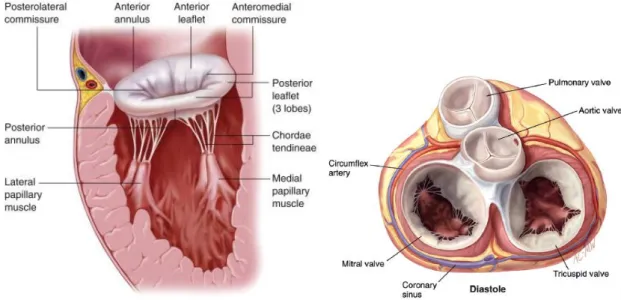
In order to understand IMR it is paramount to recall that the function of the mitral valve depends not only on the function of its leaflets but on the integrity and fine coordination of all the structures that make up the Mitral Valve Apparatus: the left
atrial wall, the two mitral leaflets, the mitral annulus, the chordae tendineae and papillary muscles (which, together, make up the Subvalvular Apparatus), as well as the
left ventricular wall (Figure 1).10 Dysfunction of the arterial blood supply to these
structures is at the genesis of IMR, reason as to why it is briefly reviewed.
Figure 1 – The Mitral Valve Apparatus and its situation in the heart.
Left Atrial Wall
The left atrial wall influences the closure of the mitral leaflets through 2 mechanisms: (1) contraction and relaxation (2) and dilatation. The first process results in the generation of ventriculoatrial gradient pressures, important to the closure of the leaflets.11 Despite this, the absence of said mechanism (atrial fibrillation, complete heart block, others) does not necessarily result in mitral regurgitation.12 On the other hand left atrial dilatation can, by itself, result in mitral regurgitation. As the left atrium is enlarged, there is a posterior and downward displacement of the posterior wall, resulting in increased tension of the posterior mitral leaflet and preventing its correct coaptation.13
The left atrium is supplied mainly by branches of the left circumflex coronary artery.14
8
Figure 2 – The Mitral Valve and its relations
Annulus
The mitral valve orifice is oval shaped, like a D, with its anteromedial flat portion comprising the attachment of the anterior mitral leaflet in the subaortic region (Figure 2). While this part of the annulus is fibrous and noncontractile, the posterolateral portion is muscular (with direct connections to the LV wall) and contracts during systole, asymmetrically closing the area of the orifice. It relates closely with the coronary sinus, posteriorly, which has implications for treatment.15 The annulus’ transverse diameter is greater than its anteroposterior counterpart, in a ratio of 4:3 with changes in this ratio (e.g atrial or ventricular dilatation) leading to dyfunction.13
Leaflets
The mitral valve is bicuspid, with an anterior (aortic or septal) leaflet and a posterior (mural, or ventricular) leaflet. The anterior leaflet is larger, inserting in about one third of the annulus and is in fibrous continuity with the aortic valve through the aortic–mitral anulus.16,17 The smaller posterior leaflet inserts in the remaining two thirds of the annulus.
The leaflets occupy a combined area of approximately double and a half the size of the annulus, resulting in a large area of coaptation.10,18 In situations where there is misalignment or displacement of the leaflets, part of this area is lost and excessive stress is placed upon the chordae, which may result in their rupture. Loss of pliability due to direct damage (e.g fibrosis) to the leaflets also leads to dysfunction. However, particularly in IMR, mitral regurgitation also occurs in the presence of undamaged leaflets.
9
Chordae Tendinae and Papillary Muscles – The Subvalvular
Apparatus
The edges of the mitral valve are held below the level of the mitral orifice by the
chordae tendinae, drawing the leaflets to closure and helping in the maintenance of
competence. The majority of chordae tendineae originate from the anterolateral and the posteromedial papillary muscles of the left ventricle and attach mostly to the free edges of both the leaflets.19 The anterolateral papillary muscle emits chordae tendinae to the left half of the anterior and posterior leaflets, while the posteromedial papillary muscle tethers the right half side of both leaflets. There are usually 4 to 12 chordae originating from each papillary muscle group (with a possible range of 2 to 22). However, further chordal branching results in a number of chordae ranging from 12 to 80 inserting to the mitral valve leaflet (Figure 3).20
The anterolateral papillary muscle of the left ventricle possesses a double blood supply through one or more branches from the left anterior descending coronary artery and marginal branches of the circumflex coronary artery. The arterial supply of the
posteromedial papillary muscle, on the other hand, is mediated solely by branches of
the posterior descending coronary artery (which arises from either the right main coronary or left circumflex coronary arteries, according to the dominance of the heart).14 This results in a greater likelihood of rupture for the posteromedial papillary muscle, as compared to its anteromedial counterpart.21–23
Figure 3 – The Subvalvular Apparatus: chordae, papillary muscles and normal leaflet coaptation.
10
Left Ventricular Wall
The left ventricle myocardium comprises of three differently oriented layers of muscle fibres (subepicardial, middle and subendocardial). The superficial and deep layers are anchored at the ventricular orifices to fibrous structures of the central fibrous skeleton of the heart, suggesting that myocardial contraction plays an active role in valvular function. Changes in the left ventricular wall (such as dilatation or akinesia) can negatively impact the function of the mitral valve, both through its connection to the fibrous structures of the heart and through the displacement of the region of myocardium immediately underlying the papillary muscles.14
The left descending coronary artery supplies the majority of the blood to the interventricular septum through its septal branches and to the anterior wall of the left ventricle through its diagonal branches. The left circumflex coronary artery gives rise to the obtuse marginal arteries that supply the homonym margin of the heart and some of the inferior surface of the ventricle. The posterior descending coronary artery, which arises from the right main coronary artery in 85-90% of people, supplies blood to the posterior portion of the interventricular septum and inferior wall of the ventricle (right dominance). In these cases, it form a loop of collateral circulation with the LDA. In the remaining 10-15% (those with left dominance) the posterior descending coronary artery originates from the circumflex artery, making the left ventricle more so dependent on the left coronary artery.
11
Ischemic Mitral Regurgitation
Definition
Ischemic Mitral Regurgitation is defined as Mitral Regurgitation due to ischemic heart disease and, as such, it must not be confused with mitral regurgitation from other causes that coexists with ischemic heart disease.
The thresholds for severity classification of IMR are lower than those for primary MR, reflecting the graver nature of the disease and its prognostic implications. These and other criteria are described in Table 1.
Table 1 - Echocardiographic criteria for the definition of severe valve regurgitation Mitral Regurgitation
Qualitative
Valve morphology Flail leaflet/ruptured papillary muscle/ large coaptation defect
Colour flow regurgitant jet Very large central jet or eccentric jet adhering, swirling, and
reaching the posterior wall of the left atrium
CW signal of regurgitant jet Dense/triangular
Other Large flow convergence zonea
Semiquantitative
Vena contracta width (mm) ≥7 (>8 for biplane)b
Upstream vein flow Systolic pulmonary vein flow reversal
Inflow E-wave dominant ≥1.5 m/sd
Other TVI mitral/TVI aortic >1.4
Quantitative Primary Secondary
EROA (mm²) ≥40 ≥20
RVol (ml/beat) ≥60 ≥30
+ enlargement of cardiac chambers/vessels
LV, LA
Adapted from Vahanian et al. – “ESC Guidelines on the management of valvular heart disease”, 2012.
Ischemic Mitral Regurgitation occurs in two different settings: as a complication of Acute Myocardial Infarction (AMI), with a small subset of cases resulting from papillary muscle rupture (PMR), or as Chronic Mitral Regurgitation in patients with long standing ischemic heart disease.
12
Acute Mitral Regurgitation complic ating Acute Myocardial Infarction – Acute IMR
Presentation and Significance
Significant (moderate to severe) mitral regurgitation is a common complication of AMI, presenting in 3 to 19% of patients.2–7 It usually presents itself as a flash pulmonary oedema or sudden angina with a de novo murmur.24 It is a known predictor of poor prognosis, with a graded relationship between severity and higher rates of severe heart failure, recurrent myocardial infarction and cardiovascular mortality.2–7 In a study by Lamas et al.(4), the cardiovascular mortality, in the 3 and a half years of follow-up, for myocardial infarction patients with acute IMR and without, were 29% and 12%, respectively.
Pathophysiology
IMR results from an unbalance between reduced closing forces and increased tethering forces acting on the mitral valve, as a result of myocardial injury.25 Mechanisms that generate reduced closing forces include: reduction in LV contractility, altered systolic annular contraction, reduced synchronicity between the two papillary muscles and global LV dyssynchrony (especially in basal segments).26,27 The main mechanism responsible for increased tethering forces are changes in LV configuration (remodelling)28–33. The most common pattern observed involves a posterior infarction, usually transmural, leading to local LV remodelling and distortion, contributing to apical, posterior, and lateral displacement of the posterior papillary muscle. Through its chordal attachments, this displacement results in a more apical position of the leaflets and preventing correct coaptation (type IIIb dysfunction in the Carpentier's Surgical Classification of Mitral Valve Pathology – Figure 5).34,35 In other patients, LV remodelling occurs globally, with a more spherical LV where both papillary muscles are displaced, and in which annular dilatation plays a more important role (Figure 4).36
13
Figure 4 – Papillary Muscle displacement and leaflet tethering in ischemic heart disease. The displacement can be posterior (a) or global/both papillary muscles (b).
Although previously regarded as a significant cause of IMR, papillary muscle necrosis does not necessarily result in mitral regurgitation, with the previously stated mechanisms playing a more important role in its pathogenesis.26,29,37,38 Kaul et al.(26) confirmed that reducing PM perfusion produced neither prolapse nor MR. In contrast, global hypoperfusion with LV dilatation, despite continued PM perfusion and thickening, caused MR with incomplete mitral leaflet closure in direct correlation with LV dysfunction.
14
Papillary Muscle Rupture
Papillary muscle rupture is a serious and rare complication of acute myocardial infarction, with 24h-survival rates for nonsurgically treated patients ranging from 70% for partial ruptures to 25% for total ruptures.39,40 The loss of the tethering mechanism by a papillary muscle can result in flailing of the anterior and posterior leaflet, as they both receive chordae from the two papillary muscles (a type II dysfunction) (Figure 6). Of 22 patients with acute myocardial infarction complicated by PMR studied by Barbour et al., 22% developed severe mitral regurgitation. The posteromedial papillary muscle has a threefold risk of rupture when compared to its anterolateral counterpart, which might result from the previously mentioned tenuous blood supply of the posteromedial papillary muscle.21–23
Chronic Mitral Regurgitation complica ting Ischemic Heart Disease – Chronic IMR
Presentation and Significance
The frequent coexistence of ischemic heart disease and MR due to nonischemic causes, makes the distinction between primary MR and IMR difficult. Patients with established chronic coronary artery disease present with a gradually increasing mitral regurgitation or a murmur that dates from the date of a previous MI is detected. In these settings and in the absence of a more likely etiology, ischemic mitral regurgitation is assumed. During the performance of surgery, the leaflets, papillary muscles and left ventricle can be inspected to confirm the diagnosis. However, fibrosis and dysfunction of these structures is sometimes indistinguishable from those caused by other etiologies. As with its acute counterpart, increasing severity of mitral regurgitation has an increasingly adverse effect on survival, regardless of type of treatment.2,24,41,42
15
Figure 7 – Annular dilatation (left) and papillary muscle elongation (right) as causes of mitral regurgitation.
Pathophysiology
The previously mentioned interaction between increased tethering forces and reduced closing forces, as well as the annular dilatation secondary to LV dysfunction (type I), are at the basis of mitral regurgitation in the chronic setting.24,29 In rare cases, the paradoxical elongation of a papillary muscle can also result in regurgitation through a type II dysfunction of the mitral valve apparatus (Figure 7).43
17
Ischemic Mitral Regurgitation – Treatment
The particulars for non-surgical treatment are outside the scope of this paper and the reader is referred to the respective guidelines for detailed recommendations.
Medical Therapy and Cardiac Resynchronization Therapy (CRT) Optimal medical therapy is the first-line therapy in the management of all patients with secondary MR and should be administered in accordance with the available guidelines for the management of HF.44 This includes ACE inhibitors, beta-blockers and, in the event of HF, aldosterone antagonists. In the event of fluid overload the use of diuretics is indicated. The objective of medical treatment is to prevent myocardial ischemia, reduce and revert LV pathological remodelling and, thereby, decreasing the degree of ischemic mitral regurgitation.
The use of CRT should also be in line with the related guidelines and may result in immediate reduction of MR severity through increased closed forces and resynchronization of papillary muscles. It is also possible that some of the reduction in tethering forces may result from LV reverse remodelling. The decrease in severity of regurgitation in responders correlates significantly with increased survival.45
Surgical Treatment Options
The surgical treatment of IMR comprises three different possible strategies: the performance of revascularization alone with Coronary Artery Bypass Grafting (CABG), CABG coupled with a mitral valve repair technique (Figure 9) or CABG simultaneous with mitral valve replacement (Figure 10).
While most studies support the performance of surgery in severe cases of IMR, the lack of evidence that mitral valve surgery prolongs life in patients with moderate cases, has led to surgical revascularization alone being performed in some such cases. Notwithstanding, although isolated CABG may be beneficial for a number of patients with moderate IMR, the majority of papers support the use of combined surgery.
CABG without valve procedure
Akog et al.46 demonstrated, in a study of 136 patients, that CABG alone resulted in the improvement of moderate MR in 51% of the patients, with complete resolution in 9% of those. All the same, 40% of patients remained with 3+ to 4+ MR, which led the
18
authors to conclude that CABG alone might not be the optimal therapy for most of these patients. Indeed, the majority of studies support the performance of combined surgery for the treatment of moderate IMR. Bonacchi et al.(47) compared the outcomes of 3 groups of patients: Group I was composed of grade III-IV mitral regurgitation patients undergoing simultaneous CABG and mitral valve surgery, while the remaining two were composed of patients with low and moderate regurgitation, respectively, undergoing only CABG. They found that overall survival was similar between patients undergoing combined surgery and those with mild regurgitation undergoing CABG alone, whereas a significantly higher mortality rate was recorded in patients with moderate mitral regurgitation undergoing CABG alone. They also found that improvement of left ventricle ejection fraction (LVEF), as well as LV end-systolic and end-diastolic diameter (LVESD and LVEDD, respectively) occurred only in patients undergoing mitral valve surgery. The work done by Fattouch et al.(48) supports these findings of improvement in LV geometry, having also recorded greater improvements in the group undergoing mitral valve surgery of the New York Heart Association (NYHA) functional class, left atrium size, pulmonary artery pressure and heart failure symptoms at rest. However, like studies by Kim et al.(49) and Goland et al.(50) it did not record significant differences in overall mortality. A recent randomized trial by Michler et al.(51) found a lower rate of regurgitation recurrence among patients undergoing combined surgery, but no differences in mortality, LV geometry or survival. Combined surgery was also associated with an early hazard of increased neurologic and supraventricular arrhythmias. Because the additional risk of mitral valve surgery is not negligible and there is not enough conclusive evidence that mitral valve surgery actually improves survival, other factors such as comorbidities and poor LV function may dictate the treatment strategy for patients with moderate regurgitation. Sicker patients may benefit from the improved outcomes of CABG alone, without being subjected to the increased mortality of the combined approach.43,52
CABG with a mitral valve procedure
It has been established that the majority of patients with moderate-to-severe IMR require surgical revascularization with a concomitant mitral valve procedure (mitral valve replacement or repair) in order to experience improvement in mitral regurgitation. However operative mortality for these procedures is higher than in primary MR and
19
Figure 8 – Undersized ring annuloplasty.
Figure 9 – Mitral valve replacement and types of valves.
20
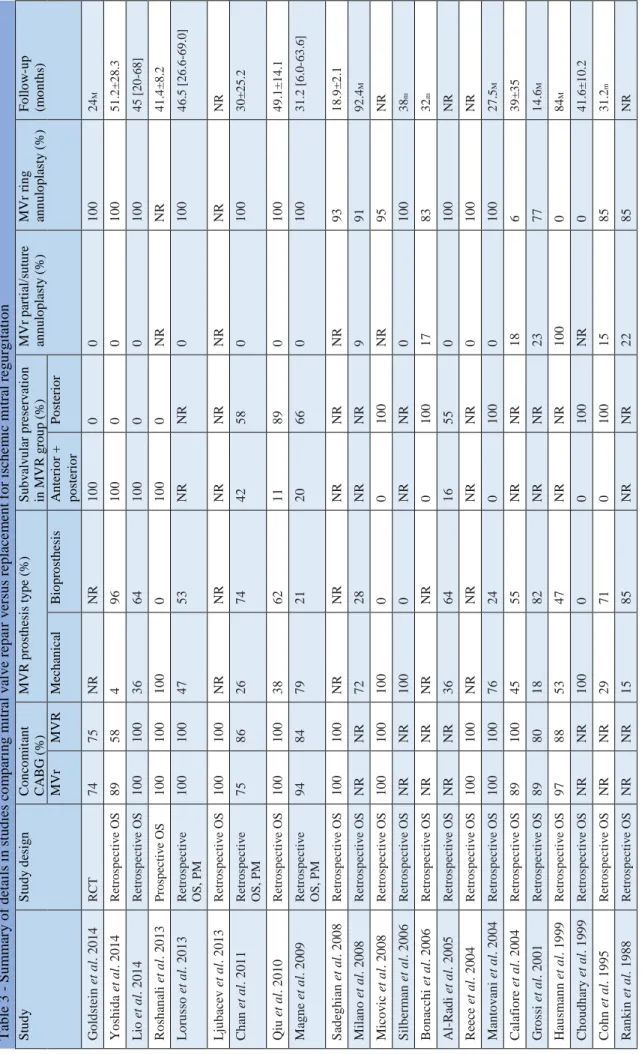
long-term outcomes are also inferior (although this correlates in part with the greater severity of the comorbidities among IMR patients). Lately, improved surgical techniques, such as an increase in the preservation of the subvalvular apparatus during MVR (Figure 10) and the use of the more effective downsized ring annuloplasty (Figure 8) during repair, have together with improved postoperative management resulted in superior outcomes (Table 3).53,54
The latest European Society of Cardiology (ESC) guidelines from 2012 on the management of valvular heart disease recommend that severe mitral regurgitation should be corrected at the time of bypass surgery. Combined surgery should also be considered for patients with moderate MR, who are undergoing CABG. In symptomatic patients with severe IMR and severely depressed systolic function, isolated mitral valve surgery might be considered if comorbidities are low and revascularization is viable. For the remaining patients, including patients with mild IMR and those with severe IMR and depressed ventricular function but no viability for revascularization, optimal medical therapy is recommended. In the event of failure, by extended HF treatment, is currently the recommended option.1 These indications are summarized with their respective level of evidence in Table 2.
The decision regarding which surgical technique to use remains controversial to this day and these latest guidelines do not make any particular recommendations.
Table 2 - Indications for mitral valve surgery in chronic secondary mitral regurgitation
Class Level
Surgery is indicated in patients with severe MRc undergoing CABG, and LVEF >30%.
I C
Surgery should be considered in patients with moderate MR undergoing CABG
IIa C
Surgery should be considered in symptomatic patients with severe MR, LVEF <30%, option for revascularization, and evidence of viability.
IIa C
Surgery may be considered in patients with severe MR, LVEF
>30%,who remain symptomatic despite optimal medical
management (including CRT if indicated) and have low comorbidity, when revascularization is not indicated.
IIb C
21
Mitral Valve Surgery: Repair vs Replacement
There have been several retrospective cohort studies published over the last 20 years, which have acted as the first evidence-based support for the decision making process in patients with moderate-to-severe IMR. However, due to their retrospective nature, they are inevitably flawed by the use of different surgical techniques in patients of the same study and selection bias in the use of a particular technique. Propensity scoring has been used in an attempt to resolve these shortcomings, but it is does not replace randomization (Table 3).
Since 2012, only one randomized clinical trial comparing the two techniques, by The Cardiothoracic Surgical Trials Network (CTSN), has had published results, providing us with new insight with greater exemption from bias that have characterized previous papers, albeit limited by its currently short follow-up period.
The techniques have registered different advantages and disadvantages in regards to different outcomes, reason as to why they are separately approached.
Peri-operative mortality
One of the flagships in favouring mitral valve repair over replacement has been its influence on operative mortality.
The majority of retrospective cohort studies point towards inferior 30-day mortality rates in patients undergoing MVr as compared to MVR.55–61 However, the single randomized clinical trial by Acker et al.(62) comparing these techniques did not find a significant difference in 30-day mortality. These latest results suggest that operative mortality discrepancies in previous studies may result from selection bias in patients undergoing different surgical approaches, with the sickest patients usually undergoing mitral valve replacement.
Late mortality
In regards to late mortality, the conclusions vary with follow-up time.
In studies with median follow-up ranging between 12 and 36 months, the differences in late mortality between MVr and MVR were found to not be statistically significant.57,58,63,64 However, when studies prolonged their follow-up length beyond 36 months, the differences in mortality increased, with patients treated with MVr presenting significantly reduced mortality rates.47,56,59,60,65
T ab le 3 Su m m ar y o f d etails i n s tu d ies co m p ar in g m itra l v al v e rep air v er su s rep lace m en t f o r is ch e m ic m itra l r e g u rg itatio n S tu d y S tu d y d esig n Co n co m it an t CA B G ( % ) M V R p ro st h esis ty p e (% ) S u b v alv u lar p re se rv ati o n in M V R g ro u p (% ) M V r p arti al/ su tu re an n u lo p las ty ( % ) M V r rin g an nul o p la sty ( % ) F o ll o w -up (m o n th s) M V r M V R Me ch an ica l Bio p ro sth esis A n terio r + p o ste rio r P o ste rio r G o ld ste in e t a l. 2 0 1 4 RCT 74 75 NR NR 100 0 0 100 24 M Yo sh id a et a l. 2 0 1 4 R et ro sp ec ti v e O S 89 58 4 96 100 0 0 100 5 1 .2 ± 2 8 .3 L io e t a l. 2 0 1 4 R et ro sp ec ti v e O S 100 100 36 64 100 0 0 100 4 5 [ 2 0 -68] R o sh an ali e t a l. 2 0 1 3 P ro sp ec ti v e O S 100 100 100 0 100 0 NR NR 4 1 .4 ± 8 .2 L o ru ss o e t a l. 2 0 1 3 R et ro sp ec ti v e O S , P M 100 100 47 53 NR NR 0 100 4 6 .5 [ 2 6 .6 -6 9 .0 ] L ju b ac ev e t a l. 2 0 1 3 R et ro sp ec ti v e O S 100 100 NR NR NR NR NR NR NR Ch an e t a l. 2 0 1 1 R et ro sp ec ti v e O S , P M 75 86 26 74 42 58 0 100 3 0 ± 2 5 .2 Qiu e t a l. 2 0 1 0 R et ro sp ec ti v e O S 100 100 38 62 11 89 0 100 4 9 .1 ± 1 4 .1 M ag n e et a l. 2 0 0 9 R et ro sp ec ti v e O S , P M 94 84 79 21 20 66 0 100 3 1 .2 [ 6 .0 -6 3 .6 ] S ad eg h ian e t a l. 2 0 0 8 R et ro sp ec ti v e O S 100 100 NR NR NR NR NR 93 1 8 .9 ± 2 .1 M il an o e t a l. 2 0 0 8 R et ro sp ec ti v e O S NR NR 72 28 NR NR 9 91 9 2 .4 M M ico v ic et a l. 2 0 0 8 R et ro sp ec ti v e O S 100 100 100 0 0 100 NR 95 NR S il b erm an e t a l. 2 0 0 6 R et ro sp ec ti v e O S NR NR 100 0 NR NR 0 100 38 m Bo n ac ch i et a l. 2 0 0 6 R et ro sp ec ti v e O S NR NR NR NR 0 100 17 83 32 m Al -Ra d i et a l. 2 0 0 5 R et ro sp ec ti v e O S NR NR 36 64 16 55 0 100 NR Re ec e et a l. 2 0 0 4 R et ro sp ec ti v e O S 100 100 NR NR NR NR 0 100 NR M an to v an i et a l. 2 0 0 4 R et ro sp ec ti v e O S 100 100 76 24 0 100 0 100 2 7 .5 M Ca laf io re e t a l. 2 0 0 4 R et ro sp ec ti v e O S 89 100 45 55 NR NR 18 6 3 9 ± 3 5 G ro ss i et a l. 2 0 0 1 R et ro sp ec ti v e O S 89 80 18 82 NR NR 23 77 1 4 .6 M Ha u sm an n e t a l. 1 9 9 9 R et ro sp ec ti v e O S 97 88 53 47 NR NR 100 0 84 M Ch o u d h ary e t a l. 1 9 9 9 R et ro sp ec ti v e O S NR NR 100 0 0 100 NR 0 4 1 .6 ± 1 0 .2 Co h n e t a l. 1 9 9 5 R et ro sp ec ti v e O S NR NR 29 71 0 100 15 85 3 1 .2 m Ra n k in e t a l. 1 9 8 8 R et ro sp ec ti v e O S NR NR 15 85 NR NR 22 85 NR Ad ap ted fr om V irk e t a l., “ A me ta -a na lys is o f mitr al va lve re pa ir ve rs us re pla ce me nt fo r isc he mic mitra l re gu rg it ati on ” ( 20 15 ) 22
23 This suggests that studies without follow-up beyond 36 months might be unable to detect potential long-term mortality differences.
A lot of the authors recognize, however, that on par with operative mortality, the difference in long-term survival might correlate with the baseline differences in comorbidities.56,64 Moreover, when propensity scoring is used to account for different baseline comorbidities, the difference is then deemed not statistically significant.61,66,67 The 2-year results on the randomized clinical trial by Goldstein et al. (68) concluded that there was no significant cumulative mortality difference between treatment groups, with a rate of 19.0% in the repair group and 23.2% in the replacement group (hazard ratio with mitral-valve repair of 0.79; 95% confidence interval [CI], 0.46 to 1.35; P = 0.39 by the log-rank test). This supports the previous findings by the retrospective cohorts for follow-up up to 3 years but leaves the question of whether results beyond 36 months will differ.
Regurgitation recurrence
One of the major downfalls of mitral valve repair has been the significantly higher rates of at least moderate mitral regurgitation recurrence at mid-term follow-up, which has been shown to affect survival.69,70 A study by Gelsomino et al.(71) of 220 patients undergoing CABG + undersized annuloplasty, reviewed patients’ MR status for up to 5 years. At 5-year echocardiography, 72% of the patients presented at least moderate recurrence.
In virtually every retrospective cohort study comparing the two techniques, replacement has been superior to repair in this aspect, offering a more durable solution, with meta-analysis by Dayan et al.(72) and Virk et al.(73) concluding a risk of recurrence following MVr of 7 times that of replacement. The latest results from randomized patients corroborate these findings, with 58.8% of MVr patients recurring with moderate-to-severe regurgitation vs. 3.8% of MVR patients (P<0.001) at the two-year follow-up mark.68 The proposed explanation behind such results has been that, while the annular downsizing procedure reduces the effective regurgitation area, it does not correct the underlying pathophysiology of LV wall remodelling (localized or generalized) and subsequent leaflet tethering, resulting, in time, in recurrent regurgitation.74
24
The justification for why some patients recur and others don’t may lie in differing weights that the already described pathophysiological mechanisms play in different patients. There have been some studies that attempted to pinpoint predictors of regurgitation recurrence. Ciarka et al(75) studied LV and left atrial volumes and dimensions, LV sphericity index, mitral annular area, as well as mitral valve geometry parameters in patients undergoing CABG + MVr. They concluded that, of the studied parameters, the distal mitral anterior leaflet angle (hazard ratio 1.48, 95% confidence interval 1.32 to 1.66, p <0.001) and posterior leaflet angle (hazard ratio 1.13, 95% confidence interval 1.07 to 1.19, p <0.001) were independent determinants of MR recurrence at mid-term follow-up. However, it is of note that the study included both idiopathic dilated cardiomyopathy and IMR patients. Kron et al.(76) recently studied the 116 IMR patients that underwent CABG + repair in the randomized trial for the CTSN(62), using logistic regression in an attempt to determine probability of recurrence based on echocardiographic measurements or clinical characteristics. They concluded that the presence of basal aneurysms and dyskinesis were the only characteristics strongly associated with recurrent moderate or severe MR. Both the aforementioned studies require further validation as the establishment of reliable recurrence predictors could be one of the most important elements guiding surgery decision.
Myocardial viability has been studied for its impact on survival by Pu et al.(77) but has not been studied as a potential predictor of regurgitation recurrence.
Mitral valve re-operations
Interestingly enough, the higher rates of regurgitation recurrence associated with MVr do not correlate, in the majority of studies, with significantly higher reoperation rates. Through the use of regression analysis, Lorusso et al.67 concluded, however, that mitral valve repair was a strong predictor of reoperation (hazard ratio, 2.84; P<.001). The meta-analysis by Virk et al.73 also noted an increased trend towards reoperation among MVr patients, when earlier studies with low use of subvalvular apparatus preservation were excluded from the sensitivity analysis.
Ecocardiographic dimensions
Given their retrospective nature, the majority of published papers do not possess comprehensive reports on echocardiographic measurements (LVEF, LVESD, LVEDD) and even fewer report on post-operative evolution. However, the few that do report
25 improved left ventricular ejection fraction and reduced end-systolic and end-diastolic diameters after surgery. There was no significant difference between techniques in regards to post-operative geometric improvement.47,78,79
Quality of life
Perhaps insufficiently investigated as an outcome, there have been few noted differences in quality of life scores between patients undergoing different techniques. Goldstein et al. reported greater overall improvement on the Minnesota Living with Heart Failure questionnaire scores among patients undergoing MVR (mean change in heart-failure symptoms from baseline was 20.0 in the repair group versus 27.9 in the replacement group [P = 0.07]). There was also greater improvement from baseline scores among patients who did not have regurgitation recurrence (26.6 for patients without recurrence vs 16.2 those with recurrence). These differences only became apparent after the 12-month mark.62 However, in terms of NYHA class, there were no significant differences in improvement between the different techniques.
27
Potential Treatment Modalities
Improved Mitral Valve Repair
New approaches have been recently under analysis, in an attempt to counter the challenge posed by continuous leaflet tethering despite reductive annuloplasty and improve current outcomes for mitral valve repair. In contrast to MVR, where complete subvalvular apparatus preservation has shown to improve outcomes54, recent works have studied the use of partial chordal cutting (CC) during MVr, in patients with pronounced leaflet angling, as a way to decrease leaflet tethering without causing prolapse and improve coaptation (Figure 11). Messas et al. performed the first studies, both in vitro and in vivo, with sheep valves and positive outcomes, albeit in a reduced number of subjects.80,81 It was not until 2014 that Calafiore et al. reported on human subjects, concluding that in patients with a bending angle <145° in the anterior leaflet and coaptation depth ≤10 mm, CC was related to less MR recurrence and persistence, improved EF, and lower NYHA class when compared to subjects undergoing solely restrictive annuloplasty.82 However, the groups included only 26 propensity-matched patients each, with the technique requiring further validation.
Figure 11 – Partial chordal cutting as an adjuvant to MVr.
The association of an edge-to-edge (Alfieri) procedure to restrictive annuloplasty has had some positive results (Figure 12). Bhudia et al.(83) reported a low risk of it causing mitral stenosis but recommended the use of other techniques for IMR patients, due to worse outcomes comparetively to other-etiology MR’s. However, these less positive outcomes can be attributed to the already described worse baseline status of
28
IMR patients, and did not compare the use of edge-to-edge procedure with restrictive annuloplasty to those without Alfieri procedure. De Bonis et al.(84) performed such a comparison and noted a significant improvement in the durability of the repair. However, it is of note that the study also included idiopathic dilated cardiomyopathy patients (26 of 77 patients).
Figure 12 – Edge-to-edge Alfieri procedure
Percutaneous Coronary Intervention (PCI)
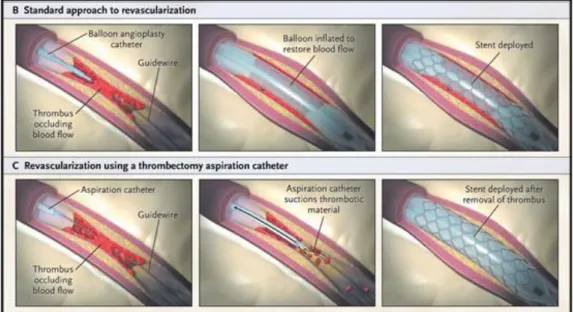
Although the use of Percutaneous Coronary Intervention (PCI) (Figure 13) has been shown to improve IMR grade, by itself, in 1/3 of the patients studied by Yousefzai et al.(85), it falls short when compared to CABG. Kang et al.(86) performed such a comparison and concluded that although survival and cardiac mortality rates were not significantly different between IMR patients undergoing PCI or CABG, the event-free survival rates were significantly higher in the CABG group. For 45 propensity score-matched pairs, the risk of cardiac events was also significantly lower in the CABG group than in the PCI group (hazard ratio, 0.499; 95% CI, 0.251 to 0.990; P=0.043).
29 Percutaneous Valve Procedures
Percutaneous valve approaches are still at an early stage of development. The most well studied of these procedures is the MitraClip procedure, which is a catheter-based device designed to approximate the mitral valve leaflets through an edge-to-edge method similar to the Alfieri procedure, while the heart is beating (Figure 14). In the phase II EVEREST trial, 279 patients were randomized in a 2:1 ratio to undergo percutaneous repair with MitraClip (n = 184) or conventional MVr or MVR (n = 95). Most patients (73%) had degenerative etiology MR. In the intention-to-treat analysis, the rates of death (6%) were similar for MitraClip and surgery at 1 year. The frequency of 2+ MR was significantly higher after MitraClip, but the proportion of patients with grade 3+ or 4+ MR was not significantly different between the 2 groups at 2 years of follow-up (20% percutaneous group vs. 22% surgical group). The rate of reoperation for MV dysfunction was 20% for percutaneous group as compared with 2.2% in the surgical group. The combined primary efficacy endpoint of freedom from death, from surgery for MV dysfunction, and from grade 3+ or 4+ MR was 55% in the percutaneous-repair group and 73% in the surgery group (p = 0.007). The EVEREST II trial showed superior safety in the percutaneous-repair group as compared with the surgery group in an intention-to-treat analysis mostly due to a higher rate of bleeding requiring transfusion in the surgery group. It is of note that only a minority of the patients included (27%) were of ischemic etiology.87 A recent meta-analysis of this and other studies by D’Ascenzo et al.(88
) established similar positive outcomes for a median-follow-up of 6 months. The latest ESC guidelines for heart failure from 2016 note that the technique may be useful in ‘inoperable’ IMR patients.44
30
Figure 15 – CARILLON® Mitral Contour System
The other system that has been studied specifically for patients with chronic IMR is the CARILLON® Mitral Contour System, which takes advantage of the proximity of the coronary sinus to the mitral annulus to deploy a proximal and a distal anchor, thereby reducing annular area and improving coaptation (Figure 15). The CARILLON Mitral Annuloplasty Device European Union Study(89) and the TITAN trials(90) have both noted reduction in regurgitant volume, LV dimensions and an increase in the 6-minute walking distance, compared to the control groups in the studies. However, each of the studies included under 40 patients, requiring further validation and perhaps comparison with surgical options (though the system is more suited to sicker patients who do not posess indication for surgery).
The latest guidelines for valvular heart disease (2012) refer that the edge-to-edge angioplastic procedure may be useful for patients without excessive leaflet tethering, while pointing out its low procedural risk. They note that data on this procedure needs to be confirmed by larger series with longer follow-up and randomized clinical trials. The currently held position towards coronary sinus angioplasty is that information is scarce and that it requires further validation. Since 2012, there has not been enough new relevant work surrounding the Carrilon system, reason as to why further studies are still needed to make any kind of recommendations.
31
Conclusions
There has been a shifting trend in recent years in regard to the discussion for the pathophysiology and treatment of Ischemic Mitral Regurgitation. As surgical techniques are perfected and becoming standardized across the different Cardiac Surgery centres, stronger evidence arises from randomized clinical trials and echocardiographic studies.
The evidence available from randomized trials continues to suggest that the post-operative mortality for IMR patients is superior to that of primary MR and that the addition of mitral valve surgery does not significantly improve survival, when compared to patients who only undergo bypass surgery. However, the single randomized trial that performed this comparison, by Michler et al., only studied patients with moderate IMR, and such results may not apply to severe IMR patients, for which it is still recommended.
Previously widely held notions on the origin of Ischemic Mitral Regurgitation, such as the importance of papillary muscle necrosis, have been gradually debunked as more important mechanisms, such as LV dilatation and papillary muscle displacement, are pinpointed and further our accurate understanding of IMR. While older studies reported superior outcomes with mitral valve repair in patients with IMR, the use of propensity scoring and randomization have established mitral valve replacement as the more durable alternative. Notwithstanding, mitral valve repair still has its merits for being the approach with lower 30-day mortality. These new developments have, therefore, given us as much new valuable information as they have made it seemingly harder to declare either Mitral Valve Repair or Mitral Valve Replacement as the superior technique. The still small number of patients included in randomized clinical trials, as well as its under-3-years follow-up period, are limitations which needs to be amended through the performance of more randomized trials with follow-up periods beyond this mark.
As the differences between outcomes in these techniques become smaller, it becomes essential to determine clinical and echocardiographic predictors of regurgitation recurrence (during MVr) that can help surgeons in deciding which technique to use (as LV wall dyskinesis and leaflet tethering have been pointed out to be). The presence of said predictors should encourage the surgeon in preferring the more durable alternative (albeit with higher operative mortality) of mitral valve
32
replacement. Further studies that include only IMR patients, work with rigorous pre- and post-operative measurements and access the patients’ baseline comorbidities are essential to establish reliable predictors.
33
Acknowledgements
I would like to thank Dr. Ricardo Pereira for guiding me in the making of this work, my first scientific paper. I also send my regards to Dr. Nuno Guerra for his suggestions and help while introducing me to this theme. Finally, I would like to extend my thanks to Prof. Ângelo Nobre for the opportunity granted to me to do this work in the Cardiothoracic Clinic of the University of Lisbon and for his willingness to teach students on the noble field that is Cardiac Surgery, stimulating us to pursue this demanding yet exciting field.
35
References
1. Vahanian A, Alfieri O, Andreotti F, et al. Guidelines on the management of valvular heart disease (version 2012). Eur Heart J. 2012;33(19):2451-2496. 2. Hickey M, Smith L, Muhlbaier L, et al. Current prognosis of ischemic mitral
regurgitation. Implications for future management. Circulation. 1988;78(3):51-59.
3. Bursi F, Enriquez-Sarano M, Nkomo VT, et al. Heart failure and death after myocardial infarction in the community: The emerging role of mitral regurgitation. Circulation. 2005;111(3):295-301.
4. Lamas GA, Mitchell GF, Flaker GC, et al. Clinical significance of mitral regurgitation after acute myocardial infarction. Circulation. 1997;96(3):827-833. 5. Lehmann KG, Francis CK, Dodge HT. Mitral Regurgitation in Early Myocardial Infarction: Incidence, Clinical Detection, and Prognostic Implications. Ann Intern
Med. 1992;117(1):10-17.
6. Tcheng J, Jackman JJ, Nelson C, et al. Outcome of patients sustaining acute ischemic mitral regurgitation during myocardial infarction. Ann Intern Med. 1992;117(1):18-24.
7. Grigioni, Francesco Maurice Enriquez-Sarano KZ, Kent Bailey AJT. Ischemic Mitral Regurgitation. J Am Coll Cardiol. 2014;64(18):1880-1882.
8. Griffin B. Manual of Cardiovascular Medicine 4th Edition. 2013.
9. Shuhaiber J, Anderson RJ. Meta-analysis of clinical outcomes following surgical mitral valve repair or replacement. Eur J Cardio-thoracic Surg. 2007;31(2):267-275.
10. Perloff JK, Roberts WC. The Mitral Apparatus: Functional Anatomy of Mitral Regurgitation . Circ . 1972;46 (2 ):227-239.
11. Sarnoff S. J., Gilmore J. P, Mitchell J. H. Influence of atrial contraction and relaxation on closure of mitral valve. Observations on effects of autonomic nerve activity. Circ Res. 1962;11:26-35.
12. Vandenberg RA, Williams JCP, Sturm RE. Effect of Varying Ventricular Function by Extrasystolic Potentiation on Closure of the Mitral Valve. 1971;28(July).
13. Levy MJ, Edwards JE. Anatomy of mitral insufficiency. Prog Cardiovasc Dis. 1962;(5):119.
36
14. Kouchoukos N, Blackstone EH, Hanley FL, Kirklin JK. Kirklin/Barratt-Boyes’
Cardiac Surgery.; 2013.
15. Wells FC. Mitral Valve Disease.; 1st edition. Butterworth-Heinemann Medical, 1996.
16. Ranganathan N, Lam JH, Wigle ED, Silver MD. Morphology of the human mitral valve. II. The value leaflets. Circulation. 1970;41(3):459-467.
17. Walmsley R. Anatomy of left ventricular outflow tract’. Br Hear Journal,. 1979;41:263-267.
18. Silverman ME, Hurst JW. The mitral complex. Am Heart J. 1968;76(3):399-418. 19. Rusted B, Scheifley CH, Edwards JE. Studies of the Mitral Valve . I . Anatomic Features of the Normal Mitral Valve and Associated Structures. Circulation. 1952;6(December):825-831.
20. Solomon Victor NV. Variations in the Papillary Muscles of the Normal Mitral Valve and their Surgical Relevance. J Card Surg. 1995;10(5):597-607.
21. Barbour DJ, Roberts WC. Rupture of a left ventricular papillary muscle during acute myocardial infarction: analysis of 22 necropsy patients. J Am Coll Cardiol. 1986;8(3):558-565.
22. Nishimura R, Schaff H, Shub C, Gersh B, Edwards W, Tajik A. Papillary muscle rupture complicating acute myocardial infarction: Analysis of 17 patients. Am J
Cardiol. 1983;51(3):373-377.
23. Wei J, Hutchins G, Bulkley B. Papillary muscle rupture in fatal acute myocardial infarction: a potentially treatable form of cardiogenic shock. Ann Intern Med. 1979;90(2):149-152.
24. Levine RA, Schwammenthal E. Ischemic mitral regurgitation on the threshold of a solution: From paradoxes to unifying concepts. Circulation. 2005;112(5):745-758. 25. He S, Fontaine AA, Schwammenthal E, Yoganathan AA, Levine RA. Mechanism for Functional Mitral Regurgitation - Leaflet Restriction Versus Coapting Force In Vitro Studies. Circulation. 1997;96:1826-1834.
26. Kaul S, Spotnitz W, Glasheen W, Touchstone D. Mechanism of ischemic mitral regurgitation. An experimental evaluation. Circulation. 1991;84(5):2167-2180. 27. Yiu SF, Enriquez-Sarano M, Tribouilloy C, Seward JB, Tajik a J. Determinants
of the degree of functional mitral regurgitation in patients with systolic left ventricular dysfunction: A quantitative clinical study. Circulation.
37 28. Burch GE, DePasquale NP, Phillips JH. The syndrome of papillary muscle
dysfunction. Am Heart J. 1968;75(3):399-415.
29. Godley RW, Wann LS, Rogers EW, Feigenbaum H, Weyman a E. Incomplete mitral leaflet closure in patients with papillary muscle dysfunction. Circulation. 1981;63(3):565-571.
30. Boltwood CM, Tei C, Wong M, Shah PM. Quantitative echocardiography of the mitral complex in dilated cardiomyopathy: the mechanism of functional mitral regurgitation. Circulation. 1983;68(3):498-508.
31. Kono T, Sabbah HN, Rosman H, et al. Mechanism of functional mitral regurgitation during acute myocardial ischemia. J Am Coll Cardiol. 1992;19(5):1101-1105.
32. Kono T, Sabbah HN, Stein P, Brymer J, Khaja F. Left ventricular shape as a determinant of functional mitral regurgitation in patients with severe heart failure secondary to either coronary artery disease or idiopathic dilated cardiomyopathy.
J Am Coll Cardiol. 1991;68(4):355-359.
33. Sabbah H, Kono T, Stein P, Mancini G, Goldstein S. Left ventricular shape changes during the course of evolving heart failure. Am J Physiol. 1992;263(1):266-270.
34. Kumanohoso T, Otsuji Y, Yoshifuku S, et al. Mechanism of higher incidence of ischemic mitral regurgitation in patients with inferior myocardial infarction: Quantitative analysis of left ventricular and mitral valve geometry in 103 patients with prior myocardial infarction. J Thorac Cardiovasc Surg. 2003;125(1):135-143. 35. Carpentier A, Adams DH, Filsoufi F. Carpentier’s Reconstructive Valve
Surgery.; 2010.
36. Van Dantzig J, Delemarre B, Koster R, Bot H, Visser C. Pathogenesis of mitral regurgitation in acute myocardial infarction: Importance of changes in left ventricular shape and regional function. Am Heart J. 1996;131(5):865-871. 37. Messas E, Guerrero J, Handschumacher M, et al. Paradoxic Decrease in Ischemic
Mitral Regurgitation With Papillary Muscle Dysfunction. Circulation. 2001;104:1952-1957.
38. Tanimoto T, Imanishi T, Kitabata H, et al. Prevalence and clinical significance of papillary muscle infarction detected by late gadolinium-enhanced magnetic resonance imaging in patients with ST-segment elevation myocardial infarction.
38
39. Sanders RJ, Neubuerger KT, Ravin ABE. Rupture of Papillary Muscles : Occurrence of Rupture of the Posterior Muscle in Posterior Myocardial Infarction of Papillary Myo cardial Muscles : Muscle of Rupture Infarction. Chest. 1957;31(3):316-323.
40. Vlodaver Z, Edwards JE. Rupture of ventricular septum or papillary muscle complicating myocardial infarction. Circulation. 1977;55(5):815-822.
41. Grigioni F, Enriquez-Sarano M, Zehr KJM, Bailey KR, Tajik AJ. Ischemic Mitral Regurgitation Long-Term Outcome and Prognostic Implications With Quantitative Doppler Assessment. Circulation. 2001;103:1759-1764.
42. Pastorius CA, Henry TD, Harris KM. Long-term outcomes of patients with mitral regurgitation undergoing percutaneous coronary intervention. Am J Cardiol. 2007;100(8):1218-1223.
43. Lancellotti P, Marwick T, Pierard L a. How to manage ischaemic mitral regurgitation. Heart. 2008;94(September 2009):1497-1502.
44. Ponikowski P, Voors AA, Anker SD, et al. 2016 ESC Guidelines for the diagnosis and treatment of acute and chronic heart failure The. Eur Heart J. 2016.
45. Van Bommel RJ, Marsan NA, Delgado V, et al. Cardiac resynchronization therapy as a therapeutic option in patients with moderate-severe functional mitral regurgitation and high operative risk. Circulation. 2011;124(8):912-919.
46. Aklog L, Filsoufi F, Flores KQ, et al. Does Coronary Artery Bypass Grafting Alone Correct Moderate Ischemic Mitral Regurgitation? Circulation. 2001;104(1):68-75.
47. Bonacchi M, Prifti E, Maiani M, Frati G, Nathan NS, Leacche M. Mitral valve surgery simultaneous to coronary revascularization in patients with end-stage ischemic cardiomyopathy. Heart Vessels. 2006;21(1):20-27.
48. Fattouch K, Guccione F, Sampognaro R, et al. POINT: Efficacy of adding mitral valve restrictive annuloplasty to coronary artery bypass grafting in patients with moderate ischemic mitral valve regurgitation: a randomized trial. J Thorac
Cardiovasc Surg. 2009;138(2):278-285.
49. YH K, Czer L, Soukiasian H, et al. Ischemic mitral regurgitation: revascularization alone versus revascularization and mitral valve repair. Ann
39 50. Goland S, Czer LSC, Siegel RJ, et al. Coronary revascularization alone or with mitral valve repair: outcomes in patients with moderate ischemic mitral regurgitation. Tex Heart Inst J. 2009;36(5):416-424.
51. Michler RE, Smith PK, Parides MK, et al. Two-Year Outcomes of Surgical Treatment of Moderate Ischemic Mitral Regurgitation. N Engl J Med. 2016:NEJMoa1602003.
52. Kang D-H. Mitral Valve Repair Versus Revascularization Alone in the Treatment of Ischemic Mitral Regurgitation. Circulation. 2006;114(1_suppl):I - 499 - I - 503. 53. David T, Uden D, Strauss H. The importance of the mitral apparatus in left ventricular function after correction of mitral regurgitation. Circulation. 1983;68(3):76-82.
54. Yun KL, Sintek CF, Miller DC, et al. Randomized trial comparing partial versus complete chordal-sparing mitral valve replacement: Effects on left ventricular volume and function. J Thorac Cardiovasc Surg. 2002;123(4):707-714.
55. Hickey MS, Smith LR, Muhlbaier LH, Harrell FE Jr, Reves JG, Hinohara T, Califf RM, Pryor DB RJ. Current prognosis of ischemic mitral regurgitation. Implications for future management. Circulation. 1988;78(51-9).
56. Grossi EA, Goldberg JD, LaPietra A, et al. Ischemic mitral valve reconstruction and replacement: Comparison of long-term survival and complications. J Thorac
Cardiovasc Surg. 2001;122(6):1107-1124.
57. Calafiore AM, Di Mauro M, Gallina S, et al. Mitral valve surgery for chronic ischemic mitral regurgitation. Ann Thorac Surg. 2004;77(6):1989-1997.
58. Al-Radi OO, Austin PC, Tu J V., David TE, Yau TM. Mitral Repair Versus Replacement for Ischemic Mitral Regurgitation. Ann Thorac Surg. 2005;79:1260-1267.
59. Silberman S, Oren A, Klutstein MW, et al. Does mitral valve intervention have an impact on late survival in ischemic cardiomyopathy? Isr Med Assoc J. 2006;8(1):17-20.
60. Milano CA, Daneshmand MA, Rankin JS, et al. Survival Prognosis and Surgical Management of Ischemic Mitral Regurgitation. Ann Thorac Surg.
2008;86(3):735-744.
61. Magne J, Girerd N, Sénéchal M, et al. Mitral repair versus replacement for ischemic mitral regurgitation comparison of short-term and long-term survival.
40
62. Acker MA, Parides MK, Perrault LP, et al. Mitral-valve repair versus replacement for severe ischemic mitral regurgitation. N Engl J Med. 2014;370(1):23-32.
63. Rankin J, Feneley M, Hickey M, et al. A clinical comparison of mitral valve repair versus valve replacement in ischemic mitral regurgitation. J Thorac
Cardiovasc Surg. 1988;95(2):165-177.
64. Mantovani V, Mariscalco G, Leva C, Blanzola C, Cattaneo P, Sala A. Long-Term Results of the Surgical Treatment of Chronic Ischemic Mitral Regurgitation: Comparison of Repair and Prosthetic Replacement. J Heart Valve
Dis. 2004;13:421-429.
65. Cohn LH, Rizzo RJ, Adams DH, et al. The effect of pathophysiology on the surgical treatment of ischemicmitral regurgitation: operative and late risks of repair versusreplacement. Eur J Cardio-thoracic Surg. 1995;9(10):568-574. 66. Chan V, Ruel M, Mesana TG. Mitral Valve Replacement Is a Viable Alternative
to Mitral Valve Repair for Ischemic Mitral Regurgitation: A Case-Matched Study. Ann Thorac Surg. 2011;92(4):1358-1366.
67. Lorusso R, Gelsomino S, Vizzardi E, et al. Mitral valve repair or replacement for ischemic mitral regurgitation? the Italian Study on the Treatment of Ischemic Mitral Regurgitation (ISTIMIR). J Thorac Cardiovasc Surg. 2013;145(1):128-139. 68. Goldstein D, Moskowitz AJ, Gelijns AC, et al. Two-Year Outcomes of Surgical
Treatment of Severe Ischemic Mitral Regurgitation. N Engl J Med. 2015.
69. Crabtree TD, Bailey MS, Moon MR, et al. Recurrent Mitral Regurgitation and Risk Factors for Early and Late Mortality After Mitral Valve Repair for Functional Ischemic Mitral Regurgitation. Ann Thorac Surg. 2008;85(5):1537-1543.
70. Serri K, Bouchard D, Demers P, et al. Is a good perioperative echocardiographic result predictive of durability in ischemic mitral valve repair? J Thorac
Cardiovasc Surg. 2006;131(3).
71. Gelsomino S, Lorusso R, De Cicco G, et al. Five-year echocardiographic results of combined undersized mitral ring annuloplasty and coronary artery bypass grafting for chronic ischaemic mitral regurgitation. Eur Heart J. 2008;29(2):231-240.
72. Dayan V, Soca G, Cura L, Mestres CA. Similar survival after mitral valve replacement or repair for ischemic mitral regurgitation: A meta-analysis. Ann
41 73. Virk SA, Sriravindrarajah A, Dunn D, et al. A meta-analysis of mitral valve repair versus replacement for ischemic mitral regurgitation. Ann Cardiothorac
Surg. 2015;4(5):400-410.
74. Magne J, Pibarot P, Dumesnil JG, S??n??chal M. Continued Global Left Ventricular Remodeling Is Not the Sole Mechanism Responsible for the Late Recurrence of Ischemic Mitral Regurgitation after Restrictive Annuloplasty. J
Am Soc Echocardiogr. 2009;22(11):1256-1264.
75. Ciarka A, Braun J, Delgado V, et al. Predictors of mitral regurgitation recurrence in patients with heart failure undergoing mitral valve annuloplasty. Am J Cardiol. 2010;106(3):395-401.
76. Kron I, Hung J, Overbey J, et al. Predicting recurrent mitral regurgitation after mitral valve repair for severe ischemic mitral regurgitation. J Thorac Cardiovasc
Surg. 2015;149(3):752-761.
77. Pu M, Thomas JD, Gillinov MA, Griffin BP, Brunken RC. Importance of ischemic and viable myocardium for patients with chronic ischemic mitral regurgitation and left ventricular dysfunction. Am J Cardiol. 2003;92(7):862-864. 78. Qiu Z, Chen X, Xu M, et al. Is mitral valve repair superior to replacement for
chronic ischemic mitral regurgitation with left ventricular dysfunction? J
Cardiothorac Surg. 2010;5(107).
79. Yoshida K, Okada K, Miyahara S, et al. Mitral valve replacement versus annuloplasty for treating severe functional mitral regurgitation. Gen Thorac
Cardiovasc Surg. 2014;62(1):38-47.
80. Messas E, Guerrero JL, Handschumacher MD, et al. Chordal Cutting: A New Therapeutic Approach for Ischemic Mitral Regurgitation Emmanuel. Circulation. 2001;104:1958-1964.
81. Messas E. Efficacy of Chordal Cutting to Relieve Chronic Persistent Ischemic Mitral Regurgitation. Circulation. 2003;108(2):111-115.
82. Calafiore AM, Refaie R, Iacò AL, et al. Chordal cutting in ischemic mitral regurgitation: A propensity-matched study. J Thorac Cardiovasc Surg. 2014;148(1):41-46.
83. Bhudia SK, McCarthy PM, Smedira NG, Lam BK, Rajeswaran J, Blackstone EH. Edge-to-edge (Alfieri) mitral repair: Results in diverse clinical settings. Ann
42
84. De Bonis M, Lapenna E, La Canna G, et al. Mitral valve repair for functional mitral regurgitation in end-stage dilated cardiomyopathy: Role of the “edge-to-edge” technique. Circulation. 2005;112(9 SUPPL.):402-408.
85. Yousefzai R, Bajaj N, Krishnaswamy A, et al. Outcomes of Patients With Ischemic Mitral Regurgitation Undergoing Percutaneous Coronary Intervention.
Am J Cardiol. 2014;114(7):1011-1017.
86. Kang D-H, Sun BJ, Kim D-H, et al. Percutaneous Versus Surgical Revascularization in Patients With Ischemic Mitral Regurgitation. Circulation. 2011;124(11_suppl_1):S156-S162.
87. Glower DD, Kar S, Trento A, et al. Percutaneous mitral valve repair for mitral regurgitation in high-risk patients: Results of the EVEREST II study. J Am Coll
Cardiol. 2014;64(2):172-181.
88. D’Ascenzo F, Moretti C, Marra WG, et al. Meta-Analysis of the Usefulness of Mitraclip in Patients With Functional Mitral Regurgitation. Am J Cardiol. 2015;116(2):325-331.
89. Schofer J, Siminiak T, Haude M, et al. Percutaneous mitral annuloplasty for functional mitral regurgitation: Results of the CARILLON mitral annuloplasty device european union study. Circulation. 2009;120(4):326-333.
90. Siminiak T, Wu JC, Haude M, et al. Treatment of functional mitral regurgitation by percutaneous annuloplasty: Results of the TITAN Trial. Eur J Heart Fail. 2012;14(8):931-938.