© 2014 A. Fadiel et al., This open access article is distributed under a Creative Commons Attribution (CC-BY) 3.0 license
doi:10.3844/ajeassp.2014.1.11 Published Online 7 (1) 2014 (http://www.thescipub.com/ajeas.toc)
Corresponding Author: Taher Abu-Lebdeh, Department of Civil, Architectural and Environmental Engineering, North Carolina A and T State University, NC 27411,
Greensboro, USA Tel: (336) 285-3670, Fax: (336) 334-7126
USE OF CRUMB RUBBER TO IMPROVE THERMAL
EFFICIENCY OF CEMENT-BASED MATERIALS
Ashraf Fadiel, Fouad Al Rifaie, Taher Abu-Lebdeh
and
Ellie Fini
1Department of Civil, Architectural and Environmental Engineering,
North Carolina A and T State University, NC 27411, Greensboro, USA
Received 2014-01-13; Revised 2014-01-14; Accepted 2014-03-14
ABSTRACT
Motivated by the tremendous trend toward green environment and to reduce the effect of scrap tires on the environment and human health, this research is an attempt to find a practical and environmentally sound solution of the problem of scrap tires by developing a light weight with low thermal conductivity composite construction materials using waste tires. A few literatures may be found about the effect of crumb rubber on thermal conductivity of mortar. Thus, in this research project, an experimental program was established to investigate the effect of the amount and size of crumb rubber (rubber obtained from recycling scrap tires) on the thermal properties of mortar. Four levels of crumb rubber addition: 10, 20, 30 and 40% and three sizes of crumb rubber (#30, #10_20 and a combination of both sizes) were considered to make twelve different mixtures of the rubberized mortar. Specially designed and constructed heat transfer measurement device was used to measure thermal conductivity of the specimens. Results were used to determine the optimal amount of crumb rubber that gives the least thermal conductivity, which directly related to the improvement in thermal resistance of concrete mixtures. It was found that the size and the amount of crumb rubber had an effect on thermal properties of the specimens investigated. The thermal conductivity of rubberized mortar was decreased by 28% when crumb rubber #10_20 was used. It was also found that #10_20 crumb rubber had more effect on the thermal conductivity reduction than #30 crumb rubbers. An empirical equation is proposed to predict thermal conductivity of rubberized mortar.
Keywords: Crumb Rubber, Cement Mortar, Hot Box, Construction Materials, Thermal Conductivity
1. INTRODUCTION
The utilization of recycled and waste materials in construction applications and the solution of environment problem by recycling are becoming greater concern (Bolden et al., 2013). There are many lightweight construction materials that contain recycled fillers such as fly ash (Kearsley and Wainwright, 2001; James et al., 2011), waste glass (Duman et al., 2002), steel slag (Yue et al., 2000; Fiore et al., 2008), lightweight expanded clay aggregates (James et al., 2011; Roshan et al., 2010), foam polystyrene (Laukaitis et al., 2005) and more. Landfills all over the world are filled
with tremendous amounts of scrap tires. The disposal of used tires in landfills is becoming unacceptable because of the rapid depletion of available sites for waste disposal. For example, there are two billion scrap tires in the U.S. landfills with over 250 million tires added every year. These stockpiles are dangerous not only due to potential environmental threat, but also from fire hazards and provide breeding grounds for rats, mice and mosquitoes.
waste tires is a serious environmental concern. The chemistry of rubber in these disposed tires plays a major role in the associated environmental pollution. Due to its cross-linked structure, rubber needs a long time for natural degradation. In addition, the presence of stabilizers and additives in rubber further delays the process. Furthermore, the disposal of used tires in landfills, stockpiles, or illegal dumping grounds, increases the risk of accidental fires. There were some incidents where tire fires continued for a few days to several months. Tire fires can be devastating to the environment and neighboring communities. In 1983, a fire took place in a tire storage facility near Winchester, Virginia. This fire continued for almost 9 months. About 7 million tires were burned causing dense black smoke which resulted visibility impairment and covered approximately 50 mile area. The fire causes an environmental damage and air pollutants such as CO, NO2, SO2 and oil runoff of 800,000 gallons. Furthermore, a tire can produce about two gallons of oil when it is on fire. Tires are water repellent that leaves fire fighters powerless against large tire fires. In addition, cleanup of tire fire aftermaths is quite expensive and the water used to put out the fires usually becomes a way to carry oil from burning tires. This water mixed with oil can also be a source of contamination to ground water and soil. Tires disposal has become a challenging task and hence innovative solution has to be developed to meet these challenges. Although, very little raw chemical precursor material can be reclaimed for reuse from waste tires, researchers all over the world are constantly trying to find innovative methods to re-use them in different applications such as: Use of tire rubber in asphaltic concrete mixtures; incineration of tires for the production of steam; reuse of ground tire rubber in various plastic and rubber products; fuel for cement kiln, feedstock for making carbon black and as artificial reefs in marine environment. One strategy to utilize used tires is to mechanically reduce them to crumb and subsequently combine the crumb with other materials to form a composite. The idea of use of crumb rubber in asphalt binders was first implemented in 1950’s. Since then extensive research has been carried out in this area and currently has become a common practice in the asphalt industry. Fini et al. (2013) investigated the feasibility of the application of scrap tire and swine manure to produce a sustainable alternative for bituminous asphalt used in pavement construction. The biobinder, produced from swine manure, was blended with crumb rubber and asphalt binder (PG 64-22) to produce Biomodified Rubber (BMR) asphalt. Their study compares the rheological properties of BMR with a Crumb Rubber-Modified (CRM) binder
Although, extensive work has been done on the mechanical properties of crumb rubber-cement composite, little or no work has been previously reported on the thermal conductivity. This research project is an attempt to develop light weight with low thermal conductivity composite construction materials using waste tires to help solve simultaneously energy and environment concerns by reducing heat transfer into building and recycle used rubber tires. In this study, an experimental test program was conducted mainly to investigate the effect of crumb rubber particles addition on the thermal conductivity of cement paste composite. The surface of the crumb rubber was modified to increase its adhesion to cement paste. A sodium hydroxide (NaOH) solution was used as surface treatments.
2. EXPERIMENTAL PROGRAM
An experimental program was developed to investigate the effect of crumb rubber addition on the thermal properties of some construction materials. Cement mortar mixtures were mixed with three sizes of crumb rubber, namely, #10_20, #30 and mixture of both. A heat transfer measurement device was designed and constructed according to the standards to measure thermal conductivity of the rubberized concrete specimens.
2.1. Materials
Crumb rubber: The crumb rubber used in this study was provided by Liberty Tire Recycling Company. The crumb rubber was derived from used tires. Three different sizes of crumb rubber were used, namely, mesh 30, mesh 10 to 20 and combination of both. Mesh 30 or (#30) was very fine powder rubber its size (0-0.6) mm and mesh 10 to 20 (# 10-20) was coarse rubber its size (0.84-2 mm) (Fig. 1).The specific gravity, density and sieve analysis of the two crumb rubber sizes and the combination of both sizes (#30 and # 10_20) were tested and shown in Table 1 and Fig. 2.
The specific gravity and the density were the average of three readings. As shown, crumb rubber #30 and # 10_20 had a consistent gradation and it was close to upper and lower limits of the gradation of fine aggregate, while the mixed crumb rubber fill between the limits of the fine aggregate specification.
2.2. Surface Treatment of Crumb Rubber
Crumb rubber was surface treated with 10% concentrated Sodium Hydroxide solution (NaOH). The rubber was first immersed for 20 min in NaOH solution. Then the rubber was sieved on sieve No.200, washed with clean water and filtered again and dried at ambient
temperature. The NaOH treatment and water wash helped clean the rubber crumb from any foreign materials that might be attached to the rubber particles.
2.3. Specimen Preparation
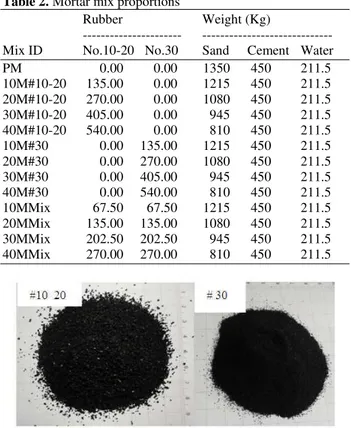
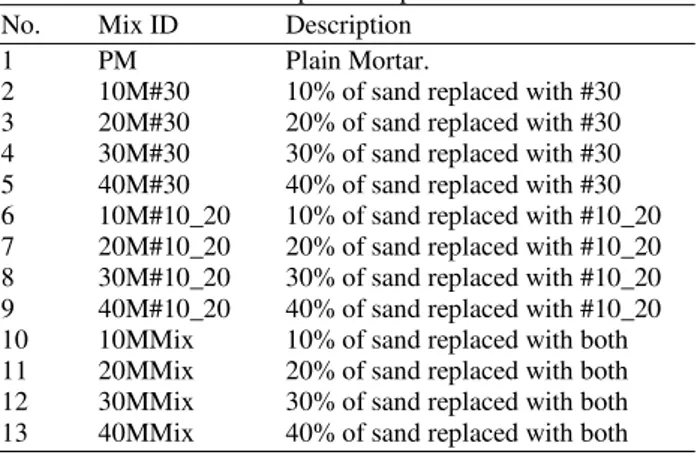
A total of 13 samples were prepared and tested for unit weight, absorption and thermal conductivity. The water to cement ratio of 0.47 and cement to sand ratio of 1: 3 were kept constant throughout the experiment (Table 2). The fine aggregate was replaced by different amounts of crumb rubber: 10, 20, 30 and 40% by weight of fine aggregate was replaced by crumb rubber, while other materials were kept constant. Two sizes of crumb rubber (#30, #10_20) and combination of both (50% from each) were used to replace the sand. Specimens were given identification numbers as described in Table 3.
Table 1. Properties of crumb rubber
Crumb rubber size
---
Property #30 Mix #10_20
Specific gravity 0.51 0.59 0.78
Density (kg/m3) 445.00 436.00 421.00
Fineness modulus 2.42 3.08 3.84
Table 2. Mortar mix proportions
Rubber Weight (Kg)
--- ---
Mix ID No.10-20 No.30 Sand Cement Water
PM 0.00 0.00 1350 450 211.5
10M#10-20 135.00 0.00 1215 450 211.5
20M#10-20 270.00 0.00 1080 450 211.5
30M#10-20 405.00 0.00 945 450 211.5
40M#10-20 540.00 0.00 810 450 211.5
10M#30 0.00 135.00 1215 450 211.5
20M#30 0.00 270.00 1080 450 211.5
30M#30 0.00 405.00 945 450 211.5
40M#30 0.00 540.00 810 450 211.5
10MMix 67.50 67.50 1215 450 211.5
20MMix 135.00 135.00 1080 450 211.5
30MMix 202.50 202.50 945 450 211.5
40MMix 270.00 270.00 810 450 211.5
Fig. 2. Gradation of fine aggregate and crumb rubber
Table 3. Mix ID and description of specimens
No. Mix ID Description
1 PM Plain Mortar.
2 10M#30 10% of sand replaced with #30
3 20M#30 20% of sand replaced with #30
4 30M#30 30% of sand replaced with #30
5 40M#30 40% of sand replaced with #30
6 10M#10_20 10% of sand replaced with #10_20
7 20M#10_20 20% of sand replaced with #10_20
8 30M#10_20 30% of sand replaced with #10_20
9 40M#10_20 40% of sand replaced with #10_20
10 10MMix 10% of sand replaced with both
11 20MMix 20% of sand replaced with both
12 30MMix 30% of sand replaced with both
13 40MMix 40% of sand replaced with both
2.4. Mixing and Preparing Specimens
A mixer type Hobart HL 200 was used to mix the materials. Sand, cement and rubber were placed in the mixer at the same time. The materials were dry-mixed for 2-3 min. After a homogenous distribution of the materials, water mixed with super-plactizer was added gradually and mixed for additional 4 min. After confirming that the mix was workable, the mix was poured into the molds. The molds used were specially made for this test. The molds were squares of 304.8 mm by 304.8 mm and 25.4 mm depth (12 in.×12 in.×1 in.). After placing mortar into the mold, the mold was vibrated on a vibrating table for 30-60 sec. Then excess mortar was removed and the specimen’s surface is finished with a steel trowel. The specimens were then covered with plastic for the first 24 h. Afterwards, the specimens were demolded and placed in the cure tank for 28 days. After 28 days, the specimens were removed from the curing tank and dried in an oven for 24 h at a temperature of 21°C (70°F).
3. TEST PROCEDURES
3.1. Unit Weight and Absorption of Rubberized
Cementious Materials
The unit weight of the fresh rubberized mortar was obtained in accordance with ASTM C642-06. The water absorption of the specimens was tested after 28 days. The specimens were removed from curing tank and then surface dried using a towel. When saturated surface dry condition was achieved, the specimens were weighted and recorded. After that the specimens were oven dried for 24 h at a temperature of 21°C (70°F) and weighted until constant mass was achieved.
3.2. Thermal Conductivity Measurement
Fig. 3. Adiabatic box photographs
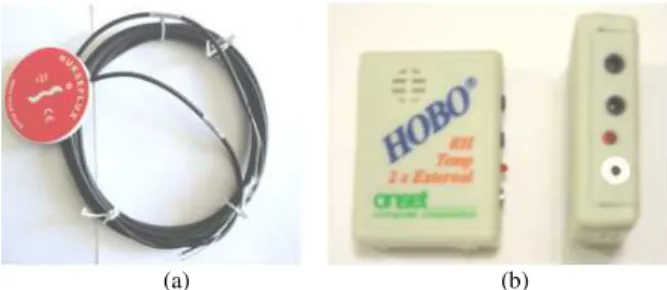
To measure heat flux, the device was equipped with HFP01 heat flux sensors (Fig. 4a). The body of HFP01 was composed of ceramics-plastic and a thermopile embedded in the plastic ceramic composite (thermopile is a set of connected thermocouples that can measure a small quantity of heat flux). To collect the data from HFP01, an accurate voltmeter that has millivolt range was used. HFP01 sensor was calibrated using a guarded hot plate according to ASTM C 177. It has sensitivity (E) of 61.37 V/W/m2. After the voltage output was collected, the heat flux was calculated based on the following formula:
Q=V / E (1)
Where:
Q = Heat flux W/m2, V = Measured voltage and
E = Sensor sensitivity (61.37 V/W/m2)
To measure temperature differences across the specimen, three temperature data loggers are placed from each side of the specimen. HOBO data logger type H08-007-02 and BoxCar 3.7 Software were used to measure temperature (Fig. 4b). The data logger has two internal temperature sensors and two external sensors. Further, the data logger is programmable in term of time increment and the start and end time.
3.3. Calibration of the Measurement Device
The device was calibrated by testing materials with known thermal conductivity. Four different construction materials were tested for thermal conductivity.
(a) (b)
Fig. 4. (a) HFP01 heat flux sensor, (b) HOBO data logger
The dimensions of the samples were 30.48 cm×30.48 cm×2.54 cm (12 in.×12 in.×1 in.). The samples include: Gypsum board (drywall) with 1.27cm (½ in.) thick; Oriented Strand Board (OSB) with 1.27cm (½ in.) thick; Plywood with 1.27cm (½ in.) thick; Mortar with 2.54 cm (1 in.) thick.
3.4. Test Setup
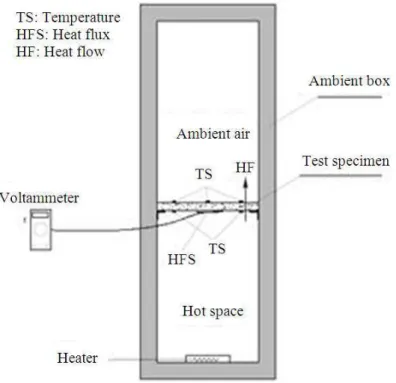
A schematic of thermal conductivity test setup is shown in Fig. 5.
The following testing steps were followed for each test: (a) Specimen was mounted and sealed from all sides; (b) The heat flux sensor was attached to the surface of the specimen with the red side facing the heat source (Fig. 6) and Heat flux was recorded when it reached steady state; (c) Three temperature loggers were mounted to each side of the specimen using double sided tape. The temperature logger was placed in such way that there was a temperature logger placed across from it on the other side; (d) the door of the box was tightly closed and sealed to ensure no heat loss through the edges of the door; (e) turn on the heat source: To reach steady state heat flow, the test was run for an hour and a half; (f) at the end of the test, the data were collected and the thermal conductivity was calculated using Fourier’s law (Equation 2).
T
Q k
x
∆
= − (2)
Where:
Q = Heat flux W/ m2 (But/ hr-ft2),
∆T = Temperature difference across material section K or °C (°F),
x = Material thickness m (ft) and
k = Thermal conductivity W/m. k (Btu /h-ft-F).
Fig. 5. Schematic of the test set-up
Fig. 6. Heat flux and temperature loggers attached to the specimen
The data of theses reference materials were obtained from online sources (www.engineeringtoolbox.com and www.bca.gov.sg) and from engineering handbooks. The thermal conductivity of the reference materials along with the results are listed in Table 4. A statistical analysis was carried out to determine a correction factor. The statistical analysis yielded an R² value of 0.995 which indicated a strong relation between the reference and experimental values. Using the statistical analysis,
an equation was derived (Equation 3) to modify the experimental values, the equation may be expressed as:
m exp
k = 0.964k . 0.011+ (3)
Where:
km = Modified thermal conductivity value and kexp = Experimental thermal conductivity value
4. EXPERIMNETAL RESULTS
Generally, all mixtures of rubberized cement mortar exhibited a lower unit weight compared to the plain cement mortar which indicates that lightweight construction materials can be obtained by incorporating waste tire materials (crumb rubber) into mix ingredients. Further, an improvement of the specimen’s thermal property was achieved and that can be seen by the reduction in the thermal conductivity of mixtures containing crumb rubber.
4.1. Density and Absorption of Rubber-Mortar
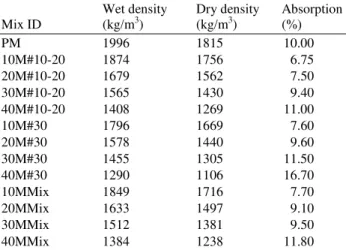
Results of density and water absorption of rubberized mortar are reported in Table 5.
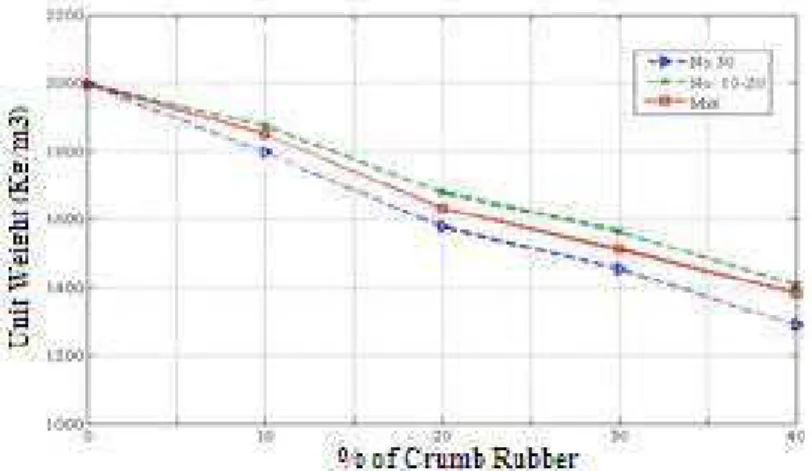
The density decreased when the rubber amount increased. Further, it was noticed that rubberized mortar contained powder rubber (#30) had lower unit weight than the rubberized mortar contained coarser rubber (#10_20). The unit weight decreased from 1996 Kg/m3 for plain mortar to 1408, 1209 and 1384 which is about 29%, 31% and 35% with respect to plain mortar when 40% of the sand was replaced by crumb rubber size #10_20, mix of #10_20 & #30 and #30, respectively. The density decreased by about 10% when the percentage of rubber inclusion increased from 10 to 20 and 30 to 40%, however, the decrease was only 7% when the amount of rubber increased from 20 to 30%. This trend was observed in all mixtures.
The water absorption of all mixtures that contained up 20% crumb rubber had water absorption lower than that of plain mortar. For the mixtures that contained #10_20 and mix rubber sizes had water absorption lower than plain mortar. However, mixtures that
contained 30% or more of #30 crumb rubber had water absorption higher than the plain mortar. Considering the size of rubber particle, the water absorption values of rubberized mortar that contained #30 crumb rubber were higher than that of #10_20 and the mix crumb rubber sizes (Fig. 7).
4.2. Thermal Conductivity of Rubberized Mortar
Results of the thermal conductivity, k-value, of Rubberized Mortar are tabulated in Table 6 and shown in Fig. 8. Findings show that the thermal conductivity values (k-values) decrease when the amount of rubber increase regardless of the size of crumb rubber. It was found that the k-values of rubberized mortar varied between 0.593 W/mK to 0.492 W/mK compared to 0.682 W/mK for the plain mortar. This is about 13 to 28% reduction in the thermal conductivity of plain mortar.
Fig. 7. Density of rubberized mortar
For different levels of rubber replacement, the decrease in thermal conductivity varied based on the size of rubber particles. From 10 to 20% rubber addition, thermal conductivity decreased by 2.5-8%. This range reduced to about 2-4% when the amount increased from 20 to 30%.
Table 4. Experimental versus reference values
Conductivity (W/ m K)
---
Reference Test
Sample designation values values
Gypsum board, ½ in thick 0.170 0.1760
Gypsum board, ½ in. thick 0.170 0.1720
Gypsum board, ½ in. thick 0.170 0.1790
Oriented strand board, ½ in. 0.130 0.1495
Plywood with ½ in. thick 0.138 0.1304
Mortar, 2.54 cm (1 in.) thick 0.710 0.6820
Mortar, 2.54 cm (1 in.) thick 0.710 0.6720
Mortar, 2.54 cm (1 in.) thick 0.710 0.7340
Table 5. Density and absorption of rubberized mortar
Wet density Dry density Absorption
Mix ID (kg/m3) (kg/m3) (%)
PM 1996 1815 10.00
10M#10-20 1874 1756 6.75
20M#10-20 1679 1562 7.50
30M#10-20 1565 1430 9.40
40M#10-20 1408 1269 11.00
10M#30 1796 1669 7.60
20M#30 1578 1440 9.60
30M#30 1455 1305 11.50
40M#30 1290 1106 16.70
10MMix 1849 1716 7.70
20MMix 1633 1497 9.10
30MMix 1512 1381 9.50
40MMix 1384 1238 11.80
Table 6. Thermal conductivity of rubberized mortar
Mixture ID k-value (W/mK) Reduction (%)
PM 0.682 00.0
10M#30 0.593 13.1
20M#30 0.578 15.2
30M#30 0.566 17.0
40M#30 0.538 21.2
10MMix 0.563 17.5
20MMix 0.544 20.2
30MMix 0.523 23.3
40MMix 0.514 24.6
10M#10-20 0.558 18.2
20M#10-20 0.514 24.6
30M#10-20 0.505 26.0
40M#10-20 0.492 27.8
When rubber content increased from 30% to 40%, the reduction in the thermal conductivity was about 2-5%. The results also indicated that the size of the crumb rubber had an effect on the thermal conductivity of the mixtures. For instance, at 10% percentage of #30, mix and # 10_20 rubber, the thermal conductivity decreased by 13.1, 17.5 and 18.2% respectively. The coarser size (#10_20) had higher effect on the thermal conductivity than the mix and #30 sizes. This can be attributed to the fact that large particles have greater surface than smaller particles and because the nature of rubber surface that tend to entrap air, large rubber particles entrap more air than smaller sizes. Among the rubber sizes used in this experiment, crumb rubber #30 seems to have more effect on the thermal conductivity of mortar if rubber amount exceeded 40%.
5. EMPIRICAL RELATIONSHIP
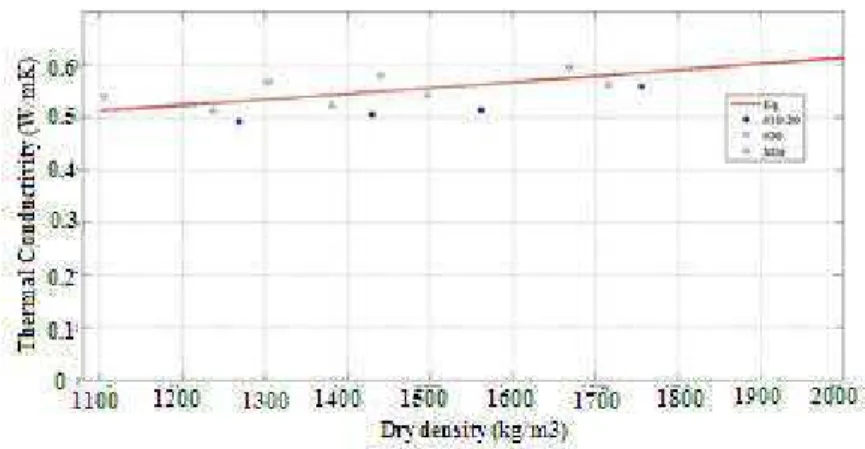
An empirical equation of thermal conductivity of rubberized cement mortar was derived based on dry densities of the mixtures tested in this study. Values obtained from the empirical equation (Equation 4) are plotted against the experimental values as shown in
Fig. 9 and tabulated in Table 7. The error ranged from 2% to 9% which is believed to be acceptable for initial prediction of thermal conductivity of mortar contains crumb rubber:
0.0002
k=0.411e ρ (4)
Table 7. Experimental versus theoretical k-values Thermal conductivity
---
Mix ID Experimental Theoretical Error (%)
10M#10-20 0.558 0.584 5
20M#10-20 0.514 0.562 9
30M#10-20 0.505 0.547 8
40M#10-20 0.492 0.530 8
10MMix 0.563 0.579 3
20MMix 0.544 0.554 2
30MMix 0.523 0.542 4
40MMix 0.514 0.526 2
10M#30 0.593 0.574 -3
20M#30 0.578 0.548 -5
30M#30 0.566 0.534 -6
Fig. 9. Experimental Vs. empirical results
6. DISCUSSION
6.1. Density and Absorption of Rubber-Mortar
All mixtures of rubberized cement mortar exhibited a lower unit weight compared to the plain cement mortar. The main reason behind the reduction in the density as explained by Ling (2011) is attributed to the increase in air content because of the nature of rubber surface which tend to entrap air. The increase in rubber quantity leads to increase in air content which causes the density to decrease. In this study, the density of mixtures contained mixed crumb rubber fell in the territory between the density of mixtures contained #30 and #10_20. Sukontasukkul (2009) had a similar observation. The reduction in the unit weight is attributed to rubber lower specific gravity than that of fine aggregate. The variation in the unit weight of mixtures contained different crumb rubber sizes can be also related to the specific gravity since it was the only variable.
Material’s ability to resist water absorption is desired property especially in areas expose to aggressive environment. The results obtained in this research showed an improvement of water absorption resistance with respect to the plain mortar. The decrease in water absorption is attributed to the decrease in the porosity of the mixtures and that because of filling the voids by rubber particles. In addition, the nature of rubber which resists water plays an important role in this reduction (Benazzouk et al., 2007; Ganjian et al., 2009). However, beyond 20% rubber inclusion the water absorption increased due to the reason that the high increase in air content cannot be occupied by rubber particles.
6.2. Thermal Conductivity of Rubberized Mortar
Thermal conductivity (k-value) measurement was determined by using a specially designed device. The k -value was obtained by taking the averages of heat flux passing through the specimen at steady state condition and temperature difference across the specimen concurrently. These values were used in the Fourier’s law (Equation 2) to calculate the k-values. The results were then modified using Equation 3 which was established by comparing the k-value of known materials by k-values obtained for the same materials using the designed apparatus.
It should be mentioned that during the preparation of the specimens, it was observed that the amount of air bubbles was more in the mixtures of larger rubber particles. Also, the workability of rubberized mortar that contained coarse crumb rubber size was better than the one with fine crumb rubber. Rubber particles showed more tendencies to float to the top surface of the specimen at 30% and more of rubber replacement.
7. CONCLUSION
This research investigated the effect of crumb rubber on the thermal conductivity of the rubberized cement mortar. The thermal conductivity was measured using a specially made device based on the principle of common measurement techniques. From the findings of the experimental work, the following conclusions may be drawn:
• The unit weight of rubberized mortar reduced by 35 when 40% of fine aggregate were replaced with crumb rubber. Also, the unit weight of mixtures contained finer rubber particles was lower than that mixtures contained coarser rubber particles
• Water absorption of mixtures contained up 20% crumb rubber was lower than that of conventional mixtures. This is an indication that such material can be useful as exterior plaster in regions that exposed to aggressive environmental conditions
• The size of rubber particles had an effect on the thermal conductivity of rubberized mortar. Mixtures contained large size rubber particles had a lower thermal conductivity than the one with smaller size of rubber particles for each level of replacement
• Thermal conductivity of rubberized mortar contained 40% of rubber inclusion had a thermal conductivity of 0.492 W/m. K which is about 28% reduction of the thermal conductivity of conventional mortar. This improvement in the thermal insulation of rubberized mortar can find a practical application as an exterior coating material that can contribute to envelop system of buildings
• Suggested future work include: (a) study the effect of rubberized mortar on the overall energy consumption of buildings and (b) investigate the effect of air voids size and air voids ratio on the thermal conductivity of rubberized mortar materials
8. REFERENCES
Benazzouk, A., O. Douzane and M. Que´neudec, 2004. Transport of fluids in cement-rubber composites. Cement Concrete Comp., 26: 21-19. DOI: 10.1016/S0958-9465(02)00119-1
Benazzouk, A.D., T. Langlet, K. Mezreb J.M. Roucoult and M. Quéneudec, 2007. Physico-mechanical properties and water absorption of cement composite containing shredded rubber wastes. Cement Concrete Composi., 29: 732-740. DOI: 10.1016/j.cemconcomp.2007.07.001
Bolden, J., T. Abu-Lebdeh and E. Fini, 2013. Utilization of recycled and waste materials in various construction applications. Am. J. Environ. Sci., 9: 14-24. DOI: 10.3844/ajessp.2013.14.24 Duman, V., A. Mladenovic and J. Suput, 2002.
Lightweight aggregate based on waste glass and its alkali-silica reactivity. Cement Concrete Res.,
32: 223-626. DOI:
10.1016/S0008-8846(01)00663-9
Fini, E., D. Oldham and T. Abu-Lebdeh, 2013. Synthesis and Characterization of Bio-Modified Rubber (BMR) asphalt: A sustainable waste management solution for scrap tire and swine manure. J. Environ. Eng., 139: 1454-1461. DOI: 10.1061/(ASCE)EE.1943-7870.0000765
Fiore, S., M.C. Zanetti and B. Ruffino, 2008. Waste characterization in steel casting and recycling opportunities in Europe. Am. J. Applied Sci., 5: 512-518. DOI: 10.3844/ajassp.2008.512.518 Ganjian, E., M. Khorami and A. Maghsoudi, 2009.
Scrap-tire-rubber replacement for aggregate and filler in concrete. Construction Building Materials,
23: 1828-1836. DOI:
10.1016/j.conbuildmat.2008.09.020
James, M.N., W. Choi and T. Abu-Lebdeh, 2011. Use of recycled aggregate and fly ash in concrete pavement. Am. J. Eng. Applied Sci., 4: 201-208. DOI: 10.3844/ajeassp.2011.201.208
Kearsley, E.P. and P.J. Wainwright, 2001. The effect of high fly ash content on the compressive strength of foamed concrete. Cem. Conc. Res, 31: 105-112. DOI: 10.1016/S0008-8846(00)00430-0 Laukaitis, A., R. Zurauskas and J. Keriene, 2005. The
Ling, T., 2011. Prediction of density and compressive strength for rubberized concrete blocks. Construction Building Materials, 25: 4303-4306. DOI: 10.1016/j.conbuildmat.2011.04.074
Roshan, A.M.G., M.B. Hosseinian, H. Khalilpasha and R. Amirpour, 2010. Optimization of micro silica in light weight lika concrete. Am. J. Eng.
Applied Sci., 3: 449-453. DOI:
10.3844/ajeassp.2010.449.453
Segre, N. and I. Joekes, 2000. Use of tire rubber particles as addition to cement paste. Cement Conc. Res., 30: 1421-1425. DOI: 10.1016/S0008-8846(00)00373-2
Sukontasukkul, P. and S. Wiwatpattanapong, 2009. Moderate lightweight concrete mixed with recycled crumb rubber. Thammasat Int. J. Sci. Tech., 14: 1-9. Sukontasukkul, P., 2009. Use of crumb rubber to improve thermal and sound properties of pre-cast concrete panel. Construction Building Materials, 23:
1084-1092. DOI:
10.1016/j.conbuildmat.2008.05.021