The Microstructure and Mechanical Properties of As-cast Mg-10Gd-3Y-xZn-0.6Zr
(x = 0, 0.5, 1 and 2 wt%) Alloys
Zhibing Dinga,b , Ruopeng Lua, Yuhong Zhaoa*, Hua Houa, Peng Chenga, Bu Zhiqianga,
Peilin Zhanga
Received: November 08, 2017; Revised: May 10, 2018; Accepted: May 22, 2018
The microstructure, mechanical properties and fracture behavior of as-cast Mg-10Gd-3Y-xZn-0.6Zr
(x = 0, 0.5, 1 and 2 wt%) alloys have been investigated by X-ray diffraction (XRD), optical microscopy
(OM), scanning electron microscopy (SEM) and tensile tests. The experimental results reveal that
the microstructure of the alloy without Zn contains α-Mg and Mg24(Gd,Y)5 phase, the microstructure
of the alloy with 0.5% Zn contained of α-Mg, (Mg,Zn)3(Gd,Y) and Mg24(Gd,Y,Zn)5 phase, whereas
when Zn content was 1% and 2%, the Mg12(Gd,Y)Zn phase and some needle-shaped stacking faults notably appear and the Mg24(Gd,Y,Zn)5 phases completely disappear. Moreover, a new 18R long period stacking ordered (LPSO) phase is observed in grain boundaries with increasing Zn content up to 2%. The tensile tests indicate that the alloy containing 0.5% Zn shows the optimal mechanical properties and the ultimate tensile strength (UTS), yield strength (YS) and elongation are 228MPa, 172MPa and 5.1%, respectively. As indicated by fracture analyses, the fracture modes of the alloys with 0%, 1% and 2% Zn are brittleness transcrystalline fracture, and the tensile fracture mode of 0.5% Zn alloy is typical tough transgranular fracture.
Keywords: Microstructure, Stacking fault, LPSO phase, Mechanical properties.
*e-mail: [email protected]
1. Introduction
As the lightest metallic structural materials, magnesium alloys have drawn great attention recently. Magnesium alloys are of great potential to be used in the aerospace, military, biomedical devices and automotive industries because
of their low density, high specific strength, and excellent
machinability1-4. The existing commercial magnesium alloys
for automotive applications are AZ91D (Mg-9Al-0.7Zn),
AM50A (Mg-5Al-0.4Mn) and AM60B (Mg-6Al-0.4Mn). These alloys have an excellent combination of corrosion resistance and die castability5,6. However, their low mechanical
properties cannot meet the current requirements of the civilian industries especially at high temperature.
It was reported that the addition of RE (rare-earth) element to magnesium alloys can improve creep properties than conventional Mg-Al alloys, and the most prominent alloys are Mg-Gd-Y-Zr series7-9. The addition of Zn to the
Mg-Gd-Y-Zr alloys can significantly improve the strengthening of the alloy, and different types of long periodic stacking ordered
(LPSO) structures can easily observe during homogenization treatment in many Mg-RE-Zn series10-12. Mg
97Zn1Y2 (at.%)
was developed using rapidly solidified powder metallurgy in
2001. It is a novel alloy with superior mechanical properties including tensile yield strength of 6l0MPa and elongation
of 5%. The main reason for the excellent mechanical properties of these alloys is that the existence of LPSO structure improves the hardness and strength of magnesium alloys13,14. The LPSO phase consists of a solid solution of
Y and Zn in a magnesium matrix where these atoms are placed periodically in the magnesium basal planes forming an ordered structure15. It is very interesting that such small
additives like 1-3 at.% Zn and Y into pure Mg can change dramatically its microstructure and mechanical properties.
Many investigations related to the microstructure and mechanical properties of the Mg-Gd-Y-Zn-Zr system have been reported16-18. Nevertheless, the formation mechanism of LPSO
structure still remains unclear until now. Accordingly, the aim
of the present paper is to systematically study the influence
of Zn concentration on the microstructure and mechanical properties of as-cast Mg-10Gd-3Y-0.6Zr (wt%) alloys.
2. Experimental Procedures
To obtain as-cast Mg-10Gd-3Y-xZn-0.6Zr (x = 0, 0.5, 1 and 2 wt%) alloys, Mg-30%Gd, Mg-30%Y, Mg-30%Zr master alloys, pure Mg and Zn were melted in an medium frequency induction heating furnace using a small steel crucible with a diameter of 98 mm under a protective argon
atmosphere at 780℃. The melt was cooled in water after
adequate stirring.
aCollege of Materials Science and Engineering, North University of China, Taiyuan 030051, China
The chemical compositions of the alloys were determined by inductively coupled plasma spectroscopy and are listed in Table 1. The samples for optical microscope (OM) and scanning electron microscope (SEM) analyses are prepared by the standard technique of grinding with SiC abrasive paper and polishing with an MgO suspension solution, followed by etching in a 4vol% nital solution. Phase analysis is conducted
using a Rigaku D/MAX2500PC X-ray diffractometer with a
copper target at scanning angles from 20º to 90º and scanning
speed of 5º/min. The detailed microstructure of the samples
was further analyzed using a TEM (JEM-2100F) operated at an accelerating voltage of 200 kV.
Tensile tests of above mentioned alloys are performed at
a crosshead speed of 1.5mm/min, according to the relevant
standard of using cylindrical specimen with marked dimension of 25mm gauge length and 5mm diameter. All tensile tests are
carried out on a Zwick/Roell Z020 tensile testing machine.
An average of three measurements was used. The tensile fracture surfaces are examined by SEM.
3. Results and Discussion
3.1 Microstructures
Fig. 1 shows the XRD patterns of the as-cast
Mg-10Gd-3Y-xZn-0.6Zr alloys. It can be observed that the 0Zn alloys
are mainly composed of α-Mg and Mg24(Gd,Y)5 phase.
However, in the 0.5Zn alloys, the microstructure is mainly
composed of α-Mg, Mg24(Gd,Y,Zn)5 and (Mg,Zn)3(Gd,Y)
phases. In addition, the Mg12(Gd,Y)Zn phases in the 1Zn and 2Zn alloys notably appear and the Mg24(Gd,Y,Zn)5 phases completely disappear. As seen in Fig. 1, the intensity of the
diffraction peaks corresponding to Mg12(Gd,Y)Zn phase are
strengthened with increasing the amount of Zn addition. Fig. 2 shows the optical micrographs of the as-cast Mg-10Gd-3Y-xZn-0.6Zr alloys. The as-cast alloys are composed
of α-Mg and eutectics distributing along the grain boundaries
discontinuously. The grain sizes of these alloys are relatively small because the melt were cooled quickly in water, the average grain sizes of the 0, 0.5, 1 and 2Zn alloys are 34.6,
37.2, 41.7 and 39.5µm, respectively. The high-magnification
microstructures of the four alloys are shown in Fig. 2b, d, f and h. As is seen, the secondary phases in all the four alloys are distributed homogeneously in the observed region and
Table 1. Actual chemical compositions of Alloys.
Alloy No. Composition
wt% at%
0Zn Mg-10.03Gd-3.04Y-0.63Zr Mg97.16Gd1.73Y0.92Zr0.19
0.5Zn Mg-10.10Gd-2.98Y-0.53Zn-0.61Zr Mg96.95Gd1.74Y0.91Zn0.22Zr0.18
1Zn Mg-10.05Gd-3.05Y-0.98Zn-0.59Zr Mg96.74Gd1.74Y0.93Zn0.41Zr0.18
2Zn Mg-10.13Gd-3.12Y-2.03Zn-0.60Zr Mg96.22Gd1.76Y0.95Zn0.89Zr0.18
Figure 1. X-ray diffraction patterns of the 0Zn, 0.5Zn, 1Zn and
2Zn alloys alloys.
the block-shaped phase gets coarsened with the increase of Zn elements. It is interesting that some needle-shaped phases can be observed near grain boundaries in 1Zn and 2Zn alloys. Fig. 3 shows the SEM back-scattered electron (BSE) images of the secondary phase in the as-cast Mg-10Gd-3Y-xZn-0.6Zr alloys. In the 0Zn (Fig. 3a) and 0.5Zn (Fig. 3b) alloys, the bright gray eutectic compounds distribute in grain boundaries in the form of skeleton-shape. On the other hand, the most of the secondary phases are mainly distributed along the grain boundaries with a hollow-out skeleton morphology in the 1Zn (Fig. 3c) and 2Zn (Fig. 3d) alloys, especially 2Zn alloy.
The SEM-EDS results of the four alloys are shown in Fig. 3 and Table 2. Fig. 3a and Table 2 show the SEM-EDS results in the 0Zn alloy. According to XRD and EDS results,
it is inferred that the B phase is Mg24(Gd,Y)5. The SEM-EDS results of individual phase in the 0.5Zn alloy are shown in Fig. 3b and Table 2. The content of Zn elements in C phase is higher than that in B phase. It is inferred that the B phase is Mg24(Gd,Y,Zn)5 and the C phase is (Mg,Zn)3(Gd,Y). The
small white square D phase can be determined to be rich in Gd and Y elements. The SEM-EDS results of the 1Zn
alloy are displayed in Fig. 3c and Table 2. Combined with microstructure observation and other investigation19, it can
Figure 2. The microstructures of as-cast alloys. (a), (c), (e) and (g) are the low-magnification microstructures of the 0Zn, 0.5Zn, 1Zn and 2Zn alloys, respectively. (b), (d), (f) and (h) are the high-magnification microstructures of the 0Zn, 0.5Zn, 1Zn and 2Zn
Table 2. EDS analysis of the selected points in Fig. 3.
Alloys Positions wt% at% Possible
compound
Mg Gd Y Zn Mg Gd Y Zn
0Zn alloy A 79.19 17.13 3.68 / 95.59 3.20 1.22 / α-Mg
B 63.20 30.86 5.94 / 90.81 6.86 2.33 / Mg24(Gd,Y)5
0.5Zn alloy
A 86.24 10.76 2.64 0.15 97.25 1.87 0.81 0.06 α-Mg
B 68.59 23.67 4.43 3.32 91.83 4.90 1.62 1.65 Mg24(Gd,Y,Zn)5
C 63.27 26.40 5.66 4.68 89.57 5.78 2.19 2.46 (Mg,Zn)3(Gd,Y)
D 26.24 38.71 34.31 0.73 62.66 14.29 22.40 0.65 Enrichment of Gd
and Y elements
1Zn alloy
A 83.98 11.70 3.00 1.32 96.42 2.08 0.94 0.56 α-Mg
B 54.53 30.46 6.60 8.41 84.97 7.34 2.81 4.88 (Mg,Zn)3(Gd,Y)
C 66.53 21.83 5.62 6.02 90.30 4.58 2.09 3.04 Mg12(Gd,Y)Zn
2Zn alloy
A 83.89 11.28 2.79 2.05 96.25 2.00 0.87 0.87 α-Mg
B 57.87 25.70 5.48 10.96 85.84 5.89 2.22 6.04 (Mg,Zn)3(Gd,Y)
C 64.64 21.79 5.64 7.93 89.16 4.65 2.13 4.07 Mg12(Gd,Y)Zn
D 60.64 23.53 5.81 10.03 87.13 5.23 2.28 5.36 Mg12(Gd,Y)Zn
Mg12(Gd,Y)Zn, preliminarily indicating that the phase is a
LPSO phase. The SEM-EDS results of individual phase in
the 2Zn alloy are shown in Fig. 3d and Table 2, according
to XRD and EDS results, the eutectics C and D in the 2Zn
alloy belong to the same phase, similar to 1Zn alloy. It is noted that the second phase in the 0Zn alloy is Mg24(Gd,Y)5, while Mg24(Gd,Y,Zn)5 and (Mg,Zn)3(Gd,Y) second phases are observed in the 0.5Zn alloy. It is interesting that only (Mg,Zn)3(Gd,Y) and Mg12(Gd,Y)Zn second phases
appear in the 1Zn and 2Zn alloy. EDS results suggest
that the Zn content in (Mg,Zn)3(Gd,Y) is higher than in Mg24(Gd,Y,Zn)5, with no Zn element in the Mg24(Gd,Y)5 phase. As a result, increasing the Zn content leads to the transformation of eutectic phases following the order of Mg24(Gd,Y)5→Mg24(Gd,Y,Zn)5+(Mg,Zn)3(Gd,Y)→(Mg,Z n)3(Gd,Y)+Mg12(Gd,Y)Zn.
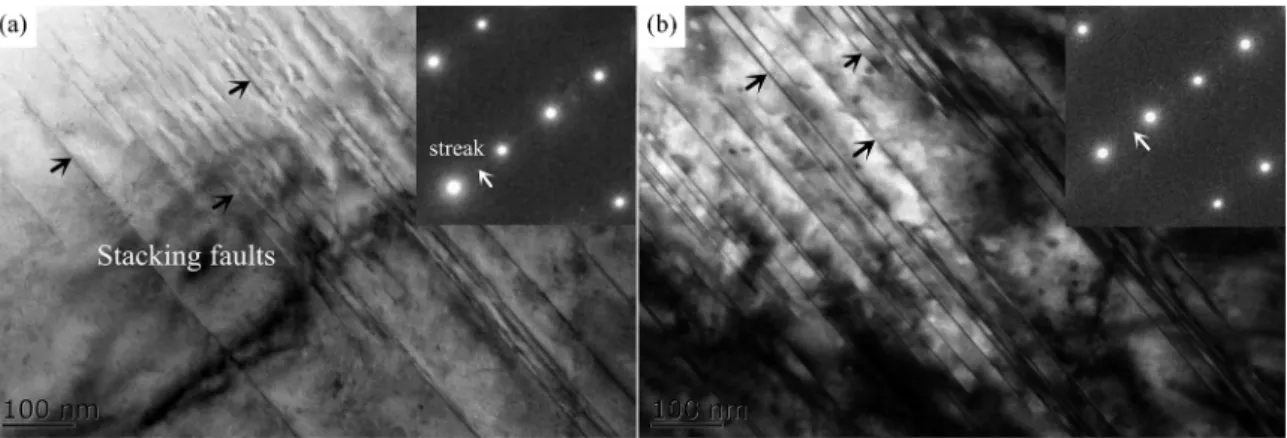
Fig. 4a-b shows the bright-field TEM image and SAED
patterns of the needle-shaped phase in the 1Zn and 2Zn alloys. The needle-shaped phase with a width of several nanometers are parallel to each other. Being viewed along <1120>α, the
light streaks appeared between diffraction spots of α-Mg in SAED patterns demonstrate these line contrasts are stacking
faults on (0001)α basal planes, which is consistent to reports20,21.
The difference is that the needle-shaped stacking faults in
2Zn alloy is more dense than the 1Zn alloy.
Fig. 5 shows a bright-field image and the corresponding SAED pattern of the LPSO phases in the 2Zn alloy. It is
obvious from the corresponding selected area electron
diffraction (SAED) patterns that five extra diffraction spots
occur at the intervals between (000)18R and (0018)18R spots, which further demonstrates the existence of LPSO phase is 18R (a = 0.325 nm and c = 3.694 nm)22-25. In addition, the
orientation relationships between 18R and α-Mg phases could also be confirmed as (001)18R//(0001)α and [010]18R//
[1120]α from the SAED patterns, which is consistent with previous reports26.
It is obvious that the needle-shaped phases in the 1Zn and 2Zn alloys are not LPSO phases but stacking faults. Suzuki
et al.27 reported that the simultaneous addition of Zn and Y
elements in Mg alloy can decrease the stacking fault energy
of α-Mg phase on basal plane effectively, which is favorable
to the formation of stacking fault. In addition, there are some evidences suggest that the formation of LPSO phase is related to the stacking fault. First, the stacking faults contain structure units with f.c.c. structure stacking sequence26,28, the formation
of 6H, 10H, 14H, 18R and 24R LPSO phases also results in the local structure units with f.c.c. structure stacking order sequence. Second, the stacking fault can cause weak extra
streaks and spots in SEAD patterns, which is consistent
with 10H, 14H and 18R LPSO phases26,28,29, these weak
extra streaks and spots correspond to the ordering of RE and Zn atoms with several atom layers. Third, the stacking fault exclusively forms in the alloy with low Zn content, whereas high Zn content leads to the formation of stacking fault as well as LPSO phase.
3.2 Mechanical properties
3.2.1 Tensile properties
The tensile properties at RT of the alloys are shown in Fig. 6. The UTS, YS and elongation of the 0Zn alloy are 204MPa, 154MPa, and 3.7%, respectively. The mechanical properties of the 0.5Zn alloy are better than that of other three alloys, and the UTS, YS and elongation are 228MPa, 172MPa and 5.1%, respectively. The UTS, YS and elongation of the 1Zn alloy are 205MPa, 156MPa and 4.4%, respectively. The UTS, YS and elongation are 215MPa, 164MPa and 4.2% for the 2Zn alloy, respectively.
Compared to the alloys with Zn, the mechanical properties of the 0Zn alloy are the lowest. The mechanical properties are mainly determined by eutectic phases, stacking fault, LPSO phase, and grain size. It is well known that any one hard and fragile phase has duality for strengthening role:
a good strengthening effect can be achieved if this phase
uniformly distributed in small particle form, or a harmful role will generate if it is in coarse particles or continuous
Figure 7. The tensile fracture of the as-cast alloys. (a), (b), (c) and (d) are the SEM images of the fracture surface of the 0Zn, 0.5Zn, 1Zn and 2Zn alloys, respectively.
Figure 5. Bright-field TEM image and the corresponding SAED
pattern along <1120>α direction of the LPSO phases in the as-cast 2Zn alloy.
Figure 6. The mechanical properties of the 0Zn, 0.5Zn, 1Zn and 2Zn alloys.
network shape. Moreover, the present result is consistent to these investigations. Although the LPSO phase has higher elastic moduli and vickers hardness, which can hinder the
movement of dislocation, and significantly improve the
strength and plasticity of the alloys3,19. The hollow-out skeleton
(Mg,Zn)3RE phase has hard and fragile characteristics,
and the (Mg,Zn)3RE/α-Mg interfaces are not coherent30.
3.2.2 Fractography
Fig. 7 shows the fracture surfaces of the tensile samples of the as-cast Mg-10Gd-3Y-xZn-0.6Zr alloys. It is observed that there are some dimples, tearing ridges and evident river patterns in the fracture surfaces of 0Zn (Fig. 5a), 1Zn (Fig. 5c) and 2Zn (Fig. 5d) alloys, which indicates that the tensile fracture mode belongs to brittleness transcrystalline fracture.
Comparatively, there are mainly dimples with different depths
and a few tearing ridges observed in the fracture surfaces of 0.5Zn (Fig. 5b) alloy due to the formation of a small amount of (Mg,Zn)3RE phases, which is in accordance with its high elongation of 5.1%. This indicates that the tensile fracture mode of 0.5Zn alloy is typical tough transgranular fracture.
4. Conclusions
The microstructure, mechanical properties and fracture behavior of as-cast Mg-10Gd-3Y-xZn-0.6Zr (x = 0, 0.5, 1 and 2 wt%) alloys have been investigated. The conclusions are summarized as follows:
1. The microstructures for the as-cast alloy without
Zn is mainly composed of α-Mg and Mg24(Gd,Y)5
phase. However, in the 0.5Zn alloy, the microstructure
is mainly composed of α-Mg, Mg24(Gd,Y,Zn)5 and
(Mg,Zn)3(Gd,Y) phases. In addition, the Mg12(Gd,Y) Zn phases in the 1Zn and 2Zn alloys notably appear and the Mg24(Gd,Y,Zn)5 phases completely disappear. 2. TEM analyses indicate that the needle-shaped phase near grain boundary in the 1Zn and 2Zn alloys are stacking faults. The new 18R LPSO phase is observed in the 2Zn alloys.
3. The tensile tests indicate that the Mg-10Gd-3Y-0.5Zn-0.6Zr alloy with a small amount of (Mg,Zn)3RE phases shows the optimal mechanical properties and the ultimate tensile strength (UTS), yield strength (YS) and elongation are 228MPa, 172MPa and 5.1%, respectively.
4. The tensile fracture modes of the alloys with 0%, 1% and 2% Zn are brittleness transcrystalline fracture, and the tensile fracture mode of 0.5% Zn alloy is typical tough transgranular fracture.
5. Acknowledgments
This work is supported by the National Natural Science Foundation of China (Nos.51774254, 51774253, 51701187, U1610123, 51674226, 51574207, 51574206), The Science and Technology Major Project of Shanxi Province (No. MC2016-06), Shanxi Province Science Foundation for
Youths (No.201601D021062).
6. References
1. Liu WC, Jiang LK, Cao L, Mei J, Wu GH, Zhang S, et al. Fatigue behavior and plane-strain fracture toughness of sand-cast Mg-10Gd-3Y-0.5Zr magnesium alloy. Materials & Design. 2014;59:466-474.
2. Zhao ZD, Chen Q, Chao HY, Huang SH. Microstructural
evolution and tensile mechanical properties of thixoforged
ZK60-Y magnesium alloys produced by two different routes.
Materials & Design. 2010;31(4):1906-1916.
3. Cheng P, Zhao YH, Lu RP, Hou H, Bu ZQ, Yan F. Effect of Ti
addition on the microstructure and mechanical properties of cast Mg-Gd-Y-Zn alloys. Materials Science and Engineering: A. 2017;708:482-491.
4. Chen Q, Zhao ZX, Shu DY, Zhao ZD. Microstructure and mechanical properties of AZ91D magnesium alloy prepared
by compound extrusion. Materials Science and Engineering: A. 2011;528(10-11):3930-3934.
5. Luo A, Pekguleryuz MO. Cast magnesium alloys for elevated temperature applications. Journal of Materials Science. 1994;29(20):5259-5271.
6. Chen Q, Shu DY, Hu CK, Zhao ZD, Yuan BG. Grain refinement
in an as-cast AZ61 magnesium alloy processed by multi-axial forging under the multitemperature processing procedure.
Materials Science and Engineering: A. 2012;541:98-104.
7. Li YL, Wu GH, Chen AT, Jafari Nodooshan JR. Effects of Gd
and Zr additions on the microstructures and high-temperature mechanical behavior of Mg-Gd-Y-Zr magnesium in the product form of a large structural casting. Journal of Materials Research. 2015;30(22):3461-3473.
8. Wang J, Meng J, Zhang DP, Tang DX. Effect of Y for enhanced
age hardening response and mechanical properties of Mg-Gd-Y-Zr alloys. Materials Science and Engineering: A. 2007;456(1-2):78-84.
9. Chen Q, Shu DY, Zhao ZD, Zhao ZX, Wang YB, Yuan BG.
Microstructure development and tensile mechanical properties of Mg-Zn-RE-Zr magnesium alloy. Materials & Design. 2012;40:488-496.
10. Honma T, Ohkubo T, Kamado S, Hono K. Effect of Zn additions
on the age-hardening of Mg-2.0Gd-1.2Y-0.2Zr alloys. Acta Materialia. 2007;55(12):4137-4150.
11. Liu K, Zhang JH, Sun W, Qiu X, Lu HY, Tang DX, et al. Effect
of Zn concentration on the microstructures and mechanical properties of extruded Mg-7Y-4Gd-0.4Zr alloys. Journal of Materials Science. 2009;44(1):74-83.
12. Li DJ, Zeng XQ, Dong J, Zhai CQ, Ding WJ. Microstructure
evolution of Mg-10Gd-3Y-1.2Zn-0.4Zr alloy during heat-treatment at 773K. Journal of Alloys and Compounds. 2009;468(1-2):164-169.
13. Kawamura Y, Hayashi K, Inoue A, Masumoto T. Rapidly
Solidified Powder Metallurgy Mg97-Zn1Y2 alloys with Excellent
14. Inoue A, Kawamura A, Matsushita M, Hayashi K, Koike J. Novel hexagonal structure and ultrahigh strength of magnesium solid solution in the Mg-Zn-Y system. Journal of Materials Research. 2001;16(7):1894-1990.
15. Abe E, Kawamura Y, Hayashi K, Inoue A. Long-period ordered structure in a high-strength nanocrystalline Mg-1at% Zn-2at% Y alloy studied by atomic-resolution Z-contrast STEM. Acta Materialia. 2002;50(15):3845-3857.
16. Xu C, Zheng MY, Xu SW, Wu K, Wang ED, Kamado S, et al.
Ultra high-strength Mg-Gd-Y-Zn-Zr alloy sheets processed by large-strain hot rolling and ageing. Materials Science and Engineering: A. 2012;547:93-98.
17. Li HZ, Liu HT, Li FB, Wang HJ, Liang XP, Liu CM. Microstructures and Properties of Extruded Mg-Gd-Y-Zr Alloys Containing Zn. Journal of Materials Engineering and Performance. 2012;21(6):1056-1060.
18. Zheng L, Liu CM, Jin J, Wang X, Ji DW. Effect of Hot-Rolling
on Microstructures and Mechanical Properties of Extruded Mg-6Gd-3.2Y-xZn-0.5Zr Sheet. Journal of Materials Engineering and Performance. 2013;22(1):104-111.
19. Huang S, Wang JF, Hou F, Huang XH, Pan FS. Effect of Gd
and Y contents on the microstructural evolution of long period stacking ordered phase and the corresponding mechanical properties in Mg-Gd-Y-Zn-Mn alloys. Materials Science and Engineering: A. 2014;612:363-370.
20. Suzuki M, Kimura T, Koike J, Maruyama K. Strengthening
effect of Zn in heat resistant Mg-Y-Zn solid solution alloys.
Scripta Materialia. 2003;48(8):997-1002.
21. Liu H, Bai J, Yan K, Yan JL, Ma AB, Jiang JH. Comparative studies on evolution behaviors of 14H LPSO precipitates in as-cast and as-extruded Mg-Y-Zn alloys during annealing at 773 K. Materials & Design. 2016;93:9-18.
22. Itoi T, Seimiya T, Kawamura Y, Hirohashi M. Long period stacking structures observed in Mg97Zn1Y2 alloy. Scripta Materialia. 2004;51(2):107-111.
23. Matsuda M, Ii S, Kawamura Y, Ikuhara Y, Nishida M. Variation
of long-period stacking order structures in rapidly solidified
Mg97Zn1Y2 alloy. Materials Science and Engineering: A. 2005;393(1-2):269-274.
24. Zheng L, Liu CM, Wan YC, Yang PW, Shu X. Microstructures and mechanical properties of Mg-10Gd-6Y-2Zn-0.6Zr(wt.%) alloy. Journal of Alloys and Compounds. 2011;509(35):8832-8839.
25. Yang Q, Xiao BL, Wang D, Zheng MY, Wu K, Ma ZY. Formation
of long-period stacking ordered phase only within grains in Mg-Gd-Y-Zn-Zr casting by friction stir processing. Journal of Alloys and Compounds. 2013;581:585-589.
26. Zhu YM, Morton AJ, Nie JF. The 18R and 14H long-period stacking ordered structures in Mg-Y-Zn alloys. Acta Materialia. 2010;58(8):2936-2947.
27. Suzuki M, Kimura T, Koike J, Maruyama K. Effects of zinc on
creep strength and deformation substructures in Mg-Y alloy.
Materials Science and Engineering: A. 2004;387-389:706-709.
28. Egusa D, Abe E. The structure of long period stacking/order
Mg-Zn-RE phases with extended non-stoichiometry ranges.
Acta Materialia. 2012;60(1):166-178.
29. Yamasaki M, Matsushita M, Hagihara K, Izuno H, Abe E, Kawamura Y. Highly ordered 10H-type long-period stacking order phase in a Mg-Zn-Y ternary alloy. Scripta Materialia. 2014;78-79:13-16.
30. Xu DK, Liu L, Xu YB, Han EH. Effect of microstructure