ISSN online: 1807-1775
DOI: 10.4301/S1807-17752011000100008
_____________________________________________________________________________________ Recebido em/Manuscript first received: 07/01/2009 Aprovado em/Manuscript accepted: 06/08/2010
Endereço para correspondência/ Address for correspondence
Sonia Valle W. Borges de Oliveira, Professor at School of Economics, Business and Accounting of
Ribeirão Preto – USP, São Paulo, Brazil Av. Bandeirantes 3900, Monte Alegre, Ribeirão Preto/SP, CEP: 14040-900 55 (16) 3602-4751, E-mail: [email protected]
Cristiane Sonia Arroyo, Doctorate in Administration at FEA/USP, São Paulo, Brazil Rua Felipe Achê,
566, Jardim São Luiz, Ribeirão Preto/SP, CEP: 14020-420 55 (16) 3637-7487, e-mail: [email protected]
Marcio Mattos Borges de Oliveira, Associate Professor at School of Economics, Business and
Accounting of Ribeirao Preto – USP, São Paulo, Brazil Av. Bandeirantes 3900, Monte Alegre, Ribeirão Preto/SP, CEP: 14040-900 55 (16) 3602-3939, E-mail: [email protected].
Alessandra Henriques Ferreira, Doctoral graduate student in Administration of Organizations at Faculty
of Economics, Administration and Accounting of Ribeirao Preto – USP, São Paulo, Brazil Post-Doctorate Program in Administration at FEA-RP/USP, São Paulo, Brazil E-mail: [email protected].
USE AND DEVELOPMENT OF HEALTH INFORMATION
SYSTEMS: THE EXPERIENCE OF AN ORGANIZATIONAL UNIT
RESPONSIBLE FOR THE TECHNOLOGICAL SERVICES AT A
PUBLIC HOSPITAL
Sonia Valle W. Borges de Oliveira Cristiane Sonia Arroyo
Marcio Mattos Borges de Oliveira Alessandra Henriques Ferreira
School of Economics, Business and Accounting of Ribeirao Preto – USP, São Paulo, Brazil
__________________________________________________________________________________
ABSTRACT
The goal of this work is to present an overview of the use and development of health information systems (HIS) reporting the experience of the information management department of a public hospital. Recently, the implementation of HIS has received great prominence. The patient’s improvement process can be enriched with the introduction of the patient’s history by electronic means, among other technologies. A descriptive study with interviews conducted between the years 2004 and 2007 provided the experience obtained by the Center for Information and Analysis of HC-FMRP-USP. It can be concluded that the success of the HIS implementation can lead to cost reduction and improve the work quality of health care professionals as well as patient care services.
1. INTRODUCTION
The application of information systems in the health care field has received much attention over the last few years. The advances made in medicine in the process of patient treatment may be enriched by the introduction of detailed history of the patient by electronic means, of support systems for decision making in diagnostics and the prescription of drugs, of a data base of related cases, among others, coming from the introduction of information systems (IS) and of information technology (IT).
The ISs and the ITs are information-generating instruments. According to Rubies-Feijooa, Salas-Fernándeza, Moya-Olverab and Guanyabens-Calveta (2010), the use of such instruments could improve the quality of the treatment given to the patient and facilitate the standardizing of medical procedures, aside from co-relating several areas of a health care organization, like scheduling of appointments, purchase of drugs and material, the financial sector, among others. Consequently, the control and cost reduction would also be significant (Goodman, 2005; Himmelstein, Wright, & Woolhandler, 2010).
In Brazil, the seeking of information is being introduced gradually in different instances in the health care sector, be it in the public or private health care system. The Department of Information and eHealth (DATASUS) of the Ministry of Health [MH] (2007a) concentrates great effort to integrate and make available this health information in Brazil.
Currently, health information systems (HIS) prioritize patient assistance needs as can be seen by the computer-based patient record (CBPR) initiative that is being implemented in less than one percent of hospitals in Brazil (Sabattini, 2007). The CBPR is a special and complex health IS that integrates all the data of a health care organization. Making an analogy with other areas of business we can say that the CBPR is equivalent to the ERP (Enterprise Resource Planning) which deals with the management of business relations.
The root of problem that gave the incentive to the development of this article is: how do public organizations that give assistance in the health care field are developing their ISs? In order to answer the question of the proposed problem, the objective was to present a panorama of the use and development of health information systems reporting the experience of the Center for Information and Analysis (CIA), the organizational unit responsible for the technological services offered to the Hospital das Clínicas of the University of São Paulo’s Faculty of Medicine of Ribeirão Preto (HC-FMRP-USP).
The justification of the proposal of this article is given by the fundamental need of the HC-FMRP-USP to generate the information and the knowledge originated by a great quantity and diversity of data resulted from treatment of nearly 2,500 patients a day. This quantity refers to the number of physician consultations done and the diversity refers to different types of data like text and imaging, for example, medical prescriptions, x-ray exams, and ultrasounds, among other types of data.
technology and health information in Brazil. Topic three deals with the methodology used in this work, the fourth presents the results and discussions, the fifth shows the final considerations and lastly, the sixth is about the conclusion.
2. HEALTH INFORMATION TECHNOLOGY
Information Technologies (IT) are made of equipment, communication technologies and manipulation of data bases that serve as technological tools for SIs to be developed and to function. The information is the result of existing data treated in a significant and useful format (Cruz, 2007; Laudon & Laudon, 2007).
Information Technologies are available through computers that are more and more powerful; by the availability of Intranet, Extranet and Internet; better network security; wireless technologies; portable equipment, for example, cell phones, palmtops and handhelds; reusable software, open source software, among others (Turban, Rainer, & Porter, 2005).In general, it may be said that technology is not the problem in order to integrate health systems, but a great tool for its solution. Computer processing power has doubled each year and its cost has been reduced, making it accessible to institutions and the population. The internet has allowed for the integration among institutions that are geographically distant, as well as the sharing of clinical data and even the consultation and monitoring of patients in their own residences (Machado et al., 2010; Massad, Marin, & Azevedo, 2003; O’Neill & Klepack, 2007).
The Computer-based Patient Record (CBPR) is a special and complex information system that assists in human health which integrates all the data of a health organization. CBPR makes it available, in just one screen, data and information about a patient like exams, diagnostics, health history, personal data, drugs, invoicing and other information and is implemented in less than one percent of hospitals in Brazil (Sabattini, 2007).
Making an analogy with other areas of business, we can say that the CBPR is equivalent to the ERP (Enterprise Resource Planning) which deals with the management of business relations. Perez and Zwicker (2010) consider the patient record as an IS for working groups as well as an organizational IS.
Laudon, 2007).
Many IT resources have assisted in providing the data from the CBPR as graphic interfaces. The storing and distributing of images denominated PACS (Picture Archiving and Communication Systems) are one example of the application of this technology (Kahn, Channin, & Rubin, 2006; Massad et al., 2003). All this patient information could be discussed via web among other specialists for the exchange of opinions and to assist with decision making (Machado et al., 2010). Telemedicine may be assisted by world standards of digital communications for medical imaging like the DICOM standard (Digital Imaging and Communications in Medicine) which also works as text information (Noumeir, 2006). DICOM’s purpose is to standardize the formatting of diagnostic images like tomography, magnetic resonances, x-rays, ultrasounds, etc.
The creation of low cost equipment for the use in telemedicine can be of great value to developing countries. According to data written in 1998 in Szot et al. (2004), there were 279 physicians for every 100,000 inhabitants, while in South Africa this number fell to 56.3, 93.2 in Peru and 13 in Haiti for the same number of inhabitants. It was also observed that in most health establishments there were no radiology specialists, hindering patient diagnosis. To assist with this situation, a low cost digital camera was created, in which the image would be generated directly into JPEG2000 format, through a TIFF image, using Java JJ200 software.
Besides technology, to achieve success when implementing the CBPR, according to Ammenwerth, Graber, Herrmann, Burkle and Konig (2003) you need cooperation, the availability of treatment programs (protocols, conduct guidelines, warnings and notices), team instructions and the implementation of technological norms and standards and of the data itself. It is important to emphasize that success will depend on the people themselves (Lewicka, 2010).
According to Lederman and Parkes (2005) hospitals and patients struggled with the high costs resulting from errors made in prescribing drugs. These errors could have been minimized with the help of software that is of great assistance in the prescription of these drugs. According to Bates (2005), many barriers impeding the implementation of the CBPR were not technical. The absence of technological knowledge serves as a limitation to the success when implementing HIS. Establishing training strategies, technical follow-ups, and raising the awareness of the medical corps would avoid problems such as resistance to using HIS (Joia & Magalhães, 2009; Nunes, Cotta, & Lima, 2006).
Virtual reality and distance learning could be implemented into programs that would qualify health care professionals (Camacho, 2009). The dissemination of information, mainly prophylactics, among the general population, should receive special attention, and be provided by a public health care system (Paulon & Carneiro, 2009).
released one day earlier than if IS was not used.
But the challenge of maintaining HIS updated still remains (Perez & Zwicker, 2010). The medical treatment processes modify themselves due to internal causes (new diagnostics and therapeutic procedures or changes in departmental structure) or external causes (like economic pressure at hospitals and integrated networks of medical services making it necessary to make quick adaptations to HIS to meet new conditions. In order to speed up these adaptations, a methodology for the continuous evolution of data and procedures with the use of a holistic IS in Lenz and Kuhn (2004) was presented.
In the area of medical images, a few research and paper themes were developed, like the study that compared three different methods, using the characteristics of usability, stability, and the quality of the results, to measure the time it took to display images. In this case method three showed to be superior to the other two (Pietsch, Schlaefke, Vogl, & Bergh, 2006). Kahn et al. (2006) described an ontology to integrate PACS (Picture Archiving and Communication Systems) with ISs in clinics to support the process of radiological interpretations. Noumeir (2006) reports the benefits of the use of the diagnostic imaging report obtained through DICOM (Digital Imaging and Communications in Medicine). The main component of the system proposed in the works of Hur, Lee and Kim (2006) was the construction of a module for the management of reports in the web using XML technology (eXtensible Markup Language) that allows for more flexibility and convenience to imaging technicians and radiologists.
ITs and HIS allow the patient to electronically access their own health information wherever they may be. In several countries, the concerns with protecting the privacy of information are a reality ascertained by the adoption of legislation and policies in each country. Win, Susilo and Mu (2006) did a study on privacy of information.
In the USA, the forecast was that the use of the computer-based patient record (CBPR) in doctors’ offices will become a reality by 2024, if the current market situation remains the same (Ford, Menachemi, & Phillips, 2006). In Australia, the challenges are in the different spheres of government, the management of underestimated changes and the maintenance of continuous political support. England forecast an investment of $32 billion to computerize medical and administrative registries of 52 million patients over the next 10 years (Chantler, Clarke, & Granger, 2006). In 2009, Canada’s forecast was to reach nearly 50% of the population with the interoperable CBPR, that is, the exchange of information among several health care institutions (Health Management Technology, 2006).
n this Topic, the studies presented showed that the advances in medicine as it relates to the cure of the patient is enriched by the introduction of IT and IS.
3. HEALTH INFORMATION IN BRAZIL
and organized manner, and transform them into information. ISs supply information for decision makers and also for people in the organization.
Although there is enormous fragmentation of the health market in Brazil, the Sistema Único de Saúde - SUS (Unique Health System) still is the largest payer of services, with nearly 75% of the public consultations that result in nearly 125 million Brazilians as opposed to 42 million seen by the private market (Ammenwerth et al., 2003) which represent 25% of the population who is covered by private health insurance (Ministry of Health, 2007b).
The data presented by Ammenwerth et al. (2003) about the Brazilian situation is summarized as: nearly 7,800 hospitals, of which 80% have less than 100 beds; nearly 2,700 private health insurance carriers, of which 70% cover less than 50,000 lives and 6 to 8 million lives seen by private health insurers that tend to be the largest of the private health insurance companies in Brazil.
The Agência Nacional de Saúde Suplementar - ANS, (National Agency of Supplemental Health) (2010) regulates the health care-sector operators which are the companies and entities that work in the supplemental health sector offering consumers health assistance plans. In 2005, with the advent of the requirements manual, phase I for the certification of the ANS and its standardization of the Supplemental Health Information Exchange (SHIE) began.
According to the manager of the National Health Agency (HealthCare Brazil, 2007), the SHIE standard is like the EDI project (Electronic Data Interchange) called e-business which is a win-win project for it was found that the entire productive sector where the project was implemented, the entire productive chain was also benefitted.
Several countries are on their way to integrate health information via the internet and to the adoption of the universal Electronic Health Registry (EHR), classified as one computerized level above the CBPR. In the USA, the HIPAA (Health Insurance Portability and Accountability Act) of 1996 deals with this issue, in Canada the INFOWAY agency (Health Infoway) deals with developing the health sector by adopting standards, in Australia there is the Connecting for Health, and lastly, in Europe, there is an international project called E-health Europe.
The Ministry of Health (MH) has created several mechanisms to integrate and make available health information by means of health programs and projects that use IT and IS as the Basic Attention Information System (BAIS), the National Health Card (NHC), REFORSUS – Strengthening of the Reorganization of the Unique Health System, the National Health Information Network (NHIN) and the National Policy for Health Information and Computerization (NPHIC). For follow-ups, implementation and systemization of these projects, the MH relies on DATASUS which is Unique Health System’s Computer Department which is of a national scope (Ministry of Health, 2007c).
Conceição do Araguaia was concluded (Ledo, 2006).
The introduction of the CBPR in patient care would provide an improved result with the integration of decision-support systems (DSS). Joia and Magalhães (2009) and Tange et al. (2003) commented on the importance of this partnership, since it would give physicians the decisive push so that they may believe in the use of IT in the treatment of patients. The way in which these new technologies were introduced was evaluated in view of the pre-established routines and its difficulties in substituting them without the physician’s thorough awareness.
Another manner for the use of the CBPR was presented by Ueckert, Goerz, Ataian, Tessmann and Prokosch (2003) to increase patient power in the process, since it allows for their direct communication with health professionals. This instrument has the capacity to integrate the hospital’s clinical IS with the patient, and even allowing for the forwarding of reminders to patients about health programs. Critical points in this system are security and access management.
Menachemi and Brooks (2006) did a revision of the associated technologies to the security of patient information in relation to costs and benefits. Shen et al. (2006) discussed the barriers faced with the regulations from the Health Insurance Portability and Accountability Act (HIPAA) for the implementation of this research in health services. Yang, Lin, Chang and Jian (2006) presented a study to serve as a reference on how to manage health information in a confidential and secure manner especially in electronic transactions. Xiao, Hu, Croitoru, Lewis and Dasmahapatra (2010) proposed a security model for the health information systems.
Nevertheless, the implementation of the CBPR would bring some obstacles like cultural diversity of people involved in the process, political and economic aspects and the lack of incentives on the part of the organization and the diversity of information systems (Evangelisti, 2006). In summary, some important dates in the health policies are in Figure 1.
Year Country Event
1988 Brazil Creation of the Unique Health System (SUS)
1996 USA
American Law that established an electronic standard for the exchange of health information: Health Insurance Portability and Accountability Act (HIPAA)
1998 England National strategy aligned with the objectives of the Government to “offer English citizens the best health service in the world”
Canada Canada Health Infoway: paths to a better Health 1999
Year Country Event
Australia Health Information Network for Australia
Canada
Strategy for the area of Health Information called Canada Health Infoway which aims to improve the quality, access and the continuity of services for all Canadians
2000
Brazil Creation of the National Health Agency (ANS)
2001 Australia
Strategy for the area of Information and Computerization of Health. The project is called Health Online: A Health Information Action Plan for Australia (Online Health: an action plan for Health Information in Australia)
Australia HealthConnect begins its operations 2002
Brazil Resolution 1639/2002 of the Federal Counsel of Medicine
USA HIPAA Privacy Rules 04/14/2003
2003
Brazil National Policy on Computerized Health (NPCH)
the National Policy for Health Information and Computerization
2004 Brazil National Health Card (NHC) in 44 municipalities (pilot) promises free software
USA HIPAA Security Rules 04/20/2005
2005
Brazil
Requirements Manual. Phase I Public Consultation Certification # 21 of the ANS (National Health Agency) Supplemental Health Information Exchange (SHIE)
2006 Brazil All products must come with bar codes by April 2006
2009 Canada 50% of the population are in the interoperable CBPR
2010 Australia CBPR availability for entire population
2014 USA Electronic Registry of all American citizens
4. METHODOLOGY
This current study was defined as qualitative research done by means of a descriptive study with an empirical investigation. The collection of data used the survey method and the techniques chosen were personal interviews, bibliographical data research and secondary data (Cooper & Schindler, 2003).
Personal interviews were held with the director of computer services of the HC-FMRP-USP. These interviews were held on the 29th of June 2004 lasting around two hours and on the 1st, 12th and 21st of March 2007, each lasting around 90 minutes. Secondary data were also collected as an internal report about the strategic planning for the year 2007 (Góes & Dallora, 2007). The analysis of this data showed a comparison to CIA in the years 2004 and 2007.
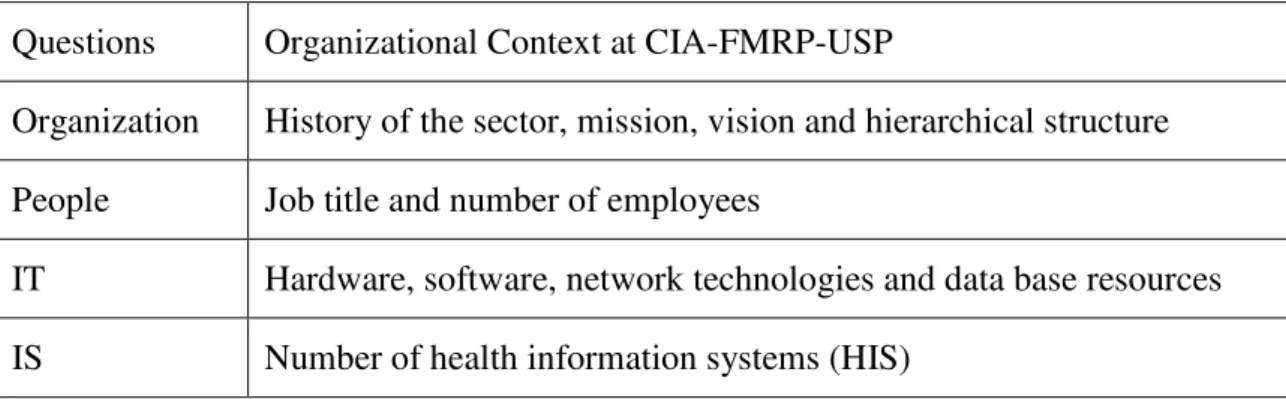
Figure 2 shows the sequence of questions used at the interviews.
Questions Organizational Context at CIA-FMRP-USP
Organization History of the sector, mission, vision and hierarchical structure
People Job title and number of employees
IT Hardware, software, network technologies and data base resources
IS Number of health information systems (HIS)
Figure 2. Sequence used during interviews about the CIA experience Source: Authors
5. RESULTS AND DISCUSSION
The results of the interviews given by the director of computer services and the experience of the Center for Information and Analysis (CIA) from HC-FMRP-USP will be presented in this topic.
In 2006, HC-FMRP-USP turned 50 since its foundation. At that time it had 851 beds in the infirmary and 119 in the observation area, 333 doctors’ offices and 34 surgical rooms. Currently, it has 4,795 employees that correspond to 4.9 employees per bed. HC-FMRP-USP is a public hospital, and it has 211 professors from FMRP-USP in the clinical areas, 507 resident physicians and 82 physicians upgrading themselves. It is a third level teaching hospital geared towards health where teaching and research are both done.
Counsel. In Brazil, it was one of the pioneers in the implementation of the electronic prescription.
1. The CIA’s history. In 1995, a computer services commission was created, with the aim to diagnose and formulate a computerized policy for the hospital. It was concluded that the information system was implemented by a directorship from the computer field that did not identify itself with HC-FMRP-USP and it was detected that there was an urgent need to re-evaluate this question, by creating an institutional space for this purpose.
Once this policy was adopted and understanding that computerized services was a viable alternative for management, for productivity and transparency of activities, it was decided then to invest in a Computer Services Unit, using the CIA’s structure, something already part of the hospital’s regulations. The CIA would assume the attributions of managing the computer services at HC, create and maintain an updated technology base and develop custom made systems following an integrated hospital IS system. Professionals were employed by the Foundation for the Support in Learning, Research and Assistance (FSLRA) according to the needs, since HC-FMRP-USP being a public hospital it did not have any computer professionals in their personnel roster.
A preliminary work was done aiming to define the guidelines and to standardize the technological tools, and the hardware and software to be used. In this stage, outsourced specialized consulting was used. The data base chosen was a related Oracle; the programming language was Delphi as well as the CASE ErWin tool, these being technologies standardized by the CIA to this date.
In 1995, the hospital had around 500 PCs used for the administrative automation and for departmental applications that worked independently. In partnership with the Faculty of Medicine and with support from FAPESP, HC invested in the implementation and expansion of a network of PCs which back then was one of the CIA’s priorities.
2. The CIA’s mission. In 2004, the CIA’s mission was to act in a proactive manner in all the organizational units of HC-FMRP-USP pushing for adequate and sufficient technological means and resources seeking excellence in services, teaching and research as it pertained to the capture, treatment, storage, security, and agility in the transmission and availability of information at the strategic, tactical and operational levels all in alignment with the hospital’s mission. Researching and publishing solutions of applications in the field of health care and giving support to the administrative management seeking the state of the art in IT as well. In 2007, the CIA had the same mission.
3. The CIA’s vision. In 2004, the CIA’s vision was to maintain an engaged team, capable and up-to-date by using a technological park of the latest (hardware and software) capable of maintaining HC-FMRP-USP as a Center of reference and an opinion maker in the use and development of IS. Its vision remains the same according to the Strategic Planning for the year 2007.
was still a great need to advance in the direction of systems integration as well as in the use of computerized system to improve productivity and quality in the work processes of the HC. The unification of the data bases between HC-FMRP-USP and the Data Processing Company of the State of Sao Paulo (DPCSP) became a fundamental question in face of the problems like a fragmented system, and double passwords, among others, presented in Figure 3.
At that time, there was a need for a policy to deal with the security of the information due to the evolution of computerization at the hospital sector with the installation of an extensive computer network that raised important questions about: secrecy, privacy, security and the quality of the information.
Another important question to be mentioned was the incorporation of the CENTAURO system from the State Secretariat of Transplants, since on one hand, local computerization emphasized and encouraged this service provided by the CIA, on the other hand, the hospital assumed new responsibilities according to the magnitude that the management of transplants demanded.
Therefore, planning was crucial. As such, Strategic Planning was made beginning in 2004 that defined the objectives and strategies to achieve this plan. This plan proposed the means to make available ISs and the necessary information, aiming to improve work processes, guaranteeing gains in efficiency and quality that were measurable and favorable to the humanization of this hospital’s services.
5. The CIA’s current situation. In August 2004, DPCSP stopped all development of new systems alleging a financial lag in their maintenance contract keeping only the necessary minimum staff in Ribeirao Preto to maintain the systems that were already implemented. The CIA, through its Strategic Planning, assumed the responsibility for the development of the systems, up to that point maintained by DPCSP, and gradually assumed the computerization of the hospital.
In May 2006, HC-FMRP-USP finalized the contract with DPCSP as an outsource to provide computerized services for the Hospital Information System (HIS) when at that time the CIA implemented systems like Scheduling of Appointments, Medical Filing Service, Hospital Infection Control, Patient Waiting Room, Registry, Bed Control, High Cost Procedures Authorization, Hospital Releases, Emergency Care, Lab Information System and Admittance Requests.
Therefore, beginning in May 2006, HC-FMRP-USP finalized its planning to implement a hospital integrated system, that aside from the integration itself, a crucial factor for the improvement in the quality of the data and processes, it also brought some immediate benefits by fixing old problems as described in Figure 3.
Old Problems from 2004 Current Benefits in 2007 Labs waited for automation for
more than ten years
All labs that are viable for automation, already have interfaces
There were two systems of
information There is now a single system of information
Users had two passwords that used to be created and renewed at different locations
Users now have only one password to access the systems
Users did not know in which
system their needs were All systems are now on a single interface, that is, on the same access menu Users did not know whom to ask
for help There is now a single place for users to ask for help There was rivalry between teams,
for there was competition and not cooperation between the CIA and DPCSP
Rivalry has ended, since today there is only the CIA’s team of analysts, data base administrators, and networks etc.
The lack of cooperation from DPCSP hindered on-going projects
DPCSP no longer hinders the speed in which the CIA’s projects are conducted
There was duplication of the Data
Base Management System
(DBMS)
There is now a single DBMS resulting in savings in public funds, since there is now only one contract which is paid to Oracle do Brasil Sistemas Ltda.
There was a need for duplicate data base servers
A Storage Area Network, a high performance equipment which is tolerant of system flaws, was bought by FSLRA
The CIA was not able to migrate its DBMS to a newer version, Oracle 10g, as it had to be compatible with DPCSP’s technology
In August 2006, DBMS was migrated to version 10g in cluster, this allowed the possibility to add new servers to increase processing capabilities
. There were duplicate tables: patients, specializations, rooms and beds etc
The duplication of tables were no longer needed, since now there is a single DBMS being used
Figure 3. A Parallel between problems that occurred in 2004 and the benefits from the CIA in 2007
6. One of the CIA’s projects in 2004. The re-engineering of the printing used the principle that favored the sharing of computers and peripheral equipment in order to reduce costs with supplies (toners, tapes, cartridges, ribbons etc) which in 2003 totaled R$ 230.018,79. Another factor that was worked on was the great number sectors equipped with ink jet printers which have a 14% higher cost as opposed to laser technology.
7. One of the CIA’s projects in 2007. There were investments and efforts made to acquire a medical digital imaging communication and storage system. Priority was given to the implementation and use of this medical digital imaging system.
8. ISs’ implementation situation in 2004. In 2004 the CIA had available 45 subsystems developed internally that formed its Integrated Hospital Information System (Figure 4). Among the SIs, 28 were the CIA’s, eight were DPCSP’s and six were outsourced with plans for 12 to be developed by the CIA. In 2004, DPCSP was responsible for the clinical labs system, the employee payroll, the specialized elective scheduling of appointments system, the High Complexity Procedures Authorization (HCPA) and the Hospital Management Information System (HMIS).
Figure 4. HC-FMRP-USP’s health information systems (HIS) in 2004 Source: Authors.
Patient Management
Hospital Management
System
Clinical Management Care Support
Financial Management
Revenues Management
Teaching and Research
Support Services
Supplies Management Management
In 2005, CIA implemented the lab exams system, the reports issuing and blood pressure monitoring system, and the supplies programming system. The systems developed in 2005 and implemented in 2006 were the identification system, patient registering and bed controls, patient records control and distribution system and the hospital’s patient release system.
9. ISs’ implementation situation in 2007. There are 45 HIS under the CIA’s responsibility (Figure 5) plus a medical digital imaging system due to be implemented also in 2007. Furthermore, 20 new systems and maintenance are also due to be developed that are currently in use.
Area Health Information Systems
Patient Management
1. Patient registry; 2. Scheduling of Appointments 3. Electronic Reference Guide; 4. Admittance and bed control; 5. Emergency care; 6. Medical files service; 7. In-Patient/Out-Patient System
Clinic Management
8. Hospital releases; 9. High complexity procedures authorization (HCPA); 10. Medical reports; 11. Electronic Prescriptions; 12. Electronic Prescription II; 13. Surgery appointments.
Diagnostics and Therapy
14. Lab exams; 15. Radio-diagnostics; 16. Pathology; 17. Digestive endoscopy; 18. Gynecology and obstetrics; 19. Radiotherapy
Supplies Management
20. Stockroom; 21. Purchasing; 22. Ordering of Supplies; 23. Pharmacy; 24. Surgical Block’s Pharmacy; 25. Current Assets; 26. Supplies on Consignment
Financial
Management 27. Accounts payable and receivable; 28. Banking controls
Revenues 29. Health plans & Private Payees; 30. Physician Fees; 31. Sterilization of materials
Support Services
32. Hospital Infection Controls; 33. Assets Maintenance; 34. Milk Bank; 35. Eyes Bank; 36. Vaccine Controls; 37. Distribution; 38. Respiratory Unit.
Other Systems
39. Protocols; 40. Library; 41. Convention Center Scheduling 42. Accreditation Management; 43. Operational Procedures; 44. Recruiting and Personnel; 45. Systems’ Access Control
Figure 5. Health information systems implemented in 2007
10. The CIA’s Organization. In 2004, having one director, a software development area with 10 employees, one employee in the Data Base Administration area, one employee in the Network Administration area, three employees for the area of Support and Training of the End-User, and seven in the area of Maintenance of Equipment. A total of 23 employees.
In 2007, the CIA had the same number of areas as in 2004, with changes only in the number of people. In the Software Development area there was an increase from 10 to 14 systems analysts, from one to three people in the Network Administration area, from three to six people in the Support and Training of the End-User area, and a reduction from seven to five in the Equipment Maintenance area. Also, the CIA has a secretary and a technical projects assistant, for a total of 34 employees.
There is a high turnover in personnel as well as difficulties in replacing the ones who left the CIA’s personnel roster. The competitiveness of the IT market, wage policies and the hospital’s absence of a career plan, all contribute to the difficulty in replacing personnel (Table 1).
Table 1:
The CIA’s organization of its areas
Number of Employees The CIA’s Areas
2004 2007
The CIA’s Directorship 01 01
Software Development 10 14
Data Base Administration 01 03
Network Administration 01 06
Support and Training of the
End-User 03 03
Maintenance of Equipment 07 05
Secretary 00 01
Technical Assistant 00 01
23 34
It should be stressed that in spite of the increase from 23 to 34 employees and a high turnover, there was an increase in the number of HIS implemented, the incorporation of DPCSP’s systems and the development of systems and the maintenance of existing ones that are in use. In 2007, the CIA became responsible for all HIS that were implemented.
According to the strategic planning, there is the intention to create two new areas in the CIA, one being Intelligence in Business and the other being the Medical Imaging Storage and Communication. It also intends to make changes to the areas of Support and Training for the end-user in order to create a Help Desk and to outsource the area of Maintenance of Equipment.
11. Hardware resources? Hardware resources for the years 2004 and 2007 are shown in Table 2. The total of personal computers is given, except the ones from FMRP.
Table 2:
Existing hardware resources
Description Application Quantity in 2004 Quantity in 2007
Servers 6 11
Switch 62 79
Personal PC’s (-) FMRP 1.400 1.624
Terminals Thin Client 67 158
Printers 628 811
Bar code Readers 67 79
Note. Source: adapted from Góes, W. M., & Dallora, M. E. L. V. (2007). Strategic Computer Planning 2007: proposal (Internal Document), Ribeirão Preto, SP, Hospital das Clínicas Faculty of Medicine of Ribeirão Preto - USP.
Table 3:
Existing software resources
Tools In 2004 In 2007
Description Quantity Description Quantity
Data Base Oracle 8i production 2 Oracle 8i Production 60
Oracle 8i development 20
Oracle 10g Production 4
Programming Language Delphi 5.0 10 Delphi 2006 17
Data Formatting System Architect 5 System Architect 5
Web Programming
Language Dream Weaver 2 Dream Weaver 2
Project Mgmt Microsoft Project 98 1 Microsoft Project 98 1
Graphic Design Corel Draw 1 Corel Draw 1
Graphic Design Photoshop 1 Photoshop 1
Web Development GxPortal 1
Note. Source: adapted from Góes, W. M., & Dallora, M. E. L. V. (2007). Strategic Computer Planning 2007: proposal (Internal Document), Ribeirão Preto, SP, Hospital das Clínicas Faculty of Medicine of Ribeirão Preto - USP.
6. FINAL CONSIDERATIONS
In its history, the CIA has faced problems. During the development of its activities conflicts occurred with the activities from DPCSP generating uncertainties, doubts and attrition between its clients who are the users of HIS from HC-FMRP-USP. Competition became fierce between the internal and the outsourced teams of systems analysts which affected the developmental activities and the use of HIS itself. This contributed to an unhealthy organizational atmosphere. This atmosphere was neutralized by the efforts made in development and the success achieved with the implementation of the electronic prescription system that assisted in improving the CIA’s image in view of other organizational units.
It is worthy of note that the CIA meets a large demand for the developments of HIS through the production of its software from 2004 to this day. Still, the CIA needs time and investments before it may reach maturity to obtain its own computer-based patient record (CBPR), as some steps have not yet been taken to achieve these objectives like the adoption of methodology of object-oriented software and the modification of its internal organizational structure to be able to provide a personalized service to its clients. The change in the Support and Training for the End-User focusing on the client aims for the creation of a help desk to clarify questions users may have in a quick manner in order to relieve the flow of user requests and work interruptions that delay the schedule of the systems analysts who work on the maintenance and development of HIS. It suggests the adoption of training models that encourage users and employees in sharing information and knowledge acquired by creating an innovative organization that emphasizes learning.
The making of the strategic planning has been a positive factor that guides the CIA activities and allows for the path in which the CIA may attain its objectives in line with the objectives of the Hospital das Clinicas.
7. CONCLUSION
This work intended to present the experiences of the Center for Information and Analysis (CIA) of the Hospital das Clinicas of the Faculty of Medicine of Ribeirao Preto of the University of São Paulo (HC-FMRP-USP). It may be seen as an organizational unit in the evolution of technological, organizational and human aspects.
According to the findings in this article, it was discovered that there are studies that aim to define the development and implementation of HIS models, nevertheless there is no consensus as to the ideal model for the Brazilian case. HC-FMRP-USP develops its own HIS internally through the CIA oriented by the Strategic Planning. One advantage is that the system becomes better adapted and adherent to the hospital’s context itself.
It is important to emphasize that the Brazilian public model of health management (SUS), representing 75% of the population’s care, must have a considerable role in the management of health information. The private sector needs to be involved in a greater integration and possible exchange of patient data. Ideally, the patient should administer and own their own health data and they themselves allow for the access to their information by health care institutions, be it the public or private system, but in Brazil, there is still a long way to go as far as the integration of HIS, a hindering factor to this is the digital exclusion, the Brazilian territory’s immense length, the need to create integration and exchange of data programs, and investments, among other things.
This article showed that there are still problems occurring in the electronic exchange of data between health care organizations. For example, if in the internal organizational environment, HC-FMRP-USP does not have all its data integrated because the exams that result in images like patient tomography, the ultrasounds of the patients are not in electronic format, only on paper records. So then, among the health organizations, it is noted that the integration of patient data becomes more complex. Currently, with the expectation of obtaining the medical digital imaging management system by the CIA the hospital will implement its own (CBPR), and will have conquered yet another phase in the computerization of health.
The introduction of IT and of decision-making support systems, both clinical and administrative, has fueled the improvement in the quality of the care of health services and the work routines of health care professionals considering the ethical and environmental aspects. The reduction in costs may come to be one of the main results of these improvements as could be seen by the implementation of the re-engineering of the CIA of the printing project in 2004.
the desire to contribute. If the organizational climate is favorable, the integration of the different areas becomes easier; otherwise, there will be a need to manage the conflict, in order to reach the objectives. As a suggestion to the CIA, a set of techniques could be applied from the area of HR aiming at training and motivating the development of a better working environment with an organizational climate that is suitable to an integrated work and the sharing of information and knowledge in order to create an innovative organization that emphasizes learning.
One limiting factor of this work is that the collection of the data was based mainly on the CIA’s decision-maker and on secondary data. One recommendation for future studies is that the perception from other employees also be collected, such as, for example, from the systems analysts, users and HIS’s decision-makers.
Currently in Brazil, many hospitals vie for the development of the computer-based patient record (CBPR) like the one at HC-FMRP-USP and the HC from Porto Alegre in order to implement the medical digital imaging system, others are in the initial phase in experimenting with the implementation of the imaging system like InCor (Heart Institute) at the HC in Sao Paulo and the Sao Camilo Santana Maternity Hospital, located in Sao Paulo, which invested US$3.5 million on the first phase of the new Center of Support for Diagnostic Imaging.
This article presented information that may contribute to the process for the development of computer-based patient record at HC-FMRP-USP and the development of HIS at other hospitals. Data have shown that in 2005 almost 50% of American hospitals have computerized their clinical systems and incorporated the clinical data into the clinical files allowing for access by physicians, and for the revision and the retrieval of the data. Few hospitals have implemented more complex digital systems, only 8% of them, and in 2007, in Brazil, less than 1%, which is an indication of the relevance of this theme dealt with by this article.
As for future papers, new research is suggested for the theme of HIS and of the CBPR development through the reports of other health organizations’ experiences which provide health care, or through the analysis of efforts to integrate systems inside health organizations, as well as, the study on initiatives to exchange data and information on the condition of the patient among health organizations.
REFERENCES
Agência Nacional de Saúde Suplementar. (2010). Recuperado em 17 agosto, 2010, de http://www.ans.gov.br/
Ammenwerth, E., Graber, S., Herrmann, G., Burkle, T., & Konig, J. (2003). Evaluation of health in information systems – problems and challenges. International Journal of Medical Informatics, 71(2-3), 125-135.
Camacho, A. C. L. F. (2009). Análise das publicações nacionais sobre educação à distância na enfermagem, Revista Brasileira de Enfermagem. 62(4), 588-593.
Recuperado em 20 de agosto, 2010, de
http://www.scielo.br/scielo.php?script=sci_arttext&pid=S0034-71672009 000400016&lng=en&nrm=iso
Chantler, C., Clarke, T., & Granger, R. (2006). Information technology in the English national health service. Journal of the American medical Association, 296(18), 2255-2258.
Cooper, D., & Schindler, P. (2003). Métodos de pesquisa em administração (7a ed.). Porto Alegre: Bookman.
Cruz, T. (2007). Sistemas de informações gerenciais: tecnologia da informação e a empresa do século XXI (3a ed.). São Paulo: Atlas.
Evangelisti, L. R. (2006, outubro). Implantação de sistemas de informação em saúde: transformando métodos e técnicas em resultados. Anais do Congresso Brasileiro de Informática em Saúde, Florianópolis, SC, Brasil, 10.
Ferreira, A., Antunes, L., Chadwick, D., & Correia, R. (2010). Grounding information security in healthcare. International Journal of Medical Informatics, 79(4), 268-283. Ford, E. W., Menachemi, N., & Phillips, M. T. (2006). Predicting the adoption of electronic health records by physicians: when will health care be paperless? Journal of the American Medical Informatics Association, 13(1), 106-12.
Furuie, S. S., Rebelo, M. S., Moreno, R. A., Santos, M., Bertozzo, N., Motta, G. H. M. B., Pires, F. A., & Gutierrez, M. A. (2007). Managing medical images and clinical information: InCor’s experience. IEEE - Transactions on Information Technology in Biomedicine, 11(1), 17-24.
Góes, W. M., & Dallora, M. E. L. V. (2007). Planejamento estratégico de informática 2007: proposta (Documento Interno), Ribeirão Preto, SP, Hospital das Clínicas da Faculdade de Medicina de Ribeirão Preto da Universidade de São Paulo.
Goodman, C. (2005). Savings in electronic medical record systems? Do it for the quality. Health Affairs, 24(5), 1124-1126.
Health Management Technology (2006). Benefiting from European HIT initiatives.
Retrieved Agosto 17, 2010, de
http://www.healthmgttech.com/index.php/features/thought-leaders/benefiting-from-european-hit-initiatives.html
HealthCare Brazil. (2007, maio). TISS deve aperfeiçoar mecanismos de concorrência. (2), 66-67. Recuperado em 10 julho, 2007, de http://www.healthcarebrazil.com.br Himmelstein, D. U., Wright, A., & Woolhandler, S. (2010). Hospital computing and the costs and quality of care: a national study. The American Journal of Medicine, 123(1), 40-46.
Joia, A. L., & Magalhães, C. (2009). Evidências empíricas da resistência a implantação de prescrição eletrônica: uma análise explano-exploratório. RAC-Eletrônica, 3(1),
81-104. Recuperado em 20 agosto, 2010, de
http://www.anpad.org.br/periodicos/arq_pdf/a_815.pdf
Kahn, C. E, Jr., Channin, D. S., & Rubin, D. L. (2006). An ontology for PACS integration. Journal of Digital Imaging, 19(4), 316-327.
Laudon, K. C., & Laudon, J. P. (2007). Sistemas de informação gerenciais (7a ed.). São Paulo: Pearson Prentice-Hall.
Lederman, R. M., & Parkes, C. (2005). Systems failure in hospitals—using reason’s model
to predict problems in a prescribing information system. Journal of Medical Systems, 29(1), 33-43.
Ledo, C. N. S. (2006, outubro). A experiência amazônica em modernização gerencial hospitalar - HOSPUB. Anais do Congresso Brasileiro de Informática em Saúde, Florianópolis, SC, Brasil, 10.
Lenz, R, & Kuhn, K.A. (2004). Towards a continuous evolution and adaptation of information systems in healthcare. International Journal of Medical Informatics, 73, 75-89.
Lewicka, D. (2010). The impact of HRM on creating proinnovative work environment. International Journal of Innovation and Learning, 7(4), 430-449.
Machado, F. S. N., Carvalho, M. A. P. de, Mataresi, A., Mendonça, E. T., Cardoso, L. M., Yogi, M. S., Rigato, H. M., & Salazar, M. (2010). Utilização da telemedicina como estratégia de promoção de saúde em comunidades ribeirinhas da Amazônia: experiência de trabalho interdisciplinar, integrando as diretrizes do SUS. Ciência & Saúde Coletiva. 15(1), 247-254.
Massad, E., Marin, H. F., & Azevedo, R. S., Neto. (2003). O Prontuário eletrônico do paciente na assistência, informação e conhecimento médico. São Paulo: H. de F. Marin. Menachemi, N., & Brooks, R. G. (2006). Reviewing the benefits and costs of eletronic health records and associated patient safety Technologies. Journal of Medical Systems, 30(3), 159-168.
Ministério da Saúde . (2007a). A construção da política de informação e informática em saúde do SUS – Versão 2.0. Recuperado em 29 abril, 2007, de http://w3.datasus.gov.br/APRESENTACAO/PoliticaInformacaoSaude29_03_2004.pdf Ministério da Saúde . (2007b). Recuperado em 30 abril, 2007, de http://portal.saude.gov.br/painel_indicadores_do_SUS.pdf.
Ministério da Saúde . (2007c). Recuperado em 30 abril, 2007, de http://w3.datasus.gov.br/datasus/datasus.php
Noumeir, R. (2006). Benefits of the DICOM structured report. Journal of Digital Imaging, 19 (4), 295-306.
paciente no hospital Márcio Cunha – 6 anos de sucesso. Anais do Congresso Brasileiro de Informática em Saúde, Florianópolis, SC, Brasil, 10.
O’Neill, L., & Klepack, W. (2007). Electronic medical records for a rural family practise: a case study in systems development. Journal of Medical Systems, (31), 25-33, 2007.
Paulon, S. M., & Carneiro, M. L. F. (2009). A educação a distância como dispositivo de fomento às redes de cuidado em saúde, Interface (Botucatu). 13(supl.), 749-757.
Perez, G., & Zwicker, R. (2010). Fatores determinantes da adoção de sistemas de informação na área de saúde: um estudo sobre o prontuário médico eletrônico. Revista de Administração Mackenzie. 11(1), 174-200. Recuperado em 20 agosto, 2010, de http://www3.mackenzie.br/editora/index.php/RAM/article/view/535
Pietsch, M., Schlaefke, A., Vogl, T. J., & Bergh, B. (2006). Development and evaluation of different methods to assess download and display time of image web systems. Journal of Digital Imaging, 19(4), 336-345.
Pressman, R. S. (2006). Engenharia de software (6a ed.). Rio de Janeiro: McGraw-Hill. Rubies-Feijooa, C., Salas-Fernándeza, T., Moya-Olverab, F., & Guanyabens-Calveta, J. (2010). Sistemas y tecnologías de la información en salud. Medicina Clínica. 134 (1), 56-62.
Sabattini, R. (2007). e-saúde. In: P. T. Knight, C. C. C., Fernandes, & M. A. Cunha (Org.). E-desenvolvimento no Brasil e no mundo: subsídios e programa e-Brasil (Cap. 34, pp. 742-761). São Caetano do Sul: Yendis Editora.
Shen, J. J., Samson, L. F., Washington, E.L., Johnson, P., Edwards, C.; & Malone, A. (2006). Barriers of HIPAA regulation to implementation of health services research. Journal of Medical Systems, 30(1), 65-69.
Slack, N., Chambers, S., & Johnston, R. (2009). Administração da produção (3a ed.). São Paulo: Atlas.
Szot, A., Jacobson, F. L., Munn, S., Jazayeri, D., Nardell, E., Harrison, D., Drosten, R., Ohno-Machado, L., Smeaton, L. M., & Fraser, H. S. F. (2004). Diagnostic accuracy of chest X-rays acquired using a digital camera for low-cost teleradiology. International Journal of Medical Informatics, 73, 65-73.
Tange, H., Linden, H. V. D., Sas, P., Beusmans, G., Talmon, J., Oosterhout, E. V., & Hasman, A. (2003). Towards a PropeR combination of patient records and protocols. International Journal of Medical Informatics, 70(2-3), 141-148.
Turban, E., Rainer, R. K., Jr., & Porter, R. E. (2005). Administração de tecnologia de informação: teoria e prática (3a ed.). Rio de Janeiro: Elsevier.
Xiao, L., Hu, B., Croitoru, M., Lewis, P., & Dasmahapatra, S. (2010). A knowledgeable security model for distributed health information systems. Computers & Security, 29(3), 331-349.