Hyposalivation, acidic saliva, decayed teeth and oral yeast
prevalence in children with mucopolysaccharidosis
Sara PoncianoI, Cristina AreiasI, Elisa Leão-TelesII, Benedita Sampaio-MaiaI,III,IV
DOI: 10.5935/MedicalExpress.2015.05.02
I Universidade do Porto, Faculdade de Medicina Dentária, Departamento de Odontopediatria, Porto, Portugal II Centro Hospitalar de S. João, Departamento de Pediatria, Unidade de Doenças Metabólicas, Porto, Portugal
III Universidade do Porto, Instituto Nacional de Engenharia Biomédica, Grupo de Pesquisa e Desenvolvimento de Nefrologia e Doenças Infecciosas, Porto, Portugal IV Universidade do Porto, Instituto de Investigação e Inovação em Saúde, Porto, Portugal
OBJECTIVE: Patients with mucopolysaccharidosis present several alterations of the stomatognathic complex, however, no data is available on saliva biochemistry and yeast colonization. The aim of the study was to evaluate caries experience as well as saliva biochemistry and microbiology parameters in patients with mucopolysaccharidosis. METHOD: The sample consisted of twelve participants with mucopolysaccharidosis followed in the Metabolic Disease Unit of the Centro Hospitalar de S. João and twelve healthy participants followed at the Faculty of Dental Medicine, University of Porto. To all participants, Decayed, Missing, Filled Teeth (DMFT) index was evaluated. In addition, saliva was collected to evaluate biochemical parameters (low rate, pH, sodium, potassium, chloride, calcium, phosphate, α-amylase and IgA) and the microbiological proile (total microorganisms, mutans streptococci and yeasts) of all participants.
RESULTS: In comparison to controls, the mucoplysacharidosis patients presented a higher prevalence of decayed teeth, lower salivary low and pH values. They also presented also lower calcium and higher phosphate ions in saliva. No diferences were found between groups regarding oral microbial load for total microorganisms, mutans streptococci and yeasts as well as oral prevalence of mutans streptococci. However, MPS patients presented higher prevalence of oral Candida in comparison to controls.
CONCLUSION: The higher prevalence of decayed teeth and higher oral yeast colonization in MPS patients may be related to the lower saliva calcium concentration, pH and low.
KEYWORDS: mucopolysaccharidosis; oral health; pediatrics; candida, salivary pH.
Ponciano S, Areias C, Leão-Teles E, Sampaio-Maia B. Hyposalivation, acidic saliva, increased decayed teeth and oral yeast prevalence in children with mucopolysaccharidosis. MedicalExpress (São Paulo, online). 2015;2(5):M150502
Received for Publication on May 18, 2015; First review on June 2, 2015; Accepted for publication on July 24, 2015 E-mail: [email protected]
■
INTRODUCTIONMucopolysaccharidosis (MPS) are a
heteroge-neous group of genetic disorders caused by deficiency of
the enzymes responsible for the degradation of glycosa-minoglycans, causing the accumulation of these macro-molecules in lysosome present in various tissues and organs. The intracellular and extracellular accumulation of these non-metabolized substances causes dysfunction in multiple organs and systems.1-3
MPS are classified into seven major groups (I, II, III, IV, VI, VII, IX) according to the deficient enzyme and the
accumulated substrate.4,5 Type II is linked to chromosome
X, whereas all the others are autosomal recessive
disorders.4,6,7 It is estimated that the overall incidence
of MPS is around 4:100,000 live births (0.04%).8,9 In Portugal, the prevalence of birth is estimated to be of 4.8:100,000.10
Each type of MPS is associated with a wide range
of clinical heterogeneity.2,4 Classically, MPS presents
a particular phenotype with occurrence of dwarfism,
macrocephaly, coarse facial changes, umbilical and inguinal
hernias, delayed motor skills, bone dysplasias, dysostoses, limited joint mobility, hearing loss, ophtalmological
graduated pipettes for stimulated salivary flow rate (mL/
min) calculation.22,23
The biochemical evaluation of collected saliva was
performed using the automated analyser Pentra C200
(Horiba ABX Diagnostics, Switzerland). In brief, salivary IgA was determined by immunoturbidimetry; potassium and chlorine were evaluated by potentiometry using ion selective electrodes; phosphate was detected by UV phosphomolybdate;
and α-amylase was detected by an enzymatic photometric assay using 4,6-ethylidene (G7)-p-nitrophenyl (G1)-α-D maltoheptaoside (EPS-G7) as the substrate.22,23
For microbiological analysis, the saliva samples
were rapidly defrosted in a 37 °C water bath, thouroughly
homogenized and serially diluted up to 10-4 in 0.9% sterile
NaCl solution. The samples were immediately plated in triplicate (i) on Brain Heart Infusion agar culture media
(Cultimed, Barcelona, Spain) to assess the number of total
microorganisms from oral cavity; (ii) on Mitis Salivarius agar (BD Difco, Barcelona, Spain) containing 0.2 units of
bacitracin/ml plus 20% sucrose to detect Streptococcus mutans; (iii) on Sabouraud agar (Cultimed, Barcelona,
Spain) supplemented with chloramphenicol to evaluate the presence of fungi. The Brain Heart Infusion agar was incubated aerobically at 37 °C for four days; Mitis Salivarius with bacitricine was incubated anaerobically for five to seven days at 37 °C; Sabouraud agar was incubated aerobically for 48 h at 37 °C. Colonies were counted, and the results were expressed in Log10 of colony forming units per mL of saliva
(CFU/mL).22,23
Statistical analysis
The analyses were performed using the statistical analysis software Statistical Package for Social Sciences (SPSS) 21.0 for MAC OS. The categorical variables were
summarized as relative and absolute frequencies (%)
and the continuous variables were described using the
mean ± standard deviation. When appropriate, the
chi-square independence test was used to analyze hypotheses regarding the categorical variables; the Mann-Whitney U Test was used for the continuous variables. A level of 0.05 was considered significant.
■
RESULTSThe mean age of both MPS and control groups did not
differ significantly (16.5 ± 7.5 vs. 14.4 ± 6.3, p = 0.506). Gender
distribution between groups did not differ significantly (p = 0.637): the MPS group included six males, whereas the
control group included eight males. The MPS group included
one patient with MPS I, one patient with MPS II, one with MPS IIIC, one with MPS IV and eight patients with MPS VI.
Although no differences were observed in the Decay-missing-filled-teeth (DMFT) index (7.7 ± 1.4 vs.
4.5 ± 1.2, p = 0.098), MPS patients presented significantly
hepatosplenomegaly,1-3,5,7,11 requiring always the support of a multidisciplinary team.6
MPS patients also present oral manifestations that are observed either clinically or radiographically.
Macroglossia, anterior open bite, gingival hyperplasia, spaced dentition high palate, condylar defects and thick
lips are common oral features described in association with
MPS.5-7,11-17 In this population, teeth have been described
as microdontics, peg-shaped and hypoplastic. Delayed
eruption of teeth may also be present and associated to
the presence of cystic lesions or thickness of the dental
follicle.12,18,19 However, conflicting results regarding caries
occurence have been reported.6,7,12,15,20So, the aim of this
study was to assess caries, as well as biochemical and microbiological salivary parameters in patients with MPS and compare this information with that of a healthy
population.
■
MATERIAL AND METHODSThe sample consisted of all 12 patients with MPS followed in Metabolic Diseases Unit of Centro Hospitalar
de S. João, EPE/Faculty of Medicine, University of Porto (Feb 2013 - Feb 2014) with a positive diagnosis resulting from enzyme assay;4 the control group consisted of twelve
healthy participants followed at Faculty of Dental Medicine, University of Porto; patients and controls were between 5
and 28 years old.
The research project was approved by the ethics committees of the Faculty of Dental Medicine and of the
Centro Hospitalar de S. João. An informed, free and clear
consent was provided for and signed by all participants or
by their parents/legal guardians. Storage and processing of
data guaranteed confidentiality of all information, thereby
respecting the rules of conduct expressed in the Declaration of Helsinki.
The total number of decayed, missing and filled teeth (DMFT) was recorded for each patient and control in order to characterize the epidemiological history of caries in both groups, using a mirror and explorer in accordance
with World Health Organization criteria and methods.21
The examiner was an experienced dentist, with high intra-examiner reliability (Kappa = 0.89). Saliva was collected to evaluate the biochemical and microbiological profile. To collect saliva, the participants were asked to chew paraffin pellets (Ivoclar Vivadent, NY, USA) over a 5 minutes
period, for stimulated salivary secretion. The salivary pH
■
DISCUSSIONMucopolysaccharidosis patients observed in this study presented a high prevalence of caries activity
compared with control participants, a result which conflicts with some of the existing reports on the subject.5-7,12,15,20,24-27 We suggest that the increase of caries in this MPS population may be associated to the presence of reduced levels of
salivary flow, at an acidic pH in comparison to controls. Also,
the higher prevalence of oral Candida may be due to the acidic oral environment, and may actually contribute to it.
Dental Caries is a multifactorial disease that affects people of all ages. It is determined by the coexistence
of three main factors, namely host factors, frequency of ingestion of carbohydrates and the presence of acidogenic
and acidophilic microorganisms in the oral biofilm.28Social and behavioral determinants may also play an important role in its etiology.28,29 Thus, dental caries result from the
dynamic balance between aggressive factors that lead
to demineralization vs. protective factors that lead to remineralization.29
We found low levels of calcium in patients with
mucopolysaccharidosis and this can be associated to
medication such as the calcium channel blocker nifedipine. This concept is supported by previous findings indicating that calcium channel blockers lead to salivary secretion with reduced calcium concentrations.30-32 The presence of
vitamin D deficiency, quite common in the MPS population,
may also negatively impact bone mineralization, and alter calcium concentrations in the saliva.33,34 We should note
that the patients included in this study were on Vitamin D supplementation. Three different reports suggest that Vitamin D induces higher calcium intake, probably by
enhancement of calcium absorption.35-37 Interestingly,
patients diagnosed with vitamin D deficiency and low
calcium values have more dental enamel defects and caries
when compared with healthy children.34,38,39The relation
between a low calcium content in saliva and caries has
also been reported.36,37 It is suggested that lower values
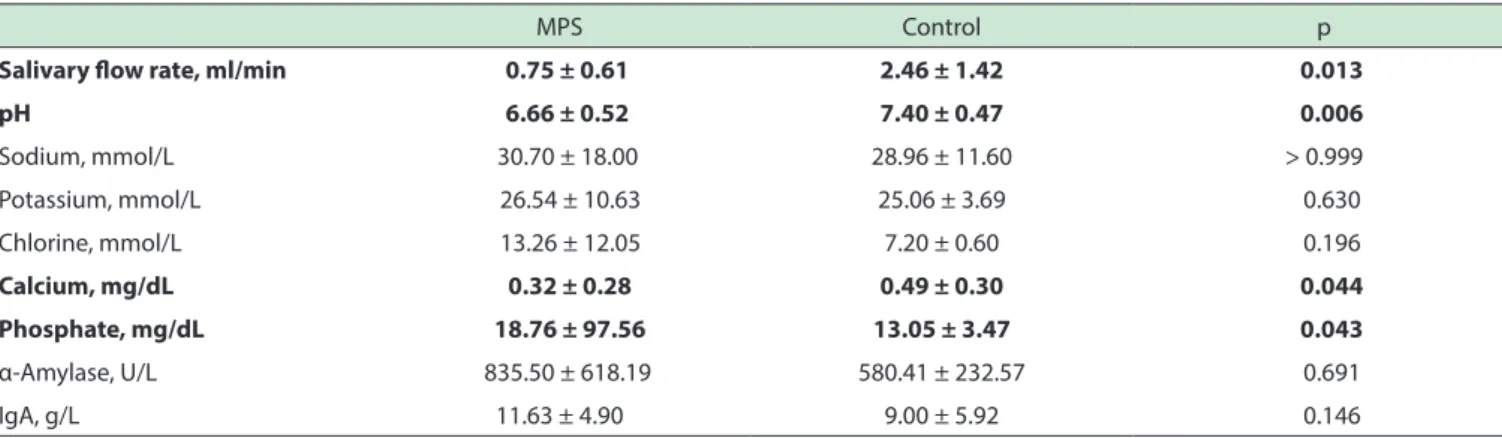
Table 1- Salivary low, pH, ions and salivary proteins in control and MPS groups
MPS Control p
Salivary low rate, ml/min 0.75 ± 0.61 2.46 ± 1.42 0.013
pH 6.66 ± 0.52 7.40 ± 0.47 0.006
Sodium, mmol/L 30.70 ± 18.00 28.96 ± 11.60 > 0.999
Potassium, mmol/L 26.54 ± 10.63 25.06 ± 3.69 0.630
Chlorine, mmol/L 13.26 ± 12.05 7.20 ± 0.60 0.196
Calcium, mg/dL 0.32 ± 0.28 0.49 ± 0.30 0.044
Phosphate, mg/dL 18.76 ± 97.56 13.05 ± 3.47 0.043
α-Amylase, U/L 835.50 ± 618.19 580.41 ± 232.57 0.691
IgA, g/L 11.63 ± 4.90 9.00 ± 5.92 0.146
Values are shown as mean ± SD; p-values were calculated using the Mann-Whitney U T Figure 1 - Number of decayed, missing, or illed teeth/patient and respective Decayed-Missing-Filled teeth index (DMFT) in normal (controls) children and in children with mucopolysaccharidosis (MPS). * p < 0.05.
greater prevalence of decayed teeth (5.7 ± 1.0 vs. 1.5 ± 0.5,
p = 0.001) and lower prevalence of filled teeth than the
control group (0.7 ± 0.4 vs. 2.7 ± 0.8, p = 0.037), as shown in Figure 1.
Salivary flow, and chemical analysis of saliva for are shown in Table 1. MPS patients presented reduced salivary flow rates and a lower pH in comparison to controls. They
also presented a reduction of 35% in calcium ions and an increase of 44% in phosphate ions. Other analyzed ions (chlorine, potassium, and sodium) presented no statistically
significant differences between the two groups. Values for α-amylase and IgA did not differ between the two groups.
Figure 2 exhibits microbial prevalence and oral
loads. No differences between groups regarding prevalence
or microbial load (7.58 ± 0.11 vs. 7.43 ± 0.13 CFU/ml, p = 0.725). The oral Mutans streptococci group also exhibited similar prevalence and microbial load (4.35 ± 0.37 vs. 4.59
± 0.16 CFU/ml, p = 0.880), between MPS patients and
controls. We found a higher prevalence (p < 0.05) of yeast in the MPS vs. the control group as shown in Figure 2; however,
the yeast load did not differ between groups (2.95 ± 0.23
Figure 2 - Prevalence (A) and load of Colony Forming Units - CFU (B) of total bacteria, mutans strptococcii and yeast in normal children (controls) and in children with mucopolysaccharidosis (MPS). * p < 0.05.
of calcium enhance enamel demineralization, reduce remineralization and increase alveolar bone loss.35,37 In
parallel with low calcium levels in saliva, we found high
levels of phosphate. Phosphate homeostasis is coordinated by complex cross organ axis.40 Parathyroid hormone
secreted in response to low serum calcium can increase phosphate efflux from bone, kidney and intestine. Important factors, such as Vitamin D, are involved in maintaining
calcium and primarily phosphate balance.40-42 The formation
and mineralization of bone and teeth are greatly influenced
by calcium and phosphate metabolism since both consist mainly of calcium-phosphate.43Interestingly, Schroth et
al. reported that children with caries were significantly more likely to have low vitamin D, calcium, and elevated
PTH levels.44
In our study, MPS patients presented reductions of salivary flow and pH. These alterations could be due
not only to the genetic changes but also to medication such as nifedipine and furosemide.45-48 Hyposalivation reduces the buffering capacity, the elimination capacity of cariogenic nutrients, and the antimicrobial protection, leading to the appearance of dental caries.49,50 The low
salivary pH is directly associated with high caries activity
not only by promoting teeth demineralization in itself, but
also by promoting the growth of acidogenic and aciduric microorganisms, that in turn will further decrease the oral
pH.49-51 In confirmation of this idea, we found that MPS patients presented increased oral yeast. The most prevalent
oral yeast is Candida spp. a well kmown and significant acidogenic microorganism.52 So, the ecological changes in
oral environment, such as the reduction in salivary flow and pH, could stimulate the growth of Candida spp. and induce a more acidic Stephan pH response.
Interestingly, MPS patients did not present higher loads of mutans streptococci. However, dental caries
may occur in their absence, if other microorganisms are present, capable of producing substantial amounts of acid
from fermentable carbohydrate; oral Candida is a well established candidate for such an action.51
The higher prevalence of oral Candida can also
be justified by the immune changes of MPS patients that
are still under study.53 Notwithstanding, no significant
differences were found between groups regarding oral IgA concentration, the main immunoglobulin present in
the oral cavity.
MPS patients present severe teeth morphological
alterations, and in the absence of X-ray imaging, it was not possible to discriminate between primary and permanent
dentitions.5-7,11-17 So, in the present study, the global DMFT
index was calculated although some participants had still
primary teeth.
In addition to the higher caries rate, MPS patients presented a lower number of filled teeth, revealing a level of neglected dental care. In other groups of chronic patients
this dental carelessness has also been documented.54
HIPOSALIVAÇÃO, SALIVA ACÍDICA, DENTES CARIADOS E PREVALÊNCIA ORAL DE LEVEDURA EM CRIANÇAS COM MUCOPOLISACARIDOSE
OBJETIVO: Pacientes portadores de
mucopolis-sacaridose apresentam várias alterações do complexo
estomatognático; no entanto, não existem dados dispo -níveis sobre a bioquímica da saliva e ou sobre a
colo-nização por fungos. O objetivo deste estudo foi avaliar
a prevalência de cárie dentária bem como parâmetros bioquímicos e microbiológicos em pacientes com mu-copolissacaridose.
MÉTODO: A amostra foi constituída por doze
par-ticipantes com mucopolissacaridose, acompanhados na
Unidade de Doenças Metabólicas do Centro Hospitalar
de S. João do Porto e por doze participantes saudáveis
acompanhados na Faculdade de Medicina Dentária da Universidade do Porto. Para todos os participantes, o índi -ce de dentes cariados, perdidos ou obturados foi avaliado. Além disso, foram recolhidas amostras de saliva de todos os participantes para avaliar os parâmetros bioquímicos
(fluxo salivar, pH, sódio, potássio, cloreto, cálcio, fosfato, α-amilase e IgA) e microorganismos tais como Streptococcus mutans e leveduras.
RESULTADOS: Em comparação aos controles, os
pacientes com MPS apresentam maior prevalência de
dentes cariados assim como fluxo salivar e pH reduzido. Os
pacientes com MPS apresentaram também taxas menores de íons de cálcio e maiores de íons de fosfato. Não foram encontradas diferenças entre os grupos quanto à carga microbiana oral por microrganismos totais, Streptococcus mutans e leveduras, bem como quanto à prevalência oral de Streptococcus mutans. No entanto, os pacientes com MPS apresentaram maior prevalência de candidíase oral em comparação com os controlos.
CONCLUSÃO: A maior prevalência de dentes
cariados e a maior colonização oral por leveduras em pacientes com MPS pode estar relacionada com a baixa concentração de cálcio salivar, com o pH ácido e com a hiposalivação.
PALAVRAS-CHAVE: Mucopolissacaridose, saúde
oral, pediatria, Candida, pH salivar.
■
REFERENCES1. Giugliani R, Harmatz P, Wraith J. Management Guidelines for
Muco-polysaccharidosis VI. Pediatrics 2007;120(2):405-18.
2. Muenzer J, Wraith J, Clarke L. Mucopolysaccharidosis I: Management and Treatment Guidelines. Pediatrics. 2009;123(1):19-29.
3. Scarpa M, Almássy Z, Beck M, Bodamer O, Bruce I, Meirleir Ld, et al. Mucopolysaccharidosis type II: European recommendations for
the diagnosis and multidisciplinary management of a rare disease.
Orphanet J Rare Dis. 2011;72(6):1-18.
4. Neufeld E, Muenzer J. The mucopolysacharidosis. In: Scriver C, Beau
-det A, Sly W, Valle D, editors. The Metabolic and Molecular Bases of Inherited Disease. 8 ed. New York: McGraw-Hill Co; 2001. p. 3421-. delaying the identification of dental problems.6 So there is
an evident need to educate and motivate not only patients but also their parents or legal guardians to ensure the
improvement of oral hygiene routines. Dental treatment must be integrated into a multidisciplinary team working with health professionals from all areas, intervening early
in order to improve the quality of life of patients and their
families. It is important to encourage regular visits to dentists,
in order to avoid complex treatments involving sedation and general anesthesia. Treatment should be based on a
preventive protocol promoting the use of fissure sealants, fluoride, dietary control and good oral hygiene habits.
In conclusion, MPS patients present higher prevalence of decayed teeth; therefore preventive measures to avoid
caries should be especially promoted in this population. Key factors responsible for the higher prevalence of decayed
teeth in MPS patients may include lower salivary calcium concentration, pH and flow. Also, the higher prevalence of
oral Candida may be due to, but also a contributor to the acidic oral environment.
■
SUMMARYPatients with mucopolysaccharidosis present higher
prevalence of decayed teeth that may be associated to (i)
hyposalivation, (ii) lower salivary calcium concentration
and pH and/or (iii) higher oral yeast colonization.
■
ACKNOWLEDGMENTSThe Faculty of Dental Medicine of the University of Porto, Portugal, supported this investigation. We thank
all patients and their families for their availability to participate in the study.
■
CONFLICT OF INTERESTSara Ponciano, Cristina Areias, Elisa Leão-Teles and Benedita Sampaio-Maia declare that they have no conflict
of interest.
■
AUTHOR CONTRIBUTIONSAll the authors reviewed the literature and conceived the study. Ponciano S and Leão-Teles E were involved in
patient selection, monitoring and data collection at Centro
Hospitalar de S. João. Ponciano S and Areias C were involved
in patient selection, monitoring and data collection at
Faculty of Dental Medicine. Sampaio-Maia B and Ponciano
S performed the biochemistry and microbiolgy analysis, the
5. Almeida-Barros R, Oka S, Pordeus A, Medeiros P, Bento P, Godoy G. Oral and systemic manifestations of mucopolysaccharidosis type VI: A report of seven cases. Quintessence Int 2012;43(3):e32-e8. 6. James A, Hendriksz C, Addison O. The Oral Health Needs of Children,
Adolescents and Young Adults Affected by a Mucopolysaccharide Disorder. JIMD Reports. 2012;2:51-8.
7. Antunes L, Nogueira A, Castro G, Ribeiro M, Souza I. Dental findings and oral health status in patients with mucopolysaccharidosis: a case series. Acta Odontol Scand. 2013;71(1):157-67.
8. Baehner F, Shmiedeskamp C, Krummenauer F, Miebach E, Bajbouj M,
Whybra C, et al. Cumulative incidence rates of the
mucopolysacchari-doses in Germany. J Inherit Metab Dis. 2005;28(6):1011-7.
9. Tomatsu S, Fujii T, Fukushi M, Oguma T, Shimada T, Maeda M, et al. Newborn screening and diagnosis of mucopolysaccharidoses. Mol Genet Metab. 2013;110(1-2):42-53.
10. Pinto R, Caseiro C, Lemos M, Lopes L, Fontes A, Ribeiro H, et al. Pre -valence of lysosomal storage diseases in Portugal. Eur J Hum Genet.
2004;12(2):87-92.
11. Turra G, Schwartz I. Evaluation of orofacial motricity in patients with mucopolysaccharidosis: a cross-sectional study. J PediatR. 2009;85(3):254-60.
12. Alpôs A, Çoker M, Çelen E, Ersin N, Gokçen D, Diggelen O, et al. The oral manifestations of Maroteaux-Lamy syndrome (mucopolysaccharidosis VI): A case report. Oral Surg Oral Med Oral Pathol Oral Radiol Endod. 2006;101(5):632-7.
13. Hingston E, Hunter M, Hunter B, Drage N. Hurler’s syndrome: dental findings in a case treated with bone marrow transplantation in infancy. Int J Paediatr Dent. 2006;16(3):207–12.
14. Guven G, Cehreli Z, Altun C, Sençimen M, Ide S, Bayari S, et al. Mucopolysaccharidosis type I (Hurler syndrome): oral and radio -graphic findings and ultrastructural/chemical features of enamel and dentin. Oral Surg Oral Med Oral Pathol Oral Radiol Endod.
2008;105(1):72-8.
15. McGovern E, Owens L, Nunn J, Bolas A, O’Meara A, Fleming P. Oral fea
-tures and dental health in Hurler Syndrome following hematopoietic stem cell transplantation. Int J Paediatr Dent. 2010;20(5):322– 9.
16. Wadenya R, Stout A, Gupta A, Monge J. Hurler syndrome: a case report
of a 5-year follow-up of dental findings after bone marrow transplan
-tation. Spec Care Dentist. 2010;30(1):14-7.
17. Kantaputra P, Kayserili H, Guven Y, Kantaputra W, Balci M, Tanpai
-boom P, et al. Oral manifestations of 17 patients affected with mu
-copolysaccharidosis type VI. J Inherit Metab Dis.
2014;37(2):263-8.
18. Nakamura T, Miwa K, Kanda S, Nonaka K, Anan H, Higash S, et al. Ro -sette formation of impacted molar teeth in mucopolysaccharidoses
and related disorders. Dentomaxillofac Radiol 1992;21(1):45-9.
19. Smith K, Hallett K, Hall R, Wardrop R, Firth N. Mucopolysaccharidosis:MPS
Vl and associated delayed tooth eruption. Int J Oral Maxillofac Surg 1995;24(2):176-80.
20. Gardner D. The oral manifestations of Hurler’s syndrome. Oral Surg Oral Med Oral Pathol. 1971;32(1):46-57.
21. Featherstone J. The science and practice of caries prevention. J Am
Dent Assoc. 2000;131(7):887-99.
22. Areias C, Sampaio-Maia B, Pereira M, Azevedo A, Melo P, Andrade C,
et al. Reduced salivary flow and colonization by mutans streptococci in children with Down syndrome. Clinics 2012;67(9):1007-11. 23. Areias C, Sampaio-Maia B, Macho V, Leal I, Melo P, Andrade Cd. Does
the chemistry in the saliva of Down syndrome children explain their low caries prevalence? Eur J Paediatr Dent. 2013;14(1):23-6. 24. Deepak T, Krishna S, Taretia R. Maroteaux-Lamy Syndrome : A rare
case of Mucopolysaccharidosis. Journal of International Oral Health. 2010;2(2):1-5.
25. Guimarães M, Farias S, Costa A, Amorim Rd. Maroteaux–Lamy Syndro
-me: Orofacial Features After Treatment by Bone Marrow Transplant. Oral Health & Preventive Dentistry. 2010;8(2):139-42.
26. Tatapudi R, Gunashekhar M, Raju S. Mucopolysaccharidosis type I Hurler-Scheie syndrome: A rare case report. Contemp Clin Dent. 2011;2(1):66-8.
27. Gajula P, Ramalingam K, Bhadrashetty D. A rare case of mucopolysac -charidosis: Hunter Syndrome. Journal of Natural Science, Biology and
Medicine. 2012;3(1):97-100.
28. Struzycka I. The oral microbiome in dental caries. Pol J Microbiol. 2014;63(2):127-35.
29. Featherstone J. The continuum of dental caries--evidence for a dynamic
disease process. J Dent Res. 2004;83(Spec No C):C39-42.
30. Narendranathan M, Sharma K. Nifedipine reduces salivary calcium.
Indian J Gastroenterol 1986;5(4):294.
31. Dehpour A, Ghafourifar P, Massoudi S, Abdollahi M, Mousavizadeh K. On the relation of calcium channel blockers to rat parotid and subman
-dibular glands function in vivo. Gen Pharmacol. 1995;26(3):619-22. 32. Rezaie S, Rezaie A, Minaiee B, Khorasani R, AbdollahI M. On the relation
of nitric oxide to nifedipine-induced gingival hyperplasia and impaired submandibular glands function in rats in vivo. Fundam Clin Pharmacol.
2005;19(1):65-71.
33. Pazzaglia U, Beluffi G, Danesino C, Frediani P, Pagani G, Zatti G. Neonatal
mucolipidosis 2. The spontaneous evolution of early bone lesions and
the effect of vitamin D treatment. Report of two cases. Pediatr Radiol. 1989;20(1-2):80-4.
34. Fung E, Johnson J, Madden J, Kim T, Harmatz P. Bone density assessment
in patients with mucopolysaccharidosis: A preliminary report from patients with MPS II and VI. J Pediatr Rehabil Med. 2010;3(1):13-23. 35. Adegboye A, Christensen L, Holm-Pedersen P, Avlund K, Boucher B,
Heitmann B. Intakes of calcium, vitamin D, and dairy servings and dental plaque in older Danish adults. Nutr J. 2013;12:61.
36. Hegde A, Naik N, Kumari S. Comparison of salivary calcium, phosphate and alkaline phosphatase levels in children with early childhood caries after administration of milk, cheese and GC tooth mousse: an in vivo study. J Clin Pediatr Dent. 2014;38(4):318-25.
37. Pandey P, Reddy N, Rao V, Saxena A, Chaudhary C. Estimation of sali
-vary flow rate, pH, buffer capacity, calcium, total protein content and
total antioxidant capacity in relation to dental caries severity, age and
gender. Contemp Clin Dent. 2015;6(Suppl 1):S65-71.
38. Antonenko O, Bryk G, Brito G, Pellegrini G, Zeni S. Oral health in young women having a low calcium and vitamin D nutritional status. Clin Oral Investig. 2015;19(6):1199-206.
39. Zerofsky M, Ryder M, Bhatia S, Stephensen C, King J, Fung E. Effects of early vitamin D deficiency rickets on bone and dental health, growth
and immunity. Matern Child Nutr. 2015.
40. Brown R, Razzaque M. Dysregulation of phosphate metabolism and conditions associated with phosphate toxicity. Bonekey Rep. 2015;4:705.
41. Civitelli R, Ziambaras K. Calcium and phosphate homeostasis:
con-certed interplay of new regulators. J Endocrinol Invest. 2011;34(7
Suppl):3-7.
42. Allgrove J. Physiology of Calcium, Phosphate, Magnesium and Vitamin D. Endocr Dev. 2015;28:7-32.
43. Tamamura Y, Yamaguchi A. Bone and tooth in calcium and phosphate metabolism. Clin Calcium. 2012;22(1):11-7.
44. Schroth R, Levi J, Sellers E, Friel J, Kliewer E, Moffatt M. Vitamin D status of children with severe early childhood caries: a case-control study. BMC Pediatr. 2013;13:174.
45. Bardow A, Nyvad B, Nauntofte B. Relationships between medication intake, complaints of dry mouth, salivary flow rate and composi -tion, and the rate of tooth demineralization in situ. Arch Oral Biol.
2001;46(5):413-23.
46. Atkinson J, Shiroky J, Macynski A, Fox P. Effects of furosemide on the oral cavity. Gerodontology. 1989;8(1):23-6.
47. Nederfors T, Nauntofte B, Twetman S. Effects of furosemide and ben
-droflumethiazide on saliva flow rate and composition. Arch Oral Biol. 2004;49(7):507-13.
48. Natanael A, Armond MC, Fernandes RM, Ribeiros A, Generoso R. Hipo-salivación inducida por drogas antihipertensivas. Acta Odontológica
Venezolana. 2009;47(1).
50. Kaur A, Kwatra KS, Kamboj P. Evaluation of non-microbial sali -vary caries activity parameters and sali-vary biochemical
indi-cators in predicting dental caries. J Indian Soc Pedod Prev Dent. 2012;30(3):212-7.
51. Kleinberg I. A mixed-bacteria ecological approach to understanding
the role of the oral bacteria in dental caries causation: an alternative
to streptococcus mutans and the specific-plaque hypothesis. Crit Rev Oral Biol Med. 2002;13(2):108-25.
52. Nikawa H, Yamashiro H, Makihira S, Nishimura M, Egusa H, Furukawa M, et al. In vitro cariogenic potential of Candida albicans. Mycoses. 2003;46(11-12):471-8.