Rev Saúde Pública 2014;48(6):889-898
Association between
food assistance program
participation and overweight
Associação entre participação em
programa de assistência alimentar e
sobrepeso
I Centre for Health Equity Studies. Stockholm University and Karolinska Institutet. Stockholm, Sweden
II Department of Community Health Sciences. Fielding School of Public Health. University of California. Los Angeles, United States III Escuela de Medicina. Facultad de Ciencias
de la Salud. Universidad Peruana de Ciencias Aplicadas. Lima, Peru IV CRONICAS Centro de Excelencia en
Enfermedades Crónicas. Universidad Peruana Cayetano Heredia. Lima, Peru Correspondence:
M. Pia Chaparro
Center for Health Equity Studies – CHESS Stockholm University and Karolinska Institutet Sveavagen 160, Floor 5
10691 Stockholm, Sweden E-mail: [email protected] Received: 2/2/2014
Approved: 7/15/2014
Article available from: www.scielo.br/rsp
ABSTRACT
OBJECTIVE: The objective of this study was to investigate the association between food assistance program participation and overweight/obesity according to poverty level.
METHODS: A cross-sectional analysis of data from 46,217 non-pregnant and non-lactating women in Lima, Peru was conducted; these data were obtained from nationally representative surveys from the years 2003, 2004, 2006, and 2008-2010. The dependent variable was overweight/obesity, and the independent variable was food assistance program participation. Poisson regression was used to stratify the data by family socioeconomic level, area of residence (Lima versus the rest of the country; urban versus rural), and survey year (2003-2006 versus 2008-2010). The models were adjusted for age, education level, urbanization, and survey year.
RESULTS: Food assistance program participation was associated with an increased risk of overweight/obesity in women living in homes without poverty indicators [prevalence ratio (PR) = 1.29; 95% conidence interval (CI) 1.06;1.57]. When stratiied by area of residence, similar associations were observed for women living in Lima and urban areas; no associations were found between food assistance program participation and overweight/ obesity among women living outside of Lima or in rural areas, regardless of the poverty status.
CONCLUSIONS: Food assistance program participation was associated with overweight/obesity in non-poor women. Additional studies are required in countries facing both aspects of malnutrition.
DESCRIPTORS: Overweight, epidemiology. Nutrition Programs and Policies. Socioeconomic Factors.
Artigos Originais DOI:10.1590/S0034-8910.2014048005359
M Pia ChaparroI,II
Antonio Bernabe-OrtizIII,IV
Obesity is no longer a problem exclusive to devel-oped countries. In Peru, the prevalence of overweight and obesity has steadily increased over time. Data from national representative surveys show that the prevalence of overweight and obesity among women has almost doubled from 31.0% in 1992a to 55.0%
in 2012.b The association between obesity and
socio-economic status in Peru is mixed: obesity is higher among wealthier women but lower among those with higher education.8 Despite the observed increase
in overweight and obesity, virtually, no prevention efforts are being made and the Ministry of Health has yet to develop the infrastructure required to combat obesity and associated chronic diseases.6 Given the
relatively high overweight and obesity prevalence observed in Peru, the upward trend in prevalence, and the high costs associated with the consequences
RESUMO
OBJETIVO: Investigar associação entre participação no programa de assistência alimentar e sobrepeso/obesidade, segundo nível de pobreza.
MÉTODOS: Estudo transversal com dados sobre 46.217 mulheres não gestantes e não lactantes, de Lima, Peru, obtidos de pesquisas, com representatividade nacional, nos anos de 2003, 2004, 2006 e 2008-2010. A variável dependente foi o sobrepeso/obesidade e a independente foi a participação no programa de assistência alimentar. Utilizou-se regressão de Poisson; os modelos foram estratiicados por nível socioeconômico familiar para todo o país, por área de residência (Lima versus o resto do país; urbano versus residência rural) e anos de estudo (2003-2006 versus 2008-2010). Os modelos foram ajustados por idade, nível acadêmico, urbanização e ano de estudo.
RESULTADOS: Participar do programa de assistência alimentar associou-se com risco aumentado de sobrepeso/obesidade para as mulheres que viviam em domicílios sem indicadores de pobreza (PR = 1,29; IC95% 1,06;1,57). Quando estratiicados por área de residência, foram observadas associações similares para as mulheres que vivem em Lima e em áreas urbanas; não foram encontradas associações entre a participação no programa de assistência alimentar e sobrepeso/obesidade entre as mulheres que vivem fora de Lima ou em áreas rurais, independentemente de sua condição de pobreza.
CONCLUSÕES: Participar do programa de assistência alimentar associou-se com sobrepeso/obesidade para mulheres não pobres. Estudos adicionais serão necessários em países que enfrentam ambas as faces da má nutrição.
DESCRITORES: Sobrepeso epidemiologia Programas e Políticas de Nutrição e Alimentação. Fatores Socioeconômicos.
INTRODUCTION
of obesity, it is critical for the government to identify and implement successful obesity prevention strate-gies. In this sense, food assistance programs (FAP) deserve closer attention.
Originally, FAPs were designed as safety nets to prevent undernutrition and hunger among the poor. Current research, however, shows an association between FAP participation and overweight and obesity in the United States and other Latin American contexts. In the United States, participation in the Supplemental Nutrition Assistance Program has been associated with increased obesity among women.c In Latin America,
there is evidence from Mexico4 and Chile9,10
associ-ating FAP participation with their increased prevalence of overweight and obesity. As the nutrition transition progresses, FAP that provide energy-dense foods may
a Instituto Nacional de Estadistica e Informatica. Demographic and Family Health Survey. Lima (PE); 1992.
891 Rev Saúde Pública 2014;48(6):889-898
require revision as they may be contributing factors to the increasing global prevalence of overweight and obesity.
Peru features large variations in wealth and access to jobs, services, and health care. Lima, the capital and the wealthiest city in Peru, houses approximately one-third of the country’s 30 million inhabitants.d The
Andean region and parts of the jungle, particularly those that are rural, are the poorest.e In 2012, the Peruvian
Government spent approximately US$1.2 billion on social programs, including FAP.f These programs have
wide coverage, with 27.0% of all Peruvian house-holds and 54.0% of poor househouse-holds participating in at least 1 FAP in 2012.g Characteristics of the main FAP
in Peru are shown in Table 1. Geographically, Lima has the lowest participation rates (18.0% for all and 49.0% for poor households), and households in rural areas have the highest rates (49.0% for all and 62.0% for poor households).g There is evidence of poor targeting
among most FAP in Peru, with a high proportion of participants not belonging to the target populations of the programs.a,g This could provide unnecessary
calo-ries to those who do not require food assistance and may consequently lead to an increased risk of obesity.
Therefore, the objective of this study was to inves-tigate the association between FAP participation and overweight/obesity according to family poverty status.
METHODS
This cross-sectional study used data from the National Surveillance of Nutritional Indicators (MONIN, based on its name in Spanish). MONIN is a series of cross-sectional nationally representative surveys that has been conducted annually since 1996 (except for 2005 and 2007). The objective of MONIN is to determine the nutritional status and associated factors among women of reproductive age (15-49 years) and chil-dren younger than 5 years.h MONIN follows a
strati-ied, cluster sample design that has changed slightly over time. The data used were from 2003-2010; data from 1996-2002 were excluded because of a lack of sample weight variables and/or a lack of FAP partici-pation variables. Between 2002 and 2006, cluster selec-tion was conducted for each of the 24 departments in Peru to make department-level inferences.h For the
2008-2010 survey, clusters were selected within 5 regional strata: Metropolitan Lima, Remaining Coast,
Urban Highlands, Rural Highlands, and Jungle.2
Clusters were created on the basis of population distri-bution and comprised blocks or groups of blocks with 50-100 households. Blocks within clusters and house-holds within blocks were randomly selected.h Interviews
and measurements were conducted in person by trained health personnel and covered the following topics: census and basic demographic characteristics of family members (age, gender, family relationships, educa-tional attainment); household characteristics (access to services, FAP participation); child’s characteristics (breastfeeding, complementary feeding, vaccinations, morbidity); women’s characteristics (prenatal visits, supplementation); anthropometry (measured weight and height); biochemistry (hemoglobin, serum retinol, urine iodine); and food intake.2 Data were collected
for all women and children in the household except for the biochemical sample collection and food intake measurements, for which only a subsample of the popu-lation was used.2
This study used MONIN datai for the years 2003, 2004,
2006, and 2008-2010. For most analyses, the survey years were grouped as 2003-2006 and 2008-2010, given the similarity of the sampling designs. Analyses focused on non-pregnant, non-lactating women (n = 46,217) who participated in MONIN during the above-mentioned years and for whom complete data were available.
The outcome variables were overweight and obesity. Weight and height were measured during each survey year. Overweight was deined as a body mass index (BMI) of 25.0-29.9 kg/m2 and obesity as BMI ≥ 30 kg/m2.
Women with an implausible BMI (< 11 or ≥ 60) were excluded from analyses (n = 13). For most analyses, overweight and obesity were combined in a single cate-gory (overweight/obesity = BMI ≥ 25 kg/m2).
The main independent variable was FAP participation. In Peru, FAP have changed over the years; accord-ingly, MONIN response options to the question “In which of the following programs do you or someone in your family participate?” have also changed over time. Therefore, we only included in the analyses those FAP that did not change between survey years [Glass of Milk Program, Community Kitchen Program, Feeding and Nutrition Program for Tuberculosis Patients and Their Families (PANTBC), and Wawawasi Program; Table 1] and operationalized FAP participation as a categorical
d Instituto Nacional de Estadistica e Informatica. Sociodemographic information - data from the annual National Household Survey. Lima; 2010 [cited 2011 Mar 9]. Available from: http://www.inei.gob.pe/
e Vasquez E. Proposal to reform food and nutrition programs in Peru. Lima: Centro de Investigacion de la Universidad del Pacifico; Programa Mundial de Alimentos de las Naciones Unidas del Perú; 2010.
f Insituto Nacional de Estadistica e Informatica. Social Statistics: Poverty and social expenditures. Lima; 2010 [cited 2013 Oct 18]. Available from: http://www.inei.gob.pe/estadisticas/indice-tematico/sociales
g Valdivia M. Peru: Is identifying the poor the main problem in targeting nutritional programs? Washington (DC): Health Nutrition and Population, The World Bank; 2005 (HNP Discussion Paper, Reaching the Poor Program Paper, 7).
h Ricaldi R. Consolidation of databases and statistical analyses for MONIN 1997-2006. Lima: Ministerio de Salud; 2007.
Ov
erweight and food progr
ams in P
eru
Chaparro MP et al
Program Objective Target population Type of assistance Eligibility assessment Budget for 2012(million $)a
Glass of Milk [Vaso de Leche]
To improve the nutritional status and quality of life of the poor
First priority: children younger than 6 years and pregnant and lactating women. Second priority: children aged 7-13 years,
older adults, and patients with tuberculosis
250 mL of fortified whole milk or an equivalent ready-to-drink
product daily
Geographical, based on neighborhood socioeconomic status; within neighborhoods, beneficiaries are chosen at the discretion of mothers’ committees
in charge of day-to-day operations
145
Community Kitchen Program
[Comedores Populares]
To improve access to food for impoverished families by feeding vulnerable groups at high
nutritional risk
People living in poverty and extreme poverty in periurban and
rural areas
Low cost lunches (subsidized by the government)
Geographical, based on neighborhood socioeconomic status; within neighborhoods, beneficiaries are chosen at the discretion of mothers’ committees
in charge of day-to-day operations
46b
Wawawasi
[now called Cuna Mas]
To provide comprehensive child care for children living in poverty
Children 6-36 months of age who live in poverty
Child care plus 2 meals per day Geographical, based on neighborhood socioeconomic
status
94
Programa de Alimentacion y Nutricion para el Paciente Ambulatorio con Tuberculosis y Familia (PANTBC)
To contribute to the integral recovery of tuberculosis ambulatory patients and their
families
Patients with tuberculosis and
their families 13 kg of cereals, 2 kg of legumes, Monthly food basket comprising 1.7 kg of canned fish, and 1 liter
of vegetable oil
Based on tuberculosis diagnosis; benefits distributed through
hospitals or health posts
4
Source: Ministerio de Economia y Finanzas. Glass of Milk Program – Distribution methodology. Lima (PE); 2012 [cited 2013 Apr 21]. Available from: http://www.mef.gob.pe/index.
php?option=com_content&view=article&id=2304:programa-vaso-de-leche-metodologia-de-distribucion&catid=150&Itemid=100848; Ministerio de Desarrollo e Inclusion Social.Programa de Complementacón Alimentaria (PCA). Presupuesto y procesos de adquisición del PCA (Ámbito de Lima Metropolitana). Lima (PE); 2013 [cited 2013 Apr 28]. Available from: http://www.midis. gob.pe/dmdocuments/pca/as/pca_5presupuesto_procesos_adquisicion.pdf and the following footnotes: Valdiviad (2005), Vasqueze (2010), INEIg (2013b), Alcazari (2007).
a Dollar conversions used rates from November 2013 (1 US$ = 2.8 Peruvian soles).
893 Rev Saúde Pública 2014;48(6):889-898
variable (yes/no). Data regarding FAP participation were available only at the family level; in other words, we only knew whether someone in the family, not necessarily the woman, participated in a FAP.
Additional independent variables included age (years), education level, family poverty status, urbanization status, and survey year. Education level was categorized as less than primary school, primary school, secondary school, or more than secondary school. Family poverty status was assessed using a score based on 5 household indicators: precarious walls, precarious loor, inadequate water access, inadequate electricity access, and inadequate sewage access. If the walls were constructed with anything but bricks or cement, the house had precarious walls and 1 point was given. The same method was applied to the other indicators: an extra point was given to the household if the loor was made of suboptimal materials (e.g., sand and gravel); access to water was not through internal piping; or the house did not have access to electricity or an internal sewage connec-tion. The sum of these indicators, with a maximum of 5, was categorized as 0, 1, and ≥ 2. Finally, urbanization status referred to the location of the family house (urban or rural).
Stata 12 (Stata Corp., College Station, TX, USA) was used for analyses. For all estimations, we used sample weights to account for complexity of the study design, and a p-value < 0.05 denoted signiicance. Appropriate tech -niques were used to estimate results in the subpopulations of interest.11 Descriptive statistics were used to summarize
the sample characteristics. Differences in descriptive vari-ables between survey years were assessed with Pearson’s Chi-square test. A series of multivariate Poisson regression models were conducted to determine whether overweight/ obesity (BMI ≥ 25 kg/m2) was associated with FAP
partic-ipation. Poisson regression was used because the outcome of interest was relatively common among Peruvian women (> 30.0%). To test the hypothesis that targeting deiciencies in FAP could lead to the overconsumption of calories and, therefore, an increased overweight/obesity risk for those not requiring assistance, all models were stratiied by family poverty status. We ran models for the sample as a whole as well as by area of residence (Lima versus rest of the country and urban versus rural) and survey year (2003-2006 versus 2008-2010). All models were adjusted for age, education level, urbanization status, and year.
RESULTS
Approximately two-thirds of women had secondary or more than secondary education (Table 2). The majority of the sample had at least 1 poverty indicator. In 2003-2006, 33.0% of the sample participated in FAP compared to 30.0% in 2008-2010. The prevalence of overweight was similar between years (~31.0%) but obesity prevalence was signiicantly (p < 0.001) higher in 2008-2010 (16.0%) compared to 2003-2006 (12.0%).
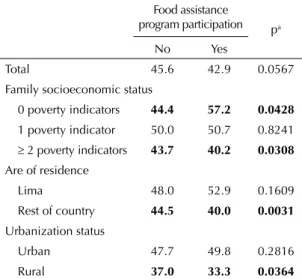
Table 3 shows the crude prevalence of overweight/ obesity by FAP participation for the sample as a
Table 2. Characteristics of the sample of Peruvian non-pregnant, non-lactating women (15-49 years) included in the study. (N = 46,217)
2003-2006
(n = 43,390) 2008-2010(n = 2,827) pa
% %
Age [years; mean (SE)] 30.3 (0.1) 27.6 (0.2) < 0.0001
Education level 0.0820
Less than primary school 4.0 4.5
Primary school 28.6 23.1
Secondary school 45.3 47.2
More than secondary school 22.2 25.3
Family socioeconomic status 0.1416
0 poverty indicators 12.2 16.8
1 poverty indicator 25.8 25.4
≥ 2 poverty indicators 62.0 57.8
Urbanization status < 0.0001
Urban 66.1 85.5
Rural 33.9 14.5
Weight status < 0.0001
Overweight 31.0 31.2
Obese 11.8 16.4
FAP participation (yes) 33.3 29.9 0.1602
whole and after stratification by family socioeco-nomic status, area of residence, and urbanization. The samples’ overweight/obesity prevalence rates were similar and independent of FAP participation. When the data were stratified by family socioeco-nomic status, however, we observed some signif-icant differences. Among women who lived in households with 0 poverty indicators, those who participated in FAP had an increased overweight/ obesity prevalence compared to those who did not participate (57.0% versus 44.0%). In turn, among women who lived in households with ≥ 2 poverty indicators, those who did not participate in FAP had a slightly higher overweight/obesity preva-lence (44.0%) compared to those who did partici-pate (40.0%). There were also some differences according to the area of residence: among women who lived outside of Lima or in rural areas, those who did not participate in FAP had a higher over-weight/obesity prevalence compared to those who did participate.
Table 4 shows the results of the multivariate Poisson regression models stratified by family socioeco-nomic status. For the sample as a whole, FAP participation was associated with an increased risk of overweight/obesity only for women who lived in households with 0 poverty indicators. Among women who lived in households with at least 1 poverty indicator, FAP participation was not asso-ciated with overweight/obesity in fully adjusted
models. Similar patterns were observed for women who lived in Lima, in urban areas, and those surveyed from 2008-2010, wherein FAP participa-tion was associated with an increased overweight/ obesity risk for non-poor women. There was no association between FAP participation and over-weight/obesity among women who lived outside of Lima and in rural areas, regardless of poverty status.
DISCUSSION
These results provide evidence of an association between FAP participation and overweight/obesity among non-poor Peruvian women who receive FAP benefits. Among women living in households with 0 poverty indicators, FAP participation was associ-ated with a 30.0%-50.0% increased risk of over-weight/obesity after controlling for several potential confounders. Among women living in households with at least 1 poverty indicator, FAP participation was not associated with overweight/obesity. This was observed both for the sample as a whole and for women living in Lima and urban areas.
Research evaluating the association between FAP participation and obesity in Latin America is limited. In Mexico, evidence of this association emerged from research on Oportunidades (now rebranded as Prospera),j a conditional cash-transfer
program. Similar to the results presented herein, Fernald et al3 (2008) found that receipt of a larger
cash transfer was associated with increased over-weight and obesity among adults. In Chile, there is evidence associating childhood obesity with partici-pation in 2 FAP, the Chilean Supplementary Feeding Program and the National Nursery Schools Council Program.9,10 In addition, evidence from the United
States has linked their largest FAP, the Supplemental Nutrition Assistance Program (formerly known as the Food Stamp Program) with an increased obesity risk among women.c One study from Peru that
focused on tuberculosis patients who participated in the PANTBC, which was included in this study, found that 21.0% of the studied beneficiaries who had normal weights at baseline were overweight after 5-6 months.1 That study, however, was
descrip-tive and the reported results were unadjusted.
Clearly, there are differences in FAP benefits and coverage within and between countries, which makes cross-country and even cross-FAP compar-isons difficult. However, this type of analysis warrants a closer look at programs intended to feed populations who were previously but may no longer be undernourished. As countries progress through
Table 3. Prevalence of overweight and obesity (BMI ≥ 25 kg/m2)
among women by food assistance program participation, family socioeconomic status, area of residence, and urbanization status in Peru, 2003-2010.
Food assistance
program participation pa
No Yes
Total 45.6 42.9 0.0567
Family socioeconomic status
0 poverty indicators 44.4 57.2 0.0428
1 poverty indicator 50.0 50.7 0.8241
≥ 2 poverty indicators 43.7 40.2 0.0308
Are of residence
Lima 48.0 52.9 0.1609
Rest of country 44.5 40.0 0.0031
Urbanization status
Urban 47.7 49.8 0.2816
Rural 37.0 33.3 0.0364
a p-values obtained using weighted Pearson’s Chi-square
analyses.
Bold values indicate statistical significance.
895
Rev Saúde Pública 2014;48(6):889-898
Table 4. Poisson regression results predicting overweight and obesity (BMI ≥ 25 kg/m2) by food assistance program participationa for Peruvian women, stratified by family poverty status.
FAP participation (yes/no)
Whole sample Lima only Rest of country Urban areas Rural areas 2003-2006 2008-2010
PR 95%CI PR 95%CI PR 95%CI PR 95%CI PR 95% CI PR 95%CI PR 95%CI
0 poverty indicators
Crude 1.29 1.03;1.61 1.36 1.01;1.85 1.16 0.92;1.47 1.29 1.03;1.61 1.09 0.60;1.98 0.99 0.74;1.32 1.68 1.31;2.14
Adjustedb 1.29 1.06;1.57 1.36c 1.01;1.85 1.19 0.86;1.64 1.30 1.06;1.58 0.79 0.38;1.65 1.07 0.82;1.40 1.56d 1.18;2.06
1 poverty indicator
Crude 1.01 0.90;1.15 1.09 0.87;1.36 0.96 0.84;1.10 1.01 0.89;1.15 1.06 0.71;1.58 1.07 0.94;1.21 0.95 0.75;1.20
Adjustedb 1.03 0.92;1.15 1.08 0.88;1.32 0.99 0.87;1.12 1.02 0.91;1.15 0.98 0.71;1.36 1.06 0.94;1.18 0.97 0.79;1.20
≥ 2 poverty indicators
Crude 0.92 0.85;0.99 0.98 0.81;1.20 0.92 0.86;0.99 1.02 0.92;1.13 0.90 0.81;0.99 0.92 0.86;0.98 0.93 0.79;1.10
Adjustedb 0.99 0.92;1.06 0.97 0.79;1.17 1.01 0.94;1.08 1.02 0.93;1.12 0.95 0.87;1.04 1.00 0.94;1.06 0.96 0.83;1.11
FAP: Food Assistance Program; BMI: body mass index
a Refers to someone in the family (not necessarily the woman) who participates in FAP.
b Adjusted for age, educational level, urbanization status (except when stratified by urbanization), and year of survey (except when stratified by year).
c Due to small variability, only adjusted by year (most women in Lima live in urban areas and have a high education level).
d Due to small variability, not adjusted by education (approximately 95% of women who have 0 poverty indicators also have a high education level).
the nutrition transition with undernutrition preva-lence dropping and the prevapreva-lence of overweight and obesity increasing, FAP reform becomes even more urgent.5 In Peru, some FAP provide enough calories
to raise concerns depending on the nutritional status of the populations reached. The Community Kitchen Program (CKP), which is widely popular in Lima, is a good example. The CKP is a food subsidy program in which women’s clubs receive some free staples (e.g., cereals, legumes, oil) from the government, which they use (in addition to purchased food) to prepare and distribute meals at a low cost to impov-erished families.k By law, the meals provided by
CKP are supposed to cover approximately 30.0% of an adult’s daily energy requirement.l However,
research has shown that the energy provided by each ration varies widely, ranging from 550 to 2,000 kcal per ration (25.0% to 100% of the usual recommendations).m,n Some older reports indicate
that some families split these meals within family members,l although the percentage of beneficiaries
that currently do so is unknown.
The FAP included in this study all provide prescribed food offerings that are, for the most part, energy-dense (Table 1). However, even programs that provide cash transfers may negatively influ-ence dietary intake. A study that evaluated bene-ficiaries of Bolsa Família,o Brazil’s cash-transfer
program, found that although program participa-tion increased the consumpparticipa-tion of all studied food groups, the increase was more pronounced for processed and energy-dense foods.7 Similar
find-ings have been reported for participants of the Supplemental Nutrition Assistance Program in the United States.p It is important to note that fresh
foods with low energy density (e.g., fruits and vege-tables) are usually more expensive and are therefore unavailable to people living with limited budgets, regardless of FAP participation.
Correct targeting of FAP, particularly those that provide food baskets, may therefore play a signifi-cant role, as the delivery of extra calories to indi-viduals who do not need them could increase their risk of overweight and obesity. Based on a Food and Agriculture Organization (FAO) survey of 19 Latin American countries (including Peru), Uauy
et al10 (2006) reported that > 20.0% of the
popula-tion or 83 million people in these countries received some benefits from FAP. The same survey reported that only 10 million people in these countries were undernourished; therefore, approximately 88.0% of all FAP beneficiaries have a normal weight or are overweight/obese.10 Most FAP in Latin America
provide energy-rich supplements that may or may not have adequate micronutrient contents.9 For the
most part, Latin American diets are not deficient in energy but rather in essential micronutrients associated with improved growth (e.g., bioavail-able zinc and iron); the provision of energy-dense supplements may therefore promote a positive energy balance.9
In Peru, leakage rates for the major FAP are 20.0%-40.0%,d,e,i meaning that 20.0%-40.0% of FAP
benei-ciaries are not part of the target populations. Moreover, 70.0%-80.0% of FAP participants do not live in extreme poverty.i These deicits may explain the observed asso
-ciation between FAP participation and overweight/ obesity among women with 0 poverty indicators and may be because of the way in which FAP are distrib-uted and need is assessed. Most FAP in Peru target beneiciary households on the basis of neighborhood socioeconomic characteristics rather than the socio-economic status of the household or the presence of undernourished children.d,i In addition, most FAP do
not have a “graduation” system to discontinue food aid once households escape poverty.d,i In FAP managed by
mothers’ clubs (e.g., the CKP or Glass of Milk Program; Table 1), the mothers assess poverty subjectively and decide who should receive beneits.d,i
Peru is a very diverse country, and different regions within the country are undergoing different stages of the nutrition transition.3 FAP are still very much required to
help the 30.0% who live in poverty, particularly those in Andean rural areas where the poverty rate approaches 65.0%.f However, Lima is a wealthy city in which only
13.0% of the population lives in poverty, and only 5.0% of children suffer from chronic undernutrition.f,q On the
other hand, 55.0% of women in Lima are either over-weight or obese.m FAP reform is warranted and should
include better targeting and better deined goals to reach the people most in need while preventing an inadver-tent increase in overweight and obesity risk among
k Alcazar L. Why food assistance and nutritional programs in Peru do not work? Risks and opportunities for their reform] In: Research, Policies, and Development in Peru. Lima: Grupo de Análisis para el Desarrollo; 2007.
l Programa Nacional de Alimentacion Complementaria. Complementary Feeding Program - Community Kitchens. Lima (PE); 2010 [cited 2013 Oct 12]. Available from: http://www.pronaa.gob.pe/index.php/programas-sociales/complementacion-alimentaria.html
m Instituto Cuánto. Evaluation de impacto del programa de comedores populares. Lima (PE); 2005 [cited 2014 Feb 2]. Available from: http:// www.ins.gob.pe/insvirtual/BiblioDig/MISC/COME/COMPOP05/IFComPop05.pdf
n Instituto de Investigacion Nutricional. Evaluation of Food Assistance Programs in Peru Title II: 1990-1995. Lima (PE); 1996.
o Ministério do Desenvolvimento Social e Combate à Fome. Bolsa Família. Brasília (DF); 2014 [citado 2014 Sep 11]. Available from: http:// www.mds.gov.br/bolsafamilia
p Wilde P, McNamara PE, Ranney C. The effect on dietary quality of participation in the Food Stamp and WIC Programs. Washington (DC): U.S. Department of Agriculture, Economic Research Service; 2000.
897 Rev Saúde Pública 2014;48(6):889-898
participants. Throughout the years, it has been politi-cally unpopular to remove beneits from certain benei -ciary groups that may no longer need them, particularly in Lima where mothers’ clubs are highly visible and politically vocal.d Most FAP in Peru do not monitor the
progress of their recipients in any of their established goals,d,e,i which makes evaluation efforts dificult.5 Some
people participate in multiple FAP, and there is no way of knowing who may be “double-dipping”. Although the government initiated efforts to create a census of all FAP participants to avoid multiple program participation in the future, the entity charged with this task has been recently dismantled for reform with no update on the status of the census. The government needs to urgently focus on program surveillance to allow for the conduc-tion of proper evaluaconduc-tions that would provide appropriate data to inform new targeting strategies. In addition to targeting improvements, we recommend a decentraliza-tion of FAP so that each region within Peru can adapt their FAP based on their nutritional realities,3 with a focus
on low-energy, high-nutrient density offerings for women in areas with a high prevalence of obesity (e.g., Lima).
To our knowledge, this is the irst study to assess the relationship between FAP participation and overweight/ obesity in Peru. Other strengths of this study include the availability of nationally representative data from multiple years. However, different sampling designs over the years have made it dificult to compare data over time. This difference in sampling designs only allowed the use of cluster sample weights and no sample weights from higher levels (e.g., departments as used in 2003-2006 or regional strata as used in 2008-2010). Moreover, we only had information regarding FAP participation at the family level, which prevented us from analyzing the direct effect of FAP participation on overweight/obesity in women. Although this might have affected our results, we believe
that any misclassiication of FAP participation would result in an attenuation of the true association; in other words, the effect of FAP participation on overweight/ obesity might be greater than the association observed in this study. Ideally, we would have included in the anal-ysis only FAP participants and eligible non-participants as a comparison group. As explained above, however, FAP eligibility is mostly assessed subjectively, making it virtually impossible to identify a suitable compar-ison group. The multivariate analysis was stratiied by family socioeconomic status and adjusted for educational attainment as an attempt to account for this limitation. However, actual family income data were not available; therefore, the socioeconomic status was assessed based on household characteristics. Even though similar socio-economic status indicators are widely used in developing countries, these are imperfect and could be a source of error. In addition, we did not have information about the participants’ food intake, which might mediate the association between FAP participation and overweight/ obesity. It is also possible that other individual or family characteristics not addressed in the analysis may have led people both to participate in FAP and to engage in certain behaviors that might have increased their risk of becoming overweight. As this was a cross-sectional study, the direction of the observed associations cannot be determined. Despite these limitations, we believe the trends shown in this article to be true in the context of the nutrition transition currently observed in Peru, in which most of the country suffers from the double burden of malnutrition, with high overweight/obesity among women and a high prevalence of stunting among young children.3 More research is required to assess the
pathways by which FAP participation may lead to over-weight and obesity, particularly research of longitudinal nature to account for self-selection into FAP.
1. Aparco JP, Huaman-Espino L, Segura ER. Variación del estado nutricional durante el tratamiento
antituberculoso en beneficiarios del programa PANTBC. Rev Peru Med Exp Salud Publica. 2012;29(3):324-8. DOI:10.1590/S1726-46342012000300005
2. Campos-Sanchez M, Ricaldi-Sueldo R, Miranda-Cuadros M, MONIN Team. Diseño del Monitoreo Nacional de Indicadores Nutricionales (MONIN), Perú 2007-2010. Rev Peru Med Exp Salud Publica. 2011;28(2):210-221. DOI:10.1590/S1726-46342011000200007
3. Chaparro MP, Estrada L. Mapping the nutrition transition in Peru: Evidence that decentralized nutrition policies are needed. Rev Panam Salud Publica. 2012;32(3):241-4. DOI:10.1590/S1020-49892012000900010
4. Fernald LC, Gertler PJ, Hou X. Cash component of conditional cash transfer program is associated
with higher body mass index and blood pressure in adults. J Nutr. 2008;138(11):2250-7. DOI:10.3945/jn.108.090506
5. Garmendia ML, Corvalan C, Uauy R. Addressing malnutrition while avoiding obesity: minding the balance. Eur J Clin Nutr. 2013;67(5):513-7. DOI:10.1038/ejcn.2012.190
6. Huynen MM, Vollebregt L, Martens P, Benavides BM. The epidemiologic transition in Peru. Rev Panam Salud Publica. 2005;17(1):51-9. DOI:10.1590/S1020-49892005000100010
7. Lignani J, Sichieri R, Burlandy L, Salles-Costa R. Changes in food consumption among the Programa Bolsa Familia participant families in Brazil. Public Health Nutr. 2011;14(5):785-92. DOI:10.1017/S136898001000279X
8. Poterico JA, Stanojevic S, Ruiz-Grosso P, Bernabe-Ortiz A, Miranda JJ. The association between socioeconomic status and obesity in Peruvian women. Obesity. 2012;20(11):2283-9. DOI:10.1038/oby.2011.288
9. Uauy R, Kain J. The epidemiological transition: need to incorporate obesity prevention into nutrition programmes. Public Health Nutr. 2002;5(1A):223-9. DOI:10.1079/PHN2001297
10. Uauy R, Rojas J, Corvalan C, Lera L, Kain J. Prevention and control of obesity in preschool children: importance of normative standards. J Pediatr Gastroenterol Nutr. 2006;43 Suppl 3:26-37. DOI:10.1097/01.mpg.0000255848.84658.52
11. West BT, Berglund P, Heeringa SG. A closer examination of subpopulation analysis of complex-sample survey data. Stata J. 2008;8(4): 520-31.
This study was supported by the American Heart Association Western States Affiliate Predoctoral Fellowship (11PRE7370048, 2011-2012).
Based on the doctoral thesis of Chaparro Lanfranco MP, titled: “Is obesity associated with food assistance program participation? Evidence from the U.S. and Peru”, which was presented to the Fielding School of Public Health, University of California Los Angeles (UCLA), in 2013.