ABSTRACT:Objective: To evaluate the performance of various anthropometric evaluation methods for adolescent pregnant women in the prediction of birth weight. Methods: It is a cross-sectional study including 826 adolescent pregnant women. In the pre-pregnancy body mass index (BMI) classiication, the recommendations of the World Health Organization were compared with that of the Brazilian Ministry of Health and the Institute of Medicine (IOM) of 1992 and 2006. The gestational weight gain adequacy was evaluated according to the classiication of IOM of 1992, of 2006 and of the Brazilian Ministry of Health. The newborns were classiied as low birth weight (LBW) or macrosomic. Multinomial logistic regression was used for statistical analysis and sensibility, speciicity, accuracy, positive and negative predictive values were calculated. Results: The evaluation, according to the Brazilian Ministry of Health, showed the best prediction for LBW among pregnant women with low weight gain (speciicity = 69.5%). The evaluation according to the IOM of 1992 showed the best prediction for macrosomia among pregnant women with high weight gain (speciicity = 50.0%). The adequacy of weight gain according to the IOM of 1992 classiication showed the best prediction for LBW (OR = 3.84; 95%CI 2.19 – 6.74), followed by the method of the Brazilian Ministry of Health (OR = 2.88, 95%CI 1.73 – 4.79), among pregnant women with low weight gain. Conclusion: It is recommended the adoption of the Brazilian Ministry of Health proposal, associated with BMI cut-ofs speciic for adolescents as an anthropometric assessment method for adolescent pregnant women.
Keywords: Pregnancy in adolescence. Body mass index. Weight gain. Birth weight. Nutrition assessment. Anthropometry.
The performance of various anthropometric
assessment methods for predicting low birth
weight in adolescent pregnant women
O desempenho de diferentes métodos de avaliação antropométrica de
gestantes adolescentes na predição do peso ao nascer
Denise Cavalcante de BarrosI, Cláudia SaundersII, Marta Maria Antonieta de Souza SantosIII,
Beatriz Della LíberaIV, Silvana Granado Nogueira da GamaV, Maria do Carmo LealV ORIGINAL ARTICLE / ARTIGO ORIGINAL
ISchool Health Centre Germano Sinval Faria of the Escola Nacional de Saúde Pública, Fundação Oswaldo Cruz – Rio de Janeiro (RJ), Brazil. IIDepartment of Nutrition and Dietetics of the Instituto de Nutrição Josué de Castro, Universidade Federal do Rio de Janeiro – Rio
de Janeiro (RJ), Brazil.
IIIDepartment of Social and Applied Nutrition of the Instituto de Nutrição Josué de Castro, Universidade Federal do Rio de Janeiro –
Rio de Janeiro (RJ), Brazil.
IVInstituto de Nutrição Josué de Castro, Universidade Federal do Rio de Janeiro – Rio de Janeiro (RJ), Brazil.
VDepartment of Epidemiology and Quantitative Methods in Health of the School of National Public Health, Fundação Oswaldo
Cruz – Rio de Janeiro (RJ), Brazil.
Corresponding author: Denise Barros. Rua Leopoldo Bulhões, 1480, sala 103 – Prédio Joaquim Alberto Cardoso de Melo, Manguinhos, CEP: 21041-210, Rio de Janeiro, RJ, Brasil. E-mail: [email protected]
762
INTRODUCTION
Epidemiological studies show that the inadequacy of the anthropometric state of women, before and during pregnancy, constitutes a public health problem by promoting the development of gestational intercurrences and inluencing their health conditions in the postpartum and conceptus periods1,2.
Developing countries have been showing distinct situations of nutritional deviation problems: a decline in malnutrition and an increase in overweight, obesity and chronic diseases3-5. Brazil, in especial, is going through a phase of epidemiological transition,
characterized by the change in populational morbidity proile, in which infectious and parasitic diseases give place to nontransmissible chronic diseases, such as obesity3. According
to data from the Pesquisa de Orçamentos Familiares (2008 – 2009), the use of a BMI-for-age anthropometric index, the weight deicit in adolescent girls and grown women was 3.0 and 3.6%, respectively. The excess of weight in adult women was 48% and, in adolescent girls, 19.4%. Obesity, in turn, was observed in 16.9% of adult women and in 4.0% of adolescent young women6. Given the increased risk of prematurity and maternal mortality in situations
of low gestational weight and the association of obesity to a higher rate of diabetes,
RESUMO:Objetivo: Avaliar o desempenho de diferentes métodos de avaliação antropométrica para gestantes adolescentes na predição do peso ao nascer. Métodos: Trata-se de estudo transversal com dados de 826 puérperas adolescentes. Na classiicação do índice de massa corporal (IMC) pré-gestacional, adotou-se as recomendações da
World Health Organization, com a classiicação proposta pelo Ministério da Saúde de 2006 e pelo Institute of Medicine
(IOM) de 1992 e de 2009. A adequação do ganho de peso gestacional total foi avaliada segundo a classiicação do IOM de 1992, de 2009 e do Ministério da Saúde. Os recém-nascidos foram classiicados em baixo peso ao nascer (BPN) ou macrossômicos. Na análise estatística, obtiveram-se modelos de regressão logística multinomial e calculou-se sensibilidade, especiicidade, valor preditivo positivo, valor preditivo negativo e acurácia. Resultados:
A avaliação segundo o Ministério da Saúde apresentou a melhor predição (especiicidade = 69,5%) para o BPN nas gestantes que tiveram ganho insuiciente, enquanto que a avaliação segundo o IOM de 1992 apresentou melhor predição (especiicidade = 50,0%) para a macrossomia naquelas com ganho de peso acima da recomendação. A adequação do ganho de peso segundo a classiicação do IOM de 1992 apresentou maior predição para o BPN (OR = 3,84; IC95% 2,19 – 6,74), seguida do método do Ministério da Saúde (OR = 2,88, IC95% 1,73 – 4,79), dentre as adolescentes com ganho de peso gestacional abaixo da recomendação. Conclusão: Recomenda-se a adoção da proposta do Ministério da Saúde, associada com a classiicação do IMC com pontos de corte próprios para as adolescentes, como método de avaliação antropométrica de gestantes adolescentes.
hypertensive syndromes in pregnancy, birth sequelae and cesarean sections, the nutritional diagnosis of the pregnant woman and the recommendation weight gain are essential in order to ensure a positive obstetric outcome7,8.
International standards of weight gain recommendations have been used and reviewed over the last 50 years, showing the relevance of choosing the most adequate method for maternal anthropometric evaluations in clinical practice9-12.
In 200913, the Institute of Medicine (IOM)issued new recommendations for weight gain
during pregnancy, based on the pre-gestational body mass index (BMI), based on the proposal originally published in 199014 and reviewed in 199215. It is noteworthy that, for the adolescents,
the IOM committee kept the same nutritional evaluation procedure suggested for the adults, by lack of scientiic evidence that support the diferentiated adoption of adequacy of weight gain for teenagers13-15.
In Brazil, in the most recent guidelines of the Ministry of Health (MOH) for prenatal low-risk7, the procedures recommended for the anthropometric and planning evaluation of
gestational weight gain suggested for the grown ups were kept for the adolescents, without contemplating their speciicities13,14.
In 2007, the World Health Organization (WHO)16 proposed the adoption of a new
reference for the nutritional diagnosis of adolescents, based on the BMI, replacing the recommendations of the WHO in 199517, enabling the classiication of adolescents according
to an age appropriate (in years and months) reference. It was then possible to better relect on the weight and height proile of the teenagers and the highest comparability between populations. However, this recommendation was not incorporated by the MOH7,18 in the
nutritional evaluation of pregnant teenagers, being used only for the non-pregnant ones19.
Therefore, the proposals published so far by the international and national health committees for pregnant adolescents are still based on the recommendations proposed for pregnant adults. The reason for this classiication has been based on the hypothesis that the adolescents would beneit from a higher weight gain program, at the expense of misclassiications such as low weight in the beginning of pregnancy7,13. On the other hand,
studies indicate that gestational weight gain above what is recommended may be associated to future unwanted outcomes in the adult life of these pregnant teenagers, among them the retention of weight after labor, with consequences to the development of obesity associated diseases20. In addition to the above, the most used recommendations for weight gain planning
during pregnancy7,13,18 were not validated according to the prenatal results of adolescent.
Thus, the investigation on the best gestational anthropometric evaluation method, especially in teenagers, needs to be encouraged, and the topic should be discussed by researchers and professionals in the evaluation of prenatal care quality1. These methods are
expected to present good sensitivity and speciicity to classify, appropriately, the maternal nutritional status and to identify the risk situations for an unwanted obstetric outcome in pregnant adolescents17.
764
Rio de Janeiro, in order to assess their predictive ability as to the prenatal outcome of birth weight inadequacy.
METHODS
The work is part of the “Estudo da Morbi-mortalidade e da Atenção Peri e Neonatal no município do Rio de Janeiro, 1999–2001” and was developed based on a sample of 10,072 postpartum women who were hospitalized in maternities of this municipality for the labor process, between July 1999 and March 2001. It is a cross-sectional study, and further methodological details are described by Leal et al.21. Out of the total sample, 19.6% of the
mothers were teenagers, according to the WHO classiication17, which resulted in a total
of 1,968 mothers, though none of them was under 12 years of age. For this study, 826 new adolescent moms were selected, according to the following inclusion criteria: to have weight (before pregnancy and at the end of it), height and gestational age at the moment of birth information according to the date of the last menstrual period (LMP); to have no chronic disease; to have a single-fetus pregnancy.
In the intention of controlling possible selection bias, this study used a comparative analysis of the socio-demographic variables, health and obstetric results between the group of selected adolescent mothers and the ones who did not meet the inclusion criteria. However, no signiicant diferences were found regarding the obstetric results22.
The data collected from both mother’s and newborn’s medical records, in addition to interviews with the mothers immediately after labor, by Grant students of nursery and medicine, appropriately trained and supervised by the coordinators.
In order to evaluate the anthropometric nutritional status, there were used information regarding weight before and at the end of pregnancy and height self-reported by the teenagers at the moment of the interview. The use of self-reported data has been recommended in conducting large populational studies23,24; however, in this study, these were validated during
ield work of the original project25. For the classiication of the pre-gestational nutritional
status, according to the BMI, the cutof points and the classiication recommended by the committees: IOM14,15 and WHO16, were used, being this last one with the Z score adapted
classiication proposed for the food and nutritional surveillance in Brazil19.
For the evaluation of adequacy of total gestational weight gain, after the classiication of the pre-pregnancy BMI by the diferent methods, the total gain weight of the pregnant adolescent (inal weight – pre-pregnancy weight) with a gestational weight gain recommended for each case, envisaged by the IOM13,15 and the MOH18, were compared. In the implementation
of the recommendation by the MOH18, it was adopted the BMI pre-pregnancy classiication
recommended by the WHO16,adapted to Brasil19. It was also considered the cutof point of
The remaining variables selected for the analysis were: maternal age, years of school education, menarcheal age, number of prenatal medical care visits, type of baby delivery and birth weight. Birth weight was classiied in low, adequate and macrosomia. There were considered to be low weighted those with less than 2,500 g; adequate, with 3,999 g and macrosomic, equal or higher than 4, 000 g17.
The agreement between the pre-pregnancy BMI classiication proposed by the WHO16
and by the IOM13 was veriied through the Kappa (k) statistic. The proposal of BMI values
by the WHO16 and the BMI classiication according to the Z scores for teenagers in years of
age recommended by the MOH19 was considered as the gold standard in this study. In the
concordance analysis, it was considered bad when k = 0; weak k = 0.01 – 0.20; poor k = 0.21 – 0.40; regular k = 0.41 – 0.60; good k = 0.61 – 0.80; great k = 0.81 – 1.0026.
In the statistical analysis, the average and the standard deviation of the continuous variables were calculated, estimating the odds ratio (OR) among the exposure and disclosure factors — birth weight, with a conidence interval of 95% (95%CI).
In the multivariate analysis, it was used the multinomial logistic regression, stepwise method, with the calculation of raw and adjusted ORs and95%CI, in order to identify the predicting variables of the outcomes of interest and the association with the diagnostic of gestational weight adequacy, obtained according to the diferent methodologies tested in the study. The inclusion criterion of the variables in the model was p < 0.05 and, for exclusion, p > 0.10. In order to study the performance of the methods of gestational weight gain adequacy in predicting low birth weight and macrosomia, the values of sensitivity (Se), speciicity (Sp), positive predictive value (PPV), negative predictive value (NPV) and accuracy were calculated.
The Project was approved by the Research Ethics Committee of the Fundação Oswaldo Cruz (FIOCRUZ), approval No 23, of 11/08/1999, and a Informed Consent was signed by the new mothers or, if necessary, by the guardians responsible for the teenagers, after agreeing to take part in this research. The analysis were made by the Statistical Package for the Social Sciences (SPSS) software for Windows, v. 17.0.
RESULTS
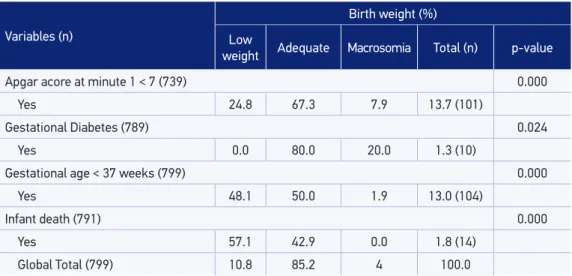
The 826 adolescent mothers interviewed were, on average, 17.6 years old (standard deviation – SD = 1.35), 7.7 years of school education (SD = 2.33) and 7.2 Medical consultations for prenatal care (SD = 2.00). The coverage of prenatal care was 97.9%, with around 57.5% of them made 7 or more visits during pregnancy. The average birth weight was 3,113 g (SD = 613), the LBW prevalence was 10.8% and the macrosomia was 4.0%. The average gestational age at the time of birth was 38.5 weeks, considering 13% of the total were born before completing 37 weeks.
766
Table 1. Socio-demographic, antenatal care and anthropometric characteristics according to birth
weight of adolescents in postpartum period. City of Rio de Janeiro, Brazil, 1999 – 2001.
Variables (n)
Birth weight (%)
Low
weight Adequate Macrosomia Total (n) p-value
Age in years (799) 0.184
12 – 15 13.8 78.5 7.7 8.1 (65)
16 – 17 11.2 86.7 2.2 34.8 (278)
18 – 19 10.1 85.3 4.6 57.1 (456)
Caucasian (793) 0.806
Yes 11.3 84.4 4.3 50.2 (398)
No 10.1 86.1 3.8 49.8 (395)
Water supply source (799) 0.906
Piped water at home 10.9 85.2 3.9 92.1 (736)
Outside home 9.5 85.7 4.8 7.9 (63)
Years of school education (798) 0.189
Up to 3 7.1 92.9 0.0 3.5 (28)
4 to 5 11.0 81.6 7.4 17.0 (136)
6 or more 10.9 85.6 3.5 79.4 (634)
Prenatal medical visits (772) 0.002
Up to 4 26.7 70.0 3.3 7.8 (60)
5 to 6 10.8 85.4 3.7 34.7 (268)
7 or more 7.7 87.8 4.5 57.5 (444)
Type of birth labor (798) 0.342
Normal 11.3 85.3 3.4 66.4 (530)
Caesarean 9.3 85.4 5.2 33.6 (268)
Adequacy of gestational WG* (799) 0.000
Low 20.1 79.2 0.7 37.3 (298)
Adequate 5.9 89.2 4.9 36.0 (288)
High 4.2 88.3 7.5 26.7 (213)
Adequacy of gestational WG ** (799) 0.000
Low 19.6 80.0 0.4 35.0 (280)
Adequate 7.5 87.5 5.0 35.0 (280)
High 4.2 88.7 7.1 29.9 (239)
Adequacy of gestational WG *** (799) 0.000
Low 19.7 78.9 1.3 37.4 (299)
Adequate 6.2 89.4 4.4 34.2 (73)
High 4.4 88.5 7.0 28.4 (227)
the sociodemographic, anthropometric, prenatal care and gestational outcomes variables, these were not associated with birth weight.
Table 2 presents the concordance of the pre-pregnancy anthropometric nutritional status classiication according to the recommendation of the WHO16, in relation to the
recommendations by the IOM13,15 for adolescent mothers. The results show a better agreement
between the classiication by the WHO16 and the one by the IOM (2009)13 (k = 0.80; 95%CI
0.74 – 0.86). When compared to the IOM (1992)15, it was observed a lack of concordance
for all classes, showing that 40% of the teenagers were classiied in diferent categories, a result conirmed by the low kappa value found, even after being adjusted (k = 0.47; 95%CI 0.40 – 0.54).
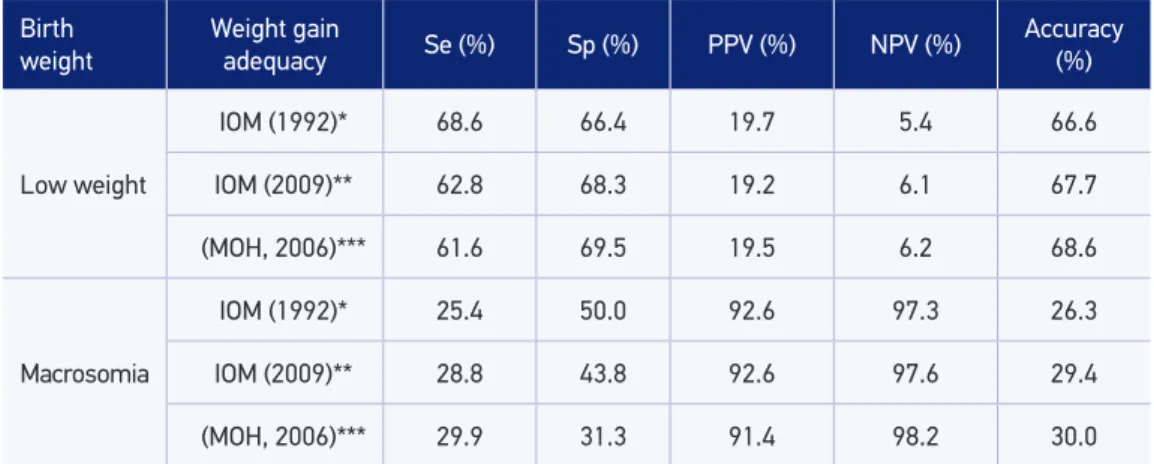
In Table 3, the values of Se, Sp, PPV and NPV values and the accuracy of the appropriate evaluation method for gestational weight gain in relation to the child’s weight at the time of birth are presented. In order to identify the LBW, the Se varied from 61.6 (MS, 2006)18
to 68.6%15; the Sp, from 69.518 to 66.4%15 and the better accuracy values were obtained
with the methods proposed by the MOH18 and the IOM (2009)13. As opposed to that, for
the identiication of macrosomy, the Se varied from 29.918 to 25.4%15; the Sp, from 31.318
to 50.0%15, and the best accuracy value were obtained through the method proposed by
the MOH18.
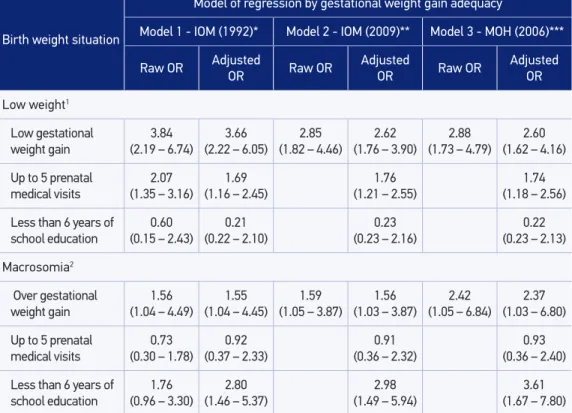
Table 4 shows simple and complex logistic regressions for the three adequacy models for gestational weight gain and other independent variables with explanatory potential for outcomes — low birth weight and macrosomia.
Tabela 1. Continuation.
Variables (n)
Birth weight (%)
Low
weight Adequate Macrosomia Total (n) p-value
Apgar acore at minute 1 < 7 (739) 0.000
Yes 24.8 67.3 7.9 13.7 (101)
Gestational Diabetes (789) 0.024
Yes 0.0 80.0 20.0 1.3 (10)
Gestational age < 37 weeks (799) 0.000
Yes 48.1 50.0 1.9 13.0 (104)
Infant death (791) 0.000
Yes 57.1 42.9 0.0 1.8 (14)
Global Total (799) 10.8 85.2 4 100.0
*According to total gestational weight gain, considering the recommendation of weight gain based on IOM (1992)15
cut-ofs of pre-gestational body mass index; **according to total gestational weight gain, considering the recommendation of weight gain based on IOM (2009)13 cut-ofs of pre-gestational body mass index; ***according to
768
It is observed that the adequacy of gestational weight gain through the method proposed by the IOM15 presented a higher prediction for LBW (raw OR = 3.84; 95%CI 2.19 – 6.74),
according to the method proposed by the MOH18 (raw OR = 2.88; 95%CI 1.73 – 4.79), among
the adolescents who presented gestational weight gain below the recommendation. The pregnant adolescent who gained weight below the recommendation and attended to six or more medical prenatal consultations had lower chance of having low birth weight babies.
In the prediction of macrosomia, the appropriate gestational weight gain method proposed by the MOH18 presented a better performance among the adolescents with gestational weight
gain above the recommendation (adjusted OR = 2.37; 95%IC 1.03 – 6.80), in relation to other methods. The pregnant teenagers who gained more weight than recommended and with more than six years of school education had a smaller chance of having newborns with macrosomia.
DISCUSSION
The study shows that adolescent mothers present good sociodemographic, anthropometric and prenatal care conditions, with averages close to satisfactory for the populations in general17,27. Table 2. Proportion of adolescents in postpartum period according to pre-gestational anthropometric nutritional status based on WHO (2007)16, IOM (1992)15 and IOM (2009)13 cut-ofs and gold standard concordance with other methods. City of Rio de Janeiro, Brazil, 1999 – 2001.
Pre-gestational nutritional status classiication method
WHO (2007)* IOM (2009) IOM (1992)
Pre-gestational nutritional status (n = 826)
% of mothers
% of mothers
% of concordance with the WHO
(2007)
% of mothers
% of concordance with the WHO
(2007)
Low weight 2.5 3.3 99.3 36.6 66.0
Adequate 83.9 86.9 95.5 55.3 60.5
Overweight 11.5 8.5 95.5 5.9 94.2
Obesity 2.1 1.3 99.3 2.2 99.6
Total 94.8 60.2
K 0.80
(95%CI 0.74 – 0.86)
0.23 (95%CI 0.18 – 0.28)
Adjusted k 0.93 (95%CI 0.40 – 0.54)0.47
The number of prenatal medical care exceeded the minimum recommended18 and the
average age of the adolescent mother was, favorably, closer to adulthood. However, data from the original research, not exposed in this article, show that, despite the broad prenatal care coverage among the interviewed mothers, the younger adolescents had fewer medical consultations and later care beginning28. The most immature teenagers, both chronologically
and biologically, have also shown lower weight gain and higher incidence of unwanted outcomes, such as premature birth and low birth weight29.
In this study, considering the application of methods, proper of pre-pregnancy diagnosis of adults and adolescents in the adequacy of gestational weight gain, according to what was proposed by the IOM13,15 and the MOH18, it was veriied that all of them were signiicantly
associated to the birth weight outcome.
In the comparison of the adopted classiications for the pre-pregnancy anthropometric nutritional diagnosis, the results of this study revealed that the recommendation by the WHO16 presented a discrepancy of 40% in relation to the one by the IOM15. The discrepancy
would be explained by the smaller proportion of adolescents classiied as low weight and a higher proportion with adequate weight or overweight, according to what was proposed by the WHO16. Besides that, it was veriied that, when applying the proposal by the IOM15, there
was a higher proportion of adolescents with pre-pregnancy low weight BMI (< 19.8 kg/m2),
once this cutof point was deined based on data of the adult American population.
Table 3. The performance of anthropometric assessment methods in pregnancy for predicting birth weight. City of Rio de Janeiro, Brazil, 1999 – 2001.
Birth weight
Weight gain
adequacy Se (%) Sp (%) PPV (%) NPV (%) Accuracy (%)
Low weight
IOM (1992)* 68.6 66.4 19.7 5.4 66.6
IOM (2009)** 62.8 68.3 19.2 6.1 67.7
(MOH, 2006)*** 61.6 69.5 19.5 6.2 68.6
Macrosomia
IOM (1992)* 25.4 50.0 92.6 97.3 26.3
IOM (2009)** 28.8 43.8 92.6 97.6 29.4
(MOH, 2006)*** 29.9 31.3 91.4 98.2 30.0
*According to total gestational weight gain, considering the recommendation of weight gain based on IOM (1992)15 cut-ofs of pre-gestational body mass index; **according to total gestational weight gain, considering the recommendation of weight gain based on IOM (2009)13 cut-ofs of pre-gestational body mass index; ***according to total gestational
weight gain, considering the recommendation of weight gain based on Brazilian Ministry of Health (2006)18 and WHO (2007)16 cut-ofs of pre-gestational body mass index, speciic for adolescents.
770
Table 4. Results of simple and multiple logistic regression with birth weight as the response variable according to diferent methods of gestational weight gain adequacy. City of Rio de Janeiro, Brazil, 1999 – 2001.
Birth weight situation
Model of regression by gestational weight gain adequacy
Model 1 - IOM (1992)* Model 2 - IOM (2009)** Model 3 - MOH (2006)***
Raw OR Adjusted OR Raw OR Adjusted OR Raw OR Adjusted OR
Low weight1
Low gestational weight gain
3.84
(2.19 – 6.74) (2.22 – 6.05)3.66 (1.82 – 4.46)2.85 (1.76 – 3.90)2.62 (1.73 – 4.79)2.88 (1.62 – 4.16) 2.60
Up to 5 prenatal
medical visits
2.07
(1.35 – 3.16) (1.16 – 2.45)1.69 (1.21 – 2.55)1.76 (1.18 – 2.56)1.74
Less than 6 years of
school education
0.60
(0.15 – 2.43) (0.22 – 2.10)0.21 (0.23 – 2.16)0.23 (0.23 – 2.13)0.22
Macrosomia2
Over gestational weight gain
1.56
(1.04 – 4.49) (1.04 – 4.45)1.55 (1.05 – 3.87)1.59 (1.03 – 3.87)1.56 (1.05 – 6.84)2.42 (1.03 – 6.80)2.37
Up to 5 prenatal
medical visits
0.73
(0.30 – 1.78) (0.37 – 2.33)0.92 (0.36 – 2.32)0.91 (0.36 – 2.40)0.93
Less than 6 years of
school education
1.76
(0.96 – 3.30) (1.46 – 5.37)2.80 (1.49 – 5.94)2.98 (1.67 – 7.80)3.61
*According to total gestational weight gain adequacy, considering the recommendation of weight gain based on IOM (1992)15 cut-ofs of pre-gestational body mass index; **according to total gestational weight gain adequacy,
considering the recommendation of weight gain based on IOM (2009)13 cut-ofs of pre-gestational body mass index
speciic for adolescents; ***according to total gestational weight gain adequacy, considering the recommendation of weight gain based on Brazilian Ministry of Health (2006)18 and WHO (2007)16 cut-ofs of pre-gestational body mass index and, speciic for adolescents.
1: dependent variable: low birth weight (reference category: no); model: Intercept; weight gain adequacy: adequate (adequate + above); 2: dependent variable: macrosomia (reference category: no); model: Intercept; weight gain adequacy: adequate (below + adequate); antenatal care: 6 or more visits; schooling degree: 7 years or more.
With the same recommendation from the IOM13, this discrepancy is reduced to 5%,
being considered as more adequate. Despite that, the adjustments proposed by the IOM are still not ideal for pregnant teenagers, since the cutof points for the pre-pregnancy BMI classiication are adopted by the WHO17 for grow ups. The discrepancy between the diferent
methods applied ratiies the need of choosing the one which uses adequate cutof points for adolescents30-32.
The choice of the method to be adopted must be accurate enough to guide the best gestational weight gain range32. The appropriate pre-pregnancy diagnosis ensures a healthy
weight gain, with favorable impacts in the maternal outcome and in the future life of both mother and child30,34,35.
The gestational weight gain adequacy, proposed by the IOM15 was the one which presented
best Se in predicting LBW. On the other hand, in order to predict macrosomia, the proposal by the MOH18, which considered the pre-pregnancy nutritional diagnosis according to the
WHO16 criteria, proved to be the best option.
The Se, the Sp and the PPV depend on the association between a risk factor and determined result17. In the prediction of LBW, the low values of Se for the adaptations of the MOH18
and of the IOM (2009)13 for weight gain adequacy, in relation to the adequacy of the IOM
(1992)15, may be justiied by the fact that the indicators were built from data obtained in
studies with adult women.
Groth31 highlights two matters which diferentiate the BMI categories in adult and
adolescent pregnant women: (1) the BMI variation in adolescents depends on their age; and (2) there are diferent cutof points for low and adequate weight, overweight and obesity. These diferences may lead the professional into classifying the same adolescent as low weighted in the beginning of the pregnancy, by the proposal of IOM (1992)15 and
as adequate weight by the proposal of the MOH18, afecting, thus, the also diferentiated
application of weight gain range during pregnancy.
The low predictive values found for LBW may be attributed to the low prevalence of outcome and justiied by the recognized interference that the prevalence of an event has on the PPV result26. On the other hand, the accuracy results were satisfactory for the LBW,
making rather acceptable the efect of both possible positive and negative classiications in the analysis. In order for an indicator to be good, it is desirable that it has a high predictive ability and a narrow conidence interval, to be appropriate, sensible and speciic for screening, in addition to being eicient, with low number of false classiications26.
The recommendation with the best statistical performance in order to explain low birth weight was the proposed adequacy of weight gain by the IOM (1992)15, a
result which may seem controversial and, at the same time, may indicate it as the best recommendation. The best sensibility of this method allows the identification of a greater proportion of pregnant teenagers in the low pre-pregnancy weight category, with higher chance of becoming mothers of LBW newborns. However, this ability has to be counterbalanced by the method to classifying those with adequate weight or overweight.
One may assume that, as a greater proportion of pregnant teenagers was classiied with low weight pre-pregnancy BMI, the statistical results obtained when applying the method of the IOM (1992)15 may bring a false interpretation of the method in increasing the chance of
772
As opposed to that, the MOH recommendations18 showed a greater chance of identifying
future newborns with macrosomia, especially for new mothers with less than one year of school education.
Given the current nutritional situation, this result suggests that these may be useful, with contribution potential as for reducing cases of postpartum weight retention and obesity, events which present a rapid growth over the past recent times, particularly in younger and socially underprivileged classes27,30.
In a recent study35, the method of the IOM (2009)13 presented better speciicity ADN
sensitivity for the outcomes most related to insuicient weight gain (low birth weight and small for gestational age newborns – SGA) in grown women. The results also indicate the need for further investigation regarding the ranges of weight gain proposed by the IOM (2009)13, for age groups, and its applicability for pregnant adolescents, especially Brazilian ones.
Finally, it is recognized that the pre-pregnancy nutritional status, according to the BMI values, interferes with gestational weight gain, with consequences to the obstetric outcome33.
Therefore, the judicious choice of a method for such an assessment is essential for the deinition of gestational weight gain ranges, aimed at improving birth weight.
It is noteworthy that, from the total of adolescent mothers interviewed in the original study, about 42% of them meet the inclusion criteria of possessing anthropometric information. Thus, it is assumed that the association between the anthropometric variables — pre-pregnancy BMI and weight gain — and the occurrence of adverse outcomes evidence in the study could have been potentialized if the anthropometric information of all the interviewed adolescent mothers were available.
However, a comparative analysis of the groups revealed signiicant diferences, showing that the lack of anthropometric information was higher in adolescent pregnant women with worse sociodemographic and health conditions and obstetric results24. Given this,
the diference between the groups was controlled in multinomial logistic regression, in an attempt of minimizing the efect of possible selection bias.
Thus, as the poverty conditions of the adolescent mothers in this study associated to the weight gain above the expected, and not with lower gain, one may assume that the presence of the ones who did not have their anthropometric information could strengthen the choice of the method recommended by the MOH18, which considers the pre-pregnancy
BMI classiication by the16.
It is noteworthy that the study relects the anthropometric proile of Brazilian pregnant adolescents, and the scientiic production in this Field is still scarce in both national and international studies. Also noteworthy is the importance of the sampling universe studied, despite the losses, and the scientiic indings which may support the relection on the choice of method to be used in clinical practice of pregnant adolescents’ prenatal care.
The early identiication of the inadequate pregnant nutritional status contributes to timely interventions during pregnancy, relecting on the birth conditions of the child, especially among pregnant adolescents22. Studies which were devoted to the nutritional
assessment indicated decrease in mortality rates and preterm births, as well as macrosomic prevention and weight retention after birth labor, being these last two considered a risk to future occurrence of cardiovascular diseases30,35.
CONCLUSION
The study demonstrated that the choice of specific methods for adolescent in determining their pre-pregnancy anthropometric nutritional assessment, as proposed by the MOH18, which considers the pre-pregnancy nutritional diagnosis according to
the WHO criteria16, seems to be an adequate option for the current nutritional situation
of Brazilian pregnant women. Besides that, the proposal by the MOH18 overcomes the
one by the IOM (2009)13 in rick identification for the birth of macrosomic children
among adolescent, ensuring, at the same time, the identification of those with risk of low birth weight, adapting its use to the outcome we intend to prevent. Either way, it is worth mentioning the importance of investments in national research focused on the definition of population-specific methods, based on the pregnant Brazilian adolescent anthropometric data for clinical practice.
1. Padilha PC, Accioly E, Veiga GV, Bessa TC, Líbera BD, Nogueira JL, et al. The performance of various anthropometric assessment methods for predicting low birth weight in pregnant women. Rev Bras Saude Mater Infant 2009; 9(2):197-206.
2. Choi SK, Park IY, Shin JC. The efects of pre-pregnancy body mass index and gestational weight gain on perinatal outcomes in Korean women: a retrospective cohort study. Reprod Biol Endocrinol 2011; 9: 6. 3. Batista-Filho M, Rissin A. A transição nutricional no
Brasil: tendências regionais e temporais. Cad Saúde Pública 2003; 19(suppl1): S181-91.
4. Padilha PC, Saunders C, Machado RCM, Silva CL, Bull A, Sally EOF, et al. Associação entre o estado nutricional pré-gestacional e a predição do risco de intercorrências gestacionais. Rev Bras Saude Mater Infant 2007; 29(10): 511-8.
5. Brasil. Ministério da Saúde. Indicadores de Vigilância Alimentar e Nutricional: Brasil 2006. Brasília: Ministério da Saúde; 2009.
6. Brasil. Pesquisa de orçamentos familiares 2008– 2009. Antropometria e Estado Nutricional de Crianças, adolescentes e adultos no Brasil. Rio de Janeiro: IBGE; 2010.
7. Brasil. Ministério da Saúde. Atenção ao pré-natal de baixo risco. Brasília: Ministério da Saúde; 2012. 8. American Dietetic Association; American Society
of Nutrition, Siega-Riz AM, King JC. Position of the American Dietetic Association and American Society for Nutrition: obesity, reproduction, and pregnancy outcomes. J Am Diet Assoc 2009; 109(5): 918-27.
9. Ghosh A. Anthropometric and body composition characteristics during pregnancy: a study from West Bengal India. HOMO 2012; 63(3): 233-40.
10. Melo MIB, Souza AI, Figueiroa AN, Cabral-Filho JE, Benício MHD, Batista-Filho M. Estado nutricional de gestantes avaliado por três diferentes métodos de classificação antropométrica. Rev Nutr 2011; 24(4): 585-92.
774
11. Deierlein AL, Siega-Riz AM, Adair LS, Herring AH. Efects of pre-pregnancy body mass index and gestational weight gain on infant anthropometric outcomes. J Pediatr 2011; 158(2): 221-6.
12. Atalah E, Castillo C, Castro R, Aldea A. Propuesta de un nuevo estándar de evaluación nutricional en embarazadas. Rev Med Chile 1997; 125: 1429-36. 13. Institute of Medicine. Weight gain during pregnancy:
reexamining the guidelines. Washington: National Academy Press; 2009.
14. Institute of Medicine. Nutrition during pregnancy. Washington: National Academy Press; 1990. 15. Institute of Medicine. Nutrition during pregnancy
and lactation: an implementation guide. Washington: National Academy Press; 1992.
16. World Health Organization. WHO reference 2007: growth reference data for 5-19 years. Disponível em http://www.who.int/growthref/en/ 2007 (Acessado em 18 setembro de 2008).
17. World Health Organization. Physical status: the use and interpretation of anthropometry. Report of a WHO Expert Committee. Geneva: World Health Organization; 1995.
18. Brasil. Ministério da Saúde. Pré-natal e puerpério: atenção qualiicada e humanizada – manual técnico. Brasília: Ministério da Saúde; 2006.
19. Brasil. Ministério da Saúde. Protocolos do Sistema de Vigilância Alimentar e Nutricional – SISVAN na assistência à saúde. Brasília: Ministério da Saúde; 2008.
20. Drehmer M, Duncan BB, Kac G, Schmidt MI. Association of second and third trimester weight gain in pregnancy with maternal and fetal outcomes. PLoS One 2013; 8(1): e54704.
21. Leal MC, Gama SGN, Campos MR, Cavalini LT, Garbayo LS, Porto Brasil CL, et al. Fatores associados à morbimortalidade perinatal em uma amostra de maternidades públicas e privadas do Município do Rio de Janeiro, 1999-2001. Cad Saúde Pública2004; 20(S1): 20-33.
22. Barros DC. Avaliação do estado nutricional antropométrico de gestantes adolescentes no Município do Rio de Janeiro [tese de doutorado]. Rio de Janeiro: Escola Nacional de Saúde Pública Sergio Arouca da Fundação Oswaldo Cruz; 2009.
23. Farias Jr JC. Validade das medidas auto-referidas de peso e estatura para o diagnóstico do estado nutricional de adolescentes. Rev Bras Saúde Matern Infant 2007; 7(2): 167-74.
24. Thomaz PMD, Silva EF, Costa THM. Validade de peso, altura e índice de massa corporal autorreferidos na população adulta de Brasília. Rev Bras Epidemiol 2013; 16(1): 157-69.
25. Oliveira AF, Gadelha AMJ, Leal MC. Estudo da validação das informações de peso e estatura em gestantes atendidas em maternidades municipais no Rio de Janeiro, Brasil. Cad Saúde Pública 2004; 20(supl.1): 92-100. 26. Pereira MG. Epidemiologia: teoria e prática. Rio de
Janeiro: Guanabara-Koogan; 2005.
27. Brasil. Ministério da Saúde. Pesquisa Nacional de Demograia e Saúde da Criança e da Mulher 2006. Brasília: Ministério da Saúde; 2008.
28. Viellas EF, Gama SGN, Theme Filha MM, Leal MC. Gravidez recorrente na adolescência e os desfechos negativos no recém-nascido. Rev Bras Epidemiol 2012; 15(3): 443-54. 29. Nielsen JN, Gittelsohn J, Anliker J, O’Brien K.
Interventions to improve diet and weight gain among pregnant adolescents and recommedations for future research. J Am Diet Assoc 2006; 106(11): 1825-40. 30. National Research Council; Institute of Medicine.
Influence of pregnancy weight on maternal and child health: workshop report. Washington: National Academy Press; 2007.
31. Groth S. Are the Institute of Medicine Recommendations for Gestational Weight Gain appropriate for adolescents? JOGNN 2007; 36(1): 21-7.
32. Fernandez ID, Olson CM, Dye TDV. Discordance in the assessment of pre-pregnancy nutritional status of adolescents: a comparison between the CDC and prevention sex- and age-specific BMI classification and the IOM-Based Classification Used for Maternal Weight-Gain Guidelines. J Am Diet Assoc 2008;108(6): 998-1002.
33. Benjumea MV. Exactitud diagnóstica de cinco referencias gestacionales para predecir el peso insuiciente al nacer. Biomédica 2007; 27: 42-55.
34. Nucci LB, Duncan BB, Mengue SS, Branchtein L, Schmidt MI, Fleck ET. Assessment of weight gain during pregnancy in general prenatal care services in Brazil. Cad Saúde Pública 2001; 17(6): 1367-74. 35. Padilha PC. Contribuições teórico-práticas para a
assistência nutricional pré-natal [tese de doutorado]. Rio de Janeiro: Instituto de Nutrição Josué de Castro da Universidade Federal do Rio de Janeiro; 2011.
Received on: 10/07/2013