Article
Steroidal and Triterpenoidal Glucosides from Passiflora alata
Flávio H. Reginattoa, Carla Kauffmanna, Jan Schripsemab,Dominique Guillaumec, Grace Gosmanna* and Eloir P. Schenkela
a
Faculdade de Farmácia, Universidade Federal do Rio Grande do Sul, Av. Ipiranga, 2752, 90610-000, Porto Alegre - RS, Brazil b
Setor de Química de Produtos Naturais, LCQUI/CCT, Universidade Estadual do Norte Fluminense, Av. Alberto Lamego, 2000, 28015-620 Campos dos Goytacazes - RJ, Brazil
c
Laboratoire de Chimie Thérapeutique, Faculté de Pharmacie, 1, rue des Louvels, Amiens, France
Cinco glicosídeos foram isolados a partir das folhas de P. alata. Após extensivas análises espectroscópicas, as estruturas 1-5 foram identificadas como sendo o
3-O-β-D-glicopiranosil-estigmasterol (1), o ácido 3-O-β-D-glicopiranosil-oleanólico (2), o ácido
3-O-β-D-glicopiranosil-(1→3)-β-D-glicopiranosil-oleanólico (3), o ácido 3-O-β-D- glicopiranosil-(1→2)-β -D-glicopiranosil-oleanólico (4) e 9,19-ciclolanost-24Z-en-3β,21,26-tri-hidróxi-3,26-di-O-gentiobiose (5). Adicionalmente, foram analisados, através de CCD, extratos hidroetanólicos de espécies de Passiflora existentes no sul do Brasil (P. actinia, P. caerulea, P. edulis var. flavicarpa, P. elegans, P. foetida, P. misera e P. tenuifila). A acumulação de saponinas foi verificada somente em Passiflora alata.
Five glycosides were isolated from leaves of P. alata. The structures 1-5 were obtained through extensive spectral analyses as 3-O-β-D-glucopyranosyl-stigmasterol (1),
3-O-β-D-glucopyranosyl-oleanolic acid (2), 3-O-β-D-glucopyranosyl-(1→3)-β-D-glucopyranosyl-oleanolic acid (3), 3-O-β-D-glucopyranosyl-(1→2)-β-D-glucopyranosyl-oleanolic acid (4) and 9,19-cyclolanost-24Z -en-3β,21,26-trihydroxy-3,26-di-O-gentiobiose (5). Comparison of the TLC profiles of the hydroethanolic extracts from leaves of other Passiflora species found in the south of Brazil (P. actinia, P. caerulea, P. edulis var. flavicarpa, P. elegans, P. foetida, P. misera and P. tenuifila) showed that only P. alata presented saponin accumulation.
Keywords: Passifloraceae, Passiflora alata, passionflower, saponins
Introduction
Passion fruits that are nowadays grown throughout the tropics are native to Latin America and Brazil is the leading exporter of passion fruit juice1. Additionally to this alimen-tary function as flavor and as juice in food industries, pas-sionflower extract has an ancient tradition in the folk medi-cine of American and even European countries due its re-puted sedative and tranquilizing properties2.
Although Passiflora alata is an official drug of the Brazilian Pharmacopoeia3 and its leaf extract is includedas an active componentin many Brazilian registered pharma-ceutical preparations4, there are onlya few investigations on its chemical components5 and pharmacological properties6,7.
In view of its pharmaceutical utilization, the knowledge of the chemical components of P. alata is important for the
development of methods for the quality control of drug and phytopharmaceutical preparations. Moreover, since it has recently been shown that P. alata could induce respiratory allergy8, quality control methods could be extended to ana-lyze pretended hypoallergenic drugs or beverages contain-ing passionflower extracts.Also,the phytochemical study of
P. alata is justified in view of searching for the still unknown therapeutically active or allergenicsubstances.
This paper describes the isolation and structure elucida-tion of one steroid glycoside (1) and four triterpene saponins (2-5) from the leaves of P. alata. The use of these com-pounds as natural markers is also discussed.
Experimental
Plant material
Aerial parts of Passiflora alata Dryander were collected in São Leopoldo, State of Rio Grande do Sul, Brazil, in February *e-mail: [email protected]
1997. A herbarium specimen (ICN 8344) is on deposit in the Herbarium of the Botany Department of the Universidade Federal do Rio Grande do Sul, Porto Alegre, Brazil. Aerial parts of native P. actinia Hooker, P. caerulea L., P. edulis Sims var. flavicarpa, P. elegans Masters, P. foetida L., P. misera
H.B.K. and P. tenuifila Killip were collected in different cities of the State of Rio Grande do Sul.
Extraction and isolation
Air-dried powdered leaves of P. alata (750 g) were ex-tracted by maceration in EtOH (plant:solvent, 1:10, w/v) (2 x 10 days). After evaporation of the ethanolic extract, the gummy residue was suspended in H2O (500 mL) and extracted successively (4 x 200 mL) with chloroform, ethyl acetate and n-butanol. Evaporation of the n-butanol frac-tion yielded the crude saponin fracfrac-tion (26 g) whose a part (12 g) was chromatographed on a Si gel column using CHCl3:EtOH:AcOH (60:40:6, v/v) yielding pure 2 (7 mg), fractions A (40 mg), B (95 mg), C (180 mg) and D (840 mg). Fraction A was, after usual peracetylation9, submit-ted to preparative TLC [Si gel GF254, mobile phase AcOEt:cyclohexane (1:1, v/v)] yielding 17 mg of peracetylated 1 (1a) and 14 mg of peracetylated 2 (2a). Fraction B yielded pure 3 by CC (15 mg) using n -BuOH:AcOH:H2O (5:3:1, v/v) and, after peracetylation and CC, peracetylated 3 (3a)(12 mg). Compound 4 (35 mg) was obtained from fraction C by precipitation. Com-pound 5 (230 mg) was isolated from fraction D through CC using n-BuOH saturated with H2O.
Chromatographic analysis
Analytical TLC aluminum sheets coated with Si gel GF254 (Merck) were used. Air-dried powdered leaves of
Passiflora species were extracted, separately, by maceration in EtOH (plant:solvent, 1:10, w/v) (2 x 10 days). After evaporation of the ethanolic extracts, the gummy residues were dissolved, separately, in MeOH for TLC comparison. Saponins were analyzed using CHCl3:EtOH:AcOH (60:40:6, v/v) as the mobile phase and the spots were visualized by heating (100 °C) the anisaldehyde-H2SO4 -sprayed plates.
General
FAB-MS analysis were performed in positive mode on a Kratos MS 80 instrument. NMR spectra were recorded on a Bruker AM 400 spectrometer. Compounds
2, 3 and 4 were hydrolyzed as described by Kartnig and Wegschaider10 in order to analyze the aglycone and sugar components.
Peracetylated compound1 (1a)
Peracetylated 3-O-β-D-glucopyranosyl-stigmasterol. 1H NMR (400 MHz, CDCl3) δ 0.69 (s, 3 H, CH3-18), 0.79 (d, J
7.0 Hz, 3 H, CH3-26 or CH3-27), 0.80 (t, J 7.0 Hz, 3 H, CH3 -29), 0.84 (d, J 6.5 Hz, 3 H, CH3-26 or CH3-27), 0.98 (s, 3 H, CH3-19), 1.01 (d, J 6.5 Hz, 3 H, CH3-21), 1.25 (br, s, 2 H, H-25, H-16), 1.52 (m, 1 H, H-24), 2.00-2.10 (4 x OAc), 3.49 (m, Hα-3), 3.68 (ddd, J 9.9, 4.8, 2.5 Hz, 1 H, glc-H5), 4.10 (dd, J
12.0, 2.5 Hz, 1 H, glc-H6b), 4.25 (dd, J 12.0, 4.9 Hz, 1 H, glc-H6a), 4.60 (d, J 8.0 Hz, 1 H, glc-H1), 4.96 (dd, J 9.5, 8.0 Hz, 1 H, glc-H2), 5.05 (m, 1 H, H-23), 5.10 (m, 1 H, glc-H4), 5.15 (m, 1 H, H-22), 5.20 (t, J 9.5 Hz, 1 H, glc-H3), 5.35 (br, s, J 5.1 Hz, 1 H, H-6); 13C NMR see Table 1.
Peracetylated compound2 (2a)
Peracetylated 3-O-β-D-glucopyranosyl-oleanolic acid. 1H NMR (400 MHz, CDCl
3) δ 0.74 (s, 4 H, CH3-26, H-5), 0.91 (s, 6 H, CH3-29, CH3-24), 0.92 (s, 6 H, CH3-30, CH3 -23), 1.10 (s, 3 H, CH3-27), 1.25 (s, 3 H, CH3-25), 2.02-2.08 (4 x OAc), 2.81 (dd, J 4.3, 13.6 Hz, H-18), 3.11 (dd,
J 4.8, 11.5 Hz, 1 H, H-3), 3.69 (ddd, J 2.7, 5.5, 10.0 Hz, glc-H5), 4.12 (dd, J 3.0, 12.0 Hz, glc-H6b), 4.26 (dd, J
5.3, 12.0 Hz, glc-H6a), 4.55 (d, J 8.0 Hz, glc-H1), 5.03 (dd, J 9.8, 8.0 Hz, glc-H2), 5.06 (dd, J 9.0, 8.5 Hz, glc-H4), 5.22 (t, J 9.5 Hz, glc-H3), 5.26 (t, J 3.5 Hz, H-12); 13C NMR see Table 1.
Peracetylated compound 3 (3a)
Peracetylated 3-O-β-D-glucopyranosyl-(1→3)-β -D-glucopyranosyl-oleanolic acid. 1H NMR according to the literature11; 13C NMR see Table 1.
Compound4
3-O-β-D-glucopyranosyl-(1→2)-β -D-glucopyranosyl-oleanolic acid. 1H NMR (400 MHz, C5D5N) δ 0.81 (s, 3 H, CH3-24), 0.94 (s, 3 H, CH3-29), 0.98 (s, 3 H, CH3-26), 1.00 (s, 3 H, CH3-30), 1.08 (s, 3 H, CH3-25), 1.25 (s, 3 H, CH3 -23), 1.28 (s, 3 H, CH3-27), 3.29 (m, 2 H, Hα-3, H-18), 3.89 (m, 2 H, glcI-H5, glcII-H5), 4.11 (m, 1 H, glcII-H2), 4.14 (m, 1 H, glcI-H4), 4.23 (m, 1 H, glcII-H3), 4.25 (m, 1 H, glcI-H2), 4.30 (m, 2 H, glcI-H6a, glcII-H6a), 4.31 (m, 1 H, H3), 4.33 (m, 1 H, glcII-H4), 4.46-4.52 (m, 2 H, glcI-H6b, glcII-H6b), 4.90 (d, J 7.6 Hz, glcI-H1), 5.36 (d, J 7.6 Hz, glcII-H1), 5.46 (br, s, 1 H, H-12); 13C NMR see Table 1; fab-ms (positive ion mode) m/z 803 (M+Na)+, 273, 203.
Compound 5
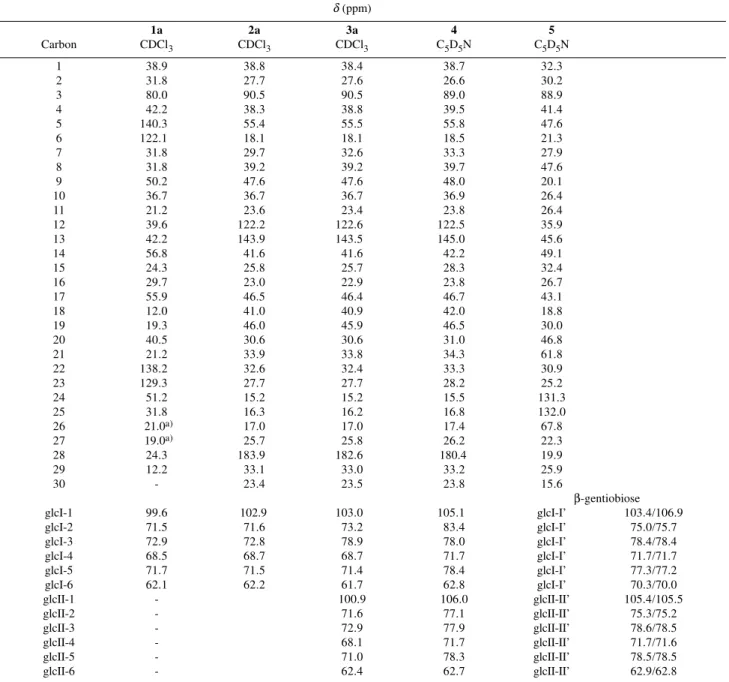
Table 1. 13C NMR (100 MHz) chemical shift data of 1a, 2a, 3a, 4 and 5. δ (ppm)
1a 2a 3a 4 5
Carbon CDCl3 CDCl3 CDCl3 C5D5N C5D5N
1 38.9 38.8 38.4 38.7 32.3
2 31.8 27.7 27.6 26.6 30.2
3 80.0 90.5 90.5 89.0 88.9
4 42.2 38.3 38.8 39.5 41.4
5 140.30 55.4 55.5 55.8 47.6
6 122.10 18.1 18.1 18.5 21.3
7 31.8 29.7 32.6 33.3 27.9
8 31.8 39.2 39.2 39.7 47.6
9 50.2 47.6 47.6 48.0 20.1
10 36.7 36.7 36.7 36.9 26.4
11 21.2 23.6 23.4 23.8 26.4
12 39.6 122.20 122.60 122.50 35.9
13 42.2 143.90 143.50 145.00 45.6
14 56.8 41.6 41.6 42.2 49.1
15 24.3 25.8 25.7 28.3 32.4
16 29.7 23.0 22.9 23.8 26.7
17 55.9 46.5 46.4 46.7 43.1
18 12.0 41.0 40.9 42.0 18.8
19 19.3 46.0 45.9 46.5 30.0
20 40.5 30.6 30.6 31.0 46.8
21 21.2 33.9 33.8 34.3 61.8
22 138.20 32.6 32.4 33.3 30.9
23 129.30 27.7 27.7 28.2 25.2
24 51.2 15.2 15.2 15.5 131.3
25 31.8 16.3 16.2 16.8 132.0
26 21.0a) 17.0 17.0 17.4 67.8
27 19.0a) 25.7 25.8 26.2 22.3
28 24.3 183.90 182.60 180.40 19.9
29 12.2 33.1 33.0 33.2 25.9
30 - 23.4 23.5 23.8 15.6
β-gentiobiose
glcI-1 99.6 102.90 103.00 105.10 glcI-I’ 103.4/106.9
glcI-2 71.5 71.6 73.2 83.4 glcI-I’ 75.0/75.7
glcI-3 72.9 72.8 78.9 78.0 glcI-I’ 78.4/78.4
glcI-4 68.5 68.7 68.7 71.7 glcI-I’ 71.7/71.7
glcI-5 71.7 71.5 71.4 78.4 glcI-I’ 77.3/77.2
glcI-6 62.1 62.2 61.7 62.8 glcI-I’ 70.3/70.0
glcII-1 - 100.9 106.0 glcII-II’ 105.4/105.5
glcII-2 - 71.6 77.1 glcII-II’ 75.3/75.2
glcII-3 - 72.9 77.9 glcII-II’ 78.6/78.5
glcII-4 - 68.1 71.7 glcII-II’ 71.7/71.6
glcII-5 - 71.0 78.3 glcII-II’ 78.5/78.5
glcII-6 - 62.4 62.7 glcII-II’ 62.9/62.8
a)interchangeable attributions: Acetate 1a: 170.7, 170.4, 169.4, 169.3, 20.8, 20.7, 20.6 (2x); Acetate 2a: 170.6, 170.3, 169.4, 169.1, 20.7 (2x), 20.6 (2x); Acetate 3a: 170.7, 170.5, 170.3, 169.3, 169.2 (2x), 168.7, 21.0, 20.7 (2x), 20.6, 20.5 (2x), 20.2.
NMR (400 MHz, C5D5N) δ 0.20 (br, s, 1 H, H-19a), 0.45 (br, s, 1 H, H-19b), 0.9 (s, 3 H, CH3-28), 1.03 (s, 3 H, CH3-18), 1.07 (s, 3 H, CH3-30), 1.27 (s, 3 H, CH3-29), 1.93 (s, 3 H, CH3-27), 3.58 (m, 1 H, Hα-3), 3.82 (m, 1 H, H-21a), 3.90 (m, 4 H, glcII-H3, glcII’-H3, glcII-H5, glcII’-H5), 4.05 (m, 7 H, H-21b, glcI-H2, glcI’-H2, glcII-H2, glcII’-H2, glcI-H5, glcI’-H5), 4.20 (m, 6 H, glcI-H3, glcI’-H3, 4 x glc-H4), 4.33 (m, 4 H, glcI-H6, glcII’-H6), 4.48 (m, 2 H, glcII-H6), 4.55 (m, 2 H, H-26), 4.82 (m, 3 H, glcI-H1, glcI’-H6), 4.89 (d, J 8.0 Hz, 1 H, glcI’-H1), 5.10 (d, J 7.6 Hz, 1 H, glcII’-H1), 5.15 (d, J 8.0 Hz, 1 H, glcII-H1). 5.52 (t, J 6.8 Hz, H-24); 13C NMR see Table 1.
Results and Discussion
The n-BuOH extract of P. alata was submitted to Si gel CC to yield compounds 1-5 and their identification was achieved through the combined use of mass and NMR spectroscopy.
methyl. These characteristic signals suggested a steroid skeleton. Three olefinic proton signals at δ 5.35 (br, d, J 5.1 Hz), δ 5.15 (m) and at δ 5.05 (m) were attributed to 6, H-22 and H-23, respectively, and together with the signal at δ 3.49 (m, 1 H, Hα-3) they are characteristic for ∆5,22-3β -hydroxysterols12,13,14. Comparison of 13C NMR spectrum (Table 1) and the 2D-HSQC spectrum with spectral data of related sterols found in the literature indicated that compound
1 is the sterol glycoside 3-O-β -D-glucopyranosyl-stigmasterol isolated as a peracetylated derivative. Its occurrence in nature has only been reported several times although the aglycone is widely found.
Acid hydrolysis of 2, 3 and 4 furnished oleanolic acid and glucose (Glc). Both were identified through co-TLC with authentic samples.
The FAB-MS (positive ion mode) spectrum of 2
indicated the molecular mass 618 due to the quasi-molecular ion peak at m/z 641 (M+Na)+. In addition, there were two characteristic peaks at m/z 203 and 248 denoting the retro-Diels-Alder fragmentation commonly found in the spectra of oleanane or ursane derivatives15. Careful comparison of the 13C NMR data of peracetylated compound 2a (Table 1) with those of peracetylated dumosasaponin 69, allowed the unambiguous assignment of the signals of the oleanolic acid aglycone. The presence of one β-D-Glc was evidenced through the anomeric signal at δc 102.9 (δH 4.55, d; J 8.0 Hz, 1 H) and the sugar substitution at C-3 of the aglycone was established (δ C-3 90.5). These conclusions were confirmed by 1 H-1H COSY, 1H-13C COSY and ROESY experiments.
Therefore, compound 2 was identified as 3-O-β -D-glucopyranosyl-oleanolic acid, already isolated from
Chenopodium quinoa16.
For compound 3 the molecular formula C42H68O13 was deduced based on the FAB-MS spectrum, which displayed a pseudo-molecular ion peak at m/z 803 (M+Na)+ and it also showed fragments at m/z 203 and m/z 248. Detailed comparison of 13C NMR data of 3a and 2a showed that 3a
structurally differs from 2a only by the presence of signals for another hexose. Thus, as in the case of 2a, compound
3a presented a free carboxyl group at position C-28 while a Glc,Glc-constituted disaccharide was substituted at C-3. Considering the sugar carbon chemical shifts, the correlation experiments (1H-1H COSY, 1H-13C COSY) and literature data, we could identify 3a as the peracetylated derivative of 3-O-β-D-glucopyranosyl-(1→3)-β -D-gluco-pyranosyl-oleanolic acid, an already known saponin11.
The great similarity of the 13C NMR spectrum of 4
with that of 3a (Table 1) showed that 4 was also a derivative of oleanolic acid with two Glc residues substituted at carbon 3. The FAB-MS spectrum of 4 exhibited a peak at m/z 803 (M+Na)+ and was consistent with the presence of these two Glc residues. The interglycosidic linkage of this disaccharide was deduced to be Glc(1→2)Glc from the deshielding in the 13C NMR spectrum of 4 of one of the CH units of this moiety (δ 83.4). Thus, 4 was determined to be 3-O-β-D-gluco-pyranosyl-(1→2)-β -D-gluco-pyranosyl-oleanolic acid, already isolated from Passiflora quadrangularis17 and Luffa acutangula18.
The most singular feature of 5 is the presence of two upfield shifted signals at δ 0.20 and 0.45 in the 1H NMR spectrum which are characteristic of geminal cyclopropane protons. It also displayed signals corresponding to five me-thyl singulets (δ 0.9, 1.03, 1.07, 1.27, 1.93) and one olefinic proton at δ 5.52 (t, J 6.8 Hz) together with four anomeric protons (δ 4.82, 4.89, 5.10 and 5.15). These data, in
dance with 13C NMR spectrum (Table 1), suggested a cycloartane triterpene skeleton. 1H-1H COSY and 1H-13C COSY experiments showed the presence of two gentiobioses located at positions C-3 and C-26. Through detailed com-parison of these data with those from the literature, 5 was identified as 9,19-cyclolanostan-24Z-en-3β ,21,26-trihy-droxy-3,26-di-O-gentiobiose, already isolated from
Passiflora quadrangularis19 and named quadranguloside. This study allowed us to identify five glycosides from the leaves of P.alata. Although none of them are specific to P. alata, their association in a single plant is unique, so we wonder if we could use them as a phytochemical tracer to either authentify the exclusive use of P. alata in phar-maceutical preparations, or to certify the lack of P. alata in therapeutic preparations elaborated from other passion-flower species. Furthermore, the TLC profiles of the hydroethanol extracts from the leaves of Passiflora spe-cies found in the State of Rio Grande do Sul (south of Bra-zil), P. actinia, P. alata, P. caerulea, P. edulis var. flavicarpa,
P. elegans, P. foetida, P. misera and P. tenuifila showed accumulation of saponins only in P. alata. As far as we know, saponins have only been reported for P. quadrangularis L.17,19 and P. edulis Sims20.
Since secondary metabolite content can vary as a function of multiple factors (such as environmental conditions and harvest period), reproduction of this analysis over a long period of time is of course needed before the effectiveness of our method is totally demonstrated. We are currently pursuing this goal.
Acknowledgments
We are grateful to Marcos Sobral from the Universidade Federal do Rio Grande do Sul, Porto Alegre, RS, and Cláudio Mondin from the Universidade do Vale do Rio dos Sinos, São Leopoldo, RS, for locating, identifying and helping to collect the plant material, to the Chemical Department of the Universidade Federal de Santa Maria, Santa Maria, RS, for recording part of the NMR spectra, and to the Centro Nacional de Ressonância Magnética Nuclear of the Departamento de Bioquímica, Universidade Federal do Rio de Janeiro, for ac-cess to the NMR facilities. This work was supported by re-search stipends from Capes and CNPq (Brazil).
References
1. Chan, H.T. In Fruit Juice Processing Technology; Nagy, S., Chen, C.S., Shaw, P.E., Eds.; Agscience; Auburdale, 1993. p. 334.
2. Ross, M.S.F.; Anderson, A. Int. J. Crude Drugs Res.
1986, 24, 1.
3. Farmacopéia Brasileira. 3 ed. Andrei; São Paulo, 1977. 4. González Ortega, G.; Schenkel, E.P.; Athayde, M.L.;
Mentz, L.A. Dtsch. Apoth. Ztg. 1989, 129, 1847. 5. Ulubelen, A.; Oksuz, S.; Mabry, T.J.; Dellamonica,
G.; Chopin, J. J. Nat. Prod.1982, 45, 783.
6. Oga, S.; Freitas, P.C. de; Silva, A.C.G. da; Hanada, S.
Planta Med. 1984, 50, 303.
7. Petry, R.D.; Reginatto, F.; de-Paris, F.; Gosmann, G.; Salgueiro, J.B.; Quevedo, J.; Kapczinski, F.; González Ortega, G.; Schenkel, E.P. Phytother. Res.2000, 14, 1. 8. Giavina-Bianchi, P.F.; Castro, F.F.; Machado, M.L.; Duarte, A. J. Ann. Allergy, Asthma, Immunol.1997,
79, 449.
9. Pires, V.S.; Guillaume, D.; Gosmann, G.; Schenkel, E.P. J. Agr. Food Chem.1997, 45, 1027.
10. Kartnig, T.; Wegschaider, O. Planta Med. 1972,
21, 144.
11. Sotheeswaran, S.; Bokel, M.; Kraus, W. Phytochemistry
1989, 28, 1544.
12. Itoh, T.; Kikuchi, Y.; Tamura, T.; Matsumoto, T.
Phytochemistry1981, 20, 761.
13. Garg, V.K.; Nes, W.R. Phytochemistry1984, 23, 2925. 14. Guevara, A.P.; Lim-Sylianco, C.Y.; Dayrit, F.M.;
Finch, P. Phytochemistry1989, 28, 1721.
15. Budzikiewicz, H.; Wilson, J.M.; Djerassi, C. J. Am. Chem. Soc.1963, 85, 3688.
16. Ma, W.-W.; Heinstein, P.F.; McLaughlin, J.L. J. Nat. Prod.1989, 52, 1132.
17. Orsini, F.; Pelizzoni, F.; Ricca, G.; Verotta, L.
Phytochemistry1987, 26, 1101.
18. Nagao, T.; Tanaka, R.; Iwase, Y.; Hanazono, H.; Okabe, H. Chem. Pharm. Bull.1991, 39, 599. 19. Orsini, F.; Pelizzoni, F.; Verotta, L. Phytochemistry
1986, 25, 191.
20. Bombardelli, E.; Bonati, A.; Gabetta, B.; Martinelli, E.M.; Mustich, G. Danieli, B. Phytochemistry1975, 14, 2661.