doi: 10.1590/0037-8682-0258-2016
Major Article
Corresponding author: Dra. Dorcas Lamounier Costa.
e-mail: [email protected]
Received 17 August 2016
Accepted 9 November 2016
Predicting death from kala-azar:
construction, development, and validation of a
score set and accompanying software
Dorcas Lamounier Costa
[1],[2], Regina Lunardi Rocha
[3], Eldo de Brito Ferreira Chaves
[2],
Vivianny Gonçalves de Vasconcelos Batista
[2], Henrique Lamounier Costa
[4]and Carlos Henrique Nery Costa
[2],[5][1]. Departamento Materno-Infantil, Universidade Federal do Piauí, Teresina, Piauí, Brasil. [2]. Instituto de Doenças Tropicais Natan Portella, Teresina, Piauí, Brasil.
[3]. Departamento de Pediatria, Universidade Federal de Minas Gerais, Belo Horizonte, Minas Gerais, Brasil. [4]. Departamento de Engenharia de Produção, Universidade Federal do Piauí, Teresina, Piauí, Brasil.
[5]. Departamento de Medicina Comunitária, Universidade Federal do Piauí, Teresina, Piauí, Brasil.
Abstract
Introduction: Early identifi cation of patients at higher risk of progressing to severe disease and death is crucial for implementing
therapeutic and preventive measures; this could reduce the morbidity and mortality from kala-azar. We describe a score set composed of four scales in addition to software for quick assessment of the probability of death from kala-azar at the point of
care. Methods: Data from 883 patients diagnosed between September 2005 and August 2008 were used to derive the score set, and data from 1,031 patients diagnosed between September 2008 and November 2013 were used to validate the models. Stepwise logistic regression analyses were used to derive the optimal multivariate prediction models. Model performance was assessed by its discriminatory accuracy. A computational specialist system (Kala-Cal®) was developed to speed up the calculation
of the probability of death based on clinical scores. Results: The clinical prediction score showed high discrimination (area
under the curve [AUC] 0.90) for distinguishing death from survival for children ≤2 years old. Performance improved after
adding laboratory variables (AUC 0.93). The clinical score showed equivalent discrimination (AUC 0.89) for older children and adults, which also improved after including laboratory data (AUC 0.92). The score set also showed a high, although lower, discrimination when applied to the validation cohort. Conclusions: This score set and Kala-Cal® software may help identify
individuals with the greatest probability of death. The associated software may speed up the calculation of the probability of
death based on clinical scores and assist physicians in decision-making.
Keywords: Kala-azar. Visceral leishmaniasis. Prediction. Mortality. Software.
INTRODUCTION
Kala-azar, or visceral leishmaniasis (VL), is the severest infection caused by protozoa of the Leishmania genus and is usually fatal when not treated(1)The disease is endemic in 98 countries and three territories, in fi ve continents. Case-fatality
rates are 5-20% in endemic areas(2) (3). Death is usually associated
with systemic inflammation, hemorrhage, and bacterial infections, even with readily available hemoderivatives and antibiotics(4) (5) (6).
Approximately 0.2-0.4 million VL cases occur annually(7).
Most infections are asymptomatic; clinical presentations of symptomatic infections range from mild to life-threatening(8).
The main symptom is prolonged fever, sometimes followed by hemorrhage, cough, diarrhea, or wasting. Physical examination reveals anemia and splenomegaly in almost all patients. Many also present with petechiae, jaundice, pulmonary rales, edema, and evidence of bacterial infections(9). Typical laboratorial
results are pancytopenia, elevated erythrocyte sedimentation rate, elevated C-reactive protein, hypoalbuminemia, and hypergammaglobulinemia. Some patients have elevated liver
enzymes and kidney involvement(10) (11). Diagnosis is based on
serological tests and demonstration of parasites in bone marrow or spleen through direct examination, culture, or polymerase chain reaction(12).
Two different Leishmania species transmitted through the
bite of several sand fl y species are responsible for the disease:
Leishmania donovani species, in the Northeast of the Indian
subcontinent and East Africa (majority of cases), and the zoonotic
East, the Mediterranean area, West Africa, and Central and
South America(13). Both are important opportunistic infections among patients with acquired immunodefi ciency syndrome
(AIDS)(14) (15) (16) and have similar clinical presentations, but
L. donovani may lead to post-kala-azar dermal leishmaniasis,
or infectious skin lesions(17) (18).
Since the 1980s, the disease has been transmitted in larger cities and spread throughout Brazil and the South Cone. Despite medical advances, mortality has been increasing in Brazil(19),to levels similar to those among refugees in
Sudan(2) (20), despite free drug therapy. Moreover, in Brazil, the rate of kala-azar-related mortality remains unchanged 10 years
after implementing a national guideline for the treatment of severely ill patients(21). The major criticism of this guideline is the weak scientifi c evidence to support recommendations for
treatment of complications. Policy failure is also the result of
delayed recognition of the severest forms of the disease, lack of identifi cation of subtle complications, and lack of proper
treatment for some of the severest complications. Finally,
only a few clinical trials of kala-azar treatment included death as an outcome, and none investigated kala-azar caused by
L. infantum; one of the studies, conducted in Ethiopia, showed
only higher mortality with antimonial therapy than with miltefosine therapy(22). Since miltefosine is not licensed in Brazil, these results have little impact on the national
kala-azar-related mortality rate.
Age, disease length, bacterial infections, bleeding, and immunodeficiency seem to be the most important predictors of poor prognosis in studies in Africa(2) (23) (24) (25) and
Brazil(6) (26) (27) (28). Patients with kala-azar at the highest risk of
death are those with the clinical symptoms, signs, and laboratory data of more severe disease; early identification of these patients may reduce mortality by enabling referrals to more complex medical attention. Outpatients could be referred to hospitals for amphotericin B, intravenous antibiotics, and blood derivatives, and patients in hospital wards could be transferred to intensive care units (ICUs), which might help reduce mortality.
Moreover, quantitatively ascertaining the risk of death may help
allocate patients in clinical studies, with quality improvement
initiatives, and for benchmarking purposes(26). Scoring systems may only indirectly reduce mortality by improving scientifi c knowledge and refi ning the quality of care. Although scoring
systems are not recommended to assess individual patients, they may help identify changes in health status earlier, for medical interventions(27). However, the combination of scoring and solid clinical knowledge, fundamental pathophysiological
understanding, and available therapies might enlighten medical decisions and reduce the probability of death for individual patients.
The risk factors for death in patients with kala-azar by
L. infantum have been identifi ed, and prognostic models based
on clinical scores have been developed(5) (6) (25) (28). In a recent
meta-analysis, jaundice, thrombocytopenia, hemorrhage, human
immunodefi ciency virus-1 (HIV-1) co-infection, diarrhea, age
<5 years or >40-50 years, severe neutropenia, dyspnea, and
bacterial infections were important risk factors for VL-related
death. Edema and low hemoglobin concentration were also associated with unfavorable outcomes(29). However, most
prognostic studies did not validate the scores. Finally, although some systems are simple, they may not be fully recalled by physicians during their overcharged medical routines. Therefore, in the present study, we developed a validated score available through easy-to-access software for the rapid assessment of severity and evolution, to help reduce mortality by identifying
individuals at a higher risk of death.
METHODS
Study population
A prospective, hospital-based study was conducted at the Institute of Tropical Diseases Natan Portella, in Teresina, the capital of Piauí State in Brazil. Inclusion criteria were the presence of fever and splenomegaly with laboratorial evidence
of Leishmania infection: positive bone marrow smear or
culture, indirect immunofl uorescent test (IFI-Leishmaniose
Humana. Bio-Manguinhos) with titers ≥1:80, or positive rK39
antigen-based immunochromatographic test. The prospective, derivation cohort to build the score set included patients diagnosed between September 1, 2005 and August 31, 2008.
The fi rst validation cohort included patients diagnosed between
September 1, 2008 and July 31, 2009; the second validation cohort included patients diagnosed between August 1, 2009 and November 31, 2013.
Clinical defi nitions
Since kala-azar is an infectious, infl ammatory, and febrile
disease with overlapping or ambiguous clinical manifestations,
operational defi nitions of the clinical manifestations were
created. Hemorrhage was defi ned as any clinically spontaneous
apparent bleeding such as petechiae, hematoma, hematuria, epistaxis, hemoptysis, gum or gastrointestinal bleeding, and persistent bleeding at venipuncture, intramuscular injection, or bone marrow puncture sites. Bacterial infection was defi ned
as positive Gram stain or culture; presence of >10 leucocytes
per fi eld in the urine; typical skin infections; cough associated
with dyspnea, rales, or signs of respiratory distress as well as other clinical signs of bacterial pneumonia; or radiological or tomographic images typical of infection, more commonly chest radiography suggestive of pneumonia. At least one of the following signs indicated bacterial sepsis: hyperventilation (respiratory rate for age or PaCO2 <32mmHg), low tissue perfusion (PaO2/FiO2 <250), venous oxygen saturation <70%, cyanosis, or organ dysfunction characterized by lactic acidosis, oliguria, and altered consciousness(30). Kidney failure was defi ned as a glomerular fi ltration rate (GFR) <60 mL/min/m2 as calculated using the Cockcorft-Gault method for adults and
children >12 years old or the Schwartz method for children
≤12 years old(31).However, creatinine level was used instead of GFR because serum creatinine levels >1.5mg/dL were similar to GFR <60 mL/min/m2 in a preliminary analysis and are easier to assess. Finally, death was attributed to kala-azar only if the
Data collection
Clinical and laboratory evaluations were performed at hospital admission. Each patient from the derivation cohort was evaluated daily by a single and experienced author (Costa DL) or eventually, by a trained physician, until hospital discharge. All data were entered into a computerized database.
Non-specifi c laboratory data included complete blood count and
biochemistry, chest radiograph, urinary sediment, and HIV-1 serology. Blood culture, urine culture, or cultures from other secretions were provided before antibiotic administration or for suspected bacterial infection. The study outcome was registered as discharge or death.
Statistical analysis and score set
Statistical analysis was performed using Stata/SE® 10.0 for Windows (College Station, Texas, USA). Chi-square or
Fisher’s exact tests were used to analyze dichotomous variables. Spearman’s correlation tests were used to analyze correlations among continuous variables with sparse data, while Pearson’s tests were used for variables with normal distributions. The differences between independent variables with normal distributions were compared using Student’s t-tests and without
normal distributions using Wilcoxon and Kruskal-Wallis tests.
The relationships among variables were measured using the
relative risk (RR) or odds ratio (OR) with 95% confi dence
intervals (CIs). Multiple comparisons were conducted using the Bonferroni adjustment method, with Dunn's procedure. In this case, p-values refer to variables that remained statistically
signifi cant after adjustment.
Model derivation
To determine the signifi cant prognostic variables, logistic regression analysis was performed, using backward elimination;
only variables with a p < 0.05 were retained in the model. A variance inflation factor (VIF) was calculated after the regression analysis to assess co-linearity. The following continuous variables were converted into dichotomic variables:
age, hemoglobin level, leukocyte count, platelet count, aspartate
transferase (AST) level, alanine transferase (ALT) level, and glomerular filtration rate. All dichotomic and statistically
signifi cant (p < 0.20) variables that were not co-linear in the
multivariate analysis were entered in the model. The fi nal
regression equation in the multivariate logistic models was used to determine the predicted probabilities of death. The weight of each variable was assumed as the ratio between
the modules of the coeffi cient of the analyzed variable and of the smallest coeffi cient among the variables of the logistic
regression model, which was rounded to the closest integer(32).
Finally, the score of each patient with a respective probability of death was calculated by adding the weight of each variable
in the fi nal model. Sensitivity, specifi city, and positive and
negative predictive values were calculated for each score. The
score for which sensitivity and specifi city were the highest was selected. Receiver operator characteristic (ROC) curves were
constructed using a series of cut points from both the derivation
and validation sets. Statistical signifi cance of both ROC curves was analyzed by calculating the area under the ROC curve (AUC)
and 95% CI(33). The goodness-of-fi t of the logistic regression
model was tested using the Hosmer-Lemeshow test.
Model validation
During the validation procedure, the risk factors for death differed for children ≤ 2 years old and for older patients. New,
separate models were built for infants and older individuals in the derivation cohort and were tested again with the validation cohort, showing better performance. Two models were then rebuilt for each age group: one addressing only clinical
variables collected at the fi rst medical evaluation and another
incorporating the laboratory test results at hospital admission. Thereafter, the predictive model was applied to two
subsequent validation cohorts to check the probability of
death based on the derivation models. Initially, the model was
applied to the two cohorts divided only by age (children ≤ 2
years old and older children and adults). Then, subgroups were constructed: age, 2-year intervals in children <10 years old and 5-year intervals in older patients; origin, rural versus urban and smaller versus larger cities; period of admission, quartiles according to the year of diagnosis; and presence of HIV-1 co-infection. The ability to distinguish between death and survival was assessed for all the models using the AUC.
Sensitivity analysis
Sensitivity analysis was performed in the derivation cohort to assess the impact of extreme weighting of each variable. The model was reloaded using the extreme 5% and 95% values of the
95% CI coeffi cient for each of the variables retained in the fi nal
logistic regression model. The discriminatory accuracy (between death and survival) was assessed for all models through the AUC.
Software development
The software Kala-Cal® was developed to estimate the
probability of death of patients with kala-azar, according
to the clinical scores in the present study. The software is a special system developed using Java (prototype phase) as the programming language and PHP (release phase), and the paradigm was that of an object-oriented programming language. The human-computer system interface was designed to minimize the number and complexity of interactions between the user and program. Therefore, we developed a system optimized for productivity, applet availability, many browsers and any operational system, anywhere, and any cell phone and without
the explicit necessity of a computer. The screen consists of fi ve
radio buttons allowing the selection of the age group and two buttons to choose between the clinical and clinical-laboratorial
models. The subsequent screen shows checkboxes with the
previously selected clinical and laboratory data, accordingly to
the fi nal selected model. The last screen shows the fi nal score
along with the estimated probability of death in a graph. For the testing, a classical cycle was used: prototypes were generated
and tested, giving way to new requirement specifi cations, which
were then implemented, generating new prototypes until a
viable model was reached. The fi nal result was an easy-to-use
and light app, in which it is possible to obtain a quantitative
clicks and three screens. The equation for the estimation of the
probability of death was found through non-linear regression analysis at www.xuru.org and chosen based on the residual sum of squares value and shape. The applet can be accessed at
http://sbmt.org.br/kalacal/.
Ethicals considerations
The Research Ethics Committee at the Federal University
of Piauí granted ethical approval (number 0116/2005). Each participant or his legal representative signed the informed consent form.
RESULTS
Characteristics of the study population
Between September 2005 and November 2013, 1,914 patients
were admitted at the hospital for kala-azar. Based on the
inclusion criteria, 883 patients were enrolled for the derivation model, 449 patients for the first validation cohort, and 582 patients for the second validation cohort.
Characteristics of the derivation cohort
Most patients were men [553 (62.6%)] and children ≤5 years old [463 (52.4%)], primarily ≤2 years old [314 (35.6%)].
The mean time from the start of symptoms until diagnosis was 74.8 days. HIV-1 serology was positive in 71 (10.9%) of
0
1
0
2
0
3
0
0 <1 1-2 2-3 3-4 4-5 5-10 10-20 20-30 30-40 40-50 50-60 >60
Age (years)
Mort
ality (%)
FIGURE 1. Mortality from kala-azar according to age group among 883 patients in Teresina, Brazil.
the 652 screened patients. Sixty-six (7.5%) patients died. Figure 1
shows the age distribution considering mortality, which was two
times higher in children ≤1 year old (10.5%) than in children >1 year old but ≤2 years old (5%), and fi ve times higher than that in children 2 years old to ≤15 years old (2%). Mortality was highest
among patients >40 years old (16.8%), almost two times as high as it was among people 15-40 years old (9.7%) and statistically
signifi cantly higher than in patients ≤2 years old (RR = 5.4;
p = 0.008), >20 years old (RR = 6.9; p < 0.001), or 2–20 years old
(RR = 11.23; p < 0.001). Mortality among patients with HIV-1 was 16.7%, more than two times higher than that among patients
without HIV-1 (7%) (RR = 2.3; p = 0.03). There was no difference
in mortality by sex or origin (urban or rural). Shock syndrome was
the most prevalent clinical phenomena in the 24 hours preceding death, affecting 52 (79%) of the 66 patients in the derivation cohort who died. Because bleeding occurred in 43 (65%) patients, it was
considered the most important cause of shock and death. Proven
bacterial infections were present in only 27% of the patients. Other complications preceding death were seizures, respiratory
insuffi ciency, acute kidney failure, pancreatitis, and cardiac arrest.
Table 1 shows the clinical manifestations and laboratory results associated with death in infants and older patients in
the univariate analysis. Variables associated with a higher risk
Clinical manifestations & laboratory results
Deaths of patients
≤ 2 years
old/total
Deaths of patients
> 2 years
old/total
Relative risk of death among
patients ≤ 2 years
old (95% CI)
Relative risk of death among
patients
> 2 years old
(95% CI)
Combined relative risk (95% CI)
p-value of the test of homogeneity
among relative risks
Vomiting 16/132 26/173 3.2 (1.3-7.43) 3.5 (2.0-6.3) 3.4 (2.1-5.5) 0.84
Diarrhea 13/119 23/154 2.1 (1.0-4.7) 3.1 (1.8-5.5) 2.7 (1.7-4.3) 0.43
Dyspnea 16/71 19/80 7.8 (3.4-18.3) 4.8 (2.8-8.4) 5.8 (3.6-9.2) 0.34
Edema 19/87 23/123 12.4 (4.3-35.4) 4.2 (2.4-7.3) 5.8 (3.6-9.6) 0.07
Jaundice 12/36 17/103 8.4 (4.0-17.7) 3.0 (1.7-5.2) 4.1 (2.6-6.4) 0.03
Somnolence 15/102 20/140 2.1 (1.5-2.9) 1.2 (0.9-1.7) 1.5 (1.2-1.9) 0.01
Cough 17/198 28/242 1.2 (1.0-1.5) 1.6(1.3-3.0) 1.4 (1.2-1.7) 0.10
Lung rales 5/38 12/44 1.9 (0.8-4.4) 4.6 (2.6-8.2) 3.3 (2.0-5.2) 0.09
Petequiae 9/25 5/20 7.1 (3.5-14.3) 4.1 (1.6-10.7) 5.6 (3.2-9.9) 0.35
Echymosis 16/41 12/35 8.1 (5.1-12.9) 6.4 (3.4-11.9) 7.3 (5.0-10.6) 0.54
Epistaxis 7/18 17/82 8.1 (3.5-18.8) 3.2 (2.1-4.9) 3.9 (2.7-5.7) 0.06
Gingivorrhagia 7/14 8/26 12.7 (4.9-33.0) 5.4 (2.5-11.8) 7.4 (3.1-13.4) 0.18
Digestive bleeding 8/24 14/36 6.3 (13.0-13.2) 7.8 (4.3-14.1) 7.2 (4.5-11.4) 0.67
Bleeding at venopuncture site 16/47 12/42 6.5 (4.3-10.0) 4.9 (2.7-8.9) 5.7 (4.0-8.2) 0.43
Any bleeding event 18/79 22/148 10.7 (4.-27.9) 3.0 (1.7-5.3) 4.4 (2.8-7.1) 0.02
Skin infection 6/21 2/12 5.1 (2.2-11.8) 2.4 (0.6-10.8) 4.0 (1.9-8.3) 0.39
Urinary tract infection 1/17 2/12 0.8 (0.1-5.7) 2.4 (0.6-10.8) 1.4 (0.4-4.6) 0.36
Sepsis 16/55 17/36 5.2 (3.5-7.7) 10.1 (6.2-19.5) 7.1 (5.1-9.9) 0.03
Pneumonia 4/19 0/15 - 3.5(0.8-11.7) -
-Interstitial pneumonia1 1/2 1/9 12.4 (0.8-191.0) 2.6 (0.3-19.6) 4.2 (0.9-19.6) 0.36
Any bacterial infection 10/71 11/76 2.1 (1.2-3.5) 2.1 (1.2-3.6) 2.1 (1.4-3.0) 0.99
Hemoglobin < 7mg/dL 11/107 18/137 1.4 (0.9-2.3) 1.9 (1.3-2.7) 1.7 (1.2-2.2) 0.42
Platelets < 50,000/mm3 14/43 15/30 6.1 (3.8-9.8) 12.2 (6.4-23.3) 8.2 (5.6-12.1) 0.09
Neutrophils < 500/mm3 7/75 10/81 1.3 (0.7-2.5) 1.7 (1.0-3.1) 1.5 (1.0-2.3) 0.53
Renal failure2 16/163 27/130 1.3 (1.0-1.7) 3.3 (2.5-4.3) 2.1 (1.7-2.6) <0.001
AST or ALT> 100UK/L 8/59 20/153 4,6 (1.1-21.6) 1.7 (0.9-3.0) 1.6 (1.3-1.9) 0.29
TABLE 1
Clinical manifestations and laboratory results associated to death among children under two years old and among children over this age and adults with kala-azar from the derivation cohort: univariate analysis. Teresina, Brazil.
95% CI: 95% confi dence interval; AST: aspartate aminotransferase; ALT: alanine aminotransferase; HIV: human immunodefi ciency virus. 1Patients with HIV
were excluded from the analysis when analyzing interstitial pneumonia. 2Glomerular fi ltration rate < 60mL/min/m2.
associated with a higher risk of mortality among older children and adults than among infants were sepsis syndrome and kidney failure. Skin infection was associated with death only among
infants, while urinary infection and neutropenia were associated with death only among older individuals.
Table 2 and Table 3 show the clinical and laboratorial
fi ndings related to mortality in the multivariate analysis, for
both infants and older patients. For infants, age, bleeding,
edema, jaundice, and dyspnea remained in the fi nal regression
model, but jaundice was substituted by serum AST level in the clinical-laboratorial model. For older patients, age, bleeding, jaundice, edema, vomiting, dyspnea, and HIV-1 and bacterial co-infections composed the clinical multivariate model, while
leukopenia, thrombocytopenia, and renal failure were added to
the clinical-laboratorial model.
Prognostic models
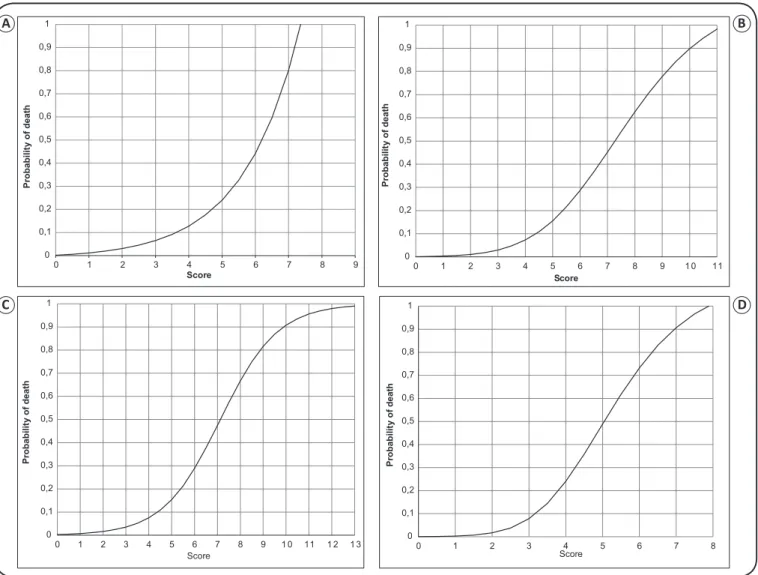
Table 4 shows the composition and weighting of the scoring systems for the clinical and laboratorial models for infants and older individuals. In all four models, the regression lines of the scores and probability of death for use in the Kala-Cal® software for mortality prediction were slightly exponential (Figure 2).
Derivation model for children ≤2 years old
Clinical
. Univariate analysis
Multivariate analysis: clinical variables
.
Multivariate analysis: clinical and laboratory variables
.
& laboratory fi ndings Relative risk 95% CI p-value Odds ratio 95% CI p-value β1 Odds ratio 95% CI p-value β1
Age (months)
< 12 1.5 0.9-2.5 0.06 0.2 0.1-0.8 0.02 -1.4 3.0 0.9-10.4 0.08 1.1
12 – 24 1.0 - - -
-Bleeding
1-2 sites 1.0 - - -
-3-4 sites 8.1 3.3-19.4 <0.001 5.8 1.8-18.5 0.006 1.8 6.1 1.5-25.9 0.01 1.8
5-6 sites 10.7 6.4-17.8 <0.001 35.2 4.1-300.1 0.003 3.6 62.3 3.8-1015.3 0.004 4.1
Somnolence 3.9 1.7-8.8 <0.001 - - -
-Edema 12.4 4.3-35.4 <0.001 5.7 1.6-20.3 0.006 1.8 3.9 0.9-16.4 0.06 1.4
Jaundice 8.4 4.7-17.7 <0.001 2.4 0.8-7.7 0.13 0.9
Dyspnea 7.8 3.4-18.3 <0.001 - - - - 3.0 0.8-11.3 0.10 1.1
Vomiting 3.1 1.3-7.4 0.006 - - -
-Leukocytes <1,500/mm3 1.9 1.0-3.5 0.05 - - - - - - -
-Platelets < 50,000/mm3 6.1 3.8-9.8 <0.001 - - - - - -
-AST or ALT >100UK/L 2.6 2.1-3.4 <0.001 - - - 12.4 3.5-44.1 <0.001 2.5
TABLE 2
Risk of death associated with clinical fi ndings at hospital admission and laboratory results among children under two years-old with kala-azar: univariate and multivariate analysis.
95% CI:95% confi dence interval; AST: aspartate aminotransferase; ALT: alanine aminotransferase. 1Coeffi cient.
score of 9 points. The observed probability of death was proportional to the score, ranging from 0.01 to 0.80, generating
a ROC curve with an AUC of 0.90 (95% CI 0.84-0.97), with appropriate goodness-of-fi t (Pearson = 6.12; p = 0.52). Maximum
sensitivity and specifi city were achieved with a score of 4 points
(Youden's index[J] = 0.69). When the laboratory variables were
added, the fi nal model included age <1 year, edema, bleeding,
dyspnea, and increased aminotransferase levels (AST or ALT >100U/L). The maximum score was 11, generating an AUC
of 0.93 (95% CI 0.88-0. 98), with appropriate goodness-of-fi t (Pearson = 6.48; p = 0.69). Maximum sensitivity and specifi city
were once again achieved with a score of 4 points (J = 0. 76).
Derivation models: patients >2 years old
For patients >2 years old, the variables that fi t the clinical
model were the presence of bleeding, HIV-1 co-infection, edema, vomiting, jaundice, dyspnea, bacterial infection, and age >15 years. The maximum score was 13 points, generating an AUC of 0.89 (95% CI 0.84-0.93) with appropriate
goodness-of-fi tness (Pearson = 6.78; p = 0.66). A score of 4 points had
the best cut-off point (J = 0.62).When laboratorial data were
included, the variable set included HIV-1 co-infection, jaundice,
dyspnea, bacterial infection, leukopenia (<1,500 leukocytes/mm3),
thrombocytopenia (<50,000 platelets/mm3), and low GFR.
The maximum score was 10 points, generating an AUC of
0.92 (95% CI 0.88-0.96) with an appropriate goodness-of-fi t (Pearson=1.93; p=0.93). The best cut-off was 3 points (J = 0.70).
Characteristics of the validation cohorts
Table 5 shows the comparison of the baseline characteristics between the derivation cohort and the two validation cohorts. Compared with validation cohort 1, the derivation cohort had more infants, more women, and the following signs of an increased probability of death: higher proportion of diarrhea, vomiting, bleeding at venipuncture sites, and hepatosplenomegaly and
lower leukocyte and neutrophil counts. However, the derivation
cohort had signs of more benign disease than validation cohort 1
(less severe anemia, less severe dyspnea, less kidney failure,
higher hemoglobin levels, lower creatinine levels, and fewer patients infected with HIV-1), which resulted in lower mortality.
Compared with validation cohort 2, the derivation cohort had more number of younger individuals and female participants. The only evidence that could indicate an increased probability of death in the derivation cohort was a slightly higher proportion
of patients with splenomegaly or kidney failure. In contrast,
the disease was more benign, based on the following clinically
statistically signifi cant differences: less severe anemia, less severe dyspnea, lower leukocyte and neutrophil counts, lower
Clinical
Univariate analysis
Multivariate analysis: clinical variables
Multivariate analysis: clinical and laboratory variables
& laboratory fi ndings Relative risk 95% CI p-value Odds ratio 95% CI p-value β1 Odds ratio 95% CI p-value β1 Age (years)
>2-15 1.0 - - -
-15 – 40 4.8 1.8-12.3 0.04 - - -
-> 40 8.3 3.1-22.0 0.003 3.5 1.6-7.7 0.002 1.3 - - -
-Bleeding
0-1 sites 1.0 - - -
-2 sites 3.7 1.6-8.1 0.001 2.3 0.7-3.9 0.004 2.3
≥3 sites 5.9 3.1-11.2 <0.001 10.4 2.6-50.1 0.004 2.6 5.3 0.6-45.1 0.12 1.7
HIV-1 4.2 2.7-6.4 <0.001 6.1 2.7-13.6 <0.001 1.8 8.6 3.4-21.6 <0.001 2.2
Edema 2.8 2.0-3.9 <0.001 2.2 1.0-5.1 0.07 0.8 - - -
-Jaundice 2.4 1.6-3.7 <0.001 2.9 1.3-6.8 0.01 1.1 2.8 1.0-7.4 0.04 1.0
Dyspnea 2.8 2.0-3.9 <0.001 2.3 1.0-5.1 0.04 0.8 2.2 0.9-5.5 0.09 0.8
Vomiting 2.2 1.6-2.9 <0.001 2.0 0.9-4.3 0.08 0.7 - - -
-Bacterial infection 2.1 1.2-3.6 0.01 2.9 1.2-6.9 0.02 1.1 3.3 1.2-9.6 0.03 1.2
Leukocytes <1,500/mm3 2.4 1.6-3.7 <0.001 3.6 1.4-8.9 0.006 1.3
Platelets < 50,000/mm3 12.2 6.4-23.6 <0.001 7.5 2.2-24.7 0.001 2.0
AST or ALT > 100UK/L 2.0 1.3-3.2 0.004 - - -
-Renal failure2 3.3 2.5-4.3 <0.001 11.2 4.5-27.6 <0.001 2.4
TABLE 3
Risk of death associated with clinical fi ndings at hospital admission and laboratory results among individuals over two years-old with kala-azar: univariate and multivariate analysis.
95% CI: 95% confi dence interval; HIV-1: human immunodefi ciency virus; AST: aspartate aminotransferase; ALT: alanine aminotransferase. 1Coeffi cient.
2Glomerular fi ltration rate < 60mL/min/m2 or creatinine above the levels for age.
was similar in the two cohorts. Overall, patients in the derivation cohort had a more benign course of disease than those in both validation cohorts.
Validation
Table 6 shows the performance of the scoring sets in the two validation cohorts as compared with the AUC of the derivation cohort. The clinical scoring model among infants in both validation cohorts had slightly the same performance as the derivation cohort
(AUC = 0.87 and 0.86, respectively). The addition of laboratory
results reduced the scoring performance in validation cohort 1
(AUC = 0.83), with a wider confi dence interval. This excellent
performance was sustained in validation cohort 2.
However, the scoring system for older children and adults had a noticeable reduction in performance in validation cohort
1 in both models without (AUC = 0.75) and with (AUC =
0.79) laboratory results. However, in validation cohort 2, the
performance was good in both models without (AUC = 0.88) and with (AUC = 0.71) laboratory results. Sensitivity decreased substantially for infants in validation cohort 2, and specifi city
decreased for older patients in validation cohort 1.
Sensitivity analysis
The AUCs of the score set were ≥0.81 for urban or rural origin,
large or smaller cities, capital or other cities, different years of hospital admission, and presence of co-infection and HIV-1, and there was no statistical difference in the AUCs generated in the validation cohort than in the two validation cohorts.
When the regression models were tested with the smallest and largest 95% CI coeffi cients obtained from the separate logistic
regression analysis of both age groups, the AUCs remained between 0.85 and 0.88 when the variables were considered
individually. However, when the smallest coeffi cients were
used simultaneously for all model variables, the AUC of the clinical model for infants decreased to 0.75 but remained 0.88 for those aged >2 years.
DISCUSSION
The present dataset and discussion might contribute to
the reduction of mortality related with kala-azar, given the potentially better understanding of a patient’s risk of death
Patients ≤ two years old Patients > two years old
.
Risk factor Weigh of the variable in
the clinical model
Weigh of the variable in the clinical and laboratory model
Weigh of the variable in the clinical model
Weigh of the variable in the clinical and laboratory model
Age
< 12 months 1 1 -
-> 12 months 0 - -
-2-15 years - - 0
-15-40 years - - 2
->40 years - - 3
-Bleeding
1-2 sites 1 1 -
-3-4 sites 2 2
-5-6 sites 4 4 3
-AIDS - - 2 2
Edema 2 2 1
-Vomiting - - 1
-Jaundice 1 - 1 1
Dyspnea 1 1 1 1
Bacterial infection - - 1 1
Leukocytes < 1,500/mm3 - - - 1
Platelets < 50,000/mm3 - - - 2
Renal failure1 - - - 2
AST or ALT > 100UK/L - 3 -
-Maximum score 9 11 13 10
TABLE 4
Prognostic models for predicting death by kala-azar built by summing up clinical and clinical plus laboratory variables, weighed by the force of statistical association in Teresina, Brazil.
AST: aspartate aminotransferase; ALT: alanine aminotransferase. 1Glomerular fi ltration rate <60mL/min/m2 or creatinine above the levels for age.
infection were associated with death in patients with kala-azar
and therefore cannot be changed with therapy. For infants, age <1 year contributed only ~10% of the score set. However, for older individuals, age had a stronger impact, accounting for 23% of the total clinical score, but with no effect on the clinical-laboratory model. In other prognostic scoring models, age was included only in the model by Coura-Vital et al.(6), but
only for patients >60 years old. Other prognostic studies (not of scoring models) also revealed the importance of younger age and
that old age is a strong risk factor for kala-azar-related
death(2) (5) (19) (28) (34). One possible explanation is the higher concentrations of infl ammatory and anti-infl ammatory cytokines
in these age groups(35) (36) (37) (38)(39) (40).
HIV-1 infection is also a strong antecedent risk factor in
both the adult clinical and laboratory score sets. It was also included in the scoring model developed by Coura-Vital et al(6)
but not those developed by Sampaio(28) and Werneck(24), due to
age restrictions and earlier data collection, respectively, before HIV-1 co-infection became a major problem for patients with
kala-azar. The higher mortality for kala-azar in HIV-1-infected patients is likely affected by the lower cluster of differentiation
4 (CD4) count with kala-azar itself, increasing the vulnerability
to other co-infections(41), and to the more intense systemic infl ammation when compared with patients without HIV-1
infection, as demonstrated previously(35). Therefore, addressing other co-infections and systemic infl ammation are important
steps in the treatment of these patients.
Collectively, the unmodifi able factors of age and HIV-1
co-infection accounted for almost 40% of the clinical scores
for adults. As an example, a kala-azar patient aged >40 years
with HIV-1 infection would have an approximate 20% chance of death without any other sign of severity and, due to the exponential nature of the regression curve between scores and chance of death, would have a rapidly increasing probability of death with the addition of any other clinical sign.
Bleeding from >3 sites was the most signifi cant independent
clinical sign related with death among infants, corresponding to almost 50% of the total clinical score and almost 40% of the total clinical and laboratorial scores, and also conferred a high
risk among older people. Therefore, progressive bleeding should be considered an urgent risk for infants with kala-azar, who
should be treated at the highest level of medical intervention. For adults, the impact of bleeding on mortality was slightly lower, at approximately 20%, and was replaced by thrombocytopenia in the clinical and laboratory scoring. Indeed, hemorrhage occurred 24 hours before death in most patients in the derivation
cohort, and has been identifi ed as a major risk factor for death
in most studies(2) (3) (5) (22) (24( (25) (28) (42). Therefore, understanding the nature and origin of bleeding is crucial for risk stratifi cation
for referral and complication-driven medical interventions. Previous studies have shown that disseminated intravascular coagulation (DIC) followed by consumption coagulopathy are the most important underlying phenomena for bleeding in
as indicated by jaundice, is another independent risk factor, both of all immediate causes of death, but also of dying specifi cally
from bleeding. Apparently, both factors act synergistically to hamper hemostasis and sustain bleeding. Furthermore, DIC in
kala-azar is clearly linked to systemic infl ammation, particularly to serum γ-interferon and interleukin (IL)-6(35).
Thrombocytopenia is a very characteristic, but non-specifi c, element of kala-azar. Since thrombocytopenia is, similar to other markers of DIC such as fi brin degradation products and d-dimer, strongly correlated with γ-interferon and IL-6(35), the conclusion would be that thrombocytopenia in kala-azar is
mostly a result of consumption by DIC. However, the usual large
splenomegaly, typical of kala-azar, is an obvious competing
explanation for thrombocytopenia. The question, therefore, of greatest importance is how much a platelet transfusion for
patients with kala-azar, thrombocytopenia, and hemorrhage would be benefi cial. Currently, the Brazilian recommendations
follow the international recommendation for thrombocytopenia,
0 0,1 0,2 0,3 0,4 0,5 0,6 0,7 0,8 0,9 1
0 1 2 3 4 5 6 7 8 9
P ro b a b il it y o f d e a th Score 0 0,1 0,2 0,3 0,4 0,5 0,6 0,7 0,8 0,9 1
0 1 2 3 4 5 6 7 8 9 1 0 11
P ro b a b il it y o f d e a th Score 0 0,1 0,2 0,3 0,4 0,5 0,6 0,7 0,8 0,9 1
0 1 2 3 4 5 6 7 8 9 1 0 11 1 2 1 3
P ro b a b il it y o f d e a th Score 0 0,1 0,2 0,3 0,4 0,5 0,6 0,7 0,8 0,9 1
0 1 2 3 4 5 6 7 8
P ro b a b il it y o f d e a th Score
FIGURE 2. Predicted probability of death from kala-azar according to scores derived from the logistic regression analyses for: (A): Infants using the model with clinical data. (B): Infants using the model with both clinical and laboratory data. (C): Children aged >2 years and adults using the model with clinical data, and (D): Children aged >2 years and adults using the model with both clinical and laboratory data. Fitted lines were smoothed with the use of best-fi t equations obtained in www.xuru.com.
which is to perform prophylactic transfusion for bone marrow failure if platelets are <10,000/mm3 or 20,000/mm3 in patients
with DIC who are bleeding(44) (45) (46). Therefore, severely ill patients with kala-azar and thrombocytopenia with hemorrhagic
manifestations and evidence of DIC, such as high concentrations
of fi brin degradation products or d-dimer, together with a
prolonged prothrombin time, should be treated by focusing
on the DIC itself. Unfortunately, the lack of evidence-based
treatment for DIC is another hurdle for patient survival. Heparin use is not supported by evidence and must be avoided in such a complex situation. Two new candidates for the treatment of DIC are thrombomodulin and the older tranexamic acid but still
lack evidence of effi cacy(47) (48). Finally, patients with hemorrhage
and jaundice should have additional and proper treatment with
vitamin K. When facing such uncertainty, clinical trials with
these drugs or new candidates should be urgently performed in
patients with kala-azar and hemorrhage.
In addition to these bleeding phenomena, edema, dyspnea, jaundice, and vomiting are important signs and symptoms that
A B
Clinical and laboratory characteristics Derivation cohort 1st validation cohort p-value* 2nd validation cohort p-value**
Age
≤ 2 years old [n (%)] 314 (35.56) 94 (20.94) <0.001 138 (23.71) <0.001
> 2 years old [n (%)] 569 (64.44) 355 (79.06) <0.001 444 (76.29) <0.001
Females 330 (0.37) 169 (0.31) 0.01 192 (0.33) 0.06
Urban origin 655 (0.74) 338 (0.75) 0.65 443 (0.76) 0.19
Somnolence 242 (0.27) 141 (0.31) 0.06 157 (0.27) 1.00
Presence of fever 846 (0.96) 422 (0.94) 0.05 553 (0.95) 0.18
Days of fever (mean, 95% CI) 61.1 (55.4-66.8) 58.2 (51.6-64.8) 0.27 59.4 (53.7-65.) 0.34
Severe anemia (Hg <7g/dL) 244 (0.28) 163 (0.37) <0.001 194 (0.35) 0.002
Diarrhea 273 (0.31) 104 (0.23) 0.001 178 (0.31) 1.00
Vomiting 305 (0.35) 111 (0.25) <0.001 182 (0.31) 0.06
Dyspnea 151 (0.17) 106 (0.24) 0.002 134 (0.23) 0.002
Bleeding events
epistaxis 94 (0.10) 44 (0.10) 1.00 67 (0.12) 0.11
petequiae 37 (0.04) 28 (0.05) 0.19 21 (0.04) 1.00
bleeding at venopuncture site 79 (0.09) 29 (0.06) 0.003 43 (0.07) 0.09
digestive bleeding 58 (0.07) 29 (0.06) 0.24 36 (0.06) 0.24
Bacterial infections 147 (0.17) 70 (0.16) 0.32 79 (0.14) 0.06
Kidney failure 293 (0.33) 44 (0.38) 0.04 34 (0.23) <0.001
Hepatomegaly 635 (0.72) 279 (0.63) <0.001 403 (0.72) 1.00
Splenomegaly 836 (0.95) 385 (0.87) <0.001 528 (0.92) 0.01
Hemoglobin [mean (g/dL), 95% CI] 8.01 (7.94-8.24) 7.59 (7.41-7.76) 0.01 7.76 (7.60-7.91) 0.35 Leucocytes/µL [mean, (95% CI)] 2984 (2843-3125) 3115 (2915-3315) 0.01 2636 (2481-2792) <0.001 Neutrophyls/µL [mean, (95% CI)] 1396 (1305-1486) 1248 (1150-1346) 0.53 976 (897-1056) <0.001
ALT [median (U/mL), IQ 25-75] 36 (21-65) 63 (51-74) 0.09 61 (54-68) 0.02
AST [median (U/mL), IQ 25-75] 111 (97-126) 90 (73-107). 0.07 101 (90-112) 0.30
Creatinine [mean (mg/dL)] 0.89 (0.85-0.93) .1.07 (0.97-1.17) <0.001 0.93 (0.75-1.12) 0.58
Albumin [mean (g/dL)] 3,25 (3,19-3,31) 3.20 (3.07-3.32) 0.33 2.69 (2.60-2.78) <0.001
Globulin [mean (g/dL)] 3,34 (3,26-3,43) 3.42 (3.22-3.61) 0.30 4.60 (4.24-4.96) <0.001
HIV coinfection HIV-1 reagent serology no information
71 (0.08) 231 (26,2)
90 (0.21) 18 (0.04)
<0.001 <0.001
62 (0.11) 23 (0.04)
0.03 <0.001
Deaths 66 (0.07) 52 (0.12) 0.001 35 (0.06) 0.23
TABLE 5
Baseline characteristics of 883 participants with kala-azar from the derivation sample, 49 from the fi rst validation cohort, and 582 from the second validation cohort.
95% CI:95% confi dence interval; IQ: interquartile; AST: aspartate aminotransferase; ALT: alanine aminotransferase; HIV: human immunodefi ciency virus.
*Values are numbers (percentages) of participants unless stated otherwise. **p-values refer to the comparison of validation cohorts with derivation cohort.
Cohorts
Persons (n)
Youden1
index
Score
index Sensitivity Specifi city AUC 95% CI
Goodness
of fi t
(p-value)
Derivation
Age ≤ 2, clinical 314 4 69.2 82.6 86.6 0.90 0.84, 0.97 0.52
Age ≤ 2, clinical & laboratory 291 4 76.1 95.4 80.7 0.93 0.88, 0.98 0.69
Age > 2, clinical 569 4 61.6 88.4 73.2 0.89 0.84, 0.93 0.66
Age >2, clinical & laboratory 538 3 69.8 87.2 82.6 0.92 0.88, 0.96 0.93
Validation 1
Age ≤ 2, clinical 94 4 55.2 66.6 88.6 0.83 0.64, 1.0 0.73
Age ≤ 2, clinical & laboratory 74 4 31.0 60.0 71.0 0.80 0.57, 1.0 0.69
Age > 2, clinical 337 4 38.0 90.5 47.5 0.75 0.68, 0.83 0.62
Age >2, clinical & laboratory 70 3 50.5 75.0 75.9 0.79 0.62, 0.96 0.79
Validation 2
Age ≤ 2, clinical 135 4 67.9 44.4 91.3 0.86 0.74, 0.98 0.61
Age ≤ 2, clinical & laboratory 105 4 75.1 85.7 69.4 0.92 0.84, 1.0 0.37
Age > 2, clinical 422 4 62.0 92.0 70.0 0.88 0.83, 0.93 0.54
Age >2, clinical & laboratory 104 3 50.0 75.0 75.0 0.71 0.34, 1.0 0.43
TABLE 6
Performance of the score sets in the validation cohorts as compared to the derivation cohort.
predict death. Similar to hemorrhage, they were more relevant for children than for older children and adults and a consequence
of systemic infl ammation(35). When present, patients may need
supplementary symptomatic therapy such as intravenous albumin due to the typical low serum albumin concentration, as well as respiratory support and antiemetics; however, the
basic cause of infl ammation will remain unaffected. Likewise,
increased AST and creatinine concentrations are also part of
the systemic and sustained infl ammation. Because bacterial
infection accounted only for ~10% of the total scoring for adults,
the independent risk factors for death from kala-azar in Brazil are causally linked to systemic infl ammation. However, and
unfortunately, there is no effective recommendation for treating
systemic infl ammation(49) (50).
Given the barrier imposed by systemic inflammation, the software application is limited for treatment decisions. However, hints are available. At the lowest number of points, the probability of death increases slowly, but then increases sharply at a certain point. This may indicate that milder cases worsen additively, but an exponential increase occurs after a certain point, suggesting interactivity between different organs
or systems, which refl ects the systemic nature of severe kala-azar infl ammation, evolving to progressive multiple organ
dysfunction, followed at the end by death. The complexity of the many mediators and the multiple organ involvement indicate that referral to a higher level of medical attention for organ protection and life support measures are critical decisions while
waiting for the slow action of specifi c anti-Leishmania therapy
and the prolonged infl ammation period(48) (49). Possible rules of
thumb for model use at bedside would be infant referral from
primary care to hospital care when the child’s risk of death is
greater than the expected 10% mortality. Similarly, referral to ICUs may be considered when the probability of death is >20%, due to the exponential growth of chance of death at this point, which increases to >40% if patients have one more point after mortality reaches the range of 20-30%. Older individuals should be referred to hospitals if their score reaches 5 points. However, if they are older than 40 years and have HIV-1 infection, they
should be treated at the hospital with just a single clinical risk factor. If they have ≥6 points, they would be admitted to the
ICU. The most important laboratory tests that would signify a medical decision to transfer to ICUs for patients older than 40 years with HIV-1 infection or with clinical complications,
are AST >100UK/L in infants, or leukocyte count <1,500/µL,
platelet count <50,000/µL, and creatinine level >1.5mg/dL. Multiple organ failure is suspected in infants with 6 clinical points or 7 clinical-laboratory points and for older people with
7 clinical points, corresponding to the exponential infl ection
of the curves. On the clinical and laboratory scoring scale for
infants, reaching just 5 points indicates a very high risk of death.
In these cases, after the available therapies for L. infantum or sepsis, the only alternatives would be organ protection.
At least three scoring systems have already been developed
for predicting the risk of death from kala-azar. An earlier
model, also developed by our research group in Teresina with a small sample at the same hospital where the present study
was conducted(26), had an AUC of 0.88. Another, developed for children in Recife by Sampaio et al(28), had an AUC of 0.90. Both studies lacked a validation cohort. Finally, the system
developed by Coura-Vital et al(6) for all patients registered in
Brazil had AUCs of 0.80 for the derivation cohort and 0.78
for a sub-sample that composed the validation cohort. When
these models were tested with the derivation cohort in the present study, the AUCs were 0.75, 0.87, and 0.77, respectively. Therefore, our models provided the most accurate clinical score sets for children and adults. There was an overlap in the age groups between the study by Sampaio et al(28) and the present
study; the models used by Sampaio et al performed better with children 1-15 years old than with our cohort of patients aged >2
years. This was likely due to the presence of HIV-1 infection
in our cohort. Indeed, patients infected with HIV-1 had a lower performance in the model, although in the range of the 95% CI of the AUC of the whole cohort, possibly due to the lower
specifi city generated by the competitive causes of death from
HIV-1 co-infection. Additionally, and contrary to other studies, our data were collected prospectively, with a single medical doctor examining all data from the derivation cohort. Indeed,
the fi rst validation cohort was dissimilar to the derivation cohort,
particularly regarding the contribution of infancy and HIV-1
co-infection, which may have weakened the model performances.
An epidemic of HIV-1/L. infantum co-infection detected at the hospital occurred during the data collection period for the validation cohort 1(41). The fi nal advantage of this scoring system
is the model’s availability as an applet, which is accessible on the Internet through cell phones, easing the utilization of the
model at primary care or the bedside for quick assessment of the
probability of death and facilitating medical decisions. Therefore, the score set developed in this is study was the most accurate, robust, and easy to use for predicting death and may contribute to
better classifi cation of patients in research projects and improved health services, helping to reduce the mortality from kala-azar.
However, the present study had limitations. First, it was restricted to a single hospital, which may constrain its external validity. Certainly, the model should be tested and calibrated in other scenarios in which both L. infantum and L. donovani
are transmitted. Also, as the study was performed after the national recommendation for broad and early use of antibiotics in 2005(51), bacterial infections may have been under-represented
and might have made the score set less accurate in areas where early antibiotic prescription for patients with severe disease is
not routine. In addition, the full defi nition of bacterial infections could not be used for patients with kala-azar. Bacterial sepsis
and VL share clinical signs such as fever, bleeding, lung
opacities, leukopenia, and thrombocytopenia. For example, if the defi nition of sepsis(52) was used for all patients, 863 (97.7%) of the patients would have been classifi ed as having sepsis. Likewise, the diagnoses of pneumonia and urinary tract infection may have been confounded by kala-azar pneumonitis
and nephritis in the absence of positive cultures(10) (11). Therefore, the criteria for defi ning sepsis, pneumonia, and urinary tract infection were modifi ed in order to increase the specifi city of the operational defi nition. Therefore, less severe presentations
or hypotension, and urinary infection may have not been detected (53) (54) (55). A fi nal comment on the absence of anemia as a risk factor in the score set is required, because it was described
as a component of another score system and as a prognostic factor(6) (24). In the present study, anemia was identifi ed as a risk factor in the univariate analysis but, as with other risk factors, is also affected by systemic infl ammation(35). Therefore, anemia
was omitted owing to collinearity with another variable that had a stronger association with death.
In conclusion, an easily accessible prognostic system
available through a computer program for quick identifi cation
of patients of all ages with a greater probability of dying from VL was developed based on clinical data collected from three
large in-hospital prospective cohorts. The fi rst cohort
(2005-2008) provided the data to derive the prognostic model set, while the second (2008-2009) and third (2009-2013) cohorts enabled validation of the performance of the testing model. The
computerized system accessible via cell phone allowed quick assessment of the risk of death at the point of care. By rapidly
identifying the patients with the highest probability of death, further referral to higher levels of medical attention such as hospitalization and ICUs could be timelier. Furthermore, the present study may help with the precise allocation of patients
to clinical trials as well as to benchmark medical services dedicated to kala-azar and other tropical and neglected diseases.
Finally, this study can help clinical decisions by comparing the measured scores to the logical, intuitive, and qualitative clinical evaluation of individual patients and may reduce mortality from
kala-azar.
Acknowledgments
We thank Natan Portella Tropical Diseases Institute and medical staff for making available all of their structure for the study. We are deeply grateful to Daniela Moura for helping with the patient evaluation and to Maria Lúcia Nascimento, Christiany M. de Castro, George Luís Costa, and José Mendes de Sousa for their support in gathering hospital data.
Confl ict of interest
The authors declare that they have no confl ict of interest.
Financial support
This work was funded by the National Counsel of Technological and Scientifi c Development [Conselho Nacional de Desenvolvimento Científi co
e Tecnológico (CNPq)] of Brazil, grants 142046/2005-1 and 554797/2006-2.
REFERENCES
1. Desjeux P. Leishmaniasis: current situation and new perspectives. Comp Immunol Microbiol Infect Dis 2004; 27:305-318.
2. Collin S, Davidson R, Ritmeijer K, Keus K, Melaku Y, Kipngetich S, et al. Confl ict and azar: determinants of adverse outcomes of kala-azar among patients in southern Sudan. Clin Infect Dis 2004; 38:612-619.
3. Rey LC, Martins CV, Ribeiro HB, Lima AAM. Leishmaniose visceral americana (calazar) em crianças hospitalizadas de área endêmica. J Pediatr 2005; 81:73-78.
4. Oliveira ALL, Paniago AMM, Dorval MEC, Oshiro ET, Leal CR, Sanches M, et al. Foco emergente de leishmaniose visceral em Mato Grosso do Sul. Rev Soc Bras Med Trop 2006; 39:446-450.
5. Braga AS, Toledo Junior AC, Rabello A. Factors of poor prognosis of visceral leishmaniasis among children under 12 years of age. A retrospective monocentric study in Belo Horizonte, State of Minas Gerais, Brazil, 2001-2005. Rev Soc Bras Med Trop 2013; 46:55-59. 6. Coura-Vital W, Araujo VE, Reis IA, Amancio FF, Reis AB,
Carneiro M. Prognostic factors and scoring system for death from visceral leishmaniasis: an historical cohort study in Brazil. PLoS Negl Trop Dis 2014; 8:e3374.
7. Alvar J, Vélez ID, Bern C, Herrero M, Desjeux P, Cano J, et al. Leishmaniasis worldwide and global estimates of its incidence. PloS one 2012; 7:e35671.
8. Bañuls AL, Bastien P, Pomares C, Arevalo J, Fisa R, Hide M. Clinical pleiomorphism in human leishmaniases, with special mention of asymptomatic infection. Clin Microbiol Infec 2011; 17:1451-1461.
9. Zijlstra EE, Siddig Ali M, El-Hassan AM, El-Toum IA, Satti M, Ghalib HW, et al. Kala-azar in displaced people from southern Sudan: epidemiological, clinical and therapeutic fi ndings. Trans R Soc Trop Med Hyg 1991; 85:365-369.
10. Dutra M, Martinelli R, de Carvalho EM, Rodrigues LE, Brito E, Rocha H. Renal involvement in visceral leishmaniasis. Am J Kidney Dis 1985; 6:22-27.
11. Duarte MI, Silva MR, Goto H, Nicodemo EL, Amato Neto V. Interstitial nephritis in human kala-azar. Trans R Soc Trop Med Hyg 1983; 77:531-537.
12. Sundar S, Singh RK, Bimal SK, Gidwani K, Mishra A, Maurya R, et al. Comparative evaluation of parasitology and serological tests in the diagnosis of visceral leishmaniasis in India: a phase III diagnostic accuracy study. Trop Med Int Health 2007; 12:284-289.
13. Ready PD. Epidemiology of visceral leishmaniasis. Clin Epidemiol 2014; 6:147-154.
14. van Griensven J, Carrillo E, López-Vélez R, Lynen L, Moreno J. Leishmaniasis in immunosuppressed individuals. Clin Microbiol Infec 2014; 20:286-299.
15. Alvar J, Aparicio P, Aseffa A, Den Boer M, Cañavate C, Dedet JP, et al. The relationship between leishmaniasis and AIDS: the second 10 years. Clin Microbiol Rev 2008; 21:334-359.
16. Lindoso JA, Cota GF, da Cruz AM, Goto H, Maia-Elkhoury AN, Romero GAS, et al. Visceral leishmaniasis and HIV coinfection in Latin America. PLoS Negl Trop Dis 2014; 8:e3136.
17. Verma N, Bimal S, Das Rabi VN, Pandey K, Singh D, Lal CS, et al. Clinicopathological and immunological changes in Indian post kala-azar dermal leishmaniasis (PKDL) cases in relation to treatment: a retrospective study. Biomed Res Int 2015; 2015:ID 745062. 18. Zijlstra EE, Musa AM, Khalil EA, el-Hassan IM, el-Hassan AM.
Post-kala-azar dermal leishmaniasis. Lancet Infect Dis 2003; 3:87-98. 19. Martins-Melo FR, Lima MS, Ramos Jr AN, Alencar CH, Heukelbach J. Mortality and case fatality due to visceral leishmaniasis in Brazil: a nationwide analysis of epidemiology, trends and spatial patterns. PloS one 2014; 9:e93770.
20. Seaman J, Mercer AJ, Sondorp HE, Herwaldt BL. Epidemic visceral leishmaniasis in southern Sudan: treatment of severely debilitated patients under wartime conditions and with limited resources. Ann Intern Med 1996; 124:664-672.
22. Ritmeijer K, Dejenie A, Assefa Y, Hundie TB, Mesure J, Boots G, et al. A comparison of miltefosine and sodium stibogluconate for treatment of visceral leishmaniasis in an Ethiopian population with high prevalence of HIV infection. Clin Infec Dis 2006; 43:357-364.
23. Seaman J, Pryce D, Sondorp HE, Moody A, Bryceson AD, Davidson RN. Epidemic visceral leishmaniasis in Sudan: a randomized trial of aminosidine plus sodium stibogluconate versus sodium stibogluconate alone. J Infect Dis 1993; 168:715-720.
24. Abdelmoula MS, M'Hamdi Z, Amri F, Tebib N, Ben Turkia H, Ben Dridi MF. La leishmaniose viscerale chez l'enfant: facteurs pronostiques. Tunis Med 2003; 8:535-539.
25. Mueller Y, Mbulamberi DB, Odermatt P, Hoffmann A, Loutan L, Chappuis F. Risk factors for in-hospital mortality of visceral leishmaniasis patients in eastern Uganda. Trop Med Int Health 2009; 14:910-917.
26. Werneck GL, Batista MS, Gomes JR, Costa DL, Costa CH. Prognostic factors for death from visceral leishmaniasis in Teresina, Brazil. Infection 2003; 31:174-177.
27. de Araujo VEM, Morais MHF, Reis IA, Rabello A, Carneiro M. Early clinical manifestations associated with death from visceral leishmaniasis. PLoS Negl Trop Dis 2012; 6:e1511.
28. Sampaio MJAQ, Cavalcanti NV, Alves JGB, Fernandes Filho MJC, Correia JB. Risk factors for death in children with visceral leishmaniasis. PLoS Negl Trop Dis 2010; 4:e877.
29. Belo VS, Struchiner CJ, Barbosa DS, Nascimento BW, Horta MA, da Silva ES, et al. Risk factors for adverse prognosis and death in American visceral leishmaniasis: a meta-analysis. PLoS Negl Trop Dis 2014; 8:e2982.
30. Schlichting D, McCollam JS. Recognizing and managing severe sepsis: a common and deadly threat. South Med J 2007; 100: 594-600.
31. Landry DW, Bazari H. Approach to the patient with renal disease.
In: Goldman L, Schafer AI, editors. Goldman's Cecil Medicine. 24th
edition. Chapter 116. Philadelphia, PA: Saunders Elsevier; 2012. p. 728-736.
32. Barquet N, Domingo P, Cayla JA, Gonzalez-Martin J, Rodrigo C, Fernandez-Viladrich P, et al. Prognostic factors in meningococcal disease. Development of a bedside predictive model and scoring system. Barcelona Meningococcal Disease Surveillance Group. JAMA 1997; 278:491-496.
33. Hosmer DW, Lemeshow S. Asseting the fi t of the model. In: Wiley-Interscience, editor. Applied Logistic Regression. 1st. edition.
Chapter 5. New York: John Wiley & Sons; 1989. p. 135-175. 34. Queiroz MJA, Alves JGB, Correia JB. Leishmaniose visceral:
características clínico-epidemiológicas em crianças de área endêmica. J Pediatr 2004; 80:141-146.
35. Costa DL, Rocha RL, Carvalho RM, Lima-Neto AS, Harhay MO, Costa CH, et al. Serum cytokines associated with severity and complications of kala-azar. Pathog Glob Health 2013; 107:78-87. 36. Ansari NA, Saluja S, Salotra P. Elevated levels of
interferon-gamma, interleukin-10, and interleukin-6 during active disease in Indian kala azar. Clin Immunol 2006; 119:339-345.
37. Groux H, Cottrez F, Rouleau M, Mauze S, Antonenko S, Hurst S, et al. A transgenic model to analyze the immunoregulatory role of IL-10 secreted by antigen-presenting cells. J Immunol 1999; 162:1723-1729.
38. Alves CF, de Amorim IF, Moura EP, Ribeiro RR, Alves CF, Michalick MS, et al. Expression of IFN-gamma, TNF-alpha, IL-10 and TGF-beta in lymph nodes associates with parasite load and clinical form of disease in dogs naturally infected with Leishmania
(Leishmania) chagasi. Vet Immunol Immunopathol 2009; 128:
349-358.
39. Costa CH, Werneck GL, Costa DL, Holanda TA, Aguiar GB, Carvalho AS, et al. Is severe visceral leishmaniasis a systemic infl ammatory response syndrome? A case control study. Rev Soc Bras Med Trop 2010; 43:386-392.
40. Silva JM, Zacarias DA, de Figueirêdo LC, Soares MR, Ishikawa EA, Costa DL, et al. Bone marrow parasite burden among patients with New World kala-azar is associated with disease severity. Am J Trop Med Hyg 2014; 90:621-626.
41. Lima IP, Müller MC, Holanda TA, Harhay M, Costa CH, Costa DL. Human immunodefi ciency virus/Leishmania infantum in the fi rst
foci of urban American visceral leishmaniasis: clinical presentation from 1994 to 2010. Rev Soc Bras Med Trop 2013; 46:156-160. 42. Lindoso JA, Cruz LL, Spinola RM, Fortaleza CM, Nogueira PA,
Madalosso G. Fatores associados à leishmaniose visceral grave. Rev Soc Bras Med Trop 2006; 39 (supl 3):133-134.
43. Lomtadze ML, Khochava MA, Shalamberidze IA, Kharaishvili VI, Vorob'eva EO. Study of intravascular coagulation activation markers in patients with visceral leishmaniasis. Georgian Med News 2005; 124-125:47-50.
44. Ministério da Saúde. Secretaria de Atenção à Saúde. Departamento de Atenção Hospitalar. E de Urgência. Guia para uso de hemocomponentes. Brasília: Ministério da Saúde; 2010. 140p.
45. National Guideline Clearinghouse (NGC). Guideline for platelet transfusion thresholds for pediatric hematology/oncology patients. Rockville MD: Agency for Healthcare Research and Quality (AHRQ); 2011. 55p. Available from https://www.guideline.gov/ content.aspx?id=34608&search=platelet+transfusion
46. National Guideline Clearinghouse (NGC) - Blood transfusion. Rockville MD: Agency for Healthcare Research and Quality (AHRQ); 2011. 90p. Available from http://www.guideline.gov/ content.aspx?id=39340&search=thrombocytopenia+bleeding. 47. Martí-Carvajal AJ, Simancas D, Cardona AF. Treatment for
disseminated intravascular coagulation in patients with acute and chronic leukemia. Cochrane Database Syst Rev 2015; 6:CD008562. 48. Wardrop D, Estcourt LJ, Brunskill SJ, Doree C, Trivella M, Stanworth S, et al. Antifi brinolytics (lysine analogues) for the prevention of bleeding in patients with haematological disorders. Cochrane Database Syst Rev 2013; 7:CD009733.
49. Balk RA. Systemic infl ammatory response syndrome (SIRS): where did it come from and is it still relevant today? Virulence 2014; 5:20-26. 50. Binkowska AM, Michalak G, Slotwinski R. Current views on the mechanisms of immune responses to trauma and infection. Cent Eur J Immunol 2015; 40:206-216.
51. Ministério da Saúde. Secretaria de Vigilância em Saúde. Departamento de Vigilância Epidemiológica. Manual de vigilância e controle da leishmaniose visceral. Brasília: Ministério da Saúde; 2003. 120p.
52. Bone RC, Balk RA, Cerra FB, Dellinger RP, Fein AM, Knaus WA, et al. Defi nitions for sepsis and organ failure and guidelines for the use of innovative therapies in sepsis. The ACCP/SCCM Consensus Conference Committee. American College of Chest Physicians/ Society of Critical Care Medicine. Chest 1992; 101:1644-1655.
53. Andrade TM, Carvalho EM, Rocha H. Bacterial infections in patients with visceral leishmaniasis. J Infect Dis 1990; 162: 1354-1359.
54. Garcés JM, Tomás S, Rubiés-Prat J, Gimeno JL, Drobnic L. Bacterial infection as a presenting manifestation of visceral leishmaniasis. Rev Infect Dis 1990; 12:518-519.