Bleeding in non-ST-segment elevation acute coronary
syndrome
Sangramento em síndrome coronariana aguda sem
supradesnivelamento de segmento ST
INTRODUCTION
Antiplatelet and antithrombotic agents, in addition to their role in interventional cardiology, have revolutionized the treatment of patients with non-ST-segment elevation acute coronary syndrome (NSTE ACS). However, the initial reduction of ischemic events in these patients has been associated with an increased incidence of bleeding. Major bleeding events increase mortality in-hospital (19.2% versus 1.5%),(1) at 30 days (10% versus 2.5%)(2) and at one year (35.9% versus 7.4%).(1) Furthermore, severe bleeding increases the risk of acute myocardial infarction (AMI),(1) stroke(1) and the need for urgent myocardial revascularization.(3) herefore, bleeding has become the new challenge in managing NSTE ACS and has inspired the publication of two consensus statements.(4,5) However, neither of them provides much guidance on the management of complications and the risk-beneit ratio of using various antiplatelet and antithrombotic agents.
he purpose of the present study is to describe the bleeding risks associated with each medication or intervention and to suggest strategies for the management of patients with bleeding due to NSTE ACS.
DEFINITION OF BLEEDING
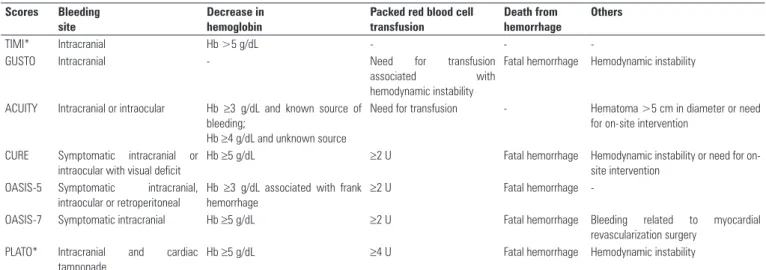
he poor outcome of patients with NSTE ACS has been well established for cases of major bleeding. However, evidence suggests that minor bleeding events also result in poor outcomes.(6) Several bleeding scores have been used in diferent studies, among which the TIMI (hrombolysis in Myocardial Infarction) and GUSTO (Global Utilization of Strategies To Open occluded Aline Alexandra Iannoni de Moraes1, André
Zeraik Lima Chammas1, Jônatas Melo Neto1,
Lucas Cronemberger Maia Mendes1, Yara Santos
Aguiar1, Rui Fernando Ramos1
1. Instituto Dante Pazzanese de Cardiologia - São Paulo (SP), Brazil.
ABSTRACT
he development of antiplatelet and antithrombotic therapies, in addition to interventionist strategy, has resulted in great improvements in the outcomes of patients with non-ST-segment elevation acute coronary syndrome. Parallel to therapeutic advances, bleeding, which can be induced during management, increases the risk of recurrent ischemia,
myocardial infarction and death. he present literature review describes the beneits and bleeding risks of each medication or intervention strategy and suggests guidelines for managing these patients.
Keywords: Bleeding/etiology; Acute c o r o n a r y s y n d r o m e /complications; Gastrointestinal bleeding; Intracranial hemorrhages; hrombosis; Transfusion
Conflicts of interest: None.
Submitted on March 27, 2012 Accepted on August 20, 2012
Corresponding author:
Aline Alexandra Iannoni de Moraes Avenida Doutor Dante Pazzanese, 500 - Vila Mariana
arteries) scores are prominent. he TIMI score was the irst to be developed and is widely used; however, it has low sensitivity, given that hemoglobin needs to be reduced by 5 g/dL for bleeding to be considered severe.(7) he GUSTO score has a higher sensitivity and better correlation with death and reinfarction at 30 days and at 6 months compared to TIMI.(8) he variety of scores (Table 1) has complicated comparisons between studies.
With the purpose of standardizing the deinitions of bleeding, North American institutions have recently created the Bleeding Academic Research Consortium (BARC).(9) his score stratiies bleeding on a scale from 0 (no bleeding) to 5 (fatal bleeding) and, as a major advantage, provides the ability to assess patients subjected to myocardial revascularization surgery (MRS).(9) Because BARC’s deinitions of bleeding have been achieved by consensus, it still requires validation, and new studies on ACS are encouraged to use this score together with previous scores so that such validation may be achieved in the near future.(9) For now, comparisons between studies of bleeding outcomes demand caution.
BENEFITS AND RISKS OF NSTE ACS TREATMENT
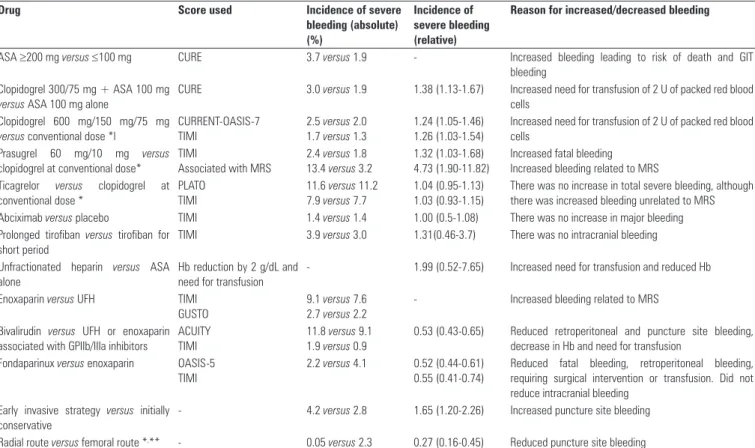
Knowledge of the risk-beneit ratio of the various tools used in the treatment of ACS is essential for the individualization of therapy (Table 2).
Acetylsalicylic acid (ASA) was one of the irst medications assessed for the treatment of NSTE ACS and was established as a proven method after demonstrating a 56% reduction in cardiovascular death.(10) he antiplatelet efect of ASA is irreversible and results from its inhibition
of thromboxane A2. In the long run, smaller daily doses of 75 to 100 mg provide the same beneit as do larger doses of 200 mg and reduce the incidence of major bleeding by 1.8%, according to the CURE (Clopidogrel in Unstable angina to prevent Recurrent Events) criteria.(11) he gastrointestinal tract is the most common site of bleeding caused by ASA, and its chronic use increases absolute risk by 0.12% a year.(12) Acetylsalicylic acid increases the risk of intracranial bleeding 1.65-fold for an increase in absolute annual risk of 0.03%.(12) Given the great beneit on mortality provided by ASA in treatment and secondary prevention, the risk of bleeding hardly justiies its non-prescription. herefore, ASA is contraindicated only in cases of known hypersensitivity, active peptic ulcers, blood dyscrasias or severe liver disease.(13)
Clopidogrel, a thienopyridine, is an alternative for patients that are allergic to ASA. his group of drugs antagonizes platelet activation mediated by adenosine diphosphate (ADP), which acts on the P2Y12 receptor.(13) he combination of ASA and clopidogrel, at a loading dose of 300 mg, followed by 75 mg for maintenance, reduced the rate of cardiovascular death, AMI or stroke by 20% compared to ASA alone.(14) It should be noted that this beneit was due to the reduction in AMI.(14)
Dual antiplatelet therapy increases the incidence of severe bleeding, according to the CURE score.(14) he use of ASA alone at a dose of 100 mg in the CURE trial resulted in a bleeding rate of 1.9%, which increased to 3.0% when combined with clopidogrel. Daily doses of ASA above 200 mg increased the incidence of bleeding to 3.7% when used alone and to 4.9% when combined with clopidogrel.(14) However, this increase was not due
Table 1 - Criteria of the main bleeding scores fordefining major bleeding in non-ST-segment elevation acute coronary syndrome
Scores Bleeding
site
Decrease in hemoglobin
Packed red blood cell transfusion
Death from hemorrhage
Others
TIMI* Intracranial Hb >5 g/dL - -
-GUSTO Intracranial - Need for transfusion
associated with hemodynamic instability
Fatal hemorrhage Hemodynamic instability
ACUITY Intracranial or intraocular Hb ≥3 g/dL and known source of bleeding;
Hb ≥4 g/dL and unknown source
Need for transfusion - Hematoma >5 cm in diameter or need for on-site intervention
CURE Symptomatic intracranial or intraocular with visual deficit
Hb ≥5 g/dL ≥2 U Fatal hemorrhage Hemodynamic instability or need for
on-site intervention OASIS-5 Symptomatic intracranial,
intraocular or retroperitoneal
Hb ≥3 g/dL associated with frank hemorrhage
≥2 U Fatal hemorrhage
-OASIS-7 Symptomatic intracranial Hb ≥5 g/dL ≥2 U Fatal hemorrhage Bleeding related to myocardial
revascularization surgery PLATO* Intracranial and cardiac
tamponade
Hb ≥5 g/dL ≥4 U Fatal hemorrhage Hemodynamic instability
Adapted from: Fifth Organization to Assess Strategies in Acute Ischemic Syndromes Investigators et al.,(6) Steinhubl et al.,(7) Peters et al.,(11) CURRENT-OASIS 7 Investigators et al.,(17) Antman et
to fatal bleeding or hemorrhagic stroke, but rather to the need for packed red blood cell transfusions, and the most common sites of bleeding were arterial puncture sites and the gastrointestinal tract.(14)
he discontinuation of clopidogrel 5 days before MRS did not increase the risk of surgical bleeding.(14) he risk of bleeding increased 1.53-fold when clopidogrel was discontinued less than 5 days before surgery.(14)
Clopidogrel is a pro-drug that requires liver metabolism for its activation, bringing with it the inconvenience of a non-responder rate of approximately 20%.(15) Increasing the loading dose to 600 mg, followed by 150 mg per day for 6 days, and maintenance with 75 mg per day, improved antiplatelet activity.(16) However, this efect did not result in event reduction,(17) and the higher dose increased severe bleeding by 0.5%. It should be noted that this increase was due to a greater need for blood transfusions and not to fatal or intracranial bleeding.(17)
Prasugrel, another thienopyridine, had a non-responder rate of 3% at the loading dose of 60 mg.(15) Prasugrel reduced fatal (0.4% versus 0.7%) and nonfatal AMI (7.4% versus 9.4%) in addition to preventing stent thrombosis (1.1%
versus 2.4%) compared with clopidogrel at the conventional dose for treating ACS in patients subjected to an early invasive strategy.(18) However, the more potent antiplatelet aggregation was associated with a 1.32-fold increase in the incidence of major bleeding, with increased fatal bleeding (0.4 versus 0.1%).(18) Prasugrel increases the risk of bleeding related to MRS by 10%.(18) When evaluating net beneit, patients older than 75 years, weighing less than 60 kg or with a history of stroke or transient ischemic attack (TIA) did not beneit from the use of prasugrel.(18)
hienopyridines irreversibly inhibit P2Y12 receptors; this inhibition is reversible when using ticagrelor, a cyclopentyl-triazolo-pyrimidine.(19,20) Because it does not require liver metabolism for its antiplatelet activity, drug resistance does not occur and its onset of action is faster.(19) In patients with ACS, regardless of being subjected to the early invasive strategy, ticagrelor as compared to clopidogrel reduced the incidence of vascular death, AMI or stroke by 16%. Ticagrelor resulted in a 21% reduction of vascular death and a 16% reduction in AMI.(20) Ticagrelor is, therefore, the irst antiplatelet agent shown to reduce total death rate and cardiovascular death since studies with ASA.
Table 2 - Treatment of non-ST-segment elevation acute coronary syndrome and risk of bleeding
Drug Score used Incidence of severe
bleeding (absolute) (%)
Incidence of severe bleeding (relative)
Reason for increased/decreased bleeding
ASA ≥200 mg versus≤100 mg CURE 3.7 versus 1.9 - Increased bleeding leading to risk of death and GIT
bleeding Clopidogrel 300/75 mg + ASA 100 mg
versus ASA 100 mg alone
CURE 3.0 versus 1.9 1.38 (1.13-1.67) Increased need for transfusion of 2 U of packed red blood
cells Clopidogrel 600 mg/150 mg/75 mg
versus conventional dose *l
CURRENT-OASIS-7 TIMI
2.5 versus 2.0
1.7 versus 1.3
1.24 (1.05-1.46) 1.26 (1.03-1.54)
Increased need for transfusion of 2 U of packed red blood cells
Prasugrel 60 mg/10 mg versus
clopidogrel at conventional dose*
TIMI
Associated with MRS
2.4 versus 1.8
13.4 versus 3.2
1.32 (1.03-1.68) 4.73 (1.90-11.82)
Increased fatal bleeding Increased bleeding related to MRS Ticagrelor versus clopidogrel at
conventional dose *
PLATO TIMI
11.6 versus 11.2 7.9 versus 7.7
1.04 (0.95-1.13) 1.03 (0.93-1.15)
There was no increase in total severe bleeding, although there was increased bleeding unrelated to MRS Abciximab versus placebo TIMI 1.4 versus 1.4 1.00 (0.5-1.08) There was no increase in major bleeding Prolonged tirofiban versus tirofiban for
short period
TIMI 3.9 versus 3.0 1.31(0.46-3.7) There was no intracranial bleeding
Unfractionated heparin versus ASA
alone
Hb reduction by 2 g/dL and need for transfusion
- 1.99 (0.52-7.65) Increased need for transfusion and reduced Hb
Enoxaparin versus UFH TIMI
GUSTO
9.1 versus 7.6
2.7 versus 2.2
- Increased bleeding related to MRS
Bivalirudin versus UFH or enoxaparin
associated with GPIIb/IIIa inhibitors
ACUITY TIMI
11.8 versus 9.1
1.9 versus 0.9
0.53 (0.43-0.65) Reduced retroperitoneal and puncture site bleeding, decrease in Hb and need for transfusion
Fondaparinux versus enoxaparin OASIS-5
TIMI
2.2 versus 4.1 0.52 (0.44-0.61)
0.55 (0.41-0.74)
Reduced fatal bleeding, retroperitoneal bleeding, requiring surgical intervention or transfusion. Did not reduce intracranial bleeding
Early invasive strategy versus initially conservative
- 4.2 versus 2.8 1.65 (1.20-2.26) Increased puncture site bleeding
Radial route versus femoral route *,** - 0.05 versus 2.3 0.27 (0.16-0.45) Reduced puncture site bleeding
Adapted from: Fifth Organization to Assess Strategies in Acute Ischemic Syndromes Investigators et al.,(6) Peters et al.,(11) CURRENT-OASIS 7 Investigators et al.,(17) Antman et al.,(18) Wallentin
et al.,(20) Kastrati et al.,(22) Neumann et al.,(23) Ferguson et al.,(25) Stone et al.,(27) Koreny et al.(33) ASA - acetylsalicylic acid; GIT - gastrointestinal tract; MRS - myocardial revascularization surgery;
Unlike prasugrel, ticagrelor did not increase the total incidence of major bleeding; however, it did result in a 1.19-fold increase in bleeding unrelated to MRS, according to the PLATO (Platelet Inhibition and Patient Outcomes) criteria, and a 1.25-fold increase according to the TIMI criteria.(20) It also resulted in increased fatal intracranial bleeding (0.1% versus 0.01%).(20) Considering the NNT (number needed to treat) of 53 and the NNH (number needed to harm) of 142 for major bleeding, the net beneit favors the substitution of clopidogrel for ticagrelor.(20)
he beneit of glycoprotein GPIIb/IIIa inhibitors has been restricted to high-risk NSTE ACS patients with low risk of bleeding.(21) he best time to initiate their use is in the catheterization lab, given that these drugs primarily beneit patients undergoing angioplasty.(21) he use of high doses of GPIIb/IIIa inhibitors and the lack of adjustment of unfractionated heparin (UFH) initially resulted in unacceptable bleeding rates. he correction of the UFH dose and reduction of GPIIb/IIIa inhibitors doses led to the improvement of safety proiles for these drugs.(21)
he addition of ASA and clopidogrel, with a loading dose of 600 mg, to abciximab administered in the hemodynamics room to patients with AMI, without ST elevation and subjected to percutaneous treatment, reduces the incidence of death or AMI by 25% compared to placebo.(22) Under these conditions, abciximab did not result in major bleeding increase, presenting with a 1.4% bleeding risk as deined by the TIMI score.(22)
he combined use of ASA, clopidogrel (at a loading dose of 600 mg) and tiroiban was assessed in the ISAR-COOL (Intracoronary Stenting With Antithrombotic Regimen Cooling-Of) trial.(23) he absolute incidence of major bleeding was 3.9% in the group subjected to early intervention and 3% in the control group, with no occurrence of intracranial bleeding.
he lower risk of bleeding and greater number of studies with abciximab makes this the GPIIb/IIIa inhibitor of choice in interventions. he combination of ASA, clopidogrel and tiroiban prior to percutaneous intervention is a reasonable choice for patients with refractory ischemia and low risk of bleeding, and tiroiban can be used in cases where clopidogrel is contraindicated.(21,23)
Anticoagulants in combination with antiplatelet medication play an important role in the treatment of NSTE ACS. he irst anticoagulant studied was UFH, which binds to antithrombin with consequent neutralization of thrombin and factor Xa.(13) When compared to ASA alone, the combination of UFH and ASA reduced the risk of AMI and death by 33%.(24) However, a 1.99-fold increase in major bleeding events
was attributable to reduced hemoglobin and an increased need for blood transfusions.(24)
Only one third of UFH molecules (those with a minimum of 18 polysaccharide units, corresponding to approximately 6,000 Daltons) have anticoagulant activity.(13) he polysaccharide chains of UFH can be depolymerized to obtain low molecular weight compounds. hese compounds are generally called low-molecular-weight heparins (LMWH), among which enoxaparin is the most widely studied in NSTE ACS.(13) he SYNERGY (Superior Yield of the New strategy of Enoxaparin, Revascularization, and Glycoprotein inhibitors) trial showed the non-inferiority in the eicacy endpoint of enoxaparin compared to UFH.(25) Major bleeding, as deined by the TIMI score, was increased by approximately 1.5% with the use of enoxaparin; however, it was not increased when assessed with the GUSTO criteria.(25) his diference between scores occurred because enoxaparin induced a reduction in hemoglobin in MRS but did not increase intracranial bleeding or cause hemodynamic instability.(25) he increased bleeding found in the studies was possibly due to crossover between UFH and enoxaparin.(25) Crossover between heparins is therefore discouraged during treatment for NSTE ACS.(21) Hence, combining non-inferiority and convenient posology, and considering that the increased bleeding does not determine risk of immediate death or neurological sequelae, enoxaparin has become the most widely used heparin for the treatment of NSTE ACS.
Because there is a risk of overestimation when calculating the dose of enoxaparin for obese individuals and patients with renal dysfunction, it is prudent to monitor anti-Xa activity. Values of anti-Xa activity >1.8 IU/mL increase severe bleeding and values <0.5 result in increased risk for thrombosis.(26) An alternative for these patients is UFH, which has a more widely spread monitorization.
Bivalirudin, a direct thrombin inhibitor, proved efective in reducing major bleeding by 1 and 3%, when assessed with TIMI and ACUITY (Acute Catheterization and Urgent Intervention Triage Strategy) scores, respectively. he comparison was made between bivalirudin and UFH or bivalirudin and enoxaparin combined with a GPIIb/IIIa inhibitor, for the treatment of NSTE ACS.(27) he beneit of bivalirudin on safety occurs without compromising its efectiveness on thrombotic outcomes, but it does not result in a reduction of cardiovascular events.(27)
on mortality is related to the reduction in major bleeding by 48% within the irst 9 days of follow-up, which was maintained after 6 months of treatment. he OASIS-5 (Organization to Assess Strategies in Acute Ischemic Syndromes 5) trial showed that fondaparinux reduced all types of bleeding included in the study’s deinition, except for intracranial bleeding.(6) However, OASIS-5 was performed before the SYNERGY data had been published, when the harmfulness of the crossover between heparins was not yet known. he use of UFH had, therefore, been recommended during angioplasty procedures, if the interval since the last dose of the drug under assessment was above 6 hours. At the end of the study, the frequency with which the group treated with enoxaparin received UFH was 10% higher than that of the fondaparinux group.(6) he authors advocated that the increased bleeding observed in the group treated with enoxaparin cannot be explained by the crossover between heparins.(6) his was based on the fact that the beneit was maintained in a subgroup analysis of patients who did not receive UFH. It was concluded that, although the major guidelines for the management of NSTE ACS(21,28) present fondaparinux with a Class I indication, the concept that fondaparinux reduces bleeding in this population may be mistaken. his drug was not retested against enoxaparin without the use of UFH during angioplasty. Moreover, it should be noted that enoxaparin also has a Class I indication in the same consensus statement.(21,28) Finally, patients treated with fondaparinux must receive an additional bolus dose of 80 IU/kg of UFH during percutaneous intervention to reduce the risk of catheter thrombosis, which increases from 0.4% to 0.9% compared to enoxaparin.(6,29)
Although there is much discussion about which medications provide better risk-beneit ratios in the treatment of NSTE ACS, it should be noted that one of the most common causes of bleeding is the use of inadequate doses of anticoagulant and antiplatelet medications. A recent report showed that 42% of patients with ACS received at least one antithrombotic drug in excess, and up to 15% of substantial bleeding events are thought to result from incorrect doses of medications.(30) Another precaution in the use of the newer anticoagulants is that, after substantial bleeding occurs, these drugs lack speciic antidotes, unlike the well-known protamine used to reverse the efects of UFH (Table 3).
An early invasive strategy in NSTE ACS reduces the absolute risk of cardiovascular death or nonfatal AMI by 19% (absolute risk reduction of 3.2%) over 5 years.(31) he beneit is even greater in the population with high-risk NSTE ACS.(3)
Early invasive management is also estimated to increase the risk of severe bleeding by 2.4%.(32) he most common site of bleeding is the actual puncture site, and complications range from hematoma and arteriovenous istula to pseudoaneurysm and retroperitoneal bleeding.(33)
TREATMENT OF BLEEDING IN NSTE ACS
Upper gastrointestinal bleeding (UGIB) is the most common form of bleeding in ACS, and the most feared is intracranial bleeding.
here have been no studies on the treatment of patients with UGIB due to ACS. However, the guidelines suggested by Tan et al.(34) for patients with UGIB on prolonged antiplatelet therapy, after percutaneous intervention, appear suitable as a guide for evaluating patients with NSTE ACS. he authors suggest the use of proton pump inhibitors and the discontinuation of ASA and clopidogrel during the irst 24 hours of bleeding because this period without antiplatelet agents does not appear to increase the risk of ischemic events. he goal is to determine the risk of recurrent bleeding and death, which is given by the Rockall score(35) by combining esophagogastroduodenoscopy (EGD) data with clinical parameters (Table 4). (34)
If the Rockall score is < 5, the risk of recurrent bleeding (15%) and death (5%) are low.(35) herefore, the recommendation is to restart dual antiplatelet therapy.(34) Higher scores relect in increased risk of recurrent bleeding and death,(35) suggesting the discontinuation of ASA for 2 weeks due to its antiplatelet efect and harmful efect on the gastrointestinal mucosa. In these cases, clopidogrel should be used alone.(34)
he risk of stent thrombosis must be carefully assessed in cases of continuous bleeding, and the presence of ventricular systolic dysfunction, diabetes mellitus, renal failure, a stent greater than 20 mm in length, coronary intervention less than 3 months prior for metal stents or less than 12 months prior for drug-eluting stents constitute high risk situations. he site of stent implantation and the myocardial area at risk should be considered. If the risk of bleeding is considered greater than the risk of stent thrombosis, the discontinuation of ASA and clopidogrel is recommended, although with daily reassessments, aiming at resuming clopidogrel within 1 to 2 weeks.(34)
It should be noted that the discontinuation of ASA confers a 1.8-fold increase in the risk of stent thrombosis. he discontinuation of clopidogrel and ASA in patients with drug-eluting stents within the irst 30 days of follow-up confers a 29% risk of thrombosis.(34)
Table 3 - Recommendations for using antidotes to reverse anticoagulants and antiplatelet agents
Anticoagulant Time to restore
hemostasis after discontinuation
Antidote Dose Pharmacokinetics Monitoring Considerations
UFH 3-4 hours Protamine
sulfate
1 mg for every 100 U of UFH administered over the past 4 hours. The half-life of heparin should be considered
Maintain dose below 100 mg in 2 hours; initially administer 50% of the dose, with subsequent doses titrated according to bleeding response
aPTT Administer slowly (up to
5 mg/ minute) to reduce the risk of hypotension and bradycardia
LMWH 12-24 hours Protamine
sulfate
1 mg for every 1 mg of enoxaparin administered over the past 4 hours; the half-life of LMWH should be considered
Maintain dose below 100 mg in 2 hours; initially administer 50% of the dose, with subsequent doses titrated according to bleeding response
aPTT, PT, anti-Xa activity Administer slowly (up to 5 mg/ minute) to reduce the risk of hypotension and bradycardia
Recombinant Factor VIIa
90 mg/kg, but with no consensus
Immediate effect, duration of 2 to 6 hours
Case report studies
Factor Xa inhibitors
Fondaparinux: 24-30 hours
Recombinant Factor VIIa
90 mg/kg, but with no consensus
Immediate effect, duration of 2 to 6 hours
aPTT, PT/INR, time for thrombin formation, endogenous prothrombin potential and
thromboelastography
Assessed in healthy volunteers only, with no active bleeding Idraparinux: 5-15
days
aPCC 20 U/kg, but with no consensus Effect in minutes, duration of 12 to 24 hours
Direct thrombin inhibitors
In general, approximately 12 hours
0.3 mg/kg diluted in saline, administer in 15 minutes
Immediate effect, dose can be repeated at 8 to 12-hour intervals
NR, aPTT and thrombin time Repeated doses are associated with tachyphylaxis, hyponatremia and seizures, especially in children below 2 years of age
10 U of cryoprecipitate increases fibrinogen by approximately 0.7 g/L At least 10 U
0.1 to 0.15 g/kg
ε-aminocaproic acid IV for 30 minutes, followed by infusion of 0.5 to 1 g/hour until bleeding stops; or 10 mg/kg tranexamic acid IV every 6 to 8 hours until bleeding stops
Limited evidence regarding its efficacy
Start with 2 U
ASA 5-10 days DDAVP Effect in 15-30 minutes
Cryoprecipitate Effect in 15-30 minutes
Antifibrinolytic agents
Fresh frozen plasma
Clopidogrel 5 days Platelet transfusion
DDAVP Effect in 15-30 minutes Can use DDAVP associated
with platelet transfusion Platelet transfusion Effect in 15-30 minutes
Adapted from: Levi et al.(39) UFH - unfractionated heparin; aPTT - activated partial thromboplastin time; LMWH - low-molecular-weight heparin; PT - prothrombin time; aPCC - activated
of intracranial bleeding in patients with ACS. Analyses of the reversal of antiplatelet and anticoagulant treatment in the general population can assist therapeutic decisions.
he few studies of platelet transfusion for intracranial bleeding in patients on antiplatelet medication showed no beneits of transfusion on mortality. However, these were retrospective studies that did not specify the interval between admission and platelet administration or the dose used.(36) he morbidity due to intracranial bleeding should be weighed against the myocardial area at risk for thrombosis. If one opts for transfusion, the dose of 10 U of platelets is suggested after 300 mg of clopidogrel or 12.5 U after a loading dose of 600 mg.(37)
Platelet function can also be improved with the use of desmopressin or recombinant activated factor VII (rFVIIa). Both strategies were compared to platelet transfusion in patients presenting bleeding on cranial computed tomography scans following traumatic brain injury, and it has been suggested that transfusion is a superior method.(38) It is worth noting that the ability to reverse the antiplatelet efect of clopidogrel by desmopressin has been demonstrated in vitro, but has not yet been studied in vivo.(39) Furthermore, it is important to note that rFVIIa is associated with an increased risk of thrombosis,(40) its optimal dose has not yet been deined(41) and there is no standardized laboratory test to monitor its activity. he administration of rFVIIa is therefore recommended in cases of uncontrollable bleeding only (Table 3).(42)
he antiaggregation property conferred by glycoprotein IIb/IIIa inhibitors has a short duration when using tiroiban, which has a half-life of 6 hours. In contrast,
abciximab can be found in the plasma up to 7 days after its administration. Platelet transfusion may reverse the efects of abciximab while waiting for its elimination; however, the antiaggregation conferred by tiroiban cannot be reversed by platelet transfusion.(43)
Most anticoagulant studies have involved oral anticoagulant therapy, although some of the patients included received heparin. Aggressive reversal of the international normalized ratio (INR) reduces mortality from 37 to 10%.(44) herefore, the myocardial area at risk should be very signiicant to overcome the beneit of reversing anticoagulation. Aggressive therapy is recommended for the reversal of oral anticoagulation with the transfusion of fresh plasma, cryoprecipitate or prothrombin complex concentrates (PCCs).(45) Some guidelines include PCCs as irst-line therapy for the reversal of oral anticoagulation, given their high eicacy and lower volume of administration (Table 3).(45)
here have been no studies on the use of protamine in patients with NSTE ACS. Its eicacy in reversing the anticoagulant efect of UFH is well established,(46) and it has a smaller efect on the reversal of enoxaparin (Table 3).
In addition to improving platelet function, rFVIIa reverses oral anticoagulation in minutes. he reduction of hematomas and consequent lower mortality have indeed been demonstrated in patients with intracranial bleeding on oral anticoagulant therapy.(47)
Regardless of location, profuse bleeding can result in tissue hypoxia and consequent systemic and myocardial ischemia. he transfusion of packed red blood cells is intended to correct this imbalance. Paradoxically, in the presence of NSTE ACS, the transfusion of packed red blood cells is associated with a higher incidence of AMI (25.2% versus 10%) and death (8% versus 3%).(48)
he cause of the higher mortality rate observed among patients with NSTE ACS who receive packed red blood cell transfusion is unclear. Both ischemia and a systemic inlammatory response appear to be involved.(48) When indicated, the transfusion of leukocyte-depleted red blood cells stored for less than 2 weeks may show beneits over regular transfusion.(5)
he threshold hemoglobin level for red blood cell transfusion in NSTE ACS remains unclear, ranging from 8 g/L(49) to 10 g/dl.(50) Individualization remains the best approach for red blood cell transfusion, including an assessment of anemia and risk for further blood loss, as well as the need to provide some reserve before tissue hypoxia is established.
he use of risk scores can identify patients at increased risk of bleeding and help choose medications for treating
Table 4 - Rockall score for risk of recurrent bleeding and death in patients with
gastrointestinal bleeding
Score 0 1 2 3
Age (years) <60 60-79 >80
-Circulatory shock
Absent HR >100
bpm
SBP <100 mmHg
-Comorbidities None None Heart failure Kidney or
liver failure Ischemic CMP Advanced
malignancy Findings of the
EGD
With no lesion OR Mallory-Weiss with no recent bleeding
All other findings
UGIT malignancy
-Stigmata of recent hemorrhage
None or dark spots
- Adhered clot
Vessel visualization
-Source: adapted from Tan et al.(34) and Rockall et al.(35) HR - heart rate; bpm - beats per minute;
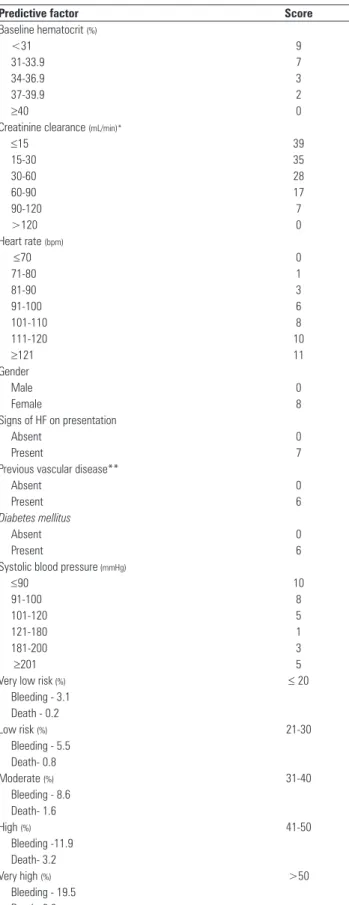
NSTE ACS. Among the bleeding risk scores developed, the CRUSADE bleeding score is the most widespread and provides diferent scores for each variable associated with hemorrhage, as shown in table 5.(51) It should be noted that these scores should not limit the use of medication, but help to individualize the treatment of NSTE ACS.
CLOSING REMARKS
Bleeding is the new challenge in treating NSTE ACS. Its presence implies worse patient outcomes, its prevention reduces the incidence of myocardial infarction and mortality and its treatment raises diiculties in the reestablishment of a balance between thrombosis and bleeding.
RESUMO
O desenvolvimento das terapias antiplaquetárias e antitrom-bóticas, bem como de uma estratégia intervencionista, resultou em grande melhora da evolução dos pacientes com síndrome coronariana aguda sem supradesnivelamento de segmento ST. Paralelamente ao avanço terapêutico, o sangramento, que pode ser induzido durante o manejo, aumenta o risco de isquemia recorrente, infarto e morte. Nesta revisão, descrevem-se o be-nefício e o risco de sangramento que cada medicamento ou es-tratégia de intervenção apresenta e sugerem-se condutas para o manejo desses pacientes.
Descritores: Sangramento/etiologia; Síndrome coronariana aguda/complicações; Hemorragia gastrintestinal; Hemorragias intracranianas; Trombose; Transfusão
Table 5 - CRUSADE score for risk of recurrent bleeding
Predictive factor Score
Baseline hematocrit (%)
<31 9
31-33.9 7
34-36.9 3
37-39.9 2
≥40 0
Creatinine clearance (mL/min)*
≤15 39
15-30 35
30-60 28
60-90 17
90-120 7
>120 0
Heart rate (bpm)
≤70 0
71-80 1
81-90 3
91-100 6
101-110 8
111-120 10
≥121 11
Gender
Male 0
Female 8
Signs of HF on presentation
Absent 0
Present 7
Previous vascular disease**
Absent 0
Present 6
Diabetes mellitus
Absent 0
Present 6
Systolic blood pressure (mmHg)
≤90 10
91-100 8
101-120 5
121-180 1
181-200 3
≥201 5
Very low risk (%) ≤ 20
Bleeding - 3.1 Death - 0.2
Low risk (%) 21-30
Bleeding - 5.5 Death- 0.8
Moderate (%) 31-40
Bleeding - 8.6 Death- 1.6
High (%) 41-50
Bleeding -11.9 Death- 3.2
Very high (%) >50
Bleeding - 19.5 Death- 6.0
Adapted from: Subherwal et al.(51) HF - heart failure. * Creatinine clearance calculated
REFERENCES
1. Segev A, Strauss BH, Tan M, Constance C, Langer A, Goodman SG; Canadian Acute Coronary Syndromes Registries Investigators. Predictors and 1-year outcome of major bleeding in patients with non-ST-elevation acute coronary syndromes: insights from the Canadian Acute Coronary Syndrome Registries. Am Heart J. 2005;150(4):690-4.
2. Eikelboom JW, Mehta SR, Anand SS, Xie C, Fox KA, Yusuf S. Adverse impact of bleeding on prognosis in patients with acute coronary syndromes. Circulation. 2006;114(8):774-82.
3. Mehran R, Pocock SJ, Stone GW, Clayton TC, Dangas GD, Feit F, et al. Associations of major bleeding and myocardial infarction with the incidence and timing of mortality in patients presenting with non-ST-elevation acute coronary syndromes: a risk model from the ACUITY trial. Eur Heart J. 2009;30(12):1457-66.
4. Dauerman HL, Rao SV, Resnic FS, Applegate RJ. Bleeding avoidance strategies. Consensus and controversy. J Am Coll Cardiol. 2011;58(1):1-10. 5. Steg PG, Huber K, Andreotti F, Arnesen H, Atar D, Badimon L, et al. Bleeding
in acute coronary syndromes and percutaneous coronary interventions: position paper by the Working Group on Thrombosis of the European Society of Cardiology. Eur Heart J. 2011;32(15):1854-64.
6. Fifth Organization to Assess Strategies in Acute Ischemic Syndromes Investigators, Yusuf S, Mehta SR, Chrolavicius S, Afzal R, Pogue J, Granger CB, et al. Comparison of fondaparinux and enoxaparin in acute coronary syndromes. N Engl J Med. 2006;354(14):1464-76.
7. Steinhubl SR, Kastrati A, Berger PB. Variation in the definitions of bleeding in clinical trials of patients with acute coronary syndromes and undergoing percutaneous coronary interventions and its impact on the apparent safety of antithrombotic drugs. Am Heart J. 2007;154(1):3-11.
8. Rao SV, O’Grady K, Pieper KS, Granger CB, Newby LK, Mahaffey KW, et al. A comparison of the clinical impact of bleeding measured by two different classifications among patients with acute coronary syndromes. J Am Coll Cardiol. 2006;47(4):809-16.
9. Mehran R, Rao SV, Bhatt DL, Gibson CM, Caixeta A, Eikelboom J, et al. Standardized bleeding definitions for cardiovascular clinical trials: a consensus report from the Bleeding Academic Research Consortium. Circulation. 2011;123(23):2736-47.
10. Cairns JA, Gent M, Singer J, Finnie KJ, Froggatt GM, Holder DA, et al. Aspirin, sulfinpyrazone, or both in unstable angina. Results of a Canadian multicenter trial. N Engl J Med. 1985;313(22):1369-75.
11. Peters RJ, Mehta SR, Fox KA, Zhao F, Lewis BS, Kopecky SL, Diaz R, Commerford PJ, Valentin V, Yusuf S; Clopidogrel in Unstable angina to prevent Recurrent Events (CURE) Trial Investigators. Effects of aspirin dose when used alone or in combination with clopidogrel in patients with acute coronary syndromes: observations from the Clopidogrel in Unstable angina to prevent Recurrent Events (CURE) study. Circulation. 2003;108(14):1682-7.
12. McQuaid KR, Laine L. Systematic review and meta-analysis of adverse events of low-dose aspirin and clopidogrel in randomized controlled trials. Am J Med. 2006;119(8):624-38. Review.
13. Nicolau JC, Timerman A, Piegas LS, Marin-Neto JA, Rassi Júnior A. Diretrizes da Sociedade Brasileira de Cardiologia sobre angina instável e infarto agudo do miocárdio sem supradesnível do segmento ST (II Edição, 2007). Arq Bras Cardiol 2007;89(4):e89-e131.
14. Yusuf S, Zhao F, Mehta SR, Chrolavicius S, Tognoni G, Fox KK; Clopidogrel in Unstable Angina to Prevent Recurrent Events Trial Investigators. Effects of clopidogrel in addition to aspirin in patients with acute coronary syndromes without ST-segment elevation. N Engl J Med. 2001;345(7):494-502. Erratum in N Engl J Med. 2001;345(23):1716. N Engl J Med. 2001;345(20):1506.
15. Jernberg T, Payne CD, Winters KJ, Darstein C, Brandt JT, Jakubowski JA, et al. Prasugrel achieves greater inhibition of platelet aggregation and a lower rate of non-responders compared with clopidogrel in aspirin-treated patients with stable coronary disease. Eur Heart J. 2006;27(10):1166-73.
16. von Beckerath N, Kastrati A, Wieczorek A, Pogatsa-Murray G, Sibbing D, Graf I, et al. A double-blind, randomized study on platelet aggregation in patients treated with a daily dose of 150 or 75mg of clopidogrel for 30 days. Eur Heart J. 2007;28(15):1814-9.
17. CURRENT-OASIS 7 Investigators, Mehta SR, Bassand JP, Chrolavicius S, Diaz R, Eikelboom JW, Fox KA, et al. Dose comparisons of clopidogrel and aspirin in acute coronary syndromes. N Engl J Med. 2010;363(10):930-42. Erratum in N Engl J Med. 2010;363(16):1585.
18. Antman EM, Wiviott SD, Murphy SA, Voitk J, Hasin Y, Widimsky P, et al. Early and late benefits of prasugrel in patients with acute coronary syndromes undergoing percutaneous coronary intervention: a TRITON-TIMI 38 (TRial to Assess Improvement in Therapeutic Outcomes by Optimizing Platelet InhibitioN with Prasugrel-Thrombolysis In Myocardial Infarction) analysis. J Am Coll Cardiol. 2008;51(21):2028-33.
19. Husted S, Emanuelsson H, Heptinstall S, Sandset PM, Wickens M, Peters G. Pharmacodynamics, pharmacokinetics, and safety of the oral reversible P2Y12 antagonist AZD6140 with aspirin in patients with atherosclerosis: a double-blind comparison to clopidogrel with aspirin. Eur Heart J. 2006;27(9):1038-47.
20. Wallentin L, Becker RC, Budaj A, Cannon CP, Emanuelsson H, Held C, Horrow J, Husted S, James S, Katus H, Mahaffey KW, Scirica BM, Skene A, Steg PG, Storey RF, Harrington RA; PLATO Investigators. Ticagrelor versus clopidogrel in patients with acute coronary syndromes. N Engl J Med. 2009;361(11):1045-57.
21. Hamm CW, Bassand JP, Agewall S, Bax J, Boersma E, Bueno H, Caso P, Dudek D, Gielen S, Huber K, Ohman M, Petrie MC, Sonntag F, Uva MS, Storey RF, Wijns W, Zahger D; ESC Committee for Practice Guidelines, et al. ESC Guidelines for the management of acute coronary syndromes in patients presenting without persistent ST-segment elevation: The Task Force for the management of acute coronary syndromes (ACS) in patients presenting without persistent ST-segment elevation of the European Society of Cardiology (ESC). Eur Heart J. 2011;32(23):2999-3054. 22. Kastrati A, Mehili J, Neumann FJ, Dotzer F, ten Berg J, Bollwein H, Graf
I, Ibrahim M, Pache J, Seyfarth M, Schühlen H, Dirschinger J, Berger PB, Schömig A; Intracoronary Stenting and Antithrombotic: Regimen Rapid Early Action for Coronary Treatment 2 (ISAR-REACT 2) Trial Investigators. Abciximab in patients with acute coronary syndromes undergoing percutaneous coronary intervention after clopidogrel pretreatment: the ISAR-REACT 2 randomized trial. JAMA. 2006;295(13):1531-8.
23. Neumann FJ, Kastrati A, Pogatsa-Murray G, Mehilli J, Bollwein H, Bestehorn HP, et al. Evaluation of prolonged antithrombotic pretreatment (“cooling-off” strategy) before intervention in patients with unstable coronary syndromes: a randomized controlled trial. JAMA. 2003;290(12):1593-9. 24. Oler A, Whooley MA, Oler J, Grady D. Adding heparina to aspirin reduces
the incidence of myocardial infarction and death in patients with unstable angina. A meta-analysis. JAMA. 1996;276(10):811-5.
25. Ferguson JJ, Califf RM, Antman EM, Cohen M, Grines CL, Goodman S, Kereiakes DJ, Langer A, Mahaffey KW, Nessel CC, Armstrong PW, Avezum A, Aylward P, Becker RC, Biasucci L, Borzak S, Col J, Frey MJ, Fry E, Gulba DC, Guneri S, Gurfinkel E, Harrington R, Hochman JS, Kleiman NS, Leon MB, Lopez-Sendon JL, Pepine CJ, Ruzyllo W, Steinhubl SR, Teirstein PS, Toro-Figueroa L, White H; SYNERGY Trial Investigators. Enoxaparin vs unfractionated heparin in high-risk patients with non-ST-segment elevation acute coronary syndromes managed with an intended early invasive strategy: primary results of the SYNERGY randomized trial. JAMA. 2004;292(1):45-54.
26. Harrington RA, Becker RC, Ezekowitz M, Meade TW, O’Connor CM, Vorchheimer DA, et al. Antithrombotic therapy for coronary artery disease: the Seventh ACCP Conference on Antithrombotic and Thrombolytic Therapy. Chest. 2004;126(3 Suppl):513S-48S. Review.
Bivalirudin for patients with acute coronary syndromes. N Engl J Med. 2006;355(21):2203-16.
28. Krumholz HM, Anderson JL, Bachelder BL, Fesmire FM, Fihn SD, Foody JM, Ho PM, Kosiborod MN, Masoudi FA, Nallamothu BK; American College of Cardiology/American Heart Association Task Force on Performance Measures; American Academy of Family Physicians; American College of Emergency Physicians; American Association of Cardiovascular and Pulmonary Rehabilitation; Society for Cardiovascular Angiography and Interventions; Society of Hospital Medicine. ACC/AHA 2008 performance measures for adults with ST-elevation and non-ST-elevation myocardial infarction: a report of the American College of Cardiology/American Heart Association Task Force on Performance Measures (Writing Committee to develop performance measures for ST-elevation and non-ST-elevation myocardial infarction): developed in collaboration with the American Academy of Family Physicians and the American College of Emergency Physicians: endorsed by the American Association of Cardiovascular and Pulmonary Rehabilitation, Society for Cardiovascular Angiography and Interventions, and Society of Hospital Medicine. Circulation. 2008;118(24):2596-648.
29. FUTURA/OASIS-8 Trial Group, Steg PG, Jolly SS, Mehta SR, Afzal R, Xavier D, Rupprecht HJ, et al. Low-dose vs standard-dose unfractionated heparin for percutaneous coronary intervention in acute coronary syndromes treated with fondaparinux: the FUTURA/OASIS-8 randomized trial. JAMA. 2010;304(12):1339-49.
30. Fitchett D. The impact of bleeding in patients with acute coronary syndromes: how to optimize the benefits of treatment and minimize the risk. Can J Cardiol. 2007;23(8):663-71.
31. Fox KA, Clayton TC, Damman P, Pocock SJ, de Winter RJ, Tijssen JG, Lagerqvist B, Wallentin L; FIR Collaboration. Long-term outcome of a routine versus selective invasive strategy in patients with non-ST-segment elevatin acute coronary syndrome a meta-analysis of individual patient data. J Am Coll Cardiol. 2010;55(22):2435-45.
32. Van de Werf F, Gore JM, Avezum A, Gulba DC, Goodman SG, Budaj A, Brieger D, White K, Fox KA, Eagle KA, Kennelly BM; GRACE Investigators. Access to catheterisation facilities in patients admitted with acute coronary syndrome: multinational registry study. BMJ. 2005;330(7489):441. 33. Koreny M, Riedmüller E, Nikfardjam M, Siostrzonek P, Müllner M. Arterial
puncture closing devices compared with standard manual compression after cardiac catheterization: systematic review and meta-analysis. JAMA. 2004;291(3):350-7.
34. Tan VP, Yan BP, Kiernan TJ, Ajani AE. Risk and management of upper gastrointestinal bleeding associated with prolonged dual-antiplatelet therapy after percutaneous coronary intervention. Cardiovasc Revasc Med. 2009;10(1):36-44.
35. Rockall TA, Logan RF, Devlin HB, Northfield TC. Risk assessment after acute upper gastrointestinal haemorrhage. Gut. 1996;38(3):316-21. 36. Creutzfeldt CJ, Weinstein JR, Longstreth WT Jr, Becker KJ, McPharlin
TO, Tirschwell DL. Prior antiplatelet therapy, platelet infusion therapy, and outcome after intracerebral hemorrhage. J Stroke Cerebrovasc Dis.
2009;18(3):221-8.
37. Vilahur G, Choi BG, Zafar MU, Viles-Gonzalez JF, Vorchheimer DA, Fuster V, et al. Normalization of platelet reactivity in clopidogrel-treated subjects. J Thromb Haemost. 2007;5(1):82-90.
38. McMillian WD, Rogers FB. Management of prehospital antiplatelet and anticoagulant therapy in traumatic head injury: a review. J Trauma. 2009;66(3):942-50.
39. Levi MM, Eerenberg E, Löwenberg E, Kamphuisen PW. Bleeding in patients using new anticoagulants or antiplatelet agents: risk factors and management. Neth J Med. 2010;68(2):68-76.
40. O’Connell KA, Wood JJ, Wise RP, Lozier JN, Braun MM. Thromboembolic adverse events after use of recombinant human coagulation factor VIIa. JAMA. 2006;295(3):293-8.
41. Boffard KD, Riou B, Warren B, Choong PI, Rizoli S, Rossaint R, Axelsen M, Kluger Y; NovoSeven Trauma Study Group. Recombinant factor VIIa as adjunctive therapy for bleeding control in severely injured trauma patients: two parallel randomized, placebo-controlled, double-blind clinical trials. J Trauma. 2005;59(1):8-15; discussion 15-8.
42. Kenet G, Walden R, Eldad A, Martinowitz U. Treatment of traumatic bleeding with recombinant factor VIIa. Lancet. 1999;354(9133):1879. 43. Mascelli MA, Worley S, Veriabo NJ, Lance ET, Mack S, Schaible T, et
al. Rapid assessment of platelet function with a modified whole-blood aggregometer in percutaneous transluminal coronary angioplasty patients receiving anti-GP IIb/IIIa therapy. Circulation. 1997;96(11):3860-6. 44. Ivascu FA, Janczyk RJ, Junn FS, Bair HA, Bendick PJ, Howells GA.
Treatment of trauma patients with intracranial hemorrhage on preinjury warfarin. J Trauma. 2006;61(2):318-21.
45. Franchini M, Lippi G. Prothrombin complex concentrates: an update. Blood Transfus. 2010;8(3):149-54.
46. Hirsh J, Bauer KA, Donati MB, Gould M, Samama MM, Weitz JI; American College of Chest Physicians. Parenteral anticoagulants: American College of Chest Physicians Evidence-Based Clinical Practice Guidelines (8th Edition). Chest. 2008;133(6 Suppl):141S-59S. Erratum in Chest. 2008;134(2):473. 47. Mayer SA. Recombinant activated factor VII for acute intracerebral
hemorrhage. Stroke. 2007;38(2 Suppl):763-7. Review.
48. Gerber DR. Transfusion of packed red blood cells in patients with ischemic heart disease. Crit Care Med. 2008;36(4):1068-74.
49. Murphy MF, Wallington TB, Kelsey P, Boulton F, Bruce M, Cohen H, Duguid J, Knowles SM, Poole G, Williamson LM; British Committee for Standards in Haematology, Blood Transfusion Task Force. Guidelines for the clinical use of red cell transfusions. Br J Haematol. 2001;113(1):24-31.
50. Walsh TS, McClelland DB. When should we transfuse critically ill and perioperative patients with known coronary artery disease? Br J Anaesth. 2003;90(6):719-22.