Diamond Films on Stainless Steel Substrates with an Interlayer Applied by Laser Cladding
Andre Contina*, Kenya Aparecida Alvesa, Raonei Alves Camposb, Getúlio de Vasconcelosc, Djoille
Denner Damma, Vladimir Jesus Trava-Airoldia, Evaldo José Corata
Received: May 3, 2016; Revised: January 3, 2017; Accepted: February 6, 2017
The objective of this work is the Hot Filament Chemical Vapor Deposition (HFCVD) of diamond
ilms on stainless steel substrates using a new technique for intermediate barrier forming, made by laser cladding process. In this technique, a powder layer is irradiated by a laser beam to melt the powder layer and the substrate surface layer to create the interlayer. The control of the laser beam parameters allows creating homogeneous coating layers, in rather large area in few seconds. In this work, the silicon carbide powder (SiC) was used to create an intermediate layer. Before the diamond growth, the samples were subjected to the seeding process with diamond powder. The diamond deposition was performed using Hot-Filament CVD reactor and the characterizations were Scanning Electron Microscopy, X-ray difraction, Raman Scattering Spectroscopy and Scratch Test.
Keywords: Laser Cladding, HFCVD, Diamond Film
* e-mail: [email protected]
1. Introduction
CVD diamond ilms on steel substrates present great interest because of their unique properties. CVD diamond ilm as a protective ilm produces an increase in surface hardness,
thermal conductivity; on the other hand, it decreases low
friction coeicient. Steel is widely applied in the industry. Diamond coating on steel may provide many applications because of diamond intrinsic properties. On the other hand, there are still diiculties at adhesion between diamond ilms and steel substrates.
Direct synthesis of diamond ilm on steel has been
limited because of at least three major obstacles1,2. First
iron is not a catalyst for CVD diamond growth, which forms graphite layer on the surface instead of a diamond. Second, the carbon from the gas phase has high difusion rate into the steel at CVD temperatures, decreasing diamond nucleation. Third, the AISI 304L has a higher thermal expansion coeicient (17.3x 10⁻⁶ K-1) than the diamond
(0.8x 10⁻⁶ K-1) resulting in a mismatch, this fact increases
the residual stresses in a ilm-substrate interface, leading to a poor adhesion.
There are many alternatives described in literature to
reduce these three issues, as the surface modiications3 and the deposition of intermediate layers4,5 to block the iron
difusion to the substrate surface and the carbon difusion from the gas phase into the steel, during the CVD diamond deposition, as well to reduce residual stresses efect between the diamond and the steel.
The literature shows interlayers to achieve adherent
diamond ilms on steel substrates, such as Si6, CrN7,TiC8.
Lin et al.9 obtained good adhesion on steel by electroplated
Ni interlayer. Fan et al.10 reported adherent diamond coating
on steel with a titanium interlayer by DC sputtering, pull-of tests revealed the diamond coating adhesion was better than
13 N/mm2. Buijnsters et al.11 showed that CrN interlayer, by
arc PVD, was eicient to deposit diamond ilm onto
high-speed steel substrate; on the other hand, CrN intermediate barrier didn’t provide a uniform diamond deposition for the
316 stainless steel.
This study explores the use of SiC interlayer for diamond
deposition by laser cladding process. The barrier creation by laser cladding process is innovative. Process objective12
is the deposition of a molten layer on the substrate surface.
The process uses power laser beam to melts the powder on
the surface, forming an adherent coating to the substrate13.
2. Experimental
The substrates for diamond coating were AISI 304L steel disks with of 25.4 mm x 3 mm (diameter x thickness). The radiation source for laser cladding was a carbon dioxide laser (Synrad - SH) with the output power of 50 W and beam diameter of 300 μm. The beam intensity was 70 kW/cm2. The SiC powder was commercially available silicon carbide
powder (Treibacher Schleifmittel Brasil). SiC average grain size was 4 μm in all experiments
Table 1 shows the parameters used in the laser to create
SiC intermediate layer on steel.
a Laboratório Associado de Sensores e Materiais – LAS, Instituto Nacional de Pesquisas Espaciais –
INPE, São José dos Campos, SP, Brazil
b Federal University of South and Southeast of Pará – UNIFESSPA, Marabá, PA, Brazil
c Laboratório de Desenvolvimento de Aplicações de Lasers e Óptica – DedALO, Instituto de Estudos
Before CVD diamond deposition process, we introduced the seeding process that introduces diamond seeds as nuclei for the CVD diamond growth. The nucleation mechanism of diamond particles was based on ESA (Electrostatic
Self-Assembly) process14. The irst stage was sample immersion
for 30 minutes in an aqueous solution with PDDA {- Poly (diallyldimethylamonium chloride)}. The last stage was immersion in a aqueous solution containing 4 nm dispersed diamond powders and the anionic polymer PSS - (Poly (sodium 4 - styrenesulfonate), for a period of 30 min15,16.
After each stage, we washed the sample in DI water. Diamond ilm deposition was performed in a HFCVD (Hot Filament Chemical Vapor Deposition) reactor. A set of 6 tungsten ilaments with diameter of 125 μm, kept at a temperature of around 2200 °C was the activation region. The distance between the ilaments and the sample was at 5 mm. During the deposition, the substrate surface was 630 ºC to lessen thermal stress induced by the diference in thermal expansion coeicients between diamond ilm and the substrate. To get a better anchoring of diamond ilm, we used TMCVD (Time Modulated Chemical Vapor
Deposition)process17. This method consists of altering the
methane concentration from low to high at predetermined times.
At the beginning of the diamond deposition process, samples
were subjected for 20 minutes in a typical concentration of microcrystalline diamond (MCD), 2 % CH4 dissolved in
hydrogen at a 100 sccm total low rate and 50 Torr constant pressure, to stabilize the process and the growth temperature. In the irst modulation, the methane percentage was 6 % dissolved in hydrogen for 15 minutes. The second modulation was after two hours of MCD typical concentration growth, with the same concentrations described in the irst. The time deposition was 3h.
Scratch test (UMT, CETR) evaluated adhering silicon carbide layer on the substrate surface. X-ray Difraction (Panalytical X’pert Pro) analyzed phase quantitative in the laser cladding process. Qualitative analysis was made by Scanning Electron Microscopy (JEOL JSM-5310), FEG-SEM (Mira 3-Tescan) and FEG-SEM (Vega-Tescan). Raman Scattering Spectroscopy (Renishaw 2000) with an argon laser
3. Results and discussion
Figure 1 shows the X-ray difractogram of AISI 304L
substrate with the characteristic peaks of the austenite phase18. The radiation wavelength is 1.5418740 Å (Cu-Ka).
This steel has a high chromium and lower carbon content, with a typical composition of 8% Ni, 18%Cr, 0.05%C, 0.6%Si, 1%Mn and the balanced being Fe19,20. The
thermal expansion coeicient of austenitic steel is higher than diamond ilm. This diference results in the tendency to diamond ilm fragmentation. Diamond ilm coating is a prosperous method to change the wear resistance of steel surface and to make further functionality.
Figure 1. X-ray difractogram of the AISI 304L sample.
Figure 2(a) shows the morphology of diamond ilm grown on bare steel. The time deposition was 3h and surface temperature was 630°C. It can be seen some diamond spherical particles on loose graphite soot. Some diamond nuclei coalesced and grew on the top of graphite soot, but they are under free-standing and can be removed easily. The igure 2(b) shows the characteristic Raman spectrum. In addition, the igure shows two bands centered at 1350 and 1590 cm-1. These bands correspond to the D-band and
Figure 2. Diamond ilm on bare steel. (a) SEM image of diamond ilm on bare steel and (b) Raman spectrum of diamond ilm on bare steel.
Direct deposition of diamond ilm on bare steel leads to graphite soot creation due to iron catalytic efect in the graphite preferential nucleation. Intermediate layers are required to solve this problem.
Figure 3 shows the sample cross section after laser cladding process.
It can be noted the formation of a SiC intermediate layer with a granular structure on the steel substrate surface. The layer thickness was about 30 microns. During laser irradiation, a thin layer applied on the substrate generates total powder
sublimation; on the other hand, a thick layer does not cause
heat transfer, from the laser beam, to the substrate. It is
important to note that three layers were fully sintered by
laser incidence, thus it is not possible to distinguish them. In addition, the image does not show cracks in the coating. Figure 4 exhibits the interface elements mapping between the SiC layer and the substrate.
The elemental mapping technique provided a spatial distribution of the chemical elements present at the interface. The interface elements did not indicate a large difusion
Figure 3. SEM image of AISI 304L cross section after laser
cladding process.
Figure 4. SEM image of the interface elemental mapping at interface.
between the SiC and AISI 304L (Fe) elements. The difusion rate at the interface depends on the laser energy density22.
Although the higher migration of iron atoms into the SiC interlayer decreases the barrier efectiveness, there is a need to create a difusion pair (SiC and Fe elements) in order to form a metallurgical bond.
Figure 5 attests scratch test.
The scratch test evaluated the adhesion between SiC
interlayer and steel substrate. The value of normal force, at which the irst failure of SiC interlayer is detected by photographic camera, was 41 N. The intermediate layer must withstand the steel contraction during reactor cooling, in fact, behaving as a binding layer between the steel and the diamond. The high value of normal force can be related to strong metallurgical bond at a interface, formed during laser irradiation.
Figure 5. Graphical representation of the critical load (Fz) value.
with high surface roughness and, during the early diamond deposition stage, the diamond nuclei grow inside the SiC surface roughness, generating the interlocking action.
Figure 6 shows the morphology of diamond ilm grown on stainless steel.
The eiciency of difusion process blocking is evidenced by the diamond growth. Diamond coating on SiC layer is uniform
without spallation, the triple interlayer inhibited the carbon
difusion and thus, the substrate was not carburized. The ilm presents good nucleation, with uniform distribution, which presents granular structure, formed by grains coalescence. At higher magniication, letter (b), the image reveals clusters of diamond grains in nanometric scale23.
Figure 7 shows the characteristic Raman spectrum of the ilm grown on the AISI 304L substrate for 3 h.
The Raman spectrum shows a peak centered at 1334
cm-1, a typical characteristic of the diamond structure, shifted of about 2 cm-1 from the diamond characteristic peak (1332 cm-1). It is correlated with residual stress in the diamond lattice24, which produces a compressive stress in
the deposited diamond ilm.
The shoulders at 1140 cm-1and 1490 cm-1 have been
related to transpolyacetylene (TPA) presence at the grain boundaries, both of them are found in NCD ilms4. The
spectrum shows the D-band of graphite (1350 cm-1), which
appears because of sp2 disorder. Further, the Raman signal
corresponding to sp2 amorphous carbon, so-called G-band
of graphite, is observed near, at 1580 cm-1, its low intensity
shows a high purity diamond ilm grown on steel25. The NCD
growth reduces residual stress in diamond ilms; which is an important fact since the higher stress leads to a diamond ilm delamination26.
The igure 8 shows the X-ray difractogram after diamond growth.
From the difractogram, it can be inferred that SiC phase is higher peak intensity after diamond growth. The appearance of diamond peak conirms the diamond deposition. The
Figure 7. Raman spectrum of diamond ilm on AISI 304L with
SiC interlayer.
Figure 8. X-ray difractogram of the diamond ilm on steel.
SiC intermediate barrier blocked the iron difusion as no graphite peak is seen.
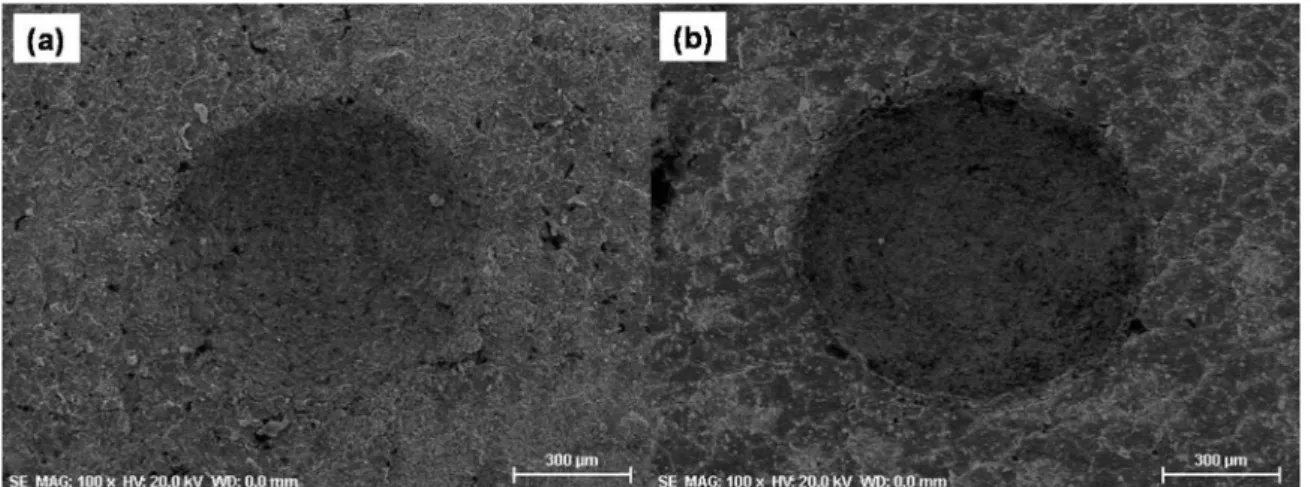
Figure 9 shows Rockwell indentation test on diamond ilm on steel.
Figure 9. Rockwell indentation test of (a) 980 N (b) 1470 N.
onto substrate4. In addition, the igure shows small concentric
cracks around the print, compressive stress of diamond ilm inhibited radial cracks formation running in concentric cracks27.
From these results, it is possible to indicate that laser
irradiation provided an excellent metallurgical bond with the substrate. In addition, SiC interlayer successfully suppressed the high carbon solubility into the bulk steel substrate and catalytic the efect of iron on graphite soot formation. In addition, SiC has thermal expansion coeicient intermediate
between diamond and steel, which reduced the residual stress
at an interface. Enhanced adhesion of the diamond ilm to the steel was guaranteed because of SiC interlayer. Laser cladding features a promising method to create the intermediate barrier for steel substrate. Additional experiments showed the SiC layer efectiveness as an intermediate barrier for diamond deposition.
4. Conclusions
In this work, adherent diamond ilms were deposited on AISI 304L substrate using an intermediate barrier, made by laser cladding. The interlayer blocked the iron difusion to the substrate surface and carbon difusion from the gas phase into the steel during the CVD diamond deposition. Further, the silicon carbide layer behaved as a binding layer, with
intermediate mechanical and thermal properties between steel and diamond, this fact lessened the three main adherence
problems between the diamond ilm and steel substrate.
5. Acknowledgments
The authors would like to thank FAPESP (Fundação de Amparo à Pesquisa do Estado de São Paulo) for inancial support of this work.
6. References
1. Bareiβ JC, Hackl G, Popovska N, Rosiwal SM, Singer RF. CVD diamond coating of steel on a CVD-TiBN interlayer. Surface and Coatings Technology. 2006;201(3-4):718-723.
2. Bareiβ C, Perle M, Rosiwal SM, Singer RF. Diamond coating of steel at high temperatures in hot ilament chemical vapour deposition (HFCVD) employing chromium interlayers. Diamond and Related Materials. 2006;15(4-8):754-760.
3. Tang W, Wang S, Lu F. Preparation and performance of diamond coatings on cemented carbide inserts with cobalt boride interlayers. Diamond and Related Materials. 2000;9(9-10):1744-1748. 4. Li YS, Tang Y, Yang Q, Xiao C, Hirose A. Diamond deposition
on steel substrates with an Al interlayer. International Journal of Refractory Metals and Hard Materials. 2009;27(2):417-420. 5. Gowri M, Li H, Kacsich T, Schermer JJ, van Enckevort WJP,
ter Meulen JJ. Critical parameters in hot ilament chemical
vapor deposition of diamond ilms on tool steel substrates with CrN interlayers. Surface and Coatings Technology. 2007;201(8):4601-4608.
6. Buijnsters JG, Shankar P, van Enckevort WJP, Schermer JJ, ter Meulen JJ. The applicability of ultra thin silicon ilms as interlayers for CVD diamond deposition on steels. Physica Status Solidi a. 2003;195(2):383-395.
7. Haubner R, Lux B. Diamond deposition on steel substrates using intermediate layers. International Journal of Refractory Metals and Hard Materials. 2006;24(5):380-386.
8. Polini R, Mattei G, Valle R, Casadei F. Raman spectroscopy characterization of diamond ilms on steel substrates with titanium carbide arc-plated interlayer. Thin Solid Films. 2006;515(3):1011-1016.
9. Lin CR, Kuo CT. High adhesion and quality diamond ilms on steel substrate. Diamond and Related Materials. 1998;7(6):903-907. 10. Fan QH, Fernandes A, Gracio J. Diamond coating on steel
with a titanium interlayer. Diamond and Related Materials. 1998;7(2-5):603-606.
11. Buijnsters JG, Shankar P, Fleischer W, van Enckevort WJP, Schermer JJ, ter Meulen JJ. CVD diamond deposition on steel
using arc-plated chromium nitride interlayers. Diamond and Related Materials. 2002;11(3-6):536-544.
16. Campos RA, Trava-Airoldi VJ, Bagnato OR, Moro JR, Corat EJ. Development of nanocrystalline diamond windows for application in synchrotron beamlines. Vacuum. 2013;89:21-25. 17. Jackson MJ, Robinson GM, Ahmed W, Sein H, Jones NA, Ali
N, et al. Time-modulated chemical vapor deposition of diamond
ilms. Journal of Materials Engineering and Performance. 2005;14(2):163-172.
18. Parikin, Killen PP, Rafterry A. Measurements of Residual Stresses in Cold-Rolled 304 Stainless Steel Plates Using X-Ray Difraction With Rietveld. Atom Indonesia. 2009;35(1):19-36. 19. Zhang HW, Hei ZK, Liu G, Lu J, Lu K. Formation of nanostructured surface layer on AISI 304 stainless steel by means of surface mechanical attrition treatment. Acta Materialia. 2003;51(7):1871-1881.
Chemical Vapor Deposition. 2008;14(7-8):145-160. 24. Michler J, Mermoux M, von Kaenel Y, Haouni A, Lucazeau
G, Blank E. Residual stress in diamond ilms: origins and modelling. Thin Solid Films. 1999;357(2):189-201. 25. Li YS, Hirose A. Direct coating of nanophase diamond ilms on
steel substrate. Chemical Physics Letters. 2006;433(1-3):150-153.
26. Campos RA, Contin A, Trava-Airoldi VJ, Barquete DM, Corat EJ. CVD of alternated MCD and NCD ilms on cemented carbide inserts. Journal of ASTM International. 2011;8(3):1-10. 27. Novikov NV, Dub SN. Hardness and fracture toughness of CVD