145
Research Article
ISSN 0975-248X
Development & Validation of a High Performance Liquid
Chromatography Method for Simultaneous Determination of Irbesartan
and Its Related Impurities in Pharmaceutical Tablets
P. Prabhu, M. Muralidhar
*Department of Chemistry, K. J. Somaiya College of Science and Commerce, Vidyavihar (E) - 400077, Mumbai, Maharashtra, India
ABSTRACT
A novel isocratic reverse phase high performance liquid chromatographic (RP-HPLC) method was developed for the determination of purity of Irbesartan drug substance in bulk samples and its pharmaceutical dosage forms in the presence of its impurities. This method is capable of separating related impurities along with Irbesartan. This method can be also be used for the estimation of assay of Irbesartan in drug substance as well as in single tablet formulation. Two impurities were detected in drug sample by HPLC analysis. The chromatographic conditions were optimized using an impurity-spiked solution. MS and IR method was used for the identification of impurities. The structure of the impurities were confirmed as 2-Cyano-4'-bromomethyl biphenyl and 2-n-butyl-1, 3-diazaspiro [4, 4]-non-1-ene-4-one. The method was subsequently validated for the determination of Irbesartan and its related compounds, as per ICH guidelines, for accuracy, precision, linearity and range, selectivity, limit of detection, limit of quantification and robustness. The LOD for Irbesartan, Impurity 1 and Impurity 2 was found to be 18.51µg/ml or ppm, 16.033µg/ml or ppm and 16.069µg/ml or ppm respectively while LOQ was found to be 56.098µg/ml or ppm, 48.587µg/ml or ppm and 48.69µg/ml or ppm respectively.
Keywords: Irbesartan, Impurity, HPLC, Structural elucidation, MS, Validation.
INTRODUCTION
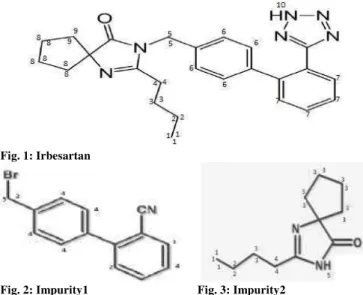
Irbesartan is a nonpeptide tetrazole derivative, which is a potent, orally active, selective angiotensin II receptor (type AT1) antagonist. [1] Its main use is in hypertension (high blood pressure), diabetic nephropathy (kidney damage due to diabetes) and congestive heart failure. [2-3] Irbesartan, IUPAC name is 2-butyl-3-({4-[2-(2H-1,2,3,4-tetrazol-5-yl ) phenyl]
phenyl}methyl)-1,3-diazaspiro[4.4]non-1-en-4-one and
molecular formula C25H28N6O (Fig. 1). EP and USP describe
HPLC method for Irbesartan and its related impurities. [4-5] Spectroscopic methods are also reported for characterization of trace level impurities of Irbesartan. [6] GC-MS method to analyze genotoxic impurities is reported. [7] RP-HPLC method for quantification of impurity in Irbesartan is reported [8] but the impurities discussed in the present paper are not published, to the best of our knowledge.
Impurities in pharmaceuticals are the unwanted chemicals that remain with the active pharmaceutical ingredients
*Corresponding author: Mrs. M. Muralidhar,
102, Shivamrut Society Bldg No. 2, Pendse Nagar-5 Patilwadi, Dombivli (East) - 421201 Dist: Thane,
Maharashtra State, India; Tel.: +91-9224329346,
8425848439; E-mail: [email protected]
(API’s) or develop during formulation or upon aging of API
and tablet / suspension formulations.
Fig. 1: Irbesartan
Fig. 2: Impurity1 Fig. 3: Impurity2
Many potential impurities arise during the synthesis of API. The amount of these impurities present in drug substance (API / formulation) will determine the safety of drug product.
[9]
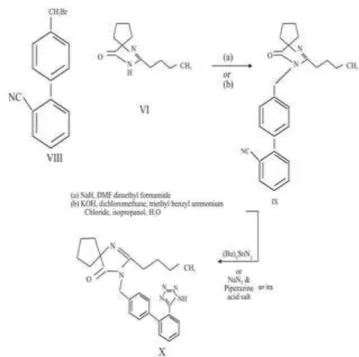
control of impurities are now crucial part of drug development. Chromatographic impurity profiles are most often developed using reversed-phase high-performance liquid chromatography (RP-HPLC). The chromatographic impurity profile should allow detecting and separating all (un)identified impurities in each new active compound. Different methods of synthesis of Irbesartan are reported in the literature [10-16]. In present work Irbesartan synthesized from one of the route [10-11] was analysed by HPLC method. The reaction of cyclopentanone (I) with sodium cyanide,
NH3 and NH4Cl in hot methanol/water gives
1-aminocyclopentanecarbonitrile (II), which is partially hydrolyzed with concentrated H2SO4 to the corresponding
amide (III). The acylation of (III) with pentanoyl chloride (IV) by means of triethylamine in THF yields
1-(pentanamido)cyclopentane-1-carboxamide (V), which,
without isolation, is cyclized by means of KOH in refluxing methanol/water to afford compound (VI). Bromination of 4’ -(methyl)biphenyl-2-carbonitrile (VII) with NBS gives compound (VIII). The condensation of compound (VI) with compound (VIII) by means of NaH in DMF gives intermediate compound (IX) which on cyclization with tributyltin azide or sodium azide gives Irbesartan (X). [10] Compound (IX) may also be treated with sodium azide and piperazine or its acid salt in a suitable organic solvent and resulting Irbesartan (X) obtained as its alkaline salt in aqueous solution. On neutralization with an acid Irbesartan (X) is finally precipitated. [11]
Synthesis of Imp 2
Synthesis of Imp1
Two impurities were detected in the drug formulation obtained by this process. Both have not been reported, by HPLC method, to be present in the dosage previously. Present paper describes the characterization of both the impurities present in Irbesartan drug formulation.
Thus, the aim of this study was to develop a liquid chromatograph that can simultaneously analyze Irbesartan and its two impurities, I and II. The method was validated in terms of precision, accuracy, linearity and range, selectivity,
LOD, LOQ and robustness. The method utilizes a C18 column
as stationary phase with photo diode array detector at 260 nm.
Fig. 4: Synthetic route for Irbesartan
I) Cyclopentanone (II) aminocyclopentane carbonitrile (III) 1-aminocyclopentanamide (IV) pentanoyl chloride (V) 1-(pentanamido) cyclopentane-1-carboxamide (VI) Imp2 (VII) 4’-(methyl) biphenyl-2-carbonitrile (VIII) Imp 1 (IX) 4’ -(2-butyl-4-oxo-1,3-diaza-spiro[4,4]non-1-en-3-ylmethyl)-biphenyl-2-carbonitrile (X) Irbesartan
EXPERIMENTAL Material and Reagents
Irbesartan API sample was kindly provided by Vivan Life Science and pharmaceutical dosages were obtained from the market. HPLC grade methanol, acetonitrile, KH2PO4 H3PO4
and H2O were purchased from Merck India Ltd. KBr (FTIR)
grade was purchased from Merck KGaA, Germany. Impurity I and Impurity II were obtained from market to be used as standards. Excipients Mg-stearate, microcrystalline cellulose, Lactose monohydrate, Croscarmellose Na, Pregel starch was provided by Lubrizol Advanced Materials India (Life Science Polymers).
Instrumentation HPLC
HPLC analysis was performed using Schimadzu UFLC Prominence system. The LC solution software was employed for data processing and acquisition. LC-20 AD pump,
DGU-20 A3 degasser, CTO-20 AC column, SIL-20 AC HT
autosampler, SPD – M20A photodiode array detector were during analysis. Different columns and mobile phases were tested. Finally, the method was validated with Phenomenex Luna C18 column with dimensions: Length: 250 mm,
Diameter: 4.6 mm, Particle size: 5 micron and Pore size: 100 Armstrong. Isocratic elution technique was used. The mobile phase consisted of methanol: acetonitrile: buffer A (40: 30: 30) being buffer A: 0.005 M KH2PO4 with pH adjusted to
4.7 with orthophoshporic acid. The oven temperature was 25oC and flow rate maintained at 0.5 ml / min. The UV detection was made at 260 nm.
Semi-preparative HPTLC
The impurities were isolated from the dosage formulation of
Irbesartan using CAMAG Linomat 5 “Linomat5_08022”S/N
08022 (1:00:12) at dosage speed 150nl/s. The application
volume was 200µL. CAMAG TLC Scanner
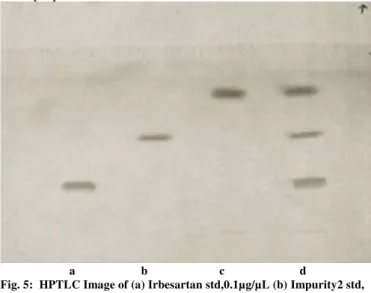
detection. The image was captured at 254 nm using CAMAG Visualizer: 150503 (Visualizer _150503). The mobile phase consisted of Toluene: Chloroform: Ethyl alcohol (4:4:1). The sample solution of 100 mg/ml was prepared in methanol for
semi-preparative HPTLC.
a b c d
Fig. 5: HPTLC Image of (a) Irbesartan std,0.1µg/µL (b) Impurity2 std, 0.2µg/µL (c) Impurity1 std, 0.1µg/µL and (d) spiked
Mass spectrometry
The mass spectra of pure compound as well both the impurities was recorded using Varian Inc USA make spectrometer of model 410 Prostar Binary LC with 500 MS IT PDA detectors. The specification of instrument is as follows:
1. Direct infusion mass with ESI and APCI negative and positive mode ionization, mass ranging from 50 to 2000 m/e.
2. LCMS/MS and MS^n ion trap.
3. HPLC with PDA detector.
4. HPLC PDA detector – mass spectrometer.
IR spectroscopy
The IR spectra of Impurity I and Impurity II was recorded in the solid state KBr powder dispersion using an IR Prestige-21 Schimadzu spectrometer equipped with software IR probe.
NMR spectroscopy
The NMR spectra of both the impurities and the pure compound was recorded using Varian make spectrometer of 400 MHz having operating system unix and equipped with software vnmrj.
Sample preparation Standard stock solution
In case of HPLC the standard stock solution of Irbesartan API, Impurity I and Impurity II was prepared by dissolving 25 mg of each in 5.0 ml of methanol (5000 ppm or µg /ml). 2.5 ml of each Irbesartan API, Impurity I and Impurity II was diluted to 25 ml in standard flask with methanol to give 500 ppm or µg /ml solution of each. Internal standard used was Losartan and its stock solution was prepared by dissolving 10 mg in 10 ml of methanol (100 ppm or µg /ml).
Sample solution
Twenty tablets from dosage form of Irbesartan were weighed and finely powdered with a mortar and pestle. A quantity of the powder equivalent to150 mg of Irbesartan was transferred into a 250 ml volumetric flask and methanol was added. The solution was sonicated for ten minutes and then the solution was completed to volume with the same solvent. This solution was filtered through a 0.2 µm nylon filter
(Whatman, Dassel, Germany). 2.0 ml of the filtered solution along with 1.0 ml of internal standard was diluted to 10.0 ml with the solvent methanol. An aliquot of this solution was used for analysis.
Method Validation
The proposed method was validated according to the ICH guidelines [17] for its specificity, limit of detection (LOD), limit of quantification (LOQ), linearity, precision, accuracy, robustness and system suitability for Irbesartan and its impurities. [18] Assay for Irbesartan in pharmaceutical dosage formulation was also determined.
Specificity
The specificity of the developed method was examined for the presence of possible interference from excipients or sample matrix by overlaying chromatograms of API spiked with impurities, blank and drug products.
Linearity
Linearity was examined for the API of Irbesartan as well as Impurity I and Impurity II. 2.5 ml of each API, Impurity I and Impurity II of 5000 ppm or µg /ml were taken in a 25 ml standard flask and diluted with methanol to give a mixture stock solution which is 500 ppm or µg /ml with respect to API, Impurity I and Impurity II. For linearity studies fourteen concentrations from 0.01 ppm or µg /ml to 500 ppm or µg /ml were prepared with the help of mixture stock solution adding 1 ml of internal standard of 100 ppm or µg /ml to each of the different concentration and analysed.
Limit of detection (LOD) and Limit of quantification (LOQ): The LOD and LOQ for Irbesartan and its impurities were calculated based on the standard deviation of the response and the slope.
DL = 3.3 S QL = 10 S
- Standard deviation of the response signal S – Slope of the calibration curve
Precision and accuracy
Repeatability (Intraday precision) was examined by three fold analyses of preparations of 150 ppm or µg /ml mixture of Irbesartan, Impurity I and Impurity II for three times in one day. Between days variation (Intermediate precision or Interday precision)) was examined on three consecutive days as per laboratory convenience. The % RSD on the peak areas was evaluated. Accuracy of the proposed method was determined by the standard addition method on the pharmaceutical dosage form to which known amounts of Irbesartan, Impurity I and Impurity II standards have been added at different concentrations .The determination was carried out at three level 80 %, 100% and 120%. The determination was carried out using three replicates at each concentration level. The accuracy was determined as percent recovery of amount of analyte added to the sample.
Robustness
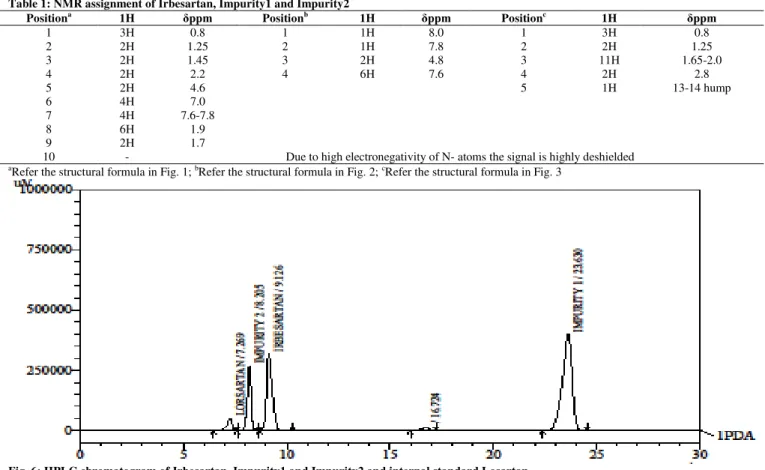
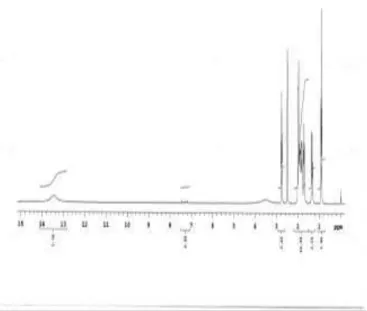
Table 1: NMR assignment of Irbesartan, Impurity1 and Impurity2
Positiona 1H δppm Positionb 1H δppm Positionc 1H δppm
1 3H 0.8 1 1H 8.0 1 3H 0.8
2 2H 1.25 2 1H 7.8 2 2H 1.25
3 2H 1.45 3 2H 4.8 3 11H 1.65-2.0
4 2H 2.2 4 6H 7.6 4 2H 2.8
5 2H 4.6 5 1H 13-14 hump
6 4H 7.0
7 4H 7.6-7.8
8 6H 1.9
9 2H 1.7
10 - Due to high electronegativity of N- atoms the signal is highly deshielded aRefer the structural formula in Fig. 1; bRefer the structural formula in Fig. 2; cRefer the structural formula in Fig. 3
Fig. 6: HPLC chromatogram of Irbesartan, Impurity1 and Impurity2 and internal standard Losartan
Forced degradation study
Forced degradation or stress testing involves exposure of drug substance to heat, heat and humidity, light or range of pH values. In this case hydrolytic study under acidic and basic condition was carried out as it involves catalyzation of ionisable functional groups present in the molecule. HCl and NaOH were employed for generating acidic and basic stress samples respectively. A quantity of the powder equivalent to 25 mg of Irbesartan was transferred into each of the two 25 ml volumetric flask and methanol was added. The solution was sonicated for ten minutes, and then 1.25 ml of 1 N HCl and 1.25 ml of 1 N NaOH was added to each of the two standard flask. The solution was diluted to volume with methanol. Both the solutions were kept in dark for 24 hours. 2.0 ml of the solution was diluted to 10.0 ml with the solvent methanol. An aliquot of this solution was used for analysis.
RESULTS AND DISCUSSION Method development
The method was developed as described above.
Detection of impurity by HPLC and LC/MS
The Irbesartan samples prepared by known synthetic route
[10]
(Fig. 4) were analysed by using HPLC method as described above. The analysis revealed the presence of two impurities. The impurities were marked as Impurity1 (RT 23.63 min) and Impurity2 (RT 8.205 min) respectively. (Fig 6). The retention time of both the impurities matched with API sample of Irbesartan containing internal standard Losartan and spiked Impurities 1 and 2.
To further investigate these impurities, LC/MS compatible method described above was developed. Mass spectral data showed molecular protonated parent ion peak at m/z 429 for Irbesartan, parent ion peak at m/z 192 for Impurity 1 (due to dissociation of Br - ), molecular protonated parent ion peak at
m/z 195 for Impurity2. On the basis of spectral data, the Impurity1 having parent ion peak at m/z 192 is identified as 2-Cyano-4'-bromomethyl biphenyl while Impurity2 having protonated molecular ion peak at m /z 195 is identified as 2-butyl-1,3-diazaspiro[4,4]non-1-en-4-one.
Table 2: Regression Characteristics of the proposed HPLC method
IRB IMP 1 IMP 2
Range 25 - 250 µg/ml 5 - 250 µg/ml 0.5 - 210 µg/ml Mean R2 value 0.996 0.998 0.998
Slope m 0.051 0.111 0.029
Intercept c -0.012 -0.111 -0.037 Criteria : Linear when corr. coefficient > 0.99
Table 3: LOD & LOQ
IRB IMP 1 IMP 2
Range 0.5 - 250µg/ml 0.1 - 250 µg/ml 0.5 - 210 µg/ml LOD 18.510 µg/ml 16.033 µg/ml 16.069 µg/ml LOQ 56.098 µg/ml 48.587 µg/ml 48.690 µg/ml
Table 4: Precision
* Intra day precision (Repeatability) RSD (n=9)
** Inter day precision RSD(n=9)
IRB 0.5054 0.9327
IMP 1 0.9072 1.7848
IMP 2 0.6322 1.3390
* Criterion (Drug) system RSD < 1.5 % ** Criterion (Drug) : RSD < 2.5%
* Criterion (Drug) method RSD < 2.0 % ** Criterion (IMP) : RSD < 10.0%
*Criterion (IMP)system & method RSD (100% - 200%) < 5%
Table 5: Accuracy
Percentage Recovery
Level 1 Level 2 Level 3 IRB 101.29756 ± 0.0175 101.8413 ± 0.0177 103.4753 ± 0.0450 IMP 1 101.6764 ± 0.0269 99.7114 ± 0.0833 103.4763 ± 0.3918 IMP 2 101.9669 ± 0.0104 103.4106 ± 0.0108 104.6058 ± 0.1083 Criterion (Drug)for mean recovery: 98-102%
Structural confirmation by NMR and IR
The NMR and IR spectral data of Impurity1 and Impurity2 confirmed the structures of both the compounds.
The H1 NMR spectral data of Irbesartan, Impurity 1 and Impurity 2 were recorded (Table 1).
The IR spectrum of Impurity1 shows peaks at 2221.13 cm-1 (CN stretching), 1594.23 cm-1, 1561.44 cm-1 (C=C aromatic stretching) and 643.29 cm-1 (aromatic substitution). The IR spectrum of Impurity2 shows peaks at 3527.96 cm-1(N-H stretching) 1643.42 cm-1 (C=O stretching) 1518.04 cm-1 (N-H
bending) 1421.6 cm-1 (CN stretching) 1458.25 cm-1 (C-H bending in cyclopentane).
Specificity
related impurities. Thus complete separation was noticed in presence of tablet placebo and the peaks were pure and excipients in the formulation did not interfere the analysis.
Table 7: Assay
Area (Irb/IS) Amount of drug present
n=3 mg % Assay
Std 8.4599 150
Wt of powder of tablet
(403.1mg) 6.8756 152.3882 101.5921
Table 8: Degradation study
Conditions
% Assay of active substance
Retention time of drug
% Degradation
No stress treatment 101.592 9.287 Nil Acid degradation (1N
HCl) 99.235 10.023 0.977 Alkaline degradation
(1N NaOH) 98.329 8.778 0.968
Fig. 7: Mass spectrum of Irbesartan
Fig. 8: Mass spectrum of Impurity1
Fig. 9: Mass spectrum of Impurity 2
Fig. 10: 1H NMR spectrum of Irbesartan
Fig. 12: 1H NMR spectrum of Impurity2
Linearity
In the examined concentration range described above, linear responses were observed between the peak areas and the concentration of the analytes. The results indicate that the response is linear over the range of 25, 50, 90, 120, 150, 180, 210, 250µg/ml or ppm for Irbesartan. For Imp 1 linearity was observed over the range of 5, 10, 25, 50, 90, 120, 150, 180, 210, 250µg/ml or ppm and for Imp 2 linearity was observed over the range 0.5, 1.0, 5, 10, 25, 50, 90, 120, 150, 180, 210µg/ml or ppm. The coefficients of determination of the regression lines and the linear regression equations are shown in Table 2.
Limit of detection (LOD) and Limit of quantification (LOQ)
The LOD and LOQ for Irbesartan and its related impurities were determined by injecting a series of dilutions of known concentrations of the analytes. It was found that for Irbesartan the LOD and LOQ was 18.51µg/ml or ppm and 56.098µg/ml or ppm respectively. For Imp 1, the LOD and LOQ were found to be 16.033µg/ml or ppm and 48.587µg/ml or ppm respectively. For Imp 2, the LOD and LOQ were 16.069µg/ml or ppm and 48.69µg/ml or ppm (Table 3).
Precision and accuracy
The precision of the method was evaluated as repeatability and intermediate precision. Repeatability was examined by three fold analyses of preparation of 150µg/ml or ppm of each of Irbesartan API, Imp 1 and Imp 2 in one day. The RSD on the peak areas of these determinations was not more than 1.0% for each. Intermediate precision was also determined for three consecutive days. The RSD on the peak areas of these determinations was not more than 2.0% for each suggesting that the proposed method is suitable for simultaneous analysis of Irbesartan and its related impurities. In addition, the intermediate precision suggests that the developed method gave repeatable results for three consecutive days. Accuracy of the method was determined as % recovery of a known added amount of analyte to the sample. The proposed method was found to give a mean percentage recovery of 102.2047 ± 0.026733 for Irbesartan, 101.6214 ± 0.16734 for Imp 1 and 103.3278 ± 0.04317 for Imp2 in the examined dosage form,as shown in Table 5. So the developed method gave satisfactory recoveries for Irbesartan, Imp 1 and Imp 2.
Robustness
The robustness of the HPLC method was checked by introducing intentional variation of the experimental factors as described above. The results, as shown in table 6, of the deliberate aforementioned changes in the parameters are in compliance with the conditions maintained for development of the method.
Application to real samples
The proposed method was applied for the determination of Irbesartan in commercial tablet formulation as described above. The content of Irbesartan in the tablet complies with the prescribed limit. The impurities are present below the restricted level specified under ICH guidelines (Table 7).
Stability indicating property
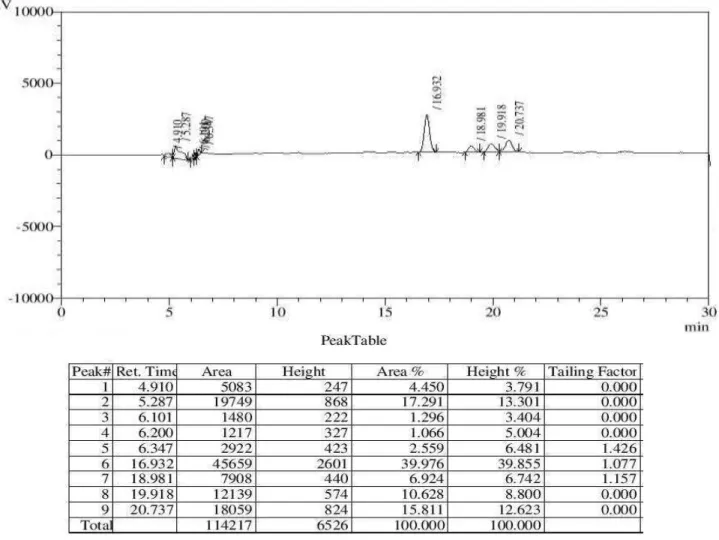
The chromatogram of acid degraded sample and alkaline degraded sample did not show any prominent additional peak. The chromatogram indicated that there was no appreciable loss in content of active component. The negligible peaks observed were from its blank or placebo in each of the specified condition. This indicates that the drug is not susceptible to acid or base hydrolysis degradation (Table 8).
Fig. 13: IR spectra of Impurity1 1/cm
Fig. 15: HPLC chromatogram of acidic degradation of Irbesartan
Fig. 17: HPLC chromatogram of Blank
The developed reversed phase HPLC method is specific, linear, sensitive, precise and accurate for the separation and determination of Irbesartan and its impurities. The method can be applied for routine quality control of APIs and oral dosage forms.
ACKNOWLEDGEMENT
The authors would like to thank Vivan Life Science, Lubrizol for providing samples. The authors would also like to thank Ramnathan Centre – Ruia College for lending helping hand to work on the HPLC system and also Anchrom Laboratories for providing help to work on HPTLC instrument.
REFERENCES
1. Wilson & Gisvold’s, Text book of Organic Medical &
Pharmaceutical chemistry, 11th edition Lippincott Williams & wilkins publisher, pp. 649.
2. Parving HH, Lehnert H, Brochner-Mortensen J, Gomis R, Andersens S, Arner P. The effect of Irbesartan on the development of diabetic nephropathy in patients with type 2 diabetes. N. Engl J. Med 2001; 345(12): 870-878.
3. Gillis JC, Markham A. Irbesartan: A review of its pharmacodynamic and pharmacokinetic properties and therapeutic use in the management of hypertension. Drugs 1997; 54(6): 885-902.
4. United States Pharmacopeia 29-NF 24 page 1177 Pharmacopeial forum: 30(1) 110.
5. British Pharmacopeia Ph Eur monograph 190, London, Medicines and Health care products Regulatory Agency MHRA 2005; 1:730.
6. Rao SN, Sitaramaiah D, Rao CN, Rao PS, Babu SK. Commercial scalable process for the preparation of Irbesartan intermediate. Rasayan J. Chem. 2010; 3(4): 681-689.
7. Momidala DK. Analysis of genotoxic impurities in antihypertension drug in compliance with ICH guidelines using GCMS GC- Pharma-002.
8. Kalcemullah T, Ahmed M, Sharma HK. Validation of RP-HPLC method for the quantification of N- Bromosuccinimide in Angiotensin II receptor antagonists in Pharmaceuticals, Scholars Research Library. Der Pharma Chemica 2011, 3(1) : 372-380 9. ICH Guideline, Impurities in new drug substances Q3A (R2)
October 25, 2006.
10. Bernhart CA, et. al. A new series of imidazolones: Highly specific and potent nonpeptide AT1 angiotensin II receptor antagonist, J Med Chem 1993; 36(22): 3371-80.
11. Rao PKM, Nuthi NAM, Bandaru KS, Phaniram Y. Process for the preparation of Irbesartan, US Patent 20110275828.
12. Zupancic S, Berk D, Zupet R. A new process for the preparation of Irbesartan, EP 2194050A1.
13. Srinivas LP, Relekar PJ, Rao RD, Kankan NR. Process for the preparation of Irbesartan hydrochloride US Patent 20090137648. 14. Reddy RB, Sudhakar S, Sridhar C, Rao SN, Venkatraman S, Reddy
PP, Bollikonda S. Process for preparing Irbesartan, WO 2005113518.
15. Deshpande et. al. Process for the preparation of Irbesartan US 7652147B2.
16. Nisnevich et. al. Synthesis of Irbesartan, US 7019148B2, 2006. 17. ICH, Validation of Analytical Procedures; Text and methodology
Q2 (R1), EMEA, 2006.