Cop
yright
© ABE&M t
odos os dir
eit
os r
eser
vados
.
Cop
yright
© ABE&M t
odos os dir
eit
os r
eser
vados
.
Osteoporosis management in patient
with renal function impairment
Manejo da osteoporose no paciente com função renal comprometida
Guilherme Alcantara Cunha Lima1, Francisco de Paula Paranhos-Neto1, Giselly
Rosa Modesto Pereira2, Carlos Perez Gomes3, Maria Lucia Fleiuss Farias1
ABSTRACT
Aging is associated with decreases in bone quality and in glomerular iltration. Consequently, osteoporosis and chronic kidney disease (CKD) are common comorbid conditions in the el-derly, and often coexist. Biochemical abnormalities in the homeostasis of calcium and phosphorus begin early in CKD, leading to an increase in fracture risk and cardiovascu-lar complications since early stages of the disease. The ability of DXA (dual energy X-ray absorptiometry) to diagnose osteoporosis and to predict fractures in this population remains unclear. The management of the disease is also controversial: calcium and vitamin D, although recommended, must be prescribed with caution, considering vascular calcii-cation risk and the development of adynamic bone disease. Furthermore, safety and effec-tiveness of osteoporosis drugs are not established in patients with CKD. Thus, risks and beneits of antiosteoporosis treatment must be considered individually. Arq Bras Endocrinol Metab. 2014;58(5):530-9
Keywords
Bone quality; CKD-MBD; DXA; fractures; osteoporosis
RESUMO
O envelhecimento associa-se tanto ao declínio da qualidade óssea quanto da iltração glomeru-lar. Consequentemente, osteoporose e doença renal crônica (DRC) são comorbidades frequen-tes em idosos, e muitas vezes coexistem. Anormalidades bioquímicas na homeostase do cálcio e do fósforo surgem precocemente na DRC, causando aumento do risco de fraturas e de com-plicações cardiovasculares desde fases precoces da doença. A capacidade da densitometria (DXA) em diagnosticar osteoporose e predizer fraturas nessa população é questionável. O ma-nejo da doença é também controverso; cálcio e vitamina D são recomendados com cautela, de-vido ao risco de calciicações vasculares e de doença óssea adinâmica. Além disso, a segurança e a eicácia dos medicamentos para osteoporose ainda não estão estabelecidas em pacientes com DRC. Assim, riscos e benefícios do tratamento para osteoporose devem ser considerados individualmente nesses pacientes. Arq Bras Endocrinol Metab. 2014;58(5):530-9
Descritores
Qualidade óssea; doença renal crônica; densitometria óssea; fraturas; osteoporose
1 Division of Endocrinology, Universidade Federal do Rio de Janeiro (UFRJ), Rio de Janeiro, RJ, Brazil 2 Division of Nephrology, Universidade Federal Fluminense (UFF), Rio de Janeiro, RJ, Brazil 3 Division of Nephrology, UFRJ, Rio de Janeiro, RJ, Brazil
Correspondence to:
Guilherme Alcantara Cunha Lima Rua Barão da Lagoa Dourada, 340, ap. 1302
28035-212 – Campos dos Goytacazes, RJ, Brazil [email protected] Received on Mar/18/2014 Accepted on May/24/2014
DOI: 10.1590/0004-2730000003360
INTRODUCTION
I
t is not uncommon in daily practice to detect decreased glomerular iltration in patients with osteoporosis, or else to identify bone fragility in pa-tients in conservative treatment for chronic kidney disease (CKD). The management of these patients is often dificult and many doubts persist.me-Cop
yright
© ABE&M t
odos os dir
eit
os r
eser
vados
.
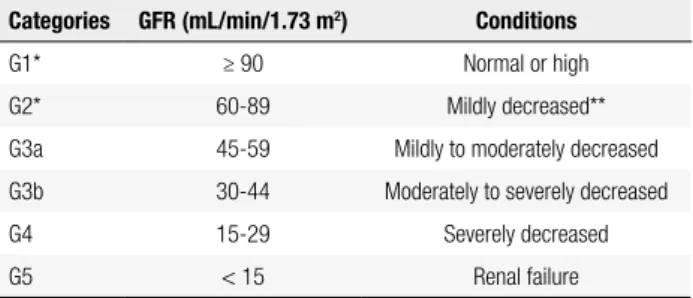
thods, or renal transplantation) present for at least 3 months (1). It is estimated that 5-10% of the world population have CKD, due to high prevalence of un-dertreated chronic diseases, like arterial hypertension and diabetes mellitus, and increased life expectancy of the population (2) (see table 1 for the classiication of CKD).
most adequate osteoporosis drugs to be employed in patients with renal impairment (12,13). In this review only pre-dialysis population will be considered.
OSTEOPOROSIS, BONE FRAGILITY AND CKD
Osteoporosis is deined as a disorder associated with decreased bone mass and deterioration of bone mi-croarchitecture, with consequent increased risk of fractures (14). This is an important public health problem, due to its high morbidity and mortality, especially in elderly people. The diagnosis of os-teoporosis is based on dual-energy x-ray absorptiome-try (DXA scan), when patient’s bone mineral density (BMD) is 2.5 SD or more below that of a young-adult reference population, or in the presence of fractures in adulthood (hip, vertebra, distal radius, humerus, ribs) due to trauma equal to or less than a fall from standing height, independent of DXA (15). Data on prevalence of osteoporosis in Brazil are variable: Ca-margo and cols. (16) identiied osteoporosis by DXA in 6.4 to 16.1% of men and 22.2 to 33.2% of wo-men living in São Paulo. The BRAZOS study, which evaluated 2,420 men and women aged 40 years and older in different regions of Brazil and from different socio-economic classes, reported low-impact fractures in 15.1% of women and 12.8% of men (16).
Cunningham and cols. (18) reported that osteopo-rosis is more common in patients with renal impair-ment than in the general population. Klawansky and cols. (5) found that 11% of men and 24% of women with osteoporosis had GFR < 35 mL/min/1.73 m2. Ens-rud and cols. (4) observed a 2-fold increased risk of hip fractures in patients with GFR < 45 mL/min/1.73 m2. Several factors favor bone fragility in CKD patients. Alterations in bone histology (osteitis ibrosa, whe-re the main component is the high bone turnover due to hyperparathyroidism; adynamic bone disease and osteomalacia, where the primary disorders are the insuficient bone formation and mineralization) can be observed even in asymptomatic individuals (19). Chronic metabolic acidosis, endocrine disor-ders (hyperparathyroidism, hypogonadism, decreased IGF-1), sedentary lifestyle, medications (glucocorti-coids, anticoagulants, immunosuppressive drugs), malnutrition, myopathy, neuropathy, amyloidosis and immobilization are more common in these pa-tients than in the general population, and contribute to the increased risk of bone fractures and complica-tions (12,20,21).
Table 1. CKD Classiication by GFR (KDIGO 2012)
Categories GFR (mL/min/1.73 m2) Conditions
G1* ≥ 90 Normal or high
G2* 60-89 Mildly decreased**
G3a 45-59 Mildly to moderately decreased
G3b 30-44 Moderately to severely decreased
G4 15-29 Severely decreased
G5 < 15 Renal failure
CKD: chronic kidney disease; GFR: glomerular iltration rate.
* In the absence of evidence of kidney damage, G1 and G2 categories do not meet criteria for CKD; ** In relation to the level of young adults.
The estimated GFR (eGFR) can be obtained in di-fferent ways. Classically, Cockcroft and Gault equation [(140 – age)/(serum creatinine x 72)] x 0.85 if female) is the most used because it is easy to perform and does not involve logarithmic variables. However, it has low accuracy compared to other methods, especially in pa-tients at extremes of age and those with mild increase in serum creatinine, usually overestimating the GFR. The CKD-EPI equation (Chronic Kidney Disease – Epide-miology Collaboration) has higher accuracy, especially in those patients with GFR > 60 ml/min/1,73 m2 (3), and is currently recommended by the international con-sensus KDIGO 2012 (Kidney Disease: Improving Glo-bal Outcomes): GFR = 141 x min (SCr/κ, 1)α x max
(SCr/κ,1)-1209 x 0.993Age x 1.018 [if female] x 1.159 [if black], where SCr is serum creatinine (mg/dL), κ is 0.7 for females and 0.9 for males, α is -0329 for fema-les and -0411 for mafema-les, min indicates the minimum of SCr/k or 1 and max indicates the maximum of SCr/k or 1 (1,3). These and other relatively equations used to estimate GFR are available on the Brazilian site www. sbn.org.br and other electronic medical devices.
Cop
yright
© ABE&M t
odos os dir
eit
os r
eser
vados
.
CHRONIC KIDNEY DISEASE – MINERAL AND BONE
DISORDER (CKD-MBD)
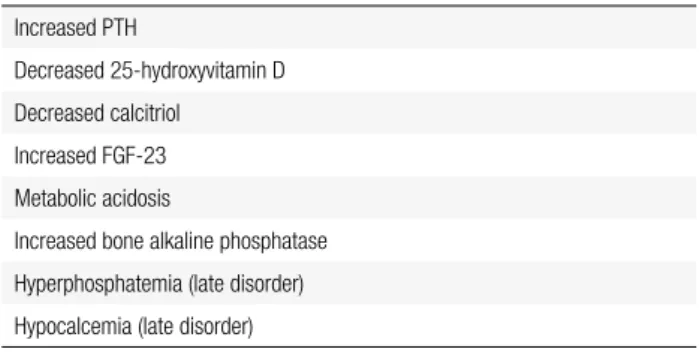
Changes in bone and mineral metabolism occur early in the course of CKD and progress as kidney function declines. These changes are called Chronic Kidney Disease-Mineral and Bone Disorder (CKD- MBD), which includes renal osteodystrophy, ex-traskeletal (vascular) calciication related to abnor-malities of bone mineral metabolism and excessive mortality (22). Renal osteodystrophy is the compo-nent of CKD-MBD that is identified and quantified through bone histomorphometry and includes os-teitis fibrosa (hyperparathyroidism), adynamic bone disease and osteomalacia (1,19). Several factors rela-ted to the pathophysiology of CKD-MBD have been described as markers of increased cardiovascular risk and mortality in these patients, such as hyperpara-thyroidism, increased FGF-23 (Fibroblast Growth Factor-23) and metabolic acidosis (1,23,24). The biochemical CKD-MBD abnormalities are summa-rized in table 2.
(26). The decrease in intestinal calcium absorption leads to PTH hypersecretion (25,27). The reduced expression of vitamin D receptor (VDR) and cal-cium-sensitive (CaR) receptor, increasing bone resis-tance to PTH action and estimulating its secretion, is also observed (22,25). b) FGF-23 is a phosphatonin produced by osteoblasts and osteocytes which rises very early in CKD to counterbalance phosphate re-tention. FGF-23 causes inhibition of 1α-hydroxylase, contributing to reduced calcitriol synthesis and to se-condary hyperparathyroidism (23). Increased serum phosphate further reduces calcitriol synthesis and can precipitate in vessels and soft tissues with calcium, re-ducing the ionized calcium fraction (indirectly stimu-lating the PTH secretion) (25). c) CKD also results in inability to generate new bicarbonate needed to buffer the amount of acid generated by the tissues, resulting in acidosis (21,24). Chronic metabolic aci-dosis occurs early in the course of CKD and can lead to bone fragility in several ways: increased secretion and resistance to PTH, increased osteoclastic activi-ty, increased renal elimination of calcium, bone mi-neral dissolution and malnutrition (21,28).
Table 2. Metabolic disturbances associated with CKD
Increased PTH
Decreased 25-hydroxyvitamin D
Decreased calcitriol
Increased FGF-23
Metabolic acidosis
Increased bone alkaline phosphatase
Hyperphosphatemia (late disorder)
Hypocalcemia (late disorder)
FGF-23: ibroblast growth factor-23.
The elevation in serum PTH is observed from early stages of CKD and results in increased bone re-sorption in order to maintain calcium balance. Chro-nic PTH hypersecretion is related to high turnover bone disease, with increased risk of fractures and bone deformities (25). As shown in igure 1 several factors contribute to hyperparathyroidism: a) The de-creased pool of functioning nephrons results in limi-ted capacity for calcitriol production (the active form of vitamin D), due to the smaller amount of 1α -hy-droxylase, the enzyme responsible for the conversion of 25-hydroxyvitamin D (25OHD) in its active form. CKD patients, even at early stages of the disease, also have a higher prevalence of vitamin D insuficiency/ deiciency than that found in the general population
Decreased production of 1α-hydroxylase, phosphorus accumulation, increased FGF-23, vitamin D deiciency, chronic metabolic acidosis and bone resistance to the PTH action results in hyperparathyroidism, increasing bone resorption and predisposing to bone deformities and fractures.
FGF-23: ibroblast growth factor-23.
Figure 1. Pathophysiology of secondary hyperparathyroidism in CKD.
↓ 1α-hydroxylase
↑ Phosphorus ↓ Calcitriol
↓ ↑ FGF-23
↓ Vitamin D ↓ Calcium
↑ Bone resistance Metabolic acidosis
↑ PTH
BONE EVALUATION IN CKD
Cop
yright
© ABE&M t
odos os dir
eit
os r
eser
vados
.
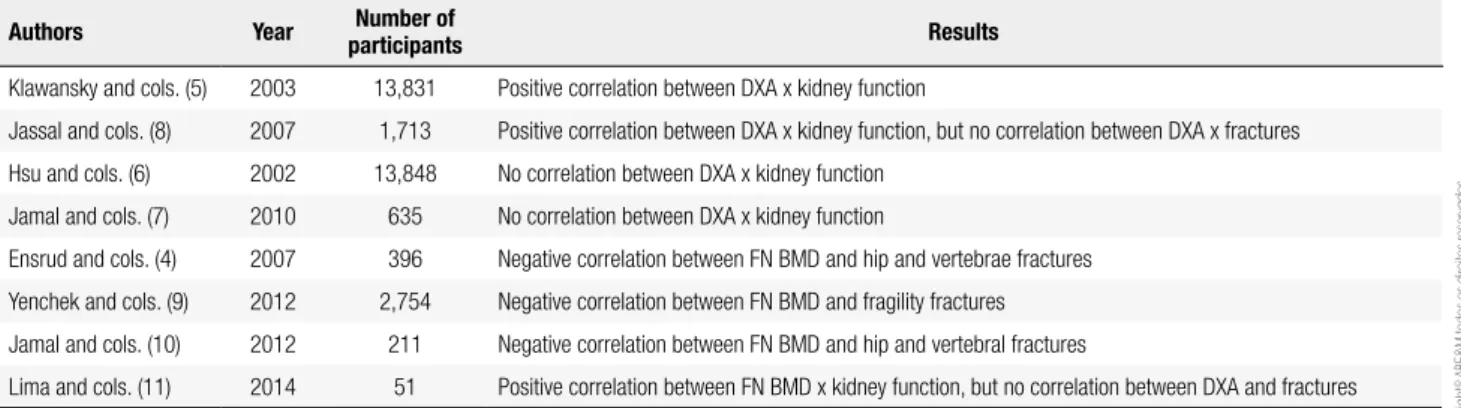
(GFR 35-60 mL/min/1.73 m2) or severe (GFR < 35 mL/min/1.73 m2) renal impairment. On the other hand, Hsu and cols. (6) evaluated 13,848 individuals over 20 years with CKD and and did not observe any correlation between BMD and renal function. The role of DXA for predicting fracture risk in pre-dialysis CKD is also undeined (4,8-11), as also shown in ta-ble 3. Jassal and cols. (8) reported correlation between GFR and BMD, but not between bone loss by DXA and osteoporotic fractures after a 4-year follow-up, independent of the renal function of participants. Ensrud and cols. (4) observed a negative correlation between femoral neck BMD and risk of hip and spi-ne fractures in women with moderate to severe renal impairment. Nickolas and cols. (30) reported that pa-tients with CKD may present advanced bone disease with a high risk of fractures despite having normal or even high BMD. In a recent study of male patients with grade 3 and 4 CKD, we found that only 3.9% of them had osteoporosis by DXA, but 31.4% reported low-impact fractures, conirming the ineffectiveness of this method in predicting bone fragility in CKD (11). Due to the inconsistency of the DXA results in CKD patients undergoing conservative treatment, as well as in the dialysis population, the oficial position of the international consensus KDIGO (1) is that, for pa-tients with stage 3b-5 (GFR < 45 mL/min/1.73 m2), DXA should not be used due of its inability to predict fractures and determine the type of renal osteodystro-phy, and because it can provide misleading information about the bone health of these patients.
Transiliac bone biopsy with double tetracycli-ne labeling has been the method of choice to deitetracycli-ne the type and severity of bone disease in CKD-MBD. However, it is an invasive method justiied only in spe-ciic situations, usually in the more advanced forms of
kidney disease (19). Histopathological indings relec-ting increased activity of osteoblasts and osteoclasts, and peritrabecular ibrosis indicate osteitis ibrosa, me-diated by hyperparathyroidism. Bone mineralization defect with accumulation of non-mineralized osteoid characterizes osteomalacea, and low or very low rate of bone turnover but normal osteoid are indicative of adynamic bone disease. Intermediate degrees may oc-cur (1,19). In the absense of biopsy, serum PTH levels above 400 pg/mL associated with alkaline phospha-tase above 3 times the normal in patients with CKD 5 suggest ibrous osteitis, but do not exclude other disorders, like as adynamic bone disease. In patients with CKD 3 and 4, it is suggested to keep PTH values below the upper normal limit of the assay (1).
High resolution peripheral quantitative com-puted microtomography (HR-pQCT) is a new and noninvasive method which enables the analy-sis of bone microarchitecture through peripheral sites: distal radius and distal tibia. It is effective to demonstrate changes in the microstructure during the aging process and also in the detection of the risk of fragility fractures (31). HR-pQCT is able to identify cortical and trabecular bone loss in patien-ts with several degrees of CKD (32,33). Paranhos-Neto and cols. recently compared patients with CKD stages 3 and 4 using HR-pQCT, and found a greater impairment of cortical and trabecular bone parameters in stage 4 (lower density and thickness associated with increased trabecular area and cortical perimeter, sug-gesting trabecularization of cortical bone). FGF-23 and metabolic acidosis were the only independent factors associated with bone alterations, and can be important biomarkers in the clinical management of these patients (34). However, the method does not allow evaluation of bone dynamics or mineralization.
Table 3. Correlation between DXA x kidney function and fractures in CKD predialysis patients
Authors Year Number of
participants Results
Klawansky and cols. (5) 2003 13,831 Positive correlation between DXA x kidney function
Jassal and cols. (8) 2007 1,713 Positive correlation between DXA x kidney function, but no correlation between DXA x fractures
Hsu and cols. (6) 2002 13,848 No correlation between DXA x kidney function
Jamal and cols. (7) 2010 635 No correlation between DXA x kidney function
Ensrud and cols. (4) 2007 396 Negative correlation between FN BMD and hip and vertebrae fractures
Yenchek and cols. (9) 2012 2,754 Negative correlation between FN BMD and fragility fractures
Jamal and cols. (10) 2012 211 Negative correlation between FN BMD and hip and vertebral fractures
Lima and cols. (11) 2014 51 Positive correlation between FN BMD x kidney function, but no correlation between DXA and fractures
Cop
yright
© ABE&M t
odos os dir
eit
os r
eser
vados
.
OSTEOPOROSIS TREATMENT IN CKD PATIENTS
Due to the high prevalence of osteoporosis and CKD- MBD, especially in the elderly population, it is not uncommon the coexistence of these conditions. Al-though both result in bone fragility and increased risk of fractures, differences in pathophysiology must be considered for their proper management. While the central objective of osteoporosis treatment is to maintain or increase bone mass and reduce fracture risk, the main objective in CKD-MBD is to restore mineral balance (12,13). In a patient with osteopo-rosis and decreased glomerular iltration, factors such as the presence of CKD-MBD, effectiveness of osteoporosis drugs in preventing fractures, cardio-vascular risk reduction and safety proile are funda-mental for the decision to prescribe or not an os-teoporosis medication (13).
CKD-MBD management
The maintenance of serum calcium, phosphorus and 25OHD within the normal range are recommenda-tions of international consensus KDIGO (1) for patien-ts with CKD stages 3-5. Measures such as adequacy of phosphorus and protein intake, use of phosphate bin-ders, vitamin D supplementation with pro-active (ergo or cholecalciferol) and/or active (calcitriol) are requi-red (35).
The nutritional therapy in pre-dialysis CKD is aimed to control the protein-energy malnutrition, the elec-trolyte disturbances and metabolic changes. The pro-tein intake in non-dialysis patients with GFR < 30 mL/ min/1.73 m2 should be 0.8 g/kg/day, with 50-60% of proteins of high biological value. It is important to consider that high protein intake results in accumula-tion of uremic toxins and acceleraaccumula-tion of renal damage; on the other hand, low protein intake increases the risk of malnutrition, metabolic acidosis, loss of muscle mass and bone fragility, and does not slow disease progres-sion (1).
Disorders of calcium and phosphorus are uncom-mon in patients with GFR > 20 mL/min/1.73 m2 (27). However, with the worsening of renal function, a calcium x phosphorus product above 55 (mg/dl)2 increases the risk of vessels and tissues calciication and, as a consequence, the cardiovascular risk of the-se patients (36). In predialysis phathe-se, usually the opti-mal levels of phosphorus are achieved by protein res-triction (1,35). In patients with hyperphosphatemia
refractory to dietary measures, the use of phosphorus binders is indicated. In the absence of hypercalcemia, phosphorus binders containing calcium (carbonate, acetate) can be prescribed, but the calcium x phos-phorus product and the risk of ectopic calciication should be evaluated. Calcium supplementation is useful in correcting hypocalcemia, in reducing intes-tinal phosphorus absorption and minimizing hyper-parathyroidism in CKD patients (35). Nevertheless, concerns about the potential increase in extra-skele-tal calciication risk of and in calcium x phosphorus product exist (35,36). Even in the general population, calcium salts supplements have been associated with increased risk of cardiovascular events; oral intake of this element through foods like milk, cheese and yogurt seems more adequate (37). Langsetmo and cols. (38) recently published a study on the effects of calcium intake in mortality of a cohort of 9,033 par-ticipants: both dairy products and calcium supple-mentation were protective in women and neutral in men, but the authors did not assess the subgroup of patients with renal impairment. Due to the risk of ex-tra-skeletal calciications and the potential myocardial deleterious effect of calcium supplementation, espe-cially in patients with known vascular calciication, total amount of elemental calcium should not exceed 1.5 grams per day and be preferentially administered in the diet (35,37).
Replacement of vitamin D (ergocalciferol or cho-lecalciferol), aiming to correct hypovitaminosis D and minimize hyperparathyroidism, is indicated as in the general population. In individuals with severe renal impairment, decreased 1α-hydroxylase enzyme can reduce the effectiveness of ergo or cholecalciferol replacement, making sometimes necessary the use of calcitriol. This agent is important to re-establish op-timal calcium and phosphorus levels and minimize hyperparathyroidism, but should be prescribed with caution because of the risk of hypercalcemia, hyper-phosphatemia, vascular calciication and adynamic bone disease (1,39).
Cop
yright
© ABE&M t
odos os dir
eit
os r
eser
vados
.
due to low bone formation (1). Moreover, in CKD patients, an accumulation of N-terminal portion of PTH, especially in dialysis patients, may overestima-te its serum level (40). The PTH therapeutic target in pre-dialysis patients is not known. KDIGO con-sensus suggests that in patients with GFR < 45 mL/ min/1,73 m2 and PTH above the normal value, ef-forts to adequacy of serum phosphorus, calcium and 25OHD are priority to the absolute values of PTH. Attempts to normalize serum ionized calcium/cal-cium corrected for albumin, phosphorus, 25OHD and alkaline phosphatase (marker of bone turnover) are more important than the absolute values of PTH, even if they are above normal limits (1). The calci-mimetic agent cinacalcet, which reduces the PTH and calcium levels by changing the set point of the calcium-sensitive receptor, is not approved for use in predialysis patients (35). It is worth noting that increased PTH alone is not a good predictor of bone turnover in CKD (1,35). Bone biopsy, although ex-pensive and not widely available, should be conside-red in doubtful cases to guide treatment (1).
Chronic metabolic acidosis is associated with de-clining renal function (23) hyperparathyroidism and decreased BMD (28). Raphael and cols. (41) have shown that the maintenance of serum bicarbonate at high-normal levels reduced CKD progression and
increased patient survival. Reduction of protein ca-tabolism and the hospitalization rate were also re-ported (24,42,43). KDIGO consensus (1) establishes that patients with CKD and serum bicarbonate < 22 mmol/L require oral bicarbonate replacement.
Osteoporosis drugs
Most large-scale studies to determine the effective-ness and safety of osteoporosis drugs in the general population did not include patients with severe renal impairment (GFR < 30 ml/min/1.73 m2) (12). The consensus KDIGO (1) reports safety and eficacy of these drugs in patients with CKD 1-3 without evi-dence of CKD-MBD, but does not guarantee their use in patients with GFR < 30 mL/min/1.73 m2, or those with metabolic disturbances of CKD-MBD, recommending bone biopsy with double tetracycline labeling to assess the potential beneit of the pres-cription in this population. Table 4 summarizes the recommendations for pharmacological classes of os-teoporosis drugs.
Bisphosphonates
These antiresorptive agents, widely used in the treat-ment of osteoporosis, have been evaluated in patients with low GFR (44). Jamal and cols. (45) evaluated the FIT study subgroup with renal impairment
classi-Table 4. Summary of osteoporosis drugs in CKD
Classes Comments
Bisphosphonates Zoledronic acid: not recommended if GFR < 35 mL/min/1.73 m2 Oral bisphosphonates: not recommended if GFR < 30 mL/min/1.73 m2 Potential beneit in reducing vascular calciication and cardiovascular risk Potential risk of nephrotoxicity, hypocalcemia and adynamic bone disease
Denosumab Absence of renal elimination
Potential risk of hypocalcemia and adynamic bone disease Safety proile in CKD undeined
Strontium ranelate Potential increased cardiovascular risk Safety proile in CKD undeined
Teriparatide Safe in patients with GFR > 30 mL/min/1.73 m2 without biochemical abnormalities Potential beneit in patients with adynamic bone disease
SERMs Safe in patients with GFR > 30 mL/min/1.73 m2 without biochemical abnormalities Ineffective in prevention of non-vertebral fractures
Potential risk of stroke and thromboembolic events
Calcitonin No studies in patients with CKD-MBD
Ineffective in prevention of non-vertebral fractures No lasting effect
Potential analgesic effects for new vertebral fractures
GFR: glomerular iltration rate; CKD: chronic kidney disease; SERMs: selective estrogen receptor modulators; CKD-MBD: chronic kidney disease - mineral and bone disorder.
In patients with GFR < 45 mL/min/1,73 m2, prior correction of biochemical abnormalities is indicated. Bone biopsy is recommended before prescribing osteoporosis drugs in patients with GFR <
Cop
yright
© ABE&M t
odos os dir
eit
os r
eser
vados
.
ied as CKD 2-4. Treatment with alendronate increased BMD regardless of eGFR, and also reduced the risk of fractures to a similar degree in those with and without reduced renal function. The authors did not report dif-ferences in adverse events by renal function. Miller and cols. (46) reviewed 9 studies with risedronate. The analysis included 4,500 patients on placebo and 4,496 patients on risedronate 5 mg/day for up to 3 years. Pa-tients were categorized as having mild (GFR 50 to < 80 mL/min/1.73 m2), moderate (GFR 30 to < 50 mL/ min/1.73 m2), or severe (GFR < 30 mL/min/1.73 m2) renal impairment. In both the placebo and risedronate treatment groups, patients with the most severe renal impairment were older and had more severe osteopo-rosis. Risedronate effectively preserved BMD and re-duced the incidence of vertebral fractures. Also, the incidences of overall adverse events and of renal func-tion–related adverse events were similar in both groups. Boonen and cols. (47) evaluated patients with GFR < 35 mL/min/1.73 m2 receiving zoledronic acid and did not describe worsening of renal function. It is noteworthy that all patients included in these studies had no evidence of CKD-MBD. In contrast, nephrotoxicity in patients receiving pamidronate or ibandronate were reported in a review (48). Miller and cols. (49) have recently published a review of the literature on the renal safety of bisphosphonate use for osteoporosis. The authors concluded that the benefits outweigh risks; and even in elderly, frail, osteoporotic patients with renal impairment, intravenous bisphos-phonate therapy administration in accordance with the prescribing information did not result in long‐term re-nal function decline.
The potential beneit of these drugs in reducing the vascular calciication and atherosclerosis progres-sion is still undetermined (12,44). Santos and cols., in a systematic review, analyzed the results of 169 articles that assessed the thickening of the intima-media of the carotid arteries or the calciication of the aorta and coronary arteries, and suggested that bisphosphonates exert an inhibitory effect on the atherosclerotic process (50).
One concern with bisphosphonate use in CKD patients is the induction of adynamic bone disease, due to the suppression of bone formation, resulting in bone fragility and fractures. Amerling and cols. (51) studied 13 patients with CKD 2-4 in use of bis-phosphonates through bone biopsy, and found that all of them developed adynamic bone disease. Thus,
bisphosphonates are not indicated in patients with evidence of adynamic bone disease or osteomalacia (31). Hypocalcemia was also reported in patients with evidence of CKD-MBD receiving bisphospho-nates, especially after intravenous application of zo-ledronic acid (12).
Denosumab
The anti-RANKL monoclonal antibody Denosumab (Dmab) decreases bone resorption and is useful for osteoporosis treatment and prevention of fractures in the general population. One advantage of this pro-duct compared to other osteoporosis drugs is that it does not have renal elimination (52). Jamal and cols. (53) evaluated the effects of Dmab on fracture and BMD by level of kidney function in postmenopau-sal women included in FREEDOM study: the eGFR was 15-29 mL/min in 73; 30-59 mL/min in 2,817; 60-89 mL/min in 4,069, and 90 mL/min or greater in 842. None had stage 5 CKD. Changes in creatinine and calcium and the incidence of adverse events were similar between groups and did not differ by level of kidney function. Fracture risk reduction and changes in BMD at all sites were in favor of DMAb. Block and cols. (54) studied patients with GFR ranging from > 80 mL/min/1.73 m2 to kidney failure requiring he-modialysis, after a single-dose of D-mab. In only one patient there was an important reduction in GFR (from baseline values of 14 to 6 mL/min/1.73 m2). The au-thors found no differences in pharmacokinetics and pharmacodynamics that justiied dose adjustment based on GFR. However, as bisphosphonates, Dmab inhibits bone resorption which may provoke hypocalcemia, and limits bone formation, raising concerns about adynamic bone disease (12). More studies are needed to deine the risk-beneit ratio of this drug in predialysis CKD.
Strontium ranelate
Cop
yright
© ABE&M t
odos os dir
eit
os r
eser
vados
.
severe arterial hypertension, previous cardiovascular or cerebrovascular disease (55). As CKD patients are at high risk of cardiovascular complications, more stu-dies are necessary to evaluate risks and beneits of strontium ranelate in patients with moderate CKD (grade 3).
Teriparatide
This anabolic agent, analogue of PTH, is used to treat osteoporosis, especially in patients with severe disea-se and multiple fractures (56). In patients with mild
to moderate CKD (GFR 30-79 mL/min/1.73 m2)
who had normal serum PTH, teriparatide was effecti-ve in increasing BMD and reducing the risk of frac-tures, and also safe (57). As increased PTH levels constitutes a contraindication to teriparatide (56), the use of this drug in CKD, a condition related to hyperparathyroidism, seems inappropriate. Teripara-tide might be useful in CKD patients with adynamic bone disease, where hyperparathyroidism is not the central disorder, and in those who underwent prior parathyroidectomy, but few studies have evaluated its use in these conditions (12-13).
Selective estrogen receptor modulators (SERM)
Raloxifene was evaluated by Ishani and cols. (58) in patients with mild to moderate CKD. It increased BMD and reduced the risk of vertebral fractures. There were no signiicant side effects, although an increase in raloxifene plasma levels in CKD patients has been published (59). One concern is the increased risk of stroke (60) and fatal deep vein thrombosis, which limits its use in patients with increased risk of thromboembolic and cardiovascular diseases as seen in CKD. Bazedoxifene, another SERM approved for osteoporosis treatment, has also been evaluated in patients with mild to moderate renal impairment. It reduced the risk of fractures and was safe, but the majority of patients included had a GFR 60-90 mL/ min/1.73 m2 (61).
Calcitonin
The calcium sparing effect of calcitonin in renal tubules might decrease PTH in CKD, a condition associated with hyperparathyroidism. However, tachyphylaxis with prolonged use and lack of eficacy in non-ver-tebral fractures (62), as well as the paucity of data in CKD patients do not favor its use in CKD. Calcitonin
seems to have an analgesic effect after new vertebral fractures (63), but in clinical practice other methods to relief pain are recommended.
CONCLUSIONS
CKD patients are at high risk of fractures and bone complications. Several factors are related, and may be present since early stages of the disease when the patient is asymptomatic. The correction of biochemi-cal abnormalities is an important tool to reduce bone complications, regardless of DXA results, as this exam may not relect the real risk of fractures in this popu-lation. Proper nutritional guidance and measures to prevent falls are also fundamental tools.
Osteoporosis drugs can be used in patients with GFR > 45 mL/min/1.73 m2 as in the general po-pulation, but few large-scale studies evaluated their eficacy and safety in patients with more severe degrees of CKD. The absence of consistent results on fracture risk or cardiovascular complications (vascular calcii-cation), the potential risk of adynamic bone disease secondary to decreased bone formation and the lack of widely available method for evaluating the efica-cy of the long run treatment make their indication restricted.
In patients with GFR < 45 mL/min/1.73 m2 and biochemical abnormalities of CKD-MBD, such as secondary hyperparathyroidism, hyperphosphate-mia, hypovitaminosis D or chronic metabolic acido-sis, we should irst correct these disorders. In case of persistent low BMD and/or low impact fractures, a bone biopsy is recommended for evaluating the type of bone disease before starting an osteoporosis me-dication.
A multidisciplinary team (nephrology, endocrino-logy, cardioendocrino-logy, nutrition and physiotherapy) acting since the early stages of CKD, and an individualized approach to minimize the inluence of the various factors involved in CKD-MBD, are key factors to re-duce bone metabolic and cardiovascular risk in these patients.
Disclosure: no potential conlict of interest relevant to this article was reported.
REFERENCES
Evalu-Cop
yright
© ABE&M t
odos os dir
eit
os r
eser
vados
.
ation and Management of Chronic Kidney Disease. Kidney Int. 2013;3(Suppl):S1-S150.
2. Eknoyan G, Lameire N, Barsoun R, Eckardt K-U, Levin A, Levin N, et al. The burden of kidney disease: improving global outcomes (KDIGO). Kidney Int. 2004;66:1310-4.
3. Levey AS, Stevens LA, Schmid CH, Zhang YL, Castro AF 3rd, Feld-man HI, et al.; CKD-EPI (Chronic Kidney Disease Epidemiology Collaboration). A new equation to estimate glomerular iltration rate. Ann Intern Med. 2009;150:603-12.
4. Ensrud KE, Lui LY, Taylor BC, Ishani A, Shlipak MG, Stone KL, et al. Renal function and risk of hip and vertebral fractures in older women. Arch Inter Med. 2007;167:133-9.
5. Klawansky S, Komaroff E, Cavanaugh PF Jr, Mitchell DY, Gordon MJ, Connelly JE, et al. Relationship between age, renal function and bone mineral density in the US population. Osteoporos Int. 2003;14:570-6.
6. Hsu CY, Cummings SR, McCulloch CE, Chertow GM. Bone min-eral density is not diminished by mild to moderate chronic renal insuficiency. Kidney Int. 2002;61:1814-20.
7. Jamal SA, Swan VJ, Brown JP, Hanley DA, Prior JC, Papaioan-nou A, et al.; Canadian Multicentre Osteoporosis Study Research Group. Kidney function and rate of bone loss at the hip and spine: the Canadian Multicentre Osteoporosis Study. Am J Kidney Dis. 2010;55:291-9.
8. Jassal SK, von Muhlen D, Barret-Connor. Measures of renal func-tion, BMD, bone loss, and osteoporotic fracture in older adults: the Rancho Bernardo study. J Bone Miner Res. 2007;22:203-10. 9. Yenchek RH, Ix JH, Shlipak MG, Bauer DC, Rianon NJ, Kritchevsky
SB, et al.; Health, Aging, and Body Composition Study. Bone min-eral density and fracture risk in older individuals with CKD. Clin J Am Soc Nephrol. 2012;7:1130-6.
10. Jamal SA, Cheung AM, West SL, Lok CE. Bone mineral density by DXA and HR-pQCT can discriminate fracture status in men and women with stages 3 to 5 chronic kidney disease. Osteoporos Int. 2012;23:2805-13.
11. Lima GA, Paranhos-Neto FD, Silva LC, de Mendonça LM, Delgado AG, Leite M Jr, et al. Bone density is directly associated with glo-merular iltration and metabolic acidosis but do not predict fragil-ity fractures in men with moderate chronic kidney disease. J Clin Densitom. 2014 Apr 4. pii: S1094-6950(14)00031-6.
12. Ott SM. Therapy for patients with CKD and low mineral density. Nat Rev Nephrol. 2013;9:681-92.
13. Gordon PL, Frassetto LA. Management of osteoporosis in CKD stages 3 to 5. Am J Kidney Dis. 2010;55:941-56.
14. Rachner TD, Khosla S, Hofbauer LC. Osteoporosis: now and the future. Lancet. 2011;377:1276-87.
15. Kanis JA, Glüer CC. An update on the diagnosis and assessment of osteoporosis with densitometry. Osteoporos Int. 2000;11:192-202.
16. Camargo MB, Cendoroglo MS, Ramos LR, de Oliveira Latorre Mdo R, Saraiva GL, Lage A, et al. Bone mineral density and os-teoporosis among a predominantly Caucasian elderly population in the city of São Paulo, Brazil. Osteoporos Int. 2005;16:1451-60. 17. Pinheiro MM, Ciconelli RM, Martini LA, Ferraz MB. Clinical risk
factors for osteoporotic fractures in Brazilian women and men: The BRAZilian Osteoporosis Study (BRAZOS). Osteoporos Int. 2009;20:399-408.
18. Cunningham J, Sprague SM, Cannata-Andia J, Coco M, Cohen-Solal M, Fitzpatrick L, et al. Osteoporosis in chronic kidney disea-se. Am J Kidney Dis. 2004;43:566-71.
19. Malluche HH, Mawad HW, Faugere MCM. Renal osteodystro-phy in the irst decade of the new millennium: analysis of 630 bone biopsies in black and white patients. J Bone Miner Res. 2011;26:1368-76.
20. Jamal SA, West SL, Miler PD. Fracture risk assessment in patients with chronic kidney disease. Osteoporos Int. 2012;23:1191-8. 21. Kraut JA, Madias NE. Metabolic acidosis: pathophysiology,
diag-nosis and management. Nat Rev Nephrol. 2010;6:274-85. 22. Moe S, Drüeke T, Cunningham J, Goodman W, Martin K, Olgaard
K, et al.; Kidney Disease: Improving Global Outcomes (KDIGO). Deinition, evaluation, and classiication of renal osteodystrophy: a position statement from Kidney Disease: Improving Global Out-comes (KDIGO). Kidney Int. 2006;69:1945-53.
23. Ford ML, Smith ER, Tomlinson LA, Chatterjee PK, Rajkumar C, Holt SG. FGF-23 and osteoprotegerin are independently associ-ated with myocardial damage in chronic kidney disease stages 3 and 4. Another link between chronic kidney disease-mineral bone disorder and the heart. Nephrol Dial Transplant. 2012;27:727-33. 24. Kovesdy CY, Anderson JE, Kalantar-Zadeh K. Association of
se-rum bicarbonate levels with mortality in patients with non-dialy-sis-dependent CKD. Nephrol Dial Transplant. 2009;24:1232-7. 25. Martin KJ, González EA. Metabolic bone disease in chronic kidney
disease. J Am Soc Nephrol. 2007;18:875-85.
26. González EA, Sachdeva A, Oliver DA, Martin KJ. Vitamin D insuf-iciency and deinsuf-iciency in chronic renal disease. A single center observational study. Am J Nephrol. 2004;24:503-10.
27. Levin A, Bakris GL, Molitch M, Smulders M, Tian J, Williams LA, et al. Prevalence of abnormal serum vitamin D, PTH, calcium, and phosphorus in patients with chronic kidney disease: results of the study to evaluate early kidney disease. Kidney Int. 2007;71:31-8. 28. Lemman J, Bushinski DA, Hamm LL. Bone buffering of acid and
base in humans. Am J Physiol. 2003;285:F811-32.
29. Lewiecki EM, Binkley N, Bilezikian JP, Kendler DL, Leib ES, Petak SM. Oficial positions of the International Society for Clinical Den-sitometry. Osteoporos Int. 2006;17:1700.
30. Nickolas TL, Leonard MB, Shane E. Chronic kidney disease and bone fracture: a growing concern. Kidney Int. 2008;74:721-31. 31. Dalzell N, Kaptoge S, Morris N, Berthier A, Koller B, Braak L, et
al. Bone micro-architecture and determinants of strength in the radius and tibia: age-related changes in a population-based study of normal adults measured with high-resolution pQCT. Osteopo-ros Int. 2009;20:1683-94.
32. Bacchetta J, Boutroy S, Vilayphiou N, Juillard L, Guebre-Egzi-abher F, Rognant N, et al. Early impairment of trabecular micro-architecture assessed with HR-pQCT in patients with stage II-IV chronic kidney disease. J Bone Miner Res. 2010;25:849-57. 33. Nickolas TL, Stein EM, Dworakowski E, Nishiyama KK,
Komandah-Kosseh M, Zhang CA, et al. Rapid cortical bone loss in patients with chronic kidney disease. J Bone Miner Res. 2013,28:1811-20. 34. Paranhos-Neto FP, Lima GAC, Silva LC, et al. Cortical and
tra-becular microarchitecture impairment correlates with ibroblast growth factor-23 and metabolic acidosis in men with stages 3 and 4 of chronic kidney disease. ASBMR 2013. Oral poster LB-SA16. 35. Martin KJ, González EA. Long-term management of CKD-mineral
and bone disorder. Am J Kidney Dis. 2012;60:308-15.
36. Block GA, Hulbert-Shearon TE, Levin NW, Port FK. Association of serum phosphorus and calcium x phosphate product with mor-tality risk in chronic hemodialysis patients: a national study. Am J Kidney Dis. 1998;31:607-17.
37. Reid IR, Bolland MJ, Avenell A, Grey A. Cardiovascular effects of calcium supplementation. Osteoporos Int. 2011;22(6):1649-58. 38. Langsetmo L, Berger C, Kreiger N, Kovacs CS, Hanley DA,
Ja-mal SA, et al. Calcium and vitamin D intake and mortality: results from the Canadian Multicentre Osteoporosis Study (CaMos). J Clin Endocrinol Metab. 2013;98:3010-8.
Cop
yright
© ABE&M t
odos os dir
eit
os r
eser
vados
.
40. Souberbielle JC, Boutten A, Carlier MC, Chevenne D, Coumaros G, Lawson-Body E, et al. Inter-method variability in PTH measure-ment: implication for the care of CKD. Kidney Int. 2006;70:345-50. 41. Raphael KL, Wei G, Baird BC, Greene T, Beddhu S. Higher serum
bicarbonate levels within the normal range are associated with better survival and renal outcomes in African Americans. Kidney Int. 2011;79:356-62.
42. Ceglia L, Harris SS, Abrams SA, Rasmussen HM, Dallal GE, Daw-son-Hughes B. Potassium bicarbonate attenuates the urinary ni-trogen excretion that accompanies an increase in dietary protein and may promote calcium absorption. J Clin Endocrinol Metab. 2009;94:645-53.
43. Kanda E, Ai M, Yoshida M, Kuriyama R, Shiigai T. High serum bi-carbonate level within the normal range prevents the progres-sion of chronic kidney disease in elderly chronic kidney disease patients. BMC Nephrol. 2013;14:4.
44. Toussaint ND, Elder GJ, Kerr PG. Bisphosphonates in chronic kid-ney disease; balancing potential beneits and adverse effects on bone and soft tissue. Clin J Am Soc Nephrol. 2009;4:221-33. 45. Jamal SA, Bauer DC, Ensrud KE, Cauley JA, Hochberg M, Ishani
A, et al. Alendronate treatment in women with normal to severely impaired renal function: an analysis of the fracture intervention trial. J Bone Miner Res. 2007;22:503-8.
46. Miller PD, Roux C, Boonen S, Barton I, Dunlop L, Burgio D. Safety and eficacy of risedronate in patients with age-related reduced renal function as estimated by the Cockcroft and Gault meth-od: a pooled analysis of nine clinical trials. J Bone Miner Res. 2005;20:2105-15.
47. Boonen S, Sellmeyer DE, Lippuner K, Orlov-Morozov A, Abrams K, Mesenbrink P, et al. Renal safety of annual zoledronic acid infusions in osteoporotic postmenopausal women. Kidney Int. 2008;74:641-8.
48. Perazella MA, Markowitz GS. Bisphosphonate nephrotoxicity. Kidney Int. 2008;74:1385-93.
49. Miller PD, Jamal SA, Evenepoel P, Eastell R, Boonen S. Renal safety in patients treated with bisphosphonates for osteoporosis: a review. J Bone Miner Res. 2013;28:2049-59.
50. Santos LL, Cavalcanti TB, Bandeira FA. Vascular effects of bisphosphonates – A sistematic review. Clin Med Insights Endo-crinol Diabetes. 2012;5:47-54.
51. Amerling R, Harbord NB, Pullman J, Feinfeld DA. Bisphosphonate use in chronic kidney disease: association with adynamic bone disease in a bone histology series. Blood Purif. 2010;29:293-9.
52. Bone HG, Bolognese MA, Yuen CK, Kendler DL, Miller PD, Yang YC, et al. Effects of denosumab treatment and discontinuation on bone mineral density and bone turnover markers in postmeno-pausal women with low bone mass. J Clin Endocrinol Metab. 2011;96:972-80.
53. Jamal SA, Ljunggren O, Stehman-Breen C, Cummings SR, Mc-Clung MR, Goemaere S, et al. Effects of denosumab on fracture and bone mineral density by level of kidney function. J Bone Miner Res. 2011;26(8):1829-35.
54. Block GA, Bone HG, FangL, Lee E, Padhi D. A single-dose study of denosumab in patients with various degrees of renal impairment. J Bone Miner Res. 2012;27:1471-9.
55. European Medicines Agency recommends that Protelos/Osseor remain available but with further restrictions. EMA/84749/2014. Published on line 21 February 2014.
56. Lindsay R, Scheele WH, Neer R, Pohl G, Adami S, Mautalen C, et al. Sustained vertebral fracture risk reduction after withdrawal of teriparatide in postmenopausal women with osteoporosis. Arch Intern Med. 2004;164:2024-30.
57. Miller PD, Schwartz EN, Chen P, Misurski DA, Krege JH. Teripara-tide in postmenopausal women with osteoporosis and mild or moderate renal impairment. Osteoporos Int. 2007;18:59-68. 58. Ishani A, Blackwell T, Jamal SA, Cummings SR, Ensrud KE. The
ef-fect of raloxifene treatment in postmenopausal women with CKD. J Am Soc Nephrol. 2008;19:1430-8.
59. Morello KC, Wurz GT, DeGregorio MW. Pharmacokinetics of se-lective oestrogen receptor modulators. Clin Pharmacokinet. 2003;42:361-72.
60. Barret-Connor EL, Mosca L, Collins P, Geiger MJ, Grady D, Ko-rnitzer M, et al. Effects of raloxifene on cardiovascular events and breast cancer in postmenopausal women. N Engl J Med. 2006;355:125-37.
61. Adami S, Palacios S, Rizzoli R, Levine AB, Sutradhar S, Chines AA. The eficacy and safety of bazedoxifene in postmenopausal women by baseline kidney function status. Climateric. 2014 Jun;17(3):273-84.
62. Chesnut CH 3rd, Silverman S, Andriano K, Genant H, Gimona A, Harris S, et al. A randomized trial of nasal spray salmon calcitonin in postmenopausal women with established osteoporosis: the prevent recurrence of osteoporotic fractures study. Am J Med. 2000;109:267-76.