2013 Sept.-Oct.;21(5):1054-61 www.eerp.usp.br/rlae
Corresponding Author: Elaine Ferreira Lasaponari Hospital Alemão Oswaldo Cruz Rua João Julião, 331 Bairro: Bela Vista
CEP: 01323-903, São Paulo, SP, Brasil E-mail: [email protected]
Elaine Ferreira Lasaponari
1Aparecida de Cássia Giani Peniche
2Ruth Natalia Teresa Turrini
2Eliane da Silva Grazziano
31 MSc, RN, Hospital Alemão Oswaldo Cruz, São Paulo, SP, Brazil.
2 PhD, Associate Professor, Escola de Enfermagem, Universidade de São Paulo, São Paulo, SP, Brazil. 3 PhD, Professor, Departamento de Enfermagem, Universidade Federal de São Carlos, São Carlos, SP, Brazil.
Objective: to assess the efficiency of the Calatonia technique about clinical parameters and
pain in the immediate post-surgical phase. Method: a randomised study was carried out with
116 patients subjected to a cholecystectomy, by laparoscopy, divided into an experimental
group (58 patients) and a placebo group (58 patients). The experimental group received the
Calatonia technique, while the placebo was only subjected to non-intentional touches. Results:
The placebo group and the experimental group were considered homogeneous in terms of the
variables: sex, age, physical status classification, duration of surgical procedures and also the
time spent recovering in the Post-Anaesthetic Recovery Room. The only variable to show a
statistically significant difference was the axillary temperature of the body. In relation to pain,
the experimental group showed significant results, and hence it is possible to deduce that the
relaxation caused by the Calatonia technique brought some relief of the general situation of pain.
Conclusion: The application of Calatonia can take up the function of a resource complementary
to assistance in the period immediately after surgery. Brazilian Register of Clinical Trials, UTN
U1111-1129-9629.
Descriptors: Anesthesia Recovery Period; Therapeutic Touch; Complementary Therapies;
Relaxation Therapy.
Introduction
The post-anaesthetic recovery period is deined as critical, and is located between the moment when the
administration of anaesthetic drugs is stopped and the
moment when the basic conditions of the patient return.
It is also characterised by organic instabilities which
result from anaesthetic and surgical trauma, such as, for
example, haemodynamic, respiratory, gastrointestinal
and consciousness changes, also associated to the
presence of pain and hypothermia, which requires
constant surveillance by the medical and nursing teams followed by an identiication of the problem and intervention for the treatment thereof(1).
The nurse must have suficient knowledge and skill to provide anaesthetic and surgical assistance to
the clients subjected to different kinds of surgery, be
they dependent on respirators or not. Apart from the
technical skills which are required of nurses around the
clock, there is also a need for training and supervision of
the components of the nurse’s team(2).
In the light of the identiication of risk factors, it shall be up to the nurse to carry out an overall appraisal
of the patient, and also of the patient’s respiratory
and cardiovascular functions, central nervous system,
reported or subjective pain, temperature, motor
activities, hydroelectronic balance, infusions, drainage,
perfusion, bleeding, conditions of bandage, and
occurrence of nausea or vomiting(3).
The nurse may, at this moment, make use of
complementary health techniques for the relief of any
post-surgical changes that have been detected, these
techniques including Calatonia, for example.
We understand alternative and complementary
therapies (AT/CT) as a wide domain including resources
for cure, that includes all health systems, modes and
practices, and also accompanying theories and beliefs; it also includes all practices and ideas as self-deined by their users as preventing or treating illnesses or
promoting health and well-being(4).
In 1996, the Nursing Intervention Classiication (NIC) was created, deining nursing intervention as being any treatment, based on clinical judgement of
knowledge, that the nurse carries out to improve the
patient’s results. Nursing interventions include direct
and indirect care; the treatment may be started by
the nurse, doctor, or any other providing agent. Direct
care intervention includes both physiological and
psychological nursing actions. The treatment started
by the nurse consists of an intervention in reply to the
diagnosis made by the nursing team; an autonomous action based on scientiic reasoning(5).
Based on scientiic and technical knowledge and also on international diagnostic nursing classiications of NANDA International (NANDA-I)(6) and NIC(5), by means
of systematisation of nursing care, a joint force for the multiproissional health team is thus achieved, so as to obtain a better prognosis and recovery of the patient.
As a nursing diagnosis, the NANDA-I system includes, as part of its classiication, an item referring to Disorders of the Energy Field, with the item of
assessment in this case being the therapeutic touch(5). Complementary therapies offer a wide ield of action, as the constant contact between nurse and
patient favours the implementation of such therapies,
in order to soothe pain, to promote integralised
assistance that is systematised and standardised, and
also to improve the patient’s quality of life within a
hospital environment.
Calatonia is a relaxation technique which acts
at the cortical level and which, through cutaneous
sensitivity, leads to interior harmony, as well as physical
and psychological well-being. This technique is applied
to certain parts of the feet, and can be used either as
central treatment or as help within the psychotherapeutic
processes(7).
A study about the effects of Calatonia on the
pre-surgery phase of surgical patients showed a reduction of
anxiety and also a reduction of the clinical parameters
that have been assessed, albeit not in a way that is statistically signiicant(8).
In a post-anaesthetic recovery room, one can see
different degrees of progress among the patients. Each
patient has a different way of facing the situation, some
show extreme restlessness or confusion, while others
appear calm or even drowsy, even though they may be
subjected to the same type of surgical and anaesthetic
procedure. In the light of these particularities of the
responses to anaesthetic and surgical trauma, the nursing
interventions, apart from considering the antecedent
pathologies, type of surgery and the anaesthetic
applied, are aimed at the physiological changes caused
by the anaesthetic and surgical act, such as changes in
the level of conscience, the presence of pain, nausea
and vomiting, hydration conditions, body temperature,
urination capacity, appearance and quantity of urinary
debit, inspection of drainage systems, bleeding and
bandages(9).
The introduction of complementary practices as
Rev. Latino-Am. Enfermagem 2013 Sept.-Oct.;21(5):1054-61.
Calatonia, could provide an individualised and humanised
form of nursing care, aimed at the particularities of
the human being and its integrality, rather than just
a form of care based on a direct relationship between
physiological changes and nursing intervention.
Studies show that, after a due review of specialised
literature in the Nursing area between 1980 and 2005, focusing on AT/CT, the most used in national scientiic production have been identiied as Therapeutical Touch and Phytotherapy(10).
The relation between these therapies and nursing
has attracted a growing interest within the health area,
throughout the world. Some researchers have started
to look into this topic, exploiting its social, cultural, economic and political context, as well as speciic afinities between these therapies and the nursing profession(11-12). However, most of this work has been
carried out in the United Kingdom, in Australia, in
Canada and also in the United States.
After an analysis of several different texts, the
authors point out that the integrative approach in
alternative therapies shows an aspect of transformation
of cultural values in contemporary societies. In their
results, they mention a chart containing the alternative
therapeutical practices as offered in the municipality
of Rio de Janeiro, a chart on which we highlight the
diversity present, including the use of Calatonia(13).
A resolution published by the Federal Nursing
Council (Conselho Federal de Enfermagem – COFEN),
number 197/97, through Normative Opinion No. 004/95,
establishes and recognises the use of alternative therapies as a speciality and/or qualiication of the Nursing professional, provided this professional has passed after taking a course duly certiied by a teaching institution or similar entity, with a minimum courseload
of 360 hours(14-15).
The action of Calatonia occurs through subtle skin
touches, says Dr Sándor, the creator of the Calatonia
technique. These stimuli as generated act upon the
countless nerve receptors that exist at this location,
and which shall be transmitted naturally along the
neurological routes to which they are connected by the
nervous system as a whole. Due to the lightness of its
touch, the effects are more profound, thus providing regulation and toniication, slowly creating a balance between all systems: bone, circulatory, muscular,
hormonal, digestive, renal, respiratory and lymphatic(7).
The expression Catalonia shows a condition of
muscular releasing and/or distention, but not only from
the muscular point of view in the widest sense, also
referring to those possibilities for the reorganisation of
internal tensions(16).
It is therefore understood that in the pre-surgery
and post-surgery periods, Calatonia could be used as a
form of complementary and interdisciplinar treatment,
providing general well-being, both psychological and
physical, especially when considering that the patient
submitted to anaesthetic-surgical treatment suffers
physiological and emotional aggressions which lead to
full destabilisation of the patient(8).
Even though the neuroendocrine changes are
necessary for the individual to survive, Calatonia is
proposed in this study with the function of reducing,
as much as possible, the physical trauma and
psychological suffering that affects the patient, through
physiopsycological reorganisation, that shall be
responsible for physical and emotional well-being.
Objectives
The purpose of this project is to assess the eficiency of Calatonia with regard to clinical conditions (systematic
arterial blood pressure, heart rate, breathing rate, axillary
body temperature, oxygen saturation and presence of
pain, in the period immediately following surgery.
Casuistic and method
The method used is that of a randomised and
controlled clinical trial which compared the effects and
the value of an intervention (Calatonia) in a random
manner, in two groups (placebo and experimental
groups). This study was carried out at a private tertiary
general hospital, predominantly for surgery, in the central
region of the municipality of São Paulo, with a surgery
centre with 16 operating theatres and a unit for
post-anaesthetic recovery with 18 beds. The average volume
of surgery is 1,100 surgical operations per month, while
the Post-Anaesthetic Recovery Room (PARR) treats an
average of 950 patients/month.
The estimated sample size for binomial proportions with test power of 80% has deined a sample size of 116 individuals, with 58 in each group (placebo and
experimental), which are randomly distributed using a
randomisation table(17).
The criteria for inclusion were: higid patients
(ASA 1) and those with some associated comorbidity (ASA 2), according to the classiication proposed by the American Society of Anaesthesiology (ASA), subjected
to a procedure for cholecystectomy by videolaparoscopy
under general anaesthesia; a period of at least 60
For data collection, we used an instrument with
two different components: (1) data related to the
pre-surgery period, including hospital registration number,
sex, age, date and time of the operation, vital signs
(non-invasive arterial blood pressure, heart beat,
breathing rate and axillary body temperature) and also the ASA classiication; (2) data related to the immediate post-surgery phase, including anaesthetic and surgical
procedures carried out, the duration of such procedures,
time in the PARR, clinical parameters (non-invasive
arterial blood pressure, heart beat, breathing rate,
axillary body temperature and oxygen saturation) and
also a numerical verbal assessment of pain.
Collection procedure
The collection of data started during the pre-surgery
visit, where the patients were invited to participate in
the study, and those who agreed were then given an
explanation of the aims and purposes of the study and
also received the informed consent form (ICF). At this
moment, the patient’s medical records were checked and then personal data, clinical parameters and classiication of the physical state (ASA) were also noted down.
The immediate post-operative phase was carried out
while the patient was at the RPA unit. After the patient
was admitted to the RPA, there was the collection of data
about the following clinical parameters on admission (t0):
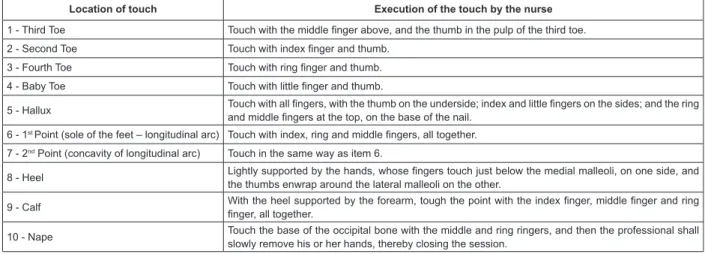
Figure 1 - Sequence of touches executed in Calatonia
Source: Assembled based on data obtained from FARAH, RM – Body work and the psychology of CG Jung, 2008.
systematic arterial blood pressure, heartbeat, breathing
frequency, axillary body temperature, oxygen saturation,
assessment of pain. It must be stressed also that these
clinical parameters were assessed throughout the period
of permanence at the SPRA, or, in other words, every 15
minutes for a period of one hour. Straight afterwards,
there was the application of the Calatonia technique on
the patients of the experimental group.
In relation to the placebo group, this same
monitoring sequence was followed but without the
Calatonia intervention, just with touches. This meant
that the toes were touched without any therapeutical
intention and in sequential manner, in their anatomical
presentation, which is different from the original
sequence for application of the Calatonia technique.
The application of Calatonia was made on admittance
(t0) and again after 60 minutes at the SPRA (t1). The
estimated time for each application of the Calatonia
technique was 20 minutes, with two minutes for each
area as determined, thus closing the session. The basic
procedure of the Calatonia technique is a sequence of
nine touches (Figure 1) which the professional carries
out on the feet, on each toe, in two different points of the
soles of the feet, heels and ankles, and also one more
touch at the start of the calf, and could also have the
addition of a tenth touch often known as the Calatonia of
the Head, which is applied to the occipital region.
Location of touch Execution of the touch by the nurse
1 - Third Toe Touch with the middle inger above, and the thumb in the pulp of the third toe.
2 - Second Toe Touch with index inger and thumb.
3 - Fourth Toe Touch with ring inger and thumb.
4 - Baby Toe Touch with little inger and thumb.
5 - Hallux Touch with all ingers, with the thumb on the underside; index and little ingers on the sides; and the ring and middle ingers at the top, on the base of the nail.
6 - 1st Point (sole of the feet – longitudinal arc) Touch with index, ring and middle ingers, all together.
7 - 2nd Point (concavity of longitudinal arc) Touch in the same way as item 6.
8 - Heel Lightly supported by the hands, whose ingers touch just below the medial malleoli, on one side, and
the thumbs enwrap around the lateral malleoli on the other.
9 - Calf With the heel supported by the forearm, tough the point with the index inger, middle inger and ring inger, all together.
10 - Nape Touch the base of the occipital bone with the middle and ring ringers, and then the professional shall slowly remove his or her hands, thereby closing the session.
The Calatonia technique was applied by the author himself, a researcher who took a speciic course in the application of this technique, involving practical
acquisition of skills through learning the technique and
also the acquisition of a solid theoretical base.
The variables were described by their relative and
absolute frequencies in each group and, when possible,
measurements of central tendency and variability were
Rev. Latino-Am. Enfermagem 2013 Sept.-Oct.;21(5):1054-61.
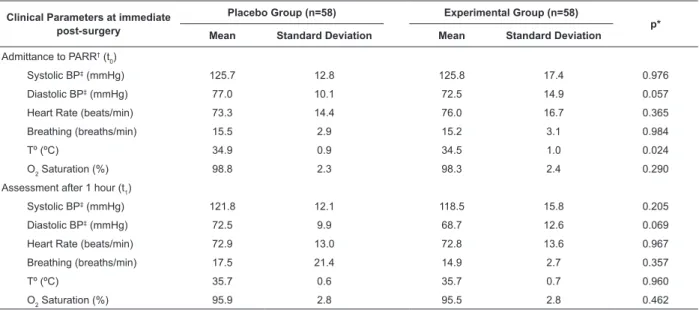
Table 1 - A comparison of groups with regard to the mean values of clinical parameters at immediate post-surgery.
São Paulo, SP, Brazil, 2010
* Student’s t-test; † Post-Anaesthetic Recovery Room; ‡ Blood Pressure The placebo and experimental groups were compared
in relation to sex, age, pre-surgery and immediate
post-surgery clinical parameters, and pain on admittance (t0)
and after one hour at the PARR (t1). The pain variable
was dichotomised in the analysis as follows: a score <3 (no pain) and a score ≥3 (presence of pain). The statistical tests applied were: t-Student for the variables
with normal distribution; Mann-Whitney and Chi Square, admitting a signiicance level of p≤ 0.05.
This project was approved by the Research and
Ethics Committee of the study institution (protocol
05/10) and the subjects also signed an Informed
Consent Form. The data was collected between March
and June 2010.
Results
Out of the 116 patients in the sample, there was
a predominance of female subjects (n=72, 62.1%), of
which 40 (68.9%) were in the placebo group and 32
(55.2%) in the experimental group (p=0.180).
In the placebo group, there was a predominance
of patients between 40 and 49 years old (32.8%), while
in the experimental group there were most subjects
between 50 and 60 years old (36.2%). The mean age
of the patients in the placebo group came to 42.5 years
(SD=±1.4) while the median was 44 years (ranging from
18 up to 60 years old). In the experimental group, the
mean age of the patients came to 43.3 years (SD±=1.5)
while the median was 44.5 years (ranging from 19 up to 60 years old), without there being any signiicant statistical differences (p=0.689).
In relation to the classiication according to physical state in the pre-surgery phase, we see that most
subjects in the placebo group were of ASA 2 (n=31;
53.4%) while the experimental group had the same percentage of subjects classiied as ASA 1 and ASA 2 (n=29; 50%), without any statistically signiicant differences (p=0.853).
Regarding the type of anaesthetic, most of the
people received endovenous general anaesthesia,
both in the placebo group (n=30; 51.8%) and in the
experimental group (n=39; 67.2%).
The two groups had similar mean surgical times
(p=0.936) when compared, with the duration of the
procedure within the placebo group being 1 hour and
56 minutes (SD=±33 minutes) and in the experimental
group 1 hour and 57 minutes (SD=±36 minutes). The
same was the case when we considered the time at
the PARR (p=0.872), where the placebo group had an
average permanence of 1 hour and 21 minutes (SD=±28
minutes) and the experimental group 1 hour and 16
minutes (SD=±17 minutes).
The clinical parameters assessed prior to the operation
(namely arterial blood pressure, heartbeat, breathing rate and temperature) showed no signiicant statistical differences between the placebo and experimental groups
(p>0.20). The same was the case with post-surgery at
t0, with the exception of temperature (Table 1). In the
case of the appraisal at t1, after intervention, there was no observed signiicant statistical difference either, considering clinical parameters, between the placebo and
the experimental groups.
Clinical Parameters at immediate post-surgery
Placebo Group (n=58) Experimental Group (n=58)
p* Mean Standard Deviation Mean Standard Deviation
Admittance to PARR† (t 0)
Systolic BP‡ (mmHg) 125.7 12.8 125.8 17.4 0.976
Diastolic BP‡ (mmHg) 77.0 10.1 72.5 14.9 0.057
Heart Rate (beats/min) 73.3 14.4 76.0 16.7 0.365 Breathing (breaths/min) 15.5 2.9 15.2 3.1 0.984
Tº (ºC) 34.9 0.9 34.5 1.0 0.024
O2 Saturation (%) 98.8 2.3 98.3 2.4 0.290
Assessment after 1 hour (t1)
Systolic BP‡ (mmHg) 121.8 12.1 118.5 15.8 0.205
Diastolic BP‡ (mmHg) 72.5 9.9 68.7 12.6 0.069
Heart Rate (beats/min) 72.9 13.0 72.8 13.6 0.967 Breathing (breaths/min) 17.5 21.4 14.9 2.7 0.357
Tº (ºC) 35.7 0.6 35.7 0.7 0.960
In relation to the verbal numeric assessment of
pain in the placebo and experimental groups, it must
be remembered that, in this study, we decided to
dichotomise the numeric scale for pain assessment,
normally on a scale from 0 to 10, as follows: a score of
less than 3 was considered as absence of pain, while a
score of 3 or over was presence of pain.
Using this scale, we could see than 44 (75.9%)
of patients in the placebo group did not show any
pain, while 14 (24.1%) reported presence of pain, on
admission to PARR (t0). In the experimental group,
47 patients (81.0%) did not report any pain straight
after they received the Calatonia technique, and 11
(19.0%) patients mentioned pain on admittance to
the PARR (T0).
After 60 minutes at the PARR (T1), it was observed
that 49 patients, or 84.5% of the universe considered
in the placebo group, reported absence of pain,
while 9 (15.5%) showed pain. In the experimental
group, no pain was reported in the cases of 57 patients
(98.3%) with only one patient (1.7%) reporting pain. At this moment, there is a statistically signiicant difference between them (p=0.016).
From these results, we can conclude that a larger
group of patients in the experimental group did not
show presence of pain (score <3), as mentioned in
the patient’s post-anaesthesia recovery (Table 2). It
must also be mentioned that this experimental group
stayed less time at the PARR as, without any pain and
showing stability of clinical parameters, they were able
to obtain conditions allowing them to be discharged
from the PARR.
Table 2 - Distribution of surgery patients, of placebo and
experimental groups, according to the numeric appraisal
of pain at Post-Anaesthetic Recovery Room (PARR). São
Paulo, SP, Brazil, 2010
* Fisher’s Exact Test
† Post-Anaesthetic Recovery Room
Pain
Placebo Group (n=58)
Experimental Group (n=58) p*
n % n %
Admittance to PARR† (t
0)
0.652
No (<3) 44 75.9 47 88.1
Yes (≥3) 14 24.1 11 19.0
Total 58 100.0 58 100.0
Appraisal after 1 hour (t1)
0.016
No (<3) 49 84.5 57 98.3
Yes (≥3) 9 15.5 1 1.7
Total 58 100.0 58 100.0
Discussion
It is important to mention that there are few
studies about the use of complementary therapies in the
immediate post-operatory period. It is believed that this
scarcity is a consequence not only of the lack of inclusion
of AT/CT in graduation courses and of the biomedical model, but also of the dificulty to measure the effects produced by AT/CT using traditional methodologies.
This full knowledge about the individual, abandoned
with the development of more sophisticated drugs
and powerful pharmaceutical products, is now being
recovered through the nursing professionals, who see
it as an important resource for interaction with the
patient, both in the creation of bonds of empathy, as
also in the aid to stabilisation of the emotional and
physical balance(18).
In this study, we have seen that most of the patients
were female, and the most common age bracket was 40
to 49 years old, data which matches that of other studies
conducted on patients submitted to cholecystectomy
by laparoscopy(19-20). Gallstones are one of the most common ailments aflicting the digestive tract, affecting 20% of the adult population and mostly women(21-22).
This has been put down to successive pregnancies,
use of the contraceptive pill, or therapeutical hormone
substitution, as oestrogen, which is the female hormone
used in hormone replacement therapy, could be responsible for inlammatory processes and symptoms which simulate those of gallstones.
In terms of surgical risk, most have been ASA
2 with the base pathology being either high blood
pressure or compensated diabetes. It is worth stressing
the fact that, for the analysis of the clinical parameters
of the pre-operatory period, these patients treated
with the aid of beta blockers and drugs to reduce blood
sugar. It is also important to mention that, for the
analysis of the clinical parameters in the post-surgery
period, the patients treated with beta blockers and
drugs to reduce blood sugar have not been separated
into different subgroups. The stability of the clinical
parameters as presented, both by ASA 1 and ASA 2
patients, has brought conditions favourable to discharge
from the PARR.
In terms of the type of anaesthesia used for the
exploitation of the biliary ducts by videolaparoscopy,
endovenous general anaesthesia stood out. The choice
of the type of anaesthesia to be applied depends on
Rev. Latino-Am. Enfermagem 2013 Sept.-Oct.;21(5):1054-61.
procedure being at the discretion of the anaesthetist, by
consensus with the doctor(23).
Some AT/CT have been used together with
the technique of anaesthesia seeking to reduce the
consumption of opiates in the intrasurgical period. As
an example, we have acupuncture which has been
used in the perisurgical period, not to produce real
anaesthesia or unconsciousness, but rather to reduce
the consumption of volatile or opiate anaesthetics, as
this prevents the activation of the pain routes(23).
Regarding the duration of the stay at the PARR,
we see a small difference between the mean stays at
the PARR, of the different groups. In relation to the
assessment of clinical parameters in the pre-surgery
phase, on admittance to PARR (t0) and also on discharge
(t1), the groups have stayed homogeneous, without any statistically signiicant differences. This result is put down to the bond that has been created by the researcher,
towards the patient and his or her carer, providing security
and peace of mind. In addition, patients with hypertension
were stabilised through the use of medicines.
Even though the differences between the
means of the different clinical parameters were not signiicant, there was a decline in the heartbeat and also a reorganisation of breathing, less signiicant for the experimental group. It is suggested that these
differences may have occurred through the relaxation
that Calatonia has provided.
Only the axillary body temperature showed a statistically signiicant result at the moment of admittance to PARR, when compared to the placebo
group. Considering temperature as one of the vital signs
as appraised and also that the organism depends on the
rise thereof to increase metabolism, it has been inferred
that, at this moment, the reduction in temperature was not beneicial. Even though this is highly unlikely, this reduction in temperature could be associated with the
vasoconstrictive action of anaesthetic agents as yet not
metabolised.
Multimodal anaesthesia and also post-surgical
analgesia, performed on the patients of this study,
could minimise neuroendocrine and metabolic changes
arising from the surgical anaesthetic trauma, in the
post-surgery period, and also pain. However, there
are other aggravating circumstances in the case of
complaints of pain in the post-surgery period, for this
type of surgery as performed, such as irritation to the
diaphragmatic peritoneum, caused by CO2 and also the strain of muscular ibres of the diaphragm, caused by the pneumoperitoneum(24).
In the treatment of patients with pain, on top of
the use of antidepressive drugs, anticonvulsives and
opiates, other non-pharmacological measures such as
physiotherapy, occupational therapy, AT/CT (relaxation,
meditation, hypnosis, massage, chiropraxy, and
transcutaneous electronic nerve stimulation) and also
physical exercise all seem to be minor players here(25).
In this study, after 60 minutes in SPRA, with the
application of Calatonia on the experimental group, a
statistically different result was observed, although it
cannot be ruled out that the patients may have received,
in the intraoperational phase, important pain-killing
schemes. We also mention that, even with the analgesia
received in the interoperational phase, some patients
in both groups have continued to complain of pain, on
being admitted to the PARR.
Even though only the experimental group has
had the therapeutical touches of Calatonia, the placebo
group also had an unintentional touch, meaning that all
patients received individualised assistance right from
the start of the research study.
Conclusion
Only axillary body temperature showed a statistically signiicant difference between the placebo and the experimental groups, at the moment of admittance
to PARR. In relation to pain, the experimental group showed signiicant results, from which one can infer that the relaxation provided by the Calatonia technique
brought relief of the pain observed. This means that
the application of Calatonia could be a complementary
resource for assistance in the immediate post-surgery
period, and as such shall be shared and therefore
contribute with future studies in the area of
Post-anaesthetic Recovery.
References
1. Bello CN. Recuperação pós-anestésica – escalas
de avaliação, princípios gerais. Rev Centro Est Anest
FMUSP. 2000;9:4-5.
2. Carvalho R, Bianchi ERF. Enfermagem em centro
cirúrgico e recuperação. 1ª ed. Barueri: Manole; 2007.
3. Sociedade Brasileira de Enfermeiros de Centro Cirúrgico,
Recuperação Pós-Anestésica e Centro de Material e
Esterilização (SOBECC). Práticas recomendadas SOBECC.
5ª ed. São Paulo: SOBECC; 2009.
4. Souza VT. Enfermeiros que trabalham com terapias
complementares: conhecendo sua prática [dissertação].
Received: July 22nd 2012 Accepted: June 14th 2013
5. McCloskey JC, Bulechek GM. Nursing intervention
classification (NIC). 2. ed. St. Louis: Mosby; 1996.
6. Herdman TH. Nursing Diagnoses Definitions and
Classification – Nanda Internacional (NANDA-I). Wiley-
Blackwell; 2012-2014.
7. Sándor P. Técnicas de relaxamento. 4ª ed. São Paulo:
Vetor; 1982.
8. Nosow V, Peniche ACG. Paciente cirúrgico
ambulatorial: calatonia e ansiedade. Acta Paul Enferm.
2007;20(2):161-7.
9. Peniche ACG, Chaves EC. Surgical patient and anxiety:
some consideration. Rev. Latino-Am. Enfermagem.
2000;8(1):45-50.
10. Salles LF, Ferreira MZJ, Silva MJP, Turrini
RNT. Terapias complementares na enfermagem:
levantamento bibliográfico. Nursing (São Paulo).
2007;9(105):94-8.
11. Tovey P, Easthope G, Adams J. The mainstreaming
of complementary and alternative medicine: studies in
social context. London: Routledge; 2003.
12. Adams J, Tovey P. Complementary and alternative
medicine in nursing and midwifery: critical readings.
London: Routledge; 2006.
13. Souza EFA, Luz MT. Bases socioculturais das práticas
terapêuticas alternativas. Hist Ciênc Saúde-Manguinhos.
2009;16(2):393-405.
14. Conselho Regional de Enfermagem de São Paulo
(COREN). Documentos básicos de enfermagem:
principais leis e resoluções que regulamentam o exercício
profissional de enfermeiros, técnicos e auxiliares de
enfermagem. São Paulo: Escrituras; 2008.
15. Conselho Federal de Enfermagem (COFEN) (BR).
Resolução n. 197, de 19 de março de 1997. Estabelece e
reconhece as terapias alternativas como especialidade e/
ou qualificação do profissional de enfermagem [Internet].
Brasília; 1997. [acesso 12 jan 2011]. Disponível em:
http://site.portalcofen.gov.br/node/4253.
16. Farah RM. O trabalho corporal e a psicologia de C.G.
Jung. 2ª ed. São Paulo: Companhia Ilimitada; 2008.
17. 15. Rosner B. Fundamentals of Biostatistics. 6ª ed.
Belmont: Thompson Brooks/Cole; 2006. 416 p.
18. Gala MF, Telles SCR, Silva MJP. Ocorrência
e significado do toque entre profissionais de
enfermagem e pacientes de uma UTI e unidade
semi-intensiva cirúrgica. Rev Esc Enferm USP. 2003;
37(1):52-61.
19. Henriques AC, Pezzolo S, Gomes M. Colecistectomia
videolaparoscópica ambulatorial- estudo de 60 casos.
Arq Med ABC. 2002;27(2):6-8.
20. Dalri CC, Rossi LA, Dalri MCB. Nursing diagnoses
of patients in immediate postoperative period of
laparoscopic cholecystectomy. Rev. Latino-Am.
Enfermagem. 2006;14(3):389-96.
21. Fiorillo MA, Davidson PG, Fiorillo M, D’Anna JA
Jr, Sithian N, Silich RJ. 149 ambulatory laparoscopic
cholecystectomies. Surg Endosc. 1996;10(1):52-6.
22. Haicken BN. Laser laparoscopic cholecystectomy
in the ambulatory setting. J Post Anesth Nurs.
1991;6(1):33-9.
23. Ortenzi AV. Avaliação e medicação pré-anestésicas.
In: Yamashita AM, Takaoka F, Auler JOC Jr, Iwata MN,
editores. Anestesiologia – Sociedade de Anestesiologia
do Estado de São Paulo (SAESP). 5ª ed. São Paulo:
Atheneu; 2001. p. 467-97.
24. Cunningham AJ, Brull S. Laparoscopic
cholecystectomy: anesthetic implications. Anesth Analg.
1993;76(5):1120-33.
25. Sampaio LR, Moura CV, Resende MA. Recursos
fisioterapêuticos no controle da dor oncológica: revisão