Cop
yright
© ABE&M t
odos os dir
eit
os r
eser
vados
.
Arq Bras Endocrinol Metab. 2011;55/7 486
clinical case report
1 Department of Endocrinology,
Diabetes and Metabolism, Centro Hospitalar S. João, Porto, Portugal
2 School of Medicine, University
of Porto, Porto, Portugal
3 Department of Nuclear
Medicine, Centro Hospitalar S. João, Porto, Portugal
Correspondence to:
Selma B. Souto
Department of Endocrinology, Diabetes and Metabolism, Centro Hospitalar S. João, Alameda Prof. Hernâni Monteiro, 4200-319 – Porto, Portugal [email protected] Received on June/12/2011 Accepted on Oct/24/2011
Importance of
99mTc-sestaMIBI thyroid
scan in a case of
amiodarone-induced thyrotoxicosis
A importância da cintigraia tiroidea com 99mTc-sestaMIBI
num caso de tireotoxicose induzida pela amiodarona
Selma B. Souto1,2, Helder Fernandes3, Maria João Matos1,2,
Daniel Carvalho Braga1,2, Jorge Pereira3, Davide Carvalho1,2
SUMMARY
Amiodarone (AM)-induced thyrotoxicosis (AIT) is a condition with uncertainties from the diag-nostic and therapeutic standpoints. A 54-year old male was referred to the hospital due to thyro-toxicosis. He had history of atrial fibrillation medicated with AM. No history of pre-existing thyroid disease was present, thyroid palpation revealed no goiter, and there were no signs of Graves’ ophthalmopathy. Thyroid autoantibodies and thyroid-stimulating hormone receptor an-tibodies (TRABs) were negative. Thyroid and Doppler ultrasounds were normal. 99mTc-sestaMIBI
thyroid scan (STS) showed uptake with rapid washout. AM therapy was discontinued, and com-bined therapy was started. After a long course of glucocorticoid and thionamides, the patient became euthyroid. It is necessary to distinguish between the types of AIT to decide whether or not continue AM treatment; after that, the appropriate therapy should be selected. STS was very important in the diagnosis of the type of AIT. Arq Bras Endocrinol Metab. 2011;55(7):486-9
SUMÁRIO
A tireotoxicose induzida por amiodarona (AIT) é uma condição incerta do ponto de vista de diagnóstico e tratamento. Um homem de 54 anos de idade foi encaminhado ao hospital devi-do à tireotoxicose. Ele apresentou um histórico de fibrilação atrial medicada com amiodarona (AM). Não havia histórico de doença da tiroide preexistente, a palpação da tiroide não revelou bócio e não havia sinais de oftalmopatia de Graves. Os autoanticorpos contra a tireoide e an-ticorpos para os receptores de hormônio estimulante da tireoide (TRABs) foram negativos. Os resultados do ultrassom da tiroide e do exame de Doppler foram normais. A cintigrafia da tiroide com 99mTc-sestaMIBI mostrou captação com rápida eliminação. O tratamento com AM
foi descontinuado, e se iniciou a terapia combinada. Após um longo tratamento com glicocor-ticoides e tionaminas, o paciente se tornou eutiroide. É necessário distinguir entre os tipos de AIT para se determinar a continuação ou interrupção do tratamento com AM. Depois disso, o tratamento apropriado deve ser selecionado. A STS é muito importante no diagnóstico do tipo de AIT. Arq Bras Endocrinol Metab. 2011;55(7):486-9
INTRODUCTION
A
miodarone (AM) is a benzofuranic iodine-rich antiarrhythmic agent (1). In 15%-20% of cases, treatment is complicated by thyroid dysfunction, either thyrotoxicosis or hypothyroidism (2). Amiodarone-in-duced thyrotoxicosis (AIT) is more frequent in iodinedeicient areas, whereas hypothyroidism is more fre-quent in iodine-suficient areas (2).
Cop
yright
© ABE&M t
odos os dir
eit
os r
eser
vados
.
487 Arq Bras Endocrinol Metab. 2011;55/7
Amiodarone-induced thyrotoxicosis
goiter or latent Graves’ disease. This type of the disor-der is caused by unregulated thyroid hormone synthe-sis, and it is treated with thionamides and potassium perchlorate. Type 2 usually occurs in patients with pre-vious normal thyroid gland or small goiter, and it is caused by the release of preformed hormone by inlam-matory destruction of the thyroid gland. It is treated with glucocorticoids. Type 3, the indeterminate or mixed type, is caused by both pathogenic mechanisms, and managed with combined therapy (2).
The distinction between the three types is crucial to characterize the disease from a pathophysiologi-cal standpoint, and to decide whether to suspend AM treatment. AIT type 2 is by far the most frequent form, possibly due to the avoidance of AM therapy, if feasible, in patients with pre-existing thyroid diseases (3).
Color low Doppler ultrasound (CFD) is a noninva-sive technique that shows intrathyroidal blood low, and provides real-time information on thyroid morphology and hyperfunction (4). Bogazzi and cols. showed that CFD is a valuable tool for quick differentiation between the two types of AIT.
Piga and cols. have reported the usefulness of 99m
Tc-sestaMIBI thyroid scan (STS) in the differential diag-nosis of AIT (5). 99mTc-sestaMIBI is a lipophilic
mo-novalent cation with increased uptake in epithelial cells containing high number of mitochondria. Increased re-tention of MIBI is therefore employed to detect hyper-functioning parathyroid tissue, and may be observed in benign or malignant thyroid tumors. Increased MIBI retention has also been described in hyperfunctioning thyroid tissue, and this phenomenon is believed to be the consequence of the increased number of mitochon-dria in hypermetabolic cells. On the other hand, MIBI accumulation is reduced or absent in apoptotic or ne-crotic processes involving collapse of mitochondrial membrane potential. The authors found a clear MIBI diffuse retention in AIT type 1, no signiicant uptake in AIT type 2; and faint, persistent uptake, with rapid washout (within 10 minutes) in AIT type 3.
We describe the importance of STS in the differen-tial diagnosis of the type of AIT in a patient that be-came euthyroid after a long course of glucocorticoid and thionamide therapy.
CASE REPORT
A 54-year old male was referred to our department due to thyrotoxicosis [TSH - 0.152 μUI/mL
(0.35-4.94); FT4 - 1.94 ng/mL (0.70-1.48)]. The patient had a 4-year history of atrial ibrillation medicated with oral AM 200 mg/day. He also had coronary disease (myocardial infarction 5 years earlier), hypertension, dyslipidemia and sleep apnea; he was under therapy with rosuvastatin 10 mg id, isosorbide mononitrate 60 mg id, amlodipine besylate 5 mg id, perindopril 5 mg id, aspirin 100 mg id, and warfarin. He had no history of previous thyroid disease. He complained of palpitations and had a few episodes of tachycardic atri-al ibrillation in the previous 3-4 weeks, without other symptoms of thyrotoxicosis. Neither iodine-contain-ing contrast agents, nor other drugs containiodine-contain-ing iodine had been recently administered. His thyroid palpation was unremarkable. He had no signs of Graves’ oph-thalmopathy or dermopathy. His family history was negative for thyroid diseases.
In the irst visit, thyroid function tests were repea-ted: FT3: 4.19 ng/mL (1.71-3.71), FT4: 2.17 ng/mL (0.70-1.48), and TSH: 0.005 μUI/mL (0.35-4.94). Thyroid autoantibodies and TRABs were negative. Thyroid ultrasound revealed normal-sized thyroid gland ([right lobe: 16 x 17 x 40 mm (WxAPxL); left lobe: 16 x 15 x 41 mm (WxAPxL)], and absent vas-cularization in the CFD (pattern 0). By that time, all the tests performed were point out to AIT type 2. A STS scan was performed, and showed uptake with rapid washout, consistent with AIT type 3, or mixed form (Figure 1).
Cop
yright
© ABE&M t
odos os dir
eit
os r
eser
vados
.
488 Arq Bras Endocrinol Metab. 2011;55/7
Amiodarone-induced thyrotoxicosis
Figure 1. 99mTc-sestaMIBI thyroid scan: uptake with rapid washout.
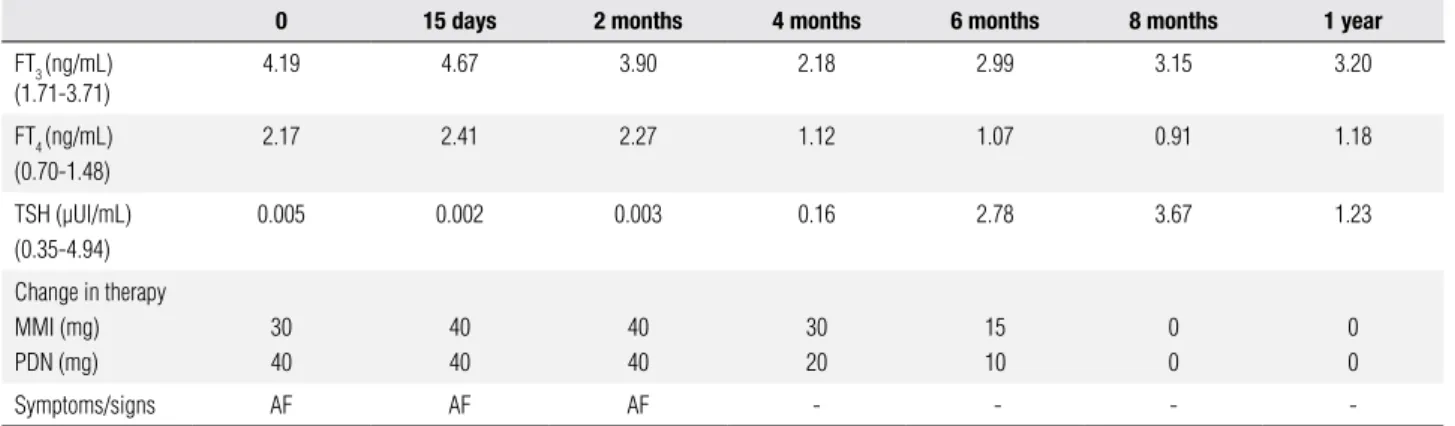
Table 1. Parameters of thyroid function, treatment and clinical evolution
0 15 days 2 months 4 months 6 months 8 months 1 year
FT3(ng/mL) (1.71-3.71)
4.19 4.67 3.90 2.18 2.99 3.15 3.20
FT4(ng/mL) (0.70-1.48)
2.17 2.41 2.27 1.12 1.07 0.91 1.18
TSH (μUI/mL) (0.35-4.94)
0.005 0.002 0.003 0.16 2.78 3.67 1.23
Change in therapy MMI (mg) PDN (mg)
30 40
40 40
40 40
30 20
15 10
0 0
0 0
Symptoms/signs AF AF AF - - - -
MMI: metimazole; PDN: prednisone; AF: atrial fibrillation.
DISCUSSION
In patients with AIT, some of the classical symptoms of thyrotoxicosis may be masked because of AM beta-blo-cking activity, and because AM metabolites may block binding of T3 to its nuclear receptor (6,7).
AIT may develop during AM therapy or even seve-ral months after drug withdrawal (6). This is because AM and its metabolites (mainly desethylAM) have a long half-life (up to 100 days) and are stored in various tissues, particularly in fat, from which they are slowly released. Accordingly, drug withdrawal might not
in-luence the response to medical therapy in the short term, and mild cases of AIT type 2 may remit without treatment or AM withdrawal (3). The severity of the underlying cardiac disease makes discontinuation of AM treatment unattractive in many cases, because of the increased risk of worsening cardiac arrhythmias.
Cop
yright
© ABE&M t
odos os dir
eit
os r
eser
vados
.
489 Arq Bras Endocrinol Metab. 2011;55/7
Amiodarone-induced thyrotoxicosis
40 mg/day), and a low dose of metimazole (15 mg/ day). Rapid response to therapy (within 1-2 weeks) in-dicates destructive thyroiditis, and thionamides may be withdrawn (8). However, after 2 weeks, an increase in free thyroid hormones was observed, and the dose of metimazole was increased to 40 mg/day, with gradual clinical and biochemical improvement. This response to therapy also suggests mixed type AIT, as shown in STS.
Thyroid ultrasound performed one year after AIT diag nosis revealed nodular goiter. The patient may pos-sibly have already had changes in thyroid morphology by the time of diagnosis, although interpretations of thyroid US and CFD in AIT require an experienced sonographer. In patients who are not taking AM, radioiodine uptake (RIU) is the primary test used to distinguish between destructive thyroiditis and hyperthyroidism associated with de novo synthesis of thyroid hormone. However, daily ingestion of 6 g or more of bioavaila-ble iodine, together with AM, results in suficiently high serum levels of iodine for complete tracer uptake. Therefore, the majority of patients have less than 1% uptake (9). In one European study, a signiicant per-centage of patients with AIT type 1 had measurable or even elevated uptake (10).
With respect to AIT therapy, total thyroidectomy may be required in patients resistant to other treat-ments (3). To obtain a transient control of thyrotoxi-cosis before surgery, short course iopanoic acid, in as-sociation with antithyroid drugs, can be used (11). RAI has a marginal role in the management of AIT, because of low RIU values, either due to the iodine load or the destructive process (6).
CONCLUSION
In the case reported here, STS was very important in the differential diagnosis of AIT and in the therapy chosen. It is, however, a very expensive exam, and
pre-viously studied only in small populations. Larger studies are needed to propose STS as an effective tool for dif-ferential diagnosis of AIT.
Acknowledgements: the authors would like to thank Prof. Piga from the University of Cagliari for his help in reviewing the STS images.
Disclosure: no potential conlict of interest relevant to this article was reported.
REFERENCES
1. Reiffel JA, Estes NA, Waldo AL, et al. A consensus report on anti-arrhythmic drug use. Clin Cardiol. 1994;17:103-16.
2. Bogazzi F, Bartalena L, Gasperi M, Braverman LE, Martino E. The various effects of amiodarone on thyroid function. Thyroid. 2001;11:511-9.
3. Bogazzi F, Bartalena L, Martino E. Approach to the patient with amiodarone-induced thyrotoxicosis. J Clin Endocrinol Metab. 2010;95:2529-35.
4. Bogazzi F, Bartalena L, Brogioni S, Mazzeo S, Vitti P, Burelli A, et al. Color flow Doppler sonography rapidly differentiates type I and type II amiodarone induced thyrotoxicosis. Thyroid. 1997;7(4):541-5.
5. Piga M, Cocco MC, Serra A, Boi F, Loy M, Mariotti S. The useful-ness of 99mTc-sestaMIBI thyroid scan in the differential diagno-sis and management of amiodarone-induced thyrotoxicodiagno-sis. Eur J Endocrinol. 2008;159:423-9.
6. Martino E, Bartalena L, Bogazzi F, Braverman LE. The effects of amiodarone on the thyroid. Endocr Rev. 2001;22:240-54. 7. van Beeren HC, Bakker O, Wiersinga WM. Structure-function
rela-tionship of the inhibition of the 3,5,3’-triiodothyronine binding to the alpha1- and beta1-thyroid hormone receptor by amiodarone analogs. Endocrinology. 1996;137:2807-14.
8. Franklyn JA, Gammage MD. Treatment of amiodarone-associated thyrotoxicosis. Nat Clin Pract Endocrinol Metab. 2007;3:662-6. 9. Daniels GH. Amiodarone induced thyrotoxicosis. J Clin
Endocri-nol Metab. 2001;86:3-8.
10. Martino E, Bartalena L, Mariotti S, Aghini-Lombardi F, Ceccarelli C, Lippi F, et al. Radioactive iodine thyroid uptake in patients with amiodarone-iodine-induced thyroid dysfunction. Acta Endocrinol (Copenh). 1988;119:167-73.