ABSTRACT
BACKGROUND AND OBJECTIVES: he extraction of the
third molar is an invasive procedure and is potentially traumatic for the patient. Preparatory procedures may be used for the man-agement of pain and emotional responses, resulting in a better recovery process for patients. he aim of the study evaluates the efects of a preparatory procedure using an animated informative video on post-surgical pain responses after third molar extraction on youths during the postoperative follow-up.
METHODS: 140 patients undergoing third molar extraction were randomly divided into two groups: control (CG) and experi-mental (EG). For pain assessment, the short-form McGill pain questionnaire was given once before the procedure and four times after the surgery, and the amount of postoperative analgesic con-sumption was recorded. he informative video was presented to the EG after the irst assessment. For data analysis, ANOVA and Tukey tests (p ≤ 0.05) were used. Data analysis indicated that the EG patients reported reduced pain perception for all pain indexes. RESULTS: Signiicant between-group diferences were observed for Sensory and Afective Rank Pain Indexes (PRI-S and PRI-A, respectively), as well as for Global Assessment, at stages 2, 3 and 4 (p=0.0001; p=0.0027; p=0.0001). For Present Pain Intensity, a signiicant diference between groups was observed (p=0.0004) at stages 3, 4 and 5. he postoperative consumption of analge-sics was lower in the EG (p=0.0001), indicating higher medicine consumption by CG patients.
CONCLUSION: he results suggest that the preoperative in-formative video efectively reduced pain perception and the con-sumption of analgesics.
Keywords: Behavioral management, Pain, Pre-surgical education.
The effect of a preoperative informative video on the perception of pain
in youths undergoing third molar extraction: a randomized clinical trial*
O efeito de vídeo informativo pré-operatório na percepção de dor em jovens submetidos à
exodontia de terceiros molares: estudo randomizado
Maylu Botta Hafner1, Juliana Zanatta1, Gustavo Sattolo Rolim1, Antônio Bento Alves de Moraes1, Angélica Maria Bicudo Zeferino2
*Received from School of Dentistry of Piracicaba, State University of Campinas, Campinas, SP, Brazil.
1. State University of Campinas, Dentistry School of Piracicaba, Piracicaba, SP, Brazil. 2. State University of Campinas, School of Medical Sciences, Campinas, SP, Brazil.
Submitted in June 28, 2013.
Accepted for publication in October 16, 2013. Conlict of interests: none.
Correspondence to:
Maylu Botta Hafner Av. Limeira, 901 – Bairro Areião 13414-903 Piracicaba, SP. E-mail: [email protected]
© Sociedade Brasileira para o Estudo da Dor
RESUMO
JUSTIFICATIVA E OBJETIVOS: A exodontia de
ter-ceiros molares é um procedimento invasivo e potencialmente traumático. Procedimentos preparatórios podem ser usados para manuseio da dor e de respostas emocionais, resultando em uma melhor recuperação dos pacientes. O objetivo deste estudo foi avaliar os efeitos de um vídeo de animação infor-mativo em respostas de dor após exodontia de terceiro molar em jovens.
MÉTODOS: Neste estudo, 140 pacientes submetidos a ex-odontia de terceiro molar foram randomizados em dois gru-pos: controle (GC) e experimental (GE). Para avaliação da dor foi utilizado o Questionário de Dor McGill, forma redu-zida. Essa avaliação foi realizada uma vez antes do procedi-mento cirúrgico e quatro vezes após. Foi também registrada a quantidade de analgésicos consumidos após exodontia. O vídeo informativo foi apresentado ao GE após a primeira aval-iação. Foram utilizados os testes ANOVA e Tukey para análise de dados (p≤0,05).
RESULTADOS: A análise mostrou que o GE relatou diminu-ição de todos os índices de dor. Diferença signiicativa entre os grupos foi observada nos Índices de Estimativa de Dor Sen-sorial e Afetiva (PRI-S e PRI-A), como na Avaliação Global de Experiência de Dor nas fases 2, 3 e 4 (p=0,0001; p=0,0027; p=0,0001). Para a Intensidade de Dor Presente (PPI) foi ob-servada diferença signiicativa entre os grupos (p=0,0004) nas fases 3, 4 e 5. O consumo pós-operatório de analgésico foi menor no GE (p=0,0001), indicando um maior consumo de medicamento para o GC.
CONCLUSÃO: Os resultados sugerem que o vídeo de in-formação pré-operatório efetivamente reduziu a percepção de dor e o consumo de analgésicos.
Descritores: Dor, Educação pré-cirúrgica, Manuseio de com-portamento.
INTRODUCTION
suf-fering, hospitalization time and treatment costs.
An integrated approach to pain relief includes administration of analgesic medications and pre-surgical education using cog-nitive and/or behavioral interventions. Pre-surgical education, also characterized as a preparatory procedure, aims to reduce anxiety responses and establish the patients’ adaptive responses to the surgical intervention and postoperative stage3.
Preparatory procedures for invasive treatments may involve strategies such as informative videos4, internet programs5, informative lealets6, video and conversations conducted by trained professionals7, among others. hese strategies are also highlighted by the WHO8 as efective methods for the psy-chological preparation of patients for invasive procedures. he efect of informative videos on postoperative outcomes was assessed in diferent areas of medicine, and the results showed that this strategy improves anxiety levels and patient satisfaction3 and reduces the need for administration of post-operative analgesics9.
he video may contain (a) clinical information describing the technical procedure to be executed; (b) sensory information that discusses what the patient may feel; and (c) behavioral information that explains what the patient can do and what kind of responses are expected. According to study10, this in-formation familiarizes the patients with the clinical routines and reduces the precedent anxiety.
To date, the efect of preoperative information videos on the outcome of third molar extraction surgeries has not been eval-uated. Study10 referred to studies that used other cognitive-behavioral procedures, such as the provision of informative booklets, as preparatory strategies for this surgical procedure. As the extraction of the third molar is a common surgical technique with a relatively short period of recovery, we in-vestigated the efects of a preoperative animated informative video on post-surgery pain responses reported in youths dur-ing the postoperative follow-up.
his study aims evaluate the efects of a preparatory procedure using an animated informative video on post-surgical pain responses after third molar extraction on youths during the postoperative follow-up.
METHODS
his study included 162 patients attending the Surgery Unit at Piracicaba Dental School, State University of Campinas (UNICAMP), for the extraction of at least one third molar in one dental session. he patients lived in Piracicaba and the surrounding municipalities of São Paulo, Brazil, and their mean age was 19.32±2.83, min=14, max=24).
he patients agreed to participate in the research under the conditions speciied by the Free and Clariied Consent Term (FCCT). All ethical guidelines were followed by all research-ers. he patients signed the FCCT and, when younger than 18 years old, the term was signed by their legal guardian. Twenty two patients were excluded from this study because they missed the appointment on the day of data collection, failed to complete questionnaires during the data collection
or withdrew their consent.
Patients were randomly distributed between the experimental group (EG; individuals who watched the informative video) and the control group (CG; individuals who did not watch the informative video). Randomization of 162 patients was performed by one researcher using speciic software found at <http://www.randomizer.org>. hese patients were treated by 12 surgeons the Surgery Unit UNICAMP. he patients were distributed equally among surgeons.
Before the irst assessment, each patient had an individual interview to characterize their health status and health be-haviors, including the use of medications (regular and pre-surgical) and their history of oral surgery.
Pain measurements were taken from all patients of both groups in ive stages: (1) immediately before surgery (imme-diate pre-surgery); (2) imme(imme-diately after surgery (imme(imme-diate post-surgery); (3) one day after extraction (mediate post-sur-gery I); (4) three days after extraction (mediate post-surpost-sur-gery II); and (5) seven days after extraction (before the appoint-ment for suture removal).
For each stage, the short-form McGill pain questionnaire was given to assess pain ratings. At stage 3, the patients an-swered the McGill questionnaire at their houses by telephone at prearranged hours. he self-report of medication use for postoperative pain relief over the 7 days of recovery was also recorded.
he Brazilian version of the short-form McGill pain question-naire is based on the original English language questionquestion-naire (short form) developed by Melzack11 and is the irst multi-dimensional scale for pain assessment capable of providing quantitative measures that can be evaluated statistically12. In Brazil, Pimenta and Teixeira13 translated and validated this questionnaire. he McGill Pain Questionnaire assesses not only pain intensity, but also sensory and afective aspects of the pain experience. he questionnaire also assesses the pain felt at the time of its application and is divided into four parts: Sensory Pain Rank Index (PRI-S), Afective Pain Rank Index (PRI-A), Present Pain Intensity (PPI) and Global As-sessment of Pain Experience.
registration of medication consumption. On this card, pa-tients were instructed to draw an “X” each time they took pain medication prescribed by the surgeon, thus providing an indirect measurement performed by the patients without the aid of any researcher.
Animated informative video: he 5-min and 6-sec vid-eo was developed by the researchers conducting this study and inancially supported by the Development Foundation of Campinas – UNICAMP. Four steps were considered: (a) criteria formulation; (b) objective; (c) script; and (d) video development. he following criteria were used: target audi-ence; length of the video; images; technique; language; and content. he aim of the video was to provide the patients with technical information about the surgical procedure and sensory information. he video shows a third molar igure as the leading character and uses simple and direct language, In each frame, the procedures and sensory information are pre-sented by a narrator, and corresponding photos and drawings are shown. he video also contains information about the formation and location of the third molars, the site of care, the professionals involved, the necessary procedures, ways to communicate with health professionals, and the use of dis-traction techniques during surgery. Additionally, the video addresses sensations patients may feel following surgery and provides information on proper postoperative care.
Participants in the EG were individually introduced to the video after the irst evaluation of pain. Patients watched the video on a laptop using headphones while they were seated in a dental chair at the surgical clinic prior to the surgery. Information about the surgical procedures and postoperative period was provided only during the video.
To ensure that the researchers were not aware of which group each patient belonged, some researchers stayed with the pa-tients until the moment before surgery (stage 1), and other researchers accompanied the patients through the remaining stages (immediate and mediate post surgery).
Data analysis
To analyze the data obtained in the McGill Pain Question-naire and the data on administration of analgesics, we used an analysis of variance (ANOVA). Rank transformation was employed due to the non-normal distribution of the results and to reduce the asymmetry and variability of the data (p-value≤0.05).
For analyses between groups, multiple comparison tests were performed (Tukey tests for intergroup analysis (control and experimental), and contrast tests for analysis among the ive stages of intra-group evaluation (control or experimental) (p-value≤0.05).
For categorical variables (number of extractions), associa-tions between groups were analyzed using Chi-squared tests, and when the expected values were smaller than 5, we used Fisher’s Exact test. he level of signiicance was 5% (i.e., a p-value≤0.05).
he present study was approved by the Ethics Committee in Research (Protocol nº 024/2008).
RESULTS
he results are presented in tables showing the frequency of dental extractions performed and the average use of medi-cines by patients in each group. he average scores obtained from the McGill Questionnaire at each of the ive stages of pain assessment for each group are also shown.
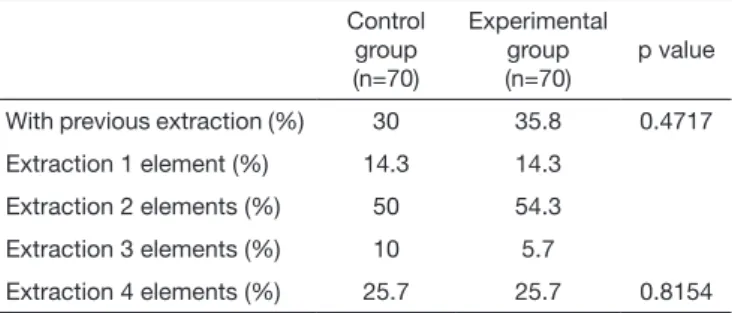
Table 1 shows the number of patients per group, the relative frequency of those who had a history of surgical treatment and the number of teeth extracted during the extraction per group. All patients included in this study underwent only one extraction session.
Table 1. Number of patients in each group and the relative frequency of patients with dental surgical experience and the relative frequency of dental extractions performed in dental session
Control group (n=70)
Experimental group (n=70)
p value
With previous extraction (%) 30 35.8 0.4717
Extraction 1 element (%) 14.3 14.3
Extraction 2 elements (%) 50 54.3
Extraction 3 elements (%) 10 5.7
Extraction 4 elements (%) 25.7 25.7 0.8154
*Chi-square (p<0.05).
As shown in table 1, signiicant diferences between groups were not observed for history of dental surgery or the number of extracted teeth. It is noteworthy that 50% of participants in each group had undergone extraction of 2 third molars. Extraction of 3 third molars occurred less frequently (less than 10% of surgeries). he percentage of patients by num-ber of extractions was similar in both groups. Speciically, the groups were homogeneous in terms of previous surgical expe-rience and the number of teeth extracted in a dental session, as veriied by Chi-squared tests.
Af
fective Pain Rank Index (PRI-A)
4
2
0
1 2 3 4 5
Group
IA /control (5) (3, 4, 5) ( 5) (5)
IA Esperimental (4, 5)
Sensory Pain Rank Index (PRI-S)
10
8
6
4
2
0
-2
1 2 3 4 5
Group
IA /control (2, 3, 4) (5) (4, 5) (5)
IA Esperimental (2, 3) (4, 5) (4, 5)
Pr
esent Pain Intensity (PPI)
60
40
20
0
-20
1 2 3 4 5
Stage
Group
IA /control (2, 3, 4) (2, 3, 4)
IA Esperimental (4)
Control Experimental
Global Assessment
10
8
6
4
2
0
-2
1 2 3 4 5
Stage
Group
IA /control (2, 3, 4) (4) (2, 3, 4)
IA Esperimental (2, 3) (5) (4, 5)
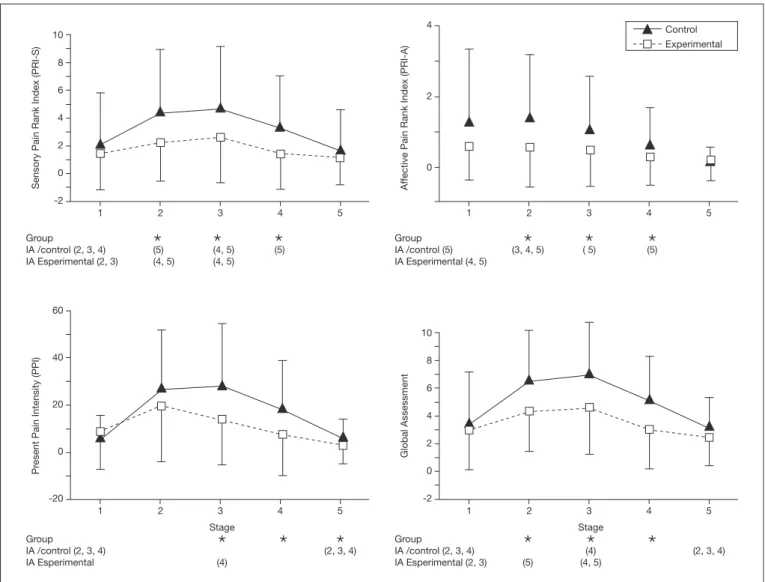
Figure 1. Averages and standard deviation of index of pain assessed by the short-form McGill pain questionnaire (PRI-S, PRI-A, PPI, Global Assessment), at the ive stages of data collection of the Control and Experimental Groups
Captions: IA Experimental: Intra-group assessment of the Experimental Group. IA Control: Intra-group assessment of the Control Group. In the ‘Group’, the asterisk indicates statistically signiicant difference for the assessed stage (Tukey test). In the intra-group assessment, the numbers in parentheses indicate the stage(s) that differs from this stage (Contrast test). The value of signiicance adopted was p≤0.05.
PRI-S variable - Figure 1 (PRI-S) shows that both groups presented an increase in the average values from the irst to the third stage, followed by a decrease in the fourth and ifth stages. he results of the analysis of variable PRI-S reveal a signiicant diference between the groups (p=0.0001) at stages 2, 3 and 4. Participants who watched the informative video presented lower scores than those in the control group during these three stages of treatment.
For the intra-group analysis of the control group, the average of stage 1 was signiicantly diferent from the average of stages 2, 3 and 4. he average of stage 2 difered from the average of stage 5. In this same analysis, the average of stage 3 difered from the average of stages 4 and 5, whereas the average of stage 4 difered from the average of stage 5. For intra-group analysis of the EG, the average of stage 1 signiicantly difered from those of stages 2 and 3. he average of stage 2 difered from the averages of stages 4 and 5. he average of stage 3
difered from the averages of stages 4 and 5.
he report of pre-surgical pain by both groups was not signii-cantly diferent. However, there was a diference during the immediate post-surgery period (stage 2). his suggests that the video was efective in reducing sensory pain at this stage for patients in the EG. his diference was also observed one day after surgery (stage 3) and three days after surgery (stage 4). On the day of suture removal, no signiicant diferences in pain were observed between the groups. However, a decrease in the values of sensory pain was observed in the CG. PRI-A variable – For the PRI-A variable, there was a statisti-cally signiicant diference between the groups (p=0.0027) at stages 2, 3 and 4, whereas the EG participants reported lower pain scores for this index. his data agrees with the results obtained using the PRI-S.
Speciically, the lowest averages were reported at stage 5. he average of stage 2 was signiicantly diferent from the averages of stages 3, 4 and 5. For the EG, the intra-group analysis in-dicated that the average of stage 1 was signiicantly diferent from the averages of stages 4 and 5.
he report of pre-surgical pain for both groups did not difer. As in the PRI-S, we observed diferences at the immediate post-surgery period (stage 2). his suggests that the video was efective in reducing afective pain, which was felt at this stage by patients of the EG. hese diferences as well in sensory pain were observed one day (stage 3) and three days after sur-gery (stage 4). On the day of suture removal, no diferences between groups were observed, although the CG reported de-creased afective pain.
PPI variable – For the analysis of the PPI variable, a statisti-cally signiicant diference between the groups (p=0.0004) at stages 3, 4 and 5 was observed. Participants of the EG re-ported lower pain scores in this index at these stages.
For the intra-group analysis of the CG, the averages of stages 1 and 5 were signiicantly diferent from the averages of stages 2, 3 and 4. Speciically, higher values were reported at stage 4. For the EG, the average of stage 3 difered from the average of stage 4. Speciically, higher values were reported at stage 3. Reduced pain was reported by patients who watched the in-formative video. he reports of pain during the pre-surgical and immediate post-surgery periods in both groups did not difer. he EG reported lower pain experience compared to CG the day after surgery (stage 3). his suggests that the vid-eo was efective in reducing this pain index in patients of the EG. Unlike diferences for the previous indexes, the difer-ences were also observed 7 days after surgery (stage 5). Global assessment variable - Signiicant diferences between the groups (p=0.0001) were observed at stages 2, 3 and 4. Speciically, the pain scores reported by the EG at these stages were lower than the scores reported by the CG.
For the intra-group analysis of CG, stages 1 and 5 were dif-ferent from the averages of the three other stages. he average of stage 3 difered from the average of stage 4. For the EG, the average of stage 1 signiicantly difered from the averages of stages 2 and 3, and the average of stage 2 difered from the average of stage 5. he average of stage 3 difered from the averages of stages 4 and 5.
he report of pre-surgical pain in both groups did not difer. A diference in pain during the immediate post-surgery period (stage 2) was observed. his diference was also observed the day after surgery (stage 3) and three days after surgery (stage 4). hese results are similar to those obtained using the PRI-S and PRI-A. On the day of suture removal, no diferences between groups were observed. However, a decrease in values for the CG was observed, suggesting that the video efectively reduced the global index of pain for patients in the EG. Table 2 shows the average (and the calculated standard de-viation) administration of medication for post-surgical pain and of the anesthetic cartridge throughout the extraction. he irst line shows the average anesthetic cartridge (lidocaine HCI 2% + epinephrine 1:100.000) applied throughout the
surgery in each group. he second line shows the administra-tion of pain medicaadministra-tion (dipyrone; 500mg) in each group and the statistical analysis comparing these groups. No between-group diferences in the number of anesthetics cartridges used was observed (p=0.5911), indicating homogeneity between the groups. he analysis of analgesic administration during the 7 days of post-operative recovery showed statistically sig-niicant diferences between groups (p=0.0001), indicating a much greater consumption of pills for the CG.
DISCUSSION
he results of this study indicate that the preparatory pro-cedure of an informative video of technical and sensory in-formation reduced the perception of post-operative pain as assessed by the short-form McGill Pain Questionnaire. In ad-dition to the reduced perception of pain, the analgesic intake after surgery was reduced in the patients who watched the video.
his study assessed the efects of providing sensory and tech-nical information before the surgery on pain responses, medi-cation intake and pain identiimedi-cation. Van Wijk et al.10 in-vestigated the impact of this information provided through booklets (folders) on patients who underwent third molar extraction. he authors indicated that patients preferred re-ceiving “full information” about the routine techniques used during the procedure and the possible sensations that may be felt as a result of the procedure rather than receiving “basic technical information”. A video was used to disseminate what Wijk calls “full information,” which was found to decrease pain indexes and analgesics consumption following third mo-lar extractions.
Vallerand, Vallerand and Heft14 studied the efect of dissemi-nating information through lealets on pain outcomes fol-lowing third molar extraction in 37 patients. One group of patients received basic technical information for opera-tive care, and the other received full information about post-operative care, complications, sensations and analgesic con-sumption. Pain was assessed using a Visual Analog Scale given every three hours during the irst 45 post-operative hours. Patients who received full information reported less pain 12-18 hours and 24 hours after surgery. However, no diferences in analgesic consumption were observed. hese authors em-phasized that the set of information about the procedure, the sensations and the post-operative care were responsible for the reduction in pain reports and did not increase consump-tion of analgesics. A limited number of patients was assessed Table 2. Average frequency and standard deviation of the use of anes-thetic ampoule during surgery, and average frequency and standard de-viation of the consumption of pain medication in postoperative period
Control group
Experimental
group p value
Anesthetic ampoule 4.86±2.01 5.01±1.81 0.5911
Pain medications 10.8±5.68 6.63±5.31 0.0001*
and quantiication of pain was based on a single index (Visual Analogue Scale), though pain is considered to be a multi-dimensional phenomenon. Nonetheless, that study showed similar efects of preoperative education on post-operative pain to those of the present study. Indeed, the information of-fered in their booklet was similar to that oof-fered in our video, which might account for the similar results.
he indings of the two studies discussed above (van Wijik et al.10; Vallerand, Vallerand and Heft14) corroborate those of the present study. Indeed, these studies suggest that the dissemina-tion of technical and sensory informadissemina-tion to patients before surgery is perceived positively and contributes to improved postsurgical recovery. hus, any informative approach using lealets or videos may be efective as long as it contains ‘com-plete’ information on the technical, procedural, sensorial and behavioral aspects of the surgical experience. Indeed, the use of lealets may be more applicable because they are less costly. In a study assessing the efectiveness of disseminating informa-tion using a video, Bytzer and Lindeberg4 reported diferent results from those obtained in this study. Bytzer and Linde-berg assessed the efects of an informative video describing the exam procedure only on outcomes following colonoscopy in 162 patients. Pain was measured following the invasive procedure using the visual analog scale (VAS), and the con-sumption of analgesics (fentanyl). No signiicant diferences in pain scores recorded after the invasive procedure were ob-served between the group that watched the informative video and the group that did not. In terms of the consumption of analgesics, Bytzer and Lindeberg observed greater consump-tion among patients who watched the video, although this diference was not signiicant. he results may be attributed to the limited scope of content provided by the informative video, which educated patients on the technical aspects of the invasive procedure only, which is signiicantly diferent from the video used in the current study. hus, it is possible that the dissemination of technical information alone may not beneit the patients.
Zieren, Menenakos and Mueller15 assessed the inluence of an informative video on the reports of patients’ quality of life during the post-operative stage of inguinal hernia surgery. he video showed the technical and sensory aspects involved in hernia surgery, including information about post-opera-tive care and sensations that may be experienced. Changes in quality of life were assessed throughout the year after the sur-gery using the Quality of Life Scale (SF-36–short form). he indings showed that patients who watched the video were less afected than those who did not in terms of both physical and psychological functioning. For pain speciically, no sig-niicant diferences were observed during the immediate post-surgery period, although the score was lower for the group that watched the video. hese results suggest a tendency for informative videos to prepare patients to undergo invasive procedures. Because the information disseminated in study was similar to that of the current study, it is reasonable to hypothesize that the information contained in the video was a determining factor in improving the quality of life outcomes.
In accordance with the current results, reduced consumption of analgesics following preoperative education was reported by Doering, Katzlberger and Rumpold9. hese authors as-sessed the efect of an informative video on outcomes follow-ing hip replacement surgery in 100 patients. In that study, the video showed sensory and technical data and emphasized the patient’s perception of pain during the invasive procedure. Among other variables, the authors recorded reports of post-operative pain and analgesic consumption in two groups (one that watched the video and other that did not) for four days after the procedure. To assess pain, the authors used the VAS immediately following surgery and once a day for each of four post-operative days, resulting in a total of ive measurements. he authors reported no signiicant diferences between the groups in their reports of pain. However, the group that watched the video consumed fewer analgesics over the four post-operative days. Because the VAS is just one of the many indices included on the McGill questionnaire, that study may have been less sensitive to diferences between groups than the current study, which may explain the diferent results. In ad-dition, the surgical procedures and the degree of physical im-pairment following the procedures greatly difer, which may also explain the diferent results obtained in the current study. Although several studies have investigated postoperative anal-gesic use, it is important to note that this outcome variable is limited because it is an indirect measurement and is self-report-ed. An alternative approach would be to monitor medication use through researcher supervision by counting the number of analgesics patients take during post-operative periods.
CONCLUSION
he results of this study indicate that informing patients about the impending surgical procedure by means of audio-visual features that include technical, sensory and behavioral information may be efective in reducing pain and pain re-sponses following an invasive procedure.
he use of animated informative videos as preparatory pro-cedures for invasive third molar extractions is efective in decreasing the pain reported. Additionally, these videos may reduce the post-operative consumption of analgesics. he use of similar informative videos appears to be efective in other invasive procedures and may be an important component of preoperative preparations. However, this efectiveness re-quires further study to determine the importance of the of-fered information in meeting the patients’ needs.
ACKNOWLEDGEMENTS
REFERENCES
1. van Wijk AV, Lindeboom J. he efect of a separate consultation on anxiety levels before third molar surgery. Oral Surg Oral Med Oral Pathol Oral Radiol Endod. 2008;105(3):303-7.
2. Keulers BJ, Scheltinga MR, Houterman S, Van Der Wilt GJ, Spauwen PH. Sur-geons underestimate their patients’ desire for preoperative information. World J Surg. 2008;32(6):964-70.
3. Ruinengo C, Versino E, Renga G. Efectiveness of an informative video on re-ducing anxiety levels in patients undergoing elective coronarography: an RCT. Eur J Cardiovasc Nurs. 2009;8(1):57-61.
4. Bytzer P, Lindeberg B. Impact of an information of an information video before colonoscopy on patient satisfaction and anxiety: a randomized trial. Endoscopy. 2007;39(8):710-4.
5. O’Conner-Von S. Preparation of adolescents for outpatient surgery: using an in-ternet program. AORN J. 2008;87(2):374-98.
6. Sjöling M, Nordahl G, Olofsson N, Asplund K. he impact of preoperative in-formation on state anxiety, postoperative pain and satisfaction with pain manage-ment. Patient Educ Couns. 2003;51(2):169-76.
7. Zanatta J, Hafner MB, Rolim GS, Moraes AB. Informação prévia face a face e
controle da dor em exodontia de terceiros molares. Rev Dor. 2012;13(3):249-55. 8. Horne DJDL, Vatnamalis P, Careri A. Preparation for invasive procedures:
behav-ioural science learning modules. WHO, 1993.
9. Doering S, Katzlberger F, Rumpold G, Roessler S, Hofstoetter B, Schatz DS, et al. Videotape preparation of patients before hip replacement surgery reduces stress. Psychosom Med. 2000;62(3):365-73.
10. van Wijk AJ, Buchanan H, Coulson N, Hoogstraten J. Preparatory information for third molar extraction: does preference for information and behavioral in-volvement matter? Patient Educ Couns. 2010;79(1):94-9.
11. Melzack R. he short-form McGill pain questionnaire. Pain. 1987;30(2):191-7. 12. Maiani G, Sanavio E. Semantics of pain in Italy: the Italian version of the McGill
Pain Questionnaire. Pain. 1985;22(4):399-405.
13. Pimenta CA, Teixeira MJ. Questionário de dor McGill: proposta de adaptação para a língua portuguesa. Rev Bras Anestesiol. 1997;47(2):177-86.
14. Vallerand WP, Vallerand AH, Heft M. he efects of postoperative preparatory information on the clinical course following third molar extraction. J Oral Maxil-lofac Surg. 1994;52(11):1165-71.