708 Brazilian Journal of Physics, vol. 37, no. 2C, June, 2007
Numerical Symmetrization of State of Identical Particles
Oleg Utyuzh1, Grzegorz Wilk1, and Zbigniew Włodarczyk2
1 The Andrzej Sołtan Institute for Nuclear Studies, Ho˙za 69, 00-681 Warsaw, Poland
2Institute of Physics, ´Swie¸tokrzyska Academy, ´Swie¸tokrzyska 15, 25-405 Kielce, Poland
Received on 30 October, 2006; Revised 19 December, 2006
The method of numerical symmetrization of state of identical particles proposed by us before is clarified and discussed.
Keywords: Bose-Einstein correlations; Statistical models; Fluctuations
I. INTRODUCTION
It is well known experimental fact that identical pions, which are produced in heavy ion collisions, being bosons show Bose-Einstein correlations. These correlations result from the quantum mechanical interference in the correspond-ing symmetrizedn-particle wave function (wheren denotes the number of produced identical pions). They contain large amount of information about the statistical properties of the momentum and configuration space distribution of the system, and thus provide a potentially very useful method to probe the geometry of the hadronizing source (see, for example, [1] and references therein).
According to common understanding we are not able to determine which pion is emitted from which position in the source, so we are required by Bose statistics to add amplitudes for all possible alternate histories. In general, symmetrized wave function fornπ-pion state can be written in the
follow-ing way [2]:
Ψ{p}({x}) = 1 √
nπ!
∑
σexp
"
−i
nπ
∑
j=1 pjrσ(j)
#
, (1)
whereσ(j)denotes the jth element of a permutation of the sequence{1,2, ...,nπ} and the sum overσdenotes therefore
the sum over all nπ! permutations in this sequence
(depen-dence on positions of points of detection, which will vanish when calculating probabilities, was neglected). Herer’s de-note the points of production of secondaries. Because in the experiment one observes only momenta of produced secon-daries theser’s must be somehow get rid of. This is so far always done by integrating over{rj}with someassumed
dis-tributionρ({rj}), which isassumedto be factorizable and
ex-pressed by product of independent single particle distributions ρ({rj}) =∏jρ(rj)[1, 2]. As result one gets the following
probability of thenπ-pion state,
P
1,..,nπ= 1 nπ!∑
σ∏
jΦj,σ(j)≡ 1 nπ!
Φ1,1 ··· Φ1,nπ ..
. Φj,j ...
Φnπ,1 ··· Φnπ,nπ (2)
expressed bypermanentof the matrix||Φi j||, where
Φi j=
Z
ei(pi−pj)rρ({r})d4{r}. (3)
For usually considerednπ=2 case one recovers well known
classical expression for the probability of detecting two pions in the final state [1]:
P
1,2= 1 2Φ1,1 Φ1,2 Φ2,1 Φ2,2 =
1
2(Φ1,1Φ2,2+Φ1,2Φ2,1). (4) Unfortunately the execution time of direct computation of the permanent, eq.(1), grows exponentially withnπone has to
de-vise some special methods likeMetropolis procedure inves-tigated in [2, 3] orvon Neumann accepting-rejection method proposed in [4].
The Metropolis procedure proposed in [2] uses the stan-dard Monte Carlo technique due to Metropolis. This is general method which allows to generate ensemble ofn-body configu-rations according to some prescribed probability density. That is, the probability of a given configuration in the ensemble is precisely that given by the probability density used to gener-ate ”successive” configurations. In [2] this technique was used to modify directions of momentum vectors of number of se-lected particles from a system ofnidentical particles in order to impose then-particle distributions derived from BE corre-lation functions. This procedure is then repeated many times, changing selected particles, until a kind of ”equilibrium” is achieved. As shown in [2] one was able in this way to gener-ate typical multipion events which explicitly exhibit all corre-lations induced by Bose statistics. As a result of application of this algorithm a number of objects (calledspeckles) being clusters of large number of identical pions in the phase-space is being formed. The drawback of this method is that sym-metrization of clusters with sizes (represented by the num-ber of particles inside cluster,ncluster) larger thanncluster≈10
takes prohibitively long time. In [3] this method was there-fore modified by limiting symmetrization only to particles in clusters. This was possible by using wave packets to de-scribe produced particles instead of plane waves used in [2] allowing therefore for localization of particles within certain phase-space volume and for providing the suitable criterium for defining a cluster.
Oleg Utyuzh et al. 709
it the second one according to the assumed 2-particle corre-lation functionC2∝P2, then adding 3thparticle according to C3∝P3 and so on. It is easy to realize that in this way one gets in the allowed phase space a ”cell-like” structure because regions with some particles inside them already present will have bigger chance to attract new particle. In a sense it looks like follows: first particle forms a seed for a first cell. When second particle is added to event it can, depending on its dis-tance from the first one, either remain in that cell or later on attract new particles and in this way start to form a new cell. This will then continue until all particles are used. Unfortu-nately, this sequential procedure is even more time consuming than the previous one.
II. OUR PROPOSITION
The above discussion shows that complexity of numerical symmetrization of wave function for all identical pions pro-duced in a given event (cf., eq.(1)) can be substantially re-duced if only one can justify the idea that such symmetrization should be applied to groups of limited number of particles, as proposed in [3]. As argued there this can be achieved by dividing, according to some prescribed procedure, the initial set of secondaries into clusters consisting of identical parti-cles with similar momenta. Such groups of partiparti-cles, but this time of (almost) equal energies, were introduced in [5] under the nameElementary Emitting Cells(EEC’s). The physical justification was that bosonic particles, because of their sta-tistical properties, tend to occur, as much as possible, inthe samestate. One should realize now that such decomposition corresponds tofactorizationof permanent given by eq.(2) into matrix with a block structure:
Φ1,1 ··· Φ1,nπ ..
. Φi,i ...
Φnπ,1 ··· Φnπ,nπ
⇛
EEC1 ··· 0
..
. . .. ... 0 ··· EECNcell
. (5)
This idea of EEC was exploited by us further in [6] where instead of symmetrization of multiparticle wave function (de-pending on space-time positions,x, and energy-momenta, p) we worked in the number of particles basis. The bosonic char-acter of the produced secondaries means in this case the spe-cific bunching of identical particles in the phase space. In fact it is nothing else but modelling the correlations of fluctuations due to quantum statistics present in the system, which for 2-particle case are represented by:
hn1n2i=hn1ihn2i+ρσ(n1)σ(n2) (6) σ(n)is dispersion of the multiplicity distributionP(n)andρ is the correlation coefficient depending on the type of parti-cles produced:ρ= +1,−1,0 for bosons, fermions and Boltz-mann statistics, respectively). The important feature of the EEC method is that number of particles in each cell follows by definition the geometrical (or Bose-Einstein) distribution characterized for identical bosonic particles.
It should be mentioned at this point that the importance of bunching of particles in modelling quantum statistical effects has been demonstrated already in [7]. In this paper, following
1
1
2
2
3
3
4
4
5
5
6
6
1
1
2
2
3
3
4
4
5
5
1
1
2
2
3
3
4
4
1
1
2
2
3
3
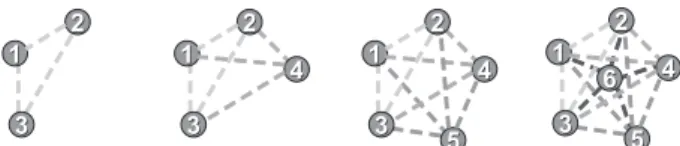
FIG. 1: Representation of algorithm for the sequential model, eq. (9).
ideas of information theory, authors constructed Monte-Carlo (MC) event generator for multiparticle production processes (and applied it toe+e−reactions). The main point was the as-sumption that particles of the same charge are located in cells (in their case they were constructed in rapidity space and were of equal size). It turned out that such division of phase space into cells was crucial for obtaining the characteristic form of the 2-body BEC correlation functionC2(Q=|pi−pj|)(i.e.,
the one peaked and greater than unity at Q=0 and then decreasing in a characteristic way towardsC2=1 for large values of Q, out of which one usually deduces the spatio-temporal characteristics of the hadronization source [1]).
In our case we argue that the method of production of EEC proposed in [5] can be used todefinethe structure of clusters obtained in [3] (with, as it turns out, aboutncl=2 particles per
cluster on average, depending on circumstances [8]). There-fore, instead of symmetrizing all particles in a given event, one symmetrizes separately particles in a number of EEC’s with ncl≪nπ. In the plane wave approximation used in [2], one
has therefore for some typical EEC the followingncl-particle
probability function:
P
1[n,...,] ncl =1+2 ncl!
ncl!
∑
σ′>σ=1 cos
(n cl
∑
j=1 pi
£
rσ(j)−rσ′(j)
¤ )
. (7)
Notice that eq. (7) still contains (unmeasurable) positions of production of particles,{rσ(j)}. Therefore they will be later eliminated by selecting them from someassumeddistribution in a kind of numerical integration process. It corresponds to analytical integrations encountered before but in our approach we do not limit in any way the form of density function used (it had to befactorizable before). It should be stressed that when all particles in the cluster are exactly in the same state then one gets, as expected,
P
1[n,...,] ncl(max) ¯ ¯¯p1=···=pncl =ncl!. (8)
However, in practice, even now from time to time one en-counters EEC withncl≫1, in which case eq.(7) is still very
time consuming. For such cases we have to use some approx-imate schemes. The first one is sequential (cf. Fig. 1): one starts with some single particle in EEC and adds new particles one by one to all others already present and correlate them by using standard 2-particle probability: 1+cos(δr·δp). The resulting probability to getncl-particle state is given by:
P
1[2,...,] ncl =P
1,...,ncl−1·ncl−1
∏
j=1 £
1+cos¡
δrjncl·δpjncl ¢¤
. (9)
Although appealing (in fact it resembles procedure used in [4]) it has drawback that when all particles are in the same state then
P
1[2,...,] ncl(max) ¯ ¯¯p1=···=pncl =2 1
710 Brazilian Journal of Physics, vol. 37, no. 2C, June, 2007
-2.0 -1.5 -1.0 -0.5 0.0 0.5 1.0 1.5 2.0 0.5
1.0 1.5 2.0
C
2
(
d
P
)
dP [GeV]
Numerical (2-particles) Analytical Numerical (N-particles)
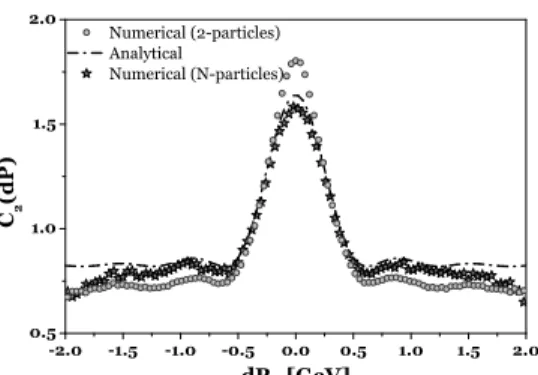
FIG. 2: Example ofC2modelled for single EEC withN=4 by using
2-particles (sequential) correlations as given by eq. (9) (circles) and fullN-particles correlations as given by eq. (7) (stars). For compari-son, the analytical result,C2(δP) =1+sin2(RδP)/(RδP)2, obtained
for uniform one dimensional source in space withR=1 fm is also shown (dotted-dashed line).
0.0 0.2 0.4 0.6 0.8 1.0 0.7
0.8 0.9 1.0 1.1 1.2 1.3 1.4
BEC with cells (P=0.7*e
-E/3.5
)
BEC w/o cells
C
2
(
Q)
Q=E
1
-E
2
[GeV]
FIG. 3: Comparison ofC2modelled by using MC event generators
with EECs (circles) and without EECs but with particles selected directly from the corresponding Bose-Einstein distribution [9]. In both cases as reference event the Boltzmann distribution was used.
i.e., forncl>2 the correlations are stronger and the maximal
value of probability function gets bigger than allowed limit defined by eq.(8). Both, exact (7) and sequential (9) methods are compared in Fig. 2. Approximation (9) keeps the width ofC2the same, however it differs substantially inC2(δP=0) (from which one tends to estimate the so calledchaoticityof the hadronizing source [1]). The other possible approxima-tion, which was used in our hitherto applications [8], is that all particles in a given EEC are correlated only with the first
particle defining this cell, not between themselves. It is inter-esting to notice that the results forC2obtained this way are almost the same as those obtained by using the full method, eq. (7), but differ from that of eq. (9).
We close this section by noticing recent attempt to imitate the bosonic nature of particles produced by MC event gener-ator, in which they were chosen directly according to Bose-Einstein distribution [9]. This method seems to be very nat-ural and occurred to be also very fast. However, as one can see from Fig. 3, where it is compared with our approach, it leads to completely differentC2substantially underestimating the correlation functionC2. We claim therefore that such pro-cedure inevitably loses some piece of important information, namely the fact that EEC’s are formed and that Bose-Einstein distributions are only for particles in such EEC’s, not in the whole event. In fact, signal of possible Bose-Einstein correla-tions without cells is seen in Fig. 3 are the trivial correlacorrela-tions, which can be eliminated by the proper choice of the reference event.
III. SUMMARY
We would like to summarize by stressing that there isno wayto add to any of the existing MC event generators effects of quantum statistics, in particular Bose-Einstein one (BE). This is because they are all build on basis of classical physics with both the space-time and energy-momentum characteris-tics of produced secondaries used simultaneously. The only way out advocated here (albeit, most probably, not very prac-tical one and therefore hardly to be followed) is to build the multiparticle MC event generatorab initio, with BE properties (like bunching in phase space) being one of its basic principles and consisting its first step. All other features of such genera-tor would have to be added only after this. So far there is only one working example of this type [7], our efforts [8] aim for its further generalization and will be continued.
Acknowledgements
OU is grateful for support and for the warm hospitality ex-tended to him by organizers of the ISMD2006. Partial support of the Ministry of Science and Higher Education (grants Nr 621/E-78/SPB/CERN/P-03/DWM 52/2004-2006 and 1 P03B 022 30) is acknowledged (OU and GW).
[1] T. J. Humanic, Int. J. Mod. Phys. E15, 197 (2006). [2] W. A. Zajc, Phys. Rev. D35, 3396 (1987).
[3] H. Merlitz and D. Pelte, Z.Phys. A351, 187 (1995); Z. Phys. A 357, 175 (1997).
[4] J. G. Cramer,Event Simulation of High-Order Bose-Einstein and Coulomb Correlations, Univ. of Washington preprint (1996, un-published).
[5] M. Biyajima, N. Suzuki, G. Wilk, and Z. Włodarczyk; Phys. Lett. B386, 297 (1996).
[6] O. V. Utyuzh, G. Wilk and Z. Włodarczyk, Phys. Lett. B522, 273 (2001) and Acta Phys. Polon. B 33, 2681 (2002)
(hep-ph/0205087).
[7] T. Osada, M. Maruyama, and F. Takagi, Phys. Rev. D59, 014024 (1999).
[8] O. V. Utyuzh, G. Wilk, and Z. Włodarczyk, hep-ph/0503046, Acta Phys. Hung. A - Heavy Ion Phys.25(1), 83 (2006); hep-ph/0509320, AIP Conf. Proc.828, 75 (2006); hep-ph/0509342, to be published in Nukleonika51(Supplement 3) (2006). [9] A. Kisiel, T. Tału´c, W. Broniowski, and W. Florkowski, Comp.