www.bjorl.org
Brazilian
Journal
of
OTORHINOLARYNGOLOGY
ORIGINAL
ARTICLE
Factors
influencing
the
development
of
otitis
media
among
Sicilian
children
affected
by
upper
respiratory
tract
infections
夽
Francesco
Martines
a,
Pietro
Salvago
a,∗,
Sergio
Ferrara
a,
Giuseppe
Messina
d,
Marianna
Mucia
b,
Fulvio
Plescia
c,
Federico
Sireci
aaSectionofOtolaryngology,DepartmentofExperimentalBiomedicineandClinicalNeurosciences,UniversitàdegliStudidi
Palermo,Palermo,Italy
bSectionofAudiology,DepartmentofBiotechnologyandMedicalandForensicBiopathology,UniversitàdegliStudidiPalermo,
Palermo,Italy
cDepartmentofScienceforthePromotionofHealth,UniversitàdegliStudidiPalermo,Palermo,Italy dSportandExerciseSciencesResearchUnit,UniversitàdegliStudidiPalermo,Palermo,Italy
Received23February2015;accepted10April2015 Availableonline21July2015
KEYWORDS Otitismedia; URTI; Riskfactors
Abstract
Introduction:Upperrespiratorytractinfectionisanonspecifictermusedtodescribeanacute infection involvingthenose, paranasalsinuses,pharynxandlarynx.Upper respiratorytract infectionsinchildrenareoftenassociatedwithEustachiantubedysfunctionandcomplicatedby otitismedia,aninflammatoryprocesswithinthemiddleear.Environmental,epidemiologicand familialriskfactorsforotitismedia(suchassex,socioeconomicandeducationalfactors,smoke exposure,allergyordurationofbreastfeeding)havebeenpreviouslyreported,butactuallyno dataabouttheirdiffusionamongSicilianchildrenwithupperrespiratorytractinfectionsare available.
Objective: ToinvestigatethemainriskfactorsforotitismediaandtheirprevalenceinSicilian childrenwithandwithoutupperrespiratorytractinfections.
Methods:A case---control study of204 children with upper respiratory tractinfections who developedotitismediaduringa3weeksmonitoringperiodand204ageandsex-matchedhealthy controls.Seventeenepidemiologicallyrelevantfeatureswereinventoriedbymeansof standard-izedquestionnairesandskintestswereperformed.Univariateanalysisandmultivariatelogistic regressionanalysiswereusedtoexaminetheassociationbetweenriskfactorsandoccurrence ofotitismedia.
Results:Otitismediaresultedstronglyassociatedtolargefamilies,lowparentaleducational attainment,schoolingwithinthethirdyearsoflife(p<0.05);childrenweremoresusceptible
夽 Pleasecitethisarticleas:MartinesF,SalvagoP,FerraraS,MessinaG,MuciaM,PlesciaF,etal.Factorsinfluencingthedevelopmentof
otitismediaamongSicilianchildrenaffectedbyupperrespiratorytractinfections.BrazJOtorhinolaryngol.2016;82:215---22.
∗Correspondingauthor.
E-mail:[email protected](P.Salvago). http://dx.doi.org/10.1016/j.bjorl.2015.04.002
todevelopotitismediainthepresenceofasthma,cough,laryngopharyngealrefluxdisease, snoringandapnea(p<0.05).Allergyandurbanlocalizationincreasedtheriskofotitismediain childrenexposedtosmokerespectivelyof166%and277%(p<0.05);thejointeffectofasthma andpresenceofpetsinallergicpopulationincreasedtheriskofrecurrenceof11%,whileallergy, coughandrunnynosetogetherincreasedthisriskof74%.
Conclusions:Upperrespiratorytractinfectionsandotitismediaarecommonchildhooddiseases stronglyassociatedwithlowparentaleducationalattainment(p=0.0001),exposuretosmoke (p=0.0001),indoorexposuretomold(p=0.0001),laryngopharyngealrefluxdisease(p=0.0002) andthelackofbreast-feeding(p=0.0014);anincreasedriskofotitismediarecurrenceswas observedinthepresenceofallergy,persistentcoughandrunnynose(p=0.0001).The modifi-cationoftheidentifiedriskfactorsforotitismediashouldberecommendedtorealizeacorrect primarycareintervention.
© 2015 Associac¸ão Brasileira de Otorrinolaringologia e Cirurgia Cérvico-Facial. Published by Elsevier Editora Ltda. This is an open access article under the CC BY license
(http://creativecommons.org/licenses/by/4.0/).
PALAVRAS-CHAVE Otitemédia; IVAS;
Fatoresderisco
Fatoresqueinfluenciamaocorrênciadeotitemediaentrecrianc¸assicilianascom infecc¸õesdeviasaéreassuperiores
Resumo
Introduc¸ão:Ainfecc¸ãodeviasaéreassuperioreséumadenominac¸ãoinespecífica,empregada nadescric¸ãode umainfecc¸ãoagudaenvolvendoo nariz,osseios paranasais,afaringe ea laringe.Asinfecc¸õesdeviasaéreassuperioresemcrianc¸asestãofrequentementeassociadasà disfunc¸ãodatrompadeEustáquio,complicando-secomotitemédia,umprocessoinflamatório daorelhamédia.Jáforamrelatadosváriosfatoresderiscorelacionadosàotitemédia,incluindo osambientais,epidemiológicosefamiliares(p.ex.,gênero,fatoressocioeconômicose educa-cionais,exposic¸ãoao tabaco,alergiaoudurac¸ãodoaleitamentomaterno),entretanto, não dispomosdedadossobresuaocorrênciaentrecrianc¸assicilianascominfecc¸õesdeviasaéreas superiores.
Objetivo:Investigarosprincipaisfatoresderiscoparaotitemédiaesuaprevalênciaemcrianc¸as sicilianascomeseminfecc¸õesdeviasaéreassuperiores.
Método: Umestudodecaso-controlede204crianc¸ascominfecc¸õesdeviasaéreassuperiores apresentandootitemédiaduranteumperíododemonitorac¸ãodetrêssemanase204controles saudáveiscompatíveisemidadeegênero.Foramrelacionadas17característicascomrelevância epidemiológicapormeiodaaplicac¸ãodequestionáriospadronizados;tambémforamrealizados testescutâneos.Foramutilizadasanálisesunivariadaederegressãologísticamultivariadano examedaassociac¸ãoentrefatoresderiscoeocorrênciadeotitemédia.
Resultados: Aotitemédiarevelouforteassociac¸ãocomfamíliasnumerosas,baixonível edu-cacionaldospaiseescolaridadenoterceiroanodevida(p<0,05);ascrianc¸asdemonstraram maiorsuscetibilidadeparaocorrênciadeotitemédiaempresenc¸adeasma,tosse,doenc¸ado refluxolaringofaríngeo,roncoeapneia(p<0,05).Alergiaelocalizac¸ãourbanaaumentaramo riscodeotitemédiaemcrianc¸asexpostasaofumoem166%e277%(p<0,05),respectivamente; oefeitoconjuntodeasmaepresenc¸adeanimaisdeestimac¸ãonapopulac¸ãoalérgicaaumentou oriscoderecidivaem 11%,enquantoque,emconjunto,alergia,tosseecorizaaumentaram esseriscoem74%.
Conclusões:As infecc¸ões de vias aéreas superiores e otite média são doenc¸as pediátricas comuns,fortementeassociadasabaixoníveleducacionaldospais(p=0,0001),exposic¸ãoao fumo(p=0,0001),exposic¸ãodomiciliaraomofo(p=0,0001),refluxolaringofaríngeo(p=0,0002) eausênciadealeitamentomaterno(p=0,0014).Tambémfoiobservadoaumentodoriscode recidivasdeotitemédiaempresenc¸adealergia,tossepersistenteecoriza(p=0,0001).Deve-se recomendaramodificac¸ãodosfatoresderiscoidentificadosparaotitemédia,paraumacorreta intervenc¸ãoterapêuticaprimária.
© 2015 Associac¸ão Brasileira de Otorrinolaringologia e Cirurgia Cérvico-Facial. Publicado por Elsevier Editora Ltda. Este é um artigo Open Access sob a licença de CC BY
Introduction
Upper respiratory tract infection (URTI) is a non-specific term used to describe an acute infection involving nose, paranasalsinuses,pharynxandlarynx.1,2AccordingtoWorld
HealthOrganization (WHO), URTIsareresponsible for20% ofannualdeathsamongchildrenunder5yearsofage,and for 13,000 hospitalizations.3 URTIs in children are often
complicated by otitis media (OM), an inflammatory pro-cesswithinthemiddleear,withanincidencerangingfrom 6% to 64%.2,4 OM is classified in two forms:(1) acute OM
(AOM),anacutesymptomaticdiseasecharacterizedby ear-ache, fever, hearingimpairment anda purulentdischarge (otorrhea) through a perforation of the tympanic mem-brane.(2)OMwitheffusion(OME),anasymptomaticdisease involvingfluidcollectioninthemiddleear,associatedwith eitheramildormoderateconductivehearingimpairment. ManyOMepisodesresolvespontaneously within3months, but∼30---40%ofchildrenhaverecurrentOM,and5---10%of episodeslast1yearorlonger,leadingtoadelayinlearning andlanguagedevelopment.2---5
Approximately29---50%ofallURTIsdevelopintoOM, par-ticularly withintwo age ranges:6 months---2 yearsof age and5---6yearsold.Themainreasonsfortheyoung-age pref-erenceinclude:poorlydevelopedimmunedefense,shorter and more horizontal Eustachian tube, well-endowed with lymphoidfolliclesandadenoids.6
Eustachiantube connects thetympaniccavitywiththe nasopharynx,playingaprimaryroleinthedefense mecha-nismofthemiddleearandintheequilibrationofitspressure withtheatmosphericone;inaddition,itprotectsthe mid-dleearfromrefluxofnasopharyngealsecretionsanddrains secretionsfromthemiddleearintothenasopharynx.7Thus
middle ear is an anatomical extension of the airway by wayoftheEustachiantubeand,ashypothesizedbyNguyen et al., is considered a component of the ‘‘united airway concept’’.8ViralURTIleadstoEustachiantubeinflammation
resultingin its dysfunctionand negativemiddle ear pres-surepermittingsecretionscontainingtheinfectingvirusand pathogenicbacteriathatcolonizethenasopharynxtoenter themiddleear.9
Objective
Environmental, epidemiologicand familial risk factorsfor OM (such as sex, socioeconomic and educational factors, smokeexposure,allergyordurationofbreastfeeding)have been previously reported,2---5,8,10,11 but actually no data
abouttheirdiffusionamongSicilianchildrenwithURTIsare available; thus, because of the high prevalence (14.43%) ofOMinSicilianchildrenaffectedbyURTIs,4weexamined
themainOMriskfactors,either separatelyorin combina-tion,toprovide additionaldataabout theirimpactin the pathogenesisofOM.
Methods
Studydesignandpopulation
ThisstudywascarriedoutbytheSectionofAudiologyofthe Universityof PalermofromSeptember2012toJune2013,
including204 children (age range 2---10 years),106 males and98 females(M/Fratio=1.08),whowereexamined for suspectedURTIattheENTpediatricambulatory;allpatients developedOMduringa3-weekmonitoringperiod.In addi-tion,204age andsex-matchedhealthychildren served as controls. The protocol of the study was approved by the localethical committee (approval number V5604) and an informedconsentwasobtainedfromtheparentsofthe chil-drenbeforeenrollmentinthestudy.Therearenodropouts inthestudy.Patientsandcontrolsweresubjectedtoafull historytakingandcompletephysicalexaminationincluding otoscopyandtympanometry.
Thecriteriafordiagnosis ofURTIsinthestudy wereas follows:purulentnasaldischarge,cough,pharyngo-tonsillar erythemaorexudates.11
The criteriafor diagnosis of OM(AOM andOME)in the study were: (1) AOM: acute onset of symptoms (fever, irritability,or earache) andsigns (presence of fluidlevel, bubbles, hypervascularity, retracted tympanicmembrane) ofeardruminflammation,asdocumentedbypneumatic oto-scopyand/ortympanometry12;(2)OME:documentedmiddle
eareffusionand/orairfluidbubblebyotoscopic examina-tioninpresenceofBorCtympanogramsand,aconductive hearinglossgreaterthan25dBatanyoneofthefrequencies from250Hzthrough4kHz.4
OMwasconsideredan URTIcomplicationifit occurred within21daysaftertheonsetofURTI.13
Riskfactorsandinstrumentaltestsperformed
Datawerecollectedusingaspecificquestionnaireanswered bytheparentsaboutthegender,age,familymembers, edu-cational status of the parents, exposure tosmoking (yes; no),locationof theresidence,presenceof pets,presence of air conditioning and/or mold, breastfeeding duration, atopicfamiliarity,ageschooling,presenceofallergyand/or asthma,presenceofrecurrentURTIswithOM(≤5episodes;
≥6 episodes), cough and runny nose. In addition, ques-tionsaboutwhetherthechildhaddifficultybreathingduring sleep,mouthbreathingandsnoringwereincluded;episodes ofapneaweredocumentedthroughmodifiedportablesleep apneamonitoring, with recordingof abdominaland chest movements, body position, snoring, oxygen blood satura-tion,pulserate,oronasalairflow(nasalairpressure).Some childrenwereaffectedalsobypathological laryngopharyn-geal refluxdisease (LPRD), documentedby a twenty-four hour double-probe pH-metry. This pH-monitoring device consisted of a proximal (2cm above upper esophageal sphincter)andadistalprobe(3cmaboveloweresophageal sphincter);alaryngopharyngealrefluxepisodewasdefined asadecreaseinthepHleveltolowerthan4foraduration of 15---30s, measured at the proximal probe immediately followingdistalesophagealacidexposurewithouteatingor swallowing.
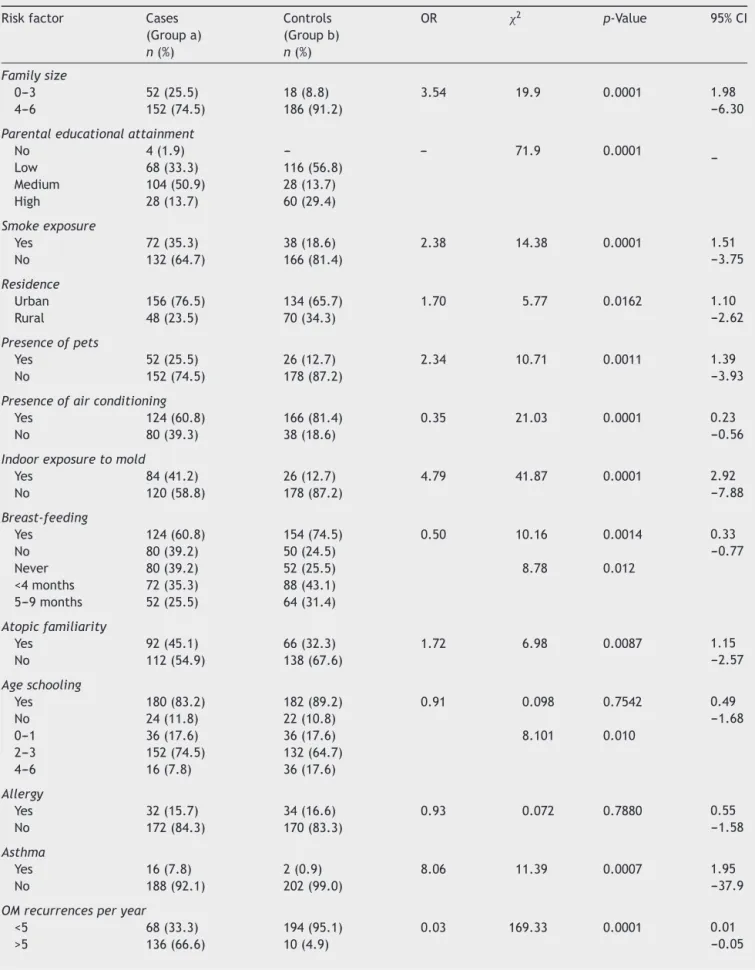
Table1 DistributionofOMriskfactorsincasesandcontrolsgroups:chisquare(2),OddsRatio(OR),p-valueand95%Confidence
Limits(95%CI).
Riskfactor Cases (Groupa) n(%)
Controls (Groupb) n(%)
OR 2 p-Value 95%CI
Familysize
0---3 52(25.5) 18(8.8) 3.54 19.9 0.0001 1.98
---6.30
4---6 152(74.5) 186(91.2)
Parentaleducationalattainment
No 4(1.9) --- --- 71.9 0.0001
---Low 68(33.3) 116(56.8)
Medium 104(50.9) 28(13.7)
High 28(13.7) 60(29.4)
Smokeexposure
Yes 72(35.3) 38(18.6) 2.38 14.38 0.0001 1.51
---3.75
No 132(64.7) 166(81.4)
Residence
Urban 156(76.5) 134(65.7) 1.70 5.77 0.0162 1.10
---2.62
Rural 48(23.5) 70(34.3)
Presenceofpets
Yes 52(25.5) 26(12.7) 2.34 10.71 0.0011 1.39
---3.93
No 152(74.5) 178(87.2)
Presenceofairconditioning
Yes 124(60.8) 166(81.4) 0.35 21.03 0.0001 0.23
---0.56
No 80(39.3) 38(18.6)
Indoorexposuretomold
Yes 84(41.2) 26(12.7) 4.79 41.87 0.0001 2.92
---7.88
No 120(58.8) 178(87.2)
Breast-feeding
Yes 124(60.8) 154(74.5) 0.50 10.16 0.0014 0.33
---0.77
No 80(39.2) 50(24.5)
Never 80(39.2) 52(25.5) 8.78 0.012
<4months 72(35.3) 88(43.1) 5---9months 52(25.5) 64(31.4)
Atopicfamiliarity
Yes 92(45.1) 66(32.3) 1.72 6.98 0.0087 1.15
---2.57
No 112(54.9) 138(67.6)
Ageschooling
Yes 180(83.2) 182(89.2) 0.91 0.098 0.7542 0.49
---1.68
No 24(11.8) 22(10.8)
0---1 36(17.6) 36(17.6) 8.101 0.010
2---3 152(74.5) 132(64.7)
4---6 16(7.8) 36(17.6)
Allergy
Yes 32(15.7) 34(16.6) 0.93 0.072 0.7880 0.55
---1.58
No 172(84.3) 170(83.3)
Asthma
Yes 16(7.8) 2(0.9) 8.06 11.39 0.0007 1.95
---37.9
No 188(92.1) 202(99.0)
OMrecurrencesperyear
<5 68(33.3) 194(95.1) 0.03 169.33 0.0001 0.01
---0.05
Table1 (Continued)
Riskfactor Cases (Groupa) n(%)
Controls (Groupb) n(%)
OR 2 p-Value 95%CI
Snoring
No 92(45.1) 174(85.3) 7.06 72.63 0.0001 4.39
---11.4
Yes 112(54.9) 30(14.7)
Apnea
No 76(37.2) 30(14.7) 81.24 0.0001
Yes 36(17.6)
---Cough
Yes 148(72.5) 86(42.1) 3.63 38.51 0.0001 2.40
---5.49
No 56(27.4) 118(57.8)
Runnynose
Yes 180(88.3) 78(38.2) 12.12 109.71 0.0001 7.3
---20.2
No 24(11.8) 126(61.7) 2
Serous 40/180
(22.2)
37/78(47.4) 51.4 0.0001
Mucous 60/180
(33.3)
41/78(52.6)
Seromucous 80/180 (44.4)
---Perennial 60/180
(33.3)
5/78(6.4) 7.30 20.9 0.0001 2.8
---19.1
Seasonal 120/180
(66.6)
73/78(93.6)
LPRD
Yes 16(7.8) --- 17.36 13.88 0.0002 2.2
---132.2
No 188(92.2) 204(100)
Theresultswereevaluatedafter10min.Wheals≥3mm indiameterthanwhealsatthesiteofthenegativecontrol wereconsideredpositive.
Cases and controls were subsequently included in the case---controlstudytoestablishtheroleofvariousrisk fac-torsforOM.
Statisticalmethods
Statistical analysiswas conductedwithMatlab® computer program. We performed partial logistic regression coeffi-cient(b),logisticOddsRatio(OR),95%ConfidenceInterval (95%CI),multivariatelogisticregressionanalysisand Man-tel Haenszel test (Global Odds Ratio, G.or) to study the associationbetweenriskfactorsandOM.
Results
Weenrolled408children,204casesand204controls,with agerangefrom2to10years(meanageof5.56±3.30years). Table1describesthedistributionofeachdemographic, parentalandenvironmentalriskfactoramongcases(Group A) and controls (Group B). The 86.2% of the Group A wascharacterized by amedium or alow parental educa-tionalattainmentwithrespecttothe70.6%oftheGroupB (p=0.0001).
The 15.7%(32/204) of caseshadpositive skintests for inhalant and food allergens whereas the 16.6% (34/204) of controls resulted atopic (p=0.78); statistical analy-sis showed a significant difference between the groups regardingtheprevalenceofasthma,withahigher percent-ageofasthmaticchildrenintheGroupA(7.8%)respectto GroupB(0.9%)(p=0.0007).
No difference between cases and controls were found accordingto‘‘ageschooling’’;howeverthe92.1%(188/204) ofcasesandthe82.3%(168/204)ofcontrolswereschooled withinthethirdyearoflife.
The 26.9% of the total children studied were exposed to smoke, with a prevalence of this risk factor found in the 35.3% of Group A respect to the 18.6% of Group B (p=0.0001).
Concerning the ‘‘residence’’ (urban or rural)different frequencieswerefoundintheGroupA(76.5%ofurbanvs. 23.5%ofrurallocation)andintheGroupB(65.7%ofurban vs.34.3%ofruralresidence)(p=0.01).
Among the other variables examined in the univariate analysis, presence of pets (p=0.001) and indoor expo-sure to mold (p=0.0001) resulted strictly correlated to OM.
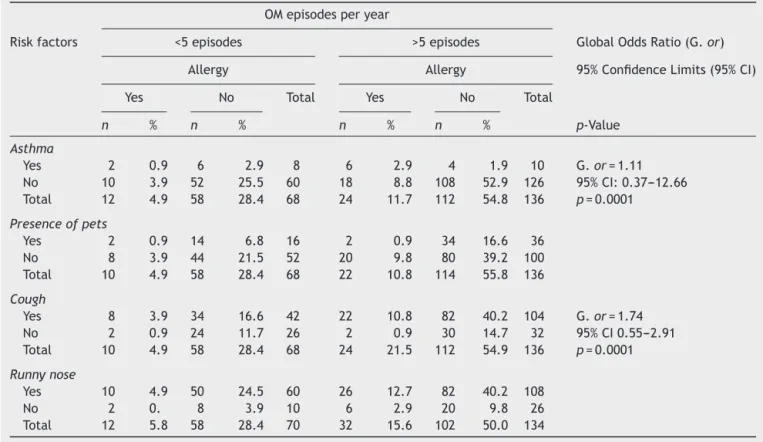
Table2 Cases:allergicvs.non-allergic.MultivariatelogisticregressionanalysisofOMrecurrences.
OMepisodesperyear
Riskfactors <5episodes >5episodes GlobalOddsRatio(G.or)
Allergy Allergy 95%ConfidenceLimits(95%CI)
Yes No Total Yes No Total
n % n % n % n % p-Value
Asthma
Yes 2 0.9 6 2.9 8 6 2.9 4 1.9 10 G.or=1.11
No 10 3.9 52 25.5 60 18 8.8 108 52.9 126 95%CI:0.37---12.66
Total 12 4.9 58 28.4 68 24 11.7 112 54.8 136 p=0.0001
Presenceofpets
Yes 2 0.9 14 6.8 16 2 0.9 34 16.6 36
No 8 3.9 44 21.5 52 20 9.8 80 39.2 100
Total 10 4.9 58 28.4 68 22 10.8 114 55.8 136
Cough
Yes 8 3.9 34 16.6 42 22 10.8 82 40.2 104 G.or=1.74
No 2 0.9 24 11.7 26 2 0.9 30 14.7 32 95%CI0.55---2.91
Total 10 4.9 58 28.4 68 24 21.5 112 54.9 136 p=0.0001
Runnynose
Yes 10 4.9 50 24.5 60 26 12.7 82 40.2 108
No 2 0. 8 3.9 10 6 2.9 20 9.8 26
Total 12 5.8 58 28.4 70 32 15.6 102 50.0 134
‘‘Snoring’’,‘‘cough’’,‘‘runnynose’’and‘‘LPRD’’were foundrespectivelyin the54.9%,72.5%,88.3% and7.8%of group A, and the 14.7%, 42.1%, 38.2% and 0% of Group B (p<0.05). A statistical difference in the prevalence of ‘‘atopic familiarity’’ was evidenced between the groups (45.1%forcases,32.3%forcontrols)(p=0.0087).
Thestudyofrecurrencesshowedthatthe66.6%ofcases presentedmorethan5episodesofOMperyearrespectto the4.9%ofcontrols(p<0.001).Fromtheunivariate logis-ticregressionanalysisitwasevidencedahighercorrelation between‘‘recurrenceofOM’’andlowparentaleducational attainment(p<0.05)andrunnynose(p<0.01).
Discussion
URTIandOMarediseasesoftenassociatedinchildren.From 6%to 64% ofpatients affected by URTIdevelop OM, with the prevalence varying considerably by the age group on whichtheestimatesarebased.2,5Kochetal.13,studying288
children,evidencedahigherriskamongchildrenaged6---23 monthsthanamongchildrenaged0---5months;Rupaetal.14
demonstratedthatURTIsstartedwithinafewweeksoflife withaprogressiveincreaseinfrequencyandapeakof72% in the 9thmonth. Revai et al.5 reported a prevalence of
36%ofOMin URTIinfantsagedbetween 6and11months oldand of 29% amongchildren in the second year of life while,byincreasingage,theprevalenceofOMdecreased. Alsoourdata, withthe 67%ofcases aged2---5 years, sug-gestthehighersusceptibilityofyoungerchildrentodevelop OM.4,5,15
Rupa et al.14, in line with our results (OR=1.97; 95%
CI:1.13---3.44;p<0.05),foundthatOMoccurredmore fre-quently in boys, differently fromKoch et al.13 and Engel
etal.15,whoevidencedahigherprevalenceamonggirlsbut
without any statistical difference. However it is possible, according toTosetal.16 and toSaimetal.17,thatgender
couldrepresentaconfoundingfactorandthatresultscould beinfluencedbyculturalfactorsorotherinfectiondiseases. Kochetal.13 andZielhuisetal.18 reportedahigherOM
prevalenceintheuppersocioeconomicclasseswhile,onthe contrary,otherauthorsreportedthatthisdisorderwasmore commoninpresenceofalowersocioeconomicstatus.13,14,19
Ourfindingsshowedthatalowerparentaleducationallevel wasassociatedwithahigherpercentageofOMandthatOM recurrences wereinfrequentwhentheparents hada high educational attainment. In fact, in the 86.27% (176/204) of cases, parents had a low or medium educational level respecttothe70.6%(144/204)ofcontrols(p<0.001)
AccordingtoMartines etal.4 andKochetal.13, ‘‘large
family’’ is not a risk factor for OM. In fact, the 82.8% (338/408)ofourcohort,the74.5%ofGroupAandthe91.2% of Group Bbelong tofamilieswithmorethan 4 members (p=0.0001).
Withapercentagerateof60.8%(124/204)of‘‘presence of airconditioning’’ amongchildren withOM(p=0.0001), airconditioningmaybeaprotectivefactor,although‘‘WHO Guidelines forIndoor AirQuality: DampnessandMould’’20
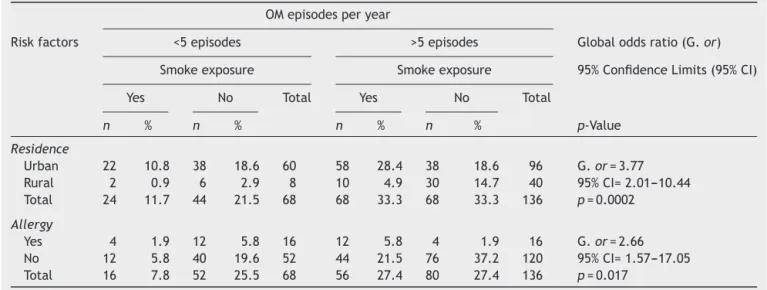
Table3 Cases:smokeexposurevs.nosmokeexposure.MultivariatelogisticregressionanalysisofOMrecurrences.
OMepisodesperyear
Riskfactors <5episodes >5episodes Globaloddsratio(G.or)
Smokeexposure Smokeexposure 95%ConfidenceLimits(95%CI)
Yes No Total Yes No Total
n % n % n % n % p-Value
Residence
Urban 22 10.8 38 18.6 60 58 28.4 38 18.6 96 G.or=3.77
Rural 2 0.9 6 2.9 8 10 4.9 30 14.7 40 95%CI=2.01---10.44
Total 24 11.7 44 21.5 68 68 33.3 68 33.3 136 p=0.0002
Allergy
Yes 4 1.9 12 5.8 16 12 5.8 4 1.9 16 G.or=2.66
No 12 5.8 40 19.6 52 44 21.5 76 37.2 120 95%CI=1.57---17.05
Total 16 7.8 52 25.5 68 56 27.4 80 27.4 136 p=0.017
infections.We foundahigh OMprevalence (41.2%)among the110childrenexposedtomold(p=0.0001).Inlinewith ourdata,Pettigrewetal.21 recentlydemonstratedaclose
relationshipbetweenOMandindoorexposuretomoldin806 infants(OR=3.45;95%CI:1.36---8.76).
According toBergroth etal.22,whoevidencedthatpet
contacts during infancy may have a protective effect on respiratorytractsymptomsandinfections,weobservedthat OM episodesper year were less frequent amongchildren who have been living with pets from the early child-hood (p<0.01). Therefore animal contacts could help to maturetheimmunologicsystem,leadingtomorecomposed immunologicresponseandshorterdurationofinfections.
Because of asthma is usually associated with rhino-sinusitis (allergic, non-allergicor infective),23 it could be
considered an ‘‘alarm bell’’ of aflogistic event in differ-entsidesofrespiratorytract16,24;inthisstudy,the7.8%of
asthmaticsubjectspresentedOMwithin3weeksfromfirst examination(p<0.05).Itisalsoconfirmed bymultivariate analysisthatevidencedinatopicchildrenanincreaseof11% oftherelativeriskofOMinthepresenceofasthmaandpets (Table2).
From the analysis of the joint effect of risk factors, it resulted that smoke exposure increases the risk of OM of 277% and of 166% when in presence respectively of urbanlocalizationandallergy(Table3).Theseresults sup-portedNguyenetal.hypothesis,thatespeciallyinchildren where the mucociliary clearanceand the anatomy of the Eustachian tube are still abnormal the joint effect of risk factors can increase exponentially the recurrence of OM.8
Theroleofbreastfeedingfortheprotectionofinfantis universallyaccepted;scientificresearches,suchasthe stud-ies summarized in a 2007 review for the U.S. Agencyfor HealthcareResearchandQuality(AHRQ)anda2007review for the WHO, have found many benefits of breastfeed-ing inprevention of URTIs, severe lowerrespiratory tract infections, non-specific gastroenteritis, and OM.25,26 Our
results agree with these studies and with those of Teele etal.27andZielhuisetal.21,showingthatthe71.6%oftotal
children (292/408) was not breast-feed or breast-fed for lessthan4month; specificallythe39.2% (80/204)of chil-drenwhodeveloped OMwere notbreast-feed(p=0.0014; OR=10.16).
Habitual snoring (HS) and apneas which were found respectivelyinthe 37.2%(76/204) ofcasesand the14.7% (30/204)ofcontrolswereepidemiologicallylinkedtomany ofthesameriskfactorsthathave beenidentifiedfor OM. AccordingtoCaylanetal.28 andLietal.29,whoconcluded
that the presence of snoring is correlated with a higher prevalenceof OM,we evidenced that the37.2% of Group Aand the14.7% of the control groupaffected by snoring and/orapnea(p=0.0001).
Ofthe146childrenwithapositivehistoryofmorethan5 episodesperyearofURTIwithOM,the93.1%wereaffected byOMatourexamination(p<0.05);theriskofOM recurr-ences increase of 74% in presence of allergy, persistent cough and runny nose (p=0.0001) (Table 2). These data confirmed,asreportedfrom‘‘PanelreportfromtheNinth InternationalResearchConferenceonOtitisMedia’’,30that
OMis frequently a complication of URTI and a history of frequent episodes of OM and URTI is itself a risk factor because increases host susceptibility to respiratory tract infections.31
With a percentage of 7.8% (16/204) among children withOM (p=0.0002), LPRD may bea risk factor for URTI complications because of the mucosal inflammation that obstructstheEustachiantube.32
Conclusions
affectedbycough,runnynose,asthmaorsnoringweremore susceptibletodevelopOM.Finally,anincreasedrisk(74%) ofOMrecurrenceswasobservedinthepresenceofallergy, persistentcough andrunny nose(p=0.0001). Comprehen-siveknowledgeofmodifiableriskfactorsfoundinthisstudy couldcontributetominimizingURTIanditscomplicationsin children.
Conflicts
of
interest
Theauthorsdeclarenoconflictsofinterest.
References
1.Wilson JF. In the clinic. Acute sinusitis. Ann Intern Med. 2010;153.ITC31-15.
2.BentivegnaD,SalvagoP,AgrifoglioM,BallacchinoA,FerraraS, MuciaM,et al.Thelinkage between upperrespiratorytract infection and otitis media: evidence of the ‘united airways concept’.ActaMedMediter.2012;28:287---90.
3.Aitken M,Taylor JA.Prevalence of clinicalsinusitisin young childrenfollowedupbyprimarycarepediatricians.ArchPediatr AdolescMed.1998;152:244---8.
4.Martines F, Bentivegna D, Maira E, Sciacca V, Martines E. Risk factors for otitis media with effusion: case---control studyinSicilianschoolchildren.IntJPediatrOtorhinolaryngol. 2011;75:754---9.
5.RevaiK, Dobbs LA, NairS, PatelJA, GradyJJ, Chonmaitree T. Incidence ofacute otitismediaand sinusitis complicating upperrespiratorytractinfection:theeffectofage.Pediatrics. 2007;119:1408---12.
6.ParadiseJL.Otitismedia.In:BehrmanRE,KliegmanRM,Jenson HB,editors.Nelsontextbookofpediatrics.17thed. Philadel-phia:Saunders;2004.p.2138---49.
7.LeuwerR,KochU.Anatomyandphysiologyoftheauditorytube. Therapeuticpossibilitiesinchronicdisordersoftubalfunction. HNO.1999;47:514---23.
8.Nguyen LHP,Manoukian JJ, Sobol SE, Tewfik TL, Mazer BD, SchlossMD,etal.Similarallergicinflammationinthemiddle ear andtheupperairway:evidencelinkingotitismediawith effusiontotheunitedairwaysconcept.JAllergyClinImmunol. 2004;114:1110---5.
9.BakaletzLO.Viralpotentiationofbacterialsuperinfectionof therespiratorytract.TrendsMicrobiol.1995;3:110---4. 10.GultekinE,Develio˘gluON,YenerM,OzdemirI,Külekc¸iM.
Preva-lenceandriskfactorsforpersistentotitismediawitheffusionin primaryschoolchildreninIstanbul,Turkey.AurisNasusLarynx. 2010;37:145---9.
11.SelwynBJ.Theepidemiologyofacuterespiratorytract infec-tion in young children: comparison of findings from several developing countries. Coordinated Data Group of BOSTID Researchers.RevInfectDis.1990;12:870---88.
12.KitamuraK,IinoY,KamideY,KudoF,NakayamaT,SuzukiK,etal. Clinicalpracticeguidelinesforthediagnosisandmanagement ofacuteotitismedia(AOM)inchildreninJapan---2013update. AurisNasusLarynx.2014.pii:S0385-8146(14)00169-2.
13.Koch A, Mølbak K, Homøe P, Sørensen P, Hjuler T, Olesen ME, et al. Risk factors for acuterespiratory tract infections in young Greenlandic children. Am J Epidemiol. 2003;158: 374---84.
14.Rupa V, Isaac R, Manoharan A, Jalagandeeswaran R, Then-mozhiM.Riskfactorsforupperrespiratoryinfectioninthefirst yearoflifeina birthcohort.IntJPediatr Otorhinolaryngol. 2012;76:1835---9.
15.EngelJ,AnteunisL,VolovicsA,HendriksJ,MarresE.Risk fac-torsofotitismediawitheffusionduringinfancy.IntJPediatr Otorhinolaryngol.1999;48:239---49.
16.TosM,PoulsenG,BorchJ.Tympanometryin2-year-oldchildren. ORLJOtorhinolaryngolRelatSpec.1978;40:77---85.
17.SaimA,SaimL,SaimS,RuszymahBH,SaniA.Prevalenceofotitis mediawitheffusionamongstpre-schoolchildreninMalaysia.Int JPediatrOtorhinolaryngol.1997;41:21---8.
18.ZielhuisGA,RachGH,vandenBoschA,vandenBroekP.The prevalenceofotitismediawitheffusion:acriticalreviewofthe literature.ClinOtolaryngolAlliedSci.1990;15:283---8. 19.ThomasEM.Recenttrendsinupperrespiratoryinfections,ear
infectionsandasthmaamongyoungCanadianchildren.Health Rep.2010;21:47---52.
20.WHOguidelinesfor indoor airquality: dampness andmould. Geneva:WorldHealthOrganization;2009.
21.PettigrewMM,GentJF,TricheEW.Associationofearly-onset oti-tismediaininfantsandexposuretohouseholdmould.Paediatr PerinatEpidemiol.2004;18:441---7.
22.BergrothE,RemesS,PekkanenJ,KauppilaT,BücheleG, Keski-NisulaL.Respiratorytractillnessesduringthefirstyearoflife: effectofdogandcatcontacts.Pediatrics.2012;130:211---20. 23.ScaddingGK,DurhamSR,MirakianR,JonesNS,Drake-LeeAB,
RyanD,etal.,BritishSocietyforAllergyandClinical Immunol-ogy.BSACIguidelinesforthemanagementofrhinosinusitisand nasalpolyposis.ClinExpAllergy.2008;38:260---75.
24.Hamilos DL. Chronic sinusitis. J Allergy Olin Immunol. 2000;106:213---27.
25.Ip S, Chung M, Raman G, Chew P, Magula N, DeVine D, etal.Breastfeedingandmaternalandinfanthealthoutcomes in developed countries. Evid Rep Technol Assess (Full Rep). 2007;153:1---186.
26.Horta BL, Bahl R, Martines JC, Victora CG. Evidence on the long-term effects of breastfeeding: systematic reviews andmeta-analyses.Geneva,Switzerland:WorldHealth Orga-nization; 2007 http://whqlibdoc.who.int/publications/2007/ 9789241595230eng.pdf(retrieved22.09.09).
27.TeeleDW,KleinJO,RosnerB.Epidemiologyofotitismedia dur-ingthefirstsevenyearsoflifeinchildreningreaterBoston:a prospective,cohortstudy.JInfectDis.1989;160:83---94. 28.CaylanR,BektasD,AtalayC,KorkmazO.Prevalenceandrisk
factorsofotitismediawitheffusioninTrabzon,acityin north-easternTurkey,withanemphasisontherecommendation of OMEscreening.EurArchOtorhinolaryngol.2006;263:404---8. 29.LiAM,AuCT,SoHK,LauJ,NgPC,WingYK.Prevalenceandrisk
factorsofhabitualsnoringinprimaryschoolchildren.Chest. 2010;138:519---27.
30.DalyKA,HoffmanHJ,KvaernerKJ,KvestadE,CasselbrantML, HomoeP,etal.Epidemiology,naturalhistory,andriskfactors: panelreportfromtheNinthInternationalResearchConference onOtitisMedia.IntJPediatrOtorhinolaryngol.2010;74:231---40. 31.MartinesF,MartinciglioG,MartinesE,BentivegnaD.Therole ofatopyin otitismediawitheffusion amongprimary school children:audiologicalinvestigation.EurArchOtorhinolaryngol. 2010;267:1673---8.