Comparative study of friction between metallic and conventional
interactive self-ligating brackets in different alignment conditions
Sérgio Ricardo Jakob1, Davison Matheus2, Maria Cristina Jimenez-Pellegrin3, Cecília Pedroso Turssi4, Flávia Lucisano Botelho do Amaral4
Objective:The aim of this study was to compare the friction between three bracket models: conventional stainless steel (Ovation, Dentsply GAC), self-ligating ceramic (In-Ovation, Denstply GAC) and self-ligating stainless steel brackets (In-Ovation R, Dentsp-ly GAC). Methods: Five brackets were used for each model. They were bonded to an aluminum prototype that allowed the simulation of four misalignment situations (n = 10). Three of these situations occurred at the initial phase (in which a 0.016-in nickel-titanium wire was used): 1. horizontal; 2. vertical; and 3. simultaneous horizontal/vertical. One of the situations occurred at the final treatment phase: 4. no misalignment (in which a 0.019 x 0.025-inch stainless steel rectangular wire was used). The wires slipped through the brackets and friction was measured by a Universal Testing Machine. Results: Analysis of variance followed by Tukey’s Test for multiple comparisons (α = 0.05) were applied to assess the results. Significant interaction (p < 0.01) among groups was found. For the tests that simulated initial alignment, Ovation® bracket produced the highest friction. The two self-ligating models resulted in lower and similar values, except for the horizontal situation, in which In-Ovation C® showed lower friction, which was similar to the In-Ovation R® metallic model. For the no misalignment situation, the same results were observed. Conclusion: The self-ligating system was superior to the conventional one due to producing less friction. With regard to the material used for manufacturing the brackets, the In-Ovation C® ceramic model showed less friction than the metallic ones.
Keywords:Orthodontic brackets. Friction. Esthetics.
How to cite this article: Jakob SR, Matheus D, Jimenez-Pellegrin MC, Turssi CP, Amaral FLB. Comparative study of friction between metallic and convention-al interactive self-ligating brackets in different convention-alignment conditions. Dentconvention-al Press J Orthod. 2014 May-June;19(3):82-9. DOI: http://dx.doi.org/10.1590/2176-9451.19.3.082-089.oar
» The authors report no commercial, proprietary or financial interest in the prod-ucts or companies described in this article.
Contact address: Flávia Lucisano Botelho do Amaral
Instituto e Centro de Pesquisas Odontológicas São Leopoldo Mandic Rua José Rocha Junqueira, 13 – Swift – Campinas/SP — Brazil CEP: 13045-755 – Email: [email protected]
1 MSc in Orthodontics, Camilo Castelo Branco University, UNICASTELO.
2 MSc in Orthodontics, São Leopoldo Mandic College of Dentistry.
3 Professor, São Leopoldo Mandic College of Dentistry.
4 Assistant Professor, Department of Operative Dentistry, São Leopoldo Mandic
College of Dentistry.
Submitted: February 14, 2013 - Revised and accepted: August 16, 2013
DOI: http://dx.doi.org/10.1590/2176-9451.19.3.082-089.oar
Objetivo:o objetivo desse trabalho in vitro foi comparar o atrito entre três modelos de braquetes: Ovation (convencional, aço inoxidável); In-Ovation C (autoligável, cerâmico) e In-Ovation R (autoligável, aço inoxidável), todos do mesmo fabricante (Dents-ply GAC). Métodos: para cada modelo, foram utilizados cinco braquetes, colados a um protótipo de alumínio, que permitiu a simulação de quatro situações (n = 10), sendo uma delas sem desalinhamento (com utilização de fio retangular de aço inoxidável, com espessuras de 0,019" x 0,025") e outras três com desalinhamento, sendo um horizontal, um vertical e outro simultaneamente combinando ambos (com utilização de fio de níquel-titânio com espessura de 0,016"). O atrito foi mensurado por uma máquina universal de ensaios. Resultados: os resultados obtidos foram submetidos ao teste de Análise de Variância, complementado pelo teste de comparações múltiplas de Tukey (α = 0,05). Foi observada interação significativa entre os grupos (p < 0,01). Para os ensaios
que simularam a fase inicial de alinhamento, realizada com fios de NiTi, o braquete Ovation foi o que produziu o maior atrito, e os dois modelos autoligáveis produziram resultados menores e semelhantes, exceto para o ensaio de desalinhamento horizontal, onde o In-Ovation C apresentou atrito menor do que o similar metálico In-Ovation R. Na fase em que o fechamento de espaço foi simulado, os mesmos resultados foram observados. Conclusão: pode-se concluir que o sistema de autoligável mostrou-se superior ao convencional, com elastômeros, por produzir menor atrito. Quanto ao material utilizado na confecção dos braquetes, o modelo cerâmico In-Ovation C apresentou menor atrito que os metálicos.
INTRODUCTION
Over the last few years, one of the most widely studied fields in orthodontic research has been the performance of self-ligating brackets due to its alleged advantages over conventional ligation systems.1-4 In
addition to retaining the wire inside the bracket slot, the ligation system works in symbiosis with the wire and increases the effectiveness of dental movement.5
Friction is represented by the formula: friction = μ x F, in which μ represents the coefficient of friction and F is the perpendicular force when surfaces are in contact. According to Kusy and Whitley,6 in order to
move the tooth along the arch, the applied force needs to overcome static friction at approximately 50% of the total force applied to the tooth. Thus, high lev-els of force are needed in situations of high friction. Several articles have shown a significant reduction in friction when self-ligating brackets are used.7-14
Another factor directly related to friction at the bracket-wire interface is the material with which the orthodontic accessory is fabricated, since surface roughness directly interferes in the amount of fric-tion produced. Therefore, when choosing the best bracket for dental movement, particularly in me-chanics when sliding is a preponderant factor, it is imperative to comparatively assess friction generated by metallic, esthetic, and hybrid brackets (esthetic brackets with metal slots).
In addition, misalignment (horizontal, vertical, horizontal/vertical) or complete alignment may have some type of influence on friction. In horizontal misalignment, friction caused by the ligation system is of primary importance, because in an attempt to displace the wire in the labial direction, there is con-tact between the wire and the bracket slot and, there-fore, direct resistance to the ligation system used. Conversely, in case of vertical misalignment, phe-nomena such as binding (a region of extremely close contact between the wire and the slot) and notching (the permanent deformation of the wire when it is in contact with the sides of the slots) are more im-portant factors than the ligation system itself when considering the increase of friction.15,16 The
simul-taneous combination of vertical and horizontal mis-alignments is a situation of crucial importance, since any misalignment may either reduce or add friction. Last, in complete alignment, the use of rectangular
wires for sliding movements is considered relevant as they may exert some pressure in the ligation system, a factor that may increase friction.15
Therefore, additional research studies are nec-essary to further investigate not only friction of the ligation systems, but also the composition of orthodontic accessories.
MATERIAL AND METHODS
Experimental design
The factors under study in this experiment were as follows:
I) type of bracket: a) metallic self-ligating
bracket (In-Ovation R®, GAC International Inc.,
Bohemia, USA); b) ceramic self-ligating bracket
(In-Ovation C®, GAC International Inc., Bohemia,
USA); and c) conventional stainless steel bracket (Ovation®, GAC International Inc., Bohemia, USA).
II) Alignment and leveling situation: » 1) Horizontal misalignment – 1 mm (0.016-in nickel-titanium wire); » 2) Vertical misalignment – 1 mm (0.016-in nickel-titanium wire); » 3) Horizontal/vertical misalignments –
1 mm (0.016-in nickel-titanium wire) » 4) No misalignment – 0 mm
(0.019 x 0.025-in stainless steel wire.
The combination of factors under study resulted in 12 experimental groups (n = 10). The quantita-tive response variable was the measurement of fric-tion (KgF) obtained in a universal testing machine. Table 1 shows the experimental groups studied.
Bracket bonding
To conduct the tests in this study, a prototype, similar to the one used by Ogata et al17 was used.
The device enabled bonding of five brackets per test
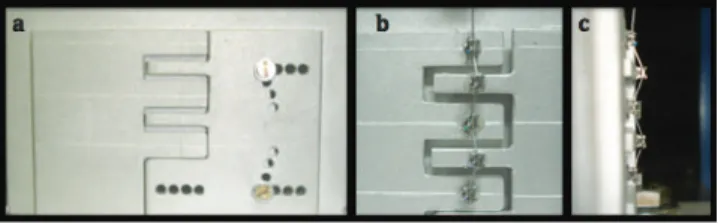
Figure 1 - A) Prototype especially designed for the present study. B) Vertical malalignment. C) Horizontal malalignment.
with the purpose of simulating a dental hemi-arch from the central incisor up to the maxillary second pre-molar. It was composed of five winglets designed to bond the brackets. Each one of the winglets had demarcations that allow bonding of the orthodon-tic accessory in a standardized verorthodon-tical position. The prototype contained screws for adjustment and spacers that allowed variation of bracket position in horizontal misalignment, as well as in vertical misalignment (Fig 1A).
The prototype face to which the brackets would be bonded was irst submitted to airborne aluminum ox-ide particle abrasion in order to increase bond strength. Each one of the three bracket groups was composed of five brackets. In the first group, In-Ovation C® es-thetic self-ligating brackets were used; in the second group, In-Ovation R® metallic self-ligating
brack-ets; while in the third group, Ovation® conventional
metallic brackets were used. All brackets slot mea-sured 0.021 x 0.028-in. Both self-ligating and con-ventional brackets were used following the Straight-Wire technique and Roth prescription. For the
Ova-tion® model, elastomeric ligatures measuring 1.2
mm in internal diameter were used to tie the wire to the slot (Morelli®, Sorocaba, Brazil).
To conduct the tests, the brackets were placed in passive position so as to prevent any possibility of torque, angulation or rotation, which could affect the results. For this purpose, a stainless steel wire 0.021 x 0.025-in guide (Morelli®, Sorocaba, Bra-zil) was used. The wire guide was set to the testing machine, passing through all the brackets. The orth-odontic accessories were then bonded to the wing-lets of the prototype using Transbond XT® resin (3M
Unitek, Monrovia, USA). This resin was light cured by means of Ultralux EL® (Dabi Atlante Indústrias Table 1 - Experimental groups.
Table 2 - Mean and standard deviation (SD) of friction force expressed in KgF for each experimental group.
Means followed by the same letters (upper case in the column and lower case in the line) are not statistically different (p > 0.05).
Bracket Alignment
In-Ovation R self-ligating metallic bracket (GAC International Inc., Bohemia, USA)
Horizontal malalignment: 1 mm
Vertical malalignment: 1 mm
Horizontal/vertical malalignment: 1 mm
Alignment: 0 mm
In-Ovation C self-ligating ceramic bracket
(GAC International Inc., Bohemia, USA)
Horizontal malalignment: 1 mm
Vertical malalignment: 1 mm
Horizontal/vertical malalignment: 1 mm
Alignment: 0 mm
Ovation conventional metallic bracket (GAC International Inc., Bohemia, USA).
Horizontal malalignment: 1 mm
Vertical malalignment: 1 mm
Horizontal/vertical malalignment: 1 mm
Alignment: 0 mm
Group Malaligment condition
0 mm 1 mm horizontal 1 mm vertical 1 mm horizontal/vertical
Mean ± SD Mean ± SD Mean ± SD Mean ± SD
Ovation 0.340Ac ±0.024 0.370Abc ± 0.024 0.480Aa ± 0.046 0.410Ab ± 0.041
In-Ovation R 0.154Bc ± 0.061 0.220Bb ± 0.033 0.061Bd ± 0.020 0.370Aa ± 0.024
position was fixed at 0 mm (using 0.019 x 0.025-in sta0.025-inless steel wire), the groups with In-Ovation R® and In-Ovation C® self-ligating brackets had the
lowest friction values. Although these values were statistically similar among groups, they differed from conventional Ovation brackets (p < 0.01).
With regard to horizontal misalignment, all groups presented significant differences. Con-ventional Ovation® bracket showed the highest
fric-tion, followed by In-Ovation R® and In-Ovation C®
brackets (p < 0.01).
Lower friction was found in In-Ovation C®
self-ligating brackets when the simulation of misalign-ment in the prototype was modified to 1 mm, verti-cally. There was no statistically significant difference
in comparison to In-Ovation R® bracket. Ovation®
bracket showed significantly higher friction (p = 0.01). In horizontal/vertical misalignment, lower
fric-tion was found for In-Ovafric-tion C® bracket, which
was statistically different in comparison to In-Ova-tion R® and Ovation® brackets, with higher friction
values (p < 0.01).
DISCUSSION
With a view to providing greater effectiveness in orthodontic mechanics, knowledge about the im-portance of friction at the bracket-wire interface is one of the most relevant factors and the objective of several research studies.2,6,13,14,18,19,20
The aim of this study was to compare friction between self-ligating and conventional ligation sys-tems in different situations: horizontal misalignment which simulates, for example, buccal displacement of teeth; vertical misalignment, which simulates infra-occlusion of maxillary canines21 and both clinical
sit-uations that may occur together. Additionally, dental alignment (no misalignment), in which only sliding mechanics is needed, was also considered. A special-ly designed prototype that allowed testing of these different situations was used. The study by Reznikov et al22 also used a methodology that allowed
horizon-tal and vertical misalignments. However, their tests did not include simultaneous misalignments, and, therefore, did not reflect the real clinical practice of orthodontic treatment.
When considering self-ligating brackets, the present study opted to use active system composed Médico-Odontológicas Ltda, Ribeirão Preto, Brazil)
for 40 seconds on each bracket.
Friction test
The prototype was coupled to the EMIC
DL-2000® precision machine (EMIC, São José dos
Pin-hais, Brazil) and the tests were conducted in dry state. The EMIC machine, with a load cell of 20 KgF, pro-moted traction of the wire inside the bracket slots af-fixed to the prototype. Traction was done at a speed of 0.5 mm/min at a trajectory of 1 mm. Data was obtained in KgF.
Four different tests were conducted based on the alignment situations: 1) horizontal misalign-ment — 1 mm (0.016-in nickel-titanium wire): horizontal variation of brackets at 1 mm, adjust-ing the position of the prototype by usadjust-ing three 1 mm-thick spacers placed between the mobile piece and base; 2) vertical misalignment — 1 mm (0.016-in nickel-titanium wire): vertical varia-tion of brackets at 1 mm by changing the posivaria-tion of the screws in the corresponding perforations; 3) horizontal/vertical misalignments– 1 mm (0.016-in nickel-titanium wire): a combination of horizon-tal and vertical misalignments; and 4) No misalign-ment — 0 mm (0.019 x 0.025-in stainless steel wire): brackets were horizontally and vertically aligned.
Each bracket/wire/adjustment combination of the prototype was tested 10 times, totaling 120 series of tests (n = 10). After each test, new elas-tomeric ligatures were placed on the conventional brackets by means of Mathieu tweezers. Nickel-ti-tanium and stainless steel wires were replaced after each bracket was tested.
Statistical analysis
Statistical tests were prepared by the SAS JMP 8®
program (SAS Institute Inc., Raleigh, NC, USA), and the Analysis of Variance complemented by Tukey’s multiple comparison test with significance level set at 5%.
RESULTS
overwhelms the frictional component and the effects of ligature type and method are minimal. Thus, fur-ther studies should confirm the effects of ligature type on friction resistance in misalignment situations.
Using a prototype in both misalignment and alignment situations led us to select orthodon-tic wires with different cross-sections. During the misalignment stages, a 0.016-in nickel-titanium wire was used, similarly to what is recommended
by Henao and Kusy.8 As for the alignment stage,
a 0.019 x 0.025-in wire was used so as to represent the treatment stage in which dental alignment has already been established. Stainless steel alloy is nor-mally recommended for this purpose for presenting less roughness than other alloys.30,33
Comparative assessment between the three brack-ets revealed that the alignment situation showed 50% lower friction in both self-ligating methods, In-Ovation R® and In-Ovation C®, in comparison with
conventional Ovation® brackets. This result suggests better performance of the self-ligating system, even when esthetic brackets are chosen, and corroborates the findings reported by Voudouris et al.23
There was a significant difference in the perfor-mance of the three bracket types used for
horizon-tal misalignment at 1 mm, in which In-Ovation C®
proved to be superior to In-Ovation R®which, in
turn, was superior to Ovation®. In this case, the
self-ligating system showed a distinct advantage over the conventional one. Considering the superiority of In-Ovation C® over In-Ovation R®, similar results
have been found in the literature.34,35 Heo and Baek35
observed that Cr-Co clips incorporated to
In-Ova-tion-C® brackets showed more freedom within the
bracket slot, thus reducing friction. However, both
In-Ovation® models use the same cobalt-chromium
clips. Therefore, the difference in friction among them must be attributed to the greater smoothness of the esthetic model.23
When the prototype was adjusted to simulate
ver-tical misalignment at 1 mm, In-Ovation C® and
In-Ovation R® brackets had statistically similar friction
values that were superior to the Ovation® bracket.
It is probable that, in addition to the action of the ligation system in friction, binding and notching ef-fects (when the wire is permanently deformed, mak-ing slidmak-ing difficult) may have decisively influenced of a flexible cobalt-chromium clip that undergoes
deflections when it is in horizontal contact with the wire. The self-ligating brackets selected were In-Ovation R®, metallic model, and its similar
es-thetic version, In-Ovation C®. Both are very similar
in design, the only difference is related to the raw material used in their fabrication. In-Ovation R® is
made through the system known as MIM (metal-in-jection-molded), while In-Ovation C® is fabricated
with the CIM system (ceramic-injection-molded)
with polycrystalline ceramic.23 The conventional
model (Ovation® ) used in the tests is also fabricated
by the MIM system.
Friction experiments rarely use brackets from the same manufacturer, but oftentimes compare brackets from different manufacturers.5,8,9,12,14,24,25,26 On the
contrary, the methods employed in this study al-lowed standardization of the raw materials and tech-nology used for the fabrication of metallic brackets, thus favoring the interpretation of results. Pizzoni et al,11 for instance, compared the frictional forces of
different brands of self-ligating brackets, and showed that different metal alloys incorporated into the com-position of clips may have influenced roughness and, consequently, friction produced by brackets.
In order to simulate a clinical situation, the pres-ent study used five brackets forming a hemi-arch from the central incisor up to the maxillary right second pre-molar, similar to the study conducted by Krishnan et al.10 In contrast, other studies27,28 used
only one bracket for each test, which may be a limi-tation when the objective is to simulate clinical prac-tice as closely as possible. Another important aspect to be discussed is that although the ideal situation was replacing brackets after each test, this was not considered in this study. Each bracket was tested ten times. In spite of that, Kapur et al29 observed that
there was neither increase nor decrease in friction when brackets were repeatedly used.
The present study used a conventional stainless steel bracket with elastomeric ligatures as control group. Elastomeric ligatures reduce chair time due to being easy to use. Some studies state that elastomeric ligatures produce more friction30,31 or similar
fric-tion32 to stainless steel ones. Thorstenson and Kusy31
sliding mechanics.36 Thus, the self-ligating system
showed lower friction than the conventional one. It is known that the critical angle (θc), which is the an-gle (θ) at which the archwire first contacts the edges of the slot, is an important factor that enhances the binding component in in vertical misalignment (or second order angulation).15 For self-ligating
brack-ets, the θc is 3.8°, whereas for conventional brackbrack-ets, the θc is 3.1°.15 This condition is especially
impor-tant for conventional brackets because the θc is easily surpassed, thereby enhancing resistance to sliding. However, when friction resistance is considered, as there was no statistically significant difference
be-tween In-Ovation R® and In-Ovation C®, binding
and notching effects may be more significant than surface roughness of the bracket slot.
Horizontal/vertical misalignment showed that bracket surface roughness is imperative in these con-ditions, since In-Ovation C® showed less friction than
In-Ovation R® and Ovation®. Similarity between the
two latter metallic brackets showed that, in this situ-ation, the ligation system is not a decisive factor, but rather the raw material used for its fabrication.
Ater individual assessment of each bracket, Ova-tion® conventional model showed higher friction when the prototype was misaligned in the vertical di-rection, only. In the horizontal and horizontal/verti-cal misalignments, values were respectively lower and similar. The lowest friction values in sliding mechanics were obtained when the brackets were aligned (0 mm) in the prototype. Once again, results suggest that bind-ing and notchbind-ing efects generated more friction than the ligation system. Apparently, horizontal misalign-ment reduces binding and notching efects, probably because the wire moves forward from the bottom of the slot, decreasing the vertical efects.
As for In-Ovation R® brackets, higher friction
was observed in the horizontal/vertical misment, followed by horizontal misalignmisment, align-ment and vertical misalignalign-ment. In the case of self-ligating brackets, rigidity of the cobalt-chromium clip showed important effects of friction in situations of horizontal misalignment. It may also be suggested that this rigidity does not allow reduction in binding and notching effects in the horizontal/vertical mis-alignment, as it occurred with conventional Ova-tion® brackets. The decisive action of the clip in the
aligned position (0 mm) may once again be observed due to the thickness of the wire, 0.019 x 0.025-in. Excessive deflection of the clip occurs because the
upper horizontal wall of In-Ovation® is 0.018-in,
while the horizontal wall of the wire is 0.025-in. This may cause extreme deflection of the clip, as-sociated with the rigidity of the Co-Cr alloy, which drastically increases friction.
One factor was of paramount importance to ex-plain the results of In-Ovation C® brackets: the clip
receives a rhodium coat34 that improves its
cosmet-ic value by removing metallcosmet-ic brightness, rendering the clip opaque. According to the manufacturer’s instructions, rhodium coat increases the rigidity of cobalt-chromium, which is a characteristic of this alloy when subjected to heat treatment. Due to this increased rigidity, it is hypothesized that the wire causes lower deflection of the clip. Thus, because the clip is not deflected in the horizontal misalign-ment; the 0.016-in wire has more space inside the slot, which results in significantly reduced friction in comparison to the same situation experienced by In-Ovation R®. Voudouris et al23 demonstrated
that the lower friction promoted by In-Ovation
C® may be attributed to the new
ceramic-inject-ed molding technique that producceramic-inject-ed a smoother, glass-like slot in In-Ovation- C®. Heo and Baek35
observed that the In-Ovation C® clip has a rounded
shape that may result in lower seating forces and lower friction. Nevertheless, all these hypotheses need to be further clarified.
It is important to point out that friction in verti-cal misalignment did not cause a great alteration in In-Ovation C® due to the rigidity of the clip. Another
interesting result may also be observed in the align-ment of the prototype brackets. There was a signifi-cant increase in friction when the 0.019 x 0.025-in wire was used, probably because there was no gap in the wire inside the slot, as occurred when the 0.016-in wire was used. In this situation, friction in In-Ovation C® bracket was similar to that found for
In-Ovation R®.
CONCLUSION
It is suggested that:
» In-Ovation R® and In-Ovation C®
self-ligating bracket systems showed lower friction at all alignment levels tested in this study in
comparison with the conventional Ovation®
bracket system, except for the horizontal/
vertical misalignment in which In-Ovation R® showed similar friction in comparison to
the Ovation® bracket.
1. Berger J, Bylof FK. The clinical eiciency of self-ligated brackets. J Clin Orthod. 2001;35(5):304-8.
2. Gandini P, Orsi L, Bertoncini C, Massironi S, Franchi L. In vitro frictional forces generated by three diferent ligation methods. Angle Orthod. 2008;78(5):917-21.
3. Harradine NW. Self-ligating brackets and treatment eiciency. Clin Orthod Res. 2001;4(4):220-7.
4. Harradine NW. Self-ligating brackets: Where are we now? J Orthod. 2003;30(3):262-73.
5. Budd S, Daskalogiannakis J, Tompson D. A study of the fricctional characteristics of four commercially available self-ligating bracket systems. Eur J Orthod. 2008;30(6):645-53.
6. Kusy RP, Whitley JQ. Frictional resistances of metal-lined ceramic brackets versus conventional stainless steel brackets and development of 3-d friction maps. Angle Orthod. 2001;71(5):364-74.
7. Cacciafesta V, Sfondrini MF, Ricciardi A, Scribante A, Klersy C, Auricchio F. Evaluation of friction of stainless steel and esthetic self-ligating brackets in various bracket-archwire combination. Am J Orthod Dentofacial Orthop. 2003;124(4):395-402.
8. Henao SP, Kusy RP. Frictional evaluations of dental typodont modelos using four self-ligating designs and a conventional design. Angle Orthod. 2005;75(1):75-85.
9. Kim TK, Kim KD, Baek SH. Comparison of frictional forces during the initial leveling stage in various combinations of self-ligating brackets and archwires with a custom-designed typodont system. Am J Orthod Dentofacial Orthop. 2008;133(2):187.e15-24.
10. Krishnan M, Kalathil S, Abraham KM. Comparative evaluation of frictional forces in active and passive self-ligating brackets with various archwire alloys. Am J Orthod Dentofacial Orthop. 2009;136(5):675-82. 11. Pizzoni L, Ravnholt G, Melsen B. Frictional forces related to self-ligating
brackets. Eur J Orthod.1998;20(3):283-91.
12. Sims AP, Waters NE, Birnie DJ. A comparison of the forces required to produce tooth movement in vitro using two self-ligating brackets and a pre-adjusted bracket employing two types of ligation. Eur J Orthod. 1993;15(5):377-85.
13. Tecco S, Festa F, Caputti S, Traini T, Di Lorio D, D’attilio M. Friction of conventional and self-ligating brackets using a 10 bracket model. Angle Orthod. 2005;75(6):1041-5.
14. Thomas S, Sherrif M, Birnie D. A comparative in vitro study of the frictional characteristics of two types of self-ligated brackets and two types of pre-adjusted edgewise brackets tied with elastomeric ligatures. Eur J Orthod.1998;20(5):589-96.
15. Thorstenson GA, Kusy RP. Resistance to sliding of self-ligating brackets versus conventional stainless steel twin brackets with second-order angulation in the dry and wet (saliva) states. Am J Orthod Dentofacial Orthop. 2001;120(4):361-70.
16. Yeh C, Kusnoto B, Viana G, Evans CA, Drummond JL. In-vitro evaluation of frictional resistance between brackets with passive-ligation designs. Am J Orthod Dentofacial Orthop. 2007;131(6):704.e11-22.
17. Ogata RH, Nanda RS, Duncanson MG, Sinha PK, Currier GF. Frictional resistances in stainless steel bracket-wire combinations efects of vertical delections. Am J Orthod Dentofacial Orthop. 1996;109(5):535-42. 18. Kusy RP, Whitley JQ, Prewitt MJ. Comparison of the frictional coeicients
for selected archwire-bracket slot combinations in the dry and wet states. Angle Orthod. 1991;61(4):293-302.
ReFeRenCeS
19. Omana HM, Moore RM, Bagby MD. Frictional properties of metal and ceramic brackets. J Clin Orthod. 1992;26(7):425-32.
20. Pratten DH, Popli K, Germane N, Gunsolley JC. Frictional resistance of ceramic and stainless steel orthodontic brackets. Am J Orthod Dentofacial Orthop.1990;98(5):398-403.
21. Franchi L, Baccetti T, Camporesi M, Giuntini V. Forces released by nonconventional bracket or ligature systems during alignment of buccally displaced teeth. Am J Orthod Dentofacial Orthop. 2009;136(3):316.e1-6.
22. Reznikov N, Har-Zion G, Barkana I, Abed Y, Redlich M. Measurement of friction forces between stainless steel wires and “reduced-friction” self-ligating brackets. J Orthod Dentofacial Orthop. 2010;138(3):330-8. 23. Voudouris JC, Schismenos C, Lackovic K, Kuftinec MM. Self-ligation
esthetic brackets with low frictional resistance. Angle Orthod. 2010;80(1):188-94.
24. Kahlon S, Rinchuse D, Robison JM, Close JM. In-vitro evaluation of frictional resistance with 5 ligation methods and Gianelly-type working wires. Am J Orthod Dentofacial Orthop. 2010;138(1):67-71.
25. Reicheneder CA, Gedrange T, Berrisch S, Prof P, Baumert U, Faltermeier P, et al. Conventionally ligated versus self-ligating metal brackets – a comparative study. Eur J Orthod. 2008;30(6):654-60.
26. Tecco S, Di Lorio D, Cordasco G, Verrocchi I, Festa F. An in vitro investigation of the inluence of self-ligating brackets, low friction ligatures, and archwire on frictional resistance. Eur J Orthod. 2007;29(4):390-7.
27. Bazakidou E, Nanda RS, Duncanson MG Jr, Sinha PS. Evaluation of frictional resistance in esthetic brackets. Am J Orthod Dentofacial Orthop. 1997;112(2):138-44.
28. Reicheneder CA, Baumert U, Gedrange T, Prof P, Faltermeier A, Muessig D. Frictional properties of aesthetic brackets. Eur J Orthod. 2007;29(4):359-65.
29. Kapur R, Sinha PK, Nanda RS. Frictional resistance in orthodontic brackets with repeated use. Am J Orthod Dentofacial Orthop. 1999;116(4):400-4. 30. Hain M, Dhopaktar A, Rock P. The efect of ligation method on friction in
sliding mechanics. Am J Orthod Dentofacial. 2003;123(4):416-22. 31. Thorstenson GA, Kusy RP. Efects of ligation type and method on the
resistance to sliding of novel orthodontic brackets with second-order angulation in the dry and wet states. Angle Orthod. 2003;73(4):418-30. 32. Edwards GD, Davies EH, Jones SP. The ex vivo efect of ligation
technique on the static frictional resistance of stainless steel brackets and archwires. Br J Orthod. 1995;22(2):145-53.
33. Hain M, Dhopaktar A, Rock P. A comparison of diferent ligation methods on friction. Am J Orthod Dentofacial Orthop. 2006;130(5):666-70. 34. Stefanos S, Secchi AG, Coby G, Tanna N, Mante FK. Friction between
various self-ligating brackets and archwire couples during sliding mechanics. Am J Orthod Dentofacial Orthop. 2010;138(4):463-7. 35. Heo W, Baek SH. Friction properties according to vertical and horizontal
tooth displacement and bracket type during initial leveling and alignment. Angle Orthod. 2011;81(4):653-61.