Printed in Brazil - ©2007 Sociedade Brasileira de Química 0103 - 5053 $6.00+0.00
Article
*e-mail: [email protected]
A Simple Colorimetric Method for the Determination of Carbofuran and its
Application in Environmental and Biological Samples
Urmila Tamrakar,a Ajai K. Pillai*,a and Vinay K. Guptab
a
Chemistry Department, Govt. V.Y.T. PG Autonomous College, Durg (C.G.) 491001, India
b
School of Studies in Chemistry, Pt. Ravishankar Shukla University, Raipur (C.G.) 492011 India
Um método espectrofotométrico simples, baseado na reação de um pesticida carbamato, carbofurano (2,3-diidro,2,2-dimetil-7-benzofuranil metil carbamato), com o sal diazônio
da p-aminoacetofenona (PAAPD) sob condições alcalinas é descrito. O corante laranja
formado pela reação do pesticida com o PAAPD foi medido em 460 nm. A lei de Beer é
obedecida no intervalo de concentração de 0,1 a 1,2 µg mL-1 de carbofurano em uma solução
final de 25 mL. A absortividade molar e sensitividade de Sandell encontradas foram 1,2×10⁵
L mol-1 cm-1 e 0,0014 µg cm-2, respectivamente. As condições ótimas de reação e outras
condições analíticas foram avaliadas. O efeito de íons interferentes na determinação de carbofurano é descrito. O método foi aplicado com sucesso na determinação de carbofurano em arroz, germe de trigo e várias amostras biológicas e ambientais. Os resultados obtidos foram comparados com outros métodos espectrofotométricos e cromatográficos estabelecidos para carbofurano.
A simple spectrophotometric method based on the coupling of a carbamate pesticide, carbofuran (2, 3-dihydro, 2, 2-dimethyl-7-benzofuranyl methyl carbamate) with diazotized
p-aminoacetophenone (DPAAP) under alkaline condition is described. The orange dye
formed by coupling of the pesticide with DPAAP was measured at 460 nm. Beer’s law is
obeyed over the concentration range of 0.1 to 1.2 µg mL-1 of carbofuran in a final solution
of 25 mL. Molar absorptivity and Sandell’s sensitivity were found to be 1.2×10⁵ L mol-1 cm-1
and 0.0014 µg cm-2 respectively. The optimum reaction condition and other analytical
conditions were evaluated. The effect of interfering ions on the determination of carbofuran is described. The method has been successfully applied to the determination of carbofuran in rice, wheat and various environmental and biological samples. The results obtained were compared with other spectrophotometric and chromatographic methods reported for carbofuran.
Keywords: spectrophotometric method, 2,3-dihydro-2, 2-dimethyl-7-benzofuranyl
methylcarbamate, p-aminoacetophenone, environmental and biological samples
Introduction
Carbofuran (2,3-dihydro-2, 2-dimethyl-7-benzofuranyl methylcarbamate) is also known as Furadan, FMC, Curraterr and Yaltox. It is an effective contact and systemic broad-spectrum carbamate insecticide and acarcicide.1-3 Carbofuran is registered for use in a variety of fruits, vegetables, grains and crops. It is widely used for protection of sugar beet seed, sorghum seeds and seedling from insect, pests in soil.4-6 Carbofuran is highly toxic for mammals. The acute oral LD50 value of carbofuran for rats is 5.0 mg kg-1.7 Its toxic properties
acid,17p-aminoantipyrine,18 2,4-dinitroaniline,19 p-anisidine20 have also been reported for its determination. These methods suffer from some drawbacks like instability of color, interference from foreign ions, use of toxic reagents etc.
In the present work, a simple sensitive spectro-photometric method using a non-toxic reagent
p-aminoacetophenone is reported for the determination of carbofuran in various environmental, biological and grain samples. The reaction is based on the coupling of carbofuran with diazotized p-aminoacetophenone in alkaline condition. The absorbance of the resulting azo dye was measured at 460 nm. The proposed method has been applied for the determination of carbofuran in various environmental and biological samples.
Experimental
Apparatus
A Toshniwal TSVP model 25 visible spectrophotometer and a systronics digital pH meter model 335, was used for spectral and pH measurement respectively.
Reagents
All chemicals used were of analytical grade reagent or the best available quality and double distilled water was used throughout the experiment. 1 mg mL-1 Stock solution of carbofuran (Rallis India) was prepared in glacial acetic acid (1:10). Working standard was prepared by appropriate dilution of the stock solution. A 2 mol L-1 Sodium hydroxide solution (Loba chemie, Mumbai) was prepared. A 1% (m/ v) p-aminoacetophenone (PAAP) (Loba chemie, Mumbai) was prepared in (1:5) hydrochloric acid. A 0.2% (m/v) Sodium nitrite (Loba chemie, Mumbai) aqueous solution was prepared daily. A 3% (m/v) Sulphamic acid (Loba chemie, Mumbai) aqueous solution was used.
Diazotized p-aminoacetophenone (DPAAP)
Around 1% PAAP was dissolved in (1:5) hydrochloric acid. To it 0.2% sodium nitrite solution was added and kept in an ice bath for 10 min for complete diazotization. Excess nitrite was removed by addition of 1mL of 3% sulphamic acid.
Preparation of calibration curve
An aliquot containing 4-32 µg of carbofuran was taken in a 25 mL graduated test tube. To it 2 mL of DPAAP was added and kept for 5 min, after which 3 mL of NaOH was
added to it. An orange yellow dye was formed (Scheme 1). The solution was made up to the mark with distilled water. The dye was measured at 460 nm against double distilled water as reagent blank, which gave negligible absorbance at this wavelength (Figure 1).
Determination of carbofuran in polluted water, soil and foliages
Agricultural wastewater samples were taken from a field, where carbofuran had been sprayed as an insecticide and extracted with 2 × 10 mL portion of chloroform. The chloroform extract was then evaporated to dryness and the residue was dissolved in 10 mL of (1:10) acetic acid. Aliquots were taken in 25 mL graduated test tube, coupled with DPAAP followed by addition of 3 mL of NaOH and analyzed. Soil and foliage samples were taken from an agricultural field, where carbofuran had been used for insect control. These samples were weighed and extracted with 2 × 10 mL chloroform and analyzed by the proposed method (Table 3).
Determination of carbofuran in rice and wheat
10 g of rice and wheat samples were taken in a conical flask and fortified with known amount of carbofuran and extracted with 2 × 10 mL of chloroform. The samples were subsequently analyzed by the reported method (Table 4).19
Figure 1. Absorption spectra of carbofuran at 18 µg per 10 mL of con-centration.
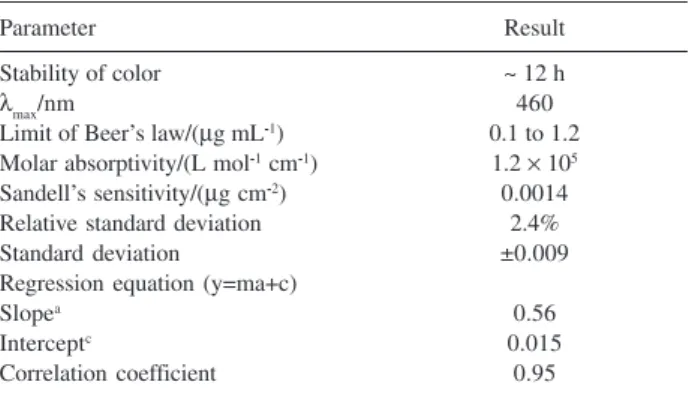
Table 1. Spectral and statistical parameters
Parameter Result
Stability of color ~ 12 h
λmax/nm 460
Limit of Beer’s law/(µg mL-1) 0.1 to 1.2 Molar absorptivity/(L mol-1 cm-1) 1.2 × 10⁵ Sandell’s sensitivity/(µg cm-2) 0.0014
Relative standard deviation 2.4%
Standard deviation ±0.009
Regression equation (y=ma+c)
Slopea 0.56
Interceptc 0.015
Determination of carbofuran in biological samples
The presence of carbofuran has been reported in blood and urine samples.21 Spiked samples were prepared by adding known amount of carbofuran in blood and urine samples. The samples were deproteinised with trichloroacetic acid22 and extracted with 2 × 5 mL of chloroform. The chloroform extract was than evaporated to dryness and the residue was dissolved in 10 mL of (1:10) acetic acid. Aliquots were taken in 25 mL graduated test tube and analyzed as described above (Table 5).
Results and Discussion
Spectral characteristic
The color system shows maximum absorbance at 460 nm. All spectral measurements were carried out against demineralized water.
Adherence to Beer’s law, molar absorptivity, Sandell’s sensitivity
The response was linear between concentration range 4 to 32 µg of carbofuran per 25 mL (0.1 to 1.2 µg mL-1).
The molar absorptivity and Sandell’s sensitivity were found to be 1.2 × 10⁵ L mol-1 cm-1 and 0.0014 µg cm-2 respectively (Table 1).
Effect of acidity
The effect of acidity for the diazotization was studied ranging from 0.1 to 5 mol L-1. It was found that ~2.4 mol L-1 HCl was necessary for complete diazotization.
Effect of nitrite concentration
It was found that 1.3 mL of 0.2% sodium nitrite was sufficient for complete diazotization. It gives constant and maximum absorbance. Excess nitrite was removed by sulphamic acid.
Effect of alkalinity
It was found that 3 mL of 2 mol L-1 NaOH was sufficient for complete color development. More than 3 mL of NaOH decreased the absorbance.
Effect of pH
Maximum absorbance and stability of the dye was observed between pH 12-13, below or above which the absorbance value decreased.
Effect of diazotized DPAAP
It was found that 2 mL of DPAAP solution was sufficient for constant and maximum absorbance.
Effect of time and temperature
Diazotization of PAAP was completed in 15 min at temperature below 5 °C. The coupling reaction was optimized at room temperature. At higher temperature absorbance as well as stability of dye decreased. The color of the dye formed by the reaction was found to be stable for ~12h.
Effect of foreign species
The effect of common foreign species and pesticides, which are likely to interfere in the proposed reaction for the determination of carbofuran, was studied. Known amount of foreign species and pesticides were added to a standard solution containing 18 µg of carbofuran in 25 mL of final solution, prior to
Table 2. Effect of foreign species and pesticides
Effect of foreign species Tolerance limit*/
and pesticides (µg mL-1 )
Ethanol 10,000
Methanol 8,750
Formaldehyde 1,000
Carbosulfan 250
Phorate 800
Ethyl parathion 500
Nitrophenol 150
Cresol 150
*The amount causing an error of ± 2% in absorbance value.
coupling with DPAAP and then analyzed by the proposed method (Table 2).
Reproducibility
Reproducibility of the method was checked by the replicate analysis of solution containing 18 µg per 25 mL of carbofuran over a period of 7 days. The standard
Table 3. Determination of carbofuran in spiked water, soil and foliage samples
Samples Amount of carbofuran Amount of carbofuran Recovery/(%)
addeda/µg founda/µg (A) (B)
Waterb (10 mL) 5.00 4.87 97.40 96.60
10.00 9.79 97.90 98.00
Soilc (1 g) 5.00 4.90 98.00 97.20
10.00 9.82 98.20 97.00
Foliage 5.00 4.85 97.00 96.00
10.00 5.09 90.91 81.62
aMean of six replicate analysis; bamount of water samples taken (10 mL); camount of soil samples taken (1 g). (A) Proposed method and (B) reported method.19
Table 4. Determination of carbofuran in spiked wheat and rice grain
Samples Amount of carbofuran addeda/µg Amount of carbofuran founda/µg Recovery/(%)
(A) (B) (A) (B)
Riceb (1g) 10.00 9.76 9.60 97.60 96.00
20.00 19.25 19.00 97.20 95.00
Wheatc (1 g) 10.00 9.58 9.50 95.80 95.00
20.00 18.85 18.50 94.21 92.50
aMean of six replicate analysis; b amount of rice samples taken (1 g); camount of wheat samples taken (1 g). (A) Proposed method and (B) reported method.19
Table 5. Determination of carbofuran in biological samples
Samples Amount of carbofuran addeda/µg Amount of carbofuran founda/µg Recovery/(%)
(A) (B) (A) (B)
Bloodb (1 mL) 5.00 4.92 4.98 98.20 97.80
10.00 9.76 9.72 97.60 97.20
Urineb (1 mL) 5.00 4.93 4.90 98.60 98.00
10.00 9.88 9.76 98.80 97.60
aMean of six replicate analysis; bamount of samples taken (mL). (A) Proposed method and (B) reported method.19
deviation and relative standard deviation were found to be ± 0.009 and 2.4% respectively (Table 1).
Conclusions
The proposed method provides a simple method for determination of carbofuran and was found to be free from the interference of a large number of foreign species and
Table 6. Comparison with other reported spectrophotometric and chromatographic methods
Reagent λmax/(nm) Limit of Beer’s Law/(µg mL-1) Remarks
Spectrophotometric methods
p-aminoantipyrine18 475 0.5-20 Less stable
p-aminobenzoic acid17 490 0.4-12 Poor sensitivity
p-anisidine20 660 0.1-1.2 Reagent highly toxic
2,4-dinitroaniline19 526 0-10 Less sensitive
p-aminoacetanilide16 465 0.5-16 Less sensitive
p-aminoacetophenone 460 0.1-1.2 Non-toxic, dye remains
(present work) stable for ~12h.
Chromatographic methods
HPLC11 – 0.05-0.1 Methods are very sensitive
SPME-HPLC12 205 1 × 10⁻⁹ but instruments are
toxic reagents. The method was compared with other spectrophotometric and chromatographic methods (Table 6). The method has been found to be superior to other spectrophotometric methods, while chromatographic methods although superior involves tedious steps. The method was applicable in soil, water, grains and biological samples.
Acknowledgment
The Authors are grateful to Govt. V.Y.T. PG Autonomous College, Durg (C.G.) for providing laboratory facilities.
References
1. Chopra, S. L.; Kanwar, J. S.; Analytical Agricultural Chemistry, 4th ed., Kalyani Publishers: Ludhiana, 1991, p. 421. 2. Stevens, R. W.; Pesticides in the Environment, Part 1, Marcel
Dekker Interscience: New York, 1977, vol.1, p. 112. 3. Hill, E. F.; Camardese, M. B.; Ecotoxicol. Environ. Saf. 1984,
8, 55.
4. Hamm, J. G.; The Handbook of Pest Control; Fredrick Fell Publishers Inc.: New York, 1982, p. 55.
5. Heijbroek, W.; Hujibregts, A.W.M.; Crop. Prot. 1995, 14, 365. 6. Tobin, J. S.; Journal of Occupational Medicine 1970, 12, 16. 7. Sutt, D. L.; Crop. Prot. 1987, 6, 371.
8. Toxic and Hazardous Industrial Chemical, Safety Manual for
Handling and Disposal with Toxicity and Hazard Data;
International Technical Information Institute: Japan, 1994, p. 357. 9. Cohen, S. M.; Cano, M.; Johnson; L. S.; John, M. K.; Asmoto, M.; Gerland, E. M.; Tyssen, J. H.; Sangha, G. K.; Van Goethem, D. L.; Carcinogenesis 1994, 15, 2593.
10. Sharma, B.; Gopal, K.; Toxicol. Environ. Chem. 1995, 47, 89. 11. Krause, R. T.; J. Chromatogr.1988, 17, 333.
12. Aulakh, J. S.; Malik, A. K.; Kaur, V.; Kopplin, P. S.; Anal. Chem.
2005, 35, 71.
13. Sucsse, H.; Mucller, H. J.; Chromatogr. A 1996, 730, 337. 14. Quintero, M. D. C.; Silva, M.; Perez, D.; Analyst 1989, 114,
497.
15. Agrawal, O.; Gupta, V. K.; Microchem. J. 1999, 62, 147. 16. Harikrishna, V.; Prasad, B.; Naidu, N. V. S.; J. Indian Chem.
Soc. 2005, 82, 185.
17. Rajeshwari, C. V.; Naidu, P. R.; J. Food Sci. Technol.1986, 23, 101.
18. Appaiah, K. M.; Ramkrishna, K. R.; Rao, S.; Nagaraja, K. V.; Kapoor, O. P.; J. Food Sci. Technol. 1982, 19, 211.
19. Harikrishna, V.; Prasad, B.; Naidu, N. V. S.; Journal of the
Indian Council of Chemists 2003, 20, 42.
20. Kesari, R.; Das, J. V.; Gupta, V. K.; J. Ind. Chem. Soc. 1999,
75, 182.
21. Os’ Kina, V. N.; Gig. Sanit. 1982, 7, 45 (Russ); Anal. Abst.
1983, 45, 112 (Eng.).
22. Aldridge, W. N.; Analyst 1994, 334.