ABSTRACT
The hypophosphatemic conditions that interfere in bone mineralization comprise many hereditary or acquired diseases, all of them sharing the same pathophysiologic mechanism: reduction in the phosphate reab-sorption by the renal tubuli. This process leads to chronic hyperphospha-turia and hypophosphatemia, associated with inappropriately normal or low levels of calcitriol, causing osteomalacia or rickets in children and osteomalacia in adults. X-linked hypophosphatemic rickets, autosomal-dominant hypophosphatemic rickets, and tumor-induced osteomalacia are the main syndromes involved in the hypophosphatemic rickets. Although these conditions exhibit different etiologies, there is a common link among them: increased activity of a phosphaturic factor, being the fibroblast growth factor 23 (FGF-23) the most studied one and to which is attributed a central role in the pathophysiology of the hyperphosphaturic disturbances. Activating mutations of FGF-23 and inactivating mutations in the PHEX gene (a gene on the X chromosome that codes for a Zn-met-aloendopeptidase proteolytic enzyme which regulates the phosphate) involved in the regulation of FGF-23 have been identified and have been implicated in the pathogenesis of these disturbances. Genetic studies tend to show that the phosphorus homeostasis depends on a complex osteo-renal metabolic axis, whose mechanisms of interaction have been poorly understood so far. This paper reviews the current knowledge status concerning the pathophysiology of phosphate metabolism regulation and the pathophysiologic basis of hypophosphatemic rickets. It also ana-lyzes the clinical picture and the therapeutic aspects of these conditions as well. (Arq Bras Endocrinol Metab 2006;50/4:802-813)
Keywords: Hypophosphatemic rickets; Osteomalacia; FGF-23; PHEX gene; Phosphate metabolism
RESUMO
Raquitismo Hipofosfatêmico e Osteomalácia.
Os distúrbios hipofosfatêmicos que comprometem a mineralização óssea englobam várias doenças, hereditárias e adquiridas, as quais compartilham um mesmo mecanismo fisiopatológico: a diminuição da reabsorção de fosfato nos túbulos renais. Este processo promove hiper-fosfatúria e hipofosfatemia crônicas, associadas a níveis inapropriada-mente normais ou baixos de 1,25 (OH)2D3, com conseqüente desordem do metabolismo ósteo-mineral, resultando em raquitismo e osteomalá-cia na faixa etária pediátrica e em osteomaláosteomalá-cia nos adultos. O raquitismo hipofosfatêmico ligado ao X, o raquitismo hipofosfatêmico autossômico dominante e a osteomalácia induzida por tumor são as principais síndromes que constituem os raquitismos hipofosfatêmicos. Apesar de estas doenças apresentarem etiopatogenias distintas, as evidências bioquímico-moleculares indicam uma base fisiopatológica em comum: maior atividade de um agente fosfatúrico, sendo o fator de crescimento do fibroblasto 23 (FGF-23) o mais estudado e ao qual é atribuído um papel central na fisiopatologia destes distúrbios. Várias mutações ativadoras do gene do FGF-23 e mutações inativadoras do
H ami lton de Menezes Fi lho
Lui z Claudi o G. de Castro
D ur val D ami ani
Pediatric Endocrinology U nit, Instituto da Criança – H ospital das Clínicas, São Paulo U niversity Medical School – U SP (H CMF e DD), São Paulo, SP; and Pediatric Endocrinology U nit, Departm ent of Pediatrics, Medicine College, Brasília U niversity – U nB (LCGC), Brasília, DF, Brazil.
gene localizado no cromossomo X que codifica uma enzima proteolítica Zn-metaloendopeptidase regu-ladora do fosfato (PHEX), implicada na regulação do FGF-23, já foram identificadas, e sua partici-pação reconhecida na gênese destes distúrbios. Os dados dos estudos genéticos nesta área convergem para a hipótese de que a homeostase do fósforo estaria vinculada a um complexo eixo metabólico ósteo-renal, cujos mecanismos de interação entre seus vários componentes têm sido aos poucos eluci-dados. Este artigo revisa o atual estado de conheci-mento dos mecanismos fisiológicos envolvidos na regulação do metabolismo do fosfato, das bases fisiopatológicas dos raquitismos hipofosfatêmicos e analisa aspectos clínicos e de tratamento disponíveis para estas condições. (Arq Bras Endocrinol Metab 2006;50/4:802-813)
Descritores:Raquitismo hipofosfatêmico; Osteomalá-cia; FGF-23; Gene PHEX; Metabolismo do fosfato
T
H E BO NE TISSU E IS A H IGH LY dynamic structure throughout life. It has well known metabolic and mechanical functions, which are essential for the body homeostasis. Bone-mineral metabolism is coordinated by an intricate physiological network and reflects a con-tinuous interaction between genetics and environment, with ontogenetic particularities in each development stage. During fetal life, childhood and adolescence bone-mineral metabolism moves toward bone formation and modeling, promoting skeleton growth through changes in bone dimensions, geometry and density. Meanwhile, bone-remodeling process occurs continuously through-out life and consists in substitution of old bone by new one. This renewal process is elementary to maintain the bone resistance and quality and for the integrity of the body physiology as well, since bone is an ion reservoir tis-sue, mainly for calcium and phosphorus, critical elements for the systemic electrolytic equilibrium.Bone-mineral homeostasis is complex and some of its pathways have not been completely elucidated yet. The parathyroid hormone (PTH )-calcitonin-1,25(O H )2Vitamin D3 (calcitriol) axis plays a
funda-mental role in this bone-mineral metabolism, but it could not respond alone for the whole dynamics of this equilibrium (1). The ascertainment of other involved regulatory biochemical-molecular mecha-nisms has been possible after studies of phosphate-wasting bone diseases, such as hypophosphatemic rick-ets (2). Cumulated data from in vitro and in vivo researches, with human and animal models, converge toward the hypothesis of a bone-renal axis controlling this homeostasis (1,3).
Rickets are metabolic bone diseases, character-ized by impaired mineralization of the osteoid matrix during growth, affecting epiphyseal growth plate and compromising both cortical and trabecular bone. O steomalacia, at the other hand, refers to a deficient mineralization of the osteoid matrix in modeling and remodeling sites (4), injuring the corticoendosteal tis-sue. In pediatric ages, rickets and osteomalacia may happen simultaneously, but after growth plate closure only osteomalacia may occur. Rickets and osteomala-cia can result from vitamin D deficiency (nutritional or metabolic disturbances), calcium and/ or phosphorus deficiency and primary bone mineralization defects (hereditary hypophosphatasia) (5).
Rickets and osteomalacia secondary to vitamin D deficiency and/ or low calcium intake in the XXI century has been a delicate theme. Recently, local and regional studies have recorded higher than expected vitamin D deficiency prevalence, mainly in high lati-tude regions, due to insufficient ultraviolet light expo-sure, but also in other countries, like France and U nit-ed States, affecting urban healthy adolescents (6-8). This kind of rickets may also be related to specific sit-uations, such as whole body covering dressing (due to religious habits), people with dark pigmented skins who live in temperate climate (due to melanin compe-tition for ultraviolet rays), elderly people, vegetarians, restrictive diets and exclusive breastfeeding for long periods (9,10).
In developed countries, hypophosphatemic rickets (H R) are the main cause of inherited rickets (11). Initially, H R was seen as Vitamin D resistant rickets, once the lack of response to therapy was thought to be a Vitamin D resistant state. Since than, many studies have been performed and they managed to show that this disturb was consequence of a hyper-phosphaturic disorder (12). Important advances in our current understanding of the molecular and biochem-ical bases of H R have been brought after the develop-ment of new molecular techniques and improved genomic databases (2).
H R comprises a set of disorders, inherited and acquired, that shares a common pathophysiology: diminished phosphate reabsorption in renal tubules (3,13-15). This process, established by an impaired phosphorus renal handling, leads to chronic hyper-phosphaturia and hypophosphatemia, which are asso-ciated to unsuitable normal or low levels of 1,25(O H )2VitaminD3. This phosphorus-wasting
X-linked hypophosphatemic rickets (XH R), autosomic dominant hypophosphatemic rickets (AD H R) and tumor-induced osteomalacia (TIO ) are the main syndromes that integrate the hypophos-phatemic rickets, being the XH R the most frequent one (16,17).
Although these diseases have different etiopath-ogenies, biochemical and molecular evidences point to a common pathophysiological basis: increased activity of a phosphaturic factor (2,13-15). There are some other bone diseases associated with phosphaturic imbalance, such as hereditary hypophosphatemic rick-ets with hipercalcemia (H H RH ) and M cC une Albright Syndrome (3).
PHOSPHORUS METABOLISM
Phosphorus plasma levels are kept within a narrow range and they are under the influence of many factors, such as age, sex, diet, plasma pH and hormones. The appropriate phosphorus serum concentrations are essential to bone mineralization. Beyond this, phospho-rus regulation is mandatory to the integrity of some biochemical process, like intracellular energy generation and transference, signaling transduction, nucleotides metabolism and some enzymatic activities (20).
Approximately 70% of plasma phosphorus is present in an organic form and 30% in an inorganic form. Just 15% of inorganic phosphorus is bound to proteins, while 85% circulates as free phosphate ions or in complex compounds with sodium, magnesium and calcium. Inorganic orthophosphate is the circulating compound used for measurement of phosphorus plas-ma concentrations. O ne relevant point is that phos-phatemia decreases progressively with age. Reference ranges are different according to ages: before 3 months of age, normal values stay between 4.8 and 7.4 mg/ dl; from 1 to 5 years, between 4.5 and 6.2 mg/ dl; from 6 to 12 years, between 3.6 and 5.8 mg/ dl and in young adults it ranges from 2.5 to 4.5 mg/ dl (21).
Phosphorus metabolism is intricate. Phos-phatemia levels result from the balance among phos-phorus intestinal absorption, tubular reabsorption and ion exchange between intracellular and bone pools. While intestinal phosphorus absorption is adjusted rather slowly for maintaining or regaining the mineral homeostasis, renal phosphorus balance can be adjust-ed quite fast.
The main organ responsible for phosphorus homeostase is the kidney (2,3). In addition to the well-known PTH -calcitriol axis, other components
participate actively on this regulation. Amongst the most important contributing data to the knowledge of phosphorus physiology, one can point out the elucida-tion of part of the role of sodium-dependent phos-phate co-transporter proteins (N aPiT-I, II and III) and the fibroblast growth factor 23.
N aPiT co-transporter system is present in many tissues. N aPiT-IIb is found mainly in the small bowel (jejune), where it participates of the dietary phospho-rus absorption process (22).
Renal proximal tubular reabsorption of phos-phorus is a critical variable for the systemic phospho-rus homeostasis. This process encompasses a secondary active phosphorus transport mechanism, in which sodium-phosphate (N a/ Pi) co-transport systems play a
primordial role. Type I (N aPiT-I) and types IIa and IIc (N aPiT-IIa e IIc) are expressed on the brush bor-der membrane of proximal tubules, where 85% of the filtered inorganic phosphorus (Pi) is reabsorbed, rest-ing just a small amount to be reabsorbed in the H enle loop and in distal tubules (23,24). In the proximal tubule, a N a+/ K+ ATPase displaces sodium outward
the cell. D ue to a sodium concentration gradient and N aPiT-II co-transporters, sodium returns to the cell, bringing phosphorus together.
Type III co-transporters (N aPiT-III) are retro-viral receptors expressed in many tissues, responsible for less than 1% of the mRN A related to N aPiT co-transporters and they probably act as house-keeping transporters (24).
FGF-23, the largest member of the fibroblast growth factor family (FGF), contains 251 amino acids and it is encoded by a gene in 12p13 (34). It is syn-thesized by osteogenic cells, osteoblasts and osteo-cytes. This protein displays N aPiT-IIa and IIc inhibi-tion activity and exerts a regulatory role in phospha-turia (3,25), being postulated that it is a “phosphaturic factor” also called phosphatonin. FGF-23 also inhibits renal 25(O H )-1-α-hydroxylase activity, leading to a decreased calcitriol synthesis (3). The exact role of this factor in phosphorus homeostase is not completely known yet. Its plasma levels are positively correlated to dietary phosphorus and to phosphaturia and negative-ly related to 1,25(O H )2 Vitamin D3 plasma levels.
Animal models show that 1,25(O H )2VitaminD3 and
phosphatemia regulate, independently, FGF-23 con-centrations (27).
The phosphorus tubular reabsorption is also stimulated by hormones and cytokines, such as PTH , GH , IGF-1, insulin, epidermal growth factor, thyroid hormones, glucocorticoids and 1,25(O H )2Vitamin D3
tubu-lar reabsorption intensity are inversely related. PTH , calcitonin, natriuretic factor and glucocorticoids inhib-it this reabsorption. PTH and FGF-23 act as phospha-turic agents, reducing phosphorus reabsorption in the proximal tubules, through N aPiT-II co-transporters inhibition. Although PTH main function is related to calcium homeostasis, it also takes part in phosphorus metabolism. This hormone inhibits N aPiT-II expres-sion, promoting internalization of this co-transporter and its lisossomal degradation (28,29), reducing its synthesis (30), thus down-regulating its expression on the cell surface.
HYPOPHOSPHATEMIC RICKETS – PATHOPHYSIOLOGY
X-linked hypophosphatemic rickets (XH R), autosomic dominant hypophosphatemic rickets (AD H R), tumor induced osteomalacia (TIO ), fibrous dysplasia and McCune Albright Syndrome share a common under-lying pathophysiological condition: increased phos-phorus renal loss secondary to augmented FGF-23 plasma levels and activity.
In XH R, hyperphosphaturia derives from muta-tions in the PH EX gene (Phosphate regulating gene with homologies to Endopeptidases on the X-chro-mossome) (1-3,13-16). This gene, whose locus is Xp22.1, encodes a membrane endopeptidase (Zn-metaloprotease), called Phex, mainly expressed in bone and teeth. Recent data indicate that this enzyme integrates the phosphate-handling processes, regulat-ing FGF-23 synthesis and/ or degradation.
Some studies have shown that Phex promotes FGF-23 cleavage, originating two smaller and inactive peptides (31). Physiologically, Phex-induced FGF-23 cleavage would regulate phosphorus reabsorption in proximal tubules: an increase in Phex action would increase the inactivation of FGF-23 and increase phos-phorus reabsorption.
The mutations in PH EX gene associated to XRH yield a decrease or absence of action of Phex, thus increasing FGF-23 actions and inhibiting the inactivation of N aPiT-II co-transporters, leading to increased phosphorus tubular reabsorption (1-3,13-16). Although Phex actions on FGF-23 would explain the pathophysiology of XH R, some studies have shown FGF-23 cleavage by convertases, not by Phex endopeptidase (32). O ther researches did not manage to confirm that FGF-23 actually is the Phex direct sub-strate (33), suggesting that this metaloendopeptidase might act through another regulatory mechanism on
FGF-23. Some authors point out the likelihood of being intermediate pathways between Phex and FGF-23, which would promote FGF-23 inactivation and that Phex would trigger chain reactions as well, in order to modulate osteoblast FGF-23 expression (33). Then, it is postulated that in XH R PH EX gene mutations inhibit FGF-23 inactivation and/ or pro-mote increase of its plasma levels, yielding to hyper-phosphaturia (2,3,34-36). In addition to that, FGF-23 increased action inhibits 1a-hydroxylase, the responsi-ble enzyme for 25(O H )VitaminD (calcidiol) conver-sion to its active form, 1,25(O H )2VitaminD
(calcitri-ol). Through this mechanism, the rise of calcitriol in the plasma is avoided, contributing to enhance hypophosphatemia (2). This way, rickets related to FGF-23 increased activity do not evolve with calcitriol higher levels, although hypophosphatemia would be a natural stimulus for that augmentation.
AD H R is less frequent genetic cause of hypophosphatemic rickets secondary to hyperphos-phaturia. It is caused by activating missense mutations in FGF-23 gene, affecting one of the two arginines in locus 176 or 179. Identified mutations are R179Q , R176Q , R179W and they alter the natural sequence that is recognized by proteases, making them resistant to proteolysis (35,37). The outcome is an increased plasma level of FGF-23. The mutant FGF-23 bears higher biological potency than the wild type (38) in decreasing the expression of co-transporters N aPiT-II encoding genes and as inhibitor of 1α-hydroxylase activity (2,39).
TIO is a paraneoplastic syndrome that leads to an acquired hypophosphatemic hyperphosphaturic type of rickets. It is related to mesenchymal or mixed connective tissues tumors, generally benign, that occur chiefly in head and neck, and less frequently in bones and other tissues (40,41). The most common types are the vascular neoplasms (hemangiopericytomas). O ther types include fibromas, condrosarcomas, hystiocy-tomas, neuroblastomas and prostate carcinoma (40,41).
These tumors overproduce FGF-23 and this excessive amount cannot be adequately degraded by Phex (35), taking into account the hypothesis that this factor is the peptidase substract, or by another specific proteolytic enzyme. This results in increased phospha-turia and inhibition of 1α-hydroxylase (2,40). Although FGF-23 levels are generally elevated, they may be inside normal range in some cases (36,41).
(matrix extracelular phosphoglicoprotein) e sFRP-4 (secreted Frizzled Related Protein). Initially, it was thought that MEPE would suffer proteolysis by Phex. N evertheless, this hypothesis was not confirmed by in vitro models. Some studies suggest that MEPE would exert its role on mineralization through not elucidated Phex-dependent mechanisms (3). The sFRP-4 protein is a renal Wnt signaling extracellular antagonist, which inhibits N aPiT-II co-transporter and promotes phos-phaturia (42). N evertheless, the mechanisms that these proteins regulate phosphorus homeostasis have not been elucidated yet.
The epidermal nevus syndrome and type 1 neu-rofibromatosis may, rarely, be associated with hypophosphatemic rickets and hyperphosphaturia due, probably, to increased secretion of FGF-23 by cells from nevus or neurofibromas (43,44). Although there are some variants of TIO , the resection of the nevus may not result in normalization of clinical and labora-tory alterations (45).
The fibrous dysplasias, monostotic or polyostot-ic, are caused by activating mutations of GN AS1 gene that result in constitutive activating of adenyl cyclase by mutant a subunit. The involvement of cells of the osteogenic lineage affects the osteoprogenitor cells and differentiated osteoblasts, resulting in marrow infiltra-tion and fibrosis, reducinfiltra-tion of hematopoietic tissue and formation of abnormal bone tissue with altered trabec-ulae, collagen orientation and biochemical composition (46). The polyostotic fibrous dysplasia may occur alone or associated to other signs and symptoms, as in McCune-Albright syndrome which, beyond the bone lesions, is characterized by large and hyperpigmented lesions of skin, with irregular borders and a typical brown coloration (“café-au-lait”) and hyperfunction of peptide hormones that act through a coupled G recep-tor (gonadotrophins, TSH , PTH , ACTH and GH RH ), where the gonadotrophin independent precocious puberty is the most common hormone dys-function. In fibrous dysplasia, and especially in polyos-totic lesions (associated or not to McCune-Albright syndrome), the excessive production of FGF-23 by osteoprogenitor cells may result in hyperphosphaturia, reduction of the activity of 1α-hydroxylase and hypophosphatemic rickets or osteomalacia (26,47).
The hereditary hypophosphatemic rickets with hypercalciuria (H H RH ) is an autosomal recessive dis-ease characterized by hypophosphatemia, hyperphos-phaturia, normal PTH serum levels and increased plas-ma levels of 1,25(O H )2 Vitamin D3, that is
responsi-ble for hypercalciuria (2,18). The increased plasma lev-els of 1,25(O H )2VitaminD3 and the hypercalciuria
distinguish the H H RH from the other causes of hypophosphatemic rickets. The most recent evidences show that H H RH is associated to mutations that affect the two alleles of gene SLC34A3, responsible for N aPiT-II transporter activity, rendering the
co-transporter inactive (19). The heterozygotes for muta-tion in SCL34A3 gene present hypercalciuria with mild or absent hypophosphatemia (19).
Studies of the 3 main types of hypophos-phatemic rickets (XH R, AD H R and TIO ) suggest a common pathophysiologic underlying mechanism: hyperphosphaturia secondary to reduction of tubular phosphate reabsorption. Researches on these diseases indicate the existence of a metabolic bone-renal axis capable to regulate the phosphorus homeostasis and the bone mineralization. FGF-23 seems to have a cen-tral role on this axis (2,3,34) through its phosphaturic action and its autocrine action on osteoblasts, modu-lating, thus, bone mineralization. Alterations in FGF-23 metabolism, due to inhibition of its proteolytic cleavage or to its increased resistance to proteolysis, trigger disturbances in phosphorus homeostasis and in bone-mineral metabolism.
Some authors suggest that the osteoblasts are the candidate cells to assume the metabolic coordina-tion of this bone-renal axis, once they synthesize pro-teins that have important role in phosphorus home-ostasis and in osteoid mineralization, including FGF-23, Phex, MEPE, and express elements that regulate bone mineralization, bone mass and renal phosphate conservation (3).
CLASSIFICATION
The growing importance of FGF-23 controlling phos-phorus homeostasis and phosphaturia has brought the interest to propose the following classification for hypophosphatemic rickets or osteomalacia.
Causes of hypophosphatemic rickets or osteo-malacia with increased plasma FGF-23
• Increased plasma FGF-23 due to inadequate prote-olysis:
- Impaired FGF-23 proteolysis caused by deficient action of mutant Phex: XH R
- Inadequate proteolysis of FGF-23 due to prote-olysis-resistant mutant FGF-23: AD H R
• Increased production of FGF-23:
- Increased production of FGF-23 by mesenchymal tumors: TIO
osteoproge-nitor cells and osteoblasts: fibrous dysplasia, McCune-Albright syndrome
- Increased production of FGF-23 by other causes: epidermal nevus syndrome, type 1 neurofibro-matosis
Causes of hypophosphatemic rickets or osteo-malacia with normal or decreased plasma FGF-23:
• H H RH
• Fanconi’s renal syndrome
CLINICAL PICTURE
In infants and children the main clinical manifestations of hypophosphatemic rickets are similar to those observed in nutritional rickets, except for some partic-ularities that will be discussed. The most characteristic findings include: growth retardation, deformities in upper and lower limbs (genu varum or genu valgum) generally noted when the infant begins to creep or to
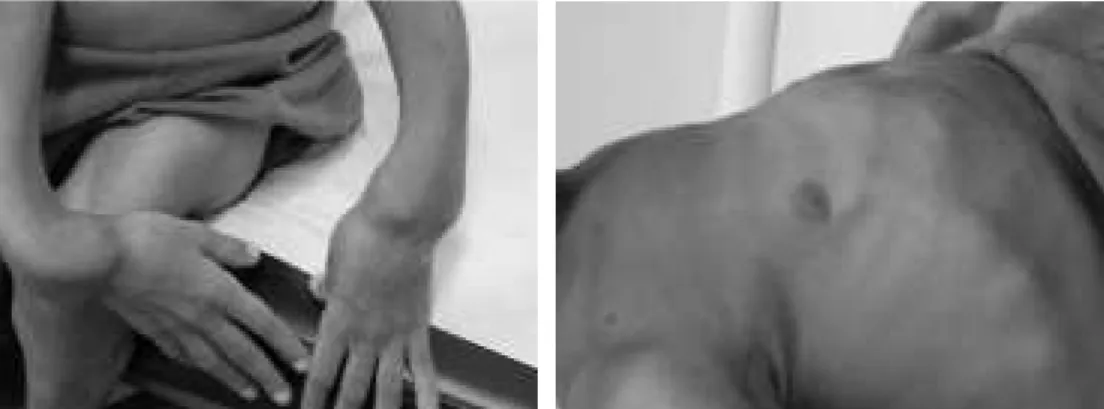
walk, metaphyseal widening, palpable enlargement of the costochondral junctions (rachitic rosary), frontal prominence, horizontal depression along the lower border of the chest (H arrison’s groove), insufficient weight gain. The thickness of central parts of parietal and frontal bones may alter the shape of the head. Recurrent fractures, although not common, may wors-en bone deformities. Figures 1 and 2 show some of these characteristics, in 2 patients with hypophos-phatemic rickets followed at the Pediatric Endocrinol-ogy U nit of Instituto da Criança (H CFMU SP).
X-linked hypophosphatemic rickets
The XH R is the main cause of rickets in developed countries, with an incidence of 1 case in each 20,000 persons. The disease affects the hemizygous boys and heterozygous girls. There is no correlation between the severity of the disease and the type or localization of PH EX gene mutations (48). The severity of the dis-ease is variable even among affected individuals from the same family. The mild forms may present just with hypophosphatemia in the absence of bone lesions
Figure 1.Child with hypophosphatemic rickets, presenting multiple bone deformities and recur-rent fractures.
(17). Birth length is normal, but a reduced growth velocity in the first years of life is responsible for short stature during the childhood. The lower limbs are more severely affected than the upper limbs. Final height compromising is due to the reduced growth before the diagnosis (49). D ifferently from vitamin D dependent rickets or from other causes of hypophos-phatemic rickets (AD H R, TIO and H H RH ), in XH R muscle weakness and hypotonia are absent (50). XH R is also characterized by dental damages due to dentin under-mineralization and tendency to teeth fall and dental abscesses (51). These dental alterations are more severe in adolescents and in male adults (48).
O ther complications observed in adults with X-linked osteomalacia include enthesopathy (ossification of tendon, ligament and articular capsule), pseudo-fractures, articular pain, osteoarthritis (mainly affecting lower limbs) and neurosensorial hypoacusia (52).
Autosomal dominant hypophosphatemic rickets
D ifferently from other hereditary causes of hypophos-phatemic rickets, in AD H R the age of manifestation is quite variable and the disease may appear only in ado-lescence or during adulthood (53). When manifested after the puberty, the most common characteristics of AD H R are bone pain, pseudo-fractures and muscle weakness (2,53). The absence of short stature and lower limb deformities in some of these patients sug-gest a not so intense hypophosphatemia during infan-cy and childhood (53). D ental abscesses may occur. A recent study describes the variability in clinical mani-festations in one family, including asymptomatic adults, others with bone pain in the sixth decade of life and children with symptoms since the first years of life (54). Another interesting aspect of this rickets is the likelihood of spontaneous decreasing in hyperphos-phaturia (53). It has not yet been clarified how and why the genetic defects manifest only after the first years of life and the mechanisms implicated in sponta-neous resolution of hyperphosphaturia.
Tumors-induced osteomalacia
TIO is a rare paraneoplasic syndrome where the clinical-radiological signs are similar to those observed in other causes of rickets and osteomalacia (40). H owever, bone pain and fractures are usually more severe than in XH R and muscle weakness is frequent (40). It is interesting to note that the bone mineral disturbances are the most important manifestations of these tumors. Although TIO may affect children, generally it occurs in older ages compared to XH R. The tumors associated to TIO
are, generally, very small, rather benign than invasive and hardly diagnosed by routine physical examination or radiographs. The paranasal sinuses, neck and mandible are common sites of these tumors and they must be accessed by computed tomography or nuclear magnetic resonance imaging (40).
Hereditary hypophosphatemic rickets with hypercalciuria
In patients with H H RH the classical signs of rickets are accompanied by muscle weakness and bone pain, but dental alterations are not present (2).
DIAGNOSIS
The diagnosis of hypophosphatemic rickets is based in the clinical picture and laboratory and radiograph alterations.
Laboratory findings
XH R, ADH R and TIO are all characterized by hypo-phosphatemia, hyperphosphaturia, increased plasma level of alkaline phosphatase, normocalcemia and nor-mal or reduced calciuria. It is important to remember that phosphate plasma levels vary according to age (21). Phosphaturia may be evaluated through phos-phorus tubular reabsorption (PTR):
Pu and Pp, Cr.u and Cr.p mean urine and plasma phosphorus concentration and urine and plasma crea-tinin concentration, respectively (all variables must be expressed in the same unit).
H yperphosphaturia is characterized by PTR val-ues inferior to 85%, concomitant to hypophos-phatemia (50).
Alkaline phosphatase plasma evaluation is important for rickets diagnosis and as a parameter for disease control and therapy efficacy as well. Adequate-ly treated patients evolve with a progressive reduction in plasma alkaline phosphatase.
In XH R, AD H R, TIO and in other causes of hypophosphatemic rickets due to increased activity of FGF-23, plasma calcitriol is inappropriately normal or reduced, secondary to inhibition of 1α-hydroxylase (2,34,40,50). These levels of calcitriol justify the nor-mal or upper nornor-mal PTH plasma levels found in these hypophosphatemic rickets (5,50).
The diagnosis of XH R in the first months of life is difficult, even when there are familial cases. U sually, infants with familial antecedents for XH R can be
nosed from the 6th month of life, based on increased
alkaline phosphatase and reduced renal phosphate reabsorption (55).
Biochemically, H H H R differs from XH R, AD H R, and TIO in hypercalciuria, elevated calcitriol concentration and low serum PTH (2). This aspect gains importance in terms of therapy.
Imaging studies
In XH R, the radiologic alterations are seen in tibia, distal femur, radio and ulna, and reflect loss of definition, widening, and calyx image in the provisional calcification zone in the growth plate (17) (figure 3). These findings are less severe than those seen in the vitamin D-deficient rickets and the signs are more intense in lower limbs (50). O nce TIO is suspected, a careful imaging study has to be done, through cranial CT and MRI of facial sinuses and mandible. To localize the tumor on bone, pentreotide or 111I octreotide scintigraphy is
manda-tory (40).
When bone fibrous dysplasia is suspected, 99Tc
cintigraphy is useful.
D uring investigation of rickets occurring in older children and adolescents, especially in the absence of familial history, it is very important to con-sider other differential diagnoses leading to hyophos-phatemic hyperphosphaturic rickets, such as AD H R, TIO , bone fibrous dysplasia, and renal Fanconi syn-drome. Certain clinical features help in differentiating these conditions.
Fanconi syndrome differs from XH R because the former is characterized by tubular renal acidosis, with metabolic acidosis and renal tubular dysfunction,
leading to decreased phosphate reabsorption, increased bicarbonate renal wasting, glucosuria, and aminoaciduria (56).
FGF-23 dosage
So far, plasma dosage of FGF-23 has had scientific purposes, characterizing diseases that cause hypophos-phatemic rickets and hyperphosphaturia. H owever, it is possible that, in the future, this dosage becomes one more lab resource to diagnose and follow-up such dis-eases. Lab assays that detect only the whole FGF-23 molecule seem to be more trustable than the methods that evaluate the terminal carboxi end (57).
TREATMENT
Clinical treatment of hypophosphatemic rickets aims at minimizing the metabolic disturbances, reducing bone deformities and improving growth velocity, although the hyperphosphaturia persists, once the treatment does not alter the impaired tubular phos-phate reabsorption.
In patients with TIO , the basic management is surgical removal of the tumor, which allows correction of the excess of phosphaturic factor and final cure of the condition. H owever, not all patients show good clinical response to therapy and these results reflect not only the patient compliance, but also the age at the beginning of therapy (49).
The treatment of children and adolescents with XH R includes phosphate administration (neu-tral salts of inorganic sodium and potassium
phate) and calcitriol. Elementary phosphorus is given at a dose of 30–60 mg/ kg/ day, divided in 4–6 frac-tions (5). Start with 30 mg/ kg/ day increasing grad-ually according to the biochemical profile of the patient. It is important not to administer phosphate with milk ingestion, since the calcium contained in t h ese d airy pro d u ct s in t erferes wit h ph o sph at e intestinal absorption.
Phosphorus absorption is slower in capsule or tablet presentation when compared to liquid formula-tions. When possible, it is better to use capsules or pills (58). Transient side effects can follow phosphate ingestion, such as abdominal pain and osmotic diar-rhea (58). Calcitriol is used in the dose of 30–70 ng/ kg/ day (5,58), qd or bid. The treatment of XH R has to be kept till the end of statural growth (58).
With adequate treatment, the serum levels of alkaline phosphatase (AlP) decrease, reaching normal or slightly elevated levels. The dose of phosphorus has to be increased if the AlP levels increase (49). The fall in AlP is more intense when treatment is started in the first months of life, compared to treatments started after two years of age. In these patients, AlP may never normalize (49).
In patients with XH R, it is recommended with-drawing the medication one week before orthopedic surgeries, aiming at avoiding hypercalcemia caused by bone reabsorption due to prolonged immobilization. The therapy should be restarted as soon as the patient gains conditions to walk (50).
Early treatment of XH R can minimize growth impairment, limb deformities, and teeth anomalies (49,51,60). H owever, the growth deficit accumulated in the first years of life is usually permanent, especially when treatment has begun at a later age. As XH R chil-dren are born with a normal length and have a normal growth spurt, it is believed that the final short stature is, at least in part, due to loss of height in the first pre-treatment years (40).
Many studies have evaluated the role of recom-binant human growth hormone (rhGH ) in the treat-ment of children with XH R. The results have varied in terms of reestablishment of phosphorus homeostasis and the achievement of a better growth performance (62-65). In two studies improvement in growth was noticed but with increased disproportion between upper and lower segments, predominating the trunk growth (66,67). Systematic review on the use of rhGH in patients with XH R does not show conclusive evi-dence in favor of rhGH changing the statural growth, mineral metabolism, mineral density nor body propor-tions (68).
The treatment of AD H R and other causes of hypophosphatemic rickets with hyperphosphaturia, due to increased action of FGF-23 must follow the same principles mentioned in the treatment of XH R.
In cases of TIO , the excision of the tumor to cor-rect the biochemical alterations is the key procedure (40,69) since it suppresses the source of systemic phos-phaturic factors. The serum levels of phosphate and cal-citriol as well as the tubular phosphate reabsorption become normal in hours or days, while the bone remod-eling markers (calcitonin and alkaline phosphatase) and skeletal deformities take more time to be corrected (40). With regard to H H RH , its treatment implies only elementary phosphorus administration, with reversal of the biochemical and bone alterations. Cal-citriol is not indicated, due to hypercalciuria and to the high calcitriol levels characteristic of the disease.
COMPLICATIONS
The main complications of XH R are related to the treatment itself, since it is not easy to find a balance between phosphate and calcitriol doses that are able to solve the clinical picture without yielding hyper-parathyroidism or hypercalciuria. Among them, we include secondary and tertiary hyperparathyroidism and nephrocalcinosis.
D oses of phosphate above 50 mg/ kg/ day can induce PTH stimulation and give rise to secondary hyperparathyroidism with reduction of calcemia through the direct action of phosphate over the PTH secretion (59,70). The persistency of hyperparathy-roidism for long periods of time can lead to autonomous function of parathyroid, characterizing the tertiary hyperparathyroidism, which, although rare, is severe, leading to intense bone resorption, nephrocalcinosis, and renal insufficiency. Tertiary hyperparathyroidism can lead to hypercalcemia, while in the secondary form, calcium levels are normal or decreased (70). In the treatment of XH R the follow-ing factors favor the progression to tertiary hyper-parathyroidism: early start of treatment, longer dura-tion of treatment, high doses of elementary phospho-rus (100 mg/ kg/ day), and very high PTH plasma lev-els (around 400 pg/ mL) (70).
distur-bances, especially systemic hypertension, not related to nephrocalcinosis but to the secondary or tertiary hyperparathyroidism (71).
In children and adolescents with XH R mineral bone density can be reduced in the appendicular skele-ton and increased in the lumbar spine (72). This pat-tern tends to be kept in the adult age and does not predispose to osteoporotic fractures (73).
MONITORING THE TREATMENT
It has been recommended that XH R patients under treatment be evaluated every three months (5). Lab work-up has to be made monthly at the beginning and every three months later on, and includes serum dosage of calcium, phosphorus, creatinine, alkaline phosphatase as well as urinary dosage of calcium and creatinine in 24h-urine sample. Serum PTH has to be evaluated every six months, and kidney ultra-sound every 6 to 12 months (17).
The calcitriol dose must be adjusted according to the serum levels of PTH and the urinary calcium concentration. PTH above the upper normal limit implies increase in the calcitriol dose and/ or decrease of phosphate dose. The main effect of excessive dose of calcitriol is hypercalciuria, defined as urinary excre-tion of calcium above 4 mg/ kg/ day or calcium/ crea-tinine ratio above 0.7 in the first year of life or above 0.3 after the first year (59). If hypercalciuria is present, reduce the calcitriol dose.
Concerning the other causes of hypophos-phatemic rickets, we should follow the same principles outlined before, based on the etiopathogenic charac-teristics of each syndrome.
CONCLUSION
The complex interaction among the components of the metabolic axis implied in the phosphorus home-ostasis and bone mineralization has been better under-stood in the last years.
This knowledge is due, partially, to a better understanding of pathophysiology of hypophos-phatemic disturbances and its implications in the bone-mineral metabolism. H owever, many steps of this process and the mechanisms of communication among the actors in this delicate system have not yet been clarified.
Accumulated evidence both in in vivo as in vitro studies, in animal and human models have pointed to the theory of a bone-renal axis which promotes and regulates homeostasis between phosphorus and bone tissue mineralization. The physiology of the osteoblast allows us to infer that this cell has the basic equipment to coordinate such a process. All these data are strate-gic and precious information to open up novel per-spectives for new, more efficient and with less side effects therapeutic options to treat the various forms of hypophosphatemic rickets.
REFERENCES
1. Rowe P. The wrickkened pathways of FGF-23, MEPE and PHEX. Crit Rev Oral Biol Med 2004;15(5):264-81.
2. de Beur SMJ, Levine MA. Molecular pathogenesis of hypophosphatemic rickets. J Clin Endocrinol Metab 2002;87:2467-73.
3. Quarles LD. Evidence for a bone-kidney axis regulating phosphate homeostasis. J Clin Invest 2003;112:642-6.
4. Wharton B, Bishop N. Rickets. Lancet 2003;362:1389-400.
5. Root AW, Diamond FB Jr. Disorders of calcium metabo-lism in the child and adolescent. In: Sperling MA (ed).
Pediatric Endocrinology. 2nded. Philadelphia: Saunders,
2002. p. 646.
6. Holick MF. Vitamin D – a millenium perspective. J Cel Biochemist 2003;88:296-307.
7. Garabédian M, Menn S, Walrant-Debray O, Teinturier C, Delaveyne R, Roden A. Prévention de la carence en vitamine D chez l’enfant et l’adolescent. II. Vali-dation d’un abaque décisionnel non invasif prenant en compte l’exposition solaire et les apports exo-gènes de vitamine D. Archives de Pediatrie 2005; 12(4):410-9.
8. Gordon C, DePeter K, Feldman H, Grace E, Jean Emans S. Prevalence of Vitamin D deficiency among healthy adolescents. Arch Pediatr Adolesc Med 2004;158:531-7.
9. Mughal Z. Rickets in childhood. Semin Musculoskelet Radiol 2002;6:183-90.
10. Pettifor JM. Nutritional and drug-induced rickets and osteomalacia. In: Favus MJ (ed). Primer on the metabol-ic bone diseases and disorders of mineral metabolism. 5thed. Washington: American Society for Bone and Min-eral Research, 2003. p. 399.
11. Garg RK, Tandon N. Hypophosphatemic rickets: easy to diagnose, difficult to treat. Indian J Pediatr 1999 ;66:849-57.
12. Winters R, Grahan J, Williams T, McFalls V, Burnett C. A genetic study of familial hypophosphatemia and vita-min D resistant rickets with a review of the literature.
Medicine 1958;37:97-142.
14. Cho HY, Lee BJ, Kang JH, Ha IS, Cheong HI, Choi Y. A clinical and molecular genetic study of hypophos-phatemic rickets in children. Pediatr Res 2005;58(2): 329-33.
15. Bielesz B, Klaushofer K, Oberbauer R. Renal phosphate loss in hereditary and acquired disorders of bone miner-alization. Bone 2004;35:1229-39.
16. Saggese G, Baroncelli GI. Hypophosphatemic rickets.
Horm Res 2000;53(suppl. 3):57-60.
17. Tenenhouse HS, Econs MJ. Mendelian hypophos-phatemias. In: Scriver CR (ed). The Metabolic and Mole-cular Bases of Inherited Disease. 8th ed. McGraw-Hill,
2001. pp. 5039-67.
18. Tieder M, Arie R, Bab I, Maor J, Liberman UA. A new kin-dred with hereditary hypophosphatemic rickets with hypercalciuria: implications for correct diagnosis and treatment. Nephron 1992;62(2):176-81.
19. Bergwitz C, Roslin NM, Tieder M, Loredo-Osti JC, Bastepe M, Abu-Zahra H, et al. SLC34A3 mutations in patients with hereditary hypophosphatemic rickets with hyper-calciuria predict a key role for the sodium-phosphate cotransporter NaPi-IIc in maintaining phosphate home-ostasis. Am J Hum Genet 2006;78(2):179-92.
20. Berndt TJ, Schiavi S, Kumar R. “Phosphatonins” and the regulation of phosphorus homeostasis. Am J Physiol Renal Physiol 2005;289(6):F1170-82.
21. Portale AA. Blood calcium, phosphorus, and magne-sium. In: Favus MJ (ed). Primer on the metabolic bone diseases and disorders of mineral metabolism. 5thed. Washington: American Society for Bone and Mineral Research, 2003. pp. 151-4.
22. Hilfiker H, Kvietikova II, Hartmann CM, Stange G, Murer H. Characterization of the human type II Na/Pi-cotrans-porter promoter. Pflugers Arch 1998;436:591-8.
23. Segawa H, Kaneko I, Takahashi A, Kuwahata M, Ito M, Ohkido I, et al. Growth-related renal type II Na/Pi cotransporter. J Biol Chem 2002;277:19665-72.
24. Murer H, Forster I, Biber J. The sodium phosphate cotrans-porter family SLC34. Pflugers Arch 2004;447:763-7.
25. Riminucci M, Collins MT, Fedarko NS, Cherman N, Corsi A, White KE, et al. FGF-23 in fibrous dysplasia of bone and its relationship to renal phosphate wasting. J Clin Invest 2003;112:683-92.
26. Ferrari SL, Bonjour JP, Rizzoli R. Fibroblast growth factor-23 relationship to dietary phosphate and renal phosphate handling in healthy young men. J Clin Endocrinol Metab 2005;90:1519-24.
27. Saito H, Maeda A, Ohtomo S, Hirata M, Kusano K, Kato S, et al. Circulating FGF-23 is regulated by 1alpha,25-dihydroxyvitamin D3 and phosphorus in vivo. J Biol Chem 2005;280:2543-9.
28. Murer H, Biber J. Molecular mechanisms of renal apical Na/phosphate cotransport. Ann Rev Physioll 1996;58:607-18.
29. Pfister MF, Ruf I, Stange G, Ziegler U, Lederer E, Biber J, et al. Parathyroid hormone leads to the lysomal degrada-tion of the renal type II Na/Pi cotransporter. Proc Natl Acad Sci USA 1998;95:1909-14.
30. Malmström K, Murer H. Parathyroid hormone regulates phosphate transport in OK cells via an irreversible inacti-vation of a membrane protein. FEBS Lett 1987;216:257-60.
31. Bowe AE, Finnegan R, de Beur SMJ, Cho J, Levine MA, Kumar R, et al. FGF-23 inhibits renal tubular phosphate transport and is a PHEX substrate. Biochem Biophys Res Commun 2001;284:977-81.
32. Benet-Pages A, Lorenz-Depiereux B, Zischka H, White KE, Econs MJ, Strom TM. FGF23 is processed by propro-tein convertases but not by PHEX. Bone 2004 ;35:455-62.
33. Liu S, Guo R, Simpson LG, Xiao Z-S, Burnham CE, Quarles LD. Regulation of fibroblastic growth factor 23 expres-sion but not degradation by PHEX. J Biol Chem 2003;278(39):37419-26.
34. Strewler GJ. FGF23, hypophosphatemia, and rickets: has phosphatonin been found? Proc Natl Acad Sci USA 2001;98:5945-6.
35. Quarles LD, Drezner MK. Pathophysiology of X-linked hypophosphatemia, tumor-induced osteomalacia, and autosomal dominant hypophosphatemia: a per-PHEXing problem. J Clin Endocrinol Metab 2001;86: 494-6.
36. Jonsson KB, Zahradnik R, Larsson T, White KE, Sugimoto T, Imanishi Y, et al. Fibroblast growth factor 23 in onco-genic osteomalacia and X-linked hypophosphatemia.
N Engl J Med 2003;348:1656-63.
37. White KE, Carn G, Lorenz-Depiereux B, Benet-Pages A, Strom TM, Econs MJ. Autosomal-dominant hypophos-phatemic rickets (ADHR) mutations stabilize FGF-23. Kid-ney Int 2001;60:2079-86.
38. Bai XY, Miao D, Goltzman D, Karaplis AC. The autosomal dominant hypophosphatemic rickets R176Q mutation in fibroblast growth factor 23 resists proteolytic cleavage and enhances in vivo biological potency. J Biol Chem 2003;278:9843-9.
39. Saito H, Kusano K, Kinosaki M, Ito H, Hirata M, Segawa H, et al. Human fibroblast growth factor-23 mutants sup-press Na+-dependent phosphate co-transport activity and 1alpha,25-dihydroxyvitaminD3 production. J Biol Chem 2003;278:2206-11.
40. Carpenter TO. Oncogenic osteomalacia – a complex dance of factors. N Engl J Med 2003;348:1705-8.
41. Imel EA, Peacock M, Pitukcheewanont P, Heller HJ, Ward LM, Shulman D, et al. Sensitivity of fibroblast growth factor 23 measurements in tumor induced osteomalacia. J Clin Endocrinol Metab 2006;91(6): 2055-61.
42. Berndt T, Craig TA, Bowe AE, Vassiliadis J, Reczek D, Finnegan R, et al. Secreted frizzled-related protein 4 is a potent tumor-derived phosphaturic agent. J Clin Invest 2003;112(5):642-6.
43. Konishi K, Nakamura M, Yamakawa H, Suzuki H, Saruta T, Hanaoka H, et al. Hypophosphatemic osteomalacia in von Recklinghausen neurofibromatosis. Am J Med Sci 1991;301:322-8.
44. Hoffman WH, Jueppner HW, DeYoung BR, O’Dorisio MS, Given KS. Elevated fibroblast growth factor-23 in hypophosphatemic linear nevus sebaceous syndrome.
Am J Med Genetics 2005;134A:233-6.
46. Collins MT, Bianco P. Fibrous dysplasia. In: Favus MJ (ed). Primer on the metabolic bone diseases and dis-orders of mineral metabolism. 5th ed. Washington: American Society for Bone and Mineral Research,
2003. pp. 466-70.
47. Yamamoto T, Imanishi Y, Kinoshita E, Nakagomi Y, Shimizu N, Miyauchi A, et al. The role of fibroblast growth factor 23 for hypophosphatemia and abnormal regulation of vitamin D metabolism in patients with McCune-Albright syndrome. J Bone Miner Metab 2005; 23:231-7.
48. Holm IA, Nelson AE, Robinson BG, Mason RS, Marsh DJ, Cowell CT, et al. Mutational analysis and genotype-phe-notype correlation of the PHEX gene in X-linked hypophosphatemic rickets. J Clin Endocrinol Metab 2001;86:3889-99.
49. Mäkitie O, Doria A, Kooh SW, Cole WG, Daneman A, Sochett E. Early treatment improves growth and bio-chemical and radiographic outcome in X-linked hypophosphatemic rickets. J Clin Endocrinol Metab 2003;88:3591-7.
50. Mughal Z. Rickets in childhood. Semin Musculoskelet Radiol 2002;6:183-90.
51. Pereira CM, Andrade CR, Vargas PA, Coletta RD, Almei-da OP, Lopes MA. Dental alterations associated with X-linked hypophosphatemic rickets. J Endodontics 2004;30:241-5.
52. Fishman G, Miller-Hansen D, Jacobsen C, Singhal VK, Alon US. Hearing impairment in familial X-linked hypophosphatemic rickets. Eur J Pediatr 2004;163:622-3.
53. Econs MJ, McEnery PT. Autosomal dominant hypophos-phatemic rickets/osteomalacia: Clinical characteriza-tion of a novel renal phosphate-wasting disorder. J Clin Endocrinol Metab 1997;82(2):674-81.
54. Negri AL, Negrotti T, Alonso G, Pasqualini T. Distintas for-mas de presentación clínica de un raquitismo hipofos-fatemico autosomico dominante por mutación del fac-tor de crecimiento fibroblastico en una familia. Medici-na (Buenos Aires) 2004;64:103-6.
55. Moncrieff MW. Early biochemical findings in familial hypophosphatemic, hyperphosphaturic rickets and response to treatment. Arch Dis Child 1982;57:70-2.
56. Sayer JA, Pearce SH. Diagnosis and clinical biochemistry of inherited tubulopathies. Ann Clin Biochem 2001; 38:459-70.
57. Ito N, Fukumoto S, Takeuchi Y, Yasuda T, Hasegawa Y, Takemoto F, et al. Comparison of two assays for fibrob-last growth factor (FGF)-23. J Bone Miner Metab 2005;23:435-40.
58. Glorieux FH. Hypophosphatemic vitamin D-resistant rick-ets. In: Favus MJ (ed). Primer on the metabolic bone dis-eases and disorders of mineral metabolism. 5th ed. Washington: American Society for Bone and Mineral Research, 2003. pp. 414-7.
59. Kruse K, Hinkel GK, Griefahn B. Calcium metabolism and growth during early treatment of children with X-linked hypophosphataemic rickets. Eur J Pediatr 1998 ;157:894-900.
60. Chaussain-Miller C, Sinding C, Wolikow M, Lasfargues JJ, Godeau G, Garabédian M. Dental abnormalities in patients with familial hypophosphatemic vitamin D-resis-tant rickets: prevention by early treatment with 1-hydroxyvitamin D. J Pediatr 2003;142:324-31.
61. Mäkitie O, Doria A, Daneman A, Sochett E. Pubertal growth is normal in treated girls with X-linked hypophosphatemic rickets. J Bone Miner Res 2002; 17:S282
62. Seikaly MG, Brown R, Baum M. The effect of recombi-nant human growth hormone in children with X-linked hypophosphatemia. Pediatrics 1997;100:879-84.
63. Cameron FJ, Sochett EB, Daneman A, Kooh SW. A trial of growth hormone therapy in well-controlled hypophos-phatemic rickets. Clin Endocrinol 1999;50:577-82.
64. Darendeliler F, Bas F, Karaaslan N, Hekim N, Budak R, Saka N, et al. The effect of growth hormone treatment on biochemical indices in hypophosphatemic rickets.
Horm Res 2001;55:191-5.
65. Baroncelli GI, Bertelloni S, Ceccarelli C, Saggese G. Effect of growth hormone treatment on final height, phosphate metabolism, and bone mineral density in children with X-linked hypophosphatemic rickets. J Pedi-atr 2001;138:236-43.
66. Reusz GS, Miltényi G, Stubnya G, Szabó A, Horváth C, Byrd DJ, et al. X-linked hypophosphatemia: effects of treatment with recombinant human growth hormone.
Pediatr Nephrol 1997;11:573-7.
67. Haffner D, Nissel R, Wühl E, Mehls O. Effects of growth hormone treatment on body proportions and final height among small children with X-linked hypophos-phatemic rickets. Pediatrics 2004;113:e593-6.
68. Huiming Y, Meng M, Chaomin W, Fan Y. Recombinant growth hormone therapy for X-linked hypophos-phatemia in children (Cochrane Review). In: The Cochrane Library, Issue 1, 2006. Oxford: Update Soft-ware.
69. Ward LM, Rauch F, White KE, Filler G, Matzinger MA, Letts M, et al. Resolution of severe, adolescent-onset hypophosphatemic rickets following resection of an FGF-23-producing tumour of the distal ulna. Bone 2004;34:905-11.
70. Mäkitie O, Kooh SW, Sochett E. Prolonged high-dose phosphate treatment: a risk factor for tertiary hyper-parathyroidism in X-linked hypophosphatemic rickets.
Clin Endocrinol 2003;58:163-8.
71. Alon US, Monzavi R, Lilien M, Rasoulpour M, Geffner ME, Yadin O. Hypertension in hypophosphatemic rickets – role of secondary hyperparathyroidism. Pediatr Nephrol 2003;18:155-8.
72. Shore RM, Langman CB, Poznanski AK. Lumbar and radi-al bone minerradi-al density in children and adolescents with X-linked hypophosphatemia: evaluation with dual X-ray absorptiometry. Skeletal Radiol 2000;29:90-3.
73. Reid IR, Murphy WA, Hardy DC, Teitelbaum SL, Bergfeld MA, Whyte MP. X-linked hypophosphatemia: skeletal mass in adults assessed by histomorphometry, comput-ed tomography, and absorptiometry. Am J Med 1991;90:63-9.
Address for correspondence:
Durval Damiani