COMPARISON OF PROTEINS, LETHALITY AND IMMUNOGENIC COMPOUNDS OF Androctonus crassicauda (OLIVIER, 1807) (SCORPIONES: BUTHIDAE)
VENOM OBTAINED BY DIFFERENT METHODS
OZKAN O. (1, 2), KAR S. (2), GÜVEN E. (2) ERGUN G. (3)
(1) Refik Saydam Hygiene Center, Ankara, Turkey; (2) Department of Entomology, Faculty of Veterinary Medicine, Ankara, Turkey; (3) Department of Statistics, Faculty of Sciences, Hacettepe University, Ankara, Turkey.
ABSTRACT: Scorpions are venomous arthropods of the class Arachnida and are considered relatives of spiders, ticks and mites. There are approximately 1,500 species of scorpions worldwide, which are characterized by an elongated body and a segmented tail that ends in a venomous stinger. No specific treatment is available for scorpion envenomation, except for the use of antivenom. The current studyaimed at comparing protein content and lethality of Androctonus crassicauda venom extracted by two different methods (electric stimulation and maceration of telsons). The LD50 calculated by probit analysis was 1.1mg/kg for venom obtained by electric stimulation and 39.19mg/kg for venom obtained by maceration of telsons. In the electrophoretic analysis, protein bands of the venom sample obtained by electric stimulation were between 12 and 53kDa (total: five bands), and those of venom extracted by maceration appeared as multiple protein bands, relative to the other venom sample. Low-molecular-weight proteins, revealed by western blotting, played an important immunogenic role in the production of antivenom. Lethality and protein levels varied according to the extraction method; venom obtained by the maceration technique showed lower toxicity than that obtained by electric stimulation.
KEY WORDS: scorpion venoms, Androctonus crassicauda, gland maceration, electric stimulation, immunogenicity, lethality.
CONFLICTS OF INTEREST: There is no conflict.
CORRESPONDENCE TO:
INTRODUCTION
The three most important orders of Arachnida are Araneae (spiders), Scorpiones
(scorpions) and Acari (ticks and mites) (10, 19, 25). Scorpions are terrestrial
arachnids that are easily recognized by their characteristic elongated body and
segmented tail ending in a bulbous sac and in a stinger (telson); there are
approximately 1,500 scorpion species worldwide (4, 19, 24, 26). Scorpion venom,
which has lethal and paralytic effects, is a secretion composed of water, salts and
simple, low-molecular-weight proteins (5, 10, 23). It is a unique defense and feeding
weapon. Scorpions also employ this valuable tool, in several sophisticated ways, for
subduing prey, deterring predators, probably during mating, and most of the times for
protection against humans (2, 4, 9, 12). Thus, scorpion envenomation still remains a
major health problem in many tropical and subtropical countries (2, 4, 18, 22, 30).
Antivenom is still widely used in the treatment of envenomation as there are no
vaccines or other effective agents available against animal venoms (31). Hence,
representatives of 21 laboratories around the world, both public and private, have
presented the methodologies used for producing antivenom (30). It is clear that
availability of effective antivenom constitutes the cornerstone of envenomation
treatment and requires the use of scorpion venom, which can be obtained by
different methods such as manual extraction, electric stimulation and maceration (4,
17, 23, 24, 30). In Turkey, scorpion venom has been obtained by maceration of
telsons since 1942 at Refik Saydam Hygiene Center (RSHC), Ankara, Turkey (20).
In the current work, scorpion venom samples obtained by two different methods were
compared as to protein content and lethality and evaluated in order to verify (i) which
method was the best for immunization, (ii) which compounds present in these venom
samples have a relevant role in the production of antivenom, and (iii) which of these
compounds can be considered immunogens.
MATERIALS AND METHODS
Animals
Scorpions: Androctonus crassicauda (Figure 1) specimens were collected in
Sanliurfa and Mardin provinces (SoutheasternAnatolia), Turkey. They received water
Mice: Male Swiss albino mice (20±2g) were used in all experiments. They were bred
and maintained at the Department for Laboratory Animals of RSHC. Mice were kept
under room temperature and 60±10% humidity and fed with commercial rodent food
pellets ad libitum throughout the experiment.
Venom samples
Electric stimulation method: Venom from mature scorpions was obtained by electric
stimulation of their telsons, as previously described (24). It was mixed with sterile
double distilled water and centrifuged at 10000g for 15 min at 4°C. Supernatant was
stored at -20°C in the dark until use.
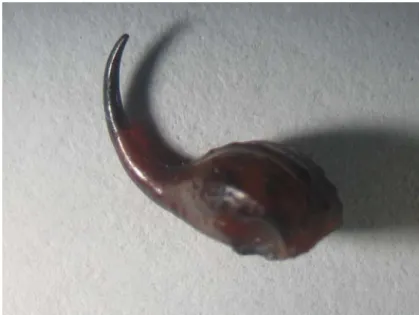
Maceration method: Three hundred and seventy-six telsons (Figure 2) of A.
crassicauda were used. Venom solution was prepared by macerating telsons as
previously described (23, 24). All telsons were weighed by using an electronic
balance with sensitivity of 0.001mg. Briefly, telsons were removed from dead
scorpions at the point of their articulation with the last caudal segment. Then, they
were ground to a fine powder which was dissolved in physiologic saline solution
(PSS; 0.9% w/v NaCl) and kept at 4°C for 72h. The venom solution was centrifuged
at 10000g for 10 min at 4°C. Supernatant was removed and immediately lyophilized
and stored at -20°C until use.
Antivenom
The used antivenom was produced at RSHC by maceration of A. crassicauda telsons
followed by administration to horses.
Protein assay
Protein content of the venom samples was determined by reading absorbance at
280nm and expressed as mg protein/ml (16, 29).
Lethality assay
The median lethal dose (LD50) for A. crassicauda venom extracted by both electric
stimulation and maceration was calculated in mice. The used doses covered the full
range of mortality from 0 to 100%. Venom was subcutaneously injected, at increasing
injected into a group of five mice as negative control for each test. Following
treatment with venom solution, the animals were monitored for 24h and LD50 was
then calculated using the probit method (7).
Sodium dodecyl sulfate polyacrylamide gel electrophoresis (SDS-PAGE)
SDS-PAGE (7.5% gel) analyses of both venom samples and their protein bands
were carried out according to Laemmli (14). Proteins were stained with 0.1%
Coomassie Blue R-250 Silver (6). Molecular mass standard (Sigma, S8445) were run
in parallel in order to calculate the molecular weights of proteins. Then, gel was
photographed and the molecular weights were calculated using Molecular Imaging
Software (MIS, Kodak).
Western blotting
Venom samples were separated on polyacrylamide gel, electrophoretically
transferred to nitrocellulose membrane (NCM) and divided into two sections. The
membranes were incubated in blocking buffer – 5% powdered milk (PM) in
Tris-Buffered Saline Tween-20 (TBST; 0.1% Tween 20, 150 mM NaCl, 10 mM Tris-Cl; pH
7.4) for 60min.
Strips of the membranes were washed 3 times with TBST and exposed to diluted
antivenom (1:1000) for 1h. Then, they were again washed three times with TBST and
incubated with horseradish peroxidase-conjugated anti-horse antibody (1:5000) for
60min. Membranes were washed with TBST for 10min and antigens were visualized
using 3,3’-diaminobenzidine (DAB; Sigma, SD0426) substrate; after development of
the bands, reaction was stopped with PBS.
RESULTS
Lethality assay
All 376 telsons weighed 5.32g and a single telson, 14.14mg. LD50 was
39.46µl/mouse (1.1mg/kg; 95% confidence interval–CI: 31.16–46.92) for venom
obtained by electric stimulation and 106.79µl/mouse (39.19 mg/kg; 95% CI: 84.37–
132.15) for venom obtained by maceration of telsons. Mice showed the same
SDS-PAGE and Western Blotting
Protein content of venom obtained by maceration of telsons was 7.34mg/ml and that
of venom obtained by electric stimulation was 0.561mg/ml. In the electrophoretic
analysis, the venom sample obtained by electric stimulation showed protein bands
between 12 and 53kDa (Figure 3; Lane A), and the venom sample obtained by
maceration of telsons showed multiple protein bands (compared with the profile of
the other venom sample) mostly between 12 and 162kDa (Figure 3, Lane B). For
venom obtained by electric stimulation, five protein bands were observed, whereas
for venom obtained by maceration, nine bands were noticed, and when compared,
they showed only three similar protein bands – 12kDa, 29kDa, and 35kDa (Figure 3).
Androctonus crassicauda antivenom strongly reacted with the venom obtained by the
maceration method. Western blotting indicated 36, 53, 58 and 74kDa proteins as
immunogens, contrasting to the results of the electrophoretic analysis. Specific
antibody reacted with venom obtained by electric stimulation (Figure 4) for 36, 42, 53,
58, 74, 86, 135 and 150kDa proteins, which were considered immunogens.
Comparison of western blotting profiles of both venom samples showed proteins with
similar molecular weights (36, 53 and 58kDa).
Figure 2. Telson removed from a dead Androctonus crassicauda at the point of its
articulation with the last caudal segment.
Figure 3. SDS-gel electrophoresis of Androctonus crassicauda venom. Lane A:
venom obtained by electric stimulation; Lane B: venom obtained by maceration of
telsons; Lane M: molecular weight markers – 205kDa (Myosin), 116kDa (β
Figure 4. Western blotting using Androctonus crassicauda venom (1:1000). Lane 1:
venom obtained by maceration of telsons; Lane 2: venom obtained by electric
stimulation. Venom samples were separated and transferred to nitrocellulose
membranes. Bands were detected using antivenom.
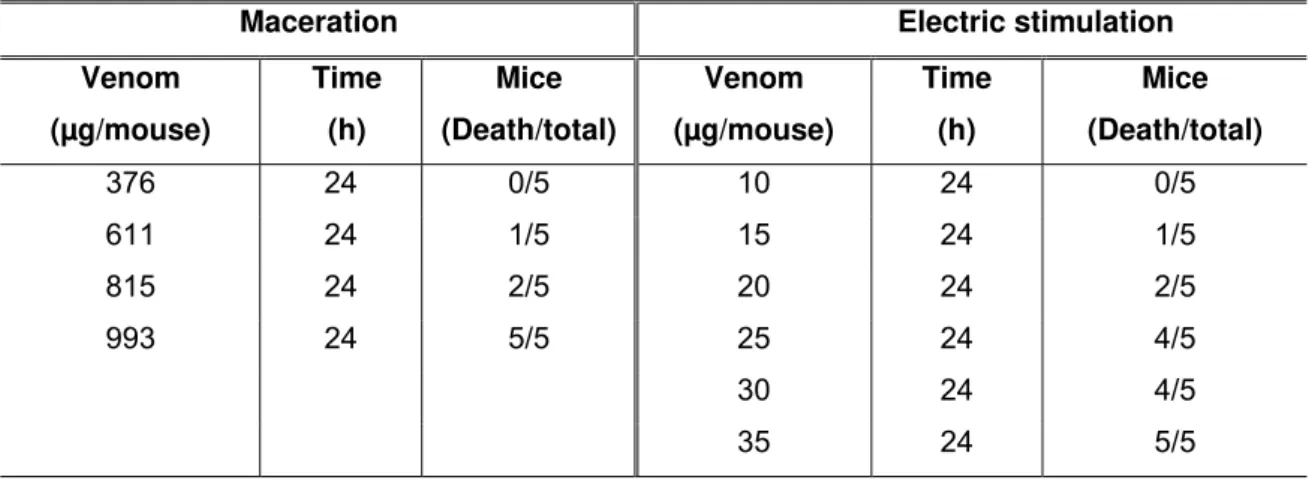
Table 1. Median lethal dose (LD50) of Androctonus crassicauda venom obtained by
two different methods (maceration and electric stimulation) and subcutaneously
injected into mice. Similar symptoms were observed in mice during LD50
determination.
Maceration Electric stimulation
Venom (µg/mouse)
Time (h)
Mice (Death/total)
Venom (µg/mouse)
Time (h)
Mice (Death/total)
376 24 0/5 10 24 0/5
611 24 1/5 15 24 1/5
815 24 2/5 20 24 2/5
993 24 5/5 25 24 4/5
30 24 4/5
35 24 5/5
DISCUSSION
Scorpion venom contains short neurotoxin polypeptides consisting of simple,
low-molecular-weight proteins which have lethal and paralytic effects (10). Approximately
100,000 distinct peptides are estimated to be present in scorpion venom but only a
of venom samples from different scorpion species has similar effects on the
autonomic nervous system (3).
Venom toxicity varies with several factors such as genus, species, age, physiology,
feeding state and region of the scorpion (13, 23, 27, 30). This was reiterated by Krifi
et al. (13), who reported difficulties in standardizing venom quality. Therefore, these
parameters must be specified for any venom LD50 or antivenom potency values
reported. Also, such venom variability must be taken into consideration in the
development of an antivenom product, which must neutralize the toxic effects of
venom samples from all scorpions within a species (30). Venom toxicity varies
among species or among members of one species that are from different regions (8,
13, 21). Ismail (11) reported that LD50 of Leiurus quinquestriatus venom varies from
0.23 mg/kg to 6.5 mg/kg.
The LD50 of scorpion venom can vary even if the venom was extracted by using one
single method. For instance, Ismail et al. (12) found that the LD50 of A. crassicauda
venom obtained by electric stimulation was 0.64mg/kg, whereas Latoxan Laboratory
reported a LD50 of 0.87mg/kg for A. crassicauda venom obtained by the same
method. However, Altinkurt and Altan (1) reported that the LD50 of A. crassicauda
venom, from Sanliurfa region, was 11.5mg/kg by the maceration method. Ozkan and
Filazi (24) stated that toxicity of milked venom is eight times higher than that of
venom obtained by maceration of telsons. Similarly, Latifi and Tabatabai (15)
reported that A. crassicauda venom extracted by electric stimulation was more lethal
than that obtained by maceration of telsons. However, after administration of both
venom samples, mice showed symptoms such as hyperactivity, excitability, jumping,
humpback, tachypnea, dyspnea, bleeding from the nose and eyes, lacrimation,
hypersalivation, weakness, paralysis and coma, resulting in death.
Latifi and Tabatabai (15) reported that the mean amount of venom obtained by
electric stimulation was 0.3mg per scorpion (A. crassicauda), whereas by maceration
of the telsons, 0.5mg per scorpion was obtained. This variation was due to different
scorpion size, age, sex and collection site. Ozkan et al. (23) reported that venom
samples extracted by maceration showed different toxicities according to the weight
and size of the telsons. The authors explained that this difference was caused by the
different maturity stages of the animals and thus venom toxicity was related to the
transporting conditions, drying method, storage, and period of use of telsons. Also,
these differences can be attributed to the fact that the venom extracted by
maceration contains undesirable substances such as epithelium cells of venom
gland. In the current study, LD50, calculated by probit analysis, was 1.1mg/kg for
venom obtained by electric stimulation and 39.19mg/kg for venom obtained by
maceration of telsons.
On the other hand, venom is a complex mixture of antigens, and not all but some of
these antigens are important for the production of neutralizing antibodies (5, 17).
Thus, identification of immunogenic proteins may allow the use of substances more
clearly defined as immunogens in the development of more efficient antivenom (9,
17).
Antivenom has an important role in the treatment of scorpionism cases (2, 18). It is
produced from venom samples obtained by scorpions using different methods, which
are very important factors for the production of more efficient antivenoms.
Calderon-Aranda et al. (5) immunized animals by using macerated telsons, milked venom, and
venom fractions of Centruroides noxius scorpion. The authors stated that the best
antigen preparation for immunization is highly-purified venom fraction, followed by
milked venom, but venom obtained by telson maceration is less efficient (5). In the
current study, immunogenic proteins and lethality of A. crassicauda venom obtained
by different methods were compared, important components to be neutralized by
specific antibodies were investigated, and immunogenic proteins in the venom
leading to immunological reactions were identified. According to SDS-PAGE
analysis, venom obtained by telson maceration showed nine protein bands, whereas
venom obtained by electric stimulation showed only five bands. Comparison of
protein bands from both venom samples indicated similarity between
low-molecular-weight proteins, which were considered immunogenic according to western blotting,
where these proteins were recognized by specific antivenom.
The present results indicated that low-molecular-weight proteins played an important
immunogenic role in the production of antivenom. Lethality and protein patterns
showed variability according to the used method. Toxicity of venom obtained by
maceration was lower than that of venom obtained by electric stimulation. Therefore,
variation in toxicity depends on the employed extraction method which is probably
toxicity as, during collection, scorpions might have used their venom for protection; in
addition, physiological and feeding states of the animals change during the collection
period.
Electric stimulation is more efficient than maceration in extracting venom for scorpion
antivenom production as scorpions can be constantly used to produce venom
whereas maceration requires telsons from dead scorpions. The electric stimulation
procedure is also more simple and economical than the maceration procedure;
therefore, it could be adopted in antivenom production. Extraction of venom from
living scorpions is also an important factor in protecting scorpion fauna.
Antivenom production is generally based on the application of purified venom or
antigens on horses, which prevents undesirable substances (epithelium cells of
venom gland, etc) and leads to high and specific antibody (only specific proteins)
production. This easily provides effective immunological protection against the
venom and requires injection of low doses of immunoglobulin into the patients, also
protecting them from possible serum sickness.
ACKNOWLEDGEMENTS
We wish to thank Karina Chamma for her valuable comments on this manuscript.
REFERENCES
1 ALTINKURT O., ALTAN M. Pharmacological effects of the scorpion (Androctonus
crassicauda) venom from Urfa environment on laboratory animals and the
antagonistic effects of streptomycin to most of these effects. J. Fac. Pharm. Ankara,
1980, 10, 41-61.
2 BALOZET L. Scorpionism in the old world. In: BÜCHERL W., BUCKLEY E. Eds.
Venomous animals and their venoms. Venomous invertebrates. New York: Academic
Press, 1971, 3, 349-71.
3 BAWASKAR HS. Management of severe scorpion sting at rural settings: what is
the role of scorpion antivenom? J. Venom. Anim. Toxins incl. Trop. Dis.,2005, 11,
3-7.
4 BÜCHERL W. Classification, biology and venom extraction of scorpion In:
BÜCHERL W., BUCKLEY E. Eds. Venomous Animals and their Venoms. Venomous
5 CALDERON-ARANDA ES., HOZBOR D., POSSANI LD. Neutralizing capacity of
murine sera induced by different antigens of scorpion venom. Toxicon, 1993, 31,
327-37.
6 CANDIANO G., BRUSCHI M., MUSANTE L., SANTUCCI L., GHIGGERI GM.,
CARNEMOLLA B., ORECCHIA P., ZARDI L., RIGHETTI PG. Blue silver: a very
sensitive colloidal Coomassie G-250 staining for proteome analysis. Electrophoresis,
2004, 25, 1327-33.
7 FINNEY DJ. Probit analysis. 3.ed. London: Cambridge University Press, 1971:
331p.
8 HASSAN F. Production of scorpion antivenom. In: TU AT. Ed. Handbook of Natural
Toxins. New York: Marcel Dekker, 1984, 2, 577-605.
9 INCEOGLU B., LANGO J., RABINOVICH A., WHETSTONE P., HAMMOCK BD.
The neutralizing effect of a polyclonal antibody raised against the N-terminal
eighteen-aminoacid residues of birtoxin towards the whole venom of Parabuthus
transvaalicus.Toxicon, 2006, 47, 144-9.
10 ISBISTER GK., GRAUDINS A., WHITE J., WARRELL D. Antivenom treatment in
Arachnidism. J. Toxicol. Clin. Toxicol., 2003, 41, 291-300.
11 ISMAIL M. Serotherapy of the scorpion envenoming syndrome is irrationally
convicted without trail. Toxicon, 1993, 31, 1077-88.
12 ISMAIL M., ABD-ELSALAM MA., AL-AHAIDIB MS. Androctonus crassicauda
(OLIVIER, 1807), a dangerous and unduly neglected scorpion-I. Pharmacological
and clinical studies. Toxicon, 1994, 32, 1599-618.
13 KRIFI MN., MARRAKCHI N., EL AYEB M., DELLAGI K. Effect of some variables
on the in vivo determination of scorpion and viper venom toxicities. Biologicals, 1998,
26, 277-88.
14 LAEMMLI K. Cleavage of structural proteins during the assembly of the head of
bacteriophage T4. Nature, 1970, 227, 680-5.
15 LATIFI M., TABATABAI M. Immunological studies on Iranian scorpion venom and
antivenom. Toxicon, 1979, 17, 617-20.
16 LAYNE E. Spectrophotometric and turbidimetric methods for measuring proteins.
17 MARIA WS., VELARDE DT., ALVARENGA LM., NGUYEN C., VILLARD S.,
GRANIER C., CHAVEZ-OLORTEGUI C. Localization of epitopes in the toxins of
Tityus serrulatus scorpions and neutralizing potential of therapeutic antivenoms.
Toxicon, 2005, 46, 210-7.
18 MEDDEB-MOUELHI F., BOUHAOUALA-ZAHAR B., BENLASFAR Z.,
HAMMADI M., MEJRI T., MOSLAH M., KAROUI H., KHORCHANI T., MOHAMED
EA. Immunized camel sera and derived immunoglobulin subclasses neutralizing
Androctonus australis hector scorpion toxins. Toxicon, 2003, 42, 785-91.
19 MULLEN GR., STOCKWELL SA. Scorpions (Scorpiones). In: MULLEN G.,
DURDEN G. Eds. Medical and Veterinary Entomology. Amsterdam: Academic Press,
2002, 20, 411-23.
20 OZKAN O., ADIGUZEL S., ATES C., BOZYIGIT I., FILAZI A. Optimization of
antiscorpion venom production. J. Venom. Anim. Toxins incl. Trop. Dis., 2006, 12,
390-9.
21 OZKAN O., ADIGUZEL S., KAR S. Parametric values of Androctonus crassicauda
(OLIVER, 1807) (Scorpiones: Buthidae) from Turkey. J. Venom. Anim. Toxins incl.
Trop. Dis., 2006, 12, 549-59.
22 OZKAN O., ADIGUZEL S., YAKISTIRAN S., CESARETLI Y., ORMAN M.,
KARAER Z. Androctonus crassicauda (OLIVIER, 1807) scorpionism in the Sanliurfa
region of Turkey. Acta Parasitol. Turcica, 2006, 30, 239-45.
23 OZKAN O., ADIGUZEL S., YAKISTIRAN S., FILAZI A. Study of the relationship
between Androctonus crassicauda (OLIVIER, 1807; Scorpiones, Buthidae) venom
toxicity and telson size, weight and storing condition. J. Venom. Anim. Toxins incl.
Trop. Dis., 2006, 12, 297-309.
24 OZKAN O., FILAZI A. The determination of acute lethal dose-50 (LD50) levels of
venom in mice, obtained by different methods from scorpions Androctonus
crassicauda (OLIVER, 1807). Acta Parasitol. Turcica, 2004, 28, 50-3.
25 OZKAN O., KARAER Z. Body structures of scorpions. Acta Parasitol. Turcica,
2004, 28, 54-8.
26 OZKAN O., KARAER Z. Scorpions in Turkey. J. Turkish Hyg. Exp. Biol., 2004, 61,
27 PADILLA A., GOVEZENSKY T., POSSANI L.D., LARRALDE C. Experimental
envenoming of mice with venom the scorpion Centruroides limpidus: differences in
mortality and symptoms with and without antibody therapy relating to differences in
age, sex and strain of mouse. Toxicon, 2003, 41, 959-65.
28 POSSANI LD., BECERRIL B., DELEPIERRE M., TYTGAT J. Scorpion toxins
specific for Na+ -channels. Eur. J. Biochem., 1999, 264, 287-300.
29 STOSCHECK CM. Quantitation of protein. Methods Enzymol., 1990, 182, 50-69.
30 THEAKSTON RD., WARRELL DA., GRIFFITHS E. Report of a WHO workshop on
the standardization and control of antivenoms. Toxicon, 2003, 41, 541-57.
31 WORLD HEALTH ORGANIZATION. WHO Expert Groups on Requirements for
Biological Substances. Requirements for immune sera of animal origin. Geneva: