Article
J. Braz. Chem. Soc., Vol. 24, No. 7, 1167-1171, 2013. Printed in Brazil - ©2013 Sociedade Brasileira de Química
0103 - 5053 $6.00+0.00
A
http://dx.doi.org/10.5935/0103-5053.20130149
*e-mail: [email protected]
Pyrrolizidine Alkaloids and Diterpenes from Villasenoria orcuttii
Amira Arciniegas,a Ana L. Pérez-Castorena,*,a Karina González,a Marisol Reyes-Lezama,b José Luis Villaseñorc and Alfonso Romo de Vivara
aInstituto de Química, Universidad Nacional Autónoma de México, Circuito Exterior,
Ciudad Universitaria, Coyoacán 04510, D. F., México
bCentro Conjunto de Investigación en Química Sustentable, Universidad Autónoma del
Estado de México-Universidad Nacional Autónoma de México (UAEM-UNAM), Carretera Toluca-Atlacomulco, km 14.5, Toluca 50200, Estado de México, México
cInstituto de Biología, Universidad Nacional Autónoma de México, Circuito Exterior,
Ciudad Universitaria, Coyoacán 04510, D. F., México
O estudo químico da Villasenoria orcuttii, a única espécie do gênero Villasenoria, levou ao
isolamento de três diterpenos acíclicos, dois deles descritos pela primeira vez. Dois alcaloides pirrolizidínicos, florosenina e floridanina, entre outros compostos já conhecidos, também foram isolados. A configuração absoluta da floridanina foi determinada por análise de raios X usando dispersão anômala com radiação Cu Kα, e seus dados de ressonância magnética nuclear (RMN)
de 1H e de 13C foram corrigidos.
The chemical study of Villasenoria orcuttii, the only species of the genus Villasenoria, afforded
three acyclic diterpenes, two of them described for the first time. Two pyrrolizidine alkaloids, florosenine and floridanine, among other known compounds were also isolated. The absolute configuration of floridanine was determined by X-ray analysis using anomalous dispersion with Cu Kα radiation, and its 1H and 13C nuclear magnetic resonance (NMR) data were corrected.
Keywords: Villasenoria orcuttii, diterpenes, pyrrolizidine alkaloids, absolute configuration
Introduction
Villasenoria orcuttii, the only species of the genus Villasenoria (Asteraceae, Senecioneae), is a shrub that
grows in the rainforest of Chiapas, Oaxaca and Southern Veracruz (Mexico) at 100 to 2000 m of elevation.1
Villasenoria orcuttii (formerly Senecio orcuttii) was
initially included into the genus Telanthophora, which
together with the genus Pittocaulon is constituted by
species segregated from the traditional section Terminales Greenm. of the genus Senecio s.l.2 Further studies
evidenced the differences between Senecio (Telanthophora) orcuttii and other species of Senecio, Thelantophora or Pittocaulon and placed it into his own genus: Villasenoria.1 To the best of our knowledge, there is no chemical work on the genus Villasenoria. Previous studies on its related
genera, Telanthophora, Senecio and Pittocaulon, described
the presence, in the three of them, of sesquitepene derivatives mainly of eremophilane and/or oplopane types, whilepyrrrolizidine alkaloids (PAs) have been found only in species of Senecio and Pittocaulon.3 As continuation of our survey on Senecioneae, it is reported the isolation of three acyclic diterpenes from Villasenoria orcuttii:
phytane-1,2,3-triol (1), previously obtained as a synthetic product,4,5 and compounds 2 and 3 which are described for the first time, two PAs: florosenine (4)6-8 and floridanine (5),6,9 together with methyl ferulate (6),10 pterolactame (7),11 tyramine (8)12 and β-sitosteryl glucoside (Figure 1). Additionally, the absolute configuration of floridanine (5) was determined by X-ray analysis and its 1H and 13C nuclear magnetic resonance (NMR) data were corrected.
Results and Discussion
Pyrrolizidine Alkaloids and Diterpenes from Villasenoria orcuttii J. Braz. Chem. Soc.
1168
groups (1742 cm-1). The molecular formula C
22H44O4 was determined by high-resolution electrospray ionization mass spectrometry (HRESIMS). The 13C NMR analysis of 2 indicated the presence of three oxygenated carbon atoms and a carbonyl function, besides the signals of three methines, nine methylenes and five methyl groups. The 1H NMR spectrum exhibited four secondary (d
Η 0.84-0.88),
a tertiary (dΗ 1.23) and an acetyl (dΗ 2.12) methyl groups;
an oxygenated methylene (dΗ 4.32, dd, J 11.6, 2.8 Hz;
4.09, dd, J 11.6, 8.4 Hz) and an oxygenated methine
(dΗ 3.69, dd, J 8.4, 2.8 Hz). 2D NMR spectroscopy allowed
the identification of a 3,7,11,15-tetramethylhexadecane skeleton with a vicinal terminal triol, one of them acetylated, indicating that compound 2 was the 1-O-acetyl
derivative of the compound 1,asconfirmed by the isolation of 2 by the selective acetylation of the compound 1.13
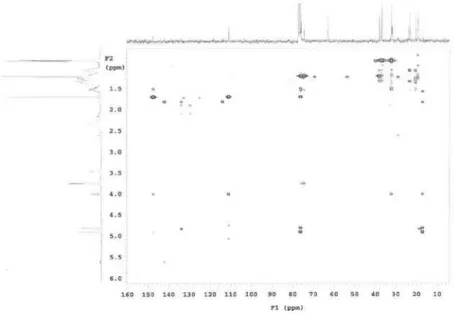
Compound 3, isolated as colorless oil, showed the molecular formula C20H40O4 (HRESIMS). The NMR spectra were similar to that one from compound 1 with the additional signals of a disubstituted double bond and a hydroxymethine. The long-range (HMBC) 1H-13C NMR correlation experiment allowed to locate these groups at C-15 and C-14, respectively. As in compound 1, three vicinal hydroxyl groups at C-1, C-2 and C-3 were observed, therefore, the structure of 3 was elucidated as 3,7,11,15-tetramethyl-15-hexadecene-1,2,3,14-tetraol.
The alkaloid 5 was isolated as colorless prisms, mp 199-200 oC. The molecular formula C
21H31NO9 was determined by HRFABMS. The EIMS spectrum showed a molecular ion at m/z 441 and the otonecine-type PAs
diagnostic fragment ions6 at m/z 168 [C
9H14NO2]+, 149 [C9H11NO]+, 122 [C7H8NO]+ and 110 [C6H8NO]+. The presence of the signals of a α,β-unsaturated ketone carbonyl
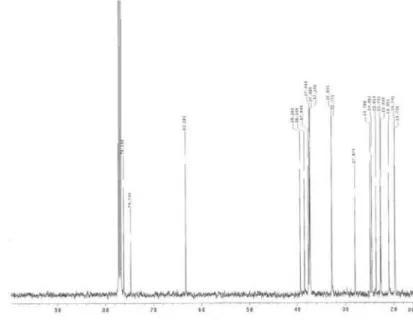
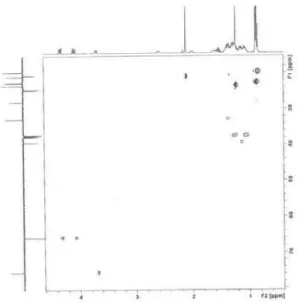
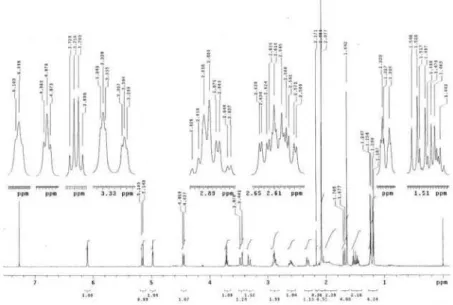
at dC 186.9 and of three ester carbonyl at dC 174.6, 171.2 and 169.9 in the 13C NMR spectrum suggested an acetylated macrocyclic diester of otonecine. The proton NMR spectrum of this alkaloid was similar to that of the floridanine,9 the main difference was the signal of H-20 assigned by the HMBC and COSY correlations at dΗ 3.72 (q, J 6.5 Hz),
which was reported for the floridanine at dΗ 3.03 m. The
positions of the signals of H-13 at dΗ 1.47 m, and of H2-14 at dΗ 1.69 (d, J 14.0 Hz) and dΗ 1.53 (dd, J 14.0, 10.0 Hz)
were also different from the reported for these same protons (H-13 at dΗ 1.89 m and H2-14 at dΗ 2.35 m) in the floridanine.
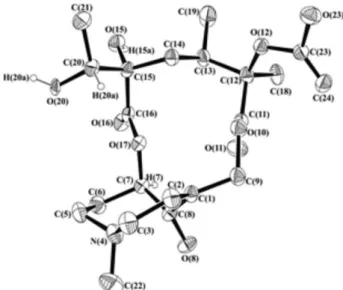
These discrepancies could be due to different positions of the acetoxy group in 5 and in the floridanine.9 In order to clarify these structural differences, an X-ray diffraction experiment (Figure 2) was performed establishing that compound 5 had indeed the structure reported for the floridanine. Figure 1. Chemical structures of compounds 1-8.
Arciniegas et al. 1169 Vol. 24, No. 7, 2013
Consequently, the 1H and 13C NMR data (obtained by means of 2D NMR spectroscopy) should correct those from the literature.9 The absolute stereochemistry of the floridanine (5) (7R, 12R, 13R, 15S and 20R) was determined by the
anomalous dispersion method with Cu Kα radiation, used in
the X-ray experiment, which afforded an absolute structure parameter of 0.08 (4).
Conclusions
The presence of pyrrolidizine alkaloids is in agreement with the chemistry of many genera of the tribe Senecioneae, but the absence of sesquiterpenes as well as the presence of acyclic diterpenes establish a clear chemotaxonomic difference between Villasenoria and its related genera Telanthophora, Senecio and Pittocaulon and support its
position in a new genus.
Experimental
General experimental procedures
Melting points were determined on a Fisher-Jones melting point apparatus and are uncorrected. Optical rotations were determined on a Perkin-Elmer 343 polarimeter. Circular dichroism was obtained on a Jasco J-720 spectropolarimeter. UV and IR spectra were recorded on a spectrophotometer Shimadzu UV 16U and a Bruker Tensor 27 spectrometer, respectively. 1D and 2D NMR spectra were obtained on a Bruker Avance III 400 MHz or on a Varian-Unity Inova 500 MHz spectrometer with tetramethylsilane (TMS) as internal standard. Electron ionization mass spectrometry (EIMS) analyses were determined on a Bruker Daltonics Analysis 3.2 mass spectrometer. HRESIMS analyses were performed on a Bruker MicrOTOF II mass spectrometer with a mass resolution of 16.500 FWHM (full width at half maximum), mass interval 50-20.000 m/z and speed
of 40 Hz. Fast atom bombardment mass spectrometry (FABMS) analyses were obtained on a JEOL JMS-SX102A mass spectrometer operated with an acceleration voltage of 10 kV, and the samples were desorbed from a nitrobenzyl alcohol matrix using 6 kV xenon atoms. HRFABMS analyses were performed at a 10,000 resolution using electric field scans and polyethylene glycol ions (Fluka 200 and 300) as the reference material. Column chromatography was carried out under vacuum on silica gel G-60 (Merck, Darmstadt, Germany). Analytical thin layer chromatography (TLC) was carried out on silica gel 60-G F254 or RP-18W/UV254 (Macherey-Nagel, Germany) and preparative TLC on silica gel G-200 F254, layer thickness of 2.0 mm, or RP-18W/UV254, layer thickness of 1.0 mm.
Plant material
Villasenoria orcuttii (Greenm.) B. L. Clark was
collected in San Miguel Soyaltepec, Tuxtepec, Oaxaca, México, in January 2009. A voucher specimen was deposited at the Herbarium del Instituto de Biología, UNAM, México (MEXU 1256447).
Extraction and isolation
Dried and ground aerial parts (276 g) and roots (116 g) of V. orcuttii were separately and successively extracted with
Pyrrolizidine Alkaloids and Diterpenes from Villasenoria orcuttii J. Braz. Chem. Soc.
1170
afford, from CH2Cl2-MeOH 98:2 mixtures, pterolactame11 (7, colorless needles, mp 55-56 °C, 32 mg) and tyramine12 (8, white crystals, mp 160-162 °C, 98 mg), fraction E from CH2Cl2-MeOH 95:5, and fraction F from CH2Cl2-MeOH 9:1 eluates. Fraction E (65 mg) was submitted to FCC (CH2Cl2 -MeOH 95:5) followed by a preparative TLC (CH2Cl2 -MeOH-NH4OH 95:4.9:0.1 × 2) to afford florosenine6-8 (4, mp 99-101 °C, [α]D25 + 30.5, c 0.2, CHCl3, 5 mg). Fraction F (102 mg) afforded after two successive FCC (CH2Cl2 -MeOH 9:1) and a preparative TLC (CH2Cl2-MeOH-NH4OH 95:4.9:0.1 × 3) floridanine (5, 12 mg).6,9 The alkaloidal extract of aerial parts (450 mg) was worked up as described for the root alkaloidal extract to afford 4 (3.5 mg), 5 (10 mg), 7 (17 mg) and 8 (35 mg).
Selective acetylation of phytane-1,2,3-triol(1)
Compound 1 (0.28 mmol), acetylchloride (0.28 mmol) and iPr2EtN (0.56 mmol) in CH2Cl2 (2 mL)
were stirred at –70 °C for 3 h and then 1 h at room temperature.13 The reaction mixture was washed with HCl (5%) and NaHCO3 to obtain 87 mg of a mixture which was purified by FCC (hexane-acetone 85:15) to obtain 35 mg (34 %) of compound 2.
Compound 2
Colorless oil; [α]25
D + 5.0 (c 0.11, CHCl3); IR (CHCl3) νmax/cm-1 3455, 1742; 1H NMR (400 MHz, CDCl
3) d 4.32 (dd, 1H, J 11.6, 2.8 Hz, H1a), 4.09 (dd, 1H, J 11.6,
8.4 Hz, H1b), 3.69 (dd, 1H, J 8.4, 2.8 Hz, H2), 1.06-1.32
(m, 21H, H4 to H15), 2.12 (s, 3H, CH3CO), 1.23 (s, 3H, H17), 0.84-0.88 (m, 12H, H16, H18, H19, H20); 13C NMR (100 MHz, CDCl3) d 171.4 (CH3CO), 75.7 (C2), 73.6 (C3), 65.9 (C1), 39.4, 37.7, 37.6, 37.4, 37.3, 37.2, 24.8, 24.5, 20.7 (C4 to C6, C8 to C10, C12 to C14), 32.8, 32.7, 27.7 (C15, C11, C7), 23.5 (C17), 22.7, 22.6, 19.7, 18.6 (C16 and C18 to C20), 20.9 (CH3CO); HRESIMS m/z 395.3146 [M + Na]+ (C22H44NaO4 requires 395.3132).
Compound 3
Colorless oil; [α]25
D + 11.0 (c 0.21, CHCl3); IR (CHCl3) νmax/cm-1 3433, 1603, 1460; 1H NMR (500 MHz, CDCl
3)
d 4.93 (br quint, 1H, J 1.0 Hz, H16a), 4.84 (br quint, 1H, J 1.5 Hz, H16b), 4.03 (br dd, 1H, J 11.0, 6.0 Hz, H14),
3.78 (d, 2H, J 5.0 Hz, H1), 3.49 (br t,1H, J 5.0 Hz, H2),
1.72 (s, 3H, H20), 1.23 (s, 3H, H17), 1.05-1.60 (m, 18H, H4 to H13), 0.86* (d,3H, J 6.5 Hz, H18), 0.87* ( d,3H, J 6.5 Hz, H19), *interchangeable signals; 13C NMR (125
MHz, CDCl3) d 147.5 (C15), 111.2 (C16), 76.5 (C14), 76.1 (C2), 74.7 (C3), 63.9 (C1), 38.4, 37.5, 37.2, 37.1, 32.3, 24.3, 24.2, 20.9 (C4 to C6, C8 to C10, C12, C13), 32.7, 32.5 (C11, C7), 23.7 (C17), 20.9 (C18 and C19) 17.5
(C20); HRESIMS m/z 367.2832 [M + Na]+ (C20H40NaO4
requires 367.2819).
Floridanine(5)
Colorless prism from hexane-EtOAc, mp 199-200 oC; [α]D25 + 68.0 (c 0.10, CHCl3); IR (CHCl3) νmax/cm-1 3691, 3518, 1735, 1602; CD (c 4.5 × 10⁻⁵ mol L-1, EtOH)
Dε209 nm + 18.6; 1H NMR (500 MHz, CDCl3) d 6.09 ( br t, 1H, J 2.0 Hz, H2), 5.15 (d, 1H, J 11.0 Hz, H9a), 4.98 (t,
1H, J 2.5 Hz, H7), 4.44 (br d, 1H, J 11.0 Hz, H9b), 3.72 (q,
1H, J 6.5 Hz, H20), 3.46 (br d, 1H, J 17.5 Hz, H3a), 3.32
(br d, 1H, J 17.5 Hz, H3b), 2.90 (m, 1H, H5a), 2.85 (m,
1H, H5b), 2.60 (dddd, 1H, J 14.0, 12.0, 7.5, 2.5 Hz, H6a),
2.31 (br t, 1H, J 14.0 Hz, H6b), 2.08 (s, 6H, H22, CH3CO),
1.69 (d,1H, J 14.0 Hz, H14a), 1.64 (s, 3H, H18), 1.53 (dd,
1H, J 14.0, 10.0 Hz, H14b), 1.47 (m, 1H, H13), 1.24 (d,
3H, J 6.5 Hz, H21), 1.19 (d,3H, J 6.5 Hz, H19); 13C NMR
(125 MHz, CDCl3) d 186.9 (C8), 174.6 (C16), 171.2 (C11), 169.9 (CH3CO), 136.8 (C2), 133.9 (C1), 83.9 (C12), 81.9 (C15), 79.1 (C7), 72.7 (C20), 64.2 (C9), 59.5 (C3), 53.7 (C5), 40.3 (C22), 39.7 (C13), 36.3 (C6), 35.8 (C14), 21.6 (C18), 21.4 (CH3CO), 17.1 (C21), 14.6 (C19); EIMS m/z 441 [M]+ (30), 397 [C
20H31NO7]+ (30), 354 [C18H28NO6]+ (90), 168 [C9H14NO2]+ (100), 149 [C9H11NO]+ (65), 122 [C7H8NO]+ (50), 110 [C6H8NO]+ (48); HRFABMS m/z 442.2080 [M + H]+ (C
21H32NO9 requires 442.2077).
Crystal data of 5
C21H31NO9·0.8 (CH2Cl2), MW = 509.43, T = 100(2) K, λ = 1.54178 Å, orthorhombic, space group P2(1)2(1)2(1). Unit cell dimensions a = 8.6486(2) Å, b = 12.2669(2) Å, c = 24.8567(5) Å, α = 90°, β = 90°, γ = 90°, V = 2637.08(9) Å3,
Z = 4, density (calculated) = 1.283 Mg m–3, absorption
coefficient = 2.257 mm–1, F(000) = 1078, crystal size: 0.29 × 0.18 × 0.16 mm3, theta range for data collection: 4.02 to 66.74°, index ranges: −10 ≤ h ≤ 10, −14 ≤ k ≤ 14, −29 ≤ l ≤ 29, reflections collected: 37883, independent reflections: 4661 [R(int) = 0.0217], completeness to theta = 66.74° 99.6%, absorption correction = semi-empirical from equivalents, max. and min. transmission = 0.7141 and 0.5636, refinement method = full-matrix least-squares on F2, data / restraints / parameters 4661 / 664 / 532, goodness-of-fit on F2 = 1.057, final R indices [I > 2sigma(I)], R1 = 0.0495, wR2 = 0.1466, R indices (all data), R1 = 0.0505, wR2 = 0.1486; absolute
Arciniegas et al. 1171 Vol. 24, No. 7, 2013
collected by omega scans and integrated using SAINT software package. Semi-empirical absorption correction (SADABS) was applied. The structure was solved by direct methods (SHELXS programs), and refined by the full-matrix least-squares on F2 with SHELXL-9715 using the SHELXLE GUI.16 All non-hydrogen atoms were refined anisotropically. The disordered was refined using the following geometry and Uij restraints and constraints
implemented in the SHELXL-97 program: SIMU, DELU, SAME and DFIX. Crystallographic data for the structure of 5 were deposited in the Cambridge Crystallographic Data Center (deposition No. CCDC 930369).
Supplementary Information
1H and 13C NMR spectra of compounds 1 and 4,
1H and 13C NMR and 2D NMR experiments of compounds
2, 3 and 5, HRESIMS of compounds 2 and 3, and crystal refinement data of 5 are available free of charge at http://jbcs.sbq.org.br as PDF file.
Acknowledgements
We are indebted to Beatriz Quiróz, Ma. de los Angeles Peña, Elizabeth Huerta, Isabel Chávez, Héctor Ríos, Rubén Gaviño, Rocío Patiño, Javier Pérez, Luis Velasco, Carmen Márquez and Lizbeth Triana for technical assistance.
References
1. Clark, B. L.; Sida1999, 18, 631.
2. Barkley, T. M.; Clark, B. L.; Tunston, A.; Royal Botanic Gardens, Kew1996, 1, 613.
3. Romo de Vivar, A.; Pérez-Castorena, A. L.; Arciniegas, A.; Villaseñor, J. L.; J. Mex. Chem. Soc. 2007, 51, 160.
4. Jain, T. C.; Striha, R. J.; Can. J. Chem.1969, 47, 4359. 5. Menichetti, S.; Amorati, R.; Bartolozzi, M. G.; Pedulli, G. F.;
Salvini, A.;Viglianisi, C.; Eur. J. Org. Chem. 2010, 2218. 6. Cava, M. P.; Rao, K. V.; Weisbach, J. A.; Raffauf, R. F.;
Douglas, B.; J. Org. Chem. 1968, 33, 3570.
7. González, U. J.; Basabe, B. P.; Sánchez, M. I.; Fernández, M. R.; López, E. M.; Fernández, R. A.; Phytochemistry1988,
27, 1507.
8. Yamada, K.; Tatematsu, H.; Suzuki, M.; Hirata, Y.; Haga, M.; Hirono, I.; Chem. Lett. 1976, 461.
9. Röder, E.; Wiedenfeld, H.; Hoenig, A.; Planta Med. 1983, 49, 57.
10. Bazin, M.-A.; Kihel, L. E.; Jouanne, M.; Lancelot, J.-C.; Rault, S.; Synth. Commun. 2008, 38, 3947.
11. Takatori, K.; Nakano, S.; Nagata, S.; Okumura, K.; Hirono, I.; Shimizu, M.; Chem. Pharm. Bull. 1972, 20, 1087.
12. Pouchert, C. J.; Behnke, J.; Aldrich Library of 13C and 1H FT
NMR Spectra, vol. 2; Aldrich Chemical Company Inc.: USA,
1993, 612A.
13. Ishihara, K.; Kurihara, H.; Yamamoto, H.; J. Org. Chem. 1993,
58, 3791.
14. Pérez-Castorena, A. L.; Arciniegas, A.; Pérez, A. R.; Villaseñor, J. L.; Romo de Vivar, A.; J. Nat. Prod. 1998, 61, 1288. 15. Sheldrick, G. M.; Acta Crystallogr., Sect. A: Found. Crystallogr.
2008, 64, 112.
16. Hübschle, C. B.; Sheldrick, G. M.; Dittrich, B.; J. Appl. Crystallogr.2011, 44, 1281.
Supplementary Information
S
I
J. Braz. Chem. Soc., Vol. 24, No. 7, S1-S15, 2013. Printed in Brazil - ©2013 Sociedade Brasileira de Química 0103 - 5053 $6.00+0.00
*e-mail: [email protected]
Pyrrolizidine Alkaloids and Diterpenes from
Villasenoria orcuttii
Amira Arciniegas,a Ana L. Pérez-Castorena,*,a Karina González,a
Marisol Reyes-Lezama,b José Luis Villaseñorc and Alfonso Romo de Vivara
aInstituto de Química, Universidad Nacional Autónoma de México, Circuito Exterior,
Ciudad Universitaria, Coyoacán 04510, D. F., México
bCentro Conjunto de Investigación en Química Sustentable, Universidad Autónoma del
Estado de México-Universidad Nacional Autónoma de México (UAEM-UNAM), Carretera Toluca-Atlacomulco, km 14.5, Toluca 50200, Estado de México, México
cInstituto de Biología, Universidad Nacional Autónoma de México, Circuito Exterior,
Ciudad Universitaria, Coyoacán 04510, D. F., México
Figure S1.1H NMR (500 MHz, CDCl
Pyrrolizidine Alkaloids and Diterpenes from Villasenoria orcuttii J. Braz. Chem. Soc.
S2
Figure S2.13C NMR (125 MHz, CDCl
3) spectrum of compound 1.
Figure S3.1H NMR (500 MHz, CDCl
Arciniegas et al. S3 Vol. 24, No. 7, 2013
Figure S4.13C NMR (125 MHz, CDCl
3) spectrum of compound 2.
Pyrrolizidine Alkaloids and Diterpenes from Villasenoria orcuttii J. Braz. Chem. Soc.
S4
Figure S6. HSQC spectrum of compound 2.
Arciniegas et al. S5 Vol. 24, No. 7, 2013
Figure S8.1H NMR (500 MHz, CDCl
3) spectrum of compound 3.
Figure S9.13C NMR (125 MHz, CDCl
Pyrrolizidine Alkaloids and Diterpenes from Villasenoria orcuttii J. Braz. Chem. Soc.
S6
Figure S10. COSY spectrum of compound 3.
Arciniegas et al. S7 Vol. 24, No. 7, 2013
Figure S12. HMBC spectrum of compound 3.
Figure S13.1H NMR (500 MHz, CDCl
Pyrrolizidine Alkaloids and Diterpenes from Villasenoria orcuttii J. Braz. Chem. Soc.
S8
Figure S14.13C NMR (125 MHz, CDCl
3) of compound 4.
Figure S15.1H NMR (500 MHz, CDCl
Arciniegas et al. S9 Vol. 24, No. 7, 2013
Figure S16.13C NMR (125 MHz, CDCl
3) spectrum of compound 5.
Pyrrolizidine Alkaloids and Diterpenes from Villasenoria orcuttii J. Braz. Chem. Soc.
S10
Figure S18. HSQC spectrum of compound 5.
Arciniegas et al. S11 Vol. 24, No. 7, 2013
Figure S20. HRESIMS spectrum of compound 2.
Pyrrolizidine Alkaloids and Diterpenes from Villasenoria orcuttii J. Braz. Chem. Soc.
S12
Table S1. Atomic coordinates (× 104) and equivalent isotropic displacement parameters (Å2 × 10³) for compound 5. U(eq) is defined as one third of the
trace of the orthogonalized Uij tensor
x y z U(eq) N(4) 2906(3) 8625(2) 3206(1) 68(1) C(22) 2548(5) 8800(3) 3776(1) 102(1) O(8) 2091(5) 10844(4) 3113(2) 65(1) O(10) 966(4) 10305(3) 1548(1) 60(1) O(11) 2267(4) 11793(3) 1783(1) 79(1) O(12) 1410(20) 10581(12) 500(4) 57(2) O(23) –783(7) 11425(6) 710(2) 74(1) C(1) 1273(8) 9560(6) 2468(3) 49(1) C(2) 932(14) 8524(5) 2556(5) 65(2) C(3) 1646(9) 7950(8) 2978(4) 69(2) C(5) 4580(16) 8510(8) 3117(5) 76(2) C(6) 5251(9) 9623(6) 3017(4) 67(2) C(7) 4208(12) 10174(8) 2603(4) 50(1) C(8) 2484(8) 10110(8) 2794(3) 51(1) C(9) 308(4) 10229(4) 2094(2) 63(1) C(11) 1829(4) 11164(3) 1448(2) 54(1) C(12) 2343(7) 11264(7) 857(3) 55(1) C(13) 4016(9) 10798(8) 800(3) 64(2) C(19) 4678(12) 10992(9) 245(4) 102(3) C(18) 2271(8) 12476(4) 697(3) 71(1) C(23) –87(10) 10776(9) 444(2) 56(1) C(24) –757(12) 10023(10) 41(3) 80(2) O(8A) 2541(10) 10688(6) 3290(3) 62(2) O(10A) 1394(5) 11157(3) 1841(2) 60(1) O(11A) 239(5) 9882(4) 1338(2) 64(1) O(12A) 1400(40) 10690(20) 425(8) 58(2) O(23A) −1020(12) 11431(9) 515(3) 70(2)
C(1A) 1434(18) 9777(10) 2561(5) 53(2) C(2A) 850(20) 8786(10) 2574(8) 59(2)
x y z U(eq) C(3A) 2053(17) 7886(15) 2857(7) 74(2) C(5A) 4470(30) 8229(12) 3049(8) 69(3) C(6A) 5365(18) 9261(9) 3013(6) 64(2) C(7A) 4380(20) 10031(14) 2685(7) 53(2) C(8A) 2780(14) 10054(11) 2902(5) 50(2) C(9A) 599(9) 10734(6) 2314(3) 63(1) C(11A) 1064(10) 10658(7) 1382(3) 51(1) C(12A) 1973(12) 11180(11) 908(5) 54(2) C(13A) 3720(14) 10870(11) 919(6) 56(2) C(19A) 4614(13) 11338(10) 444(6) 80(3) C(18A) 1742(11) 12419(7) 898(4) 67(2) C(23A) −187(19) 10800(15) 296(5) 61(2)
C(24A) –650(20) 10063(13) −130(5) 76(3)
Arciniegas et al. S13 Vol. 24, No. 7, 2013
N(4)-C(3A) 1.456(19) N(4)-C(22) 1.465(4) N(4)-C(5) 1.471(14) N(4)-C(3) 1.482(9) N(4)-C(5A) 1.49(2) N(4)-C(8A) 1.911(13) O(8)-C(8) 1.246(9) O(10)-C(11) 1.316(6) O(10)-C(9) 1.474(5) O(11)-C(11) 1.197(5) O(12)-C(23) 1.325(18) O(12)-C(12) 1.462(16) O(23)-C(23) 1.198(10) C(1)-C(2) 1.323(9) C(1)-C(8) 1.486(7) C(1)-C(9) 1.494(8) C(2)-C(3) 1.407(15) C(5)-C(6) 1.504(9) C(6)-C(7) 1.527(8) C(7)-O(17) 1.409(12) C(7)-C(8) 1.568(11) C(11)-C(12) 1.539(7) C(12)-C(18) 1.540(9) C(12)-C(13) 1.562(8) C(13)-C(19) 1.514(8) C(13)-C(14) 1.530(10) C(23)-C(24) 1.481(9) O(8A)-C(8A) 1.255(15) O(10A)-C(11A) 1.326(9) O(10A)-C(9A) 1.459(8) O(11A)-C(11A) 1.194(12) O(12A)-C(23A) 1.42(3) O(12A)-C(12A) 1.43(3) O(23A)-C(23A) 1.188(19) C(1A)-C(2A) 1.317(16) C(1A)-C(8A) 1.480(13) C(1A)-C(9A) 1.509(15) C(2A)-C(3A) 1.67(2) C(5A)-C(6A) 1.488(13) C(6A)-C(7A) 1.512(14) C(7A)-C(8A) 1.48(2) C(7A)-O(17) 1.52(2) C(11A)-C(12A) 1.555(15) C(12A)-C(18A) 1.534(15) C(12A)-C(13A) 1.558(13) C(13A)-C(19A) 1.524(14) C(13A)-C(14) 1.596(13) C(23A)-C(24A) 1.451(16) C(14)-C(15) 1.543(3) C(15)-O(15) 1.410(3) C(15)-C(16) 1.524(3) C(15)-C(20) 1.540(3) C(16)-O(16) 1.198(3) C(16)-O(17) 1.342(2)
Table S2. Bond lengths (Å) and angles (degree) for compound 5
Pyrrolizidine Alkaloids and Diterpenes from Villasenoria orcuttii J. Braz. Chem. Soc.
S14
U11 U22 U33 U23 U13 U12
N(4) 74(1) 56(1) 73(1) 12(1) −17(1) -8(1)
C(22) 110(2) 121(3) 74(2) 26(2) 0(2) −30(2)
O(8) 71(2) 52(2) 73(3) −12(2) 15(2) −3(2)
O(10) 57(2) 64(2) 58(2) 14(1) −2(1) −3(1)
O(11) 92(2) 77(2) 69(2) –4(1) −1(2) −19(2)
O(12) 53(2) 60(3) 58(3) 6(2) 4(2) 6(2) O(23) 55(2) 85(2) 81(3) –9(3) −3(2) 13(2)
C(1) 38(2) 52(3) 57(2) 6(2) −2(2) 1(2)
C(2) 66(3) 48(3) 80(3) –6(3) −13(2) –5(3)
C(3) 71(4) 42(2) 94(4) –1(2) -5(3) −10(3)
C(5) 81(4) 65(5) 83(3) 13(4) −20(3) 13(4)
C(6) 56(2) 74(4) 70(2) 0(3) -8(2) −2(3)
C(7) 49(3) 45(3) 57(3) 0(2) 1(2) –7(2) C(8) 50(3) 44(2) 60(3) –3(2) 7(2) −2(2)
C(9) 47(2) 78(2) 65(2) 20(2) 4(1) 8(2) C(11) 51(2) 53(2) 59(2) 6(1) −1(1) 6(2)
C(12) 54(3) 53(2) 59(2) 14(2) −2(2) 0(2)
C(13) 53(3) 67(3) 71(3) 23(3) 1(2) 8(2) C(19) 94(4) 112(6) 99(5) 52(4) 39(4) 25(4) C(18) 65(3) 56(2) 93(4) 25(2) –9(2) 2(2) C(23) 51(2) 66(2) 52(3) 7(3) 1(2) 3(2) C(24) 74(3) 106(4) 60(4) –6(4) 2(3) −13(3)
O(8A) 84(4) 39(2) 64(3) –7(2) 12(2) −12(3)
O(10A) 66(2) 55(2) 59(2) 5(2) −3(2) 13(2)
O(11A) 59(2) 70(2) 63(2) 10(2) 0(2) −10(2)
O(12A) 56(2) 60(4) 58(4) 10(3) 3(3) 3(3) O(23A) 61(3) 69(3) 79(5) 2(4) −12(3) 9(3)
C(1A) 52(3) 49(3) 59(3) 5(2) 3(3) 2(3) C(2A) 56(3) 52(4) 69(3) –7(4) -6(3) −2(3)
Table S3. Anisotropic displacement parameters (Å2 × 10³) for compound 5. The anisotropic displacement factor exponent takes the form:
−2π2[h2 a*2U11 + … + 2 h k a* b* U12]
U11 U22 U33 U23 U13 U12
C(3A) 76(5) 48(3) 97(5) 2(4) −1(4) −1(4)
C(5A) 76(4) 40(5) 90(5) 6(4) −22(4) –5(4)
C(6A) 66(3) 49(5) 77(3) 1(4) −18(3) 0(3)
C(7A) 60(3) 40(4) 59(4) –4(3) –5(3) –5(3) C(8A) 58(3) 29(3) 64(4) −2(3) –5(2) –4(3)
C(9A) 64(3) 63(3) 61(3) 4(2) 5(2) 21(3) C(11A) 50(3) 47(3) 55(3) 6(2) 0(2) 12(2) C(12A) 52(3) 46(3) 63(3) 9(2) 1(2) 8(3) C(13A) 51(3) 44(3) 74(5) 10(3) 3(3) 0(3) C(19A) 62(4) 72(5) 107(7) 35(5) 16(4) 5(4) C(18A) 63(4) 51(3) 86(5) 15(3) −12(4) 1(3)
C(23A) 58(3) 64(3) 61(5) 9(4) 0(3) 0(3) C(24A) 95(7) 79(4) 55(6) 3(4) −14(5) −1(4)
C(14) 54(1) 52(1) 62(1) 6(1) −2(1) 1(1)
C(15) 44(1) 50(1) 63(1) 5(1) 6(1) 3(1) C(16) 39(1) 39(1) 68(1) 5(1) 1(1) 2(1) C(20) 72(1) 46(1) 68(1) 0(1) 2(1) 10(1) C(21) 129(3) 64(1) 85(2) −16(1) –5(2) 26(2)
O(15) 53(1) 80(1) 76(1) 10(1) 19(1) 2(1) O(16) 49(1) 61(1) 92(1) –7(1) 4(1) −13(1)
O(17) 43(1) 44(1) 59(1) –4(1) 2(1) –5(1) O(20) 94(1) 59(1) 84(1) 2(1) −17(1) 29(1)
C(25) 136(4) 225(5) 115(2) 59(4) 40(3) 54(4) Cl(1) 222(3) 278(4) 110(1) 15(2) 34(2) 64(3) Cl(2) 94(1) 219(3) 172(2) 49(2) −1(1) 11(2)
Arciniegas et al. S15 Vol. 24, No. 7, 2013
x y z U(eq) H(22A) 3335 9274 3936 153 H(22B) 2539 8097 3963 153 H(22C) 1530 9145 3808 153 H(2) 200 8165 2332 78 H(3A) 2072 7254 2842 83 H(3B) 877 7782 3261 83 H(5A) 4774 8033 2803 91 H(5B) 5072 8177 3437 91 H(6A) 6320 9561 2878 80 H(6B) 5273 10051 3355 80 H(7) 4520 10954 2559 60 H(9A) –738 9905 2072 76 H(9B) 201 10973 2244 76 H(13) 4688 11191 1064 76 H(19A) 4079 10578 −21 153
H(19B) 5758 10752 236 153 H(19C) 4624 11771 159 153 H(18A) 2375 12543 306 107 H(18B) 3114 12872 873 107 H(18C) 1277 12783 810 107 H(24A) −1115 10441 −271 120
H(24B) −1631 9632 201 120
H(24C) 32 9499 –74 120 H(2A) −148 8604 2439 71
H(3AA) 1492 7322 3064 88 H(3AB) 2732 7533 2588 88 H(5AA) 4904 7735 3326 82 H(5AB) 4440 7845 2699 82 H(6AA) 6371 9134 2834 77
Table S4. Hydrogen coordinates (× 104) and isotropic displacement parameters (Å2 × 10³) for compound 5
x y z U(eq) H(6AB) 5557 9564 3376 77 H(7A) 4830 10780 2697 64 H(9AA) –459 10507 2212 75 H(9AB) 507 11321 2586 75 H(13A) 4169 11200 1252 67 H(19D) 4647 12134 473 120 H(19E) 4098 11131 108 120 H(19F) 5670 11048 445 120 H(18D) 2220 12742 1218 100 H(18E) 633 12585 896 100 H(18F) 2225 12722 574 100 H(24D) –878 9344 23 114 H(24E) 184 9998 –394 114 H(24F) –1581 10348 –307 114 H(14A) 3960 9143 621 68 H(14B) 3112 9424 1176 68 H(14C) 3130 9236 1127 68 H(14D) 4105 9296 582 68 H(20) 4586 7833 1574 74 H(21A) 4784 7335 691 139 H(21B) 6068 6620 992 139 H(21C) 6566 7681 660 139 H(15A) 7170(40) 10208(11) 1023(13) 105 H(20A) 7150(60) 7278(17) 1794(18) 119 H(25A) -564 6659 1233 190 H(25B) 404 7759 1290 190 H(25C) 664 6850 1683 205 H(25D) 2339 7075 1441 205
Table S5. Hydrogen bonds for compound 5 (Å and degree)
D-H...A d(D-H) d(H...A) d(D...A) < (DHA) O(15)-H(15A)...O(23A)a 0.835(11) 2.51(3) 3.138(12) 133(3)
O(20)-H(20A)...O(8)b 0.842(11) 1.892(12) 2.734(5) 179(6)
O(20)-H(20A)...O(8A)b 0.842(11) 1.979(19) 2.793(7) 162(5)
O(15)-H(15A)...O(23)a 0.835(11) 2.44(3) 3.127(8) 140(4)