Article
0103 - 5053 $6.00+0.00*e-mail: [email protected]
Evolutive Follow‑up of the Photocatalytic Degradation of Real Textile Efluents in TiO
2and TiO
2/H
2O
2Systems and their Toxic Effects on
Lactuca sativa
Seedlings
Juliana C. Garcia,a Juliana I. Simionato,a Vitor de Cinque Almeida,a Soraya M. Palácio,b
Fábio L. Rossi,b Mariane V. Schneiderb and Nilson E. de Souza*,a
aDepartamento de Química, Universidade Estadual de Maringá, Av. Colombo, 5790, 87020-900 Maringá-PR, Brazil
bDepartamento de Química, Universidade do Oeste do Paraná, Rua da Faculdade s/n, 85903-000 Toledo-PR, Brazil
Dentre os resíduos industriais, um dos mais preocupantes é o do setor têxtil, por apresentar forte coloração e toxicidade. O objetivo do presente trabalho foi caracterizar o comportamento de degradação e mineralização de eluentes têxteis reais através de processos oxidativos avançados utilizando TiO2 ou associação de TiO2/H2O2, e monitorar a toxicidade dos produtos formados em relação ao eluente bruto durante 6 h de irradiação. Os resultados demonstraram que a associação TiO2/H2O2 é mais eiciente na mineralização destes resíduos alcançando taxas representativas
de redução de matéria orgânica (representada pela coloração, DQO e COT) e, ainda, altas concentrações de íons mineralizados (NH4+, NO
3 − e SO
4
2−). Em relação à toxicidade apresentada
pelos produtos formados durante a degradação perante as sementes de alface (Lactuca sativa) os dados sugerem que não foi apresentada toxicidade considerável, uma vez que não houve redução signiicativa da porcentagem de germinação nem inluência na porcentagem de crescimento das raízes e radículas, contudo, a associação TiO2/H2O2 apresenta maior toxicidade nas primeiras horas
de irradiação e posterior redução da mesma ao inal de seis horas, enquanto que o TiO2 somente aumenta um pouco sua toxicidade no inal dos experimentos. Porém, comparados ao eluente bruto, ambos apresentaram redução de toxicidade, ou seja, os produtos fotogerados apresentam-se menos tóxicos que o eluente inicial.
Textile industry wastes raise a great concern due to their strong coloration and toxicity. The objective of the present work was to characterize the degradation and mineralization of textile efluents by advanced oxidative processes using either TiO2 or TiO2/H2O2 association and to monitor the toxicity of the products formed during 6 h irradiation in relation to that of the in natura
efluent. The results obtained demonstrated that the TiO2/H2O2 association was more eficient in
the mineralization of textile efluents than TiO2 alone, with high mineralized ion concentrations (NH4+, NO
3
–, and SO 4
2–) and signiicant organic matter reduction rates (represented by the COD
and TOC). The toxicity of the degradation products to lettuce seeds (Lactuca sativa) was not signiicant, since percent germination was not signiicantly affected and neither was root and sprout percent growth. However, while the TiO2/H2O2 association was more toxic in the irst hours of
irradiation and less so in the end of the 6 h irradiation, the toxicity of TiO2 increased only slightly in the end of the experiments. Comparatively, the photogenerated products of both the TiO2 and the TiO2/H2O2 association were less toxic than the in natura efluent.
Keywords: TiO2, textile efluents, photodegradation, toxicity, Lactuca sativa
Introduction
Among the industrial chemical wastes, those of the textile industry raise great concern because of their diverse environmental hazards. Additionally, their
aromatic amines, dye by-products, are mutagenic and carcinogenic.1
The removal of dyes from textile effluents has been studied by several techniques such as adsorption, precipitation, iltration, biological degradation,3 biosorption4
and chemical degradation.5 Each of the mentioned
techniques has some advantages and disadvantages; however, their main disadvantage is that they only transfer the pollutants from one phase to another, without effectively destroying the polluting load. Chemical degradation is a more viable alternative, mainly because it does not produce secondary solid wastes. As advanced oxidative processes (AOP) have gained importance recently, the chemical oxidation of dyes has been carried out by several techniques such as with hydrogen peroxide,6 ozone,7 some
metal oxides such as those of titanium and zinc,8 Fenton
reactions,9 and also by the association of some techniques
to ultraviolet,10,11 visible12 and even sun light irradiation.13,14
Heterogeneous photocatalysis in the presence of TiO2 presents several advantages, as it is inexpensive, thermally and photochemically stable, atoxic to microorganisms, and works in the whole pH range.
However, chemically degraded wastes may be toxic due to the presence of products generated during the photodegradation. Biological tests, along with chemical tests, are necessary to evaluate the inherent risks of their disposal and to verify the environmental quality and the viability of their disposal to aquatic environments. As industrial efluents are a mixture of toxic components, the contribution of each component to toxicity varies with its dilution and dispersion in water and is also affected by the diversity of the discharge environments.15
Biological and microbiological tests allow evaluating water pollution nearly as accurately as chemical ones do. However, chemical estimates have limitations as well and most of techniques are unable to evaluate the bioavailability of contaminants to the biota. Chemical evaluations, associated with toxicological studies, may be applied to several processes.16,17 Due to the complexity of the aquatic
ecosystems and the multifunctionality of toxicity tests, they may be carried out with a large variety of biological species at different trophic levels. Living organisms are almost always exposed to possibly genotoxic environmental agents both at cellular and molecular levels. Genotoxic potential studies are important to predict the impact of certain agents on animals, vegetables, and consequently on human beings.18
Lettuce seeds (Lactuca sativa) were used in phytotoxicity study in this work. Among the environmental factors, water inluences germination the most. Respiration and other metabolic activities are intensiied in rehydrated tissues and result in the supply of energy and nutrients necessary for the embryo axle growth.19 As contaminated water is
hazardous to germination, the evaluation of toxic effects of wastes on the germination of sensitive species is highly valuable. Lactuca sativa is largely used in the evaluation of germination as it is easily obtainable and the fast results are easy to evaluate.20 Although lettuce is not representative of
aquatic system species, the data afforded by its toxicity test are informative on the possible effect of contaminants on vegetable communities. Several researchers have used this species in their works.21-24 Lettuce seed bioassays are static
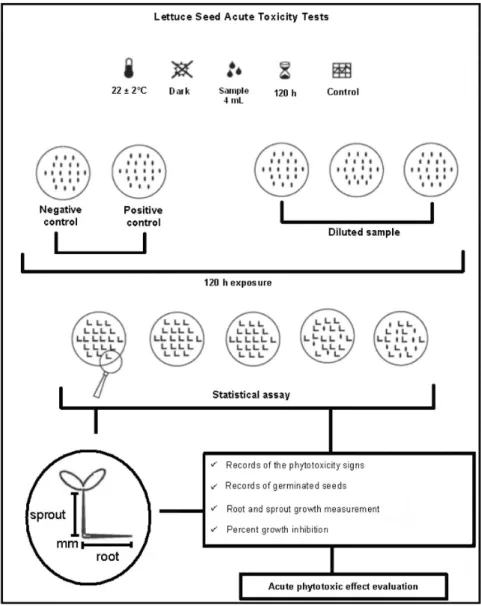
acute toxicity tests (120 h exposure) that allow evaluating the phytotoxic effects of pure compounds and complex mixtures on plant germination and seedling development during the first days of growth. The germination and the growth inhibition of the root and sprout are used as evaluation endpoints of phytotoxic effects.
Experimental
Reagents
The textile efluents studied were obtained from a clothing manufacturer of Northwest Paraná State (PR), Brazil. TiO2 (P-25, 80% anatase, 20% rutile with a speciic surface of 50 m2 g-1) was kindly provided by
Evonik-Degussa-Brazil and used without previous puriication. H2O2 (30%, analytical grade) was purchased from Synth. The other reagents employed had analytical grade and were used without previous puriication.
Photodegradation
Irradiation was performed with a mercury lamp (250 W) without protective glass at room temperature in three open cylindrical borosilicate reactors. The suspensions contained TiO2 (0.25 g L-1) and H
2O2 (1.0 × 10
-2 mol L-1)
in concentrations established according to previous studies.25,26 Textile efluent was collected at the dying
machine output after pH neutralization. Degradation evolution was evaluated under 6 h irradiation. Table 1 gives the raw textile efluent characteristics.
Before irradiation, 500 mL of suspensions containing 0.25 g L-1 of TiO
2 were sonicated for 20 min in the dark
at pH 3.5 for obtaining optimal adsorption level.26 After
adsorption, 1.0 ×10⁻² mol L-1 of H
2O2 was added to the
heights on the sides of the box to minimize the effect of the lamp-generated heat.25 The temperature during
irradiation oscillated around 35 ºC.
Analytical determination
The changes in efluent composition as a function of irradiation time were studied by UV-Vis (Shimadzu 1240 spectrophotometer) after iltration with 25 μm millipore membrane. Mineralization rates were investigated through the decrease in Chemical Oxygen Demand (COD) and Total Organic Carbon (TOC-5000 Analyser), and nitrate (NO3–),
ammonium (NH4+), and sulfate (SO 4
2–) ion formation. The
analytical techniques were used according to the Standard Methods.27 Residual peroxide was determined according
to Silva et al.28
Lettuce seed toxicity test
Lettuce seed bioassays were carried out according to Sobrero and Ronco.20
Dilution preparation
The efluent samples (in natura and irradiated for 1, 2, 3, 4, 5, and 6 h in the presence of either TiO2 0.25 g L-1 or
the TiO2 0.25 g L-1 + H
2O2 1.0 ×10
-2 mol L-1 association
were diluted ive-fold with distilled water to 100%, 80%, 50%, 20%, and 10% v/v.
Assay protocol
A paper ilter disk (Whatman No. 3, 90 mm diameter) was placed on a Petri dish (100 mm diameter) previously marked with the corresponding dilution and the bioassay start and end dates. The paper ilter disk was then saturated with 4 mL of diluted sample with care to avoid bubble formation. Twenty seeds were placed on the ilter paper with a pair of tweezers with enough room to allow root growth.
The plates were covered and placed in plastic bags to prevent moisture loss and incubated for 5 days (120 h) at
22.2 ± 2 ºC, as shown in Figure 1. Each assay was done in triplicate.
Measurement of phytotoxicity evaluation end points
The endpoint effect of sample exposure was evaluated by comparing the response of experimental and negative control organisms (exposed to pure water). Experimental conditions were the same as the assay conditions, except for the absence of efluent sample. After exposure, the effect on the germination and the growth inhibition of the root and sprout were quantiied.
Effect on germination
It was counted the number of seeds that germinated normally, considering the germination criterion and the effective root growth, according to equation 1.
number of germinated seeds
% absolute germination = ––––––––––––––––––––––––– x100 (1) total number of seeds
Effect on both dilution and control root and sprout length (equation 2)
Seedling root and sprout were carefully measured with either a ruler or cross section paper. Roots were measured from the knot region (thicker transition from root to sprout) to the root apex. Sprout growth was measured from the knot to the cotyledon insertion.
MCRG – MSRG
% relative root growth inhibition = ––––––––––––––– x100 (2) MCRG
where MCRG = Mean control root growth and MSRG = Mean sample root growth.
Results and Discussion
Photodegradation
The actual textile efluents and catalyst mass values, oxidizer, and pH (TiO2 =0.25 g L-1, H
2O2 = 1.0 ×10
-2 mol L-1,
and pH 3.5) used in the experiments were optimized in previous experiments.26
Table 1. Real textile efluent characterization before irradiation
pH Abs / nm
228 254 284 310 390 500 600
7.5 2.4479 1.5937 1.071 0.7501 0.3204 0.1950 0.1697
H2O2 / (mol L-1)
COD / (mgO2 L-1)
Cond. / (mS cm-1)
TOC / (mg L-1)
Norg / (mg L-1)
NH4+ /
(mg L-1)
NO3− /
(mg L-1)
SO42− /
(mg L-1)
n.a. 430 4.06 173 33.04 28.35 n.d. n.d.
A total of six degradations of the same efluent (1, 2, 3, 4, 5, and 6 h irradiation) were carried out for a complete and coherent study of degradation and a complete evolution proile of degradation (decrease in coloration, COD, TOC) and mineralization. The experiments in the presence of only TiO2 and of the associationTiO2/H2O2 allowed evaluating the toxic potential of the efluents before and after different irradiation times and the inluence of the presence or not of peroxide in the medium. Although peroxide certainly improves the process eficiency, it may affect toxicity. Due to the instability of solar radiation and as this study required constant radiation for later comparison, the experiments were carried out only in an artiicial radiation reactor.
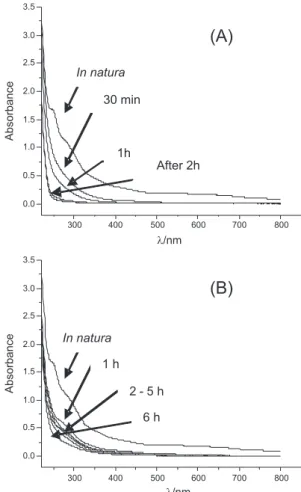
Figure 2 shows the typical absorbance decay of the textile efluent during photodegradation in the presence of TiO2. The decay is more intense in A due to the presence of H2O2, a strong oxidant. It accelerates the decrease of
VIS and UV light peaks, which indicates a rupture of the characteristic organic structures, mainly dyes such as the azo groups and aromatic rings29 of the efluents, due
to the large number of hydroxyl radicals in the medium, which makes degradation rather easy. The large quantity of these radicals in the TiO2/H2O2 association is attributed to the reactions illustrated in Scheme 1. It is not observed the formation of new UV peaks, which suggests that the intermediate products are consumed during the process without the formation of any refractory product. This fact is also demonstrated by the large reduction of COD and TOC, parameters that indicate the presence of organic matter in the medium.
which are fundamental parameters of photocatalytic process eficiency.
The eficiency of the techniques tested was satisfactory. For COD removal, when TiO2 was associated to H2O2 the eficiency was higher (100%) than TiO2 alone (88%) after 6 h irradiation time. TOC yields under 6 h reaction were 80 and 66% for TiO2/H2O2 and TiO2, respectively.
Discoloration and organic matter reduction results are essential for the good development of the photodegradation technique. However, it must be pointed out that mineralization is the most important process characteristic, since it shows the real process eficiency. Breaking up organic structures is relatively easy; the dificult is mineralizing them to CO2,
H2O, and inorganic ions (NO3–, NH 4
+, SO 4
2–, etc). Table 2
shows the evolution of conductivity values of the irradiated solution. It starts high as the solution presents a large sodium chloride concentration, which is necessary for the textile dying process and for the pH adjustment at the beginning of the reaction. However, this value changes during the photocatalytic process due to the formation of new ions in the reaction medium. As the correct efluent sample composition is unknown, it is inferred that such ions result from the degradation of dyes present in large concentration in this type of efluent. Previous studies with standard factory dyes26 showed that large amounts of dye may be mineralized
to NO3–, NH 4
+, SO 4
2– due to the structure type, procion HE
(diaminochlorotriazine) and remazol (sulfate ethyl solfones) dyes, both sulfonated to increase compound solubility. Therefore, for these efluents, mineralization was analyzed in terms of formation of these types of ions.
Table 2 also shows that the evolution of nitrogenated species is a little more pronounced for the TiO2/H2O2 association(about 18%), because NO3– is the most oxidized
nitrogen form. In a more oxidizing medium, it is predicable that a large amount of NO3– be formed, drastically reducing
the amount of NH4+, the most reduced form. In relation to
the mass balance, a more speciic calculation is complicated due to the catalyst positive surface charge, since adsorption of anionic species occurs in acidic medium.31
In relation to sulfur in the medium, the only form present is sulfate. Its amount is about 82% larger for the TiO2/H2O2 association than forTiO2 alone. This may also be explained by the larger oxidizing power of the medium, mainly in the beginning of the reaction, when excess hydroxyl radicals are formed by the consumption of peroxide. Later, the concentration stabilizes at its peak. One must also consider that the inal concentration of SO42– may not represent the real concentration formed for
the same reasons of the nitrogenated species, adsorption on the catalyst surface in acidic medium.32
The chemical analyses show a good mineralization rate; however, the complementation with biological data adds to the data reliability, since the degraded products may still present residual toxicity. This is the reason why the lettuce (Lactuca sativa) seed toxicity test was carried out.
Lettuce seed (Lactuca sativa) phytotoxicity evolution
The evaluation of lettuce (Lactuca sativa) germination and root and sprout development are representative indicators of the capacity of plant establishment and development in potentially toxic media. It is important to point out that plants are largely sensitive to adverse external factors in the irst days of development and that several Figure 2. Decay in the absorbance spectrum of textile efluent EF
in conditions: (A) TiO2 0.25 g L-1∕ H
2O2 1.0 ×10
-2 mol L-1, (B) TiO 2
0.25 g L-1.
UV/TiO2 (A) TiO2 + hν → TiO
2 (e - + h+)
TiO2h+ + OH
-ad→ TiO2 + OH •
UV/H2O2/TiO2 (B) TiO2 + hν → TiO
2 (e - + h+)
TiO2h+ + OH
-ad→ TiO2 + OH •
H2O2 + e-→ OH• + OH
physiological processes may be affected by toxic substances and thus alter the normal plant survival and development. It is accepted that the toxicity of organic load efluents is due to the presence of phenolic compounds. However, other constituents such as aldehydes and alcohols also have a phytotoxic effect.21
In this study, besides germination, roots and sprouts were also studied during the exposure period, as shown in Figure 1.
According to Table 3, none of the experiments carried out showed signiicant differences (P < 0.05) in lettuce seed absolute percent germination, that is, the treatments using only either TiO2 or TiO2/H2O2 association with different irradiation times do not affect the germination process negatively comparatively to the in natura efluent and negative control. This fact may be related to the low concentrations of toxic compounds, which were insuficient to affect the germination process. Other authors obtained similar results for lettuce seeds.22,24 It is worth pointing out that these results are for
undiluted efluents. Even the 100% efluent sample was not so toxic (inhibition larger than 50%), considering that dilution would further reduce the efluent toxicity.24
Differently from the traditional seed germination test, the evaluation of seedling root and sprout growth allows evaluating the toxic effect of soluble compounds present at concentration levels insuficiently low to inhibit germination, but high enough to possibly slow down or inhibit root and sprout growth completely, depending on the compound site and mode of action. Thus, the inhibition of root and sprout growth is a very sensitive sub-lethal indicator of toxic effects of efluents on vegetables that provides complementary information on their effect on germination.34,35 The difference between the seed bioassay
and other evidences based on algae and submersed aquatic plants as diagnose organisms is that it allows evaluating phytotoxicity in colored samples, such as textile efluents, and in high turbidity samples directly without the need of previous iltration, thus reducing pre-treatment interferences and simplifying the test procedure.20
Table 4 gives the root growth results obtained with TiO2 alone and TiO2/H2O2 association. The data suggest that the chemical mineralization obtained with TiO2/H2O2 association is more eficient to removes organic pollutants; thus yielding a larger inal ion concentration. However, the Table 2. Evolutive follow-up of degradation and mineralization of textile efluents in the presence of either TiO2 or TiO2/H2O2
Samples COD /
(mgO2 L-1)
TOC / (mg L-1)
Norg / (mg L-1)
NH4+ /
(mg L-1)
NO3- /
(mg L-1)
SO42- /
(mg L-1)
Conductivity / (mS cm-1)
EF 430.20 173.2 33.04 28.35 0 0 4.06
T 1 h 225.0 92.55 30.07 30.24 26.06 59.08 4.20
T 2 h 205.3 90.21 25.22 34.77 27.03 59.72 4.25
T 3 h 160.5 87.90 0 34.53 29.12 60.22 4.25
T 4 h 150.0 84.00 0 26.26 30.09 61.86 4.32
T 6 h 50.20 57.60 0 17.81 39.92 66.31 4.86
TH 1 h 205.6 75.20 28.03 35.32 30.56 92.83 4.37
TH 2 h 155.2 56.11 15.25 30.36 30.59 117.8 4.38
TH 3 h 85.40 48.02 0 28.42 30.89 120.3 4.50
TH 4 h 50.60 37.05 0 13.36 45.43 120.5 4.60
TH 5 h 0 35.00 0 6.35 49.08 121.7 4.95
T = efluent irradiation in the presence of TiO2 0.25 g L-1; TH = efluent irradiation in the presence of TiO 2 0.25 g L
-1 and H
2O2 1.0 ×10
-2 mol L-1. Results
expressed as means of triplicate experiments. Same letters (a) in the same line indicate that differences are not signiicant (P < 0.05) by Tukey test.33
Table 3. Absolute (mean) percent germination of lettuce seeds for different textile efluent treatment conditions (only TiO2 and TiO2/H2O2 association) and different irradiation times
Negative In natura
T 1 h T 2 h T 3 h T 4 h T 6 h
Control EF
90 90a 85a 85a 95a 75a 80a
TH 1 h TH 2 h TH 3 h TH 4 h TH 6 h
90 90a 95a 90a 85a 90a 85a
T = efluent irradiation in the presence of TiO2 0.25 g L-1. TH = efluent irradiation in the presence of TiO 2 0.25 g L
-1 and H
2O2 1.0 ×10
-2 mol L-1. Results
statistical comparison of the two treatments shows that TiO2 alone affects sample root development less up to 3 h irradiation and the development of samples irradiated for 4 and 6 h far more, which shows that the irradiated sample is still better than the in natura efluent, despite its high toxicity.
The TiO2/H2O2 association samples irradiated for 4 and 6 h presented a signiicant improvement (P < 0.05) in growth rate. This improvement may be attributed to the fact that in the irst hours of irradiation (2-3 h) under catalyst/oxidizer association there is a larger number of OH▪ radicals, which may affect seedling development, as it is a highly oxidizing compound, mainly when it is considered it was not detected the presence of residual peroxide. However, after its consumption during the reaction (4-6 h), this effect was reduced, with and an improvement in root growth, which shows that mineralized samples without the presence of radicals results in minor toxicity.21 The
increased root growth shows that the phytotoxic effect was reduced after 4 h irradiation of the textile efluent in the presence of the TiO2/H2O2 association comparatively to that of the in natura efluent. Similar results were obtained by other researchers for a similar treatment with distinct efluents and organisms.35
These results shows that the in natura efluent exerts a rather negative inluence on lettuce seedling root growth despite the improvement in the irst hour of irradiation in the two types of experiments. A closer look at the evolution of the experiments during the 6 h efluent irradiation makes it clear that the longer the irradiation with TiO2 alone is, the larger the percent root growth inhibition. It shows that the concentration of partially mineralized intermediate toxic compounds increases, as conirmed by chemical analysis. The inluence of peroxide
is high in the beginning of the experiment and falls along the 6 h of irradiation.
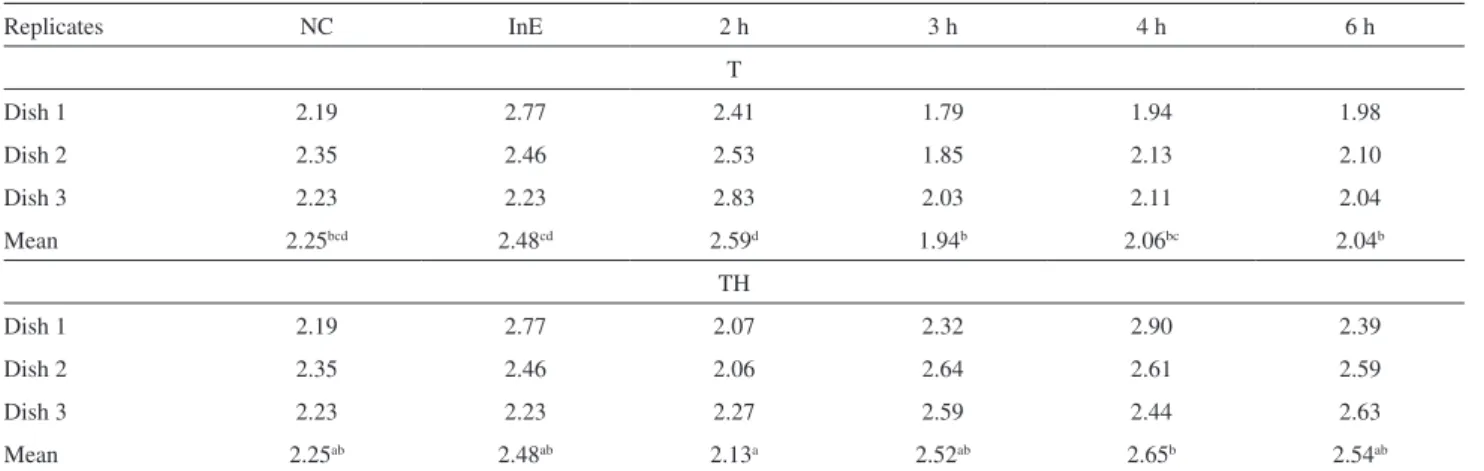
Table 5 shows that the lettuce seedling sprout length in the presence of treated efluents, both for the TiO2/H2O2 association and for TiO2 alone, increased rather than decreased as expected, likewise for the in natura efluent. There were not observed signiicant differences among the irradiated samples, control and in nature efluent. This is characteristic of samples with low phenolic compound concentrations, which stimulate sprout growth. As lettuce seeds are extremely sensitive, they always present a positive sprout growth response when exposed to low concentrations of phenolic acid.24
Conclusions
The efluent analyzed presented good organic matter reduction and mineralization rates as demonstrated by the high concentrations of NH4+, NO
3
–, and SO 4
2–. The chemical
and toxicological analyses conirmed the mineralization data. The products formed during 6 h efluent irradiation under TiO2 alone or TiO2/H2O2 association were not statistically signiicantly more toxic than the in natura efluent was, since samples with 100% concentration did not inhibit percent germination signiicantly.
The toxicity found (root and sprout development) in the samples irradiated during 6 h in the presence of TiO2/ H2O2 was lower than that observed for samples irradiated with only TiO2, fact which indicates that more intense oxidation creates products less toxic, especially after 4 h of irradiation.
Other toxicity tests with other species of interest may yield better results and clarify if the increase in sprout growth is due to either low toxicity or the presence of micronutrients in the medium.
Table 4. Root length in cm for the three Petri dishes for different textile efluent treatment conditions (only TiO2 and TiO2/H2O2 association) and different irradiation times
Replicates NC InE 2 h 3 h 4 h 6 h
T
Dish 1 2.05 0.91 1.15 1.79 1.40 1.14
Dish 2 2.29 1.14 1.33 2.03 1.65 1.23
Dish 3 1.99 1.17 1.77 2.11 1.35 1.11
Mean 2.11c 1.07a 1.42ab 1.98c 1.47ab 1.16a
TH
Dish 1 2.05 0.91 1.18 1.40 1.71 1.52
Dish 2 2.29 1.14 1.07 1.07 1.65 1.55
Dish 3 1.99 1.17 1.07 1.20 1.40 1.67
Mean 2.11d 1.07a 1.11a 1.23ab 1.59bc 1.58bc
NC = Negative control. InE = In natura efluent. T = Samples irradiated in the presence of TiO2 0.25 g L-1. TH = Samples irradiated in the presence
of TiO2 0.25 g L-1 and H
2O2 1.0 ×10
-2 mol L-1. Results expressed as means of triplicate experiments. Different letters (a, b, c) in the same line indicate
Acknowledgments
Authors are grateful to CAPES, Fundação Araucária, MR-Malharia and Unioeste.
References
1. Pinheiro, H. M.; Touraud, E.; Thomas, O.; Dyes Pigm.2004,
61, 121.
2. Zollinger, H.; Colour Chemistry: Syntheses, Properties and
Applications of Organic Dyes and Pigments, VCH: Weinheim,
Germany, 1991.
3. Frijters, C. T. M. J.; Vos, R. H.; Scheffer, G.; Mulder, R.; Water Res. 2006, 40, 1249.
4. Prigione, V.; Tigini, V.; Pezzella, C.; Anastasi, A.; Sannia, G.; Varese, G. C.; Water Res. 2008, 42, 2911.
5. Malpass, G. R. P.; Miwa, D. W.; Mortari, D. A.; Machado S. A.S.; Motheo A. J.; Water Res. 2007, 41, 2969.
6. Costa, F. A. P.; Reis, E. M.; Azevedo, J. C. R.; Nozaki, J.; Sol.
Energy Mater. Sol. Cells2004, 77, 29.
7. Oguz, E.; Keskinler, B.; Çelik, Z.; Dyes Pigm.2006, 64, 101. 8. Lizama, C.; Freer, J.; Baeza, J.; Mansilla, H. D.; Catal. Today
2002, 76, 235.
9. Muruganandham, M.; Swaminathan, M.; Dyes Pigm.2004, 63, 315. 10. Pekakis, A. P.; Xekoukoulotakis, N. P.; Mantzavinos, D.; Water
Res. 2006, 40, 1276.
11. Daneshvar, N.; Rabbani, M.; Modirshahla, N.; Behnajady, M.
A.; J. Photochem. Photobiol., A 2004, 168, 39.
12. Yu, Y.; Zhuang, Y-Y.; Wang Z-H.; Qiu M-Q.; Chemosphere
2004, 54, 425.
13. Neppolian, B.; Choi, H. C.; Sakthivel, S.; Arabindoo, B.; Murugesan, V.; Chemosphere 2002, 46, 1173.
14. Garcia, J. C.; Simionato, J. I.; Silva, A. E. C.; Nozaki, J.; Souza, N. E.; Sol. Energy2009, 83, 316.
15. Reemtsma, T.; Anal. Chim. Acta2001, 426, 279.
16. Manusadzianas, L.; Balkelyte, L.; Sadauskas, K.; Blinova, I.; Pollumaa, L.; Kahru, A.; Aquat. Toxicol. 2003, 63, 27. 17. Moraes, S. G.; Freire, R. S.; Duran, N.; Chemosphere2000, 40, 369. 18. Kim, H. J.; Rakwal, R.; Shibato, J.; Iwahashi, H.; Choi, J-S.;
Kim, D-H.; Water Res. 2006, 40, 1773.
19. Souza, S. A. M.; PhD Thesis, Universidade Federal de Pelotas, Brasil, 2005.
20. Sobrero M. C.; Ronco, A.; Toxicologic Assay and Evaluation Methods of the Water Quality: Standardization, Intercalibration
and Applications; Universidad do Chile: Santiago, 2004.
21. Ginos, A.; Manios, T.; Mantzavinos, D.; J. Hazard. Mater. 2006,
133, 135.
22. Kummerová, M.; Kmentová, E.; Chemosphere2004, 56, 387. 23. Beltrami, M.; Rossi, D.; Baudo, R.; Aquat. Ecosyst. Health
Manag. 1999, 2, 391.
24. Ortega, M. C.; Moreno, M. T.; Ordovás, J.; Aguado, M. T.; Sci.
Hortic. 1996, 66, 125.
25. Garcia, J. C.; Oliveira, J. L.; Silva, A. E. C.; Oliveira, C. C.; Nozaki, J.; Souza, N.E.; J. Hazard. Mater. 2007, 147, 105. 26. Garcia, J. C.; Boroski, M.; Oliveira, J. L.; Silva, A. E. C.; Nozaki,
J. In Trends in Solar Energy Research, Nova Publishers: New York, 2006.
27. APHA-American Public Health Association; Standard Methods
for the Examination of Water and Wastewater, AWWA, WPCF:
Washington, D.C., 1998.
28. Silva, M. R. A.; Oliveira, M. C.; Nogueira, R. F. P.; Eclet. Quim. 2004, 29, 19.
29. Akyol, A.; Yatmaz, H. C.; Bayramoglu, M.; Appl. Catal., B
2004, 54, 19.
Table 5. Sprout length (cm) in the three Petri dishes for different textile efluent treatment conditions (only TiO2 and TiO2/H2O2 association) and different irradiation times
Replicates NC InE 2 h 3 h 4 h 6 h
T
Dish 1 2.19 2.77 2.41 1.79 1.94 1.98
Dish 2 2.35 2.46 2.53 1.85 2.13 2.10
Dish 3 2.23 2.23 2.83 2.03 2.11 2.04
Mean 2.25bcd 2.48cd 2.59d 1.94b 2.06bc 2.04b
TH
Dish 1 2.19 2.77 2.07 2.32 2.90 2.39
Dish 2 2.35 2.46 2.06 2.64 2.61 2.59
Dish 3 2.23 2.23 2.27 2.59 2.44 2.63
Mean 2.25ab 2.48ab 2.13a 2.52ab 2.65b 2.54ab
NC = Negative control; InE = In natura efluent. T = Samples irradiated in the presence of TiO2 0.25 g L-1. TH = Samples irradiated in the presence of
TiO2 0.25 g L-1 and H
2O2 1.0 ×10
-2 mol L-1. Results expressed as means of triplicate experiments. Different letters (a, b, c, d) in the same line indicate
30. Malato, S.; Blanco, J.; Campos, A.; Cáceres, J.; Guillard, C.; Herrmann, J. M.; Fernández-Alba, A. R.; Appl. Catal., B 2003,
42, 349.
31. Wang, K-H.; Hsieh, Y-H.; Chou, M. Y.; Chang, C-H.; Appl.
Catal., B 1999, 21, 1.
32. Karkmaz, M.; Puzenat, E.; Guillard, C.; Herrmann, J. M.; Appl.
Catal., B 2004, 51, 183.
33. Statsoft; Statistica 5.1 Software,Tucksa, USA, 1996.
34. Bowers, N.; Pratt, J. R.; Beeson D.; Lewis M.; Environ. Toxicol. Chem. 1997, 16, 207.
35. Cheung, Y. H.; Wong, M. H.; Tam, N. F. Y.; Hydrobiologia1989,
188, 377.
36. Casa, R.; Annibale, A. D.; Pieruccetti, F.; Stazi, S. R.; Sermanni, G. G.; Cascio, B. L.; Chemosphere2003, 50, 959.