Survey of glycine-rich proteins (GRPs) in the
Eucalyptus
expressed sequence
tag database (ForEST)
Silvia Nora Bocca
1, Claudia Magioli
1, Amanda Mangeon
1, Ricardo Magrani Junqueira
1, Vanessa Cardeal
1,
Rogério Margis
1,2and Gilberto Sachetto-Martins
11
Universidade Federal do Rio de Janeiro, Instituto de Biologia, Departamento de Genética, Laboratório de
Genética Molecular Vegetal, Rio de Janeiro, RJ, Brazil.
2Universidade Federal do Rio de Janeiro, Instituto de Química, Departamento de Bioquímica, Rio de
Janeiro, RJ, Brazil.
Abstract
The occurrence of quasi-repetitive glycine-rich peptides has been reported in different organisms. Glycine-rich regions are proposed to be involved in protein-protein interactions in some mammalian protein families. In plants, a set of glycine-rich proteins (GRPs) was characterized several years ago, and since then a wealth of new GRPs have been identified. GRPs may have very diverse sub-cellular localization and functions. The only common feature among all different GRPs is the presence of glycine-rich repeat domains. The expression of genes encoding GRPs is developmentally regulated, and also induced, in several plant genera, by physical, chemical and biological factors. In addition to the highly modulated expression, several GRPs also show tissue-specific localization. GRPs specifically expressed in xylem, phloem, epidermis, anthertapetum and roots have been described. In this paper, the structural and functional features of these proteins inEucalyptus are summarized. Since this is the first description of GRPs in this species, particular emphasis has been given to the expression pattern of these genes by analyzing their abundance and prevalence in the different cDNA-libraries of the Eucalyptus Genome Sequencing Project Consortium (ForEST). The comparison of GRPs fromEucalyptus and other species is also discussed.
Key words:glycine-rich, GRP,Eucalyptus.
Received: May 31, 2004; Accepted: April 1, 2005.
Introduction
Glycine-rich proteins (GRPs) are characterized by the presence of domains that show little sequence conservation and are highly enriched in residues of the amino acid glycine. Typically, these Glycine-rich domains are ar-ranged in (Gly)n-X repetitions. Although the first genes en-coding GRPs have been isolated from plants, proteins with characteristic repetitive glycine stretches have been re-ported in a wide variety of organisms from cyanobacterias to animals (reviewed in Sachetto-Martinset al., 2000).
The structure and modulation of plant GRP genes have been intensively investigated showing that they are highly regulated during development as well as under the influence of several external stimuli. Also, in many cases, their expression pattern was demonstrated to be
tissue-specific. These characteristics were the most intensively studied aspects of GRP genes since they point to the possi-ble biotechnological application of their promoters.
Since the first reports describing plant GRPs as cell wall associated proteins (Showalter, 1993), many other GRPs with different domain organizations and sub-cellular localizations appeared in the literature. This diversity led to the concept that GRPs should not be considered as a family of related proteins but as a wide group of proteins that share a common structural domain (Sachetto-Martins et al., 2000).
The diverse but highly specific expression pattern of
grpgenes, taken together with the distinct sub-cellular lo-calization of some GRP groups, clearly indicate that these proteins are implicated in several independent physiologi-cal processes (Condit, 1993; Keller and Heierli, 1994; Sachetto-Martinset al., 1995; Magioliet. al., 2001; Franco
et al., 2002). Based on what is known about their general architecture, sequence motifs, sub-cellular localization, and gene expression pattern and modulation, some infer-ences can be made regarding their function.
www.sbg.org.br
Send correspondence to Gilberto Sachetto-Martins. Universidade Federal do Rio de Janeiro, Ilha do Fundão, Instituto de Biologia, Departamento de Genética, Laboratório de Genética Molecular Vegetal, CCS, Bloco A, sala A2-076, 21944-970 Rio de Janeiro, RJ, Brazil. Email: [email protected].
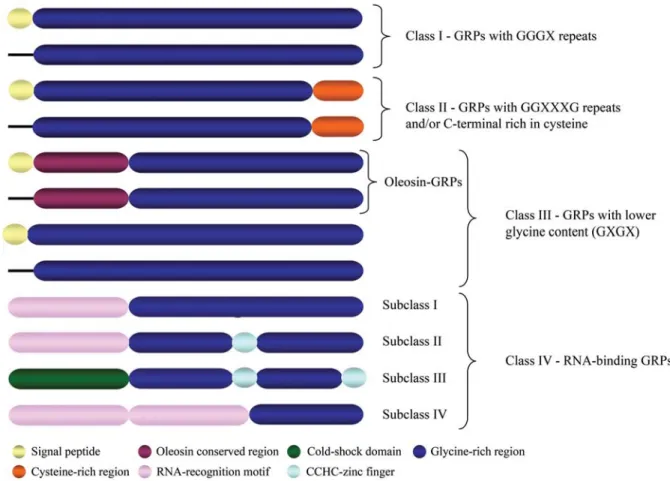
GRPs can be classified into four major groups (Fig-ure 1) based on their primary struct(Fig-ure (reviewed in Sachetto-Martins et al., 2000 and Fusaro et al., 2001). GRPs from class I are know as classic GRPs. They may contain a signal peptide followed by a glycine-rich region with GGGX repeats. A structural function is attributed to proteins of this class due to their cell wall localization (Cassab, 1998). The class II GRPs may or may not have a signal peptide and contain a glycine-rich region followed by a cysteine-rich region at their C-terminus. For one member of this family, AtGRP-3, this cysteine-rich do-main has been shown to interact with cell wall associated receptor kinases (WAKs) (Parket al., 2001). The class III GRP contains proteins with lower glycine content that show a great diversity of structures. The best known pro-teins from this class are oleosin GRPs. Oleosins are alka-line proteins on the surface of oil bodies in plants. They play a structural role in stabilizing the triacylglycerols of the oil bodies together with the phospholipid layer. Previ-ous works demonstrate that many of the major pollen coat proteins are derived from an endoproteolytic cleavage of oleosin GRPs that originally accumulate within the large cytoplasmatic lipid bodies of tapetal cells (Ferreiraet al., 1997; Murphy et al., 2001). GRPs from class IV are RNA-binding GRPs. Those GRPs may contain, besides
the glycine-rich region, several motifs which include RNA-recognition motif, cold-shock domain and zinc fin-gers (Fusaroet al., 2001).
In this article, a search for GRPs in theEucalyptus
transcriptome is reported. Several GRPs were identified and classified into the major groups previously established. The survey was extended to proteins that, despite not being considered canonical GRPs, contain domains of limited ex-tension that are rich in glycine.
Materials and Methods
Sequence data, alignment and phylogenetic analysis
Protein sequences of reported plant GRPs were used to query the ForEST expressed sequence tag (EST) data-base with the TBLASTN algorithm (Altschulet al., 1997). Since glycine-rich domains are low complexity sequences, the TBLASTN default parameters were used without filter-ing the query for low compositional complexity. The com-plete list of sequences used as baits include the 86 proteins reviewed in Sachetto-Martinset al.(2000), 8 sequences re-cently described from a complete survey of Arabidopsis
glycine-rich RNA binding proteins (Lorkovic and Barta, 2002), a wheat cold shock domain GRP (Karlson et al., 2002), aPinus taedacell wall GRP (Allona et al., 1998),
Arabidopsis UBA2 (Lambermon et al., 2002) and 4
Arabidopsiscold shock domain GRPs (Karlson and Imai, 2003). Additionally, several GRP sequences recently iden-tified from a complete analysis of a sugarcane EST data-base were also selected to be used as baits (Fusaroet al., 2001). These sugarcane sequences belong to each of the different GRP classes and were chosen for being the less similar to other published GRPs among the complete sugar-cane set. All GRP clusters found in Eucalyptus libraries were translated to obtain their putative protein sequences. When an evident frameshift was observed in the translation of the ORFs by an apparent sequencing error, a manual edi-tion of the sequences was performed. Protein sequences ob-tained were used in a second round of TBLASTN search against the non-redundant protein database at the National Center for Biotechnology Information (NCBI) to identify their closest homologues. Additional domains were de-tected using the Prosite (http://bo.expasy.org/prosite) and Pfam (http://www.sanger.ac.uk/Software/Pfam/search. shtml) prediction programs. The possible presence of a sig-nal peptide in the sequences was predicted with the sigsig-nalP server (http://www.cbs.dtu.dk/services/SignalP).
Multiple alignments of proteins deduced from the ForEST clusters and bait sequences were performed using the ClustalW program (Thompsonet al., 1994). Unrooted trees were calculated using the Molecular Evolutionary Ge-netics Analysis (MEGA) software (Kumar et al., 2000). The neighbor-joining and p-distance method were used with the pairwise deletion option for the treatment of amino acid gaps during the multiple alignment GRPs. For con-struction of the phylogenetic tree the confidence levels for
the nodes were determined with 2000 replications using the Internal Branch test (Sitnikovaet al., 1995).
EucalyptuscDNA libraries
AllEucalyptussequences used during this work were obtained from theEucalyptusGenome Sequencing Project Consortium (ForEST) and derived from cDNA libraries specific to different Eucalyptustissues, organs or condi-tions of growth (for detailed information see https://for-ests.esalq.usp.br/Librariesinfo.html). BK1 (stem from 8 year oldE. grandis trees), CL1 (E. grandis dark-growth callus), CL2 (E. grandislight-growth callus), FB1 (flower buds, flowers and fruits), LV1 (young plant leaves), LV2 (leaves from adult trees with deficiency in phosphorous, boron), LV3 (leaves colonized by Thyrinteina), RT2 (roots from young plants), RT3 (roots from green houses culti-vated young plants), RT4 (roots from water stress resistant young plants), RT5 (roots from water stress susceptible young plants), RT6 (roots from frost resistant and suscepti-ble trees), SL1 (dark growth E. grandis seedlings exposed to 3 h of light), SL4 (dark growthE. globulusseedlings), SL5 (dark growthE. salignaseedlings), SL6 (dark growth
E. urophyllaseedlings), SL7 (dark growthE. grandis seed-lings), SL8 (dark growthE. camaldulensisseedlings), ST1 (stem from young healthy plants), ST2 (stem from young plants susceptible to water stress, mRNAs between 0.6 to 2 kb), ST5 (stem from young healthy plants), ST6 (stem from young plants susceptible to water stress, mRNAs be-tween 0.8 to 3 kb), ST7 (stem from frost-resistant and sus-ceptible trees), WD2 (E. grandiswood).
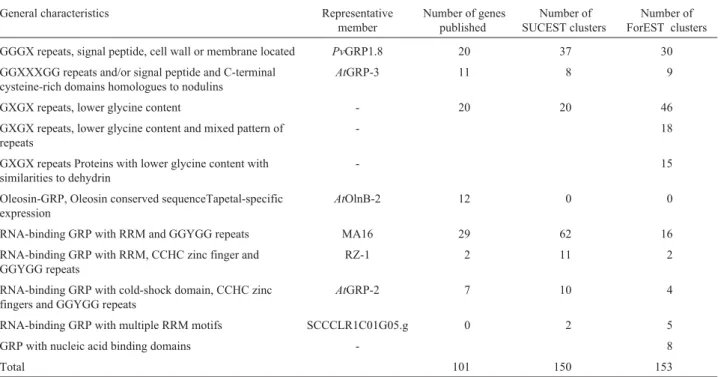
Table 1- Distribution of glycine-rich protein genes on ForEST database.
General characteristics Representative member
Number of genes published
Number of SUCEST clusters
Number of ForEST clusters GGGX repeats, signal peptide, cell wall or membrane located PvGRP1.8 20 37 30 GGXXXGG repeats and/or signal peptide and C-terminal
cysteine-rich domains homologues to nodulins
AtGRP-3 11 8 9
GXGX repeats, lower glycine content - 20 20 46 GXGX repeats, lower glycine content and mixed pattern of
repeats
- 18
GXGX repeats Proteins with lower glycine content with similarities to dehydrin
- 15
Oleosin-GRP, Oleosin conserved sequenceTapetal-specific expression
AtOlnB-2 12 0 0
RNA-binding GRP with RRM and GGYGG repeats MA16 29 62 16 RNA-binding GRP with RRM, CCHC zinc finger and
GGYGG repeats
RZ-1 2 11 2
RNA-binding GRP with cold-shock domain, CCHC zinc fingers and GGYGG repeats
AtGRP-2 7 10 4
RNA-binding GRP with multiple RRM motifs SCCCLR1C01G05.g 0 2 5
GRP with nucleic acid binding domains - 8
Results and Discussion
Distribution of glycine-rich proteins genes on ForEST database
GRPs were previously subdivided into four major groups according to the presence of conserved domains and the pattern of sequence repeats. The four different classes of GRPs are shown in Table 1 and Figure 1. Three groups are based on the pattern of the glycine-rich repeats (class I, GGGX; class II, GGXXXGG; class III, GXGX) and the two other groups are based on the type of functional con-served motif (one sub-group from class III, the oleosin
glycine-rich proteins and class IV, the RNA-binding GRPs).
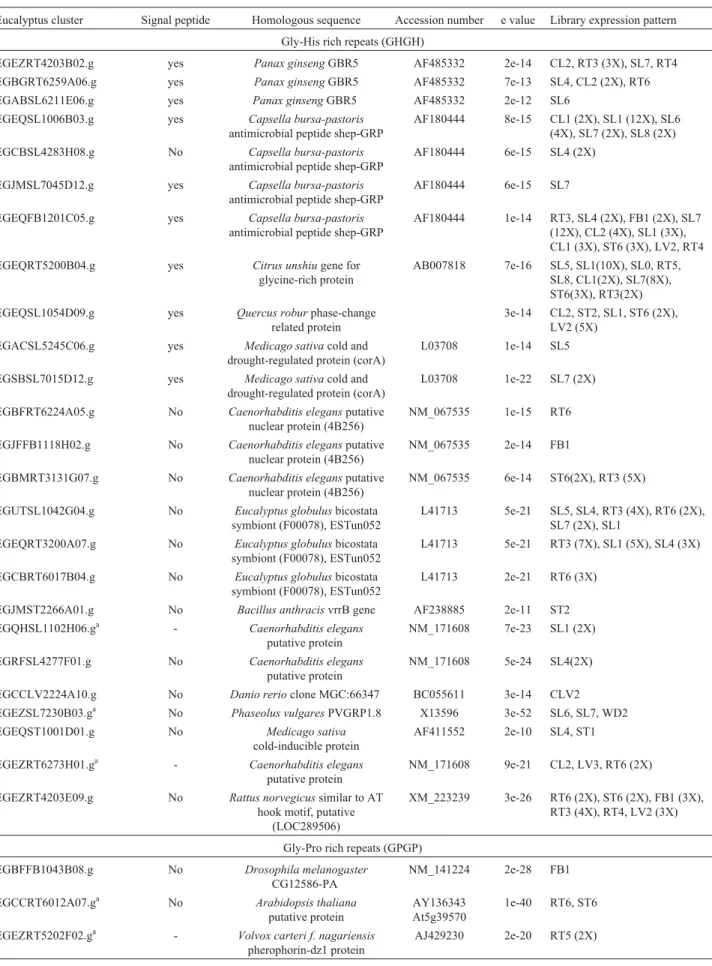
The distribution of each EST sequence between the different ForEST libraries was also analyzed (see Tables 2 to 10). The ForEST database comprises 123,889 EST se-quences, arranged in 33,080 clusters. These EST sequences (reads) came from 19 different cDNA libraries constructed from different plant tissues under different culture condi-tions. Since several GRP genes present tissue-specific ex-pression in other plants, the distribution of the reads from each cluster per library was analyzed. All clusters that were found in only one or two libraries were considered as
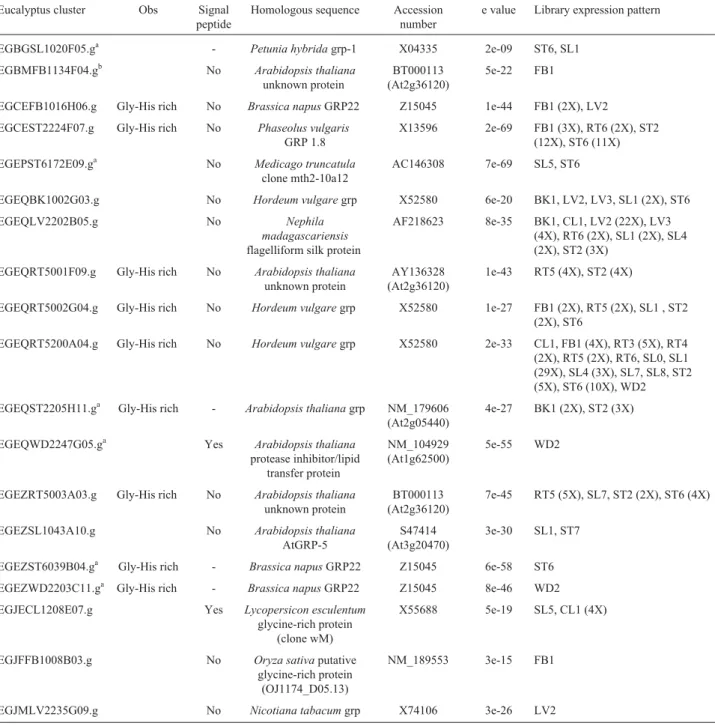
pre-Table 2- Eucalyptus ESTs encoding GRPs with GGGX repeats.
Eucalyptus cluster Obs Signal peptide
Homologous sequence Accession number
e value Library expression pattern
EGBGSL1020F05.ga - Petunia hybridagrp-1 X04335 2e-09 ST6, SL1 EGBMFB1134F04.gb No Arabidopsis thaliana
unknown protein
BT000113 (At2g36120)
5e-22 FB1
EGCEFB1016H06.g Gly-His rich No Brassica napusGRP22 Z15045 1e-44 FB1 (2X), LV2 EGCEST2224F07.g Gly-His rich No Phaseolus vulgaris
GRP 1.8
X13596 2e-69 FB1 (3X), RT6 (2X), ST2 (12X), ST6 (11X) EGEPST6172E09.ga No Medicago truncatula
clone mth2-10a12
AC146308 7e-69 SL5, ST6
EGEQBK1002G03.g No Hordeum vulgaregrp X52580 6e-20 BK1, LV2, LV3, SL1 (2X), ST6 EGEQLV2202B05.g No Nephila
madagascariensis
flagelliform silk protein
AF218623 8e-35 BK1, CL1, LV2 (22X), LV3 (4X), RT6 (2X), SL1 (2X), SL4 (2X), ST2 (3X)
EGEQRT5001F09.g Gly-His rich No Arabidopsis thaliana
unknown protein
AY136328 (At2g36120)
1e-43 RT5 (4X), ST2 (4X)
EGEQRT5002G04.g Gly-His rich No Hordeum vulgaregrp X52580 1e-27 FB1 (2X), RT5 (2X), SL1 , ST2 (2X), ST6
EGEQRT5200A04.g Gly-His rich No Hordeum vulgaregrp X52580 2e-33 CL1, FB1 (4X), RT3 (5X), RT4 (2X), RT5 (2X), RT6, SL0, SL1 (29X), SL4 (3X), SL7, SL8, ST2 (5X), ST6 (10X), WD2 EGEQST2205H11.ga Gly-His rich - Arabidopsis thalianagrp NM_179606
(At2g05440)
4e-27 BK1 (2X), ST2 (3X)
EGEQWD2247G05.ga Yes Arabidopsis thaliana
protease inhibitor/lipid transfer protein
NM_104929 (At1g62500)
5e-55 WD2
EGEZRT5003A03.g Gly-His rich No Arabidopsis thaliana
unknown protein
BT000113 (At2g36120)
7e-45 RT5 (5X), SL7, ST2 (2X), ST6 (4X)
EGEZSL1043A10.g No Arabidopsis thaliana
AtGRP-5
S47414 (At3g20470)
3e-30 SL1, ST7
EGEZST6039B04.ga Gly-His rich - Brassica napusGRP22 Z15045 6e-58 ST6 EGEZWD2203C11.ga Gly-His rich - Brassica napusGRP22 Z15045 8e-46 WD2 EGJECL1208E07.g Yes Lycopersicon esculentum
glycine-rich protein (clone wM)
X55688 5e-19 SL5, CL1 (4X)
EGJFFB1008B03.g No Oryza sativaputative glycine-rich protein
(OJ1174_D05.13)
NM_189553 3e-15 FB1
Table 2 (cont.)
Eucalyptus cluster Obs Signal peptide
Homologous sequence Accession number
e value Library expression pattern
EGJMST6274H06.g No Hordeum vulgaregrp X52580 1e-32 ST6 EGMCST7273H08.g Gly-His rich - Arabidopsis thaliana
unknown protein
BT000113 (At2g36120)
3e-39 ST7
EGRFST6265E06.g No Nephila clavipes
flagelliform silk protein
AF027973 2e-41 ST6
EGSBST2089E03.g Yes Phaseolus vulgarisGRP 1.0
X13595 2e-39 RT6, SL7, ST2, ST6
EGUTBK1007D04.g Gly-His rich - Arabidopsis thaliana
unknown protein
BT000113 (At2g36120)
2e-51 BK1 (2X), RT3
EGAGST6080E06.g No Rattus norvegicussimilar to lymphocyte
al-pha-kinase
XM_227715 4e-29 ST6
EGBMFB1134E09.g No Medicago truncatula
clone mth2-15i12
AC130809 6e-20 CL1, FB1, LV3
EGACST7207C06.g No Nephila clavipes
flagelliform silk protein
AF218622 6e-47 ST6, ST7 (2X)
EGABLV2284A04.g - Anopheles gambiaeclone FK0AAA48AC02
BX032251 2e-31 LV2
EGBGFB1050C05.g No Nephila clavipes
flagelliform silk protein
AAC38847 9e-33 FB1
EGCBSL4285H01.g - Vigna unguiculatagrip X87948 3e-15 SL4 a-Incomplete sequence,b-Edited.
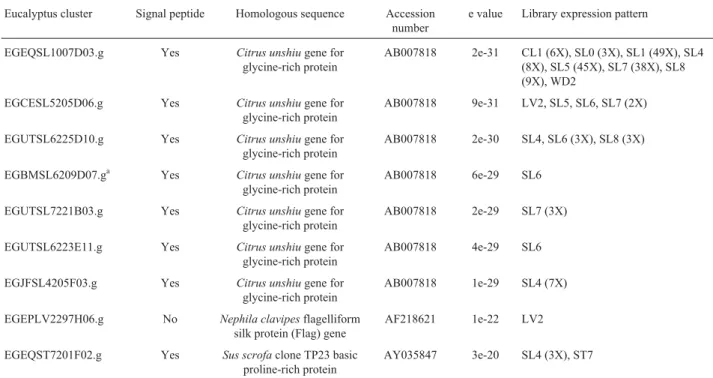
Table 3- Eucalyptus ESTs encoding GRPs with C-terminal domains rich in cysteine.
Eucalyptus cluster Signal peptide Homologous sequence Accession number
e value Library expression pattern
EGEQSL1007D03.g Yes Citrus unshiugene for glycine-rich protein
AB007818 2e-31 CL1 (6X), SL0 (3X), SL1 (49X), SL4 (8X), SL5 (45X), SL7 (38X), SL8 (9X), WD2
EGCESL5205D06.g Yes Citrus unshiugene for glycine-rich protein
AB007818 9e-31 LV2, SL5, SL6, SL7 (2X)
EGUTSL6225D10.g Yes Citrus unshiugene for glycine-rich protein
AB007818 2e-30 SL4, SL6 (3X), SL8 (3X)
EGBMSL6209D07.ga Yes Citrus unshiugene for glycine-rich protein
AB007818 6e-29 SL6
EGUTSL7221B03.g Yes Citrus unshiugene for glycine-rich protein
AB007818 2e-29 SL7 (3X)
EGUTSL6223E11.g Yes Citrus unshiugene for glycine-rich protein
AB007818 4e-29 SL6
EGJFSL4205F03.g Yes Citrus unshiugene for glycine-rich protein
AB007818 1e-29 SL4 (7X)
EGEPLV2297H06.g No Nephila clavipesflagelliform silk protein (Flag) gene
AF218621 1e-22 LV2
EGEQST7201F02.g Yes Sus scrofaclone TP23 basic proline-rich protein
AY035847 3e-20 SL4 (3X), ST7
Table 4- Eucalyptus ESTs encoding GRPs with lower glycine content and repeats rich in Histidine or Proline (GXGX).
Eucalyptus cluster Signal peptide Homologous sequence Accession number e value Library expression pattern Gly-His rich repeats (GHGH)
EGEZRT4203B02.g yes Panax ginsengGBR5 AF485332 2e-14 CL2, RT3 (3X), SL7, RT4 EGBGRT6259A06.g yes Panax ginsengGBR5 AF485332 7e-13 SL4, CL2 (2X), RT6 EGABSL6211E06.g yes Panax ginsengGBR5 AF485332 2e-12 SL6
EGEQSL1006B03.g yes Capsella bursa-pastoris
antimicrobial peptide shep-GRP
AF180444 8e-15 CL1 (2X), SL1 (12X), SL6 (4X), SL7 (2X), SL8 (2X) EGCBSL4283H08.g No Capsella bursa-pastoris
antimicrobial peptide shep-GRP
AF180444 6e-15 SL4 (2X)
EGJMSL7045D12.g yes Capsella bursa-pastoris
antimicrobial peptide shep-GRP
AF180444 6e-15 SL7
EGEQFB1201C05.g yes Capsella bursa-pastoris
antimicrobial peptide shep-GRP
AF180444 1e-14 RT3, SL4 (2X), FB1 (2X), SL7 (12X), CL2 (4X), SL1 (3X), CL1 (3X), ST6 (3X), LV2, RT4 EGEQRT5200B04.g yes Citrus unshiugene for
glycine-rich protein
AB007818 7e-16 SL5, SL1(10X), SL0, RT5, SL8, CL1(2X), SL7(8X), ST6(3X), RT3(2X) EGEQSL1054D09.g yes Quercus roburphase-change
related protein
3e-14 CL2, ST2, SL1, ST6 (2X), LV2 (5X)
EGACSL5245C06.g yes Medicago sativacold and drought-regulated protein (corA)
L03708 1e-14 SL5
EGSBSL7015D12.g yes Medicago sativacold and drought-regulated protein (corA)
L03708 1e-22 SL7 (2X)
EGBFRT6224A05.g No Caenorhabditis elegansputative nuclear protein (4B256)
NM_067535 1e-15 RT6
EGJFFB1118H02.g No Caenorhabditis elegansputative nuclear protein (4B256)
NM_067535 2e-14 FB1
EGBMRT3131G07.g No Caenorhabditis elegansputative nuclear protein (4B256)
NM_067535 6e-14 ST6(2X), RT3 (5X)
EGUTSL1042G04.g No Eucalyptus globulusbicostata symbiont (F00078), ESTun052
L41713 5e-21 SL5, SL4, RT3 (4X), RT6 (2X), SL7 (2X), SL1
EGEQRT3200A07.g No Eucalyptus globulusbicostata symbiont (F00078), ESTun052
L41713 5e-21 RT3 (7X), SL1 (5X), SL4 (3X)
EGCBRT6017B04.g No Eucalyptus globulusbicostata symbiont (F00078), ESTun052
L41713 2e-21 RT6 (3X)
EGJMST2266A01.g No Bacillus anthracisvrrB gene AF238885 2e-11 ST2 EGQHSL1102H06.ga - Caenorhabditis elegans
putative protein
NM_171608 7e-23 SL1 (2X)
EGRFSL4277F01.g No Caenorhabditis elegans
putative protein
NM_171608 5e-24 SL4(2X)
EGCCLV2224A10.g No Danio rerioclone MGC:66347 BC055611 3e-14 CLV2 EGEZSL7230B03.ga No Phaseolus vulgaresPVGRP1.8 X13596 3e-52 SL6, SL7, WD2 EGEQST1001D01.g No Medicago sativa
cold-inducible protein
AF411552 2e-10 SL4, ST1
EGEZRT6273H01.ga - Caenorhabditis elegans putative protein
NM_171608 9e-21 CL2, LV3, RT6 (2X)
EGEZRT4203E09.g No Rattus norvegicussimilar to AT hook motif, putative
(LOC289506)
XM_223239 3e-26 RT6 (2X), ST6 (2X), FB1 (3X), RT3 (4X), RT4, LV2 (3X)
Gly-Pro rich repeats (GPGP) EGBFFB1043B08.g No Drosophila melanogaster
CG12586-PA
NM_141224 2e-28 FB1
EGCCRT6012A07.ga No Arabidopsis thaliana putative protein
AY136343 At5g39570
1e-40 RT6, ST6
EGEZRT5202F02.ga - Volvox carteri f. nagariensis
pherophorin-dz1 protein
AJ429230 2e-20 RT5 (2X)
a
Table 5- Eucalyptus ESTs encoding GRPs with lower glycine content (GXGX).
Eucalyptus cluster Signal peptide Domain Homologous sequence Accession number
e value Library expression pattern
EGRFRT3023F11.ga - Botrytis cinereastrain T4 AL116868 2e-09 RT3 EGEPFB1247H05.g No Oryza sativa(japonica
cultivar-group) cDNA clone:002-104-F11
AK064219 1e-47 SL1 (2X), FB1
EGEZSL8267A07.g No Oryza sativa(japonica cultivar-group) cDNA clone:002-104-F11
AK064219 3e-47 SL8
EGJMST2266A01.g No His-rich Bacillus cereusstrain ATCC 43881 putative VrrB gene
AF238888 2e-12 ST2
EGJEST2212B07.g Yes Arabidopsis thaliana
unknown protein
BT000091 (At4g30460)
8e-36 ST6 (3X), ST2
EGCCRT6008E03.ga No Asp-rich, Glu-rich
Arabidopsis thalianaclone
RAFL08-11-G02 (R11308) unknown protein
BT000731 (At1g47970)
2e-37 RT6 (2X)
EGEPRT6220F11.ga - Mus musculusper-hexamer repeat gene 5 (Phxr5)
NM_008836 2e-22 RT6 (3X)
EGCCFB1223G04.ga, b No Pro-rich, C2
Glycine maxSRC2 AB000130 6e-62 RT6 (2X), SL8, FB1 (2X),
BK1, RT3, SL5 (2X), LV2, SL1
EGEQRT3200C10.g No Met-rich Pro-rich
Oryza sativa(japonica
cultivar-group) cDNA clone:001-039-H07l
AK104798 2e-65 ST2 (3X), ST6 (5X), RT6 (4X), CL1 (7X), RT3 (3X), SL5 (2), ST7, LV2 (3X), LV1, ST1 EGCESL5057B05.g No Pro-rich Arabidopsis thaliana
nuclear protein ZAP-related
NM_180919 (At5g62760)
2e-14 SL5 (2X)
EGJMLV2236E04.g No Prunus persicaabscisic stress ripening-like protein
AF317062 5e-57 RT6, LV2 (2X), CL1, ST7
EGMCRT3145H05.ga - Arabidopsis thaliana unknown protein
AY123003 (At3g13224)
6e-26 RT3, LV3, SL6 (2X)
EGSBRT3313G03.g No Arg-rich Oryza sativa(japonica cultivar-group) cDNA clone:J033084H19
AK102114 1e-88 ST6 (3X), SL1 (4X), FB1 (2X), LV2, LV3, RT3, ST2
EGEQSL4009C08.ga - Ala-rich Human herpesvirus6 mRNA for ORF99, immediate early
2
AB075776 4e-06 SL4 (4X)
EGBMRT3131F10.ga No Pro-rich, His-rich
Oryza sativa(japonica
cultivar-group) cDNA clone:J023110G03
AK071715 8e-77 WD2 (2X), RT3 (3X), SL1 (2X), ST2 (2X), SL7
EGJMLV2226G07.g No Mus musculuscDNA clone MGC:12025
BC005782 6e-65 LV2
EGUTSL1042C12.g No Petunia hybridagrp-1 X04335 4e-14 LV2 (2X), SL1 (2X) EGUTFB1293G12.g Yes Lycopersicon esculentum
Tfm5 gene
X95262 9e-15 FB1
a
-Incomplete sequence,b-Edited.
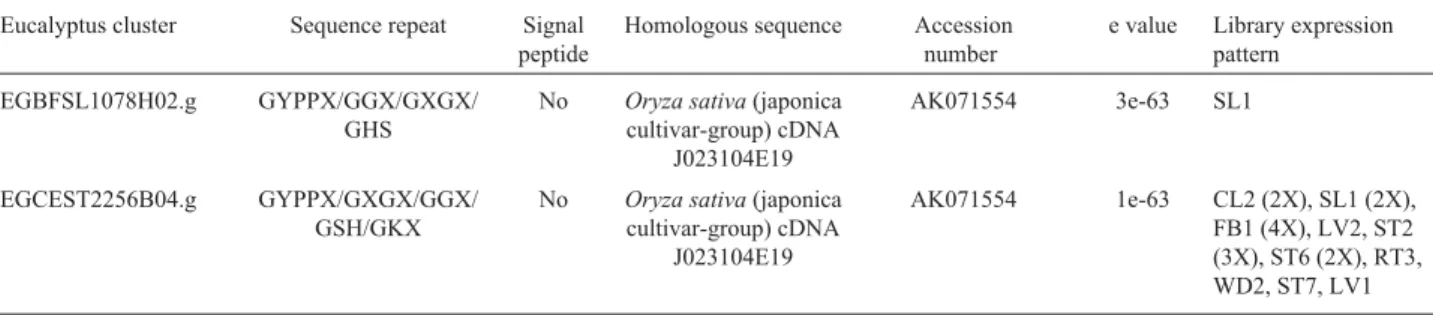
Table 6- Eucalyptus ESTs encoding GRPs with a mixed pattern of repeats.
Eucalyptus cluster Sequence repeat Signal peptide
Homologous sequence Accession number
e value Library expression pattern
EGBFSL1078H02.g GYPPX/GGX/GXGX/ GHS
No Oryza sativa(japonica
cultivar-group) cDNA J023104E19
AK071554 3e-63 SL1
EGCEST2256B04.g GYPPX/GXGX/GGX/ GSH/GKX
No Oryza sativa(japonica
cultivar-group) cDNA J023104E19
dominantly expressed in a tissue-specific pattern. Several clusters identified in this search presented this characteris-tic.
The search for genes encoding GRPs inEucalyptus
resulted in 153 potential genes (clusters) that were distrib-uted in the classes mentioned above (Table 1). While no se-quences were found to present the characteristic pattern of repeats GGXXXGG, our search retrieved a number of other
Eucalyptus sequences having a mixed pattern of repeats (Table 6). Among these sequences, clusters with conserved motifs that characterize dehydrins were found (Table 7). As
expected for an angiosperm with wet-type stigmas, no Eu-calyptusESTs with similarity to oleosin-GRPs were found.
The analysis was also extended to twelve other pro-teins that contain domains of limited extension that are rich in glycine even though these domains represented a small proportion of the complete protein (Table 10).
Eucalyptusclusters encoding GRPs with GGGX repeats
The repeats GGGX are frequently found in GRPs that present a high total content of glycines (40 to 70 %) distrib-uted throughout the protein sequence (Table 2). This kind Table 6 (cont.)
Eucalyptuscluster Sequence repeat Signal
peptide
Homologous sequence Accession number
e value Library expression pattern
EGEQLV2202G11.g GYPPX/GXGX/GHS/ GKH
No Oryza sativa(indica
cultivar-group) GPRP
AY348312 3e-57 LV2
EGJEFB1029A04.g GYPPX/GXGX No Daucus carotaGRP A3
X72383 4e-35 FB1 (2X)
EGCEST2257B12.g GYPPX/GXGX/GKF No Mus musculuscDNA MGC:12025
BC005782 2e-47 ST2 (2X), ST6 (3X)
EGBMSL1091B03.g GYPPX/GXGX No Mus musculuscDNA MGC:12025
BC005782 1e-40 SL1
EGEZSL8268H10.ga GYPPX/GXGX/GKX No Mus musculuscDNA MGC:12025
BC005782 6e-47 SL8(2X)
EGUTRT3113E07.g GYPPX/GXGX/GKF No Arabidopsis thaliana
GPRP
NM_121771 (At5g17650)
2e-46 RT3
EGEZST7214D02.ga GYPPX/GXGX - Arabidopsis thaliana
GPRP
NM_121771 (At5g17650)
2e-33 ST7
EGCCSL1005C02.ga GYPPX/GGX/GXGX - Arabidopsis thaliana
GPRP
NM_121771 (At5g17650)
1e-35 LV2(2X), SL1
EGUTFB1292D04.ga GGP No Arabidopsis thaliana
expressed protein
NM_123319 (At5g39570)
1e-31 FB1(2X)
EGCBCL1215C03.g GXGX/GGX Glu-rich, Asp-rich
No Pinctada fucataShell
matrix protein
AB094512 5e-31 CL1
EGEZFB1204H06.g GGGX/GXGX Yes Arabidopsis thaliana
cDNA GSLTSIL53ZA11
BX841600 (At4g21620)
3e-41 RT6, SL1, ST6, FB1
EGEQST7200H05.ga GXGX/GGX - Arabidopsis thaliana cDNA GSLTFB20ZF11
BX822222 (At3g07560)
8e-54 ST7
EGJECL1208E07.g GGX/GXGX Yes Lycopersicon
esculentumGRP wM
X55688 5e-19 SL5, CL1(4X)
EGRFLV3242F08.ga GGX - Chlamydomonas reinhardtii agglutinin
(SAG-1)
AY450930 4e-14 LV3
EGEZST7211E06.g GGX /GXGX No Arabidopsis thaliana
cDNA GSLTLS21ZE06
BX827206 (At4g13530)
3e-14 CL1, ST7
EGACRT3321F02.g GGGX/GGX HMA_2 domain, Asn-rich, Asp-rich, Gln-rich, Met-rich,
Pro-rich
No Arabidopsis thaliana
heavy-metal-associate d domain-containing
protein
NM_121914 (At5g19090)
e-130 SL5, RT6 (3X), FB1, ST6, RT3 (4X), SL4 (2X), ST2
a
of GRP usually has a predicted signal peptide at their N-terminal end. The best characterized protein of this class is PvGRP1.8, a structural protein from bean specifically as-sociated with the primary cell walls of elongating proto-xylem elements (Kelleret al., 1989). Recent studies using antibodies against PvGRP1.8 indicated that PvGRP1.8 form a three-dimensional protein network that stabilizes the protoxylem elements (Ryser and Keller, 1992; Ryseret al.,1997 and Ringliet al.,2001).
ThirtyEucalyptusclusters with GGGX repeats were found. Several clusters (11) encode GRPs that are highly enriched in histidine, resulting in a repetition pattern GGGH (Table 2). Fourteen clusters presented an apparent tissue specific expression, with 9 being expressed exclu-sively in one library. Interestingly, two clusters (EGEQWD 2247G05.g and EGEZWD2203C11.g) were observed only in libraries prepared from wood tissues making them inter-esting genes for study in relation to wood biogenesis.
As previously noted (Sachetto-Martinset al., 2000; Fusaroet al., 2001), this class of GRPs represents a rather heterogeneous set of proteins with sequence similarity lim-ited to the repetitive glycine amino acids. The alignments obtained presented many gaps and regions with no se-quence overlapping, which made the construction of a dendrogram impossible. The functional characterization of members of this class could help to establish a clear classi-fication of these proteins.
Eucalyptusclusters encoding GRPs with C-terminal domains rich in cysteine
Some GRP proteins are grouped together based on the similarity of their N- and C-terminal domains with soy-bean nodulin 24 (Sandal et al., 1992). Usually, the C-terminal end of GRPs that are similar to nodulins are cysteine-rich and the glycine-rich repeats found in these se-quences are GGXXXGG with Y, H, R, N or Q as the most frequent amino acids in the tripeptide between the glycine residues (Sachetto-Martinset al., 2000).
The direct interaction of AtGRP3, a protein belong-ing to this class of GRPs, with the cell wall-associated kinase WAK1 was recently demonstrated. The interaction occurs between the cysteine-rich C-terminal end of AtGRP3 and the extracellular domain of WAKs (Parket al., 2001). WAK1 is a member of the WAK receptor kinase family that links the plasma membrane to the extracellular matrix (Verica and He, 2002). WAK kinases are proposed to recognize different environmental signals through the in-teraction of their diverse extracellular domains with cell wall molecules and transduce those signals to the cell.
Wak1andAtgrp-3are both induced by salicylic acid treat-ment. Moreover, exogenously addedAtGRP-3 up-regulates the expression ofWak1,Atgrp-3andPR-1inArabidopsis
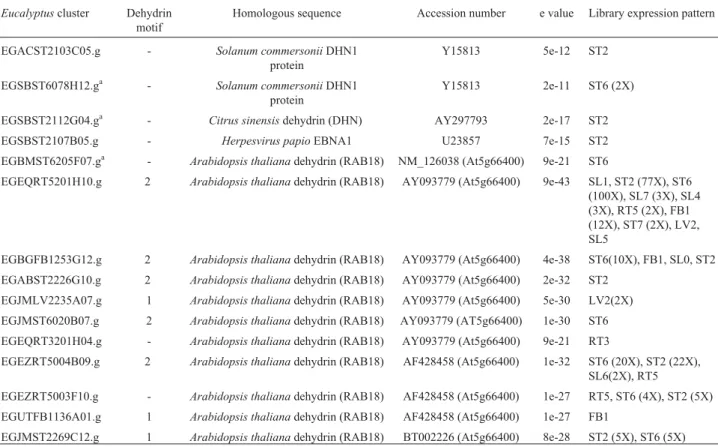
protoplasts. Taken together, this data suggest thatAtGRP-3 regulates Wak1 function through binding to the cell wall Table 7-EucalyptusESTs encoding GRPs with similarity to dehydrin.
Eucalyptuscluster Dehydrin
motif
Homologous sequence Accession number e value Library expression pattern
EGACST2103C05.g - Solanum commersoniiDHN1 protein
Y15813 5e-12 ST2
EGSBST6078H12.ga - Solanum commersoniiDHN1 protein
Y15813 2e-11 ST6 (2X)
EGSBST2112G04.ga - Citrus sinensisdehydrin (DHN) AY297793 2e-17 ST2 EGSBST2107B05.g - Herpesvirus papioEBNA1 U23857 7e-15 ST2 EGBMST6205F07.ga - Arabidopsis thalianadehydrin (RAB18) NM_126038 (At5g66400) 9e-21 ST6
EGEQRT5201H10.g 2 Arabidopsis thalianadehydrin (RAB18) AY093779 (At5g66400) 9e-43 SL1, ST2 (77X), ST6 (100X), SL7 (3X), SL4 (3X), RT5 (2X), FB1 (12X), ST7 (2X), LV2, SL5
EGBGFB1253G12.g 2 Arabidopsis thalianadehydrin (RAB18) AY093779 (At5g66400) 4e-38 ST6(10X), FB1, SL0, ST2 EGABST2226G10.g 2 Arabidopsis thalianadehydrin (RAB18) AY093779 (At5g66400) 2e-32 ST2
EGJMLV2235A07.g 1 Arabidopsis thalianadehydrin (RAB18) AY093779 (At5g66400) 5e-30 LV2(2X) EGJMST6020B07.g 2 Arabidopsis thalianadehydrin (RAB18) AY093779 (AT5g66400) 1e-30 ST6 EGEQRT3201H04.g - Arabidopsis thalianadehydrin (RAB18) AY093779 (At5g66400) 9e-21 RT3
EGEZRT5004B09.g 2 Arabidopsis thalianadehydrin (RAB18) AF428458 (At5g66400) 1e-32 ST6 (20X), ST2 (22X), SL6(2X), RT5
EGEZRT5003F10.g - Arabidopsis thalianadehydrin (RAB18) AF428458 (At5g66400) 1e-27 RT5, ST6 (4X), ST2 (5X) EGUTFB1136A01.g 1 Arabidopsis thalianadehydrin (RAB18) AF428458 (At5g66400) 1e-27 FB1
EGJMST2269C12.g 1 Arabidopsis thalianadehydrin (RAB18) BT002226 (At5g66400) 8e-28 ST2 (5X), ST6 (5X) a
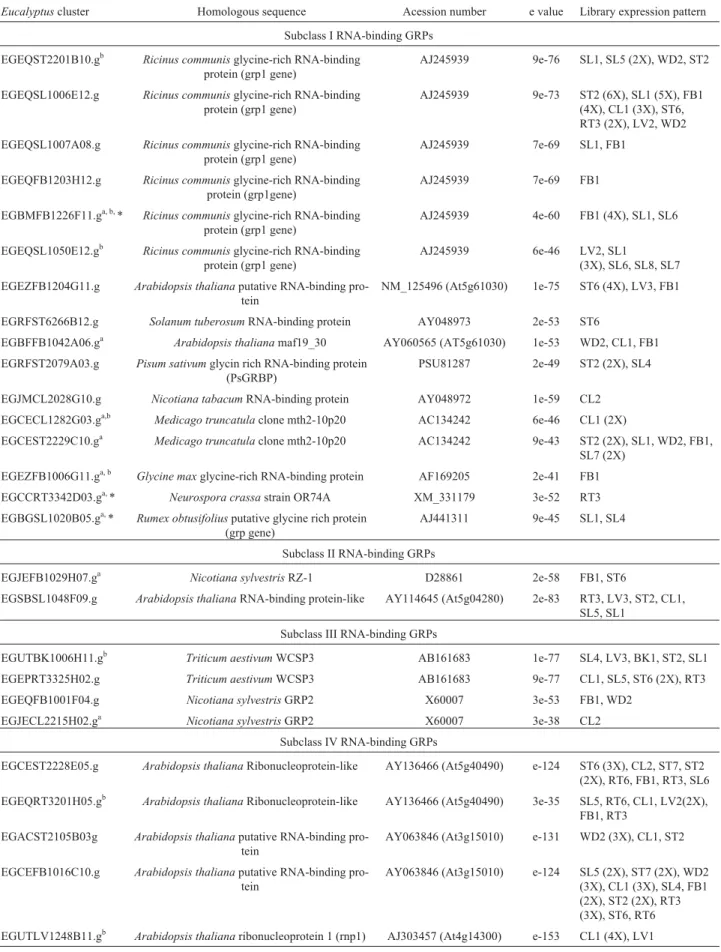
Table 8-EucalyptusESTs encoding RNA-binding GRPs.
Eucalyptuscluster Homologous sequence Acession number e value Library expression pattern
Subclass I RNA-binding GRPs EGEQST2201B10.gb Ricinus communisglycine-rich RNA-binding
protein (grp1 gene)
AJ245939 9e-76 SL1, SL5 (2X), WD2, ST2
EGEQSL1006E12.g Ricinus communisglycine-rich RNA-binding protein (grp1 gene)
AJ245939 9e-73 ST2 (6X), SL1 (5X), FB1 (4X), CL1 (3X), ST6, RT3 (2X), LV2, WD2 EGEQSL1007A08.g Ricinus communisglycine-rich RNA-binding
protein (grp1 gene)
AJ245939 7e-69 SL1, FB1
EGEQFB1203H12.g Ricinus communisglycine-rich RNA-binding protein (grp1gene)
AJ245939 7e-69 FB1
EGBMFB1226F11.ga, b,* Ricinus communisglycine-rich RNA-binding protein (grp1 gene)
AJ245939 4e-60 FB1 (4X), SL1, SL6
EGEQSL1050E12.gb Ricinus communisglycine-rich RNA-binding protein (grp1 gene)
AJ245939 6e-46 LV2, SL1
(3X), SL6, SL8, SL7 EGEZFB1204G11.g Arabidopsis thalianaputative RNA-binding
pro-tein
NM_125496 (At5g61030) 1e-75 ST6 (4X), LV3, FB1
EGRFST6266B12.g Solanum tuberosumRNA-binding protein AY048973 2e-53 ST6
EGBFFB1042A06.ga Arabidopsis thalianamaf19_30 AY060565 (AT5g61030) 1e-53 WD2, CL1, FB1 EGRFST2079A03.g Pisum sativumglycin rich RNA-binding protein
(PsGRBP)
PSU81287 2e-49 ST2 (2X), SL4
EGJMCL2028G10.g Nicotiana tabacumRNA-binding protein AY048972 1e-59 CL2 EGCECL1282G03.ga,b Medicago truncatulaclone mth2-10p20 AC134242 6e-46 CL1 (2X)
EGCEST2229C10.ga Medicago truncatulaclone mth2-10p20 AC134242 9e-43 ST2 (2X), SL1, WD2, FB1, SL7 (2X)
EGEZFB1006G11.ga, b Glycine maxglycine-rich RNA-binding protein AF169205 2e-41 FB1 EGCCRT3342D03.ga,* Neurospora crassastrain OR74A XM_331179 3e-52 RT3 EGBGSL1020B05.ga,* Rumex obtusifoliusputative glycine rich protein
(grp gene)
AJ441311 9e-45 SL1, SL4
Subclass II RNA-binding GRPs
EGJEFB1029H07.ga Nicotiana sylvestrisRZ-1 D28861 2e-58 FB1, ST6
EGSBSL1048F09.g Arabidopsis thalianaRNA-binding protein-like AY114645 (At5g04280) 2e-83 RT3, LV3, ST2, CL1, SL5, SL1
Subclass III RNA-binding GRPs
EGUTBK1006H11.gb Triticum aestivumWCSP3 AB161683 1e-77 SL4, LV3, BK1, ST2, SL1 EGEPRT3325H02.g Triticum aestivumWCSP3 AB161683 9e-77 CL1, SL5, ST6 (2X), RT3 EGEQFB1001F04.g Nicotiana sylvestrisGRP2 X60007 3e-53 FB1, WD2
EGJECL2215H02.ga Nicotiana sylvestrisGRP2 X60007 3e-38 CL2 Subclass IV RNA-binding GRPs
EGCEST2228E05.g Arabidopsis thalianaRibonucleoprotein-like AY136466 (At5g40490) e-124 ST6 (3X), CL2, ST7, ST2 (2X), RT6, FB1, RT3, SL6 EGEQRT3201H05.gb Arabidopsis thalianaRibonucleoprotein-like AY136466 (At5g40490) 3e-35 SL5, RT6, CL1, LV2(2X),
FB1, RT3 EGACST2105B03g Arabidopsis thalianaputative RNA-binding
pro-tein
AY063846 (At3g15010) e-131 WD2 (3X), CL1, ST2
EGCEFB1016C10.g Arabidopsis thalianaputative RNA-binding pro-tein
domain of Wak1 and that the interaction of Wak1 with
AtGRP-3 occurs in a pathogenesis-related processin planta
(Parket al., 2001).
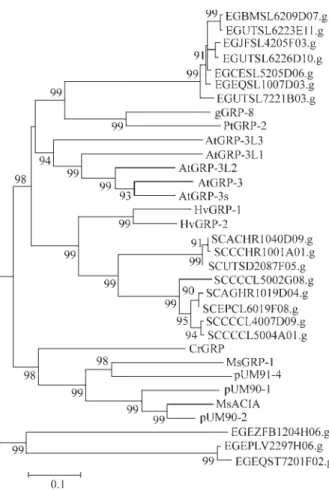
Ten GRPs containing C-terminal Cys-rich end were found in the ForEST database (Table 3). None of them pres-ents the typical pattern of repetition GGXXXGG usually found in this group of GRPs. In order to analyze the similar-ities of these 10 sequences with the reported GRPs that are similar to nodulins, all the sequences were aligned and an unrooted tree was constructed (Figure 2). Seven clusters were found to be more related to petunia PtGRP-2 and to-bacco gGRP-8; two other are closer to a group of GRPs se-quences fromMedicago sativa;and one seems to be more divergent from all the previously reported sequences of this group.
Eucalyptusclusters encoding GRPs with GXGX repeats
This last pattern of glycine repeats, GXGX, is gener-ally observed in GRPs with an average glycine content of 20%. Similar to the GGGX group (Table 2) this GRP group shows a high degree of structural diversity and probably contains several different types of GRPs. InEucalyptus, forty-six different clusters were identified encoding this type of GRP (Table 4 and Table 5).
As noticed for theEucalyptussequences with GGGX repeats, several sequences of this group are also rich in histidine, resulting in the repetition pattern GHGH. Three other clusters show Pro/Gly-rich sequences. Sequences that in addition to the glycine-rich domains are also enriched in different aminoacids (arginine, alanine or methionine) were also found (Table 4).
A predicted N-terminal signal sequence which may reflect their possible extracellular localization was ob-served in twelve clusters from the GXGXEucalyptusGRPs (Table 4 and Table 5).
As occurs with all GRPs grouped only on the basis of their pattern of repeats, most of the GXGX GRP sequences comprise a heterogeneous group of proteins with no signifi-cant sequence similarity outside the Glycine-rich repetitive domains.
It is noteworthy that 3 GRP clusters with GHGH re-peats share high sequence identity with a Gly/His-rich pro-tein of an endosymbiotic fungus ofEucalyptus(Table 4). One could speculate that those sequences may represent fungal contamination in the plant mRNA population and should be considered as possible non-plant GRPs.
In several species, cell wall associated proteins with preferential expression in vascular tissues have been re-ported (Showalter, 1993). GRPs localized in vascular tis-sues are thought to provide elasticity and tensile strength during vascular development (Cassab, 1998) and most of the wood quality-related traits are linked to the properties of the cell wall during this process. Despite the economic importance of wood biogenesis, few reports exist to date on
the role of cell wall associated proteins in the development of vasculature.
A GRP with GXGX repeats fromPinus taeda(Allona
et al., 1998; Zhanget al., 2000), as well as its proposed orthologous in Pinus pinaster (Le Provost et al., 2003), were found to be differentially expressed in the xylem of different wood types. It has been proposed that bothPinus
proteins, reported as GRPs, might be involved in the deter-mination of wood properties (Le Provost et al., 2003). However, only thePinus taedaprotein (AAB66348) pres-ents high glycine content with a pattern of GXGX repeti-tions. The protein fromPinus pinaster(AAF75823) was apparently misclassified as GRP on the basis of its partial similarity with the Pinus taeda sequence. Searching the ForEST database with the Pinus taeda GRP protein se-quence allowed us to identify a closely relatedEucalyptus
cluster (EGJEST2212B07.g) with 61% similarity through-out 119 aminoacids, showing a high degree of similarity to Figure 2- Unrooted dendrogram of GRPs with C-terminal end sequences rich in cysteine. The relationships were calculated using MEGA (p dis-tance, neighbor-joining method and bootstrap test with 2000 replications, pairwise deletions). The analysis was performed based on the ClustalW alignment of the sequences. Accession numbers:HvGRP-1 (X52580),
HvGRP-2 (Z48625), AtGRP-3 (S47409), AtGRP-3s (AAD11798),
AtGRP-3L1 (AAD24656), AtGRP-3L2 (AAD24654), AtGRP-3L3 (AAD24653), gGRP-8 (M37152), PtGRP-2 (S11959),CrGRP (S04069),
theArabidopsisgene At4g30460 (Table 5). BothPinusand
Eucalyptusproteins are rich in glycine and serine and pres-ent a predicted N-terminal signal peptide as expected for a putative cell-wall protein. The high degree of conservation between thePinusandEucalyptussequences indicates that the Eucalyptuscluster identified may be thePinus taeda
ortholog and that this gene is an interesting candidate to be studied due to its possible involvement in wood biogenesis in conifers and angiosperm trees.
Eucalyptusclusters encoding GRPs with a mixed pattern of repeats
In addition to the classic repeats observed in the pre-vious described plant GRPs, the ForEST database also con-tains a set of GRPs with a mixed pattern of repetition (Table 6).
Ten of them encode GRPs with GXGX repeats com-bined with domains that contain 8 to 15 tandem repeats of the pentapeptide GYPPX (where X is usually Q). Strictly, these proteins should be considered as glycine/proline-rich proteins (GPRPs). The motif XYPPX is found in a wide va-riety of proteins including annexin and the carboxy tail of certain rhodopsins. The motif was proposed to form poly-proline beta-turn helices but its molecular function is un-known (Matsushima et al., 1990).Eucalyptus sequences with GYPPQ repeats may be functionally related to
PtaADH1 (AF101786), a proline-rich sequence fromPinus taedarecently characterized as a cell wall structural protein with GYPQ repetitions. The observation that PtaADH1 mRNA is mainly expressed in vascular tissue and that its expression is modified in different types of wood led to a
proposal that it may be involved in the process of wood biogenesis (Zhanget al., 2000).
Fifteen other sequences present a mixed pattern of GGGX and GXGX repeats, sharing identity with dehydrins (Table 7). Dehydrins are classified as the late embryo-genesis abundant proteins group 2 (Wise, 2003). They are also termed responsive to abscisic acid (RAB). These pro-teins form a subset of evolutionarily conserved glycine-rich, hydrophilic proteins induced in maturing seeds or veg-etative tissues following abscisic acid treatment as well as in response to salinity, dehydration or cold stress (reviewed in Allagulovaet al., 2003). Dehydrins are characterized by the presence of a highly conserved Lys-rich 15 amino acids motif that appears repeated from 1 to 12 times in the C-terminus of the protein. This dehydrin motif, referred to as the K-segment (EKKGIMDKIKEKLPG), was found in 8 out of the 15EucalyptusGRP clusters that present se-quence similarity with dehydrins (Table 7). The same clus-ters also present a conserved Ser stretch that is commonly found in many dehydrins and is thought to be involved in nuclear localization. The N-terminal sequence of many proteins of this group present a third conservative sequence termed the Y-segment (V/T DEYGNP).
It is known that some dehydrins are preferentially in-duced under specific stresses while others have a constitu-tive expression. Among theEucalyptusGRPs identified as possible dehydrins, one cluster is strikingly over-expressed in libraries of stems of plants susceptible to dehydration (EGEQRT5201H10.g). Its closest similar sequence is RAB18, anA. thalianadehydrin strongly induced both in water-stressed and ABA-treated plants but only slightly re-sponsive to cold (Welinet al., 1994).
Table 9-EucalyptusESTs with GRPs that present other conserved domains usually found in RNA-binding proteins.
Eucalyptuscluster Domain Homologous sequence Accession
number
e value Library expression pattern
EGEQLV2200C06.g HABP4 PAI-RBP1 Beta vulgaressalt tolerance pro-tein 2 (sato2)
AJ313093 e-107 SL7 (2X), CL2, LV3 (4X), WD2 (5X), ST6 (3X), RT3 (2X), CL1 (4X), ST2 (5X), ST7 (2X), FB1, LV2
EGEQRT3101G05.ba HABP4 PAI-RBP1 Beta vulgaressalt tolerance pro-tein 2 (sato2)
AJ313093 e-106 SL4 (3X), RT3
(2X), ST2, ST7, CL2, WD2. EGEQRT3300C03.g HABP4 PAI-RBP1 Beta vulgaressalt tolerance
pro-tein 2 (sato2)
AJ313093 4e-56 SL1 (2X), LV3 (3X), WD2 (3X), ST6 (3X), CL1 (3X), FB1 (3X), ST2 (3X), LV2
(2X), RT6, SL5 (3X), SL7, RT3 EGQHLV2243F09.g LSM Nicotiana tabacumglycine rich
protein
X83731 9e-69 LV2(2X), ST2(2X), FB1, ST6(3X)
EGEQFB1001B12.g Zinc finger (CCCH) Oryza sativaclone:J013095B15 AK120422 3e-15 CL2(2X), ST(2X), SL5(2X), FB1, ST6
EGUTSL1044E03.ga RRM Oryza sativaB1189A09.32 NM_184502 e-105 WD2, SL1, BK1, ST6 EGQHLV2253F10.g Gar1 RNA binding Oryza sativa cDNA AK121986 2e-50 LV2
EGEPST6161C06.g Zinc finger (CCCH) Arabidopsis thalianazinc finger (CCCH-type) family protein
NM_125721 (At5g63260)
8e-15 ST6
Eucalyptusclusters encoding RNA-binding GRPs
Several different types of plant RNA-binding GRPs have been identified. They contain an RNA-binding motif in their N-terminal half followed by a C-terminal region rich in glycine residues. Most of these proteins have the conserved RNA-binding motif termed RRM (RNA--Recognition Motif) encompassing 80-100 amino acid resi-dues in which two short sequences, RNP-1 and RNP-2, are
highly conserved regions (Alba and Pages, 1998). A differ-ent type of RNA-binding motif observed in the N-terminus of plant GRPs is the CSD (Cold-Shock Domain), with only the RNP-1 sequence conserved (Sachetto-Martins et al., 2000). In addition to their RNA-binding motifs, some GRPs contain a variable number of CCHC (CX2CX4HX4C)
retroviral-like zinc-fingers inside the C-terminal glycine-rich region.
Table 10-EucalyptusESTs encoding short glycine-rich domains.
Eucalyptuscluster Domain Protein
length (aa) Gly-rich domain* Homologous sequence Accession number
e value Library expression pattern
EGEZLV1202A01.g 3 TPR repeats
415 65 aa (51%)
Arabidopsis thalianaHSP
associated protein like
AY059803 (At4g22670)
e-179 ST6(4X), FB1(4X), WD2(4X), RT3(6X), LV2, CL1(2X), SL4 (4X), LV1, ST2(2X), SL7,SL0
EGEZSL5201D09.g 244 63 aa (36%)
Arabidopsis thaliana
unknown protein
AF412102 (At1g76010)
4e-87 SL5(2X), CL1
EGMCSL1062E05.g 209 55 aa (49%)
Chlamydomonas reinhardtii
putative amt protein
AF509496 4e-13 SL1
EGEQFB1003D01.g Fibrillarin signature
308 59 aa (64%)
Arabidopsis thaliana
fibrillarin 2
NM_118695 (At4g25630)
e-148 BK1, FB1, RT3, RT4, SL1, ST2 (7X), ST6 (2X), WD2 EGUTSL6226B01.g ABA/
WDS
194 55 aa (32%)
Prunus persicaabscisic stress
ripening-like protein
AF317062 1e-57 SL6
EGCCRT3370E08.ga - 42 aa (40%)
Arabidopsis thalianaputative
DEAD box RNA helicase
AL137082 (At3g58510)
4e-46 RT3 (3X), SL5 (2X)
EGUTST2052D05.ga,
b - 65 aa
(58%)
Arabidopsis thalianaputative
ethylene-responsive DEAD box RNA helicase
NM_125706 (At5g63120)
1e-32 ST2
EGABST6008C06.g 185 42 aa (40%)
Arabidopsis thalianaputative
DEAD box RNA helicase
NM_129813 (At2g42520)
1e-32 ST6, ST7
EGEPSL4003H05.g 191 59 aa (71%)
Oryza sativacDNA clone AK111212 4e-65 SL4
EGJMFB1115H10.g HLH 324 92 aa (38%)
Arabidopsis thalianabasic
helix-loop-helix (bHLH) family protein
AF367328 (AT4g02590)
e-114 WD2(2X), FB1, RT6
EGCCSL4029G02.g 247 40 aa (38%)
Eucalyptus grandiszinc
transporter
AF197329 1e-90 SL5, SL4(4X)
EGEQST7200D08.g 249 32 aa (81%)
Oryza sativacDNA AK067094 9e-55 ST6, LV3, CL2,
WD2 (2X), CL1, SL1, ST7 (2X), SL7 (2X)
EGEZRT6214E11.g Cation efflux
556 130 aa (35%)
Arabidopsis thalianaepsin
N-terminal homology (ENTH) domain-containing protein
NM_180055 (At2g43160)
e-104 RT6
EGQHST2015H03.g Ubiquitin 540 50 aa (40%)
Arabidopsis thalianaputative
ubiquitin protein
AY142486 (At2g17200)
0.0 FB1, CL1, ST2 (3X), SL5 (3X), RT6 EGEQLV2222B06.ga - 48 aa
(58%)
Lilium longiflorummRNA
for nucleotide excision repair protein
AJ002990 1e-86 LV2, ST6
EGSBRT3121C08.g 2 RRM 379 aa 63 aa (55%)
Pisum sativumL
(clone na-481-5)
RNA binding GRPs can be classified in four different sub-classes based on the combination of the structural do-mains they present (Figure 1, Table 1). Proteins from the first sub-class show an RRM conserved motif at the N-terminal end, followed by a glycine-rich region with GGYGG repeats (Sachetto-Martins et al., 2000). GRPs from the second sub-class show a similar organization, but present a CCHC zinc finger inside their glycine-rich region. Proteins from the third sub-class are organized with a cold-shock domain at the N-terminus and a number of CCHC zinc fingers in their glycine-rich region that varies from 1 to 7 (Sachetto-Martinset al., 2000; Karlson and Imai, 2003). Finally, sub-class IV RNA-binding GRPs present two cop-ies of the RRM motif followed by a C-terminal glycine-rich region, unlike the previously described proteins (Fusaroet al., 2001).
Twenty-seven Eucalyptus clusters encoding RNA-binding GRPs were identified and were classified accord-ing to the structural organization of their domains. In order to analyze the relationships between them and other related RNA-binding GRPs already characterized, a phylogenetic tree was constructed (Figure 3).
Sixteen clusters belong to the sub-class I (Table 8). Among these, 7 presented a pattern of expression limited to only one or two libraries indicating that they can probably represent tissue-specific genes. It was observed that se-quences from Eucalyptus sub-class I of RNA-binding GRPs split into two separated groups (Figure 3). One group is closely related to the Arabidopsis glycine rich RNA-binding proteins (AtGR-RBPs) 2, 3, 4, 5 and 6. The other group is more related to genes coding for RNA bind-ing proteins from Nicotiana sylvestris(RGP-1a, -1b and -1c), Nicotiana glutinosa (NgRBP) and Euphorbia
(EeGRRBP-1 and -2). Interestingly, theN. sylvestrisgenes were reported to present tissue-specific alternative splicing and were suggested to produce truncated polypeptides as well as functional RNA-binding polypeptides (Hirose et al.,1993). The high number of clusters belonging to this sub-class of RNA-binding proteins and the close relation-ship they present may reflect that at least some of these se-quences correspond to alternative spliced forms of the same gene. BothEucalyptusgroups of sub-class I RNA binding GRPs are more related to other previously reported quences from dicot plants, while several sugarcane se-quences included in the phylogenetic tree are preferentially related to sequences from monocot plants like Zea mays
(MA16 and CHEM2) andShorgum vulgare(S1 and S2). RNA binding GRPs from sub-class II are the least abundant among all the RNA-binding GRPs and are appar-ently plant-specific (Lorkovic and Barta, 2002). The do-main organization of these proteins presents a CCHC-type zinc finger inside the glycine-rich C-terminal domain in combination with the N-terminal RRM motif. Only two clusters were found in the ForEST database with these characteristics (Table 8). One of the clusters (EGJEFB
1029H07.g) is very similar to the tobacco nuclear protein RZ-1 (Hanano et al., 1996) while the other (EGSBSL 1048F09.g) has a close similarity with a still non-characterizedArabidopsisprotein (Table 8 and Figure 3).
Sub-class III RNA-binding GRPs were represented by 4 clusters in the ForEST database. Two of them were isolated from only one or two libraries corresponding to pu-tative tissue-specific expressed genes (Table 8). Three clus-ters (EGJECL2215H02.g, EGEPRT3325H02.g and EGUT BK1006H11.g) grouped close to the Arabidopsis cold-induced proteins AtGRP-2 and AtGRP-2b, proteins that have two zinc fingers in their glycine-rich domains. The re-maining cluster (EGEQFB1001F04) appears more related to two other sequences fromArabidopsis(At2g17870 and At4g36020) that were also shown to be cold-regulated (Karlson and Imai, 2003) but have a longer C-terminal end with 7 zinc fingers interspersed in the glycine-rich region. Two zinc fingers were observed in all theEucalyptus se-quences with the exception of one cluster that is incomplete in its C-terminal end which made the analysis of the zinc finger number of this cluster impossible.
FiveEucalyptusclusters encoding GRPs with multi-ple RRM domains were classified as belonging to sub-class IV (Table 8). Among them, two clusters (EGACST2105 B03.g and EGCEFB1016C10.g) share high similarity with
Arabidopsis UBA1 proteins. Comparison analysis indi-cates that they group together with Arabidopsis UBA2c (Figure 3). UBA1 and UBA2 proteins bind RNA with spec-ificity for oligouridylatesin vitroand interact with UBP1, an hnRNP-like protein associated with poly(A)(+) RNA in the cell nucleus. It has been suggested that UBA proteins may act as components of a complex that recognizes U-rich sequences in plant 3’-UTRs, contributing to the stabiliza-tion of mRNAs in the nucleus (Lambermonet al.,2002). The three remaining clusters from the RNA-binding GRPs sub-class IV (EGCEST222E05.g, EGEQRT3201H05.g and EGUTLV1248B11.g) are similar toArabidopsis heter-ogeneous nuclear ribonucleoproteins (hnRNPs), RNA-binding proteins that form complexes with RNA polymer-ase II transcripts and are proposed to regulate pre-mRNA processing (Krecic and Swanson, 1999). While metazoan hnRNPs have a Glycine-rich C-terminal domain in addition to the two N-terminal RRMs, only two out of the six
Arabidopsispredicted hnRNPs have a C-terminal domain rich in glycine (Lorkovic and Barta, 2002). The only two sugarcane sequences identified as sub-class IV RNA-binding GRPs (Fusaroet al., 2001) grouped together with the hnRNP similar proteins.
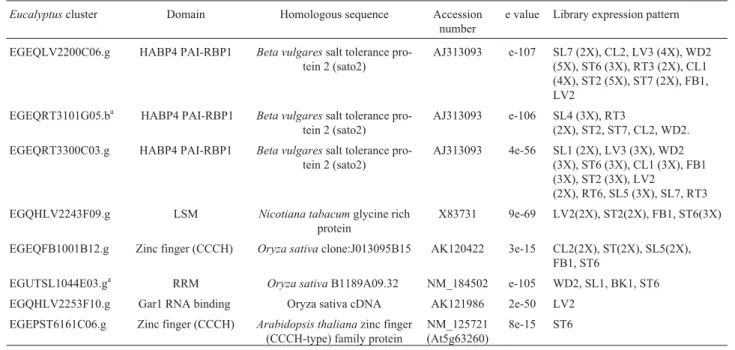
In addition to sequences classified in the four previ-ous described sub-classes of RNA-binding GRPs, 8 clus-ters encoding GRPs that present other conserved domains usually found in RNA-binding proteins were found in Eu-calyptus(Table 9). One cluster (EGQHLV2253F10.g) has a conserved domain characteristic of Gar1, a small nucleo-lar RNP that possesses a typical glycine/arginine-rich
domain and is required for pre-rRNA processing and pseudouridylation (Bagni and Lapeyre, 1998). Two clus-ters (EGEQFB1001B12.g and EGEPST6161C06.g) have a CCCH (CX8CX5CX3H) type zinc finger. It has been shown
that different CCCH zinc finger-containing proteins inter-act with the 3’ untranslated region of various mRNA. Three clusters (EGEQLV2200C06.g, EGEQRT3101G05.g and EGEQRT3300C03.g) were identified with a domain found in proteins that includes the HABP4 family proteins, and the PAI-1 mRNA-binding protein. HABP4 has been ob-served to bind hyaluronan as well as RNA, but the latter with a lower affinity. PAI-1 mRNA-binding protein specif-ically binds the mRNA of type-1 plasminogen activator inhibitor (PAI-1), and is thought to be involved in regula-tion of mRNA stability. Finally, one cluster (EGQHLV 2243F09.g) was found with the conserved LSM domain present in proteins that bind and stabilize snRNPs involved in pre-mRNA splicing.
Since proteins containing such domains as the unique RNA-binding motifs could not be predicted unequivocally as having an RNA-binding function, they were classified as putative RNA-binding GRPs. Particularly interesting is the cluster EGUTSL1044E03.g. It could be consider a true RNA-binding GRP since it presents an RRM motif, but un-like RNA-binding GRPs of classes I, II or IV this domain is located at the C-terminal end of the protein. The sequence with higher similarity to this cluster corresponds to a rice mRNA that encodes a glycine-rich protein with a C-terminal located RRM motif in combination with RanBP2 type zinc fingers at the N-terminal end. This kind of domain organization was never reported before for a GRP and could represent a new class of still uncharacterized RNA-binding GRPs. Since theEucalyptuscluster is incomplete at the N-terminal the presence of zinc fingers could not be determined.
Eucalyptusclusters encoding proteins with glycine-rich domains
In addition to the GRPs showing glycine-rich do-mains with semi-repetitive structure described here, several proteins that present short domains with high glycine con-tent and usually without a characteristic pattern of repeti-tion were also found (Table 10). These proteins were classified as proteins with glycine-rich domains. Those clusters presented glycine-rich domains ranging from 32 to 130 aminoacids with 35-81% of glycine. Glycine-rich stretches shorter than 30 aminoacids were not included in this classification.
pro-teins involved in RNA metabolism suggests that this do-main may play a role in the RNA binding function of these proteins.
Concluding Remarks
Although the number of genes encoding GRPs in plants is large up to date, only a few GRPs have been char-acterized so far and their functions remain speculative. However, it is becoming clear that GRPs exert important roles in very diverse processes such as signal transduction, stress response, transcriptional regulation and develop-ment.
The highly specific but diverse expression pattern of
grpgenes, taken together with the distinct sub-cellular lo-calization of some GRP groups, clearly indicate that these proteins are implicated in several independent physiologi-cal processes. Notwithstanding the absence of a clear defi-nition of the role of GRPs in plant cells, studies conducted with these proteins have provided new and interesting in-sights on the molecular and cell biology of plants. Comp-lexly regulated promoters and distinct mechanisms of gene expression regulation have been demonstrated (Keller and Heierli, 1994; Francoet al., 2002). New protein targeting pathways, as well as the exportation of GRPs from different cell types have been discovered (Ryser et al., 1997; Murphy and Ross, 1998). These data show that GRPs can be useful markers for many physiological processes and/or models to improve the understanding of distinct aspects of plant biology (Sachetto-Martinset al., 2000). The results obtained here point to interesting roles for GRPs in plant physiology. The characterization of thegrpgenes in Euca-lyptuscould lead to new strategies for the manipulation of growth and stress signaling in this culture.
Acknowledgments
S.N.B is the recipient of a CNPq post-doctoral fel-lowship. C.M. is a recipient of the CAPES Prodoc fellow-ship. V.C.J. is supported by the PIBIC-CNPq fellowfellow-ship. A.M. and R.M.J. were supported by Master degree fellow-ships from CAPES. G.S.M. are indebted to the Conselho Nacional de Desenvolvimento Científico e Tecnológico (CNPq) and Funação Carlos Chagas de Amparo a Pesquisa do Rio de Janeiro (FAPERJ) for financial support.
References
Albà MM, Culiáñez-Macià FA, Goday A, Freire MA, Nadal, B and Pagès M (1994) The maize RNA-binding protein, MA16, is a nucleolar protein located in the dense fibrillar component. Plant J 6:825-834.
Albà MM and Pagès M (1998) Plant proteins containing the RNA-recognition motif.Trends Plant Sci 3:15-21. Allagulova ChR, Gimalov FR, Shakirova FM, and Vakhitov VA
(2003) The Plant Dehydrins: Structure and Putative Func-tions. Biochemistry (Mosc) 68:945-951.
Allona I, Quinn M, Shoop I, Swope K, St Cyr S, Carlis J, Rield J, Retzel E, Campbell M, Sedero R and Whetten RW (1998) Analysis of xylem formation in pine by cDNA sequencing. Proc Natl Acad Sci USA 95:9693-9698.
Altschul SF, Madden TL, Schaffer AA, Zhang J, Zhang Z, Miller W and Lipman DJ (1997) Gapped BLAST and PSI-BLAST: A new generation of protein database search programs. Nu-cleic Acids Res 25:3389-3402.
Bagni C and Lapeyre B (1998) Gar1p binds to the small nucleolar RNAs snR10 and snR30 in vitro through a nontypical RNA binding element. J Biol Chem 273:10868-10873.
Cassab GI (1998) Plant cell wall proteins. Annu Rev Plant Physiol Plant Mol Biol 49:281-309.
Condit CM and Meagher RB (1986) A gene encoding a novel glycine-rich structural protein of petunia. Nature 323:178-181.
Condit CM (1993) Developmental expression and localization of petunia glycine-rich protein 1. Plant Cell 5:277-288. de Oliveira DE, Franco LO, Simoens C, Seurink J, Coppieters J,
Botterman J and van Montagu M (1993) Inflorescence-specific genes from Arabidopsis thaliana encoding glycine-rich proteins. Plant J 3:495-507.
Ferreira MA, Almeira-Engler J, Miguens FC, van Montagu M, Engler G and de Oliveira DE (1997) Oleosin gene expres-sion inArabidopsis thalianacoincides with accumulation of lipids in plastids and cytoplasmic bodies. Plant Physiol Biochem 35:729-739.
Franco LO, de O Manes CL, Hamidi S, Sachetto-Martins G and de Oliveira E (2002) Distal regulatory regions restrict the ex-pression ofcis-linked genes to the tapetal cells. FEBS Lett 517:13-18.
Freire MA and Pages M (1995) Functional characterization of the maize RNA binding protein MA16. Plant Mol Biol 29:797-807.
Fusaro A, Mangeon A, Magrani Junqueira R, Benício Rocha CA, Cardoso Coutinho T, Margis R and Sachetto-Martins G (2001) Classification, expression pattern and comparative analysis of sugarcane expressed sequences tags (ESTs) en-coding glycine-rich proteins (GRPs). Genet Mol Biol 24:263-273.
Hanano S, Sugita M and Sugiura M (1996) Isolation of a novel RNA-binding protein and its association with a large ribonucleoprotein particle present in the nucleoplasm of to-bacco cells. Plant Mol Biol 31:57-68.
Hirose T, Sugita M and Sugiura M (1993) cDNA structure, ex-pression and nucleic acid-binding properties of three RNA-binding proteins in tobacco: Occurrence of tissue-specific alternative splicing. Nucleic Acids Res 21:3981-3987. Karlson D, Nakaminami K, Toyomasu T and Imai R (2002) A
cold-regulated nucleic acid-binding protein of winter wheat shares a domain with bacterial cold-shock proteins. J Biol Chem 277:35248-35256.
Karlson D and Imai R (2003) Conservation of the cold shock do-main protein family in plants. Plant Physiol 131:12-15. Keller B, Schmid J and Lamb CJ (1989) Vascular expression of a
bean cell wall glycine-rich protein -b-glucuronidase gene fusion in transgenic tobacco. Embo J 8:1309-1314. Keller B and Heierli D (1994) Vascular expression of the grp1.8
Krecic AM and Swanson MS (1999) hnRNP complexes: Compo-sition, structure, and function. Curr Opin Cell Biol 11:363-371.
Kumar S, Tamura K, Jacobsen I and Nei M (2000) MEGA2: Mo-lecular Evolutionary Genetics Analysis, version 2.0. Penn-sylvania and Arizona State Universities, University Park, Pennsylvania and Tempe, Arizona.
Lambermon MH, Fu Y, Wieczorek Kirk DA, Dupasquier M, Filipowicz W and Lorkovic ZJ (2002) UBA1 and UBA2, two proteins that interact with UBP1, a multifunctional effector of pre-mRNA maturation in plants. Mol Cell Biol 22:4346-4357.
Le Provost G, Paiva J, Pot D, Brach J and Plomion C (2003) Sea-sonal variation in transcript accumulation in wood-forming tissues of maritime pine (Pinus pinasterAit.) with emphasis on a cell wall glycine-rich protein. Planta 217:820-830. Lorkovic ZJ and Barta A (2002) Genome analysis: RNA
recogni-tion motif (RRM) and K homology (KH) domain RNA-binding proteins from the flowering plant Arabidopsis thaliana. Nucleic Acids Res 30:623-635.
Magioli C, Barrôco RM, Benício Rocha CA, de Santiago-Fer-nandes LD, Mansur E, Engler G, Margis-Pinheiro M and Sachetto-Martins G (2001) Somatic embryo formation in
Arabidopsisand eggplant is associated with expression of a glycine-rich protein gene (Atgrp-5). Plant Sci 161:559-567. Matsushima N, Creutz CE and Kretsinger RH (1990) Polyproline, beta-turn helices. Novel secondary structures proposed for the tandem repeats within rhodopsin, synaptophysin, synexin, gliadin, RNA polymerase II, hordein, and gluten. Proteins 7:125-155.
Murphy DJ and Ross JHE (1998) Biosynthesis, targeting and pro-cessing of oleosin-like proteins, which are major pollen coat components inBrassica napus. Plant J 13:1-16.
Murphy DJ, Hernández-Pinzón I and Patel K (2001) Role of lipid bodies and lipid-body proteins in seeds and other tissues. J Plant Physiol 158:471-478.
Ni Z, Sun Q, Liu Z, Wu L and Wang X (2000) Identification of a hybrid-specific expressed gene encoding novel RNA-binding protein in wheat seedling leaves using differential display of mRNA. Mol Gen Genet 263:934-938.
Obokata J, Ohme M and Hayashida N (1991) Nucleotide se-quence of a cDNA clone encoding a putative glycine-rich protein of 19.7 kDa inNicotiana sylvestris. Plant Mol Biol 17:953-955.
Park AR, Cho SK, Yun UJ, Jin MY, Lee SH, Sachetto-Martins G and Park OK (2001) Interaction of theArabidopsisReceptor
Protein Kinase Wak1 with a Glycine-rich Protein, AtGRP-3. J Biol Chem 276:26688-2669.
Ringli C, Keller B and Ryser U (2001) Glycine-rich proteins as structural components of plant cell walls. Cell Mol Life Sci 58:1430-1441.
Ryser U and Keller B (1992) Ultrastructural localization of bean glycine-rich protein in unlignified primary walls of proto-xylem cells. Plant Cell 4:773-783.
Ryser U, Schorderet M, Zhao GF, Studer D, Ruel K, Hauf G and Keller B (1997) Structural cell wall proteins in protoxylem development: Evidence for a repair process mediated by a glycine-rich protein. Plant J 12:97-111.
Sachetto-Martins G, Fernandes LD, Felix DB and de Oliveira DE (1995) Preferential transcriptional activity of a glycine-rich protein gene fromArabidopsis thalianain protoderm de-rived cells. Int J Plant Sci 156:460-470.
Sachetto-Martins G, Franco LO and de Oliveira DE (2000) Plant glycine-rich proteins: A family or just proteins with a com-mon motif? Biochim Biophys Acta 1492:1-14.
Sandal NN, Bojsen K, Richter H, Sengupta-Gopalan C and Marcker KA (1992) The nodulin 24 protein family shows similarity to a family of glycine-rich plant proteins. Plant Mol Biol 18:607-610.
Showalter AM (1993) Structure and function of plant cell wall proteins. Plant Cell 5:9-23.
Sitnikova T, Rzhetsky A and Nei M (1995) Interior-branch and bootstrap tests of phylogenetic trees. Mol Biol Evol 12:319-333.
Thompson JD, Higgins DG and Gibson TJ (1994) CLUSTAL W: Improving the sensitivity of progressive multiple sequence alignment through sequence weighting, positions-specific gap penalties and weight matrix choice. Nucleic Acids Res 22:4673-4680.
Verica JA and He ZH (2002) The cell wall-associated kinase (WAK) and WAK-like kinase gene family. Plant Physiol 129:455-459.
Welin BV, Olson A, Nylander M and Palva ET (1994) Character-ization and differential expression of dhn/lea/rab-like genes during cold acclimation and drought stress inArabidopsis thaliana. Plant Mol Biol 26:131-144.
Zhang YI, Sederoff R and Allona I (2000) Differential expression of gene encoding cell wall proteins in vascular tissues from vertical and bent loblolly pine trees. Tree Physiol 20:450-457.