Article
Printed in Brazil - ©2012 Sociedade Brasileira de Química0103 - 5053 $6.00+0.00
A
*e-mail: [email protected], [email protected]
Chemical Modification of Polyaniline by
N
-Grafting of Polystyrenic Chains
Synthesized via Nitroxide-Mediated Polymerization
Maryam Hatamzadeh,a Ali Mahyarb and Mehdi Jaymand*,b
aPolymer Laboratory, Faculty of Chemistry, Payame Noor University, Tabriz, Iran
bResearch Center for Pharmaceutical Nanotechnology, Tabriz University of Medical Sciences, Tabriz, Iran
Este estudo tem como objetivo explorar uma rota eficaz para a preparação de polianilina
N-substituída (PANI) condutora pela incorporação de poli(estireno-co-p-metilestireno) de
bromitano sobre a forma emeraldina de polianilina. Para este propósito, em primeiro lugar, poli(estireno-co-p-metilestireno) foi sintetizado via polimerização mediada por nitróxido (NMP), e
então, N-bromosuccinimida foi usada como agente brominante para obter um copolímero com
bromina. Em seguida, polianilina deprotonada foi reagida com poli(estireno-co-p-metilestireno)
de bromitano para preparar o terpolímero poli(estireno-co-p-metilestireno)-graft-polianilina
[(PSt-co-PMSt)-g-PANI] através da reação de grafitização. O terpolímero obtido foi
caracterizado por espectroscopia no infravermelho por transformada de Fourier (FTIR), varredura diferencial de calorimetria (DSC) e análise termogravimétrica (TGA). Propriedades óticas do (PSt-co-PMSt)-g-PANI nos estados não-dopado e dopado foram obtidas usando espectroscopia no
ultravioleta-visível (UV-Vis), e condutividade elétrica a temperatura ambiente foi medida usando amostras nas quais os materiais condutores foram ensanduichados entre dois eletrodos de Ni. Além disso, eletroatividade do terpolímero sintetizado foi verificada sob condições voltamétricas sobre a superfície do eletrodo de trabalho de carbono vítreo (GCE). A solubilidade do terpolímero (PSt-co-PMSt)-g-PANI foi examinada em solventes orgânicos comuns, tais como, tetrahidrofurano
(THF), clorofórmio e xileno.
This study aims to explore an effective route for the preparation of conductive N-substituted
polyaniline (PANI) by the incorporation of brominated poly(styrene-co-p-methylstyrene) onto
the emeraldine form of polyaniline. For this purpose, at first, poly(styrene-co-p-methylstyrene) was synthesized via nitroxide-mediated polymerization (NMP), and then, N-bromosuccinimide
was used as brominating agent to obtain a copolymer with bromine. Thereafter, deprotonated polyaniline was reacted with brominated poly(styrene-co-p-methylstyrene) to prepare the
poly(styrene-co-p-methylstyrene)-graft-polyaniline [(PSt-co-PMSt)-g-PANI] terpolymer through N-grafting reaction. The terpolymer was characterized by Fourier transform infrared (FTIR) spectroscopy, differential scanning calorimetry (DSC) and thermogravimetric analysis (TGA). Optical properties of (PSt-co-PMSt)-g-PANI in the undoped and doped states were obtained
by ultraviolet-visible spectroscopy (UV-Vis), and electrical conductivity at room temperature was measured using samples in which the conductive materials was sandwiched between two Ni electrodes. Moreover, electroactivity of the synthesized terpolymer was verified under cyclic voltammetric conditions on the surface of the working glassy carbon electrode (GCE). The solubility of (PSt-co-PMSt)-g-PANI terpolymer was examined in common organic solvents, such
as, tetrahydrofuran (THF), chloroform and xylene.
Introduction
Conducting polymers have attracted significant attention in recent decades because of their potential applications in various fields such as electromagnetic interference (EMI) shielding, rechargeable battery, chemical sensor, corrosion devices and microwave absorption.1-5 Among the known conducting polymers,
polyaniline (PANI) has been extensively studied due to its unique electrochemical and physicochemical behaviour, good environmental stability and relatively easy preparation.6,7 However, polyaniline is inherently brittle and
poor in processability due to its insolubility in common organic solvents.8,9 To improve its processability, various
procedures have been adapted. For example, self-doped PANI with sulfonic acid groups substituted onto the polymer has been synthesized.10,11 Several rings and N-substituted PANI
(soluble in common organic solvents) have been prepared directly from the polymerization of the corresponding aniline monomers.12-14 The incorporation of the side
groups onto polyaniline has enhanced its solubility and processability, changing its properties. Much work has been devoted to the preparation, characterization and applications of conductive PANI/thermoplastic blends such as those based on polystyrene, polyacrylate, polyvinyl chloride, ethylene/vinyl acetate copolymers etc., most of them exhibiting good electrical conductivity even with low loading of PANI.15,16
In the past few years, it has been witnessed a rapid development in the field of controlled radical polymerization for synthesizing tailor-made polymers with well-defined architecture and predictable molecular weights.17-19 A number of techniques has
been explored to achieve this control: atom transfer radical polymerization (ATRP),20,21 nitroxide-mediated
polymerization (NMP)22,23 and reversible addition of
fragmentation chain transfer (RAFT).24,25
Nitroxide-mediated polymerization method is a controlled free radical methodology, which allows the synthesis of star and graft copolymers with controlled molecular weight under mild conditions. This polymerization method is based on the use of traditional radical initiator (e.g., benzoyl peroxide) in the presence of stable nitroxide
radical (e.g., 2,2,6,6-tetramethyl-1-piperidinyloxy).
Compared with other graft copolymerization such as anionic polymerization, an advantage of living free radical polymerization (LFRP) is that in the preparation of grafted copolymers, the terminal groups are stable in air at room temperature, and prepolymers can be isolated, stored and used as needed. Moreover, in anionic polymerization, stringent polymerization conditions are required.26-28
We report here our preliminary investigations on the preparation of conductive N-substituted polyaniline
(PANI) by incorporation of brominated poly(styrene-co-p
-methylstyrene) onto emeraldine form of polyaniline. For this purpose, at first, poly(styrene-co-p-methylstyrene)
was synthesized via nitroxide-mediated polymerization (NMP), and then, the benzylic hydrogens of copolymer were borminated. Thus, borminated copolymer was synthesized using N-bromosuccinimide (NBS) and 2,2′-azobis (isobutyronitrile) (AIBN) in carbon tetrachloride, as solvent. Thereafter, deprotonated polyaniline was reacted with brominated poly(styrene-co-p-methylstyrene) to prepare
poly(styrene-co-p-methylstyrene)-graft-polyaniline
[(PSt-co-PMSt)-g-PANI] terpolymer through N-grafting
reaction under argon atmosphere.
Experimental
Materials
TEMPO (2,2,6,6-tetramethyl-1-piperidinyloxy) was prepared in our laboratory.26,27 Styrene, p-methylstyrene and
aniline monomers were supplied by Merck (Darmstadt, Germany) and were distilled under reduced pressure from CaH2 before use. Tetrahydrofuran (THF) from Merck was
dried by refluxing over sodium and distilled under argon prior to use. 2,2′-Azobis (isobutyronitrile) (AIBN) from Merck was recrystallized in ethanol at 50 °C before use.
N-bromosuccinimide (NBS) from Merck was purified by
recrystallization in water at 70 °C. Butyllithium (BuLi) was purchased from Merck and titrated with diphenylacetic acid before use. Ammonium persulfate (APS) from Merck was recrystallized at room temperature from ethanol/water. All other reagents were purchased from Merck and purified according to the standard methods.
Synthesis of (PSt-co-PMSt) via NMP
Styrene and p-methylstyrene monomers (10 mL)
(50/50: v/v), 0.15 g (0.62 mmol) of benzyl peroxide and 0.14 g (90 mmol) of TEMPO were placed in an ampoule degassed with several freeze-pump-thaw cycles, sealed off under vacuum and placed in an oil bath at 95 °C for 4 h. At the end of this period, the temperature was increased to 130 °C and the mixture stirred for another 12 h. The product was cooled, diluted with THF and precipitated into excess methanol. This product was dried overnight in vacuum at room temperature (Scheme 1). The p-methylstyrene
content in the copolymer was 46% (by mole) based on peak at 2.28 ppm (−CH3) in the 1H NMR spectrum of
Synthesis of (PSt-co-PMSt)-Br
A 100 mL three necked flask containing 30 mL of CCl4 and 15 mmol (1.65 g) of poly(styrene-co-p
-methylstyrene) was equipped with a mechanical stirrer under argon atmosphere. In a separate container, 12 mmol (2.13 g) NBS and 10 mmol (1.92 g) of AIBN were dissolved in 30 mL of dried CCl4. This mixture was added at the polymer
solution and stirred for 2 h at 70 °C under argon atmosphere, then, the mixture was cooled at room temperature and the brominated copolymer was recovered by filtration in large amount of cold methanol. This product was dried overnight in vacuum at room temperature (Scheme 2).
Synthesis of polyaniline
Polyaniline was synthesized by oxidative polymerization of aniline according to the method described in the literature.29 Thus, 0.1 mol of aniline was dissolved in
123 mL of p-toluenesulfonic acid (1.7 mol L-1) solution.
The solution was kept at 0 °C under argon atmosphere. A pre-chilled solution of 0.1 mol of ammonium persulfate in 134 mL of p-toluenesulfonic acid (1.7 mol L-1) solution was
slowly added with vigorous stirring. The reaction mixture was continuously agitated for another 5 h. The precipitate was subsequently filtered and washed several times with methanol and dried overnight in vacuum (Scheme 3).
Scheme 1. Synthesis of (PSt-co-PMSt) via NMP.
Conversion of emeraldine salt to emeraldine base polyaniline
The doped polyaniline (emeraldine salt) was later converted into its base form by stirring for 3 h in 3% ammonia solution. This undoped polyaniline was filtered and washed several times with excess water followed by methanol. The obtained dark blue powders were dried under vacuum at room temperature.
Preparation of (PSt-co-PMSt)-g-PANI
The reaction flask was dried and kept under an inert atmosphere throughout the reactions by a constant flow of argon. The emeraldine base form of polyaniline (10 mmol, 1 g) was dissolved in 50 mL of THF. The solution was cooled to 0 °C and the predetermined amount (2 mmol) of BuLi was added with stirring. The colour of the solution changed from dark blue to green-black. In other dried flask, (PSt-co-PMSt)-Br (1 g) was dissolved in 20 mL of
THF under argon atmosphere. This solution was added to the reaction mixture. The reaction was stirred under argon atmosphere at 60 °C for 24 h. The colour of the solution gradually turned blue. The reaction mixture was poured into excess methanol to precipitate the terpolymer. The precipitate was filtered, added to cyclohexane and refluxed to remove the residual amount of unreacted (PSt-co-PMSt)-Br (Scheme 4).
Electrochemical system
The electrochemical measurements were carried out using Auto-Lab equipment (ECO Chemie, Utrecht, The Netherlands) equipped with a three-electrode cell assembly. Glassy carbon (GC) microelectrode (with a surface area of 0.0314 cm2), platinum rod and Ag/AgCl were used as
working, counter and reference electrodes, respectively. The surface of the working electrode was polished with emery paper followed by 1.0 and 0.5 µm alumina. To prepare glassy carbon microelectrode coated by synthesized samples, the
Scheme 4. Preparation of (PSt-co-PMSt)-g-PANI.
polymers were dissolved in THF to form a 1.0 mg mL-1
solution and ultrasonically treated for 10 min. The solution was dropped onto the GC microelectrode surface and allowed to dry under ambient conditions. The electrochemical measurements were accomplished in the aqueous solution of p-toluenesulfonic acid (0.5 mol L-1), by applying a
sequential linear potential scan rate of 25-200 mV s-1 between
−0.25 and +1.0 V vs. Ag/AgCl electrode. All experimental
solutions were deaerated by bubbling highly pure nitrogen for 10 min, and a nitrogen atmosphere was kept over the solutions during the measurements.
Characterization
Fourier transform infrared (FTIR) spectra of the samples were obtained on a Shimadzu 8101M FTIR (Shimadzu, Kyoto, Japan). The samples were prepared by grinding the dry powders with KBr and compressing the mixture into disks. The disks were stored in a desiccator to avoid moisture absorption. The spectra were recorded at room temperature.
1H nuclear magnetic resonance (NMR) spectra were
obtained at 25 °C using an FT-NMR (400 MHz) Bruker spectrometer (Bruker, Ettlingen, Germany). The sample for the NMR spectroscopy was prepared by dissolving about 10 mg of the product in 5 mL of deuterated chloroform or dimethyl sulfoxide.
The molecular weight of the (PSt-co-PMSt) was
measured with a gel permeation chromatograph (GPC) (Maxima 820 GPC Analysis Report, Ventura, California, USA) using polystyrene (106, 105 and 104 Å) calibration
standard with a THF mobile phase at a flow rate of 1 mL min-1 and column temperature at 25 °C.
Thermal properties of the samples were obtained with a TGA-PL STA 1640 equipment (Polymer Laboratories, Shropshire, U. K.). About 10 mg of the sample was heated between 25 and 600 °C at a rate of 10 °C min-1 under
flowing nitrogen.
Differential scanning calorimetric analyses were performed with a NETZSCH (Selb, Germany), DSC 200 F3 Maia. The sample was first heated to 200 °C, and then, allowed to cool for 5 min to eliminate the thermal history. Thereafter, the sample was reheated to 200 °C at a rate of 10 °C min-1. The entire test was performed under nitrogen
purging at a flow rate of 50 mL min-1.
Ultraviolet-visible (UV-Vis) absorption spectra of the samples were measured using a Shimadzu 1601 PC UV-Vis spectrophotometer (Shimadzu, Kyoto, Japan) in the wavelength range of 300-1100 nm.
Electrochemical experiments were conducted using Auto-Lab PGSTA T302N. The electrochemical cell contained five openings: three of them were used for the
electrodes and two for nitrogen bubbling in the solutions during all experiments. The four probe technique (Azar Electric, Tabriz, Iran) was used to measure the conductivity of p-toluenesulfonic acid doped (PSt-co-PMSt)-g-PANI and
PANI samples at room temperature.
Results and Discussion
Preparation of (PSt-co-PMSt)
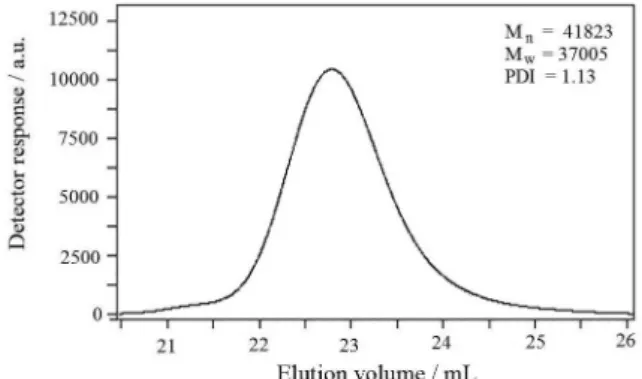
Living polymerization is characterized by a linear increase of the molecular weight with conversion and reaction time, and a narrow molecular weight distribution as evidenced by a dispersity index ( ), approaching 1.30
Figure 1 represents the GPC chromatograms of the poly(styrene-co-p-methylstyrene) copolymer whose
molecular weight distribution by GPC is 1.13. The single peak of the GPC curve of the product indicated that the product could not be the blend of PSt (polystyrene) homopolymer and PMSt (poly(p-methylstyrene)) homopolymer. If so, the
GPC curve should appear as two peaks, one for the PSt homopolymer and the other for the PMSt homopolymer.
Preparation of (PSt-co-PMSt)-Br
Figure 2 shows the FTIR spectra of the poly(styrene-co-p
-methylstyrene) copolymer (Figure 2a) and brominated copolymer (Figure 2b). The FTIR spectrum of (PSt-co-PMSt) copolymer shows the characteristic
absorption bands26,27 due to stretching vibration of C−H
(3100-2850 cm-1), weak aromatic overtone and combination
bands in the 2100-1670 cm-1 region, C=C stretching
vibrations (1606 and 1485 cm-1), CH
2 bending vibrations
(1445 and 1372 cm-1) and γ(C-H) in the aromatic ring
(768 and 709 cm-1). Compared with that of (PSt-co-PMSt),
a new peak at 557 cm-1 attributed to C−Br group in the
FTIR spectrum of the brominated copolymer was observed (Figure 2b).
The 1H NMR spectra of (PSt-co-PMSt) and
(PSt-co-PMSt)-Br obtained by bromination of copolymer are
shown in Figure 3. The 1H NMR spectrum of (PSt-co-PMSt)
shows the resonance at about 2.28, 1.86 and 1.43 ppm, being assigned to the −CH3, −CH and −CH2 units in the copolymer,
respectively, and the resonance at about 6.13-7.38 ppm are assigned to aromatic protons (Figure 3a). It was used (PSt-co-PMSt) as a starting polymer and N-bromosuccinimide
as a brominating agent to obtain a copolymer with bromine. The bromination takes place in the aliphatic chain and not in the aromatic ring. Thus, both methyl groups and backbone methine carbons can be brominated in (PSt-co-PMSt). After
bromination, the 1H NMR spectrum shows the resonance at
about 4.14-4.57 ppm, being assigned to the CH2−Br group
in the brominated copolymer (Figure 3b).
To calculate the extent of bromination for the (PSt-co-PMSt) copolymer of a particular extent of
bromination, the following method was adopted. Whereas [(PSt-co-PMSt)]m-[(PSt-co-PMSt)-Br]n represents the
brominated poly(styrene-co-p-methylstyrene) copolymer.
The mol% bromination is given by n/(m + n) × 100. The area under the aliphatic region is given by (9n + 5m), and the area under the aromatic region is given by (9n + 9m). In Figure 3, solving the simultaneous equation with the integrated areas, it can be seen that (9n + 5m) = 145.73 and (9n + 9m) = 154.1, and therefore, n = 2 and m = 15.11. So, the extent of bromination is 2/17.11 × 100 = 11.68%.
Preparation of (PSt-co-PMSt)-g-PANI
Figure 4 shows the FTIR spectra of the pure PANI and (PSt-co-PMSt)-g-PANI. The FTIR spectrum of PANI
shows C=N in the quinoidal units appearing at 1585 cm-1,
the benzenoid stretches at 1485 cm-1 and N–H stretches
at 3470 cm-1.
Figure 2. FTIR spectra of (a) (PSt-co-PMSt) and (b) (PSt-co-PMSt)-Br.
Figure 3.1H NMR spectra of (a) (PSt-co-PMSt) and (b) (PSt-co-PMSt)-Br.
The FTIR spectrum of (PSt-co-PMSt)-g-PANI shows
characteristic absorption band of polyaniline, namely, C=N in the quinoidal units, appearing at 1603 cm-1,
the benzenoid stretches at 1497 cm-1, N–H stretches at
3422 cm-1 and the aromatic C−H stretches at 3023 cm-1.
The Caromatic−N stretching band of an aromatic amine
appears at 1310 cm-1. The absorption band at 1165 cm-1 is
characteristic of electron-like absorption of the N=Q=N vibration (where Q denotes the quinoid ring).31 The
presence of the absorption band at 1270 cm-1 (attributed to
the aliphatic C−N stretching) suggests that the polystyrenic chains are linked on the nitrogens of polyaniline, while neither the position nor the intensity of the aromatic C−N stretching band at 1311 cm-1 changes after grafting.32
The absorption band at 817 cm-1 (characteristic of the
out-of-plane bending vibration of the 1,4-disubstituted benzene ring, polystyrene and poly(p-methylstyrene)) has
characteristic peaks at 2921 and 2853 cm-1, being attributed
to aliphatic C−H stretchings, and 759 and 699 cm-1 peaks
correspond to the out-of-plane hydrogen deformation that indicates the existence of the polystyrenic chains in our sample.33
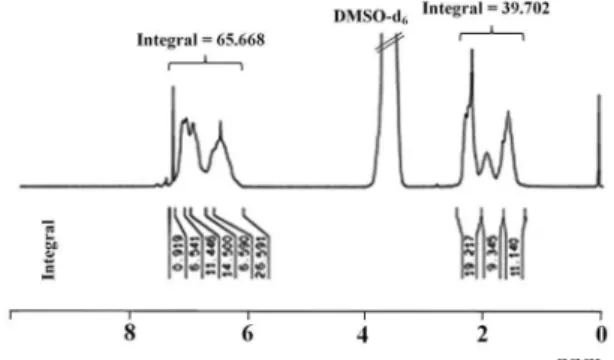
Additional evidence for the synthesis of the (PSt-co-p-PMSt)-g-PANI was also obtained from 1H NMR
data. The 1H NMR spectrum of the (PSt-co-p-PMSt)-g-PANI
is shown in Figures 5. The 1H NMR spectrum of the product
indicates the formation of (PSt-co-p-PMSt)-g-PANI
terpolymer because the chemical shifts at 6.24-7.36 and 1.32-2.46 ppm represent aromatic and aliphatic protons of (PSt-co-p-PMSt)-g-PANI, respectively. The chemical
shift of –NH proton of polyaniline in terpolymer is absent
in the 1H NMR spectrum because this peak overlaps with
the peaks from DMSO-d6.
Furthermore, before the incorporation of brominated (PSt-co-p-PMSt) onto emeraldine form of PANI, the ratio
of aliphatic hydrogens to aromatic hydrogens in brominated (PSt-co-p-PMSt) is [9 − (9 × 0.1168):9 ca. 1:1.13]. After
incorporation of (PSt-co-p-PMSt)-Br onto emeraldine form
of PANI, an increase in the ratio (39.702:65.668 ca. 1:1.66)
of the integration intensity of the terpolymer aromatic hydrogens to that of the terpolymer aliphatic hydrogens can be attributed to the fact that (PSt-co-p-PMSt)-Br was
incorporated into PANI, and that (PSt-co-p-PMSt)-g-PANI
was successfully synthesized.
To calculate the extent of the presence of PANI in the synthesized terpolymer, the following method was adopted. Before incorporation of (PSt-co-p-PMSt)-Br
onto PANI, the ratio of aliphatic hydrogens to aromatic hydrogens in (PSt-co-p-PMSt)-Br was [9 – (9 × 0.1168):9].
After the incorporation of (PSt-co-p-PMSt)-Br, this
ratio changed to (39.702:65.668 ca. 1:1.66). Thus,
[9 − (9 × 0.1168)]:[9 + 4X] ca. 1:1.66, where X is
the percent of PANI in the terpolymer, (9 + 4X) is the number of aromatic hydrogens in the (PSt-co-p-PMSt)-g
-PANI [9 for (PSt-co-p-PMSt)-Br and 4 for PANI],
[9 − (9 × 0.1168) = 7.95] is the number of aliphatic hydrogens in the (PSt-co-p-PMSt)-Br and also in the
(PSt-co-p-PMSt)-g-PANI. In Figure 5, by solving the
equation, it can be seen that X = 13.25%.
The solubility of the N-grafted polyaniline in common
organic solvents are shown in Table 1. Polystyrene and poly(p-methylstyrene) have excellent solubility in non-polar
solvents. The solubility of (PSt-co-PMSt)-g-PANI in
common organic solvents improved compared to pure PANI because polystyrene and poly(p-methylstyrene) were
incorporated to the polyaniline backbone.
Thermal property study
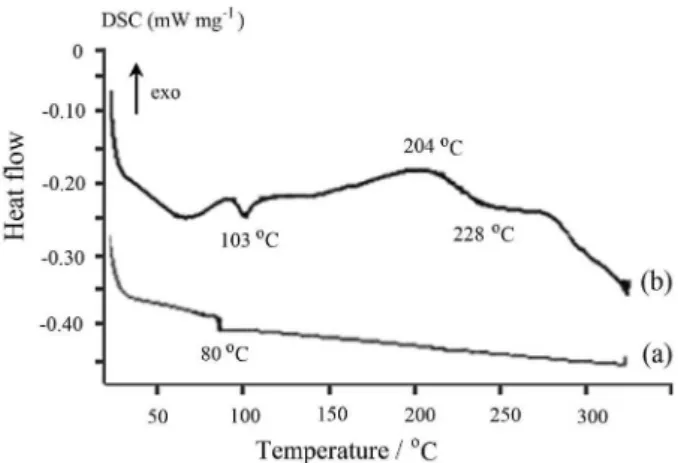
Figure 6 shows the DSC curves of (PSt-co-PMSt) and
(PSt-co-PMSt)-g-PANI. The neat (PSt-co-PMSt) exhibits
an endothermic peak approximately at 80 °C, corresponding to the glass transition temperature (Tg). Figure 6b exhibits
an endothermic peak approximately at 103 °C, being
Figure 5.1H NMR (DMSO-d
6, 400 MHz) spectrum of (PSt-co
-PMSt)-g-PANI.
Table 1. Solubility of polyaniline and (PSt-co-PMSt)-g-PANI in common organic solvents
Solvent DMSO NMP THF CHCl3 Xylene DMF
PANI + + + + + + + + − + +
P(St-co-MSt)-g-PANI + + + + + + + + + + + + +
attributed to the evaporation of any residual water and solvent molecules present in the terpolymer matrix. The transition observed at 228 °C can be designed as the glass transition temperature of the terpolymer. A strong exothermic peak appears at 204 °C that indicates the degradation of the dopant (p-toluenesulfonic acid).
Characteristic TGA curves of (PSt-co-PMSt) and
(PSt-co-PMSt)-g-PANI are shown in Figure 7. TGA
results indicate improvement of the thermal stability for (PSt-co-PMSt)-g-PANI compared to neat (PSt-co-PMSt)
copolymer. According to Figure 7a, it can be drawn the conclusion that the weight-loss around 400 °C in the TGA curve of (PSt-co-PMSt) is a result of the copolymer
decomposition. Higher decomposition temperature of (PSt-co-PMSt)-g-PANI (450 °C) compared with pure
copolymer (400 °C) indicated that (PSt-co-PMSt)-g-PANI
was successfully synthesized.
Electrical conductivity and electroactivity measurements of terpolymer
The most important physical properties of conductive polymers are the electrical conductivity properties.34 The
electrical resistivity (R) of the test sample was measured at room temperature and then converted to specific volume resistivity (ρ) using the equation: R = ρL/A. In this equation, A is the test sample cross section area and L the sample thickness. Finally, the electrical conductivity (σ) is the reciprocal of ρ (σ = 1/ρ). The electrical conductivity values (σ) of PANI and (PSt-co-PMSt)-g
-PANI terpolymer were obtained 1.29 and 0.17 S cm-1,
respectively.
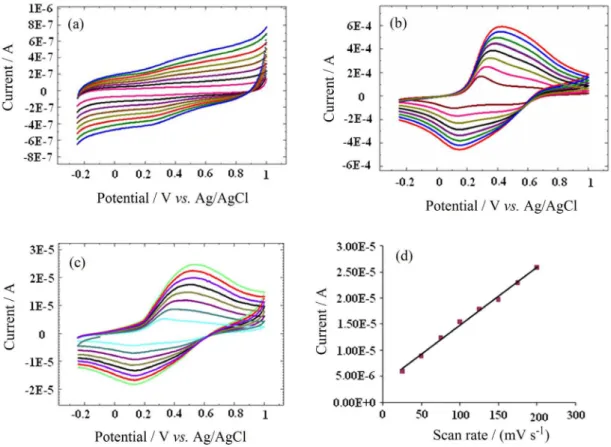
The effect of the potential scanning rate (V) on the peak current for the pure PANI and on the synthesized (PSt-co-PMSt)-g-PANI modified electrodes
was studied in the range of 25-200 mV s-1, as shown
in Figure 8. The polymer films were prepared on glassy carbon electrode (GCE) by casting. Typical cyclic voltammograms (CVs) of the pure PANI film are shown in Figure 8b. When CVs of pure PANI are recorded between −0.25 and +1.0 V vs. Ag/AgCl
at scan rate of 25 mV s-1, the oxidation and reduction
peak currents were observed at approximately 0.12 and 0.29 V vs. Ag/AgCl, respectively, indicating that the
electrochemical doping/undoping was chemically reversible. CVs of pure PANI at different scan rates showed that the anodic peak current for PANI is linearly increased with the scanning rate. The (PSt-co-PMSt)
sample does not show any oxidation and reduction peaks. Figure 8a shows that the (PSt-co-PMSt) sample is a
non-electroactive polymer.
As shown in Figure 8c, cyclic voltammograms of (PSt-co-PMSt)-g-PANI terpolymer exhibit some qualitative
similarities with those of unsubstituted polyaniline. To evaluate the electroactivity further, it was determined the relationship between the peak current size vs. scan
rate. Figure 8d shows a linear relationship between the current and scan rate between 25 and 200 mV s-1 in
(PSt-co-PMSt)-g-PANI terpolymer.
UV–Vis spectroscopy
The UV-Vis spectrum of the undoped PANI dissolved in dimethyl sulfoxide (DMSO) solution has two absorption band at 332 and 634 nm as shown in Figure 9a. The first absorption band corresponds to the overlap of the π-π* transition of the benzenoid rings of PANI, while the latter one is assigned as exciton absorption of the quinoid (quinonimine) rings of PANI.35 The UV-Vis spectrum of
undoped (PSt-co-PMSt)-g-PANI is characterized by only
one electronic transition at about 598 nm, being lower comparing with the unsubstituted PANI. This shift to shorter wavelength is ascribed of the significantly lower concentration of these quinoneimine units in the case of
Figure 6. DCS curves of (a) (PSt-co-PMSt) and (b) (PSt-co-PMSt)-g -PANI.
Figure 7. TGA curves of (a) (PSt-co-PMSt) and (b) (PSt-co-PMSt)-g
Figure 8. Cyclic voltammetry curves of (a) pure (PSt-co-PMSt), (b) neat PANI and (c) (PSt-co-PMSt)-g-PANI, and (d) linear relationship between current and scan rate in (PSt-co-PMSt)-g-PANI.
Figure 9. Electronic spectra of (a) undoped PANI, (b) undoped (PSt-co-PMSt)-g-PANI and (c) HCl doped (PSt-co-PMSt)-g-PANI in
DMSO solution.
undoped (PSt-co-PMSt)-g-PANI in comparison with the
undoped PANI.
As depicted in Figure 9c, when the (PSt-co-PMSt)-g-PANI
is doped by 1.0 mol L-1 HCl, the absorption band at
about 600 nm completely disappeared. However, a new absorption band at 789 nm was observed. The position of this band, which is due to the formation of polarons (radical cations), occurs at considerable lower energy
in the (PSt-co-PMSt)-g-PANI in comparison with the
unsubstituted PANI, when doped with HCl.
Conclusions
This work has shown a facile route in the synthesis of conductive N-substituted polyaniline (PANI) by
incorporation of brominated poly(styrene-co-p
-methylstyrene) onto emeraldine form of polyaniline. The (PSt-co-PMSt) copolymer was prepared by
nitroxide-mediated polymerization (NMP) method. Thereafter,
N-bromosuccinimide was used as a brominating agent
to obtain a copolymer with bromine. Afterwards, deprotonated polyaniline, which was the substitution of the amine nitrogen of the polyaniline units, results in the formation of negatively charged nitrogen by treatment of emeraldine base with BuLi and subsequent incorporation of (PSt-co-PMSt)-Br chains onto polyaniline backbone.
The (PSt-co-PMSt)-g-PANI terpolymer exhibited enhanced
solubility in common organic solvents in comparison with the neat PANI. The doped state of (PSt-co-PMSt)-g-PANI
compared with neat PANI due to the substitution. Compared with pure (PSt-co-PMS), the (PSt-co-PMSt)-g-PANI
terpolymer shows a higher decomposition temperature and higher glass transition temperature.
Acknowledgments
We express our gratitude to the Bonyade Melli Nokhbeghan Institute and Payame Noor University for supporting this project.
References
1. Prasad, G. K.; Radhakrishnan, T. P.; Kumar, D. S.; Krishna, M. G.; Sens. Actuators, B 2005, 106, 626.
2. Jiang, J.; Li, L.; Zhu, M.; React. Funct. Polym.2008, 68, 57.
3. Mac-Diarmid, A. G.; Yang, L. S.; Huang, W. S.; Humphrey, B. D.; Synth. Met.1987, 18, 393.
4. Hanstein, S.; Martinez-Bonastre, A.; Nestler, U.; Bartlett, P. N.;
Sens. Actuators, B2007, 125, 284.
5. Silva, P. J. E.; Temperini, M. L. A.; Torresi, S. I. C.; J. Braz. Chem. Soc.2005, 16, 322.
6. Li, X.; Gao, Y.; Zhang, X.; Gong, J.; Sun, Y.; Zheng, X.; Qu, L.;
Mater. Lett.2008, 62, 2237.
7. Schmid, A. L.; Torresi, S. I. C.; Bassetto, A. N.; Carlos, I. A.;
J. Braz. Chem. Soc.2000, 11, 317.
8. Hosseini, S. H.; J. Appl. Polym. Sci. 2006, 101, 3920. 9. Armitt, C. D.; Armes, S. P.; Winter, J.; Urbe, F. A.; Gottesfeld, S.;
Mombourquette, C.; Polymer1993, 34, 158.
10. Huang, W. S.; B. Humphrey, D.; Mac-Diarmid, A. G.; J. Chem. Soc., Faraday Trans.1986, 82, 2385.
11. Chen, S. A.; Hwang, G. W.; Polymer1997, 38, 3333.
12. Cataldo, F.; Maltese, P.; Eur. Polym. J.2002, 38, 1791. 13. Hwang, G. W.; Wu, K. Y.; Hua, M. Y.; Lee, H. T.; Chen, S. A.;
Synth. Met.1998, 92, 39.
14. Kolaei, Z. T.; Eisazadeh, H.; Polym. Plast. Technol. Eng.2011,
50, 1438.
15. Sankir, N. D.; Mecham, J. B.; Goff, R. M.; Harrison, W. L.; Claus, R. O.; Smart Mater. Struct.2006, 15, 200.
16. Tang, Q. W.; Lin, J. M.; Wu, J. H.; Zhang, C. J.; Hao, S. C.;
Carbohydr. Polym.2007, 67, 332.
17. Jaymand, M.; Macromol. Res.2011, 19, 998. 18. Jaymand, M.; J. Polym. Res.2011, 18, 1617.
19. Pyun, J.; Matyjaszewski, K.; Chem. Mater.2001, 13, 3436. 20. Maliakal, A.; Katz, H.; Cotts, P. M.; Subramoney, S.; Mirau, P.;
J. Am. Chem. Soc.2005, 127, 14655.
21. Tasdelen, M. A.; Yagci, Y.; Demirel, A. L.; Biedron, T.; Kubisa, P.;
Polym. Bull.2007, 58, 653.
22. Lin, W.; Fu, Q.; Zhang, Y.; Huang, J.; Macromolecules2008,
41, 4127.
23. Lessard, B.; Maric, M.; Macromolecules2008, 41, 7870.
24. Tasdelen, M. A.; Durmaz, Y. Y.; Karagoz, B.; Bicak, N.; Yagci, Y.;
J. Polym. Sci., Part A: Polym. Chem.2008, 46, 3387.
25. Guo, S. Z.; Zhang, C.; Wang, W. Z.; Liu, T. X.; eXPRESS Polymer Letters2010, 4, 17.
26. Jaymand, M.; Polym. J.2011, 43,186. 27. Jaymand, M.; Polymer2011, 52, 4760.
28. Nabifara, A.; Manusa, N. T. M.; Vivaldo-Limab, E.; Lonac, L. M. F.; Penlidisa, A.; Chem. Eng. Sci.2009, 64, 304.
29. Kaplan, S.; Conwell, E. M.; Richter, A. F.; Mac-Diarmid, A. G.;
Macromolecules1989, 22, 1669.
30. Moad, G.; Rizzardo, E.; Thang, S. H.; Aust. J. Chem.2005, 58, 379.
31. Chen, S. A.; Lin, L. C.; Macromolecules1995, 28, 1239. 32. Zhao, B.; Neoh, K. G.; Kang, E. T.; Tan, K. L.; Chem. Mater.
2000, 12, 1800.
33. Tarkuc, S.; Sahin, E.; Toppare, L.; Colak, D.; Cianga, I.; Yagci, Y.; Polymer2006, 47, 2001.
34. Jaymand, M.; Des. Monomers Polym.2011, 14, 433.
35. Huang, K.; Qiu, H.; Wan, M.; Macromolecules2002, 35, 8653.
Submitted: February 13, 2012