Article
Printed in Brazil - ©2016 Sociedade Brasileira de Química0103 - 5053 $6.00+0.00
*e-mail: [email protected]
Design, Synthesis, Pharmacological Evaluation and Molecular Docking Studies of
Substituted Oxadiazolyl
-
2
-
Oxoindolinylidene Propane Hydrazide Derivatives
Deweshri Kerzare,a,b Rupesh Chikhale,*,a,b,c Ratnadeep Bansode,d Nikhil Amnerkar,b
Nazira Karodia,e Anant Paradkard and Pramod Khedekara
aDepartment of Pharmaceutical Sciences, Rashtrasant Tukadoji Maharaj Nagpur University,
Amravati Road, 440 033 Nagpur-MS, India
bKamala Nehru College of Pharmacy, Butibori, 441 108 Nagpur-MS, India
cAdvanced Centre for Treatment, Research and Education in Cancer (ACTREC),
Tata Memorial Centre, Kharghar, 410 210 Navi Mumbai-MS, India
dCentre for Pharmaceutical Engineering Science, Faculty of Life Sciences, University of Bradford,
BD7 1DP Bradford, United Kingdom
eSchool of Biology, Chemistry and Forensic Science, University of Wolverhampton,
WV1 1LY Wolverhampton, United Kingdom
The manuscript describes design and synthesis of novel oxadiazolyl-2-oxoindolinylidene propane hydrazides as amide tethered hybrids of indole and oxadiazole and their evaluation for anti-inflammatory and analgesic activity. The compounds were synthesized following five step reaction to yield fifteen derivatives as 3-(5-substituted-1,3,4-oxadiazol-2-yl)-N’-[2-oxo-1,2-dihydro-3H -indol-3-ylidene]propane hydrazides. The final derivatives 3-[5-(4-hydroxyphenyl)-1,3,4-oxadiazol-2-yl]-N’-[2-oxo-1,2-dihydro-3H-indol-3-ylidene]propane hydrazide and 3-[5-(4-methylphenyl)-1,3,4-oxadiazol-2-yl]-N’-[2-oxo-1,2-dihydro-3H-indol-3-ylidene]propane hydrazide were found to be highly promising molecules with severity index of 0.35 and 0.56, respectively, which is promising for an analgesic compound. The hydroxy and methyl substitution on phenyl ring system provided with active anti-inflammatory compounds having increase in reaction time of 84.11 and 83.17%, respectively compared to standard drug at 85.84%. Molecular docking studies exhibit comparable interaction with synthesized derivatives and standard drug having a dock score of −4.44 by the K-nearest neighbour genetic algorithm method.
Keywords: hybrid approach, indole, anti-inflammatory, analgesic, molecular docking
Introduction
Discovery of new molecules within a short possible time has become a focal point in current medicine. Need for new and better drugs with less toxicity and more selectivity are major criteria for the designing of a molecule. Recently, many new approaches are observed to be practiced for development of newer biologically active molecules. Special focus is given on structure based drug discovery, fragment based drug discovery, protein-protein interaction inhibitor study, proteomics and pharmacogenomics and these are becoming more and more popular to medicinal chemists.1 Still the earlier methods are persistent and yielding good
piperazine and pravadoline, which is a hybrid of indole and morpholine, respectively (Figure 1). The success of this approach is well defined in discovery of NSAIDs such as the pravadoline, which acts as cyclooxygenase (COX) inhibitor but also exhibit a potent cannabinoid agonist effect.3 The need for efficient and nontoxic NSAIDs has made us to design and develop newer and better molecules. The unwanted gastrointestinal (GI) ulceration, bleeding, nephrotoxicity observed in conventional COX inhibitors and the failure of selective COX inhibitors due to adverse cardiac effects suggest for better drugs devoid
Indole derivative such as indomethacin is an established NSAID but it cause severe gastrointestinal side effect. The oxadiazole is found to poses versatile activity like the antiviral, anticancer and anticystic activity; compounds bearing 1,3,4-oxadiazole nucleus are also
known to exhibit unique antiedema and anti-inflammatory potential.13 In the past, many indole and 1,3,4-oxadiazole derivatives showed potential for anti-inflammatory and analgesic activity in animal model of inflammation and pain.14-18
Compound 49 50 51 52 53 54 55 56 57 58 59 60 61 62 63
R H p-OH p-CH3 m-NO2 o-OCH3, m’-OCH3 p-Cl p-NO2 p-COCH3 p-F o-Cl o-NO2 m-Cl o-F p-Br m-Br
The need for newer drug molecule and success of hybrid approach compelled us for development of some new NSAIDs. The target moieties selected for formation of a hybrid drug was based on our previous literature study, and it was found that indole and oxadiazole nuclei possess analgesic and anti-inflammatory properties and thus it was found worth to prepare a hybrid derivative from these moieties. To achieve this goal, we synthesized fifteen different hybrids of indole and oxadiazole as 5-substituted-1,3,4-oxadiazole-2-yl-(2-oxo-1,2-dihydro-indol-3-ylidene) propane hydrazide derivatives. Scheme 1 explains the synthesis of these derivatives that involves two different steps. In the first step, substituted aryl acid hydrazides were obtained from various substituted benzoic acids with formation of intermediate benzoates. In the second step, the indole-2,3-dione was reacted with hydrazine hydrate to form isatin-3-hydrazone, which in the subsequent reaction with succinic anhydride produces indolyl hydrazinyl butonic acid. This acid on reaction with substituted aryl acid hydrazides obtained from earlier steps yields the final derivatives as substituted oxadiazolyl indolyl propane hydrazides.
These newly synthesized compounds were tested initially for their in vitro characteristic as active or inactive
molecules by the egg albumin denaturation test.19 Further, these compounds were subjected for their analgesic and anti-inflammatory activity by the carrageenan induced rat paw edema model20 and Eddy’s hot plate method,21 respectively. After evaluation for pharmacological studies, it becomes necessary to determine the safety of synthesized compounds with respect to ulcerogenesis study or the determination of severity index with respect to reference drug such as indomethacin. Further, to determine the possible interaction of most potent compound and receptor in silico, studies need
to be carried out. This was achieved by molecular docking studies of the ligands on the COX-II receptor.22,23
The series of final derivatives N
’-(2-oxoindolin-3-ylidene)-3-(5-substituted phenyl-1,3,4-oxadiazol-2-yl) propane hydrazides 49-63 as described in this study
is outlined in Scheme 1. The products were obtained following two different steps; in the first step various substituted benzoic acids 1-15 were obtained commercially;
these substituents were reacted with ethanol in presence of sulphuric acid to derive corresponding benzoates 16-30
under conditions of nucleophilic substitution reaction. These benzoates were further treated with hydrazine hydrate to yield various substituted aryl acid hydrazides 31 -45, which were further employed in the reaction system. In
the second step to the reaction scheme, isatin 46 was treated
with hydrazine hydrate under ambient conditions to yield the isatin-3-hydrazone 47. It was further substituted by
succinic anhydride to yield the oxoindolyidene hydrazinyl
butanoic acid 48. Up to this moiety, the step two provides
with reactant for the final reaction, in which the various substituted aryl acid hydrazides 31-45 and oxoindolyidene
hydrazinyl butanoic acid 48 react to undergo the cyclization
reaction in presence of phosphorous oxychloride, yielding various N’-(2-oxoindolin-3-ylidene)-3-(5-substituted
phenyl-1,3,4-oxadiazol-2-yl) propane hydrazides 49-63
in 40-80% yield.
Experimental
Materials and methods
Chemicals were obtained from Sigma-Aldrich (St. Louis, MO, USA), S D Fine-Chem (Mumbai, MH, India) and Merck (Darmstadt, Germany), unless specified. Melting points (m.p.) were detected with open capillaries using ThermoNik precision melting point cum boiling point apparatus (model C-PMB-2, Mumbai, MH, India) and are uncorrected. Infrared (IR) spectra (KBr) were recorded on FTIR-8400s spectrophotometer (Shimadzu, Tokyo, Japan) at the Department of Pharmaceutical Sciences, Rashtrasant Tukadoii Maharai (RTM) Nagpur University. Proton (1H) and carbon 13 (13C) nuclear magnetic resonance (NMR) were obtained using a Bruker Avance II 400 MHz spectrometer (Billerica, MA, USA), using tetramethylsilane (TMS) as internal standard. All chemical shift values were recorded as d (ppm), coupling constant value J is measured
in hertz, the peaks are presented as s (singlet), d (doublet), t (triplet), brs (broad singlet), dd (double doublet), m (multiplet). The purity of compounds was controlled by thin layer chromatography (silica gel HF254e361, type 60, 0.25 mm; Merck, Darmstadt, Germany). Electrospray ionization mass spectrometry (ESI-MS) was recorded at Waters Q-TOF spectrometer (Waters, Milford, MA, USA) at the Sophisticated Analytical Instrumentation Facility (SAIF), Punjab University (Chandigarh, PB, India).
Synthesis
General methods for synthesis of substituted ethyl
benzoates (16-30)24
To a solution of substituted benzoic acid (1-15)
collected and recrystallized from ethanol. Details of these compounds are available in Supplementary Information.
General methods for synthesis of substituted aryl acid
hydrazides (31-45)24
The substituted ethyl benzoates (16-30) (0.01 mol)
dissolved in dry ethanol (25 mL), hydrazine hydrate (99%, 0.01 mol) was added and the mixture was refluxed for 6 h. The reaction mixture was cooled and the solid obtained was filtered and recrystallized from dilute ethanol or from water. Details of these compounds are available in Supplementary Information.
Procedure for synthesis of
3-hydrazinylidene-1,3-dihydro-2H-indol-2-one(47)25
A mixture of isatin (46) (1 mmol) and hydrazine hydrate
(99%, 0.055 g, 1.1 mmol) in absolute methanol (25 mL) was refluxed for 1 h and then cooled to room temperature. The precipitate of hydrazones was filtered and dried. The crude product was recrystallized from ethanol to give hydrazones (47).
Yield: 1.0 g (70%); m.p. 248-250 ºC; Rf 0.39 (methanol:toluene, 1:4); IR (KBr) ν / cm−1 3411, 2916, 1655, 1618; 1H NMR (DMSO) d 7.63 (s, 1H, Ar−H), 7.45 (s, 1H, Ar−H), 7.31 (s, 1H, Ar−H), 7.20 (s, 1H, Ar−H), 7.0 (s, 1H, NH), 3.34 (s, 2H, NH); 13C NMR (100 MHz, DMSO-d6) d 166.25, 152.64, 130.73, 125.24, 120.75, 120.61, 117.55, 78.81; EI-MS m/z [M + H]+ 162.24.
Procedure for synthesis of
4-oxo-4-[2-(2-oxo-1,2-dihydro-3H-indol-3-ylidene)-hydrazinyl]butanoic acid(48)26
The mixture of compound (47) (0.01 mol), succinic
anhydride (0.01 mol) and trimethylamine (1 mmol) in dichloromethane (DCM) was stirred at room temperature for 3 h and diluted with DCM. The solution was washed with sodium bicarbonate and brine twice. The product thus obtained was dried over sodium sulphate and the excess of solvent was distilled off. The resulting solid was recrystallized from ethanol.
Yield: 0.08 g (80%); m.p. 238-240 ºC; Rf 0.58 (toluene); IR (KBr) ν / cm−1 3394, 3059, 2916, 1655, 1618; 1H NMR (DMSO) d 12.44 (s, 1H, OH), 7.99 (t, 1H, J 6.7 Hz, Ar−H),
7.97 (s, 1H, Ar−H), 7.44 (d, 1H, J 8.2 Hz, Ar−H), 7.31
(d, 1H, J 7.2 Hz, Ar−H), 6.30 (s, 1H, NH), 3.78 (s, 2H, CH2), 2.23 (s, 2H, CH2); 13C NMR (100 MHz, DMSO-d6) d 166.22, 157.59, 148.41, 131.35, 126.12, 123.58, 121.71, 120.58, 118.78, 106.41, 51.01, 30.31; EI-MS m/z [M + H]+ 262.04.
General procedure for synthesis of
3-(5-substituted-1,3,4-oxadiazol-2-yl)-N’-[2-oxo-1,2-dihydro-3H-indol-3-ylidene]
propane hydrazide derivatives(49-63)27
To a solution of compound (31-45) (0.01 mol) in
phosphorous oxychloride (15-20 mL), compound (48)
(0.01 mol) was added. The reaction mixture was refluxed for 5 h. The mixture was cooled to room temperature and poured onto crushed ice and neutralized the contents with sodium hydroxide solution (1 mol L−1). The product was filtered, washed with water, dried and recrystallized using methanol to get 49-63.
3-(5-Phenyl-1,3,4-oxadiazol-2-yl)-N’-[2-oxo-1,2-dihydro-3H
-indol-3-ylidene]propane hydrazide (49)
Yield: 2.03 g (78%); m.p. 208-210 ºC; Rf 0.83 (chloroform); λmax 448 nm; IR (KBr) ν / cm−1 3254, 3059, 2916, 1655, 1618; 1H NMR (DMSO) d 8.91 (s, 1H, Ar−H), 8.59 (s, 1H, Ar−H), 8.0 (s, 1H, Ar−H), 7.98 (d, 2H,
J 7.9 Hz, Ar−H), 7.76 (t, 2H, J 8.3 Hz, Ar−H), 7.45 (dd, 1H, J 7.4 Hz, Ar−H), 7.32 (dd, 1H, J 7.6 Hz, Ar−H), 3.58 (s, 2H,
CH2), 2.38 (s, 2H, CH2); 13C NMR (100 MHz, DMSO-d6)
d 160.53, 156.17, 148.33, 131.52, 126.20, 123.76, 121.78, 120.72, 33.98; EI-MS m/z [M + H]+ 362.58; anal. calcd.
for C19H15N5O3: C, 63.1; H, 4.15; N, 19.37; found: C, 63.3; H, 4.17; N, 19.39.
3-[5-(4-Hydroxyphenyl)-1,3,4-oxadiazol-2-yl]-N
’-[2-oxo-1,2-dihydro-3H-indol-3-ylidene]propane hydrazide(50)
Yield: 2.08 g (80%), m.p. 210-212 ºC; Rf 0.8 (chloroform); λmax 442 nm; IR (KBr) ν / cm−1 3585, 3211, 2849, 2978, 1711, 1605; 1H NMR (DMSO) d 9.49 (s, 1H, OH), 7.72 (t, 2H, J 6.9 Hz, Ar−H), 7.40 (t, 2H, J 8.1 Hz,
Ar−H), 7.21 (t, 1H, J 6.9 Hz, Ar−H), 7.18 (d, 1H, J 7.4 Hz,
Ar−H), 6.65 (t, 1H, J 7.8 Hz, Ar−H), 6.36 (s, 1H, Ar−H),
2.31 (s, 2H, CH2), 1.23 (s, 2H, CH2); 13C NMR (100 MHz, DMSO-d6) d 166.11, 162.44, 157.29, 153.76, 137.59, 132.14, 128.25, 126.72, 122.81, 115.18, 112.36, 102.89, 50.84, 23.17; EI-MS m/z [M + H]+ 378.11; anal. calcd. for C19H15N5O4: C, 63.4; H, 4.13; N, 19.33; found: C, 63.6; H, 4.17; N, 19.35.
3-[5-(4-Methylphenyl)-1,3,4-oxadiazol-2-yl]-N
’-[2-oxo-1,2-dihydro-3H-indol-3-ylidene]propane hydrazide(51)
Yield: 1.82 g (70%); m.p. 200-202 ºC; Rf 0.47 (chloroform); λmax 357 nm; IR (KBr) ν / cm−1 3249, 2849, 2918, 1614, 1598; 1H NMR (DMSO) d 7.75 (t, 1H, J 8.1 Hz, Ar−H), 7.46 (t, 1H, J 7.6 Hz, Ar−H), 7.34 (t, 1H, J 5.9 Hz,
Ar−H), 7.19 (d, 1H, J 7.8 Hz, Ar−H), 7.02 (m, 2H, J 7.9 Hz,
Ar−H), 6.82 (t, 1H, J 8.4 Hz, Ar−H), 6.43 (s, 1H, Ar−H),
3.34 (s, 4H, CH2), 2.32 (s, 3H, CH3); 13C NMR (100 MHz, DMSO-d6) d 166.37, 166.05, 162.55, 158.97, 153.97, 152.79, 137.52, 133.74, 130.88, 128.22, 126.76, 122.81, 120.82, 117.68, 113,56, 112.36, 102.79, 55.90, 54.94, 23.20; EI-MS
m/z [M + H]+ 376.31; anal. calcd. for C
3-[5-(3-Nitrophenyl)-1,3,4-oxadiazol-2-yl]-N
’-[2-oxo-1,2-dihydro-3H-indol-3-ylidene]propane hydrazide (52)
Yield: 1.87 g (72%); m.p. 248-250 ºC; Rf 0.72 (chloroform); λmax 447 nm; IR (KBr) ν / cm−1 3084, 2918, 1655, 1618, 1529; 1H NMR (DMSO) d 8.31 (s, 1H, Ar−H), 7.87 (d, 2H, J 7.3 Hz, Ar−H), 7.61 (t, 2H, J 8.4 Hz, Ar−H),
7.21 (t, 2H, J 7.9 Hz, Ar−H), 6.62 (s, 1H, Ar−H), 3.63
(s, 2H, CH2), 2.34 (s, 2H, CH2); 13C NMR (100 MHz, DMSO-d6) d 165.75, 163.11, 155.20, 147.82, 143.43, 137.15, 133.34, 130.43, 127.01, 124.34, 123.33, 123.02, 122.80, 121.50, 112.37, 101.87, 51.03, 23.38; EI-MS m/z
[M + H]+ 407.72; anal. calcd. for C
19H14N6O5: C, 56.3; H, 3.5; N, 20.77; found: C, 56.5; H, 3.8; N, 20.79.
3-[5-(2,3-Dimethoxyphenyl)-1,3,4-oxadiazol-2-yl]-N
’-[2-oxo-1,2-dihydro-3H-indol-3-ylidene]propane hydrazide(53)
Yield: 2.16 g (83%); m.p. 230-232 ºC; Rf 0.69 (chloroform); λmax 325 nm; IR (KBr) ν / cm−1 3293, 2918, 1655, 1618, 2835, 1425; 1H NMR (DMSO) d 7.73 (s, 1H, Ar−H), 7.21 (d, 2H, J 8.4 Hz, Ar−H), 7.19 (s, 1H, Ar−H),
7.05 (s, 1H, Ar−H), 6.76 (t, 1H, J 7.9 Hz, Ar−H), 6.66
(s, 1H, Ar−H), 4.07 (t, 2H, J 7.9 Hz, CH2), 3.34 (t, 2H, J 8.4 Hz, CH2), 2.50 (s, 3H, O−CH3), 1.22 (d, 3H, J 7.8 Hz, O−CH3); 13C NMR (100 MHz, DMSO-d6) d 165.64, 162..36, 153.50, 147.05, 146.48, 137.67, 132.76, 126.71, 122.80, 119.49, 115.51, 112.52, 111.62, 102.97, 56.38, 55.57, 23.08, 14.13; EI-MS m/z [M + H]+ 422.14; anal.
calcd. for C21H19N5O5: C, 59.9; H, 4.52; N, 16.65; found: C, 59.5; H, 4.8; N, 16.69.
3-[5-(4-Chlorophenyl)-1,3,4-oxadiazol-2-yl]-N
’-[2-oxo-1,2-dihydro-3H-indol-3-ylidene]propane hydrazide(54)
Yield: 1.12 g (43%); m.p. 240-244 ºC; Rf 0.66 (chloroform); λmax 452 nm; IR (KBr) ν / cm−1 3239, 2843, 1713, 1547, 2902; 1H NMR (DMSO) d 8.98 (s, 1H, Ar−H), 8.59 (s, 1H, Ar−H), 8.0 (d, 2H, J 8.1 Hz, Ar−H), 7.75
(t, 2H, J 7.9 Hz, Ar−H), 7.45 (dd, 1H, J 7.4 Hz, Ar−H), 7.32
(dd, 1H, J 7.9 Hz, Ar−H), 3.50 (s, 2H, CH2), 2.31 (s, 2H,
CH2); 13C NMR (100 MHz, DMSO-d6)d 160.56, 156.15, 148.33, 131.50, 126.72, 126.21, 123.77, 121.79, 120.72, 115.25, 51.01, 33.92; EI-MS m/z [M + H]+ 397.32; anal.
calcd. for C19H14ClN5O3: C, 57.62; H, 3.58; N, 17.71; found: C, 57.68; H, 3.62; N, 18.1.
3-[5-(4-Nitrophenyl)-1,3,4-oxadiazol-2-yl]-N
’-[2-oxo-1,2-dihydro-3H-indol-3-ylidene]propane hydrazide (55)
Yield: 2.32 g (89%); m.p. 240-244 ºC; Rf 0.71 (chloroform); λmax 448 nm; IR (KBr) ν / cm−1 3121, 2916, 1655, 1618, 2849, 1522; 1H NMR (DMSO) d 8.15 (s, 1H, Ar−H), 7.74 (q, 1H, J 7.9 Hz, Ar−H), 7.46 (t, 1H, J 7.5 Hz, Ar−H), 7.31 (dd, 2H, J 8.2 Hz, Ar−H), 7.21
(dd, 2H, J 8.4 Hz, Ar−H), 6.68 (s, 1H, Ar−H), 3.35 (s, 2H,
CH2), 2.51 (s, 2H, CH2); 13C NMR (100 MHz, DMSO-d6)
d 165.71, 163.07, 155.16, 149.14, 147.20, 137.16, 128.28, 126.96, 123.96, 122.80, 112.24, 101.69, 55.87, 23.37; EI-MS
m/z [M + H]+ 407.16; anal. calcd. for C19H14N6O5: C, 56.3; H, 3.48; N, 20.68; found: C, 56.6; H, 3.5; N, 20.69.
3-[5-(4-Acetylphenyl)-1,3,4-oxadiazol-2-yl]-N
’-[2-oxo-1,2-dihydro-3H-indol-3-ylidene]propane hydrazide(56)
Yield: 2.08 g (80%); m.p. 166-170 ºC, Rf 0.65 (chloroform); λmax 525 nm; IR (KBr) ν / cm−1 3107, 2918, 1648, 1603, 1210, 2849; 1H NMR (DMSO): d 7.73 (t, 1H, J 7.4 Hz, Ar−H), 7.49 (d, 1H, J 7.9 Hz, Ar−H), 7.19
(t, 2H, J 8.5 Hz, Ar−H), 7.03 (d, 1H, J 8.3 Hz, Ar−H), 6.75
(d, 1H, J 7.4 Hz, Ar−H), 6.65 (s, 1H, Ar−H), 6.37 (s, 1H,
Ar−H), 3.71 (s, 2H, CH2), 3.35 (s, 2H, CH2), 2.50 (s, 3H, CH3); 13C NMR (100 MHz, DMSO-d6) d 200.86, 166.12, 162.48, 153.70, 147.14, 146.49, 137.65, 132.70, 126.74, 123.93, 122.80, 119.31, 115.50, 112.50, 111.41, 102.84, 56.29, 55.58, 50.82, 23.13; EI-MS m/z [M + H]+ 404.09; anal. calcd. for C21H17N5O4: C, 62.41; H, 4.23; N, 17.39; found: C, 62.48; H, 4.28; N, 17.42.
3-[5-(4-Fluorophenyl)-1,3,4-oxadiazol-2-yl]-N
’-[2-oxo-1,2-dihydro-3H-indol-3-ylidene]propane hydrazide (57)
Yield: 2.14 g (82 %); m.p. 182-184 ºC, Rf 0.65 (chloroform), λmax 398 nm, IR (KBr) ν / cm−1 2992, 2916, 1655, 1605, 1097; 1H NMR (DMSO) d 8.10 (d, 2H, J 8.3 Hz, Ar−H), 7.68 (t, 2H, J 7.6 Hz, Ar−H), 7.26
(dd, 1H, J 7.6 Hz, Ar−H), 7.24 (dd, 1H, J 7.3 Hz, Ar−H), 6.81
(t, 2H, J 6.9 Hz, Ar−H), 3.73 (s, 2H, CH2), 2.50 (s, 2H, CH2); 13C NMR (100 MHz, DMSO-d6) d 164.52, 163.31, 161.31, 160.36, 135.94, 129.96, 129.88, 127.96, 124.35, 124.17, 115.94, 115.72, 114.50, 103.80, 99.49, 57.01, 51.68; EI-MS m/z [M + H]+ 380.12; anal. calcd. for
C19H14FN5O3: C, 60.31; H, 3.71; N, 18.48; found: C, 60.38; H, 3.78; N, 18.52.
3-[5-(2-Chlorophenyl)-1,3,4-oxadiazol-2-yl]-N
’-[2-oxo-1,2-dihydro-3H-indol-3-ylidene]propane hydrazide (58)
Yield: 1.15 g (43%); m.p. 244-246 ºC; Rf 0.61 (chloroform); λmax 455 nm; IR (KBr) ν / cm−1 3235, 2843, 1713, 1537, 2902, 725; 1H NMR (DMSO) d 8.76 (s, 1H, Ar−H), 8.31 (s, 1H, Ar−H), 7.92 (d, 2H, J 8.4 Hz, Ar−H),
7.70 (t, 2H, J 7.6 Hz, Ar−H), 7.43 (dd, 1H, J 7.5 Hz, Ar−H),
7.30 (dd, 1H, J 7.8 Hz, Ar−H), 3.40 (s, 2H, CH2), 2.53
(s, 2H, CH2); 13C NMR (100 MHz, DMSO-d6) d 164.16, 154.17, 149.38, 133.60, 125.12, 125.26, 123.77, 121.80, 121.76, 116.27, 55.10, 34.82; EI-MS m/z [M + H]+ 397.43;
3-[5-(2-Nitrophenyl)-1,3,4-oxadiazol-2-yl]-N
’-[2-oxo-1,2-dihydro-3H-indol-3-ylidene]propane hydrazide(59)
Yield: 2.22 g (89%); m.p. 242-244 ºC; Rf 0.71 (chloroform); λmax 438 nm; IR (KBr) ν / cm−1 3121, 2916, 1645, 1615, 2749, 1522; 1H NMR (DMSO) d 8.31 (s, 1H, Ar−H), 7.87 (d, 1H, J 7.6 Hz, Ar−H), 7.78 (d, 1H, J 7.4 Hz,
Ar−H), 7.61 (dd, 2H, J 5.3 Hz, Ar−H), 7.21 (t, 2H, J 7.4 Hz,
Ar−H), 6.72 (t, 1H, J 7.1 Hz, Ar−H), 3.63 (s, 2H, CH2), 2.34
(s, 2H, CH2); 13C NMR (100 MHz, DMSO-d6) d 165.75, 163.11, 155.20, 147.82, 143.43, 137.15, 133.34, 130.43, 127.01, 124.34, 123.33, 123.02, 122.80, 121.50, 112.37, 101.87, 51.11, 23.38; EI-MS m/z [M + H]+ 407.4; anal. calcd. for C19H14N6O5: C, 56.3; H, 3.48; N, 20.68; found: C, 56.6; H, 3.5; N, 20.69.
3-[5-(3-Chlorophenyl)-1,3,4-oxadiazol-2-yl]-N
’-[2-oxo-1,2-dihydro-3H-indol-3-ylidene]propane hydrazide(60)
Yield: 1.1 g (43%); m.p. 235-237 ºC; Rf 0.66 (chloroform); λmax 432 nm; IR (KBr) ν / cm−1 3229, 2743, 1713, 1538, 2902, 725; 1H NMR (DMSO) d 8.56 (s, 1H, Ar−H), 8.14 (s, 1H, Ar−H), 7.87 (d, 2H, J 8.4 Hz, Ar−H),
7.65 (t, 2H, J 7.6 Hz, Ar−H), 7.45 (dd, 1H, J 7.5 Hz, Ar−H),
7.25 (dd, 1H, J 7.8 Hz, Ar−H), 3.35 (s, 2H, CH2), 2.80 (s, 2H, CH2); 13C NMR (100 MHz, DMSO-d6) d 172.16, 159.17, 144.48, 136.60, 125.16, 123.26, 123.17, 121.85, 121.70, 117.27, 56.10, 33.83; EI-MS m/z [M + H]+ 397.02; anal. calcd. for C19H14ClN5O3: C, 57.62; H, 3.58; N, 17.71; found: C, 57.68; H, 3.62; N, 18.1.
3-[5-(2-Fluorophenyl)-1,3,4-oxadiazol-2-yl]-N
’-[2-oxo-1,2-dihydro-3H-indol-3-ylidene]propane hydrazide(61)
Yield: 2.11 g (82 %); m.p. 180-182 ºC, Rf 0.65 (chloroform), λmax 368 nm, IR (KBr) ν / cm−1 3297, 2916, 1655, 1605, 1097; 1H NMR (DMSO) d 8.10 (d, 2H, J 8.3 Hz, Ar−H), 7.68 (t, 2H, J 7.6 Hz, Ar−H), 7.26
(dd, 1H, J 7.6 Hz, Ar−H), 7.24 (dd, 1H, J 7.3 Hz, Ar−H), 6.81
(t, 2H, J 6.9 Hz, Ar−H), 3.73 (s, 2H, CH2), 2.50 (s, 2H, CH2); 13C NMR (100 MHz, DMSO-d
6) d 164.52, 163.31, 161.31, 160.36, 135.94, 129.96, 129.88, 127.96, 124.35, 124.17, 115.94, 115.72, 114.50, 103.80, 99.49, 57.01, 51.68; EI-MS
m/z [M + H]+ 380.16; anal. calcd. for C19H14FN5O3: C, 60.31; H, 3.71; N, 18.48; found: C, 60.38; H, 3.78; N, 18.52.
3-[5-(4-Bromophenyl)-1,3,4-oxadiazol-2-yl]-N
’-[2-oxo-1,2-dihydro-3H-indol-3-ylidene]propane hydrazide(62)
Yield: 2.64 g (82%); m.p. 174-176 ºC, Rf 0.65 (chloroform), λmax 398 nm, IR (KBr) ν / cm−1 2982, 2906, 1655, 1685; 1H NMR (DMSO) d 8.91 (s, 1H, Ar−H), 8.59 (s, 1H, Ar−H), 8.0 (s, 1H, Ar−H), 7.98 (d, 1H, J 7.9 Hz, Ar−H),
7.76 (t, 2H, J 8.3 Hz, Ar−H), 7.45 (dd, 1H, J 7.4 Hz, Ar−H),
7.32 (dd, 1H, J 7.6 Hz, Ar−H), 3.58 (s, 2H, CH2), 2.38 (s, 2H,
CH2); 13C NMR (100 MHz, DMSO-d6) d 160.53, 156.17, 148.33, 131.52, 126.20, 123.76, 121.78, 120.72, 33.98; EI-MS
m/z [M + H]+ 441.32; anal. calcd. for C19H14BrN5O3: C, 60.31; H, 3.71; N, 18.48; found: C, 60.38; H, 3.78; N, 18.52.
3-[5-(3-Bromophenyl)-1,3,4-oxadiazol-2-yl]-N
’-[2-oxo-1,2-dihydro-3H-indol-3-ylidene]propane hydrazide(63)
Yield: 2.15 g (82%); m.p. 175-177 ºC, Rf 0.65 (chloroform), λmax 395 nm, IR (KBr) ν / cm−1 3392, 2816, 1635, 1605, 1097; 1H NMR (DMSO) d 8.71 (s, 1H, Ar−H), 8.61 (s, 1H, Ar−H), 8.21 (s, 1H, Ar−H), 7.88 (d, 1H,
J 7.9 Hz, Ar−H), 7.66 (t, 2H, J 8.3 Hz, Ar−H), 7.42 (dd, 1H, J 7.4 Hz, Ar−H), 7.22 (dd, 1H, J 7.6 Hz, Ar−H), 3.20 (s, 2H,
CH2), 2.35 (s, 2H, CH2); 13C NMR (100 MHz, DMSO-d6)
d 164.53, 155.17, 148.30, 130.52, 126.25, 125.78, 122.60, 118.74, 42.61, 33.98; EI-MS m/z [M + H]+ 441.09; anal. calcd. for C19H14BrN5O3: C, 60.31; H, 3.71; N, 18.48; found: C, 60.33; H, 3.75; N, 18.51.
Pharmacology
In vitro evaluation for anti-inflammatory activity by protein
albumin denaturation method
All synthesized compounds were screened for anti-inflammatory activity by using in vitro method
reported earlier by Mizushima and Kobayashi19 with slight modification. Accordingly, inhibition of albumin denaturation technique was studied, a 5.0 mL reaction mixture was prepared consisting of 0.2 mL of egg albumin (obtained from fresh hen’s egg), 2.8 mL phosphate buffered saline (pH 6.4) and 2.0 mL of varying concentration of test compounds, so that final concentrations become 25, 50, 100 and 200 µg mL−1. Similar volume of double distilled water served as control. Then, the mixtures were incubated at 37 ± 2 °C in an incubator for 15 min and then heated at 70 ºC
for 5 min. After cooling, their absorbance was measured at 660 nm by using vehicle as blank. Indomethacin with final concentration of 50 and 100 µg mL−1 was used as reference drug and treated similarly for determination of absorbance. The reading for this activity was taken on the same day and percent inhibition of protein denaturation was calculated by equation 1, as follows:
(1)
In vivo evaluation
Anti-inflammatory activity
with some modifications.18 Sprague Dawley rats were used for this study; seventeen groups with six rats per group
were formed. All test samples were administered to animals at 100 mg kg−1 dosage, as suspension in 0.5% carboxymethyl cellulose in water. The samples were administered orally; after 60 min of drug dose, injection of 0.1 mL solution of carrageenan (0.5 mg 25 mL−1) was injected into the sub-plantar tissue of the left hind paw of each rat. Out of this, one group was treated with standard drug indomethacin (100 mg kg−1). The initial volume of paw was measured within 30 s after carrageenan injection. Later on paw volume was measured after 1-5 h, respectively. The relative increase in the paw volume was calculated in the individual animal of the control, test, and standard groups, respectively. The percentage of inhibition of edema was calculated by the equation 2, as follows:
(2)
where Dt means relative change in paw volume in test group and Dc means relative change in paw volume in control group.
Analgesic activity
Analgesic activity test was performed following the method of Eddy and Leimbach.21 Analgesic activities of
all synthesized compounds were quantified in vivo by
Eddy’s hot plate method using analgesiometer. Albino wistar mice were used for this study; seventeen groups with six rats per group were formed. All the test compounds
were suspended in 0.5% of carboxymethylcellulose sodium (CMC) and administered orally. The albino wistar rats were treated with the newly synthesized derivatives (100 mg kg−1, p.o.) and standard drug indomethacin (100 mg kg−1, p.o.). The animals were individually placed on the hot plate maintained at 55 °C, one hour after their respective treatments. The response time was noted as the time at which animals reacted to the pain stimulus either by paw licking or jump response. The relative increase in reaction time was measured at an interval of 0, 30, 60 and 90 min in the individual animal of the control, test and the standard group (Table 1). The percent increase in reaction time was calculated using equation 3 as follows,
(3)
where It is the reaction time at time t and Io is the reaction time at time zero (0 min).
Ulcerogenic activity
Acute ulcerogenesis was done according to Cioli et al.28 and modifications standardized in our laboratory.18 Albino rats (150-200 g) were divided into seven different groups
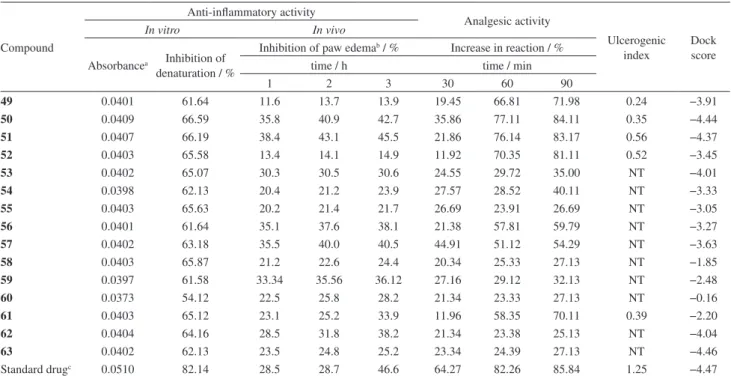
Table 1. Anti-inflammatory, analgesic, ulcerogenic index and molecular docking studies of synthesized compounds (49-63)
Compound
Anti-inflammatory activity
Analgesic activity
Ulcerogenic index
Dock score
In vitro In vivo
Absorbancea Inhibition of
denaturation / %
Inhibition of paw edemab / % Increase in reaction / %
time / h time / min
1 2 3 30 60 90
49 0.0401 61.64 11.6 13.7 13.9 19.45 66.81 71.98 0.24 −3.91
50 0.0409 66.59 35.8 40.9 42.7 35.86 77.11 84.11 0.35 −4.44
51 0.0407 66.19 38.4 43.1 45.5 21.86 76.14 83.17 0.56 −4.37
52 0.0403 65.58 13.4 14.1 14.9 11.92 70.35 81.11 0.52 −3.45
53 0.0402 65.07 30.3 30.5 30.6 24.55 29.72 35.00 NT −4.01
54 0.0398 62.13 20.4 21.2 23.9 27.57 28.52 40.11 NT −3.33
55 0.0403 65.63 20.2 21.4 21.7 26.69 23.91 26.69 NT −3.05
56 0.0401 61.64 35.1 37.6 38.1 21.38 57.81 59.79 NT −3.27
57 0.0402 63.18 35.5 40.0 40.5 44.91 51.12 54.29 NT −3.63
58 0.0403 65.87 21.2 22.6 24.4 20.34 25.33 27.13 NT −1.85
59 0.0397 61.58 33.34 35.56 36.12 27.16 29.12 32.13 NT −2.48
60 0.0373 54.12 22.5 25.8 28.2 21.34 23.33 27.13 NT −0.16
61 0.0403 65.12 23.1 25.2 33.9 11.96 58.35 70.11 0.39 −2.20
62 0.0404 64.16 28.5 31.8 38.2 21.34 23.38 25.13 NT −4.04
63 0.0402 62.13 23.5 24.8 25.2 23.34 24.39 27.13 NT −4.46
Standard drugc 0.0510 82.14 28.5 28.7 46.6 64.27 82.26 85.84 1.25 −4.47
consisting of six animals in each one. Ulcerogenic activity was evaluated after p.o. administration of test compounds or indomethacin at the dose of 50 mg kg−1. Control rats received p.o. administration of vehicle (suspension of 1% methyl cellulose in water). Food but not water was removed 24 h before administration of the test compounds. After the drug treatment, the rats were fed normal diet for 17 h and then sacrificed. The stomach was removed and opened along the greater curvature, washed with distilled water and cleaned gently by dipping in saline. Gastric mucosa of the rats was examined by means of a four times binocular magnifier and the lesions were counted according to earlier reported method.18 Accordingly, the mean score of each treated group minus the mean score of the control group was considered to determine the severity index of gastric damage for compounds under study.
Molecular docking study
For docking purpose, the three-dimensional structure of COX-2 (protein data bank, PDB code 4Z0L) was obtained from RCSB PDB.29 The receptor molecule was refined and validated on the basis of Ramchandran plot using Biopredicta© module on the Vlife MDS Molecular Modeling software, version 4.3.1.22 The Vlife MDS suit uses k-nearest neighbour genetic algorithm (KNN-GA)
method for molecular docking.22 The scoring function is based on the basis of best suited moiety for the target with respect to energy and inter molecular interactions. The ligands that were already present within the receptor in bound form were removed to allow for docking protocol. All the ligands were prepared and docked for this study in flexible docking mode and atoms located within a range of 5.0 Å from the amino acid residues were selected in the active site. Standard drug indomethacin was also included into the series of compounds under study to make comparison with respect to in silico analysis. The
docking calculations and energy minimization were set in the Biopredicta© module, most of the parameters were set default with 10000 cycles per molecule for the active site
cavity No. 1. Since this receptor is a homodimer nearly all amino acid residues are common in it, the active site cavity consisted of amino acid residues GLN374, LEU145, TRP139, TYR373, PRO127, ASN375, PRO538, SER541, GLY536, ASN537 and PHE142.
Results and Discussion
The reported investigation deals with synthesis and characterization of several hybrid derivatives from indole and 1,3,4-oxadiazole nucleuses linked via hydrazide chain to form final fifteen derivatives. To achieve these,
two different steps were carried out to provide with substituted aryl acid hydrazides and indolidene hydrazinyl butanoic acids, which were further reacted to yield the final derivatives. In the first step, various substituted benzoic acids 1-15 esterifies in presence of ethanol and concentrated
sulphuric acid to yield corresponding ethyl benzoates 16-30.
These compounds were treated with hydrazine hydrate to yield the substituted aryl acid hydrazide 31-45. These
compounds were not characterised on basis of NMR and mass analysis because they are reported in literature; hence, the physicochemical parameters were used and carry out the confirmation of these compounds. All the compounds 16-45
were analysed on the basis of melting point and TLC and found to be in understanding with the reported molecules.
In the second step, isatin (1H-indole-2,3-dione) 46 was
reacted with hydrazine hydrate in presence of methanol under conditions of reflux to yield the 3-hydrazinylidene-1,3-dihydro-2H-indol-2-one 47. NMR spectra of this
compound exhibited prominent signals at d 3.34 ppm corresponding to the secondary amide proton, the aromatic protons belonging to fused benzene ring was exhibited around d 7.0 to 7.7 ppmpresenting four protons. The major spectral change was observed in the IR spectrum which provides with an appearance of primary amine functional group at 3411.12 cm−1. This structure was further confirmed on basis of mass spectral study which reflects the molecular weight of 162.24 on the ESI-MS in positive mode. In the next step, 47 was reacted with succinic
anhydride under basic condition in an aprotic solvent such as dichloromethane to obtain 4-oxo-4-[2-(2-oxo-1,2-dihydro-3H-indol-3-ylidene)-hydrazinyl]butanoic acid 48.
This compound was confirmed on the basis of spectral studies; 1H NMR exhibited singlets at d 3.78 and 2.23 ppm for four protons belonging to two methylene carbons. The proton of hydroxyl group was observed at d 12.44 ppm, whereas the protons of secondary amides were observed at d 6.30 ppm. The four aromatic protons were reflected around d 7.30 to 8.0 ppm for the benzene ring system. This was further confirmed from mass spectra in positive mode with molecular weight 262.02.
The final derivatives of this series 3-(5-substituted-1,3,4-oxadiazol-2-yl)-N’-[2-oxo-1,2-dihydro-3H
-indol-3-ylidene]propane hydrazides 49-63 were synthesized
by carrying out cyclization of compounds 31-45 with 48
is indicated at 1655 cm−1 and the C=N bond is reflected around 1618 cm−1. These groups are common to all the molecules from final derivatives. The 1H NMR spectra of these compounds exhibited several characteristic NMR shifts. The ethylene protons were observed around d 2.00 to 3.85 ppm; the aromatic protons were observed within the range of d 7.00 to 8.50 ppm, representing the phenyl ring and the indole aromatic nucleus. Compound 50 presented
with a hydroxyl proton at d 9.49 ppm. These compounds were also analysed for their mass spectral characteristic and was found to be in good agreement with the results obtained for compound 50, which exhibited molecular
mass of [M + H]+ 378.11 in the electron spray ionisation with positive mode of mass spectrometry.
All the synthesized compounds of the final series 49-63
were screened for in vitro anti-inflammatory activity based
on assay developed by Mizushima and Kobayashi.19 This assay is also known as the protein albumin denaturation test as it involves the determination of percentage protection from denaturation of protein and thus its stabilization ultimately the inhibition of inflammation. The relativity of absorbance between test samples (compounds 49-63) with respect to
control, designated the stabilization of protein and thus the inhibition of heat-induced protein (albumin) denaturation or the inhibition by derivatives and reference drug indomethacin. The increase in absorbance in the test compounds indicated better stabilization of proteins compared to standard drug indomethacin and the blank. Compounds 50 and 51 exhibited
absorbance of 0.0409 and 0.0407 accounting for a 66.59 and 66.19% of denaturation, respectively. These are highest in this series of compounds followed by 65.87% (0.0403) for
58, then 65.63% (0.0403) for 55, and 65.07% (0.0402) for 53
(Table. 1). Other derivatives have also shown better percent of denaturation, which is in the range of 54.12 to 64.16%; the standard drug indomethacin has exhibited percent of denaturation of 82.14% (0.0510). These results indicate that all the compounds have potential anti-inflammatory activity since the least active compound is also exhibiting a percent denaturation of 54.12%, with more than fifty percent, whereas the most active compound presents inhibition of 66.59%. In vitro assay displayed some features of this series
with respect to substitutions; methyl, hydroxy, methoxy, chloro and nitro substituted derivatives, such as 50, 51, 58 and 55, possess good anti-inflammatory activity. Since
these compounds were studied at various concentrations (25, 50, 100 and 200 µg mL−1), it was decided to perform
in vivo activity on all the derivatives to determine their
anti-inflammatory activity.
Compounds were evaluated for their in vivo
anti-inflammatory activity by carrageenan induced paw edema method. The protocol of animal experiments was approved
by the Institutional Animal Ethics Committee (IAEC). The compounds were tested at 100 mg kg−1 oral dose and were compared with the standard drug indomethacin at 100 mg kg−1 oral dose. The tested compounds showed anti-inflammatory activity ranging from 13.9 to 45.5% after 3 h (Table 1). The anti-inflammatory results revealed that compounds 50, 51 and 58 exhibited good anti-inflammatory
activity whereas compounds 53 and 55 showed moderate
activity, and compounds 63, 62, 57, 54 and 49 showed
low activities when compared with standard drug (indomethacin). These results illustrate that compounds substituted with methyl 51, hydroxy 50, methoxy 53 and
nitro 55 at position 5 of the 1,3,4-oxadiazole ring system
showed good anti-inflammatory activity, having maximum percentage of inhibition in edema. Surprisingly, the halogen derivatives such as chloro 54, fluoro 57, bromo 63 and
acetyl 56 showed low activity. This indicates that the
compound having p-substituted electron withdrawing
groups may enhance anti-inflammatory activity and electron releasing groups diminished the activity. The activity declines with replacement of electronegative group by electropositive group. It is noteworthy that NO2 substitution of 3-nitrophenyl in 52 and 4-nitrophenyl in 55
induce remarkable change in the activity, i.e., compound substituted with 3-nitrophenyl 52 showed low activity while
compound substituted with 4-nitrophenyl 55 showed good
activity. So, p-substituted derivatives favour good activity
than m-substituted derivatives.
The analgesic activity of the synthesized compounds was evaluated by hot plate test according to Eddy and Leimbach.21 The compounds were tested at 100 mg kg−1 oral dose and were compared with the standard drug indomethacin at 100 mg kg−1 oral dose. The tested compounds showed analgesic activity ranging from 25.13 to 84.11% (Table 1) after 90 min time cycle for the series of compounds under study. The analgesic screening results revealed that compounds 50, 51 and 52 showed good analgesic activity whereas compounds 49 and 61 showed moderate activity and compounds 56 and 57 showed low activity when compared with
standard drug. The results illustrate that compounds substituted with 3-nitrophenyl 52 at position 5 of the
1,3,4-oxadiazole ring system showed good analgesic activity having elevated percentage increase in reaction time following the compounds 50 and 51 with maximum
activity. In addition, compounds substituted with phenyl 49 and 2-fluorophenyl 61 showed moderate
activities while compound substituted with 2,3-dimethoxy
53, 4-chlorophenyl 54 and 4-nitrophenyl 55 showed
low activity. This indicates that the compounds having
groups may enhance analgesic activity and electron releasing groups diminish the activity. From the above discussion, it is clear that compound substituted with 4-fluorophenyl 57 was found to be a fair anti-inflammatory
agent with poor analgesic activity. These results suggest that unlike the substitution on indomethacin, the 1,3,4-oxadiazole ring system behaves differently and suggests for substitution with electron donating group (EDG) on the ring system.
The ulcerogenic activity was performed according to Cioli et al.28 and reports published earlier from our lab.18
Those compounds, which showed good results in anti-inflammatory and analgesic activity, were screened for their ulcerogenic activity. The tested compounds exhibited activity in the range of 0.14 to 0.56, whereas standard drug indomethacin presented very high severity index of 1.25. Results of this activity indicate that compound 50 and 51 have a severity index of 0.35 and 0.56, respectively.
Compounds 49 and 61 exhibit severity index of 0.24 and
0.39, respectively, which is the lowest compared to other tested compounds; these compounds lack good anti-inflammatory activity. This experiment clearly indicates that 50 and 51 are better tolerated derivative of this series
and are far safer than the standard drug indomethacin with respect to the ulcerogenic effect.
Indole is a very well-known nucleus and its derivative indomethacin is known to possess anti-inflammatory activity and used in therapy since last forty years. Accordingly, we proposed and derived several hybrids consisting of indole and oxadizole nuclei as inhibitor of the COX receptor, which is the target receptor for nearly all the NSAIDs. On the basis of in vitro and in vivo
studies, it was found that compounds 50 and 51 exhibit
good anti-inflammatory and analgesic activity. In order to investigate the molecular interactions and binding modes of some of the synthesized derivatives like 50, 51, 53, 55 and 62, we docked these derivatives with
COX enzyme (PDB code 4Z0L)29 using licensed version of Vlife MDS 4.32 software tools.22 This COX-2 receptor was used for our study because of two reasons: first, this complex provides with a indole derivative, which can act as a reference molecule for docking; and the second reason was the similarity with our animal model. Prior to carrying out docking the COX-2 receptor was prepared for docking by removing the ligands in complex but the water molecules were retained for this particular study. The receptor was prepared by removing the already bound ligand and then repaired with for missing residues by Biopredicta© tool. COX-2 is a homodimer and contains identical residues, active sites and channels; therefore, we employed a single chain for our study. This model was validated on the basis of
Ramchandran Plot analysis and was found to be satisfactory with the core and allowed count of about 98% including glycine and proline residues. This model was saved and further employed for carrying out docking studies.
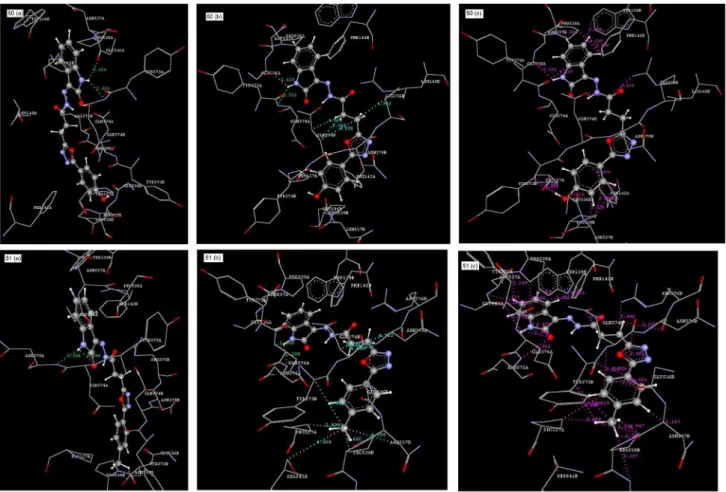
The docking was carried out for all synthesized compounds. Figure 2 exhibits the docking mode of compound 50 and 51 with all three important interactions
like hydrogen bonding, hydrophobic interaction and the Van der Waals forces interactions. Three compounds, 50, 51
and 53, have exhibited good activity with 50 and 51 being
most active followed by the other. This was also observed with the results of molecular docking; the energies for 50
and 51 were found to be −4.44 and −4.37, respectively,
which is highest in the series of synthesized derivatives and comparable to standard drug indomethacin with score of −4.47 (Table 1). Compound 50 revealed that it binds to
the active site of COX-2 receptor by forming hydrogen bond with GLY536 (bond length: 2.125 Å) and TYR373 (bond length: 2.325 Å; Figure 2a, 50). Hydrophobic
interactions were found to be mostly between GLN374 with bond length of 4.635, 4.538 and 4.045, ARG376 (Figure 2b, 50). It also formed multiple Van der Waal
interactions with the receptor amino acids having bond length between 2 to 3.9 Å (Figure 2c, 50). Compound 51
prominently displayed that it binds to the active site of COX-2 receptor by forming two hydrogen bonds with ASN375 (bond length: 2.108 and 2.286 Å; Figure 2a, 51).
Hydrophobic interactions were found to be mostly among GLN374A, GLN374B, ASN375B, TYR373B, PRO127A, SER541B and ASN537B with bond length between 2.342 and 4.828 (Figure 2b, 51). It also formed multiple Van der
Waal interactions with the receptor amino acids having bond length between 2.0 and 3.9 Å (Figure 2c, 51).
The Van der Waal interactions were observed between the receptor and indole nucleus plus its substituted oxadiazole moiety. This molecule seemed to lay on both the chains as A and B of the homodimer, it is illustrated by fact that interactions were observed with GLY536A, PHE142B, TRP139B, PRO538A, ASN537A, GLN374A, ASN375A, ARG376B, ASN373B, GLY536B, TYR373B, PRO127A, PRO538B and ASN537B with bond length from 2.1 to 3.9 Å. Compounds 53 and 55 were found to
show good dock score of −4.01 and −3.05, respectively; these compounds also had interaction with TRP139B, PRO538A, ASN537A, GLN374A, ASN375A, ARG376B, ASN373B and ASN 537B, forming the hydrophobic and Van der Waals interactions. In case of compounds 62 and 63, the dock score was found to be comparatively high
as the bromine. It is observed that presence of methyl or hydroxyl groups causes rise in activity as well as it can be seen that nitro substitution on the 1,3,4-oxadiazole causes increase in the activity. The docking of newly designed molecules has also presented their entry into deep sited region of the receptor, probably on the confluence of both the chains. Thus, it is considered that presence of indole and oxadiazole ring in the single molecule is beneficial for the activity, but the presence of halogen such as fluorine or chlorine on the 1,3,4-oxadiazole reduces the activity. Further, it is also noted that the position of substitution on the phenyl ring has great contribution towards the activity as an anti-inflammatory and analgesic compound.
In this preliminary communication, we have presented synthesis and pharmacological evaluation of novel N’
-(2-oxoindolin-3-ylidene)-3-(5-substituted phenyl-1,3,4-oxadiazol-2-yl)propane hydrazide derivatives 49-63,
obtained following a five step reactions. The reactions were simple and follow-up procedure resulted in pure compounds with satisfactory yield. In vitro and in vivo
anti-inflammatory activity revealed that compounds 50 and 51
exhibit comparable inhibition to standard drug indomethacin with added advantage of very less possibility of ulceration.
These compounds were found to be good analgesic agents also when compared with standard drug. These molecules exhibited that methyl and hydroxy substituted molecules are better tolerated as well as present better activity when compared to their chloro and fluoro counterparts. The molecular docking studies on these molecules also verified the wet lab results, compounds 50 and 51 exhibited hydrogen
bonding, hydrophobic interactions as well as Van der Waals interactions. The dock scores and binding energy were found to be in good agreement with the pharmacological results. This work need to be further elaborated with respect to number of molecules, their versatility, animal models, and structure activity relationship studies and most importantly with respect to the pK/pD studies.
Conclusions
derivatives as 3-(5-substituted-1,3,4-oxadiazol-2-yl)-N
’-[2-oxo-1,2-dihydro-3H-indol-3-ylidene]propane hydrazides. In vitro and in vivo studies have exhibited final derivatives 50 and 51 as highly promising molecules with severity
index of 0.35 and 0.56, respectively, encouraging for an analgesic compound. The hydroxy and methyl substitutions on phenyl ring system provided with active compounds having percentage of inhibition of 84.11 and 83.17%, respectively, compared to standard the drug at 85.84%. Molecular docking studies are also in agreement with the pharmacological evaluation with potent compounds exhibiting dock score of −4.44. It can be stated that these compounds can be further studied for their structure-activity relationship (SAR) studies and developed into potential lead molecules.
Supplementary Information
Supplementary data are available free of charge at http://jbcs.sbq.org.br as PDF file.
Acknowledgments
The author D. K. is thankful to Principal, Kamla Nehru College of Pharmacy for providing the support to carry out this research work.
References
1. Arkin, M. R.; Tang, Y.; Wells, J.; Chem Biol. 2014, 21, 1102. 2. Gediya, L. K.; Njar, V. C.; Expert. Opin. Drug Discovery 2009,
4, 1099.
3. Haubrich, D. R.; Ward, S. J.; Baizman, E.; Bell, M. R.; Bradford, J.; Ferrari, R.; Miller, M.; Perrone, M.; Pierson, A. K.; Saelens, J. K.; J. Pharmacol. Exp. Ther. 1990, 255, 511. 4. Solomon, S. D.; McMurray, J. J.; Pfeffer, M. A.; Wittes, J.;
Fowler, R.; Finn, P.; Anderson, W. F.; Zauber, A.; Hawk, E.; Bertagnolli, M.; N. Engl. J. Med. 2005, 352, 1071.
5. Krishnan, S. S.; Atmakuru, R.; Biol. Pharm. Bull. 2001, 24, 1149.
6. Chaluvaraju, K. C.; Zaranappa, S. J.; Res. J. Pharm. Biol. Chem. Sci. 2011, 2, 541.
7. Pandeya, S. N.; Sriram, D.; Acta Pharm. Turc. 1998, 40, 33. 8. Kucukguzel, S. G.; Mazi, A.; Sahin, F.; Ozturk, S.; Stables, J.;
Eur. J. Med. Chem. 2003, 38, 1005.
9. Loncle, C.; Brunel, J. M.; Vidal, N.; Dherbomez, M.; Letour-Neux, Y.; Eur. J. Med. Chem. 2004, 39, 1067.
10. Varma, R. S.; Nobles, W. L.; J. Med. Chem. 1967, 10, 972. 11. Holla, B. S.; Rao, S. B.; Shridhara, K.; Akberali, P. M.; Il
Farmaco 2000, 55, 338.
12. Gaston, M. A.; Dias, L. R. S.; Freitas, A. C. C.; Miranda, A. L. P.; Barreiro, E. J.; Pharmac. Acta Helvet. 1996, 71, 213. 13. Adityakumar, K.; Suroor, A. K.; Mohammad, A.; Asif, H. H.;
Mymoona, A.; Acta Pol. Pharm. 2011, 68, 381.
14. Srivastava, A.; Pandeya, S. N.; Int. J. Pharm. Sci. Rev. Res. 2010, 1, 115.
15. Panneerselvam, P.; Reddy, P. S.; Murali, K.; Kumar, N. R.; Pharm. Chem. 2010, 2, 28.
16. Wagle, S.; Vasudeva, A. A.; Suchetha, N. K.; Indian J. Chem. 2008, 47B, 439.
17. Jayashankar, B.; Rai, K. M. L.; Baskaran, N.; Sathish, H. S.; Eur. J. Med. Chem. 2009, 44, 3898.
18. Chikhale, R.; Bhole, R.; Khedekar, P.; Bhusari, K.; Eur. J. Med. Chem. 2009, 44,3645.
19. Mizushima, Y.; Kobayashi, M.; J. Pharm. Pharmacol. 1968, 20, 169.
20. Halen, P. K.; Chagti, K. K.; Giridhar, R.; Yadav, M. R.; Chem. Biol. Drug. Des. 2007, 70, 450.
21. Eddy, N. B.; Leimbach, D.; J. Pharmacol. Exp. Ther. 1953, 107, 385.
22. Chikhale, R.; Menghani, S.; Babu, R.; Bansode, R.; Bhargavi, G.; Karodia, N.; Rajasekharan, M. V.; Paradkar, A.; Khedekar, P.; Eur. J. Med. Chem. 2015, 96, 30.
23. Chikhale, R.; Thorat, S.; Pant, A.; Jadhav, A.; Thatimala, K. C.; Bansode, R.; Bhargavi, G.; Karodia, N.; Rajasekharan, M. V.; Paradkar, A.; Khedekar, P.; Bioorg. Med. Chem. 2015, 23, 6689. 24. Furniss, B.; Hannaford, A. H.; Smith, P. W. G.; Tatchell, A. R.; Vogel’s Textbook of Practical Organic Chemistry, 5th ed.;
Longman: Harlow, 1998.
25. Hassan, M.; Kadi, A. A.; Aziz, A. A.; US pat. 8,497,296 B2 2012 (CA 485763-70-0).
26. Sun, A.; Shoji, M.; Lu, Y.; Liotta, J. D. C.; Snyder, J. P.; J. Med. Chem. 2006, 49, 3153.
27. Husain, A.; Ahmad, A.; Alam, M. M.; Ajmal, M.; Ahuja, P.; Eur. J. Med. Chem. 2009, 44, 3798.
28. Cioli, V.; Putzolu, S.; Rossi, V.; Barcellona, P. S.; Corradino, C.; Toxicol. Appl. Pharmacol. 1979, 50, 283.
29. Neumann, W.; Xu, S.; Sarosi, M. B.; Scholz, M. S.; Crews, B. C.; Ghebreselasie, K.; Banerjee, S.; Marnett, L.; Hey-Hawkins, H. C.; ChemMedChem 2016, 11, 175.
Submitted: January 15, 2016