
Article
J. Braz. Chem. Soc., Vol. 26, No. 1, 147-155, 2015. Printed in Brazil - ©2015 Sociedade Brasileira de Química 0103 - 5053 $6.00+0.00
A
*e-mail: [email protected]
Simultaneous Determination of Na, K and Ca in Biodiesel by Flame Atomic
Emission Spectrometry
Juliana D. Raposo, Letícia M. Costa and Paulo Jorge S. Barbeira*
Departamento de Química, ICEx, UFMG, Av. Antônio Carlos 6627, 31270-901 Belo Horizonte-MG, Brazil
O objetivo deste trabalho foi desenvolver um método para a determinação simultânea de Na, K e Ca em amostras de biodiesel por espectrometria de emissão atômica em chama, utilizando um detector de radiação eletromagnética contínua. Dois procedimentos foram utilizados para o preparo das amostras de biodiesel: diluição direta com querosene e emulsificação da amostra usando uma solução aquosa composta por HNO3, n-butanol e Triton X-100. A metodologia proposta apresentou
boa linearidade, desvios padrão relativos menores que 5% e limites de quantificação de 0,05 e 0,02 mg kg−1 para Na e K, respectivamente, empregando emulsão ou diluição com solvente. Para Ca, o limite de quantificação foi de 0,2 e 1,0 mg kg−1, aplicando-se diluição direta com solvente e emulsão, respectivamente. O procedimento de emulsificação não sofreu influência da matriz quando foram realizados testes de recuperação (89-108%). A metodologia de referência (ABNT NBR 15553) foi utilizada para verificar a exatidão do método proposto, apresentando resultados consistentes ao nível de confiança de 95%, sendo apropriado para análises de rotina de amostras de biodiesel de diferentes oleaginosas.
This work aimed to develop a methodology for simultaneous determination of Na, K and Ca in biodiesel samples by flame atomic emission spectrometry, using a continuous electromagnetic radiation detector. Two procedures were employed for biodiesel sample preparation: direct dilution with kerosene and sample emulsification with HNO3, n-butanol and Triton X-100. The proposed
methodology presented good linearity, relative standard deviations less than 5% and limits of quantification of 0.05 and 0.02 mg kg−1 for Na and K, respectively, using emulsification and solvent dilution. For Ca, the limit of quantification was 0.2 and 1.0 mg kg−1, applying direct dilution and emulsion, respectively. The emulsification procedure showed no matrix influence when recovery tests were performed (89-108%). Reference methodology (ABNT NBR 15553) was used to check the accuracy, presented consistent results at 95% confidence level, being suitable for biodiesel samples in a routine analysis.
Keywords: atomic emission spectrometry, biodiesel, direct dilution, emulsion, sodium,
potassium, calcium
Introduction
The development of alternative and renewable energy sources has been subject of worldwide interest. Many proposals have arisen to replace fossil fuels, such as, ethanol and biofuels derived from oils or fats, especially biodiesel.1,2 Biodiesel is a renewable, biodegradable, and
nontoxic fuel used in compression combustion engines, which may replace partially or totally diesel produced from fossil fuels.3 According to the Brazilian legislation,
biodiesel is a fuel comprised with alkyl esters of long
chain fatty acids derived from vegetable oils or animal fat. Nowadays, biodiesel is mixed with diesel in a ratio of 6% v/v, named as B6.4
In many cases, some metals are incorporated to biodiesel during the production and storage process, becoming part of the fuel final composition. Usually, calcium and magnesium come from the washing water, whereas sodium and potassium from catalyst residue.5-7
The Brazilian legislation established a limit of 5 mg kg−1
as the maximum concentration allowed for Na + K and Ca + Mg in biodiesel and also sets out the analytical methods to be used for their determination.4,9-15
European standards9,10,15 and Brazilian methodologies11-14
describe Ca, K, Na and Mg determination by flame
atomic absorption spectrometry (FAAS)9-13 or by
inductively coupled plasma optical emission spectrometry (ICP OES).14,15 The sample preparation is made with
organic solvents such as xylene or kerosene, as well as, organometallic standards. The use of xylene in these methods have disadvantages, due to high consumption of toxic solvent, requiring special handling conditions which can cause significant problems regarding plasma stability.16
In the literature, the most widely used techniques for the determination of Na, K, Ca and Mg in biodiesel samples are flame atomic emission spectrometry (FAES), 17-20 FAAS,21-25 ICP OES26-29 and inductively coupled plasma
mass spectrometry (ICP-MS).30-32 Some studies also show
the use of potentiometry,33,34 capillary electrophoresis35,36
and ion chromatography37 as alternatives techniques.
Despite being a robust multielementary technique, ICP OES and ICP-MS are not available in most biodiesel companies due to high operating costs and maintenance.33
FAAS is one of the most used techniques for metals determination in fuels due to its sensitivity, simplicity and low instrumental cost.22 However, FAAS is essentially
mono elementary and it does not present appropriate sensibility for alkaline metals.
FAES can be classified as a simple technique with low cost, usually used in the determination of Ca, K, Li and Na in different samples, with good sensitivity, especially for alkaline metals determination.17-20 Generally, an increase in
flame temperature causes an increase in emission intensity for most elements not only for those considered easily ionizable such as Na, K and Li.38 The determination of Ca
is also possible with this technique, however it has a low analytical sensitivity due to refractory oxides formation.38
The majority of the procedures used for metal determination in biodiesel samples are based on dilution in organic solvent, or modification of the sample matrix through the formation of oil in water (O/W) emulsion or micro emulsion.8,22 Emulsions such as O/W have micro
drops of oil stabilized by a thin layer of amphiphilic molecules (interphase) of the surfactant and the co-surfactant dispersed in a continuous medium, in this case, water.39,40 The
emulsification requires a minimum sample manipulation and the possibility to use inorganic standards for calibration when the emulsion is acidified with mineral acid.8,16,41
Some works described in the literature show the determination of Na and K in biodiesel samples by FAES
after direct dilution of the samples with kerosene,17
ethanol20 and using microemulsion.18 However, only Na and
K are determined in a single way, whereas Ca determination is not realized.
The goal of this work was to develop a simple, fast and low cost method for simultaneous determination of Ca, K and Na in biodiesel samples using flame atomic emission spectrometry with a detector able to register the emission spectra. Direct dilutions with organic solvent and also through emulsification were employed using lithium as internal standard. The results were compared to the normalized method ABNT NBR 15553.
Experimental
Instrumental
Measurements were performed in an apparatus comprising of a nebulizer-burner system flame photometer (Evans Electroselenium Ltda) and a continuous electromagnetic radiation detector (EPP2000 StellarNet Inc.), commercially available. The analytical signals were obtained from the line emission spectrum recorded by the detector with the aid of an optical fiber, connected to a computer and register in a SpectraWiz software (Stellarnet Inc.). The wavelengths of 589.0 nm for Na, 620.5 nm for Ca, 769.5 nm for K and 668.5 nm for Li (internal standard) were chosen based on the sensitivity and the lack of spectral interferences. Compressed air was used as an oxidant supplied by an air compressor, and liquefied petroleum gas (LPG) as fuel gas in a sample flow rate of approximately 2.5 mL min−1.
Quantification according to ABNT NBR 15553 was carried out using ICP OES with double vision (DV PerkinElmer Optima 5300, USA). Commercial argon (99.997%) was used for plasma generation, such as auxiliary and nebulizer gas. Emission intensities were measured in lines with higher sensitivity: 393.366 nm for Ca, 766.490 nm for K and 589.592 nm for Na.
An ultrasound bath with a frequency of 40 kHz and Vortex tubes agitator were used in the emulsion sample preparation.
Reagents and samples
All reagents were of analytical grade. The solutions and emulsions were prepared with distilled and deionized water with resistivity of 18.2 MΩ cm in a Milli-Q system (Millipore, USA).
5000 mg kg−1, Ca 500 mg kg−1 and Li 1000 mg kg−1 and
mineral base oil (USP-Sulfal) were also used.
For emulsions sample preparation, HNO3 65%
(Carlo Erba, Italy), n-butyl alcohol PA (Synth, Brazil) as co-solvent and Triton X-100 PA (Vetec, Brazil) as a surfactant were used. Inorganic standard aqueous solutions were prepared by appropriated dilution of standard stock solutions 1000 mg kg−1 of Na, K, Li (Merck, Darmstadt,
Germany) and Ca (Carlo Erba, Italy). Mineral base oil (USP-Sulfal) with density of 0.854 g mL−1 was used for
matrix simulation studies.
The biodiesel samples (B100) were produced by basic transesterification of vegetable oils and animal fat in methanol or ethanol from different raw materials: soybean (SB-01, SB-02 and SB-03), canola (CA-01), sunflower (SF-01 and SF-02), cotton (CT-(SF-01 and CT-02), macaw (MA-(SF-01), corn (CN-01), residual oil (RO-01), tallow (BF-01) and biodiesel blends (MX-01 and MX-02). The samples were obtained from different biodiesel producers.
Direct dilution sample procedure
Direct dilution was realized after dilution of 1.0 g of biodiesel sample with kerosene until a final mass of 10.0 g [10% biodiesel (m/m)]. Blanks and calibration solutions were prepared similarly to the sample, but using mineral oil to simulate samples viscosity.9-15 Appropriate
amounts of organometallic standard were added to the calibration solutions. Li was employed as internal standard with final concentration of 1.0 mg kg−1 in all solutions.
Samples using emulsion procedure
Mono and multivariate tests were carried out in order to optimize experimental conditions for biodiesel samples emulsification. The variables amount of sample, surfactant and HNO3, as well as the type of co-solvent and surfactant
were evaluated. According to the preliminary tests, homogeneous emulsions were obtained using 10% (m/m) biodiesel sample, Triton X-100 as surfactant and n-butanol (1 mL) as co-solvent. The quantity of Triton X-100 and HNO3 were the most significant parameters, optimized
through central composite design (CCD). This study was carried out based on the magnitude of the analytical signals of Na, K and Ca, using Li as the internal standard for different biodiesel samples such as soybean, cotton, sunflower, blend soybean and tallow.
The optimized condition for biodiesel sample emulsion was carried out with a mixture of 1.0 g of sample, 0.4 mL HNO3 concentrated, 1.0 mL of n-butanol and 1.0 g of Triton
X-100 diluted in deionized and distilled water until final
mass of 10.0 g. The final mixture was agitated for 1 min in a vortex agitator and subsequently in an ultrasound bath for 5 min. Blanks and calibration solutions were prepared similarly to the sample emulsion using 10% (m/v) of mineral base oil, 4% (v/v) of concentrated HNO3,
10% (v/v) of n-butanol and 10% (m/v) Triton X-100. Appropriate amounts of the inorganic standard were added to the calibration solutions. The mineral base oil was used to simulate the biodiesel matrix reducing the viscosity between samples and standard solutions.18,24,25,29
In order to investigate the matrix effect, 1 mg kg−1 Na,
1 mg kg−1 K and 5 mg kg−1 Ca were spiked in emulsified
biodiesel samples from different raw materials (SB-01, CA-01, SF-01, CT-01, MA-01, CN-01, RO-01, BF-01 and MX-01). The addition of the inorganic standards was made within aqueous phase of the emulsions.
For all the emulsions and calibration solutions, Li was used as internal standard in a final concentration of 1.0 mg kg−1. Before the analysis, all solutions were slightly
shaken.
Determination by FAES
The external calibration method with internal standardization was used for quantification of Na, K and Ca by the proposed methods (FAES-CD). In the simultaneous determination through the kerosene direct dilution method (FAES-CDK) and emulsification (FAES-CDE), measurements of emission signal intensity were based on peak height, after baseline correction. The calibration curves are related to the signal ratio X/Li (X = Na, K or Ca). Analyses were done in quintuplicate and the results expressed with 95% confidence level.
The limit of detection (LOD = 3s/m) and limit of quantification (LOQ = 10s/m) were calculated considering standard deviation (s) of ten representative blank solutions and the sensitivity (m) of calibration curves.
Precision was determined by the standard deviation of replicate samples (n = 5) in terms of relative standard deviation (RSD).
Accuracy
The accuracy of the proposed method (FAES-CD) was checked by comparison with normalized method14
in calibration curves were prepared from organometallic standards and mineral base oil, which was used to simulate the sample matrix.
Results and Discussion
Methods development
The air/GLP flame has low temperature, welcoming to reduce spectral and non-spectral interferences caused by alkaline metals ionization. But, for Ca and Mg the emission process needs high temperature, otherwise refractory oxides can be formed.38
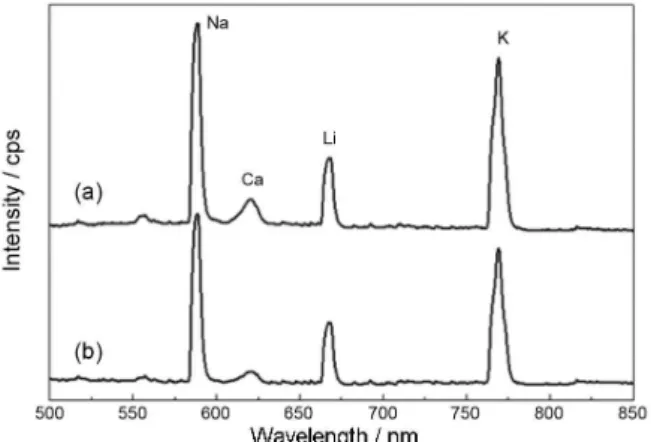
Figure 1 shows the line emission spectra of Na (1 mg kg−1), K (1 mg kg−1), Li (1 mg kg−1, as internal standard)
and Ca (5 mg kg−1) in an organic solution with organometallic
standards diluted in kerosene and for an aqueous solution with inorganic standards with the same concentrations.
The wavelengths selected to the elements presented good sensitivity and lack of spectral interferences, adequate for simultaneous determination. The line 620.5 nm is related to CaOH+ emission signal and it was chosen for
Ca determination. It was not possible to determine Mg in the proposed method as sensitivity line was not obtained using air/GLP flame. Compared to the other alkaline metals, Ca sensitivity is still low. Ionization suppressor and nitrous oxide/acetylene flame are good strategies to reduce interferences and to increase Ca emission signal. However, these strategies should be carefully optimized to avoid Na, K, and Li signal depression. Lyra et al. used cesium chloride as ionization suppressors for calcium and magnesium monoelementar determination in biodiesel
samples by FAAS.22 Calcium determination was made
without adding suppressor agent (CsCl solution) free of interference. These data can be explained due to the
relatively high concentrations of easily ionizable elements, i.e., K and Na, in biodiesel samples.24
To improve repeatability and accuracy of the proposed methodology, Li was employed as internal standard.42
Lithium is a good internal standard for sodium, potassium, and calcium determination by FAES since it presents similarity to the investigated elements and it is absent in the biodiesel sample matrix. Furthermore, the calculation of the analyte signal ratio (X/Li, X = Na, K or Ca) provides the correction of fluctuations, improving the RSD for less than 5%. Piovezan et al. used barium (Ba2+) as internal standard
for the determination of inorganic cations (Na+, K+, Ca2+,
Mg2+) in biodiesel samples for capillary electrophoresis
method, since its mobility is close to the analytes.35
Direct dilution is an attractive procedure for biodiesel samples due to its simplicity and time reducing, applied by European and Brazilian standard methods. Involves dilution of the sample with an appropriate solvent (xylene, kerosene, n-hexane, etc.) and calibration is frequently performed with organometallic standards,8,20 since aqueous standards have
low solubility in this solvents.20 In the interference-free
mono elementary determination of Na and K in biodiesel by FAES, Nowka used kerosene direct dilution in a ratio mass of 1:9.17 However, due to low stability of the analyte
in the organic solutions, it was necessary the analysis immediately after preparation.14,20,21
The emulsion formation is also a simple procedure with the advantage of using aqueous inorganic standards for calibration curves, increasing the analyte stability, and reducing analysis cost.29 Sample emulsification is
a two-phase system thermodynamically instable but homogeneous during a short period of time if mechanical energy (agitation) is provided. This dispersion is usually facilitated by using surfactants that diminish the superficial tension of water, improving the interaction between water and oil phases.8 When properly stabilized, the emulsified oil
sample is compatible with most analytical instrumentation. In this manner, the composition of the emulsions, as well as analyte stability were evaluated.
Composition of the emulsions and analyte stability
A system based on O/W especially with large amount of water is quite advantageous since it reduces the costs and also is similar to aqueous solutions, enabling the use of aqueous inorganic standard for calibration.8,21 Therefore,
following the same dilution factor used in the direct dilution method, an amount of 10% (m/m) of biodiesel sample was used for emulsions. The emulsions with n-butanol were more stable and homogenous when compared to the emulsions using other co-solvents such as n-propanol and
Figure 1. Line emission spectra for Na (1 mg kg−1), Ca (5 mg kg−1),
Li (1 mg kg−1) and K (1 mg kg−1) in organometallic standard solution
ethanol. A quantity of 1.0 mL of n-butanol was enough to stabilize the emulsions containing 1.0 g of biodiesel. Triton X-114 and Triton X-100 were evaluated as non-ionic surfactants and the latter was chosen due to its low cost and higher availability in the majority of the chemistry laboratories.43 The emulsions prepared with Triton X-100
and n-butanol presented better oil dispersion. Concentrated nitric acid was added to the biodiesel samples before other components. This stage is important since it dissolves particles in suspension and converts the organometallic species into inorganic as well as improving the stability of the analytes in the emulsion and the standards for calibration.21,44
Response methodology surface analysis through a CCD was applied in order to optimize the proportions of the surfactant and the nitric acid. This methodology has been applied to find optimum values, which yield a maximum response in the empiric model.45 CCD was carried out
for each element (Na, K and Ca) for different biodiesel samples. The emulsions were prepared with fixed quantities of biodiesel samples (1.0 g) and n-butanol (1 mL). The independent variables in each assay were: the quantities of Triton X-100 (0.6 to 1.0 g) and volume of HNO3 (0.3
to 0.7 mL) with a central point of 0.8 g and 0.5 mL, respectively. The dependent variable (response) was the emission signal as ratio of the analytes Na, K and Ca by Li as internal standard. The blank solution for each experiment was analyzed individually and the intensity values were low, indicating no problems with contamination.
The surface response provided maximum points for each analyte (Na, K and Ca), corresponding to the optimized values of HNO3 and Triton X-100, as shown
in Figure 2 for the sunflower biodiesel sample (SF-02). Similar surface responses were obtained for each analyte for the other samples (soybean, cotton, and blend), except for sunflower biodiesel emulsion, where Triton-X-100 was not significant. It is possible to see in Figure 2 that Na/Li surface has a different profile when compared to K/Li and Ca/Li. Triton X-100 variable had a positive and significant effect in the K and Ca response. For Na, HNO3 had a
negative and significant effect; it means that low volumes increase the emission signal. The optimum conditions were obtained for HNO3 volumes of 0.4 mL for K and Ca, and
0.5 mL for Na, while for Triton X-100 was 0.8 g for Na, 1.0 g for K and 1.4 g for Ca. Sodium is the major component in the biodiesel samples, at least ten fold higher than K and Ca, and probably the influence of optimized variables were not so decisive in its emission signal.
An optimum experimental condition that suits all elements without harming the magnitudes of the analytical signals was defined through FAES for the simultaneous
determination of Na, K and Ca. For all biodiesel samples investigated in this work, it was verified that K and Ca are
found in lower concentration when compared to Na. Then, the optimum values to the variables were defined close to the values found for K and Ca which corresponded to 0.4 mL of HNO3 and 1.0 g of Triton X-100 in the emulsions
containing 1.0 g of biodiesel sample.
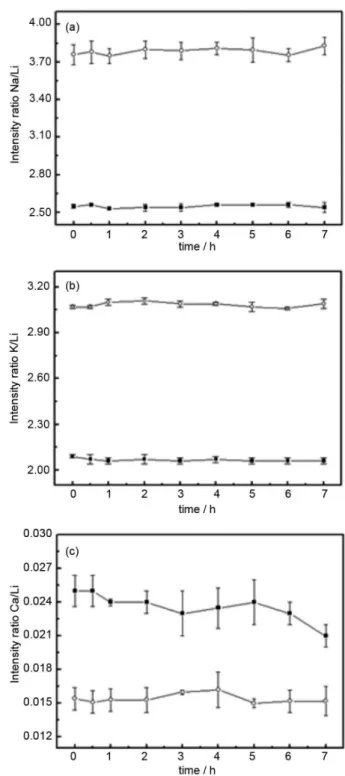
After optimization step, the stability of the analytes was evaluated for a period of 7 h with 30 min intervals in the sunflower and cotton biodiesel emulsions and in the standard solutions, as showed in Figure 3. Generally, the analytes presented good stability in the biodiesel emulsions in the evaluated range, just needing a slight shaking prior to analysis. The inorganic standards were sufficiently stable in solutions; however only calcium signal drops after 5 h of solution’s preparation.
Figures of merit
Working linear regression (WLR), correlation coefficient (R), LOD, LOQ and RSD were used to evaluate the analytical performance of the methods developed for Na, K and Ca determination in biodiesel samples by FAES. Different calibration curves were used for each situation: (i) organometallic standards containing 10% (m/m) of mineral base oil for direct dilution method with kerosene (FAES-CDK) and (ii) inorganic standards in an emulsified mean (10% m/m mineral base oil) for emulsification method (FAES-CDE). Figures of merit were also evaluated for ICP OES technique by ABNT NBR 15553. Results are shown in Table 1.
The calibration curves presented WLR in the range of 0.02-2.00 mg kg−1 for Na and K e 0.2-2.00 mg kg−1 for Ca
and showed good linear correlation (R > 0.999 for all of the elements).
For Na and K by FAES, high sensitivity and accuracy were founded for both methods. For direct dilution method (FAES-CDK) it was obtained LOQ of 0.05 mg kg−1 for Na
and 0.02 mg kg−1 for K with RSD in the range of 1-5%.
For emulsification method (FAES-CDE) the best LOQ obtained was 0.05 mg kg−1 for Na and 0.02 mg kg−1 for K
with RSD in the range of 1-5%. These results were more sensitive, than the described by Nowka that quantified Na and K in biodiesel in a linear range of 0.2-1.0 mg kg−1 with
RSD in the range of 1-2%, using mono elementary FAES.17
Similarly, Chaves et al. quantified Na and K individually in biodiesel samples as microemulsion by FAES obtaining LOQ of 0.3 mg kg−1 and RSD in the range 0.4-7.0%.18
This better sensitivity is probably due to the detector employed that allows to improve the integration time of measurement. Calcium determination by FAES obtained LOQ of 0.2 mg kg−1 and 1.0 mg kg−1 in the FAES-CDK and
FAES-CDE, respectively, with RSD in the range of
0.9-3.6%. The results obtained for calcium are unprecedented and showed that FAES provides the quantification of this element in biodiesel samples in a simultaneously with Na and K ions. The aspiration rate and the nebulization efficiency are highly dependent on the physical properties of the solution.18 Higher sensitivity was found for Ca in
the kerosene direct dilution method. Organic solvents
Figure 3. Variation in the intensity ratio for Na, K and Ca for biodiesel emulsions () and standard solutions (): (a) sunflower biodiesel emulsion and 1.0 mg kg−1 of Na; (b) cotton biodiesel emulsion and
have less viscosity and superficial tension than water solutions increasing the aspiration rate and the efficiency of nebulization. Furthermore, the flammable solvents increase the flame temperature improving the atomization of the analytes.18
Comparing the results for Na and K by FAES and ICP OES methods, it was possible to observe that FAES obtained lower LOQ and linear regression parameters than standardized method. For Ca, the standardized method showed greater sensitivity (LOQ = 0.05 mg kg−1), since
high temperature promoted by argon plasma minimizes non-spectral interferences, improving the sensitivity of metals such as Ca and Mg.38
Analytical results
The accuracy of the proposed methods (FAES-CD) were checked by comparing the results with kerosene direct dilution method (FAES-CDK) and emulsification method (FAES-CDE) with those obtained by ABNT NBR 1555. The results are shown in the Table 2.
Statistical tests were applied for results of Na (paired t-student test), K and Ca (t-student). The three methods presented no significant differences at 95% confidence level.
In addition, some biodiesel samples obtained from different sources were spiked with Na, K and Ca inorganic standards as emulsions. The recovery obtained for
Table 1. Working linear regression (WLR), correlation coefficient (R), limits of detection (LOD), limits of quantification (LOQ) and relative standard deviation (RSD) for the determination of Na, K and Ca in samples of biodiesel by different methods using kerosene as a solvent and emulsion
Analyte Method WLR / (mg kg−1) R LOD (n = 10) / (mg kg−1) LOQ (n = 10) / (mg kg−1) RSD (n = 5) / %
Na
FAES-CDK 0.05 to 2.00 0.9992 0.01 0.05 0.73- 5.4
FAES-CDE 0.05 to 2.00 0.9998 0.01 0.05 0.95-5.1
ABNT NBR 15553 0.1 to 2.00 0.9995 0.04 0.1 1.7-5.1
K
FAES-CDK 0.02 to 2.00 0.9997 0.005 0.02 2.4-5.2
FAES-CDE 0.02 to 2.00 0.9998 0.005 0.02 1.0-4.8
ABNT NBR 15553 0.1 to 2.00 0.9990 0.05 0.1 3.2-3.9
Ca
FAES-CDK 0.2 to 2.00 0.9998 0.08 0.2 0.86-3.6
FAES-CDE 1.0 to 10.00 0.9998 0.3 1.0 2.6
ABNT NBR 15553 0.05 to 2.00 0.9993 0.006 0.05 1.9-7.3
Table 2. Results expressed in mg kg−1, for Na, K and Ca [average ± confidence interval (95%), n= 5], in biodiesel samples obtained by different analytical
methods
Sample
Na / (mg kg−1) K / (mg kg−1) Ca / (mg kg−1)
ABNT
NBR15553 FAES-CDK FAES-CDE
ABNT
NBR15553 FAES-CDK FAES-CDE
ABNT
NBR15553 FAES-CDK FAES-CDE
SB-01 < 1.0a 0.77 ± 0.05 0.78 ± 0.03 < 1.0a 0.19 ± 0.008 0.22 ± 0.01 0.58 ± 0.05 < 2.0a < 10a
SB-02 2.53 ± 0.06 2.5 ± 0.2 2.5 ± 0.1 < 1.0a < 0.2a < 0.2a 2.7 ± 0.1 2.6 ± 0.1 < 10a
SB-03 12.9 ± 0.4 13.0 ± 0.9 13.3 ± 0.6 2.04 ± 0.08 2.02 ± 0.09 2.0 ± 0.1 0.68 ± 0.03 < 2.0a < 10a
CA-01 3.8 ± 0.2 3.69 ± 0.07 3.66 ± 0.07 < 1.0a 0.32 ± 0.02 0.36 ± 0.02 1.34 ± 0.03 < 2.0a < 10a
SF-01 13.9 ± 0.3 15.9 ± 0.5 15.7 ± 0.3 < 1.0a 0.37 ± 0.02 0.38 ± 0.01 1.71 ± 0.05 < 2.0 < 10a
SF-02 14.2 ± 0.5 12.9 ± 0.6 12.8 ± 0.2 < 1.0a 0.22 ± 0.01 0.22 ± 0.01 13.3 ± 0.3 13.0 ± 0.5 13.1 ± 0.4
CT-01 4.3 ± 0.1 4.2 ± 0.1 4.1 ± 0.1 < 1.0a 0.34 ± 0.01 0.30 ± 0.01 0.29 ± 0.02 < 2.0a < 10a
CT-02 5.1 ± 0.2 4.8 ± 0.3 4.8 ± 0.3 12.3 ± 0.6 12.6 ± 0.5 12.4 ± 0.2 0.87 ± 0.03 < 2.0a < 10a
MA-01 1.86 ± 0.09 1.97 ± 0.02 1.94 ± 0.07 < 1.0a < 0.2a < 0.2a 0.24 ± 0.02 < 2.0a < 10a
CN-01 2.82 ± 0.08 2.8 ± 0.2 2.78 ± 0.04 < 1.0a < 0.2a < 0.2a < 0.5a < 2.0a < 10a
BF-01 1.9 ± 0.1 1.9 ± 0.1 < 0.05a < 1.0a 0.22 ± 0.01 0.24 ± 0.01 0.39 ± 0.02 < 2.0a < 10a
RO-01 1.70 ± 0.07 1.64 ± 0.09 1.66 ± 0.02 < 1.0a 0.28 ± 0.01 0.27 ± 0.02 0.92 ± 0.04 < 2.0a < 10a
MX-01 4.3 ± 0.1 4.5 ± 0.2 4.4 ± 0.2 < 1.0a 0.46 ± 0.03 0.45 ± 0.01 4.3 ± 0.2 4.32 ± 0.05 < 10a
MX-02 5.8 ± 0.4 8.1 ± 0.2 5.3 ± 0.1 < 1.0a < 0.2a < 0.2a 4.9 ± 0.2 5.1 ± 0.2 < 10a
Na (94-108%), K (95-99%) and Ca (89-103%) indicated that no matrix influence was observed in FAES-CDE.
The proposed methods provided the possibility to quantify low levels of Na and K in biodiesel samples when compared to ABNT NBR 15553. The standardized method presented high sensitivity for Ca determination, however the proposed method using kerosene direct dilution provided the quantification of calcium in four biodiesel samples with adequate sensitivity for the established limits in the Brazilian legislation (5 mg kg−1).4 Due to low sensitivity of
the emulsification method it was only possible to quantify Ca in one biodiesel sample.
These results showed that the proposed methods for FAES provided the simultaneous determination of metals Na, K e Ca in biodiesel, with good accuracy, simplicity and lower cost when compared to ABNT NBR 15553. The sample preparation procedures are simple and require minimum manipulation of the sample without handling harmful reagents. However, in the kerosene direct dilution the standard organometallic solutions must be analysed immediately after preparation due to low stability of the analytical signal.The use of emulsions was a simple and adequate alternative for the biodiesel samples since it does not require the use of large quantities of reagents and enabled the use of inorganic standards for calibration. However, more studies are required for the optimization of instrumental and experimental parameters through FAES for the Ca quantification in emulsions.
Conclusions
The simultaneous determination of Na, Ca and K in biodiesel was carried out with high precision and accuracy using flame atomic emission spectrometry.
Simple and fast sample preparation procedures were developed for biodiesel samples through direct dilution with kerosene and formation of emulsion, using Li as internal standard to improve repeatability. The composition of the emulsion was optimized in order to guarantee maximum analytical signal and analyte stability. The emulsification method enabled the use of inorganic standards for calibration and the recovery tests indicate the absence of matrix effects. The proposed method was applied to the analysis of biodiesel samples obtained from different sources presenting high sensitivity for Na and K determination and the possibility of Ca quantification.
This alternative technique in contrast to ICP OES has advantages due to its simplicity and low cost. Furthermore, it provided the simultaneous determination of Na, Ca and K standing out in comparison to mono elementary techniques as flame atomic absorption spectrometry.
Acknowledgments
The authors are thankful to CNPq and FAPEMIG (CEX - APQ-01674-09) for the financial support.
References
1. Agarwal, A. K.; Prog. Energ. Combust. 2007, 33, 233. 2. Pinto, A. C.; Guarieiro, L. L. N.; Rezende, M. J. C.; Ribeiro,
N. M.; Torres, E. A.; Lopes, W. A.; Pereira, P. A. P.; Andrade, J. B.; J. Braz. Chem. Soc. 2005, 16, 1313.
3. Atadashi, I. M.; Aroua, M. K.; Aziz, A. A.; Renew. Sust. Energ. Rev. 2010, 14, 1999.
4. Agência Nacional do Petróleo, Gás Natural e Biocombustíveis, Resolução ANP No. 14, de 11/05/2012 DOU 18/05/2012, http://nxt.anp.gov.br/nxt/gateway.dll/leg/resolucoes_anp/2012/ maio/ranp%2014%20-%202012.xml accessed in September 2014.
5. Meher, L. C.; Sagar, V.; Naik, S. N.; Renew. Sust. Energ. Rev.
2006, 10, 248.
6. Fazal, M. A.; Haseeb, A. S. M. A.; Masjuki, H. H.; Renew. Sust. Energ. Rev. 2011, 15, 1314.
7. Singh, B.; Korstad, J.; Sharma, Y. C.; Renew. Sust. Energ. Rev.
2012, 16, 3401.
8. Lepri, F. G.; Chaves, E. S.; Vieira, M. A.; Ribeiro, A. S.; Curtius, A. J.; Oliveira, L. C. C.; Campos, R. C.; Appl. Spectrosc. Rev.
2011, 46, 175.
9. EN 14108: Fat and Oil Derivatives - Fatty Acid Methyl Esters (FAME), Determination of Sodium Content by Atomic Absorption Spectrometry, Brussels, 2003.
10. EN 14109: Fat and Oil Derivatives - Fatty Acid Methyl Esters (FAME), Determination of Potassium Content by Atomic Absorption Spectrometry, Brussels, 2003.
11. ABNT NBR 15554: Produtos Derivados de Óleos e Gorduras - Ésteres Metílicos/Etílicos de Ácidos Graxos - Determinação do Teor de Sódio por Espectrometria de Absorção Atômica, ABNT: Rio de Janeiro, 2008.
12. ABNT NBR 15555: Produtos Derivados de Óleos e Gorduras - Ésteres Metílicos/Etílicos de Ácidos Graxos - Determinação do Teor de Sódio por Espectrometria de Absorção Atômica, ABNT: Rio de Janeiro, 2008.
13. ABNT NBR 15556: Produtos Derivados de Óleos e Gorduras - Ésteres Metílicos/Etílicos de Ácidos Graxos - Determinação do Teor de Sódio por Espectrometria de Absorção Atômica, ABNT: Rio de Janeiro, 2008.
14. ABNT NBR 15553: Produtos Derivados de Óleos e Gorduras - Ésteres Metílicos/Etílicos de Ácidos Graxos - Determinação do Teor de Sódio por Espectrometria de Absorção Atômica, ABNT: Rio de Janeiro, 2008.
Emission Spectral Analysis with Inductively Coupled Plasma (ICP OES), Brussels, 2002.
16. Korn, M. G.; dos Santos, D. S. S.; Welz, B.; Vale, M. G. R.; Teixeira, A. P.; Lima, D. C.; Ferreira, S. L. C.; Talanta2007, 73, 1.
17. Nowka, R.; GIT Labor-Fachz. 2003, 47, 518.
18. Chaves, E. S.; Saint’Pierre, T. D.; Santos, E. J.; Tormen, L.; Bascuñan, V. A. F.; Curtius, A. J.; J. Braz. Chem. Soc. 2008, 19, 856.
19. de Oliveira, A. P.; Villa, R. D.; Antunes, K. C. P.; de Magalhães, A.; Silva, E. C.; Fuel2009, 88, 764.
20. Barros, A. I.; de Oliveira, A. P.; de Magalhães, M. R. L.; Villa, R. D.; Fuel2012, 93, 381.
21. Jesus, A.; Silva, M. M.; Vale, M. G. R.; Talanta2008, 74, 1378. 22. Lyra, F. H.; Carneiro, M. T. W. D.; Brandão, G. P.; Pessoa,
H. M.; Castro, E. V.; Microchem. J.2010, 96, 180.
23. Jesus, A.; Zmozinski, A. V.; Barbará, J. A.; Vale, M. G. R.; Silvatry, M. M.; Energ. Fuel2010, 24, 2109.
24. Amais, R. S.; Garcia, E. E.; Monteiro, M. R.; Nóbrega, J. A.; Fuel2012, 93, 167.
25. Oliveira, L. C. C.; Vieira, M. A.; Ribeiro, A. S.; Baptista, P. M.; Gonçalves, R. A.; de Campos, R. C.; J. Braz. Chem. Soc.2012, 23, 1400.
26. Edlund, M.; Visser, H.; Heitland, P.; J. Anal. Atom. Spectrom.
2002, 17, 232.
27. dos Santos, E. J.; Herrmann, A. B.; Chaves, E. S.; Vechiatto, W. W. D.; Schoemberger, A. C.; Frescura, V. L. A.; Curtius, A. J.; J. Anal. Atom. Spectrom.2007, 22, 1300.
28. de Souza, R. M.; Leocádio, L. G.; da Silveira, C. L. P.; Anal. Lett. 2008, 41, 1615.
29. Lisboa, M. T.; Clasen, C. D.; Vellar, D. C. S.; Oreste, E. Q.; Saint’Pierre, T. D.; Ribeiro, A. S.; Vieira, M. A.; J. Braz. Chem. Soc.2014, 25, 143.
30. Fryer, F. L.; Woods, G. D.; Anal. Bioanal. Chem.2007, 389, 753.
31. Chaves, E. S.; Lepri, F. G.; Silva, J. S. A.; de Quadros, D. P. C.; Saint’Pierre, T. D.; Curtius, A. J.; J. Environ. Monit.2008, 10, 1211.
32. Amais, R. S.; Garcia, E. E.; Monteiro, M. R.; Microchem. J.
2010, 96, 146.
33. Rapta, P.; Paligová, J.; Rotheneder, H.; Cvengros, J.; Chem. Pap.2007, 61, 337.
34. de Castilho, M. S.; Stradiotto, N. R.; Talanta2008, 74, 1630. 35. Piovezan, M.; Costa, A. C. O.; Jager, A. V.; de Oliveira, M. A. L.;
Micke, G. A.; Anal. Chim. Acta2010, 673, 200.
36. Nogueira, T.; do Lago, C. L.; Microchem. J.2011, 99, 267. 37. de Caland, L. B.; Silveira, E. L. C.; Tubino, M.; Anal. Chim.
Acta2012, 718, 116.
38. Lajunen, L. H. J.; Spectrochemical Analysis by Atomic Absorption and Emission, 2nd ed.; Royal Society of Chemistry:
Cambridge, UK, 2004.
39. Pelizzetti, E.; Pramauro, E.; Anal. Chim. Acta1985, 169, 1. 40. Becher, P.; Emulsions: Theory and Practice, 2nd ed.; Reinhold
Publishing Corporation: New York, USA, 1965.
41. de Souza, R. M.; Meliande, A. L. S.; da Silveira, C. L. P.; Aucélio, R. Q.; Microchem. J. 2006, 82, 137.
42. Grotti, M.; Magi, E.; Leardi, R.; J. Anal. Atom. Spectrom.2003, 18, 274.
43. Brum, D. M.; Lima, C. F.; Robaina, N. F.; Fonseca, T. C. O.; Cassella, R. J.; Spectrochim. Acta, Part B2011, 66, 338. 44. de Souza, R. M.; Mathias, B. M.; Scarminio, I. S.; da Silveira,
C. L. P.; Aucélio, R. Q.; Microchim. Acta2006, 153, 219. 45. Murillo, M.; Benzo, Z.; Marcano, E.; Gomez, C.; Garaboto, A.;
Marin, C.; J. Anal. Atom. Spectrom.1999, 14, 815.

![Table 2. Results expressed in mg kg −1 , for Na, K and Ca [average ± confidence interval (95%), n = 5], in biodiesel samples obtained by different analytical methods](https://thumb-eu.123doks.com/thumbv2/123dok_br/18999772.463365/7.892.94.821.729.1091/results-expressed-confidence-interval-biodiesel-obtained-different-analytical.webp)
