Metallurgy and materials
Metalurgia e materiais
Abstract
This study evaluates the stability and transport behaviors of hazardous nanopar-ticles into soil landills using experimental procedures to simulate the effects of natural silica nanoparticle suspensions during their percolation into the soil layers of municipal waste landills. For this, we prepared stabilized suspensions of nanoparticle oxides containing silicon (NPSiO2), titanium (NPTiO2), copper (NPCuO) and zinc (NPZnO), which are recognized as hazardous to the environment, and we conducted leaching experiments within the soil column by simulating landills layers and simulating the capture and attenuation of nanomaterials into municipal waste landills. The results demonstrated that the presence of NPSiO2 in suspensions increases the stable con-centrations of copper, zinc and titanium oxides and strongly decreases soil layer ef-fectiveness. In contrast, NPZnO improves effectiveness due to its ability to promote agglomeration and setting conditions, allowing further complexation.
Keywords: silica nanoparticles (NPSiO2), soil column, hazardous nanoparticles, transport.
Elizabeth Mendes de Oliveira
Professora
Centro Federal de Educação Tecnologica Celso Suckow da Fonseca - CEFET-RJ
Engenharia Metalúrgica
Angra dos Reis- Rio de Janeiro - Brasil [email protected]
Edwin Elard Garcia-Rojas
Professor
Escola de Engenharia Metalúrgica de Volta Redonda - Engenharia de Agronegócios Volta Redonda - Rio de Janeiro - Brasil [email protected]
Izabella Christynne Ribeiro Pinto Valadão
Professora
Universidade Federal Fluminense - UFF Departamento de Engenharia Agrícola e Meio Ambiente (TER)
Niterói – Rio de Janeiro - Brasil [email protected]
Adriana de Souza Forster Araújo
Professora
Centro Universitário de Volta Redonda - UNIFOA Engenharia Elétrica e Mecânica
Volta Redonda - Rio de Janeiro - Brasil [email protected]
José Adilson de Castro
Professor
Universidade Federal Fluminense - UFF
Programa de Pós-Graduação em Engenharia Metalúrgica Volta Redonda - Rio de Janeiro - Brasil
Effects of the silica nanoparticles
(NPSiO
2
) on the stabilization and
transport of hazardous nanoparticle
suspensions into landfill soil columns
http://dx.doi.org/10.1590/0370-446720157002041. Introduction
Nanoparticles such as silica (NPSiO2), titanium oxide (NPTiO2), copper oxide (NPCuO) and zinc oxide (NPZnO) are increasingly used in many industrialized products and have been released into the environment during the last decade, but their effects and the danger they pose to the environment and
ecosystems are poorly understood. These particles are widely used because of the unique properties conferred by their high speciic area and consequent high reactiv-ity. These important properties are the key to technological and societal development. Thus, concerns regarding potential envi-ronmental risks due to strong interactions
and reactivity in ecosystems and natural substances have to be quantiied to ensure safe use of these materials [Wiesner et al.,
2
depend on the conditions of the stable suspensions, their interactions with one another and their effects on organic matter and living organisms [Wiesner et al.,2006,
Nowack, 2008, Shen et al., 2012, Son et al., 2015, Godymchuk et al., 2015,
Jacobs et al., 2015]. The signiicant
dif-ferences in the properties of nanoparticles and bulk materials are due to the relative increase in surface area and quantum effects. Suspensions of nanoparticles are stabilized due to interaction forces. Van der Waals forces, double layer repulsion and steric interactions, however, play the major roles in nanoparticle stabilization [Tadros, 2007, Lamberty et al., 2009,
Fang et al., 2009, Fang et al., 2011, Kiser et al., 2009, Dusak et al., 2015].
Depend-ing on the force balance, aggregation and settling can occur. When aggregates become large enough, the gravitational force becomes larger than the buoyancy forces, and settling can occur. When the aggregates become larger than the soil
pores, physical iltration removes these ag-gregates from the suspension. Depending on the leaching suspension concentrations and soil characteristics, the interception, diffusion and sedimentation phenomena can also play important roles. [Kallay et al., 2002, Lecoanet et al., 2004]. Darcy
velocities could also play an important role in the transport and deposition of nanoparticles in effluent into the soil column and landill containment layers. Several researchers [Lecoanet et al., 2004,
Fang et al., 2011, Oliveira et al., 2014]
have recently addressed the transport and fate of silver, copper and titanium nanoparticles, among others. However, their interactions and the effects of silica nanoparticles on the stabilization and activity of the titanium, copper and zinc oxides still require further study due to their importance and the strong effect of nanoparticle silica on suspension charac-teristics and interactions. Therefore, this study aims to investigate the effects of
silica nanoparticle (NPSiO2) concentra-tion on the mobility of titanium dioxide nanoparticles (NPTiO2), copper oxide nanoparticles (NPCuO), and zinc oxide nanoparticles (NPZnO). We analyzed the concentrations of NPTiO2, NPCuO, NPZnO and NPSiO2, as well as the size distributions of their aggregates, using Nanoparticle Tracking Analysis (NTA), and performed chemical analysis using spectrophotometry techniques [Oliveira
et al., 2014]. The main advances of
this study include a new detailed NTA analysis and the quantiication of mul-tiple interactions of NPTiO2, NPCuO, NPZnO and NPSiO2 in a natural soil used in the controlled landill layer of the Volta Redonda city in Rio de Janeiro state, Brazil. Therefore, this paper pres-ents a novel analysis of the behavior of NPSiO2, which can be naturally released in the environment, on the transport and fate of NPTiO2, NPCuO and NPZnO within natural soil layers.
2. Materials and methods
The nanoparticles were purchased from Sigma-Aldrich (USA). The suspen-sions were prepared by mixing the nanopar-ticles of TiO2, SiO2, CuO and ZnO in eight combinations with 250 mL of milli-Q
wa-ter. The prepared solutions were distributed in Erlenmeyer lasks and shaken at 250 rpm for 24 hours. The solutions were left for 10 days to allow excess nanoparticles to settle; the remaining nanoparticles reached
a stable equilibrium concentration. Only the supernatant portion was used in the percolation column tests. The nanoparticle speciications and characteristics of the suspensions are shown in Table 1.
Suspensions Phase
purity Surface area
Average size Initial Concentration Stabilized Concentration
TiO2 99% 30 m2.g-1 35 nm 2 g. L-1 32.5 mg. L-1
SiO2 99.5% 160 m2. g-1 20 nm 1 g. L-1 157.9 mg. L-1
CuO 99.8% 30 – 50 m2.g 35 nm 1 g. L-1 42.9 mg. L-1
ZnO 99% ≥ 15 m2.g-1 30 nm 1 g. L-1 1.7 mg. L-1
TiO2 + SiO2 --- --- --- (TiO2 (2 g) + SiO2
(1 g)). L-1
TiO2 (47.9 mg. L-1)
SiO2 (51.2 mg. L-1)
CuO + SiO2 --- --- --- (CuO (1 g) + SiO2
(1 g)). L-1
CuO (58.9 mg. L-1)
SiO2 (46.9 mg. L-1)
ZnO + SiO2 --- --- --- (ZnO (1 g) + SiO2
(1 g)). L-1
ZnO (5.9 mg. L-1)
SiO2 (2.3 mg. L-1)
TiO2 + SiO2 + CuO +
ZnO
--- ---
---(TiO2 (2 g) + SiO2 (1 g) + CuO (1 g) + ZnO (1 g)). L-1
SiO2 (137.4 mg. L-1)
TiO2 (42.5 mg. L-1)
CuO (54.9 mg. L-1)
ZnO (5.9 mg. L-1)
Table 1
Specifications and
For the leaching column experi-ment, a PVC column with a 20-cm length and an inner diameter of 25 mm was uniformly packed with 10 cm of air-dried soil, representing landill lay-ers. At the beginning of the experiment,
the soil column was initially saturated with DDW (deionized distilled water), which was supplied from the bottom of the column gradually illed upward through the entire length of the column. Then, the column was leached with
100 mL of DDW. For all columns, the measured turbidity values were below 2 NTU, which indicated that a negligible amount of soil particles was leached. Detailed properties of the soil used in this study are presented in Table 2.
Parameters Unit Results
Type of soil --- Sandy/Granulated solid
pH --- 8.9
CEC cmol.kg-1 2.5
Dissolved organic carbon g.kg-1 0.1
Ionic strength mM 0.8
Zeta potential mV -15.9
Percentage of organic matter g.kg-1 23.1
Humidity at 105 ° C % 9.6
Total silver mg.kg-1 < 0.1
Total copper mg.kg-1 16.2
Total silicon mg.kg-1 634.7
Total titanium mg.kg-1 1221.0
Total zinc mg.kg-1 55.7
Table 2 Properties of soil used in this study.
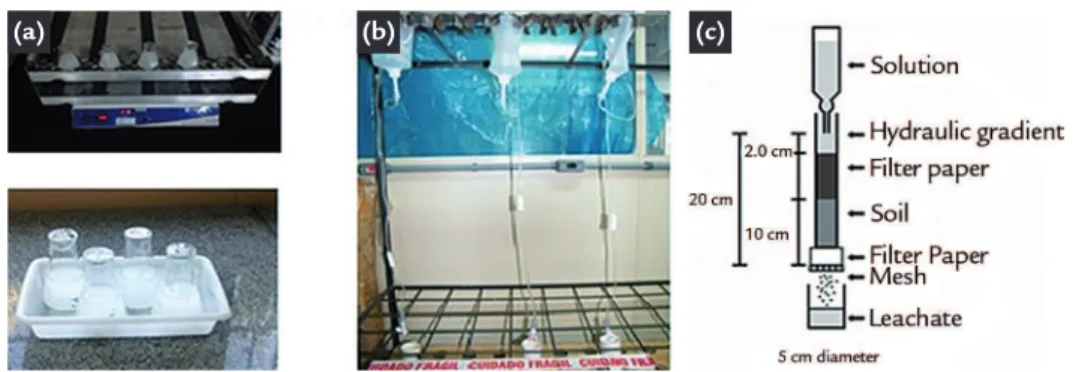
Figure 1(a) shows the stable suspen-sion production (shaking 24 h + 10 days
settling). Figure 1(b) shows the apparatus used for column leaching and low control.
Figure 1(c) shows detailed schematics of the inner column.
Figure 1 Experimental column used in this study.
Figure 2 Experimental procedure flowchart adopted in this study. Figure 2 presents a flowchart of the experimental procedure used in the study. The concentrations of TiO2, SiO2, CuO and ZnO
nanopar-ticles were determined by ICP-OES. Nanoparticle size distributions were monitored using the NanoSight LM10 system to quantify the aggregation
phenomenon. Zeta potential measure-ments of the solutions were also carried out to characterize the stability of the solutions and the ionic activities.
2
The ionic strengths of solutions at the outlet of the column were calculated
from the simple linear equation of ionic strength and electrical conductivity
[Morrisson et al., 1990] as shown in
Eq. (1).
I = 0.0127 x EC
(1)In this equation, I and EC are the ionic strength and electrical conductivity, respectively.
3. Results and discussion
The results presented in this paper aim to show the effects of NPSiO2 on the stabilization conditions and
trans-port of the nanoparticle suspensions and to demonstrate the effects of the interactions of these nanoparticles with
other nanomaterials that are harmful to the environment by means of soil column tests.
Suspension Zeta potential pH (pzc) pH EC Ionic strength (mM) Mean particle size (nm)
milli-Q +TiO2 -22.2 4.2 4.9 65.8 0.83 32
milli-Q +CuO -32.4 5.9 6.4 32.9 0.41 35
milli-Q +SiO2 -49.6 4.0 4.6 68.9 0.87 42
milli-Q +ZnO -9.51 7.3 8.0 8.9 0.11 19
milli-Q +SiO2 + TiO2 -47.9 4.1 4.7 73.4 0.93 56
milli-Q +SiO2 + CuO -30.2 4.7 5.1 65.8 0.83 47
milli-Q +SiO2 + ZnO -18.9 5.8 6.7 32.7 0.41 26
milli-Q +TiO2+SiO2 + CuO+ZnO -23.0 4.3 6.2 103.1 1.31 63
Table 3
Suspension parameters at the column outlet.
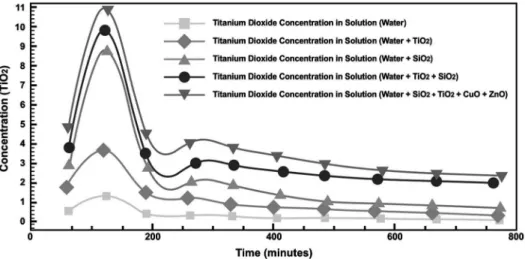
Figure 3 shows the effects of mu-tual interactions on the stabilization of NPTiO2 in binary and quaternary sys-tems. Table 3 shows the main parameters, which indicate the stability and activities of the stabilized suspensions used for the leaching experiments in the soil columns. The zeta potential, pH and average nanoparticle agglomeration are in con-cordance with the measured values of the electric conductivities and ionic strength.
The effect of ionic strength on particle deposition is in qualitative agreement with the DLVO theory of nanoparticle suspen-sion stability.
Figure 3 shows a comparison of tita-nium nanoparticle concentration patterns for suspensions measured at the outlet of the soil columns, and it shows the effects of the other nanoparticles on the effective-ness of the soil column in capturing and retaining the hazardous nanoparticles. As
the suspensions become more complex, the effectiveness of the soil column is reduced. The presence of NPSiO2 plays a major role in decreasing the effective-ness of the retention, and the presence of NPZnO strongly increases the retention eficiency. Thus, when the efluent con-tains a large number of nanoparticle spe-cies, the presence of NPZnO, in controlled quantities, could neutralize the deleterious effects of the NPSiO2.
Figure 3
Comparison of NPTiO2concentrations at the outlets of the soil columns.
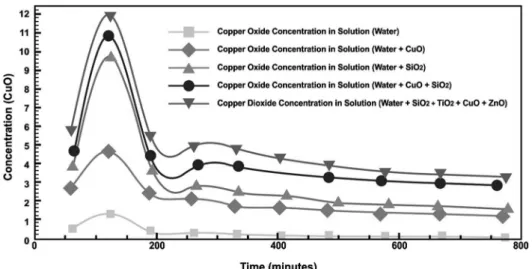
Figure 4 shows the effects of NPSiO2 on NPCuO in the binary and quaternary systems. A similar trend was observed for the NPCuO nanoparticles, which emphasizes the role of NPSiO2 on the forces acting on the suspensions
and other nanoparticles. NPCuO alone has a very low stable concentration when in suspension with the major nanoparticles, and it can be captured by the soil column. The total adsorption capacity of the soils follows the order
formation of internal sphere surface complexes formed by the interaction
of Cu2+ with hydroxyl groups of the SiO2 surface, in accordance with the
literature [Ludwig and Schindler, 1995].
Figure 4 Comparison of the NPCuO concentrations at outlet of the soil columns.
Another important and abundant nanoparticle that is released by indus-trial processes is zinc oxide (NPZnO). As shown in Figure 5, in all suspensions with NPZnO, sedimentation begins rapidly, and
a low equilibrium concentration of NPZnO is observed at the inlet. The concentration of NPZnO at the outlet of the soil column is explained by the electric charges developed due to the stabilization of the suspensions.
After passing through the soil column, the NPZnO particles are strongly affected by the NPSiO2, NPCuO and NPTiO2; the outlet concentration of NPZnO increases as the other nanoparticles are added.
Figure 5 Comparison of NPZnO concentrations at the outlets of the soil columns.
2
As shown in Figure 6, agglom-eration occurs when the solution passes through the soil column and the con-centration decreases, indicating that the soil particles capture the nanoparticles and work as an effective barrier to con-tamination from the leachate. The results obtained in this study make it possible to design a soil layer to minimize the release
of hazardous nanoparticles into the en-vironment and allow for secure disposal in municipal waste landills. Therefore, the results obtained in this study demon-strate that silica nanoparticles (NPSiO2) play the major role in the stabilization of hazardous nanoparticles (NPCuO, NPTiO2 and NPZnO) within natural suspensions. Thus, silica nanoparticles
decrease the effectiveness of the landill soil layers. Based on this study, we rec-ommend a redesign of the thickness of landill soil layers to attenuate the natural silica nanoparticle effects during leachate percolation through the soil layers. This will allow the complexation of hazardous nanoparticles within the protective soil layers in the landill.
4. Conclusions
This study uses soil column ex-periments to analyze the effect of NPSiO2 in natural soil on the stabiliza-tion periods and retenstabiliza-tion of NPTiO2, NPCuO and NPZnO. The results show that NPSiO2 limits the retention of hazardous nanoparticles (NPTiO2 + NPCuO +NPZnO) because of the high afinity of NPSiO2 for water and (NPTiO2+NPCuO+NPZnO) suspen-sions. The higher stability of the
hazard-ous nanoparticles in NPSiO2 suspen-sions was conirmed using nanoparticle tracking analysis (NTA) and spectro-photometry, which allowed for the evaluation of cluster formation and the measurement of average nanoparticle sizes in addition to the parameters traditionally used to verify suspension stabilization, such as zeta potential and conductivity. The leaching soil column experiments demonstrated that
ap-proximately 300 min is suficient for the column to retaining the hazardous nanoparticles. Therefore, information about nanoparticle interactions can be used to design effective soil layers in municipal waste landills. The analysis techniques presented in this study could also be useful for monitoring nanopar-ticle contamination in the environment during waste or efluent disposal associ-ated with industrial activities.
Acknowledgments
The authors thank CAPES, CNPq and Faperj for their inancial support.
References
CASTRO, J. A., PEREIRA, B. A., TASSI, E., PINI, R., ARAUJO, A. S. F., VALA-DÃO, I. C. P. Modeling the transport phenomena of TiO2 nanoparticles into le-achate of municipal waste landills. Materials Science Forum, v. 727–728, n. 1,
p.1695–1700, 2012.
DUSAK, P., MERTELJ, A., KRALJ, S., MAKOVEC, D. Controlled hetero aggrega-tion of two types of nanoparticles in aqueous suspension. Journal of Colloid and Interface Science, v. 438, n. 1, p. 235–243, 2015.
FANG, J., SHAN, X. Q., WEN, B., LIN, J. M., OWENS, G. Stability of titania nano-particles in soil suspensions and transport in saturated homogeneous soil columns.
Environmental Pollution, v. 157, n. 11, p. 1101–1109, 2009.
FANG, J. SHAN, X. Q., WEN, B., LIN, J. M., OWENS, G., ZHOU, S. R. Trans-port of copper as affected by titania nanoparticles in soil columns. Environmental Pollution, v. 159, n. 3, p. 1248–1256, 2011.
GODYMCHUK, A., KAREPINA, E., YUNDA, E., BOZHKO, I., LYAMINA, G., KUZNETSOV, D., GUSEV, A., KOSOVA, N. Aggregation of manufactured na-noparticles in aqueous solutions of mono and bivalent electrolytes. Journal of Na-noparticle Research, v.17. n. 5, p.1–8, 2015.
JACOBS, R., HILKO, V. D. V., CAJO., T. B. Integrated probabilistic risk assess-ment for nanoparticles: the case of nanosilica in food. Journal of Nanoparticle Research, v.17, n. 6, p.1–14, 2015.
KALLAY, N., ŽALAC, S. Stability of nanodispersions: a model for kinetics of ag-gregation of nanoparticles. Journal of Colloid and Interface Science, v. 253,
n. 1, p. 70–76, 2002.
KISER, M. A., WESTERHOFF, P., BENN, T., WANG, Y., PÉREZ-RIVERA, J., HRISTOVSKI, K. Titanium nanomaterial removal and release from wa-stewater treatment plants. Environmental Science &Technology, v. 43, n. 9,
p. 6757–6763, 2009.
LAMBERTY, A, FRANKS, K., BRAUN, A., KESTENS, V., ROEBBEN, G., LIN-SINGER, T. Interlaboratory comparison for the measurement of particle size and zeta potential of silica nanoparticles in an aqueous suspension. Journal of
LECOANET, H. F., WIESNER, M. R. Velocity effects on fullerene and oxide nano-particle deposition on porous media. Environmental Science &Technology, v. 38,
n. 7, p. 4377–4382, 2004.
LUDWIG, C., SCHINDLER, P.W. Surface complexation on TiO2. I. adsorption of H+ and Cu2+ ions ontoTiO
2 (anatase). Journal of Colloid and Interface Science, v.169, n. 2, p. 284–290, 1995.
MORRISSON, A.R., PARK, J.S., SHARP, B.L. Application of high-performance size exclusion liquid chromatography to the study of copper speciation in waters extrac-ted from sewage sludge treaextrac-ted soils. Analyst, v.115, p. 1429–1433, 1990.
NOWACK, B., BUCHELI, T. D. Occurrence, behavior and effects of nanoparticles in the environment. Environmental Pollution, v. 150, p. 5–22, 2008.
OLIVEIRA, E. M., NOGUEIRA, D. A., LOPES, L. C. R., FEITEIRA, J. F. S., CAS-TRO, J. A. Analysis of percolation of the stabilized suspensions of TiO2 and SiO2 nanoparticles in soil columns simulating landill layers. Journal of Mechanics En-gineering and Automation, v. 6, n. 1, p. 47–52, 2016.
OLIVEIRA, E. M., VALADÃO, I. C. R. P., ARAÚJO, A. S. F., CASTRO, J. A. Ap-plication of nanoparticle tracking analysis (NTA) in aqueous solutions of TiO2.
Materials Science Forum, v. 802, n. 1, p. 624–629, 2014.
SHEN, J., YANG, X., ZHU, Y., KANG, H., CAO, H., LI, C. Gold coated silica–iber hybrid materials for application in a novel hydrogen peroxide biosensor. Biosensors and Bioelectronics, v.34, n.1, p. 132–136, 2012.
SON, J., VAVRA J., LI, SEYMOUR, M., FORBES, V. Interactions between suspen-sions characteristics and physicochemical properties of silver and nanoparticles: a case study for optimizing nanoparticles stock suspensions using central composite design. Chemosphere, v. 124, n. 1, p. 136–142, 2015.
TADROS, T. F. Colloid stability: the role of surface forces. Wiley–VCH Verlag Gmbh & Co. kGaA, p. 165. 2007. (Part I).
WIESNER, M.R., LOWRY, G.V., ALVAREZ, P., DIONYSIOU, D., BISWAS, P. As-sessing the risks of manufactured nanomaterials. Environmental Science &Tech-nology, v. 40, n. 8, p. 4336–4345, 2006.