RBCCV 44205-1636 DOI 10.5935/1678-9741.20150022
Stroke of a cardiac myxoma origin
Acidente vascular cerebral com origem em mixoma cardíaco
Shi-Min Yuan
1, MMed, PhD; Gulimila Humuruola
2, MD
1The First Hospital of Putian, Teaching Hospital, Fujian Medical University,
Putian, People’s Republic of China.
2Department of Internal Medicine, People’s Hospital of Jimunai County,
Jimunai, Altay Prefecture, Xinjiang Uygur Autonomous Region, People’s Republic of China.
Work carried out at Department of Cardiothoracic Surgery, First Hospital of Putian, Teaching Hospital, Fujian Medical University, Putian, Fujian Province, People’s Republic of China and Department of Internal Medicine, People’s Hospital of Jimunai County, Altay Prefecture, Xinjiang Uygur Au-tonomous Region, People’s Republic of China.
No inancial support.
Correspondence address: Shi-Min Yuan
Longdejing Street, 389 - Chengxiang District, Putian, Fujian Province, Peo-ple’s Republic of China
E-mail: [email protected]
Article received on January 19th, 2015
Article accepted on March 23th, 2015
Abstract
Objective: The clinical features of cardiac myxoma stroke
have not been suficiently described. Debates remain concern -ing the options and tim-ing of treatment and the clinical
out-comes are unknown. This article aims to highlight the pertinent aspects of this rare condition.
Methods: Data source of the present study came from a comprehensive literature collection of cardiac myxoma stroke in PubMed, Google search engine and Highwire Press for the
year range 2000-2014.
Results: Young adults, female predominance, single cere-bral vessel (mostly the middle cerecere-bral artery), multiple terri-tory involvements and solitary left atrial myxoma constituted
the outstanding characteristics of this patient setting. The most
common affected cerebral vessel (the middle cerebral artery) and areas (the basal ganglion, cerebellum and parietal and temporal regions) corresponded well to the common manifesta-tions of this patient setting, such as conscious alteration,
atax-ia, hemiparesis and hemiplegatax-ia, aphasia and dysarthria. Initial
computed tomography scan carried a higher false negative rate for the diagnosis of cerebral infarction than magnetic resonance
imaging did. A delayed surgical resection of cardiac myxoma
was associated with an increased risk of potential consequences
in particular otherwise arterial embolism. The mortality rate of this patient population was 15.3%.
Conclusion: Cardiac myxoma stroke is rare. Often does it
affect young females. For an improved diagnostic accuracy,
magnetic resonance imaging of the brain and echocardiography are imperative for young stroke patients in identifying the
cere-bral infarct and determining the stroke of a cardiac origin. Im -mediate thrombolytic therapy may completely resolve the
cere-bral stroke and improve the neurologic function of the patients. An early surgical resection of cardiac myxoma is recommended in patients with not large territory cerebral infarct.
Descriptors: Embolism. Middle Cerebral Artery. Myxoma.
Stroke.
Resumo
Objetivo: As características clínicas do acidente vascular
cerebral causado por mixoma cardíaco não foram descritas suicientemente. Debates permanecem sobre as opções e o mo
-mento de trata-mento e os resultados clínicos são desconheci
-dos. Este artigo tem como objetivo destacar os aspectos perti
-nentes desta condição rara.
Métodos: Os dados do presente estudo foram levantados em
uma revisão abrangente de literatura sobre acidente vascular cerebral causado por mixoma cardíaco no PubMed, no sistema
de buscas do Google e no Highwire Press, abrangendo ao anos
entre 2000 e 2014.
Resultados: Adultos jovens, predominância do sexo feminino, vaso cerebral único (principalmente a artéria cerebral mediana), envolvimentos de territórios múltiplos e mixoma atrial esquerdo
INTRODUCTION
Cardioembolic stroke accounts for 14-30% of ischemic strokes with a predilection of early and later recurrences[1].
Atrial ibrillation, acute myocardial infarction, valvular heart
disease, infective endocarditis and cardiac myxoma are ma-jor sources of cerebral emboli[2]. Of them, atrial ibrillation is
the most important one responsible for 45% of cardiogenic embolism[3]. Cardiac myxoma, the most common primary
cardiac tumor, is a rare cause, but an important etiology as well for stroke in the young[4]. However, the diagnosis of a
cardiac myxoma is often elusive in young stroke patients[5].
A delayed diagnosis and untimely treatment may mean lais-sez-faire of progression of stroke and development of certain critical consequences like systemic and peripheral embolic events. The clinical features of stroke of a cardiac myxoma
origin have not been suficiently described. In addition, de -bates remain concerning the options and timing of treatment and the clinical outcomes are unknown. This article aims to highlight the pertinent aspects of this rare condition.
METHODS
A comprehensive literature collection of cardiac myxo-ma stroke was myxo-made in PubMed, Google search engine and Highwire Press for the year range 2000-2014. The search terms included “cardiac myxoma”, “atrial myxoma”, “val-vular myxoma” and “stroke”. The search ended on June 30, 2014. Articles describing transient ischemic attack, cerebral vascular aneurysm without stroke, or stroke caused by other cardiac tumors than myxomas were excluded from this study. Data were extracted from the text or tables, including details of the study subjects, demographics, cerebral infarct, cardiac myxoma, complications, follow-up length and mortality. The main outcomes were complications and mortality.
Quantitative data were expressed in mean ± standard de-viation with range and median values. Comparisons of
fre-Abbreviations, acronyms & symbols
CT Computed tomography
MRI Magnetic resonance imaging
quencies were made by Fisher exact test. P-P plot was used to test normal distribution. Logistic regression was taken to assess the possible predisposing risk factors of mortality.
P<0.05 was considered statistically signiicant.
RESULTS
A total of 83 reports were obtained with 133 patients in-volved[4-86]. Eighty-two (98.8%) articles reported only
spo-radic single case and one (1.2%) article described a small series. There were 71 (53.4%) females and 62 (46.6%) males with a female-to-male ratio of 1.2:1. Patients’ ages were 42.3±18.6 (range, 4-84; median, 43.5) years (n=118), in a normal distribution. Ages of 67 (56.8%) patients were
≤45 years while ages of 51 (43.2%) patients were ≥46 years
(χ2=4.3, P=0.051). Ages of male and females patients were
40.1±16.1 (range, 10-57; median, 40) years (n=57) and 45.0±20.5 (range, 4-84; median, 47) years (n=64), respec-tively (P=0.093). The onset time was described in 54 patients with an acute onset in 53 (98.1%) and a chronic onset in 1 (1.9%) patient, respectively (χ2=100.1, P=0.000). Time
inter-val from onset to physician consultation was 1413.1±3581.6 (range, 0.5-17280; median 24) hours (n=30) with 17 (56.7%) of them presented within 24 hours, and the remaining 13 pa-tients were admitted 3 days-2 years after the onset.
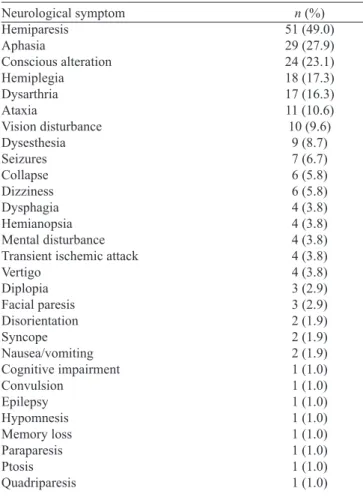
Their initial symptoms were reported in 108 patients: neurological in 97 (89.8%), constitutional in 3 (2.8%), neu-rological with constitutional 3 (2.8%), neuneu-rological with cir-culatory in 3 (2.8%), circir-culatory in 1 (0.9%) and all three triad symptoms in 1 (0.9%) patient. Eleven (8.3%) patients had precursory symptoms including headache in 5 (50%), transient ischemic attack in 2 (20%) and a skin rash/spot in 3 (30%) patients. Totally 104 patients developed neurologi-cal symptoms. Hemiparesis, aphasia and conscious alteration were the three most common symptoms (Table 1). Forty-two (31.6%) patients had one or more predisposing risk factors of stroke with hypertension being the most common (Table 2).
cerebral afetado mais comum (artéria cerebral média) e áreas (o
gânglio basal, cerebelo e regiões parietais e temporais) correspon
-deram bem com as manifestações comuns destes pacientes, como alteração da consciência, ataxia, hemiparesia e hemiplegia, afasia e disartria. Tomograia computadorizada inicial mostrou taxa de
falso negativo mais alta para o diagnóstico de acidente vascular
cerebral do que a imagem por ressonância magnética. A ressec
-ção cirúrgica tardia de mixoma cardíaco foi associada com risco aumentado de potenciais consequências, em particular, de outra
forma de embolia arterial. A taxa de mortalidade dessa popula
-ção de pacientes foi de 15,3%.
Conclusão: Acidente vascular cerebral causado por mixoma
cardíaco é raro. Frequentemente, afeta mulheres jovens. Para um diagnóstico mais preciso, exames de ressonância magnética e ecocardiográicos são imperativos para pacientes jovens com acidente vascular cerebral para determinar a localização do en
-farte cerebral e se houve origem cardíaca. Terapia trombolítica
imediata pode resolver completamente o acidente vascular
ce-rebral e melhorar a função neurológica dos pacientes. Ressec
-ção cirúrgica precoce de mixoma cardíaco é recomendada em pacientes com acidente vascular cerebral de pequena extensão.
Descritores: Embolia. Artéria Cerebral Média. Mixoma.
Except for cardiac myxoma and stroke, an additional di-agnosis was established in 23 (17.3%) patients including Car-ney’s syndrome in 7 (30.4%), infected cardiac myxoma in 3 (13.0%) (associated with disseminated intravascular coagu-lation, kidney and spleen infarcts and urinary tract infection in 1 patient each), patent fossa ovalis in 2 (8.7%), and atrial
septal defect (incidental inding during cardiac surgery), pat -ent ductus arteriosus, acute renal impairm-ent, posttraumatic seizure, synovial sarcoma of the right hand, internal carotid artery aneurysm, non-ST segment elevation myocardial in-farction, pregnancy, Raynaud’s disease plus multiple cerebral aneurysms, NAME syndrome and systemic vasculitis with an-tiphospholipid antibody syndrome in 1 (4.3%) patient each.
Erythrocyte sedimentation rate was detected in 25 (18.8%) patients: 23 (92%) were positive and 2 (8%) were negative (χ2=35.3; P=0.000) with a quantitative value of 57.4±19.7
(range, 30-85; median, 60) mm/h (n=15). C-reaction protein was detected in 16 (12.0%) patients: positive in 10 (62.5%) and negative in 6 (37.5%) patients (χ2=2.0; P=0.289) with a
quantitative value of 8.5±13.0 (range, 0.09-35; median, 1.8) mg/dL (n=10).
Cardiac myxoma was diagnosed ahead of the diagnosis of stroke in 8 (11.8%), delayed until after the diagnosis of stroke in 59 (86.8%) and simultaneously with the diagnosis of stroke in 1 (1.5%) patient.
The diagnostic techniques for stroke were given in 81 (60.9%) patients with magnetic resonance imaging (MRI) being the most commonly and computed tomography (CT) more commonly used technique (Table 3).
Table 1. 228 neurological symptoms in 104 patients.
Neurological symptom Hemiparesis
Aphasia
Conscious alteration Hemiplegia Dysarthria Ataxia
Vision disturbance Dysesthesia Seizures Collapse Dizziness Dysphagia Hemianopsia Mental disturbance Transient ischemic attack Vertigo
Diplopia Facial paresis Disorientation Syncope Nausea/vomiting Cognitive impairment Convulsion
Epilepsy Hypomnesis Memory loss Paraparesis Ptosis Quadriparesis
n (%) 51 (49.0) 29 (27.9) 24 (23.1) 18 (17.3) 17 (16.3) 11 (10.6) 10 (9.6)
9 (8.7) 7 (6.7) 6 (5.8) 6 (5.8) 4 (3.8) 4 (3.8) 4 (3.8) 4 (3.8) 4 (3.8) 3 (2.9) 3 (2.9) 2 (1.9) 2 (1.9) 2 (1.9) 1 (1.0) 1 (1.0) 1 (1.0) 1 (1.0) 1 (1.0) 1 (1.0) 1 (1.0) 1 (1.0)
Table 2. Predisposing risk factors of stroke.
Risk factor Hypertension Hyperlipidemia Smoking Atrial ibrillation Coronary artery disease Hypertension, hyperlipidemia Hypertension, diabetes mellitus Alcohol
Mitral regurgitation
Neurosurgery for temporooccipital cavernoma Raynaud’s disease
Transient ischemic attack Unknown
n (%) 13 (9.8)
5 (3.8) 5 (3.8) 4 (3.0) 4 (3.0) 3 (2.3) 2 (1.5) 1 (0.8) 1 (0.8) 1 (0.8) 1 (0.8) 1 (0.8) 1 (0.8)
Table 3. Diagnostic tools for cerebral infarct in 81 patients.
Diagnostic tool MRI
CT CT, MRI MRI, MRA MRA Autopsy CT, MRA
CT, MRI, angiogram
Computed tomographic angiography MRI, autopsy
n (%) 39 (48.1) 23 (28.4) 7 (8.6) 4 (4.9) 3 (3.7) 1 (1.2) 1 (1.2) 1 (1.2) 1 (1.2) 1 (1.2)
CT=computed tomography; MRI=magnetic resonance imaging; MRA=magnetic resonance angiography.
Table 4. Results of computed tomography and time of scanning, n (%).
Computed tomography Positive
Negative
χ2
P value
Initial 5 (26.3) 14 (73.7)
8.5 0.009
Subsequent 40 (87.0)
6 (13.0) 50.3 0.000
Sixty-ive CT scans were examined in 53 patients with a
the onset. The false negative rate of MRI was much lower than that of CT scan (χ2=15.2, P=0.000). Magnetic resonance
angi-ography was investigated in 14 (10.5%) patients: positive in 12 (85.7%) and unremarkable in 2 (14.3%) patients (χ2=14.3,
P=0.000). Cerebral angiogram was performed in only one pa-tient 3 hours after the onset and it revealed a normal result.
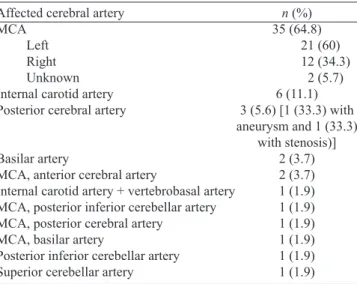
The affected cerebral artery was reported in 54 patients and the infarct region could be tracked in 62 patients. The most common affected vessel was the middle cerebral artery (Table 5) and the most common infarct regions were the basal
ganglion, cerebellum and parietal and temporal regions (Ta-ble 6). An old cerebral infarct was noted in 6 (4.5%) patients. Patients were more with unilateral cerebral infarct than with bilateral (χ2=14.1, P=0.000), and more with multiple
infarcts than solitary. No prevalence was noted between left- and right-sided infarcts (Table 7).
Nineteen (14.3%) patients had other than cerebral artery em-bolisms, with systemic multiple emboli in 4 (21.1%)[55,63,71,80],
peripheral multiple emboli in 3 (15.8%)[19,72,85] and solitary
ar-terial embolus in 12 (63.2%) patients[9,11,13,16,21,35,41,43,60,76,84]. The
39 affected arteries in 18 patients were listed in Table 8. Table 5. The affected cerebral artery in 54 patients.
Affected cerebral artery MCA
Left Right Unknown Internal carotid artery Posterior cerebral artery
Basilar artery
MCA, anterior cerebral artery
Internal carotid artery + vertebrobasal artery MCA, posterior inferior cerebellar artery MCA, posterior cerebral artery
MCA, basilar artery
Posterior inferior cerebellar artery Superior cerebellar artery
n (%) 35 (64.8) 21 (60) 12 (34.3)
2 (5.7) 6 (11.1) 3 (5.6) [1 (33.3) with aneurysm and 1 (33.3)
with stenosis)] 2 (3.7) 2 (3.7) 1 (1.9) 1 (1.9) 1 (1.9) 1 (1.9) 1 (1.9) 1 (1.9)
MCA=middle cerebral artery.
Table 6. Locations of cerebral infarcts in 62 patients.
Location of infarct Basal ganglion Cerebellum Parietal Temporal Cerebral Frontal Occipital Capsula interna Thalamic Frontoparietal Brainstem Lacunar Pons Corpus callosum Corona radiate Frontotemporal Insular cortex Medulla Perisylvian Periventricular Sylvian issure Watershed
n (%) 28 (45.2) 23 (37.1) 17 (27.4) 12 (19.4) 10 (16.1) 9 (14.5) 9 (14.5) 7 (11.3) 6 (9.7) 5 (8.1) 3 (4.8) 3 (4.8) 3 (4.8) 2 (3.2) 1 (1.6) 1 (1.6) 1 (1.6) 1 (1.6) 1 (1.6) 1 (1.6) 1 (1.6) 1 (1.6)
Table 7. Comparisons of site and number of cerebral infarcts.
Infarct side Left Right Bilateral Not given Total Single 15 (39.5) 14 (36.8) --9 (23.7) 38 (100) Multiple 14 (22.6) 6 (9.7) 26 (41.9) 16 (25.8) 62 (100) χ2 0.069 6.40 --3.92 11.52
P value 1.000 0.026 --0.089 0.001
Table 8. The 39 affected arteries other than cerebral artery in 18 patients. Affected artery Extremity artery Brachial Radial Ulnar Dorsalis pedis Peroneal Popliteal Tibial Tibio-peroneal trunk Unknown Visceral artery Hepatic Mesenteric Renal Splenic Coronary Circumlex Ramus intermedius Unknown
Other peripheral artery Carotid Femoral Iliac, internal Retinal Great vessel Abdominal aorta Infrarenal aorta Pulmonary
On admission, an immediate thrombolytic therapy with recombinant tissue plasminogen activator (rtPA) was given in 9 (6.8%) patients with an onset-to-treatment interval of 104.2±36.9 (range, 65-160; median, 92) minutes (n=5). The thrombolytic therapy was successful in 7 (77.8%), failed in 1 (11.1%) and the effect unavailable in 1 (11.1%) patient. How-ever, one of the successful patients died of diffuse cerebral edema in spite of an urgent decompressive craniectomy[21].
On admission, the Glasgow Coma Scale of the patients was 10±2.6 (range, 7-15; median, 9) (n=13) and NIH Stroke Scale was 16.7±5.8 (range, 10-26; median, 15.5) (n=10). The latter was decreased to 9.7±7.6 (range, 0-21; median, 9) (n=6) after treatment (P=0.055).
Timing of the diagnosis of cardiac myxoma was de-scribed in 33 (24.8%) patients. A patient had been diag-nosed with a cardiac myxoma 7 years earlier during which time she declined to all treatments. The remaining 32 (97.0%) patients had their cardiac myxomas diagnosed at a mean of 342.7±744.6 (range, 1-3240; median, 7.5) days after admission.
The diagnostic techniques of cardiac myxoma were de-scribed in 114 (85.7%) patients. Transthoracic echocardiog-raphy was the most common diagnostic technique, which was used in 90 (78.9%) patients. It was the only diagnostic tool in 79 (87.8%) patients and as an adjunctive to other imaging in 11 (12.2%) patients (Table 9). In one patient, the pathol-ogy of the aspirated materials by catheterized thrombecto-my on day 5 after admission revealed platelet thrombus and myxomatous tissue, which aroused the suspicion of a cardiac myxoma origin[41]. Both transthoracic and transesophageal
echocardiography showed a respective false negative result in one patient each[10,19], the cause of the latter was a complete
detachment of the cardiac myxoma[19].
The left atrium was the most common location of cardiac myxoma. There were more solitary myxomas than multiple (Table 10). The attachments of myxomas were reported in 32 myxomas of 31 (23.3%) patients: 25 (78.1%) myxomas were pedunculated and 7 (21.9%) were sessile (χ2=20.3, P=0.000).
Prolapse of atrial myxoma into the ventricle was described in 45 (33.8%) patients with a complete prolapse in 43 (95.6%), a partial prolapse in 1 (2.2%) and no prolapse in 1 (2.2%) patient. Gross appearance of the myxoma was reported in 52 (39.1%) patients: irregular in 48 (92.3%) and smooth in 4 (7.7%) (χ2=74.5, P=0.000). The tumor size was 40.0±19.7
(range, 2-92; median, 40.4) mm (n=71).
Table 9. Diagnostic means of cardiac myxoma.
Diagnostic means TTE
TTE, TEE, 3D TEE TEE
TTE, MRI Autopsy
Computed tomography, TTE TTE, TEE, MRI
Computed tomography, TTE, TEE Computed tomography angiography, TTE
n (%) 79 (69.3) 12 (10.5) 9 (7.9) 4 (3.5) 3 (2.6) 2 (1.8) 2 (1.8) 1 (0.9) 1 (0.9)
MRI=magnetic resonance imaging; TEE=transesophageal echocardiography; TTE= transthoracic echocardiography
Table 10. Locations of 112 cardiac myxomas.
Location Single LA LV Left heart Atrium
Infrarenal aorta (complete detachment to) RA
Multiple LA, RA LA, LV, RA, RV Multiple chambers
LA, pulmonary vein oriice, mitral annulus
LA, mitral annulus LA, RV
n (%) 105 (93.8) 93 (88.6)
8 (7.6) 1 (1.0) 1 (1.0) 1 (1.0) 1 (1.0)
7 (6.3) 2 (28.6) 1 (14.3) 1 (14.3)
1 (14.3) 1 (14.3) 1 (14.3)
LA=left atrium; LV=left ventricle; RA=right atrium; RV=right ventricle.
Timing of cardiac myxoma resection was reported in 48 (36.1%) patients. Seven (14.6%) patients underwent op-eration urgently without giving an exact time interval from admission to surgery. In the remaining 41 (85.4%) patients, the interval from admission to surgery was 140.5±439.9 (range, 1-2550; median, 21) days. The causes of a delayed operation in 3 patients were requirement of heparin therapy for 1 week[61], minimizing the risks from cardiopulmonary
bypass and heparinization[25] and avoidance of exacerbation
of cerebral hemorrhage[33] in one patient each, and the
op-erations were delayed for 7, 21 and 28 days, respectively. The interval between the diagnosis and surgical operation of cardiac myxoma was 194.2±798.5 (range, 0-4302; median, 12) days (n=38). One (2.6%) patient was operated on imme-diately, 2 (5.3%) patients, within 24 hours, and 14 (36.8%) patients, within one week. A delayed myxoma resection was performed in 42.1% (8/19) patients with alternative embol-ic events in comparison to 25.4% (29/114) patients without alternative embolic events. The interval from diagnosis to
treatment of the former was signiicantly longer than that of
the latter (872.5±1644.2 days vs. 13.3±11.2 days, P=0.005). The treatment methods were unavailable in 28 (21.1%) patients. Nine (6.8%) patients did not receive a cardiac myx-oma resection due to sudden death in 3 (33.3%)[18,60,67], patient
decline in 2 (22.2%)[4,35], and poor patient condition only
of peripheral embolectomies and herniation decompressive hemicraniectomy[19], unit for cardiac surgery but only cranial
decompression[63] and extensive metastasis in the lungs[73] in
1 (12.5%) patient each. The surgical operations performed in 98 (73.7%) patients, 82 (83.7%) of which were isolated cardiac myxoma resection and 2 (2.0%) of which received an operation other than cardiac myxoma resection, were list-ed in Table 11. Patients without a myxoma resection showlist-ed an increased mortality (44.4%, 4/9) than those receiving a myxoma resection (2.1%, 2/95) (χ2=27.1, P=0.000). Of the 9
patients receiving a myxoma resection on an urgent basis, 1 patient died with a mortality of 11.1%, while no patient died among the 45 patients with a delayed surgical resection of cardiac myxoma. No difference was found in the mortality between patients receiving an urgent and a delayed myxo-ma resection (χ2=5.1, P=0.167). Moreover, a staged cardiac
myxoma resection was performed subsequent to other oper-ations in 3 patients with an interval between operoper-ations of 1[64], 2[41] and 4[80] weeks, respectively. Patients were followed
up for 24.3±27.8 (range, 1-132; median, 12) months (n=59). Prognosis was reported in 72 patients: a full recovery in 41 (56.9%), an improvement in 13 (18.1%), unchanged in 2 (2.8%), cardiac myxoma recurrence in 5 (6.9%) and death in 11 (15.3%) patients.
By multivariant analysis, none of the independent vari-ables including gender, age, comorbidities, multiplicity of stroke, peripheral embolic events, middle cerebral artery occlusion, basal ganglion infarct, left atrial myxoma, multi-plicity of cardiac myxoma and surgical resection of cardiac myxoma was a predisposing risk factor for patient’s mortal-ity. Logistic regression analysis showed peripheral embolic
events (P=0.024) and non-surgical resection of cardiac myx-oma (P=0.033) correlated signiicantly with mortality.
DISCUSSION
Cardiac myxoma is an important cause of stroke in young patients. Lee et al.[46] reported that the stroke patients aged 48.5
(range, 17-70) years. Ekinci & Donnan’s[25] patient series aged
be-tween 6 and 82 years. The present study revealed young children at the age of 4 years can be a victim of cardiac myxoma stroke. Aziz et al.[5] reported a female predominance with a female-male
ratio of 2:1 in cardiac myxoma, and the present study also revealed a female predominance but with a smaller gender ratio. The clas-sic symptom triad of cardiac myxoma patients includes obstruc-tive, embolic and constitutional manifestations[13]. Cardiac
myxo-ma stroke is often of an acute onset, whereas tumor embolization including myxoma-induced cerebral aneurysm and myxomatous metastasis may show a delayed presentation[46]. However,
cardi-ac myxoma is responsible for only 0.5% of stroke, with females at the age of 50 years at greatest risk[87]. Embolic manifestations
occur in 20-45% of patients with a cardiac myxoma, sometimes as the onset symptom[75], as a result of cerebral ischemia and less
commonly hemorrhage[18]. In a series of 113 atrial myxoma
pa-tients with neurologic presentations, 83% presented with ischemic stroke, most often at multiple sites (41%). Other manifestations included syncope (28%), psychiatric symptoms (23%), headache (15%) and seizures (12%)[72]. Alvarez-Sabín et al.[13] reported 11
of 28 (39.3%) cardiac myxoma patients had embolic phenomena, which affected the cerebral arteries in 6 (54.5%), peripheral ar-teries in 2 (18.2%) and both cerebral and peripheral arar-teries in 3 (27.3%) patients. Lee et al.[45] reported 13 of 59 (22.0%) patients
with a cardiac myxoma developed embolic events, 11 (18.6%) of which were in the brain, 2 (3.4%) in the limb and 1 (1.7%) in the eye. Furthermore, Yuan[85] reported a patient with a delayed
car-diac myxoma resection developed multiple embolic events in the lower extremities. Bajraktari et al.[16] reported one cardiac
myxo-ma patient who declined to all treatments for 7 years eventually developed mesenteric embolism.
The size of the atrial myxoma was variable with a mean of 2.7 (range, 0.4-6.5) cm as reported by Lee et al.[46], and was
4.8±1.9 cm by Lee et al.[45]. Cardiac myxoma was classiied
into two types according to their gross appearances: type 1, with an irregular or a villous surface and a soft consistency; and type 2, with a smooth surface and a compact consisten-cy[45]. Porapakkham et al.[88] reported that cardiac myxomas
with an irregular surface exceeded those with a smooth sur-face in number (62.2% vs. 37.8%). Embolic potential usually depends on the mobility other than on the size of the myxo-ma[46]. Neurologic complications of atrial myxoma are most
frequently cerebral infarcts caused by detached thrombus from the myxoma; while rarely by tumor fragments[46].
Active illness is often accompanied by elevation of erythro-cyte sedimentation rate and C-reactive protein, hyperglobulin-Table 11. Surgical operations in 98 patients with cardiac myxoma
stroke.
Surgical operation Isolated myxoma resection
Myxoma resection with concurrent heart operation
Mitral valve repair Mitral valve replacement Aortic valve replacement
Patent fossa ovalis/atrial septal defect closure Coronary artery bypass grafting
Myxoma resection with other operation
Peripheral embolectomy
Peripheral embolectomy and amputation Peripheral embolectomy, fasciotomies and amputation
Decompression craniotomy
Endovascular coiling of internal carotid artery aneurysm
No myxoma resection
Embolectomies and herniation decompressive hemicraniectomy
Cranial decompression
n (%) 82 (83.7)
8 (8.2) 3 (37.5) 1 (12.5) 1 (12.5) 2 (25) 1 (12.5)
6 (6.1) 2 (33.3) 1 (16.7) 1 (16.7)
1 (16.7) 1 (16.7)
2 (2.0) 1 (50)
emia and anemia. Constitutional symptoms may be mediated by interleukin-6 produced by the myxoma itself[89]. MRI is more
sen-sitive than CT in identifying subtle abnormalities of the brain[49].
Transthoracic and/or transesophageal echocardiography can be options for the screening of stroke of a cardiac source[31].
The timing of treatment in such patient is always a mat-ter of intense debate. Soleimanpour et al.[74] proposed that the
patients with a delayed presentation of more than 3-4.5 hours were not indicated for intravenous thrombolysis. Al-Said et al.[11] disagreed the use of recombinant tissue plasminogen
ac-tivator for intravenous thrombolysis due to probable myxoma source infarct. Vogel et al.[80] suggested a 4-week delay of
sur-gical resection of cardiac myxoma concerning the risk of intra-cerebral hemorrhage following intra-cerebral infarction. Da Silva & de Freitas[21] advocated a delayed surgery after a large stroke.
However, Sethi[90] carried out emergent peripheral vascular
and cardiac surgeries in a patient with an acute large infarct of a cardiac myxoma origin and the patient did well.
Young adults, female predominance, single cerebral vessel (mostly the middle cerebral artery) and multiple territory in-volvements and solitary left atrial myxoma epitomize the out-standing characteristics of the patients with cardiac myxoma stroke. The most common affected cerebral vessel (the middle cerebral artery) and areas (the basal ganglion, cerebellum and parietal and temporal regions) correspond well to the common manifestations of conscious alteration, ataxia, hemiparesis and hemiplegia, aphasia and dysarthria. Initial CT scan carries a higher false negative rate in diagnosing cerebral infarction, and thus MRI should take the place of it, especially in patients with an immediate presentation. Echocardiography is a reli-able means for determining the cardiogenic origin of stroke.
Limited patient information concerning the timing of onset, presentation and treatment as well as survival consti-tutes the main drawbacks of the present study. Multicenter prospective studies on this particular patient population are anticipated in the future.
CONCLUSIONS
Cardiac myxoma stroke is rare. Often does it affect young females. For an improved diagnostic accuracy, MRI and echocardiography are recommended for young stroke pa-tients. Immediate thrombolytic therapy may completely re-solve the cerebral stroke and improve the neurologic function of the patients. An early surgical resection of cardiac myxo-ma is recommended in patients with not large territory cere-bral infarct so as to prevent from the potential consequences.
Authors’ roles & responsibilities
SMY Main Author
GH Final approval of the manuscript
REFERENCES
1 Arboix A, Alió J. Cardioembolic stroke: clinical features, speciic
cardiac disorders and prognosis. Curr Cardiol Rev. 2010;6(3):150-61.
2 Vahedi K, Amarenco P. Cardiac causes of stroke. Curr Treat Options Neurol. 2000;2(4):305-318.
3 No authors listed. Cardiogenic brain embolism. The second report of the Cerebral Embolism Task Force. Arch Neurol. 1989;46(7):727-43.
4 Sanya EO, Kolo PM, Adamu UG, Opadijo OG, Wahab KW, Mustapha AF, et al. Intracardiac tumor: a risk factor for stroke in the young--a case report. Niger J Clin Pract. 2008;11(1):81-4.
5 Aziz F, Zaeem M. Atrial myxoma presenting as acute stroke: a case report and review of literature. Greener J Med Sci. 2013;3(5):171-3.
6 Abe M, Kohama A, Takeda T, Ishikawa A, Yamada Y, Kawase Y, et al. Effective intravenous thrombolytic therapy in a patient with cerebral infarction associated with left atrial myxoma. Intern Med. 2011;50(20):2401-5.
7 Acampa M, Tassi R, Guideri F, Marotta G, Monti L, Capannini G, et al. Safety of intravenous thrombolysis in ischemic stroke caused by left atrial myxoma. Curr Drug Saf. 2011;6(5):343-5.
8 Akhtar J, Wasay M, Rauf J. Atrial myxoma: a rare cause of cardioembolic stroke. BMJ Case Rep. 2012;2012. pii: bcr2012006176.
9 Al Ali A, Al Shawaf H, Al Khalaf Y. Stroke caused by left ventricular myxoma. J Am Coll Cardiol. 2011;57(6):e11.
10 Al-Mateen M, Hood M, Trippel D, Insalaco SJ, Otto RK, Vitikainen KJ. Cerebral embolism from atrial myxoma in pediatric patients. Pediatrics. 2003;112(2):e162-7.
11 Al-Said Y, Al-Rached H, Baeesa S, Kurdi K, Zabani I, Hassan A. Emergency excision of cardiac myxoma and endovascular coiling of intracranial aneurysm after cerebral infarction. Case Rep Neurol Med. 2013;2013:839270.
12 Al-Shahi Salman R, Northridge D, Graham AN, Grant R. Stroke due to a cardiac myxoma. Pract Neurol. 2007;7(1):52-5.
13 Alvarez-Sabín J, Lozano M, Sastre-Garriga J, Montoyo J, Murtra M, Abilleira S, et al. Transient ischaemic attack: a common initial manifestation of cardiac myxomas. Eur Neurol. 2001;45(3):165-70.
14 Arruda MV, Braile DM, Joaquim MR, Soares MJ, Alves RH. Resection of left ventricular myxoma after embolic stroke. Rev Bras Cir Cardiovasc. 2008;23(4):578-80.
16 Bajraktari G, Emini M, Berisha V, Gashi F, Beqiri A, Zahiti B, et al. Giant left atrial myxoma in an elderly patient: natural history over a 7-year period. J Clin Ultrasound. 2006;34(9):461-3.
17 Bernstein JM, Leasure W, Buel A. Getting to the heart of the matter. Skinmed. 2007;6(6):290-2.
18 Bienfait HP, Moll LC. Fatal cerebral embolism in a young patient with an occult left atrial myxoma. Clin Neurol Neurosurg. 2001;103(1):37-8.
19 Binning MJ, Sarfati MR, Couldwell WT. Embolic atrial myxoma causing aortic and carotid occlusion. Surg Neurol. 2009;71(2):246-9.
20 Briassoulis G, Kuburovic V, Xekouki P, Patronas N, Keil MF, Lyssikatos C, et al. Recurrent left atrial myxomas in Carney complex: a genetic cause of multiple strokes that can be prevented. J Stroke Cerebrovasc Dis. 2012;21(8):914.e1-8.
21 Silva IR, de Freitas GR. Is it safe to proceed with thrombolytic therapy for acute ischemic stroke in a patient with cardiac myxoma? Case report and review of the literature. Eur Neurol. 2012;68(3):185-6.
22 Almeida LA, Hueb JC, de Moraes Silva MA, Bazan R,
Estrozi B, Rafin CN. Cerebral ischemia as initial neurological
manifestation of atrial myxoma: case report. Arq Neuropsiquiatr. 2006;64(3A):660-3.
23 Ceuster L, van Diepen T, Koehler PJ. Migraine with aura triggered by cardiac myxoma: case report and literature review. Cephalalgia. 2010;30(11):1396-9.
24 Earl TJ, Poppas A. Left atrial myxoma presenting with cerebral embolism. Med Health R I. 2012;95(12):397.
25 Ekinci EI, Donnan GA. Neurological manifestations of cardiac myxoma: a review of the literature and report of cases. Intern Med J. 2004;34(5):243-9.
26 Fernández AL, Vega M, El-Diasty MM, Suárez JM. Myxoma of the aortic valve. Interact Cardiovasc Thorac Surg. 2012;15(3):560-2.
27 Fernández-Arias L, Estevez-Cid F, Velasco Garcia de Sierra C, Cuenca-Castillo JJ. Mitral valve myxome. Intern Med. 2012;51(10):1273.
28 Gassanov N, Nia AM, Dahlem KM, Ederer S, Wedemeyer I, Caglayan E, et al. Local thrombolysis for successful treatment of acute stroke in an adolescent with cardiac myxoma.
ScientiicWorldJournal. 2011;11:891-3.
29 Ghosh A, Bhattacharyya A, Niyogi P. Recurrent left atrial myxoma with recurrent stroke. Indian Pediatr. 2001;38(10):1190-2.
30 Gupta VK, Das U, Kumar G, Sharma SC, Agarwal N, Jain AK.
What is in N A M E? J Assoc Physicians India. 2012;60:50-2.
31 Han E, Garrett A. Cerebrovascular accident caused by embolic atrial myxoma. Med Forum. 2013;14:Article 4 [Cited April 1 2014]. Available at: http://jdc.jefferson.edu/tmf/vol14/iss1/4
32 Herbst M, Wattjes MP, Urbach H, Inhetvin-Hutter C, Becker D, Klockgether T, et al. Cerebral embolism from left atrial myxoma leading to cerebral and retinal aneurysms: a case report. AJNR Am J Neuroradiol. 2005;26(3):666-9.
33 Hirose H, Youdelman BA, Entwistle JW. Stroke from a large left atrial myxoma. Open Cardiovasc Med J. 2008;2:115-7.
34 Ibrahim M, Iliescu C, Sai HJ, Buja ML, McPherson DD, Fuentes
F. Biatrial myxoma and cerebral ischemia successfully treated with intravenous thrombolytic therapy and surgical resection. Tex Heart Inst J. 2008;35(2):193-5.
35 Jeon U, Cho YS, Kim DH, Park SH, Lee SJ, Shin WY, et al. Probable left atrial myxoma presenting as concurrent cerebral and myocardial infarctions. Korean Circ J. 2008;38(11):622-6.
36 Jorge C, Almeida AG, Mendes M, Roque J, Nunes Diogo A, Pinto FJ. Multiple 'crumbled' cardiac myxomas presenting as gait ataxia. Int J Cardiol. 2013;167(4):e104-5.
37 Katz MG, Finkelshtein V, Raichman DB, Dekel H, Lampl Y, Sasson L. Surgical resection of left atrial myxoma presenting with acute multiple hemorrhagic cerebral infarctions: a case report. Heart Surg Forum. 2008;11(3):E169-71.
38 Kebede S, Edmunds E, Raybould A. A large left atrial myxoma causing multiple cerebral infarcts. BMJ Case Rep. 2013;2013. pii: bcr2013010007.
39 Khoynezhad A, Graver LM. Myxoma of the anterior lealet of
the mitral valve presenting with stroke in a young male. Eur J Cardiothorac Surg. 2004;26(5):1040.
40 Kohno N, Kawakami Y, Hamada C, Toyoda G, Bokura H, Yamaguchi S. Cerebral embolism associated with left atrial myxoma that was treated with thrombolytic therapy. Case Rep Neurol. 2012;4(1):38-42.
41 Konagai N, Cho M, Shigematsu H. Left atrial myxoma associated with acute myocardial infarction and multiple cerebral infarctions: report of a case. Surg Today. 2010;40(12):1159-63.
42 Koyalakonda SP, Mediratta NK, Ball J, Royle M. A rare case of aortic valve myxoma: an unusual cause of embolic stroke. Cardiology. 2011;118(2):101-3.
43 Landers C, Baumann R, Cottrill CM. Embolic strokes in an 8-year-old girl. Neurology. 2000;55(1):146.
45 Lee SJ, Kim JH, Na CY, Oh SS. Eleven years' experience with Korean cardiac myxoma patients: focus on embolic complications. Cerebrovasc Dis. 2012;33(5):471-9.
46 Lee VH, Connolly HM, Brown RD Jr. Central nervous system manifestations of cardiac myxoma. Arch Neurol. 2007;64(8):1115-20.
47 Li Q, Shang H, Zhou D, Liu R, He L, Zheng H. Repeated embolism and multiple aneurysms: central nervous system manifestations of cardiac myxoma. Eur J Neurol. 2008;15(12):e112-3.
48 Long Y, Gao C. Brain embolism secondary to cardiac
myxoma in ifteen Chinese patients. ScientiicWorldJournal.
2014;2014:718246.
49 Morton-Bours EC, Jacobs MB, Albers GW. Clinical problem-solving. Eyes wide open. N Engl J Med. 2000;343(1):50-5.
50 Mukasa A, Nagata K, Kawamoto S, Sashida J. Posttraumatic cerebral infarction caused by a left atrial myxoma: case report. J Trauma. 2000;49(6):1138-40.
51 Nagy CD, Levy M, Mulhearn TJ 4th, Shapland M, Sun H, Yuh DD, et al. Safe and effective intravenous thrombolysis for acute ischemic stroke caused by left atrial myxoma. J Stroke Cerebrovasc Dis. 2009;18(5):398-402.
52 Namura O, Saitoh M, Moro H, Watanabe H, Sogawa M, Nishikura K, et al. A case of biatrial multiple myxomas with glandular structure. Ann Thorac Cardiovasc Surg. 2007;13(6):423-7.
53 Nath MP, Singh B, Chakrabarty A. Left atrial myxoma presenting as stroke- case report & review of literature. Indian Anaesth Forum. 2011;(1) [Cited April 1 2014]. Availabe at: http://www.theiaforum. org/Article_Folder/Left-Atrial-Myxoma-Stroke.pdf
54 Negi RC, Chauhan V, Sharma B, Bhardwaj R, Thakur S. Atrial myxoma: a rare cause of ischemic stroke. J Assoc Physicians India. 2013;61(4):280-2.
55 Nicholls GM, Clearwater G. Emergency presentation of emboli to multiple sites from an atrial myxoma. Emerg Med Australas. 2012;24(3):336-8.
56 Nijmeh G, Tatooles A, Zelinger A. Utilizing three-dimensional echocardiography in cardioscopic left ventricular myxoma resection. Echocardiography. 2013;30(2):E44-6.
57 Novendstern SL, Silliman SL, Booth RP. Cerebrovascular c o m p l i c a t i o n s o f a t r i a l m y x o m a . H o s p P h y s i c i a n . 2001;August:39-42.
58 O’Rourke F, Dean N, Mouradian MS, Akhtar N, Shuaib A. Atrial myxoma as a cause of stroke: case report and discussion. CMAJ. 2003;169(10):1049-51.
59 Obied HY. SHA 21. Surgical removal of left atrial myxoma in a pregnant lady with recent stroke during 1st trimester. J Saudi Heart
Assoc. 2010;22(2):90 [Cited April 1 2014]. Available at: http:// www.journalofthesaudiheart.com/article/S1016-7315(10)00333-7/fulltext
60 Ohgo T, Yamamoto K, Furuno T. Complete detachment of cardiac myxoma causing aortic saddle embolization and cerebral infarction. Int J Cardiol. 2008;127(2):e48-9.
61 Omeroglu RE, Olgar S, Nisli K, Elmaci T. Recurrent hemiparesis due to anterior mitral leaflet myxomas. Pediatr Neurol. 2006;34(6):490-4.
62 Ozer N, Aksöyek S, Aytemir K, Güvener M, Böke E, Kes S. Myxoma
on anterior mitral lealet presenting with symptoms of cerebellar
artery infarction. J Am Soc Echocardiogr. 2000;13(6):626-8.
63 Pearce AW, Rana BS, O'Donovan DG. Lesson of the month. (2). Stroke in a 53-year-old woman: getting to the heart of the problem. Diagnosis. LA myxoma. Clin Med. 2013;13(1):106-9.
64 Pradhan B, Acharya SP. A case of left atrial myxoma: anaesthetic management. Kathmandu Univ Med J (KUMJ). 2006;4(3):349-53.
65 Rathore KS, Hussenbocus S, Stuklis R, Edwards J. Novel strategies for recurrent cardiac myxoma. Ann Thorac Surg. 2008;85(6):2125-6.
66 Ružička-Kaloci S, Slankamenac P, Vitić B, Lučić-Prokin A, Jovićević M, Zivanovic Z, et al. Atrial myxoma as a cause of
stroke: emboli detection and thrombolytic treatment. Med Glas (Zenica). 2012;9(1):114-7.
67 Sabageh D, Odujoko OO, Komolafe AO. Right atrial myxoma as a possible cause of hemorrhagic stroke and sudden death. Niger Med J. 2012;53(2):102-4.
68 Saritas A, Emet M, Kocaturk H, Aslan S, Cakir ZG. Atrial myxoma presenting with aphasia alone: a case report. Hong Kong J Emerg Med. 2009;16(3):168-71.
69 Sawhney S, Agarwal M, Roy S, Buxi S, Sud S, Singh S. A patient with rashes and limb weakness. Indian Pediatr. 2009;46(10):867-73.
70 Sedat J, Chau Y, Dunac A, Gomez N, Suissa L, Mahagne MH. Multiple cerebral aneurysms caused by cardiac myxoma. A case report and present state of knowledge. Interv Neuroradiol. 2007;13(2):179-84.
71 Sigurjonsson H, Andersen K, Gardarsdottir M, Petursdottir V, Klemenzson G, Gunnarsson G, et al. Cardiac myxoma in Iceland: a case series with an estimation of population incidence. APMIS 2011;119(9):611-7.
72 Singh PK, Sureka RK, Sharma AK, Bhuyan S, Gupta V. Recurrent stroke in a case of left atrial myxoma masquerading vasculitis. J Assoc Physicians India. 2013;61(12):912,917-20.
Bilateral perisylvian infarct: a rare cause and a rare occurrence. Singapore Med J. 2011;52(4):e62-5.
74 Soleimanpour H, Pashapour A, Mohammadi N, Golzari SE, Khodaverdizadeh H. Juvenile ischemic stroke secondary to cardiogenic embolism: a rare case report. Int J Prev Med. 2014;5(1):117-22.
75 Ugurlu B, Oto Ö, Okutan H, Kutluk K, Silistreli E, Sariosmanoglu N, et al. Stroke and myxoma. Asian Cardiovasc Thorac Ann. 2000;8(2):130-3.
76 Uner A, Dogan M, Sal E, Peker E. Stroke and recurrent peripheral embolism in left atrial myxoma. Acta Cardiol. 2010;65(1):101-3.
77 Vandersteen A, Turnbull J, Jan W, Simpson J, Lucas S, Anderson D, et al. Cutaneous signs are important in the diagnosis of the rare neoplasia syndrome Carney complex. Eur J Pediatr. 2009;168(11):1401-4.
78 Vermeulen T, Conraads VM, Vrints C, Rodrigus IE. Recurrent left ventricular myxoma presenting as cerebrovascular accidents in a teenage girl. Acta Cardiol. 2009;64(6):811-4.
79 Veitch AM, Manghat NE, Kakani NK, Lewis CT, Ring NJ. Systemic septic embolisation secondary to an atrial myxoma in a young woman. Emerg Radiol. 2006;12(3):137-9.
80 Vogel B, Thomas D, Mereles D, Rottbauer W, Katus HA. Systemic embolization and myocardial infarction due to clinically unrecognized left atrial myxoma. Case Rep Med. 2011;2011:159024.
81 Yeh HH, Yang CC, Tung WF, Wang HF, Tung JN. Young stroke, cardiac myxoma, and multiple emboli: a case report and literature review. Acta Neurol Taiwan. 2006;15(3):201-5.
82 Yen TF, Lee HF, Jan SL, Wei HJ, Hung HC. Recurrent facial palsy as an initial presentation of cardiac myxoma. Acta Cardiol Sin. 2012;28(3):255-8.
83 Yoo M, Graybeal DF. An echocardiographic-conirmed case of
atrial myxoma causing cerebral embolic ischemic stroke: a case report. Cases J. 2008;1(1):96.
84 Yoshioka D, Takahashi T, Ishizaka T, Higuchi T. Successful surgical resection of infected left atrial myxoma in a case complicated with disseminated intravascular coagulation and multiple cerebral infarctions: case report. J Cardiothorac Surg. 2011;6:68.
85 Yuan SM. Prognostic prediction of troponins in cardiac myxoma: case study with literature review. Rev Bras Cir Cardiovasc. 2015;30(2):276-82.
86 Yuehua L, Jing G, Kai F, Hongwei W, Jingjing L. Left atrial myxoma presenting with erythematous macules and loss of memory. Clin Exp Dermatol. 2003;28(4):383-6.
87 Browne WT, Wijdicks EF, Parisi JE, Viggiano RW. Fulminant brain necrosis from atrial myxoma showers. Stroke. 1993;24(7):1090-2.
88 Porapakkham P, Porapakkham P, Petchyungtong P. Cardiac myxoma: sixteen-year experience in Central Chest Institute of Thailand. J Med Assoc Thai. 2012;95(12):1509-16.
89 McCarthy PM, Piehler JM, Schaff HV, Pluth JR, Orszulak TA,
Vidaillet HJ Jr, et al. The signiicance of multiple, recurrent,
and "complex" cardiac myxomas. J Thorac Cardiovasc Surg. 1986;91(3):389-96.