Soda-Lime Glass with Gradient of
Refration Index (GRIN)
J. R.B. Pai~ao,F. Pereira, S. Watanabe
Instituto deFsia,UniversidadedeS~aoPaulo,
CP66318, CEP05315-970, S~aoPaulo,SP, Brazil
Reeivedon18August,2000
Ina soda-lime glass provided by Companhia Vidraria SantaMarina, subsidiary ofFrenh
Saint-Gobain,we induedagradientofrefrationofindex(GRIN)byexhangeofNa +
inglass by Li +
at 550 o
C for12, 24, 36and48hours andvaryingbathtemperatureat 525 o
C,550 o
C,575 o
Cand
600 o
Cfor xedtime of48hours. n=0.0107 0.0005 andGRINdepthof about2.4mmwere
obtained for the ion exhange at 550 o
Cfor 48 hours. TheGRINprole was tted witherf(x)
funtionandthenobtainedthediusionoeÆientD=(1:60:3)10 6
mm 2
/s.
I Introdution
Thesoalledoptialglasseshavebeentraditionally
ho-mogeneous. Duringlastthirtyyears,glasseshaving
in-dexofrefrationvaryingwithspatial oordinateshave
beenintrodued. Ionexhangeinglasseswasdisussed
byGarnkel[1℄andDoremus[2℄in 1968and1969,
re-spetively. ProblemsonerningoptisofGRINglasses
havebeentreatedbySands[3,4℄,MooreandSands[5℄,
and Kapron [6℄ in the early 70's. Several tehniques
have been used for manufaturing GRIN glasses suh
asneutronirradiation,hemialvapordeposition,
poly-merization tehniques, ion exhange, ion stuÆng and
sol-gel proess. CVD tehniquehasbeenused to
pro-due GRIN bersfor teleommuniations[7℄. Ion
ex-hangeisprobablythemostwidelyusedtehniquedue
toitsrelativelysimpleoneomparedtootherproesses.
Ion stuÆngonsists in usingaspeial glassthat when
heated, itsphasesseparate [8℄. Oneof thesephasesis
dissolved in an aid leavinga porous glass, then it is
stuedwithionsormoleulesinsuhawaythata
gra-dient omposition is produed. Solgel proessanbe
usedinfabriatingGRINrodswithlargegeometry[9℄.
Thegradientintherefrativeindexanbeproduedin
the radial, axial or spherially symmetrial diretion.
SuhGRINelementshavebeenusedinopiers,
fasim-iles,endosopes,et. Severalkindsofbaseglasseshave
been investigated. For exhange, Li +
, Na +
K +
, Tl +
,
Ag +
ionsarefrequentlyused[10℄.
II Experiments and results
Samples of soda-lime glass fabriated by Comp.
Vidraria Santa Marina in S. Paulo, was used in the
present work. Its omposition is: 72SiO - 9CaO
-13Na
2
O-4MgO-Al
2 O
3
withsmallamountsofFe
2 O
3 ,
TiO
2 andK
2
O(thesethree ompoundstotalingabout
1%weightarealsofound). Therefrativeindexofthis
glasswasfoundto ben
o
= 1.52130.0005. The ion
exhangemethodwasusedforinduingthegradientof
refrativeindex. Initially, weusedabathof moltenof
LiCl for the exhange Li +
$ Na +
of the glass. The
meltingpointofLiCl is600 o
C,andsineforsoda-lime
glassT
g 610
o
C, immersing theglass into LiCl melt
the glass devitried strongly. We then followed
Kin-dredetal. experiments[10℄,inwhihtolowerthebath
temperature, CaCl
2
wasmixed. Theyused an euteti
mixtureof60CaCl
2
-40LiClwithmeltingtemperature
of 496 o
C. In the present work the samples were kept
immersedinsuhabathat 550 o
Candvaryingtimeof
ionexhange,Fig. 1,andvaryingbathtemperaturefor
Figure1. GRINprolesfordierenttimes ofionexhange
(550 o
xed 48 hours exhange time, Fig. 2. After ion
ex-hange proess the sampleswere ooled at room
tem-perature. Theglasspresentedrystallization
harater-izedby milky olour. A surfaelayerwas removed to
eliminatedevitriedportion. X-raydiratogram
indi-atesthattheremainingpartoftheglassisamorphous.
Themeasurementofvariationoftherefrativeindexn
with depth was arried outremovingsuessivelayers
andmeasuringneahtime.
Figure2. GRINprolesfordierenttemperaturesfor
xedtimeofexhange(48h).
III Ioni diusion and GRIN
Fik's lawsdesribethe ions diusion in a solid.
De-notingbyC(x;t),theonentrationofdiusingspeies
atdepthxandatinstantt,byD(T)thediusion
on-stantat temperatureT, thesolutionof Fik'slawsfor
D(T)onstantat T is givenby:
C(x;t)=C
0 erf
x
p
4Dt
(1)
where
C(x=0;t0) = C
0
C(x>0;t=0) = 0 (2)
TherefrativeindexofaGRINglassisthen
depen-dentonC(x;t)[11℄:
n(x;t)=n
0
+nerf
x
p
4Dt
(3)
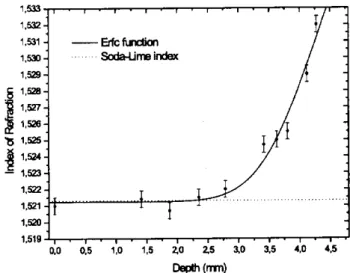
Fig. 3presentsthe GRIN prolefor 48hours and
550 o
Cwithdepthofabout1.950.05mm.
ThefullurveinFig. 3isthebesttof
experimen-tal data,usingtheequation3. Therefrativeindex at
thesurfaen
0
= 1.52100.0005,themaximum
vari-ation of n, n = 0.0107 0.0005 and the diusion
oeÆient D = (1.6 0.3)10 6
mm 2
/swere obtained
fromthis best t.
Figure 3. Axial GRIN prole produed by Li +
for Na +
exhangeinasoda-limeglassfor48hoursand550C o
.
IV Ray traing
In Fig. 4,alaser beamis inidenton aslabof GRIN
glasswith thiknessL. beingtheangle of inidene
of laserbeamand
o
theangleof refrationatthe
en-tranesurfae,afterreahingGRINregion,atanypoint
x,aordingtoSnell'slaw:
n
air
sin=n
0 sin
0
=n(x)sin(x) (4)
Figure4.Laser beaminidentonaslabofGRINglass.
wherex ismeasuredfrombeginningofGRINand
per-pendiulartoslabsurfae. Therayemergesatanangle
withrespetto thenormaltoglasssurfae. Sinein
entering under angle emergesalso forming anangle
,theeetof GRINistoprodueadisplaement
g
ofemergentrayomparedtoemergentrayfromaglass
withoutGRIN.Anumerialalulationusingthe
equa-tion4produedforGRIN glassobtainedhere,avalue
of about
g
0.00202mm for 57 o
.
Experimen-tally, this is avalue toosmall to be measured due to
the laser beam diameter. The table 1 lists values of
g
for between 30 and 80 o
. The Fig. 5 shows the
variationof
g
asfuntionof.
Table1.
g
asfuntion oftheinideneangle.
(degrees)
g (mm)
30 0.00132
36 0.00156
42 0.00177
45 0.00185
51 0.00198
54 0.00201
57 0.00202
60 0.00200
63 0.00195
69 0.00174
75 0.00139
81 0.00090
Figure5. Variationof
g
asfuntionof.
V Disussion and Conlusion
AordingtoKindred[11℄,inmanyasestherefration
index islinearlydependentontheonentration. This
is the present ase. With the exhange Li +
$ Na +
,
Haun et al. [12℄ didnott thetheGRIN prole with
ofexhangeandthevariationnoftheindexof
refra-tioninrease with the time of exhange, however, the
resultshown inFig. 2indiatedthat forxed time of
48hours,thedepthofexhangeandndidnothange
withtemperaturein therange525 o
Cand600 o
C. This
lastresultisduetotheinreaseinthethiknessof
rys-tallizedlayer. Themaximumvariationnandlargest
depth of exhange were obtainedfor time between 48
and60hoursat550 o
C,aswellasfor48hoursat
tem-perature between 550 o
C and 575 o
C. For 48 hours at
550 o
C,n=0.01070.0005andadepthof1.950.05
mmwereobtained. AtthistemperatureaoeÆientof
diusionofLi +
withvalueD=(1.60.3)10 6
mm 2
/s
wasobtained. Meyer-Arendt[13℄ suggestedtheuse of
GRIN glass to eliminate spherialaberration.
Grind-ingandpolishingtheGRINglassregionapreliminary
resultshowedalenswithoutspherialaberration.
Aknowledgements
TheauthorsaknowledgeCNPqandFAPESPfor
-nanialsupport. ThanksareduetoEng. MarosGibin,
Head, Centro Tenio de Elabora~ao doVidro,
Com-panhiaSantaMarina,forprovidinguswiththesamples
usedinthispaper.
Referenes
[1℄ M.Garnkel,J.Phys.Chem.72,4175(1968).
[2℄ R.H. Doremus and J. Marinsky, in Ion Exhange in
Glasses(MarelDekker,NewYork,1969)p.5.
[3℄ J.P.Sands,J.Opt.So.Am.60,1436(1970).
[4℄ J.P.Sands,J.Opt.So.Am.61,1086(1971).
[5℄ D. T. Moore and J. P. Sands, J. Opt. So. Am. 61,
1191(1971).
[6℄ F.P.Kapron,J.Opt.So.Am.60,1433(1970).
[7℄ M.A.Pikering,R.L. TaylorandD.T.Moore,Appl.
Opt.25,3364(1986).
[8℄ R. K. Morh, J. A. Wilder, P. B. Maedo and P. K.
Gupta,inDigestofTopialMeetingonGradientIndex
OptialImaging Systens(Opt. So.Am.),Washigton,
D.C.(1979).
[9℄ M.Yamane andS.Noda, J.Ceram.So.Japan,101,
11(1993)
[10℄ D.S.Kindred,J.BentleyandD.T.Moore,Appl.Opt.
29,4036(1990).
[11℄ D.S.Kindred,Appl.Opt.29,4051(1990).
[12℄ N.Haun,D.S.KindredandD.T.Moore, Appl.Opt.
29,4056(1990).
[13℄ J. R. Meyer-Arendt, inIntrodution to Classial and
Modern Optis (Prentie Hall, New Jersey, 1995) p.