Accelerating the Adoption of Electric Mobility in Chile
Part I: Project Information Name of Parent Program
Global Programme to Support Countries with the Shift to Electric Mobility.
GEF ID 10277 Project Type MSP
Type of Trust Fund GET
CBIT/NGI CBIT NGI Project Title
Accelerating the Adoption of Electric Mobility in Chile Countries
Chile
Agency(ies) UNEP
Other Executing Partner(s):
Agency of Sustainability Energy (ASE), on behalf of the Ministry of Energy, Executing Partner Type
CSO
GEF Focal Area Climate Change Taxonomy
Focal Areas, Climate Change, Climate Change Mitigation, Sustainable Urban Systems and Transport, Influencing models, Deploy innovative financial instruments, Demonstrate innovative approache, Strengthen institutional capacity and decision-making, Transform policy and regulatory environments, Convene multi-stakeholder alliances, Stakeholders, Communications, Education, Public Campaigns, Behavior change, Awareness Raising, Strategic Communications, Type of Engagement, Consultation, Partnership, Participation, Information Dissemination, Civil Society, Academia, Non-Governmental Organization, Private Sector, Financial intermediaries and market facilitators, Large corporations, SMEs, Capital providers, Individuals/Entrepreneurs, Gender Equality, Gender Mainstreaming, Beneficiaries, Women groups, Gender results areas, Access to benefits and services, Capacity, Knowledge and Research, Capacity Development, Knowledge Generation, Workshop, Seminar, Professional Development, Training, Innovation, Knowledge Exchange, Peer-to-Peer, South-South, North-South, Field Visit
Rio Markers
Climate Change Mitigation Climate Change Mitigation 2 Climate Change Adaptation Climate Change Adaptation 0
Submission Date
7/8/2019
Expected Implementation Start 1/1/2021
Expected Completion Date 12/31/2023
Duration 48In Months Agency Fee($) 160,638.00
A. FOCAL/NON-FOCAL AREA ELEMENTS
Objectives/Programs Focal Area Outcomes Trust
Fund GEF
Amount($) Co-Fin Amount($)
CCM-1-2 Promote innovation and technology transfer for sustainable energy breakthroughs for electric drive technology and electric mobility
GET 1,784,862.00 18,520,000.00
Total Project Cost($) 1,784,862.00 18,520,000.00
B. Project description summary
Project Objective
Accelerate and scale-up the adoption of low-carbon electric vehicles in Chilean regions.
Project
Component Financin
g Type Expected
Outcomes Expected Outputs Trust
Fund GEF Project Financing($) Confirmed Co-Financing($)
Component 1.
Institutionalization of low-carbon electric mobility
Technical Assistance
1. The government demonstrates enhanced coordination, consultation and capacity for promoting the inclusive uptake of electric mobility in the Chilean regions
1.1. A national electric mobility coordination body is created for governmental stakeholders
1.2. A multi-stakeholder consultation strategy is implemented to engage all Chilean region stakeholders in the transition to electric mobility
1.3. Chilean region local governments and other regional stakeholders are trained on technical, financial, and regulatory aspects of electric mobility
GET 229,048.00 1,860,000.00
Project Component
Financin g Type
Expected Outcomes
Expected Outputs Trust Fund
GEF Project Financing($) Confirmed Co-Financing($)
Component 2.
Short-term barrier removal through low-carbon e- mobility energy demonstrations
Investment 2. Citizens of Chilean regions begin to use electric mobility for their public transport needs
2.1. The viability of 6 electric vehicles as part of the fixed-route taxi fleet is demonstrated to local and national stakeholders in Antofagasta, Puerto Montt and Talca
2.2. Evidence of the viability of electric vehicles in Antofagasta, Puerto Montt and Talca is disseminated to national and Chilean region decision-makers
GET 594,745.00 7,100,000.00
Project Component
Financin g Type
Expected Outcomes
Expected Outputs Trust Fund
GEF Project Financing($) Confirmed Co-Financing($)
Component 3.
Preparing for scale-up and replication of low- carbon electric mobility
Technical
Assistance 3. The private sector purchases electric vehicles to use as fixed-route taxis in Chilean regions
3.1. Financial instruments are created to incentivize fixed-route taxi owners to purchase electric vehicles in Chilean regions 3.2. Business models for deploying electric fixed- route taxis in Chilean regions are presented to national and regional government entities and the private sector for
implementation
3.3. Investment roadmaps for the long-term viability of Chilean electricity grids to support electric vehicle uptake are presented for implementation by national policy-makers and regional electricity utility companies
GET 641,955.00 7,140,000.00
Project Component
Financin g Type
Expected Outcomes
Expected Outputs Trust Fund
GEF Project Financing($) Confirmed Co-Financing($)
Component 4.
Long-term environmental sustainability of low-carbon electric mobility
Technical
Assistance 4. The Chilean government takes action towards implementing standards for ensuring the environmental sustainability of electric mobility
4.1. Waste companies are trained in reusing,
recycling and final disposal of vehicles (both
conventional and electric) and electric vehicle batteries
4.2. Standards and a legal framework for regulating the waste management, extended responsibility of the producer and recycling of electric vehicles and electric vehicle components are drafted for adoption by the Ministry of
Environment
GET 90,054.00 1,950,000.00
M&E GET 66,800.00
Sub Total ($) 1,622,602.00 18,050,000.00
Project Management Cost (PMC)
GET 162,260.00 470,000.00
Sub Total($) 162,260.00 470,000.00
Project Management Cost (PMC)
Total Project Cost($) 1,784,862.00 18,520,000.00
C. Sources of Co-financing for the Project by name and by type
Sources of Co-financing Name of Co-financier Type of Co-financing Investment Mobilized Amount($)
Private Sector Enel X Equity Investment mobilized 8,200,000.00
Private Sector Sociedad Austral de Electricidad Sociedad Anónima (SAESA) Equity Investment mobilized 160,000.00
Private Sector Empresa Nacional de Energía S.A. (ENEX) Equity Investment mobilized 2,000,000.00
Recipient Country Government Ministry of Energy In-kind Recurrent expenditures 410,000.00
Recipient Country Government Ministry of Transport and Telecommunications In-kind Recurrent expenditures 200,000.00
Recipient Country Government Ministry of Environment In-kind Recurrent expenditures 50,000.00
Recipient Country Government Production Development Corporation (CORFO) Grant Investment mobilized 7,000,000.00
Civil Society Organization Agency of Sustainability Energy (ASE) In-kind Recurrent expenditures 100,000.00
Civil Society Organization Agency of Sustainability Energy (ASE) Public Investment Investment mobilized 400,000.00
Total Co-Financing($) 18,520,000.00 Describe how any "Investment Mobilized" was identified
The “investment mobilized” was identified through bilateral meetings with potential co-financiers within the government: • Enel X, the electric mobility branch of Enel, is one of the biggest international electricity distribution companies in Chile. During the project, Enel X will invest USD 8.2 million in the deployment of approximately 1200 electric vehicle charging points for private and light duty vehicles through-out Chile. • ENEX is a Chilean energy company investing in incorporating electric mobility assets and solutions as additions to its fossil fuel portfolio. During the project, the company plans to invest USD 2 million in electric vehicle charging infrastructure. Investments will include fast charging stations in their operational service station network and charging infrastructure in private and public areas across Chile. Furthermore, they will provide digital tools for customers to
locate available charging stations and help clients transition their existing conventional fleets to electric solutions. • As the main electricity distribution company in the south of Chile, the National Energy Company (SAESA) has developed a charging network for electric vehicles covering over 1,200 km. During the project, the company will continue growing its charging network in the Chilean regions, providing further opportunities for the uptake of electric mobility across the southern regions of the country. • The investment mobilized through CORFO consists of funds provided through the private sector to a chosen recipient for advancing the scale-up of electric mobility in Chile, with the process administered by CORFO. This recipient will undertake activities including to: develop and implement methodologies for the interoperability of electromobility at the national level; promote the development of local suppliers in technological solutions in electromobility; and promote the development of specialized human capital in the use of electromobility. • The investment mobilized through the Agency of Sustainability Energy comes through financing received from the Ministry of Energy. It has the aim of: promoting electric mobility in fixed-route transport in local governments; promoting guidelines for local governments on incorporating public electric vehicle charging infrastructure; supporting the acquisition of electric vehicles for fixed-route taxis; supporting the acquisition of residential charging systems and their installation; and supporting vehicle monitoring during operation.
D. Trust Fund Resources Requested by Agency(ies), Country(ies), Focal Area and the Programming of Funds
Agency Trust Fund Country Focal Area Programming of Funds Amount($) Fee($)
UNEP GET Chile Climate Change CC STAR Allocation 1,784,862 160,638
Total Grant Resources($) 1,784,862.00 160,638.00
E. Non Grant Instrument
NON-GRANT INSTRUMENT at CEO Endorsement
Includes Non grant instruments? No Includes reflow to GEF? No
F. Project Preparation Grant (PPG) PPG Required
PPG Amount ($) 50,000
PPG Agency Fee ($) 4,500
Agency Trust Fund Country Focal Area Programming of Funds Amount($) Fee($)
UNEP GET Chile Climate Change CC STAR Allocation 50,000 4,500
Total Project Costs($) 50,000.00 4,500.00
Core Indicators
Indicator 6 Greenhouse Gas Emissions Mitigated
Total Target Benefit (At PIF) (At CEO Endorsement) (Achieved at MTR) (Achieved at TE)
Expected metric tons of CO₂e (direct) 0 225779 0 0
Expected metric tons of CO₂e (indirect) 0 219531 0 0
Indicator 6.1 Carbon Sequestered or Emissions Avoided in the AFOLU (Agriculture, Forestry and Other Land Use) sector
Total Target Benefit (At PIF) (At CEO Endorsement) (Achieved at MTR) (Achieved at TE)
Expected metric tons of CO₂e (direct) Expected metric tons of CO₂e (indirect) Anticipated start year of accounting Duration of accounting
Indicator 6.2 Emissions Avoided Outside AFOLU (Agriculture, Forestry and Other Land Use) Sector
Total Target Benefit (At PIF) (At CEO Endorsement) (Achieved at MTR) (Achieved at TE)
Expected metric tons of CO₂e (direct) 225,779
Expected metric tons of CO₂e (indirect) 219,531
Anticipated start year of accounting 2021
Duration of accounting 15
Indicator 6.3 Energy Saved (Use this sub-indicator in addition to the sub-indicator 6.2 if applicable)
Total Target Benefit Energy (MJ) (At PIF) Energy (MJ) (At CEO Endorsement) Energy (MJ) (Achieved at MTR) Energy (MJ) (Achieved at TE)
Target Energy Saved (MJ) 5,148,907,298
Indicator 6.4 Increase in Installed Renewable Energy Capacity per Technology (Use this sub-indicator in addition to the sub-indicator 6.2 if applicable)
Technology
Capacity (MW) (Expected at PIF)
Capacity (MW) (Expected at CEO Endorsement)
Capacity (MW) (Achieved at MTR)
Capacity (MW) (Achieved at TE)
Indicator 11 Number of direct beneficiaries disaggregated by gender as co-benefit of GEF investment
Number (Expected at PIF) Number (Expected at CEO Endorsement) Number (Achieved at MTR) Number (Achieved at TE)
Female 2,880
Male 2,650
Total 0 5530 0 0
Provide additional explanation on targets, other methodologies used, and other focal area specifics (i.e., Aichi targets in BD) including justification where core indicator targets are not provided
The direct beneficiaries were calculated based on the expected participation in workshops and capacity-building activities, use of the deployed pilots in Antofagasta, Talca and Puerto Montt, and use of the financial instruments. For the workshops and capacity-building activities, a ratio of 35% participation of women was estimated. This is based on estimates of women participation in this industry (see the gender section). For the users of the pilots and financial instruments, calculations were based on the 6 pilot electric vehicles and 30 purchased electric vehicles with usage of one year. Nationally, women are 52.5%
of users of public transport and this ratio was used to calculate the beneficiaries of these electric vehicle taxis. Disaggregation by gender was based on information provided by the Ministry of Energy Gender Officer, taking into consideration the gender distribution of the country’s population, workforce distribution and public transport usage (see section on gender equality). Explanation on the calculation of indicator 6 may be found in Annex M.
Part II. Project Justification
1a. Project Description
a. Global environmental and/or adaptation problems, root causes and barriers that need to be addressed
A global transition to low- and zero- emission mobility is essential to meet international climate commitments, including the Paris Climate Agreement. The transport sector is currently responsible for approximately one quarter of the world’s energy-related carbon dioxide emissions;[1]1 this is expected to grow by 2050. This is due to the fact that, based on business as usual projections, the global vehicle fleet is likely to double over the next 30 years. In addition, the transport sector is a leading contributor of short-lived climate pollution such as black carbon. The global vehicle fleet is set to double by 2050, and almost all this growth will take place in low- and middle-income countries. By 2050, three out of five cars will be found in developing countries.[2]2 This means that achieving global climate targets will require a shift to zero emissions mobility in all countries, including low- and middle-income ones.
Chile’s total annual carbon dioxide (CO2) emissions account for approximately 0.23% of the world’s total greenhouse gas emissions.[3]3 On CO2 emissions per capita, Chile had 4.65 Mt of CO2 per capita in 2018.[4]4 The country’s energy matrix is diverse, with coal and natural gas representing 54% of installed capacity, hydro power 31% and renewables, such as biomass, solar and wind power, representing 15%.[5]5 The resulting carbon intensity of the national electricity matrix is 0.4056kg CO2/kWh,[6]6 and as such is lower than the global average. Emissions from the power generation sector are 31% of total national emissions.[7]7 Although the power sector is currently the prime contributor of the country’s emissions, Chile has already laid out an ambitious emission reduction scheme for it power sector (see section 2) and aims for it to be carbon neutral by 2050.
With the country working to clean its power sector, achieving its nationally determined contribution (NDC) will depend on addressing challenges related to transport. Overall, the transport fleet is almost entirely powered by petroleum derivatives such as bunker oil, jet fuel, diesel, and gasoline (98%). The transport sector is the second largest contributor to the country’s greenhouse gas (GHG) emissions, accounting for 35% of the country’s overall energy consumption[8]8 and more than 21% of its GHG emissions.[9]9 In addition to GHG emissions, toxic emissions from the vehicle fleet and energy generation, such as carbon monoxide, unburned hydrocarbons, nitrous oxide (NOx), sulphur dioxide and particulate matter (PM), have a significant negative impact on the air quality of many urban areas. In 2018, 24 of the 38 measuring stations located in the most populated cities of the country registered PM 2.5 concentration higher than World Health Organization guideline of 10 ug/m3 as an annual mean value.[10]10 Efforts to address air pollution may also reduce the impacts of the COVID pandemic and support the recovery process, with initial studies suggesting that poor air quality contributes to the impact of COVID-19.
Road vehicle fleet represents 88%6 of Chile’s GHG transport emissions and is growing quickly: over the past decade the road fleet has grown at an annual rate per annum of 5.3%.[11]11 As expected, the GHG emissions of the sector have followed this trend. Therefore, to contain and eventually reduce transport sector GHG emissions it is imperative to promote a shift to zero-emission transport.
In recent years, Chile has made bold targets to transition to electric mobility to decrease GHG and other pollutant emissions from the transport sector. It aims to have 100%
electrification of its public transport system by 2040 and 50% electrification of private cars by 2050. The country’s capital city has made significant efforts towards these targets.
Santiago de Chile already has a fleet of more than 400 electric buses operating as part of the city’s public transport system, with more buses expected to become operational in the near future. Furthermore, there are almost 200 electric vehicle chargers across the country, with many in the main metropolitan area. However, outside of Santiago, the Chilean regions have not been able to transition to electric mobility. To date there are no electric buses and just four electric taxis operating outside of the capital city’s metropolitan area and Valparaiso, the second largest city (see section 2 for details).
Barriers to the scale-up of the Chilean regions
The root causes and barriers which hold Chile back from transitioning to low-emission electric mobility in the Chilean regions are the following:
1. Weak coordination, consultation and capacity to promote electric mobility in the Chilean regions:
a) There is weak governmental coordination in the development of the electric mobility agenda in the regions. The agenda involves several national ministries, including the Ministry of Transport and Telecommunications, the Ministry of Energy and the Ministry of Environment, and regional and local governments. Historically the ministries have had independent mandates; however these are now becoming ever more interconnected, especially on electric mobility. While the ministries have collaborated effectively at the national level, leading to the creation of a National Electromobility Strategy and other policies (see section 2), technical coordination between ministries at the regional level has been weak and requires support as focus shifts to the regions. In particular, there is a need to coordinate effectively with the Chilean regional governments (GOREs) on technical matters. The GORES will play a key role in ensuring the effectiveness and sustainability of electric mobility interventions introduced in the regions. To date there has been weak coordination between the central government ministries, which are leading the development and implementation of actions to promote electric mobility in the regions, and the GOREs, which host the interventions and play a key role in ensuring their acceptance, scale-up and sustainability. This lack of coordination has led to a lack of coherence and coordination in the implementation of activities in the regions, hampering efforts to scale up electric mobility in the regions. Coordination will be key for ensuring an efficient, effective and sustainable transition to electric mobility, including on the GEF-6 sustainable transport and GEF-7 electric mobility projects which both focus on the regions.
b) A second barrier is related to a lack of social acceptance of electric mobility in the regions, especially with regards to the electrification of public transport. Recent social disturbance across Chile has highlighted the challenges of effecting social-technological transitions which disrupt the state of play. While interest in electric mobility in the regions continues to be high, a current barrier is related to the social acceptability of such a technological transition in public transport, including as related to perceived costs, changes to services, and effects on local livelihoods. Such perceptions are increased by the COVID-19 pandemic, which has placed greater focus on the need for ensuring local economic and social well-being. Considering the significant economic and social differences between the regions and Santiago, there is a need to ensure that efforts to facilitate the transition to a low-carbon electric mobility system incorporate the views and participation of different representative groups of local civil society actors, thus ensuring that the transition is thus socially-inclusive.
c) Thirdly, while in Santiago the capacity of stakeholders and general institutional preparedness for promoting electric mobility is high, there is a significant lack of institutional capacity in the regions for promoting electric vehicle adoption. Regional governments are yet to participate in capacity-building activities on electric mobility as these have focused on building the capacity of actors in Santiago. Without capacity, local and regional governments are ill-equipped to plan and finance efforts to scale-up electric mobility adoption in their jurisdiction. For instance, while the private sector is moving forward on installing charging stations through-out the regions, regional actors are without capacity to inform such plans and ensure that the installation of charging networks responds to the needs of public transport networks (for instance, for fixed route-taxis) and the social considerations of the local community. By increasing their knowledge, such administrators will be able to better inform regional efforts on electric-mobility in their jurisdiction, ensuring that such efforts respond to the local needs of the private sector and civil society. Furthermore, local actors are hesitant to adopt electric vehicles in the regions as they believe emergency and safety management of electric vehicle accidents would have to come from the country’s capital. While new capacity-building activities, including through the GEF-6 project (see sections 2 and 3) will focus on regional professionals and technicians on the operation and maintenance of electric vehicles, other key actors are yet to be attended to. In particular, regional administrators, safety professionals and fixed-route taxi stakeholders do not yet have capacity on electric mobility. To achieve Chile’s national goal of achieving 100% electrified public transport by 2040 (see section 2), these actors need to play a key role.
2. Lack of confidence in the viability of electric mobility for the regions:
a) There is a significant lack of confidence amongst regional and local stakeholders as to whether electric vehicles would be able to fulfil the needs and particularities of the Chilean regions. This applies to private car owners, who question the technical viability of electric vehicles for functioning effectively in the region’s conditions, including as related to climate (hot and dry in the north, cold in the south) and the mountainous terrain. It also applies to public transport drivers and owners, who lack not only the confidence in the technical capability of the vehicles to satisfy the required operation, but also awareness and knowledge on how to harness the advantages of electric mobility for improving the quality of service through the use of such technologies. As noted previously, to date no electric buses and only four electric taxis have been tested outside of Santiago.
Together, this lack of experience results in a hesitation on the part of local and regional authorities to support such a transition, knowing that failure in technology adoption would be politically and economically costly. Such hesitation trickles down to the private sector, which consequently waits on others to enter and test the market first (fear of first entry).
b) Due to the lack of experience with electric vehicles in the Chilean regions, there is also a lack of data on the use of electric vehicles in such conditions. This results in a lack of information for supporting national and regional governments, the private sector, academia, and other key actors in developing, monitoring and evaluating policies, regulations and initiatives for promoting the uptake of electric mobility in the regions. With an absence of data through-out the regions, weaker regions are reluctant to adopt the technology until they have evidence from experiences in more wealthy regions.
3. Lack of finance and private sector participation in shifting the market to electric mobility in the Chilean regions:
a) Chile has begun to implement a comprehensive policy and regulatory framework for incentivizing the uptake of electric vehicles, including to reduce the incremental upfront cost differential between conventional and electric vehicles (for instance, through regulations on energy efficiency of vehicles, see section 2). However, even with these incentives, the significant upfront cost difference between electric and conventional cars of otherwise similar attributes continues to be one of the central barriers to electric vehicle uptake in the regions. This barrier is accentuated by the economic and social conditions of the regions, which are fundamentally different to Santiago. The regions have lower GDP per capita which results in less purchasing power for individuals to cover the higher upfront costs of electric vehicles.[12]12 The government is now aiming to address this gap in the regions. On the bus sector, the Ministry of Transport and Telecommunications (MTT) is working to formalize the sector and electrify it (see section 2). This will lead to a purchasing mechanism for buses similar to that currently functioning in Santiago. On fixed-route taxis, MTT together with the regional governments has introduced a vehicle replacement subsidy with the aim of incentivizing the purchasing of electric vehicles for this sector. However, to date the fixed-route taxi industry of more than 50,000 vehicles continues with little sign of transition to electric vehicles. The subsidy has had no impact (no electric vehicles purchased to date) due to a lack of consumer confidence in the technology and the insufficient size of the subsidy. The key barrier for taxi owners is the up-front costs, as even with cheaper electricity prices they have too much uncertainty in the technology to take the plunge on possibly cheaper total cost of ownership.
Furthermore, while the private financial and banking sector need to play a key role in addressing this barrier, a lack of experiences with electric mobility in the regions (as aforementioned) have led to an absence of financial products focused on electric vehicles (see below and section 2 for more information). On taxis, existing financial institutions have a lack of understanding on how to create financial instruments that are catered to the needs of fixed-route taxi drivers and electric vehicles. Currently, fixed-route taxi drivers purchase vehicles through a combination of capital, loans from financial institutions and a subsidy of the Ministry of Transport and Telecommunications (see section 2). The Banco Estado is the primary financial institution working with fixed-route taxi operators, as it is the only institution which has developed a methodology for evaluating the credit- worthiness of fixed-route taxi drivers. Its model takes into account the total cost of ownership of the conventional vehicle and average income over a time-period for the driver.
The current loan model is not effective for electric vehicles, as the higher up-front cost skews the monthly repayments by more than 100%.
b) In addition to a lack of confidence and high up-front costs, another key significant barrier has been a lack of public charging infrastructure. Thankfully, both the public and private sector are addressing this barrier (see section on co-financing and section 2). However, to electrify public transport as a first step towards the electric mobility in the regions, a key barrier is a lack of knowledge of national and regional authorities on the public transport ecosystem in the regions, and in particular on fixed-route taxis. This translates into a lack of understanding as to the vehicle and infrastructure requirements for electrifying this sector, in particular as to the key locations of public chargers. While MTT has made progress in developing understanding and planning for electrifying buses in the regions, fixed-route taxis are yet to be attended to, even though they play a central public-transport function in most regional cities. While authorities have an overview of taxi numbers, there is no comprehensive mapping or listing of fixed-taxi routes.[13]13 For national authorities, this results in a lack of understanding on how to develop and locate charging infrastructure, and develop regulations and strategic plans for facilitating the transition of this sector. For regional and local authorities, this lack of knowledge results in a lack of identification of opportunities for public and private sector participation and as to how to address local barriers to market entry. Together, this lack of knowledge holds back the private sector from entering into electric mobility initiatives in the regions.
c) Finally, another barrier related to charging infrastructure is that regional governments and local stakeholders lack confidence in the capacity of regional grid infrastructure to support charging infrastructure. They also lack understanding as to the required investment size and rollout timeframe to cover the increases in electricity demand due to electric vehicles. This again increases the uncertainty around the viability of an electrified transport system, which in turn slows down the uptake of infrastructure investment and thus adoption of the technology by primary users such as fixed-route taxi drivers. Furthermore, with the lack of a detailed analysis of the current and required regional level grid outlook,[14]14 local governments fear that electric mobility uptake will lead to an over-demand for electricity, raising power costs and increasing the need for investment in electricity network infrastructure (with its associated political and economic implications). This leads to hesitation of these actors in promoting the uptake of electric mobility with its consequent demand on the electricity grid without firstly developing a plan for managing the impact together with private sector energy suppliers.
4. Lack of clarity on environmental management of electric mobility:
a) Finally, there is a lack of capacity of regional actors to undertake the environmental management of electric vehicles and their batteries, leading to hesitation amongst regional decision-makers in promoting electric mobility. The absence of electric vehicles in the regions makes it difficult for local actors to gain experience on managing the recycling and disposal of electric vehicles and their batteries. Furthermore, such actors, and particular the private sector in the waste industry, have little knowledge of market opportunities and business models for the reuse and recycling of electric vehicle components and electric batteries. This absence of capacity combined with a lack of regulations leads to hesitancy on the part of regional authorities to promote electric mobility as they are unsure as to the environmental implications and associated costs.
b) Chile is yet to introduce regulations for the waste management, extended producer responsibility and recycling of lithium car batteries and electric vehicles. In 2016, Chile established law 20.920 (known as the extended responsibility of the producer, REP) for waste management, extended producer responsibility and promotion of recycling. While the development of regulations has advanced on various workstreams under the law (such as on car tires), to date it has not established regulations for electric car batteries.
Furthermore, although the development of the law considered its application to vehicles (conventional and electric), the final law did not include their consideration. The lack of a legal framework on the extended producer responsibility for electric vehicles and their batteries poses uncertainty about the long-term environmental impact and costs of vehicle disposal. These leads to policy hesitation amongst decision-makers on promoting electric mobility in the country’s regions and hesitancy among vehicle manufacturers and importers. Furthermore, the lack of legal clarity on responsibility and cost of vehicle disposal hinders the development of circular economy business models for vehicles and their batteries.
b. Baseline scenario and any associated baseline projects Energy sector
Chile’s energy matrix is diverse, with coal and natural gas representing 54% of installed capacity, hydro power 31% and renewables such as biomass, solar and wind power 15%.[15]15 The resulting carbon intensity of the national electricity matrix is 0.4056kg CO2/kWh,[16]16 and as such is lower than the global average. At the current carbon footprint of electricity, e-mobility applications will immediately result in CO2 emission reductions in the order of 35% to 25%, depending on conventional benchmark vehicle and the technical specifications of the EV (i.e. range & battery size). Emissions from the power generation sector are 31% of total national emissions.[17]17 Although the power sector is currently the prime contributor of the country’s emissions, Chile has already laid out an ambitious emission reduction scheme for it power sector and aims for it to be carbon neutral by 2050 (see below). The price of electric is currently US$0.087/kWh.[18]18
Transport sector
Chile’s transport sector contributes 21% of its GHG emissions, with road transport representing 18.5% of national emissions. Between 1990 and 2018, transport emissions increased 191.8 % due to the growth of the vehicle fleet caused by population growth, increased purchasing power and improvements in national infrastructure.[19]19 The sector consumes 35% of all energy in Chile, with 82% of consumption coming from road transport. 98% of all transport is fuel from fossil-fuel derivatives.[20]20 Chile has more than 5.4 million registered vehicles, with more than 3.3 million in the Chilean regions.[21]21 More than 60% of these are passenger vehicles. The number of vehicles is growing rapidly, primarily due to private consumption, with a growth rate of 4.7% a year between 1998 and 2016, and a rate of 5.5% a year between 2010 and 2016.[22]22 Between 2004 and 2016 car sales grew at 4.3% a year, higher than the annual GDP growth rate of 3.2%.[23]23
Box: Financing of fixed-route taxis
Currently, fixed-route taxi drivers purchase vehicles through a combination of capital, loans from financial institutions and a subsidy of the Ministry of Transport and Telecommunications (see below). A key challenge is that not all owners of fixed-route taxis are able to access loans from the local financial institutions due to the nature of their variable and informal income. The Banco Estado is the primary financial institution working with fixed-route taxi operators, as it is the only institution which has developed a methodology for evaluating the credit-worthiness of fixed-route taxi drivers. Its model takes into account the total cost of ownership of the conventional vehicle and average income over a time-period for the driver. Consequently, it currently holds more than 75% of the market for loans for the purchasing of conventional fixed-route taxis and typically finances between 80 and 100% of the required capital. The current loan model is not effective for electric vehicles, as the higher up-front cost skews the monthly repayments by more than 100%.
In terms of the Chilean region public road transport systems, regional systems are fundamentally different to the capital city. While Santiago has a formal transport system concessioned to large operators, regional systems are atomized and informal, comprising of small companies and individual owners. The Metropolitan region road public transport system of Santiago is comprised mainly of buses, accounting for 7,218 of the 18,139 urban buses operating across the country (buses in the regions are generally smaller: 20-30 seaters). However, regional public transport systems rely heavily on fixed-route taxis. The fixed-route taxi (known as taxi-colectivos in Chile) is a mode of transport which falls between a traditional taxi and a bus. Fixed-route taxis in Chile have defined route, but generally don’t have timetables, instead waiting for the vehicle to be full before departing, or departing on decision of the driver. The national fixed-route taxi fleet adds to 51,744 vehicles, out of which 41,608 operate outside of the Metropolitan Region of Santiago, and
contributes an estimated 1,000,000 tonnes CO2e emissions per year. In the regions, such taxis out number buses by a ratio of almost 6 to 1. Out of the almost 2000 fixed route taxi lines operating across the country, 1640 operate in regional cities and towns. Fixed-route taxis play a key role in the regions, enhancing low-cost mobility options for low-income families across the country. The taxis work extended hours beyond those of buses, and facilitate enhanced network connectivity, connecting primary bus routes with a multitude of areas in city-peripheries. The vehicles are generally 4-seaters, with the average vehicle age of the entire fleet 5.9 years, with the oldest operating vehicle being 11 years old.[24]24
On electric vehicles, Chile has an estimated 1265 in the country.[25]25 This represents less than 0.013% of the total vehicle fleet in the country. There are currently no electric buses and just four electric taxis running in the regions, in Coyhaique and Valparaíso. This is despite the government making available 120 licenses available for electric taxis in Viña del Mar, Valparaíso and San Antonio. In Santiago, at the end of 2018 the energy company Engie introduced 30 Hyundai Ioniq electric business taxis (not-fixed route taxis) into the public transport system. The taxis are operated by Transvip and utilize online vehicle payment systems. Experiences to date have been positive, with vehicle autonomy responding to client requirements. The GEF project will draw upon lessons learned from this initiative (see output 2.1). On charging infrastructure, there are currently 192 public chargers (38 fast, 154 slow) distributed along the twelve regions of the country.[26]26 Out of these, approximately two-thirds are located in the Santiago Metropolitan and Valparaiso regions, with one-third located across the rest of the country.[27]27 This focus on Santiago and Valparaiso reflects the rapid uptake of electric mobility in the country’s capital and the slow (or absence of) progress in the country’s regions.
On electric buses, Santiago contains the largest number of electric buses in one city outside of China.[28]28 In just three years it has gone from a demonstration of three buses (in 2017) to the operation of 435 regular buses (in 2020). In October 2017, a pilot project was initiated, with the support of Centro Mario Molina Chile and the Technical Research Centre of Finland (VTT), with three electric buses operating as a demonstration in the city centre. Following this experience, Transantiago operators MetBus, Vule and Servicio de Transporte de Personas (STP) together with the Transantiago administrators agreed to incorporate electric mobility into their services. In 2018, MetBus started operating 100 electric buses in the “Grecia” corridor, route 516. In the beginning of 2019, Vule started operating 75 electric buses on route “Avenida Bernardo O'Higgins”. That same year STP started circulating 25 electric buses on “Avenida Vicuña Mackenna”. Overall, the electric services have had high usage levels and positive service satisfaction feedback. As of early 2020, the electric bus fleet in Santiago amounts to 435 vehicles (approximately 6% of total fleet) and is expected to continue growing over the following years, with a new
tendering process promoting the inclusion of electric vehicles expected to take place during 2020.[29]29 The Zero Emission Bus Rapid-Deployment Accelerator (ZEBRA), funded by the Partnering for Green Growth and the Global Goals 2030 (P4G), and supported by partner Centro Mario Molina Chile, is currently aiming to support the further scale up of electric buses in Santiago to 2000 units.
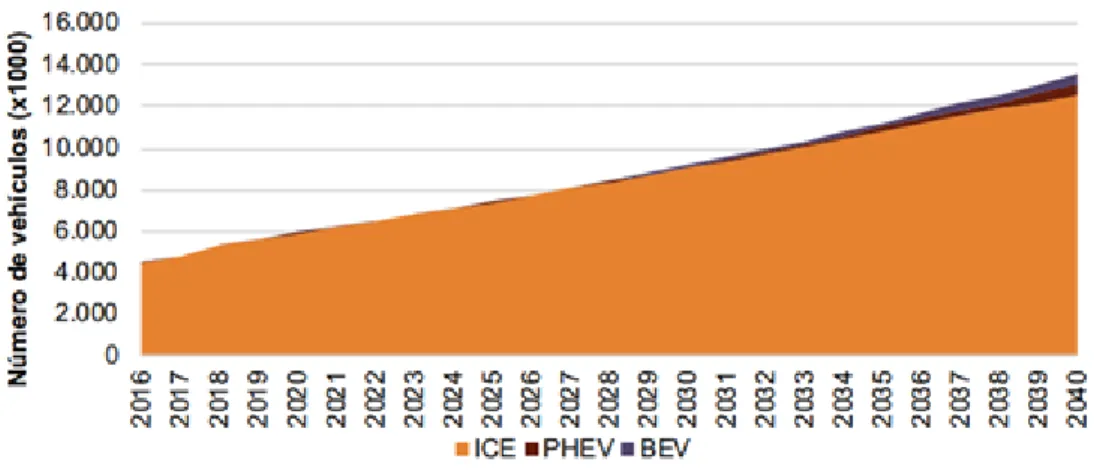
On overall electric vehicle market penetration, the baseline scenario estimates a slow uptake of plug-in and battery electric vehicles sales resulting in a fleet share of new sales of just over 10% of electric vehicles by 2040, and a total fleet share of less than 10% by 2040.[30]30 Based on the business as usual scenario, the transport sector will continue to predominate national GHG emissions until 2040 and beyond.
Figure 1: Share of electric vehicles as % of total new vehicle sales per year.
(ICE = internal combustion vehicle, PHEV = plug-in hybrid vehicle, BEV = battery electric vehicle, FCF = fuel-cell vehicle).
Figure 2: Number of vehicles in Chilean fleet by type.
(ICE = internal combustion vehicle, PHEV = plug-in hybrid vehicle, BEV = battery electric vehicle).
It is estimated that the fleet of fixed route taxis will grow from about 42,000 taxis today to about 51,000 by 2030 and more than 60,000 by 2050. Without any additional programmes and incentives other than those already envisaged in Chile today, it is projected that the electrification of the national fleet will take place at a slow pace. It is assumed that by 2030, only 3% of new taxis added to the fleet will be electric. Most new taxis will still be conventional internal combustion (ICE) diesel and gasoline vehicles. In the baseline scenario, a strong growth of hybrid vehicles is envisioned, with an estimated 30% of all new taxis being hybrid by 2030. On the growth of public buses in the regions, as the MTT is planning a significant restructuring of this sector (see below), estimates of growth have not been able to be made.
Policies and strategies
Chile has undertaken a series of measures to address the root causes and barriers mentioned in section 1 with the aim of facilitating a nation-wide transition to a low-emission transport sector. In terms of GHG emissions, as a signatory to the Paris Agreement Chile has set an ambitious nationally determined contribution (NDC).[31]31 This includes targets of:
· An unconditional reduction of the country’s GHG emission intensity of 30% by 2030 relative to the 2007 baseline;
· A conditional reduction, subject to international funding, of GHG emissions intensity of 35% to 45% by 2030 relative to the 2007 baseline.
Chile is also currently preparing a long-term climate development strategy, in accordance with article 4.19 of the Paris Agreement.[32]32 A participatory process for developing it is underway; it is estimated that the strategy will be finalized in 2021.
In the energy sector, the implementation of Chile’s NDC includes a national energy agenda led by the Ministry of Energy, which sets the following targets:[33]33
· 20% of the energy matrix consisting of non-conventional energy technologies by 2025;
· 20% reduction in energy consumption relative to business-as-usual scenarios by 2025.
Chile has also set ambitious long-term targets through its Energy 2050 policy.[34]34 Through this, the country aims to produce 70% of its total energy demand from renewable sources by 2050. In line with this, in June 2019 the Ministry of Energy and Aes Gener, Colbún, Enel and Engie agreed to decommission the eight oldest thermoelectric power plants by 2024.[35]35 Furthermore, the government passed Law 20/25, which promotes the diversification of the country’s energy mix. Also, a tax reform, passed in 2014, established a carbon tax of 5 USD per ton of CO2 emitted for electricity power plants of 50MW and above. More recently, the Chile has committed to phasing out all coal electricity generation, equal to 40% of the matrix, before 2040.[36]36
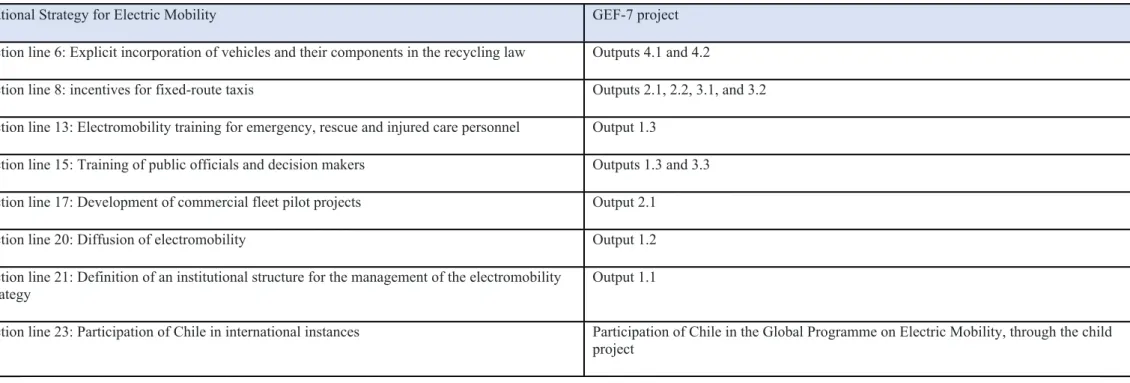
On transport, the key guiding document is the National Electromobility Strategy, which was launched in 2017. Through this, the country aims to electrify 100% of all public transport by 2040 and 40% of the country’s private car fleet by 2050. This is undertaken with the aim of contributing to the goals of energy efficiency and mitigation of GHG emissions and contributing to improving mobility and quality of individuals’ life; along with other benefits such as reduction of emissions of local pollutants and the adverse effects on the population’s health. The strategy sets forth an action plan with a series of action lines to achieve these targets:
- Establish the necessary regulations and standardization requirements of components that favor an efficient development of electromobility from the energy, environmental and mobility points of view;
- Promote the penetration of electric vehicles in public transport;
- Support the research and development of electromobility and enhance the formation of human capital at its different levels that allows its advance;
- Promote the development of electromobility, generating new balances that allow the market to support itself;
- Generate spaces for knowledge transfer and dissemination of information necessary for different actors to make decisions optimal with respect to electromobility.
Furthermore, through its Energy Roadmap 2018-2022, Chile has set a target of increasing the existing number of electric cars tenfold by 2022 compared to 2017 (2430 units by 2022). Key measures supporting the targets of the strategy and roadmap are the following:[37]37
Table 3. Policies and REGULATIONS promoting Electric Mobility
Name Type Year and status Description Objective
Labelling of energy consumption and CO2 emissions in light and medium vehicles
Regulatory 2016 Implemented and
active Supreme Decree N° 107, of 18 July 2016, the Ministry of Energy, extends the application of labelling to light, medium, electric and hybrid commercial vehicles and instructs on the
regulation of labelling of energy consumption for motor vehicles.
Allow consumers to include in their decision to purchase information on vehicle fuel consumption and CO2 emissions, contributing to strive in making informed decisions to reduce energy consumption by the transportation sector and contribute to the mitigation of climate change and air pollution.
Renew your bus program Economic
incentive 2011 Implemented and
active Subsidy associated to the law of Subsidy to Public Transportation (Law 20,378), which provides access for funding the renovation of old buses for public transportation, either in regions and in the rural area of the Metropolitan Region, by new buses with better technology and less polluting.
Modernize the existing fleet public transportation buses with less polluting vehicles, more efficient and safer. Replace old buses with newer and more efficient buses in different areas of the city of Santiago.
Renew your fixed-route taxi
program Economic
incentive 2015 Implemented and
active The Law of National Subsidy to Public Transportation creates a subsidy delivered by Regional Governments (GORE) for the
replacement of collective taxis with less polluting vehicles in regions, including electric and hybrid vehicles. Delivery of subsidies for replacement of light vehicles used as fixed-route taxis with more modern vehicles, considering scrapping of vehicles replaced in some cases.
Modernization of the existing fixed-route taxis fleet with less polluting vehicles, with standards of superior quality, more efficient and safer.
Green Tax for New Motor
Vehicles Regulatory 2015 Implemented and
active Article N°3 of Law 20,780, indicates that: "new motor vehicles, light and medium, with the exceptions in this article, shall pay, only once, an additional tax expressed in monthly tax units".
The tax is applied based on vehicle usage rates, NOx emissions and vehicle purchase price.
Electric vehicles are exempt from the tax. It began to govern all those who buy a new vehicle for private use starting December 29, 2014.
Encourage the entry of less polluting vehicles, allowing a cleaner and more efficient fleet of vehicles.
Electronic Procedure for Installation of Charging Points (TE-6)
Regulatory 2018 Implemented and
active Procedures for installation of charging
infrastructure. Includes geolocalisation data of the charging infrastructure.
Provide clarity to private sector on technical specifications and provide civil society with mapping of charging points.
Vehicle fuel standards Regulatory Implemented and active Euro V for all vehicles, except for urban buses in
Santiago which are required to be Euro VI Increase fuel quality, reducing GHG and PM emissions, and reducing cost differential between conventional and electric vehicles.
In addition to the above, a new energy efficiency law is currently in the approval process in the Senate. Part of the law will establish energy efficiency standards for new vehicles sold by car manufacturers or importers. To encourage more electric and hybrid vehicles, multipliers of up to three per vehicle (for electric and hybrid) may be applied in the calculation of the sales average car efficiency for manufacturers or importers.[38]38
On waste, in 2016, Chile established law 20.920 (known as the extended responsibility of the producer, REP) for waste management, extended producer responsibility and promotion of recycling. The law established six waste streams, called priority products, to which the extended producer responsibility applies: lubricating oils; electrical and electronic appliances; vehicle batteries; containers and packaging; and household small batteries. The REP legal framework establishes that the producer (manufacturers or importers) of a priority product is responsible for the end of life disposal of the product. While the development of regulations has advanced on various workstreams under the law (such as on car tires), to date it has not established specific regulations for electric car batteries. Furthermore, although the process to develop the law considered its application to vehicles (conventional and electric), the final law did not include this consideration. Thus, Chile is yet to introduce regulations for the waste management, extended producer responsibility and recycling of lithium car batteries and electric vehicles.
Chile has also advanced the participation of the private sector in the transition to low-carbon electric mobility. In early 2020 the government and more than 50 public and private entities signed the Public and Private Commitment for Electromobility 2020,[39]39 which includes the following targets, activities and commitments to be completed in the near future:
· Increase the number of electric vehicle chargers;
· Expand the electric vehicle offer considering light vehicles, trucks, buses and vans;
· Develop two new specific financing instruments for investment in electromobility;
· Develop the second international electromobility fair;
· Train human resources, including through a new diploma in electromobility, training of technicians and development of skills associated with the maintenance of electric vehicles and installation of electric chargers.
While the private sector is increasing its engagement in this sector, to date no specific financing instruments exist for supporting consumers to purchase electric vehicles.
Key governmental actors on electric mobility
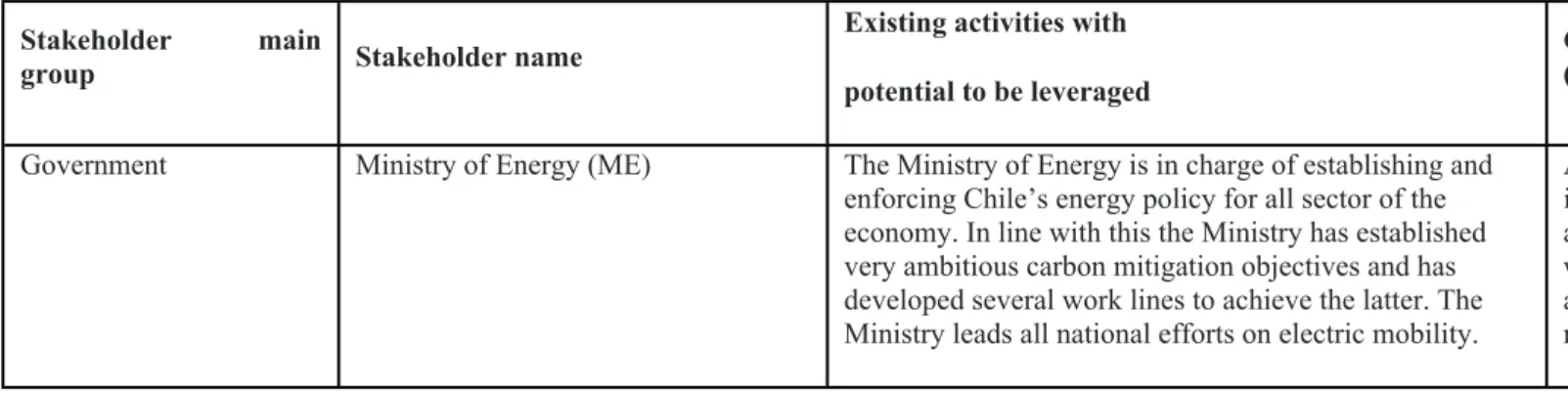
The promotion and management of electric mobility in Chile is an interministerial effort and responsibility, co-led by the Ministry of Energy and the Ministry of Transport and Telecommunications (MTT). The Ministry of Environment is responsible for issues related to waste and the extender producer responsibility. The ministries are represented in the regions by ministerial regional secretaries (SEREMI) (see further information on stakeholders in section 6).
Baseline projects
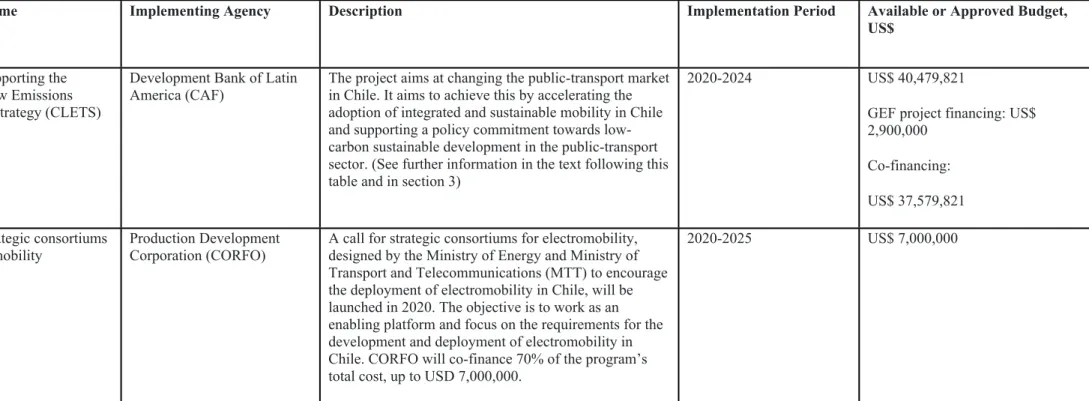
Table 4. BAseline projects
Project Name Implementing Agency Description Implementation Period Available or Approved Budget,
US$
GEF-6: Supporting the Chilean Low Emissions Transport Strategy (CLETS)
Development Bank of Latin
America (CAF) The project aims at changing the public-transport market in Chile. It aims to achieve this by accelerating the adoption of integrated and sustainable mobility in Chile and supporting a policy commitment towards low- carbon sustainable development in the public-transport sector. (See further information in the text following this table and in section 3)
2020-2024 US$ 40,479,821
GEF project financing: US$
2,900,000 Co-financing:
US$ 37,579,821 Call for strategic consortiums
for electromobility
Production Development Corporation (CORFO)
A call for strategic consortiums for electromobility, designed by the Ministry of Energy and Ministry of Transport and Telecommunications (MTT) to encourage the deployment of electromobility in Chile, will be launched in 2020. The objective is to work as an enabling platform and focus on the requirements for the development and deployment of electromobility in Chile. CORFO will co-finance 70% of the program’s total cost, up to USD 7,000,000.
2020-2025 US$ 7,000,000
Fixed-route taxi pilot in
Coyhaique Edelaysen/SAESA Group The energy utility SAESA piloted two electric fixed- route taxis (Hyundai Ioniq) for a period of 12 months in the city of Coyhaique. The vehicles travelled an average of 160 kilometres each day. SAESA financed the supporting charging network.
The pilot provided important technical and administrative lessons learned for the GEF project.
Technical information on selection of route, vehicle type, electricity usage, charging locations and vehicle usage performance will support the elaboration of the vehicle pilot specifications (see output 2.1, deliverables D2.1.2 - D2.1.4).
On administrative questions, the utility is facing difficulties in transferring the used pilot vehicles to the local taxi union, due to Ministry of Transport and Telecommunication regulations. To avoid this challenge for this GEF project, the project will rent vehicles and work closely with the MTT in project execution, including in the obtaining of relevant approvals (e.g. see deliverable D2.1.1).
2019-2020 Information not publicly available.
(Not applicable) Compañía de Petróleos de
Chile (COPEC) During 2020 will construct an electric bus station that will include 57 x 150kW chargers that will allow the incorporation of 215 new electric buses to the Santiago bus fleet.
2020 Information not publicly available.
(Not applicable) Blink Charging Private firm will encourage the development of sustainable electromobility in Chile with the implementation of a 127 AC/DC charger grid and a software platform that will allow charger and vehicle fleet management.
2020 Information not publicly available.
ENEL X Plan ENEL X Will support the deployment of 1,200 charging stations across the country, allowing Chile to build the first national infrastructure network of public charging.
2019-2024 US$ 8,200,000
Electric vehicle charging grid Regional Government and
COPEC The government of the metropolitan region and COPEC
agreed an electric vehicle charging grid will be deployed within the 52 communes of the Metropolitan region. The grid will consist of 104 x AC 44 kW chargers that will allow simultaneous charging through 2 connectors of 22 kW each.
2020 onwards US$ 1,200,000
Increase in fast charging
stations availability Enex Enex will seek to deploy fast charging stations in at least
5% of its service stations. 2020-2021 US$ 1,200,000 –
US$ 1,800,000 Increase electric mobility in
own car fleet
Transvip Transvip has committed to increase its electric vehicle fleet by 30 units, and to implement 3 electric charging stations.
2020 US$850,000
Moving Chile Deutsche Gesellschaft für Internationale
Zusammenarbeit (GIZ)
Led by the Ministry of Transport and Telecommunications and the Ministry of the Environment, the project supports the creation of financing mechanisms for electric buses in the regions and the undertaking of an associated pilot.
2019-2021 EUR 2,000,000
Green Climate Fund Readiness:
Advancing a regional approach to e-mobility in Latin America
Green Climate Fund
Implementer: UNEP Regional Office for Latin America and the Caribbean, through its MOVE platform
Regional knowledge exchange, capacity building and development of proposals for climate finance through the Green Climate Fund. Work began in late 2020.
Mid 2022 US$ 2,800,000 total
US$ 200,000 (for Chile)
Supporting the Government of Chile in the promotion of interoperability of electric vehicle charging in Latin America
European Union (EUROCLIMA+)
Implementer:
Agency of Sustainability Energy (ASE) and the UNEP Regional Office for Latin America and the Caribbean
Support the achievement of an intergovernmental agreement at the regional level to promote the
development and scaling of networks and interoperable charging services for electric vehicles in the region.
2021 EUR 50,000
The Zero Emission Bus Rapid-Deployment Accelerator (ZEBRA)
Partnering for Green Growth and the Global Goals 2030 (P4G), C40, International Council on Clean Transportation
Implementer: Centro Mario Molina Chile
Support the further the scale up of electric buses in Santiago to 2000 units as part of the new concession.
2021 (Not publicly disclosed)
GEF-6 project: Supporting the Chilean Low Emissions Transport Strategy
Included in Table 2 is the approved GEF-6 “Supporting the Chilean Low Emissions Transport Strategy” (CLETS) project. The project’s objective is to support Chile in a transformational shift towards low-emission urban mobility systems. It focuses on public urban mobility as a common good and tackles regulated sectors which function through public-private partnerships and licensing systems. It will seek to develop high-level outcomes such as promoting policy, planning and regulatory frameworks that foster accelerated adoption of integrated low-emissions mobility systems. These include activities that increase the amount of information available for planning, designing, and implementing sustainable urban mobility systems at the national level. It will promote sustainable urban mobility by increasing the capacity for innovation and identifying and sharing best practices. Activities will promote accelerated transfer of knowledge and capacity to stakeholders, including climate change considerations in transport-related post- graduate curricula, and information dissemination via traditional means and social media. It will also develop financing mechanisms to support the integrated adoption of low- emissions mobility systems. This will be achieved through investments in sustainable urban mobility and urban planning measures in representative urban areas.
In the design of this proposed GEF-7 project, effort has been made to ensure complementarity, establish synergies, and avoid duplication with the GEF-6 project. Section 3 describes alignment and synergies between the two projects. Section 6 describes coordination between the two.
Baseline activities in the regions
On buses, to shift regional public transport towards mass transport systems and promote electric mobility, the Ministry of Transport and Telecommunications (MTT) is working on the deployment of mass transport electric corridors in different regional cities. Announced by President Piñera, this project, called RED Regiones, plans to replicate the business model of electric buses in Santiago, formalizing the sector with the construction of bus rapid transport (BRT) lines operated with fully electric fleets. As in Santiago, the private sector would engage in bulk bidding for purchasing of electric buses on dedicated and formalized routes. The government intends to deploy 300 electric buses in the following years.[40]40 This effort is being accompanied by private sector financial mechanisms for supporting bulk bus purchases, such as a that recently launched by energy provider Enel X.[41]41 It is also being supported through a GIZ Moving Chile project (see table 4). In 2020, due to the national social conflict and the outbreak of the COVID pandemic, the MTT’s plans for formalizing the regional bus systems have required readjustment, with this process on-going. Overall the mass transport public system requires around US 1 billion in subsidies out of which approximately US 500 million is destined to the RED system of the Metropolitan area and the rest to the regions. Given the ongoing plans of the MTT and the relatively small impact that could be attained with GEF fund in the promotion of electric buses in regions due to the size of the bus system in the country, it was decided by authorities that the GEF-7 project would have greater impact by complementing this and focusing on demonstrating electric fixed route taxis, to facilitate the transition of this fleet of more than 50,000 vehicles.
On fixed-route taxis, in 2011 the MTT, the Ministry of Economy, the Interior Ministry, and the Ministry of Public Health signed Decree 44, which instated the vehicle replacement programme “Programa Renueva tu Colectivo.” This consists of a fixed route taxi (taxi-colectivo) vehicle renewal programme by which regional governments provide a subsidy to vehicle owners willing to replace their current vehicle for a less-polluting, higher standard, safer and more efficient vehicle. As shown in Table 5, the amount of the subsidy varies between US$360 – US$8,300 depending on the replacing vehicle’s fuel economy and technology, with electric vehicles receiving the highest subsidy. Whilst, the subsidy has been effective in promoting a renewal of the existing fleet, it has not been sufficient in promoting the uptake of electric vehicles, with no taxi drivers requesting a subsidy to acquire the latter. As a result, MTT is evaluating increasing the vehicle exchange subsidy for EVs to approximately US$11,000. However, this still falls short of the current price gaps between an electric vehicle and a conventional one, which is estimated at US$15,000 to US$20,000, depending on the make and model. It can be observed that the current subsidy is less than half of the existing price gap between an EV and a conventional equivalent vehicle. In 2019, three-quarters of Chile’s regions opened a call for
submissions from taxi owners to benefit from the scheme (Antofagasta, Araucanía, Arica and Parinacota, Atacama, Aysén, Bío Bío, Los Lagos, Los Rios, Magallanes, Maule, O'Higgins and Valparaíso). To date, the MTT has not considered the location of charging stations to promote the update of electric fixed-route taxis.
Table 5. subsidy amount by technology. “Renueva tu colectivo” programme
Vehicle technology Subsidy amount, US$
Gasoline 360 – 4300
Diesel 360 – 3600
Hybrid Electric 360 – 5350
Battery Electric 8300
To date, little capacity-building activities have been undertaken to build the capacity of regional actors on electric mobility. The Ministry of Energy has undertaken a series of webinars in 2020 (originally planned as regional workshops, but changed to webinars due to COVID-19) focusing on building the capacity of managers of public fleets through- out Chile. In particular, this was aimed at educating heads of administration and finance on the benefits of electric mobility technology to optimize the use of vehicle fleets, improve their management and obtain greater energy efficiency. In 2019, the Ministry of Transport and Telecommunications travelled through-out the regions to hold meetings with regional officials and transport associations to inform of changes to regulations, especially as related to electric buses. Furthermore, in 2019 the Agency of Sustainability Energy (ASE) held a one-day event in Talca with 40 fixed-route taxi drivers in which the drivers could test-drive an electric vehicle and speak with experts. On charging infrastructure, in 2019 the Ministry of Energy together with the Energy Superintendence held a seminar in La Serena on distributed energy and electric mobility, which, amongst other topics, informed regional participants of the regulations related to the charging of electric vehicles. To date there has not been a focused and structured programme to support the building of capacity of regional stakeholders to support electric mobility adoption in the regions. While the GEF-6 project aims to build capacity of the professional/technical community, including professionals and technicians on electric fleet operations, maintenance and repairs (see section 3), there continues to be a lack of focus on regional decision- makers, safety personnel and taxi-drivers.
Baseline descriptions of the three pilot cities
As will be described in section 3, this project proposes to undertake activities in three regional cities: Antofagasta, Puerto Montt and Talca. The process for selection of these three cities is described in section 3. Here following is a baseline description of these:
- Situated in northern Chile, Antofagasta is the fifth largest city in Chile (approximately 350,000 residents). It has 3966 fixed-route taxis and 1100 buses. The average age of its fixed-route taxi fleet is 6.5 years. It has 46 fixed-taxi routes.[42]42
- Puerto Montt is the ninth largest city in Chile (approximately 240,000 residents) and the largest in the south. It has 3693 fixed-route taxis and approximately 855 buses. The average age of its fixed-route taxi fleet is 6 years. It has 32 fixed-taxi routes.
- Situated in the centre of Chile, Talca is the tenth largest city in Chile (approximately 235,000 residents). It has 3024 fixed-route taxis and approximately 700 buses. The average age of its fixed-route taxi fleet is 5.7 years. It has 34 fixed-taxi routes.
Baseline activities currently being undertaken in the selected cities or their respective regions are described in Table 6.
Table 6. Baseline Projects in Antofagasta, Puerto Montt and Talca
Talca Antofagasta Puerto Montt