!
ELECTROCONVULSIVE THERAPY IN
TREATMENT-RESISTANT MANIA: CASE REPORTS
Marcia Britto de Macedo Soares, Ricardo Alberto Moreno and Doris Hupfeld Moreno
RHCFAP/3066 SOARES MB de M et al. - Electroconvulsive therapy in treatment-resistant mania: case reports. Rev. Hosp. Clín. Fac. Med.
S. Paulo 57(1):31-38, 2002.
Electroconvulsive therapy is known to be effective in the treatment of mood disorders, more specifically for depression and mania. Although a large body of evidence confirms the efficacy of electroconvulsive therapy in the treatment of mania, few prospective studies have been done to assess its effectiveness in treatment-resistant manic episodes. These case reports describe the initial results of a study that is being conducted to evaluate the efficacy of Electroconvulsive therapy among treatment-resistant bipolar patients.
METHODS: Three manic patients (according to DSM-IV criteria) who were considered treatment-resistant underwent a series of 12 bilateral Electroconvulsive therapy sessions. Before the treatment and then weekly, they were evaluated with the following rating scales: Young Mania Rating Scale, Hamilton Rating Scale for Depression, Brief Psychiatric Rating Scale, and Clinical Global Impressions—Bipolar Version.
RESULTS: The 3 patients showed a satisfactory response to Electroconvulsive therapy, although some differences in the course of response were observed.
CONCLUSION: These case reports suggest that Electroconvulsive therapy needs further evaluation for the treatment of resistant bipolar patients.
DESCRIPTORS: Bipolar mood disorder. Mania. Treatment. Drug resistance. Electroconvulsive therapy.
From the Mood Disorders Unit (GRUDA), Psiquiatric Institute, Hospital das Clínicas, Faculty of Medicine, University of São Paulo. For more than 60 years, since its
in-troduction in the management of psy-chiatric disorders by Cerletti and Bini in 1938, Electroconvulsive therapy (ECT), although more frequently re-lated to the management of resistant depression, has also been associated with the successful treatment of manic episodes. Actually, mania is considered the third most common indication for ECT in psychiatric practice1,2.
Mukherjee et al.3, in an excellent review, reported the response rates of ECT in the treatment of mania de-scribed by different studies between 1942 and 1992. The 15 studies re-viewed included a total of 589 patients, 80% of them showing remission or marked clinical improvement.
Between 1942 and 1959, seven studies that included at least 20 patients each found a significant clinical im-provement in 78% of the 400 manic patients evaluated3. In those studies, however, resistance to treatment was not a selection criterion, since the phar-macological approach to psychiatric disorders was in its infancy, and lithium was first introduced in the 1950s.
Another 6 studies using a retrospec-tive design with a total of 150 patients were performed between 1976 and
!
among the 3 groups. Alexander et al.7 and Strömgren8 studied the response to ECT among patients not responsive to pharmacotherapy (without specifying the criteria for treatment resistance) and found that 56% and 59% of the patients, respectively, showed a good response to ECT after failed pharma-cotherapy.
Two prospective studies performed by Small et al.9 and Mukherjee et al.10, which included a total of 39 patients, aimed at assessing the effectiveness of ECT for treating mania. Small et al.9 compared the efficacy of lithium and ECT. The patients in the ECT group had not shown a satisfactory response to pre-vious treatments, which were not de-scribed. Of the 17 patients referred for ECT, total or partial remission was ob-served in 100%, and the authors con-cluded that lithium and ECT were equivalent in their efficacy. Among pa-tients with severe mania, however, ECT proved to be superior to lithium9. Mukerjee et al.11 studied the efficacy of ECT and haloperidol plus lithium in manic patients who did not show a good previous response to neuroleptics or lithium. Remission was defined as when the patients did not meet criteria for mania or hypomania according to the Research Diagnostic Criteria (RDC)12. ECT was effective in 59% of 22 pa-tients, but for some nonresponders, a worsening of the clinical picture was observed11. Of the 39 manic patients in-cluded in both studies, ECT was effec-tive in 77%.
Schnur et al.13 studied the response rates of ECT among treatment-resistant manic patients in a study that also aimed to identify possible predictive factors of nonresponse among these patients. The patients included in the study—selected using the criterion of treatment resist-ance—had been treated with lithium, (blood levels between 1.0 and 1.5 mEq/ L), or neuroleptics (dosages equivalent to 1500 mg/day of chlorpromazine) for 3 weeks, without clinical response. They
underwent an average of 9 daily bilat-eral sessions of ECT. Sixty-six percent of the patients showed a good response to ECT. Among nonresponders, the au-thors13 identified some clinical charac-teristics such as anger, irritability, and suspiciousness.
There are large differences among these studies. The diagnostic criteria adopted in the patients’ selection and the methodology employed (for example, retrospective versus prospective designs, absence of a control group in some studies, and criteria of remission and clinical improvement) were different, but ECT was unequivocally associated with successful treatment of mania.
We present preliminary cases of a study designed to evaluate the efficacy of ECT in bipolar pharmacotherapy-resistant patients.
METHODS
The patients were referred for ECT after being considered treatment-resist-ant according to the following criteria: (1) Bipolar mood disorder (BP):
manic, mixed or depressive episode, according to the Structured Clinical In-terview Diagnostic—SCID (version 2.0, 8/98)14 that follows the criteria of the Diagnostic and Statistical Manual of Mental Disorders, 4th edition— DSM-IV15. (2) Treatment-resistant
ma-nia: manic episode not responsive to at
least 2 anti-manic treatments (for ex-ample, 1 mood stabilizer and 1 neu-roleptic or combinations of mood sta-bilizers) in adequate dosages for 6 weeks (blood levels of lithium between 0.8 and 1.2 mEq/L, carbamazepine be-tween 8 and 12 µg/mL, valproic acid between 45 and 125 µg/mL, and neuro-leptics in doses equivalent to 5-20 mg/ day of haloperidol). An additional in-clusion criterion was a Young Mania Rating Scale (YMRS) total greater than 1616. (3) Treatment-resistant bipolar
depression: depressive episode not
re-sponsive to at least 2 trials with anti-depressants for 8 weeks in adequate dosage regimens, in association with a mood stabilizer, also with adequate blood levels as described above for lithium, carbamazepine, and valproic acid. Antidepressant dosage regimens were considered adequate when they were equivalent to 60 mg/day or maxi-mum tolerated dose of fluoxetine or 80 mg/day or maximum tolerated dose of tranylcypromine. As an additional cri-terion, a total score of 18 was required on the Hamilton Rating Scale for De-pression (HAMD-21, 21 items)17.
After the informed consent was signed, routine laboratory tests (total blood cell count, serum electrolyte lev-els, urinalysis, glycemia, blood urea and creatinine, thyroid screening tests, chest x-ray, electroencephalogram, and a computed tomography (CT) scan of the brain), were performed. The pa-tients also underwent cardiac, odonto-logical, and neurological evaluations to identify possible clinical conditions that would counterindicate ECT. These are necessary procedures for every pa-tient referred for ECT, according to the Biological Treatment Unit–ECT of the Institute of Psychiatry–HCFMUSP18. The current medication was withdrawn by 50% on the first day, and by 25% on the following days until total dis-continuation.
!!
Before and after the washout week,as well as weekly during the 12 ECT sessions (after the 3rd, 6th, 9th and 12th session), the patients were evaluated with the following scales: YMRS16, HAMD-2117, Brief Psychiatric Rating Scale (BPRS)19, and Clinical Global Impressions—Bipolar Version (CGI-BP)20.
Clinical response was considered to be at least a 50% reduction in the YMRS and HAMD-21 scores, with fi-nal scores of the YMRS lower than 12 and HAMD-21 lower than 8.
RESULTS
Case No 1
Male, 29 years old, separated, 2 daughters. Family history of general-ized anxiety disorder and major de-pression (sister). First episode at age 21, with psychotic symptoms, when he was diagnosed as schizophrenic. Dur-ing this episode, he received ECT with good response (number of treatments and electrode placement not available). At age 26, he was hospitalized again for 3 months and received neuroleptics (haloperidol and chlorpromazine, dos-age regimens not available). The next year after his brother’s death, he devel-oped a period of agitation, insomnia, and hyperactivity lasting 1½ months. Hospitalization was not necessary, since he improved with neuroleptic treatment. The third and fourth hospita-lizations occurred because of episodes of extreme psychomotor agitation, in-somnia, mystical and persecutory de-lusions, and auto- and hetero-aggres-sive behavior that lasted an average of 3 months. After the fourth hospitaliza-tion, he started maintenance treatment with haloperidol (average dose of 10 mg/day), and 1 year later had a mild episode of agitation and increased ac-tivity for 1 month. The fifth hospitali-zation 1 year later lasted 6 months
be-cause of a severe episode of 10 months duration. He showed the same charac-teristics described above, attempted suicide, and was diagnosed as bipolar, manic, with psychotic symptoms. Treatment with lithium was started, with blood levels maintained between 0.8 and 0.9 mEq/L. The first depressive episode broke up 8 months later, and after a week receiving sertraline 50 mg/ day in association with lithium, he switched to mania. Haloperidol was then introduced at 15 mg/day after the interruption of the antidepressant; lithium was maintained at 1350 mg/ day (blood level at 0.9 mg/day), and after 6 weeks, carbamazepine (600 mg/ day) was introduced. After 10 weeks with no adequate response, he was re-ferred for ECT.
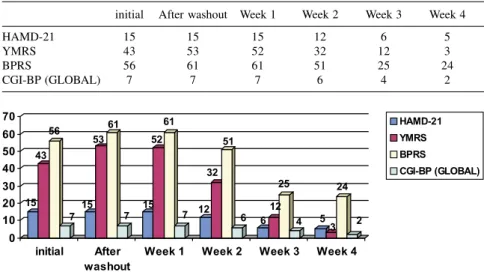
According to the SCID, the diagno-sis was current manic episode with mood-incongruent psychotic symptoms, and as additional conditions, past alco-hol and cocaine abuse. Relatives re-ported that the patient always increased alcohol consumption and started co-caine abuse after the worsening of the affective symptoms. All laboratory tests cited above were within the normal range. Clinical and neurological evalu-ations did not show a pathological con-dition. The initial and subsequent scores
of the rating scales are described in fig-ure 1. (Table 1).
Case No 2
Male, 50 years old, divorced, no children. Family history of bipolar dis-order (BP) (sister confirmed, brother, father, and grandmother suspected) and alcohol and cocaine abuse (brother and uncle). First episode at age 30, with manic symptoms. History of 19 manic and 8 depressive episodes (shorter and milder than the manias) and 10 hospi-talizations, all for mania. Comorbidity of AIDS, diagnosed 7 years previously. It is not clear whether his contamination was after a blood transfusion during a treatment for malaria or was a conse-quence of promiscuity coincident with a manic episode. During the first 6 years, he had a frequency of 1 manic episode every year. After 1987, how-ever, when he first manifested depres-sive symptoms for 1 month, the fre-quency of the episodes increased, with an average of 2-3 per year. At that time, he was taking lithium (1500-2400 mg/ day) with neuroleptics (haloperidol, 3-15 mg/day, or trifluoperazine, 5-3-15 mg/ day) added as needed for the treatment of manic episodes, as well as antide-pressants for depressive episodes
(imi-Table 1 - Initial and subsequent total scores of the rating scales – Case No 1.
initial After washout Week 1 Week 2 Week 3 Week 4
HAMD-21 15 15 15 12 6 5
YMRS 43 53 52 32 12 3
BPRS 56 61 61 51 25 24
CGI-BP (GLOBAL) 7 7 7 6 4 2
!"
pramine, 50-200 mg/day, when he switched to mania, and moclobemide, 200-400 mg/day). After a manic episode at the beginning of 1993, the mainte-nance treatment included lithium and neuroleptics. For almost 2 years, the pa-tient remained relatively well, when a new hypomanic episode erupted at the end of 1994. During 1995, the patient remained in mania/hypomania for 9 months, with brief euthymic periods, and remained almost 8 months at the hospital. At that time, he had some clini-cal complications, such as 2 instances of possible lithium intoxication, worsening of the renal function, and diabetes insip-idus. After many discontinuations, lithium was maintained at 600 mg/day (blood levels around 0.6 mEq/L), carbamazepine was added (reaching 1600 mg/day, blood levels 8-10 µg/mL), and neuroleptics were maintained (ha-loperidol, 2.5 to 7.5 mg/day; rispe-ridone, 6 to 10 mg/day, in association at the beginning; risperidone on an av-erage of 8 mg/day thereafter). The next year, he had only 2 questionable peri-ods of hypomania and a mild depression for 1 month (citalopram was introduced at 20 mg/day and maintained for 4 months; neuroleptics were withdrawn). He developed diplopia as a side effect, and carbamazepine was reduced to 1000 mg/day, with resolution of the symptoms. Irritability remained a con-stant complaint and clinical symptom. At the beginning of 1997, he was again hypomanic. Valproate was introduced in substitution for carbamazepine, in-creased up to 2000 mg/day (blood lev-els, 59 µg/mL), lithium was increased up to 750 mg/day, and clonazepam was added up to 9 mg/day, but he remained irritable, more talkative, with question-able plans for almost the entire year. In November 1997, a new depressive epi-sode was treated with citalopram, 20 mg/day, for 4 months, valproate was maintained at 2000 mg/day, and lithium was increased up to 1050 mg/ day. He remained well for 6 months.
Routine laboratory evaluations re-vealed elevated TSH levels (5.3 mUI/ mL), leading to levothyroxine replace-ment up to 50 µg/day. He developed a new manic episode in June 1998, when valproate was increased up to 3000 mg/day; risperidone, 4 mg/day, was added, but lithium had to be reduced to 600 mg/day because of the worsen-ing of polyuria. He developed nausea and vomiting, and valproate had to be reduced to 1750 mg/day. A milder manic episode developed again and improved after the elevation of the risperidone (1 to 2 mg/day), and hyper-metabolic administration of thyroxin was tried (150 µg/day). He remained well for 2 months, but again manic symptoms arose. Risperidone was in-creased to 4 mg/day; valproate was changed for lamotrigine, reaching 75 mg/day.
He was referred for ECT after a trial of lithium 600 mg/day (blood lev-els, 0.9 mEq/L), lamotrigine, 75 mg/ day; risperidone, 4 mg/day; and clona-zepam, 2 mg/day, without improve-ment of the manic symptoms for al-most 8 weeks. Concurrent medication was indinavir, 2400 mg/day; stavudine, 80 mg/day; Epivir, 300 mg/day; and sodium levothyroxine, 150 µg/day, for
the management of lithium-induced hypothyroidism.
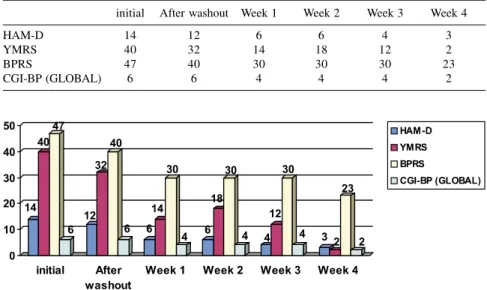
According to the SCID, the diagno-sis was current manic episode without psychotic symptoms with comorbidity of AIDS and subclinical hypothy-roidism. Laboratory tests were normal, including TSH, 1.2 mUI/mL; free T4, 1.5 mUI/mL; CD4, 419; and CD4/CD8, 0.31. No tomographic abnormalities were observed. The neurological and clinical evaluations were normal. Psy-chiatric medication was withdrawn at the rate described for case 1, and the anti-retroviral drugs and l-thyroxin were maintained during the series of ECT procedures. Occasionally, promethaz-ine, 25 mg P.O., was administered be-cause of insomnia. The initial and sub-sequent scores of the rating scales are described in figure 2. (Table 2).
Case No 3
Female, 41 years old, divorced, 2 children. No family history of BP. First episode at age 26, in the 2nd puerper-ium, diagnosed as puerperal psychosis and treated with amitriptyline, 225 mg/ day, and diazepam, 10 to 20 mg/day. She switched to mania and started tak-ing lithium (900 to 1050 mg/day;
Table 2 - Initial and subsequent total scores of the rating scales – Case No 2.
initial After washout Week 1 Week 2 Week 3 Week 4
HAM-D 14 12 6 6 4 3
YMRS 40 32 14 18 12 2
BPRS 47 40 30 30 30 23
CGI-BP (GLOBAL) 6 6 4 4 4 2
!#
blood levels, 0.7 mEq/L) andhaloperi-dol (15 mg/day). Two months later, she switched to depression. For 2 years she lived in another country, and relatives reported that she was treated with ECT and neuroleptics without mood stabi-lizers, probably because of another manic episode (no details regarding ECT and neuroleptic treatments could be obtained). Back in Brazil, she be-came depressed and started taking am-itriptyline, 75 mg/day, for 1 month, switching to mania. A third hospitali-zation was needed because of the se-verity of the episode and the presence of psychotic symptoms. Chlorpro-mazine, 400 mg/day, was given for 1 month, and lithium was restored reach-ing 1200 mg/day (blood levels, 1.0 mEq/L). After 2 months of euthymia, a new depressive episode led to the in-troduction of tranylcypromine, 10-20 mg/day. TSH levels were increased (39.5 mUI/mL), and l-thyroxin, 150 µg/day, was added (TSH was 1.2 mUI/ mL after 3 months). Almost 1 year later, a new mild and brief depressive episode was treated with fluoxetine, 20 mg/day, with the patient remitting in 1 month. The patient remained euthymic for the next 18 months, but she stopped taking medication in order to “lose weight”. A new depressive episode oc-curred, and the patient switched again to mania after 1 month of lithium, 900 mg/day; tranylcypromine, 10 mg/day; and l-thyroxin, 150 µg/day. The fourth hospitalization lasted 2 months. She was then maintained on lithium, but thyroid supplementation was inter-rupted (reason not described). Five months later, she was hospitalized for 3 months in a psychotic manic episode. Subsequently, the first mixed episode was suspected. Lithium was main-tained (1200 mg/day, blood levels be-tween 0.8 and 1.0 mEq/L); risperidone, 2 mg/day (for 1 month), and clona-zepam, 2 mg/day, were added. A new thyroid screening revealed increased TSH levels in May 1994, and therapy
with l-thyroxin was restored at 50 µg/ day. Three months later, after taking the medication in an irregular way, a new manic episode with psychotic symptoms occurred. After being hos-pitalized for 2 months (lithium was maintained, carbamazepine was intro-duced and increased to 500 mg/day, and haloperidol was introduced and maintained for 2 months), she was dis-charged, but 1 month later needed to be hospitalized again in the second possible mixed episode. Carbama-zepine was increased to 1000 mg/day and lithium to 1500 mg/day (blood lev-els, 1.2 mEq/L), and haloperidol was restarted at 5 mg/day. After 3 months, she left the hospital, but a possible mild mixed episode was monitored for 7 months. With the resolution of the symptoms, she remained well for al-most 1 year, receiving lithium, 1350 mg/day (mean blood level, 0.8 mEq/ L); carbamazepine, 1200 mg/day (mean blood level, 10 µg/mL); and l-thyroxin, 100 µg/day. A mild hy-pomanic episode developed, but the in-stitution of clonazepam at 2 mg/day apparently stopped the symptoms. The next winter, she had a moderate de-pressive episode and took moclo-bemide for almost 9 months (3 months at 450 mg/day, 3 months at 900 mg/ day, 2 months at 750 mg/day and 1 month at 300 mg/day). There was a suspicion of lithium toxicity, which led to the reduction of the lithium dose to 900 mg/day, which was increased to 1200 mg/day. Even with the reduction in the antidepressant dosage she had a mild switch to mania. Three months later, she was again hospitalized in a more characteristic mixed episode, when carbamazepine was discontin-ued, and valproate was introduced and increased to 2000 mg/day (blood lev-els, 100 µg/mL). Since she also devel-oped psychotic symptoms, risperidone was added (4 mg/day, then reduced to 2 mg/day). During the mixed episode, l-thyroxin was increased to 150 µg/day.
Because of a suspected mild intoxica-tion, lithium was reduced to 600 mg/ day. One year later, with a maintenance treatment with valproate, 1000 mg/day (reduced because of the development of cutaneous rash); lithium, 750 mg/ day; and l-thyroxin, 150 µg/day, she was mildly depressed. Tranylcypro-mine, 10 mg/day, was added. The pa-tient again developed a mixed episode with psychotic symptoms and was then hospitalized for the ninth time.
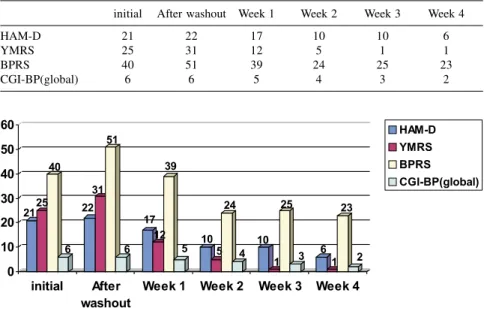
According to the SCID, the diagno-sis was current mixed episode with psychotic symptoms with comorbidity of asthma, obesity, and subclinical hy-pothyroidism. When she was referred for ECT, she was on lithium, 1200 mg/ day (blood levels, 0.7 mEq/L with 900 mg/day); valproate, 2000 mg/day (blood levels, 49 µg/day with 1000 mg/ day); risperidone, 4 mg/day; and l-thy-roxin, 150 µg/day. Lithium and val-proate were discontinued, and since she remained agitated and the psy-chotic symptoms increased after the washout period, risperidone was main-tained at 2 mg/day until the 5th admin-istration of ECT. The initial and sub-sequent scores on the rating scales are described in figure 3. (Table 3).
DISCUSSION
!$
insomnia as needed. After the 9th ECT session, he showed improvement ac-cording to the clinical evaluations and rating scales, and the medication was discontinued. After 12 ECT sessions (all effective), he remitted. Mild head-ache was the only reported side effect mainly after the ECT sessions, and these always remitted with dipyrone, 30 gtt P.O.
Some authors9,13 report that a sig-nificant clinical response of manic epi-sodes may be evident only after the 9th administration of bilateral ECT. Schnur et al.13 suggested that the presence of symptoms like suspiciousness, irritabil-ity, and anger might contribute to a poorer response to ECT. The rapid withdrawal of lithium may also have contributed to the worsening of the manic symptoms after the washout week21. A particular difficulty observed in the management of the patient was the maintenance of a 3-times-a-week schedule, sometimes because of na-tional holidays (when the ECT unit is closed), and other times because it was difficult to sustain the fasting as re-quested. This reinforces the importance of keeping a rigorous schedule for these patients.
In case 2, the HAMD-21 scores re-lated to insomnia, agitation, psychic and somatic anxiety, and insight, which also related to the manic symptoms, as in case 1. In this case, it is noteworthy that after the washout period, a reduc-tion in the scores was observed. One reason could be that AIDS patients (and more frequently those with AIDS dementia) are more sensitive to poly-pharmacy, especially to side effects, and prone to develop delirium with psychomotor agitation and behavioral changes22,23. Treisman et al. 23 sug-gested that the use of lithium in AIDS patients could be complicated because of the high rates of associated delirium and toxicity, and because of fluctuation of blood levels. This possibility could be speculated for this case, although no impairment of consciousness was ob-served, and the electroencephalogram, computer tomography, and neurologi-cal evaluation did not show a patho-logical condition at admission. How-ever, normal CT images can be ob-tained in the initial stages of AIDS de-mentia22. Although lamotrigine has been successfully used in AIDS pa-tients, there are reports of some mood elevating properties, and this should be
taken into account in this case23. After the initial reduction, an elevation of YMRS scores was observed. This el-evation could be explained by the pro-longed interval between weeks 1 and 2, and even by the patient’s associated clinical condition (he developed a uri-nary infection and fever, which con-tributed to the cancellation of one ECT session). There might also have been a worsening of the manic episode during the ECT course as described by Mukherjee et al.10 and Schnur et al.13. As also seen in case 1, the response was more evident after the 9th ECT; af-ter the 12th ECT, the patient was con-sidered remitted according to the clini-cal evaluation and the rating sclini-cales. In the literature, there are also reports of successful treatments of depressive epi-sodes and stupor among serum-positive and AIDS patients with ECT24,25. Mod-erate headache and nausea were fre-quently reported after the ECT ses-sions, but stopped after treatment with dipyrone, 30 gtt P.O. Memory impair-ment was the most important com-plaint during the 3 weeks that followed the ECT course, but it later improved.
Differently from the others dis-cussed above, the HAMD-21 items scored in case 3 represented symptoms such as depressive mood, guilt feel-ings, agitation, psychic and somatic anxiety, mood variation, and paranoid symptoms. There are no controlled studies designed to assess the efficacy of ECT in mixed states. Case reports and naturalistic studies suggest that ECT is a good treatment option for these patients, who are less responsive to lithium, but who show an adequate response to anticonvulsants, especially to valproate26. Dilsaver et al.27 reported recovery among 7 patients with desive mania treated with ECT. The pres-ence of depressive symptoms could explain the faster response to ECT, with a good clinical improvement ob-served after the 6th administration, as already described by other authors9,13.
Table 3 - Initial and subsequent total scores of the rating scales – Case No 3.
initial After washout Week 1 Week 2 Week 3 Week 4
HAM-D 21 22 17 10 10 6
YMRS 25 31 12 5 1 1
BPRS 40 51 39 24 25 23
CGI-BP(global) 6 6 5 4 3 2
!%
Small et al.9 reported indeed that thepresence of depressive symptoms was the strongest predictor of good sponse to ECT. Even with the faster re-sponse and greater initial reduction in the YMRS total values, the depressive symptoms remained until the 12th ECT. The final HAMD-21 value was lower than 8, suggesting clinical remission, but the patient was still reporting di-minished interest, guilt feelings, feel-ings of uselessness, and some degree of anxiety. After the discontinuation of the mood stabilizers and during the course of ECT, the eating binges di-minished, so the patient could lose weight. This is important when consid-ering the comorbidity with obesity and its related risks, and because the weight gain is associated with medication non-compliance in many cases28. Kawachi29 also reported that along with the in-creased risk of developing type II dia-betes, hypertension, and coronary heart
disease (increasing the risk of death), weight gain was also associated with a poorer quality of life and stigmatiza-tion. Headache and memory impair-ment were side effects related to ECT. The patient had already complained of headache before the initiation of the ECT course, and there was no worsen-ing of the condition. The memory im-pairment clearly developed in relation to ECT and was rated as moderate.
CONCLUSION
The 3 cases reported here have shown a good clinical response to ECT after treatment resistance defined ac-cording to the mentioned criteria. Al-though obviously not statistically sig-nificant, these case reports remind us that ECT might be useful in the man-agement of treatment-resistant patients because of its effectiveness; it should
not be considered as a “last resort” in the treatment of bipolar patients.
Remaining questions are to con-sider whether ECT is associated with a better or faster response than the new pharmacological options such as the anticonvulsants (valproate, lamotrigine, gabapentin, and topiramate) and the atypical antipsychotics (risperidone, clozapine, olanzapine, and quetiapine). This is an important issue that deserves attention in the future, especially to consider the cost-benefit relationship of the treatment adopted. The faster, more accessible, and cheaper treatment may gain the advantage, principally in countries where the economic issues of the treatment of bipolar patients are important. Another important issue that needs to be addressed is the effective-ness and tolerability of continuation and maintenance of ECT among these patients.
RESUMO RHCFAP/3066
SOARES MB de M e col. - A Eletro-convulsoterapia no tratamento da mania resistente: relatos de casos.
Rev. Hosp. Clín. Fac. Med. S. Paulo 57(1):31-38, 2002.
A Eletroconvulsoterapia é uma al-ternativa reconhecidamente eficaz no tratamento dos transtornos do humor. Embora vários estudos tenham confir-mado a eficácia desta modalidade te-rapêutica no tratamento da mania agu-da, poucos estudos foram realizados em pacientes maníacos resistentes à farmacoterapia. Esses relatos de casos descrevem resultados preliminares de
um projeto de pesquisa que tem por objetivo avaliar a eficácia da Eletro-convulsoterapia no tratamento de trans-tornos bipolares resistentes.
MÉTODOS: Três pacientes com di-agnóstico de mania (de acordo com os critérios do DSM-IV), considerados re-sistentes ao tratamento medicamentoso, foram submetidos a 12 aplicações bila-terais de Eletroconvulsoterapia. Antes do tratamento e semanalmente, até o fi-nal da série, foram avaliados com as es-calas: Young Mania Rating Scale, Ha-milton Rating Scale for Depression, Brief Psychiatric Rating Scale e Clini-cal Global Impressions-Bipolar Version.
RESULTADOS: Os três casos aqui relatados apresentaram resposta satisfa-tória à Eletroconvulsoterapia, e aspec-tos individuais são discutidos.
CONCLUSÕES: Os resultados iniciais sugerem que a eficácia da Eletroconvulsoterapia no tratamento de pacientes bipolares resistentes deve ser melhor estudada.
!&
REFERENCES
1. AMERICAN Psychiatric Association - Practice guideline for treatment of patients with bipolar disorder. Washington DC, American Psychiatric Association, 1995.
2. DUBOVSKY SL & BUZAN RD - Novel alternatives and supplements to lithium and anticonvulsants for bipolar affective disorder. J Clin Psychiatry 1997; 58:224-242.
3. MUKHERJEE S, SACKEIM HA & SCHNUR DB – Electroconvulsive therapy of acute manic episodes: a review of 50 years’ experience.
Am J Psychiatry 1994; 151:169-176.
4. McCABE MS – ECT in the treatment of mania: a controlled study.
Am J Psychiatry 1976; 133:688-691.
5. McCABE MS & NORRIS B – ECT versus chlorpromazine in mania.
Biol Psychiatry 1977; 12:245-254.
6. THOMAS J & REDDY B – The treatment of mania: a retrospective evaluation of the effects of ECT, chlorpromazine and lithium. J Affect Disord 1982; 4:85-92.
7. ALEXANDER RC, SALOMON M, IONESCU-PIOGGIA M et al. – Convulsive therapy in the treatment of mania: McLean Hospital 1973-1986. Convulsive Ther 1988; 4:115-125.
8. STRÖMGREN LS – Electroconvulsive therapy in Aarhus, Denmark, in 1984: its application in nondepressive disorders. Convulsive Ther 1988; 4:306-313.
9. SMALL JG, KLAPPER MH, KELLAMS JJ et al. – Electroconvulsive therapy compared with lithium in the management of manic states.
Arch Gen Psychiatry 1988; 45:727-732.
10. MUKHERJEE S – Mechanisms of the antimanic effect of electroconvulsive therapy. Convulsive Ther 1989; 5:227-243. 11. MUKHERJEE S, SACKEIM HA & LEE C – Unilateral ECT in the
treatment of manic episodes. Convulsive Ther 1988; 4:74-80. 12. SPITZER RL, ENDICOTT J & ROBINS E - Research Diagnostic
Criteria – Rationale and reliability. Arch Gen Psychiatry 1978;
35:773-782.
13. SCHNUR DB, MUKHERJEE S, SACKEIM HA et al. - Symptomatic predictors of response in medication non-responsive manic patients.
J Clin Psychiatry 1992; 53:63-66.
14. FIRST MB, SPITZER RL, GIBBON M et al. – Structured clinical interview for DSM-IV axis I disorders – patient edition (version 2.0, 8/98 revision). New York, Biometrics Research Department, 1998.
15. AMERICAN Psychiatric Association. Diagnostic and statistical manual of mental disorders, 4th ed. Washington DC, American
Psychiatric Press, 1994.
16. YOUNG RC, BIGGS JT, ZIEGLER VE et al. – A rating scale for mania: Reliability, validity and sensitivity. Br J Psychiatry 1978; 133 :429-435.
17. HAMILTON M – A rating scale for depression. J Neurol Neurosurg Psychiatry 1960; 23:56-62.
18. PRICOLI V, VASCONCELOS AAJ, RIGONATTI SP et al. - Exames complementares pré-eletroconvulsoterapia. Rev Psiq Clin 1996;
23:69-71.
19. OVERALL JF & GORHAM DR – The Brief Psychiatric Rating Scale.
Psychol Rep 1962; 10:799-812.
20. SPEARING MK, POST RM, LEVERICH GS et al. – Modification of the Clinical Global Impressions (CGI) scale for use in bipolar illness (BP): the CGI-BP. Psychiatry Res 1997; 73:159-171.
21. BALDESSARINI RJ, TONDO L & VIGUERA AC - Discontinuing lithium maintenance treatment in bipolar disorders: risks and implications. Bipolar Disorders 1999; 1:17-24.
22. HALMAN MH, WORTH JL, SANDERS KM et al. – Anticonvulsant use in the treatment of manic syndromes in patients with HIV-1 infection. J Neuropsiquiat ClinNeurosci 1993; 5:430-434. 23. TREISMAN G, FISHMAN M, SCHWARTZ J et al. – Mood disorders
in HIV infection. J Neuropsiquiat Clin Neurosci 1998; 7 :178-187.
24. SCHAERF FW, MILLER RR, LIPSEY JR et al. – ECT for major depression in four patients infected with human immunodeficiency virus. Am J Psychiatry 1989; 146:782-784.
25. KESSING L, LABIANCA JH & BOLWIG TG – HIV-induced stupor treated with ECT. Convulsive Therapy 1994; 10:232-235. 26. McELROY SL, KECK Jr PE, POPE Jr HG et al. – Clinical and
research implications of the diagnosis of dysphoric or mixed mania or hypomania. Am JPsychiatry 1992; 149:1633-1644. 27. DILSAVER SC, SWANN AC, SHOAIB AM et al. - Depressive mania
associated with nonresponse to antimanic agents. Am J Psychiatry
1993; 150:1548-1551.
28. SACHS G & GUILLE C – Weight gain associated with use of psychotropic medications. J Clin Psychiatry 1999; 60(suppl 21):16-19.
29. KAWACHI I – Physical and psychological consequences of weight gain. J ClinPsychiatry 1999; 60(suppl 21):5-9.