www.jped.com.br
ORIGINAL
ARTICLE
Hospital
survival
upon
discharge
of
ill-neonates
transported
by
ground
or
air
ambulance
to
a
tertiary
center
夽
Jorge
Luis
Alvarado-Socarras
a,b,∗,
Alvaro
Javier
Idrovo
c,
Anderson
Bermon
daNeonatologyUnit,DepartmentofPediatrics,FundaciónCardiovasculardeColombia,Floridablanca,Colombia bOrganizaciónLatinoamericanaparaelFomentodelaInvestigaciónenSalud(OLFIS),Bucaramanga,Colombia cDepartmentofPublicHealth,SchoolofMedicine,UniversidadIndustrialdeSantander,Bucaramanga,Colombia dDepartmentofEpidemiology,FundaciónCardiovasculardeColombia,Floridablanca,Colombia
Received30March2015;accepted24July2015 Availableonline4March2016
KEYWORDS
Ambulance; Ground; Air; Transport; TRIPS
Abstract
Objective: Toevaluate thedifferences inhospitalsurvivalbetweenmodesoftransporttoa tertiarycenterinColombiaforcriticallyillneonates.
Methods: Observational study of seriously ill neonates transported via air or ground, who requiredmedicalcareatacenterprovidinghighlycomplexservices.Dataonsociodemographic, clinical,theTransportRiskIndexofPhysiologicStability(TRIPS),andmodeoftransportwere collected.Patients weredescribed, followed by abivariateanalysis with condition(live or dead)attimeofdischargeasthedependentvariable.AmultiplePoissonregressionwithrobust variancemodelwasusedtoadjustassociations.
Results: A total of 176 neonates were transported by ambulance (10.22% by air) over six months.Thetransportdistanceswerelongerbyair(median:237.5km)thanbyground(median: 11.3km). Mortalitywas higheramong neonates transportedby air (33.33%) thanby ground (7.79%).Nodifferencesinsurvivalwerefoundbetweenthetwogroupswhenadjustedbythe multiplemodel.An interactionbetweenmodeoftransportanddistancewasobserved.Live hospitaldischarge wasfound tobe associatedwith clinicalseverityupon admittance,birth weight,hemorrhagingduringthethirdtrimester,andserumpotassiumlevelswhenadmitted.
夽
Pleasecitethisarticleas:Alvarado-SocarrasJL,IdrovoAJ,BermonA.Hospitalsurvivalupondischargeofill-neonatestransportedby groundorairambulancetoatertiarycenter.JPediatr(RioJ).2016;92:276---82.
∗Correspondingauthor.
E-mails:[email protected],[email protected](J.L.Alvarado-Socarras).
http://dx.doi.org/10.1016/j.jped.2015.07.010
Conclusions: Modeoftransportwasnotassociatedwiththeoutcome.InColombia,accessto medicalservicesthroughairtransportisagoodoptionforneonatesincriticalcondition.Further studieswoulddeterminetheoptimumdistance(timeoftransportation)toobtaingoodclinical outcomesaccordingtypeofambulance.
©2016SociedadeBrasileiradePediatria.PublishedbyElsevierEditoraLtda.Thisisanopen accessarticleundertheCCBY-NC-NDlicense(http://creativecommons.org/licenses/by-nc-nd/
4.0/).
PALAVRAS-CHAVE
Ambulância; Terrestre; Aérea; Transporte; TRIPS
Sobrevidahospitalarapósaaltadeneonatosdoentestransportadosporambulância terrestreouaéreaparaumcentroterciário
Resumo
Objetivo: Avaliarasdiferenc¸asnasobrevidahospitalarentreosmodosdetransporteparaum centroterciárionaColômbiaparaneonatosgravementedoentes.
Métodos: Estudoobservacionaldeneonatosgravementedoentestransportadosporarouterra queprecisamdecuidadosmédicosemumcentroqueofereceservic¸osaltamentecomplexos. Foramcoletadosdadossociodemográficos,clínicos,sobreoÍndicedeRiscodaEstabilidade Fisi-ológicanoTransporte(TRIPS)eomeiodetransporte.Ospacientesforamdescritosesubmetidos aumaanálisebivariada,comacondic¸ão(vivooumorto)nomomentodaaltasendoavariável dependente.UmaregressãomúltipladePoissoncommodelodevariânciarobustafoiutilizada paraajustarasassociac¸ões.
Resultados: Umtotalde176neonatosforamtransportadosporambulância(10,22%peloar)ao longodeseismeses.Asdistânciasforammaiorespeloar(mediana:237,5km)queporterra (mediana:11,3km).Amortalidadefoimaisaltaentreneonatostransportadospeloar(33,33%) queporterra(7,79%).Nãoforamencontradasdiferenc¸asnasobrevidaentreosdoisgruposapós oajustecomomodelomúltiplo.Foiobservadaumainterac¸ãoentreomeiodetransporteea distância.Aaltahospitalarcomvidafoiassociadaàgravidadeclínicanainternac¸ão,aopesoao nascer,àhemorragiaduranteoterceirotrimestreeaosníveisdepotássiosériconainternac¸ão. Conclusões: Omeio detransportenão foi associadoao resultado. NaColômbia,oacesso a servic¸os médicos portransporteaéreo é uma boaopc¸ão para neonatos em condic¸ões críti-cas.Estudosadicionaisdeterminariamadistânciaideal(tempodetransporte)paraobterbons resultadosclínicosdeacordocomotipodeambulância.
©2016SociedadeBrasileiradePediatria.PublicadoporElsevierEditoraLtda.Este ´eumartigo OpenAccesssobumalicenc¸aCCBY-NC-NDlicense(
http://creativecommons.org/licenses/by-nc-nd/4.0/).
Introduction
Transportation is an important factor to ensure quality medical care for neonatal patients who do not have the opportunity to obtain optimal care or whose pathology is complex.1 This is because the infrastructure required to treat these patients is not always available in the areas wheretheyareborn.Forahealthsystem,effective ambu-lance services (ground and air) may provide a means to improveaccesstohealthservices.Itisimportant,because according to Campbell etal., access to clinical care and itseffectiveness are thefactors related tothe qualityof services.2
Worldwide, ambulance transport is the first line of response for inter-hospital referrals of critical patients. Many of these patients are transported by ground, while medicalair transport serviceshave been used for critical patients whorequire immediatecare or when geographic difficultieslimitaccessbyground.3Severalstudiesregarding airtransporthave been conductedindeveloped countries --- primarily in the United States, Canada, and Europe ---nevertheless,evidenceaboutthistopicisscarce in devel-opingcountries.4In thesecountries,social difficultiesare
relatedtolargeinequitiesin healthservices.Additionally, geographiccharacteristicscouldlimittheprovisionofhealth services,includingprimarycare.5
frequentincommercialairlines,9butspecializedair ambu-lancesarescarce.
Toimprovehealthindicators,themodeoftransportand theexpertiseofthetransportteamneedtobeconsidered asameanstoshortentransporttimeandoptimizethe clini-calstabilityofpatients.InColombia,atthemomentofthis study,groundandairtransportation didnothave contrac-tualrelationshipswithreceivinghospitals, andspecialized physiciansandnurseswereavailableexclusivelyinair trans-portation.Themodeoftransportismorerelevantforcritical neonatalpatientsreferredtohospitalswithahighlevelof complexity.Moreover,datafromaroundtheworldindicate thatneonatalmortalityhasdecreasedmoreslowlythanthe mortalityofmothersandofchildrenbetween1monthand 5yearsofage,andis evenmoreproblematicin countries withhigher burden of disease. Therefore, the evaluation offactorsthatdetermine survival,suchasmode of trans-port, is a variablethat should be explored in developing countries.
In a previous study the authors explored the clinical variables associatedwith intra-hospital mortality, but did not investigate factors related to access.10 The present studyexploreswhetherairorgroundtransportanddistance traveled between the referring location and the special-ized hospital are associated with the hospital survival of critically-illneonates in Northeastern Colombia. Given its geographicalcharacteristics,thisregionisagoodexample oflimitedaccess.11
Methods
An observational study wasperformed to compare hospi-talsurvivalofallillneonatestransportedtotheFundación Cardiovascular de Colombia (FCV, Spanish acronym) by ground and air over a period of six months. This was a convenience sample adequate to explore large differ-encesbetweentypesofambulancetransportation.Thedata collected and included in the study were obtained from electronic institutional records and a file with additional variables,designed adhoc.All theparticipating neonates werehospitalizedintheNeonatalIntensiveCareUnit.The FCVisa privateinstitutionwhich provideshighlycomplex servicestopatientswithcardiovascular,neurological,and perinatalillnesses,orwhorequiretransplants.This institu-tionis accredited by the Joint International Commission. The study was approved by the Ethics Committee of the FCV.
Variables
The outcome variable was discharge from the hospital alive(yes/no).Theindependentvariablesincludedclinical andsociodemographicdataandinformationrelatedtothe municipality fromwhichthe neonates werereferred. The clinicalvariableswere:gestationalage(weeks),weight(g), sex (male/female), Apgar score, heart rate (beats/min), blood pressure (mmHg) and acid---base status (pH) at the time of admission. Other variables evaluated were con-genital defects (yes/no), cardiopathies (yes/no), brain hemorrhage(yes/no),kidneyfailure(yes/no,≥1.5mg/dL),
and degree of severity after transport according to the
TransportRiskIndexofPhysiologicStability(TRIPS).12These datawereobtainedfromtheanalysisperformedinthe hos-pital.
Informationwasalsoobtained about thetypeof social security (contributory, subsidized, or uninsured), human resources in the ambulance (general practitioner, rural, specialist physician, registered nurse, auxiliary nurse, or other), type of ventilation support (hood chamber, nasal cannula, ventilator, or not required), use of vasopres-sors in the ambulance during transport(yes/no), adverse events duringtransport(yes/no,typeof event),and orig-inating municipality. The latter was used to calculate driving distance (km) to the hospital with the free tool
http://distancescalculator.com/.Datarelatedtoage, clin-icalbackground, andprenatalmaternalcontrolswerealso obtained.
Statisticalmethods
First, variables were described with percentages or cen-tral tendency and dispersion measures, according to the distributionobserved foreach variable.Then,for each of theindependentvariables,thechi-squared,Fisher’sexact, or Mann---Whitney tests were used to compare patients discharged alive with those whohad died. The modifica-tioneffectof theinteractionbetween typeofambulance (ground/air)anddistancefromthereferringhospitaltothe FCVwasevaluated,consideringvaluesofp<0.15as statis-tically significant.13 Finally,Poisson regression withrobust variance14 was used to estimate the association (preva-lenceratios)betweenindependentvariablesandthestatus (alive/dead) when discharged from the FCV. All analyses wereperformedwiththestatisticalsoftwareStata13(Stata Corporation,CollegeStation,TX,EUA).
Results
Atotalof 176patients participated,154(87.5%) ofwhom were discharged alive. Of the total, 158 (89.87%) were transported via ground, with an outcome of 92.21% dis-chargedalive.Ofthe18patientstransportedbyair,66.67% weredischargedalive.Table1showsthecharacteristicsof the patientsaccording tothedistancestraveled in ambu-lance and themode of transport.A differencewasfound in the distances traveled from the referring location to theFVCbetweenpatientswithandwithoutcongenital dis-eases:∼179km(Q25=10.4andQ75=344)fortheformerand 11.3km(Q25=10.4andQ75=214)forthelatter.Therewas no difference for patients with congenital heart disease (p=0.19).Largerdistanceswereobservedamongneonates withsubsidizedsocialsecurityandthosewhodidnotrequire respiratorysupport.
Table1 Maincharacteristicsofneonatesincludedinthestudy,accordingmodeoftransportanddistancebetweenreferring hospitaltotheCardiovascularFoundationofColombia.
Variables Distance Modeoftransport p-Value
Median Min---max p-Value Ground trans-portation
% Air trans-portation
%
Aliveatdischarge 62.00 0---1126 0.99 142 89.87 12 66.67 0.01
Sex
Male 130.36 0---701 0.98 102 64.56 8 44.44 0.08
Female 134.33 0---1126 56 35.44 10 55.56
Gestationalage
<28weeks 98.43 0---513 0.84 17 10.76 1 5.56 0.97
28---32weeks 117.17 0---506 15 9.49 1 5.56
32---35weeks 122.75 0---660 38 24.05 5 27.78
35---38weeks 127.46 0---701 30 18.99 4 22.22
>38weeks 153.00 0---1126 58 36.71 7 38.89
Birthweight
Lessthan1000g 101.00 0---513 0.64 17 10.76 1 5.56 0.44
Between1000 and1500g
134.35 0---506 10 6.33 3 16.67
Between1500 and2500g
111.74 0---456 43 27.22 4 22.22
Over2500g 146.85 0---1126 88 55.70 10 55.56
Socialsecurity
Contributive 57.5 0---513 <0.001 57 36.08 5 27.78 0.51
Subsidized 184.3 0---1126 82 51.9 12 66.67
Other 116.1 0---456 19 12.03 1 5.56
Humanresourcesintheambulance Specialist
physician
119 0---214 0.87 5 3.2 4 22.22 0.01
Other 133 0---1126 152 96.8 14 77.78
Congenital disease
214.70 0---701 0.01 25 15.82 6 33.33 0.06
Congenital cardiopulmonary disease
224.35 0---620 0.24 6 3.80 2 11.11 0.19
Respiratorysupport
Ventilator 268 10---589 <0.001 5 3.16 14 77.8 <0.001
Hoodchamber ornasalcannula
91 0---660 130 82.3 2 11.1
Norequired 247 0---1126 23 14.6 2 11.1
Maternaldisease 115.23 0---620 0.44 35 22.15 6 33.33 0.29
Pregnancy disease
110.37 0---620 0.09 49 31.01 4 22.22 0.43
Uterinedisease 137.00 10.4---456 0.59 9 5.70 0 0.00 0.60
Maternalrisk factor
131.62 0---589 0.55 43 27.22 6 33.33 0.59
Without prenatalcare
170.16 0---589 0.14 12 7.59 4 22.22 0.06
Adverseevents duringtransfera
78.60 0---660 0.66 28 17.72% 2 11.11 0.74
TRIPS --- --- 13 (5---46)b 31 (5---58)b <0.001
Distanceinkm --- --- 11.3 (10---179)b 237.5 (10---1126)b <0.001
TRIPS,TransportRiskIndexofPhysiologicStability.
a Lackofintravenousaccess(n=17),displacementofendotrachealtube(n=4),accidentalairwayextubation(n=3),needofintubation
(n=2),andanotheraspneumothoraxandarrestcardiac(n=5).
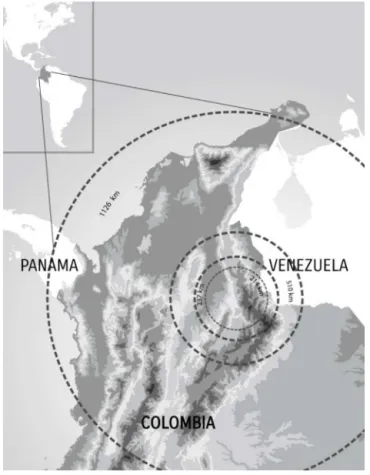
Figure1 Coverage of air ambulances used to transportill neonatesparticipatinginthestudy.
thefact that respiratory supportwasmore utilizedin air transport,wherespecializedphysiciansaremorefrequent. Ingeneral,moreseverecasestendedtobetransportedby air.Notethathospitalsurvivalwasmorefrequentlyobserved amongpatientstransportedbyground.
In the bivariate analysis (Table 2), associations were found between being discharged alive and birth weight, weightwhen admitted,respiratoryfrequency,oxygen sat-uration when admitted, respiratory acidemia, anemia, hypernatremia, hypokalemia, TRIPS, and kidney failure. The other variables studied (sociodemographic as well as clinical) were not significant. Normal potassium level uponadmittancewasalsoidentifiedasapredictorof sur-vival. In this sample, the median potassium level was 4mmol/L, while avalue over 5mmol/L wasfoundin only 10% of the patients, which was a population at risk of death.
However, confounding could be present in these pre-vious associations, and thus adjustment was required. Interestingly,noassociationswere foundbetween typeof ambulance andcondition whendischargedafter adjusting themultifactorialmodelbyTRIPS,birthweights,maternal hemorrhagingduringthethirdtrimesterofpregnancy,and potassium concentrations.In addition,the analysisof the interactionbetweenmodeoftransportanddistancefound evidence of a loss in the benefit from air transport at a certaindistance(Table3);unfortunately,thiswasnotwell definedbythedata.
Table2 Prevalenceratios(PR)betweenhospitalsurvival dischargeandindependentvariables.
Variable PR 95%CI p-Value
Sex 1.11 (0.79---1.55) 0.533
Weight
Lessthan1000g 1 Between1000and 1500g
1.69 (0.70---4.08) 0.242
Between1500and 2500g
1.74 (0.85---3.59) 0.131
Over2500g 1.90 (0.96---3.76) 0.066
Congenitaldisease 0.82 (0.53---1.28) 0.384 Cardiovascular
congenitaldisease
0.71 (0.29---1.72) 0.441
Maternaldiseasesa 0.97 (0.66---1.41) 0.868
Pregnancydiseasesb 0.98 (0.69---1.39) 0.911
Uterinediseasesc 1.14 (0.58---2.25) 0.694
Maternalriskfactorsd 0.96 (0.68---1.38) 0.841
Withoutprenatal control
0.85 (0.47---1.52) 0.576
Modeoftransport
Airambulance 1
Groundambulance 3.29 (1.29---8.41) 0.013
Cerebralbleeding 0.68 (0.37---1.25) 0.209
Heartdisease 0.65 (0.31---1.39) 0.267
Distanceinkm 0.99 (0.99---1.0) 0.947
Respiratoryrate 1.09 (1.03---1.14) 0.001
Oxygensaturation 1.05 (1.0---1.1) 0.028
Weightatadmission 1.00 (1.00---1.00) 0.000
FiO2 0.98 (0.96---0.99) 0.003
pH(lessthan7.2) 0.79 (0.55---1.13) 0.196
pCO2 0.97 (0.95---0.99) 0.011
Sodium 1.12 (1.02---1.23) 0.018
Potassium 0.63 (0.43---0.92) 0.017
Hemoglobin 1.34 (1.13---1.59) 0.001
Hematocrit 1.10 (1.04---1.17) 0.001
Ureanitrogen 0.95 (0.93---0.98) 0.001
TRIPS 0.91 (0.88---0.95) 0.001 TRIPS,TransportRiskIndexofPhysiologicStability.
a Includes mainly diabetes mellitus, infections, and
TORCH (T, toxoplasmosis; O, other infections; R, rubella; C,cytomegalovirus;H,herpesinfections).
b Gestationaldiabetes,pre-eclampsia,prematureruptureof
membranes, placental abruption, placenta previa, multiple pregnancy.
c Placenta previa, placental abruption, and third trimester
bleeding.
d Smokingorusingdrugs,historyofabortion,noprenatalcare,
lessthan17yearsofage.
Discussion
Table3 Adjustedprevalenceratios(aPR)forhospitalsurvivaldischargeandmodeoftransport.
Variables aPR p-Value 95%CI
Modeoftransport
Transportedviaground 1
Transportedbyair 0.65 0.128 0.38 1.13
TRIPS 0.99 0.005 0.98 0.99
Interaction
Modeoftransport×Distance(km) 1.0 0.14 0.99 1.00
Distance(km) 0.99 0.846 0.99 1.01
TRIPS,TransportRiskIndexofPhysiologicStability.
intriguing,becauseinterpretationrequiresconsideringthat the original difference between types of ambulance was confounded. Thus, severe-illness neonates transportedby air obtained a higher benefit and their risk of deathwas equal to that of neonates with less complicated diseases transportedbyground.
Perinatal risk canbe evaluatedunderidealconditions, whichenablespredicting whichneonates willrequire spe-cializedcare.Nevertheless,40%ofhigh-riskconditionswill not bepredictable and, therefore, a numberof neonates mayrequireinter-hospitaltransportinordertoreceive ini-tialcareorbecauseofthecomplexityofthecarerequired.15 Safety during transport of neonates has been of concern in developing countries, which can affect infant mortal-ity. This is due to a lack of personnel withexperiencein neonatetransportandcanberelatedtoadverseeventssuch ashypothermia,hypoglycemia,andhypoxia.16 Inaddition, somestudieshaveshownthatmortalityincreaseswithtravel time.17Itisthusimportanttodeterminestabilityconditions usingTRIPS, whichis atest thatevaluates the physiologi-calconditionofneonatesduringtransportandidentifiesthe outcomesassociatedwiththedifferenttransportteams.18 According toonerecent study,temperaturewasthe vari-able with greatest alterations in the TRIPS scale during transport.19
Nonetheless,other factorsmayinfluence thefinal out-come(mortality),suchasthemeansoftransportandtravel time,inwhichdistanceandtraveltimemayaffectadverse outcomes.Although some studieshave reportedthat out-comesdependontheexperienceoftheteamresponsiblefor transportandnotthedistance,17 itisbelievedthatin the caseofColombia,geographicconditionscontinueto repre-sentanobstacletoobtainingqualityofcare.Forexample,in Indiamaximumtransporttimesanddistanceswere560min and299km,17whileinthepresentstudymaximumtransport timeby ground was1044min andmaximum distance was 660km.Thisdemonstratesdifferencesingeographyand/or thequalityofroadways.
Giventhedistributionofthepopulationandneonatal ser-vicesinsomedevelopedcountries,theuseofairtransport isknowntobeveryuncommon.20 Meanwhile,thebenefits indevelopingcountriesoftransportingneonatesbyairhave notbeenstudied,whereitcouldbeconsideredanoptionto obtainbettermedicalcare.Inaddition,itmaybedifficult toreceivetimelycare duetosocialconditionsand differ-encesin thequalityof servicesamongregions, aswell as geographicconditions.
The aboveis applicable in a countrysuch asColombia whereservicesareinequitableanddistancesarelong.Data from developing countries indicate that several risk fac-tors for perinatal mortalityare related topoor access to healthservicesandlowquality(equity),therebyreinforcing theimportanceofimprovingaccessibilityandthequalityof basicobstetricandneonatalcare.21Dataalsoexistthat sug-gestthattheimplementationofatransportsystemshould beadaptedtothegeographicconditionsofeachcountry.22 While air transport can equalize intra-hospital outcomes, theanalysisoftheinteractionbetweendistanceandmode oftransportidentifiesatendencyinwhichpatientsreferred fromlongerdistanceswhotravelbyairareassociatedwith alowerlikelihoodofbeingdischargedalive.
In addition, the present study evaluated the maternal factorsassociatedwithsurvival,reportedfromthereferring site,andfoundthathemorrhagingduringthethirdtrimester wastheonlyprotectivefactorforlivedischarge.Whileitis wellknownthatthisisariskfactorformaternaland neona-tal morbid---mortality, the risks can be reduced if care is providedinatimelymanner.23Significantdifferenceswere observed when exploring the distribution of hemorrhag-ingaccordingtogestationalage.Atendency wasfoundin whichhemorrhagingduringthethirdtrimesterwasgreater forgestationalagesunder32weeks.Nevertheless,thisdid not become an adverse factor. Therefore, it is believed thathemorrhagingcanbequicklynotedbythemotherand therebylead toa rapidsearch formedicalcare, resulting inbetter outcomesin spite ofthe prematurecondition.24 A study conducted in Peru about the warning signs that promptedemergencyvisitsfoundthatvaginalbleeding rep-resentedthehighestpercentage(87%)ofvisits,followedby decreasedfetalmovementandfever.25
The limitations of the study design should be taken intoaccountwheninterpretingthesefindings.This wasan observationalstudy,whichmaycontainbiasedresultssince clinicalandtherapeuticvariablesassociatedwiththe intra-hospital care received were not included. In addition, it wasnotpossibletoevaluatetheclinical conditionsatthe referringsite,preventingtheverificationofdeteriorationin conditionsduringtransport.Also,patientswerenot evalu-atedbyaclinicalseverityscalewhenadmitted.Thiscould haveprovidedadditionaldataregardingtheseverityofthe conditionwhenadmitted andduringthe firsthoursinthe unit.
However,itisimportanttorememberthatthemain predic-torwastypeoftransportation, andbetter outcomeswere observedduringcrudeanalysisamongneonatestransported byground.Thefactthatthisassociationdisappearedinthe adjusted analysissuggests that sample size wassufficient toexploretheassociationofthisvariable.Another limita-tionwasthe need forlong traveltimesvia ground before reachingairtransportservices,withchangesinaltitudeofas muchas600m,aswellasthetraveltimefromtheairportto thehealthinstitution,whichtakes45mininthecitystudied. Finally,thisstudydidnotevaluateadverse factorsrelated withtypeoftransportation,asdidpreviousstudies.26
Giventhedifficultiesrelatedtotime,itwouldbe worth-whiletoperformstudieswithdetailedrecordsoftraveltime for each mode of transport. One recommendationby the authorsisforinstitutionstoconsiderthefirstmomentsof patienttransportasthestartingpointfor theprovisionof carebyspecializedpersonnelwhoarequalifiedinthefield, inordertoincreasethespeedofreceivingcarebyanoptimal team.
Differences were not found between air and ground transportintermsoflivedischargesfromtheneonatalunit. Transportsystems should be established according tothe needsofeachregionandthepossibilitiesofthehealth sys-tem.AlthoughColombiaisadevelopingcountry,thehealth systempermitstheuseofairtransportationnomatterthe typeofhealthinsuranceorsocioeconomicstatus.Air trans-portisan optionfor criticalneonates orwheregeography makesaccess difficult. As consequence of findings of this study,FCVhasimplementeditsownairplaneswithateam ofphysiciansandnursesspecializedinairtransportation.
Conflicts
of
interest
Theauthorsdeclarenoconflictsofinterest.
References
1.Domínguez-SampedroP.Haciaelplenodesarrollodeltransporte pediátricoenEspa˜na.AnPediatr(Barc).2014;81:203---4. 2.CampbellSM,RolandMO,BuetowSA.Definingqualityofcare.
SocSciMed.2000;51:1611---25.
3.JohnsenAS,FattahS,SollidSJ,RehnM.Impactofhelicopter emergencymedicalservicesinmajorincidents:systematic lit-eraturereview.BMJOpen.2013;3:e003335.
4.HainsIM,MarksA,GeorgiouA,WestbrookJI.Non-emergency patient transport:what are the quality and safetyissues? A systematicreview.IntJQualHealthCare.2011;23:68---75. 5.PerryB, GeslerW. Physicalaccess toprimary health carein
AndeanBolivia.SocSciMed.2000;50:1177---88.
6.GuagliardoMF.Spatialaccessibilityofprimarycare:concepts, methodsandchallenges.IntJHealthGeogr.2004;3:3. 7.Zamora Fandino N, Barrera Reyes O. Diagnóstico de la
infraestructuravialactualenColombia.Finalreport.Bogotá, D.C.:UniversidadEAN;2012.
8.HoyosN,EscobarJ,RestrepoJC,ArangoAM,OrtizJC.Impact of the 2010---2011 La Ni˜na phenomenon in Colombia, South
America:thehumantollofanextremeweatherevent.Appl Geogr.2013;39:16---25.
9.Romero Torres AH, Contreras E. Transporte aeromédico de pacientes.MedicasUIS.2008;21:94---102.
10.Alvarado-SocarrasJ,BermonA,BernalN,Naranjo-Estupi˜nánNF, IdrovoAJ.Intra-hospitalmortalityamongneonatestransported byambulanceinColombia.PediatrInt.2014;56:571---6. 11.AmayaContrerasJ.Análisisdelainfraestructuravialen
San-tanderysuimpactoenelsectoravícolaenSantander2010---2011 [monograph]. Bucaramanga: Universidad Industrial de San-tander;2011.
12.LeeSK,ZupancicJA,PendrayM,ThiessenP,SchmidtB,Whyte R,etal.Transport riskindexofphysiologicstability:a prac-tical system for assessing infant transport care. J Pediatr. 2001;139:220---6.
13.GreenlandS.Modelingandvariableselectioninepidemiologic analysis.AmJPublicHealth.1989;79:340---9.
14.BarrosAJ,Hirakata VN.Alternativesforlogistic regressionin cross-sectionalstudies:anempiricalcomparisonofmodelsthat directlyestimatetheprevalenceratio.BMCMedResMethodol. 2003;3:21.
15.EsquéRuizM,FiguerasAloyJ,GarcíaAlixA,AlomarRibesA, BlancoBravoD,FerándezLorenzoJR,etal.Recommendations forperinataltransport.AnEspPediatr.2001;55:146---53. 16.ChangAS,Berry A,Sivasangari S.Specialtyteams for
neona-taltransporttoneonatalintensivecareunitsforpreventionof morbidityandmortality(protocol).CochraneDatabaseSystRev. 2008:CD007485.
17.KumarPP,KumarCD,ShaikFA,GhantaSB,VenkatalakshmiA. Prolongedneonatalinterhospitaltransportonroad:relevance fordevelopingcountries.IndianJPediatr.2010;77:151---4. 18.EliasonSH,WhyteH,DowK,CroninCM,LeeS,Canadian
Neona-talNetwork.Variationsintransportoutcomesofoutborninfants amongCanadianneonatalintensivecareunits.AmJPerinatol. 2013;30:377---82.
19.Romanzeira JC, Sarinho SW. Quality assessment of neonatal transportperformedbytheMobileEmergencyMedicalServices (SAMU).JPediatr(RioJ).2015;91:380---5.
20.FentonAC,LeslieA.Thestateofneonataltransportservicesin theUK.ArchDisChildFetalNeonatalEd.2012;97:F477---81. 21.AkelloB,NabiwembaE,ZirabamuzaaleC,OrachCG.Risk
fac-torsforperinatalmortalityinAruaregionalreferralhospital, WestNile,Uganda.EastAfrJPublicHealth.2008;5:180---5. 22.HosseiniMB, Jannati A, Gholipour K, Heidarzadeh M, Iezadi
S, Mojahed F, et al. Perception and expectation of Iran neonataltransportexpertregardtodevelopingneonatal trans-port systeminIran: a qualitativeresearch. JClinNeonatol. 2014;3:25---34.
23.Kainer F, Hasbargen U. Emergencies associated with preg-nancyanddelivery:peripartumhemorrhage.DtschÄrzteblInt. 2008;105:629---38.
24.HarlevA,LevyA,ZaulanY,KoifmanA,MazorM,WiznitzerA, etal.Idiopathicbleedingduringthesecondhalfofpregnancy asariskfactorforadverseperinataloutcome.JMaternFetal NeonatalMed.2008;21:331---5.
25.Ticona-Rebagliati R, Torres-Bravo L, Veramendi-Espinoza L, Zafra-Tanaka JH. Conocimientos y prácticassobre signos de alarma de las gestantes atendidas en el Hospital Nacional Docente.RevPeruGinecolObstet.2014;60:123---30.