ACPD
15, 1131–1169, 2015Relative humidity-dependent
viscosities
M. Song et al.
Title Page
Abstract Introduction
Conclusions References
Tables Figures
◭ ◮
◭ ◮
Back Close
Full Screen / Esc
Printer-friendly Version Interactive Discussion
Discussion
P
a
per
|
Discussion
P
a
per
|
Discussion
P
a
per
|
Discussion
P
a
per
|
Atmos. Chem. Phys. Discuss., 15, 1131–1169, 2015 www.atmos-chem-phys-discuss.net/15/1131/2015/ doi:10.5194/acpd-15-1131-2015
© Author(s) 2015. CC Attribution 3.0 License.
This discussion paper is/has been under review for the journal Atmospheric Chemistry and Physics (ACP). Please refer to the corresponding final paper in ACP if available.
Relative humidity-dependent viscosities
of isoprene-derived secondary organic
material and atmospheric implications for
isoprene-dominant forests
M. Song1, P. F. Liu2, S. J. Hanna1, S. T. Martin2,3, and A. K. Bertram1
1
Department of Chemistry, University of British Columbia, Vancouver, BC, V6T 1Z1, Canada
2
School of Engineering and Applied Sciences, Harvard University, Cambridge, Massachusetts 02138, USA
3
Department of Earth and Planetary Sciences, Harvard University, Cambridge, Massachusetts 02138, USA
Received: 10 December 2014 – Accepted: 12 December 2014 – Published: 14 January 2015 Correspondence to: A. K. Bertram ([email protected])
ACPD
15, 1131–1169, 2015Relative humidity-dependent
viscosities
M. Song et al.
Title Page
Abstract Introduction
Conclusions References
Tables Figures
◭ ◮
◭ ◮
Back Close
Full Screen / Esc
Printer-friendly Version Interactive Discussion
Discussion
P
a
per
|
Discussion
P
a
per
|
Discussion
P
a
per
|
Discussion
P
a
per
|
Abstract
Oxidation of isoprene is an important source of secondary organic material (SOM) in atmospheric particles, especially in areas such as the Amazon Basin. Information on the viscosities, diffusion rates, and mixing times within isoprene-derived SOM is needed for accurate predictions of air quality, visibility, and climate. Currently, however, 5
this information is not available. Using a bead-mobility technique and a poke-flow tech-nique combined with fluid simulations, the relative humidity (RH)-dependent viscosities of SOM produced from isoprene photo-oxidation were quantified for 20–60 µm particles at 295±1 K. From 84.5 to 0 % RH, the viscosities for isoprene-derived SOM varied from ∼2×10⁻¹ to∼3×10⁵Pa s, implying that isoprene-derived SOM ranges from a liquid 10
to a semisolid over this RH range. These viscosities correspond to diffusion coefficients of∼2×10⁻⁸to∼2×10⁻¹⁴cm2s−1for large organic molecules that follow the Stokes– Einstein relation. Based on the diffusion coefficients, the mixing time of large organic molecules within 200 nm isoprene-derived SOM particles ranges from approximately 0.1 h to less than 1 s. To illustrate the atmospheric implications of this study’s results, 15
the Amazon Basin is used as a case study for an isoprene-dominant forest. Consider-ing the RH range observed and with some assumptions about the dominant chemical compositions of SOM particles in the Amazon Basin, it is likely that SOM particles in this region are liquid and reach equilibrium with large gas-phase organic molecules on short time scales, less than or equal to approximately 0.1 h.
20
1 Introduction
Vegetation and urban environments emit large quantities of volatile organic compounds (e.g. isoprene, α-pinene, and toluene) into the atmosphere (Guenther et al., 1995; Geron et al., 2000; Hakola et al., 2000; Henze et al., 2008). In the atmosphere these volatile organic compounds can be oxidized by OH radicals, NO3radicals, and ozone, 25
atmo-ACPD
15, 1131–1169, 2015Relative humidity-dependent
viscosities
M. Song et al.
Title Page
Abstract Introduction
Conclusions References
Tables Figures
◭ ◮
◭ ◮
Back Close
Full Screen / Esc
Printer-friendly Version Interactive Discussion
Discussion
P
a
per
|
Discussion
P
a
per
|
Discussion
P
a
per
|
Discussion
P
a
per
|
spheric particles (Hallquist et al., 2009). SOM can account for 20–80 % of the mass of atmospheric aerosol particles depending on location (Zhang et al., 2007; Jimenez et al., 2009). Particles containing SOM are important since they can affect the Earth’s energy budget directly by scattering and/or absorbing solar radiation and indirectly by serving as nuclei for cloud formation (IPCC, 2013). Moreover, they can influence air 5
quality and human health (Jang et al., 2006; Baltensperger et al., 2008).
Recently, the phase (i.e. solid vs. semisolid vs. liquid), viscosity, and molecular dif-fusion within SOM have been an area of focus in the atmospheric community. This is because knowledge of these physical properties is needed for modeling the envi-ronmental impacts of SOM particles (Koop et al., 2011; Pfrang et al., 2011; Riipinen 10
et al., 2011, 2012; Shiraiwa et al., 2011, 2013; Perraud et al., 2012; Shiraiwa and Sein-feld, 2012; Zelenyuk et al., 2012; Zhou et al., 2013). For example, if SOM particles are solid they may participate in heterogeneous ice nucleation in the atmosphere (Murray et al., 2010; Wang et al., 2012). As another example, researchers have shown that predictions of ultrafine particle number concentrations and size distributions depend 15
on the diffusion rates of organics within SOM particles (Riipinen et al., 2011). In ad-dition, researchers have shown that predictions of total SOM mass concentrations in urban environments are dependent on the diffusion rates of organics in SOM (Shiraiwa and Seinfeld, 2012). Moreover, it has been demonstrated that long-range transport of polycyclic aromatic hydrocarbons can depend on diffusion rates in a particle (Zelenyuk 20
et al., 2012; Zhou et al., 2013). Furthermore, if viscosities are high in particles con-taining SOM material, they can inhibit the efflorescence of crystalline salts by affecting nucleation rates and/or crystal growth rates (Bodsworth et al., 2010; Song et al., 2013). The phase, viscosity, and molecular diffusion rate within SOM are closely related properties (Koop et al., 2011; Shiraiwa et al., 2011). An amorphous solid is defined as 25
ACPD
15, 1131–1169, 2015Relative humidity-dependent
viscosities
M. Song et al.
Title Page
Abstract Introduction
Conclusions References
Tables Figures
◭ ◮
◭ ◮
Back Close
Full Screen / Esc
Printer-friendly Version Interactive Discussion
Discussion
P
a
per
|
Discussion
P
a
per
|
Discussion
P
a
per
|
Discussion
P
a
per
|
transport of large organic molecules in SOM, molecular diffusion rates may be related to viscosity through the Stokes–Einstein equation (Koop et al., 2011).
An important biogenic source of SOM is the oxidation ofα-pinene. Recently, there has been a significant amount of research on the phase, viscosity, and diffusion rates in SOM generated from the oxidation ofα-pinene (Virtanen et al., 2010; Cappa et al., 5
2011; Perraud et al., 2012; Saukko et al., 2012; Abramson et al., 2013; Renbaum-Wolff
et al., 2013a; Robinson et al., 2013; Kidd et al., 2014; Pajunoja et al., 2014). These different studies have shown of inferred that viscosities can be higher than 102Pa s and diffusion rates of large organic molecules can be slower than∼10−10cm2s−1in SOM particles generated from α-pinene oxidation at low relative humidity (RH), although 10
there are still disagreements in the exact values of the viscosities and diffusion rates in these particles.
Another important biogenic source of SOM in the atmosphere is photo-oxidation of isoprene. In the southeast USA during the summer months in 2006 and 2011, up to 40 % of measured PM2.5 organic carbon was attributed to isoprene-derived SOM
15
(Offenberg et al., 2011; Budisulistiorini et al., 2013). In central East China during the Mount Tai Experiment 2006 campaign (MTX2006) in early summer, isoprene-derived SOM was 7 times greater than monoterpene-derived SOM (Fu et al., 2010). In the mar-itime tropical forest in Danum Valley, Borneo, Malaysia during summer 2008, isoprene-derived SOM accounted for as much as one half of the mass concentrations of total 20
submicron organic particles (Robinson et al., 2011). In the wet season of 2008 during the Amazonian Aerosol Characterization Experiment (AMAZE-08), mass spectra of submicron organic particles were consistent with reference spectra of SOM generated from isoprene and terpene oxidation (Chen et al., 2009; Pöschl et al., 2010; Pöhlker et al., 2012). Speciation studies using chromatography have also illustrated that iso-25
ACPD
15, 1131–1169, 2015Relative humidity-dependent
viscosities
M. Song et al.
Title Page
Abstract Introduction
Conclusions References
Tables Figures
◭ ◮
◭ ◮
Back Close
Full Screen / Esc
Printer-friendly Version Interactive Discussion
Discussion
P
a
per
|
Discussion
P
a
per
|
Discussion
P
a
per
|
Discussion
P
a
per
|
Although isoprene is a major source of SOM in some regions of the atmosphere, such as the Amazon Basin, there have only been a few studies that have investigated the phase (i.e. liquid vs. semisolid or solid) of isoprene-derived SOM (Saukko et al., 2012; Bateman et al., 2014). In addition, there has only been one study that has ad-dressed the viscosity in isoprene-derived SOM (Bateman et al., 2014). In the current 5
study we focus on the viscosities and diffusion rates of organic molecules as a function of RH in SOM generated from photo-oxidation of isoprene. Studies as a function of RH are needed since as the RH varies in the atmosphere SOM particles can take up water, which can change the viscosities and diffusion rates in the particles (Koop et al., 2011; Shiraiwa et al., 2011, 2013; Power et al., 2013; Renbaum-Wolffet al., 2013a; 10
Zhou et al., 2013). Our approach involves measuring the viscosity of isoprene-derived SOM and then relating the viscosity to diffusion rates of organic molecules in the SOM using the Stokes–Einstein relationship. Based on their laboratory experiments study-ing the RH dependence of particle rebound for different types of SOM, the results of Bateman et al. (2014) appear to explain why organic particles present in terpene-15
dominant conditions of a boreal forest at low RH are solid whereas organic particles for isoprene-dominant tropical forests at high RH are liquid. In addition to determin-ing viscosities and diffusion rates, we also use the new data to assess whether SOM in the Amazon Basin during clean conditions will rapidly reach equilibrium with large gas-phase organic molecules under RH values typically encountered in the region. 20
2 Methods
Primary SOM particles having diameters<5 µm were produced by photo-oxidation of isoprene compounds in an oxidation flow reactor (OFR) and then collected onto hy-drophobic substrates (Sect. 2.1). The primary particles were collected (Sect. 2.1) and converted into larger particles having diameters between 20–60 µm (Sect. 2.2). The 25
ACPD
15, 1131–1169, 2015Relative humidity-dependent
viscosities
M. Song et al.
Title Page
Abstract Introduction
Conclusions References
Tables Figures
◭ ◮
◭ ◮
Back Close
Full Screen / Esc
Printer-friendly Version Interactive Discussion
Discussion
P
a
per
|
Discussion
P
a
per
|
Discussion
P
a
per
|
Discussion
P
a
per
|
2.1 Production of particles consisting of secondary organic material on hy-drophobic surfaces
Particles consisting of SOM were produced by the photo-oxidation of isoprene com-pounds in an OFR (Kang et al., 2007). The procedures were described in detail in Liu et al. (2013) and Liu et al. (2014). Table 1 lists the experimental conditions used 5
in this study. The OFR was operated at a temperature of 293±2 K and a flow rate of 7.0–9.0 L min−1. RH in the reactor was maintained at 13±3 % during particle gen-eration. For injection of isoprene vapor into the OFR, 2 mL of liquid isoprene (Sigma Aldrich, 99 %) was placed in an upright Teflon tube with the lower end sealed and the upper end connected to a T-fitting. The fitting was flushed by purified air, thereby pro-10
ducing a gas flow containing isoprene vapor. The injected isoprene concentration was 4–7 ppm. Ozone was produced external to the flow reactor by irradiating pure air with the ultraviolet emission from an Hg lamp (λ=185 nm). The injected ozone concen-tration was 15 ppm. Hydroxyl radicals were produced inside the OFR by the following photochemical reactions:
15
O3+hν−→O2+O(1D), (R1)
O(1D)+H2O−→2OH (R2)
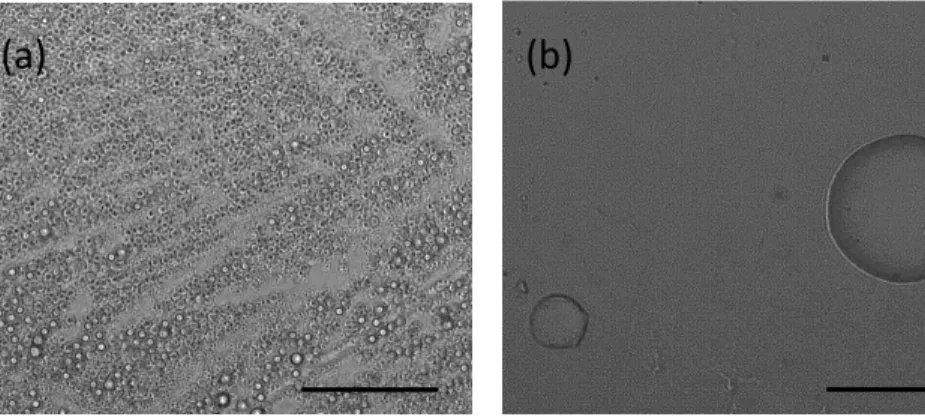
Particles consisting of SOM produced from the photo-oxidation of isoprene were col-lected onto hydrophobic substrates using an electrostatic precipitator (TSI 3089, USA) connected to the outflow of the OFR. Shown in Fig. 1a is an example of an image of par-20
ticles collected on a hydrophobic substrate using this process. Teflon substrates were used as the hydrophobic substrates for the bead-mobility experiments (see Sect. 2.3). Glass slides coated with trichloro(1H,1H,2H,2H-perfluorooctyl)silane (Sigma-Aldrich) were used as hydrophobic substrates for the poke-flow experiments (see Sect. 2.4). The method of coating glass slides with a silane is described in Knopf (2003).
ACPD
15, 1131–1169, 2015Relative humidity-dependent
viscosities
M. Song et al.
Title Page
Abstract Introduction
Conclusions References
Tables Figures
◭ ◮
◭ ◮
Back Close
Full Screen / Esc
Printer-friendly Version Interactive Discussion
Discussion
P
a
per
|
Discussion
P
a
per
|
Discussion
P
a
per
|
Discussion
P
a
per
|
2.2 Production of 20–60 µm particles
Particles of 20–60 µm were required to perform bead-mobility and poke-flow experi-ments (see Sects. 2.3 and 2.4). To make the appropriate particle sizes for these exper-iments, the hydrophobic substrates containing particles collected from the OFR were placed in a RH-controlled flow-cell coupled to a reflectance microscope (Zeiss Ax-5
iotech, magnification 50×) (Pant et al., 2006; Bertram et al., 2011). The RH in this flow-cell was then increased to over 100 %, which resulted in growth of the SOM par-ticles by water uptake. The RH was then maintained over 100 % for 30–60 min to grow and coagulate the SOM particles. After the growth and coagulation process, the RH was decreased to 80–90 % to evaporate the water. The activation, growth, 10
and coagulation processes resulted in particles having diameters of 20–60 µm (see Fig. 1b). This method of producing 20–60 µm particles was introduced by Renbaum-Wolffet al. (2015).
2.3 Bead-mobility experiments
The bead-mobility technique has been described in detail by Renbaum-Wolff
15
et al. (2013b). Insoluble melamine beads (∼1 µm in diameter, Sigma Aldrich Cat. #86296) were incorporated into the supermicron SOM particles deposited on a hy-drophobic substrate by nebulizing a suspension of the melamine beads in water over the supermicron SOM particles. The hydrophobic substrate with the SOM particles was then placed in a flow-cell coupled to a light-transmitting microscope (Zeiss Axio 20
Observer, magnification 40×). Once the supermicron particles were located in the flow-cell, a continuous flow of N2/H2O gas (∼1200 sccm) was passed over the supermicron
particles. By adjusting the ratio of N2 and H2O in the flow, the RH in the cell was con-trolled. The RH in the flow-cell was measured using a hygrometer with a chilled mirror sensor (General Eastern, Canada), which was calibrated by observing the deliques-25
ACPD
15, 1131–1169, 2015Relative humidity-dependent
viscosities
M. Song et al.
Title Page
Abstract Introduction
Conclusions References
Tables Figures
◭ ◮
◭ ◮
Back Close
Full Screen / Esc
Printer-friendly Version Interactive Discussion
Discussion
P
a
per
|
Discussion
P
a
per
|
Discussion
P
a
per
|
Discussion
P
a
per
|
The continuous flow of N2/H2O gas caused a shear stress on the surfaces of the
SOM particles and resulted in internal circulations within the SOM particles. These internal circulations were quantified by monitoring the movement of the beads within the SOM particles with the optical microscope. Images of the beads within the SOM particles were recorded with a CCD camera every 0.2 s–10 min depending on the ve-5
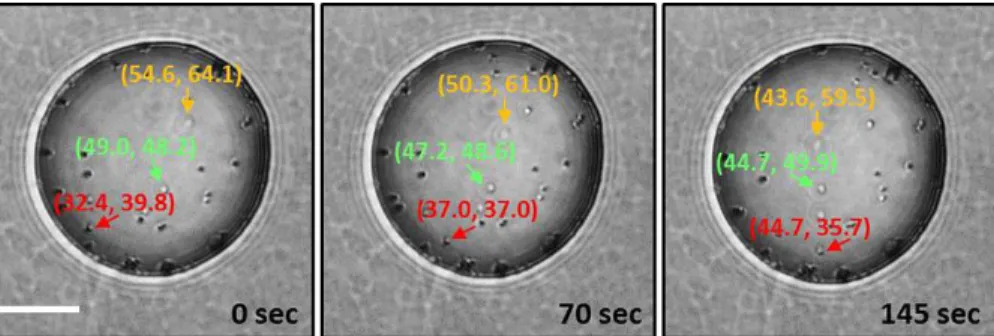
locity of the beads. Typically 1–7 beads within a particle were observed over 50–100 frames. Within the same particle, bead speeds varied by a factor of 2–3 depending on the location within the particle. Shown in Fig. 2 are examples of optical images of an isoprene-derived SOM particle at 80 % RH recorded during a typical bead-mobility experiment. Three beads that were monitored during this experiment are marked with 10
arrows. Also included are thex andy coordinates of the beads recorded at the three different times. From these coordinates the average speed of individual beads in a sin-gle particle was determined.
Once the average bead speeds were determined, the bead speeds were converted to viscosity using a calibration line, which was generated from measurements of bead 15
speed as a function of viscosity in sucrose particles (see Fig. 3). Renbaum-Wolff et al. (2013b) showed that the calibration line for converting bead speed into viscosity is independent of the type of organic materials used to generate the line for a wide range of oxygen-to-carbon ratios, surface tensions, and molecular weights of the or-ganic materials.
20
2.4 Poke-flow experiment in conjunction with fluid simulation
The method of applying physical force to estimate the phase of a particle was in-troduced by Murray et al. (2012). The poke-flow method in conjunction with fluid simulations to determine viscosities of particles was introduced by Renbaum-Wolff
et al. (2013a) and further extended and validated by Grayson et al. (2015). Supermicron 25
ACPD
15, 1131–1169, 2015Relative humidity-dependent
viscosities
M. Song et al.
Title Page
Abstract Introduction
Conclusions References
Tables Figures
◭ ◮
◭ ◮
Back Close
Full Screen / Esc
Printer-friendly Version Interactive Discussion
Discussion
P
a
per
|
Discussion
P
a
per
|
Discussion
P
a
per
|
Discussion
P
a
per
|
a sterilized sharp needle (0.9 mm×40 mm) (Becton-Dickson, USA) could be inserted. The needle was mounted to a micromanipulator (Narishige, model MO-202U, Japan) to allow precise control of the movement of the needle. The needle was first positioned over the top of a SOM particle and then moved down to pass through the center of the particle (i.e. poke the particle). The geometrical changes during and after poking 5
a particle were recorded using a reflectance optical microscope (Zeiss Axio Observer, 40×objective) equipped with a CCD camera.
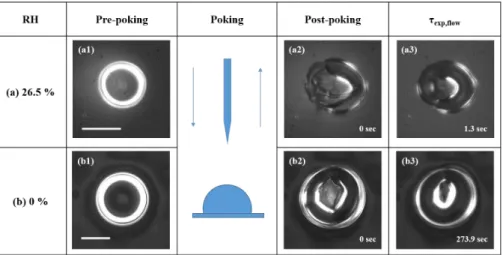
Figure 4 shows typical geometrical changes of the SOM particles that were observed optically. Prior to poking, the particles had a spherical cap (Fig. 4 a1, and b1). Just after poking, the particle had a half-torus geometry consisting of a ring of material with 10
a hole at its center, which is energetically unfavourable (timet=0, Fig. 4, a2 and b2). To minimize the surface energy, the material flowed to fill the central hole (Fig. 4, a3 and b3). The area of the inner hole of the half torus geometry was measured using Zen software (Zeiss, Canada). The diameter of the equivalent hole area was calculated based on the relationshipd =(4A/π)1/2, where d is the equivalent area diameter of 15
a hole of area,A(Reist, 1992). The experimental flow time,τ(exp, flow), was determined
as the time taken for the equivalent area diameter to reach 50 % of the initial value. For a3 and b3 in Fig. 4, theτ(exp, flow) was determined to be 1.3 s at 25.1 % RH and 273.9 s
at 0 % RH. Theτ(exp, flow) values were converted to viscosity using simulations of fluid
flow. 20
Fluid flow simulations were performed to obtain the relationship between viscosity and modeled flow time, τ(mod, flow), which is the time when the inner hole of a poked
particle reaches half of its initial diameter. Using the relationship between modeled flow time,τ(mod, flow), and viscosity, we converted experimental flow time,τ(exp, flow), to
viscos-ity. Simulations of material flow were carried out usingCOMSOL Multiphysics(version 25
ACPD
15, 1131–1169, 2015Relative humidity-dependent
viscosities
M. Song et al.
Title Page
Abstract Introduction
Conclusions References
Tables Figures
◭ ◮
◭ ◮
Back Close
Full Screen / Esc
Printer-friendly Version Interactive Discussion
Discussion
P
a
per
|
Discussion
P
a
per
|
Discussion
P
a
per
|
Discussion
P
a
per
|
interface was used, which is similar to the geometry observed in the poke-flow experi-ments. The mesh size used in the model was 4.04–90.9 nm. Details of the simulation were described by Grayson et al. (2015).
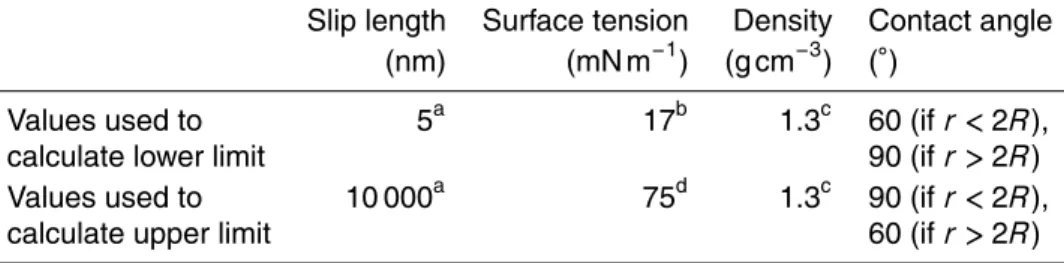
For the simulations, the following physical parameters were needed: slip length, sur-face tension, contact angle, and material density for isoprene-derived SOM. Table 2 5
shows the values used for these physical parameters in the simulations. The lower and upper limits of the slip length used in the simulations were 5 nm and 10 µm based on literature data of the interactions between fluids and solid surfaces (Schnell, 1956; Churaev et al., 1984; Watanabe et al., 1999; Baudry et al., 2001; Craig et al., 2001; Cheng and Giordano, 2002; Tretheway and Meinhart, 2002; Jin et al., 2004; Joseph and 10
Tabeling, 2005; Neto et al., 2005; Choi and Kim et al., 2006; Joly et al., 2006; Zhu et al., 2012; Li et al., 2014). The upper limit for surface tension of SOM was 72 mN m−1, corre-sponding to the surface tension of pure water at 293 K (Engelhart et al., 2008), and the lower limit was 17 mN m−1, corresponding to the surface tension of liquid isoprene at 293 K (http://cameochemicals.noaa.gov). The density of isoprene-derived SOM used 15
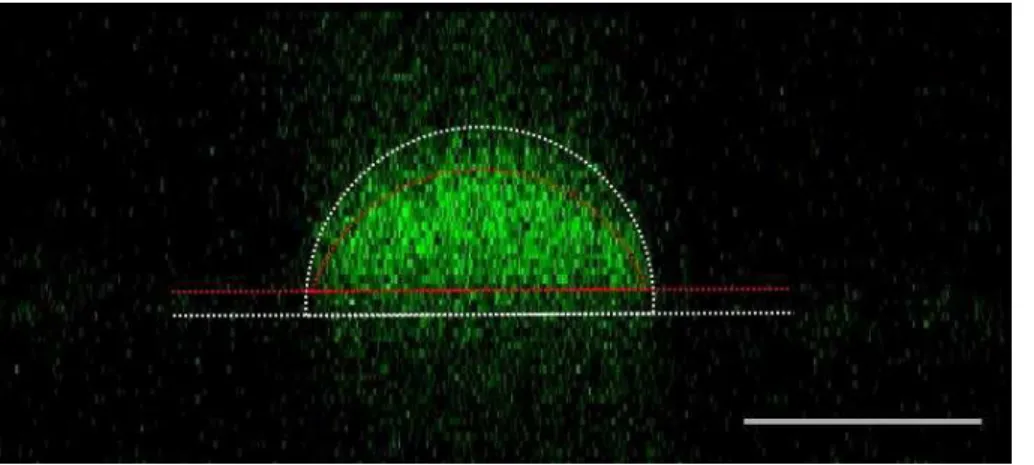
was based on the observed density of isoprene-derived SOM (Kuwata et al., 2011; Nakao et al., 2013). Contact angles were determined using 3-D fluorescence confocal images of the SOM particles on the substrates, which range from 60 and 90◦(Fig. 5). In the simulation, the relationship between viscosity and contact angle was dependent on the ratio of tube radius to the inner hole radius (see Table 2). Other input to the 20
ACPD
15, 1131–1169, 2015Relative humidity-dependent
viscosities
M. Song et al.
Title Page
Abstract Introduction
Conclusions References
Tables Figures
◭ ◮
◭ ◮
Back Close
Full Screen / Esc
Printer-friendly Version Interactive Discussion
Discussion
P
a
per
|
Discussion
P
a
per
|
Discussion
P
a
per
|
Discussion
P
a
per
|
3 Results
3.1 Viscosities of isoprene-derived SOM determined by the bead-mobility tech-nique
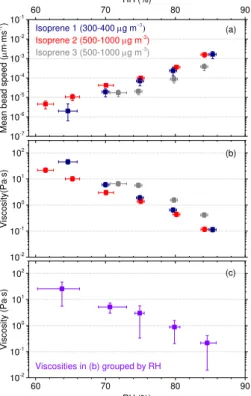
Shown in Fig. 6a are the mean bead speeds as a function of RH at 295±1 K deter-mined in the bead-mobility experiments. The different colors represent different sam-5
ples (Table 1). Each symbol corresponds to the mean bead speed determined for one sample at one RH. The speeds of at least 3 beads were used to determine a mean bead speed. Figure 6b shows viscosities calculated from the mean bead speeds shown in Fig. 6a and the calibration line shown in Fig. 3. They error bars in Fig. 6b repre-sent the 95 % prediction intervals from the calibration line. Figure 6b illustrates that the 10
change in viscosities with a change in concentration of the SOM in the OFR (when going from 300–400 to 500–1000 µg m−3) is less than the uncertainties in the mea-surements. Since the viscosities do not appear to vary with concentrations of the SOM in the OFR over the range studied, we group the data in Fig. 6b by RH to provide an overall summary from the bead-mobility technique (see Fig. 6c). Three data points 15
were included in each group. Figure 6c also illustrates that the viscosity for isoprene-derived SOM increased from ∼2×10⁻¹ to∼3×101Pa s as the RH decreased from 84.5 to 63.7 %. Viscosities were not determined for RH<60 % using the bead-mobility technique because the circulation rate of beads in a particle became too slow to readily observe.
20
3.2 Viscosities of isoprene-derived SOM determined by the poke-flow tech-nique combined with fluid simulations
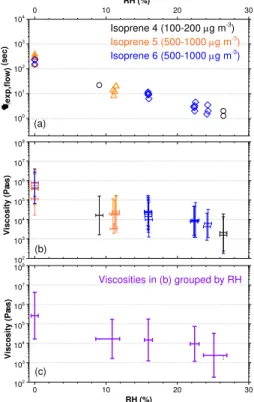
RH-dependentτ(exp, flow)values of three different isoprene-derived SOM samples
mea-sured at 295±1 K by the poke-flow technique are shown in Fig. 7a. Each symbol in Fig. 7a represents the measured τ(exp, flow) from one particle poked at one RH.
Fig-25
ACPD
15, 1131–1169, 2015Relative humidity-dependent
viscosities
M. Song et al.
Title Page
Abstract Introduction
Conclusions References
Tables Figures
◭ ◮
◭ ◮
Back Close
Full Screen / Esc
Printer-friendly Version Interactive Discussion
Discussion
P
a
per
|
Discussion
P
a
per
|
Discussion
P
a
per
|
Discussion
P
a
per
|
within individual samples. Figure 7b presents the lower and upper limits of viscosities calculated from the individualτ(exp, flow) values shown in Fig. 7a. For each data point in
Fig. 7b, the uncertainty in the viscosity is approximately two orders of magnitude. This uncertainty is due to the uncertainties in the physical parameters used in the simula-tions (See Table 2). In Fig. 7c, the viscosities of the particles were grouped by RH with 5
at least 4 data points in each group. Thex error bars in Fig. 7b represent the range of RH values in the group as well as uncertainty of the RH measurements. They error bars represent the lower and upper limits of viscosity within the group. Figure 7c illus-trates that the viscosity ranges from approximately 2×10³ to 3×10⁵Pa s as the RH changes from 25.1 to 0 % RH. Viscosities were not determined for RH>30 % using the 10
poke-flow technique because the material flows too fast to observe.
4 Discussion
4.1 Phase of isoprene-derived SOM as a function of relative humidity
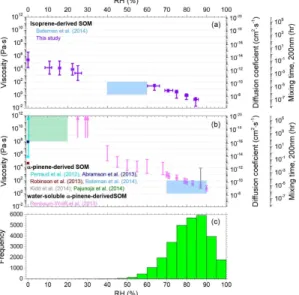
Figure 8a displays together the viscosities of isoprene-derived SOM (marked by pur-ple) measured by the bead-mobility technique (Fig. 6c) and the viscosities of isoprene-15
derived SOM measured by the poke-flow technique (Fig. 7c). Based on our data, for RH>60 % the isoprene-derived SOM falls into the range for a liquid phase (viscos-ity<102Pa s) while for RH<30 % the isoprene-derived SOM falls into the range for a semisolid phase (102<viscosity<1012Pa s). At no RH is the SOM studied a solid. Based on the rebound behavior of submicron isoprene-derived SOM particles, Bate-20
man et al. (2014) show that the semisolid-to-liquid phase transition of these particles is in the range of 40–60 % RH for a viscosity transition in the range of 102to 10 Pa s (light blue in Fig. 8a). Saukko et al. (2012) measured the bounce fraction of SOM submicron particles derived from isoprene photo-oxidation and inferred from their results that the particles were semisolid or solid for<55 % RH. Our results are consistent with these 25
ACPD
15, 1131–1169, 2015Relative humidity-dependent
viscosities
M. Song et al.
Title Page
Abstract Introduction
Conclusions References
Tables Figures
◭ ◮
◭ ◮
Back Close
Full Screen / Esc
Printer-friendly Version Interactive Discussion
Discussion
P
a
per
|
Discussion
P
a
per
|
Discussion
P
a
per
|
Discussion
P
a
per
|
4.2 Comparison of viscosities of isoprene-derived SOM andα-pinene-derived SOM
Viscosities of SOM generated from the ozonolysis ofα-pinene are shown in Fig. 8b based on values reported in the literature (Perraud et al., 2012; Abramson et al., 2013; Robinson et al., 2013; Bateman et al., 2014; Kidd et al., 2014; Pajunoja et al., 2014). 5
The RH-dependent viscosities of the water-soluble component of SOM generated from the ozonolysis ofα-pinene are also included in Fig. 8b (Renbaum-Wolffet al., 2013a). The values plotted at RH values≥70 % and RH values≤30 % were taken directly from Renbaum-Wolffet al. (2013a). Between 40 and 70 % we determined viscosities by con-vertingτ(exp, flow) values reported in Renbaum-Wolffet al. (2013a) to viscosities using
10
the simulation discussed above (Sect. 2.4) and presented in Grayson et al. (2015). For RH values between 40 and 70 %, we did not take the viscosities directly from Renbaum-Wolffet al. (2013a) since they only used simulations to estimate upper limits to viscosities in this RH range.
Based on a comparison between Fig. 8a and b, the viscosity of isoprene-derived 15
SOM (Fig. 8a) is on average lower than the viscosity of α-pinene-derived SOM (Fig. 8b). The differences may be due to a difference in the molecular weights of the two SOMs since viscosity can increase as the molecular weight of an organic compound increases (Zobrist et al., 2008; Koop et al., 2011). Although we do not have information on the characteristic range of molecular weights of the SOM, it is reasonable to expect 20
that the median molecular weight ofα-pinene-derived SOM will be larger than that of isoprene-derived SOM since the molecular weight of the precursors differ roughly by a factor of 2.
4.3 Diffusion coefficients and mixing times of large organics within isoprene-derived SOM particles
25
ACPD
15, 1131–1169, 2015Relative humidity-dependent
viscosities
M. Song et al.
Title Page
Abstract Introduction
Conclusions References
Tables Figures
◭ ◮
◭ ◮
Back Close
Full Screen / Esc
Printer-friendly Version Interactive Discussion
Discussion
P
a
per
|
Discussion
P
a
per
|
Discussion
P
a
per
|
Discussion
P
a
per
|
relationship:
Dorg=
kT
6πηr (1)
where k is the Boltzmann constant, T is the temperature (K), r is the hydrody-namic radius of a representative molecule of SOM within the SOM bulk matrix, and
η is the viscosity (Pa s). Shown in Fig. 8a on a secondary y axis are the diff u-5
sion coefficients calculated using this equation and assuming 0.4 nm for the hydro-dynamic radius (Renbaum-Wolff et al., 2013a). Figure 8a suggests that the diff u-sion coefficients of organic molecules within the isoprene-derived SOM vary from ∼2×10⁻⁸ to∼2×10⁻¹⁰cm2s−1 between 84.5 and 63.7 % RH, and from∼2×10⁻¹² to∼2×10⁻¹⁴cm2s−1 between 25.1 and 0 % RH. The Stokes–Einstein relation is not 10
expected to predict with high accuracy the diffusion rates of small gas molecules (e.g. O3, OH, NOx, H2O, etc.) close to the glass transition RH (Champion et al., 2000; Shi-raiwa et al., 2011; Power et al., 2013). However, the Stokes–Einstein relation should give a reasonable estimate of diffusion rates for large organic molecules when the vis-cosity is lower than that of a glass.
15
From the diffusion coefficients, we calculated the mixing times by diffusion,τmixing, of
large organic molecules within an SOM particle using the following equation (Shiraiwa et al., 2011; Bones et al., 2012; Renbaum-Wolffet al., 2013a):
τmixing=
d2
4π2D org
(2)
whered is the particle diameter (taken as 200 nm which is typical for the accumulation 20
mode of atmospheric particles, Shiraiwa et al., 2011). After the mixing time, the concen-tration of the representative molecules anywhere in the particles deviates by less than
e−1
ACPD
15, 1131–1169, 2015Relative humidity-dependent
viscosities
M. Song et al.
Title Page
Abstract Introduction
Conclusions References
Tables Figures
◭ ◮
◭ ◮
Back Close
Full Screen / Esc
Printer-friendly Version Interactive Discussion
Discussion
P
a
per
|
Discussion
P
a
per
|
Discussion
P
a
per
|
Discussion
P
a
per
|
∼0.1 h. Compared to the total isoprene-derived SOM, water-solubleα-pinene-derived SOM shows longer mixing times ranging from∼1.1×10⁻²s (∼3×10⁻⁶hr) to as high as∼5×10⁵hr over the RH range of 90 to 25 %. Both isoprene-derived andα -pinene-derived SOM can be classified as biogenic SOM, yet they clearly have different viscosi-ties and mixing times at a given RH.
5
5 Atmospheric implications
As an application of the data discussed above, we consider a case study for the Ama-zon Basin, which represents the largest isoprene-dominant forested region on Earth. We assessτmixingwithin SOM particles in the Amazon Basin during periods not strongly
influenced by anthropogenic emissions (Martin et al., 2010b). The wet season in the 10
Amazon Basin represents at times a clean environment having nearly pure biogenic aerosol particles. For clean conditions, SOM typically accounts for>95 % of the mass of aerosol particles with diameters<1 µm in the Amazon Basin (Chen et al., 2009; Mar-tin et al., 2010a). The dry season can also have periods dominated by biogenic aerosol particles, but periods strongly influenced by anthropogenic sources such as biomass 15
burning are also common (Andreae et al., 2002; Martin et al., 2010a, b).
To assess the τmixing of SOM particles in the Amazon Basin during clean periods,
the first piece of information needed is the range of RH values in this region. Figure 9 gives a frequency distribution of RH for eight ground-based observation stations in the Amazon Basin (located in Tabatinga, Barcelos, Itaituba, Monte Dourado, Iquitos, 20
Labrea, Manicore and Manaus) for both the wet season (December to March, shown in blue bars) and the dry season (June to September, shown in red bars). The RH values used in these frequency distributions were taken from NOAA’s National Climatic Data Center (NCDC) (http://www.ncdc.noaa.gov/) and are 12 h averages (daytime: 06:00– 18:00 LT, night time: 18:00–06:00 LT) calculated from hourly values reported several 25
ACPD
15, 1131–1169, 2015Relative humidity-dependent
viscosities
M. Song et al.
Title Page
Abstract Introduction
Conclusions References
Tables Figures
◭ ◮
◭ ◮
Back Close
Full Screen / Esc
Printer-friendly Version Interactive Discussion
Discussion
P
a
per
|
Discussion
P
a
per
|
Discussion
P
a
per
|
Discussion
P
a
per
|
in Fig. 9 were chosen because they had good data records and were well spaced geographically throughout the Basin. As shown in Fig. 9, RH typically ranges between 60–100 % during both dry and wet seasons in the Amazon Basin although there is some variability with location and season. Figure 8c shows a frequency distribution of 12 h average RH in the Amazon Basin using the data from all eight ground-based 5
stations from both the wet and dry seasons. Figures 9 and 8c illustrate that RH typically ranges from 60 to 100 % in the Amazon Basin. Values below 60 % RH are rare.
The second piece of information needed to assess τmixing for SOM in the Amazon
Basin during clean conditions is the chemical composition of the SOM during these pe-riods. Previous studies have shown by multiple lines of evidence that during clean con-10
ditions the composition of submicron organic particles is largely consistent with SOM generated from isoprene and terpene oxidation as well as a sesquiterpene contribution (Chen et al., 2009; Martin et al., 2010a; Pöschl et al., 2010; Pöhlker et al., 2012; Chen et al., 2014). Based on these studies, we model SOM particles in the Amazon Basin during clean conditions as a mixture of isoprene-derived SOM,α-pinene-derived SOM, 15
and other VOC precursors-derived SOM. Furthermore, we make a first-order approxi-mation for modeling that the SOM can be adequately described as a mix of isoprene-derived andα-pinene-derived SOM since we have the necessary corresponding data on viscosity. We also assume that theτmixingin these particles lies somewhere between
theτmixingin isoprene-derived SOM and theτmixinginα-pinene-derived SOM shown in
20
Fig. 8a and b. Bateman et al. (2014) studied mixed SOM particles and found that the viscosity of single particles decreased with an increase in the ratio of gas phase iso-prene toα-pinene precursors. Based on these assumptions and the typical RH values found in the Amazon Basin, we estimate the τmixing of SOM particles in the Amazon
Basin during clean conditions will be less than or equal to approximately 0.1 h. Large-25
ACPD
15, 1131–1169, 2015Relative humidity-dependent
viscosities
M. Song et al.
Title Page
Abstract Introduction
Conclusions References
Tables Figures
◭ ◮
◭ ◮
Back Close
Full Screen / Esc
Printer-friendly Version Interactive Discussion
Discussion
P
a
per
|
Discussion
P
a
per
|
Discussion
P
a
per
|
Discussion
P
a
per
|
Using the data shown in Fig. 8 we also speculate on the phase of SOM in the Amazon Basin during clean periods. For this analysis we also make the first-order approximation that the SOM in this region can be adequately described as a mix of isoprene-derived and α-pinene-derived SOM and that the viscosity of these particles lies somewhere between the viscosities of isoprene-derived SOM and α-pinene-derived SOM shown 5
in Fig. 8a and b. Based on these assumptions and typical RH values (>60 %) found in the Amazon Basin (Fig. 8c), the SOM particles during clean conditions are likely liquid. This conclusion is consistent with the images of Amazonian particles collected by Pöschl et al. (2010) that illustrate the particles are liquid during the wet season (AMAZE-08). This conclusion is also consistent with results from Chen et al. (2014) 10
who inferred that SOM particles in the Amazon Basin are liquid based on the absence of particle rebound when sampling with an aerosol mass spectrometer.
One caveat to the conclusions above is that the mass concentrations used in our studies differ from the mass concentrations observed in the Amazon Basin. The mass concentrations of SOM observed in the Amazon Basin during the wet season are on or-15
der of 1 µg m−3for the submicron mode (Martin et al., 2010a), while we used mass con-centrations of 100 to 1000 µg m−3 when generating isoprene-derived SOM due to ex-perimental constraints. We did not see any dependence on mass concentration across the studied range. Furthermore, the study of Bateman et al. (2014) was carried out at lower mass concentrations of 10–20 µg m−3, and those results appear to agree with our 20
results in Fig. 8a. Even so, additional studies are needed to determine if lower mass concentrations of isoprene-derived SOM approaching 1 µg m−3 might lead to higher viscosities.
6 Conclusions
We investigated RH-dependent viscosities of micrometer-sized SOM particles pro-25
ACPD
15, 1131–1169, 2015Relative humidity-dependent
viscosities
M. Song et al.
Title Page
Abstract Introduction
Conclusions References
Tables Figures
◭ ◮
◭ ◮
Back Close
Full Screen / Esc
Printer-friendly Version Interactive Discussion
Discussion
P
a
per
|
Discussion
P
a
per
|
Discussion
P
a
per
|
Discussion
P
a
per
|
fluid simulations. At room temperature, the bead-mobility experiments showed the vis-cosities of isoprene-derived SOM increased from∼2×10⁻¹to∼3×101Pa s when the RH was decreased from 84.5 to 63.7 %. The poke-flow experiments and fluid simulation showed viscosities of isoprene-derived SOM increased from∼2×10³to∼3×10⁵Pa s when the RH decreased from 25.1 to 0 %. This suggests that the isoprene-derived 5
SOM particles are a liquid at RH>∼60 % and a semisolid at RH<∼30 %. This result is in agreement with Bateman et al. (2014), who showed that the semisolid-to-liquid phase transition of these particles is in the range of 40–60 % RH, as well as with Saukko et al. (2012) who inferred that these particles are a semisolid or solid at RH<55 %. Using the viscosity data and the Stokes–Einstein equation, the diffusion coefficients 10
of large gas-phase organic molecules within the isoprene-derived SOM particles were calculated to be∼2×10⁻⁸ to∼2×10⁻¹⁴cm2s−1 between 84.5 and 0 % RH. Mixing time (τmixing) by diffusion of large organic molecules within 200 nm isoprene-derived
SOM particles was also estimated to range from less than 1 s to∼0.1 h across the RH range.
15
The Amazon Basin is an environment rich in biogenic SOM derived from isoprene andα-pinene. From the distributions of RH seen at eight stations in the Amazon Basin, RH typically ranges from 60 to 100 % during wet and dry seasons in this region. Based on these RH values and assumptions about the dominant chemical compositions of SOM particles, we concur with the laboratory study of Bateman et al. (2014) and expect 20
SOM particles to be liquid in the Amazon Basin during pristine conditions. In addition, we expect large gas-phase organic molecules to reach equilibrium with the bulk of these SOM particles on a short time scale.
Acknowledgements. We thank Katie Potter, James W. Grayson, and Saeid Kamal for
experi-mental and technical support, and Adam P. Bateman for helpful input on the manuscript. This
25
ACPD
15, 1131–1169, 2015Relative humidity-dependent
viscosities
M. Song et al.
Title Page
Abstract Introduction
Conclusions References
Tables Figures
◭ ◮
◭ ◮
Back Close
Full Screen / Esc
Printer-friendly Version Interactive Discussion
Discussion
P
a
per
|
Discussion
P
a
per
|
Discussion
P
a
per
|
Discussion
P
a
per
|
References
Abramson, E., Imre, D., Beranek, J., Wilson, J., and Zelenyuk, A.: Experimental determination of chemical diffusion within secondary organic aerosol particles, Phys. Chem. Chem. Phys., 15, 2983–2991, doi:10.1039/C2cp44013j, 2013.
Andreae, M. O., Artaxo, P., Brandao, C., Carswell, F. E., Ciccioli, P., da Costa, A. L., Culf, A. D.,
5
Esteves, J. L., Gash, J. H. C., Grace, J., Kabat, P., Lelieveld, J., Malhi, Y., Manzi, A. O., Meixner, F. X., Nobre, A. D., Nobre, C., Ruivo, M. D. L. P., Silva-Dias, M. A., Stefani, P., Valentini, R., von Jouanne, J., and Waterloo, M. J.: Biogeochemical cycling of carbon, water, energy, trace gases, and aerosols in Amazonia: the LBA-EUSTACH experiments, J. Geo-phys. Res. Atmos., 107, 8066, doi:10.1029/2001jd000524, 2002.
10
Baltensperger, U., Dommen, J., Alfarra, R., Duplissy, J., Gaeggeler, K., Metzger, A., Fac-chini, M. C., Decesari, S., Finessi, E., Reinnig, C., Schott, M., Warnke, J., Hoffmann, T., Klatzer, B., Puxbaum, H., Geiser, M., Savi, M., Lang, D., Kalberer, M., and Geiser, T.: Combined determination of the chemical composition and of health effects of sec-ondary organic aerosols: the POLYSOA project, J. Aerosol Med. Pulm. D, 21, 145–154,
15
doi:10.1089/jamp.2007.0655, 2008.
Baudry, J., Charlaix, E., Tonck, A., and Mazuyer, D.: Experimental evidence for a large slip ef-fect at a nonwetting fluid–solid interface, Langmuir, 17, 5232–5236, doi:10.1021/La0009994, 2001.
Bateman, A. P., Bertram, A. K., and Martin, S. T.: Hygroscopic influence on the
semisolid-to-20
liquid transition of secondary organic materials, J. Phys. Chem. A., doi:10.1021/jp508521c, 2014.
Bertram, A. K., Martin, S. T., Hanna, S. J., Smith, M. L., Bodsworth, A., Chen, Q., Kuwata, M., Liu, A., You, Y., and Zorn, S. R.: Predicting the relative humidities of liquid-liquid phase sep-aration, efflorescence, and deliquescence of mixed particles of ammonium sulfate, organic
25
material, and water using the organic-to-sulfate mass ratio of the particle and the oxygen-to-carbon elemental ratio of the organic component, Atmos. Chem. Phys., 11, 10995–11006, doi:10.5194/acp-11-10995-2011, 2011.
Bodsworth, A., Zobrist, B., and Bertram, A. K.: Inhibition of efflorescence in mixed organic– inorganic particles at temperatures less than 250 K, Phys. Chem. Chem. Phys., 12, 15144–
30
ACPD
15, 1131–1169, 2015Relative humidity-dependent
viscosities
M. Song et al.
Title Page
Abstract Introduction
Conclusions References
Tables Figures
◭ ◮
◭ ◮
Back Close
Full Screen / Esc
Printer-friendly Version Interactive Discussion
Discussion
P
a
per
|
Discussion
P
a
per
|
Discussion
P
a
per
|
Discussion
P
a
per
|
Bones, D. L., Reid, J. P., Lienhard, D. M., and Krieger, U. K.: Comparing the mechanism of water condensation and evaporation in glassy aerosol, P. Natl. Acad. Sci. USA, 109, 11613–11618, doi:10.1073/pnas.1200691109, 2012.
Budisulistiorini, S. H., Canagaratna, M. R., Croteau, P. L., Marth, W. J., Baumann, K., Edger-ton, E. S., Shaw, S. L., Knipping, E. M., Worsnop, D. R., Jayne, J. T., Gold, A., and
Sur-5
ratt, J. D.: Real-time continuous characterization of secondary organic aerosol derived from isoprene epoxydiols in downtown Atlanta, Georgia, using the Aerodyne Aerosol Chemical Speciation Monitor, Environ. Sci. Technol., 47, 5686–5694, doi:10.1021/Es400023n, 2013. Cappa, C. D. and Wilson, K. R.: Evolution of organic aerosol mass spectra upon heating:
im-plications for OA phase and partitioning behavior, Atmos. Chem. Phys., 11, 1895–1911,
10
doi:10.5194/acp-11-1895-2011, 2011.
Champion, D., Le Meste, M., and Simatos, D.: Towards an improved understanding of glass transition and relaxations in foods: molecular mobility in the glass transition range, Trends Food. Sci. Tech., 11, 41–55, doi:10.1016/S0924-2244(00)00047-9, 2000.
Chen, Q., Farmer, D. K., Schneider, J., Zorn, S. R., Heald, C. L., Karl, T. G., Guenther, A.,
15
Allan, J. D., Robinson, N., Coe, H., Kimmel, J. R., Pauliquevis, T., Borrmann, S., Poschl, U., Andreae, M. O., Artaxo, P., Jimenez, J. L., and Martin, S. T.: Mass spectral characterization of submicron biogenic organic particles in the Amazon Basin, Geophys. Res. Lett., 36, L20806, doi:10.1029/2009gl039880, 2009.
Chen, Q., Farmer, D. K., Rizzo, L. V., Pauliquevis, T., Kuwata, M., Karl, T. G., Guenther, A.,
20
Allan, J. D., Coe, H., Andreae, M. O., Pöschl, U., Jimenez, J. L., Artaxo, P., and Mar-tin, S. T.: Fine-mode organic mass concentrations and sources in the Amazonian wet season (AMAZE-08), Atmos. Chem. Phys. Discuss., 14, 16151–16186, doi:10.5194/acpd-14-16151-2014, 2014.
Cheng, J. T. and Giordano, N.: Fluid flow through nanometer-scale channels, Phys. Rev. E., 65,
25
031206, doi:10.1103/Physreve.65.031206, 2002.
Choi, C. H. and Kim, C. J.: Large slip of aqueous liquid flow over a nanoengineered superhy-drophobic surface, Phys. Rev. Lett., 96, 066001, doi:10.1103/Physrevlett.96.066001, 2006. Churaev, N. V., Sobolev, V. D., and Somov, A. N.: Slippage of liquids over lyophobic
solid-surfaces, J. Colloid Interf. Sci., 97, 574–581, doi:10.1016/0021-9797(84)90330-8, 1984.
30
sec-ACPD
15, 1131–1169, 2015Relative humidity-dependent
viscosities
M. Song et al.
Title Page
Abstract Introduction
Conclusions References
Tables Figures
◭ ◮
◭ ◮
Back Close
Full Screen / Esc
Printer-friendly Version Interactive Discussion
Discussion
P
a
per
|
Discussion
P
a
per
|
Discussion
P
a
per
|
Discussion
P
a
per
|
ondary organic aerosols through photooxidation of isoprene, Science, 303, 1173–1176, doi:10.1126/science.1092805, 2004.
Craig, V. S. J., Neto, C., and Williams, D. R. M.: Shear-dependent boundary slip in an aqueous Newtonian liquid, Phys. Rev. Lett., 87, 054504, doi:10.1103/Physrevlett.87.054504, 2001. Engelhart, G. J., Asa-Awuku, A., Nenes, A., and Pandis, S. N.: CCN activity and droplet growth
5
kinetics of fresh and aged monoterpene secondary organic aerosol, Atmos. Chem. Phys., 8, 3937–3949, doi:10.5194/acp-8-3937-2008, 2008.
Fu, P. Q., Kawamura, K., Kanaya, Y., and Wang, Z. F.: Contributions of biogenic volatile organic compounds to the formation of secondary organic aerosols over Mt Tai, Central East China, Atmos. Environ., 44, 4817–4826, doi:10.1016/j.atmosenv.2010.08.040, 2010.
10
Geron, C., Guenther, A., Sharkey, T., and Arnts, R. R.: Temporal variability in basal isoprene emission factor, Tree Physiol., 20, 799–805, 2000.
Grayson, J. W., Song, M., Sellier, M., and Bertram, A. K.: Validation of the poke-flow technique combined with simulations of fluid flow for determining viscosities in samples with small vol-umes and high viscosities, Atmos. Meas. Tech., accepted, 2015.
15
Guenther, A., Hewitt, C. N., Erickson, D., Fall, R., Geron, C., Graedel, T., Harley, P., Klinger, L., Lerdau, M., Mckay, W. A., Pierce, T., Scholes, B., Steinbrecher, R., Tallamraju, R., Taylor, J., and Zimmerman, P.: A global-model of natural volatile organic-compound emissions, J. Geo-phys. Res.-Atmos., 100, 8873–8892, doi:10.1029/94jd02950, 1995.
Hakola, H., Laurila, T., Rinne, J., and Puhto, K.: The ambient concentrations of biogenic
20
hydrocarbons at a northern European, boreal site, Atmos. Environ., 34, 4971–4982, doi:10.1016/S1352-2310(00)00192-8, 2000.
Hallquist, M., Wenger, J. C., Baltensperger, U., Rudich, Y., Simpson, D., Claeys, M., Dom-men, J., Donahue, N. M., George, C., Goldstein, A. H., Hamilton, J. F., Herrmann, H., Hoff -mann, T., Iinuma, Y., Jang, M., Jenkin, M. E., Jimenez, J. L., Kiendler-Scharr, A.,
Maen-25
haut, W., McFiggans, G., Mentel, Th. F., Monod, A., Prévôt, A. S. H., Seinfeld, J. H., Sur-ratt, J. D., Szmigielski, R., and Wildt, J.: The formation, properties and impact of sec-ondary organic aerosol: current and emerging issues, Atmos. Chem. Phys., 9, 5155–5236, doi:10.5194/acp-9-5155-2009, 2009.
Heald, C. L., Henze, D. K., Horowitz, L. W., Feddema, J., Lamarque, J. F., Guenther, A.,
30
ACPD
15, 1131–1169, 2015Relative humidity-dependent
viscosities
M. Song et al.
Title Page
Abstract Introduction
Conclusions References
Tables Figures
◭ ◮
◭ ◮
Back Close
Full Screen / Esc
Printer-friendly Version Interactive Discussion
Discussion
P
a
per
|
Discussion
P
a
per
|
Discussion
P
a
per
|
Discussion
P
a
per
|
Henze, D. K. and Seinfeld, J. H.: Global secondary organic aerosol from isoprene oxidation, Geophys. Res. Lett., 33, L09812, doi:10.1029/2006gl025976, 2006.
Henze, D. K., Seinfeld, J. H., Ng, N. L., Kroll, J. H., Fu, T.-M., Jacob, D. J., and Heald, C. L.: Global modeling of secondary organic aerosol formation from aromatic hydrocarbons: high-vs. low-yield pathways, Atmos. Chem. Phys., 8, 2405–2420, doi:10.5194/acp-8-2405-2008,
5
2008.
Hyvarinen, A. R., Lihavainen, H., Gaman, A., Vairila, L., Ojala, H., Kulmala, M., and Viisanen, Y.: Surface tensions and densities of oxalic, malonic, succinic, maleic, malic, and cis-pinonic acids, J. Chem. Eng. Data, 51, 255–260, doi:10.1021/Je050366x, 2006.
IPCC: Climate Change 2013: The Physical Science Basis. Contribution of Working Group I
10
to the Fifth Assessment Report of the Intergovernmental Panel on Climate Change, edited by: Stocker, T. F., Qin, D., Plattner, G.-K., Tignor, M., Allen, S. K., Boschung, J., Nauels, A., Xia, Y., Bex, V., and Midgley, P. M., Cambridge University Press, Cambridge, UK and New York, NY, USA, 1535, 2013.
Jang, Y., Kim, G., and Chiriboga, D. A.: Correlates of sense of control among older Korean–
15
American immigrants: Financial status, physical health constraints, and environmental chal-lenges, Int. J. Aging Hum. Dev., 63, 173–186, doi:10.2190/9qmq-Tg4a-1ldc-Cnrr, 2006. Jimenez, J. L., Canagaratna, M. R., Donahue, N. M., Prevot, A. S. H., Zhang, Q., Kroll, J. H.,
DeCarlo, P. F., Allan, J. D., Coe, H., Ng, N. L., Aiken, A. C., Docherty, K. S., Ulbrich, I. M., Grieshop, A. P., Robinson, A. L., Duplissy, J., Smith, J. D., Wilson, K. R., Lanz, V. A.,
20
Hueglin, C., Sun, Y. L., Tian, J., Laaksonen, A., Raatikainen, T., Rautiainen, J., Vaatto-vaara, P., Ehn, M., Kulmala, M., Tomlinson, J. M., Collins, D. R., Cubison, M. J., Dunlea, E. J., Huffman, J. A., Onasch, T. B., Alfarra, M. R., Williams, P. I., Bower, K., Kondo, Y., Schnei-der, J., Drewnick, F., Borrmann, S., Weimer, S., Demerjian, K., Salcedo, D., Cottrell, L., Grif-fin, R., Takami, A., Miyoshi, T., Hatakeyama, S., Shimono, A., Sun, J. Y., Zhang, Y. M.,
25
Dzepina, K., Kimmel, J. R., Sueper, D., Jayne, J. T., Herndon, S. C., Trimborn, A. M., Williams, L. R., Wood, E. C., Middlebrook, A. M., Kolb, C. E., Baltensperger, U., and Worsnop, D. R.: Evolution of organic aerosols in the atmosphere, Science, 326, 1525–1529, doi:10.1126/science.1180353, 2009.
Jin, S., Huang, P., Park, J., Yoo, J. Y., and Breuer, K. S.: Near-surface velocimetry using
evanes-30
ACPD
15, 1131–1169, 2015Relative humidity-dependent
viscosities
M. Song et al.
Title Page
Abstract Introduction
Conclusions References
Tables Figures
◭ ◮
◭ ◮
Back Close
Full Screen / Esc
Printer-friendly Version Interactive Discussion
Discussion
P
a
per
|
Discussion
P
a
per
|
Discussion
P
a
per
|
Discussion
P
a
per
|
Joly, L., Ybert, C., and Bocquet, L.: Probing the nanohydrodynamics at liquid–solid interfaces using thermal motion, Phys. Rev. Lett., 96, 046101, doi:10.1103/Physrevlett.96.046101, 2006.
Joseph, P. and Tabeling, P.: Direct measurement of the apparent slip length, Phys. Rev. E., 71, 035303, doi:10.1103/Physreve.71.035303, 2005.
5
Kang, E., Root, M. J., Toohey, D. W., and Brune, W. H.: Introducing the concept of Potential Aerosol Mass (PAM), Atmos. Chem. Phys., 7, 5727–5744, doi:10.5194/acp-7-5727-2007, 2007.
Kidd, C., Perraud, V., Wingen, L. M., and Finlayson-Pitts, B. J.: Integrating phase and composi-tion of secondary organic aerosol from the ozonolysis ofα-pinene, P. Natl. Acad. Sci. USA,
10
111, 7552–7557, doi:10.1073/pnas.1322558111, 2014.
Knopf, D. A.: Thermodynamic Properties and Nucleation Processes of Upper Tropospheric and Lower Stratospheric Aerosol Particles, Diss. ETH No. 15103, Zurich, Switzerland, 2003. Koop, T., Bookhold, J., Shiraiwa, M., and Poschl, U.: Glass transition and phase state
of organic compounds: dependency on molecular properties and implications for
sec-15
ondary organic aerosols in the atmosphere, Phys. Chem. Chem. Phys., 13, 19238–19255, doi:10.1039/C1cp22617g, 2011.
Kuwata, M., Chen, Q., and Martin, S. T.: Cloud condensation nuclei (CCN) activity and oxygen-to-carbon elemental ratios following thermodenuder treatment of organic par-ticles grown by α-pinene ozonolysis, Phys. Chem. Chem. Phys., 13, 14571–14583,
20
doi:10.1039/C1cp20253g, 2011.
Li, L., Mo, J. W., and Li, Z. L.: Flow and slip transition in nanochannels, Phys. Rev. E., 90, 033003, doi:10.1103/Physreve.90.033003, 2014.
Liu, P. F., Zhang, Y., and Martin, S. T.: Complex refractive indices of thin films of secondary organic materials by spectroscopic ellipsometry from 220 to 1200 nm, Environ. Sci. Technol.,
25
47, 13594–13601, doi:10.1021/Es403411e, 2013.
Liu, P. F., Abdelmalki, N., Hung, H.-M., Wang, Y., Brune, W. H., and Martin, S. T.: Ultraviolet and visible complex refractive indices of secondary organic material produced by photooxi-dation of the aromatic compounds toluene andm-Xylene, Atmos. Chem. Phys. Discuss., 14, 20585–20615, doi:10.5194/acpd-14-20585-2014, 2014.
30
ACPD
15, 1131–1169, 2015Relative humidity-dependent
viscosities
M. Song et al.
Title Page
Abstract Introduction
Conclusions References
Tables Figures
◭ ◮
◭ ◮
Back Close
Full Screen / Esc
Printer-friendly Version Interactive Discussion
Discussion
P
a
per
|
Discussion
P
a
per
|
Discussion
P
a
per
|
Discussion
P
a
per
|
Martin, S. T., Andreae, M. O., Althausen, D., Artaxo, P., Baars, H., Borrmann, S., Chen, Q., Farmer, D. K., Guenther, A., Gunthe, S. S., Jimenez, J. L., Karl, T., Longo, K., Manzi, A., Müller, T., Pauliquevis, T., Petters, M. D., Prenni, A. J., Pöschl, U., Rizzo, L. V., Schneider, J., Smith, J. N., Swietlicki, E., Tota, J., Wang, J., Wiedensohler, A., and Zorn, S. R.: An overview of the Amazonian Aerosol Characterization Experiment 2008 (AMAZE-08), Atmos. Chem.
5
Phys., 10, 11415–11438, doi:10.5194/acp-10-11415-2010, 2010a.
Martin, S. T., Andreae, M. O., Artaxo, P., Baumgardner, D., Chen, Q., Goldstein, A. H., Guen-ther, A., Heald, C. L., Mayol-Bracero, O. L., McMurry, P. H., Pauliquevis, T., Poschl, U., Prather, K. A., Roberts, G. C., Saleska, S. R., Dias, M. A. S., Spracklen, D. V., Swietlicki, E., and Trebs, I.: Sources and properties of Amazonian aerosol particles, Rev. Geophys., 48,
10
Rg2002, doi:10.1029/2008rg000280, 2010b.
Murray, B. J., Wilson, T. W., Dobbie, S., Cui, Z. Q., Al-Jumur, S. M. R. K., Mohler, O., Schnaiter, M., Wagner, R., Benz, S., Niemand, M., Saathoff, H., Ebert, V., Wagner, S., and Karcher, B.: Heterogeneous nucleation of ice particles on glassy aerosols under cirrus con-ditions, Nat. Geosci., 3, 233–237, doi:10.1038/Ngeo817, 2010.
15
Murray, B. J., Haddrell, A. E., Peppe, S., Davies, J. F., Reid, J. P., O’Sullivan, D., Price, H. C., Kumar, R., Saunders, R. W., Plane, J. M. C., Umo, N. S., and Wilson, T. W.: Glass formation and unusual hygroscopic growth of iodic acid solution droplets with relevance for iodine me-diated particle formation in the marine boundary layer, Atmos. Chem. Phys., 12, 8575–8587, doi:10.5194/acp-12-8575-2012, 2012.
20
Nakao, S., Tang, P., Tang, X. C., Clark, C. H., Qi, L., Seo, E., Asa-Awuku, A., and Cocker, D.: Density and elemental ratios of secondary organic aerosol: application of a density prediction method, Atmos. Environ., 68, 273–277, doi:10.1016/j.atmosenv.2012.11.006, 2013.
Neto, C., Evans, D. R., Bonaccurso, E., Butt, H. J., and Craig, V. S. J.: Boundary slip in Newtonian liquids: a review of experimental studies, Rep. Prog. Phys., 68, 2859–2897,
25
doi:10.1088/0034-4885/68/12/R05, 2005.
Offenberg, J. H., Lewandowski, M., Jaoui, M., and Kleindienst, T. E.: Contributions of biogenic and anthropogenic hydrocarbons to secondary organic aerosol during 2006 in Research Tri-angle Park, NC, Aerosol Air. Qual. Res., 11, 99-U15, doi:10.4209/aaqr.2010.11.0102, 2011. Pajunoja, A., Malila, J., Hao, L. Q., Joutsensaari, J., Lehtinen, K. E. J., and Virtanen, A.:
Esti-30
ACPD
15, 1131–1169, 2015Relative humidity-dependent
viscosities
M. Song et al.
Title Page
Abstract Introduction
Conclusions References
Tables Figures
◭ ◮
◭ ◮
Back Close
Full Screen / Esc
Printer-friendly Version Interactive Discussion
Discussion
P
a
per
|
Discussion
P
a
per
|
Discussion
P
a
per
|
Discussion
P
a
per
|
Pant, A., Parsons, M. T., and Bertram, A. K.: Crystallization of aqueous ammonium sulfate parti-cles internally mixed with soot and kaolinite: crystallization relative humidities and nucleation rates, J. Phys. Chem. A, 110, 8701–8709, doi:10.1021/Jp060985s, 2006.
Perraud, V., Bruns, E. A., Ezell, M. J., Johnson, S. N., Yu, Y., Alexander, M. L., Zelenyuk, A., Imre, D., Chang, W. L., Dabdub, D., Pankow, J. F., and Finlayson-Pitts, B. J.: Nonequilibrium
5
atmospheric secondary organic aerosol formation and growth, P. Natl. Acad. Sci. USA, 109, 2836–2841, doi:10.1073/pnas.1119909109, 2012.
Pfrang, C., Shiraiwa, M., and Pöschl, U.: Chemical ageing and transformation of diffusivity in semi-solid multi-component organic aerosol particles, Atmos. Chem. Phys., 11, 7343–7354, doi:10.5194/acp-11-7343-2011, 2011.
10
Pöhlker, C., Wiedemann, K. T., Sinha, B., Shiraiwa, M., Gunthe, S. S., Smith, M., Su, H., Ar-taxo, P., Chen, Q., Cheng, Y. F., Elbert, W., Gilles, M. K., Kilcoyne, A. L. D., Moffet, R. C., Weigand, M., Martin, S. T., Poeschl, U., and Andreae, M. O.: Biogenic potassium salt par-ticles as seeds for secondary organic aerosol in the Amazon, Science, 337, 1075–1078, doi:10.1126/science.1223264, 2012.
15
Pöschl, U., Martin, S. T., Sinha, B., Chen, Q., Gunthe, S. S., Huffman, J. A., Borrmann, S., Farmer, D. K., Garland, R. M., Helas, G., Jimenez, J. L., King, S. M., Manzi, A., Mikhailov, E., Pauliquevis, T., Petters, M. D., Prenni, A. J., Roldin, P., Rose, D., Schneider, J., Su, H., Zorn, S. R., Artaxo, P., and Andreae, M. O.: Rainforest aerosols as biogenic nuclei of clouds and precipitation in the Amazon, Science, 329, 1513–1516, doi:10.1126/science.1191056,
20
2010.
Power, R. M., Simpson, S. H., Reid, J. P., and Hudson, A. J.: The transition from liquid to solid-like behaviour in ultrahigh viscosity aerosol particles, Chem. Sci., 4, 2597–2604, doi:10.1039/C3sc50682g, 2013.
Reist, P.: Aerosol Science and Technology, 2nd edn., McGraw-Hill Professional, New York, NY,
25
USA, 1992.
Renbaum-Wolff, L., Grayson, J. W., Bateman, A. P., Kuwata, M., Sellier, M., Murray, B. J., Shilling, J. E., Martin, S. T., and Bertram, A. K.: Viscosity ofα-pinene secondary organic material and implications for particle growth and reactivity, P. Natl. Acad. Sci. USA, 110, 8014–8019, doi:10.1073/pnas.1219548110, 2013a.
30
ACPD
15, 1131–1169, 2015Relative humidity-dependent
viscosities
M. Song et al.
Title Page
Abstract Introduction
Conclusions References
Tables Figures
◭ ◮
◭ ◮
Back Close
Full Screen / Esc
Printer-friendly Version Interactive Discussion
Discussion
P
a
per
|
Discussion
P
a
per
|
Discussion
P
a
per
|
Discussion
P
a
per
|
Renbaum-Wolff, L., Grayson, J. W., Song, M., Zhang, Y., Liu, P. F., Geiger, F. M., Martin, S. T., and Bertram, A. K.: Phase miscibility in secondary organic particles produced fromα-pinene ozonolysis, in preparation, 2015.
Riipinen, I., Pierce, J. R., Yli-Juuti, T., Nieminen, T., Häkkinen, S., Ehn, M., Junninen, H., Lehti-palo, K., Petäjä, T., Slowik, J., Chang, R., Shantz, N. C., Abbatt, J., Leaitch, W. R.,
Ker-5
minen, V.-M., Worsnop, D. R., Pandis, S. N., Donahue, N. M., and Kulmala, M.: Organic condensation: a vital link connecting aerosol formation to cloud condensation nuclei (CCN) concentrations, Atmos. Chem. Phys., 11, 3865–3878, doi:10.5194/acp-11-3865-2011, 2011. Riipinen, I., Yli-Juuti, T., Pierce, J. R., Petaja, T., Worsnop, D. R., Kulmala, M., and
Don-ahue, N. M.: The contribution of organics to atmospheric nanoparticle growth, Nat. Geosci.,
10
5, 453–458, doi:10.1038/Ngeo1499, 2012.
Robinson, N. H., Hamilton, J. F., Allan, J. D., Langford, B., Oram, D. E., Chen, Q., Docherty, K., Farmer, D. K., Jimenez, J. L., Ward, M. W., Hewitt, C. N., Barley, M. H., Jenkin, M. E., Rickard, A. R., Martin, S. T., McFiggans, G., and Coe, H.: Evidence for a significant propor-tion of Secondary Organic Aerosol from isoprene above a maritime tropical forest, Atmos.
15
Chem. Phys., 11, 1039–1050, doi:10.5194/acp-11-1039-2011, 2011.
Robinson, E. S., Saleh, R., and Donahue, N. M.: Organic aerosol mixing observed by single-particle mass spectrometry, J. Phys. Chem. A, 117, 13935–13945, doi:10.1021/Jp405789t, 2013.
Saukko, E., Lambe, A. T., Massoli, P., Koop, T., Wright, J. P., Croasdale, D. R., Pedernera, D. A.,
20
Onasch, T. B., Laaksonen, A., Davidovits, P., Worsnop, D. R., and Virtanen, A.: Humidity-dependent phase state of SOA particles from biogenic and anthropogenic precursors, Atmos. Chem. Phys., 12, 7517–7529, doi:10.5194/acp-12-7517-2012, 2012.
Schnell, E.: Slippage of water over nonwettable surfaces, J. Appl. Phys., 27, 1149–1152, doi:10.1063/1.1722220, 1956.
25
Shiraiwa, M. and Seinfeld, J. H.: Equilibration timescale of atmospheric secondary organic aerosol partitioning, Geophys. Res. Lett., 39, L24801, doi:10.1029/2012gl054008, 2012. Shiraiwa, M., Ammann, M., Koop, T., and Poschl, U.: Gas uptake and chemical aging
of semisolid organic aerosol particles, P. Natl. Acad. Sci. USA, 108, 11003–11008, doi:10.1073/pnas.1103045108, 2011.
30
ACPD
15, 1131–1169, 2015Relative humidity-dependent
viscosities
M. Song et al.
Title Page
Abstract Introduction
Conclusions References
Tables Figures
◭ ◮
◭ ◮
Back Close
Full Screen / Esc
Printer-friendly Version Interactive Discussion
Discussion
P
a
per
|
Discussion
P
a
per
|
Discussion
P
a
per
|
Discussion
P
a
per
|
Song, M. J., Marcolli, C., Krieger, U. K., Lienhard, D. M., and Peter, T.: Morphologies of mixed organic/inorganic/aqueous aerosol droplets, Faraday Discuss., 165, 289–316, doi:10.1039/C3fd00049d, 2013.
Tretheway, D. C. and Meinhart, C. D.: Apparent fluid slip at hydrophobic microchannel walls, Phys. Fluids, 14, L9–L12, doi:10.1063/1.1432696, 2002.
5
Tsigaridis, K. and Kanakidou, M.: Secondary organic aerosol importance in the future atmo-sphere, Atmos. Environ., 41, 4682–4692, doi:10.1016/j.atmosenv.2007.03.045, 2007. Virtanen, A., Joutsensaari, J., Koop, T., Kannosto, J., Yli-Pirila, P., Leskinen, J., Makela, J. M.,
Holopainen, J. K., Poschl, U., Kulmala, M., Worsnop, D. R., and Laaksonen, A.: An amor-phous solid state of biogenic secondary organic aerosol particles, Nature, 467, 824–827,
10
doi:10.1038/nature09455, 2010.
Wang, B. B., Lambe, A. T., Massoli, P., Onasch, T. B., Davidovits, P., Worsnop, D. R., and Knopf, D. A.: The deposition ice nucleation and immersion freezing potential of amorphous secondary organic aerosol: pathways for ice and mixed-phase cloud formation, J. Geophys. Res.-Atmos., 117, D16209, doi:10.1029/2012jd018063, 2012.
15
Watanabe, K., Udagawa, Y., and Udagawa, H.: Drag reduction of Newtonian fluid in a circular pipe with a highly water-repellent wall, J. Fluid Mech., 381, 225–238, doi:10.1017/S0022112098003747, 1999.
Zelenyuk, A., Imre, D., Beranek, J., Abramson, E., Wilson, J., and Shrivastava, M.: Synergy between secondary organic aerosols and long-range transport of polycyclic aromatic
hydro-20
carbons, Environ. Sci. Technol., 46, 12459–12466, doi:10.1021/Es302743z, 2012.
Zhang, Q., Jimenez, J. L., Canagaratna, M. R., Allan, J. D., Coe, H., Ulbrich, I., Alfarra, M. R., Takami, A., Middlebrook, A. M., Sun, Y. L., Dzepina, K., Dunlea, E., Docherty, K., De-Carlo, P. F., Salcedo, D., Onasch, T., Jayne, J. T., Miyoshi, T., Shimono, A., Hatakeyama, S., Takegawa, N., Kondo, Y., Schneider, J., Drewnick, F., Borrmann, S., Weimer, S.,
Demer-25
jian, K., Williams, P., Bower, K., Bahreini, R., Cottrell, L., Griffin, R. J., Rautiainen, J., Sun, J. Y., Zhang, Y. M., and Worsnop, D. R.: Ubiquity and dominance of oxygenated species in organic aerosols in anthropogenically-influenced Northern Hemisphere midlatitudes, Geo-phys. Res. Lett., 34, L13801, doi:10.1029/2007gl029979, 2007.
Zhou, S. M., Shiraiwa, M., McWhinney, R. D., Poschl, U., and Abbatt, J. P. D.: Kinetic limitations
30