Struture of Partile Assembly in Water-Based
Magnetite Magneti Fluid Under Zero Applied Field
B. Jeyadevan
,I. Nakatani,H. Oka
, and K.Tohji
TohokuUniversity, AramakiazaAoba 01,Sendai980-8579,Japan
National ResearhInstitute forMetals,1-2-1Sengen,TsukubaCity 305-0047
Iwate University,MoriokaCity020-0066
Reeivedon15February,2001
Themagnetipartiledispersioninmagnetiuidhasbeenfoundtodependverymuhonthetype
of dispersing media. Thewater-based magnetiuidhas been foundto ontainlarge numberof
inherentlusterseveninzeroappliedmagnetield. Inthispaper,wedisussthepossibleoriginof
theseprimarylustersandpropose thattheselustersare ofmagnetiorigin. Thesanningprobe
mirosopeobservationofprimarylusterswerearriedoutandfoundtobeofringshape.
I Introdution
Magneti uidsaresystemsonsistingofolloidal
sus-pension of near-spherial magneti partiles in polar
and non-polar solvents. Depending on the type of
solvent, the partiles are either oated with single or
double layers of surfatant to prevent oalesing at
room temperature. Among water and
hydroarbon-basedmagnetiuids,long-termstabilityofthe
water-based magneti uid has been found to be
ompara-tively poor. Nakatani reported the presene of large
numberof inherentlusters of about200nmin
diam-eterin water-basedmagnetiuidevenunderzero
ap-pliedmagneti eld [1℄. However,ionimagneti uid
that alsouses water assolvent [2℄and kerosene-based
magnetiuiddidnotshowanyinherentlusters. The
reasonsforthesedierenesinmirosopilevelamong
dierenttypesofmagnetiuidsareunknown.
There-fore,identifying thepartilestruturesunder zeroand
applied magnetield aswellastheirinuene onthe
physial properties are onsidered important. In this
paper, wehave foused onlyon water-based magneti
uidandreportourobservationsonpartilestrutures
under zeroappliedeldinmiroandnanometerlevels.
Andalso,disussthepossiblereasonsfortheformation
ofthese partilestrutures.
II Experimental
The water-based magneti uid (W40) used in this
study isaprodut ofTaihoCo. Ltd. The mirometer
magnetiuid in anultra mirosope setup desribed
in ref. [2℄. Nano-saleimages of the magneti
parti-lesinmagnetiuidwereobtainedbyusingSanning
ProbeMirosope(SPM-9500J,Shimadzu,Japan).
III Results and Disussion
In the ultramirosope, the presene of any objet is
visualized due to Rayleigh sattering of light by the
objetandthedetetablelimitdependsonthe
satter-ing intensity of the objet. Here, the light sattering
intensitymainly depends onpartile diameter. As
re-ported earlier[1℄, in the water-basedMF,weobserved
extremelylargenumberofagglomeratedmagneti
par-tiles(primarylusters)thatsatterspeksoflighteven
underzeroapplied eld asshownin Fig. 1. The
sat-teredlightintensityshowavariationwithtime
suggest-ingrotationofthenon-spherialobjet. However,the
resolutionoftheultramirosopedoesnotprovideany
further information about the shape of inherent
lus-ters.
On the other hand, Jund et al. [3℄ disussed the
stability and fragmentation of omplex strutures in
magnetiuid basedon quaternion moleular
dynam-isandsuggestedthatringsaremorestablethanhains
when theenergy gainfrom onneting thehain ends
outweighs the energy loss due to the misalignment of
neighboring dipoles. For N-membered hain and ring
in zeroeld,their model givestheenergy perpartile
Figure1. Ultramirographsofwater-based magnetiuid
underzeroappliedelds.
E 0
hain
(N)=N (2
2
0 =
3
)(1 1=N):: (1)
E 0
ring
(N)=N (2
2
0 =
3
)[3+os(2=N)℄=4::: (2)
E
0
- energy, - onstant, - partile diameter,
0
-magnetimoment.
Energy perpartile in a hain orring depends on
the number of partiles that forms the struture. In
zeroeld ringsare favored overhains for all systems
morethanthree partiles.
Considering the reason for the presene of large
number of inherent lusters in zero applied eld in
water-basedmagneti uidompared to
hydroarbon-basedorionimagnetiuid,itanbeeitherduetothe
diereneinthepreparationtehniqueorthepresene
of onsiderable fration of omparatively larger
parti-les in the suspension that indues strongermagneti
interation.
Considering the reason for the presene of large
number of inherent lusters in zero applied eld in
water-basedmagneti uidompared to
hydroarbon-basedorionimagnetiuid,itanbeeitherduetothe
diereneinthepreparationtehniqueorthepresene
of onsiderable fration of omparatively larger
parti-les in the suspension that indues strongermagneti
interation.
Duringsynthesisofwater-basedmagnetiuid,the
magnetite partiles are initially adsorbed with oleate
where,hydrophiliendofoleatehemisorbsonthe
par-tile surfaeand thehydrophobi-end faethe solvent
water. Thus, the partiles do not alimatize
them-selveswithsurroundingandbegintooagulate.
There-after,theSDBS thatphysisorbsasthe seond layeris
addedonlyto theseaggregates. Thoughsomeofthem
disperseinwaterasindividualpartiles,largeperentof
themremainasaggregates. Inthisase,theaggregates
formed willnotbe ofanypartiular sizeorshape. On
the other hand, inherent lusters an also be indued
bythepreseneoflargefrationofnon-super
paramag-netipartiles. Thepotentialenergyalulations
sug-solventdependsalsoonthethiknessofthesurfatant
layer;thikerthesurfatantlayer,largerthepartile
di-ameterdispersedstably[4℄. Sinethemagnetipartile
dispersedin polarsolventhavethikersurfatantlayer
thantheonesdispersedinnon-polarsolvents,itis
rea-sonabletoassumethatallotherfatorsbeingequal,the
maximumdiameterofthepartilesdispersedin
water-basedmagnetiuid tobehigherthankerosene-based
magneti uid. Furthermore, at any spei
temper-ature, the magneti behaviorof these partiles is size
dependent. It has been observed that even kerosene
based magneti uid onsists onsiderable fration of
non-superparamagnetipartiles at roomtemperature
[5℄,thus,water-basedmagnetiuidisexpetedtohave
moreduetotheabilitytodispersepartilesoflarger
di-ameter. Therefore,whenthereisastrongdipole-dipole
interation betweenpartiles in thesystem, formation
ofeitherhainorringin zeroappliedanbeexpeted.
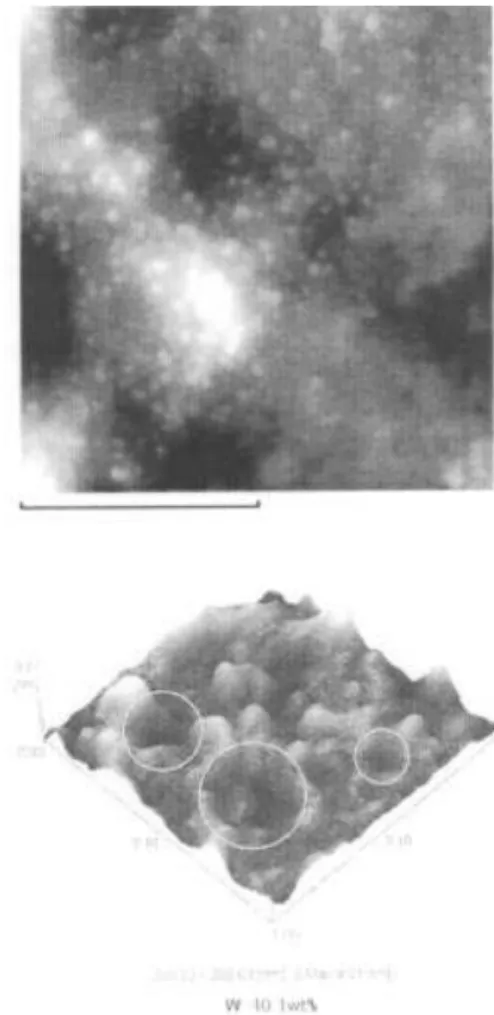
Figure2. SanningProbeMirographsofwater-based
mag-netiuid(a)sanarea1:001:00nmand(b)200200nm.
To investigate the morphology of these partile
strutures under zeroapplied eld,wemadeSanning
ProbeMirosope(SPM)measurementson1%
water-basedmagnetiuid(W40). Sinethemeasurementof
partile strutures in liquid is not possible,
plaed on a glass substrate and allowed to dry
natu-rally. TheSPMimagesofthedriedsampleisshownin
Figs. 2(a) and(b). InFig. 2(a),weouldobserve
a-umulation ofpartile aggregates. However,when the
areawasmagniedfurther(twentyvetimes)andthe
height of the surfaeof these aggregates were traed,
weobseved some dened partile strutures asshown
in Fig. 2(b). We ould learly see some ring-shaped
struturessupportingthequaternionmoleular
dynam-issimulationsbyJundetal.. Thenumberofpartiles
forming thestruturedierfromringto ring. Wealso
ouldobservethat thediameter ofthepartile
partii-patinginthestruturearelargerthan10nmin
diam-eter. Therefore,weouldonludethatthepreseneof
inherent lusters in water-based magneti uid are of
magnetioriginandinduedmainly bythepreseneof
partilesoflargerdiameter.
IV Conlusion
The inherent partilelusters observedin water-based
magneti uid under zeroapplied elds were foundto
tureswere believedtobeduepartileinteration
initi-atedbylargerpartilesdispersedin thesystem.
Aknowledgement
One of the author (B.J) wishes to thank Mr. B.
MatsudaofShimadzuAnalytialandMeasuringCenter
In.,fortheSanningProbeMirosopymeasurements.
Referenes
[1℄ I.Nakatani, Pro.of the Intl.Symp. on
Hydrodynam-isofmagnetiuidsandIt'sAppliation(ISHMFA'97)
July18-20th,p9(1997).
[2℄ B. Jeyadevan and I. Nakatani, J. Magn. Magn. Mat.
201,62(1999).
[3℄ P.Jund,S.G.Kim,D.TomanekandJ.Hetherington,
Phys.Rev.Lett.74(15),3049 (1995).
[4℄ R. E. Rosensweig, Ferrohydrodynamis, Cambridge,
London(1985).
[5℄ B.JeyadevanandK.Nakatsuka,Pro.oftheIntl.Conf.
onFerrites (ICF 6), Tokyo and Kyoto, Japan, p.1713