Anomalous Shift of the Reombination Energy in
Single Asymmetri Quantum Wells
N.O. Dantas a
, FanyaoQu a
, and P.C. Morais b
a
UniversidadeFederaldeUberl^andia, FauldadedeFsia,CEP38400-902,Uberl^andia-MG,Brazil
b
UniversidadedeBraslia,Institutode Fsia,N uleodeFsiaApliada
CEP70919-970,Braslia-DF,Brazil
Reeivedon23April,2001
Self-onsistentnumerialalulationandphotoluminesene(PL)measurementshavebeenusedto
investigatethetemperaturedependeneoftheoptialStarkeetinn-dopedGaAs/AlGaAssingle
asymmetriquantumwells(SAQWs),grownby moleularbeamepitaxy. Inthe low-temperature
regime (5 to 40K) a remarkable blueshift (9.8meV)is observedinthe PL peak energy, as the
optialexitationintensityinreasesfrom0.03to90W/m 2
. Theblueshiftiswellexplainedbythe
redutionofthetwo-dimensionaleletrongas(2DEG)density,duetoaharge-transfermehanism.
Atabout80K,however,ananomalousbehaviorofthePLpeak energywas found,i.e. aredshift
hasbeenobservedastheoptialexitationintensityinreases. Thisanomalousbehaviorhasbeen
explainedbyombiningtheeetsofbandgaprenormalization,bandbending,temperature
depen-deneofthebandgap,temperaturedependeneofthe2DEGdensity,andtemperaturedependene
ofthefundamentalenergyposition.
I Introdution
One-sidemodulation-dopedorsingleasymmetri
quan-tum wells (SAQWs) have been used as ideal systems
to investigate dierent aspets related to many-body
eetsintwo-dimensional(2D),one-omponentarrier
plasmas[1℄. TheSAQWisaspeialaseof
modulation-doped quantumwell(MDQW)where theremote
dop-ingismadeonlyinonesideofthesinglequantumwell.
The typialgrowthprole of aGaAs/AlGaAsSAQW
inludes athikGaAs buerlayerontopof theGaAs
substrate, a short-period GaAs/AlGaAs superlattie,
the GaAs SAQW, the undoped AlGaAs spaer layer,
the n- or p-type doped AlGaAs layer, and nally the
GaAs ap layer. Among the many-body eets
inves-tigated using SAQWs are the Fermi-edge singularity
(FES) [2℄, the band gap renormalization [3℄, and
di-mensionalityrossover[4℄, allof themstrongly
depen-dent upon the arrier temperature and their density
(N
S
). Forinstane,thelowtemperatureandhigh
ar-rieronentrationfavortheFESobservationinPL
ex-periments, while FES would be smeared out by high
temperatureandlowarrierdensity. BesidesFES,band
gap renormalization also strongly depends upon the
arrierdensity,N
S
,aordingto(N
S )
. Theexponent
is relatedto thedimensionalityof thesystem,being
=1/2 for three-dimensional (3D) arrier plasma and
size the great interestof using SAQWs to investigate
many-body eets in 2D semiondutor
heterostru-tures,onethearriergasdensityinsuhstruturean
beontinuouslyvariedfromitsmaximumvaluedownto
zero. Continuoushangeofthe 2Darrierdensity has
beenahievedbyapplyingabiasvoltageinaeldeet
transistor onguration[5℄ {eletri Stark eet.
Al-ternatively,ontinuoushangeofthe2Darrierdensity
has been obtainedthroughillumination of thesample
with inreasing optial exitation intensity (P) {
op-tial Stark eet. The signature of the optial Stark
eet is a remarkableenergy shift (typially 10 meV)
inthefundamentaloptialtransition. Theexplanation
ofthePLblue shiftwiththeinreaseofthelaser
exi-tation intensitywasrstput forwardby Chaveset al.
[6℄. Thereupon, it was further onrmed by following
works [3℄. The established optial ontrol mehanism
used to explain the experiment requires illumination
with photonshavingenergy higherthantheband gap
of theundoped spaer layer. Theattentionis foused
on the eletron-hole pairs photoreated in the spaer
layer. Inthen-typedopedstruture,thephotoreated
eletron initially moves bak to the spatially distant
donorswhile the photoreatedhole is driftedinto the
quantumwellbythebuilt-ineletrield,there
reom-bining with 2D eletrons. Later on, the photoreated
eletron movesfrom thedonor into the quantum well
opti-al exitation intensitythesteady-state2DEGdensity
is lowerthan thedensity (N 0
S
) at ornear zero
exita-tion. Althoughtheharge-transfermehanismhasbeen
suessfullyusedtoexplaintheexperimental,allthe
re-portedstudiesonerningtheoptialStark eethave
beenperformedat low-temperatures. However,the
in-uene of nite temperatures on the optial Stark
ef-fet is obviously important for both applied purposes
and fundamental physis. Nevertheless, the
tempera-ture dependene of optial Stark eet has not been
investigated yet,in spiteof thehugetehnologial
im-pat ofthemiro-eletroni-optialdeviesandoptial
ommuniations,bothoperatingatnitetemperatures.
Investigationof theeetsofnitetemperaturesupon
theoptialStarkeetisthemainissueofthepresent
study.
II Experimental details and
re-sults
ThePLexperimentsreportedinthisstudywerearried
out using two GaAs/Al
0:35 Ga
0:65
As SAQW samples
(W1506 and W1413), grown by moleular beam
epi-taxy. SampleW1506onsistsofasemi-insulatingGaAs
substratefollowedbya1.3m-thikGaAsbuerlayer,
aGaAs/Al
0:35 Ga
0:65
Assuperlattie (typially735
A
+ 8100
A), andby thenominally 152
A-thikGaAs
SAQW. The2Deletrongas(2DEG) inside theGaAs
SAQW is a result of the eletron-transfer, through a
295
A-thikundopedAl
0:35 Ga
0:65
Asspaerlayer,from
a385
A Si-dopedAl
0:35 Ga
0:65
Aslayer. A250
A-thik
GaAs aplayerwasgrownontopof theoverall
stru-ture. SamplesW1413andW1506havesimilargrowth
proles. Inthe W1413sample, theasymmetri
quan-tumwellwidthis150
A,thethiknessofspaerlayeris
300
A,andthethiknessoftheSi-dopedAl
0:35 Ga
0:65 As
barrierregionis380
A.Bothsampleshaveeletron
mo-bility higher than 410 4
m 2
/Vs at liquid Helium
temperature. Sampleswereoptiallyexitedabovethe
band gap of theundoped Al
0:35 Ga
0:65
As spaerlayer,
using the 5145
A argon-ion laser line. The PL
spe-trawerereordedusingaSPEX-750Mmonohromator
equipped with a Joban-Yvon CCD 2000800-3. The
NEOCERA LTC-11 temperature ontroller was used
during thePLmeasurements.
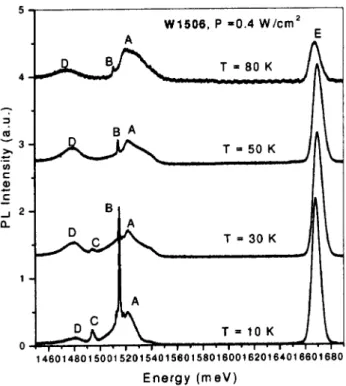
Fig. 1showsthePLspetraofsampleW1506under
P =0.4W/m 2
,atdierenttemperatures(10,30,50,
and80K).ThePLpeak-A,loatedat1521.7meV(10
K),isassoiatedtothen=0transition,i.e. between
the ground state ondution subband to the ground
stateheavy-holesubband ofthe GaAs SAQW.As the
optialexitationintensityinreasesthe2DEGdensity
dereases due to the eletron-transfer mehanism. At
2
outfromtheGaAsSAQW.Then,theeletron-transfer
turnsthe152
A-thikGaAsSAQWintoanalmost
per-fetsquare potentialwell. Inthis ase, thealulated
n =0 reombination energy is 1538.7 meV and the
exitonbinding energy assoiated to theground state
in the GaAs SAQW is 8.2 meV. Thus, a free exiton
transitioninasquareGaAspotentialwellwouldbe
ex-peted to ourat about 1530.5meV. Note the good
agreementbetween thealulatedvalue (1530.5meV)
andtheobservedPLpeak-A position (1531.7meV) at
higheroptialexitation intensity(P =90W/m 2
).
Figure 1. PL spetra of sample W1506 under P = 0.4
W/m 2
,atdierenttemperatures(10,30, 50,and80K).
The PLpeak-B, loated at 1514.8 meV (10 K), is
attributed to the reombination from the thik GaAs
buer layer. It is worthy to mention that the PL
peaks A and B are very muh lose together in the
weakoptialexitationintensityregime,beauseofthe
strongband bendingandbandgap renormalization
ef-fets. However,asP inreasesthePLpeak-A tendsto
separate from the PL peak-B. Finally, they are
om-pletely separated at the higher optial exitation
in-tensity regime. Moreover,PL peaks A and B
demon-stratequitedierent temperature dependene. As
ex-peted, PL peak-B shows normal temperature
depen-dene,oneintensityandenergypeakpositionderease
monotoniallywiththeinreaseintemperature. In
on-trast,PLpeak-Aexperienesadierentbehaviorone
its intensity with respet to the PL peak-B intensity
inreasesmonotonially, asthetemperatureinreases.
ThePLpeak-C(1493.8meV)isassignedtothearbon
ior,asfarastheinreaseoftheoptialexitation
inten-sityisonerned. Inontrast,PLpeaksCandDshow
dierenttemperaturedependene. Thus, the PLpeak
D may originatefrom the residualaeptor transition
in thenominally undoped GaAs SAQW,aompanied
by LO-phonon emission. Finally, PL peak E (1668.7
meV)hasitspositionalmostindependentoftheoptial
exitation intensity, being assoiated to theinterband
transition from the short-periodGaAs/Al
0:35 Ga
0:65 As
superlattie.
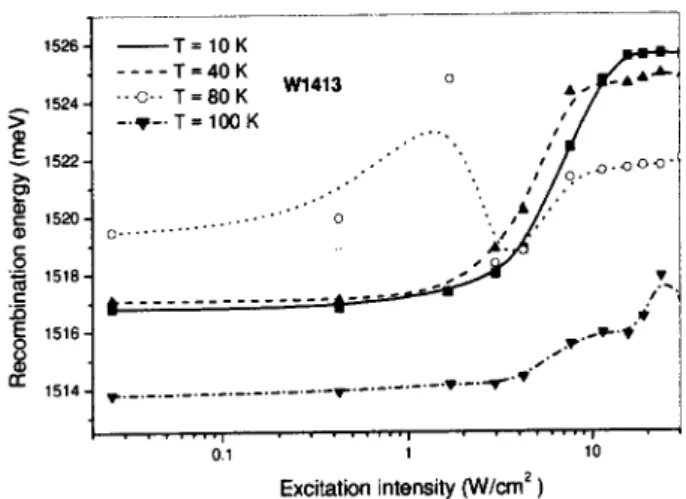
Fig. 2 shows the optial exitation intensity
de-pendene of the reombination energy of the W1413
sample,atdierenttemperatures. Atlowtemperature
(10K), astrong blue shift in reombinationenergy, as
theoptial exitation intensity inreases,is found. As
thetemperatureinreasesfrom 10Kto40K,theblue
shiftin reombination energyis still observed, though
redued from 9.2 meV (10K) to 8.4 meV (40K). As
thetemperatureisfurtherinreasedabreakdownofthe
blueshiftisobserved,asshownbytheopenirles(80
K) in Fig. 2. Above about 80 K the reombination
energydereasesmonotoniallyasthetemperature
in-reases. At100K,aslightblueshift(2meV)hasbeen
found.
III Disussion
Atverylowtemperature,residualaeptorstatesplaya
keyroleintheoptialpropertiesofintentionally
donor-doped semiondutormaterials. Undersuh ondition
fewaeptorstatesaetthepositionoftheFermi
en-ergy, foreletronsfrom donorsgetaptured at
aep-tor sites,resultingin someionizeddonors. Under low
optial exitation intensity, thephotogenerated exess
holes olleted by the SAQW are less than the
num-beroftheionizedaeptorsintroduedbytheresidual
doping. Then, the ionized residual aeptors rapidly
loalizephotoholes. Sine in k spae thestate ofthe
loalized holesis extended, reombinationof all
ou-pied ondution-band states with dierent k, from 0
up to the Fermi wavevetor, k
F
, and loalized holes
isallowed. Atasuitableaeptoronentrationthe
re-stritionofthek-seletionruleimposedonthe
reombi-nationproess isrelaxed. So,at lowtemperature,the
free photoeletron-loalized-hole transitions dominate
theoptialemissionproess. Sinethetrappingofholes
byeletronsisveryeÆient,theoptialtransitions
re-main k-nononserving. As aonsequene, in SAQWs,
low-temperaturePLspetrapresentbroadandstep-like
bands with sharp edgesat theeetive band gap and
attheFermi energyuto(seeFig. 1).
In SAQWs, the optial Stark eet learly shows
three dierent behaviorsas a funtion of bothoptial
exitationintensityandtemperature(seeFig. 2). First,
at low optialexitation intensity,and in the
temper-turedependeneofthePLreombinationenergyis
ob-served. As thetemperature inreasesfrom5to 100K
thePLpeakenergymovesupwardstoapeakvalue,at
intermediatetemperatures,tofurtheromedownatthe
high-temperatureend(100K).Seond,athighoptial
exitation intensity, the PLpeak energyassoiated to
the SAQW presents normal temperature dependene,
i.e. thePLpeakenergy movesmonotoniallytolower
energy as the temperature inreasesfrom 5to 100 K.
Third,a ontinuoustransition betweenthe two
dier-entregimeshasbeenobservedatintermediatevaluesof
optialexitationintensity.
Figure2. Reombinationenergyasafuntionoftheoptial
exitationintensity,forsampleW1413, atT=10K(open
squares),T=40K(soliduptriangles),T=80K(open
ir-les),and (soliddowntriangles). Thelinesare justguides
fortheeye.
To understand the omplexfeatures in theoptial
spetraofSAQWs,partiularlytheirdependeneupon
the optial exitation intensity and temperature, the
ombined eets of band gap energy shrinkage, band
bending, band gap renormalization, temperature
de-pendene of the 2DEG, and relaxation of ionized
a-eptorsshouldbetakenintoaount. Thismeansthat
a quantitative desription of the temperature
depen-dene ofboth 2DEGdensity andground state energy
hastobeperformed. Therefore,self-onsistent
alula-tion,whih numeriallysolvestheoupledShrodinger
andPoissonequations,hasbeenarriedoutforsample
W1413. Theorrespondentresultwillbepublished in
a forthoming paper. The following parameters have
beenusedinthealulation: donorboundenergyxed
at E
D
= 50meV, lowfrequeny dieletrionstantin
thewell("
W
=13.2"
0
)andinthebarrier("
B
=12.2"
0 ),
andeetiveeletronmassinthewell(m W
e
=0.067m
0 )
and in the barrier (m B
e
=0.092m
0
). It is found that
theeletronarealdensityinreasesasthetemperature
inreases. Inaddition,thehigherthedonor
onentra-tionthelargertheeletronarealdensityandits
tually, in the low optial exitation intensity regime,
the blue shift due to the eletron-transfer mehanism
is negligible. Asthetemperatureinreasesthermal
ef-fetstend tospreadthe2DEGoverthefull densityof
states. Then, thePLpeakenergyshiftstowardhigher
values. Ontheotherside,asthetemperatureinreases,
theshrinkageofthebandgapandtheredutionofthe
groundstateenergyleadtoaredshiftofthePLpeak
energy. Redution of the PLpeak energy, due to the
shrinkage of the band gap energy, is about 8.5 meV
(0.69meV)asthetemperatureinreasesfrom40to80
K (10 to 40 K). Then, in the low optial exitation
regime and below80K,the resultanteet leadsto a
blueshiftinthePLpeakenergy. Withfurtherinrease
intemperature(above80K),theshrinkageoftheband
gap beomes dominant (12.1meV in thetemperature
rangeof 80to100K),leadingto aredshiftinthePL
peak energy. At intermediatevaluesof optial
exita-tion intensities, however,the eletron-transfer
meha-nismgovernstheoptialemissionproess,reduingthe
2DEG density in the SAQW. The band bending and
the band gap renormalizationderease as the optial
exitation intensity inreases. ThePL peak energyis
expetedto movetowardhigher energyvalues.
Even-tually, in the high optial exitation intensity regime,
all eletrons are removed out from the SAQW by the
photogeneratedholes. TheSAQWturnsintoaperfet
square potentialwell. Then,as expeted, normal
tem-perature dependene of the PL reombination energy
aswellassymmetriPLspetraareobserved. Inother
words, theanomalous dependene of the PL
reombi-intensity inreases. This feature supports the piture
oftheompetitionbetweentheoptialStarkeetand
theeletron-transfermehanisminexplainingthe
opti-alpropertiesofSAQWs,atnitetemperaturesandin
awiderangeofoptialexitationintensities.
In summary, the band gap renormalization, band
bending, temperature dependene of the 2DEG
den-sity, and temperature dependene of the fundamental
energy position are all oupled together to determine
theveryomplexbehaviorof theSAQW PLpeak
po-sition.
Aknowledgments
SupportfromtheBrazilianageniesFAPMIG,F
AP-DF,andCNPqisgratefullyaknowledged.
Referenes
[1℄ P.Hawrylak,Phys.Rev.B44,6262(1991).
[2℄ FanyaoQu,N.O.Dantas,andP.C. Morais,Europhys.
Lett.53,790(2001).
[3℄ A.J.C. Cardoso, Fanyao Qu and P.C. Morais, Phys.
Rev.B60,4501 (1999).
[4℄ FanyaoQuand P.C. Morais,IEEE J.Quantum
Ele-tron.36,348(2000).
[5℄ C.Delalande,J.A.Brum,G.Bastard,SolidState
Com-mun.59,613(1986).
[6℄ A.S. Chaves, A.F.S. Penna, J.M. Worlok, G.