Article
J. Braz. Chem. Soc., Vol. 22, No. 5, 955-960, 2011. Printed in Brazil - ©2011 Sociedade Brasileira de Química
0103 - 5053 $6.00+0.00
A
*e-mail: [email protected]
Chemotaxonomic Signiicance of Volatile Constituents in
Hypenia
(Mart. ex Benth.)
R. Harley
(Lamiaceae)
Julierme G. Silva,a Maria T. Faria,b,d Érica R. Oliveira,a Maria H. Rezende,b Dalva G. Ribeiro,d Heleno D. Ferreira,b Suzana C. Santos,a José C. Seraphinc and
Pedro H. Ferri*,a
aInstituto de Química, bInstituto de Ciências Biológicas and cInstituto de Matemática e Estatística,
Universidade Federal de Goiás, CP 131, 74001-970 Goiânia-GO, Brazil
dInstituto de Biologia, Universidade de Brasília, CP 4451, 70910-900 Brasília-DF, Brazil
A análise multivariada da composição química dos óleos essenciais de treze espécies de
Hypenia indicou a presença de dois grupos de óleos em relação às seções botânicas das amostras.
O primeiro grupo (grupo I) incluiu as três espécies da seção Densilorae em adição a H. subrosea
e H. aristulata, o qual foi caracterizado pelo maior percentual de α-muurolol (5,85 ± 3,08%). No grupo II, com oito espécies da seção Laxilorae, os principais constituintes discriminantes foram o (E)-carioileno (7,09 ± 4,88%), germacreno D (18,1 ± 11,4%) e o biciclogermacreno (6,65 ± 1,19%). Todos os óleos essenciais apresentaram predominantemente sesquiterpenos, tais como espatulenol (4,5-31,6%), óxido de carioileno (2,2-14,4%) e selin-11-en-4α-ol (0-34,8%). Os agrupamentos foram idênticos quando utilizada a análise multivariada baseada nos esqueletos carbônicos dos constituintes químicos ou de 18 caracteres morfológicos das folhas das espécies.
Multivariate analysis of essential oil compositions of thirteen Hypenia species revealed
the presence of two taxonomic clusters. Cluster I included three species belonging to section
Densilorae in addition to H. subrosea and H. aristulata, and showed the highest percentages
of α-muurolol (5.85 ± 3.08%). In Cluster II, which contained eight species belonging to section Laxilorae, the major discriminant constituents were (E)-caryophyllene (7.09 ± 4.88%),
germacrene D (18.1 ± 11.4%), and bicyclogermacrene (6.65 ± 1.19%). All essential oils showed a predominance of sesquiterpenes, such as spathulenol (4.5-31.6%), caryophyllene oxide (2.2-14.4%) and selin-11-en-4α-ol (0-34.8%). Furthermore, identical clusters were revealed by multivariate analysis of chemical constituents based on carbon skeletons, as well as on 18 morphological leaf characters of the species studied.
Keywords: Hypenia, Lamiaceae, essential oil, chemical variability, chemotaxonomy,
multivariate analysis
Introduction
The Lamiaceae family includes approximately 258 genera and 7193 species. Genera such as Salvia and Scutellaria have a wide and cosmopolitan distribution,
although lamiaceous plants are especially abundant in the Mediterranean region.1,2 In Brazil and other Cerrado areas of eastern South America, the Lamiaceae family is mainly represented by the subtribe Hyptidinae. It is characterized by sternotribic lowers with stamens held in the compressed lower lip of the corolla, which forms an explosive pollination mechanism.2 A total of nine genera
of the neotropical subtribe Hyptidinae are now recognized.
Hypenia (Mart. ex Benth.) R. Harley was recently separated
from Hyptis Jacq. section Hypenia based largely on number
of chromosomes and morphological aspects.2
Hypenia contains 27 recognized species on the basis of
lax or dense inlorescences including sections Densilorae
Benth. and Laxilorae Benth.2,3Hypenia species are usually found in oligotrophic and sandy soils with high levels of aluminum, and are distributed over some regions of Venezuela, Bolivia, Paraguay and southern Brazil. In Brazil, they are more common in Cerrado regions where a greater diversity and endemism may be found. Hypenia species are
Chemotaxonomic signiicance of Volatile Constituents in Hypenia J. Braz. Chem. Soc.
956
of leaves in the treatment of the lu, common cold and other respiratory diseases.3,4 Moderate radical scavenging and antioxidant activities of methanol extracts of the leaves and stems of H. salzmannii (Benth.) R. Harley are also reported.5
The botanical keys of the two Hypenia sections show
that the characters used for their distinction derived almost exclusively from a limited range of loral features.3 These dificulties may be partly attributed to the small number of specimens deposited in the herbarium. For example,
H. paradisi has been collected in only two ield trips and H. concinna Benth. is known only from the type species.2,3
Since all of them are morphologically and anatomically similar, it is important to find alternative methods of interspeciic chemical identiication in order to complement analyses of loral traits.
Therefore, this research investigates the chemical constituents of essential oils of thirteen unknown species of Brazilian Hypenia, thus contributing to future taxonomic
studies of the genus. We analyzed disability data, as well as
species considered rare in Brazil.6 In light of the possible chemotaxonomic signiicance of the oils, results from the chemical analysis were compared with leaf anatomy and taxonomy. For this purpose, essential oils from individuals of representative populations were evaluated by a gas chromatography coupled with mass spectrometer (GC-MS). To study chemical variability, compounds in oil samples and morphological data were submitted to multivariate analysis for determination of taxa distribution patterns and identiication of oil constituents, which may be distinguished among the groups of species.
Results and Discussion
Despite the great diversity of Hypenia species in
Brazilian Cerrado areas, the composition of volatile compounds is only known for H. salzmannii.7 In our study, essential oil compositions were obtained from thirteen species in the inlorescence phenophase, of which three belonged to section Densilorae (H. brachystachys, H. marifolia, H. paradise) and ten belonged to section Laxilorae (H. sphaerocephala, H. durifolia, H. crispata, H. reticulata H. macrosiphon, H. macrantha, H. aristulata, H. subrosea and H. niquelandiensis). The provenance
and voucher specimens are shown in Table S1, at the Supplementary Information (SI).
All Hypenia species investigated contained essential oils
ranging from 0.01 to 0.13% based on dry weight (Table S2). The low oil yields were in agreement with those reported for H. salzmannii, which suggests that Hypenia may be a
species-poor genus when compared to their rich oil allies, like Hyptis.2,7 A total of 85 compounds were identiied,
accounting for 88-100% of volatile constituents in the oil samples, and a total of 29 compounds presented an average ≥ 0.5%, accounting for 77-100% of sampled data. Essential oil compositions revealed a predominance of sesquiterpenes (41.7-97.5%). High contents of oxygenated sesquiterpenes were present in most species, although hydrocarbons were majority (44.1-54.0%) in a few taxa belonging to section
Laxilorae. Apart from H. brachystachys and H. marifolia,
which showed signiicant levels of terpenes, aromatic and aliphatic esters (other constituents; 15.44 and 15.00%, respectively), all the other species had lower levels of such compounds (< 4.17%).
Essential oil compositions of all Hypenia species
contained (E)-caryophyllene, δ-cadinene, spathulenol and caryophyllene oxide. The most abundant constituents were: spathulenol (11.27-31.55%), which showed high average values, with the exception of H. marifolia
and H. niquelandiensis (average value 4.86 ± 0.52%);
caryophyllene oxide (6.10–14.38%), with the exception of H. niquelandiensis (2.17%); and selin-11-en-4α-ol (4.39-34.80%), with the exception of H. niquelandiensis
(2.12%) and H. marifolia (absent). Germacrene D and
bicyclogermacrene were the main constituents in species from section Laxilorae. All of these results are in agreement
with previously described H. salzmannii oils (Laxilorae),
which had high levels of (E)-caryophyllene, germacrene D and bicyclogermacrene.7 Moreover, Hypenia essential oils showed a wide range of minor constituents.
Despite the fact that the sampling sites featured slightly different soil composition and texture, canonical redundancy analysis revealed no signiicant correlation between edaphic factors and essential oil chemovariations (data not shown). This result suggests that Hypenia oils
were genetically rather than environmentally inluenced. Thus, volatile variations may contribute to chemotaxonomic or phylogenetic relationships within the genus. In fact, essential oil polymorphism can help to identify the taxonomic relationships of several Lamiaceae genera, as well as to examine intraspeciic variability by processing more than one population per taxon.8
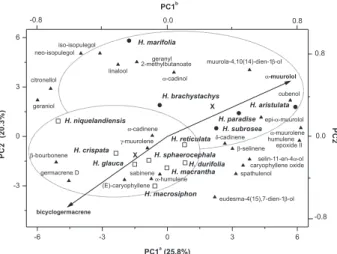
In order to assess the use of oil constituents for identifying taxonomic relationships among species, multivariate analysis by principal component analysis (PCA) and nearest neighbour complete linkage cluster-analysis (Ward’s method)9 were performed with oil constituent levels ≥ 0.5% (13 samples × 27 variables = 351 data). Figure 1 shows the relative position of the taxa through axial representation based on PCA results. The irst PCA accounts for ca. 26%
Silva et al. 957 Vol. 22, No. 5, 2011
of them are grown in Serra dos Veadeiros (GO, Brazil) and showed the highest α-muurolol contents. The second PCA distinguishes (p < 0.005) seven species belonging
tosection Laxilorae mainly due to highest contents of
bicyclogermacrene, germacrene D, and (E)-caryophyllene of H. marifolia and H. brachystachys (Densilorae section),
which are described as monoterpene-rich.
Therefore, two types of essential oils were identiied. Cluster I revealed the three species from section Densilorae
(in addition to H. subrosea and H. aristulata) which were
characterized (p < 0.008) by the highest percentages of
α-muurolol (5.85 ± 3.08%). Cluster II revealed eight species of section Laxilorae containing germacrene D (18.1 ± 11.4%),
(E)-caryophyllene (7.09 ± 4.88%) and bicyclogermacrene (6.65 ± 1.19%) as the main discriminant constituents (p < 0.03). Percentages of oil constituents in clustered taxa
are shown in the SI (Table S3).
The constituent data were grouped according to carbon skeletons in order to assimilate the overall trend in volatile leaf oils and to decrease the uncontrolled factors affecting quantitative variations (Table S4). As regards the volatile constituents, PCA/cluster analysis on carbon skeletons showed identical differences among these taxa (Figures S1 and S2). Cluster I indicated signiicant (p < 0.005)results concerning the presence of cadinane
(23.1 ± 10.4%), copaane (1.9 ± 4.3%), as well as occurrences of isolongifolane, bisabolane and farnesane. Cluster II revealed signiicant (p < 0.006) results for germacrane
(19.6 ± 11.5%), bicyclogermacrane (7.0 ± 1.2%) and bourbonane (2.0 ± 1.9%) as the main biosynthetic class (Figures S1 and S2), as well as occurrences of tricyclane, pinane, cedrane and silphiperfolane derivatives (Table S5).
Notwithstanding morphological similarities among
Hypenia spp., differences were observed in their leaf
morphology. According to Boeger et al.,10 leaves are one of
the most exposed plant organs, which makes them directly inluenced by environmental changes. Therefore, they are important elements for the study of a species or of plant communities. Thus, eighteen morphological leaf characters were analyzed in all taxa and coded as independent characters (states present or absent), as recommended by Sneath and Sokal (Table S6).11 Multiple correspondence analysis on such taxonomic characters distinguished (χ2 = 8.0, 5.0; degrees of freedom, DF = 1, 1; p < 0.025) clusters I (II) based on the presence or absence of: crystals in small-caliber leaves; starch grains in the pith; and parallel striations on leaf cuticles (Figure S3). Occurrence of calcium oxalate crystals has been related to the mechanical support and protective action against herbivory.12 On the other hand, ornamental cuticles have been associated with leaf impermeability and sunlight relecting, which constitute two important adaptive characteristics of plants in Cerrado regions.13
The result most relevant to our study is the agreement between the three assessment procedures (based on chemical and morphological analyses) used for dividing
Hypenia into two major groups of species with identical
contents. In fact, canonical discriminant analysis (CDA) on chemical data conirmed a priori cluster groups. An axial
representation of CDA results discriminated over 99.9% of the two groups based only on the contents of α-muurolol and bicyclogermacrene (predictor variables). Discriminant function analysis explained the overall variability (F-test
value = 43.198; DF = 2 and 10; p < 0.0001). It was also
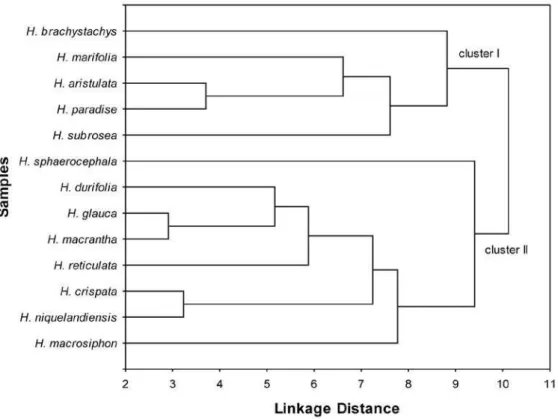
possible to make an accurate prediction of total well-classiication in the original clusters by cross-validation or Jackknife approach.14 These techniques consider a slightly reduced number of samples from the parent data set, estimate parameters from each of these modiied data sets, and then calculate the precision of predictions for the samples previously removed by the resulting models.15 All similarities between sampled oil constituents and morphological characters are shown in the dendrogram in Figure 2.
These results indicate the presence of two Hypenia
sections due to remarkable differences in morphological characters and essential oil compositions. Furthermore, we concluded that the sectional delimitation of H. subrosea and H. aristulata in the Laxilorae section should be revised.
Differences in volatile constituents among Hypenia spp.
may be useful for understanding phylogenetic relationships, especially considering that its species are not easily identiied.
Figure 1. Biplot from PCA of Hypenia spp. essential oil to whose cluster it belongs: I (); II (). aAxes refer to scores from the samples. bAxes
Chemotaxonomic signiicance of Volatile Constituents in Hypenia J. Braz. Chem. Soc.
958
Conclusions
Essential oil analysis and the morphological and anatomical leaf characteristics of thirteen Hypenia species
found in central Brazilian Cerrado areas (GO, Brazil) revealed high polymorphism, which may be related to genetic influences. Furthermore, the two clusters of constituents were in agreement with the division of species into two taxonomic sections.
Experimental
Plant material
Hypenia spp. inlorescence samples were collected
between May 2006 and November 2007 in Goiás State, Brazil. The specimens were identiied by Dr. Raymond M. Harley, and voucher specimens were deposited at the UFG herbarium (conservation unit of Universidade Federal de Goiás, Goiás State, Brazil). A list of the taxa
investigated as well as provenance and voucher specimens are shown in Table S1.
To assess essential oil chemical compositions, 5-10 individuals of each species originated from 2-3 populations were pooled and dried at room temperature for 7 days at 30 °C until constant weight was achieved. After having been powdered, the dried phytomass (5-30 g) of each sample was submitted to hydrodistillation (2 h) using a modiied Clevenger-type apparatus. At the end of each distillation, the oils were collected and dried with anhydrous Na2SO4, then transferred to glass lasks where they were kept at a temperature of –18 °C. Oil yields (%) were based on the dried weight of plant samples.
Soil samples were collected at a depth of 20 cm in all sampling sites and were collected around each population and pooled together to form a composite sample for each site. After that, they were air-dried, thoroughly mixed, and sieved (2 mm). The portion iner than 2 mm was kept for physical and chemical analysis.The pH was determined in a 1:1 soil/water volume ratio. Ca, Mg and Al were extracted with KCl 1 mol L-1, whereas P, K, Zn, Cu, Fe and Mn were extracted with Mehlich solution.Organic matter, cationic exchange capacity (CEC), potential acidity (H + Al), and soil texture were determined by the usual methods.16
Morphological and anatomical analyses
The leaf variations among the thirteen specimens were recorded using a Zeiss-Axioskop light microscope and a Jeol JSM 840A scanning electron microscope operated at 10 kV. A list of two-state qualitative characters is presented in Table S5. Fully developed leaves of approximately equal tickness were selected for the study of cross-sectional anatomy. They were cut into segments and ixed for 12 h in a 2% glutaraldehyde-paraformaldehyde solution with 0.05 mol L-1 sodium cacodylate buffer (pH 7.2). Segments were post ixed in OsO4-K3[Fe(CN)6] and dehydrated in a water-acetone series. All sections were mounted on grids coated with a layer of gold (40 nm) and were viewed with a scanning electron microscope. Thicker sections of the same material were also cut, dried and stained with 0.1% basic fuchsine and 0.3% astra blue (1:3) for 3 min. Then, they were rinsed, dried again and placed under cover slips with a permanent mounting medium for light microscopy. Leaves were also cleared and stained for paradermal viewing. Fresh leaf material was placed in a beaker containing boiling 80% (v/v) ethanol until the chlorophyll was extracted. It was then put in 10% aqueous NaOH solution and left to clear. After that, it was rinsed in distilled water and stained in 1% safranin solution. Stained Figure 2. Dendrogram representing the similarity relationships among
Silva et al. 959 Vol. 22, No. 5, 2011
tissue was placed on a glass slide in water, covered with a cover slip and examined under the light microscope.
Chemical analyses
Oil sample analyses were performed on a GC-MS (gas chromatography coupled with mass spectrometer) Shimadzu QP5050A instrument under the following conditions: a column CBP-5 (Shimadzu) fused silica capillary column (30 m × 0.25 mm i.d., 0.25 mm ilm thickness) connected to a quadrupole detector operating in the EI mode at 70 eV with a scan mass range of 40-400 m/z at a sampling rate of 1.0 scan s-1; carrier gas:
He (1 mL min-1); injector and interface temperatures of 220 and 240 °C, respectively, with a split ratio of 1:20. The injection volume was 0.4 mL (20% in hexane) and the oven temperature was raised from 60 to 246 °C with an increase of 3 °C min-1, then 10 °C min-1 to 270 °C, holding the inal temperature for 5 min. Individual components were identified by a comparison of linear retention indices,17 which were determined by a co-injection with a C8-C32 n-alkanes series,18 co-injection with standard, ylang-ylang (Cananga odorata (Lam.) Hook. F. &
Thoms., Annonaceae) and sage clary (Salvia sclarea L.,
Lamiaceae) essential oils,17 mass spectra with those of the literature and a computerized NIST MS database.17
Statistical analyses
Principal component (PCA) and multiple correspondence (MCA) analysis were applied in order to examine the interrelationships between plant taxa, chemical constituents and leaf taxonomic characters (presence/absence status). For these procedures we used Système Portable d’Analyse des Données-SPAD software package.19 Cluster analysis was also applied to the study of similarities between species by considering essential oil constituents or taxonomic character distributions. Nearest neighbor complete linkage technique by Benzécri algorithm was used as an index of similarity,20 and hierarchical clustering was performed according to Ward’s variance minimizing method.9 Oil constituents with arbitrated amounts ≥ 0.5% to the chemical proiles (average values) were initially kept in the original matrix. For variable selection, the threshold of residual eigenvalues (≤ 0.70) in the data matrix was used to establish the maximum number of variables that could be removed. The two variables, which were effectively eliminated, revealed the highest loadings in the lowest residual eigenvalues. Prior to the multivariate analysis, the inal data matrix (13 samples × 27 variables = 351 data) was processed by means of auto-scaling and mean
centering. Oil constituents were also grouped according to biosynthetic class. The normalized data matrix (13 samples × 21 variables = 273 data) without variable selection was submitted to multivariate analysis (Table S5).
Canonical discriminant analysis using SAS CANDISC procedure21 was used to differentiate between taxa and clusters on the basis of oil composition. The predictive ability of canonical discriminant function was evaluated by cross-validation and Jackknife approaches as implemented in SAS statistical package.
Canonical redundancy analysis (RDA) was applied to describe the patterns of the only explained variation of interrelationships between oil composition and the inter-speciic variations as a function of soil parameters, treated as environmental variables. An unrestricted Monte-Carlo permutation test (1000 permutations) was used to test eigenvalue signiicance of the irst three canonical axes.22
RDA was performed in CANOCO software.23
Multiple comparisons were established by univariate analysis of variance (ANOVA) using SAS GLM procedure.24 All data were checked for homoscedasticity with the use of Hartley’s test. This test revealed signiicant departures from the basic assumption for the oil components, which were arcsine and rank-transformed when necessary. Whenever a difference was established, a Tukey’s post-hoc
test was performed. Results are indicated by mean values and are joined by the standard deviation of independent measurements. P-values below 0.05 were regarded as
signiicant.
Supplementary Information
Supplementary data are available free of charge at http://jbcs.sbq.org.br as a PDF ile.
Acknowledgements
We thank Dr R. M. Harley for her kind assistance with the botanical identiication. The authors are also indebted to CNPq, PADCT III and FUNAPE/UFG for inancial support; CAPES for fellowship to M. T. F. and J. G. S.
References
1. The Angiosperm Phylogeny Group (APG II); Bot. J. Linn. Soc.
2003,141, 399.
2. Harley, R. M.; Atkins, S.; Budantsev, A. L.; Cantino, P. D.; Conn, B. J.; Grayer, R.; Harley, M. M.; De Kok, R.; Krestovskaja, T.; Morales, R.; Paton, A. J.; Ryding, O.; Upson, T. In The Families and Genera of Vascular Plants, vol. 7; Kubitzki, K.; Kadereit,
Chemotaxonomic signiicance of Volatile Constituents in Hypenia J. Braz. Chem. Soc.
960
R. M.; Reynolds, T.; Advances in Labiatae Science, vol. 98, The Royal Botanic Gardens: Kiew, 1992; Harley, R. M.; Bot. J. Linn. Soc.1988, 98, 87.
3. Epling, C.; Rev. Museo La Plata, Sección Botânica1949, 30,
153.
4. Agra, M. F.; Baracho, G. S.; Nurit, K.; Basílio, I. J. L. D.; Coelho, V. P. M.; J. Ethnopharmacol.2007,111, 383. 5. David, J. P.; Meira, M.; David, J. M.; Brandão, H. N.; Branco,
A.; Agra, M. F.; Barbosa, M. R. V.; Queiroz, L. P.; Giulietti, A. M.; Fitoterapia2007, 78, 215.
6. Harley, R. M.; França, F. In Plantas Raras do Brasil; Giulietti, A. M.; Rapini, A.; Andrade, M. J. G.; Queiroz, L. P.; Silva, J. M. C., eds., Conservação Internacional: Belo Horizonte, Brasil, 2009; Ministry of Environment of Brazil, Normative statement (annexes I and II) 2008, 6, 3, available: http://www. mp.rs.gov.br/ambiente/legislacao/id4902.html accessed in December 2010; Scarano, F. R.; Martinelli, G.; Braz. J. Nat. Conserv.2010, 8, 13.
7. Evangelino, T. S.; Ribeiro, A. S.; Nogueira, P. C. L.; Moraes, V. R. S.; Machado, S. M. F.; Alves, P. B.; abstract of the 30a
Reunião Anual da Sociedade Brasileira de Química, PN-271, 2007 (available: https://sec.sbq.org.br/cdrom/30ra/resumos/ T1979-1.pdf accessed in December 2010); Rocha, S. A. S.; Pessoa, O. D. L.; Mendes, K. G.; Chagas, P. F.; Diniz, J. C.; Viana, F. A.; abstract of the 30a Reunião Anual da Sociedade
Brasileira de Química, PN-294,2007 (available: https://sec.sbq.
org.br/cdrom/30ra/resumos/T0617-2.pdf accessed in December 2010).
8. Bezic, N.; Samanic, I.; Dunkic, V.; Besendorfer, V.; Puizina, J.; Molecules2009, 14, 925; Oliveira, M. J.; Campos, I. F.
P.; Oliveira, C. B. A.; Santos, M. R.; Souza, P. S.; Santos, S. C., Seraphin, J. C.; Ferri, P. H.; Biochem. Syst. Ecol.2005,
33, 275; Skaltsa, H. D.; Mavrommati, A.; Constantinidis, T.;
Phytochemistry2001, 57, 235.
9. Ward, J. H.; J. Am. Stat. Assoc.1963, 58, 238.
10. Boeger, M. R. T.; Alves de Brito, C. J. F.; Negrelle, R. R. B.;
Arq. Biol. Tecnol.1997, 40, 493.
11. Sneath, P. H.; Sokal, R. R.; Principles of Numerical Taxonomy,
W.H. Freeman: San Francisco, 1963.
12. Franceschi, V. R.; Horner Jr., H. T.; Bot. Rev.1980, 46, 361;
Metcalfe, C. R.; Chalk, L.; Anatomy of the Dycotyledons, vol. 11, Claredon Press: Oxford,1983.
13. Esau, K.; Anatomia das Plantas com Sementes; Edgard Blucher: São Paulo,Brasil, 1977; Juniper, B. E.; Jeffree, C. E.; Plant Surfaces, Wards Arnold: London,1983.
14. Quenouille, M. H.; Biometrika1956, 43, 353.
15. Wold, A.; Eriksson, L.; Chemometric Methods in Molecular Design; Waterbeemd, H., ed.; In Methods and Principles in Medicinal Chemistry, VCH: Weinheim, 1995, chapter 5, vol. 2. 16. Silva, S. C.; Manual de Análises Químicas de Solos, Plantas e
Fertilizantes, 1a. ed.; Embrapa: Brasília, Brasil, 1999. 17. Adams, R. P.; Identiication of Essential Oil Components by
Gas Chromatography/Mass Spectrometry, 4th ed.; Allured:
Illinois, 2007; National Institute of Standards and Technology;
PC version of the NIST/EPA/NIH Mass Spectral Database; U.S. Department of Commerce, Gaithersburg, 1998; Kubeczka, K.-H.; Formáček, V.; Essential Oils Analysis by Capillary Gas Chromatography and Carbon-13 NMR Spectroscopy, 2nd ed.;
John Wiley & Sons: New York, 2002.
18. Van Den Dool, H.; Kratz, P. D.; J. Chromatogr.1963, 11, 463.
19. Système Portable d’Analyse des Données-SPAD software package, version 5.5, Centre International de Statistique et d’Informatique Appliquées, France, 2002.
20. Benzécri, J. P.; L´Analyse des Données: la Taxinomie, Tome 1,
Dunod: Paris, 1980.
21. SAS CANDISC Statistical Analysis System, SAS Institute Inc., Cary, NC, 1996.
22. Lepš, J.; Šmilauer, P.; Multivariate Analysis of Ecological Data Using CANOCO, Cambridge University Press: Cambridge, 2007; Jongman, R. H. G.; Ter Braak, C. J. F.; Van Tongeren, O. F. R.; Data Analysis in Community and Landscape Ecology, Cambridge University Press: Cambridge, 2002.
23. Ter Braak, C. J. F.; Šmilauer, P.; CANOCO Reference Manual and CanoDraw for Windows User’s Guide: Software for Canonical Community Ordination (version 4.5), Microcomputer Power, New York, 2002.
24. SAS GLM Statistical Analysis System, SAS Institute Inc., Cary, NC, 1996.
Supplementary Information
S
I
J. Braz. Chem. Soc., Vol. 22, No. 5, S1-S16, 2011. Printed in Brazil - ©2011 Sociedade Brasileira de Química 0103 - 5053 $6.00+0.00
*e-mail: [email protected]
Chemotaxonomic Signiicance of Volatile Constituents in
Hypenia
(Mart. ex Benth.)
R. Harley
(Lamiaceae)
Julierme G. Silva,a Maria T. Faria,b,d Érica R. Oliveira,a Maria H. Rezende,b
Dalva G. Ribeiro,d Heleno D. Ferreira,b Suzana C. Santos,a José C. Seraphinc and
Pedro H. Ferri*,a
aInstituto de Química, bInstituto de Ciências Biológicas and cInstituto de Matemática e Estatística,
Universidade Federal de Goiás, CP 131, 74001-970 Goiânia-GO, Brazil
dInstituto de Biologia, Universidade de Brasília, CP 4451, 70910-900 Brasília-DF, Brazil
Figure S1. Biplot originating by PCA of Hypenia spp. based on carbon skeletons of volatiles to whose cluster it belongs: I (); II (). aAxes refer to
scores from the samples. bAxes refer to loadings from carbon skeletons of oil constituents (Table S4) represented as shaded triangles, and discriminant
Chemotaxonomic Signiicance of Volatile Constituents in Hypenia J. Braz. Chem. Soc.
S2
Figure S2. Dendrogram representing the similarity relationships among Hypenia spp. based on carbon skeleton of volatile constituents belonging to clusters I and II.
Figure S3. Biplot originating by multiple correspondence analysis of Hypenia spp. based on morphological and anatomical leaf characters to whose cluster it belongs: I (); II (). aAxes refer to scores from the samples. bAxes refer to loadings from morphological characters (see Table S6 for codes)
Silva et al. S3 Vol. 22, No. 5, 2011
Figure S4. Total ion chromatogram of essential oil from H. brachystachys.
Figure S5. Total ion chromatogram of essential oil from H. aristulata.
Figure S6. Total ion chromatogram of essential oil from H. marifolia.
Chemotaxonomic Signiicance of Volatile Constituents in Hypenia J. Braz. Chem. Soc.
S4
Figure S9. Total ion chromatogram of essential oil from H. crispata.
Figure S10. Total ion chromatogram of essential oil from H. durifolia.
Figure S11. Total ion chromatogram of essential oil from H. glauca.
Silva et al. S5 Vol. 22, No. 5, 2011
Figure S14. Total ion chromatogram of essential oil from H. niquelandiensis.
Figure S15. Total ion chromatogram of essential oil from H. reticulata.
Figure S12. Total ion chromatogram of essential oil from H. macrantha.
Chemotaxonomic Signiicance of Volatile Constituents in Hypenia J. Braz. Chem. Soc.
S6
Figure S19. Total ion chromatogram of ylang-ylang essential oil.
Figure S16. Total ion chromatogram of essential oil from H. sphaerocephala.
Figure S17. Total ion chromatogram of standards.
Silv
a
et al.
S7
V
ol. 22, No. 5, 2011
Table S1. List of the Hypenia taxa with provenances and voucher specimens (UFG)
Hypenia Taxon Locality Coordinates Date Voucher
H. crispata (Pohl ex Benth.) R. Harleya Serra Dourada, Mossamedes, 1021 m S 16°4'25.8", W 50°11'12.8" May, 2006 30815
H. brachystachys (Pohl ex Benth.) R. Harley Serra dos Pireneus, Pirenópolis, 1070 m S 15°50'22.2", W 48°46'15.8" April, 2007 30815
H. marifolia (Benth.) R. Harley Serra dos Pireneus, Pirenópolis, 1324 m S 15°47'31.6", W 48°50'8.2" August, 2006 30816
H. sphaerocephala (R. Atkinson) R. Harley Serra dos Topázios, Cristalina, 1204 m S 16°46'49.8", W 47°39'19.1" September, 2007 30669
H. reticulata (Mart. ex Benth.) R. Harley Vianópolis, 927 m S 16°34'56", W 48°20'37.3" October, 2007 30847
H. durifolia (Epl.) R. Harley São João d’Aliança, 1166 m S 15°39'32.1", W 47°33'17.2" November, 2007 30809
H. glauca (St.-Hil. ex Benth.) R. Harley Instituto Chico Mendes de Conservação da Biodiversidade, Silvânia, 938 m S 16°38'37", W 48°39'7" May, 2007 30668
H. macrantha (St.-Hil. ex Benth.) R. Harley Luziânia, 958 m S 16°15'48", W 47°56'15" April, 2007 30821
H. paradisi Harleya Chapada dos Veadeiros, Alto Paraíso, 1394 m S 14°5'17", W 47°31'17" April, 2007 30839
H. aristulata (Epl.) R. Harleya Chapada dos Veadeiros, Alto Paraíso, 1196 m S 14°12'33.4", W 47°29'18.8" April, 2007 30829
H. subrosea Harleya Chapada dos Veadeiros, Alto Paraíso, 1394 m S 14°5'17", W 47°31'17" April, 2007 30833
H. niquelandiensis (R. Atkinson) R. Harley Chapada dos Veadeiros, Alto Paraíso, 1066 m S 14°10'11", W 47°49'34" May, 2007 30413
H. macrosiphon (Briq.) R. Harley Serra Dourada, Mossâmedes, 1021 m S 16°4'25.8", W 50°11'12.8" May, 2006 30814
Chemotaxonomic Signiicance of
V
olatile Constituents in
Hypenia
J. Br
az. Chem. Soc.
S8
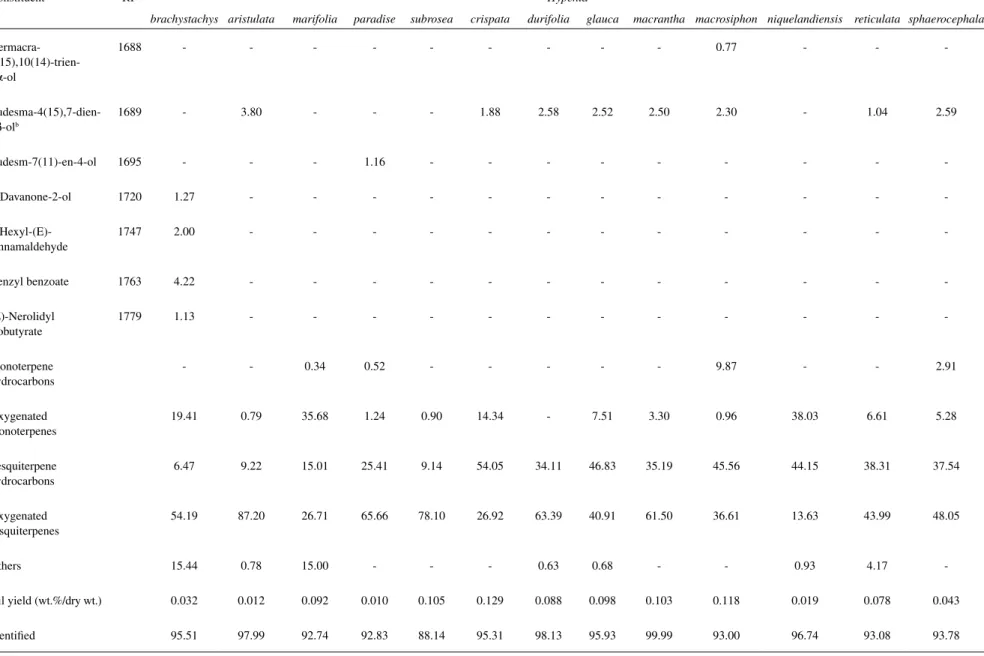
Table S2. Percentage of essential oil constituents of Hypenia spp. collected from central Brazilian Cerrado
Constituent RIa Hypenia
brachystachys aristulata marifolia paradise subrosea crispata durifolia glauca macrantha macrosiphon niquelandiensis reticulata sphaerocephala
Tricyclene 927 - - - 0.32
α-Pinene 934 - - - 0.90 - - -Sabineneb 974 - - - - - - - - - 6.15 - - 0.93
1-Octen-3-ol 977 - - 4.22 - - - - 0.68 - - - -
-β-Pinene 978 - - - 1.00 - - -o-Cymene 1024 - - - 0.52 - - -
-β-Phellandrene 1029 - - - 1.82 - - 1.66 Acetophenone 1065 - - 4.77 - - - -Linaloolb 1100 - - 5.52 1.24 - 1.40 - 0.61 - 0.96 0.72 1.29
-1,3,8-ρ-Menthatriene 1111 - - 0.34 - - -
-trans-Thujone 1117 - 0.79 - - -
-neo-Isopulegolb 1145 1.30 - 9.32 - - 1.68 - - - - 3.87 - 1.23
Isopulegol 1147 - - - 0.30
-iso-Isopulegolb 1157 - - 5.20 - - 0.70 - - - - 1.18 -
-Menthol 1171 1.00 - - -
-cis-Pinocamphone 1174 - - - 0.57
α-Terpineol 1185 - - - - 0.90 - - -
-trans-ρ -Mentha-1(7),8-dien-2-ol
1188 - - 1.40 - - 0.62 - - - - 1.72 - 0.53 Citronellolb 1229 14.19 - 9.52 - - 5.58 - 3.61 2.48 - 20.49 2.55 2.44
Geraniolb 1255 2.92 - 4.72 - - 4.36 - 3.29 0.82 - 10.05 2.47 0.51
Neryl formate 1280 - - - 0.93 -
-β-Bourboneneb 1387 0.72 - - - - 3.25 - 0.92 - 1.71 4.45 0.75 3.97 β-Elemene 1392 - - - 0.77 - - - 2.79 -Geosmin 1404 - - - 0.63 - - - -Dodecanal 1407 - - - 0.89
-α-Cedrene 1410 - - - 0.82 -(E)-Caryophylleneb 1420 1.93 2.42 3.56 2.83 2.89 6.19 2.72 5.36 4.80 7.92 4.64 6.52 18.57
α-trans-Bergamotene 1439 - - - 0.70 - -
-Silv
a
et al.
S9
V
ol. 22, No. 5, 2011
Constituent RIa Hypenia
brachystachys aristulata marifolia paradise subrosea crispata durifolia glauca macrantha macrosiphon niquelandiensis reticulata sphaerocephala
trans-Prenyl limonene 1457 - - - 2.34 - - -
-9-epi -(E)-Caryophyllene
1465 - - - 1.04 - -
-γ-Gurjunene 1478 - - - 1.62 - - -
-γ-Muuroleneb 1479 - - 1.63 1.03 - 0.81 1.01 - - - - 1.09 5.42
Germacrene Db 1484 - - 3.25 0.87 1.57 31.48 17.20 31.20 17.22 17.18 25.25 5.02 -β-Selineneb 1489 - - - 3.63 - - 0.61 - 1.95 - - 1.70 -α-Selinene 1498 - - - 3.76 - - - -Bicyclogermacreneb 1500 1.39 - - 1.36 1.87 8.03 5.93 6.00 6.24 6.55 8.79 6.53 5.14 α-Muuroleneb 1501 0.72 2.60 - 1.67 - - 0.62 - - - - 1.95
-Germacrene A 1506 - - - 0.85 - - - 3.21
-α-Cadineneb 1516 - - 2.59 1.10 - 0.73 1.55 - 2.56 2.12 - 2.35 0.48
7-epi-α-Selinene 1518 - - - 0.97
δ-Cadineneb 1524 0.56 4.20 3.98 3.58 2.81 3.56 3.61 3.35 1.82 3.86 1.02 5.58 2.99 α-Calacorene 1546 - 3.36 - 0.73 - - - 1.03 -Elemol 1552 - - - 0.46 0.53
Silphiperfol-5-en-3-ol A
1554 - - - 0.86 Germacrene B 1560 - - - 0.60 - - - - 0.86 - -Geranyl butanoate 1566 - 0.78 - - - -Palustrol 1572 - - - 2.71 - -Caryophyllenyl alcohol 1572 1.01 3.81 - - - -Spathulenolb 1578 13.97 11.27 5.23 26.18 30.25 11.29 31.55 25.57 16.50 14.66 4.49 11.94 12.59
trans-Sesquisabinene hydrateb
1583 7.20 - - - -Caryophyllene oxideb 1583 7.14 7.42 8.33 12.25 10.67 6.10 14.39 7.49 6.99 10.02 2.17 14.38 13.36 β-Copaen-4α-olb 1586 - - - - 8.39 - - - - - - -
-Globulol 1593 2.62 - - - 0.84 Rosifoliol 1595 - - - 0.50 - - -Guaiol 1596 - - - 1.78 1.29 - - -
Chemotaxonomic Signiicance of
V
olatile Constituents in
Hypenia
J. Br
az. Chem. Soc.
S10
Constituent RIa Hypenia
brachystachys aristulata marifolia paradise subrosea crispata durifolia glauca macrantha macrosiphon niquelandiensis reticulata sphaerocephala
Geranyl
2-methylbutanoateb
1596 8.09 - 6.01 - - - -Ledol 1604 - 1.38 - - - -Humulene epoxide IIb 1613 0.65 3.91 - 4.64 1.82 - 1.75 - - 2.55 - -
-trans-Isolongifolanone 1628 - - - - 1.26 - - -
- Muurola-4,10(14)-dien-1β-olb
1631 0.66 5.88 5.51 2.34 5.11 0.88 - - - 1.08 2.85
Selina-1,3,7(11)-trien-8-one
1634 4.07 - - 0.63 - - - -
Caryophylla-4(12),8(13)-dien-5α-ol
1639 - - - 0.68
Caryophylla-4(12),8(13)-dien-5β-ol
1639 - - - 0.99 - - - 1.45 allo-Aromadendrene
epoxide
1640 - - - - 0.73 - 0.54 - - - 1.24
epi-α-Muurololb 1644 0.73 6.86 - - - - - - - - - - 0.93 α-Muurololb 1645 2.40 10.54 4.45 4.93 6.95 - - - 0.71 - - 0.77 0.75
Cubenolb 1649 1.80 3.77 - 1.17 1.18 - - - - - - 0.36 -β-Eudesmol 1654 - - - 0.73 1.17
α-Eudesmol 1655 - - - 1.99
α-Cadinolb 1656 0.66 - 3.19 4.23 - - 1.98 - - - 1.28 -
-Selin-11-en-4α-olb 1659 8.41 25.20 - 5.17 11.06 4.39 6.90 5.33 34.80 5.81 2.12 12.20 5.47
ar-Turmerone 1665 0.68 - - - -14-hydroxy-9-epi
-(E)-caryophyllene
1667 - - - 1.18 - - - 0.75
n-Tetradecanol 1670 - - - 3.28 -5-iso-Cedranol 1671 - - - 1.23 - - - -Cadalene 1676 0.92 - - - -Khusinol 1676 - - - 1.24 0.68 - - -
Silv
a
et al.
S11
V
ol. 22, No. 5, 2011
Constituent RIa Hypenia
brachystachys aristulata marifolia paradise subrosea crispata durifolia glauca macrantha macrosiphon niquelandiensis reticulata sphaerocephala
Germacra- 4(15),10(14)-trien-1α-ol
1688 - - - 0.77 - - -
Eudesma-4(15),7-dien-1β-olb
1689 - 3.80 - - - 1.88 2.58 2.52 2.50 2.30 - 1.04 2.59 Eudesm-7(11)-en-4-ol 1695 - - - 1.16 - - -
-β-Davanone-2-ol 1720 1.27 - - - -
2-Hexyl-(E)-cinnamaldehyde
1747 2.00 - - - -Benzyl benzoate 1763 4.22 - - - -(Z)-Nerolidyl
isobutyrate
1779 1.13 - - - -Monoterpene
hydrocarbons
- - 0.34 0.52 - - - 9.87 - - 2.91 Oxygenated
monoterpenes
19.41 0.79 35.68 1.24 0.90 14.34 - 7.51 3.30 0.96 38.03 6.61 5.28 Sesquiterpene
hydrocarbons
6.47 9.22 15.01 25.41 9.14 54.05 34.11 46.83 35.19 45.56 44.15 38.31 37.54 Oxygenated
sesquiterpenes
54.19 87.20 26.71 65.66 78.10 26.92 63.39 40.91 61.50 36.61 13.63 43.99 48.05 Others 15.44 0.78 15.00 - - - 0.63 0.68 - - 0.93 4.17 -Oil yield (wt.%/dry wt.) 0.032 0.012 0.092 0.010 0.105 0.129 0.088 0.098 0.103 0.118 0.019 0.078 0.043 Identiied 95.51 97.99 92.74 92.83 88.14 95.31 98.13 95.93 99.99 93.00 96.74 93.08 93.78
aRetention Index. bConstituents selected for PCA (see Experimental section). – not detected.
Chemotaxonomic Signiicance of Volatile Constituents in Hypenia J. Braz. Chem. Soc.
S12
Table S3. Percentagea of essential oils of clustered Hypenia spp. from central Brazilian Cerrado
Constituent RIb RIc Cluster I Cluster II
1 Tricyclene 927 921 - 0.04 ± 0.11
2 α-Pinene 934 932 - 0.11 ± 0.32
3 Sabinene 974 969 - 0.89 ± 2.15
4 1-Octen-3-old 977 974 0.84 ± 1.89 a 0.09 ± 0.24 a
5 β-Pinene 978 974 - 0.13 ± 0.35
6 ο-Cymene 1024 1022 0.10 ± 0.23
-7 β-Phellandrene 1029 1025 - 0.44 ± 0.81
8 Acetophenone 1065 1065 0.95 ± 2.13
-9 Linaloole 1100 1095 1.35 ± 2.39 a 0.62 ± 0.58 a
10 1,3,8-ρ-Menthatriene 1111 1108 0.07 ± 0.15
-11 trans-Thujone 1117 1112 0.16 ± 0.35
-12 neo-Isopulegole 1145 1144 2.12 ± 4.06 a 0.85 ± 1.39 a
13 Isopulegol 1147 1145 - 0.04 ± 0.11
14 iso-Isopulegole 1157 1155 0.18 ± 0.40 0.24 ± 0.45 a
15 Menthol 1171 1167 0.28 ± 0.63 a
-16 cis-Pinocamphone 1174 1172 4.74 ± 6.70 a 0.07 ± 0.20
17 -Terpineol 1185 1186 0.18 ± 0.40
-18 trans-ρ-Mentha-1(7),8-dien-2-ol 1188 1187 0.28 ± 0.63 a 0.36 ± 0.61 a
19 Citronellol 1229 1223 4.74 ± 6.70 a 4.64 ± 6.66 a
20 Geraniol 1255 1249 1.53 ± 2.19 a 2.69 ± 3.38 a
21 Neryl formate 1280 1280 - 0.12 ± 0.33
22 β-Bourbonenee 1387 1387 0.14 ± 0.32 b 1.88 ± 1.78 a
23 β-Elemenee 1392 1389 0.15 ± 0.34 a 0.35 ± 0.99 a
24 Geosmin 1404 1399 - 0.08 ± 0.22
25 Dodecanal 1407 1408 - 0.11 ± 0.31
26 α-Cedrene 1410 1410 - 0.10 ± 0.29
27 (E)-Caryophyllened 1420 1417 2.73 ± 0.60 b 7.09 ± 4.88 a
28 α-trans-Bergamotene 1439 1432 - 0.09 ± 0.25
29 α-Humulenee 1456 1452 0.23 ± 0.51 a 0.74 ± 1.55 a
30 trans-Prenyl limonene 1457 1457 0.47 ± 1.05
-31 9-epi-(E)-Caryophyllene 1465 1464 - 0.13 ± 0.37
32 γ-Gurjunene 1478 1475 0.32 ± 0.72
-33 γ-Muurolene 1479 1478 0.53 ± 0.76 a 1.04 ± 1.83 a 34 Germacrene De 1484 1484 1.14 ± 1.35 b 18.1 ± 11.4 a
35 β-Selinene 1489 1489 0.73 ± 1.62 a 0.53 ± 0.83 a
36 α-Selinene 1498 1498 0.75 ± 1.68
-37 Bicyclogermacrene 1500 1500 0.92 ± 0.87 b 6.65 ± 1.19 a 38 α-Muurolene 1501 1500 1.00 ± 1.13 a 0.32 ± 0.69 a 39 Germacrene Ae 1506 1508 0.17 ± 0.38 a 0.40 ± 1.13 a
40 α-Cadinene 1516 1513 0.74 ± 1.14 a 1.22 ± 1.05 a
41 7-epi-α-Selinene 1518 1520 - 0.12 ± 0.34
42 δ-Cadinene 1524 1522 3.03 ± 1.48 a 3.22 ± 1.37 a 43 α-Calacorenee 1546 1544 0.82 ± 1.46 a 0.13 ± 0.36 a
44 Elemol 1552 1548 - 0.12 ± 0.23
45 Silphiperfol-5-en-3-ol A 1554 1557 - 0.11 ± 0.30
46 Germacrene B 1560 1559 - 0.18 ± 0.34
47 Geranyl butanoate 1566 1562 0.16 ± 0.35
-48 Palustrol 1572 1567 - 0.34 ± 0.96
-Silva et al. S13 Vol. 22, No. 5, 2011
Constituent RIb RIc Cluster I Cluster II
50 Spathulenol 1578 1577 17.4 ± 10.5 a 16.1 ± 8.60 a
51 trans-Sesquisabinene hydrate 1583 1577 1.44 ± 3.22
-52 Caryophyllene oxide 1583 1582 9.16 ± 2.22 a 9.36 ± 4.45 a
53 β-Copaen-4α-ol 1586 1590 1.68 ± 3.75
-54 Globulole 1593 1590 0.52 ± 1.17 a 0.11 ± 0.30 a
55 Rosifoliol 1595 1600 - 0.06 ± 0.18
56 Guaiol 1596 1600 - 0.38 ± 0.72
57 Geranyl 2-methylbutanoate 1596 1601 2.82 ± 3.93
-58 Ledol 1604 1602 0.28 ± 0.62
-59 Humulene epoxide II 1613 1608 2.20 ± 2.02 a 0.54 ± 1.02 a
60 trans-Isolongifolanone 1628 1625 0.25 ± 0.56
-61 Muurola-4,10(14)-dien-1β-ol 1631 1630 3.90 ± 2.29 a 0.60 ± 1.01 b 62 Selina-1,3,7(11)-trien-8-one 1634 1632 0.94 ± 1.77 -63 Caryophylla-4(12),8(13)-dien-5α-ol 1639 1639 - 0.09 ± 0.24 64 Caryophylla-4(12),8(13)-dien-5β-ol 1639 1639 0.20 ± 0.44 a 0.18 ± 0.51 a 65 allo-Aromadendrene epoxide 1640 1639 0.15 ± 0.33 a 0.22 ± 0.45 a 66 epi-α-Muurolold 1644 1640 1.52 ± 3.00 a 0.12 ± 0.33 a
67 α-Muurolole 1645 1644 5.85 ± 3.08 a 0.28 ± 0.39 b
68 Cubenol 1649 1645 1.58 ± 1.38 a 0.05 ± 0.13 b
69 β-Eudesmol 1654 1649 - 0.24 ± 0.46
70 α-Eudesmol 1655 1652 - 0.25 ± 0.70
71 α-Cadinol 1656 1652 1.62 ± 1.97 a 0.41 ± 0.78 a 72 Selin-11-en-4α-ol 1659 1658 9.97 ± 9.46 a 9.63 ± 10.6 a
73 ar-Turmerone 1665 1668 0.14 ± 0.30
-74 14-hydroxy-9-epi-(E)-caryophyllene 1667 1668 - 0.24 ± 0.46
75 n-Tetradecanol 1670 1671 - 0.41 ± 1.16
76 5-iso-Cedranol 1671 1672 - 0.15 ± 0.43
77 Cadalene 1676 1675 0.18 ± 0.41
-79 Khusinold 1676 1679 0.38 ± 0.56
-80 Germacra-4(15),10(14)-trien-1α-ol 1688 1685 - 0.10 ± 0.27 81 Eudesma-4(15),7-dien-1β-ol 1689 1687 0.76 ± 1.70 a 1.93 ± 0.94 a
82 Eudesm-7(11)-en-4-ol 1695 1700 0.23 ± 0.52
-83 β-Davanone-2-ol 1720 1718 0.25 ± 0.57
-84 2-Hexyl-(E)-cinnamaldehyde 1747 1748 0.40 ± 0.89
-85 Benzyl benzoate 1763 1759 0.84 ± 1.89
-86 (Z)-Nerolidyl isobutyrate 1779 1783 0.23 ± 0.51 -Monoterpene hydrocarbonsd 0.17 ± 0.24 a 1.60 ± 3.49 a
Oxygenated monoterpenes 11.6 ± 15.7 a 9.50 ± 12.4 a Sesquiterpene hydrocarbons 13.1 ± 7.6 b 42.0 ± 6.8 a Oxygenated sesquiterpenes 62.4 ± 23.5 a 41.9 ± 16.7 a
Othersd 6.24 ± 8.20 a 0.80 ± 1.41 a
Identiied constituents 93.4 ± 3.7 a 95.8 ± 2.5 a
aAverage based on original data. bCalculated Retention index. cReported Retention index.32dRank and earcsine-transformed in ANOVA analysis (see
Experimental section). - = not detected. Percentage values followed by the same letter in the rows did not share signiicant differences at 5% probability by Tukey’s test.
Chemotaxonomic Signiicance of
V
olatile Constituents in
Hypenia
J. Br
az. Chem. Soc.
S14
Table S4. Percentage of essential oil constituents of Hypenia spp. according to their carbon skeletons
Carbon’s skeleton Hypenia
brachystachys aristulata marifolia paradise subrosea crispata durifolia glauca macrantha macrosiphon niquelandiensis reticulata sphaerocephala
Tricyclane - - - 0.3 Pinane - - - 2.8 - - 0.6 Thujane 8.1 0.8 - - - 6.6 - - 1.0 Menthane 2.6 - 19.4 3.1 1.0 3.2 - - - 2.0 7.0 0.3 3.7 Myrcane 29.5 0.8 30.8 1.3 - 11.9 - 7.9 3.3 1.0 33.3 7.1 3.2 Bourbonane 0.8 - - - - 3.4 - 1.0 - 1.8 4.6 0.8 4.2 Elemane - - - 0.8 - - - 3.7 0.6 Cedrane - - - 1.3 - - - - 0.9 -Caryophyllane 11.3 13.9 14.2 17.3 15.4 12.9 18.8 13.5 11.8 20.4 7.0 23.5 37.1 Humulane 2.0 4.0 - 5.0 2.1 - 2.7 - 0.6 7.6 - - -Guaiane - - - 1.8 - 1.9 1.3 - - - -Cadinane 9.5 38.0 25.5 23.7 19.0 6.3 9.0 3.5 5.1 6.4 2.4 16.0 14.3 Germacrane - - 3.9 1.9 1.8 33.7 17.6 32.8 17.2 19.3 27.0 9.3 -Eudesmane 14.0 29.6 - 15.5 12.6 6.6 10.4 8.2 39.3 9.3 2.2 17.6 13.0 Bicyclogermacrane 1.6 - - 1.5 2.1 8.4 6.1 6.3 6.2 7.0 9.1 7.3 5.5 Silphiperfolane - - - 0.9 Aromadendrane 18.6 12.9 6.2 28.2 35.2 11.9 32.9 26.9 16.5 15.8 7.4 13.4 15.6 Copaane - - - - 9.5 - - - -Isolongifolane - - - - 1.4 - - - -Bisabolane 0.8 - - - -Farnesane 1.4 - - - -Total 100.0 100.0 100.0 100.0 100.0 100.0 100.0 100.0 100.0 100.0 100.0 100.0 100.0
Silva et al. S15 Vol. 22, No. 5, 2011
Table S5. Percentagea of essential oil constituents of clustered Hypenia
spp. according to carbon skeletons
Carbon’s skeleton Cluster I Cluster II
Tricyclane - 0 ± 0.1
Pinane - 0.4 ± 1.0
Thujane 1.8 ± 3.5 a 1.0 ± 2.3 a Menthaneb 5.2 ± 8.0 a 2.0 ± 2.5 a
Myrcane 12.5 ± 16.1 a 8.5 ± 10.8 a Bourbonaneb 0.2 ± 0.4 b 2.0 ± 1.9 a
Elemaneb 0.2 ± 0.4 a 0.5 ± 1.3 b
Cedrane - 0.3 ± 0.5
Caryophyllanec 14.4 ± 2.2 a 18.1 ± 9.3 a
Humulane 2.6 ± 1.9 a 1.4 ± 2.7 a Guaiane 0.4 ± 0.8 a 0.4 ± 0.8 a Cadinaneb 23.1 ± 10.4 a 7.9 ± 4.9 b
Germacrane 1.5 ± 1.6 b 19.6 ± 11.5 a Eudesmane 14.3 ± 10.5 a 13.3 ± 11.4 a Bicyclogermacrane 1.0 ± 1.0 b 7.0 ± 1.2 a Silphiperfolane - 0.1 ± 0.3 Aromadendrane 20.2 ± 11.6 a 17.5 ± 8.3 a
Copaane 1.9 ± 4.3
-Isolongifolane 0.3 ± 0.6 -Bisabolane 0.2 ± 0.3 -Farnesane 0.3 ± 0.6
-aAverage based on original data. bArcsine and crank-transformed in
Chemotaxonomic Signiicance of
V
olatile Constituents in
Hypenia
J. Br
az. Chem. Soc.
S16
Table S6. Morphological characters of Hypenia spp. leaves collected in central Brazilian Cerrado
Character codes Hypenia
brachystachys aristulata marifolia paradisi subrosea crispata durifolia glauca macrantha macrosiphon niquelandiensis reticulata sphaerocephala
1 Adaxial epidermal cells highest
that abaxial epiderme + + + + + + + + - + + + + 2 Cuticle with parallel striation - - - + + + + + + + + 3 Abaxial epidermal cells with
anticlinal straight wall - - - + + + - + + -4 Abaxial epidermal cells with
anticlinal sinuate wall + + - + + + - - - + - - + 5 Druses in adaxial epiderme + + + + + - - - + 6 Starch in adaxial epiderme + + + + + - - - -7 Crystals in adaxial epiderme + + + + + - - - + 8 Crystals in abaxial epiderme - + - + + - - - -9 Anisocytic stomata + + - + + + + + + - + + + 10 Convex-plane midrib + + + - - + + + + + + + + 11 Midrib slightly convex-plane - - - + - - - -12 Convex-convex midrib with
triangular projection on adaxial
face - - - - + - - - -13 Crystals between veins of
smaller caliber + + + + + - - - -14 Marginal hydathodes - + - - - + + + - - - + -15 Cuticular lange at the midrib + - - + + - - - -16 Thick cuticle + + - + - + + + + + + + + 17 Thin cuticle - - + - - - -18 Prismatic crystals in pith of
midrid - - - + - + + + + + + + +