The LHCb Experiment
L. de Paula 1
1
LAPE,InstitutodeFsia,UniversidadeFederaldoRiodeJaneiro,
C.P.68528-RiodeJaneiro,21945-970, Brazil
E-mail: leandroif.ufrj.br
Reeived7January,2000
An overviewof the LHCbexperiment,whihhasbeen aproovedbyCERN inseptember1998, is
presented[1 ℄.
I Physis Motivation
I.1 Introdution
CPviolationwasrstdisoveredinneutralkaon
de-aysin1964[2℄. Itsoriginisstilloneoftheoutstanding
mysteriesofelementarypartilephysis.
TheStandardModel withthreequarkfamiliesan
naturally generate CP violation in both weak and
stronginterationsalthoughtCPviolationinthestrong
interation has never been deteted. CP violation in
theweakinterationisgeneratedbytheomplex
three-by-three unitary matrix, known as the CKM matrix,
introdued by Kobayashi and Maskawa [3℄. Observed
CP-violatingphenomenaintheneutral-kaonsystemare
onsistentwiththismehanism. However,itannotbe
exludedthatphysisbeyondtheStandardModel
on-tributes, oreven fully aounts for the observed
phe-nomena.
CP violation also plays an important role in
os-mology. It is oneof the three ingredients required to
explain theexess of matter overantimatter observed
in ouruniverse[4℄. Thelevelof CPviolationthat an
begenerated bytheStandard Model weak interation
isinsuÆienttoexplainthedominaneofmatterinthe
universe[5℄. ThisallsfornewsouresofCPviolation
beyondtheStandardModel.
Sine itsdisovery,CPviolation hasbeendeteted
onlyinthedeayamplitudeofK
L
mesons.
Experimen-taleortsinthekaonsetorwillontinueforsometime.
In the B-meson system there are many more deay
modes available, and the Standard Model makes
pre-ise preditionsfor CPviolationin anumberof these.
TheB-mesonsystemisthereforeaveryattrativeplae
to studyCPviolation, andto searh forahintofnew
physis.
CP violation
TheelementsoftheCKMmatrix
V
CKM =
0
V
ud V
us V
ub
V
d V
s V
b
V
td V
ts V
tb 1
A
;
V
ij
, are related to the relative strengths of the
tran-sition of down-type quarks (j = d, s, b) to up-type
quarks(i =u, , t), normalisedto p
G
F
, whereG
F is
the Fermi oupling onstant. The matrix is uniquely
denedbyfourparameters. Amongvarious
parameter-isations, the mostonvenientoneis that proposed by
Wolfenstein[6℄:
V
CKM V
(3)
CKM +ÆV
CKM
where theexpansionuptothird orderinisgivenby
V (3)
CKM
0
1
2
=2 A
3
( i)
1
2
=2 A
2
A 3
(1 i) A
2
1
1
A
:
The parameter is given by the sine of the Cabibbo
angle[7℄,measuredtobe0:2210:002[8℄fromdeays
involvings-quarks.
For a qualitative disussion of CP violation in
B-mesonsystems,V (3)
CKM
issuÆientandtheseondterm
ÆV
CKM
, whihisgivenby
0
0 0 0
iA 2
5
0 0
A( +i) 5
=2 (1=2 )A 4
iA 4
0
1
A
;
is usually ignored. ForCP violation in K 0
-K 0
osilla-tions,theorretiontoV
d
isimportant. ForB-meson
systems, the orretion to V
td and V
ts
beomes
rele-vantonethesensitivityofexperimentstomeasure
CP-violation parametersbeomes10 2
or less. Note that
6=0isrequiredto generateCPviolation.
SixofthenineunitarityonditionsoftheCKM
ma-trix an be drawn as triangles in the omplex plane.
ThetwotrianglesrelevantfortheB-mesonsystemsare
shown in Fig. 1. The relatedunitarity onditions are
givenby V ud V ub +V d V b +V td V tb = 0 V tb V ub +V ts V us +V td V ud = 0:
Figure 1. Twounitarity triangles intheWolfenstein's
pa-rameterisationwithanapproximationvaliduptoO( 5
).
Thetwotriangles beome idential ifÆV
CKM is
ig-nored.
Theangles ofthetriangles anbeextrated either
indiretly by measuring the lengths of the sides, or,
within the Standard Model, diretly from CP
asym-metries. If the angles extrated by the two dierent
methods disagree,thiswouldindiate newphysis.
Sine is well known, the two triangles are
om-pletely determined by and , whih anbe derived
from jV
b j, jV
ub
j and jV
td
j, as seen from Fig. 1. The
parameter A is extrated from measurementsof jV
b j
and . Values of jV
b
j and jV
ub
j are extrated from
variousB-mesondeaysandareurrentlyknowntobe
0:0410:003and0:00330:0009[8℄,respetively. The
large error on jV
ub
j is due to the limited
experimen-tal data available and theoretial unertainties in the
evaluation of strong interation eets. Experiments
at e +
e mahines running at the (4S), i.e. CLEO,
BABAR and BELLE, will redue the errors on these
elements. Their preisions will ultimately be limited
bythetheoretialunertainties.
The value of jV
td
j is urrently determined from
the frequeny of B 0
d -B
0
d
osillations. Due to
diÆul-ties in evaluating the eets of hadroni interations,
the extrated value has a large unertainty, jV
td j =
0:0090:003 [8℄. Thissituation anbeimproved
on-siderablyone jV
ts
jis extrated from thefrequeny of
B 0 s -B 0 s
osillationsandjV
td =V
ts
jisusedinsteadofjV
td j,
sinetheStandard Model alulationof this ratiohas
amuhreduedhadroniunertainty. Experimentally,
CDF, D0, HERA-B and SLD will try to measure the
B 0 s -B 0 s
osillationfrequeny. However,thismaynotbe
possible before LHCb beomes operational, if the
fre-quenyishigh.
OneandarederivedfromjV
b j,jV
ub
jandjV
td j,
theangles,,andÆanbealulated. Atpresent,
anon-zerovalue of an onlybe obtainedif CP
vio-lation in K 0
-K 0
osillations is inluded in the
analy-sis[9℄. Futurerare kaondeayexperimentsmeasuring
K!willalsoprovideinformationonand[10℄.
In the framework of the Standard Model, diret
measurementsanbemadeoftheangles,,andÆ,
ortheirombinations,fromCPasymmetriesindierent
nal statesof B-meson deays. Well known examples
are[10℄:
1. +fromB 0
d !
+
2. fromB 0
d
!J= K
S
3. 2ÆfromB 0 s !D s K
4. Æ fromB 0
s
!J=
5. from B 0 d !D 0 K 0 ;D 0 K 0 ;D 1 K 0 ,
whereit is understood that theharge-onjugated
de-ayproessesarealsomeasured,andD
1
istheCP=+1
state of the neutral D meson. Note that the angle
is not measured diretly but an be determined only
throughthe triangle relation = . Within
theframeworkoftheStandardModel,, 2Æand
measuredfromthedeayhannels2,3and5havevery
littletheoretialunertainty.
If a new avour-hanging neutral urrent is
intro-dued by physis beyond the Standard Model, it an
have a large eet on B 0 d -B 0 d and B 0 s -B 0 s osillations,
sinetheontributionoftheweakinterationisseond
order. For suh aase,thevaluesofjV
td
j andjV
ts j
ex-perimentallyextrated fromB-Bosillationsnolonger
orrespond to their real values. The angles +, ,
2ÆandÆ,extratedfromthedeayhannels1{4,
are also aeted. These angles, measured in the two
waysexplainedabove,willnolongeragree.
Theangleanbedeterminedfromhannels1and
2usingB 0
deays,or from hannels 3and 4usingB 0
deays. SineB 0 d -B 0 d and B 0 s -B 0 s
osillationsanbe
af-feted dierently by the newavour-hangingneutral
urrent,thetwomeasurementsof maydisagree.
Sine only a small ontribution from the new
avour-hangingneutralurrentis expeted in D 0
-D 0
osillations, extrated from the fth deay mode
would be very lose to the Standard Model value.
Therefore, alulatedfromthedeayhannels2and
3and obtainedfrom hannel5willnotagree.
IntheStandardModel,Æ isexpetedto beofthe
order of 10 2
, and the CP asymmetryin B 0
s
! J=
deaysshouldbeverysmall. Thenewavour-hanging
neutral urrent ould, however, generate a large
CP-violatingeetin thisdeayhannel.
This illustrates hownewphysisould bedeteted
from preise measurementsof CP violation in various
B-meson deays, ombined with and determined
fromotherB-mesondeays. Detaileddisussionanbe
foundelsewhere[11℄.
Anotherwaytosearhforphysisbeyondthe
Stan-dard Model is to study B-mesondeays that are rare
orevenforbiddenintheStandardModel. Forexample,
B-mesondeaysgeneratedbythepenguinproessesare
rstorderin theweakinteration,andtheirbranhing
frations are lesslikely to be aeted by newphysis.
However,thesedeaymodesmayexhibitasizable
CP-violating eet throughinterferene, if new physis is
present [12℄. Similarly, alarge eet ould beseen in
theenergyasymmetryof theleptonpairsprodued in
b!s` +
` deays[13℄.
There are many ways to look for a sign of new
physis. Inallases,largenumbersofbothB 0
s andB
0
d
mesons arerequired, and many dierent deay modes
haveto bereonstruted.
I.3 LHCb performane
Compared to other aelerators that are in
oper-ation or under onstrution, the LHC will be by far
themost opious soureof Bmesons, dueto thehigh
bb ross setion and high luminosity. A variety of
b-hadrons, suh as B
u , B d , B s , B
and b-baryons, are
produedat highrate.
TheLHCbexperimentplanstooperatewithan
av-erageluminosityof210 32
m 2
s 1
,whihshouldbe
obtainedfrom the beginningof LHC operation.
Run-ning at this luminosity has further advantages. The
detetoroupanyremainslow,andradiationdamage
isredued. Eventsaredominatedbysinglepp
intera-tions that are easy to analyse. The luminosity at the
LHCbinterationpointanbekeptatitsnominalvalue
while the luminosities at the other interation points
arebeingprogressivelyinreasedtotheirdesignvalues.
Thiswillallowtheexperimenttoolletdataformany
yearsunder onstantonditions. About 10 12
bbpairs
areexpetedtobeproduedinoneyearofdatataking.
TheLHCbdetetorisdesignedtoexploit thelarge
number of b-hadrons produed at the LHC in order
rare deays in the B-meson systems. It has a
high-performane triggerwhih is robustand optimised to
ollet B mesons eÆiently, based on partiles with
large transverse momentum and displaed deay
ver-ties.
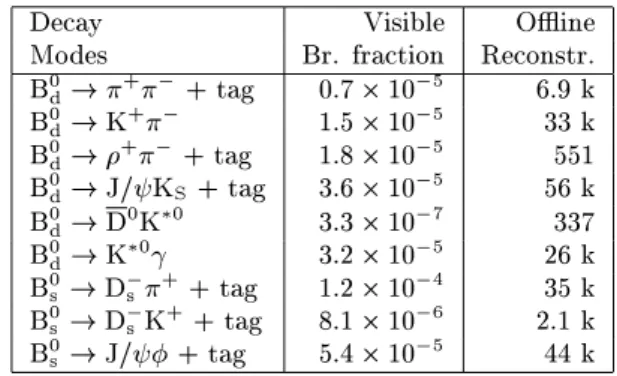
Table 1. Expetednumbersof events reonstrutedoine
inoneyear(10 7
sofdatataking)withanaverageluminosity
of210 32
m 2
s 1
,forsomehannels.
Deay Visible Oine
Modes Br. fration Reonstr.
B 0
d !
+
+tag 0:710 5 6.9k B 0 d !K +
1:510
5 33k B 0 d ! +
+tag 1:810 5
551
B 0
d
!J= K
S
+tag 3:610 5 56k B 0 d !D 0 K 0
3:310 7 337 B 0 d !K 0
3:210
5 26k B 0 s !D s +
+tag 1:210 4 35k B 0 s !D s K +
+tag 8:110 6
2.1k
B 0
s
!J= +tag 5:410 5
44k
ThedetetoranreonstrutaB-deayvertexwith
verygoodresolutionandprovideexellentpartile
iden-tiationforhargedpartiles. Exellentvertex
resolu-tionis essentialforstudying therapidly osillatingB
s
mesonsandinpartiulartheirCPasymmetries. Italso
helps to redue ombinatoribakground when
reon-strutingraredeays.
Withoutseparatingkaonsfrompions,reonstruted
B
d !
+
deaysareheavilyontaminatedbyB
d ! K , B s ! K and B s !K K deays. These
introdue unknownsystemati errors in the measured
CP asymmetryin B
d !
+
deays,sine these
de-aymodesmaywellhaveasymmetries too. The
mea-surementoftheir asymmetriesis alsointeresting. The
abilitytodistinguishkaons frompionsis alsoessential
for B s ! D s K
, where the main bakground omes
from B s ! D s
deays. The branhing fration of
B s ! D s
is estimated to be ten times largerthan
B s !D s K
,and noCPviolationisexpeted.
There-fore,withoutseparatingthetwohannels,CP
asymme-triesinB
s !D s K
deayswouldbeseriouslydiluted.
Partileidentiationisalsoneededforthe
reonstru-tionofB
d !DK
deays,toredueombinatori
bak-ground.
Withtheapabilitiesdesribedabove,LHCbis
ide-allysuitedtodeterminealltheanglesofthetwo
unitar-ity trianglesusing high-statistis data. Table1shows
theexpetednumbersofoine-reonstrutedeventsfor
variousB-mesonnalstatesinoneyear(10 7
s)ofdata
taking. Simulationstudiesshowthat theLHCb
dete-tor is able to trigger and reonstrut, in addition to
nal stateswith only harged partiles, also those
in-luding a photon or 0
. This enhanes theapability
of the experiment to determine without theoretial
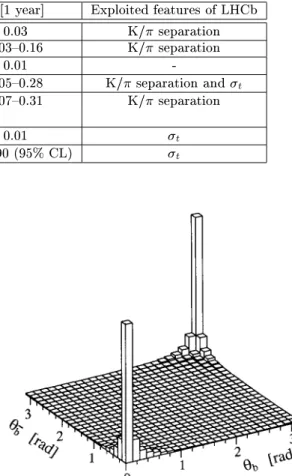
Table 2. Expetedpreision onthe anglesof theunitaritytriangles obtainedbythe LHCbexperimentinoneyear ofdata
taking. Speialfeatures of the detetor,i.e. partile identiationand exellent deay timeresolution (t),are indiated
when theyareimportant. DetailsanbefoundinPartVofthisdoument.
Parameter DeayMode [1year℄ ExploitedfeaturesofLHCb
+ B
0
d andB
0
d !
+
;nopenguin 0.03 K/separation
(= ) penguin/tree=0:200:02 0.03{0.16 K/separation
B
0
d andB
0
d
!J= KS 0.01
2Æ B
0
s andB
0
s !D
s K
0.05{0.28 K/separationandt
B
0
d !D
0
K 0
;D 0
K 0
;D
1 K
0
and 0.07{0.31 K/separation
B 0
d !D
0
K 0
;D 0
K 0
;D1K 0
Æ B
0
s andB
0
s
!J= 0.01
t
xs B
0
s andB
0
s !D
s
upto90(95%CL) t
Table 2 summarises the expeted preision on the
angles of the unitarity triangles and thesensitivityto
B 0
s -B
0
s
osillations,obtainedafteroneyearofdata
tak-ing. Italsoindiatesthedeaymodesusedandthe
im-portantfeaturesoftheLHCbdetetordisussedabove.
InadditiontoinvestigatingCPviolationinB-meson
deays, the physis programme of the LHCb
experi-ment will inlude studies of rare B and deays,
D-D osillationsand B
-meson deays. Forexample, the
ability toreonstrut the largenumberofB 0
d ! K
0
deays given in Table 1demonstrates that the LHCb
experiment anstudy various other deaymodes
gen-eratedbytheb!s proess,suhasB 0
d !K
and
B 0
s
! . Reonstrution of B 0
d ! K
0
+
should
also be possible. The large numbers of reonstruted
eventsexpeted allowsearhestobemadefor
surpris-ing eets in these rare deay modes. Events needed
to studytheseproesseswillpassthestandardLevel-0
toLevel-2triggeruts. OnlytheLevel-3algorithmwill
needtobetunedaordingly.
II Detetor
LHCbisasingle-armspetrometerwithaforward
an-gularoveragefromapproximately10mradto300(250)
mrad in thebending (non-bending) plane. Thehoie
of thedetetorgeometry ismotivatedbythefat that
athighenergiesboththeb-andb -hadronsare
predom-inantly produed in the same forward one, afeature
exploited in the avour tag. This is demonstrated in
Fig. 2where thepolarangles of theb- and b-hadrons
alulatedbythePYTHIAeventgeneratorareplotted.
Thepolarangleisdenedwithrespettothebeamaxis
in theppentre-of-masssystem.
Fig.3showsthemomentumdistributionsforB 0
d !
+
deaysinto4,andforthosewherethemomenta
of both pions are measuredin thespetrometer. The
derease of thedetetor aeptane forhigh momenta
isduetothelossofpartilesbelow10mrad. Inthelow
momentumregion,thelossofaeptaneisduetoslow
pionsthatdonothitenoughtrakingstationsfortheir
Figure2. Polarangles ofthe b- andb-hadrons alulated
bythePYTHIAeventgenerator.
Figure3. Momentumdistributionsfor B 0
d !
+
deays
into4,andforthosewherethemomentaofbothpionsare
measuredinthespetrometer.
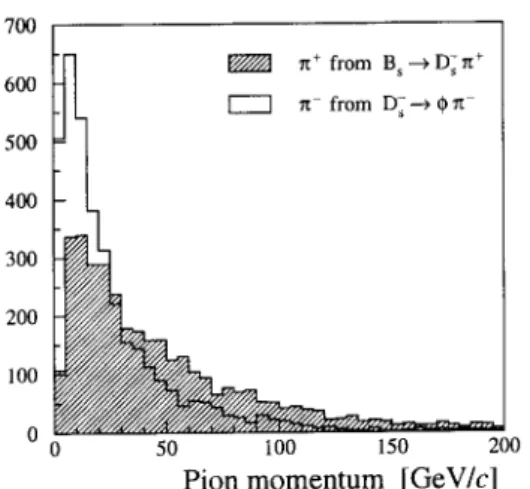
Todeterminethemomentumrangerequiredforthe
spetrometer, the B 0
s ! D
0
s
+
deay is studied. The
+
denes the high end ofthe momentum range, and
the fromtheD
s
deaythelowend. Fig. 2showsthe
momentumdistributionsforbothpions,whentheyare
Figure4. Momentumdistributions for the +
fromB 0
s !
D 0
s
+
deaysandforthe fromthesubsequentD
s deay,
wherethemomentaaremeasuredinthespetrometer.
The requirements for the vertex detetor an be
illustrated by the deay-length distribution of B 0
d !
+
shown in Fig. 5. The averagedeay lengthfor
thedetetedB 0
d !
+
is1.0m.
II.1 General layout
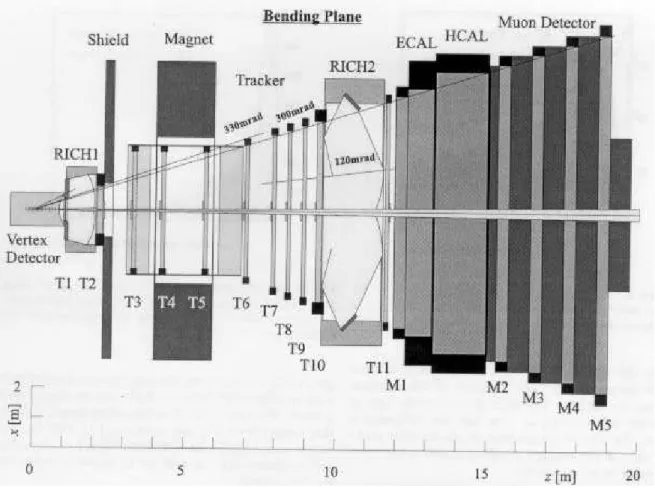
The layout of the LHCb spetrometer is shown in
Fig.6. IntersetionPoint8,urrentlyusedbyDELPHI,
hasbeen alloated to theexperiment. A modiation
to theLHC optis, displaingtheinteration pointby
11.25mfromtheentre,haspermittedmaximumuseto
bemadeoftheexistingavernbyfreeing19.7mforthe
LHCbdetetoromponents. Aright-handedoordinate
systemisdenedentredontheinterationpoint,with
z alongthebeamaxisandy pointingupwards.
Figure 5. Deay-lengthdistributions for B 0
d !
+
de-aysin4,andthosewherebothpionsaredetetedinthe
spetrometer.
LHCbomprisesavertexdetetorsystem(inluding
apile-upvetoounter),atrakingsystem(partially
in-sideadipole magnet),aerogelandgasRICHounters,
an eletromagneti alorimeter with preshower
dete-tor, a hadron alorimeter and a muon detetor. All
detetor subsystems, exept the vertex detetor, are
assembled in twohalves, whih anbeseparated
hor-izontally for assembly and maintenane, as well as to
provideaess tothebeampipe.
II.2 Beam pipe
A 1.8m-long setion of the beam pipe around the
interationpointhasalargediameterofapproximately
120m. Thisaommodatesthevertexdetetorsystem
with its retration mehanis, and hasa thin forward
windowoverthefull detetoraeptane. This partis
followedbytwoonialsetions;therstis 1.5m long
with 25mrad opening angle, and the seond is 16m
longwith10mradopeningangle. Theurrentdesignis
basedon aluminiumwalls, but partial replaement by
berylliumis understudy.
II.3 Magnet
The spetrometer dipole is plaed lose to the
in-teration region, in order to keep itssize small. Sine
traksin thevertexdetetorareusedin thetrigger,it
is desirable to have the vertex detetor in aregion of
lowmagnetieldforfasttraknding. TherstRICH
ounterisdesignedtooverthemomentumrangedown
to 1GeV/. TomaintaintheneessaryRICH1
aep-taneand to avoid traksbending inthegas radiator,
RICH1isalsorequiredtobeinaregionoflowmagneti
eld. The magnet is therefore plaedbehind RICH1,
allowinganaeptaneof330mradinbothprojetions
upstreamofthemagnet.
A superonduting magnet is hosen to obtain a
high eld integral of 4Tm with a short length. It
benets from the existing infrastruture of the
DEL-PHI solenoid. The eld is orientedvertially and has
a maximum value of 1.1T. The polarity of the eld
anbehangedtoredue systematierrorsin the
CP-violation measurements that ould result from a
left-right asymmetry of the detetor. The free aperture
is 4.3m horizontally and 3.6m vertially. The oil is
designed to maximise the eld homogeneity. An iron
shield upstream of the magnet redues the stray eld
in theviinityofthevertexdetetorandofRICH1.
II.4 Vertex detetor system
Thevertexdetetor systemomprisesasilion
ver-tex detetor and a pile-up veto ounter. The vertex
detetorhastoprovidepreiseinformationonthe
pro-dutionanddeayvertiesofb-hadronsbothoineand
fortheLevel-1trigger. Thelatterrequiresallhannels
tobereadoutwithin1s. Thepile-upvetoounteris
used in theLevel-0 triggertosuppress events
ontain-ingmultipleppinterationsinasinglebunh-rossing,
Figure6. TheLHCbdetetorseenfromabove(utinthebendingplane).
II.4.1 VertexDetetor
The Vertex Detetor layoutonsists of 17 stations
betweenz = 18mand +80m,eahontainingtwo
diss of silion detetors, with irular (r) and radial
() strips, respetively. The diss are positioned
per-pendiular to the beam. Planes with radial strips
al-ternatebetweena+5 Æ
and 5 Æ
stereoangle. Traking
overageextendsradiallyfrom1to6m,and provides
at leastthree spaepoints ontrakswith polar angles
downto15mrad. Asilionthiknessof150m isused
toreduemultiplesattering. Thefront-endeletronis
uptotheLevel-0buersaremountedatapproximately
7m from thebeamaxis. Analogue information from
220,000ampliers is transmitted on7000 twisted-pair
ables through the vauum tank to the readout
ele-tronis at adistane of about10m from thedetetor.
At nominal luminosity, the innermost part of the
de-tetor is expeted to giveaeptableperformane (i.e.
a minimum signal-to-noiseratio of 8) for at least one
year,whenoperatedat5 Æ
C.
Thereadoutpithvariesfrom40to80mforthe
r-stripsandfrom40to104mforthe-strips. This
pro-vides hit resolutions between 6and 10m for
double-hannel lusters and between 9 and 18m for
single-theimpatparameterof high-momentumtraksis
ob-tained. Eah detetor element overs 61 Æ
in azimuth,
theinnermostrstripsbeingread outin twosegments.
Thisensuresthatthestripoupanystaysbelow0.8%.
Material from guard rings on the detetors, from
an RF-shield and a wake-eld suppressor reahes to
within4mmofthebeamaxis. Thisisaeptableduring
normalLHC operationfor physis data taking.
How-ever, the material hasto be retrated by 3m during
injetion. Thisispossiblebeausetheomplete
assem-bly is onstruted in twohalves,whih anbe moved
apartvertially. With alongitudinal osetof thetwo
halvesby2m,anoverlapofthesensitiveareasanbe
ahieved. The designforeseesaseondaryvauum for
thedetetorsinside a100m aluminiumRF-shield.
II.4.2 Pile-upVeto Counter
Two dediated planes of silion detetors at as a
pile-upveto whih is available in time for the Level-0
trigger. These detetors have irular strips and are
plaed upstream of the main Vertex Detetor,
oppo-sitetothespetrometerarm. Eahplaneissubdivided
into60 Æ
setors ontaining300stripswith apith
be-tween120and240m. Theon-detetoreletronis
vertex-ndingproessors. Simulationsshowthat a
pri-maryvertexisreonstrutedwitharesolutionof1mm
along thebeam diretion. This rejets 80%of double
interationswhileretaining95%ofsingleinterations.
II.5 Traking system
Thetrakingsystem,onsistingofInnerandOuter
Traker, provides eÆient reonstrution and preise
momentum measurement of harged traks, trak
di-retionsforringreonstrutionintheRICH,and
infor-mationfortheLevel-1andhigher-leveltriggers.
Thesystemomprises11stations(T1{T11inFig.6)
betweenthevertexdetetorandthealorimeters.
Pre-iseoordinatesinthebendingplaneareobtainedfrom
wiresorstripsat0 Æ
and5 Æ
withrespettothe
verti-al(y;u;v). Stationsimmediatelyup-anddownstream
of the RICH ounters ontain additional planes,
pro-viding preisemeasurementsin thenon-bendingplane
(wires/stripsalongx). Thehoie oftehnologyis
de-termined by the requirement of low oupany. For
mostoftheaeptane,overedbytheOuter Traker,
partile uxes are below 1:410 5
m 2
s 1
and
per-mit the use of honeyomb-like drift hambers. For
the Inner Traker, whih lies inside a boundary of
60m40m, a dierent tehnology handling uxes
up to 3:5 10 6
m 2
s 1
is required. Beause of its
redued dimensions, station T1 ontains only Inner
Trakermodules.
The expetedmomentum resolution forthehosen
design is approximately 0.3% for momenta from 5 to
200GeV=,limitedmainlybymultiplesattering. Mass
resolutionsaregood, e.g.17MeV= 2
forB 0
d !
+
.
II.5.1 Outer Traker
The detetor proposed is based on
honeyomb-hamber tehnology: a multi-ell layer with mostly
5 mm ells is built from two pre-formed ondutive
foils. Twostaggeredlayers,separatedby aondutive
foilandsandwihedbetweentwofoamlayers,makeup
a self-supporting module for one oordinate
measure-ment. Suh amodule is 0.4%X
0
thik. Moststations
are assembled from four modules with y;u;v;y
orien-tations. Stations 2, 10 and 11 ontaintwo additional
x modules. The totalnumberof eletroni hannelsis
110,000.
With afastCF
4
-baseddriftgas,signallatenywill
betwo bunh-rossing intervals. Single-ellresolution
isexpetedtobe<200m. Theinnerboundaryofthe
Outer Trakerstations is determined bydemanding a
maximumelloupanyoflessthan10%.
II.5.2 InnerTraker
Foroverageinsidejxj=30mandjyj=20{30m,
hambers using a Mirostrip Gas Chamber (MSGC)
with a Gaseous Eletron Multiplier (GEM) are taken
for the ost evaluation. Until all problems with this
tehnology are solved, LHCb is keeping silion strip
detetors as a fall-bak solution, sine they are
es-Chambers, whih might turn out to be heaper than
theMSGC/GEMsolution,arealsounderstudy.
TheadditionofaGEMtotheMSGCredues
dras-tiallythedangerofsparkingintheMSGC,asthegas
ampliationisdividedintotwostages. Detetor
mod-ulesoflineardimensionsupto30mareproposed,with
a 2mmdrift gap,a 50m GEMfoil and a 2mm
am-pliation gap. With a gain of 20 in the GEM, safe
operation of the MSGC at a gain of 200 an be
ob-tained. Glasssubstrateswithdiamond-likeoatingare
used, with areadout pith of220m. Ina1.1Teld,
thestriphitmultipliityisaround1.5,andthehit
res-olutionisbetterthan65m. Theoupanyison
av-erage below 1%, and at most 4% at a minimum
dis-taneof36mmfromthebeams. Atotalsensitivearea
of 14m 2
hasto beequippedwith about 220,000
read-outhannels. FortheLevel-1trigger,fourhannelsare
ombinedtoprovideagranularityof0.88mm.
II.6 RICH detetors
The RICH system has the task of
identify-ing harged partiles over the momentum range 1{
150GeV=, within an angular aeptane of 10{
330mrad. Partile identiation is ruial to redue
bakground in seleted nal states and to provide an
eÆientkaontag. Toahievethisgoal,thesystem
on-sistsofanupstreamdetetor(RICH1)withbotha
sil-iaaerogelandaC
4 F
10
gasradiator,andadownstream
detetor (RICH2) with a CF
4
gas radiator. RICH1
has 25{330mrad aeptane in both x and y
proje-tionsandissituatedupstreamofthemagnettodetet
low-momentumtraksthataresweptoutofthe
aep-tane. AlthoughRICH2hasareduedaeptane,10{
120mradin x and10{100mradin y,itathesalarge
fration of thehigh momentum traks, e.g.90%of
re-onstrutedpionsfromB 0
d !
+
withp>70GeV=
(i.e.beyondthelimitfor{KseparationinRICH1).
The pion thresholds are 0.6, 2.6, and 4.4GeV=
fortheaerogel,C
4 F
10
andCF
4
radiators,respetively.
Kaon thresholds are 2.0, 9.3 and 15.6GeV=. The
Cherenkovphotonsarefoussedbymirrorstodetetor
planespositionedoutsidethespetrometeraeptane.
Hybridphotodiodes(HPD's)withpixelorpadreadout
areforeseen. Atotalimagesurfaeofabout2:9m 2
and
adetetor granularityof 2:5mm2:5mmisrequired.
A major eort goes into the development of HPD's,
whih must provide a large fration of ative area at
an aeptable ost. Multianode photomultipliers are
onsidered asabak-upsolution. Assumingan
ative-areafrationof73%,approximately340,000eletroni
hannelsarerequired.
RICH1 has a 5m-thik aerogel radiator and a
95m-longC
4 F
10
radiator. The expeted numbersof
detetedphotoeletronsare15and55,respetively,for
traks with = 1. Preliminary prototype resultsare
Cherenkov-RICH2islledwithaCF
4
radiatorwithan
approx-imate lengthof 180m. Toshorten theoverall length
of thedetetor, theimagefrom thespherialmirroris
reetedbyaseondatmirrortothedetetorplanes.
Approximately30detetedphotoeletronsareexpeted
fortrakswith =1.
Using a maximum likelihood analysis, all
reon-struted traksfrom simulated b-events are identied
witheÆieniesandpuritiesabove90%. A3
separa-tionofpionsfromkaonsisahievedoverthemomentum
range1{150GeV=.
II.7 Calorimeters
The main purpose of the alorimeters is to
pro-vide identiation of eletrons and hadrons for
trig-gerandoineanalysis,withmeasurementsofposition
andenergy. TherequiredLevel-0triggerseletivity
de-mands alongitudinal segmentation ofthe
eletromag-neti alorimeter (ECAL). Thestruture onsists of a
single-layer preshower detetor followed by a
Shash-lik ECAL.A sintillating-tilegeometry is usedfor the
hadronalorimeter(HCAL).
Aeptaneandlateraldetetorsegmentationofthe
three subsystems are geometrially mathed to
fail-itate trigger formation. Polar aeptane starts at
30mrad as a ompromise between performane, ost
and radiation dose. The outer transverse dimensions
are mathed projetively to the traker aeptane.
Front-end eletronisan belargelyunied dueto the
hoie of similar sintillator and wavelength-shifting
(WLS) bre tehnology. Itisexpetedthat signal
ol-letion timeslessthan25nsanbeahieved.
II.7.1 Preshower detetor
The ells of the Preshower detetor are made up
from 14mm-thiklead plates followed by square
sin-tillators, 10mm thik. Transverse dimensions of 4, 8
or16morrespondtothesegmentationoftheECAL.
Wavelength-shiftingbres, tightlyoupledto the
sin-tillators, will be read out by multi-anode phototubes,
or possiblyavalanhephotodiodes.
II.7.2 Eletromagneti alorimeter
Anetransversesegmentationisneessaryfor
eÆ-ient 0
reonstrution,andfordisriminationbetween
eletrons and harged hadrons with overlapping
pho-tons. Tolimitostandomplexity,thelateral
segmen-tationisadjustedradiallyinthreesteps,in suhaway
that hitoupanydoesnotexeed5%. A modest
en-ergyresolutionwitha10%statistialand1.5%onstant
termissuÆientforahadronrejetionfatorofabout
100,aswellasfor 0
reonstrution.
The ECALsubmodule is onstruted from 70
lay-ers,onsistingof2mm-thikleadplatesand4mm-thik
polystyrene-basedsintillatorplates. Thelength
orre-spondsto 25 X
0
. Lightis olletedby1mm-diameter
WLS bres traversing the whole length of the stak.
The transverse granularity is varied by merging the
Tests with injetion-moulded polystyrene-based
sintillators and Y-11 bres indiate that operation
should be possible for more than 10 years, assuming
amaximumannualradiationdose of0.4Mrad.
II.7.3 Hadronalorimeter
TheHCAL module isonstrutedfrom sintillator
tilesembeddedinanironstruture. Thetilesareplaed
parallelto thebeamdiretion,in astaggered
arrange-ment. Theoveralltransversedimensionsofthesensitive
volume are 9:0m7:0m and thedepth ofthe iron is
1.5m. This provides7:3
I .
The lateral segmentation of the submodules has
a 4:1 orrespondene between the ECALand HCAL.
Hene,ellshavesquareross-setionswithsides of8,
16,and32m.
Approximately 50 photoeletrons/GeV are
ex-peted to be deteted with phototubes, resulting in
anenergyresolutionwithan80%statistial anda5%
onstantterm. Tests with afull-sale prototypeusing
16m16mellshaveexeededtheexpeted
perfor-mane.
II.8 Muon detetor
The Muon Detetor provides muon identiation
andLevel-0triggerinformation. Itonsistsoffour
sta-tionsM2{M5embeddedin an ironlterand aspeial
stationM1infrontofthealorimeter.Allstationshave
padreadoutto ahievefasttriggerresponse. Thesizes
ofthelogialpads(usedfortriggeringand
reonstru-tion) vary from 1m2m to 8m16m. To
re-dueapaitivenoise,thelargestlogialpadshavetobe
formedbyombiningtheinformationfromfourphysial
pads,eahonnetedtoaseparateamplier. Multigap
ResistivePlate Chambers(MRPC's) are proposed for
mostof the overage of M2{M5, where partile uxes
arebelow510 3
m 2
s 1
. Station M1 andthe inner
regionsofstationsM2{M5experienethehighestuxes
andarethereforeonstrutedfromCathodePad
Cham-bers(CPC's). Thesehambersextenddownto25mrad
in x and 15 mradin y. Theomplete MuonDetetor
has45,000readouthannelsformedfrom230,000
phys-ialpads.
AnMRPChasfour0.8mmgaps,readoutbya
sin-glepadplaneandsandwihedbetweentwohoneyomb
plates. To ahievehigh-rate apability, the hambers
havetobeoperatedintheavalanhemodewiththe
low-estpossiblegain. Amultigapstruture isproposed to
improveresponse timeandto dereasetheprobability
of streamerformation. Peaking times of 10ns are
ex-peted. TwoMRPClayersperstationarerequiredfor
goodeÆieny. Oupanyisbelow10%everywhere.
ACPCmoduleontainstwomultiwireproportional
hamberswithvertialwiresplaedasymmetriallyand
read-between,andseparatedby,honeyombplates. Amuon
stationisformedbytwosuhmodules.
II.9 Front-end eletronis
The subdetetors will use a ommon arhiteture
for the front-end eletronis, whih has to
aommo-datethespeitriggerrequirementsofLHCb,making
maximum use of existing omponents. All analogue
and digital signals arriving at 40MHz will be stored
in Level-0 pipelined buers, 128 ells deep, to await
the Level-0 trigger deision taken after a xed delay
of3.2s. Eventsaeptedatanaveragerateof1MHz
aretransmittedtoshortderandomisingbuerstoavoid
overow due to limited output speed. The data are
then multiplexed and digitised, if they were still
ana-logue, and sentto Level-1 buers,256eventsdeep, to
allow upto 256s for the next triggerseletion. The
average rate of events aepted by Level-1 is 40kHz.
Aeptedeventspasszerosuppressionanddata
format-ting,aremultiplexedandsentviathe\front-endlinks"
to the dataaquisition system, loated approximately
60m fromthedetetor.
Thefront-endeletronismountedinsidethe
dete-tor must be radiation hard ortolerant, thedose
inte-gratedover10 yearsamountingto 0.2Mrad at 30m.
Partoftheeletronis,probablyfromtheLevel-1buer
onwards,will be mountedat least 4m from the beam
topermitstandardomponentstobeused.
III Data Handling
III.1 Trigger/DAQ arhiteture
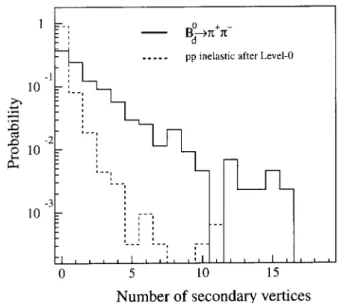
Events with B mesons an be distinguished from
other inelasti ppinterations by the presene of
se-ondaryverties,andpartileswithhightransverse
mo-mentum (p
T
). Thisis illustratedin Fig. 7and Fig. 8.
However,eventswithfully-reonstrutedinterestingbb
nal statesrepresentonly asmallfration ofthe total
bb sample, due to the small branhing ratiosand the
limiteddetetoraeptane. TheLHCbtriggersystem
must therefore be seletive and eÆient in extrating
the small fration of interesting eventsfrom the large
numberofbbandotherppinelastievents.
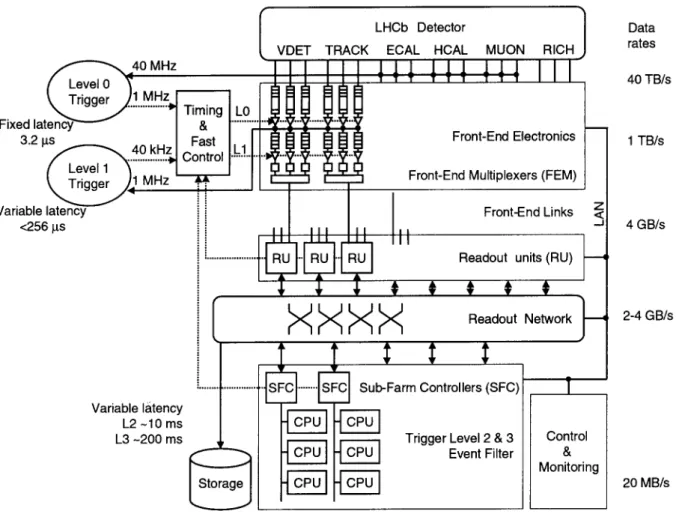
Fig. 9showsthegeneralarhitetureofthetrigger
anddataaquisition(DAQ)system,inludingthemain
dataandontrolowsinvolvedintransportingthe
sub-detetordatafromthefront-endeletronistotheevent
storage. ThemainparametersaresummarisedinTable
3.
Figure 7. Number of seondary-vertex andidates
reon-struted in the Level-1 trigger, for inelasti pp events
(dashed)andB 0
d !
+
events.
Figure8.ThepT distributionsofthehargedhadronswith
the highest pT in the event, for pp inelasti events and
B 0
d !
+
events.
Level-0 omprises three high p
T
triggers,
operat-ing on muons, eletrons and hadrons, together with
a pile-up veto that suppresses bunh-rossings with
morethanoneppinteration. Level-0 operatesat the
bunh-rossingfrequenyof40MHz,andisdesignedto
ahieveatotal suppressionfatorof 40. This inludes
a fatorof about10 suppression of singleinelasti pp
interationsbythehighp
T
trigger.
The Level-0 trigger has a xed lateny of 3.2 s.
This is suÆient to over the exeution time of the
the front-end eletronis ( 1 s). The hoie of
la-teny is ompatible with the standardLHC designof
pipelines(128 steps)inthefront-endeletronis.
Level-1 has two omponents. The rst, the vertex
trigger,seletseventsontainingoneormoreseondary
verties. Theseond,thetraktrigger,seekstoonrm
the high p
T
triggerby searhing for high p
T
traksin
the traking system. Level-1 operates at the Level-0
aept rate, nominally 1 MHz, and has a suppression
fatorof25.
Thetransferofdata from thefront-endeletronis
totheDAQsystemisinitiatedbyapositiveLevel-1
de-ision. The average eventlengthis 100kBand thus
theDAQmustbeabletoopewithdataratesoforder
4GB/s.
The Level-1 lateny is variable and is largely
de-termined by the exeution time of the Level-1
algo-rithm. The proessing-time distribution has an
aver-age of 120s, assuming aCPU powerof 1000 MIPS,
and has longtails. The time fortransferingdata and
broadastingtheLevel-1deisionis 30s. The
max-imum lateny of Level-2 is set to 256 s. The buer
spaerequiredinthefront-endeletronistobridgethe
Level-1 lateny is not a serious issue, sine it an be
implementedasadigitalFIFOandanbeofarbitrary
length.
Level-2 eliminates events with fake seondary
ver-ties, by using momentum information. Fake
ver-ties are typially aused by multiply-sattered
low-momentum traks. Level-2operatesattheLevel-1
a-eptrate,nominally40kHz,andahievesasuppression
fator of 8. It orrelates information from the vertex
detetor andtrakingstations.
TheLevel-2latenyisdeterminedbytheexeution
time of thealgorithm. Thereis learinterest tomake
this as eÆient as possible, in order to minimise the
required installed CPU power, asthe triggeroperates
at 40 kHz. An average lateny of 10 ms is required,
assuming a CPU power of 1000 MIPS. The buering
requirementsin the readoutunits areestimated to be
50eventsforeverymsoflateny,and aretherefore
notaritialissue.
Level-3 uses full and partial reonstrution of nal
statestoseleteventsassoiatedwithspeib-hadron
deaymodes. Itmakesuse ofinformationfrom all
de-tetor omponents, inludingthe RICH. The
suppres-sionfatorofLevel-3is25andthedatareordingrate
is200Hz.
The Level-3 lateny is estimated from existing
re-rateof 5kHz,this givesadeployedCPU power
re-quirement of 10 6
MIPS. Again, buer apaity is not
aritialissue, aseah CPU reeivesonly 30Hz of
events.
Table3. Trigger/DAQparameters.
Parameter Value
Readouthannels 950,000
Averageeventsize 100kB
AverageLevel-0aeptrate 1MHz
Level-0lateny(xed) 3.2s
AverageLevel-1aeptrate 40kHz
Level-1lateny(variable) <256s
Front-endLinks 165
ReadoutUnits(RUs) 120
EventBuildingbandwidth 2-4GB/s
Sub-farmControllers(SFCs) 120
AverageLevel-2proessingtime 10ms
(ona1000MIPSCPU)
AverageLevel-2aeptrate 5kHz
AverageLevel-3proessingtime 200ms
(ona1000MIPSCPU)
AverageLevel-3aeptrate 200Hz
Datastoragerate 20MB/s
Trigger system
III.2.1Level-0 alorimeter triggers
Theeletrontriggerrequiresisolatedshowersinthe
ECAL,togetherwithorrelatedhits in thepad
ham-ber (M1) in front of the alorimeter, and energy
de-position in the Preshower. Simulation shows that a
suppression fator of 100 for inelasti pp interations
an be ahieved with an E
T
threshold of 2.34 GeV,
whilstmaintaining aneÆieny of morethan 19%for
B ! e+X events, for whih the eletron hits the
alorimeter. A photon trigger is implemented by
re-quiring a higher E
T
threshold and no orrelated pad
hamber hits. For example, a suppression fator of
150anbeahievedforinelastippeventswithaut
of4GeV,whilstretaining22% ofB 0
d !K
0
where
thedeayprodutsarewithinthedetetoraeptane.
Eventswithhigh E
T
in theHCAL areaeptedin
or-dertoseletBdeaystohadroninalstates. Autof
E
T
>2:4 GeVretains 60%ofthe B 0
d !
+
events
thatanbereonstrutedoine,whilstsuppressingthe
bakgroundbyafatorof17.
Threedierentapproahestotheimplementationof
thesetriggersareunderinvestigation.
The rst approah (3D-Flow) uses programmable
ASIC'sassembledintoplanarlayers,eahproessor
be-ing diretly assoiated with oneor moredetetor
depends on the lateny of the algorithm. Eah
pro-essorexhangesinformationwiththe4nearest
neigh-boursin itslayerinorder toimplementtheluster
al-gorithm. Studiesbasedona33lusteringshowthat
the rst stage of the eletron and photon algorithms
anbeimplementedwitha3D-Flowsystemontaining
4 layers, eah layer omprising 6000 proessors. The
hadron algorithm requires4 layersof 1500 proessors.
The number of additional proessors required to
ol-let theresultsandapplyutsissmallbyomparison.
Simulationstudies show that thetotal exeutiontime
oftheLevel-0algorithmsislessthan1.5s,whihfalls
within thealloatedtime.
Figure9. GeneralarhitetureofthetriggerandDAQsystem.
The seond implementation study, also based on
33 lustering, seeks to exploit the similarity of the
LHCb and HERA-B eletron triggers. Energy
infor-mation that has been digitised and alibrated is sent
from the front-end eletronis into proessing units,
whihmakeextensiveuseoflook-uptables. Speialised
units look for orrelatedhits in the pad hamberand
Preshower,andapplytheE
T ut.
The third approah uses an alternative algorithm,
basedon22lusteringandsearhesforenergy
lus-ters in thefront-endeletronis. Theaimis to redue
tainedisomparabletothatofthealgorithmemployed
bythetwopreviousimplementations.
III.2.2 Level-0 muontrigger
ThemuontriggermustmaintaingoodeÆienyfor
deteting B! +X, whilst suppressing muons from
and Kdeays. The algorithm searhesfor traksin
all ve stations of the muon detetor and imposes a
minimump
T
requirement. Simulationsshowthatap
T
resolution of 230MeV=an be ahieved, whih gives
signal eÆienies of 30% for muons within the
Two implementation studies have been onduted
for the muon trigger. The rst uses the same
3D-Flowarhiteture asthat used in thealorimeter
trig-ger. Data from all 45,000hannels are fed to astak
of proessors omprising three layers for making the
traksearh,eahlayerontaining1300proessors. A
seond, muh smaller,stakof proessorsis neededto
applythenalstepsofthealgorithm.
Theseondapproahaims toexploit thelowtrak
multipliity in the muon hambers by already
identi-fying muon-trakandidates withaoarse granularity
inthefront-endeletronis.Detailedhitinformationis
senttothetriggerunitsonlyfrom thoseregionsin the
viinity of theandidate muon traks. This resultsin
adatasuppressionfatorofabout20. Fullmuontrak
proessingis thenperformedonthesepadhits.
III.2.3 Level-0 pile-upveto
Sine primary verties are spread along the beam
axis with
z
= 5:3 m, multiple primary verties, in
a bunh rossing with more than one pp interation,
anbeidentiedbyreonstrutingthemwithamodest
resolution. Analgorithmhasbeendevelopedtoexploit
the fat that the z oordinate of the primary vertex
anbedeterminedfrom onlytheradialposition ofthe
emergingtraks. Simulationstudiesshowthatavertex
resolution of 1mm alongz anbe obtainedusing the
Pile-upVetoCounter. Theperformaneof thisvetois
suÆient to give an 80% rejetion of bunh-rossings
withtwoormoreppinterations,whilstretaining95%
ofsingleppinterations. Thevertex-basedvetoanbe
omplemented bya alorimeter total energy
measure-ment.
III.2.4 Level-0 deisionunit
Theresultsfrom allLevel-0triggeromponentsare
fedtoasingleunitwheretheyareombinedandanal
deisionis made. Theaeptableombinationsanbe
programmedtogiveexibilityandallowthetriggerto
beadaptedtorunningonditions.
III.2.5 Level-1 vertex trigger
Ther-geometry oftheVertex Detetoris hosen
to failitate the implementation of the vertex trigger
algorithm. Aftertraksarefoundinther-zprojetion
within the 61 degree setors (\2D traks"), they are
ombinedwith other 2Dtraks in the opposite setor
to build two-trak verties. The position of the
pri-mary vertex is determinedby ombining alltwo-trak
verties, givingaresolution of 80 m in z and20 m
in x andy. Theimpatparameterwithrespetto the
primary vertex is then alulated for eah 2D trak,
suhthattraksomingfromtheprimaryvertexanbe
addedfor allremaining 2Dtraksandthe trak is
re-onstrutedinthreedimensions. Finally,thealgorithm
ndsseondaryvertiesthataresigniantlyseparated
fromtheprimaryvertex. Simulationstudiesshowthat
a fator of 25 suppression of inelasti pp interations
anbeahievedwith a45%eÆieny forB 0
d !
+
eventsthatanbereonstrutedoine.
The following implementation is proposed for the
vertex trigger. All Vertex Detetor data for aspei
event, at a redued resolution, are olleted and
dis-pathedtoasingleproessorinaproessorfarm,where
the triggeralgorithm is exeuted entirely in software.
Eah event ontains about 1000 lusters on average,
whihresultsin adataolletionrateof2GB/s.
Pro-essing requirements are estimated from benhmarks
made by running the algorithm on a 180 MHz
Pen-tium CPU. Assuming the Level-1 trigger operates at
1MHz, 120 proessorsof 1000 MIPS CPU apaity
wouldbeneededtoimplementthevertex-trigger
algo-rithm. Themaximum lateny of thealgorithm would
be of the order of 300 s on a 1000 MIPS proessor,
withtheurrentversionofthesoftware. Optimisation
oftheodehasstillto bedoneand thegoalof256s
shouldbeeasilyahievable. Asolutionforthereadout
networkhasbeendevisedandelementsoftheomputer
farmanbeassembledfromommerialomponents.
III.2.6Level-1 trak trigger
Thetrakingdetetorsareusedto rejetfake
high-p
T
traks that passed Level-0, whih originate from
bakground due to seondary interations in detetor
material,partiledeaysandoverlappingshowers. The
traking algorithm uses high-E
T
lusters and traks
foundbyLevel-0asseeds,therebyeliminatingtheneed
for full pattern reognition. Traks are identied by
aseries of bakward extrapolations, starting from the
seed. Aftereahextrapolationtothenexttraking
sta-tion,thetrakparametersarerealulatedusinga
sim-pliedKalmanlter tehnique. It is suÆientto stop
theextrapolationatstationT6wherethetrak
momen-tum is already measured with a resolution of
approx-imately 3%. Simulation shows that the trak trigger
reduesthenumberofinelastiollisionsbyasmuhas
afatorof10whilstretainingbetween50%and80%of
signalevents,dependingontheBdeaymode.
Eah trakingstation willbeequipped witha
pro-essing unit for olleting data and exeuting the
al-gorithm. Appliation-spei hardware would be used
forthepre-proessingstepsand,sinethemaximum
la-tenyis256se,ommerialDigitalSignalProessors
anbeusedforexeutingthealgorithm.
to the Level-1 deision unit. This unit also reeives
information from the Level-0 deision unit. Optimal
ombinations anthen be made basedonall
informa-tionavailablebeforethenalLevel-1deisionisformed.
Thisunit willbeimplementedusinglook-uptables, so
that thetriggeran beadapted to running onditions
andphysisrequirements.
III.2.8 Level-2trigger
Level-2isdesignedtomaththevertexinformation
provided by the Vertex Detetor with the momentum
informationprovidedbythetrakingdetetors. Firstly,
alltraksarereonstrutedin3Din theVertex
Dete-tor, andan initialestimateof themomentum istaken
from thepolar angleofthetrak. Theprimaryvertex
position is found with a resolution of 9 m in x and
y and 38 m in z. Traks in the forward hemisphere
havinganimpatparameterlargerthantwiethe
reso-lution(6traksperevent)arefollowedtostationT5.
The impat parameterand its errorare then
realu-lated usingthemeasuredmomenta. Eventsarekeptif
there are at least three traks withan impat
param-eter greater than 3 times the resolution. Bakground
fromK
S
anddeaysisreduedbyrequiringthatthe
impat parameter is <2 mm. Simulations show that
Level-2 loses very few B-meson events, while it gives
good rejetion oflight quarkevents. Anotherpositive
feature is that it also suppresses bbevents where the
b-hadron deay produts are only partially ontained
insidethedetetoraeptane.
The Level-2 algorithms are exeuted on a farm of
general-purpose proessors. The goal of aLevel-2
la-tenyof10ms/eventshouldbeeasilyahievable,and
thetotalCPUrequirementforLevel-2is410 5
MIPS.
III.2.9 Level-3 trigger
A set of independent algorithms is used to selet
exlusiveb-hadrondeaysaordingto theirtopology.
The lter algorithms are basedon reonstrution and
analysisodes,but sinetheyare appliedin real-time,
nal alibration and alignmentonstantsare not
ne-essarily available and uts are deliberately loosened.
Fitted traks are subjeted to a preise vertex
reon-strution, and, for those trakshavinga largeimpat
parameter, afast RICH pattern-reognitionalgorithm
isexeutedtosearhforkaons. Finallyallinformation
isused tomakeaavourtagandtheinvariantmasses
arealulatedfortheb-hadrondeayofinterest. Ithas
beenfoundthatarejetionfatorof25anbeahieved.
Benhmarksof theLevel-3 algorithmsindiate a total
6
III.3 Data aquisition system
The role of the DAQ system is to read
zero-suppressed data from the front-end eletronis, to
as-sembleomplete eventsand to provide suÆientCPU
power for exeution of the Level-2 and Level-3
algo-rithms. The ow of data through theDAQ systemis
being studied using simulationdata. The input rates
aredeterminedbytheaverageeventsize,whihis100
kB,andtheLevel-1aeptrate,nominally40kHz. This
resultsin atotaldata-aquisitionrateof4GB/s. The
outputrate isgovernedbythenominal Level-3 aept
rate (200Hz), leadingto adata storagerequirement
of20MB/s.
Theurrentdesignontainsthefollowingfuntional
omponents. Readout Units (RU's) reeivedata from
oneormorefront-endlinksandassemblethefragments
belongingtoeahevent. Fulleventbuildingisahieved
by having all RU's dispath their data into a
read-outnetworksuhthatfragmentsbelongingtothesame
eventarriveatthesamedestination. Complete events
are assembled at the destination by a unit alled the
Sub-FarmController. This unitalsohastheroleof
al-loatingeaheventtooneofthefreeCPU'sitmanages,
andtheLevel-2andLevel-3algorithmsareexeutedon
this CPU. Aepted events are written to storage
de-vies.
Twoprotools are being studied for managing the
owofdataandforensuringeventsareassembled
or-retly. Intherstof these(fullreadout),data are
im-mediately routed through the readout network to the
destination as soon as they appear at the RU. Thus
omplete events are immediately made available, and
there is omplete exibility in dening and applying
the high-level trigger algorithms. In the seond
ap-proah(phasedreadout),datafromsubsetsoftheRU's
aresentinseveralphasesorrespondingtothe
require-ments of the high-level triggers. In this approah use
is made of the fat that high-level triggering is
per-formed in a sequene of steps, eah step requiring a
subset of the data. Thus the bandwidth required of
thereadout network anberedued(by50%), sine
data neednotbetransmitted from all detetorsif the
eventanberejeted atanearly stage. Thefull
read-outprotoolissuperiorfrom thepointof viewof
sim-pliityof protool,and theexibility in appliationof
the high-level triggeralgorithms. However,the future
availabilityofhigh-bandwidthnetworktehnologieswill
Thelok,Level-0andLevel-1deisionsmustallbe
transmitted to thefront-end eletronis. TheTrigger,
Timing andControldistributionsystem(TTC),
devel-opedintheontextoftheRD12projetandusedbythe
otherLHCexperiments,analsobeusedforLHCb,
de-spitetheaddedrequirementofdistributingtheLevel-1
deision.
TheDetetorControlSystem(DCS)willbeusedto
monitorandontroltheoperationalstateoftheLHCb
detetor,andtoaquireslowly-hangingdatafromthe
detetor to keepapermanentreordof environmental
parameters. TheDCS willbefullyintegratedwiththe
DAQsystem.
III.4 Computing
Adata-owanalysishasbeenmadeofthe
omput-ingsystem,in ordertoidentifythekeytasksand data
ows. Estimates of omputingrequirementsare made
byanalysingexisting LHCbsimulation,reonstrution
andanalysisprograms,and,inaseswheretheydonot
yet exist, by extrapolations from similar odes
devel-opedbyotherexperiments(suhasHERA-B).Results
showthat thetotalCPUrequirementsneededfor
sim-ulation, for Level-2 and Level-3 triggers, and for
re-onstrution and analysis of simulated and real data,
amounts to 510 6
MIPS. The data-storage
re-quirements for both real and simulated data amount
to 500TBperyear.
Atpresent, LHCbdepends almost entirelyon
en-tral omputing failities for satisfying its omputing
needs. A modest inrease in these needs (50% per
year)isexpeteduptotheendof2000,andtheuseof
entralservies,insideand outsideofCERN, will
on-tinue for this period. There will then be asigniant
inrease in ativity in test beams, and investment in
privateCPUapaityisthereforebeenvisaged.
Invest-mentinfullsalefailitieswillbeleftaslateaspossible,
tobenetfromimprovementsintheprie/performane
ratioofomputingequipment. Itisonsideredthatthe
omputing requirements are within the limits of
ur-renttehnologytrends,andthattheequipmentwillbe
aordable.
Attention will be given to the quality of software,
partiularlyfor the high-level triggeralgorithms. The
extra eort that this implies an be reoveredby
ex-tratingas muh use as possible out of eah software
omponent by ensuringits reuse in allappliation
do-mains. This implies investment in sound engineering
andmanagementpraties. TheLHCbsimulation
pro-gramiswritteninFORTRAN,butwillbere-engineered
usingObjetTehnologies.
Referenes
[1℄ LHCb Tehnial Proposal. LHCb Collaboration,
CERN/LHCC98-4.
[2℄ J.Christensonetal.,Phys.Rev.Lett.13,138(1964).
[3℄ M.KobayashiandK.Maskawa,Prog.Theor.Phys.49,
652(1973).
[4℄ A.D.Sakharov,JETPLett.6,21(1967).
[5℄ See for example, M.B. Gavela et al., Modern Phys.
Lett.A9,795(1994).
[6℄ L.Wolfenstein,Phys.Rev.Lett.51,1945(1983).
[7℄ N.Cabibbo,Phys.Rev.Lett.10,531(1963).
[8℄ R.M. Barnett et al., Phy. Rev.D 54, 1 (1996), and
1997o-yearpartialupdateforthe1998edition(URL:
http://pdg.lbl.gov/).
[9℄ For areent analysis, see for example P. Paganiniet
al.,DELPHI-97-137andLAL-97-79.
[10℄ For a reent review, see A.J Buras and R. Fleisher,
TUM-HEP-275/97(1997).
[11℄ Forreentwork,seeM.GronauandD.London,Phys.
Rev. D 55, 2845 (1997); A.I. Sanda, Z.-Z. Xing ,
Phys.Rev.D56,6866(1997);Y.Grossman,Y.Nir,and
R.Rattazzi,SLAC-PUB-7379(1997);R.Fleisher,7th
Int.Symp.onHeavyFlavourPhysis,SantaBarbara,
CERN-TH-97-241(1997).
[12℄ See for example L. Wolfenstein and Y.L. Wu, Phys.
Rev.Lett.73,2809(1994).
[13℄ P. Cho, M. Misiak and D. Wyler, Phys. Rev.D 54,