of Direted Perolation
Haye Hinrihsen
Theoretishe Physik,Fahbereih10,
Gerhard-Merator-UniversitatDuisburg,
D-47048Duisburg,Germany
Reeived1November1999
Direted perolation is one of the most prominent universality lasses of nonequilibrium phase
transitions and an be found in a large variety of models. Despite its theoretial suess, no
experimentis knownwhihlearly reproduesthe ritialexponentsofdireted perolation. The
presentworkomparessuggestedexperimentsanddisusses possiblereasonswhytheobservation
oftheritial exponentsofdiretedperolationisobsuredorevenimpossible.
I Introdution
Physial phenomenafar from thermalequilibrium are
very ommon in nature. For example, many systems
aresubjetedtoanexternalowofenergyorpartiles
whih keeps them away from equilibrium. Similarly,
dynamisystemsstartingwithanonequilibriuminitial
state may need a long time to reah thermal
equilib-rium. Theoriesofsystemsoutofequilibrium aremore
diÆultthanequilibriumstatistialmehanissinethe
partition sumis no longer given by theGibbs
ensem-ble. Onthe other hand, nonequilibrium systemsmay
exhibit a potentially riher behavior than systems at
thermal equilibrium. Therefore, thestudy of
nonequi-librium phenomena isa eldof growinginterest,both
theoretiallyandexperimentally.
Apartiularly interestingtopi is theinvestigation
of phasetransitionsfar fromequilibrium [1℄. The
the-oretial interest in nonequilibrium phase transitions
mainly stemsfromtheemergeneof universalfeatures
oftheassoiatedritialbehavior. Theoneptof
uni-versalitywasoriginally introdued byexperimentalists
in the ontext of equilibrium systems in order to
de-sribe the observation that order parameters of
vari-ousapparentlyunrelatedsystemsmaydisplaythesame
type of singular behavior near the transition. These
singularitiesareassoiatedwithaertainsetofritial
exponentswhih haraterizestheuniversalitylassof
thetransition. Thesubsequent developmentof
power-fultheoretialoneptssuhassaling,renormalization
group,andonformalinvarianesupportedthis
hypoth-esisandestablisheduniversalityasaparadigmof
equi-Beause of this suess, theoretial physiists are
nowadays trying to transfer the idea of universality
to nonequilibrium phase transitions. However, in the
nonequilibrium asetheemerging pitureremainsless
lear. Althoughuniversalityertainlyexistsonthelevel
ofsimplemodels,theexperimental evideneof
univer-sal behavior under nonequilibrium onditions is still
verypoor.Therefore,itisnotyetknowntowhatextent
theoneptof universalityanbeapplied to
nonequi-libriumritialphenomena.
An important example is the universality lass of
Direted Perolation (DP) whih desribes ontinuous
phasetransitionsfromaspreading(wet)phaseintoan
absorbing(dry)state[2℄. TheDPuniversalitylass is
extremelyrobustwith respetto thehoie ofthe
dy-nami rulesand oversalarge varietyof models with
appliationsrangingfromatalytireations[3℄and
in-terfaegrowth[4℄ to turbulene [5℄. Theobserved
ro-bustnessledJanssenandGrassberger[6℄tothe
onje-turethat aontinuous phasetransition from a
utu-atingativephaseintoasingleabsorbingstateshould
belong to theDPuniversalitylass, providedthat the
model uses short-range dynamis without speial
at-tributes suh as additional symmetries or quenhed
randomness. In fat,DP is theanonial universality
lassfornonequilibrium phasetransitions into
absorb-ing states. Thus it may be as important as the Ising
universalitylassin equilibriumstatistialmehanis.
Despitethissuessintheoretialstatistialphysis,
theritialbehaviorofDP,espeiallythesetofritial
exponents,hasnotyet beenonrmedexperimentally.
bergeremphasizesin asummary onopenproblems in
DP[7℄:
"...there is still no experiment where the
ritial behavior of DP was seen. This is
a very strange situationin view of the vast
and suessive theoretial eorts made to
understand it. Designing and performing
suhanexperimenthas thustoppriority in
my list of open problems.".
Theaimofthepresentworkisto reviewthemost
im-portant experimentswhih havebeen suggestedsofar
and todisuss their spei problems whih ould
ob-suretheveriationof theritialexponents. Aftera
briefintrodutiontoDPinSet.IIwewillrstdisuss
ertainatalytireationsontwo-dimensionalsurfaes
whihmimithedynamirulesofDP.Asdesribedin
Set. IV, DP may also be realized in ertain wetting
experimentswheretheinterfaebetweenairandliquid
undergoesadepinningtransition. Anotherpossible
re-alization may beprovided by systemsof owingsand
on an inlined plane (see Set. V). However, in none
ofthese experimentsouldthepreditedritial
expo-nentsbeonrmedonviningly.
Whatmightbe thereasonfortheapparentlakof
experimental evidene? It seems that the basi
fea-tures of DP, whih an easily be implemented on a
omputer,are quite diÆultto realizein nature. One
of these theoretialassumptions is theexistene ofan
absorbing state. In real systems, however, a perfet
non-utuatingstateannotberealized. Forexample,
apoisonedatalytisurfaeisnotompletelyfrozen,it
willratheralwaysbeaetedbysmallutuations.
Al-thoughtheseutuationsarestronglysuppressed,they
ould still be strong enoughto `soften' the transition,
makingitimpossibletoquantifytheritialexponents.
Anotherreason mightbethe inueneof quenhed
disorder due to spatial or temporal inhomogeneities.
Inmostexperimentsfrozenrandomnessisexpetedto
play a signiant role. For example, a real atalyti
surfaeis notfully homogeneousbut haraterizedby
ertain defets leading to spatially quenhed disorder.
As shown in Ref. [8℄, this type of disordermay aet
oreven destroy theritial behaviorof DP. Tehnial
details onerning quenhed disorder are summarized
intheAppendix.
II Direted Perolation
DiretedperolationwasintroduedbyBroadbentand
Hammersley[9℄in1957asananisotropivariantof
or-roksinagravitationaleld. Assumingthatwateran
only movedownwards,the permeabilityof arokwill
depend on the average onnetivity of its pores. One
ofthe simplestmodels isdiretedbondperolation. As
showninFig.1,neighboringsites(pores)ofadiagonal
squarelattieareonnetedbybonds(hannels)whih
are openwith probabilitypand otherwiselosed.
Be-ause of the gravitationaleld, the bonds funtion as
`valves'whereforethespreadingagentan only
pero-late along the given diretion, asindiated bythe
ar-rows.
Figure 1. Direted bond perolation onadiagonal square
lattie. Open (losed) bonds are represented as solid
(dashed)lines. Thespreadingagent,introduedatthesite
markedbytheirle,owsdownwardsthroughopenbonds,
generatingaertainluster(boldbonds).
Depending on the atual onguration of open
bonds,eahsitegeneratesaertainlusterofonneted
sites. A luster of this kind would orrespond to the
maximalspreadingrangeifthewaterwasinjetedinto
a single pore. Below a ertain threshold p < p
all
lusters arenite, i.e., thematerialis impermeable on
largesales. However,abovetheritialvaluealuster
may beome innite so that water an perolate over
arbitrarilylongdistanes(f. Fig.2).
Figure 2. Typial DP luster starting from a single seed
below,at,andaboveritiality.
Regarding the given diretion as `time', DP may
be interpreted as ad+1-dimensional dynami proess
desribingthespreadingofsomenon-onservedagent.
Forexample,wemayenumeratethesitesinFig.1
hor-izontally bya spatial oordinate i and vertially by a
disretetimevariablet. Then,foragivenstateattime
sites as vaanies _, the partiles an either destroy
themselves or produe an ospring. Moreover, if two
partilesreahthesamesite,theyoagulatetoasingle
partile. Therefore,DPmayberegardedasa
reation-diusion proess
diusion: _+A!A+_;
self-destrution: A!_;
ospringprodution: A!A+A;
oagulation: A+A!A:
(1)
Depending on the ratio between ospring prodution
andselfdestrution,theproessmayeitherremain
a-tiveorreahtheemptystatefromwhere itannot
es-ape. This is theso-alledabsorbingstate of DP
sys-tems. ForaspeialrealizationofDP,theso-alled
on-tat proess [12℄, theexistene ofa ontinuous
transi-tion between survival and extintion ould be proven
rigorously[13℄. Nearthetransitionthestationary
den-sityofativesitesvanishesasapowerlaw
stat
(p p
)
; (2)
where is the ritial exponent assoiated with the
order parameter. Moreover,theDPproess is
har-aterizedbyaspatialandatemporalorrelationlength
divergingatthetransitionas
?
jp p
j
?
;
k
jp p
j
k
: (3)
As already mentioned, a largevarietyof modelsshow
essentiallythesamepropertiesatthetransition,
form-ingtheDPuniversalitylass. TheDPlassorresponds
toaspeieldtheory[14℄andisharaterizedbythe
three ritial exponents ;
? ;
k
. Despite its
simpli-ity,DPhasnot yet beensolvedexatly. However,the
ritialexponentsaneasilybeestimatedbyomputer
simulations. Themostaurateestimates are
summa-rizedinTableI.Notiethatind>4spatialdimensions
utuationsbeomeirrelevantsothattheexponentsare
givenbytheirmeaneldvalues.
III Catalyti reations
It is well known that under spei onditionsertain
atalyti reations mimi themirosopi rules of DP
models. For example, the Zi-Gulari-Barshad(ZGB)
model,whihwasdesignedinordertodesribethe
at-alyti reation CO + O ! CO
2
on a platinum
sur-fae [3℄,displaysaDPtransition. IntheZGBmodela
gasomposedofCO andO
2
moleules withxed
on-entrations y and 1 y, respetively, is brought into
ontatwithaatalytimaterial. Theatalytisurfae
by an O atom. CO moleules ll any vaant site at
ratey,whereasO
2
moleulesdissoiateonthesurfae
intotwoOatomsandllpairsofadjaentvaantsites
at rate1 y. Finally, neighboring CO moleules and
OatomsreombineinstantaneouslytoCO
2
anddesorb
from the surfae. On the lattie the three proesses
orrespondtothereationsheme
_!CO atratey ,
_+_!O+O atrate1 y , (4)
O+CO!_+_ atrate1 .
Therefore, if the whole lattie is entirely overed
ei-therwithCOorO,thesystemistrappedina
atalyt-ially inative state. These `poisoned' states are the
two absorbing ongurations of the ZGB model. As
shownin Fig.3,theorrespondingphasediagram
dis-plays two absorbing phases. Fory < y
1
' 0:389 the
system evolves into the O-poisoned state whereas for
y>y
2
'0:525italwaysreahestheCO-poisonedstate.
Betweenthesetwovaluesthemodelisatalytially
a-tive. Thetwotransitionsintotheabsorbingphasesare
dierentin harater, namelydisontinuous at y =y
2
and ontinuous at y =y
1
(see Fig. 3). Motivated by
the DP onjeture, Grinstein et al. [15℄ expeted the
latterto belong to theDPuniversalitylass. In order
to verify this hypothesis, extensive numerial
simula-tionswereperformed. Initiallyitwasbelievedthatthe
ritialexponentsweredierentfromthoseofDP[16℄,
whilelaterthetransitionaty=y
1
wasfoundtobelong
to DP [17℄. Verypreise estimates of the ritial
ex-ponentswerereentlyobtainedinRef. [18℄,onrming
theDPonjeture. DPexponentswerealsoobtainedin
asimpliedversionoftheZGBmodel[19℄. These
the-oretialmodelsthereforesuggestthat ertainatalyti
reationsould serveasan experimental realization of
DP.
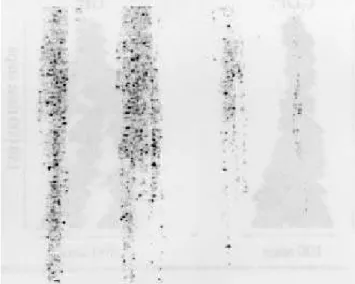
Figure3.Catalytireationsintheory(left)andexperiment
(right). The shemati graphsshow the onentrations of
oxygen(solidline)andarbonmonoxide(dashedline)asa
0:276486(8) 0.584(4) 0.81(1) 1
? 1:096854(4) 0.734(4) 0.581(5) 1=2
k
1:733847(6) 1.295(6) 1.105(5) 1
Table I.Numerialestimatesfor theritialexponentsofdiretedperolationind+1dimensions.
In real atalyti reations, however, only the
dis-ontinuoustransition at y =y
2
anbeobserved. The
shematigraphontheright-handsideofFig.3shows
thereationratesasfuntionsoftheCOpressure
mea-suredin aatalytireationonaPt(210)surfae[22℄.
Although theexperiment wasdesigned in order to
in-vestigatethetehnologiallyinterestingregimeofhigh
ativity lose to the rst-order phase transition, it
learly indiates that poisoning with oxygen does not
our. Insteadthe reativity inreasesalmost linearly
withtheCOpressure. Similarresultswereobtainedfor
Pt(111)andforother atalytimaterials. Thus, sofar
thereisnoexperimentalevidenefortheDPtransition
preditedbytheZGBmodel.
One may speulate why the DP transition is
ob-sured or even destroyed under experimental
ondi-tions. Apossiblereasonmightbethereationhain
be-ingmuhmoreompliatedthanintheZGBmodel[23℄.
Moreover,theO-poisonedsystemmightnotbeina
per-fetabsorbingstate,i.e.,thesurfaeanstilladsorbCO
moleulesalthoughitissaturedwitharbonmonoxide.
Anotherpossibilityisthermal(nonreative)desorption
of oxygen whih {in theDP language{would
orre-spondtospontaneousreationofativesites duetoan
externaleld[24℄. Finally,defetsandinhomogeneities
oftheatalytimaterialouldleadtoaneetive
(spa-tiallyquenhed)disorder. As shownin theAppendix,
thistypeof disorderis marginal. It antherefore
seri-ously aet theritial behaviorand even modifythe
valuesof theexponents.
ForalongtimemirosopidetailswerediÆultto
study experimentally. However,novel tehniques suh
assanningtunnelingmirosopy(STM)ledtoan
enor-mous progress in the understanding of atalyti
rea-tions. Theyalsopointatvariousunexpetedsubtleties.
For example,reent experimentsrevealed that the
re-ationspreferablytakeplaeattheperimeterofoxygen
islands[25℄. Furthermore,itwasobservedthatthe
ad-sorbedCOmoleulesonPt(111)mayformthree
dier-entrotational patterns representingthe (42)
stru-ture of CO on platinum, leading to three ompeting
absorbing states [26℄. Moreover, the STM tehnique
allowsoneto traeindividual moleularreationsand
to determine theorrespondingreation rates. In
ad-dition, theinuene ofdefets suh asterraeson
at-Wemaythereforeexpetaonsiderableprogressinthe
understandingofatalytireationsinnearfuture.
IV Growing interfaes
Various models for interfae growth exhibit a
rough-ening ordepinning transition whih an be related to
DP. InthisSetion wedisussthree examples,namely
transitions of depinning interfaes in random media,
polynuleargrowthproesses,andsolid-on-solidgrowth
withevaporationattheedgesofplateaus.
IV.1 Depinning transitions
Depinning transitions of driven interfaes provide
a very promising lass of experiments whih ould be
related to DP [28℄. In these experiments a liquid is
pumpedthroughaporousmedium. Ifthedrivingfore
F is suÆiently low the liquid annot move through
the medium sinethe air/liquid interfaeis pinned at
ertainpores. Abovearitialthreshold,however,the
interfaestartsmovingthroughthemediumwithan
av-erage veloityv. Close tothetransition, v isexpeted
to saleas
v
F F
F
; (5)
whereistheveloityexponent. Moreover,inthe
mov-ingphaseF >F
theinterfaeroughnessaveragedover
length`shouldobeytheusualsalinglawfor
roughen-inginterfaes[29℄
w(`;t)`
f(t=` ~ z
); (6)
where is theso-alled rougheningexponent. Oneof
therstexperimentsin1+1dimensionswasperformed
by Buldyrev et al., whostudied the wetting of paper
in a basin lledwith suspensionsof ink oroee [30℄.
Measuring the interfae width they found the
rough-ness exponent = 0:63(4). In various other
exper-iments the valuesare sattered between0:6 and 1:25.
ThisissurprisingsinetheKardar-Parisi-Zhang(KPZ)
lass[31,32℄,theanonialuniversalitylassfor
rough-ening interfaes,preditstheexponent=1=2whih
issmallerthantheexperimentallyobservedvalues.
It is believed that the large values of are due
tion, it rather propagates by avalanhes. In the
lit-erature two universality lasses for this type of
inter-faial growth have been proposed. In ase of linear
growththeinterfaeshould bedesribed byarandom
eld Ising model [33℄, leadingto theexponents=1,
~
z =4=3,and =1=3in 1+1dimensions. Inthe
pres-eneofaKPZ-typenonlinearity,however,the
roughen-ingproessshouldexhibitadepinning transitionwhih
is related to DP [4, 34℄. Notie that the underlying
DP mehanism of depinning transitions diers
signif-iantly from an ordinary direted perolation proess
in aporous medium subjetedto agravitationaleld
(f. Set.VI). Inthe latter ase the spreadingagent
is restrited to perolate along a given diretion, i.e.,
theowis stritlyunidiretional. Indepinning
experi-ments,however,watermayowbothalongthe
pump-ing fore and {even moreeasily { in the opposite
di-retion,aswillbeexplainedbelow.
Asimplemodelexhibitingadepinningtransitionis
shown in Fig. 4. In this model the pores are
repre-sentedbyellsof adiagonalsquare lattie. Theliquid
an ow to neighboring ellsby rossing the edges of
the ell. Depending on thediretion of theowthese
edges an either beopenor losed. Forsimpliity we
assume thatall edgesarepermeable in downwards
di-retion,whereasinupwardsdiretiontheyanonlybe
rossed with a ertain probability p. Thus, by
start-ing with a horizontal row of wet ells at the bottom,
weobtainaompatlusterof wet ells,asillustrated
in Fig. 4. The size of the luster (and therewith the
penetrationdepth ofthe liquid)depends on p. If pis
largeenough,thelusterisinnite,orrespondingtoa
movinginterfae. IfpissuÆientlysmall,thelusteris
boundfrom above,i.e.,theinterfaebeomespinned.
Figure 4. Simple model exhibitinga depinningtransition.
Theporesarerepresentedbyellsonadiagonalsquare
lat-tie. Thepermeabilityarosstheedgesoftheellsdepends
on the diretion of ow: In the downwards diretion all
edgesarepermeablewhereasintheupwardsdiretionthey
are permeable withprobability p and impermeable
other-wise. Therightpanelofthegureshowsapartiular
ong-urationofopen(dashed)andlosed(solid)edges. Pumping
inwaterfrombelow,theinterfaebeomespinnedalong a
diretedpathofsolidlines,leadingtoanitelusterofwet
ells(shadedregion). Thedashedarrowrepresentsanopen
Asanseeninthegure,apinnedinterfaemaybe
in-terpreted asa direted path along impermeable edges
runningfromoneboundaryofthesystemtotheother.
Obviously, the interfae beomes pinned only if there
exists adireted path of impermeable bonds
onnet-ingtheboundariesofthesystem. Henethedepinning
transitionis relatedto anunderlying DPproess
run-ningperpendiulartothediretionofgrowth. The
pin-ningmehanismisillustratedin Fig.5,wherea
super-ritialDP luster propagates from left to right. The
luster's bakbone, onsisting of bonds onneting the
twoboundaries,isindiatedbybolddots. Theshaded
regiondenotestheresultinglusterofwetells. Asan
beseen,theinterfaewillbepinnedatthelowestlying
branhoftheDPbakbone. Therefore,theroughening
exponentoinideswiththemeanderingexponent
=
? =
k
(7)
ofthebakbone.Moreover,byanalyzingthedynamis
of themoving interfae, it anbe shownthat the
dy-namiritialexponentsaregivenby=and~z=1.
Thus, depinning transitions in inhomogeneous porous
mediamayserveasexperimentalrealizationsoftheDP
universalitylass.
Figure5. Pinnedinterfaeand theunderlyingDPproess.
Thegureisexplainedinthetext.
Comparing thepredition (7) with the result =
0:63(4)obtainedbyBuldyrevetal.[30℄wendan
ex-ellentoinidene,onrmingthevalidityofthemodel
introdued above. Therefore, this experiment an be
regardedasarstexperimental evidene of DP
expo-nents. However,only one exponenthas beenveried,
anditisnotfullylearhowaurateand reproduible
theseexponentsare. Furtherexperimentaleortinthis
diretionwould bedesirable.
Similarexperimentswerearriedoutin2+1
dimen-sions with a spongy-like material used by orists, as
wellasne-grainedpaperrolls[35℄. Inthisase,
In experiments as well as in numerial simulations a
roughnessexponent=0:50(5)wasobtained.
Inorder to perform adepinning experimentwhih
an easily be reprodued, Dougherty and Carle
mea-sured the dynamial avalanhe distribution of an
air/water interfaemoving through a porous medium
madeofglass beads [36℄. Assuminganunderlying DP
proess,thedistributionP(s)ofavalanhesizessis
pre-ditedtobehavealgebraially. Intheexperiment,
how-ever,astrethedexponentialbehaviorP(s)s b
e s=L
isobservedevenforsmallowingrates. Theestimates
for the exponent b are inonlusive; they depend on
thetimewindowofthemeasurementandvarybetween
0:5 and0:85. Evenmorereently Albert et al.
pro-posed a method allowing to identify the universality
lass by measuringthe propagation veloity of loally
tilted partsof theinterfae [37℄. Their resultssuggest
that interfaespropagating in glassbeads are not
de-sribed by a DPdepinning proess, but to berelated
instead to the random-eld Ising model. From the
theoretial pointof view thisis surprising sine linear
growthof theinterfaeis aspeialasewhihrequires
ne-tuningof ertain parameters. Further
experimen-taleortwouldbeneededtounderstandthesendings.
IV.2 Polynulear growth
A ompletely dierent DP mehanism is
responsi-ble for rougheningtransitions in so-alled polynulear
growth (PNG) models [38, 39, 40℄. A key feature of
PNG models is the use of parallel updates, leading to
a maximal propagation veloityof one monolayerper
time step. For ahigh adsorption ratethe interfae is
smooth, propagating at maximal veloity v =1.
De-reasing the adsorption rate below a ertain ritial
threshold,PNGmodelsexhibitarougheningtransition
to arough phase with v < 1. In ontrast to
equilib-riumrougheningtransitions, whihonlyexist ind2
dimensions,PNGmodelshavearougheningtransition
eveninonespatialdimension.
Figure6. Polynulear growthmodel. Inthe rsthalftime
stepatomsare depositedwithprobabilityp. Intheseond
halftimestepislandsgrowdeterministiallybyonestepand
oalese.
Probablythe simplest PNG model investigated so
far is dened by the following dynami rules [38℄. In
h
i
(t+1=2)=
h
i
(t)+1 withprob. p;
h
i
(t) withprob. 1 p: (8)
Intheseondhalftimesteptheislandsgrow
determin-istially in lateraldiretion by onestep. This typeof
growthmaybeexpressedbytheupdaterule
h
i
(t+1)= max
j2<i>
h
i
(t+1=2);h
j
(t+1=2)
; (9)
wherej runs overthenearestneighborsofsite i.
The relation to DP an be established as follows.
Startingfromaatinterfaeh
i
(0)=0,letusinterpret
sitesatmaximalheighth
i
(t)=tasativesitesofaDP
proess. Theadsorption proess (8) turns ativesites
intotheinativestatewithprobability1 p,whilethe
proess (9) resemblesospring prodution. Therefore,
ifp islargeenough,the interfaeis smoothand
prop-agates with maximal veloity v = 1. This situation
orresponds to the ative phase of DP. Therefore, we
expet the density of sites at maximal heightto sale
as
1
N X
i Æ
h
i t
(p p
)
; (10)
where N denotes the system size. Below a ritial
threshold, however, the density of ative sites at the
maximumheighth
i
(t)=t vanishes; thegrowth
velo-ity is smaller than 1 and the interfae evolves into a
rough state. Althoughthis mappingto DPis not
ex-at,numerialsimulationssuggestthatitstillremains
valid ona qualitative level. Morespeially, itturns
outthat PNGmodelsarerelatedto aunidiretionally
oupledhierarhyofDPproesses[41℄.
Aloselyrelatedlass ofmodels wasintrodued in
ordertodesribethegrowthofolonialorganismssuh
asfungiandbateria[42℄,motivated byreent
experi-mentswiththeyeastPihiamembranaefaienson
solid-ied agaroselm[43℄. Byvaryingtheonentrationof
pollutingmetabolites,dierentfrontmorphologieswere
observed. Themodelproposedin [42℄aims toexplain
thesemorphologialtransitionsonaqualitativelevel. A
arefulanalysis of thedynami rulesshowsthat
mod-elsforfungalgrowthandPNGmodelsareverysimilar
in harater. Theybothemployparalleldynamisand
exhibitaDP-relatedrougheningtransition.
ConerningexperimentalrealizationsofPNG
mod-els,onemajorproblem{apartfromquenheddisorder
{istheuse ofparallelupdates. Thetypeof updateis
ruial; by using random-sequentialupdates the
tran-sition is lost sine in this ase there is no maximum
veloity. However, in realisti experiments atoms do
notmovesynhronously,buttheadsorptioneventsare
ran-questiontowhatextentPNGproessesanberealized
innature. Infat,itwouldbeinterestingtoseeifPNG
anbegeneralizedto random-sequentialdynamis.
IV.3 Growth with evaporation at the
edges of plateaus
DP-related rougheningtransitions an also be
ob-served in ertain solid-on-solid growth proesses with
random-sequentialupdates [44, 45℄. As a keyfeature
of these models, atoms may desorbexlusivelyat the
edgesofexistinglayers,i.e.,atsiteswhihhaveatleast
one neighboratalowerheight. Byvaryingthegrowth
rate, suhgrowthproessesdisplayaroughening
tran-sition from a non-moving smooth phase to a moving
roughphase.
Asimplesolid-on-solidmodelforthistypeofgrowth
isdenedbythefollowingdynamirules[44℄: Foreah
update a site i is hosen at random and an atom is
adsorbed
h
i !h
i
+1 withprobabilityq (11)
or desorbedattheedge ofaplateau
h
i
!min (h
i ;h
i+1
) withprobability(1 q)=2;
h
i
!min (h
i ;h
i 1
) withprobability(1 q)=2:
(12)
Moreover, the growth proess is assumed to be
re-strited,i.e.,updatesareonlyarriedoutiftheresulting
ongurationobeystheonstraint
jh
i h
i1
j1: (13)
Thequalitativebehaviorofthismodelisillustrated
in Fig. 7. For small q the desorption proesses (12)
dominate. If all heights are initially set to the same
value,thislevelwillremainthebottomlayerofthe
in-terfae. Small islands will growon topof the bottom
layerbutwillbequiklyeliminatedbydesorptionatthe
islandedges. Thus,theinterfaeiseetivelyanhored
to itsbottom layerandasmoothphaseismaintained.
The growthveloityv is thereforezeroin the
thermo-dynamilimit. Asqisinreased,moreislandsontopof
the bottom layerare produeduntil aboveq
'0:189,
theritialvalueofq,theymergeformingnewlayersat
anite rate, givingriseto anite growthveloity. In
an innite system the growth veloity salesnear the
transition as
v 1
k
(p p
)
k
: (14)
Sine the propagation veloity utuates loally, the
interfae evolves into a rough state aording to the
therestrition(13).
Figure 7. Restrited solid-on-solid growth model
exhibit-ing a roughening transition from a non-moving smooth
to a moving rough phase. Monomers are randomly
de-posited whereas desorption takes plae only at the edges
ofplateaus.
Atthe transition the dynamis of themodelis
re-latedtoDPasfollows. Startingwithaatinterfaeat
zeroheight,letusonsiderallsiteswithh
i
=0as
par-tilesAofaDPproess. GrowthaordingtoEq.(11)
orrespondstospontaneousannihilation A!_ .
Con-versely,desorptionmaybeonsideredasapartile
re-ation proess. However, sineatoms may onlydesorb
at the edges of plateaus, partile reation requires a
neighboringativesite,orrespondingtoospring
pro-dutionA ! 2A. These rulesresemble (although not
exatly)thedynamis ofaDPproess. Inontrast to
PNG models, the DP proess takesplae at the
bot-tom layerof the interfae. Moreover, the roughening
transitiondoesnotdependontheuseofeither parallel
orrandom-sequentialupdates. However, ifomposite
partilesinsteadofmonomersaredepositedonthe
sur-fae,theuniversalitylassmayhangeduetoadditional
symmetries[46℄.
Withrespettoexperimentalrealizationsofthe
dy-nami rules (11)-(12) we note that atoms are not
al-lowed to diuse on the surfae. This assumption is
ratherunnaturalsineinmostexperimentstheratefor
surfaediusionis muh higherthan theratefor
des-orptionbak into thegas phase. Therefore, it will be
diÆulttorealizethistypeofhomoepitaxialgrowth
ex-perimentally. However,in adierentsetup, theabove
model ould well be relevant [47℄. As illustrated in
Fig.8,alaterallygrowingmonolayerouldresemblethe
dynamirules(11)and(12)byidentifyingtheedge of
themonolayerwiththeinterfaeof thegrowthmodel.
In this ase 'surfae diusion', i.e. diusion of atoms
alongtheedge ofthe monolayer,is highly suppressed.
Moreover,insingle-step systems(suhasf(100)
re-proessdenedinEqs.(11)and(12)bylateralgrowthofa
monolayeronasubstrate.
V Flowing granular matter
Ithasbeenshownreentlythatsimplesystemsof
ow-ing sand on an inlined plane, e.g. the experiments
performed by Douady and Daerr [48, 49℄, ould serve
asexperimentalrealizationsofDP[50℄. Inthe
Douady-Daerr experimentglass beads with adiameter of
250-425marepoureduniformly atthetopofaninlined
planeoveredby aroughvelvet loth (seeFig.9). As
the beads ow down, athin layersettles and remains
immobile. Inreasingtheangle ofinlination by
the layer beomes dynamially unstable, i.e., by
lo-ally perturbingthesystemat thetopoftheplanean
avalanheofowinggranularmatterwillbegenerated.
In the experimentthese avalanhes havethe shape of
a fairly regular triangle with an opening angle . As
the inrement ' dereases, the value of dereases,
vanishingas
tan(') x
(15)
with a ertain ritial exponent x. The experimental
resultssuggestthevaluex=1[49℄.
Inordertoexplaintheexperimentallyobserved
tri-angular form of theavalanhes, Bouhaud et al.
pro-posedamean-eldtheorybasedondeterministi
equa-tions taking the atual loal thikness of the owing
avalanhe into aount [51℄. This theory predits the
exponentx =1=2. Anotherexplanation assumesthat
owingsandmaybeassoiatedwithanearest-neighbor
spreadingproess[50℄. Consideringtheavalanheasa
luster ofativesites whileidentifying thevertial
o-ordinate of the plane with time and the inrement of
inlination'withp p
theopeningangleisexpeted
tosaleas
tan
? =
k
(')
k ?
; (16)
where
k and
?
are the saling exponents of the
Figure 9. Simplied drawing of the Douady-Daerr
exper-iment. At a given angle a layer of a ertain thikness
settles. Perturbingthelayerloallywithastikleadstoan
avalanheofowingsand.
To support this saling argument, a simple lattie
modelwasintroduedwhihmimisthephysisof
ow-ingsand[50℄. Themodelexhibitsatransitionfrom an
inativetoanativephasewithavalanheswhose
om-pat shapes reprodue the experimental observations.
On laboratory salesthe model preditsthe exponent
x =1, orresponding tothe universalitylass of
om-pat direted perolation (CDP) whih isharaterized
bytheexponents[52℄
k
=2;
?
=1; =0: (17)
The CDP behavior, however, is only an initial
tran-sient and rosses over to DP after a very long time.
ThustheDouady-Daerrexperiment{performedon
suf-ientlylargesales{mayserveasaphysial
realiza-tion of DP. Irregularities of the layers thikness may
aetthespreadingpropertiesofavalanhes. However,
suh inhomogeneities an be onsidered as a kind of
spatio-temporallyquenheddisorderwhihisirrelevant
onlargesales(seeAppendix). Thus,inontrasttothe
previous examples, the problem of quenhed disorder
doesnotplayamajorroleinthistypeofexperiments.
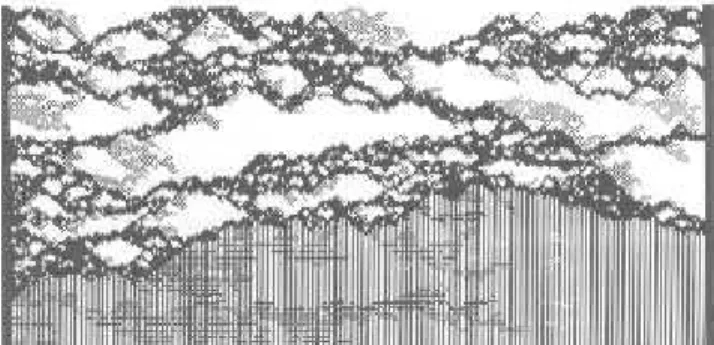
The rossover from CDP to DP is very slow and
presently not aessiblein the experiments. To
illus-tratethe rossover,twoavalanhesare plotted on
ever,asshownintherightpanelofFig.10,theluster
breaks upinto severalbranhesafteraverylongtime.
As a preondition for DP behavior, initially ompat
avalanhesshouldthusbeabletobreakupintoseveral
branhes. Onlythenisitworthwhiletooptimizethe
ex-perimentalsetupandtomeasuretheritialexponents
quantitatively.
Figure10. Typiallustersgeneratedatritialityonsmall
andlargesales,illustratingtherossoverfromCDPtoDP.
Morereentexperimental studies[53℄ onrmthat
forhighanglesofinlinationritialavalanhesdosplit
up into several branhes (see Fig. 11). Yet here the
avalanheshavenowell denedfront,thepropagation
veloity of separate branhes rather depends on their
thikness. Itisthereforenolongerpossibletointerpret
the vertial axisas atime oordinate. Moreover,itis
not yet known howthe spreading proess depends on
orrelationsin theinitial state. As shown inRef. [54℄,
suh long-rangeorrelationsmayhange thevaluesof
ertain dynami ritial exponents. However, reent
studies of a single rolling grain on an inlined rough
plane [55℄ support that thereare presumably no
long-range orrelationsdue toa`memory' ofrollinggrains.
By means of moleular dynamis simulations it was
shown that the motion of a rolling grain onsists of
many small bounes on eah grain of the supporting
layer. Therefore, the rolling grain quikly dissipates
almost all of the energy gain from the previous step
and thus forgets its historyvery fast. Forthis reason
it seems to be unlikely that quenhed disorderof the
preparedlayerinvolveslong-rangeorrelations.
There-fore, owing granularmatter seemsto beapromising
Figure 11. Avalanhes splitting up into several branhes,
observedinreentexperiments withhigh angle of
inlina-tion(reprintedwithkindpermissionfromA.Daerr).
VI Other Appliations
Thissetiondisussesotherappliationswhihareless
promisingto serveasexperimental realizations ofDP,
althoughtheyarefrequentlyquotedin theliterature.
Porous media: Oneexampleis perolating water
in a porous medium subjeted to an external driving
fore. Themedium ouldbe aporous rokin a
grav-itational eld where neighboring pores are onneted
by hannelswith a ertain probability. Depending on
thisprobability,thepenetrationdepthiseitherniteor
thewatermay"perolate"overinnitelylongdistanes
throughthemedium. Duetotheexternaldrivingfore,
theowin themedium is assumedto be stritly
uni-diretional,i.e.,thewateranonlyowdownwards(in
ontrastto thedepinningmodelsof SetionIV.1).
Al-thoughthisappliationisquitenatural,itisextremely
diÆult to realize experimentally. For example, by
studyingnaturalsandstoneabroaddistributionofpore
sizeswasobserved[56℄. Althoughtheseexperimentsare
onernedwithisotropiperolation,similardiÆulties
areexpetedinthediretedase.
Epidemis: Another frequently quoted
applia-tionsof DPis thespreadingof epidemis without
im-munization[12,13,57℄. Here infetion and reovery
re-semble the reation-diusion sheme (1). If the rate
ofinfetion is verylow, theinfetious diseasewill
dis-appear after some time. If infetions our more
fre-quently,thediseasemayspreadandsurviveforavery
longtime. However,spreadingproessesin nature are
usuallynothomogeneousenoughtoreproduethe
spread-an infetious disease is transported by insets. The
motion of the insets is typially not a random walk,
ratheroasionalightsoverlongdistanesmayour
before the next infetion takesplae. On the level of
theoretialmodelssuhlong-rangeinterationsmaybe
desribed byLevy ights[60℄, leadingto ontinuously
varyingritialexponents[61℄.
Forest res: A losely related problem is the
spreadingofforestres[58℄. Tephanyetal. studiedthe
propagation of ame fronts on a random lattie both
under quiesentonditions and in awind tunnel [59℄.
Theexperimentalestimatesoftheritialexponentsat
the spreading transition are in rough agreement with
the preditions of isotropi and direted perolation,
respetively. However,theaurayofthese ostly
ex-perimentsremainslimited.
Calium dynamis: DPtransitionsmayalso
o-urin ertainkinetimodelsfor thedynamis of
Cal-ium ions in living ells. Ca 2+
ions play an
impor-tantphysiologialrole asseond messengerforvarious
purposes rangingfrom hormonalreleasetothe
ativa-tionof eggellsby fertilization[62, 63℄. Theelluses
nonlinearpropagation of inreasing intraellularCa 2+
onentration, a so-alled alium wave, as a tool to
transmitsignalsoverdistanes whih are muh longer
than the diusion length. For example, propagating
Ca 2+
waves an be observed in the immature
Xeno-pus laevis ooyte[64℄. Sofar theoretial work foused
mainly ondeterministireation-diusionequationsin
theontinuum whihexplain various phenomena suh
assolitaryandspiralwaves[65℄. This mean-eld type
approah,however,ignorestheinueneofutuations.
Yet,nearthetransitionbetweensurvivalandextintion
of Ca 2+
, ativity utuations may play an important
role. Reentlyimprovedmodelshavebeenintrodued
whih take also the stohasti nature of Calium
re-leaseintoaount[66, 67℄. Asexpeted,thetransition
in one of these models belongs to the DP
universal-itylass[67℄. However,fromtheexperimentalpointof
viewit seems to be impossible to onrm ordisprove
this onjeture. Onthe onehand, thesize of aliving
ell is only a few order of magnitude larger than the
diusion length, leading to strong nite-sizeeets in
theexperiment. Ontheotherhand,inhomogeneitiesas
wellasinternalstruturesoftheellgiverisetoa
om-pletelyunpreditableformofquenhednoisewhihmay
beorrelatedinspaeand time. Therefore,itseemsto
be impossible to identify the universality lass of the
transitioninatualexperiments. Itwouldberatheran
ahievementtondlearevidenefortheveryexistene
of aphase transition between survival and extintion
is of Calium in a well-dened environment, e.g., on
anartiialmembrane[24℄.
Direted polymers: DP is also related to the
problem of direted polymers[68℄. Inontrastto DP,
whihisdenedasaloalproess,thediretedpolymer
problemseletsdiretedpathsinarandommediumby
global optimization. Under ertain onditions,namely
abimodaldistributionofrandomnumbers,both
prob-lemswereshowntobeloselyrelated[69℄. More
speif-ially, the roughness exponent of the optimal path in
a direted polymerproblem is preditedto ross over
fromtheKPZvalue2/3totheDPvalue
k =
? '0:63
at the transition point. Direted polymerswere used
to desribethepropagationofraks[70℄. However,it
isratherunlikelythatrakexperimentsanreprodue
thetinyrossoverfrom KPZtoDP.
Turbulene: Finally,DPhasalsobeenonsidered
as atoy model for turbulene. Aording to Ref. [5℄,
the front between turbulent and laminar ow should
exhibit the ritial behavior of DP. For example, the
veloity of the front should sale algebraially with a
ombination ofDP exponents. However, these
predi-tionsare basedratheron heuristiargumentsthan on
rigorous results. In fat, in many respets turbulent
phenomenashowamuhriherbehaviorthanDP.
VII Conlusions
Diretedperolationhaskepttheoretialphysiists
fas-inatedformorethanfortyyears. Severalreasonsmake
direted perolation soappealing. Firstof all,DPisa
verysimplemodelintermsofitsdynamirules.
Never-theless,theDPphasetransitionturnsouttobehighly
nontrivial. In fat, DPbelongs to the very few
riti-alphenomenawhihhavenotyet beensolvedexatly
in one spatial dimension. Therefore,theritial
expo-nents are not yet known analytially. High-preision
estimates indiate that theymightbegiven rather by
irrationalthanbysimplefrationalvalues.
Moreover, DPis extremely robust. It standsfor a
wholeuniversalitylassofphasetransitionsfroma
u-tuating phaseinto anabsorbingstate. Infat,alarge
variety of models display phase transitions belonging
to the DPuniversalitylass. Thus, on thetheoretial
level,DPplaystheroleofastandarduniversalitylass
similartotheIsingmodelinequilibriumstatistial
me-hanis.
In spite of its simpliity, no experiment is known
onrming thevaluesofthe ritialexponents
? k
than10%. However,sinetheresultsof similar
exper-imentsaresattered overawiderange,further
experi-mental eortwouldbeneeded in orderto onrm the
existeneofDPinthistypeofsystems.
Apart from diÆulties to realize a non-utuating
absorbingstate,afundamental problemof DP
experi-mentsistheemergeneofquenheddisorderdueto
er-tain inhomogeneitiesofthesystem. Depending onthe
typeofdisorder,evenweakinhomogeneitiesmight
ob-sureorevendestroytheDPtransition. Therefore,the
mostpromisingexperimentsarethosewherequenhed
disorder isirrelevant onlargesales. This isthe ase,
for example, in wetting experiments (Setion IV) and
systemsofowinggranularmatter(Setion V).
InspiteofallthesediÆulties,manyphysiists
be-lieve that DP should have a ounterpart in reality,
mostlybeauseofitssimpliityandrobustness.
There-fore,Grassberger'smessageremainsvalid: The
experi-mental realization ofDPisanoutstanding problemof
toppriority.
Aknowledgements: I wouldlike to thankR.
Dik-man forarefullyreadingthemanusript. Iwouldalso
like to thankA. Daerr andO. Biham forfruitful
sug-gestionsanddisussions.
Appendix
A. Quenhed disorder
Onaoarse-grainedsalethetemporalevolutionof
a DP proess without quenhed disorder is desribed
bytheLangevinequation[6℄
t =a 2 +Dr 2 + p ; (18)
where (x;t)denotesanunorrelatedGaussiannoise:
h(x;t)(x 0
;t 0
)i= Æ d
(x x 0
)Æ(t t 0
): (19)
The noise (x;t) represents the intrinsi utuations
of the DP proessdue to the stohasti nature of the
dynami rules. The parametera ontrols the rate for
ospring produtionand an bethoughtof asabeing
measure oftheperolationprobabilityp p
.
Quenhed disorder may be introdued by random
variations of the parameter a, i.e., by adding another
noiseeld:
a!a+: (20)
Thus,theresultingLangevinequationreads
t =a 2 +Dr 2 + p
+: (21)
The noise is quenhed in the sense that quantities
like thepartile densityare averagedovermany
inde-tinguishthreedierenttypesofquenheddisorder:
A. Spatiallyquenheddisorder
s (x).
B. Temporallyquenheddisorder
t (t).
C. Spatio-temporallyquenhed disorder
st (x;t).
These variants of quenhed disorder dier in how far
theyaettheritialbehaviorofDP.Inthefollowing
wereviewsomeofthemainresults.
A.1 Spatially quenhed disorder
Forspatially quenheddisorder,thenoiseeld is
denedthroughtheorrelations
s (x) s (x 0
)=Æ d
(x x 0
); (22)
wherethebardenotestheaverageoverindependent
re-alizationsofthedisordereld (in ontrastto averages
h:::iovertheintrinsinoise). Theparameterisan
amplitudewhihontrolsthe intensity ofdisorder. In
ordertondoutwhether thistypeofnoiseaetsthe
ritialbehaviorofDP,letusonsiderthepropertiesof
theLangevinequationunderthesalingtransformation
x!x; t! z
t; !
; (23)
where is a dilatation fator while z =
k = ? and == ?
aretheritialexponentsofDP.Inabsene
ofquenhed disorder,theLangevinequationturnsout
tobeinvariantunderresalingif
z=2; =2; a=0; d=d
; (24)
where d
= 4 is the upper ritial dimension of DP.
ThesevaluesareonsistentwiththeDPmeaneld
ex-ponents =1,
?
=1=2, and
k
=1,whih are valid
in d 4 dimensions. Cheking the saling behavior
of the additional term
s
in Eq. (21) at the ritial
dimension,weobservethatitsalesas
s ! d =2 s ; (25)
i.e., spatially quenhed disorder is amarginal
pertur-bation. Therefore, it may seriously aet the ritial
behavioratthetransition.
Thesameresultisobtainedbyonsideringthe
eld-theoreti ation. Without quenhed noise, DP is
de-sribedbytheationofReggeoneld theory[72℄
S 0 = Z d d x Z dt h t a Dr 2 +g( ) i (26)
where (x;t)representstheloalpartiledensitywhile
betakenintoaountbyaddingtheterm
S=S
0 + Z d d x Z dt 2 : (27)
Bysimplepowerountingweanprovethatthis
addi-tionaltermisindeedamarginalperturbation. Janssen
showedbyaeld-theoretianalysisthatthestablexed
pointisshiftedtoanunphysialregion,leadingto
run-away solutions of the ow equations in the physial
region of interest. Therefore, spatially quenhed
dis-order is expeted to ruially disturb the ritial
be-haviorof DP. Thendings arein agreementwith
ear-liernumerialresultsbyMoreiraandDikman[74℄who
reportednon-universallogarithmibehaviorinsteadof
power laws. Later Caeroet al. [75℄ showedthat DP
with spatially quenhed randomness an be mapped
ontoanon-Markovianspreadingproesswithmemory,
inagreementwithpreviousresults.
From a more physial point of view, spatially
quenhed disorder in 1+1 dimensional systems was
studied by Webman et al. [8℄. It turns out that even
very weak randomness drastially modies the phase
diagram. Instead of a single ritial point one
ob-tainsawhole phase ofveryslowglassy-likedynamis.
Theglassyphaseisharaterizedbynon-universal
ex-ponents whih depend on the perolation probability
and the disorderamplitude. Forexample, in a
super-ritial1+1dimensionalDPproesswithoutquenhed
disordertheboundariesof alusterpropagate at
on-stantveloityv. However,intheglassyphasev deays
algebraially with time. The orresponding exponent
turns out to vary ontinuously with the mean
pero-lation probability. The power-law behavior is due to
`blokages'at ertainsites where the loalperolation
probabilityis small. Similarly, in thesubritial edge
of the glassy phase, the spreading agent beomes
lo-alized at sites with high perolation probability. In
d>1, however, numerial simulationsindiate that a
glassyphasedoesnotexist.
A.2 Temporally quenhed disorder
Temporallyquenheddisorderisdenedbythe
or-relations t (t) t (t 0
)=Æ(t t 0
): (28)
Inthisasetheadditionaltermsalesasarelevant
per-turbation t ! z=2 t
. Therefore,weexpetthe
ritial behaviorand theassoiatedritial exponents
to hange entirely. In the eld-theoreti formulation
thisorrespondstoaddingatermoftheform
S =S
0 + Z dt Z d d x 2 (29)
wasinvestigated in detail by I. Jensen [76℄.
Employ-ing series expansion tehniques he demonstrated that
the three exponents ;
? ;
k
vary ontinuously with
the disorder strength. Thus the transition no longer
belongsto the DPuniversalitylass. A eld-theoreti
explanationofthesendingsisstillmissing.
A.3Spatio-temporallyquenheddisorder
Forspatio-temporallyquenheddisorder, thenoise
eld isunorrelatedinbothspaeandtime:
st (x;t) st (x 0 ;t 0
)=Æ d
(x x 0
)Æ(t t 0
): (30)
In Reggeon eld theory, this would orrespond to the
additionoftheterm
S=S
0 + Z d d xdt 2 (31)
whihisanirrelevantperturbation. Spatio-temporally
quenhed disorder is expeted in systems where eah
timestepisassoiatedwithanewsetofspatialdegrees
of freedom. Examples inlude water in porous media
subjetedtoagravitationaleldaswellasowingsand
on aninlinedplane. In thesesystemsthe ritial
be-haviorofDPshould remainvalidonlargesales.
Referenes
[1℄ J.MarroandR.Dikman,Nonequilibriumphase
tran-sitions in lattie models Cambridge University Press,
Cambridge,1999).
[2℄ W. Kinzel, in Perolation Strutures and Proesses,
editedbyG.Deutsher,R.Zallen, andJ.Adler,Ann.
Isr.Phys.So.5(AdamHilger,Bristol,1983),p.425.
[3℄ R.M.Zi,E.Gulari,andY.Barshad,Phys.Rev.Lett.
56,2553(1986).
[4℄ L.H.TangandH.Leshhorn,Phys.Rev.A45,R8309
(1992).
[5℄ Y.Pomeau,PhysiaD23,3(1986).
[6℄ H. K. Janssen, Z. Phys. B42, 151 (1981); P.
Grass-berger,Z.Phys.B47,365(1982).
[7℄ P.Grassberger,Diretedperolation: resultsandopen
problems, inNonlinearities in omplex Systems,
Pro-eedings of the 1995 Shimla Conferene on Complex
Systems, editedby S.Puri etal. (Narosa Publishing,
NewDehli,1997).
[8℄ I.Webman,D.ben-Avraham,A.Cohen,andS.Havlin,
Phil.Mag.B77,1401(1998).
tionTheory (Taylor &Franis,London,1992).
[11℄ E. Domanyand W. Kinzel, Phys.Rev.Lett. 53, 311
(1984).
[12℄ T.E.Harris,Ann.Prob.2,969(1974).
[13℄ T.M. Liggett,InteratingPartile Systems(Springer,
Berlin, 1985).
[14℄ P.GrassbergerandK.Sundermeyer,Phys.Lett.B77,
220 (1978). J.L. Cardy and R. L. Sugar, J.Phys.A
13, L423 (1980); H. K. Janssen, Z. Phys. B 42, 151
(1981).
[15℄ G.Grinstein,Z.W.Lai,andD.A.Browne,Phys.Rev.
A40,4820(1989).
[16℄ P.Meakin,J.Chem.Phys.93,2903(1990).
[17℄ I.Jensen,H.C.Fogedby,andR.Dikman,Phys.Rev.
A41,3411(1990).
[18℄ C. A. Voigt and R.M. Zi, Phys.Rev.E 56, R6241
(1997).
[19℄ T.Aukrust,D.A.Browne,andI.Webman,Phys.Rev.
A41,5294(1990).
[20℄ Currentlythemostpreiseestimatesfor theDP
expo-nentsare given in: I.Jensen, ond-mat/9906036
(un-published).
[21℄ I.Jensen,Phys.Rev.A 45,R563(1992).
[22℄ M. Ehsasi, M. Matloh, O. Frank, J. H. Blok, K.
Christmann, F.S.Rys,andW.Hirshwald,J.Chem.
Phys.91,4949(1989).
[23℄ R.M.Eiswirth,K.Krisher,andG.Ertl,Appl.Phys.
A51,79(1990).
[24℄ R.Dikman,privateommuniation.
[25℄ J. Wintterlin, S. Volkening, T. V. W. Janssens, T.
Zambelli,andG.Ertl,Siene278,1931 (1997).
[26℄ H.Hinrihsen,Phys.Rev.E 55,219(1997).
[27℄ T.Zambelli, J.Wintterlin, J.Trost,andG.Ertl,
Si-ene273,1688 (1996).
[28℄ A.L. Barabasi and H.E. Stanley, Fratal onepts in
surfae growth (Cambridge University Press, U.K.,
1995).
[29℄ F.FamilyandT.Visek,J.Phys.A18,L75(1985).
[30℄ S.V.Buldyrev,A.L.Barabasi,F.Caserta,S.Havlin,
H.E.Stanley,andT.Visek,Phys.Rev.A45,R8313
(1992).
[31℄ M. Kardar, G. Parisi, and Y.-C. Zhang, Phys. Rev.
Lett.56,889(1986).
[32℄ T.Halpin-HealyandY.-C.Zhang,Phys.Rep.254,215
(1995).
[33℄ T.Nattermann,S.Stepanow,andL.H.Tang,Journal
dePhys.II2,1483(1992).
[34℄ H. A. Makse, S. Buldyrev, H. Leshhorn, and H. E.
Stanley,Europhys.Lett.41,251(1998).
[35℄ S.V.Buldyrev,A.L. Barabasi,S.Havlin,J.Kertesz,
H. E. Stanley,and H. S.Xenias, Physia A191, 220
(1998).
[37℄ R.Albert,A.L.Barabasi,N.Carle,andA.Dougherty
Phys.Rev.Lett.81,2926(1998).
[38℄ J.Kerteszand D.E. Wolf,Phys.Rev.Lett. 62,2571
(1989).
[39℄ C. Lehner, N. Rajewsky, D. E. Wolf and J. Kertesz,
PhysiaA164,81(1990).
[40℄ A. Toom, J. Stat. Phys. 74, 91 (1994); ibid 74, 111
(1994).
[41℄ U.C.Tauber, M.J. Howard,and H.Hinrihsen, Phys.
Rev.Lett. 80, 2165 (1998); Y.Y. Goldshmidt, Phys.
Rev.Lett.81,2178(1998);Y.Y.Goldshmidt,H.
Hin-rihsen,M.J.Howard,andU.C.Tauber,Phys.Rev.E
59,6381(1999);H.K.Janssen,ond-mat/9901188.
[42℄ J.M.LopezandH.J.Jensen,Phys.Rev.Lett.81,1734
(1998).
[43℄ T.Sams, K.Sneppen,M.H. Jensen,C.Ellegaard, B.
E.Christensen,andU.T.Thrane,Phys.Rev.Lett.79,
313(1997).
[44℄ U.Alon,M.R.Evans,H.HinrihsenandD.Mukamel,
Phys.Rev.Lett.76,2746(1996);.
[45℄ U.Alon,M.R.Evans,H.HinrihsenandD.Mukamel,
Phys.Rev.E57,4997(1998).
[46℄ H.HinrihsenandG.
Odor,Phys.Rev.Lett.82,1205
(1999);Phys.Rev.E60,3842(1999).
[47℄ suggestedbyO.Biham,privateommuniation.
[48℄ S.Douady and A.Daerr, inPhysis of DryGranular
Media,editedbyH.J.Herrmannetal.,(Kluwer
Aa-demiPublishers, NewYork,1998),p.339.
[49℄ A.DaerrandS.Douady,Nature399,241(1999).
[50℄ H.Hinrihsen, A. Jimenez-Dalmaroni, Y. Rozov, and
E.Domany,preprint ond-mat/9908103,to appearin
Phys.Rev.Lett.;preprintond-mat/9909376,
submit-tedtoJ.Stat.Phys.
[51℄ J.P.Bouhaudand M. E.Cates, GranularMatter1,
101(1998).
[52℄ R.Dikmanand A. Yu.Tretyakov,Phys.Rev.E 52,
3218(1995).
[53℄ A.Daerr,privateommuniation(1999).
[54℄ H. Hinrihsen and G.
Odor, Phys. Rev. E 58, 311
(1998);Comp.Phys.Comm.121,392(1999).
[55℄ S.Dippel,G.G.Batrouni,andD.E.Wolf,Phys.Rev.
E54,6845(1996).
[56℄ R.Hilfer,T.Rage,andB.Virgin,PhysiaA241,105
(1997).
[57℄ D.Mollison,J.Roy.Stat.So.B39,283(1977).
[58℄ E.V.Albano,J.Phys.A27,L881(1994).
[59℄ H.Tephany,J.Nahmias,andJ.A.M.S.Duarte,
Phys-iaA242,57(1997).
[60℄ J.-P.Bouhaudand A.Georges, Phys.Rep.195,127
(1990).
[61℄ H.K.Janssen,K.Oerding,F.vanWijland,Eur.Phys.
[63℄ J.Keizer,Y.-X.Li,J.Rinzel,andS.Stojilkovi,Mol.
Biol.Cell6,945(1995).
[64℄ J.LehleiterandD.Clapham,Cell69,283(1992).
[65℄ L.F.Jae,CellCalium14,736(1993);M.Falke,
\In-ositol1,4,5-trisphosphateInduedCaliumWaves",in
Transport and Struture in Biophysialand Chemial
Phenomena(SpringerVerlag,inpress).
[66℄ J.KeizerandG.D.Smith,Bioph.Chem.72,87(1998).
[67℄ M. Bar, M.Falke, H.Levine,and L.Tsimring,
\Dis-rete stohasti modeling of alium hannel
dynam-is",submittedtoPhys.Rev.Lett.
[68℄ D. A.HuseandC.Henley,Phys.Rev.Lett.54, 2708
(1985).
[69℄ E. Perlsman and S. Havlin, The direted
poly-mer { direted perolation transition, preprint
ond-mat/9904106.
67(1992).
[71℄ H.ChateandP.Manneville,inNewTrendsinPattern
Forming Phenomena,editedP.CoulletandP.Huerre
(Plenumpress,NewYork,1990).
[72℄ P.GrassbergerandK.Sundermeyer,Phys.Lett.B77,
220 (1978).J. L. Cardy and R. L. Sugar, J. Phys.A
13, L423 (1980); H. K.Janssen, Z. Phys. B42, 151
(1981).
[73℄ H.K.Janssen,Phys.Rev.E55,6253 (1997).
[74℄ A. G. Moreira and R. Dikman, Phys.Rev. E 54, 1
(1996); R.Dikmanand A.G.Moreira,Phys.Rev.E
57,5060(1998).
[75℄ R.Caero,A.Gabrielli,andM.A.Mu~noz,Phys.Rev.
E57,5060 (1998).