Facial profile esthetic preferences:
perception in two Brazilian states
Marina Detoni Vieira de Oliveira1, Bruno Lopes da Silveira2, Cláudia Trindade Mattos3, Mariana Marquezan4
How to cite this article: Oliveira MDV, Silveira BL, Mattos CT, Marquezan M. Facial profile esthetic preferences: perception in two Brazilian states. Dental Press J Orthod. 2015 May-June;20(3):88-95.
DOI: http://dx.doi.org/10.1590/2176-9451.20.3.088-095.oar
Submitted: July 30, 2014 - Revised and accepted: November 01, 2014
» The authors report no commercial, proprietary or financial interest in the products or companies described in this article.
Contact address: Mariana Marquezan E-mail: [email protected]
1 Private practice, Passo Fundo, Rio Grande do Sul, Brazil.
2 Adjunct professor, Universidade Federal de Santa Maria (UFSM), School of
Dentistry, Santa Maria, Rio Grande do Sul, Brazil.
3 Adjunct professor, Universidade Federal Fluminense (UFF), School of
Dentistry, Santa Maria, Rio Grande do Sul, Brazil.
4 Odontologist, Universidade Federal de Santa Maria (UFSM), Santa Maria/RS,
Brazil.
» Patients displayed in this article previously approved the use of their facial and in-traoral photographs.
Objective: The aim of this study was to assess the regional influence on the perception of facial profile esthetics in Rio de Janeiro state (RJ) and Rio Grande do Sul state (RS), Brazil. Methods: Two Caucasian models, a man and a woman, with balanced facial profiles, had their photographs digitally manipulated so as to produce seven different profiles. First year dental students (laypeople) assessed the images and classified them according to their esthetic preference. Results: The result of the t test for independent samples showed differences among states for certain facial profiles. The female photograph identified with the letter ‘G’ (mandibular retrusion) received higher scores in RS state (p = 0.006). No differences were found for male photographs (p > 0.007). The evaluators’ sex seemed not to influence their esthetic perception (p > 0.007). Considering all evaluators together, ANOVA/Tukey’s test showed differences among the profiles (p ≤ 0.05) for both male and female photographs. The female photograph that received the highest score was the one identi-fied with the letter ‘F’ (dentoalveolar bimaxillary retrusion/ straight profile). For the male profiles, photograph identiidenti-fied with the letter ‘E’ (dentoalveolar bimaxillary protrusion/ straight profile) received the best score. Conclusion: Regional differences were observed regarding preferences of facial profile esthetics. In Rio de Janeiro state, more prominent lips were preferred while in Rio Grande do Sul state, profiles with straight lips were favored. Class III profiles were considered less attractive.
Keywords:Orthodontics. Face. Esthetics. DOI: http://dx.doi.org/10.1590/2176-9451.20.3.088-095.oar
Objetivo: o objetivo desse estudo foi avaliar a influência regional na percepção da estética do perfil facial nos estados do Rio de Janeiro (RJ) e Rio Grande do Sul (RS), Brasil. Métodos: dois modelos leucodermas, um homem e uma mulher, com perfis faciais harmo-niosos, tiveram suas fotografias de perfil editadas de modo a produzir sete perfis diferentes. As imagens foram avaliadas por estudantes do primeiro ano do curso de Odontologia (leigos), que as classificaram quanto à sua preferência estética. Resultados: o resultado do teste t para amostras independentes demonstrou haver diferença entre as regiões, quanto à preferência estética de determinados perfis faciais. A fotografia feminina nomeada com a letra ‘G’ (retrusão da mandíbula) recebeu os maiores escores em RS (p = 0,006). Para as fotografias masculinas, não houve diferença (p > 0,007). O sexo dos avaliadores não exerceu influência na percepção da estética do perfil (p > 0,007). Considerando todos os avaliadores em conjunto, o teste ANOVA/Tukey mostrou haver diferença entre os perfis avaliados (p ≤ 0,05) tanto para as fotografias femininas quanto para as masculinas. A fotografia feminina preferida foi a com a letra ‘F’ (biretrusão dentoalveolar/perfil reto). A fotografia masculina preferida foi a ‘E’ (biprotrusão dentoalveolar/perfil reto). Conclusão: foi observada diferença regional quanto à preferência estética do perfil. No estado do Rio de Janeiro, houve preferência por lábios mais proeminentes; enquanto no estado do Rio Grande do Sul, os perfis considerados mais atrativos foram os retos. Os perfis considerados menos atrativos foram os que correspondem à Classe III.
INTRODUCTION
Facial esthetics is a physical trait pursued in so-ciety. People with balanced facial characteristics are supposedly considered as more competent, better succeeded and happier. Adults and children with at-tractive faces are judged favorably and treated more positively when compared to the least attractive ones.1
Beauty has hence become object of many stud-ies for a wide range of professionals, such as estheti-cians, plastic surgeons and dental surgeons, including orthodontists. Orthodontics plays an important role in facial esthetics due to the positioning of anterior teeth and the strong inluence it bears on overlying lips.2,3
Facial profile harmony and balance can be mea-sured, and representative values of a standard profile can be reached.4-10 However, it is well known that this
standard can vary as a result of interracial marriages2
and that orthodontic treatment should take into ac-count individual and racial11-15 characteristics, as well
as the individual’s personal concept of beauty.
Orthodontic patients have diferent backgrounds, with varying ancestors, levels of instruction, social status, gender and perception of beauty. Under such perspec-tive, the orthodontic science must adapt its concepts and norms so that a standard outcome of treatment is avoided. The orthodontist must realize that the patient is unique, and that self-esteem ater treatment conclusion is as
important as technical outcomes. This manuscript aimed at assessing the esthetic preferences in perception of male and female proiles in two Brazilian states – Rio Grande do Sul and Rio de Janeiro; verifying whether proile per-ception difers between men and women evaluators; and determining which proiles are favored by the population. Rio de Janeiro bears a strong African inluence whereas Rio Grande do Sul is characterized by European inlu-ence. This study will help professionals understand and better achieve esthetic expectations of patients undergo-ing orthodontic treatment within diferent parts of Brazil.
MATERIAL AND METHODS
This research was submitted and approved by Faculdade Ingá (UNINGÁ) Institutional Review Board. Two Caucasian models, one male and one female (Fig 1), with harmonic profiles and skeletal and dental Class I relationship(confirmed by Steiner’s lateral cephalometric tracings) were chosen for facial profile preference evaluation. Their ages ranged from 20 to 25 years, both had a pleasant profile and lack of apparent sagittal discrepancies. The original pro-files were not precisely straight according to Steiner’s S-line because it was difficult to find models with upper and lower lips exactly touching the S-line, which is drawn from the soft tissue pogonion to the midpoint of the columella of the nose. However, the
Figure 1 - Models selected for s profile photographs: A) female; B) male.
models selected for this study were very close to it. The female model had slight protrusion while the male model had slight retrusion.
Both models were informed of the aims of the study and signed an informed consent form agreeing to participate. Specific orthodontic records com-prised a profile photograph (in natural head position) and a lateral cephalogram, both of which were taken at a dental radiology laboratory by a trained special-ist. The camera used was a Canon EOS Rebel XT (Canon® Macro Lens EF 100mm 1:2.8 USM,
To-kyo, Japan) initially in color scale and dimensions of 1664 x 2496 pixels. Black and white photographs were later used so that the color of the skin, eyes and hair would not influence evaluation.16,17 The x-ray
was taken using Gendex Orthoralix 9200 (Milan, Italy) and its dimensions were of 1384 x 1922 pixels.
The initial tracing of each lateral cephalogram com-prised SN-line, Steiner’s S-line and a vertical reference line (VRL) drawn perpendicular to SN -7o (line starting at S
with a 7o clockwise diference from the SN-line).18,19,20
Based on the original tracings, six new tracings were produced for each model, male and female, simulating
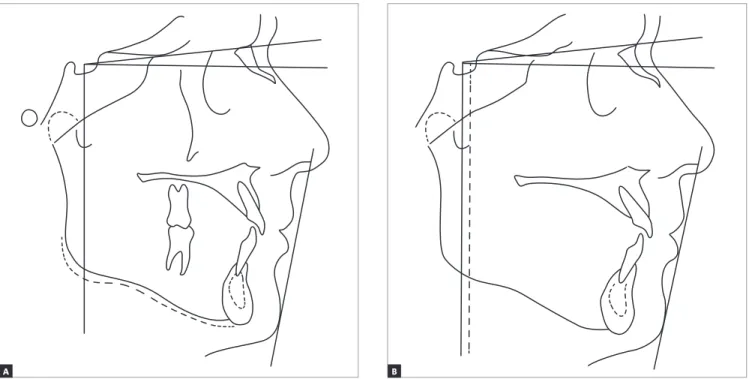
changes in facial proile, so that the alveolar portions of the maxilla and/or mandible were moved 3 mm forward from the VRL, simulating protrusion; or 3 mm back-ward from the VRL, simulating retrusion (Fig 2). Trac-ings were manipulated as follows:
1. Bimaxillary protrusion: 3 mm forward posi-tioning of the alveolar segments of the maxilla and mandible from the VRL, producing upper and lower labial protrusion without altering the position of the basal bones.
2. Mandibular protrusion: 3 mm forward posi-tioning of the mandible from the VRL.
3. Mandibular retrusion: 3 mm backward posi-tioning of the mandible from the VRL.
4. Maxillary retrusion: 3 mm backward position-ing of the maxilla from the VRL.
5. Maxillary protrusion: 3 mm forward position-ing of the maxilla from the VRL.
6. Bimaxillary retrusion: 3 mm backward posi-tioning of the alveolar segments of the maxilla and mandible from the VRL, producing upper and lower labial retrusion without altering the position of the basal bones.
Figure 2 - Sample tracing used to guide profile changes: A) original male tracing; B) modified male tracing (bimaxillary protrusion: dotted line corresponds to a 3-mm displacement of the VRL).
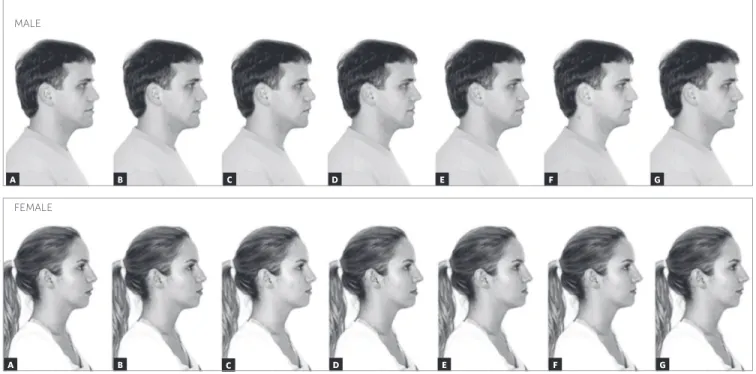
Figure 3 - Modified photographs randomly distributed.
The original photographs were digitally manipu-lated by a graphic designer using Adobe Photoshop CS5 Extended software (version 12.1x64 Copyright 1990-2011®, Dublin, Ireland) generating six new
im-ages for each model. The original imim-ages underwent basic leveling of brightness and contrast. The predic-tive tracings were scanned one at a time overlying the original photograph, to guide changes made to the image. The tracing layer was removed and the modi-fied image was saved.
New images were sorted according to the model’s sex and were randomly presented as indicated by the designer (Fig 3). Photographs were registered as follows:
1) Males
A = Mandibular protrusion; B = Bimaxillary retrusion; C = Maxillary protrusion; D = Maxillary retrusion; E = Bimaxillary protrusion; F = Original photograph; G = Mandibular retrusion.
2) Females
A = Maxillary protrusion; B = Bimaxillary protrusion; C = Original photograph;
D = Maxillary retrusion; E = Mandibular protrusion; F = Bimaxillary retrusion; G = Mandibular retrusion.
Photographs were printed in white couche A3 pa-per (420 mm x 297 mm).
The evaluators were irst year undergraduates en-rolled at the School of Dentistry of Universidade Federal do Rio de Janeiro (UFRJ), Rio de Janeiro (RJ); and at the School of Dentistry of Faculdade Meridional IMED, Passo Fundo (RS). They were selected for having little or no technical knowledge of facial proiles, and were considered as laypeople because when tests were applied they had not yet covered the disciplines that emphasize proile esthetics, such as Orthodontics or Orofacial Sur-gery. Previously to photographic evaluation, permission was required from the directors of the participating in-stitutions, who signed a term agreeing to have the study conducted in the aforementioned institutions. Under-graduates also signed an Informed Consent Form agree-ing to participate in the study. Evaluation was carried out individually so that one evaluator would not inluence the other. Each evaluator received cards with grouped photographs: one with all seven female photographs, the other with all seven male photographs (Fig 3), and an instruction card for facial proile evaluation.
FEMALE MALE
A
A
B
B
C
C
D
D
E
E
F
F
G
Evaluators gave scores ranging from 1 to 7 for each group of photographs without repeating the score. Number 7 represented the most balanced, pleasant and beautiful profile; and number 1 represented the least balanced, unpleasant, and ugly one. This card also contained questions regarding evaluator’s sex, age, place of birth and current city.
Ater collection, data were tabulated and statistical-ly anastatistical-lyzed by the Statistical Package for Social Scienc-es sotware (version 18, SPSS Inc., Chicago, Illinois, USA). Considering evaluators as two distinct groups, according to Brazilian evaluated states, scores attrib-uted by the participants were compared by means of unpaired t-test. Considering evaluators as two groups according to sex, attributed scores were also compared by t-test. Bonferroni correction was applied and the level of signiicance for the t test was set at 0.007.
Con-sidering all evaluators as one group, the diferences in scores attributed to each one of the seven photographs was evaluated by analysis of variance (ANOVA) fol-lowed by Tukey’s multiple comparisons test.
RESULTS
Twenty-nine irst year Dental School undergraduates born and residing in Rio Grande do Sul, and thirty-six undergraduates born and residing in Rio de Janeiro illed out the research form. Their ages ranged from 17 to 23.
The t test for independent samples detected a
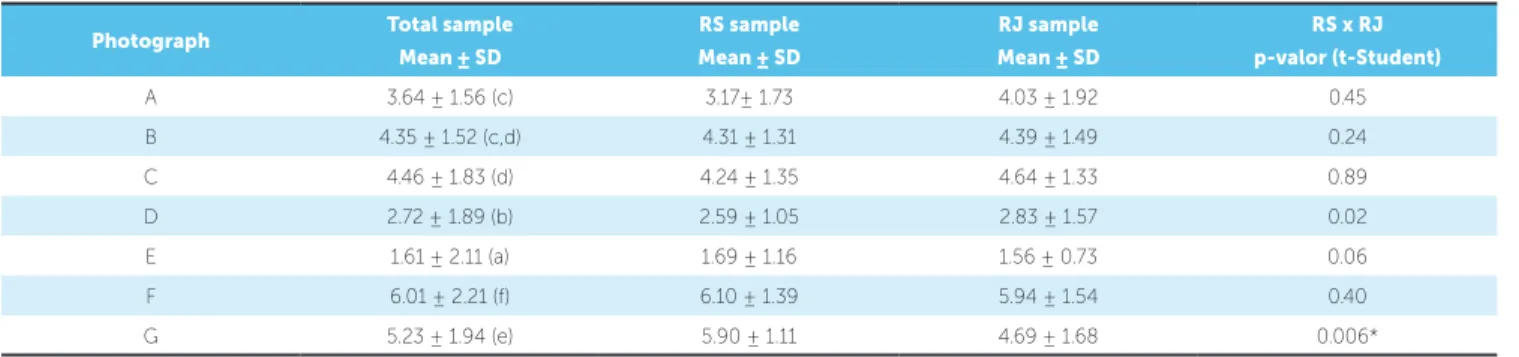
difference between states when it came to esthetic preference of certain facial profiles. Female photo-graph ‘G’ received the highest scores in Rio Grande do Sul (p = 0.006) (Table 1). No difference was found in male photograph evaluation (p > 0.007) (Table 2).
T test for independent samples did not detect any differences (P > 0.007) when verifying whether eval-uators’ sex influenced profile analysis.
Considering all evaluators as one group, ANOVA/ Tukey’s tests showed diferences in all seven photographs evaluated by both males and females(P < 0.001). For the female photographs, preference was for photograph ‘F’, followed by photograph ‘G’, then by photographs ‘C’ and ‘B’, then by ‘A’ and ‘D’, and inally by ‘E’ (Table 1). For male photographs, preference was for photograph ‘E’, followed by photograph ‘F’, then by photographs ‘C’, ‘B’ and ‘G’ (no diference between them), photo-graph ‘D’, and inally by photophoto-graph ‘A’ (Table 2).
DISCUSSION
When all evaluators were considered as a sin-gle group, the favored proiles were straight, exactly as described by Steiner (lips touching the S-line). These proiles correspond to female photograph ‘F’ (simulated bimaxillary retrusion in a slightly protrusive model) and male photograph ‘E’ (simulated bimaxillary protrusion
Photograph Total sample
Mean ± SD
RS sample
Mean ± SD
RJ sample
Mean ± SD
RS x RJ
p-valor (t-Student)
A 3.64 ± 1.56 (c) 3.17± 1.73 4.03 ± 1.92 0.45
B 4.35 ± 1.52 (c,d) 4.31 ± 1.31 4.39 ± 1.49 0.24
C 4.46 ± 1.83 (d) 4.24 ± 1.35 4.64 ± 1.33 0.89
D 2.72 ± 1.89 (b) 2.59 ± 1.05 2.83 ± 1.57 0.02
E 1.61 ± 2.11 (a) 1.69 ± 1.16 1.56 ± 0.73 0.06
F 6.01 ± 2.21 (f) 6.10 ± 1.39 5.94 ± 1.54 0.40
G 5.23 ± 1.94 (e) 5.90 ± 1.11 4.69 ± 1.68 0.006*
Table 1 - Mean and standard deviation of scores attributed for female photographs and result of statistical tests.
RS= Rio Grande do Sul state; RJ= Rio de Janeiro state.
in a slightly retrusive model). Proiles considered the least attractive were the ones corresponding to Class III, namely female photographs ‘D’ and ‘E’, and male pho-tographs ‘D’ and ‘A’. These indings support previous studies that state the preference for straight proiles.21-25
According to Johnston et al,24 attractiveness reduces
gradually as values of SNB increase or decrease by 5o.
The least attractive proile was considered to be the mandibular protrusion, as found by previous studies.23,26
As the male model had slightly retrusive lips with re-gard to the S line, when the photograph was edited to simulate a bimaxillary protrusion, his proile became straight and was preferred by the evaluators. For the fe-male model, photograph ‘B’, which corresponded to bimaxillary protrusion, was less appreciated than the closer-to-straight proiles seen in photographs ‘F’, ‘G’ and ‘C’. This result difers from the current orthodontic trend that believes more protrusive proiles are preferred. However, it is worth remembering that the chin and nose will continue to grow forward during adult life,20,27
tend-ing to produce a concave proile (the least acceptable ac-cording to the results). Thus, it seems wise to end patient treatment with slightly convex proiles.
Minor diferences were noted between average scores attributed to the proiles, in the states of Rio Grande do Sul and Rio de Janeiro. As a general rule, more prominent lips in the female proile were bet-ter appreciated by Rio de Janeiro evaluators than those in Rio Grande do Sul (photographs ‘A’, ‘B’, ‘C’). Closer-to-straight proiles were preferred by evalua-tors in Rio Grande do Sul (photographs ‘F’ and ‘G’).
However, only one proile score demonstrated statis-tical diference. Photograph ‘G’, showing mandibular retrusion and a straight proile, received higher scores in Rio Grande do Sul (p = 0.006) (Table 1). Racial and cultural inluences seem to explain such results. Rio Grande do Sul was colonized by Europeans (81.5% of the population is of European descendants) with great Italian and German inluence, displaying straight pro-iles more oten than African populations.15 On the
other hand, Rio de Janeiro has an expressive African background (32% of the population is of African de-scendants);28 hence, more protrusive proiles are
ob-served.15 According to Oliveira Jr,29 in Brazil,
cephalo-metric values change from region to region, since Bra-zil is a country with continental dimensions inhabited by a diverse ethnic, cultural and religious population, in contrast to other nations. From a genetic standpoint, the mixing of races in Brazil accentuates the diicul-ty in inding cephalometric measurements capable of epitomizing a Brazilian pattern.
In this context, the literature has related statisti-cally significant differences in linear and angular stan-dard values between Caucasian and African popula-tions.15 In the latter, the structure is larger; incisor
tipping and protrusion are more accentuated; position of the maxilla, length of the mandible and location of the porion are different from Caucasians. In addition, black and white laypeople and professionals display different esthetic preferences.30 If a certain region has
larger African influence, the preferences of their lo-cals seem to be different.
Table 2 - Mean and standard deviation (SD) of scores attributed for male photographs and result of statistical tests.
RS= Rio Grande do Sul state; RJ= Rio de Janeiro state.
Different letters indicate statistically significant difference for ANOVA/Tukey test (p ≤ 0.05). *Indicate statistical significant difference for t-test (p ≤ 0.007).
Photograph Total sample
Mean ± SD
RS sample
Mean ± SD
RJ sample
Mean ± SD
RS x RJ
p-valor (t-Student)
A 1.83 ±1.89 (a) 1.66 ± 1.17 1.97 ± 1.59 0.09
B 4.07 ± 1.96 (c) 3.93 ± 1.53 4.19 ± 1.52 0.58
C 4.18 ± 1.91 (c) 4.17 ± 1.58 4.19 ± 1.60 0.69
D 2.73 ± 1.83 (b) 2.86 ± 1.84 2.16 ± 1.41 0.34
E 5.96 ± 2.02 (e) 5.59 ± 1.59 6.28 ± 1.38 0.31
F 5.09 ± 1.77 (d) 5.41 ± 1.40 4.83 ± 1.40 0.50
As for male proiles, none displayed statistically signii-cant diferences when state scores were compared. Despite more protrusive proiles (photograph ‘E’) receiving higher scores in Rio de Janeiro, the bimaxillary retrusive proile (photograph ‘B’) was also preferred in that state. In Rio Grande do Sul, however, more retrusive proiles obtained higher scores (‘F’, original, slightly retrusive; ‘G’, mandib-ular retrusion; ‘D’, maxillary retrusion).
As for evaluators’ sex, no statistically significant difference was detected in the scores attributed. Men and women had similar perception when it came to female and male profiles. This result differs from data found in other studies, which concluded that sex bears influence on esthetic preferences.22,25
A strong point in this study is the method chosen, similar to that proposed by Mantzikos,21
Turkkahra-man and Gokalp,22 Soh,23 and Cala;25 however, in the
present study, images were not altered by the sotware used to predict orthognathic surgery results, as other studies did. In order to create anterior and posterior changes, the original cephalometric tracing was modi-ied according to the method proposed by Stephens,19
Erdinc et al,18 and Mattos et al20 in which a vertical
reference line is drawn perpendicular to another line, drawn 7 degrees clockwise from line SN (SN -7o).
Taking this line perpendicular to the x-axis as refer-ence, protrusive and retrusive changes of 3 mm were carried out in the maxilla, mandible or both.
The number of evaluators was a limitation. Sam-ple size could have been larger, as it was in the studies of reference, varying from 9223 to 2.651.21 Even with
a smaller sample (n = 65) in comparison to similar studies, it was possible to detect statistically signifi-cant differences in some of the profiles evaluated.
There are yet many factors that can inluence facial proile preferences in the various parts of Brazil, such as skin color, hair, eyes, culture, geographic location, level of instruction and social-economic status. Studies investigating the heterogeneity of the facial proile not only in Caucasians, but in African descendants, Native Americans, and in other racially mixed populations are necessary. Studies are still anticipated regarding facial esthetic preferences in diferent regions of Brazil.
CONCLUSIONS
More prominent lips are preferred in Rio de Janeiro state while in Rio Grande do Sul state pro-files with straight lips were favored. However, only the preference for profiles with mandibular retrusion and straight profile in Rio Grande do Sul showed sta-tistically significant difference.
As for the evaluators’ sex, profile perception was not influenced by this variable.
1. Langlois JH, Kalakanis L, Rubenstein AJ, Larson A, Hallam M, Smoot M. Maxims or myths of beauty? A meta-analytic and theoretical review. Psychol Bull. 2000;126(3):390-423.
2. Angle EH. Treatment of malocclusion of the teeth. Angle’s System. 7th ed. Philadelphia: SS White Dental Manufactoring; 1907.
3. Bourzgui F, Alami S, Sebbar M, Derkaoui T, Hamza M, Serhier Z, et al. Efect of orthodontic treatment on lip position. Int Orthod. 2013;11(3):303-13. 4. Downs WB. Analysis of dentofacial proile. Angle Orthod. 1956;26(4):22. 5. Ricketts RM. Planning treatment on the basis of the facial pattern an estimate of
its growth. Angle Orthod. 1957;27(1):24.
6. Holdaway RA. Changes in relationship of points A and B during orthodontic treatment. Am J Orthod. 1956;42(3):176-93.
7. Merriield LL. The proile lines as an aid in critically evaluating facial esthetics. Am J Orthod. 1966;52(11):804-22.
8. Burstone CJ. Lip posture and its signiicance in treatment planning. Am J Orthod. 1967;53(4):262-84.
9. Arnett GW, Bergman RT. Facial keys to orthodontic diagnosis and treatment planning. Part I. Am J Orthod Dentofacial Orthop. 1993;103(4):299-312. 10. Câmara CALP. Aesthetics in orthodontics: diagrams references aesthetic dental
and facial. Dental Press J Orthod. 2006;26(4):130-56.
11. Gupta A, Garg J, Anand N, Hegde M, Parashar S. Establishment of soft tissue norms for the north Indian population based on laymen perception. J Maxillofac Oral Surg. 2014;13(1):22-8.
12. Sinojiya J, Aileni KR, Rachala MR, Pyata JR, Mallikarjun V, Reddy CM. Soft tissue esthetic norms for mahabubnagar population of southern India. J Clin Diagn Res. 2014;8(1):255-9.
13. Celebi AA, Tan E, Gelgor IE, Colak T, Ayyildiz E. Comparison of soft tissue cephalometric norms between Turkish and European-American adults. Sci World J. 2013;2013:ID806203.
14. Altemus LA. Comparative integumental relationships. Angle Orthod. 1963;33:217-21.
15. Fadeju AD, Otuyemi OD, Ngom PI, Newman-Nartey M. A study of cephalometric soft tissue proile among adolescents from the three West African countries of Nigeria, Ghana and Senegal. J Orthod. 2013;40(1):53-61.
16. Hall D, Taylor RW, Jacobson A, Sadowsky PL, Bartolucci A. The perception of optimal proile in African Americans versus white Americans as assessed by orthodontists and the lay public. Am J Orthod Dentofacial Orthop. 2000;118(5):514-25.
REFERENCES
17. Spyropoulos MN, Halazonetis DJ. Signiicance of the soft tissue proile on facial esthetics. Am J Orthod Dentofacial Orthop. 2001;119(5):464-71.
18. Erdinc AE, Nanda RS, Dandajena TC. Proile changes of patients treated with and without premolar extractions. Am J Orthod Dentofacial Orthop. 2007;132(3):324-31.
19. Stephens CK, Boley JC, Behrents RG, Alexander RG, Buschang PH. Long-term proile changes in extraction and nonextraction patients. Am J Orthod Dentofacial Orthop. 2005;128(4):450-7.
20. Mattos CT, Marquezan M, Chaves IBBM, Martins DGS, Nojima LI, Nojima MCG. Assessment of facial proile changes in Class I biprotrusion adolescent subjects submitted to orthodontic treatment with extractions of four premolars. Dental Press J Orthod. 2012;17(3):132-7.
21. Mantzikos T. Esthetic soft tissue proile preferences among the Japanese population. Am J Orthod Dentofacial Orthop. 1998;114(1):1-7.
22. Turkkahraman H, Gokalp H. Facial proile preferences among various layers of Turkish population. Angle Orthod 2004;74(5):640-7.
23. Soh J, Chew MT, Wong HB. A comparative assessment of the perception of Chinese facial proile esthetics. Am J Orthod Dentofacial Orthop 2005;127(6):692-9.
24. Johnston C, Hunt O, Burden D, Stevenson M, Hepper P. The inluence of mandibular prominence on facial attractiveness. Eur J Orthod. 2005;27(2):129-33.
25. Cala L, Spalj S, Slaj M, Lapter MV, Slaj M. Facial proile preferences: diferences in the perception of children with and without orthodontic history. Am J Orthod Dentofacial Orthop. 2010;138(4):442-50.
26. Reis SAB, Abrão J, Claro CAA, Capelozza Filho L. Evaluation of the determinants of facial proile aesthetics. Dental Press J Orthod. 2011;16(1):57-67.
27. Marquezan M, Dalvi A, Fonseca V, Nojima LI, Nojima CG. Analysis of the efect of permanent incisors retraction of the facial proile of patients with Class I malocclusion biprotrusion. ROG. 2008;12(2):48-54.
28. Composição étnica do Brasil. Wikipedia: a enciclopédia livre; 2014. Disponível em: http://pt.wikipedia.org/wiki/Composição_étnica_do_Brasil
29. Oliveira Junior WM. Assessment of soft proile characteristics in Amazonian youngsters with normal occlusion. Dental Press J Orthod. 2012;17(1):55-65. 30. Silva DN, Oliveira MG, Bertollo RM, Glock L. Estudo comparativo, inter-raças, a