
Estimation of genetic parameters in rubber progenies
Texto
Imagem
Documentos relacionados
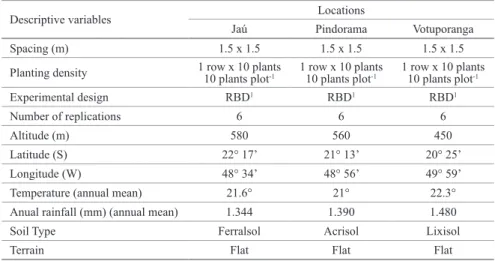
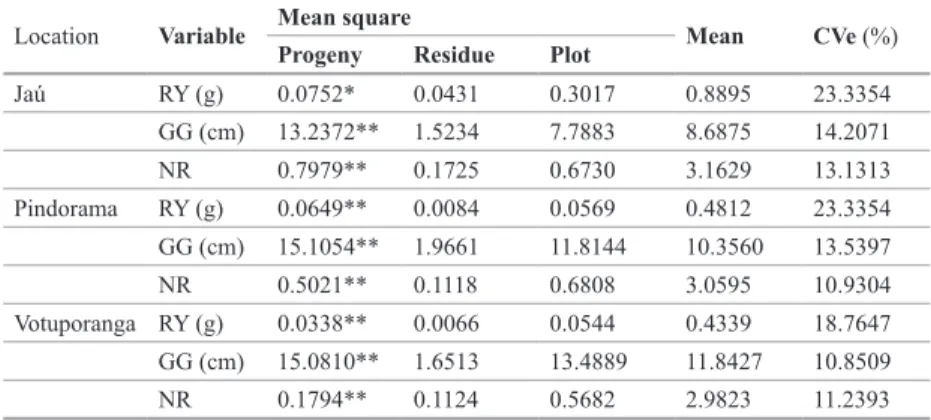
The effect of location, expressed by F-values in the joint analysis of variance, was significant for dry rubber production and girth, but not for the total number of latex vessel
With complementary, recessive, and dominant and reces- sive epistasis, duplicate genes with cumulative effects and non-epistatic gene interaction, the bias is generally less than
The lack of a significant genotypic and phenotypic correlation between growth vigor and the total number of latex vessel rings and between yield and latex vessel size indicated
Table 3 − Evaluation of dry rubber content (DRC) and latex biochemical parameters of SK1, SK3, NK1 and T2 rubber tree clones compared with RRIM 600 grown in the same farmer trail..
Genetic correlations with rubber yield, bark thickness and total number of latex vessels were very large, and almost no genotype-environment interaction was present for girth
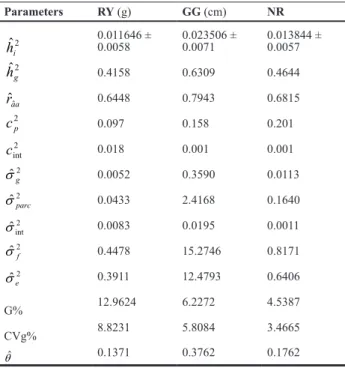
Expected genetic gains from planting sites, along with estimates of clonal variance and repeatability of clonal means are generally greatest or close to the greatest when selection
Selection gains, new means, and effective population size (Ne) of selected individuals by the multi‑effect index method, for rubber yield (g per tapping per plant) of 22
Total genetic gains (direct and indirect) are favorable for rubber yield and girth selection, indicating that the progenies are suitable for future breeding
